The Jim Backus Show: It Was Hot Off the Wire

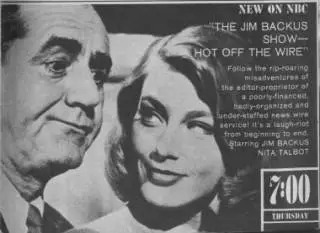
This month we are in a blog series, “It’s Their Show.” Today we are taking a closer look at The Jim Backus Show. Most people know Backus today as Mr. Howell on Gilligan’s Island. While he did show up on several television series, cartoons, and made-for-tv movies for Gilligan’s Island, Backus had a long and successful career without any Gilligan appearances. He started in the movies in 1948 and wound up his career with an amazing 253 credits.
📷thrillingdaysofyesteryear.com

In addition to being the voice of Mr. Magoo, Backus starred in several other series including I Married Joan and Blondie.

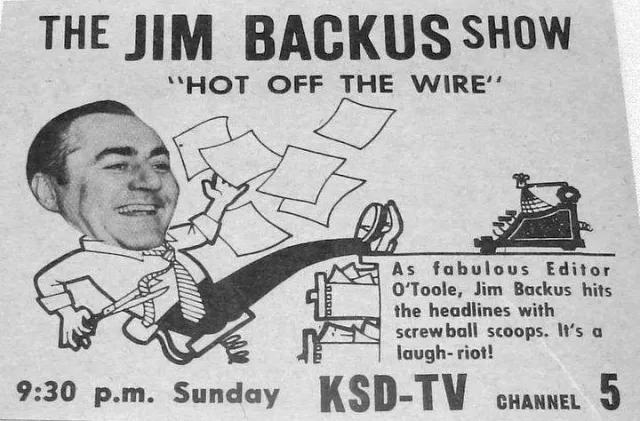
In 1960, The Jim Backus Show debuted.  It was one of the first syndicated shows, so it’s hard to gauge how it did against its competition. However, I will say what I can tell you is that there were still 13 westerns on the air during the week, so while the influence of the Plains was waning, it was still very popular. It was also a year that lots of stars had made the plunge to dip their toe into the television industry. There were 11 stars with their own shows that year in addition to Backus, including Jack Benny, Ann Sothern, Danny Thomas, Andy Griffith, and Donna Reed. 

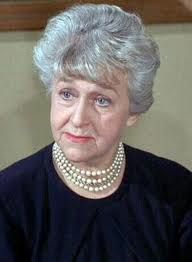
The series had a great cast. They had several good directors, including Gene Reynolds who produced MASH and Lou Grant and a lot of good writers, including Jay Somers who would go on to create and write Green Acres. However, they had 14 directors and more than 40 writers to produce those 39 episodes. They also had a great line up of guest stars including Ken Berry, Charles Lane, Jayne Meadows, Zasu Pitts, Tom Poston, and Bill Quinn.
📷youtube.com

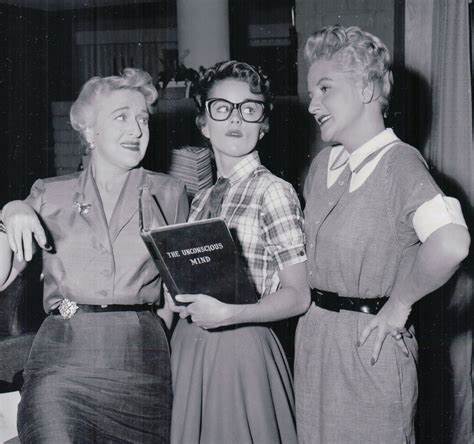
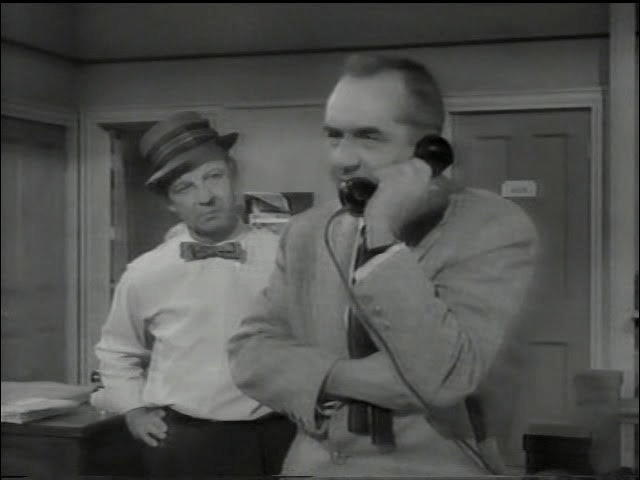
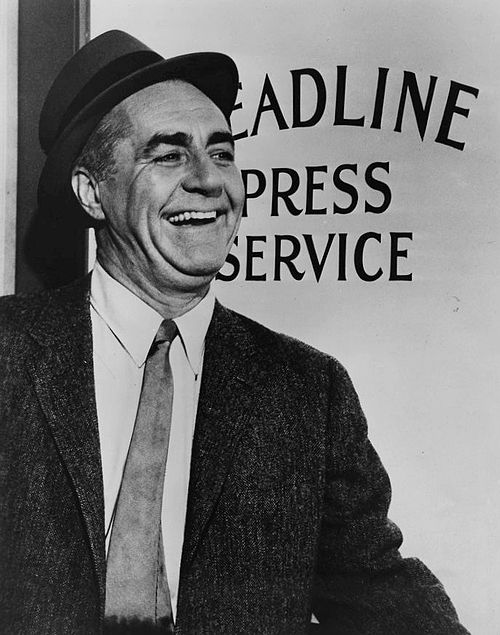
Backus is Mike O’Toole, the editor and owner of a news service struggling to make a go of it. He often doesn’t have the money to pay his rent or his staff’s salaries. Working with O’Toole are reporters Dora (Nita Talbot) and Dave (Bill McLean) as well as Sidney (Bobs Watson), their office boy. When they weren’t working, they spent some time at Heartless Harry’s, a bar downstairs that was popular with newspaper people. He truly was heartless, because he wouldn’t let anyone from Mike’s company in the bar unless they put down a $10 deposit.

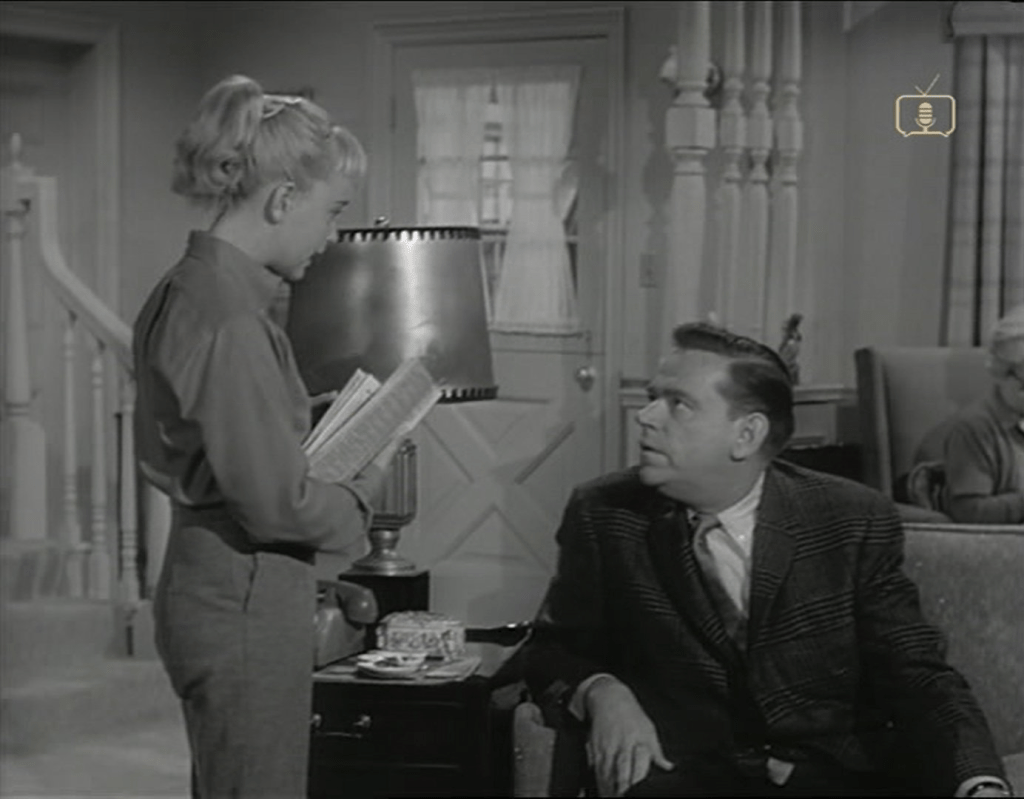
One of the episodes I watched for this blog was #5, “No Help Wanted.” The opening pans the big city before moving down to the office of the wire service with Mike in the window joined by Dora.

The episode begins with Mike and Dora’s car breaking down in the middle of nowhere. There’s a large estate in the distance, but Mike won’t let Dora ask them for help until he’s tried to fix the problem himself.
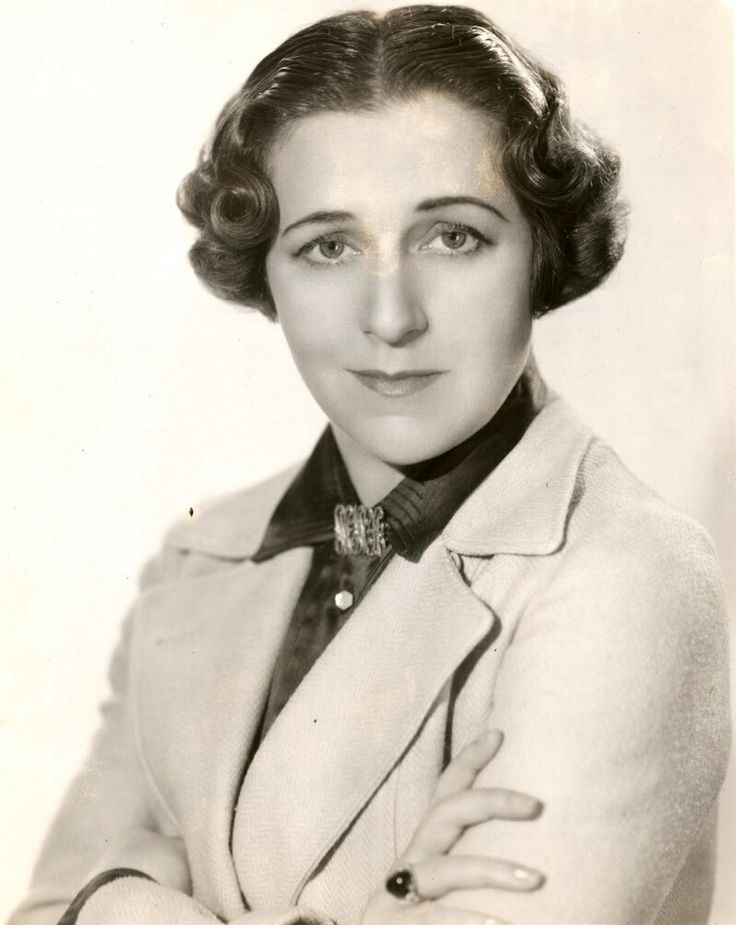
Directed by Gene Reynolds and written by Dick Chevillat and Jay Sommers, the plot is that a retired stage actress, Catherine Lyden (Linda Watkins), has lots of money and loves living a normal life. Her former agent keeps trying to lure her back into show business. She decides to clean the maid’s house so she can hire someone, but when Dora and Mike meet her, they recognize her, and they think she is destitute and try to help her. After they get back to the office, they buy her some groceries and clothes. She tries to tell them that she has plenty of things and she doesn’t need their help. O’Toole writes a story about her having to work as a maid to make ends meet and puts a photo in the paper with her holding a pail and looking disheveled. When the article appears, several people contact her to try to help her out. When Mike and Dora get her contract from the playwright who is trying to hire her, they tell her that it’s a form to get a retraction from the paper.

After she signs it,  they tell her the truth, that it’s a five-year contract and she begins to cry. Surprisingly they never do find out she wasn’t down and out. They think she is crying from gratitude, and they leave.

📷internetarchive.com

There were some fun bits of dialogue especially between Dora and Mike, and the filming was very different from most sitcoms, but I was drawn in by it. One of the things that I found most interesting about this episode is the soundtrack. There is some laughter in the background, but you hear birds, the office machinery running, and the sounds of the city. It’s like you’re right in the location with the cast and hear what they would hear.

This was a tough episode for me though. First of all, I kept waiting for Lyden to be touched by the fact that they were trying to help her and maybe that made her realize the public missed her. However, she never cared that they were spending their hard-earned money on her. She truly was upset when they tricked her, and I found it tough to watch because they never learn she was not destitute and truly was happy and they have now made her miserable for five years. It just didn’t have that feel-good ambiance we expect our sitcoms to feature.
📷wikipedia.com

The series produced 39 episodes before being canceled. I’m guessing the fact that it didn’t make it had something to do with the fact that it was on different nights and times across the country.

Sometimes these shows are hard to find. They all had two names. The Tom Ewell Show was known as The Trouble with Tom, The Phyllis Diller Show was known as The Pruitts of South Hampton, and The Jim Backus Show went by Hot Off the Wire.  With so much competition from other stars trying to vie for their spot on the schedule and being a syndicated show, I’m guessing it was hard to lure enough fans to make it worthwhile to produce a second season of the show.
The Tom Ewell Show: Surrounded by Women

Thanks for joining me today. We are having fun with this month’s blog series, “It’s Their Show,” and today we are taking a closer look at The Tom Ewell Show. The shows we are delving into this month were all movie stars jumping from the big screen to the small screen. Some of them landed on their feet and some didn’t.

📷ebay.com

While most of the shows we are covering have a star we all know, Tom Ewell is no longer a household name. His first movie was in 1940, and he’s probably best known for The Seven-Year Itch with Marilyn Monroe. He did become a television fixture, starring in the soap Search for Tomorrow as well as a cast member of Baretta in the seventies and Best of the West in the eighties.

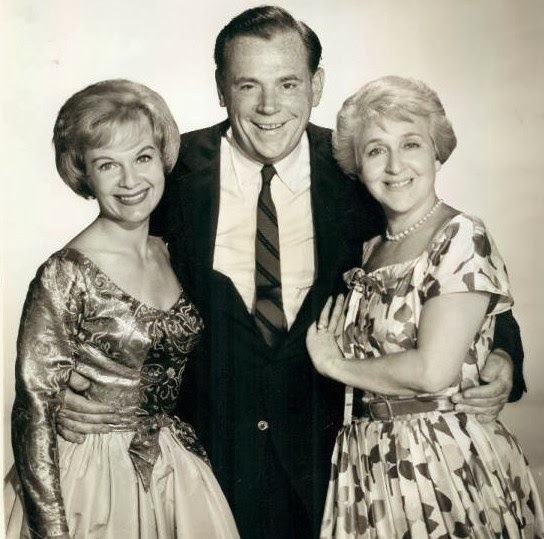
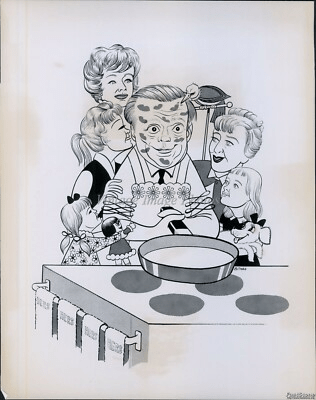
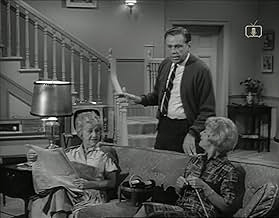
The Tom Ewell Show debuted on CBS in 1960 and was on for one season. The premise is about a guy who has to navigate life with a lot of women: his wife (Marilyn Erskine), daughters (Cynthia Cherault,  Sherry Alberoni and Eileen Chesis), mother-in-law (Mabel Albertson), and a female dog and a parakeet.

Tom Potter is described as a “bumbling” father. I’m not sure why so many shows in the early days featured a wife who caused complications for her husband or a bumbling husband. Potter was a real estate agent. Rounding out the cast are friends pharmacist Howie Fletcher (Norman Fell) and Jim Rafferty (Barry Kelley).

Potter loves sports, but the rest of his household is not too interested. Often, he is watching a sporting event on television while telling his family about the high points when they obviously could care less.

📷imdb.com

The concept of the show was set up in the opening which showed Tom looking around and then being put into a house before seeing the house overrun by women.

The show was created by Madelyn Pugh Davis and Bob Carroll Jr. who wrote for I Love Lucy. Pugh Davis said she based the show on her family. Her family had all girls and a mother-in-law in the house.

Ewell owned the production company in partnership with Davis and Carroll and Four Star Productions. Quaker Oats and Proctor and Gamble alternated sponsorship of the show.

Time reviewed the show after its debut and said “The Tom Ewell Show leads a relentless parade of situation comedies, all designed to show that American family life is as cute as a freckle on a five-year-old. The show, which might also be titled Father Knows Nothing, presents the comic with the excavated face as a bumbler named Potter who is trapped in the customary format: Harassed Man Beaten Down by Wife, Three Daughters, Mother-in-Law. In the opening episode, Ewell could find no better way to outsmart his spendthrift women than closing his bank account and ruining his own credit. For those who may have tuned out early, the women were all set to start spending again.” Not a great review.

📷imdb.com

This makes the female characters sound very unappealing, but on the show, his wife and daughters were delightful. His mother-in-law liked him and they often bantered back and forth; I think it’s worth watching the show just to see Mabel Albertson in action. However, the plots left a bit to be desired: Tom teaching his wife to drive a car, his daughter learning to play the tuba; and the typical sibling issues of everyone wanting to use the phone and the bathroom at the same time.

The show struggled finding viewers. Associated Press television critic Cynthia Lowry interviewed Ewell that fall, and he said that he had read both the positive and negative reviews of the show. He agreed with the critics who felt that Potter was too inept, and the comedy centered more on that and their family life. He said for December episodes, that issue would be addressed in the writing, and the family dog and parakeet were being dropped from the show. Unfortunately, it was not enough to attract viewers, and the show was canceled after one season.

📷youtube.com “Spelling Bee”

In an episode I watched, “The Spelling Bee,” from late November, Tom is trying to interest his family in golf. When he finally got them to watch a golf match, the females were more interested in what the golf spectators were wearing. And then his youngest daughter ran in and turned the station to a kid’s show. One of his girls is practicing her spelling to try to win a trip to Washington DC by winning the all-state spelling bee.

When Tom leaves the house, he continues to run into fathers and sons who are playing baseball, going fishing, working together, or talking about sports. Tom daydreams he has three boys, but we realize that he is holding a skein of yarn for his daughter while he does so. He tries to talk his oldest girl into going into the real estate business. Later he tries to talk his middle daughter Debbie into giving up spelling for golf. He also tries to get his wife to go bowling with him. When Tom realizes that one of his friends has a son trying to win the spelling bee as well, he turns it into a big sports event and is determined to beat them.

He buys a bunch of dictionaries and then gets up early to “train” Debbie. However, she had already left the house and when she returns, he finds out she’s been on the driving range practicing her golf, so they can be in a father and child golf match. He drills her on spelling the rest of the day. That night Debbie comes down with laryngitis.

📷imdb.com

Her grandmother gives her honey and lemon. The following night they attend the spelling bee, and Tom gives Debbie a pep talk, but then he reminds her he loves her no matter what. Of course, the final two contestants are Debbie and the son of Tom’s friend. She wins, and she and her dad get to travel to Washington, DC where they meet the President. The show ends with Tom telling his friend about all the great non-sport talents his girls have. It was a cute show, and the characters were all likable. There were a few great one-liners. It would not make my top 25 shows, but it was much better than many of the sitcoms in the sixties.

The show had a decent time slot. It was on Tuesday nights at nine, competing with Stagecoach West and Thriller. While both of those shows garnered decent ratings, neither of them was in the top thirty. The primary director was Hy Averback, who would later direct twenty episodes of MASH. So, they had the right elements in place, but the show just could never find its fans.

Larry Rhine talked about writing for the show. Rhine said Ewell was a nice man, but he said Ewell didn’t think the kids should be involved in the show much because they didn’t have the caliber of other actors. Rhine told Ewell they could consider them more as props which seems like a strange concept for a family show, considering that the episode I watched revolved around the daughters.

📷imdb.com

Rhine said Ewell found the show was over when he was on the set one day and he was called to the telephone about a trip he was supposed to take with CBS, and he was told that he was no longer part of the group because he had been fired.

I’m guessing part of the problem with this show getting renewed is that it debuted when westerns were still king and many of the television schedule spots were already filled with them. While it was definitely not a terrible show, the sixties were on the cusp of introducing very different sitcoms than the family-based ones that filled the fifties’ slots. By 1965 we would be tuning into Batman, Honey West, Hogan’s Heroes, The Smothers Brothers Show, and I Dream of Jeannie. However, that said, there are worse ways to spend a weekend than viewing a season of The Tom Ewell Show.

Stagecoach West: Experiencing Life in Outpost

As we celebrate westerns this month in our blog series “Go West Young Man,” we are tuning in to Stagecoach West which traveled across the air waves from 1960-1961. The show debuted in October of 1960 with the final episode airing in June of 1961. For the summer, reruns of the show continued. The thirty-eight episodes were on Tuesday nights.

📷wikipedia.com

The show features two Civil War veterans, Luke Perry (Wayne Rogers) and Simon Kane (Robert Bray), who own a stagecoach line and share driving duties in the Wyoming territory. It was fun to see a young Rogers decades before he showed up in Korea bantering with Alan Alda. During their trips they run into murders, robberies, range wars, renegade soldiers, and passengers who have their own drama. Simon’s son Davey (Richard Eyer) often travels with the men.

They are based in Outpost, a small frontier town. We get to know several townspeople including Dan Murchison (John Litel) who runs the general store and bank; Zeke Bonner (James Burke) who rents rooms at The Halfway House; Hugh Strickland (Robert J. Stevenson), the Marshal in Timberline; and Doc Apperson (played by J. Pat O’Malley and Sydney Smith).

📷rottentomatoes.com

Vincent M. Fennelly was the producer and there were several directors, with Thomas Carr taking the helm most often. There was also a long list of writers, but D.D. Beauchamp and Mary Beauchamp penned many of the scripts. From what I could learn about the Beauchamps, they didn’t work together but wrote their own episodes. Mary was known for her work on Bat Masterson and Tales of West Fargo in addition to this show. D.D. (Daniel Deronda) is best remembered as a writer for Daniel Boone. His third wife was Mary Mitchell, so I am guessing that Mary Mitchell and Mary Beauchamp are the same person. Sounds like she and her husband were cremated, so there is no findagrave site for her.

The theme song was composed by Skip Martin and Terry Gilkyson. This was the only time I could find where this duo worked together. They had very different careers. Gilkyson was part of The Weavers and The Easy Riders. In 1960 he went to work for Walt Disney and was nominated for an Oscar for “The Bare Necessities” in Jungle Book. Martin worked with jazz and swing bands in the 1930s and 40s including Count Basie and Glenn Miller. With Les Brown, he was given credit for writing “I’ve Got My Love to Keep Me Warm.” In the 1950s he moved to Hollywood where he worked on Singin’ in the Rain and A Star is Born.

📷westernserieswiki.com

Richard Eyer in an interview said the show “kept me busy and was usually fun. It was a very positive experience. When they hired me, it was sort of a transitional point . . when we did the pilot I was 13 and quite young . . . we started production eight months [later] . . . I was into puberty and adolescence.”

Tuesday nights’ competition in 1960 was Thriller on NBC and The Tom Ewell Show and The Red Skelton Show on CBS. Thriller was an interesting show hosted by Boris Karloff. It began as an anthology focusing on crime but later transitioned to gothic horror stories. The Tom Ewell Show also began and ended in 1960. Ewell plays a real estate agent who lives with a lot of women, namely his wife, daughters, and mother-in-law. ABC aired The Rifleman and The Legend of Wyatt Earp before Stagecoach West.

The show never gained viewers, so it was cancelled in June. If you follow me, you know I don’t have the most positive feelings about Red Skelton and how he treated the people who worked for him, but it was a very popular show and some of the episodes were in color, so a lot of people were tuning into to watch him. I wonder if because two westerns were on earlier in the evening, people were ready to watch another genre. In addition to this night of programming, there were another 15 westerns on during the evenings on the other days of the week. The other factor that comes into play is that both The Rifleman and The Many Loves of Dobie Gillis on CBS were in the top thirty. I wonder how many viewers watched The Rifleman on ABC and then switched networks to Dobie Gillis on NBC and then never returned to ABC for the rest of the evening.

It would be a fun and easy binge watch if you want to tune in even to see the guest stars and learn some of the issues that were dealt with during this era of travel.

Mabel Albertson: What a Character!

As we wind up our What a Character series, it seemed fitting to end with Mabel Albertson, perhaps the most recognizable of our character actors. She is often remembered for playing the mother of well-known characters. Mabel was born in Massachusetts in 1901. Her mother, who was a stock actress, helped support the family by working in a shoe factory. Mabel’s brother Jack would also become a famous actor.

Photo: pinterest.com

Mabel knew she wanted to get involved in the entertainment business at a young age. When she was 13, she played the piano for $5 a performance. She graduated from the New England School of Speech and Expression.

Albertson began working in stock, vaudeville, and night clubs and appeared with Jimmy Durante. Eventually she moved to California where she became involved with the Pasadena Playhouse where Charles Lane got his start.

Photo: youtube.com

Mabel married Austin Ripley, and they had a son in 1926, but their marriage soon dissolved. Mabel decided to pursue a career in film. Although she would have credits for 27 movies during her career, her film career was not what she hoped for. So, she switched gears and tried out radio. During the 1930s, she co-starred with Phil Baker on The Armour Hour and from 1936-37, she was in Dress Rehearsal with Pinky Lee. She also did some writing for the show.

photo: imdb.com
All The Fine Young Cannibals

In 1937 Mabel married writer Ken Englund who adopted her son George. He began writing for Paramount Pictures and later would be hired by RKO, Columbia Studios, 20th Century Fox, and The Samuel Goldwyn Company.

Photo: pinterest.com
Burns and Allen

Although her husband’s career was made on the big screen, her career really took off when television made its appearance. Her first role on the small screen was on the Chevron Theater in 1952. During the 1950s, she appeared in 21 different shows. Although many of her roles were on the playhouse and theater shows, she also showed up on Burns and Allen, Topper, December Bride, Bachelor Father, Jack Benny, and Have Gun Will Travel. In 1955, she was offered a role in Those Whiting Girls. She played the girls’ mother. The show was on the air until 1957.

Photo: sitcomsonline.com
Those Whiting Girls

Mabel became the “face” of television sitcom mothers. She played Phyllis Stephens, Darrin’s mother on Bewitched and often said “Frank, take me home, I’m getting a sick headache.” Her husband wrote several Bewitched episodes (season 1, episodes 25 and 30).

Photo: pinterest.com
Bewitched

She played Mabel, Paul Lynde’s mother-in-law on The Paul Lynde Show; she was the mother of Marilyn’s boyfriend on The Munsters, as well as Alice’s mother on Bob & Carol & Ted & Alice. Fans of That Girl will remember her as Don Hollister’s mother, and she was seen on The Andy Griffith Show as Howard Sprague’s mother. Her last mother role was on the New Dick Van Dyke Show as his mom.

Photo: jacksonupperco.com
That Girl

Her most successful years were the 1960s when she appeared in 39 television shows, including Perry Mason; Ben Casey; My Three Sons; Hazel; Ozzie and Harriet; The Wild, Wild West; Daniel Boone; Gomer Pyle USMC; Love American Style; and Gunsmoke. A review for her performance on Gunsmoke is posted by jlthornb5110 on imdb.

The review states that her role of Kate Heller is one “of the standout episodes of the series with Miss Mabel Albertson giving what is nothing less than the performance of a lifetime. Beautifully written by Kate Hite, this is a powerful presentation and one in which Albertson truly shines. The climax is absolutely soul shattering and among the most dramatically emotional ever filmed for television. Miss Albertson plays it with a sensitivity and an incredible insight you will never forget. The character of Kate Heller is heartbreaking but quietly strong, a survivor of the psychological brutality of loneliness in the old west and the violence that was part of existence. Mabel Albertson gives the character everything she has within her, brings her to life, and makes her one of the most unforgettable personalities to ever appear on Gunsmoke or any other television series in history.”

Photo: cscottrollins.blogspot.com
The Tom Ewell Show

She was offered a role as a permanent cast member in The Tom Ewell Show in 1960. The premise of the show is that real estate agent Tom Potter played by Ewell must learn to live in a household of females including his wife, his three girls and his mother-in-law Irene played by Albertson. Even their dog, Mitzi, was a girl. Although Mabel’s brother Jack would be best remembered for his role on Chico and the Man, he appeared on this series with his sister in 1960. The series aired 32 episodes before it was canceled.

Photo: findagrave.com
Jack Albertson

I’m not sure where she found time for Broadway during this decade, but she was in The Egg in 1962 and Xmas in Las Vegas in 1965.

While her career began to slow down in the seventies, she was still quite busy, appearing in The Doris Day Show, Ironside, Marcus Welby, and The Mary Tyler Moore Show, among others. She appeared in an episode of Arnie with her brother in 1970. She also worked with her daughter-in-law, Cloris Leachman, in the movie Pete and Tillie in 1974.

Photo: pinterest.com
Frank, I feel a headache coming on

Her family continued to attract talented actors. Her granddaughter-in-law was actress Sharon Stone.

In 1975, Mabel was forced to retire. Her memory was beginning to fail, and she was later diagnosed with Alzheimer’s Disease. She passed away from the illness in 1982.

Photo: pinterest.com

Like Milton Frome, I was both sad and disappointed to learn how little information there was about Mabel Albertson. I thought I would learn more about her working relationships considering she had a fifty-year career and played iconic mother roles on so many well-loved shows.

As we wrap of this edition of What a Character! series, my hope is that you recognize and acknowledge these actors when you see them when tuning in to your favorite classic shows and remember how much they contributed to our television history. Personally, to keep Mabel’s memory alive, I think any time we are having a family situation, I will turn to my husband and whisper, “Frank, take me home, I’m getting a sick headache.”