Thanks for joining me this month in our blog series, “It’s Their Show.” As it became obvious that television wasn’t going away and movie stars were only hurting themselves shunning the industry, several celebrities decided to make the jump and star in their own show on the small screen. Ray Milland was one of the first stars to tackle the task. Milland had been known for many great movies including The Lost Weekend, for which he won an Oscar, and Dial M for Murder.
📷raredvds.com
His show was originally titled “Meet Mr. McNutley,” but it became The Ray Milland Show. This is one of those shows that fans remember fondly as very funny and well written.
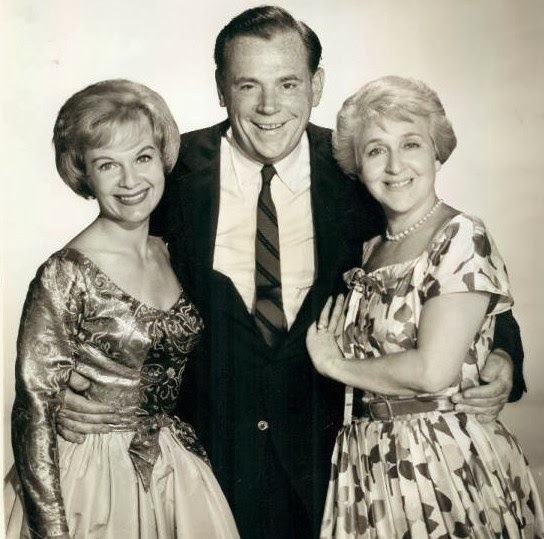
The show debuted in 1953 and ran for two seasons, two very different seasons. In the first season, McNutley is an English professor at Lynn Haven College for Women. Although all the students find him attractive his wife (Phyllis Avery) understood that this was not affecting her marriage. Rounding out the cast were their neighbors Pete and Ruth Thompson (Gordon Jones and Jacqueline DeWit) and the college dean (Minerva Urecal) who was not swooning over McNutley.
📷wikimediacommons.com
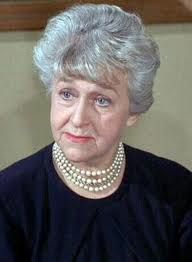
When the show returned for its second season, his name is now Mr. McNulty and he is a drama professor, moving from New England to Comstock University in California, a coed college. Dean Dodsworth (Lloyd Corrigan) and his wife (Madge Blake) take the place of their neighbors in this version.
The first season, CBS put the show on Thursday nights where it was up against Groucho Marx’s You Bet Your Life, a top ten program. Although many things changed from season one to season two, what stayed the same was that the show was still up against You Bet Your Life and Groucho’s show was still in the top ten. Ray’s show was cancelled at the end of the second season.
The producers of the show were Joe Connolly and Bob Mosher. The partnership would have some minor success in the early sixties after this show went off the air (Bringing Up Buddy, Ichabod and Me, Calvin and the Colonel) before hitting it big as the writers and producers for Leave It to Beaver and The Munsters. They were also behind The New Leave It to Beaver Show in 1997.
📷idahoseniorindependent.com “The Christmas Story”
I watched the Christmas episode from the second season for this blog. Peg gets involved with the local orphanage and agrees to host a child for Christmas. She is a difficult child and makes life and the holidays very unpleasant for the couple. However, as viewers, we are in on a scene where Susie (Beverly Washburn) reveals why she is so mean. She decides to become the perfect child so the couple will take her to the orphanage Christmas party, but her goal is to expose Santa as a fake to the other kids, and the show ends with an unexpected twist. It was a heart-warming story, and the humor was a bit subdued, but I enjoyed the episode. I was impressed by Washburn’s portrayal of a bad, good little girl. By the way, Washburn is still acting; she’s probably best remembered for her role in Old Yeller.
Milland would attempt another television series in 1959, and that show also ran for two seasons. As Markham, he portrayed a former attorney turned private detective who solved crimes around the world.
It’s too bad that the network never gave this show a chance to move to a spot in the schedule where it didn’t have so much competition. I thought it was more sophisticated than some of the sitcoms during the fifties. I’m guessing that it might have been a big hit.
This month we are taking a look at some classic sitcoms that many people don’t remember anymore.
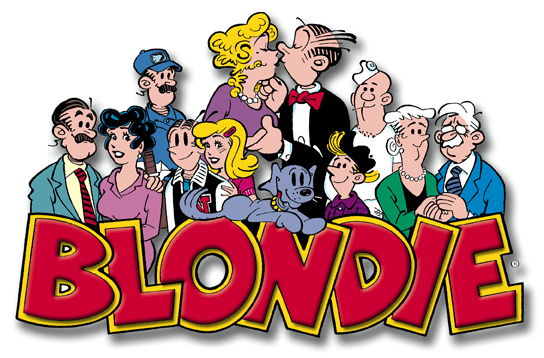
Blondie is one of those shows. It was based on the Chic Young comic strip and debuted on NBC in 1957, lasting one year. The series was resurrected in 1968 and the reboot also lasted a season.
📷wikipedia.com The 1957 version
Blondie had become very popular with fans. Beginning in 1938, 28 movies were made starring Penny Singleton and Arthur Lake. Blondie also showed up on the radio from 1939 to 1950. Many products had been based on the characters including comic books, coloring books, lunch boxes, and board games.
The 1957 series starred half the movie duo. Lake took on his role of Dagwood Bumstead, but Pamela Britton was offered the role of Blondie Bumstead. Their kids, Cookie and Alexander, were played by Ann Barnes and Stuffy Singer. Florenz Ames was boss J.C. Dithers with Elvia Allmana as his wife Cora. Rounding out the cast was Harold Peary as neighbor Herb Woodley.
📷imdb.com The 1968 version
A decade later Will Hutchins and Patricia Harty play Dagwood and Blondie, Jim and Henny Backus play the Dithers, and Pamelyn Ferdin and Peter Robbins are their kids. The only advantage this series had over the original was color.
The comic strip, movies, radio show and both sitcoms all encompassed the familiar Bumstead elements: Dagwood being physically and socially awkward; their dog Daisy, and Dagwood’s love of napping and huge sandwiches.
The reboot was produced by Joe Connelly and Bob Mosher, the faces behind Leave It to Beaver and The Munsters. There was room in the schedule after the network cancelled He and She, a sitcom starring real life spouses Paula Prentiss and Richard Benjamin. The show is described on imdb.com as “Dick and Paula Hollister are a couple living in New York. Dick is a comic-book artist who has become famous for creating a superhero called Jetman, which has been turned into a TV show starring egocentric actor Oscar North.” During its one season of 26 episodes, the show received seven Emmy nominations, including a win for writing. It’s too bad that show was given the axe and Blondie moved in because the Prentiss-Benjamin show was much more creative and felt new, while Blondie felt extremely old.
No surprise, the ratings were not great. This is even worse when you see what the show was in competition with: The Ugliest Girl in Town, which would also be gone by 1969, and Daniel Boone. The one new 1968 show to return on CBS was Hawaii Five-0 which seems so much more sophisticated than Blondie; it’s hard to believe they both debuted the same year.
📷yahoo.com Hawaii Five-0
Perhaps the fans didn’t tune in because the critics panned the show before it aired. The Milwaukee Journal’s Wade Mosby said it was “a horrendously contrived piece of fluff that should have never been snatched from the comic pages.” Don Page of the Los Angeles Times called it “an unmitigated disaster,” and Cynthia Lowry of the Associated Press described it as “dismal.”
By November, rumors were that the show was already cancelled, and its last episode aired in January. The show probably relied too much on slapstick and unsophisticated humor; things that might have been fine in the 1930s but were passe by the 1960s. Sometimes a show is cancelled just because it’s a badly written and executed show. It seems Blondie fell into this category not once but twice.
Off the top of my head, I can only recall two comic strips becoming popular television shows: The Archies and The Addams Family. Because the Blondie characters were not very dimensional and got into the same situations over and over, they just never were able to translate into sustainable television characters. I think there’s a good reason that many people don’t remember this show and perhaps it’s better that way.
This month we are right in the middle of one of my favorite blog series, What a Character. This week we are delving into the career of Noam Pitlik; in addition to his acting, he won an Emmy for his work as a director. Which show? Let’s find out.
Pitlik was born in Philadelphia in 1932. After graduating from high school, he enrolled at Gratz College and later was a theater major at Temple University in 1954. Pitlik had a two-year stunt in the Army and earned a master’s degree in theater at New York University.
He began his acting career on WCAU in a western. In 1951, he was hired for the set design and construction crew for the Philadelphia Experimental Theater. He carried a bit of his hometown with him when he was part of the Summer Theater Guild in Indiana, Pennsylvania in the “Philadelphia Story.” He was hired for his Broadway debut in an off-Broadway production of The Threepenny Opera.”
📷imdb.com
In 1961 he moved to Los Angeles and received his first television roles, appearing on Cain’s Hundred and Dr. Kildare. Cain’s Hundred was not a show I remembered hearing much about. It was about a former underworld lawyer who works with the federal government to bring the top 100 criminals to justice. The show lasted one season. Pitlik had a variety of offers for shows throughout the sixties. Most of them were dramas and westerns, but we also see him on My Favorite Martian, The Munsters, Gidget, The FlyingNun, The Monkees, The Andy Griffith Show, The Doris Day Show, Get Smart, That Girl, and I Dream of Jeannie.
During the sixties, he married for the first time. His marriage with Jesse Blostein in 1967 would only last three years.
Pitlik also appeared in fourteen films and eight made-for-tv movies. The most memorable films are The Graduate, Fitzwilly, and The Fortune Cookie.
📷famousfix.com
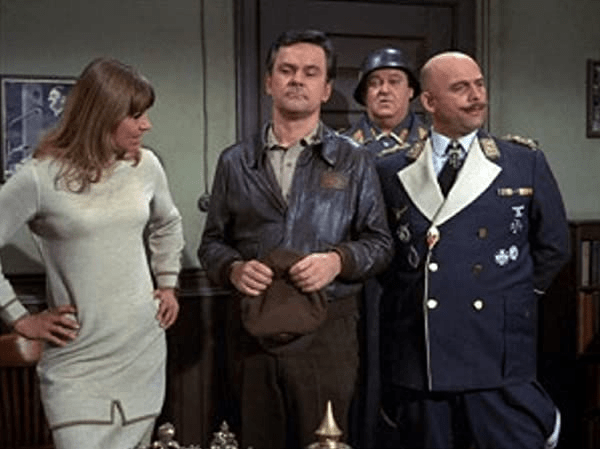
The seventies were his most prolific decade of acting. He appeared in 26 different series, often in 2-5 different episodes. You’ll see Pitlik in reruns in a variety of genres including Hogan’s Heroes, Room 222, Bewitched, LoveAmerican Style, All in the Family, The FBI, Cannon, Mannix, The PartridgeFamily, The Bob Newhart Show, The Odd Couple, and Barney Miller. His last acting appearance was in Becker in 1998.
The seventies were also when he tried the role of husband again, marrying Linda Hirsch in 1974; this marriage also lasted three years.
He began directing in the seventies and obtained 39 directing credits throughout the next two decades.
📷imdb.com
In an interview with Temple University for the Alumni Review in 1979, Pitlik said that the switch in his career was not “a case of my needing to change functions for economic reasons. I used to figure out what I made a day as an actor, and it was obscene. I changed for emotional reasons. I had become very frustrated by the kinds of things I was doing in acting, and I was looking for a change in my life that would be more challenging. I enjoyed acting, but I never seemed to get enough to do.” His first episode as director was on The New Dick Van Dyke Show. He directed 12 episodes for The Practice and 11 for Taxi.
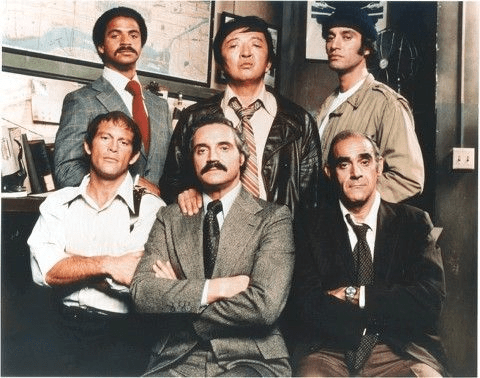
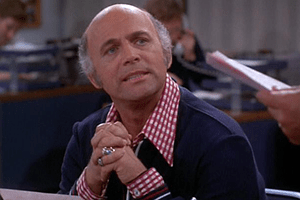
However, Barney Miller was where he perfected his skill as director for 102 of its 171 episodes. In 1979, he won an Emmy as Director for the show. He beat out Paul Bogart for All in the Family, Alan Alda and Charles Dubin for M*A*S*H, and Jay Sandrich for Soap. He also received a Peabody Award and a Directors Guild of America Award for his work on Barney Miller. He lost the Emmy in 1981 to James Burrows for Taxi. His co-nominees included Jerry Paris for Happy Days, Linda Day for Archie Bunker’s Place, Burt Metcalfe and Alan Alda for M*A*S*H, and Rod Daniel for WKRP in Cincinnati.
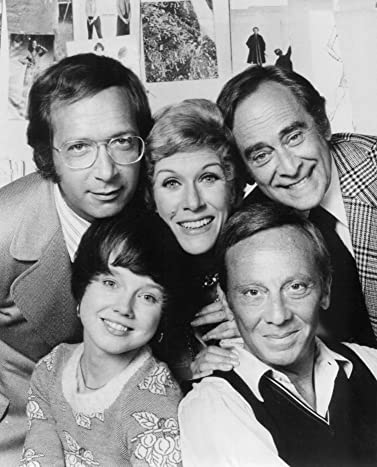
📷tumblr.com Cast of Barney Miller
In the Temple interview, Pitlik said that his “main responsibility is to create an atmosphere in which each of the people involved in the production can conform to their best work. Although a director oversees all aspects of the production, there are many people involved, and he’s dependent on all of them. There’s no more collaborative business than the television business. Each person contributes to the success or failure of a show whether he or she is a writer, actor, cameraman, or whatever.”
In 1995 he began directing episodes of The Home Court and did so for 14 of the 20 episodes. I must admit I do not remember this show at all. The synopsis was Sydney Solomon was a family court judge who had to deal with the toughest prosecuting attorneys and repeat offenders. However, her biggest challenges came when dealing with her kids, four boys aged 11-19.
📷pinterest.com
Pitlik had better luck with his third marriage to Susan Whittaker which lasted from 1986 until his death in 1999. Whittaker was a television producer. Noam passed away from lung cancer at age 66.
Like Jerry Paris, Pitlik had a very successful acting career before finding his passion behind the camera. If you are responsible for directing a series, Barney Miller is a great accomplishment. It was fun to learn more about his career both in front of and behind the camera.
This month, our theme is Bam! Pow! Batman Villains. We have learned a bit about the careers of the Joker and Cat Woman, and today we are spending some time with the Riddler, portrayed by Frank Gorshin.
📷imdb.com
Gorshin started out as an impressionist and comedian before transitioning into acting.
Frank was born in Pittsburgh in 1933 into a blue-collar, middle-class family. His mom was a seamstress, and his father was a railroad worker. His paternal grandparents arrived in the US from Slovenia and his mother was born in Slovenia, coming to the Pittsburgh area as a young girl; his parents were very involved in the Slovenian community, both singing with the Preseren, a Slovenian singing society.
When he was 15, Gorshin got a part-time job as an usher at the Sheridan Square Theatre. He studied the mannerisms of the actors he watched in those movies and developed an impressionist act. Some of his favorite actors to mimic included James Cagney, Cary Grant, Al Jolson, and Edward Robinson. After entering a talent contest in 1951, he won a week-long engagement at the Carousel nightclub in New York.
Sadly, Gorshin’s older brother was hit by a car two days before and died. His parents convinced him to keep his performance schedule and sent him to New York.
After high school, Gorshin enrolled at the Carnegie Tech School of Drama (now Carnegie Mellon University).
📷imdb.com
At age 20, Frank was drafted into the US Army and sent to Germany. He was an entertainer in Special Services for a year and a half. When Gorshin left the Army, he began his acting career, appearing in four movies and on television in Alfred Hitchcock Presents.
I can’t imagine the horror Gorshin’s parents felt when getting a call in 1957 that their son had fallen asleep while driving from Pittsburgh to Hollywood, a 39-hour trip for a screen test. With their other son passing away from a car crash six years earlier, now they had to deal with the fact that their other son was in a coma with a fractured skull. Luckily, he made a full recovery.
Another big event occurring in 1957 was his marriage to Christina Randazzo. They had a son and separated later in life, but they never did divorce as far as I could tell.
Until his death, Gorshin would appear in more than sixty big-screen films. During the fifties, he only appeared in a handful of television series, but that would change in the 1960s. Some of the most memorable shows included The Defenders, The Munsters, Star Trek, and The High Chapparal. With his comedy act, he visited The Ed Sullivan Show four times. The first time he did his impressionist act on the series, he would be scheduled with this new band called The Beatles.
📷metv.com
The sixties also found him on Batman, his reason for being in this month’s blog series. He said that he developed a fiendish laugh at Hollywood parties. “I listened to myself laugh and discovered that the funniest jokes brought out the high-pitched giggle that I use on the show. With further study, I came to realize that it wasn’t so much how I laughed as what I laughed at that created the sense of the menace.”
He did not love the unitards that many of the comic book villains wore, so he asked for a green business suit and bowler hat, covered with question marks since he always left riddles for Batman and Robin to solve. He often said “Riddle me this, Batman” which became a catchphrase of the mid-sixties.
Gorshin said “When I was first approached to play the Riddler, I thought it was a joke. Then I discovered the show had a good script and agreed to do the role. Now I am in love with the character.”
📷imdb.com
Gorshin was the only villain to be nominated for an Emmy. He got the nod in 1966 for the episode “Hi Diddle Riddle.” He had some tough competition, going against Werner Klemperer as Colonel Klink on Hogan’s Heroes, Morey Amsterdam on The Dick Van Dyke Show, and winner Don Knotts on The Andy Griffith Show.
Gorshin was in ten episodes of the show, but after appearing numerous times, he was unavailable, and the producers replaced him with John Astin. I realized hindsight is 20/20 as they say, so the producers were never considering the effect the show would have on pop culture and the decades it would be a fan favorite, but that switch seems extreme. However, they did it with Julie Newmar and Eartha Kitt as well, so maybe they figured if you have to replace a villain, let’s replace them with someone very different from the original. Gorshin, however, was not a fan of being replaced but did get over it enough to accept his tenth episode role in season three and appeared as Riddler in the 1979 made-for-television movie Legends of the Superheroes.
Frank made his Broadway debut in 1969 in the musical biography, “Jimmy” which was about the controversial life of New York mayor Jimmy Walker.
Gorshin was very busy in the seventies and eighties. Among the twenty plus shows he appeared on were The Virginian, Martin and Rowan’s Laugh In, Ironside, Hawaii Five-0, Charlie’s Angels, and Murder She Wrote.
In the last three decades of his life, he spent more time making big-screen films. One thing I found surprising is that Gorshin appeared in three soap operas, all at different times in his career: General Hospital in 1963, The Edge of Night in 1982, and The Bold and the Beautiful in 1999.
In the early 2000s, Gorshin did a one-man Broadway show, portraying George Burns. He was reunited with his Batman cast in a made-for-tv movie, Return to the Batcave: The Misadventures of Adam and Burt. His last appearance was on CSI: Crime Scene Investigation on “Grave Danger” on which he played himself. The episode was directed by Quentin Tarantino and was dedicated to Gorshin.
📷discogs.com
Unfortunately, Gorshin was a heavy smoker throughout his life. Adam West once said that “Frank could reduce a cigarette to ash with one draw” and his nightclub performances warned patrons they would be exposed to a lot of second-hand smoke if they attended. Not surprisingly, he died from lung cancer, complicated by emphysema and pneumonia.
I enjoyed getting to know Frank Gorshin in this blog. While I was much more familiar with the careers of Burgess Meredith and Julie Newmar, Gorshin and Cesar Romero are actors I knew very little about. I hope you are also enjoying getting to know these fun “villains.”
This month we continue with our “Kinda Creepy” blog series. Last week we talked about a show that debuted in fall of 1964 and was canceled in the spring of 1966, The Munsters. You can use the exact dates for our show today, The Addams Family.
ABC aired The Addams Family for two years, ending up with 64 episodes. Like The Munsters, this show was filmed in black and white. The Munsters was based on the typical suburban family while this series was created by David Levy and was based on Charles Addams’ New Yorker cartoons.
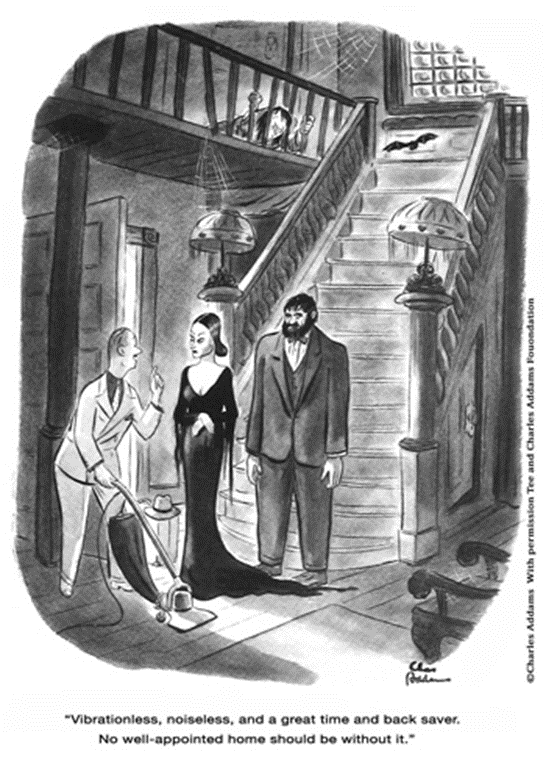
The first Addams Family cartoon was published in The New Yorker in 1938. The first illustration was titled “Vacuum Cleaner,” and it shows a salesman convincing “Morticia” to buy an appliance. The joke was that this was a house full of dirt and cobwebs, probably haunted. Addams was paid $85 for it. Addams did not intend for it to be a series, but New Yorker editor Harold Ross asked for more of them. Later, Gomez and the children were added. During the forties and fifties, 58 cartoons appeared in the publication.
In an interview before the show’s debut, Levy said that Addams was “a social commentator and a great wit.” It was produced by head writer Nat Perrin for Filmways, Inc. Perrin was a friend of Groucho Marx and had written for the Marx Brothers movies.
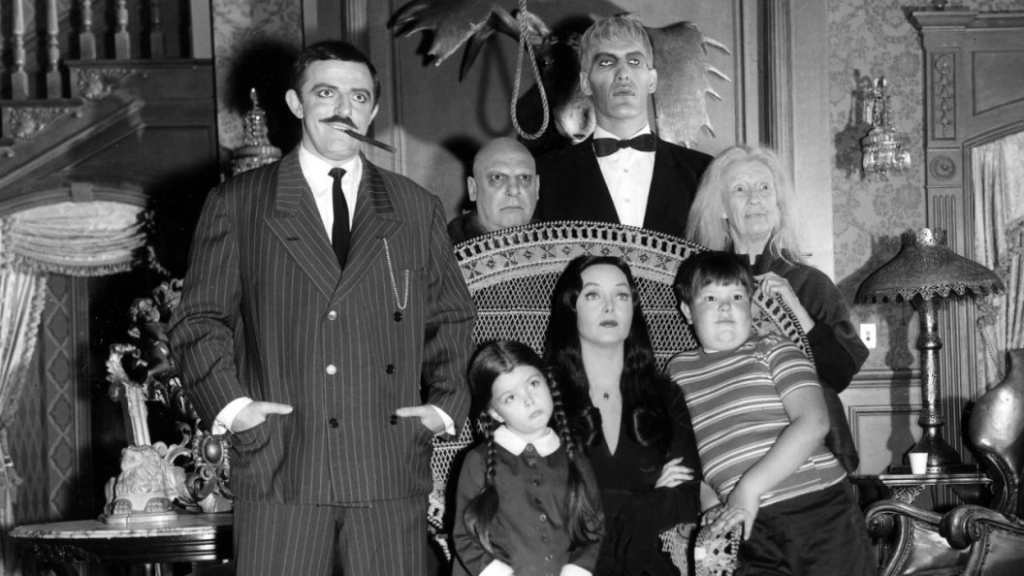
Like the Munsters family members, everyone in the Addams family is a bit off in some way. Wealthy former attorney Gomez Addams (John Astin) still is in love with his wife Morticia (Carolyn Jones) whom he often speaks to in French and refers to her as Cara Mia at times. Originally Carolyn turned down the offer to play Morticia because she was focusing on her movie career. She was persuaded to accept the role by her then-husband Aaron Spelling; the couple divorced not long after. Carolyn Jones had to endure sitting in the makeup chair for two hours every day. She worked with Nolan Miller to create a unique costume. Miller said that Morticia’s outfit was the most difficult one he had ever designed. The dress was very tight, especially around her feet. Gomez’s hobby is crashing model railroad trains. The prop department had to line Gomez’s pockets with asbestos because he put his lit cigars into his pockets.
The couple has two children: daughter Wednesday (Lisa Loring) and son Pugsley (Ken Weatherwax). They are polite children but Wednesday has a pet black widow spider and a headless doll named Marie Antoinette while Pugsley has a pet Octopus named Aristotle. Wednesday is named for the poem, which included “Wednesday’s child is full of woe.”
Photo: pinterest.com
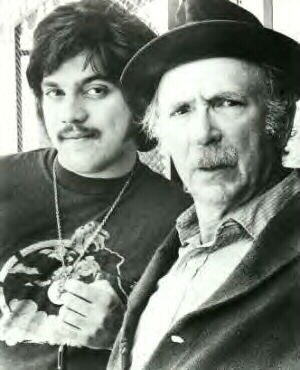
In addition, Uncles Fester (Jackie Coogan), Grandmama (Blossom Rock), and the butler Lurch (Ted Cassidy) all live in the house. Fester enjoys playing with dynamite, Grandmama is always experimenting with potions and has a crystal ball, and Lurch always replies to his summons with “You rang?” Coogan was rejected for Uncle Fester. He went back home, shaved his head, and did his own makeup and costuming. Then he went back and got the part. Ted Cassidy got a lot of fan mail from teenage girls who thought he was so cute.
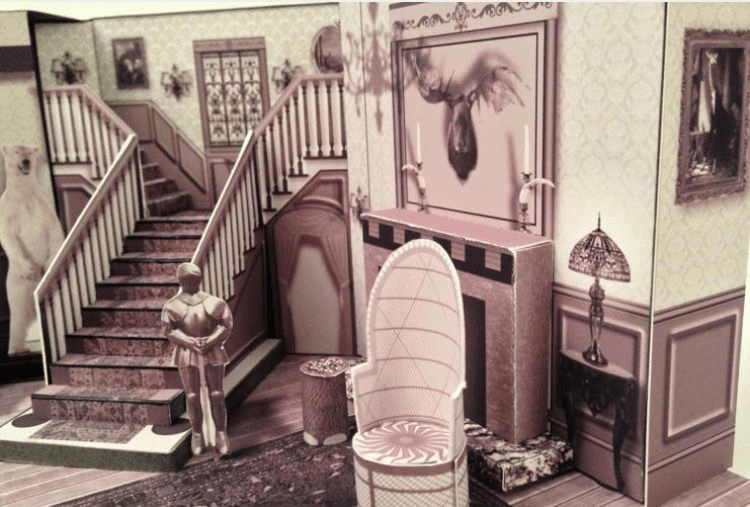
Their house décor is rather dark including a Venus flytrap, an art piece where a human leg protrudes from a swordfish’s mouth, and a taxidermied two-headed tortoise. The interior of the house was inspired by the apartment in Manhattan where Charles Addams lived. It contained suits of armor, an antique crossbow collection, and other oddities.
Cousin Itt Photo: costumerealm.com
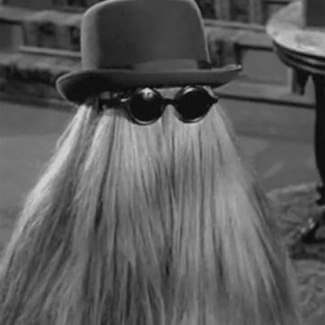
Thing is a gloved hand which shows up in places around the house. Cousin Itt (Felix Silla), who is all hair except for a hat and sunglasses, visits from time to time as does Ophelia, Morticia’s sister. Gomez was supposed to marry Ophelia in an arranged marriage but when he saw Morticia, he could not go through with it. Ophelia is an expert in judo.
The family considers itself quite sophisticated and cultured and they don’t understand the general public’s reaction to their home and actions.
The theme was composed and sung by Vic Mizzy. He also snaps his fingers through the song. You could hear Ted Cassidy say “neat,” “sweet,” and “petite” during the lyrics. Mizzy would also write the memorable theme for Green Acres.
In the early seventies, there was a Saturday morning cartoon with the actors voicing their characters. In 1977, a reunion made-for-television film, Halloween with the New Addams Family, was filmed with all the original actors except Rock who was quite ill at the time.
Like so many shows of the sixties, a lot of memorabilia was released for this series. You can choose from trading cards, comic books, board games, lunch boxes, and a ton of action figures.
Photo: strongmuseumofplay.com
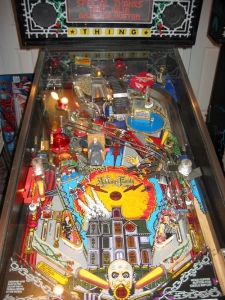
A major film, The Addams Family, was released in 1991 starring Raul Julia as Gomez, Angelica Huston as Morticia, and Christopher Lloyd as Uncle Fester. A sequel aired in 1993, Addams Family Values. In 1998 a reboot, The New Addams Family debuted on Fox and ran for two years just like the original. I honestly never saw either of the big-screen movies or any of the television reboots, so I cannot speak to whether they did the original show justice or not. The movie also spawned a popular pinball machine, which became the biggest-selling pinball machine of all time with more than 20,000 units sold since 1992.
Considering that both The Munsters and The Addams Family were only on the air for two years, and did not even rack up the typical number of shows needed for syndication, it is truly amazing that more than fifty years after the original shows aired, they are still very popular. I think like the Bewitched vs Jeannie debate, there are arguments for which family was more fun; my vote would have to go to The Addams Family, but if you have never watched either of the series, you should at least check a couple of episodes out. They probably would not work out so well to binge watch, because I think they would get boring quickly, but that is only one humble opinion.
This month we are “Examining Our Favorite Medical Series.” Beginning in 1969 and staying on the air for seven seasons, this show was a show that the entire family could agree to watch. In fact, on The Partridge Family, there is at least one episode where the Partridges are watching Marcus Welby, MD.
Marcus Welby (Robert Young) is a family doctor who truly likes and knows his patients. Sometimes he even made house calls. Dr. Steven Kiley (James Brolin) is his business partner and they both rely on Nurse/Office Manager Consuelo Lopez (Elena Verdugo).
Produced by David Victor and David J. O’Connell, the show aired on Thursday nights. Victor also produced episodes of Dr. Kildare as well as The Man from U.N.C.L.E., Owen Marshall, Counselor at Law, and Lucas Tanner, among others. O’Connell produced episodes from several series but he was kept busy in the Editorial Department for a slew of shows, including Tales of West Fargo, Bachelor Father, Leave It to Beaver, The Jack Benny Show, Wagon Train, McHale’s Navy, and The Munsters. (In the future, I will definitely look into a show about editors for a blog.)
Welby and Kiley were very different. Kiley rode a motorcycle to work while Welby drove a sedan. Welby was a widower; he started his career as a doctor in the US Navy during the war. He enjoyed sailing on the ocean. Welby often wanted to use more radical treatments than his younger partner who was more conservative in his patient care. A lot of ailments were tackled on the series including impotence, depression, brain damage, breast cancer, epilepsy, Alzheimer’s, rape, and abortion.
Photo: WorthPoint.com
The two doctors had a private practice with operating privileges at Lang Memorial Hospital. Both doctors had girlfriends, Myra (Anne Baxter) and Janet (Pamela Hensley). Welby’s daughter (Christine Belford) and grandson (Gavin Brendan) were often on the set as was Kathleen Faverty (Sharon Gless), an assistant program director.
In season two the show made it to number one for ABC. Both Young and Brolin won Emmys and the show won an Emmy for Outstanding Dramatic Series.
After seven seasons of medical storylines, the show’s viewership began to wane. Many of the medical series were running out of steam at that time. Once ratings continued on the decline, the show was canceled.
Photo: decider.com
However, eight years later, The Return of Marcus Welby, MD aired. Young and Verdugo continued their roles although Brolin was no longer available. It must have done well, because a second movie was filmed in 1988–Marcus Welby, MD – A Holiday Affair. This would be the last acting role Young would accept.
I have many fond memories of watching this show when I was young with my family. Marcus Welby reminded me of our family doctors; he was kind, gentle, smart, and had a great bedside manner. And he made house calls! Don’t get me wrong, there are still many doctors with his characteristics and they kind of make house calls now over the computer but it’s not the same. Thanks, Dr. Welby, for caring for all of us for seven years.
As we wind up our up close and personal blog series, we are focusing on Gavin MacLeod. I have mentioned Gavin MacLeod’s name a lot in my blogs, but I have never devoted an entire to blog to him, so today is the day. Gavin had an impressive career; he starred in three sitcoms but those three garnered him almost 500 episodes. In addition, he took on more than a hundred guest roles on both the small and big screen.
MacLeod was born Allan George See in 1931 in New York. His mother worked for Reader’s Digest, and his father was an electrician. In 1952, MacLeod graduated from Ithaca College with a bachelor’s degree in fine arts, studying acting.
On Perry Mason Photo: imdb.com
He served in the US Air Force where he wrote, produced, and directed plays. After his service, he moved to New York City. While tackling acting auditions, he worked at Radio City Music Hall. While working as an usher there, he met Joan Rootvik, a Rockette. They married in 1955 and had four children. About this time, he took on the name Gavin MacLeod. MacLeod was a tribute to his acting coach at Ithaca, Beatrice MacLeod.
His movie career began with three movies in 1958. He would make 20 more before 2005, including Operation Petticoat and The Gene Krupa Story.
His television appearances began in 1957 on The Walter Winchell File. He would make another lucky 13 performances during the fifties including The Thin Man and Whirlybirds.
On Hogan’s Heroes Photo: pinterest.com
The sixties kept him busy. He took on comedy in The Dick Van Dyke Show, The Munsters, Gomer Pyle USMC, The Andy Griffith Show, My Favorite Martian, The Flying Nun, and several different characters on Hogan’s Heroes. Westerns called him for Rawhide, The Iron Horse, Death Valley Days, and The Big Valley. He landed dramas including The Man from UNCLE, Perry Mason, Ironside, Hawaii Five-0, and Ben Casey.
From 1962-1964 he starred as Happy in McHale’s Navy. The show continued until 1966, but Gavin left the show halfway through. He was dealing with alcoholism, and he received an offer to make the movie The Sand Pebbles with Steve McQueen. However, he remained close friends with Ernest Borgnine, the star of the show, until his death in 2012. (He quit drinking in 1974.)
Murray and Mary Photo: showbizcheatsheet.com
During the 1970s, he appeared on Love American Style, Charlie’s Angels, and Wonder Woman, but the character we loved best during that decade was Murray Slaughter on The Mary Tyler Moore Show. From 1970-1977, Murray sat next to Mary, helping her through the ups and downs of life. Gavin was originally auditioning for the role of Lou Grant, but ended up reading for Murray. He and Ted Baxter were enemies on the show, but he and Ted Knight were dear friends in real life. They had lived near each other before being cast in the show.
During the run of the show, Gavin and his first wife divorced, and he married his second wife Patti Steele. That marriage also ended in divorce in 1982. Patti became part of a Bible Study group after their divorce and became a Christian. Gavin reached out to her, also became a Christian, and they remarried in 1985.
Photo: travelweekly.com
Upon the ending of Mary’s show, he was immediately hired as Captain Stubing on The Love Boat. This time he was in charge of his coworkers. One of his best friends was Bernie Kopell who played Dr. Adam Bricker on the show. Gavin was on the seas for a decade. His best friend Telly Savalas (the lollipop-loving Kojak star) popped up on The Love Boat; the two were very close until Telly’s death in 1994.
When the show ended in 1987, he got a well-deserved break, but he still managed to find time to tour with Michael Learned in “Love Letters.”
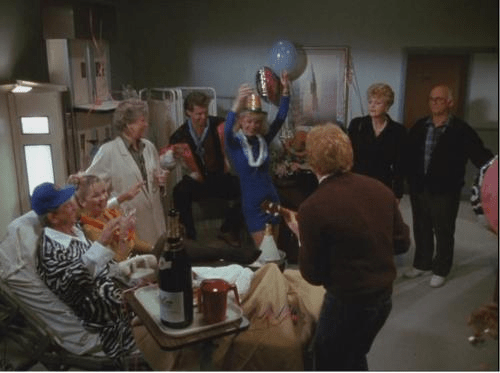
Celebrating on Murder She Wrote Photo: imdb.com
He landed a variety of television show appearances in the 1990s and 2000s, including Murder She Wrote, King of Queens, JAG, and That 70s Show. His final appearance was in 2014 on The Comeback Kids; then he decided to retire. He also did several musicals after The Love Boat including “Gypsy,” “Annie Get Your Gun,” and “Gigi.”
MacLeod and his wife hosted a show on marriage on Trinity Broadcasting Network for 17 years. He also served as the honorary mayor of Pacific Palisades from 2006-2011 when Sugar Ray Leonard took over.
The Love Boat was a big part of his life. Instead of being bitter about being typecast, he embraced the role. He celebrated his 80th birthday in 2011 aboard the Golden Princess with his family, celebrating with a 3D replica cake of The Pacific Princess, his boat on the show.
Photo: princesscruises.com
In 2013, MacLeod joined his former coworkers on The Talk for a cast reunion. Several members of the cast including Gavin took part in The Rose Bowl Parade in 2015.
The cast apparently was very close. Ted Lange who played bartender Isaac Washington mentioned the crew in an interview in 2017 with “The Wiseguyz Show,” saying “Oh yeah, sure, Gavin was wonderful. Gavin lives down here in Palm Springs and we’re still tight, all of us, Gavin and Bernie and Jill; we still see each other. Fred [who played Gopher] lives in a different state, we’re still close, we’re still good friends.”
In his spare time, Gavin enjoyed traveling, playing tennis, dancing, golfing, sailing, reading the Bible, and watching movies. Gavin passed away in May of 2021 at his home.
Photo: twitter.com
During the past decade, he released a memoir, This is Your Captain Speaking: My Fantastic Voyage Through Hollywood, Faith & Life. He explained his goal for writing this book: “My life has taken one incredible turn after another,” writes MacLeod. “I’ve gotten to do what I wanted to do. I’ve been a captain! I’ve been given this incredible gift of life and now I want to use it to give back. That’s why I’m sharing my story here, the fun parts and even some not-so-fun parts, in the hopes that maybe someone will take a nice walk down memory lane with me – and maybe I’ll even give someone a little bit of hope.”
Good memories and a little bit of hope is all we can ask for; thanks, Gavin, for giving that to us.
Finishing off our “Men of November” series is Louis Nye. If you watched television in the sixties, you will recognize Louis, but you might not know why.
Photo:
Born Louis Neistat in Connecticut in 1917, he was the son of parents who emigrated to the US from the Russian Empire and became naturalized citizens in 1911. Louis wanted to get involved in acting but his grades weren’t good enough for him to participate in the drama club. He opted for work on WTIC Radio instead. He also joined the Hartford Players.
The work on local radio led to his decision to move to New York City to work on the radio, often on soap operas. Nye married songwriter Anita Leonard in 1940. Unlike many Hollywood couples, they remained married until Nye’s death.
**FILE** Steve Allen, third from left, and some of the original cast members of the popular 1950’s television show, “Steve Allen Show,” gathered in Beverly Hills, Calif. in this Oct. 4, 1990 file photo to honor Allen and to celebrate the re-broadcast of 100 episodes of his show on HA! TV Comedy Channel. They are, from left: Tom Poston, Don Knotts, Allen, Louis Nye, Pat Harrington Jr., and Bill Dana. Nye died Sunday at his home in Los Angeles after a long battle with lung cancer, his son, Peter Nye, told The Associated Press on Monday. He was 92. (AP Photo/Kevork Djansezian, FILE)
World War II interrupted his career. He was assigned to run the recreation hall in Missouri. He would entertain troops and was able to meet Carl Reiner, who had a similar sense of humor, and who was also part of Special Services performing in shows across the Pacific.
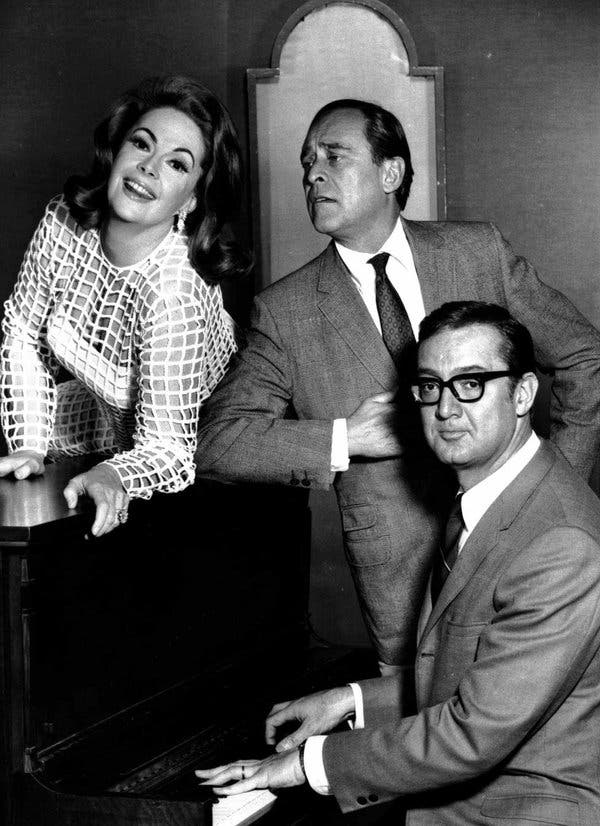
With Steve Allen and Jayne Meadows Photo: nytimes.com
After the war ended, he returned to New York, getting jobs on television and appearing on Broadway. His first tv role was on The Admiral Broadway Revue in 1949. He appeared on several shows during the fifties but was best known for his work on The Steve Allen Plymouth Show and the New Steve Allen Show. He became close to the entire cast which included Don Knotts, Tom Poston, Pat Harrington Jr., Dayton Allen, Gabriel Dell, and Bill Dana. Nye often portrayed wealthy citizens during the “Man on the Street” sketches. When he took on the role of Gordon Hathaway, the egotistical Country Club snob, saying “Hi-ho Steverino,” Allen often cracked up. When the show moved to Los Angeles, Nye went with it.
Photo: youtube.com
His first recurring role was that of dentist Delbert Gray on The Ann Sothern Show in 1960 and 1961. He was very busy during the sixties, appearing on a variety of shows including The Bob Hope Show, The Jack Benny Show, Mike Douglas, The Munsters, Jackie Gleason, and Phyllis Diller. From 1962-66, he would pop in on The Beverly Hillbillies as Sonny Drysdale, the spoiled stepson of banker Milburn Drysdale.
Photo: imdb.com
In the seventies, he could be seen on shows such as Laugh-In, Love American Style, Laverne and Shirley, Starsky and Hutch, and Fantasy Island. He was offered a permanent role on Needles and Pins in 1973. The show only lasted for 14 episodes. The series was about the garment industry. Women’s clothing manufacture Nathan Davidson (Norman Fell) works with a group of employees including characters played by Nye and Bernie Kopell. It didn’t receive great reviews and many of the writers said it talked about the garment industry but showed very little and was set in one small spot, inhibiting what plots were even available.
During those decades Nye would also get offers on the big screen from time to time but most of the roles were smaller cameo parts. However, he appeared with a lot of celebrities in these epics including Bob Hope, Jack Lemmon, Lucille Ball, Dean Martin, Walter Matthau, and Jack Webb.
He also recorded several comedy albums using several of his characterizations. One of his most successful LPs was “Heigh-Ho Madison Avenue.” It parodied market research, advertising agencies and post-WWII society. Some of the pieces on the album include “The Gray Flannel Blues,” “The Ten Commandments of Madison Avenue (Plus Big Bonus Commandments),” and “The Conspicuous Consumption Cantata.”
Asea on the Love Boat Photo: drunk tv.com
He continued to keep busy in the eighties on a variety of shows including Here’s Boomer, Aloha Paradise, The Love Boat, The Cosby Show, and St. Elsewhere.
Curb Your Enthusiasm Photo: youtube.com
His last role was another recurring one where he played Jeff Garlin’s father on Curb Your Enthusiasm from 2000-2005. Nye passed away from lung cancer in 2005.
I’m not sure what to think about Nye’s career. I think in the right role, he would have excelled in a television comedy or a big screen epic which he never had the opportunity to do. He was multi-talented and appeared on Broadway, in clubs, and on the radio, and he created comedy albums as well as appearing in movies and television. However, I often read quotes of his where he said he only wanted to be funny at parties and always considered himself a serious actor. He was so brilliant and funny with his 15 accents and wide range of characterizations that he seemed pigeon-holed as a comedy character actor early in his career. I wondered if he was sad that he never had the chance to appear in a classic drama, or if he accepted his successful career for what it was, just being thankful he was in the entertainment industry for his entire working life.
Photo: wikifandom.com
Since we cannot ask him directly, all we can do is tip our hats to him in appreciation for the decades of laughter and entertainment he provided for us. Thank you, Mr. Nye.
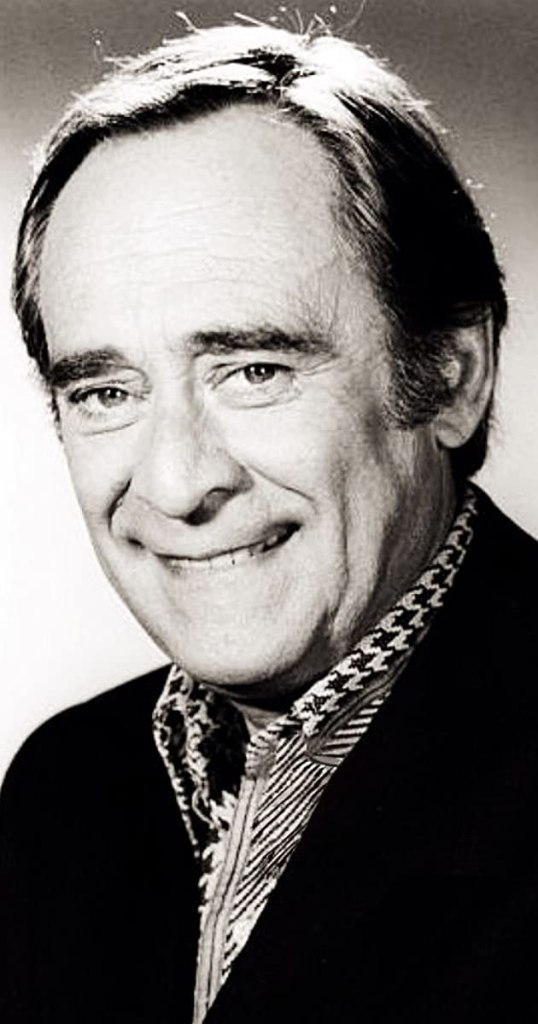
As we wind up our What a Character series, it seemed fitting to end with Mabel Albertson, perhaps the most recognizable of our character actors. She is often remembered for playing the mother of well-known characters. Mabel was born in Massachusetts in 1901. Her mother, who was a stock actress, helped support the family by working in a shoe factory. Mabel’s brother Jack would also become a famous actor.
Photo: pinterest.com
Mabel knew she wanted to get involved in the entertainment business at a young age. When she was 13, she played the piano for $5 a performance. She graduated from the New England School of Speech and Expression.
Albertson began working in stock, vaudeville, and night clubs and appeared with Jimmy Durante. Eventually she moved to California where she became involved with the Pasadena Playhouse where Charles Lane got his start.
Photo: youtube.com
Mabel married Austin Ripley, and they had a son in 1926, but their marriage soon dissolved. Mabel decided to pursue a career in film. Although she would have credits for 27 movies during her career, her film career was not what she hoped for. So, she switched gears and tried out radio. During the 1930s, she co-starred with Phil Baker on The Armour Hour and from 1936-37, she was in Dress Rehearsal with Pinky Lee. She also did some writing for the show.
photo: imdb.com All The Fine Young Cannibals
In 1937 Mabel married writer Ken Englund who adopted her son George. He began writing for Paramount Pictures and later would be hired by RKO, Columbia Studios, 20th Century Fox, and The Samuel Goldwyn Company.
Photo: pinterest.com Burns and Allen
Although her husband’s career was made on the big screen, her career really took off when television made its appearance. Her first role on the small screen was on the Chevron Theater in 1952. During the 1950s, she appeared in 21 different shows. Although many of her roles were on the playhouse and theater shows, she also showed up on Burns and Allen, Topper, December Bride, Bachelor Father, JackBenny, and Have Gun Will Travel. In 1955, she was offered a role in Those Whiting Girls. She played the girls’ mother. The show was on the air until 1957.
Photo: sitcomsonline.com Those Whiting Girls
Mabel became the “face” of television sitcom mothers. She played Phyllis Stephens, Darrin’s mother on Bewitched and often said “Frank, take me home, I’m getting a sick headache.” Her husband wrote several Bewitched episodes (season 1, episodes 25 and 30).
Photo: pinterest.com Bewitched
She played Mabel, Paul Lynde’s mother-in-law on The Paul Lynde Show; she was the mother of Marilyn’s boyfriend on The Munsters, as well as Alice’s mother on Bob & Carol & Ted & Alice. Fans of That Girl will remember her as Don Hollister’s mother, and she was seen on The Andy Griffith Show as Howard Sprague’s mother. Her last mother role was on the New Dick Van Dyke Show as his mom.
Photo: jacksonupperco.com That Girl
Her most successful years were the 1960s when she appeared in 39 television shows, including Perry Mason; Ben Casey; My Three Sons; Hazel; Ozzie and Harriet; The Wild, Wild West; Daniel Boone; Gomer Pyle USMC; Love American Style; and Gunsmoke. A review for her performance on Gunsmoke is posted by jlthornb5110 on imdb.
The review states that her role of Kate Heller is one “of the standout episodes of the series with Miss Mabel Albertson giving what is nothing less than the performance of a lifetime. Beautifully written by Kate Hite, this is a powerful presentation and one in which Albertson truly shines. The climax is absolutely soul shattering and among the most dramatically emotional ever filmed for television. Miss Albertson plays it with a sensitivity and an incredible insight you will never forget. The character of Kate Heller is heartbreaking but quietly strong, a survivor of the psychological brutality of loneliness in the old west and the violence that was part of existence. Mabel Albertson gives the character everything she has within her, brings her to life, and makes her one of the most unforgettable personalities to ever appear on Gunsmoke or any other television series in history.”
Photo: cscottrollins.blogspot.com The Tom Ewell Show
She was offered a role as a permanent cast member in The Tom Ewell Show in 1960. The premise of the show is that real estate agent Tom Potter played by Ewell must learn to live in a household of females including his wife, his three girls and his mother-in-law Irene played by Albertson. Even their dog, Mitzi, was a girl. Although Mabel’s brother Jack would be best remembered for his role on Chico and the Man, he appeared on this series with his sister in 1960. The series aired 32 episodes before it was canceled.
Photo: findagrave.com Jack Albertson
I’m not sure where she found time for Broadway during this decade, but she was in The Egg in 1962 and Xmas in Las Vegas in 1965.
While her career began to slow down in the seventies, she was still quite busy, appearing in The Doris Day Show, Ironside, Marcus Welby, and The Mary Tyler Moore Show, among others. She appeared in an episode of Arnie with her brother in 1970. She also worked with her daughter-in-law, Cloris Leachman, in the movie Pete and Tillie in 1974.
Photo: pinterest.com Frank, I feel a headache coming on
Her family continued to attract talented actors. Her granddaughter-in-law was actress Sharon Stone.
In 1975, Mabel was forced to retire. Her memory was beginning to fail, and she was later diagnosed with Alzheimer’s Disease. She passed away from the illness in 1982.
Photo: pinterest.com
Like Milton Frome, I was both sad and disappointed to learn how little information there was about Mabel Albertson. I thought I would learn more about her working relationships considering she had a fifty-year career and played iconic mother roles on so many well-loved shows.
As we wrap of this edition of What a Character! series, my hope is that you recognize and acknowledge these actors when you see them when tuning in to your favorite classic shows and remember how much they contributed to our television history. Personally, to keep Mabel’s memory alive, I think any time we are having a family situation, I will turn to my husband and whisper, “Frank, take me home, I’m getting a sick headache.”
In our quest to go behind the scenes during this month of blog posts, today we learn a bit about set decoration. There are several job positions available on the set of a television show. The set decorator is responsible for buying or renting the set items, the storage of items, placement and monitoring the budgets. The assistant set decorator reports to the set decorator. They often do research before planning for the various sets. The set buyer also reports to the set decorator. They take care of purchasing or renting the individual items needed for the set. Buyers create relationships with stores and antique vendors. The lead dresser carries out tasks assigned by the set decorator. The onset dresser takes care of props, cleans items, places items in relationship to the camera lens.
Beth
Kushnick, the set decorator for The Good
Wife shares some advice for set design: do your research, create a
decorating workbook, choose an item that sets the tone of the room, carry a
tape measure with you at all times, try out different furniture placement, and consider
using unusual paint colors.
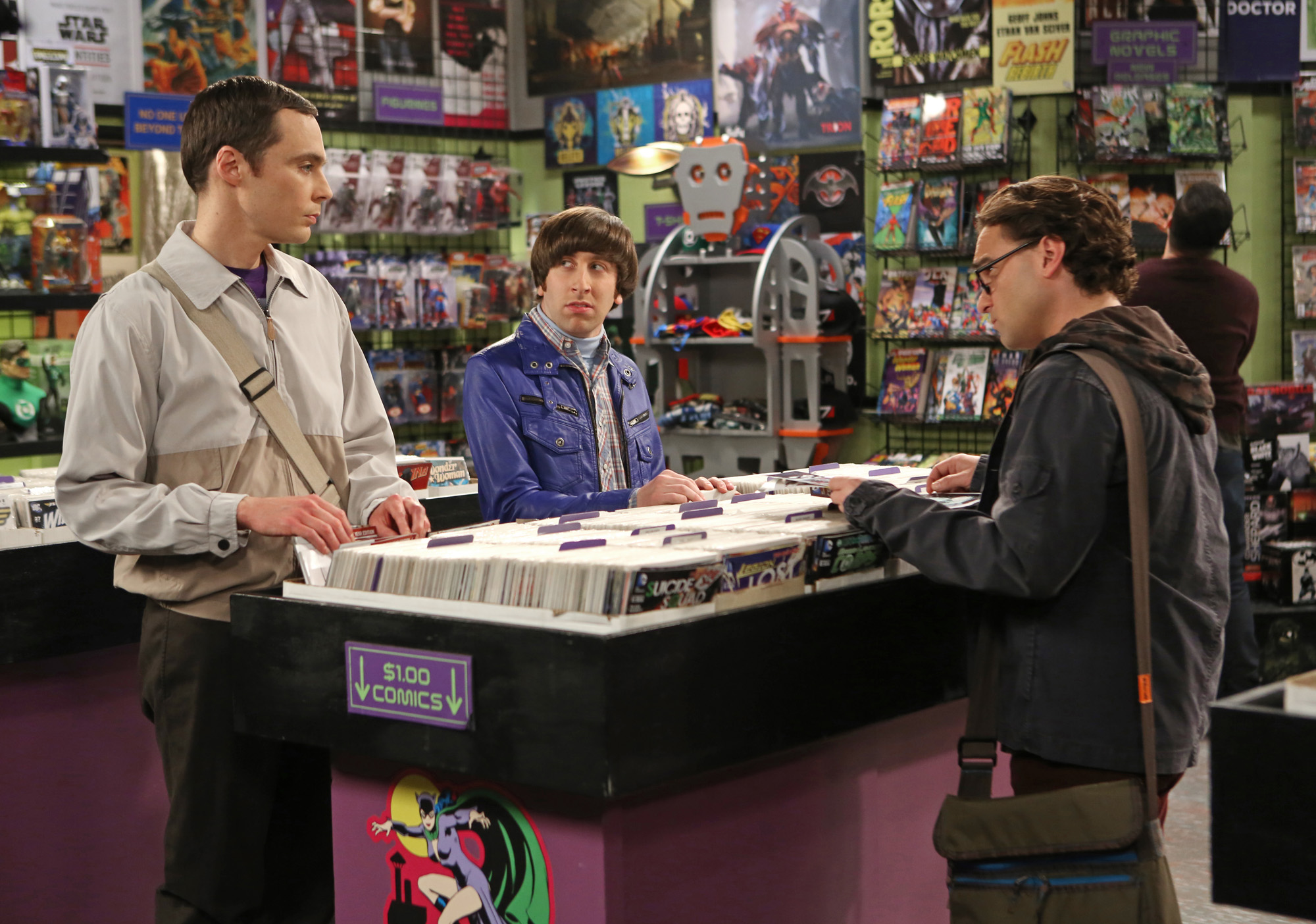
Maggie Masetti wrote an article in 2012 about chatting with Ann Shea, set decorator for The Big Bang Theory. Ann says “she is the set decorator, and so usually once I get the plans and the walls are built is when I start my work of providing the furniture and the plants and the artwork and all the cool objects, the floor coverings and the practical lights.” She has a variety of sources she uses to shop including prop houses, online shops, and retail stores. She said once the sets are developed, she continues to be busy. Sets are put up and taken down over and over and they have to be just right. Also, if a show is on for an extended time period, subtle changes are necessary just like our homes.
Ann said once she determined the set for the comic book store, she was happy, but then a producer said that it had to change every episode like a real store with inventory in and out—as viewers we don’t think about all the work that goes into sometimes more minor settings. I’m thinking about how much a set designer would have to learn to create an astrophysicist’s office/lab. A couple of her favorite items that show up on the show include the DNA sculpture, the WMAP beach ball, and the periodic table shower curtain.
Photo: spotern.com
One of the
things I hadn’t considered was that designers have to fill closets and drawers
in the main sets, so everything is realistic.
I thought it would be fun to consider some of the sets from shows that are a bit more unique and then look at shows that had to be more realistic. Let’s take a look at a few shows that had unusual sets: The Munsters, Gilligan’s Island, and Green Acres. Then we’ll compare some apartments of some of our favorite television characters including Mary Richards, Bob and Emily Hartley, and Frasier Crane.
Photo: gilliganfandom.com The girls’ hut which you can tell by the flower box in the window.
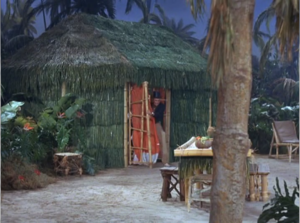
Photo: gilliganfandom.com The Howells’ hut with its orange door
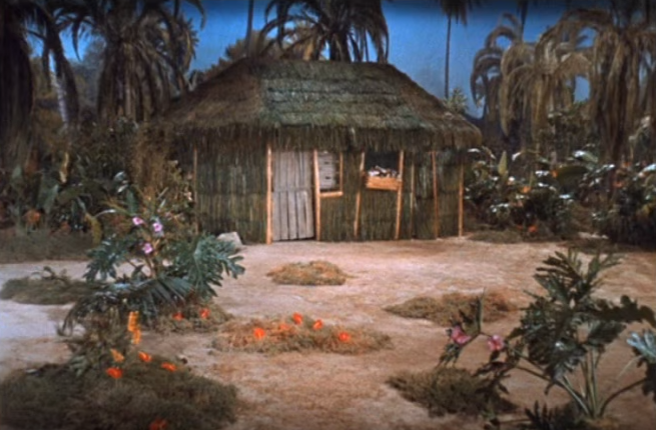
Gilligan’s Island sounds like an easy set to create. Just throw a few huts up on amid trees and jungle greenery, right? However, you have to personalize each hut with basic items to give each one its own personality. There is also that fine line that is often crossed on the show about how much stuff the castaways actually have with them. I am not surprised they had an accident and were wrecked; I don’t think the storm had anything to do with it, I think it was the thousands of pounds of luggage they apparently took on board.
Photo: gilligan’sisland.org
First, we have the Howell’s hut. Flowered red curtains frame the window. There are a number of knick-knacks setting about including Mr. Howell’s polo stick. There are twin beds with elaborate headboards, several wicker chairs, a writing desk, several tables, and a bamboo hutch. Of course, Mr. Howell installed a hidden safe for his valuables and money. A second room was built to store their luggage and clothing.
Photo: youtube.com
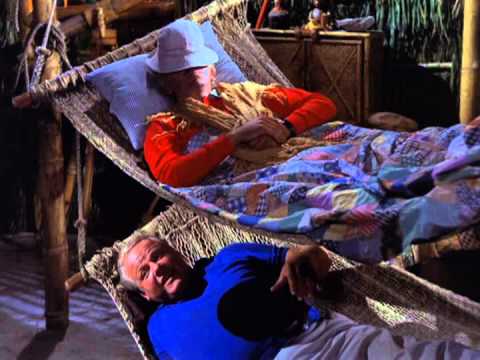
Gilligan and the Skipper share a hut with hammocks. There is a window for each of them at the front entrance. A bamboo telescope resides under one of the windows. Decorations are minimal but include a photo of the Skipper, several shells, a couple of candles, a small table and chair and a crate for Gilligan’s personal items. Gilligan and the Skipper don’t appear to have any other clothes than their uniforms.
Photo: youtube.com
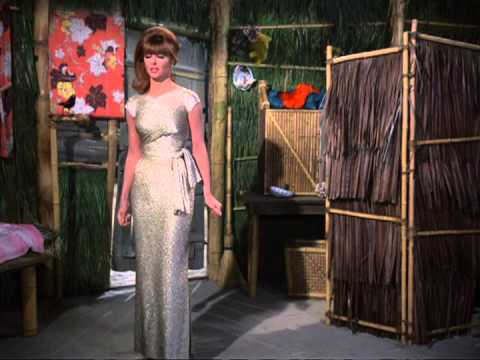
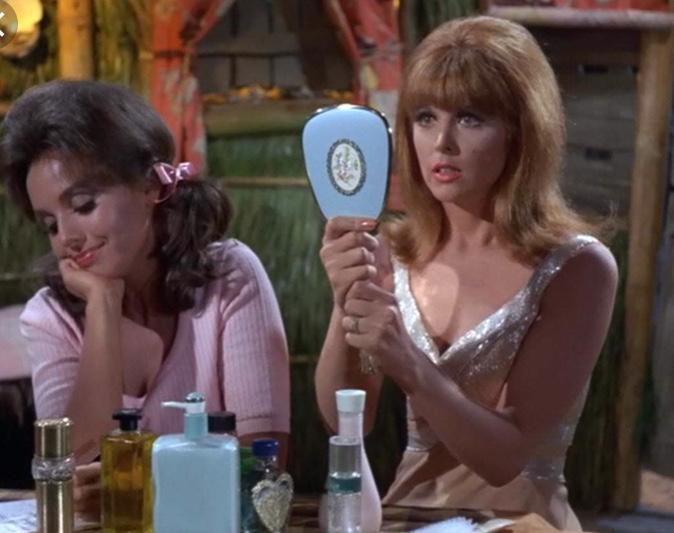
Mary Ann and Ginger also share a hut. A heavy wooden door and one window face the front. A flower box hangs on that. Flowery curtains make it look more “girly.” Each girl has her own cot and here are two tables, one for writing and one for make-up.
I’m assuming the Professor stays in the supply hut. This hut stores supplies, food, water, items salvaged from the SS Minnow and the Professor’s crudely designed laboratory. Like the girls’ hut, it has a heavy door and window out front and includes a smaller window as well. Boxes and crates are placed here and there as is the Professor’s equipment.
Photo: mentalfloss.com
The huts help define the characters who live there. In addition, we learn a lot about them by their clothing with the Howells appearing in designer clothing, Ginger in gowns, Mary Ann in informal rural outfits, the Professor in plain shirts and slacks, and Gilligan and the Skipper in their nautical attire.
Photo: pinterest.com
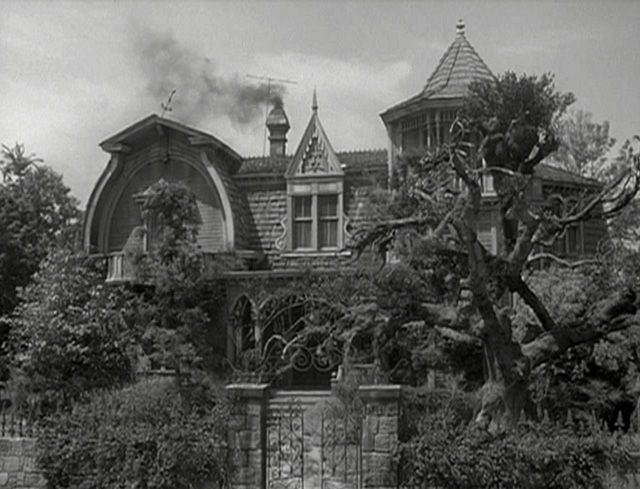
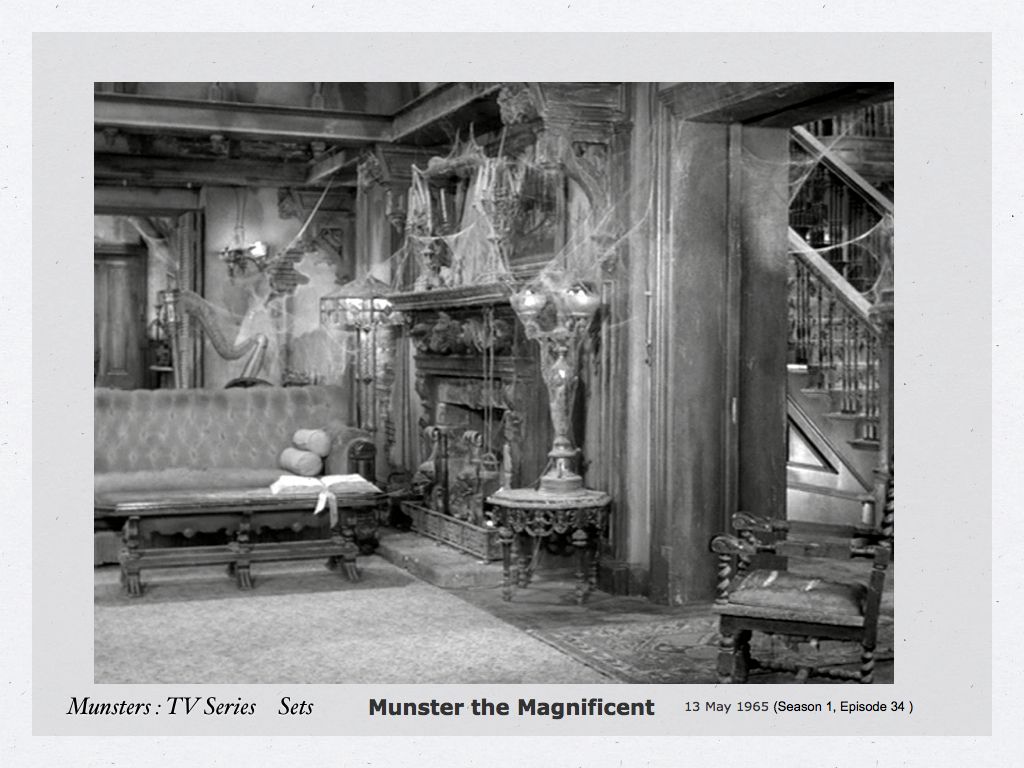
From the airy, tropical setting, let’s flip to the dark and dingy interior of The Munsters. The Munsters are said to live in an average neighborhood, but their home is anything but average. Located in Universal City, the house was rumored to cost a million dollars to outfit in 1963.
Although Herman works at the local undertakers and Eddie goes to school with the other kids, when friends come over, it is definitely not one of the cookie cutter homes in the neighborhood. There are cobwebs all over the house, and the windows are covered in curtains that let very little light in.
Photo: pinterest.com
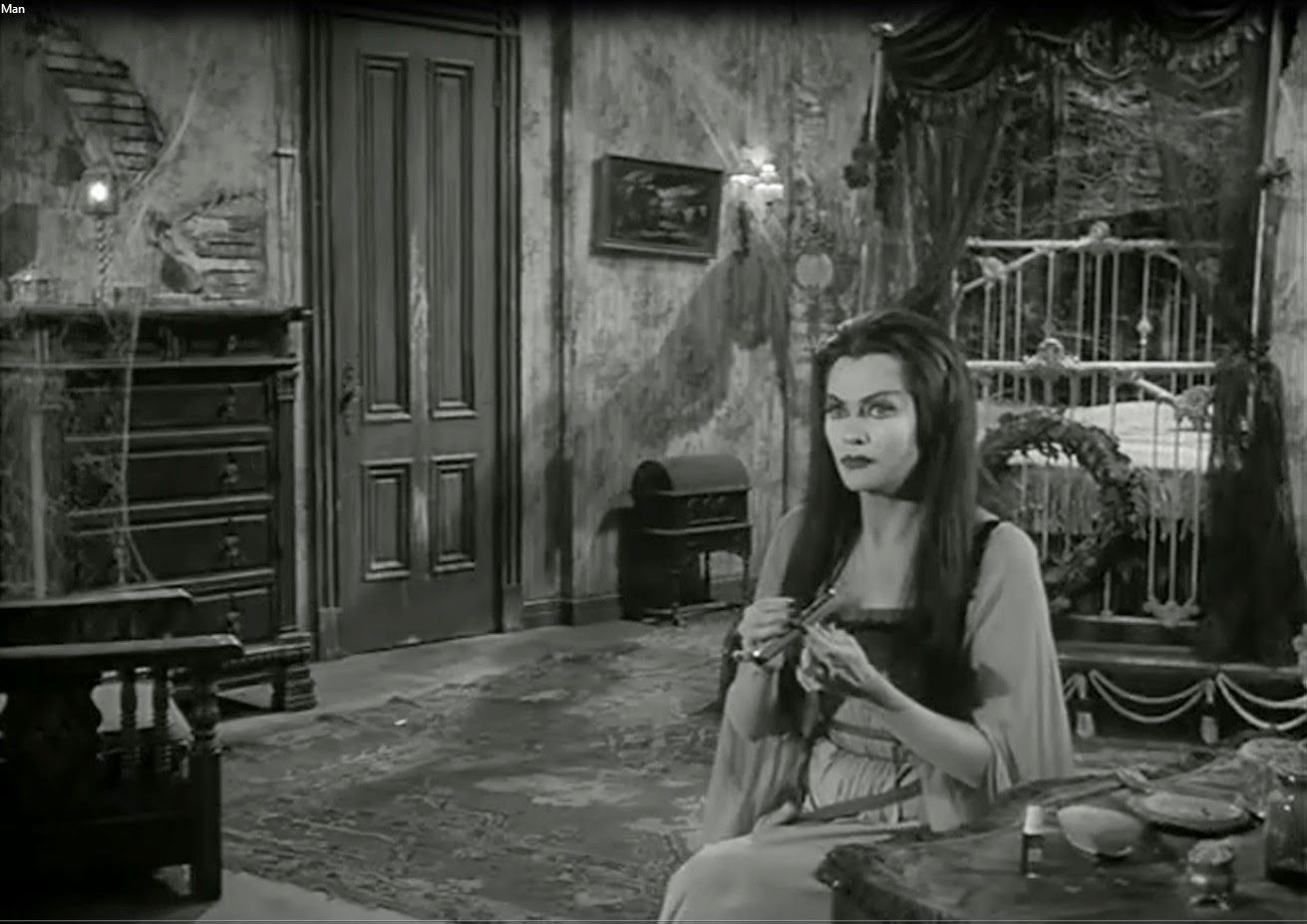
Lily’s bedroom looks more like a setting for a horror movie than a family sitcom, but she and Herman are quite comfortable in their master bedroom.
Photo: pinterest.com
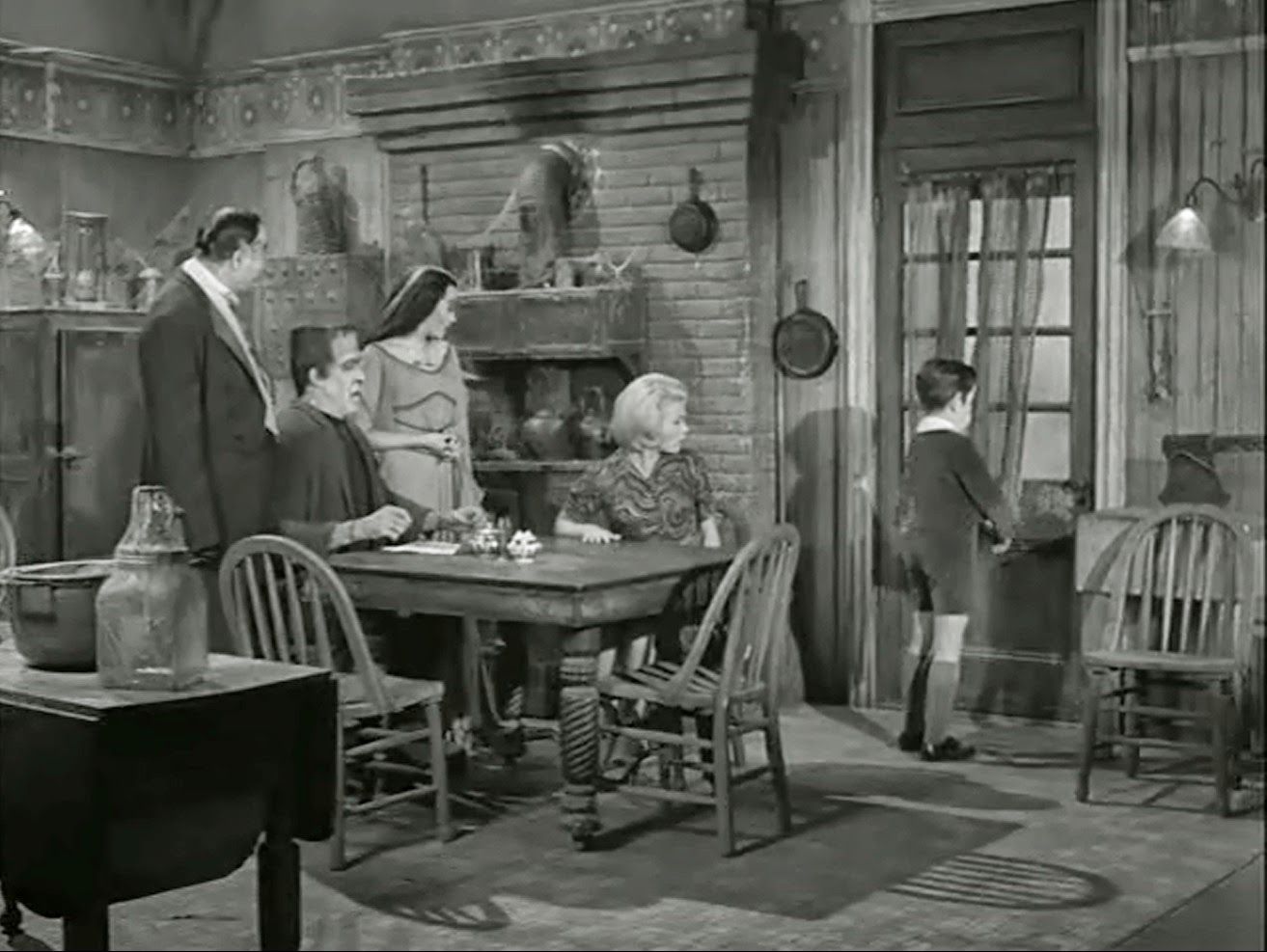
Although it appears to have been abandoned for quite some time, this is where the family gathers nightly. The furniture is heavy, dark and very Victorian. There is little in the way of knick-knacks.
Photo: pinterest.com
After open and sunny and then closed and dreary, let’s combine the two and look at the Douglas home on Green Acres. In New York City, Lisa and Oliver were wealthy and lived in a penthouse apartment with expensive furnishings. Their house in Hooterville is anything but exclusive.
Photo: hobbydo.com
The walls are falling down, the wallpaper is peeling off the walls, and one of their bedroom walls is open to the outside elements which makes it easy for them to climb the telephone pole when they need to make a phone call.
Photo: pinterest.com
Although they are in a rural setting, Lisa continues to wear her designer gowns and negligees and brought all her expensive items from her apartment.
Lisa and Oliver brought all their expensive artwork and furniture with them from their New York penthouse. Somehow it does not seem out of place for the Douglases. Lisa even uses her fine china and crystal daily.
While it’s fun to see some unique designs that set the stage for some of our favorite characters, now we switch gears to analyze three apartments that had more realistic designs. Often, we watch sitcoms and somehow in the middle of a city like New York, someone has a large apartment that we all realize they could not afford. In order to be more believable, set designers must rely on what a character could afford for their home and interior items on their salary.
Let’s take a look at three apartments and see how they change as we increase the salaries the characters have. The one thing all three have in common is a great terrace with a view.
Photo: chicagotribune.com
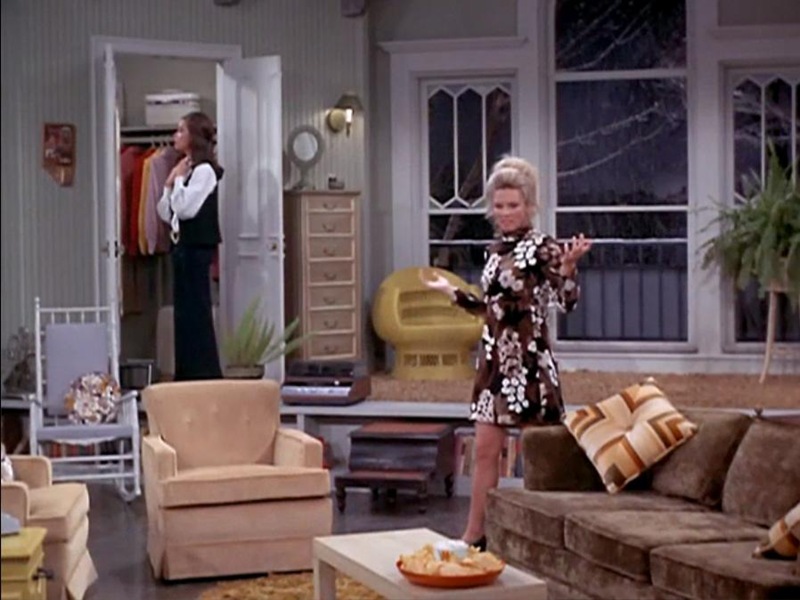
Mary Richards’ apartment on The Mary Tyler Moore Show is an iconic one. Growing up, most girls dream of having an apartment just like this one. Located in a classic Victorian home in Minneapolis, her home was affordable but cute and practical.
Photo: pinterest.com
Mary paid
$130 a month for her home. Mary often complains about having enough but not any
extra money, so she needs to be a bit frugal with her funds. This is a studio
apartment so her living room and bedroom share the same space. Usually this is
not an issue, but it’s tough to have company stay with her. One night after Mary
has settled down for the night, Rhoda and her date stop by and we see Mary
quickly trying to fold her bed back into the couch, so they don’t have to sit
on her bed and realize they woke her up.
Her rooms are outfitted with great storage options. In her sunken living room, there are shelves running around part of the room where she stores books and knick-knacks. A cozy little area with a chair and table is in front of her terrace window—a fun space where she can read or have coffee with a great view.
Photo: pinterest.com
A little
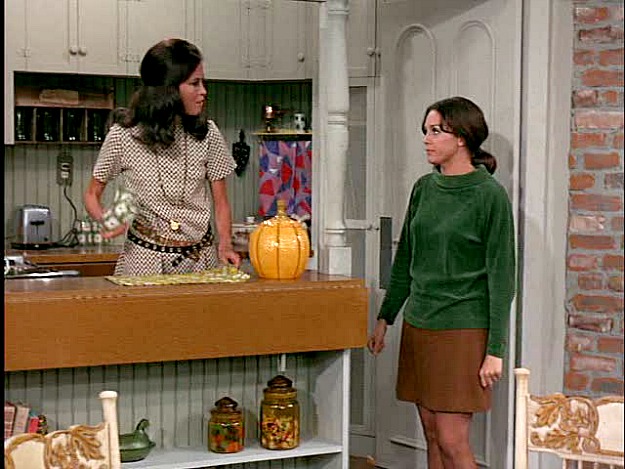
wood-burning fireplace sets off the kitchen, making the room cozy.
She has a functional but little kitchen. A decorative shade allows Mary to open up the area between the kitchen and living room or close it off if she doesn’t want people to see a mess in the sink.
Photo: imdb.com
To the left of the living room is a door. When it’s open, we see Mary’s closet and we know that if you keep going, you’ll find her bathroom. I don’t recall ever seeing the bathroom during the series, however.
Photo: hookedonhouses.com
While the
furniture is nice, it probably is not new, and Mary may have picked the items
up at used furniture stores or antique shops. Her larger pieces include her sofa
bed, a wicker coffee table, an armoire, and a table and chairs. Her personal
items strewn around the apartment tell us a bit about Mary. Most people
remember the large “M” that hangs on her wall. She has a Ben Shahn poster on
her wall in the first season and a Toulouse-Lautrec poster, Jane Avril, in
other years. A Laurel lamp is near the reading chair, a pop of sixties
modernism that Mary might have had in school in her room. We see her Samsonite
luggage that is good quality and probably was a present from her parents. The
pumpkin cookie jar adds a bit of color to the kitchen. These items tell us Mary
was sentimental, educated about art but could not afford the real thing, and was
an individual, learning her style now that she was living alone for the first
time.
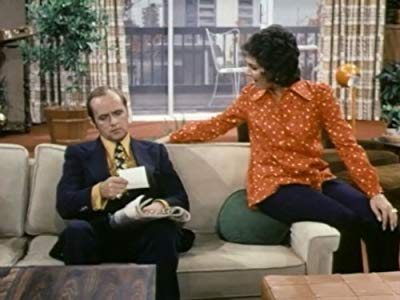
From Minneapolis, we travel down the interstate to Chicago where we find Bob and Emily Hartley’s apartment on The Bob Newhart Show. Bob and Emily are doing well, but we learn from their furnishings that they don’t care about things much. Bob is a psychologist but seems content to keep a small practice. Emily is a teacher and she and Bob debate about whether she should work or if she should work, so her salary is not necessary to their lifestyle.
Photo: xiguamovies.cf
They have a
beautiful apartment with a terrace and a view of Lake Michigan. It’s close to
the Thorndale station.
Like Mary, they have a sunken living room with the kitchen located off of it. The kitchen is bigger than Mary’s but still small. Much of the time they eat out or have something easy. Neither Bob nor Emily are gourmet cooks, but Bob grills on the terrace often.
Photo: dailymotion.com
A table between the two rooms is where they take their meals unless they are eating in front of the television. The television is on wheels and Bob can move it back and forth between the living room and the bedroom.
Photo: Ithinkthereforeireview.com
To the left of the living room is their large bedroom and bathroom. To the right is Bob’s den and another bathroom that does not have a tub or shower.
Photo: sitcomsonline.com
Like Mary, Bob and Emily enjoy art and have several pieces on their living room walls. They switch out their furniture a lot and we see three different sofas in their home: brown, white and royal blue.
Photo: dailymotion.com
My guess is
that they save a lot of their money and what they spend, they spend on travel,
books, and eating out.
Heading 32
hours west of Chicago, we arrive in Seattle, the home of Frasier Crane. Frasier
is also a psychologist like Bob. He is a well-known doctor and has his own
radio show, garnering him more money than Bob.
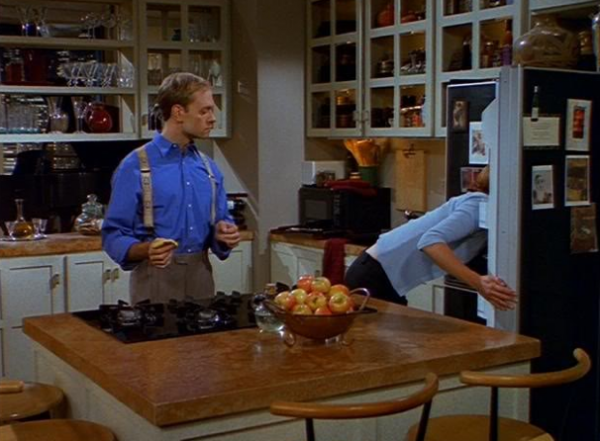
Frasier lives in Elliott Bay Towers and doesn’t have a view; he has “the” view. The backdrop for the terrace shows the Space Needle which cannot be seen in reality from these apartments. The cost for the backdrop was about $55,000 to construct. It seems very expensive for a prop, but it goes back to making sure everything about the apartment was the best Frasier could obtain.
Photo: thrillist.com
This was a very expensive set to design. According to the book, Frasier: A Cultural History, by siblings Kate and Joseph Darowki, the architecture and set building cost $250,000 and the total overall for the furnishings and other items came in at about a million dollars. A security guard was on site during shooting.
Photo: pinterest.com
According to Thrillist.com,
Frasier’s apartment today would cost about three million dollars. We realize
pretty quickly that Frasier is all about the good life and the image he wants
people to have of him as a successful, wealthy person.
Like the other two apartments, he has a small kitchen, but it is well equipped and stylish. Set designer Roy Christopher outdid himself by capturing Frasier’s personality in his home.
Photo: pinterest.com
There are quite a few bedrooms in the apartment. Frasier has a large one with an expansive master bath, that features a sauna and a whirlpool. His father and Daphne both have their own bedrooms and bathrooms as well.
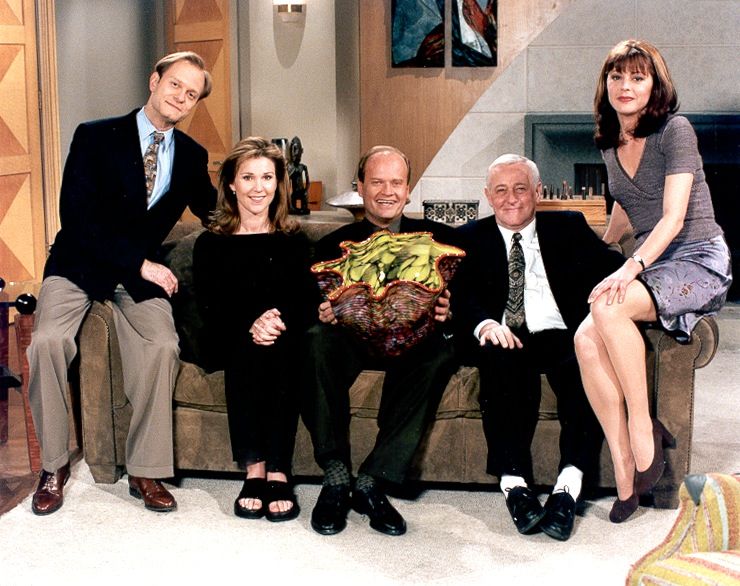
Frasier’s apartment is ultra-modern and is filled with expensive, high-end furniture and collectibles. His furniture is a replica, although shorter version, of Coco Chanel’s sofa. He has Eames and Wassily chairs and often throws around the designer labels he enjoys. The rooms are filled with decorative architectural details and expensive finishes. Much was made of the artwork scattered around the apartment.
Photo: pinterest.com
The Dale Chihuly glass bowl on a table near the fireplace was made specifically for the show and reproduced for an exhibit. A Mark Rothko painting was in Frasier’s master bath. Some of the other art included a Nick Berman floating ball, a Pastoe curved sideboard, Le Corbusier lamp, a Steinway grand piano, a Rauschenberg painting in the hall, and a variety of Pre-Columbian and African art.
Photo: pinterest.com
While Bob and
Emily didn’t care much about their furniture as long as it was comfortable; Frasier
cares dearly about every item in his apartment, except for his father’s Barcalounger
which is a reminder of the design element he does not want in his apartment. It
becomes the centerpiece of the apartment. The prop department did not think it
was “hideous” enough when they located it, so they added some dirt smudges and
duct tape to it. It’s a brilliant juxtaposition. We understand that despite the
expensive items surrounding him, Martin is quite comfortable in Frasier’s
house. His easy-going, but gruff, personality is not off-put by the sophisticated
design nor is he impressed by the expensive art. During the course of the show,
Frasier must learn to be as comfortable in his home as his father is.
It’s been fun
to view some of the spaces our television friends inhabited and take a closer
look at what helped reflect more about the characters as we take an in-depth analysis
of the items they chose to surround themselves with. Take a look around your own
space and see what it says about you to others and how it would help define you
as a sitcom character.







































 thewritelife61