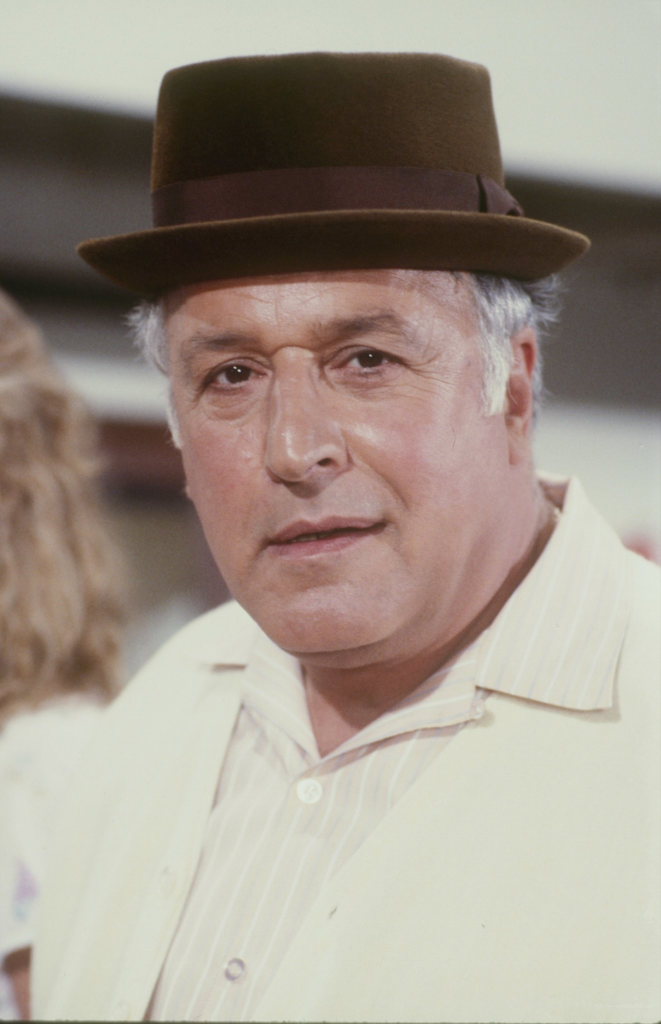
Noam Pitlik: What a Character

📷imdb.com

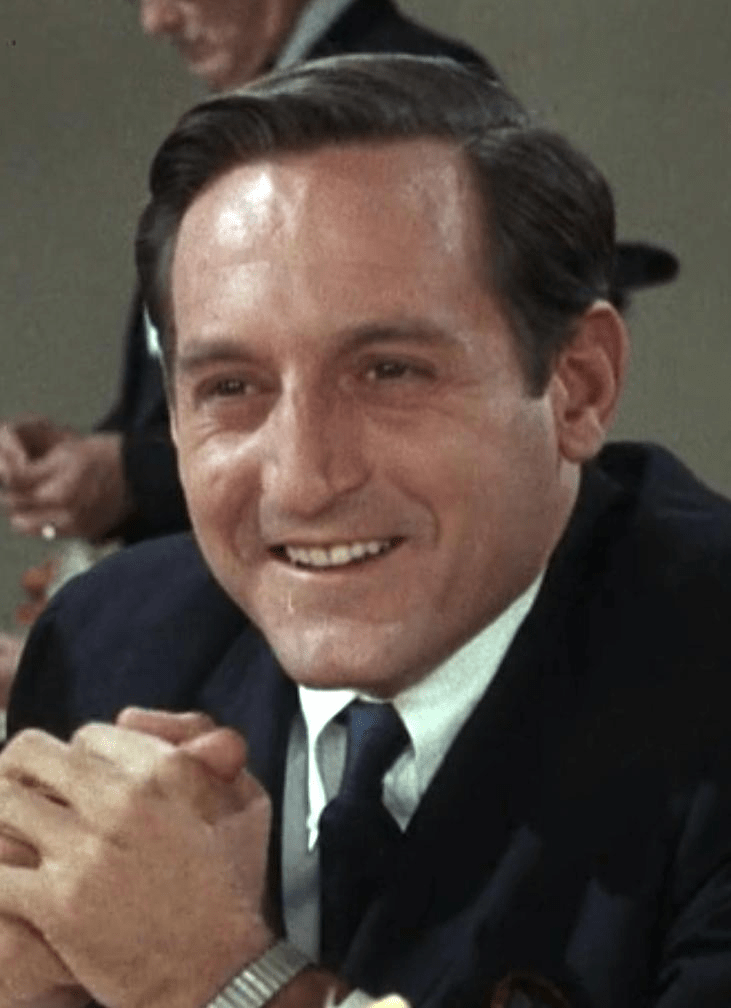
This month we are right in the middle of one of my favorite blog series, What a Character. This week we are delving into the career of Noam Pitlik; in addition to his acting, he won an Emmy for his work as a director. Which show? Let’s find out.

Pitlik was born in Philadelphia in 1932. After graduating from high school, he enrolled at Gratz College and later was a theater major at Temple University in 1954. Pitlik had a two-year stunt in the Army and earned a master’s degree in theater at New York University.

He began his acting career on WCAU in a western. In 1951, he was hired for the set design and construction crew for the Philadelphia Experimental Theater. He carried a bit of his hometown with him when he was part of the Summer Theater Guild in Indiana, Pennsylvania in the “Philadelphia Story.” He was hired for his Broadway debut in an off-Broadway production of The Threepenny Opera.”

📷imdb.com

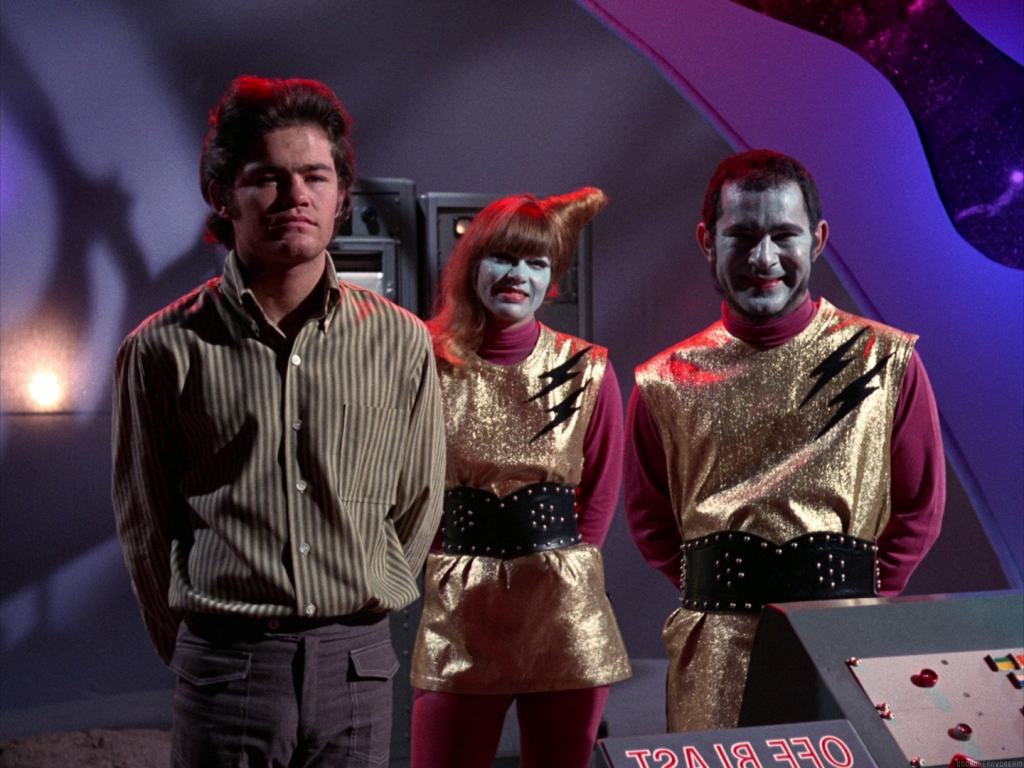
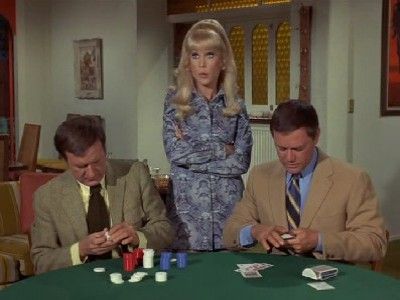
In 1961 he moved to Los Angeles and received his first television roles, appearing on Cain’s Hundred and Dr. Kildare. Cain’s Hundred was not a show I remembered hearing much about. It was about a former underworld lawyer who works with the federal government to bring the top 100 criminals to justice. The show lasted one season. Pitlik had a variety of offers for shows throughout the sixties. Most of them were dramas and westerns, but we also see him on My Favorite Martian, The Munsters, Gidget, The Flying Nun, The Monkees, The Andy Griffith Show, The Doris Day Show, Get Smart, That Girl, and I Dream of Jeannie.

During the sixties, he married for the first time. His marriage with Jesse Blostein in 1967 would only last three years.

Pitlik also appeared in fourteen films and eight made-for-tv movies. The most memorable films are The Graduate, Fitzwilly, and The Fortune Cookie.

📷famousfix.com

The seventies were his most prolific decade of acting. He appeared in 26 different series, often in 2-5 different episodes. You’ll see Pitlik in reruns in a variety of genres including Hogan’s Heroes, Room 222, Bewitched, Love American Style, All in the Family, The FBI, Cannon, Mannix, The Partridge Family, The Bob Newhart Show, The Odd Couple, and Barney Miller. His last acting appearance was in Becker in 1998.

The seventies were also when he tried the role of husband again, marrying Linda Hirsch in 1974; this marriage also lasted three years.

He began directing in the seventies and obtained 39 directing credits throughout the next two decades.

📷imdb.com

In an interview with Temple University for the Alumni Review in 1979, Pitlik said that the switch in his career was not “a case of my needing to change functions for economic reasons.  I used to figure out what I made a day as an actor, and it was obscene. I changed for emotional reasons. I had become very frustrated by the kinds of things I was doing in acting, and I was looking for a change in my life that would be more challenging. I enjoyed acting, but I never seemed to get enough to do.” His first episode as director was on The New Dick Van Dyke Show. He directed 12 episodes for The Practice and 11 for Taxi.

However, Barney Miller was where he perfected his skill as director for 102 of its 171 episodes. In 1979, he won an Emmy as Director for the show. He beat out Paul Bogart for All in the Family, Alan Alda and Charles Dubin for M*A*S*H, and Jay Sandrich for Soap. He also received a Peabody Award and a Directors Guild of America Award for his work on Barney Miller. He lost the Emmy in 1981 to James Burrows for Taxi. His co-nominees included Jerry Paris for Happy Days, Linda Day for Archie Bunker’s Place, Burt Metcalfe and Alan Alda for M*A*S*H, and Rod Daniel for WKRP in Cincinnati.
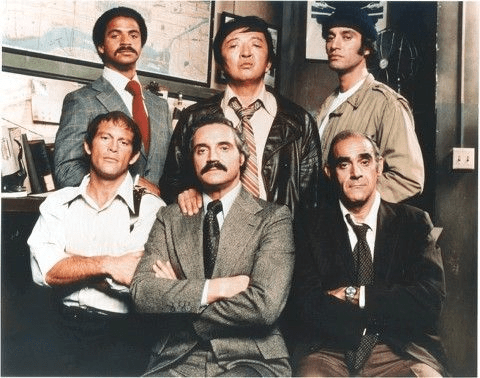
📷tumblr.com Cast of Barney Miller

In the Temple interview, Pitlik said that his “main responsibility is to create an atmosphere in which each of the people involved in the production can conform to their best work. Although a director oversees all aspects of the production, there are many people involved, and he’s dependent on all of them. There’s no more collaborative business than the television business. Each person contributes to the success or failure of a show whether he or she is a writer, actor, cameraman, or whatever.”

In 1995 he began directing episodes of The Home Court and did so for 14 of the 20 episodes. I must admit I do not remember this show at all. The synopsis was Sydney Solomon was a family court judge who had to deal with the toughest prosecuting attorneys and repeat offenders. However, her biggest challenges came when dealing with her kids, four boys aged 11-19.

📷pinterest.com

Pitlik had better luck with his third marriage to Susan Whittaker which lasted from 1986 until his death in 1999. Whittaker was a television producer. Noam passed away from lung cancer at age 66.

Like Jerry Paris, Pitlik had a very successful acting career before finding his passion behind the camera. If you are responsible for directing a series, Barney Miller is a great accomplishment. It was fun to learn more about his career both in front of and behind the camera.
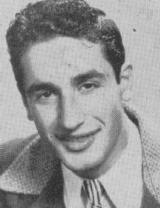
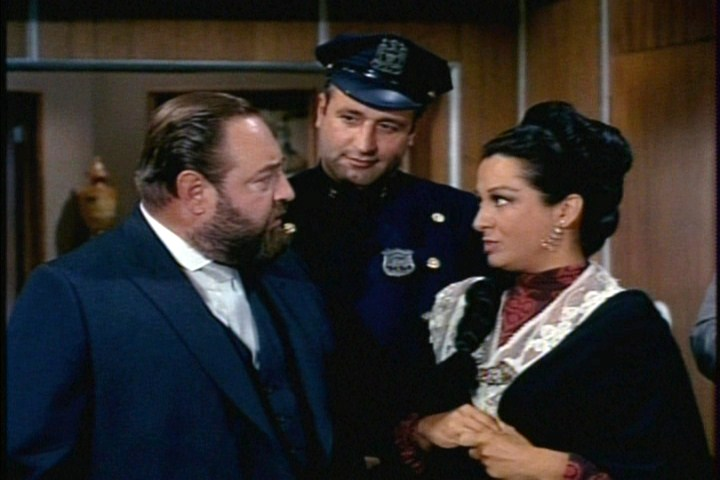
Vic Tayback: Cooking Up Some Fun

This month we are celebrating some of our favorite Supportive Men, actors who usually are not the star of a show but add the special flavor only they can to some of our favorite shows.

Before we move on to our topic today, can I just say a huge THANK YOU to all of you who have joined me on this journey through classic television. Today is my 400th blog and it has been so much fun. Next week will be 401, but for today we are looking at the career of Vic Tayback.

📷graduation photo

Most of us probably know him best as Mel on Alice; he played Mel Sharples in both the original movie, Alice Doesn’t Live Here Anymore, as well as the television show that was on for nine years.

Tayback was born in Brooklyn in 1930. His parents settled there after leaving Aleppo, Syria. During his teenage years, the family moved to California where he attended Burbank High School. He loved sports and played on a variety of teams, his favorite being football.

After high school, he enrolled at Glendale Community College. He also spent some time with the US Navy.

With his love of sports, he decided to attend the Frederick A. Speare School of Radio and TV Broadcasting to be a sports broadcaster. While there he was required to perform in a production of “Stalag 17” for one of his classes. He wasn’t thrilled about doing so, but he realized that he loved making people laugh and decided to switch his career to acting. While trying to break into the industry, he paid his dues driving a cab and working as a bank teller.

📷embarrassingtreasures.com Family Affair

The first of Tayback’s astounding 151 acting credits occurred in 1958 in a little-remembered series, Buckskin. This western was set in Annie O’Connell’s boarding house in Buckskin, Montana in 1880 and the stories were told by ten-year-old Jody. Vic continued to receive a few other appearances on television in the late fifties, as well as two films.

In the sixties, Tayback’s career took off. He would show up on 32 television episodes and 9 big-screen films, including With Six You Get Eggroll with Doris Day and Brian Keith. His tv roles were in comedies such as F-Troop, I Dream of Jeannie, Family Affair, Get Smart, The Monkees, and That Girl. He also could be seen in a variety of dramas that included 77 Sunset Strip, Dr. Kildare, Rawhide, Cimarron Strip, Star Trek, and Mission Impossible.

📷newyorkdailynews.com The Cheap Detective

The sixties also found Vic in the role of groom. In 1963, Tayback married Sheila Barnard, and they remained married until his death.

During the seventies, his appearances escalated to more than forty television series and ten movies. Some of his television shows included Bonanza, The Mary Tyler Moore Show, Bewitched, Columbo, Mannix, Ironside, Mod Squad, The Partridge Family, All in the Family, Barney Miller, Cannon, Medical Center, Family, and Hawaii Five-0. His movies included a few genres running from Disney’s The Shaggy DA to Papillon (Papillon was the story of a French convict who befriends a fellow criminal in South America in the 1930s, and he plans an escape).

It was during the mid-seventies that he was offered the role of Mel Sharples. In 1974 the movie was released, and the television show aired in 1976. The show was very popular with viewers. Vic said he and Mel were somewhat similar characters. While people still quote Flo on the show with her “Kiss my grits,” Tayback had his own tagline on the show, “Stow it.”

📷imdb.com Alice

If you didn’t see the show, it featured a greasy-spoon diner in Phoenix, Arizona. Alice moves there after the death of her husband with her son Tommy. She becomes a waitress at Mel’s along with sassy Flo and shy, gullible Vera. Despite the bad food, they have a lot of regulars who come in for a meal. If you want to visit the restaurant, the building it was based on is at 1747 NW Grand Ave in Phoenix and was called Pat’s Family Restaurant. (It was also featured in American Graffiti.) It is now called Mel’s Diner. According to Trip Advisor, it is ranked #448 out of 1795 restaurants in Phoenix.

📷imdb.com

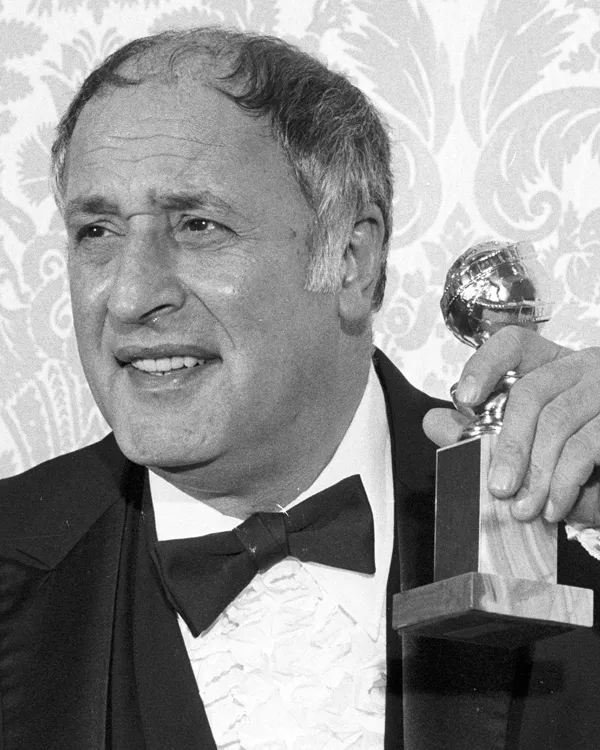
The role of Mel won Tayback Golden Globe awards in both 1979 and 1980. In 1978 he was nominated for an Emmy as Supporting Actor in a Comedy. While he did not win, he was in some amazing company. That year, fellow nominees included Harry Morgan and Gary Burghoff for M*A*S*H, Tom Bosley in Happy Days, and Rob Reiner from All in the Family, who took home the win that year.

The series aired on Saturday nights and the first year was in the top thirty. In 1977, its second season, it was moved to Sunday nights, following All in the Family where it rose into the top ten. In 1979, All in the Family left the airwaves, and Alice then followed One Day at a Time. Seasons three-five, it continued to be in the top thirty. In 1981, the show was moved to Monday nights up against M*A*S*H where it fell out of the top 30. However, season seven found it back on Sundays following The Jeffersons where it rose back into the top thirty. However, it took another dive in ratings the next year and then was cancelled. I think it probably stayed on the air a year or two beyond when it should have. However, interestingly enough, the year it was cancelled, CBS introduced 15 new shows. I’m not sure most people have ever heard of any of them; they were all gone by 1986 with the exception of The Twilight Zone (reboot) and West 57th, which was a news show aimed at younger audiences.

Vic was also an avid horse-racing fan and owned quite a few thoroughbreds. On Alice, Mel was also a track fan, and sometimes the writers asked Mel for names of horses they could use, and he often gave them names of his horses.

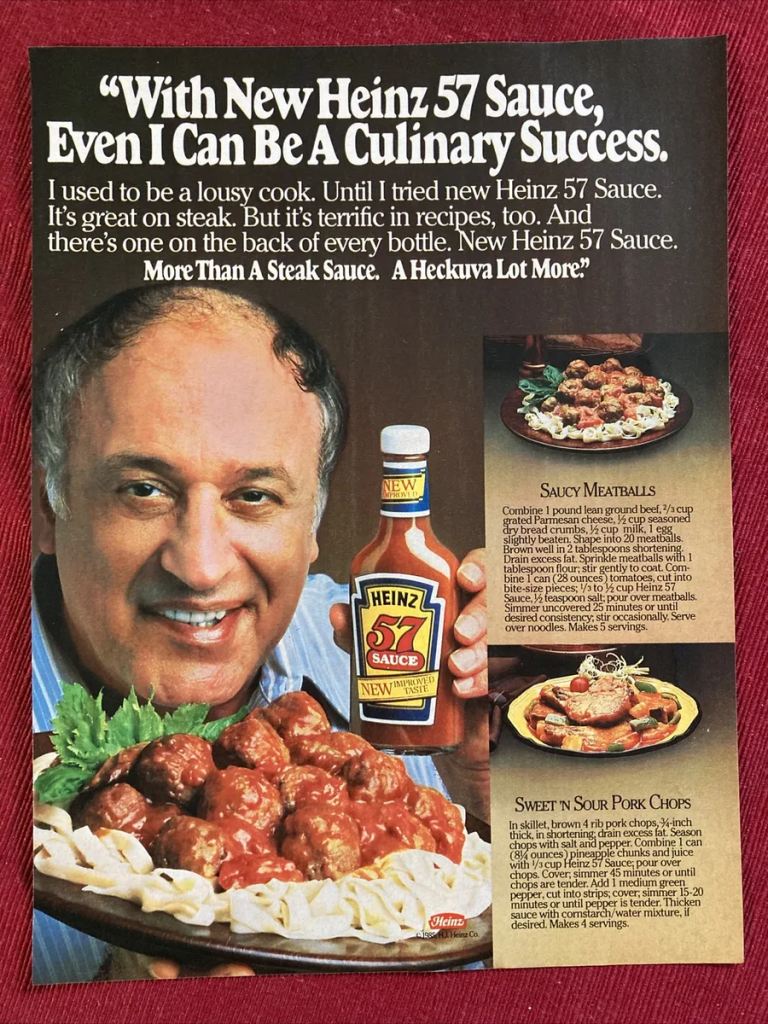
On the show, Vic was often made fun of for his bad cooking. In a 1985 interview he said, “If I walked into a restaurant, the other diners would look around and say, ‘I hope you’re not cooking.’” Heinz then offered him the role of spokesperson for their Heniz 57 sauce and his line in the commercials, was “I used to be a lousy cook.” He was also remembered for an Aqua Velva commercial he did with Pete Rose.

Unfortunately, Tayback was a heavy smoker which caused heart trouble for him. While doing Alice, he had a triple-bypass surgery. While he did try to quit numerous times, he just could never kick the habit. In 1990, he died from a heart attack at age 60.

📷goldenglobes.com

While we were cheated of several decades of performances from Vic with his early death, he did leave an amazing legacy in the Company of Angels theater in Los Angeles. According to its website, “In 1959, a group of actors, including Tayback, Leonard Nimoy, Richard Chamberlin, and Vic Morrow founded the theater to provide a space for actors and other theater artists to work on their craft free of commercial constraints.”

Thank you, Vic Tayback, for deciding to make people laugh in your career and investing in the future of acting so those memories continue in the future.

Julie Newmar: Batman’s Most Beautiful Villain

This month we are learning a bit about the Batman villains and their careers. No study of Batman’s favorite nemesis would be complete without Cat Woman, Julie Newmar. Julie shared the role of Cat Woman with Eartha Kitt who appeared the final television season and Lee Meriwether who was so catty in the Batman movie. What else did Julie Newmar do during her career? Let’s find out.

📷pinterest.com

Born Julia Chalene Newmeyer in 1933, Julie Newmar as she is known in the acting world, was a television and film actress, dancer, singer, and stage performer. But, as they say in the commercials, that’s not all. She also was known for writing, designing lingerie, and managing real estate investments.

Newmar was born in LA. Her father Don was head of the physical education department for the Los Angeles College. Her mother, of both Swedish and French descent, was a fashion designer under the name Chalene and later worked in real estate.

Julie began dancing early in life and performed as a prima ballerina with the Los Angeles Opera when she was only 15. With an IQ of 135, Newmar graduated from John Marshall High School at age 15. She continued dancing in films in the early fifties. At age 19, she was also working as a dancer/choreographer for Universal Studios. In 1954, she appeared in Seven Brides for Seven Brothers as Dorcas, one of the seven brides.

📷facebook.com

In 1955 she got her first Broadway appearance in “Silk Stockings.” She continued her movie and Broadway careers throughout her years in entertainment, appearing in 33 films in all.

Television is where Newmar gained most of her fame. Her first television appearance was on The Phil Silvers Show in 1957 and then Ominbus in 1959. But it was in the sixties that she became a household name. She started the decade in Adventure in Paradise in 1960, followed by a variety of shows including The Defenders, Route 66, and The Twilight Zone in the early sixties.

In 1964 she was offered the role of Rhoda on My Living Doll, where she played a robot. She was not enthralled with the choice of Bob Cummings as her costar and did not seem to enjoy her time on this show. She said that “They originally wanted Efrem Zimbalist Jr. It was not a flip part—it needed a straight actor who could play opposite this bizarre creature so the comedy would come off. That quality was lost when they hired Bob. The show could have been wonderful. I think it would have run for many seasons had they hired Efrem because he had the right qualities.”

📷classicfilmandtvcafe.com

After appearing in several comedies including The Beverly Hillbillies and F Troop, she received another recurring role as Cat Woman in Batman. She would appear in the series 13 times, 12 as Cat Woman, the only villain to make Batman question his morals, because we knew he was in love with her, and if she showed any sign of remorse, who knows where things might have gone. Her Cat Woman costume now lives at the Smithsonian Institution.

Newmar lived in Beekman Place in New York in the mid-sixties. One weekend her brother had come to visit her from Harvard. They were sitting around chatting when the phone rang. She was asked if she would like to play Cat Woman on the Batman series. She was a bit miffed because they said they were casting in California, and the role started on Monday. Her comment was “That’s how television is done: they never know what they are doing until yesterday.” When her brother heard Batman, he jumped up and said that was the favorite show at Harvard and they even skipped classes to watch it. He told her to take the role, so she did.

📷firstforwomen.com

After Batman, she finished out the sixties in The Monkees, Star Trek, Get Smart and It Takes a Thief. With 11 seventies offers, you can see her in shows such as Bewitched, Columbo, McMillan and Wife, Love American Style, The Bionic Woman, and The Love Boat. One of my favorite made-for-tv movies was The Feminist and the Fuzz. It had an exceptional cast, including Newmar who appeared in the movie along with Barbara Eden, David Hartman, Jo Anne Worley, Farrah Fawcett, Harry Morgan, Herb Edelman, Penny Marshall, and John McGiver. This ensemble was directed by Jerry Paris, who directed so many great shows from The Dick Van Dyke Show to Happy Days.

Her other starring role in the seventies was a marriage to J. Holt Smith, an attorney. After the wedding, Newmar moved to Forth Worth, Texas until 1984 when they divorced.

📷remindmagazine.com

The eighties was a more quiet decade for the actress but she did accept roles on CHiPs, Fantasy Island, and Hart to Hart. In 1992, she appeared in George Michael’s music video, “Too Funky,” She was still working in 2016 and 2017 in Batman animation features.

If you were a fan of Batman and Dark Shadows in the sixties, you were in luck when Newmar took on the role of Dr. Julia Hoffman (played in the original series by Grayson Hall) in Dark Shadows: Bloodline, the audio drama miniseries.

She was not just a pretty face, however. She received two US patents for pantyhose and one for a bra, under the name Nudemar. She also began investing in LA real estate and was credited with helping to improve the neighborhoods of La Brea Avenue and Fairfax Avenue. In one episode of My Living Doll, Rhoda is asked to play Chopin’s “Fantasie Impromptu” on the piano. Newmar played the piece herself. She had studied under concert pianist Dr. MacIntyre, and she said that scene is the only one she’s done with her playing the piano which had been her career choice before acting. One of Julie’s comments about herself was “Tell me I’m beautiful, it’s nothing. Tell me I’m intellectual—I know it. Tell me I’m funny, and it’s the greatest compliment in the world anyone could give me.”

📷closerweekly.com

Julie also enjoys art and gardening. She has a rose, a day lily, and an orchid named for her. Her gardens are often chosen as a spot for holding charity events.

Like Barbara Feldon from Get Smart, Julie Newmar is beautiful, bright, and funny. I hope she enjoyed her career. Obviously, she could have been a brain surgeon or any other profession of her choice. She seems like she would be a fun person to just hang out with and the conversation would never run out. Thank you, Julie Newmar for choosing the entertainment business over medical science for our sakes.

Burgess Meredith: America’s Favorite Villain

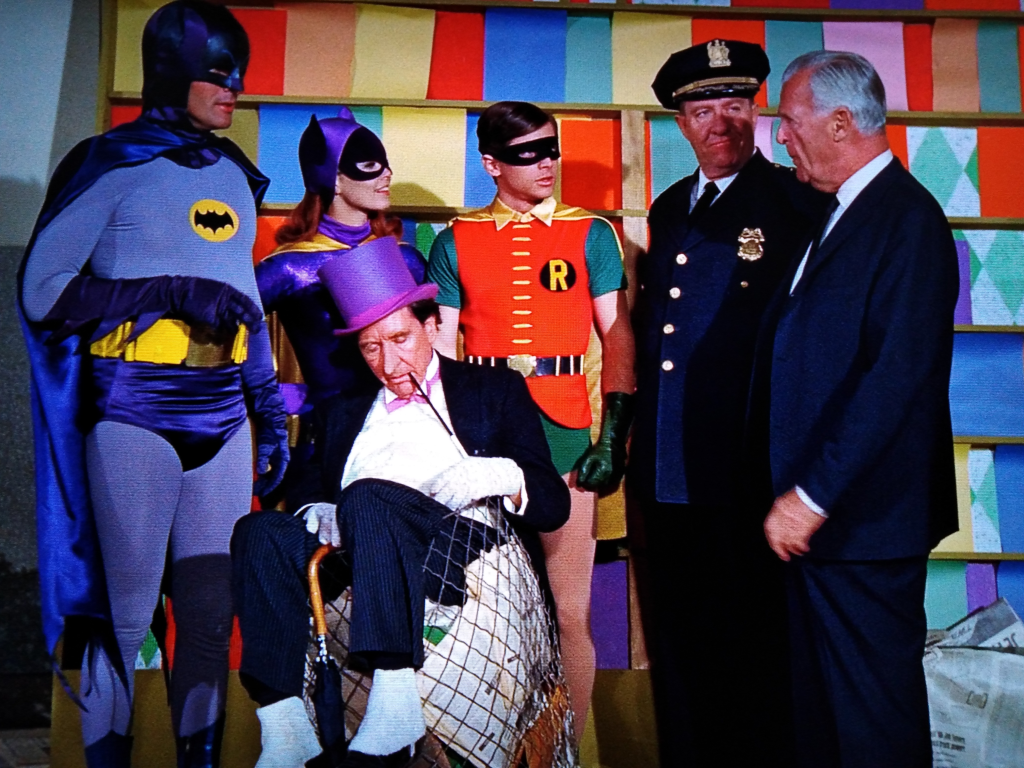
Bam! Pow! It’s Batman Villain Month. We will be looking at the career of an actor who played a Batman baddie every week this month. We are beginning with my favorite, The Penguin, played by Burgess Meredith.

📷pinterest.com

Oliver Burgess Meredith was born in Cleveland, Ohio in 1907. His father was a physician, and his mother was born into a family of Methodist revivalists. Burgess followed his Methodist faith for his entire life. After high school, he enrolled at Amherst College, until 1932 when he became a reporter for the Stamford Advocate. He worked in a variety of jobs while getting started in acting including retail, an editor, a merchant marine, and a runner on Wall Street.

He joined Eva Le Gallienne’s Civic Repertory Theatre in New York City. His Broadway debut was in this company’s “Romeo and Juliet” in 1930. His film debut came in 1935 in Winterset. Later in his career, he would return to Broadway as a director. He shared a Tony Award with James Thurber for their collaboration on “A Thurber Carnival” in 1960, and he earned a Tony nomination for his staging of “Ulysses in Nighttown” in 1974. In the late seventies, he directed Fionnula Flanagan’s one-woman play, “James Joyce’s Women” which toured for several years.

Meredith had more success in acting than marriage. Helen Derby Merrien Burgess was his wife from 1932-1935. His marriage to actress Margaret Perry only lasted two years, ending in 1938.

In 1942, Burgess enlisted in the US Army Air Forces for WWII, reaching the rank of captain. He was discharged in 1945. Meredith married another actress, Paulette Goddard, and they were together from 1944-1949. However, in 1951 he married Kaja Sundsten and they were together until his death.

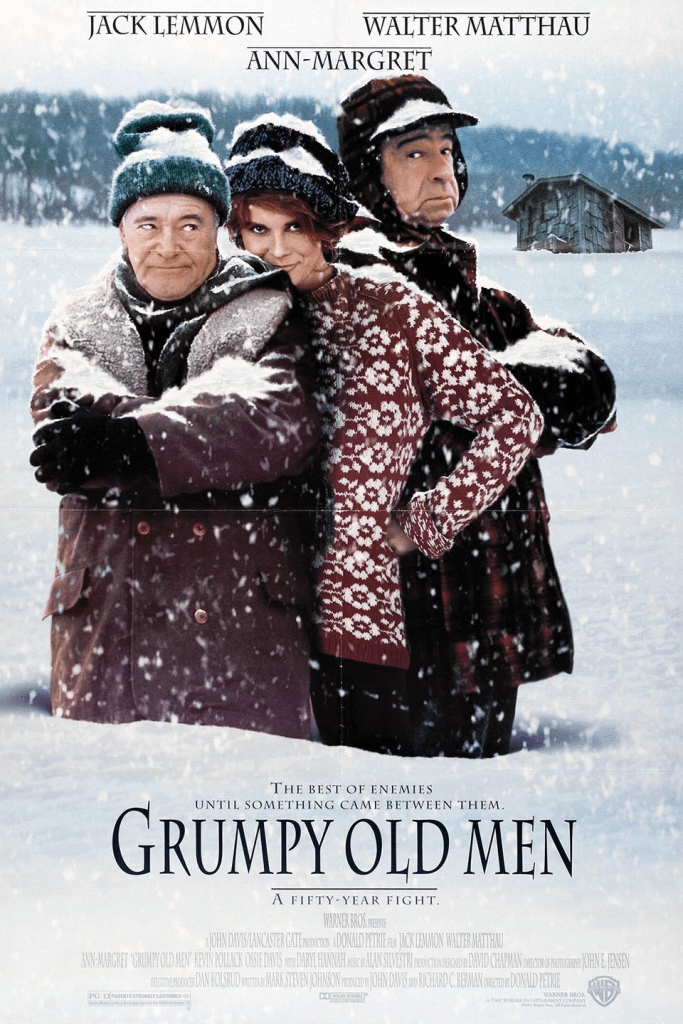
Meredith would appear in 80 movies during his career, as well as a number of made-for-television movies. He might be best known in the past few decades for Grumpy Old Men and Grumpier Old Men in the 1990s.

However, it was television where he found the most acclaim. His first appearances came in 1949 on the Ford Theater Hour and The Silver Theater. Throughout the fifties he continued receiving offers for theatric roles on these types of programs. During the early sixties, he was everywhere. You could catch his appearances on dramas such as The Naked City, Ben Casey, The Twilight Zone, The Bold Ones, Room 222, Ironside, and Mannix. He rode onto many western sets including Wagon Train, Rawhide, The Wild, Wild West, Bonanza, Daniel Boone, and The Virginian. He found his way onto several comedies such as Please Don’t Eat the Daisies and The Monkees.

Given the astounding number of drama shows that he chose roles on, it is a bit surprising that one of his best-known roles was the campy, humorous 1960s series Batman. From 1966-1968, he made 21 appearances as the Penguin. When he appeared on The Monkees, it was also as the Penguin. Originally the producers wanted Spencer Tracy for the role of Penguin. Tracy said he would not accept the offer unless his character was allowed to kill Batman. So, Meredith got the role. The cast loved him, and the producers made sure there was always a Penguin script waiting so whenever Burgess was free, it could be filmed.

📷dcdatabase.com

He was perfect for the role with his raspy voice and that iconic Penguin laugh. The laugh came about because Burgess had given up smoking but had to smoke for his role on Batman. When he coughed, he covered it up with his trademark laugh. When asked why he did Batman, he replied that he did it “for two reasons, one of which was the salary. The other was that, after the first few episodes, Batman became the in-thing to do. Everybody would either play a villain or appear as himself in that cameo showcase where a celebrity would poke his head through the window of a building that Batman and Robin were climbing. Actually, we didn’t get as much money from the show as you might think, although we were paid decent money for the feature film version. The main impetus to continue appearing on Batman—beyond the desire to get some TV work—was that it was fashionable.”

Later in his career, Burgess continued appearing on the big screen and provided voice-over work and a bit of animation. Unfortunately, he was named as an unfriendly witness by the House Un-American Activities Commission which ended his studio work for several decades. Burgess also did commercial work and was known for his roles for Skippy Peanut Butter and United Air Lines.

📷imdb.com

Meredith was a life-long Democrat and was generous to the Democratic party. He was an environmentalist and tried to end pollution. He was also fascinated by intelligent animals, especially dolphins. One night he said he felt a dolphin needed help while staying at a friend’s beach house. He ran out to the beach and found a dolphin caught in a net under a dock and was able to save its life. He was nominated for two Academy Awards, both for Supporting Actor in Rocky and The Day of the Locust. A 21-acre park in Pomona, New York was named for him; he provided the funding to incorporate the village.

In 1997, Meredith died from complications of Alzheimer’s. His former Batman costar, Adam West, spoke at his memorial service.

While almost all of the bad guys on Batman were memorable, the Penguin and Cat Woman were by far my favorites. We will look at the career of Julie Newmar next week.

Father Knows Best: We All Grew Up in Springfield

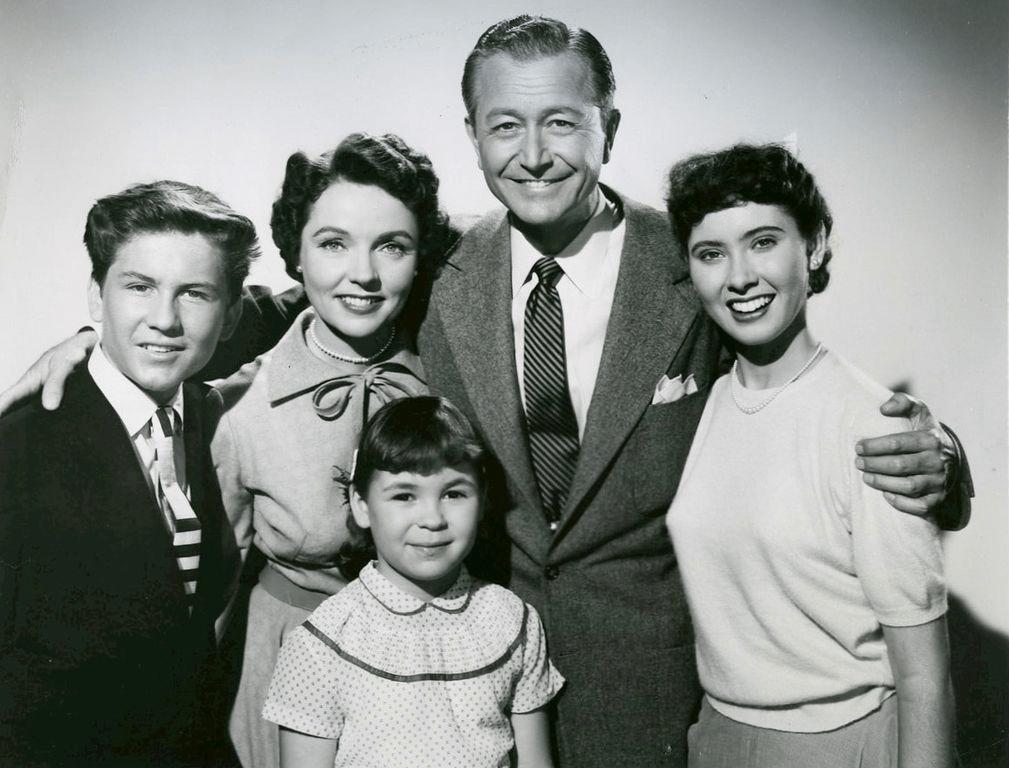
Our last two shows are both set in Springfield, and we might do a bit of comparison and contrast next week. This week we are checking out the Anderson family on Father Knows Best.

📷wikimedia.com

The show debuted on NBC radio in 1949. For five years it was sponsored primarily by General Foods. None of the television cast members were part of the radio show, but you would recognize the voice of Jean Vander Pyl from The Flintstones.

A couple of months before the show ended on radio, it made its move to television. This was not all that unusual in the early days of television, but the show began on CBS for a year, then it was picked up by NBC for three years, and then it returned to CBS for two years.

The pilot aired on an episode of The Ford Television Theatre and was called “Keep It in the Family.” While the show was picked up, only Robert Young was retained from the original cast. Joining him were Jane Wyatt as Margaret, Elinor Donahue as Betty, Bill Gray as Bud, and Lauren Chapin as Kathy.

📷evergreenarchives.com

I think we all have this stereotyped vision of the Anderson family in our memories. In fact, the US Department of the Treasury requested a 30-minute episode of the show that was never aired on television. It was distributed to schools, churches, and civic groups to promote the sale of savings bonds. However, when I watch the show today, I think it got some unfair criticism. There are several episodes when Margaret has just had it with cleaning and cooking for an ungrateful family. The kids are sometimes portrayed as thoughtless and self-absorbed. The three children often disappoint their parents and sometimes the parents are not good role models. I don’t say that in a negative way—it’s a realistic description of a lot of us as teenagers and parents at times.

📷imdb.com

Robert Young and his business partner Eugene B. Rodney developed the show with Screen Gems. Casting was not an easy task. One of the things they were trying to avoid was stereotyping. They wanted Bud to be absorbed but not flip. Young and Rodney mentioned that it was not easy to do the gags in the right tone, but they knew they had their Bud in Gray in a scene where Jim is worried about Betty getting too serious. Rodney relayed the following story: “As an example”, said Mr. Rodney, “when Jim, worried about Betty’s going steady, reads aloud a newspaper story about a girl eloping and taking $200 with which her aunt was to buy a TV set, our Bud had to be able to look up and ask seriously, ‘What size screen, dad?’ Billy Gray was the only actor that could do it the way we wanted.”

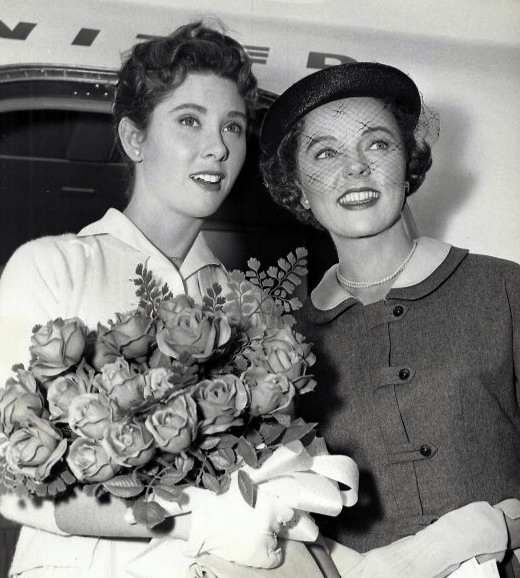
Kathy was a bit harder to cast for; seventy-eight girls auditioned for the role. Chapin had no acting experience before the show, but she seemed more like a regular kid. They wanted Betty to be attractive but not sophisticated. Donahue talked about her auditions in a Television Academy interview. She auditioned once and had to hop out of the tub and run to the audition with her hair a bit of a mess, and they told her she was too young for the part. Her agent got her hair cut, dressed her in a suit with heels and got another tryout for her, but they said she was too old. Her agent kept pestering them to give her one more shot and they did not want to, but finally Rodney agreed if her agent would quit calling him, so they brought her in again. She was all nerves and very anxious and Young tried to calm her down and she auditioned again and felt that she had embarrassed herself and that she had made a terrible impression. However, they called a month later to say that she had been hired.

📷wikimediacommons.com

Jane Wyatt was offered the role of Margaret and rejected it. She wanted to do a show in New York, but when they sent her the script and she read it, she loved it and agreed to the part.

The show began on Sunday nights. It seems a bit odd today that this wholesome family show on Sunday nights was sponsored by Lorillard’s Kent cigarettes. The show became popular with America, but the ratings were not high enough for Kent Cigarettes, and they decided not to extend the 26-episode contract. Fans sent letters, and television columnists got in on the action, encouraging fans to write the president of the CBS network. Kent canceled and Scott Paper then picked it up. Scott moved the show to NBC. By the second season, more than 19 million households watched the show on Wednesday evenings. In 1958 NBC decided to cancel the show, but CBS took it up again for two more years. In 1960 there was a writers’ strike and it lasted long enough that Robert Young decided he was ready to move on in his career. Jane Wyatt was also ready to retire and enjoy her family. The sad thing was that they were never able to say goodbye to each other or wind up the show.

📷imdb.com

Good scripts were critical for both Rodney and Young. They wanted character motivation. Roswell Rogers and Paul West, the primary writers for the show, took a lot of their material from their own lives. The two writers had seven children between them and included moral lessons built in.

The two major directors were Peter Tewksbury and William D. Russell. As co-owner of the show, Rodney served as producer. He knew everything about the characters. Jane Wyatt related an incident when she asked Rodney what she could do to improve her characterization of Margaret. Rodney told her to love her children as much as her husband. Wyatt realized at that moment that she had been concentrating on the relationship between Jim and Margaret more than her motherly feelings.

📷pinterest.com

If you are a pop culture fan, you will recognize the house as the home of Mr. Wilson on Dennis the Menace and Major Nelson on I Dream of Jeannie. If you pay close attention, sometimes you can see the house in episodes of Bewitched, Hazel, The Monkees, and The Partridge Family. Gracie Allen would have approved of the show’s interior. She liked to do the activity that she was supposed to be doing on the show, and the Andersons had working appliances in their kitchen. While the bedrooms were interchangeable so they could film any of the characters’ rooms, the kitchen had red wallpaper, white cabinets, and blue countertops. Every morning, coffee and sweet rolls were served, and lunches were kept in the refrigerator.

The theme song was titled “Waiting.” It had lyrics but they were never used on the show. It was written by Don A. Ferris and Irving Friedman.

The show was nominated for an Emmy 20 times with 6 wins: Robert Young won for Best Actor in 1957 and 1958, Jane Wyatt won for Best Actress in 1958, 1959 and 1960, and the show received Best Direction for A Single Episode in 1959.

📷closerweekly.com

The Andersons had a special place in the heart of many kids growing up during the fifties and in 1977, two reunion movies were made: Father Knows Best Reunion in May and Father Knows Best: Home for Christmas in December. We learn that Betty is a widow with two daughters, Bud is married with one son, and Kathy is recently engaged to a doctor.

Despite the abrupt ending of the show, the cast kept in touch. Donahue said that she really loved Robert Young and considered him her father figure. She, Chapin, and Gray all were in families without a father, although Gray saw his occasionally, so Robert did become a father for them. She said he never had a cross word for any of them and if they were behaving unprofessionally or causing trouble, he would take off his glasses and look down and that was their cue to do better. Perhaps that is why the show rings true for so many people. On the set, their “father” truly did know best.

Bernard Fox: What a Character – Calling Dr. Bombay

We are in the middle of our “What A Character” blog series. No overview of television character actors during the golden age would be complete without Bernard Fox.

As a young tyke, you still expect him to say, “Come along old chap.” Photo: tagswrc.com

Fox was meant to be an actor. He was born to Queenie and Gerald Lawson in Glamorgan, Wales. Both his parents were actors. Fox had his first film role at the age of 18 months. By 14 he was an apprentice assistant manager of a theater.

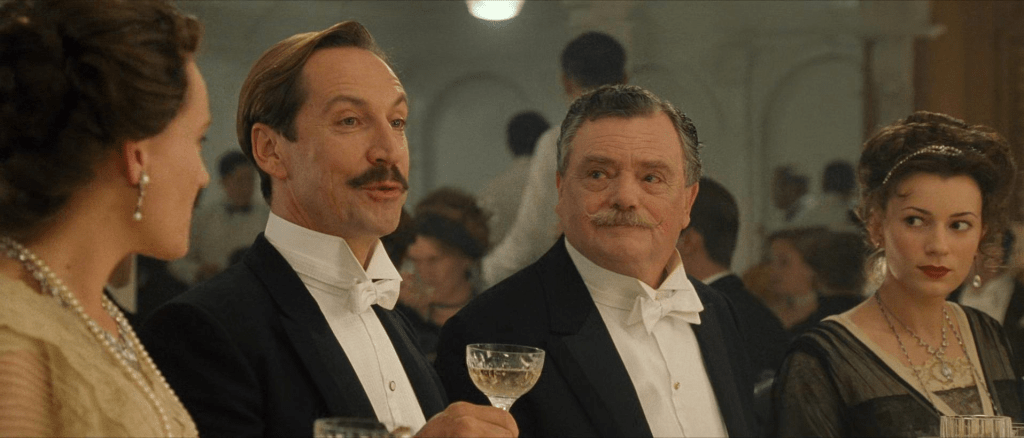
Bernard served with the Royal Navy during WWII as a minesweeper and then in the Korean War. From 1956-2004 he made more than 30 films. Ironically, he was in two different Titanic movies. In 1958 at the beginning of his career, he was in A Night to Remember and in 1997, at the end of his career, he was in the Oscar-nominated Titanic. He liked to say that he was the only person to survive the Titanic twice.

He began his television career in 1955 when he received a recurring role on the United Kingdom show Sixpenny Corner as Tom Norton. The show was centered around Bill and Sally Norton, a young married couple who ran a garage together. Fox played Bill’s youngest brother.

Titanic 1997 Photo: imdb.com

Eventually, he made his way to the United States. His first US show was in Wire Service in 1957, a show filmed at the Desilu studio. His next seven shows were filmed in the United Kingdom.

Fox mentioned that being a character actor was a mental strain. Early in his career, he had to worry about when the next job would be coming. He did post office work, logging, and other interesting jobs to get by. Once he got to America, he was able to rely on his acting career and didn’t have to moonlight anymore.

In 1962, he married his wife Jacqueline. They had two daughters. The same year he was back on US television with a regular role on The Danny Thomas Show. He played Danny’s English friend, Alfie Wingate. In 1963 he appeared on Ensign O’Toole, The Great Adventure, and General Hospital. The mid-sixties showed him in a variety of shows including McHale’s Navy, Perry Mason, The Dick Van Dyke Show, F-Troop, I Spy, I Dream of Jeannie, The Man From U.N.C.L.E., and The Farmer’s Daughter.

Hello Constable Photo: pinterest.com

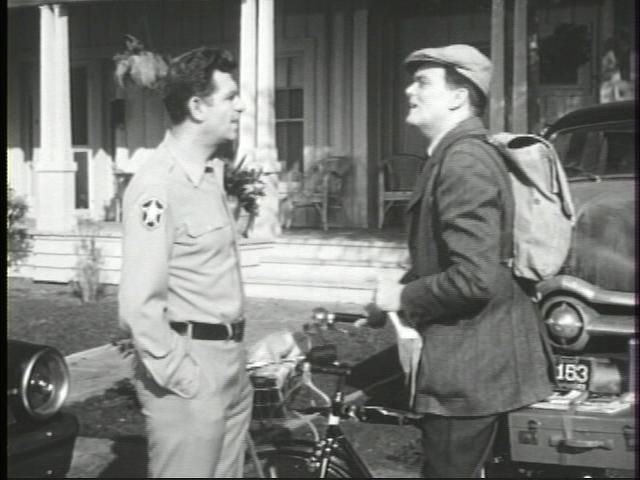
He had another recurring role during this era on The Andy Griffith Show as Andy’s friend/valet Malcolm Merriweather. Fox appeared on the show in season three. We see him pedaling his bike next to Andy’s squad car at Andy’s house and says, “Excuse me, Constable.” When Andy understands what he is saying, he explains that he is the sheriff. With all the quirky characters in Mayberry, Malcolm fit right in and it’s a charming scene.

He continued receiving regular work in the late sixties for The Monkees; The Wild, Wild West; Here Come the Brides; and Daniel Boone.

Monkeeing Around Photo: sunshinefactory.com

Bernard did not enjoy his time on The Monkees set. He called them “an amateur bunch of rabble rousers . . . a bunch of unprofessional idiots.” He said that “they’d have cans of chocolates or something in the cupboards and in between shots, they’d be cramming chocolates in their mouths.” Fox was amazed, he said he got used to it but “professionally speaking, I expected a bit more.”

It was in the late sixties that he received the role he may be best known for: Dr. Bombay on Bewitched.

In an interview on bewitched.net, Fox was asked about his popular character, Dr. Bombay. He said that the spin he put on the doctor made him more interesting, saying, “If I’d just gone for an ordinary doctor, you wouldn’t have heard any more about it. But because I made him such a colorful character, that’s why they wanted him back.” He said the character was “easy to write for” and the writers had him being summoned from all over the world. He showed up in a variety of costumes including a wet suit, a football uniform, a toga, a towel, and a matador costume among others.

On Bewitched Photo: closerweekly.com

Bernard discussed the stars on Bewitched. He said Marion Lorne was a “dear lady.” When asked about Agnes Moorhead, he said she was a “thoroughly professional lady” and that praise from her was a thrilling thing to get. He said that he “liked Dick very much, a fine actor. He was a darling man.” And about Elizabeth, he said, “she was always very sweet and knew her lines.” She liked to bet on horses and whenever she won, she treated the cast to a party on the set. He also said once she found out he had a vegetable garden, she got him a subscription to Gourmet Magazine which she renewed every year.

He fondly recalled one episode where he was supposed to be squeezing a lemon into clam dip. When he squeezed it, it went in Elizabeth’s eye. The director yelled, “cut” and re-filmed it, but it happened again. The director said, “Bet you can’t do it a third time,” but he did, so they left it in the show.

Visiting MASH Photo: imdb.com

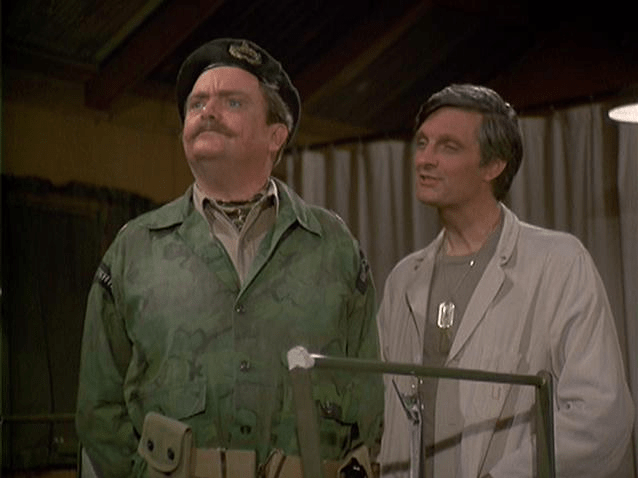
His career did not slow down in the seventies where you could watch him on The Partridge Family, Night Gallery, Love American Style, Columbo, Cannon, Soap, and MASH. When asked about his appearance on The Partridge Family, Fox said, “Oh, I loved Shirley, she’s a doll, she’s a really nice lady.”

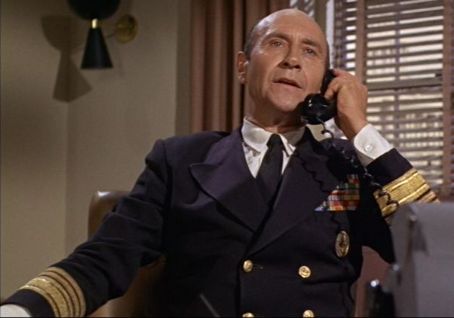
Following the pattern, he also had a recurring role in this decade as Colonel Crittendon on Hogan’s Heroes. As Crittendon, he was incompetent and dense and drove Colonel Hogan crazy with his ineptness.

Colonel Crittendon Photo: pinterest.com

In his bewitched.net interview, Fox also discussed his role on Hogan’s Heroes a bit. He said that in one episode he had hidden some maps in a corn bin. When he lifted the lid, it came down on his head. He just put the lid up and carried on with the script. When the director asked about reshooting, Fox said it was fine, and they left it in the film. He did say when he was playing a role on Hogan’s Heroes and Bewitched at the same time, it could get a bit confusing. They typically worked it out. For example, he said one time the studios agreed that Fox would be on the Bewitched set Tuesday and Wednesday and on Hogan’s Heroes Thursday and Friday.

Offers did slow down a bit in the eighties and nineties, and he ventured into animation work during those two decades. However, he still accepted offers for Fantasy Island, Lou Grant, The Love Boat, Hart to Hart, The Jeffersons, Simon and Simon, and Murder She Wrote among others.

His last acting credit occurred in 2001 for Dharma and Greg.

Not only was Fox an actor but he was an expert in history of the theater. For fun, he enjoyed gardening, painting landscapes, and performing magic.

Photo: walmart.com

In 2016, Fox died from heart failure.

I’m so glad he was able to find a successful career on television in the United States. After learning in a previous blog what a legend Marion Lorne was in England where she lived much of her life, I like to think about Aunt Clara and Dr. Bombay sharing some time talking about the delightful English ways that they missed. Hopefully they served tea on the set once in a while.

Milton Frome: What a Character!

As we continue looking at some of our well-known character actors, today we consider the career of Milton Frome. Frome was born in Philadelphia in 1909. He began acting in his mid-20s.

Photo: watchviooz.com

His first major movie role was in Ride ‘em Cowgirl in 1939. Frome would go on to appear in 55 movies (including The Nutty Professor, Bye Bye Birdie, and With Six You Get Eggroll), as well as five made-for-TV movies. He also had a thriving television career beginning with Chevrolet Tele-Theatre in 1950.

Photo: amazon.com

Appearing in 34 different shows during the fifties, he performed in a variety of genres including dramas, comedies and westerns.

Photo: jimnolt.com
The Adventures of Superman

During that decade you would have seen him on I Love Lucy, Lassie, The Adventures of Superman, Playhouse Theater, The Thin Man, and The Gale Storm Show. He also worked with many comic legends on television, including Milton Berle, Red Skelton, and Dean Martin and Jerry Lewis.

Photo: tumblr.com
I Love Lucy

His career escalated in the sixties when he would accept roles in 48 programs. He showed up in dramas, including The Twilight Zone, 77 Sunset Strip, and Dr. Kildare. He also found his way into many westerns such as Bat Masterson, Death Valley Days, Gunslinger, Big Valley, Rawhide, and Wagon Train. However, he seemed to excel at comedies and during the 1950s you could have spied him in many sitcoms. He accepted parts in Bachelor Father, Pete and Gladys, The Jim Backus Show, The Dick Van Dyke Show, Mister Ed, The Joey Bishop Show, I Dream of Jeannie, My Favorite Martian, The Donna Reed Show, Gomer Pyle USMC, Bewitched, The Monkees, The Patty Duke Show, Petticoat Junction, and The Andy Griffith Show.

Photo: coolcherrycream.com
The Monkees

Frome was never offered a permanent role in a series, but he did have a recurring role in The Beverly Hillbillies, appearing eight times as Lawrence Chapman, who managed Jed Clampets Mammoth Studios.

Photo: imdb.com
St. Valentine’s Day Massacre

His television career slowed down a bit in the 1970s and became nonexistent by 1983, but he did make appearances in shows like Ironside, Columbo, Here’s Lucy, The Streets of San Francisco, Sanford and Son, and Trapper John MD. He also appeared in two Love American Style episodes in 1971 and 1973. In the 1973 episode, “Love and the Anniversary,” he played “The Man” and his son Michael played a bellhop.

Photo: sitcomsonline.coom
The Jerry Lewis Show

At some point, Frome married Marjorie Ann Widman, but I could not verify when they married. I also could not verify if Michael was their son, or his son from another relationship.*

Photo: batman.wikia.com
Batman

Frome passed away in 1989 from congestive heart failure.

While it is now easy to analyze and detail an actors professional career, it was very tough to find any information about Fromes personal life or his working relationships with other actors. It makes me sad that these hard-working actors who provided so much to our classic television-watching experiences are just not well known. Hopefully blogs like mine keep them in television viewers memories, and some day maybe I will have time to write a book about these unsung heroes of our pop culture history. Thanks for all you contributed to the golden age of television Milton Frome!

*In June of 2021, I heard from Jane Wallace Casey who provided some additional information for us: “I am Milton Frome’s niece. His first wife was Barbara Wallace with whom he had his son Michael.”

Nita Talbot: What A Character!

Continuing the “What a Character” series, today we look at the career of Nita Talbot. Born in 1930 in New York as Anita Sokol, Talbot had an almost fifty-year-long career. She began appearing in films in 1949 with It’s a Great Feeling (and would go on to make another 30), but it was in television that she had her greatest success. It’s a Great Feeling starred Doris Day and Jack Carson in a parody of what goes on behind the scenes of the making of a Hollywood movie.

Photo: pinterest.com

She was married to Don Gordon from 1954-1958 and to Thomas Geas from 1961 until sometime in the 1970s.  I could not narrow it down to any specific year. Both of her husbands were also actors. Her sister Gloria was the wife of Carl Betz who co-starred as Alex Stone on The Donna Reed Show.

Photo: pinterest.com
Joe and Mabel

Talbot began her television career in 1950 on Repertory Theater. Appearing in 32 different shows throughout the fifties, many of her appearances were in dramas, primarily shows with different plays weekly. Talbot had a recurring role on Man Against Crime starring Ralph Bellamy, appearing in 9 of the 123 episodes. Later in the decade she was cast in Joe and Mabel in 1956. Nita played the role of Mabel, a manicurist who was dating cab driver Joe. The show only lasted four episodes. At the end of the decade, she would have a recurring role on The Thin Man as Beatrice/Blondie Dane a con artist.

Photo: pinterest.com
Gomer Pyle

Nita would take on roles in 29 different shows in the sixties. This decade was her “western” season. She did appear in Gomer Pyle and The Monkees, but most of her roles were in westerns, including Gunsmoke, Maverick, The Man from Blackhawk, Rawhide, The Virginian, Daniel Boone, and Bonanza.
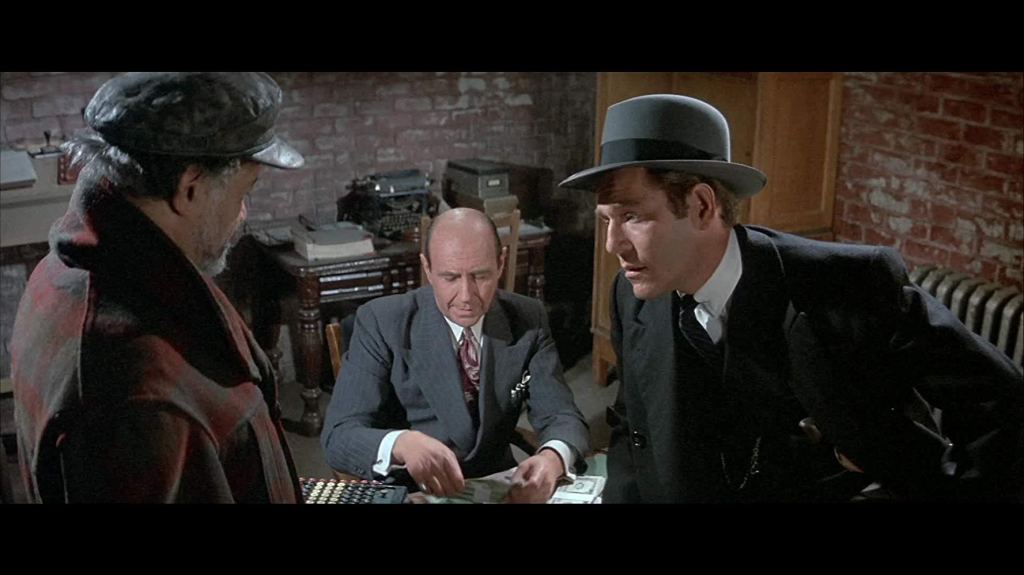
Photo: pinterest.com

During this ten-year period, she would be cast in three shows, one drama, and two comedies. In 1960, she could be seen in Bourbon Street Beat about a New Orleans detective agency where she played Lusti Weather. She co-starred in one sitcom this decade with Jim Backus in The Jim Backus Show. Backus plays Mike O’Toole, who struggles to keep his news service business afloat. Talbot played the role of Dora, one of O’Toole’s reporters. The show only lasted for one season.

At the end of the decade, Talbot was offered the role that she would become best known for. Although she only appeared in seven episodes of Hogan’s Heroes, she earned an Emmy nomination for Best Supporting Actress in a Comedy Series in 1967-68 season for her role of Marya, a Russian spy.

Photo: pinterest.com
Hogan’s Heroes

One of her taglines was “Hogahn darlink.” While Hogan could charm most women, he never was certain when he could or couldn’t trust Marya, but he was often coerced to join forces with her against the Germans.

She continued her thriving television career during the seventies with another 26 shows; four of those would be permanent or recurring roles; however, none of them lasted very long.

In 1971, she was offered the role of Maggie Prescott in Funny Face starring Sandy Duncan. Duncan played a college student who worked part time as an actress and Talbot was her agent. When CBS picked up the pilot, they made several changes which resulted in Talbot’s role being dropped.

Photo: blogspot.com
Here We Go Again

1973 found her as part of the cast of Here We Go Again. The show portrayed life after divorce for two couples. It should have been renamed, There We Went because the show only lasted for 13 episodes before being canceled.

Photo: rebeatmag.com
The Monkees

In 1977 she joined the cast of Soap, playing Sheila Fine, who has an affair with Burt Campbell’s son Peter.

In 1979, Supertrain debuted. It was supposedly the most expensive show ever made. It was a “Love Boat” on the rails.  The supertrain traveled across the country and every week passengers found love and solved life problems on their journeys. The show was derailed after nine episodes.

In between these roles, she tended to appear primarily in crime shows in the 1970s such as Mannix, McCloud, Columbo, Police Story, The Rockford Files, Charlie’s Angels, and Police Woman.

Photo: pinterest.com
The Partridge Family

Her roles diminished a bit in the eighties with 13 appearances and 9 in the 1990s. She would be cast in one additional sitcom in 1988, Starting from Scratch. This show starred Bill Daily and Connie Stevens as a divorced couple. Stevens leaves her second husband to come back to her ex-spouse and two sons. Talbot played Rose. The show seemed to get good ratings and currently people are rating them 4.5-4.8 out of 5.0, so I’m not sure why it was canceled after a year.

Photo: pinterest.com

Talbot retired in the late 1990s and is hopefully enjoying a less-busy life. She had a long and successful career and certainly was a character!

The Man From UNCLE: What Happens When James Bond Comes Out of the Cold and Into TV

We are in the midst of our Murder, Mystery, and Mayhem series this month. In the mid-1960s, westerns were still the most popular show on television with rural sitcoms coming on the scene. Crime shows still had their fair share of air time, but spy shows were non-existent. With the end of the Cold War, Bond movies, and books like The Spy Who Came in From the Cold, these types of thrillers were bound to hit the small screen. From 1964-1968, The Man from UNCLE took us behind the scenes to observe the dangerous life of special agents.

Photo: booktrib.com

Beginning on Tuesday nights on NBC, the show was produced by Metro Goldwyn Mayer. The creator, Norman Felton, asked Ian Fleming to act as a consultant. (Some sources list Felton as the sole creator; some credit Sam Rolfe as a co-creator.) The book The James Bond Films mentions that Fleming suggested two characters: Napoleon Solo and April Dancer. Napoleon Solo became one of the main characters on The Man from UNCLE, and we will learn more about April Dancer later. Solo was also a villain in the movie Goldfinger. Originally titled “Solo,image of ” the popularity of the film led to a title change in the television show to The Man from Uncle.

Photo: filmandfurniture.com

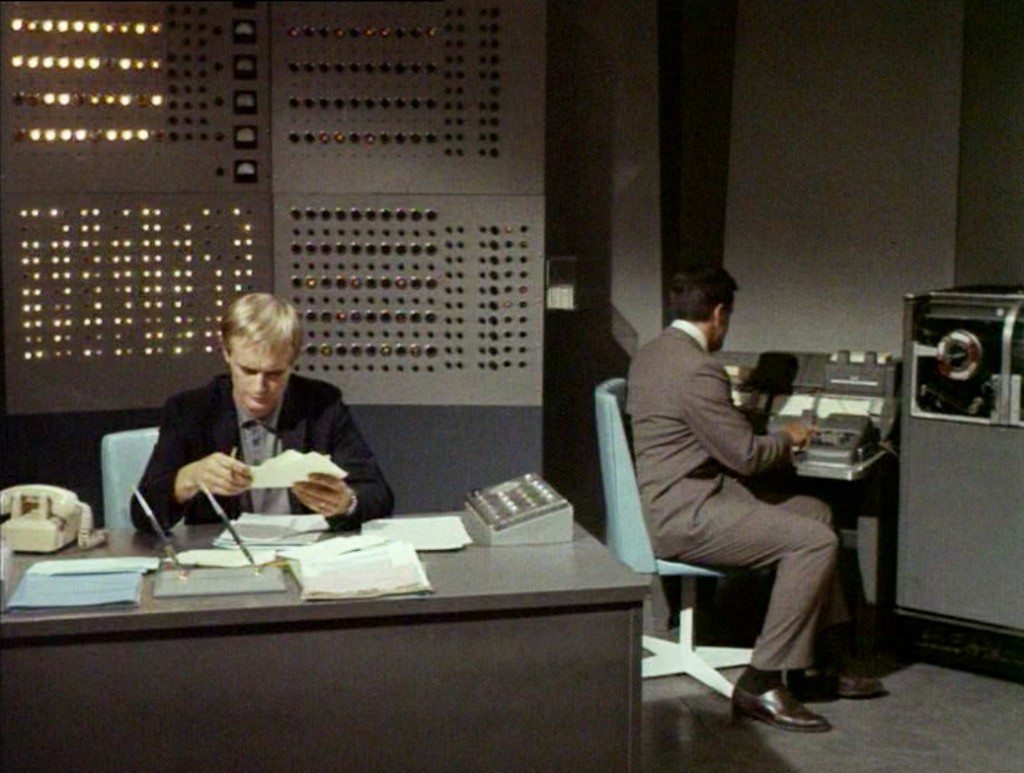
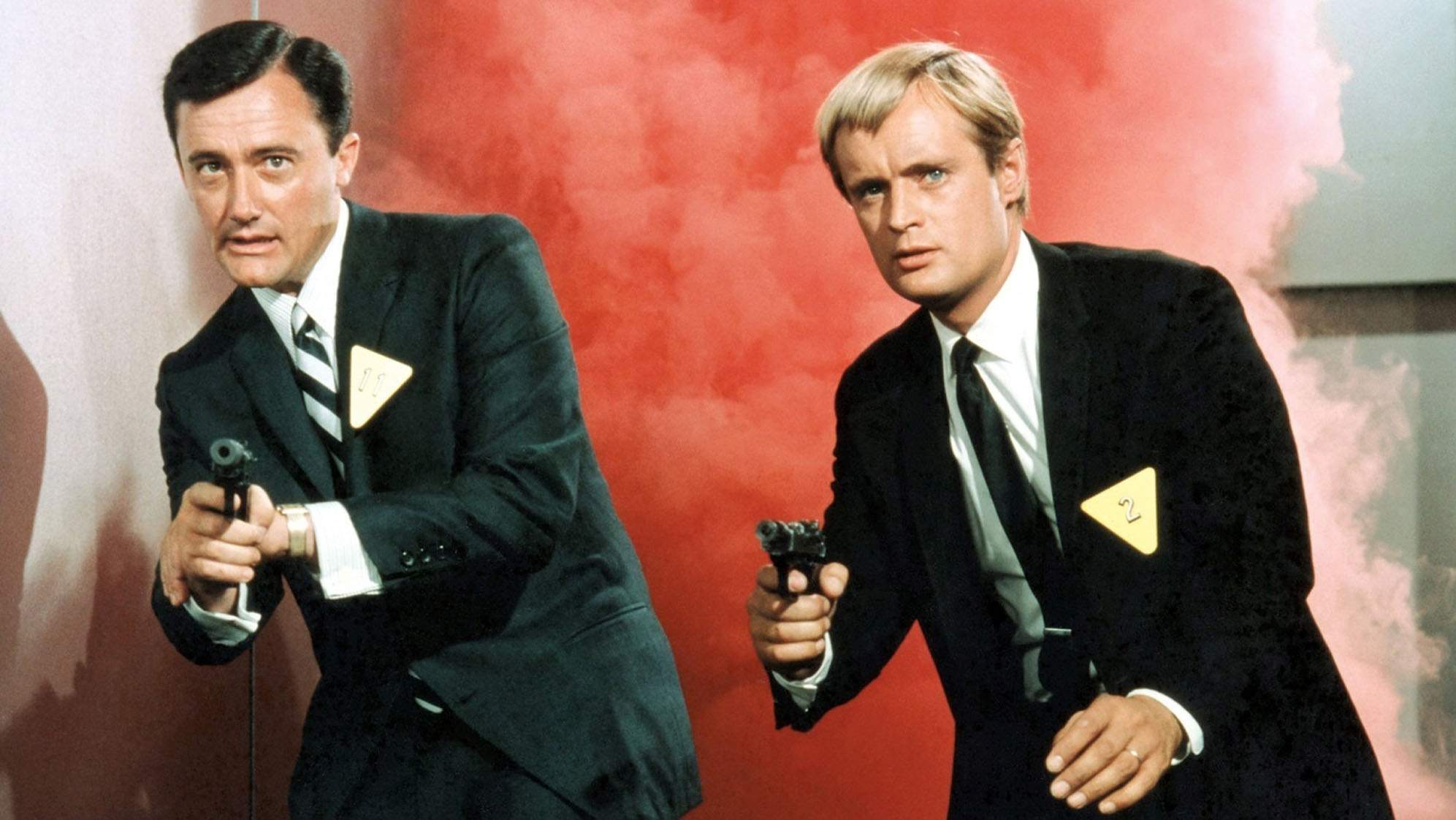
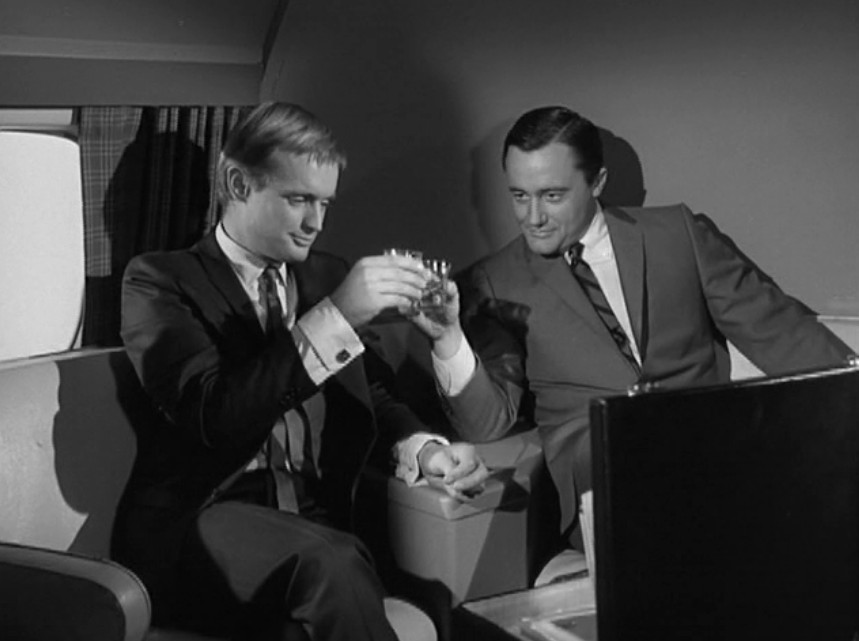
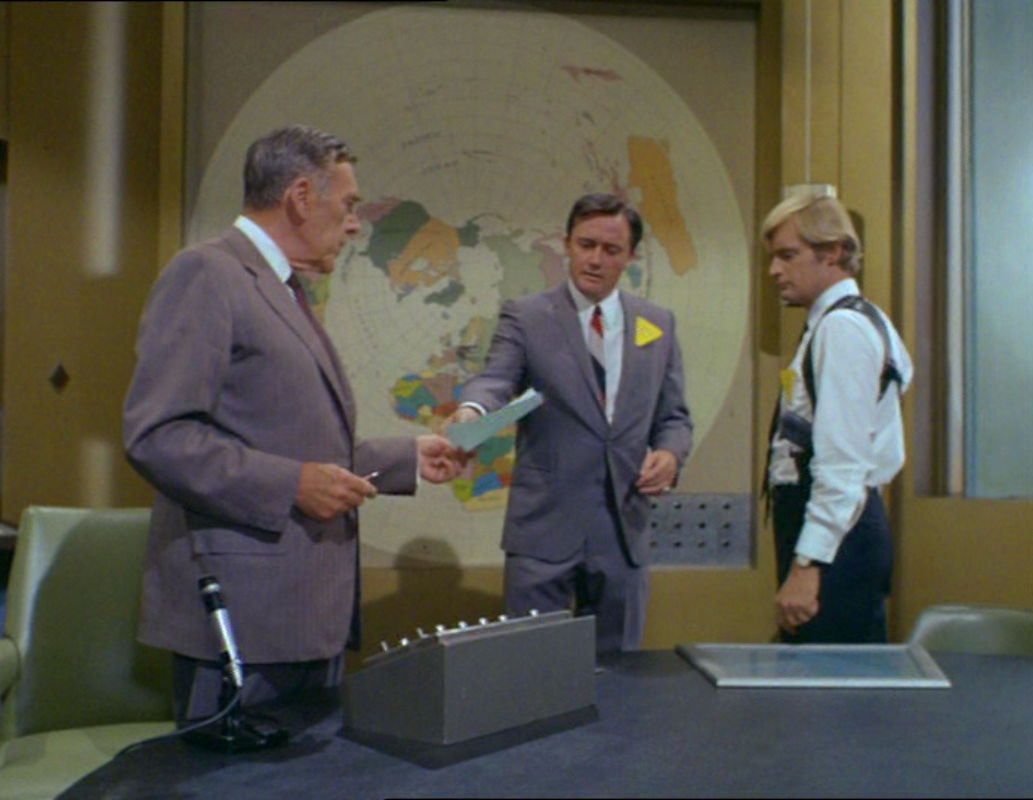
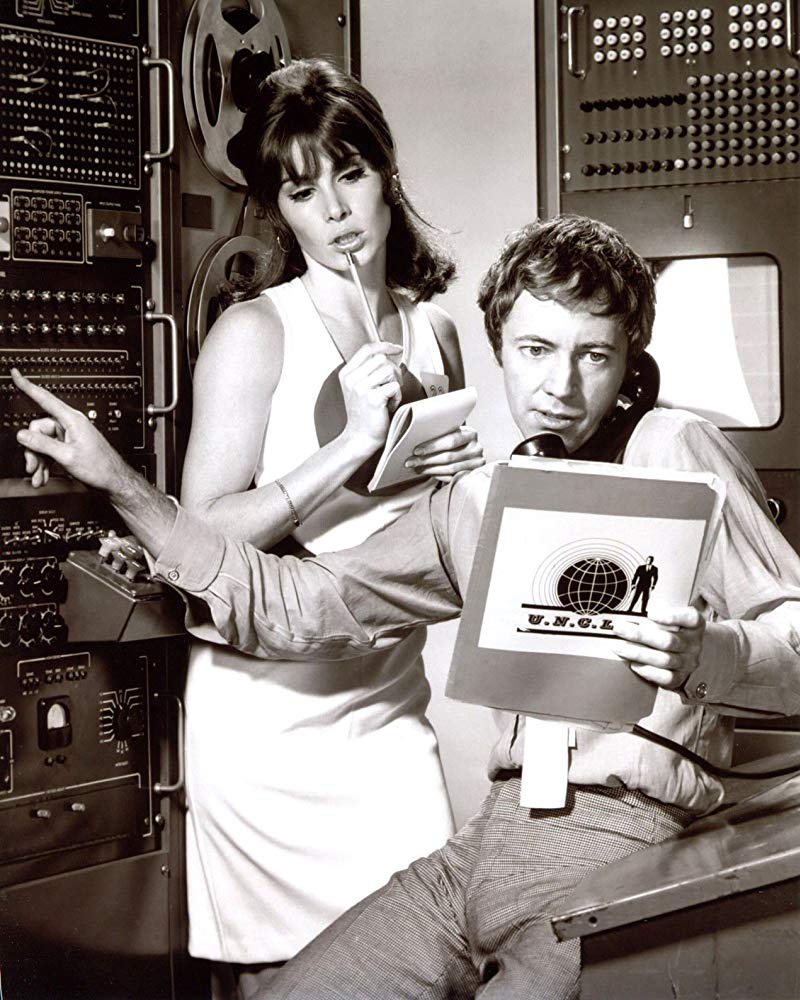
Solo (Robert Vaughn), being an American, was set up in a partnership with a Russian, Illya Kuryakin (David McCallum). The duo would take on multinational secret intelligence work under UNCLE, The United Network Command for Law and Enforcement. They sometimes worked with Alexander Waverly (Leo G. Carroll) who headed up an English organization. They frequently went up against THRUSH. We never learned who was part of THRUSH or what their goals were, apart from taking over the world of, course.

Photo: ebay.com
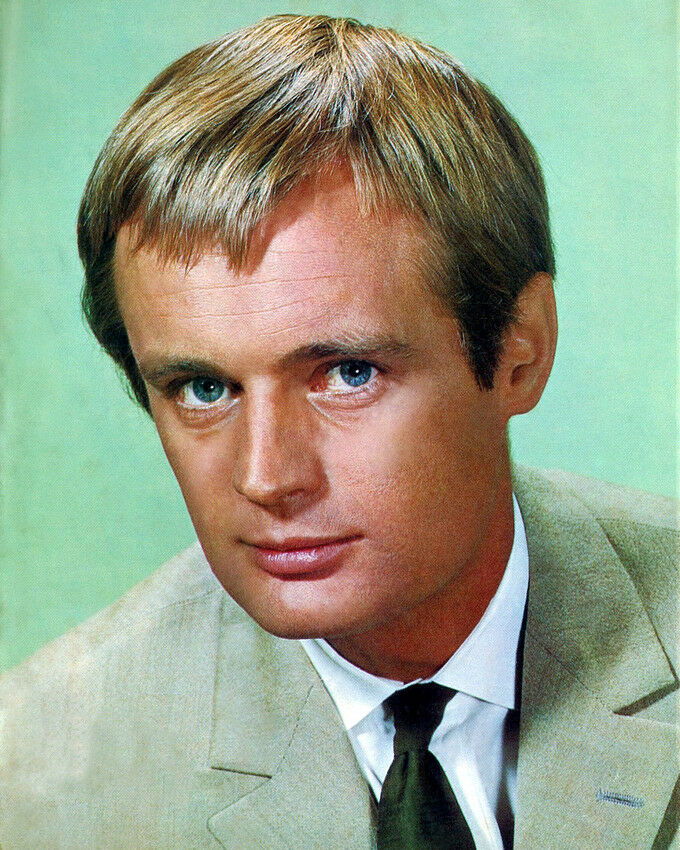
David McCallum

Solo was supposed to be the typical ladies’ man, with Kuryakin being the intelligent, funny, and loyal partner, but McCallum turned into an instant celebrity. Hysterical fans attended promotional appearances and magazines gave he and his wife Jill Ireland little peace and quiet. One article I read discussed an incident in Baton Rouge, LA when McCallum was locked in a bathroom so the police could clear out the screaming women. When he was supposed to do a spot in a Macy’s store in New York, police had to disperse 15,000 screaming women who made it too dangerous for him to appear and did “a colossal amount of damage” to the store.

Solo and Kuryakin accessed their secret headquarters through a tailor’s shop, Del Floria’s.

Photo: filmandfurniture.com

In an interesting twist, the creators decided to feature an “innocent character,”–a Joe Doe or Jane Smith who the viewers could identify with—in every episode.

The theme music was created by Jerry Goldsmith, changing slightly each season as new composers came on board, eight in all.

Photo: imdb.com

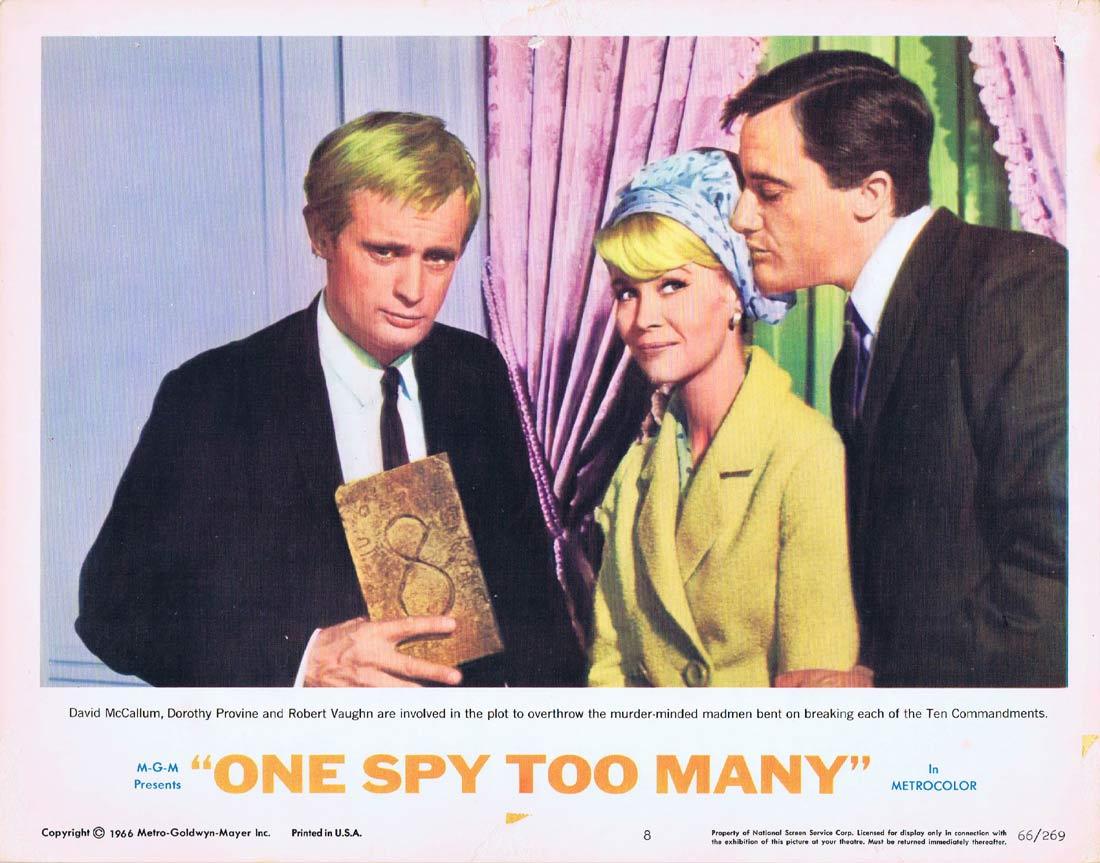
With the exception of one show, the episodes were titled “The ______ Affair.” Every year at least one two-part show was aired. The pair of shows became theatrical films released in Europe. Additional footage was added to the movies. Some of these films were later seen on American television and include To Trap a Spy (1964), The Spy with My Face (1965), One Spy Too Many (1966), The Spy in the Green Hat (1967), and How to Steal the World (1968), among others.

Photo: imdb.com

Although stuntmen were hired for the two leads, they also did their own stunts. Typically, the actor and stuntman did each stunt, and the final version combined the best of them. However, McCallum tried to avoid heights, and Vaughn disliked water scenes.

Like Get Smart, the recurring characters were a small group, and guest stars were necessary for each episode. Both high-profile and up-and-coming actors were eager to appear on the show. William Shatner and Leonard Nimoy can be seen together in “The Project Strigas Affair” two years before they starred on Star Trek. Other actors who appeared include Judy Carne, Joan Collins, Yvonne Craig, Broderick Crawford, Robert Culp, Chad Everett, Barbara Feldon, Anne Francis, Werner Klemperer, Janet Leigh, June Lockhart, Jack Lord, Ricardo Montalban, Leslie Nielsen, Carroll O’Connor, Vincent Price, Cesar Romero, Kurt Russell, Sonny and Cher, and Telly Savalas.

Photo: theunclefiles.com

Of course, spies need technological gadgets to get a leg up on the competition. Some of their communication devices included a security badge and a business card. They could also communicate with a portable satellite disguised as a cigarette case or fountain pen.

Like all good crime fighters, the duo needed a car, and theirs was a Piranha Coupe, based on the Chevrolet Corvair.

Photo: tvguide.com

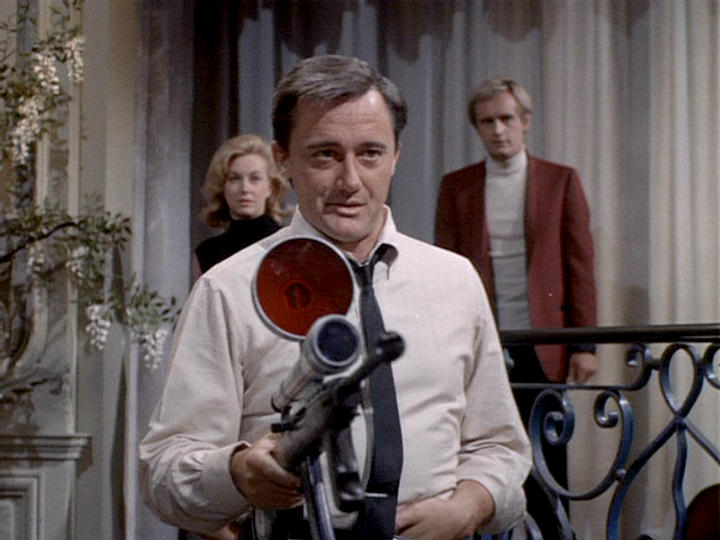
Weapons were also a necessity in their line of work. The UNCLE Special was a semi-automatic weapon which was useful except at night when THRUSH had access to a “sniperscope” which allowed the villains to shoot in total darkness.

The gadgets, props, and clothing for the show were so popular that they are exhibited in the Ronald Reagan Presidential Library. The CIA also exhibits some of the show’s items.

Season 1 was a great success even though partway through the season, the show moved from Tuesdays to Mondays. With season 2 came more “tongue-in-cheek” dialogue, and the series switched from black and white to full color. Athough the show was moved to Friday nights, its popularity continued.

Photo: mtv.com

Season 3 added a campy element, a la the Batman and The Monkees craze, against the stars’ wishes. The ratings decreased and the show never attained the same quality and ratings again. It was renewed for a fourth season but cancelled partway through when there was no increase in viewership.

Although the show was only extremely popular for two years, it garnered eight Emmy nominations and five Golden Globe nominations, including a win for David McCallum as best star in 1966.

Photo: filmandfurniture.com

Of course, like all popular shows from the 1960s, a tv movie was made a few years later and a big-screen remake came decades later.

The Return of the Man from UNCLE: The Fifteen Years Later Affair was seen on CBS, not NBC, in 1983 with both Vaughn and McCallum reprising their roles. At the beginning of the movie, we learn that although THRUSH was obliterated with the arrest of its leader, he has now escaped from prison. Rather than stick with the chemistry of the two leads, the tv movie pairs each lead with a younger agent.

In 2015, Guy Ritchie’s big-screen The Man from UNCLE was set in the 1960s featuring Solo (Henry Cavill), Kuryakin (Armie Hammer), and Gaby Teller (Alicia Vikander). The trio must work together in a joint mission to stop an evil organization from using Gaby’s father’s expertise in science to build a nuclear bomb. All the while, they don’t totally trust each other, and secretly put their own country’s agendas first. As far as reboots go, the film was actually a good rendition of the original show.

Photo: worthpoint.com

Of course, there was no limit to the merchandising in connection with the show. Several comic books based on the series were published, as well as two dozen novels. In addition to membership cards, viewers could show their love

for the show with board games, action figures, model kits, lunch boxes, and toy guns.

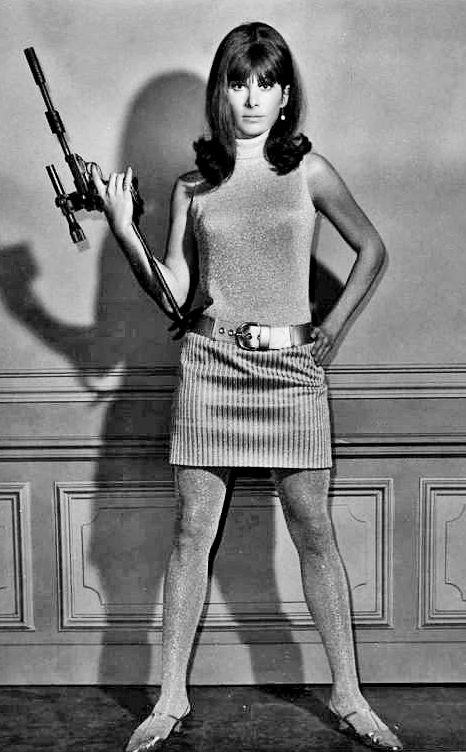
I did promise to get back to April Dancer. Halfway through The Man from UNCLE series, the network released a spin-off, The Girl from UNCLE starring Stefanie Powers as April Dancer. Not as popular as the original, it was cancelled after one season.

Photo: sixtiescity.net

Dancer works with British agent Mark Slate (Noel Harrison). Leo G. Carroll appeared as Mr. Waverly in this series also. Luckily Powers was fluent in several languages, because Dancer often went undercover with a foreign accent.

Photo: business.facebook.com

Unfortunately, Dancer reeled in the bad guys, but Slate was the one who got to kill them. However, April did get some cool gadgets such as a perfume atomizer that sprayed gas and exploding jewelry.

This show also used Goldsmith’s theme music in an arrangement by Dave Grusin.

Both The Girl from UNCLE and The Man from UNCLE are available on DVD.

Although The Man from UNCLE was only hugely popular for two years and The Girl from UNCLE never attained a fan base, the shows ’ concept spawned a huge pop culture obsession. At one point, more than 10,000 letters a week were delivered to the network. The show sparked an interest in spy shows that would pave the way for future shows such as Mission Impossible; The Wild, Wild West; I Spy; and Get Smart. Like The Man from UNCLE, each of these shows would result in reboot big-screen movies in later decades, as well as a large output of memorabilia.

Photo: oldies.com

It’s interesting that this show feels dated now with the current technology, yet Get Smart continues to be a hit. I think the humor and campiness of Get Smart keeps it relevant which is ironic, because that is what basically brought about the end of The Man from UNCLE. Despite its current non-relevancy, it was an important part of pop culture and deserves to be celebrated for its cult status in the mid-sixties and the realistic portrayal of spies to generations of viewers.

Did You Know Shirley Partridge, Samantha Stephens, Jeannie, Donna Reed, and Hazel Lived in the Same Neighborhood?

As we proceed with our Behind the Scenes series this month, today we are thinking about set designers. Before the interior designs are done, the production team needs to find the perfect home for our television friends.

Did you ever daydream about places you might want to live in, even if you never would actually consider leaving your home?  Perhaps it’s a small rose-covered cottage in the English countryside, maybe a ski chalet in the Swiss alps, or a house on the Maine coast with green shutters and a widow’s walk. I’ve thought about all of these places, but now I have another one to consider. It’s an historic neighborhood where some of my favorite television friends lived. Today we learn a bit about the Columbia Ranch.

Photo: columbiaranch.net

Now called Warner Brothers Ranch, the former Columbia Ranch was in Burbank, CA. In addition to dozens of television shows, it was the setting for many movies as well such as Mr. Deeds Goes to Town, High Noon, and Lost Horizon. The neighborhood interiors were typically shot at other studio locations.

In 1934, Harry Cohn, head of Columbia Pictures, purchased 40 acres in Burbank. In 1948, Columbia got into the television business under Screen Gems.

Photo: pinterest.com

During the 1950s, Captain Midnight, Father Knows Best, The Donna Reed Show, and Dennis the Menace were filmed here. By the 1960s, the ranch was used continuously for television and movies. The set was about six blocks but looked much larger on camera shots. Shows during the 1960s included My Sister Eileen, Hazel, Our Man Higgins, The Farmer’s Daughter, Bewitched, Gidget, I Dream of Jeannie, The Monkees, and The Flying Nun.

In 1970, a fire destroyed a quarter of the neighborhood, including many buildings on Blondie Street. After rebuilding, taping continued on the set. During the next three decades, shows included The Partridge Family, Bridget Loves Bernie, Apples Way, The Scarecrow and Mrs. King, and Life Goes On.

In 1971, Columbia and Warner Brothers combined their companies and merged into The Burbank Studios. The Ranch then was relegated to a back backlot.

Photo: columbiaranch.net

When Columbia Pictures moved its production facilities to Culver City in 1990, Warner Brothers gained ownership of the Ranch.

Photo: pinterest

Photo: pinterest

It’s continued to be a busy spot for filming. The fountain in the park was the one shown in the opening credits in Friends.

Nearby is also a swimming pool used on a variety of shows, including The Partridge Family.

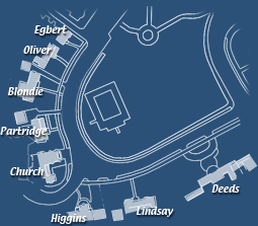
The most famous street in the Ranch was Blondie Street. Blondie Street was named for Blondie Bumstead because the Blondie movies of the 1940s were filmed here. Walking down Blondie Street reveals homes that we were all familiar with growing up in the sixties and seventies.

Photo: columbiaranch.net

It’s a curved residential street with twelve different houses, surrounding a large, central park. There is also a brick church and paved sidewalks. Three of the buildings—the Lindsay House, the Little Egbert House, and the Oliver House—were original to the 1935 set production.

The Blondie House

Photo: columbiaranch.net

This set, constructed in 1941, was the home for Major Nelson on I Dream of Jeannie, Mr. Wilson on Dennis the Menace, and the Andersons on Father Knows Best, in addition to the Blondie movies. Later it housed the operations office for the Warner Ranch. Of course, Jeannie’s house was not here, it was a Jim Beam decanter that was sold during Christmas of 1964.

The Corner Church

Photo: columbiaranch.net

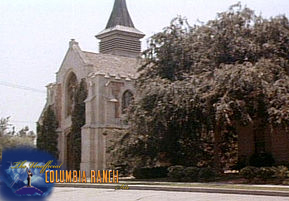
When thePartridge Family drives off for a show in their bus, you can often spot the church which is just down the road from their home, across from The Stephens’ home on Bewitched. It was moved here in 1953. When any of the series needed a church, this was the one. It can be seen on an episode of Hazel when the family attends church.

The Deeds Home

Photo: columbiaranch.net

Originally built for Frank Capra’s movie, Mr. Deeds Goes to Town in 1936, the house is only seen briefly in the movie. The Three Stooges filmed there in the thirties and forties. In the sixties it was seen in Batman. Both Gidget and The Partridge Family used the house as the high school and Bewitched used it as a civic building. In 1989, the original house was demolished. In its place, The Chester House and the Griswold House were built. The Griswold House was built for National Lampoon’s Christmas Vacation.

The Lindsay House

Photo: columbiaranch.net

Constructed in 1936, this house was best known as the Baxter home on Hazel. It also served as the Lawrence home on Gidget.

The Higgins House

Photo: columbiaranch.net

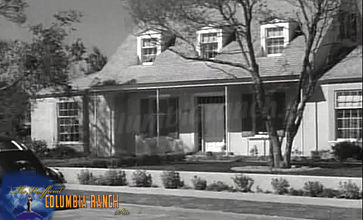
This structure was constructed for the show Our Man Higgins in 1962. It was later the home of Darrin and Samantha Stephens on Bewitched from 1964-1972. On I Dream of Jeannie, it was the home of Alfred and Amanda Bellows.

Photo: pinterest.com

For Bewitched, the interior and backyard scenes were filmed on a sound stage. The stairs ended in a hallway, but the doors only led to small closets, not the master bedroom.  A modular first floor served as a setting for all the rooms. The den doubled as the nursery. A fake wall was put up to hide the view to the kitchen. When the den was needed, brown paneling was put over the nursery walls and the window was covered with a wall near the fireplace.

Photo: darkershadows.com

If you look closely, you’ll notice the avocado and gold flowered sofa in the Stephens’ living room was the same one used by Alfred and Amanda Bellows in their living room. But the shows shared well.  On one episode of Bewitched, Louise and Larry Tate are seen at their kitchen table, but the kitchen looks identical to Major Nelsons’s. Roger Healey’s bedroom eerily resembled Darrin and Samantha’s.

Photo: youtube.com
Photo: pinterest.com

I guess I was too busy crying to notice that this house was also Brian Piccolo’s home in Brian’s Song.

The Partridge Family House

Photo: pinterest.com

The house across the street from the Stephens’ house was home to Abner and Gladys Kravitz. During the filming of Dennis the Menace, it was Mrs. Elkins’ house. It was also the home of The Partridge Family. In 1989 it became the Thatcher home on Life Goes On.

The home was built in 1953, modeled after a Sears, Roebuck & Co. plan. The modest two-story home was a perfect fit for the Partridges with its white, picket fence. The interiors were filmed at the Ranch as well. Located next door to the Blondie House, there were shrubs between the homes that were featured several times on the Partridge Family. In an episode where Keith shoots a movie, Shirley is clipping the hedges and begins dancing for the film, not realizing her neighbor is watching her. We see the hedges again when Keith moves into the room above the garage next door and gets free rent in return for yard work.

Photo: flickr.com
Photo: flickr.com

Because they were filming the show when the infamous fire broke out, some of the structure had to be rebuilt for the remainder of the series. From season 1 to 2, Danny and Keith’s bedrooms switch back and forth a couple times, and I wonder if this is the reason.

The Oliver House

Photo: columbiaranch.net

Constructed in 1935 for a movie, the Oliver house was moved to Blondie Street for the home of the Stone family in The Donna Reed Show. It was also the Mitchell home where Dennis resided with his parents.

The Little Egbert House

Photo: columbiaranch.net

Technically, Little Egbert is not on Blondie Street but on its own, Little Egbert Street, basically an alley. Fortunately, the 1970 fire did not damage any of the original structure. The house was also used in Minding the Mint and as The Shaggy Dog, the hangout for Gidget and her friends.

Photo: retrospace.org

For sentimental reasons, I would choose the Partridge Family home to live in. However, I would have to remodel the kitchen. I could live with the red breakfast table set. The avocado and gold flowered wall paper may have been very chic in its day, but even I am not that sentimental!