We are celebrating National State days this month. This week we are celebrating Oregon. I’m sure a lot of stars grew up in Oregon, but my choice is David Ogden Stiers. Although Stiers was born in Illinois on Halloween in 1942, his family moved to Eugene, Oregon when he was in high school. Based on his life, I think Oregon has the better claim to him. After graduation, Stiers enrolled in the University of Oregon.
Photo: ebay.com
Early in his career, Stiers moved to San Francisco, performing with the California Shakespeare Theater, the San Francisco Actors Workshop, and the improv group, The Committee. I would like to learn more about The Committee whose members included Rob Reiner, Howard Hesseman, and Peter Bonerz.
In the 1960s, Stiers moved to New York to study at Juilliard for a couple of years and was able to appear in numerous Broadway productions. At Juilliard, Stiers was mentored by John Houseman.
Stiers was a prolific actor, appearing in 38 big screen movies, 39 made-for-tv movies, and more than 90 different television series.
Stiers with Mary Tyler Moore–Photo: amazon.com
In the 1970s, he showed up on Kojak, Charlie’s Angels, Phyllis, The Mary Tyler Moore Show, Rhoda, The Tony Randall Show, and Paper Chase.
Most of us got to know him as Major Charles Emerson Winchester III on M*A*S*H. He became part of the cast in 1977 and continued with the show until it ended in 1983. As Winchester, Stiers would receive two Emmy nominations in 1981 and 1982. Both years he got beat by a Taxi alumni, Danny DeVito in 81 and Christopher Lloyd in 82.
Stiers with Harry Morgan and William Christopher–Photo: thenewyorktimes.com
Winchester replaced Frank Burns whom Hawkeye and Hunnicutt made fun of for his inept medical skills. Charles was a brilliant surgeon but was an aristocrat from Boston and never let anyone forget it. However, as with all M*A*S*H characters, Winchester continues to evolve, and we learn more about his past and how that affected his personality.
Stiers with Morgan and Loretta Swit–Photo: enews.com
Stiers always described Harry Morgan as his acting mentor, but he loved the entire cast. Although Stiers could come off a bit like Winchester at first meeting, once he got to know you, his castmates said “the walls came down and you saw a sweet, tender man.” Kellye Nakahara (Nurse Kellye) shared that she used to jump into Stier’s arms every morning so he could twirl her around like a princess at a ball.” Loretta Swit said “he was very much his own person, but he loved and adored us as we did him.” Executive producer Burt Metcalfe reported that “I have always felt that one of the reasons for the show’s success was that the audience sensed that the characters loved another and they loved the characters. And that love goes down to the actors.” All his coworkers described Stiers as a prankster on the set.
His life after M*A*S*H included roles on a variety of shows, including Alf, Wings, Star Trek, Murder She Wrote, Dr. Quinn, Ally McBeal, The Outer Limits, Touched by An Angel, and Frasier.
He would also receive recurring roles in four additional series during his career. In Two Guys, A Girl and A Pizza Place, he played Mr. Bauer.
Stiers with Swoosie Kurtz, Paget Brewster, and Brian Van Holt Photo: pinterest.com
I never watched Love & Money, but Stiers played the wealthy Nicholas Conklin; the show is described as “The penthouse-residing Conklin family of scholars and the basement-dwelling McBride family of maintenance men find themselves unhappily linked when the heiress daughter and blue-collar son fall in love.”
I also never watched the Dead Zone, but Stiers played Reverend Purdy in the show where “Johnny had the perfect life until he was in a coma for six years When he awoke, he found his fiancé married to another man, his son doesn’t know him, and everything had changed including Johnny because he can now ‘see’ things.”
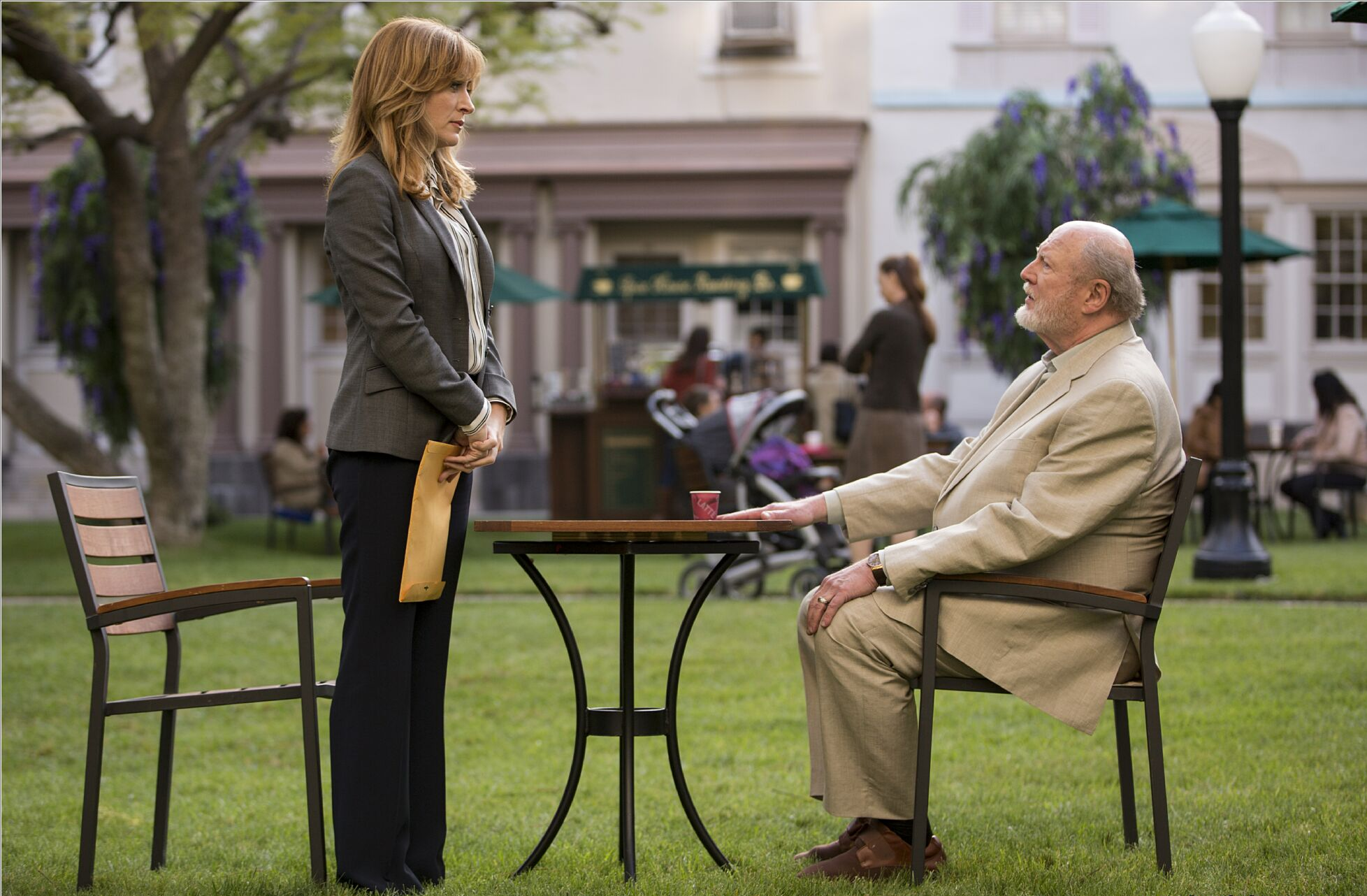
Stiers with Sasha Alexander–Photo: popcitylife.com
He also played Arthur Isles in Rizzoli & Isles, one of my favorite shows from the past few years.
You could also hear Stiers in a number of animation films including Beauty and the Beast, Pocahontas, and the Lilo and Stitch movies. He narrated many audiobooks as well.
Photo: OregonCoastDailyNews
One of the reasons Oregon can lay claim to Stiers is because he continued to live in Newport and spent his later years as a conductor for the Newport Symphony Orchestra. As a fan of classical music, Stiers was able to be a guest conductor in more than 70 orchestras around the world. Newport seems to be a quirky, but fun, place with a population of only about 10,000. It is definitely on my list of places to visit.
In 2018, Stiers passed away from bladder cancer. He generously bequeathed funding for a variety of cultural groups including the Newport Symphony, the Newport Public Library, and the Oregon Coast Council for the Arts.
Photo: amazon.com
I appreciate that Stiers loved and celebrated the arts. One of his thoughts about experiencing culture was: “The thing I love about the arts—music, theater, museums, galleries—is that everybody wins. You are touched and hopefully moved, and it is unique to each person. Even though you may have listened to the same performance, what you heard could be vastly different from what anyone else heard.” I’m happy that he was able to spend the last years of his life doing something he enjoyed so much after a life of giving to others through his acting performances—something we can all aspire to.
When I looked up the definition for “too close for comfort” it said “close enough to make a person feel nervous, worried or upset.” That is exactly how this show made me feel.
Photo: sitcomsonline.com
I realize that I was hard to please in the 1980s. Coming out of the 1970s with M*A*S*H,The Mary Tyler Moore Show, and The Bob Newhart Show, I did not enjoy All in the Family, The Jeffersons, Alice, Maude, or Diff’rentStrokes. I did watch Cheers, Family Ties, The Cosby Show, Who’s the Boss, and Moonlighting during that decade. Too Close for Comfort, along with Three’s Company, just didn’t strike me as funny.
When you invest in a show, you feel like these characters are part of your life. Ted Knight’s role of Ted Baxter on The Mary Tyler Moore Show was a flawed human being for sure, but I felt like we had spent a lot of time together, and I was able to see beyond the brash, obnoxious exterior to the vulnerable and kind being inside. It was if we had spent lots of hours over the kitchen table having coffee. Characters like Baxter teach us about the world and about ourselves. Ted Knight as Henry Rush was more like the neighbor whom I caught glimpses of out the kitchen window but there was no way to learn more about the character other than the surface appearances. The show was based more on plots than characters.
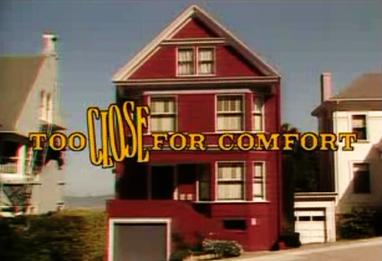
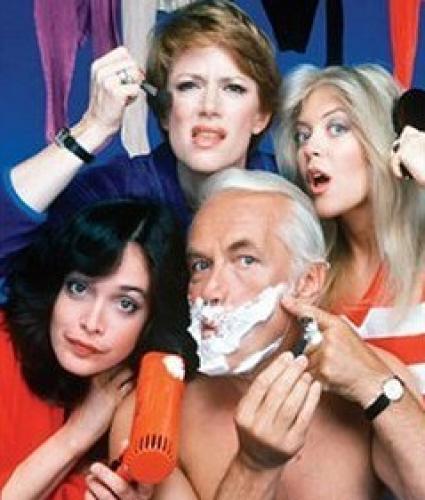
Too Close for Comfort was based on the British sitcom Keep It in the Family. It debuted in 1980. Henry Rush is a cartoonist who writes about the Cosmic Cow (a space crime fighter) and lives in San Francisco with his wife Muriel, a photographer (Nancy Dussault) and his two adult daughters Jackie (Deborah Van Valkenburgh) who works at a bank and Sara (Lydia Cornell) who is a college student.
Photo: wikipedia
The house was a two-family residence and the girls decide to rent from their parents. Henry is not sure it’s a good idea, but it’s the only apartment they can afford because he charges $300 rent for the bottom of the Victorian house. Monroe (Jim Bullock) is a friend of Sara’s who was cast only in one episode but ended up joining not only the cast but living with Henry and Muriel.
The show was on Tuesday nights. The show followed Three’s Company and its main competition was BJ and the Bear.
In season two, Muriel becomes pregnant and Henry’s niece April also comes to live with the Rushes.
Photo: pinterest.com
One of the signatures of Henry Rush was the variety of college sweatshirts he wore. Fans from around the country would send them to the network hoping to see them on the series. The first sweatshirt to make an appearance was the University of Michigan.
The third season found the show on Thursday nights and ratings declined significantly. The show was up against Cheers on NBC and Simon and Simon on CBS. April moves out and Muriel’s mother Iris (Audrey Meadows) moves in to help with the baby. The show was cancelled by the network. The fourth season went into syndication with new episodes.
Photo: sitcomsonline.com
A fifth season began, but the show changed so much it really was a new series. The title was changed to The Ted Knight Show, the family now lived in Marin County where Henry bought a newspaper, a new theme song was created, a new opening was shot, and both daughters left the show. However, Monroe moved with Henry and Muriel. The new episodes began airing in April of 1986; 22 episodes were taped and after the first 12 aired, Knight passed away from colon cancer. The final ten episodes were run, and then the series ended.
Photo: sitcomsonline.com
During the various seasons, the girls changed careers a lot. Jackie moved from the bank to a department store to a fashion designer. Sara held a bunch of part-time jobs while she was in college. She then became a bank teller, a weather woman at the local station KTSF, and an entrepreneur who sells Cosmic Cow Cookies.
In a Fox News interview, Cornell discusses how she received the role of Sara. She said she had to take a bus for the audition and showed up an hour late after being in the rain. The secretary told her auditions had closed but Arne Sultan said to let her audition as long as she came in. They gave her a script to read and a line said “She gives her dad a raspberry.” Sara picks up an imaginary raspberry and hands it to her dad. Sultan asked her what she was doing, and then explained a raspberry was a Bronx cheer. She felt very stupid and they were all laughing. The casting director and executives decided at that time she was perfect for the part and asked her to report to work the next day.
Photo: episodate.com
I know that there have been far worse shows than Too Close for Comfort, but I’m not content having the bar set there because there have also been far better shows. Rather than my usual recommendation of buying the DVDs for a weekend of binge watching, I’m going to tell you to buy a good book instead.
To begin the new year, we are looking at some of my favorite female television stars. We begin the series with Doris Roberts, everybody’s favorite mother.
Photo: findagrave.com
Doris was born in 1925 in St. Louis. When her parents split up, she went to the Bronx with her mother, and they lived with her grandparents. Her parents ran the Z.L. Rosenfield Agency which provided stenographic services to playwrights and actors. After studying journalism at New York University, she decided to try her hand acting, taking classes at The Neighborhood Playhouse School of the Theatre in New York City and working with Lee Strasberg at the Actor’s Studio. In the fifties, she could be seen in a variety of Broadway shows including The Desk Set, The Last of the Red-Hot Lovers, and Bad Habits. She worked with Shirley Booth on The Desk Set and credited Booth with being her acting mentor.
Photo: NY Daily News
In 1951 she accepted her first role in television, appearing on the show Starlight Theatre. She accepted roles on several 1950s drama shows. In 1956, Doris married Michael Cannata. They divorced in 1962, and a year later she married William Goven, a playwright. They would stay together until his death in 1986.
Doris was offered her first film role in Something Wild in 1961. She would go on to appear in more than 30 movies.
Her television career also began to expand in the sixties when she appeared in about nine drama series. However, it was the seventies when she hit her stride. During that decade, she would make appearances in Mary Hartman, All in the Family, Family, Rhoda, and The Mary Tyler Moore Show in addition to several others.
Helping Phyllis find a job on The Mary Tyler Moore Show Photo: METV.com
On All in the Family, Doris played a bar patron who befriends Edith. Originally, Roberts was offered the role of Vivian on Norman Lear’s show, Maude but at the last minute, Lear asked Rue McClanahan to take the role over. Later Norman stated that he thought Roberts’ character was too similar to Bea Arthur’s Maude. On Mary Hartman, Mary Hartman, she played a faith healer Dorelda Doremus.
Photo: yahoosports.com
Doris mentioned that Lily Tomlin encouraged her to move to Los Angeles in 1973. After her relocation, Roberts received her first recurring character roles. She would appear in Soap as Flo Flotsky on four episodes, five episodes of Barney Miller, and she had a regular spot as the star’s mother on Angie which ran from 1979-1980.
Photo: SBS.com
Her career continued to flourish throughout the eighties. She had recurring roles on as a gabby hairdresser on Maggie and on Alice as Lavin’s mother, and she was a regular on Remington Steele where Roberts played a former IRS agent who becomes the receptionist for the agency. In addition, she could be seen on Fantasy Island, St. Elsewhere, The Love Boat, Mr. Belvedere, and Cagney and Lacey, along with a variety of other shows.
Her appearance on St. Elsewhere gave her an Emmy win for a guest appearance, playing a homeless woman.
Roberts on St. Elsewhere Photo: amazon.com
In the decade of the nineties, we saw her on Empty Nest, Murder She Wrote, and The King of Queens, among others. However, it was in 1996 when she was offered the role that would change her life. From 1996-2005 she came into our living rooms every week as Marie Barone on Everybody Loves Raymond.
Photo: KTLA.com
More than 100 actresses were considered for the role. She was nominated for seven Emmys, winning four of them (2001, 2002, 2003, and 2005). Amazingly, Ray Romano as Ray Barone, Peter Boyle as his dad Frank, Patricia Heaton as his wife Debra, Brad Garrett as his brother Robert and Doris Roberts appeared in all 210 episodes of the series.
Photo: wonderwall.com
Ray Romano discussed the appeal Roberts had for viewers: “Here’s how good she was: She played the most intrusive, overbearing, nosy woman—always starting fights and whatnot and meddling in our business—and yet, when I asked the fans who their favorite character was, all the time it was her. She was so good at portraying the love that was underneath.” In an interview with Entertainment Tonight, Doris described the character of Marie Barone: “Nine glorious years; everything good comes to an end. She doesn’t give in, she doesn’t give up and she never takes no for an answer.”
Doris remained friends with the cast, especially her on-screen husband Frank played by Peter Boyle. After his death, Roberts remembered him: “Peter was so different from the characters he played. He was brilliant, well read, sensitive, a gentleman.” Roberts was able to visit him at home and in the hospital and to be with the family after his passing.
Photo: today.com
From 2006-2014, her work continued. In addition to a recurring role on The Middle, she appeared on Law and Order, Grey’s Anatomy, Hot in Cleveland, and Desperate Housewives, along with six other less-known shows. Her role on The Middle gave her a chance to work with her Everybody Loves Raymond costar, Patricia Heaton again.
In addition to her acting career, Roberts was a dedicated activist. She testified before Congress about age discrimination in Hollywood, worked with a variety of animal rights groups, and was chairwoman for the Children with AIDS Foundation. She also had a variety of hobbies including traveling, philanthropy, collecting wine, dancing, singing, and cooking. She claimed her favorite movie was Gone with the Wind.
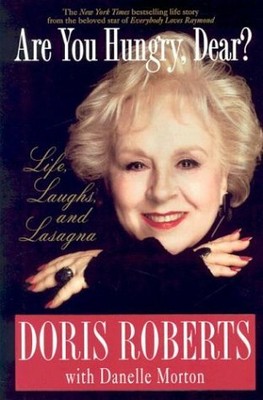
In 2003, Roberts published her memoir cowritten with Danelle Morton, titled, Are You Hungry Dear? Life, Laughs, and Lasagna. She included many of her favorite recipes in the biography.
In 2016, Roberts died following a stroke. Romano said “Doris Roberts had an energy and a spirit that amazed me. She never stopped. Whether working professionally or with her many charities, or just nurturing and mentoring a green young comic trying to make it as an actor, she did everything with such a grand love for life and people, and I will miss her dearly.”
Patricia Heaton said Doris’s television husband Peter Boyle was sick so the cast was able to prepare themselves for his death, but Doris died quickly. Heaton said “Roberts was funny and tough and loved life, living it to the fullest.”
Photo: televisionacademy.com
One of my favorite quotes by Doris Roberts is that “everybody is a teacher if you listen.” Thanks for teaching and entertaining us for more than six decades.
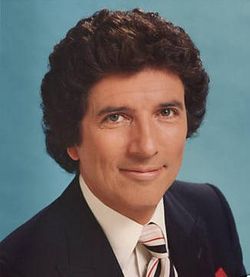
I’m calling this series “The Men of November.” We are taking a look at five actors who contributed to television during the classic decades of the 1940s-1980s. I’ve decided to take them in alphabetical order so we are starting with Bert Convy.
Photo: findagrave.com
Born in St. Louis in 1933, Convy’s family moved to Los Angeles when he was seven. His focus was athletics, not acting, in school. When he was 17, the Philadelphia Phillies gave him a contract to play in their minor league system which he did from 1951-1952. In 1951 he played for the Klamath Falls Gems (Oregon), and in 1952 he split his time with the Salina Blue Jays (Kansas) and the Miami Eagles (Oklahoma).
Once he realized baseball was not going to be his career, he joined The Cheers, who released a top ten hit called “Black Denim Trousers and Motorcycle Boots” in 1955. Convy opted to enroll at the UCLA School of Theater, Film and Television, earning a BA.
Photo: amazon.com
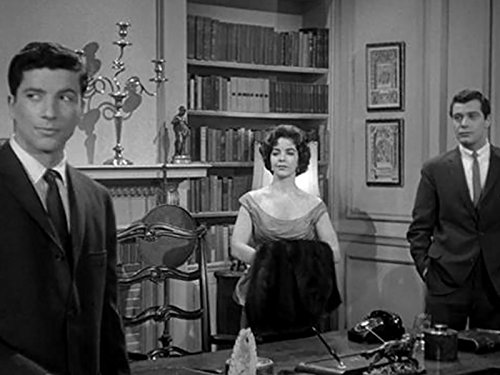
Like Ken Berry, he was a performer in the Billy Barnes Revues which was popular in the fifties and sixties. In 1956, he was an usher on Art Linkletter’s popular show House Party. He appeared in several early television series throughout the late fifties, including Those Whiting Girls.
In 1959 he married Anne Anderson. They had three children and were divorced in 1991.
Perry Mason Photo: imdb.com
He showed up on the small screen a lot during the sixties, primarily in detective shows including Perry Mason in 1960. His first feature role was in the big screen drama Susan Slade starring Troy Donahue and Connie Stevens in 1961. He also spent a part of this decade on Broadway in ten different productions.
Photo: imdb.com
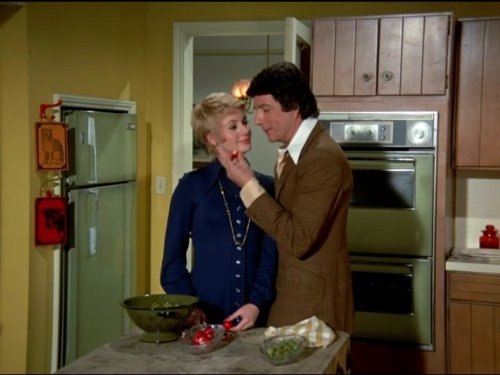
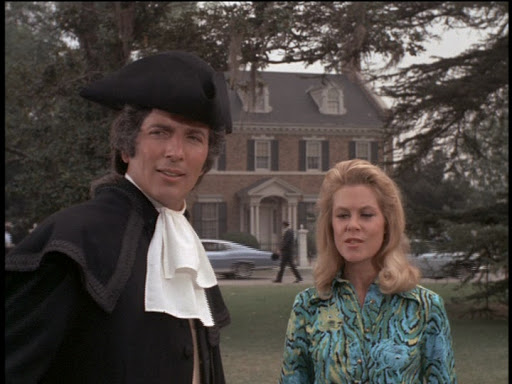
The decade of the seventies found him balancing roles in both detective (Mission Impossible, McMillan and Wife, Police Story and Charlie’s Angels among many others) and comedy shows (including Bewitched, Love American Style, and Karen). He appeared on The Partridge Family as a politician who dates Shirley. You get the distinct impression that they ended up together once the kids were out on their own. He also portrayed one of Mary’s boyfriends on The Mary Tyler Moore Show.
As Paul Revere on Bewitched Photo: fanpop.com
He received his first recurring role in 1974, playing Lt. Steve Ostrowski on The Snoop Sisters. The show starred Helen Hayes and Mildred Natwick as two sisters, one widowed and one never married, who are mystery writers that also get involved in real murders.
Photo: silverscenes.com
Two years later he starred in a short-lived variety show with the convoluted title of The Late Summer Early Fall Bert Convy Show. The title alone probably doubled the advertising budget. When I say short-lived, I mean I could only find one episode of the show which featured Don Knots.
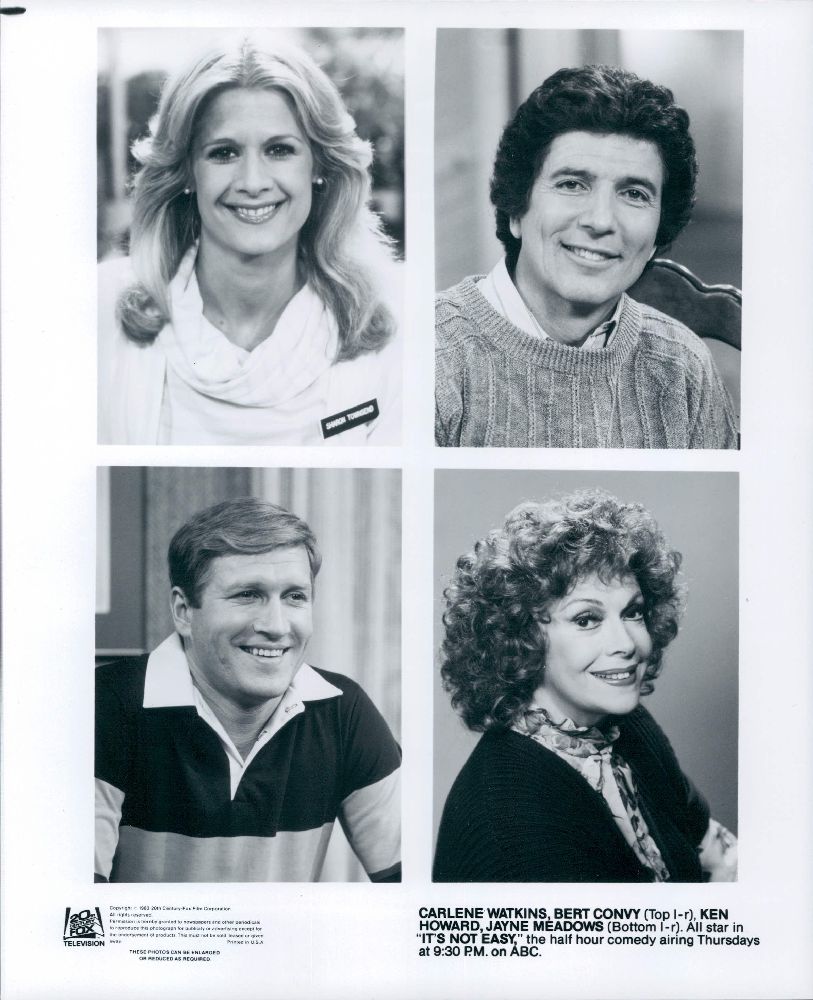
He was offered another permanent role in 1983 on It’s Not Easy. Originally Larry Breeding was given the role and made the pilot, but he passed away after a car accident. This show only lasted for 11 episodes. The plot is that Jack and Sharon have divorced. Sharon has remarried and she and her husband Neal (Convy) have decided to live across the street from Jack so it’s easier for the kids. Jack and Neal do not like each other.
Photo: sitcomsonline.com
He appeared in a few series during the eighties including Aloha Paradise, Fantasy Island, Murder She Wrote, Hotel, The Love Boat and The People Next Door.
Cannonball Run Poster Photo: moviemarket.com
While he would make ten big screen and fifteen made-for-television movies, two of them involved his buddy Burt Reynolds. Convy appeared in Semi-Tough in 1977 and Cannonball Run in 1981. The two friends developed a production company, Burt and Bert Productions.
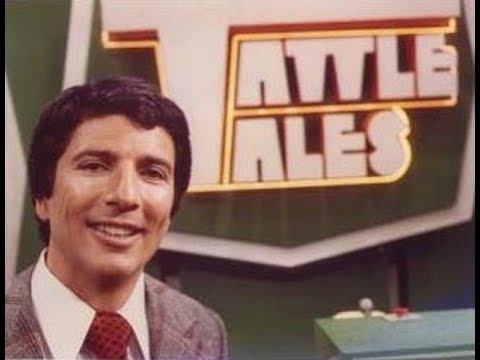
Convy was probably best known for his game show work. He was a panelist during the sixties and seventies on a variety of shows including What’s My Line, To Tell the Truth, Match Game, and Password. He hosted Tattletales, Super Password and Win, Lose or Draw. His emceeing of Tattletales resulted in an Emmy for Best Game Show Host in 1977.
Photo: youtube.com
In April of 1990, Convy collapsed and was diagnosed with cancer. The brain tumor was inoperable, forcing his retirement. His last credit was as himself on It’s Garry Shandling’s Show in 1990. He married his second wife Catherine Hills during the winter of 1991, and he passed away in July of 1991.
Sadly, Convy was never offered that perfect role that made him an icon, but he certainly had a full career. He had a lot of talents: acting, singing, and the personality to host game shows. I think it was his smile that always made him a favorite with me.
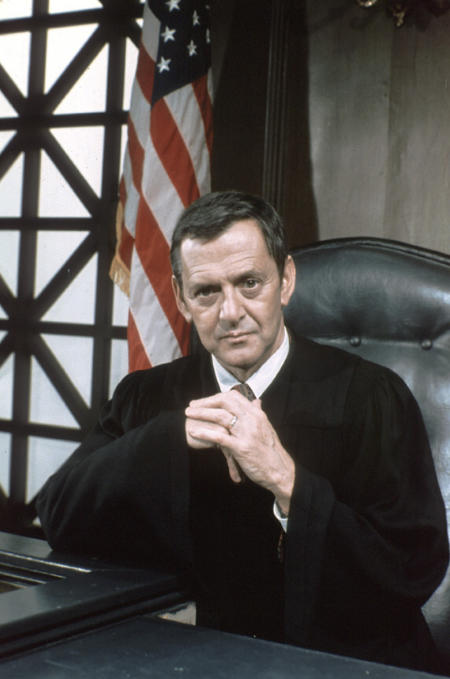
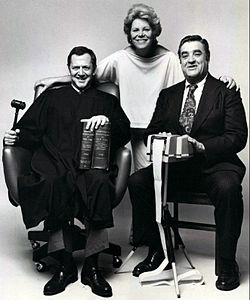
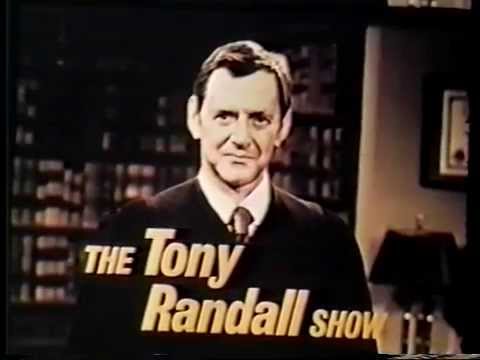
As we wind up our “Don’t Judge Me” blog series, today we’ve been sent to the bench to sit along side Judge Walter Franklin (Tony Randall) on The Tony Randall Show. Judge Franklin is a middle-aged, single-parent, widower living in Philadelphia. His extremely bright kids–teenage daughter Roberta (Devon Scott) and preteen son Oliver (Brad Savage) live with the judge, along with daffy housekeeper Bonnie (Rachel Roberts). At work we get to know his severe secretary “Miss” Janet Reubner (Allyn Ann McLerie), court reporter Jack Terwilliger (Barney Martin), and Mario Lanza (Zane Lasky), no not THAT Mario Lanza, but an overbearing assistant the judge does not care for. Judge Eleanor Cooper (Diana Muldaur) plays his co-worker and “lady friend.”
Photo: wikipedia.com
In the second season, Penny Peyser took over the role of Roberta, and Hans Conried joined the cast as Walter’s father. A lot of famous guest stars found themselves in front of the judge during the two years it was on the air. A handful of stars who appeared around Judge Franklin included Victor Buono, Beverly Garland, Michael Keaton, Hal Smith, David Ogden Stiers, and Dick Van Patten.
If this sounds a little bit like the concept of The Mary Tyler Moore Show where we see a professional at work and at home, that’s because The Tony Randall Show was produced by MTM Enterprises and created by Tom Patchett and Jay Tarses. This was the duo that produced The Bob Newhart Show a few years earlier.
Photo: tvdads.com
The Tony RandallShow debuted on ABC in 1976. When ABC cancelled the show, it was picked up by CBS for a second season. Surprisingly, the show was not cancelled by ABC for low ratings. The show was holding its own going up against Hawaii Five-0 and Best Sellers on Thursday nights. Apparently, Patchett and Tarses did not get along with Tony Randall. Unfortunately, they did not get along with each other either, and on top of that, they refused to take calls from ABC president Fred Silverman. Tiring of the drama, Silverman ended the show. On CBS, the show moved to Saturday nights and was on at the same time as OperationPetticoat and The Bionic Woman. When CBS cancelled the show, it was done for good.
Photo: jacksonupperco.com
Reflecting on the show, Grant Tinker remembered “Tony was born to work in front of a live audience, and the writing was largely first rate. Ultimately, however, three strong egos could not live together. Since Tony was obviously essential, Tom and Jay retreated to their office and oversaw from a distance, giving two of MTM’s younger writers, Hugh Wilson and Gary David Goldberg their first chance to produce.” (Wilson would go on to create WKRP in Cincinnati and Goldberg would create Family Ties and Brooklyn Bridge.)
Photo: wikipedia.com
At least this turmoil produced some good results. Goldberg said from his time on The Tony Randall Show, he learned you need to hire good people and let them do their job, and that if you have to remind people you are the producer, you’re probably not a very good one.
Ken Levine discussed working with Randall in his blog from June of 2007 (kenlevine.blogspot.com/2007/06/working-with-tony-randall.html). According to Levine, Randall “was the consummate professional. Not only did he know all of his lines, he knew everyone else’s too. . . . I loved working with Tony Randall. Of course, it helped that he thought I was funny and that I didn’t smoke.”
Photo: imdb.com
Everyone seemed to enjoy working with Randall. In a Television Academy interview, Asaad Kelada, one of the directors for the show, described Randall as a “fascinating, erudite, funny man.” He talked about the way he warmed up an audience before the show with his stories. It must have been a fun set sometimes because Kelada said he used to wear a sweater over his shoulders, and it became his trademark. One day he said there was a bit of extra energy on the set, and he suddenly realized absolutely everyone on set from the cameramen to gophers to stars were wearing sweaters, blankets, or towels around their shoulders. The Television Academy also did interviews with Abby Singer, production manager for the show, and Hugh Wilson about his writing and producing. Singer said Randall was “a good guy.” When asked if the rumors that Randall was particular were true, he said “Yes, he was so particular it was unbelievable. You couldn’t even whisper when he was on the set, but he was a sweet guy.” Wilson backed their comments up, saying “It was super to work with Tony Randall. He was a vast library of show business information and very nice.”
Despite all the problems on the set, Randall was nominated for a Golden Globe for his role of Judge Franklin. He lost to Henry Winkler for Happy Days.
Photo: youtube.com
I could not find any official DVDs for The Tony Randall Show, but some of the episodes can be found online. It sounds like the show had all the right ingredients but either did not have enough time to find its true voice or appeared a bit too late in the 1970s at a time when things were changing in television programming. Anytime you can watch Tony Randall on the small screen (or the big screen for that matter) is a special opportunity.
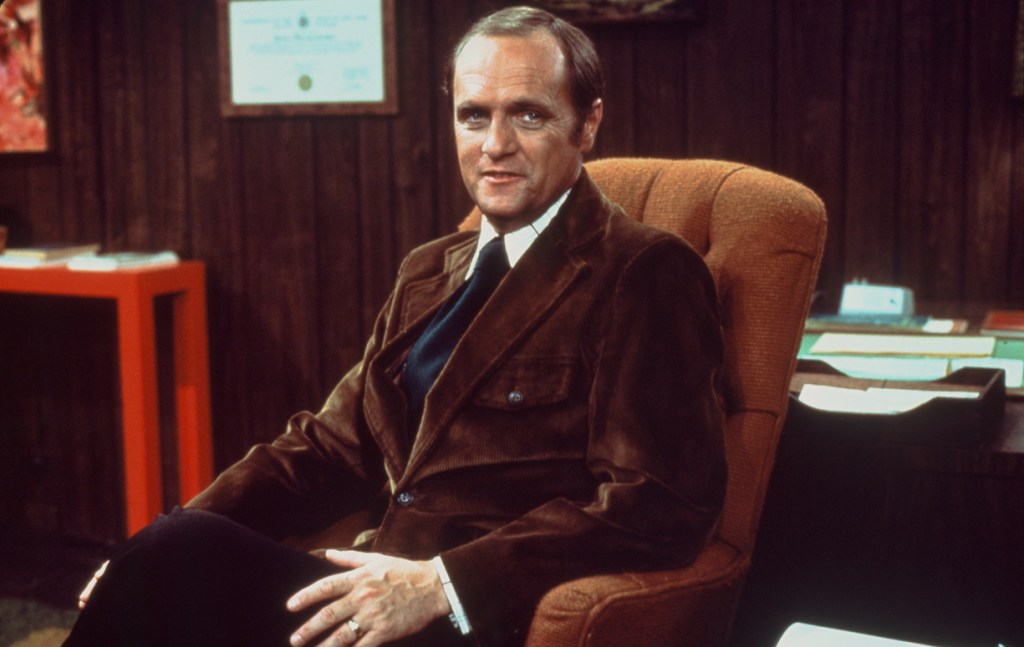
From 1972-1978 we were able to benefit from the sage advice of Dr. Robert Hartley from the comfort of our own living rooms. Created by David Davis and Lorenzo Music, and produced by MTM Enterprises, The Bob Newhart Show gifted us with 142 episodes for us treat ourselves to after the show left the air.
Photo: tvtropes.com
In an online article by Marc Freeman in April of 2018, Dave Davis discussed the evolution of the sitcom. “Lorenzo and I wrote a segment for Bob on Love American Style. Bob wasn’t available. So, we got Sid Caesar. A few years later, we did a script for Bob for the Mary Tyler Moore Show. Again, Bob wasn’t available. After we became story editors on Mary’s show, MTM Enterprises decided to branch out and asked Lorenzo and me to do a pilot. We knew exactly what we wanted to do. We wanted a show with Bob.”
Photo: wikipedia.com
When Bob Newhart was approached about starring in the show, he required two changes from the original concept. First, he wanted his character to be a psychiatrist instead of a psychologist. This seems like a minor request, but he was very wise because he did not want anyone to think the show was making fun of mental illness. He also insisted that his character not have children. The “father doesn’t know best but thinks he does” underlying concept was not one he wanted the show to focus on. Bob was careful when creating the character of Bob Hartley. Newhart once said “the key to building a show around a stand-up is maintaining the integrity of the persona you create.” This was definitely true for the Bob Newhart Show.
Photo: connectcollectorz.com
The show has a very simple premise in that we see Bob dealing with the same everyday problems the rest of us did. It was grounded in reality. Bob was the straight man. He was surrounded by all these quirky characters, but they were believable and likeable.
Photo: sitcomsonline.com
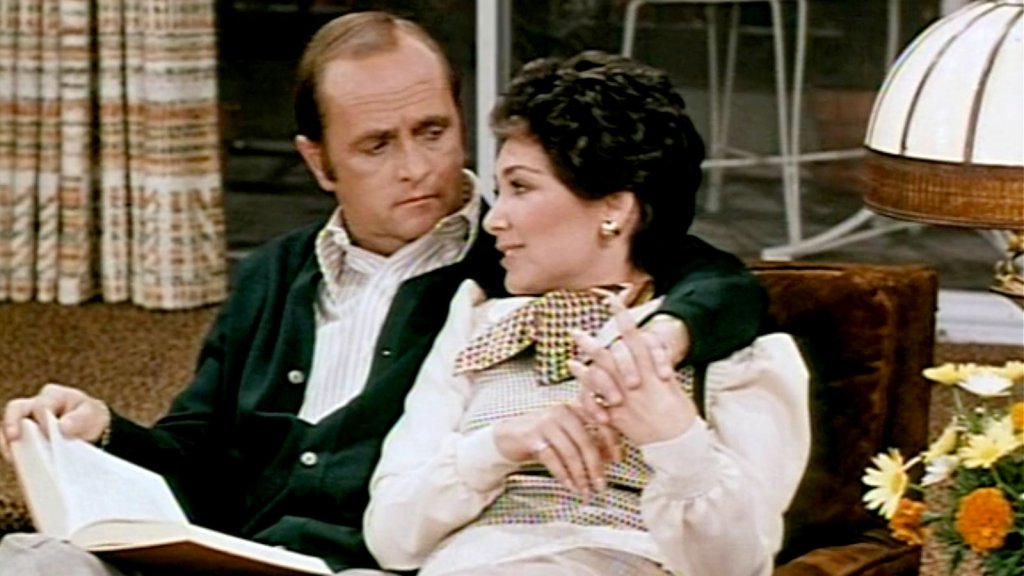
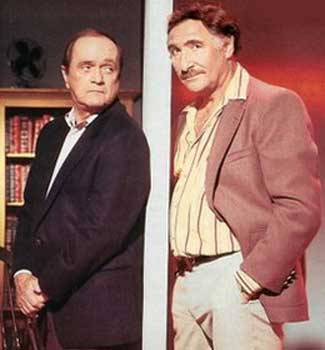
The show moves back and forth between Bob’s practice and his home; we get to know his co-workers and his friends and family. At work, he shares his floor and receptionist Carol Kester (Marcia Wallace) with orthodontist Jerry Robinson (Peter Bonerz) and urologist Bernie Tupperman (Larry Gelman). Carol and Jerry become two of his best friends. We also get to know some of his regular patients including Elliot Carlin (Jack Riley), Emile Peterson (John Fiedler), and Mrs. Bakerman (Florida Friebus).
Photo: imdb.com
Bob is married to Emily (Suzanne Pleshette) who is a school teacher. Across the hall is the apartment of their friend and neighbor Howard Borden (Bill Daily), an airline navigator. Although Bob insisted on no children, in many ways, Howard was Bob and Emily’s child.
Photo: sitcomsonline.com
In season four of the show, Howard meets and begins dating Bob’s sister Ellen (Pat Finley) and they eventually marry, making Howard a legal family member.
Photo: thefrog’seyebrows blogspot.com
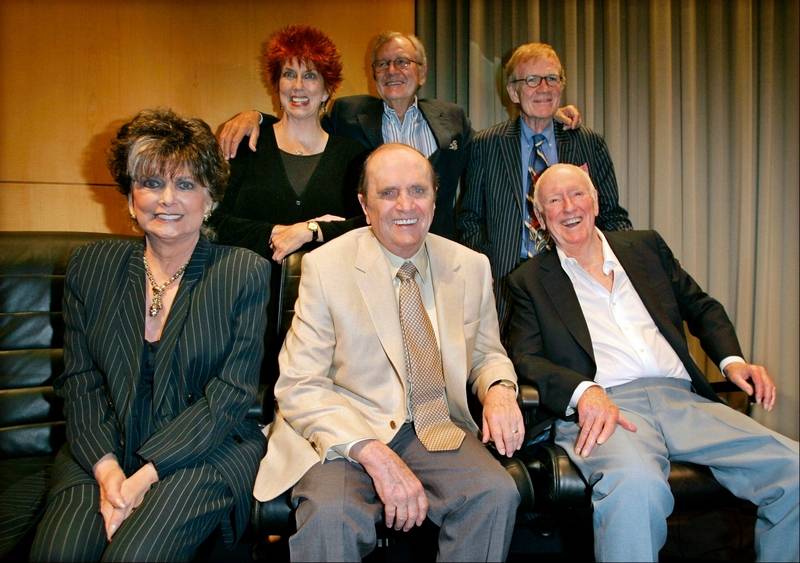
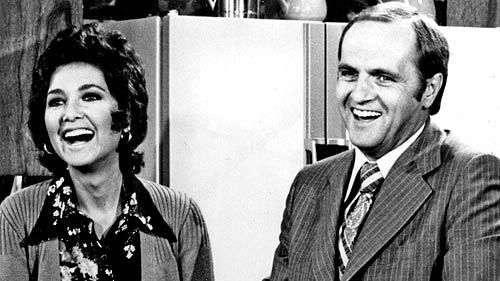
Bob and Emily were the only characters to appear in all 142 episodes. Suzanne Pleshette was asked to play Emily after she appeared on The Tonight Show Starring Johnny Carson one night. She was seated next to Bob, and the producers thought the two of them had great chemistry. In real life Bob and Suzy, as he called her, were best friends. He spoke at her funeral. When he recalled their time together, he said “Her laugh. Her laugh. We just laughed. We just had a great time. We all loved each other and respected each other and we got paid for it.” Bob also remains close friends with Marcia Wallace.
Photo: nytimes.com
They worked so well as a couple because Emily is very bright and funny. She and Bob argued because they were both a bit stubborn, but they always found a way to compromise at the end of the day. Bob often shared his wisdom through stories. He would do a bit of a monologue that related to what was happening on the show. It was referred to as the “Emily, sit down” moment.
Photo:kennethinthe212.com
The phone is also important on the show. If you are familiar with Newhart’s career, you realize some of the first skits that escalated his stand-up career were phone conversations. On this show, we often hear a one-sided conversation when he chats with friends or patients. One example of this is:
Bob: “Yes, this is Dr. Hartley. What can I do for you?
Well, Mr. Johnson, smiling and whistling while you work doesn’t seem to be a problem you should – you should see a psychologist about.
You drive a hearse?”
Although all the major characters on the show were like family to the Hartleys, the mailman on the show was truly family. Bill Quinn who played the postman was Bob Newhart’s father-in-law.
Photo: imdb.com
Bonerz who played Jerry became interested in directing. He ended up directing 29 episodes of this show and then went on to a successful career as a director. He directed episodes on a variety of shows including E/R, Alf, Wings, Murphy Brown, Friends, and Home Improvement. His view of the importance of the show was that “the most interesting thing about the show and why its successful is that it brings up things that come up in your life. That’s what art’s supposed to do. That’s what TV should be doing. When it does, people remember it and reflect how much they like it.”
Photo: allmovie.com
The show was on Saturday nights. For the first five seasons, it followed The Mary Tyler Moore Show airing at 9:30 EDT and its competition on NBC was Saturday Night at the Movies. For season five, the show was changed to earlier in the evening against Starsky and Hutch on ABC. For its final year, The Mary Tyler Moore Show was off the air and Bob’s show aired at 8 pm Saturday opposite Fish and The Bionic Woman. The sitcom placed in the top 20 for the first three seasons and the top 30 for season four.
Photo: blogspot.com, holiday film reviews
Bob had requested the network move the show to a different night. That didn’t happen, and the television executives wanted Emily to have a baby, even though Bob had specified that not be part of the plot. So, he ended the show after six years. When asked about ending the show, he said, “I could see what was coming in situation comedy, and I didn’t want to be a part of it. If we’d gone another year, they’d have had the guy and two girls living in the apartment above us, a Martian living on the same floor next door to three girl detectives. The floor below us would have been occupied by a fraternity and a sorority.”
If you read my blog on Bob Newhart recently, you know how incensed I was that this show never won an Emmy, and was only nominated once, and Newhart never received an Emmy for any of his sitcoms in the seventies and eighties. It would take his recurring role on The Big Bang Theory as Professor Proton for him to win the Emmy.
However, the show was ranked ninth and fiftieth on “TV Guide’s 100 Greatest Episodes of All Times in 1997.”
Photo: flickr.com
In 2004, TV Land picked this show as one of the series it commemorated with a sculpture. A statue of Newhart seated in a chair facing an empty couch is located in the Navy Pier entertainment complex.
I have to admit I was not a big fan of the finale of The Bob Newhart Show. Bob closes his practice in Chicago and accepts a teaching position at a small college in Oregon. I just don’t picture Bob and Emily being happy in a small Oregon town. However, the finale for Bob Newhart’s sitcom, Newhart, more than makes up for this ending.
Photo: pinterest.com
Bob Newhart credits his wife Ginnie with coming up with the idea for the finale of Newhart. Newhart is set in Vermont where Bob and his wife Joanna run a historic inn. They have to deal with some wacky locals and their maid and handy man. This show ran eight years. In the finale, Bob wakes up in bed. We hear him restless and wanting to talk about his dream. Suddenly we realize he and Emily Hartley are in bed together. Part of their conversation is:
Emily: All right, Bob? What is it?
Bob: I was an innkeeper in this crazy little town in Vermont.
Emily: No more Japanese food before you go to bed.
Another great television moment occurred on Murphy Brown in 1994. Bonerz was the director of the sitcom. Of course, we remember how fast Murphy went through secretaries. She found fault with all of them. In this episode, Marcia Wallace appears as Carol Kester. She is Murphy’s 66th secretary. Murphy thinks Carol is a wonderful secretary, and she is finally satisfied. However, Bob Newhart shows up as Bob Hartley, begging Carol to come back to work for him.
Photo: pinterest.com
One of the iconic lines from the show was “Hi Bob.” Howard Borden said it 118 times, Jerry said it 43, Carol came in at 36, and Emily at 17. Even minor characters would utter the line from time to time, and Bob said it once himself. College students turned this into a drinking game watching the reruns, taking a shot whenever the line occurred.
Photo: dailyherald.com
The best evidence that this was one of the best sitcoms ever produced is that people still love it today, more than four decades after it went off the air. The comedy is timeless. Let’s give Bob Newhart the final word about what the show meant to him. As he reflected the show’s legacy, he said, “I’m very proud of the show, the cast and the writing. Look at how long it’s lasted and how long people have enjoyed it. I run into people more and more who come up to me and say, ‘We used to sit as a family and watch your show.’ They look upon it as a wonderful time in their life. It’s very real to them and an important part of their life. It’s nice to be remembered that you made people laugh.”
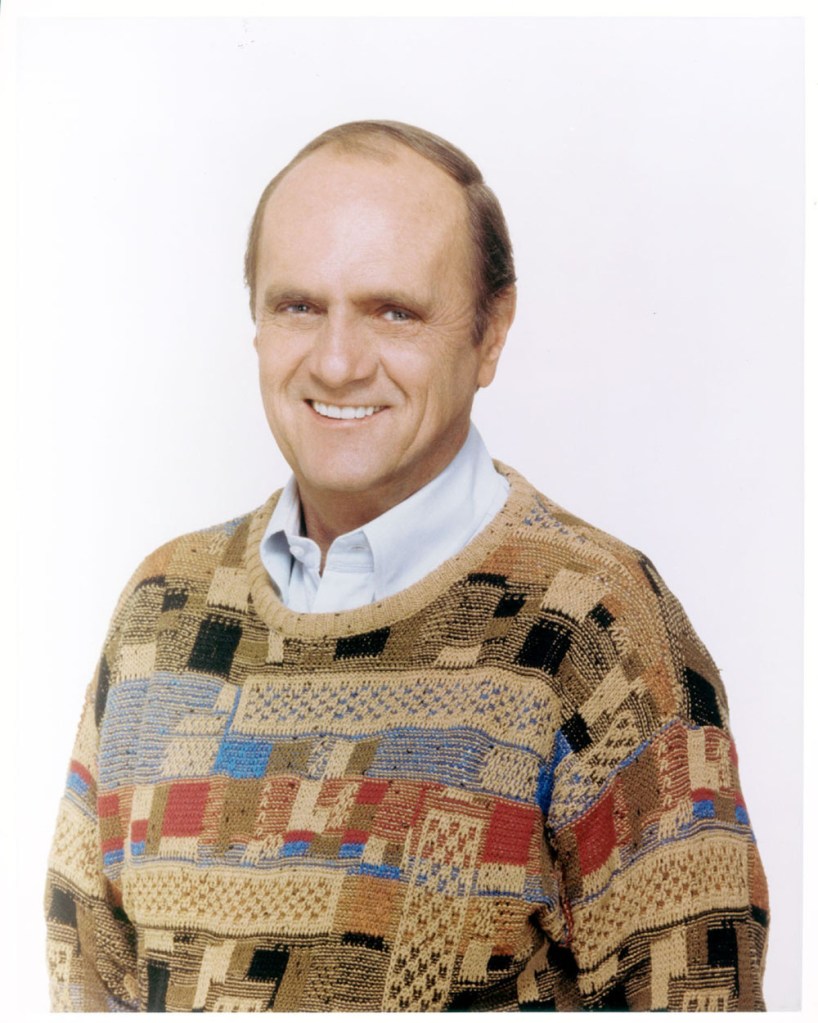
This month I wanted to honor one of our most beloved television comedians: Bob Newhart. Next week we’ll spend some time learning more about The Bob Newhart Show.
Photo: spotify.com
Newhart was born George Robert Newhart in 1929 in Oak Park, IL. He grew up in a typical midwestern family where his father was part owner of a plumbing and heating supply company, and his mom was a housewife. As a young boy, he always wanted to be called Bob. He had a Catholic education and went on to Loyola University of Chicago in 1947. Graduating in 1952 with a business degree, he was soon drafted into the US Army in the Korean war where he stayed until 1954. He considered getting a law degree and went back to Loyola. He decided not to pursue that; some sources site that he was asked to behave unethically during an internship which led him down a different career path.
He worked as an accountant and as an unemployment office clerk. In 1958 he was hired as a copywriter for Fred Niles who was a television producer in Chicago. It was while working here that Newhart and a colleague began entertaining each other by making telephone calls about absurd scenarios. They sent these to radio stations as audition tapes. A radio station disc jockey Dan Sorkin introduced Newhart to a Warner Brothers Records executive who signed him in 1959 based on those recordings. Bob then began creating stand-up routines which he performed at nightclubs.
Photo: discogs.com
He released an album in 1960 which changed his life. Titled, The Button-Down Mind of Bob Newhart, the comedy album made number one on the Billboard charts, and he won a Grammy for best new artist. A follow-up album, The Button-Down Mind Strikes Back was released soon thereafter. He would continue releasing comedy albums in 1961, 1962, 1964, 1965, 1967, 1971, and 1973.
During a 2005 interview for American Masters on public television, Bob stated that his favorite routine was Abe Lincoln vs Madison Avenue which was on his first album. A promoter for Abraham Lincoln has to deal with his reluctance to boost his image. A tv director named Bill Daily suggested the routine to him. Daily would be known later as Howard Borden on The Bob Newhart Show (as well as Roger Healey on I Dream of Jeannie).
The success of that first album led to a variety show titled The Bob Newhart Show. It only lasted a year, but it did receive both an Emmy nomination and a Peabody award. Apparently, he didn’t enjoy his time during the show so much. Halfway through the season he wanted to quit, but his agent explained that being under contract meant that was not possible. At a later date, he referred to his first show, saying “It won an Emmy, a Peabody Award, and a pink slip from NBC. All in the same year.”
He began making the rounds on television shows, appearing on The Dean Martin Show 24 times and The Ed Sullivan Show 8 times. He guest hosted The Tonight Show Starring Johnny Carson 87 times. When discussing his appearances on Johnny’s show, he stated “I remember once when I emceed The Tonight Show in New York, I arrived with my manager’s son. After a while, they asked, ‘When are the rest of your people coming?’ I had to say, ‘This is it.’”
Photo: huffingtonpost.com
In 1962 Newhart accepted his first movie role, Hell is for Heroes, starring Steve McQueen. He would continue to do movie roles throughout his career including the Christmas classic Elf, but the small screen would make him famous.
In 1963 Buddy Hackett introduced Bob to Virginia Quinn, whose father was character actor Bill Quinn. They wed in January of 1963 and 57 years later are still happily married.
Photo: zimbio.com
For the next decade, he continued to accept movie and television roles. In 1972, television history was made when The Bob Newhart Show debuted. Until 1978, Newhart played Bob Hartley, psychologist, and we got to know his unusual patients, quirky co-workers, and eccentric friends, including neighbor Howard Borden. Bob chose a psychologist based partly on his old telephone routines. As he said, “Much of my humor comes out of reaction to what other people are saying. A psychologist is a man who listens, who is sympathetic.”
Photo:epiguides.com
In 1982, Bob gave television another go for another eight years. Simply titled Newhart, the show featured Bob as Dick Loudon, an innkeeper and author from Vermont. He still had quirky co-workers and eccentric friends.
Photo: austenauthors.net
On cue a decade later in 1992, Bob showed up in a new show even more simply titled, Bob as Bob McKay a comic book writer and artist who had retired long ago and was trying to get back into the workplace. Unfortunately, after 33 episodes the show was canceled due to low ratings.
Photo: imdb.com
In 1997, Newhart starred in his last sitcom, George and Leo. As George Stoody, a bookstore owner, Newhart offers a temporary home to a full-time magician and part-time criminal who recently robbed a Mafia-owned casino. The series failed to catch on with viewers, and it was canceled after a season as well.
Photo: listosaur.com
Though he never took on another sitcom, Newhart has made appearances with recurring characters in several shows. In 2003, he showed up on ER as Ben Hollander. In 2005, he was Morty on Desperate Housewives. As Judson, he guest starred on The Librarians.
Photo: thewrap.com
Perhaps, younger audiences know him best as Arthur Jeffries or Professor Proton on The Big Bang Theory. He had been Sheldon’s boyhood hero who played the professor on television. Sheldon idolized the professor while the professor tolerated Sheldon.
Photo: upi.com
It’s hard to believe with all of his years being a successful television comedian, but Newhart won his first Emmy in 2013 for his role of Professor Proton. I can’t argue with the nominees for most of the 1970s during the airing of The Bob Newhart Show–names like Tony Randall, Jack Klugman, Alan Alda, and Hal Linden. Even with my bias of Norman Lear shows, I get nominating Carroll O’Connor every single one of those years. I understand the tough competition. What I don’t understand is the fact that he was never nominated during that eight-year period. When Jack Albertson wins, and Bob Newhart is not even nominated that is wrong. During the Newhart years, he was at least nominated three times. But I don’t understand it when John Ritter wins for Three’s Company or Richard Mulligan for Soap and no nomination for Bob Newhart. What especially appalls me is the fact that The Bob Newhart Show was only nominated one year; I can accept the fact that it got beat out by The Mary Tyler Moore Show. I cannot accept is that during this same time, Three’s Company, Mork and Mindy, and Welcome Back Kotter received nominations, and The Bob Newhart Show did not. Anyway, this blog is not about the television academy and its procedures, so let’s move on.
Photo: flickr.com
Even though he was never awarded with an Emmy for his time as Bob Hartley, TV Land placed a life-sized statue of Newhart in front of Navy Pier, complete with an empty couch. He was best friends with Suzanne Pleshette, his wife from the show, and spoke at her funeral. He remembered their time together, “Her laugh. Her laugh. We just laughed. We just had a great time. We all loved each other and respected each other and we got paid for it.” Bob also remains close friends with Marcia Wallace who played his receptionist Carol on the show.
Photo: sitcomsonline.com
While Bob has appeared as different characters throughout his career, he has also remained the same character. With his deadpan delivery and slight stammer, he perfected the straight-man role, surrounding himself with wacky castmates. He has often cited George Gobel and Bob and Ray as influences in his comedy career. When discussing his career choice, he explained “I like the humor to come out of character. When you’re going for a joke, you’re stuck out there if it doesn’t work. There’s nowhere to go. You’ve done the drum role and the cymbal clash and you’re out on the end of the plank.”
Photo: barnesandnoble.com
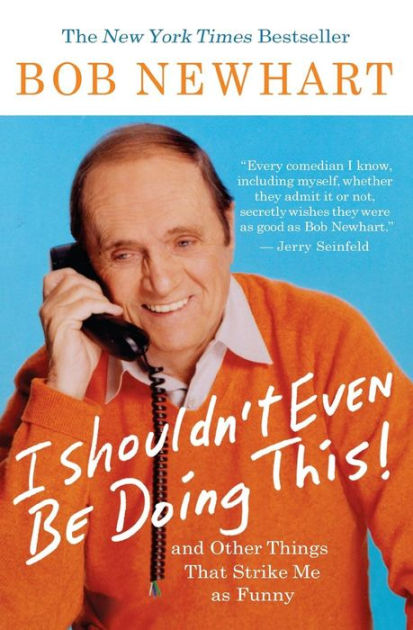
In 2006, he released a book I Shouldn’t Even Be Doing This. It’s a memoir with some of his classic comedy routines. Actor David Hyde Pierce reported that “the only difference between Bob Newhart on stage and Bob Newhart offstage is that there is no stage.”
Photo: parade.com
I am so appreciative of those stars who agree to entertain us for our entire life, such as Betty White, Carol Burnett, and Bob Newhart. They are classic comedians who can make us laugh no matter what. Bob’s view on comedy was that “laughter gives us distance. It allows us to step back from an event, deal with it and then move on.” What an amazing career and what an amazing man. With all its negatives and sometimes destructive tendencies, television can be a harmful place, but a comedian like Bob Newhart demonstrates what a positive and uplifting experience television can be when done right. Thanks for doing it right for sixty years.
As we wind up our What a Character series, it seemed fitting to end with Mabel Albertson, perhaps the most recognizable of our character actors. She is often remembered for playing the mother of well-known characters. Mabel was born in Massachusetts in 1901. Her mother, who was a stock actress, helped support the family by working in a shoe factory. Mabel’s brother Jack would also become a famous actor.
Photo: pinterest.com
Mabel knew she wanted to get involved in the entertainment business at a young age. When she was 13, she played the piano for $5 a performance. She graduated from the New England School of Speech and Expression.
Albertson began working in stock, vaudeville, and night clubs and appeared with Jimmy Durante. Eventually she moved to California where she became involved with the Pasadena Playhouse where Charles Lane got his start.
Photo: youtube.com
Mabel married Austin Ripley, and they had a son in 1926, but their marriage soon dissolved. Mabel decided to pursue a career in film. Although she would have credits for 27 movies during her career, her film career was not what she hoped for. So, she switched gears and tried out radio. During the 1930s, she co-starred with Phil Baker on The Armour Hour and from 1936-37, she was in Dress Rehearsal with Pinky Lee. She also did some writing for the show.
photo: imdb.com All The Fine Young Cannibals
In 1937 Mabel married writer Ken Englund who adopted her son George. He began writing for Paramount Pictures and later would be hired by RKO, Columbia Studios, 20th Century Fox, and The Samuel Goldwyn Company.
Photo: pinterest.com Burns and Allen
Although her husband’s career was made on the big screen, her career really took off when television made its appearance. Her first role on the small screen was on the Chevron Theater in 1952. During the 1950s, she appeared in 21 different shows. Although many of her roles were on the playhouse and theater shows, she also showed up on Burns and Allen, Topper, December Bride, Bachelor Father, JackBenny, and Have Gun Will Travel. In 1955, she was offered a role in Those Whiting Girls. She played the girls’ mother. The show was on the air until 1957.
Photo: sitcomsonline.com Those Whiting Girls
Mabel became the “face” of television sitcom mothers. She played Phyllis Stephens, Darrin’s mother on Bewitched and often said “Frank, take me home, I’m getting a sick headache.” Her husband wrote several Bewitched episodes (season 1, episodes 25 and 30).
Photo: pinterest.com Bewitched
She played Mabel, Paul Lynde’s mother-in-law on The Paul Lynde Show; she was the mother of Marilyn’s boyfriend on The Munsters, as well as Alice’s mother on Bob & Carol & Ted & Alice. Fans of That Girl will remember her as Don Hollister’s mother, and she was seen on The Andy Griffith Show as Howard Sprague’s mother. Her last mother role was on the New Dick Van Dyke Show as his mom.
Photo: jacksonupperco.com That Girl
Her most successful years were the 1960s when she appeared in 39 television shows, including Perry Mason; Ben Casey; My Three Sons; Hazel; Ozzie and Harriet; The Wild, Wild West; Daniel Boone; Gomer Pyle USMC; Love American Style; and Gunsmoke. A review for her performance on Gunsmoke is posted by jlthornb5110 on imdb.
The review states that her role of Kate Heller is one “of the standout episodes of the series with Miss Mabel Albertson giving what is nothing less than the performance of a lifetime. Beautifully written by Kate Hite, this is a powerful presentation and one in which Albertson truly shines. The climax is absolutely soul shattering and among the most dramatically emotional ever filmed for television. Miss Albertson plays it with a sensitivity and an incredible insight you will never forget. The character of Kate Heller is heartbreaking but quietly strong, a survivor of the psychological brutality of loneliness in the old west and the violence that was part of existence. Mabel Albertson gives the character everything she has within her, brings her to life, and makes her one of the most unforgettable personalities to ever appear on Gunsmoke or any other television series in history.”
Photo: cscottrollins.blogspot.com The Tom Ewell Show
She was offered a role as a permanent cast member in The Tom Ewell Show in 1960. The premise of the show is that real estate agent Tom Potter played by Ewell must learn to live in a household of females including his wife, his three girls and his mother-in-law Irene played by Albertson. Even their dog, Mitzi, was a girl. Although Mabel’s brother Jack would be best remembered for his role on Chico and the Man, he appeared on this series with his sister in 1960. The series aired 32 episodes before it was canceled.
Photo: findagrave.com Jack Albertson
I’m not sure where she found time for Broadway during this decade, but she was in The Egg in 1962 and Xmas in Las Vegas in 1965.
While her career began to slow down in the seventies, she was still quite busy, appearing in The Doris Day Show, Ironside, Marcus Welby, and The Mary Tyler Moore Show, among others. She appeared in an episode of Arnie with her brother in 1970. She also worked with her daughter-in-law, Cloris Leachman, in the movie Pete and Tillie in 1974.
Photo: pinterest.com Frank, I feel a headache coming on
Her family continued to attract talented actors. Her granddaughter-in-law was actress Sharon Stone.
In 1975, Mabel was forced to retire. Her memory was beginning to fail, and she was later diagnosed with Alzheimer’s Disease. She passed away from the illness in 1982.
Photo: pinterest.com
Like Milton Frome, I was both sad and disappointed to learn how little information there was about Mabel Albertson. I thought I would learn more about her working relationships considering she had a fifty-year career and played iconic mother roles on so many well-loved shows.
As we wrap of this edition of What a Character! series, my hope is that you recognize and acknowledge these actors when you see them when tuning in to your favorite classic shows and remember how much they contributed to our television history. Personally, to keep Mabel’s memory alive, I think any time we are having a family situation, I will turn to my husband and whisper, “Frank, take me home, I’m getting a sick headache.”
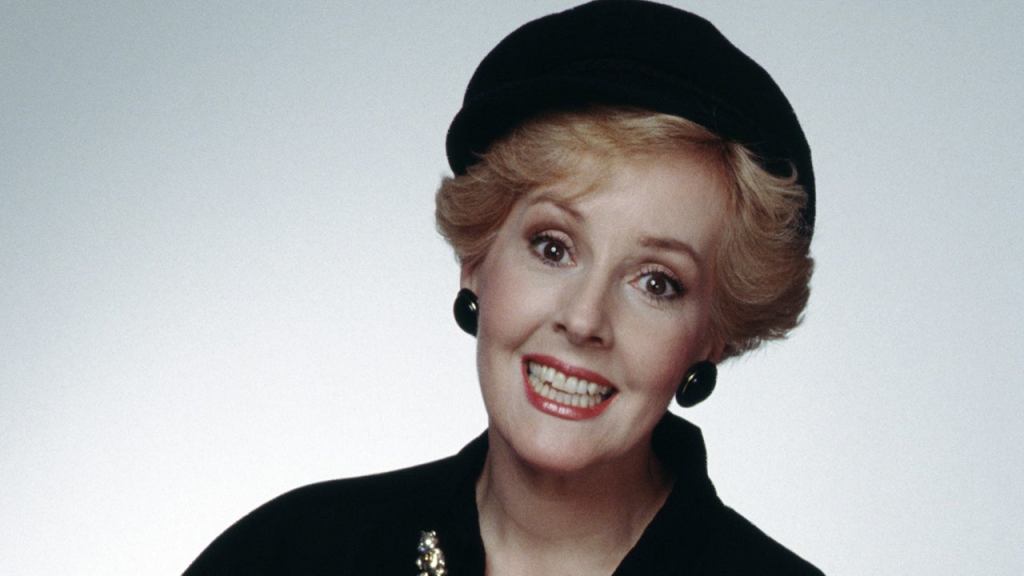
We continue our series to honor television stars who passed away in 2019 by looking at the career of Georgia Engel.
Photo: Wikipedia.com
Georgia was born in Washington DC in 1948 as Georgia Bright Engel. Although she attended several high schools, she graduated from the Academy of the Washington Ballet. Her father was an admiral, and perhaps her family landed in Hawaii, but she went on to earn a theater degree from the University of Hawaii at Manoa.
In 1969, Engel would move to New York City. She was in an off-Broadway production, Lend an Ear and as Minnie Fay in Hello Dolly! for a year. When she was appearing in The House of Blue Leaves, Mary Tyler Moore and her husband Grant Tinker saw her performance one night.
Photo: pressfrom.info
She was cast in The Mary Tyler Moore Show soon after, appearing in 57 episodes as Georgette Baxter, Ted’s girlfriend, and later, wife. Mary described the character as a cross between Stan Laurel and Marilyn Monroe. Georgette was devoted to Ted. She received two Emmy nominations for her role on the classic show.
Photo: vipfaq.com
Betty White played Sue Ann Nivens on The Mary Tyler Moore Show, and when White received a show of her own, The Betty White Show, in 1977, she brought Engel in as part of the new series as Mitzi Maloney. The plot featured White as a middle-aged actress who gets the starring role in a police series, Undercover Woman. Unfortunately, she soon learns her ex-spouse, whom she calls “old pickle puss” is the director. Mitzi is her naïve girlfriend and roommate.
Photo: sitcomsonline.com
In 1980 she joined the cast of Goodtime Girls as Loretta Smoot. Set in 1942, the show was about a group of women who shared a small apartment in the Coolidge Boarding House. Loretta was described as a middle-aged war bride waiting for her husband to come back home from the war.
Like so many well-known television stars, Engel did her duty, appearing on The Love Boat (4 episodes) and Fantasy Island (5 episodes).
In 1983 she took on the role of Susan Elliott on Jennifer Slept Here. Ann Jillian starred in this show as Jennifer Farrell. Farrell, a popular movie actress who was run over by an ice cream truck in 1963, had lived in the house. Twenty years later, the Elliott family moves in. Jennifer haunts the place but can only be seen by the Susan’s teenage son.
Between 1991 and 1997 she made 20 appearances on Coach as Shirley Burleigh. Shirley’s husband is the athletic director who clashes with Coach Hayden Fox.
Photo: arizonarepublic.com
From 2003-2005 she was cast as Amy’s mother, Pat MacDougall, on Everybody LovesRaymond. This role would reward her with three Emmy nominations. It’s hard to picture a better couple of wacky parents than Engel and Fred Willard!
The soap opera Passions beckoned her in 2007 where she made several portrayals of Esmeralda.
Photo: stylemagazine.com On The Office
In 2012 she joined the cast of The Office as Irene, an older woman being aided by Erin.
Photo: pinterest.com
The years 2012-2015 found her working with Betty White once again as Mamie, Elka’s (White) best friend in Hot in Cleveland. In the fourth season, the two friends run an illegal pharmacy.
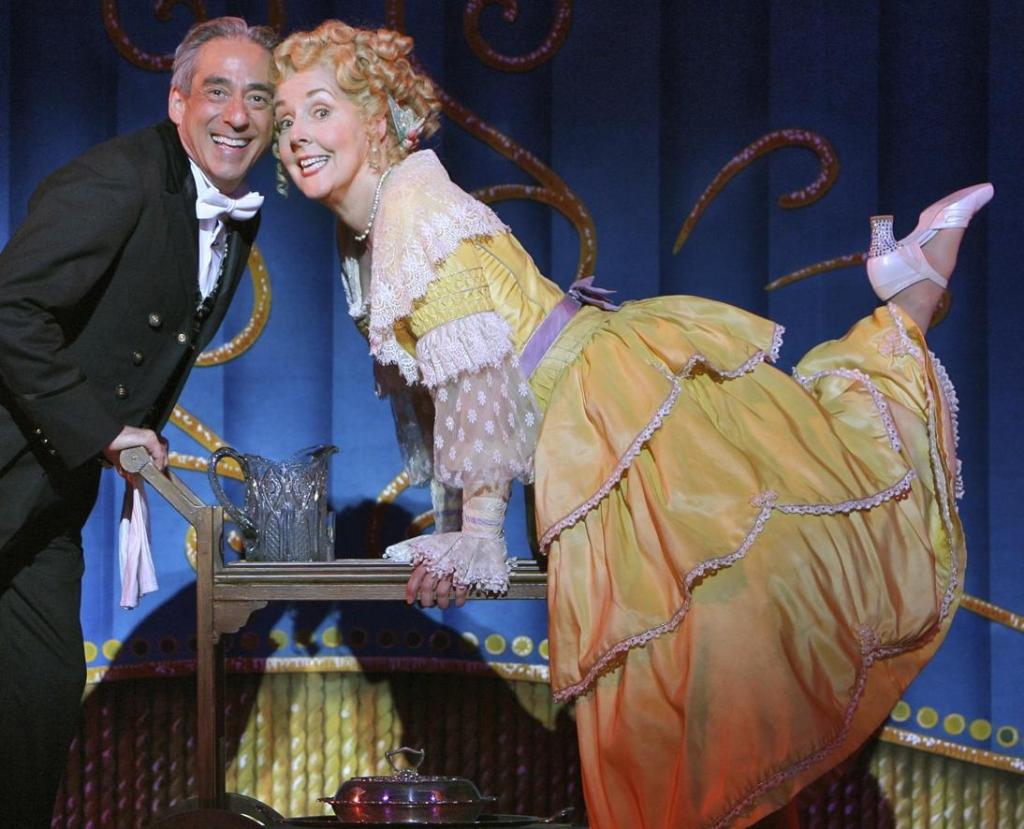
Although Georgia was busy with television, she also found time to get back on the stage. In 2001, she toured with Barbara Eden in the female version of The Odd Couple. She appeared on Broadway in The Drowsy Chaperone with Sutton Foster and Edward Hibbert. She appeared in various productions at The Muny Theater in St. Louis between 2004-2010. 2005 found her playing Agnes Gooch in Mame; 2007 was Aunt Eller in Oklahoma!; 2009 was Mrs. Paroo in The Music Man.
Photo: denverpost.com The Drowsy Chaperone
In 2015 she was cast in an off-Broadway play, John. Engel won a 2016 Obie for Distinguished Performance by an Actress for her role. Following that play, Engel starred in Gotta Dance, a musical playing in Chicago.
Georgia passed away in Princeton, New Jersey in April of this year. We don’t know what her cause of death was. She was a member of the Christian Scientists. A friend of hers, Joe Quilty, told the New York Times that because of her religious beliefs, she did not contact any doctors.
Photo: insideedition.com
Following Engel’s death, Betty White said she was “one of a kind and the absolute best.” During a 2012 TV Land interview, White commented on her relationship with Georgia: “You don’t get a chance very often in your life to meet a friend like Georgia, let alone an actress that you’re working with, and to suddenly find pure gold. That’s a privilege.”
Photo: entertainmentheartbeat.com
Perhaps it’s best to end with Georgia Engel’s view of her career. Despite her being typecast as a bit of a ditzy blonde, she said, “Although I play silly parts, in order for others to share in the laughter, I think it’s important to have a heart that’s full of joy and gratitude. Joy is a very holy thing and we can never own it. We can only reflect it.”
Her lengthy and varied television career definitely reflected that joy.
We are wrapping up our series, “Girls, Girls, Girls.” At the beginning of the month, we learned about a show that featured four women who spent much of their life together for seven years (Designing Women). Today we end our series with another show that featured a quartet of women that also ran for seven years.
In September of 1985, a new type of sitcom debuted. This show featured four retired women who lived life together, relying on humor to make things work. The show, Golden Girls, was on the air seven years, ending in 1992 and producing 177 episodes. The show was always on Saturday nights with the seventh season moving to an earlier hour.
Photo: tvseriesfinale.com
I read two different versions about the creation of the show, so take your pick. Maybe the truth is somewhere in the middle. One version is that the idea came from Brandon Tartikoff, an NBC executive. When he was visiting his aunt one day, he noticed that she and her next-door neighbor who was her best friend, argued a lot but loved each other. He thought the concept would make a great show.
The other version
credits NBC senior vice president Warren Littlefield. He was in the audience
when Selma Diamond and Doris Roberts acted in a skit called “Miami Nice,” a parody
of the popular Miami Vice. The skit featured old people living in Miami.
Either way, Susan Harris created the show itself, and it was produced by Witt/Thomas/Harris Productions, with Tony Thomas and Harris serving as original executive producers. After the first year, Harris was not as involved with the show, but still oversaw the scripts.
Photo: housebeautiful.com
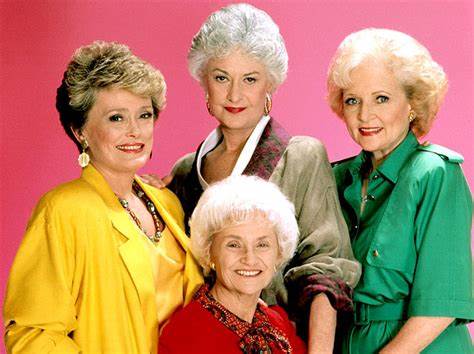
The four main characters are quite different which is probably why the series was so successful. Blanche (Rue McLanahan) owns the house in Miami. Two women, widow Rose Nylund (Betty White) and divorcee Dorothy Zbornak (Bea Arthur) respond to an ad on a grocery store bulletin board to become Blanche’s roommates. In the pilot episode, the retirement home where Dorothy’s 80-year-old mother Sophia (Estelle Getty) lives burns down, so she joins the trio. All four of the characters appeared in every episode.
Photo: marginallyhuman@wordpress.com
Blanche worked for an art museum. She grew up in a wealthy family, living on a plantation outside Atlanta. When she married her husband George, they moved to Miami. With six kids, Blanche should be a busy family matriarch, but she was man-hungry and always involved in some romantic entanglement much to the chagrin of Rose.
Photo: goldengirls.wikia.com
Dorothy was a substitute teacher. She became pregnant in high school and married the father, Stanley. Stan and Dorothy moved to Miami but after 38 years of marriage, he had an affair with an airline stewardess and left Dorothy.
Photo: buzzfeed.com
Rose lived most of her life in a small farming town, St. Olaf, Minnesota. She and husband Charlie were happily married with five children. After he passes away, she moves to Florida and works at a counseling center. At one point she works for a consumer reporter at a local television station. Rose had an on-again, off-again relationship with a college professor, Miles Webber, during the run of the show.
Photo: thebettergoldengirls.wikia.com
Sophia left Italy to get out of an arranged marriage and ended up in New York where she met Salvadore Petrillo. Sophia also has a variety of jobs on the show, including a fast-food worker and a developer of a spaghetti sauce and sandwich business. Sophia is the only character to marry during the seven seasons. She married Max Weinstock, but they separated soon after the wedding.
The role of Sophia was the first one cast. Estelle Getty had received rave reviews for her performance in Torch Song Trilogy. Although Getty played Dorothy’s mother, in reality she was a year younger than Arthur. It took Getty three hours in make-up to transform into the older Sophia, donning a white wig, heavy make-up and thick glasses. Apparently, even though she was an experienced actress, she suffered from stage fright and often froze on camera. This affliction got worse as the show continued, and by the fifth season, she was reading her lines from cue cards. McClanahan tried to describe what Getty suffered with, “She’d panic. She would start getting under a dark cloud the day before tape day . . . you could see a big difference in her that day. She’d be walking around like Pig-Pen under a black cloud. By tape day, she was unreachable. She was just as uptight as a human being could get. When your brain is frozen like that, you can’t remember lines.”
Photo: refinery29.com
Originally McClanahan
was cast as Rose and White as Blanche. White had portrayed Sue Ann Nivens, a
man-crazy woman, on the Mary Tyler Moore Show. Director Paul Bogart felt
they should switch roles.
McClanahan came
up with the idea that Blanche should have a southern accent which she exaggerated
to make the character more interesting. Apparently, one of the set jokes was
where Rue McClanahan might be sleeping on the set. She was often found napping
in different places.
Although Harris created Dorothy as a “Bea Arthur type,” the producers originally wanted Elaine Stritch for the part, but her audition did not go well. Arthur didn’t want to do the show because she didn’t want her and McClanahan to be portrayed as Maude and Vivian as they were in the show Maude. After reading the script and learning about the role switch of her coworkers, she came on board.
Costume designer Judy Evans created a different look for each of the cast members. Rose was down home and Midwestern. Sophia relied on comfortable clothing. Dorothy had a “pulled-together, no nonsense” look. Blanche was sexy with flowing outfits. Rue had a clause written into her contract that she be allowed to keep all Blanche’s clothing, which was custom made. By the end of the series, she filled thirteen closets with the designer wardrobe. Late McClanahan would create a more affordable line of clothing for QVC, “A Touch of Rue” based on Blanche’s show wardrobe.
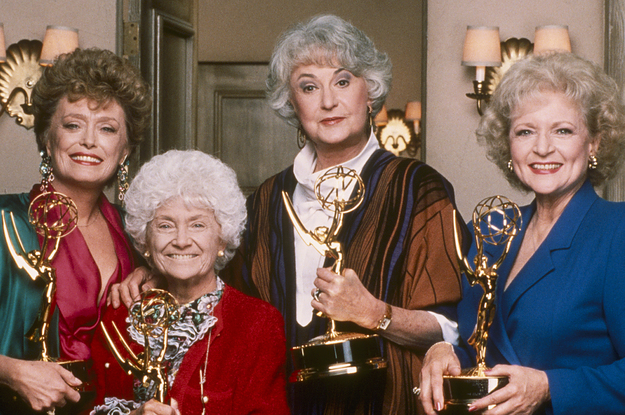
(Left to right) The cast of television series The Golden Girls Rue McClanahan, Betty White, Estelle Getty and Beatrice Arthur are shown in a scene from the show in this undated publicity handout photo. Photo: sydneymorningherald.com
While the characters argued from time to time, you knew they loved and cared about each other and were a family, even if they made each other crazy at times. In reality, Arthur was very difficult to get along with. Betty White, who seems to love everyone, admits she did not have a good relationship with Arthur. Apparently, White’s positive and perky manner irritated Bea. McClanahan said Bea was very eccentric and hard to be friendly with. However, White, always the professional, never revealed their difficulties until after Arthur passed away. White and McClanahan became close friends during the show’s run. White always loved game shows and she found a kindred spirit in Rue. They frequently played games between takes.
Photo: entertainmentweekly.com
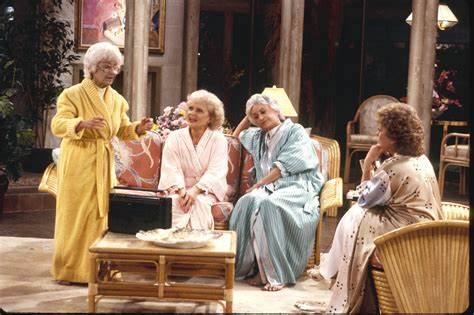
The house was
often a fifth character on the show. The exterior of the home, which was supposed
to be at 6151 Richmond Street, was part of the backstage studio tour ride at
Disney’s Hollywood Studios for the first two seasons. Designer Ed Stephenson
used a “Florida look” for the home with wooden accents, columns, cypress doors,
rattan furniture, and tropical prints. Of course, Blanche’s bedroom featured pink
carpeting and a vanity table. Dorothy’s room was filled with books and
intricate wallpaper. Rose’s walls are covered with clouds, and her room contained
a lot of ruffles and chintz. Sophia’s room was also modern with dainty floral
wallpaper and mahogany furniture covered by bedding with a satin trim.
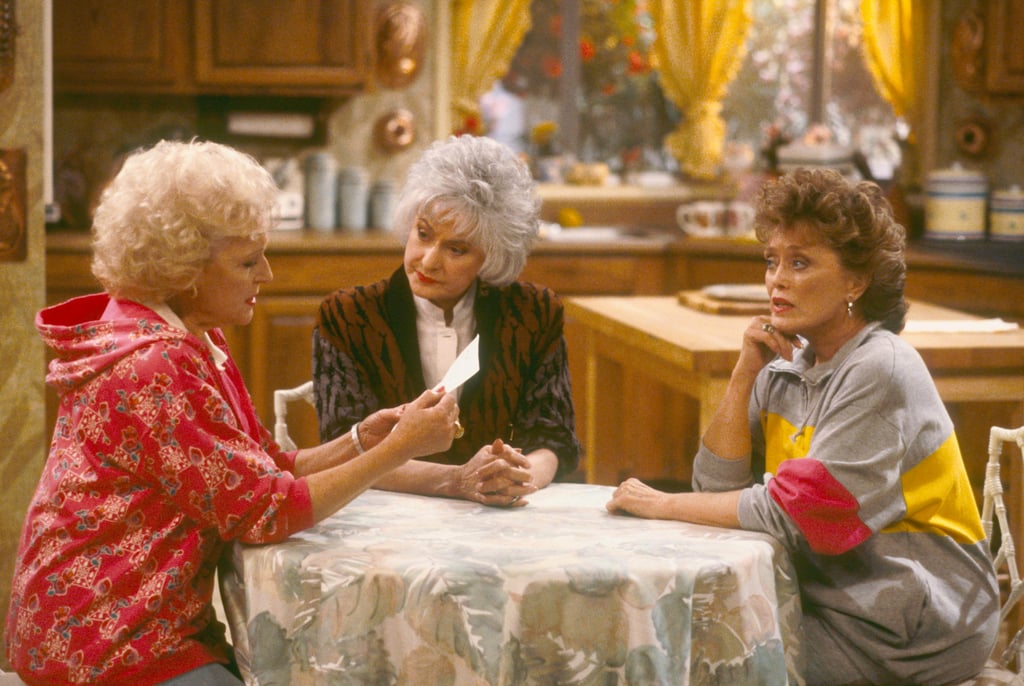
If you watch the scenes in the kitchen, you will notice that although four people live there, there are only three chairs at the table. If all four girls were sitting there, someone had their back to the camera, so the director solved the problem by only having three of them in the scene at a time.
Photo: popsugar.co.uk
Often the
plots would feature one of the characters mired in a problem, typically
involving their family, their love life, or ethical dilemmas. When they gathered
around the table to talk, the stories they told would help each other, even
though Rose’s stories from her youth typically had no connection to the current
problem and Sophia’s stories were often made up. Many controversial issues were
covered during the show including same-sex marriage, elder care, homelessness,
HIV/AIDS, immigration, death, assisted suicide, and discrimination whether racial,
sexual or gender.
The critics praised the show, and the public adored it. For six of the seven seasons, the show ranked in the top ten. Both Betty White and Estelle Getty received seven Emmy nominations during the seven-year period, while Bea Arthur and Rue McClanahan each received four. Fun fact, all of them won an Emmy during the run of the show. Overall, the show received 68 Emmy nominations.
Photo: aarp.com
The Queen
Mother loved the show so much that she asked the quartet to come to England and
perform for her personally. When the cast assembled in London, they appeared in
an episode about the visit to the Queen.
After the
seventh season, when the show had dropped into the top 30, Bea Arthur decided
to leave the show. In the finale, Dorothy finally meets the man for her, who
happens to be Blanche’s uncle Lucas (Leslie Nielsen), and they move to Atlanta.
Sophia is uncertain whether she should move with them or stay in Miami and, in
the end, decides to stay in Florida.
When the
series ended, White, McClanahan, and Getty reprised their Golden Girls roles
and starred in The Golden Palace about a hotel. The series ended after
the first year and never enjoyed the rankings of the original, coming in 57th
for the year.
Harris developed two spinoffs from the original series. Empty Nest starred Richard Mulligan as pediatrician Harry Weston who lives next to the women with his two grown daughters. The show was also very popular and lasted seven years as well.
The Cast of Empty Nest Photo: 123movie.care
Empty Nest then launched a show about some of the nurses who worked in Weston’s hospital, simply titled Nurses. While this series was never as popular as Golden Girls or Empty Nest, it did last three years.
The cast of Nurses Photo: tvseriesfinale.com
Although I
enjoyed The Golden Girls, I actually did not watch it often. I think maybe because it was on Saturday
nights during a time that I was not likely home in the evening. I did enjoy it
when I caught an episode but was never the fanatic many of my friends were. I
think I should let the “Girls” have the last words about their series:
Dorothy: You know, sometimes I can’t believe my ears. Sophia: I know. I should’ve taped them back when you were seven.
UNITED STATES – MAY 13: THE GOLDEN GIRLS – 9/24/85 – 9/24/92, ESTELLE GETTY, BEA ARTHUR, (Photo by ABC Photo Archives/ABC via Getty Images)
[Dorothy and
Sophia come home after Sophia’s best friend’s funeral]
Sophia: Well,
I guess Phyllis Glutman will be my new best friend.
Dorothy: I thought you hated Phyllis Glutman.
Sophia: I do, but at the rate my friends are going, I won’t have to spend too much time with her.







































 thewritelife61