Phyllis: Relocating Was a Bad Move

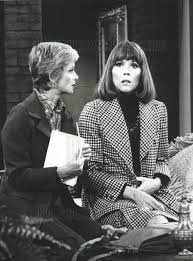
This month we are looking back at one-named sitcoms, and we can’t forget Phyllis. A spinoff from The Mary Tyler Moore Show, it aired in the fall of 1975 and ran for two seasons. James Brooks, The MTM producer, was involved slightly as a consultant but Ed Weinberger and Stan Daniels were in charge.

📷TVInsider.com

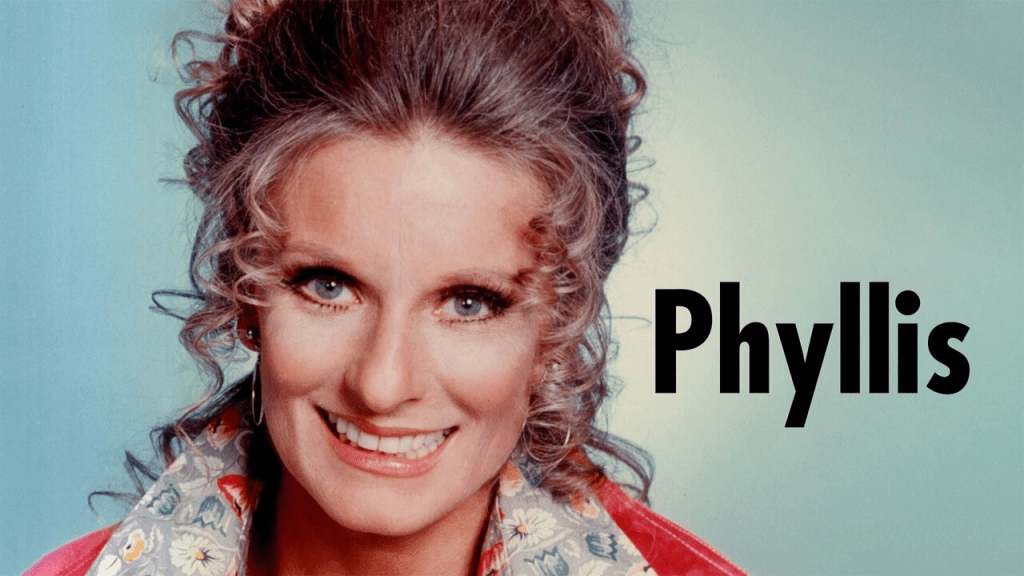
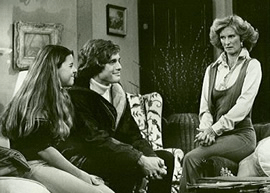
In this series, Phyllis Lindstrom (Cloris Leachman) and her daughter Bess (Lisa Gerritsen) leave Minneapolis and move to San Francisco after Phyllis’ husband passes away. Her in-laws still live out west in the area where she and Lars lived as newlyweds. Even though Lars was a doctor, his death left his family broke. Life is interesting with three generations under one roof. Lars’ father Judge Jonathan Dexter (Henry Jones), Lars’ mother Audrey (Jane Rose), and Phyllis and her daughter navigate life with their grief, new surroundings, and complicated life situations.

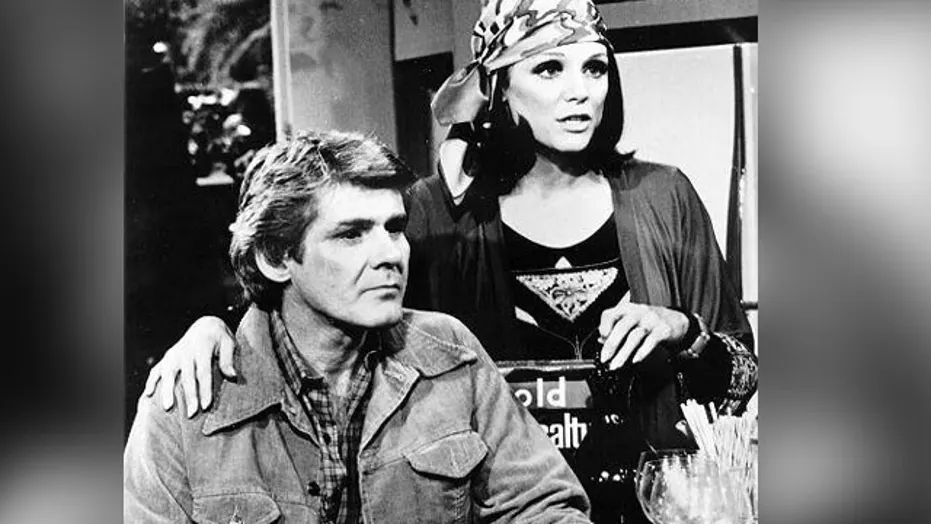
Phyllis applies for an assistant in a photography studio. Her first boss is Julie (Barbara Colby). After Colby was murdered, Liz Torres took on the role and Valerie Harper’s (who played Rhoda on the MTM show) ex-husband Richard Schall plays Leo, a photographer at the studio who doesn’t make life easy for anyone. Phyllis is not only used to being pampered and not working, she also never was shy about sharing her opinions with anyone around her.

The network scheduled the show on Monday nights after Rhoda and before All in the Family, so it became an instant top ten hit. Leachman was nominated for lead actress in a comedy but lost the Emmy to Mary Tyler Moore. In addition to Moore, Leachman’s competition included her previous coworker Valerie Harper for Rhoda, Lee Grant for Fay, and Bea Arthur for Maude.

Once again, as we’ve seen a few times this month, when ratings began to slip a bit, the network turned the show upside down. For season two, the photography studio was sold, and Phyllis was without a job again. She then goes to work for the San Francisco City Supervisor and is put into the middle of political chaos. Rhoda was also having some trouble with ratings and was rehabbed. Their competition was Little House on the Prairie which continued to rake in lots of viewers.

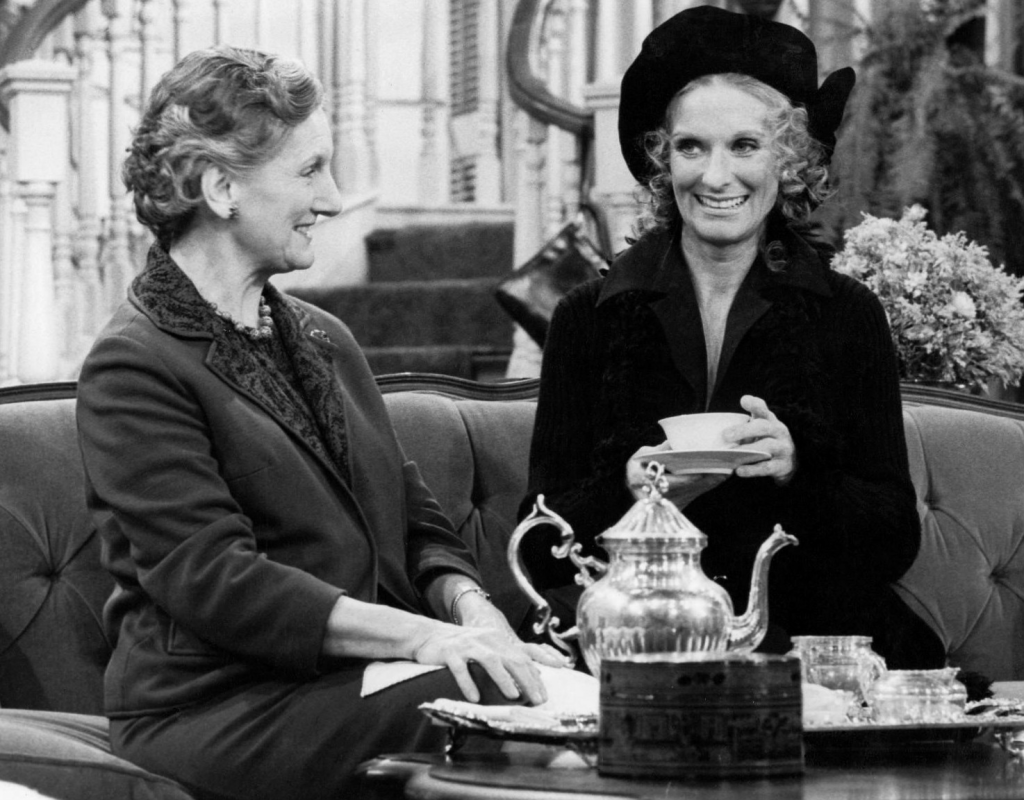
By 1976, Rhoda had regained many of its viewers, but Phyllis was continuing to decline. It was dropped for the next season. At one point, Mother Dexter (Judith Lowry), the judge’s mother, has a boyfriend Arthur Lanson played by Burt Mustin who later becomes her husband. Henry Jones and Burt Mustin’s scenes are probably the highlights of the shows.

📷tvseriesfinale.com

Alan Burns discussed casting the role of Phyllis on The Mary Tyler Moore Show. He said Leachman’s instincts were terrific, and she made the role amazing. James Brook said that Marlin Brando called Leachman the best actor he ever saw come out of The Actor’s Studio. Obviously, the character of Phyllis was a successful and popular one. I think that The Mary Tyler Moore Show was so well loved for the ensemble cast. Pulling Phyllis out of that “family,” and placing her across the country probably wasn’t the formula for a successful spinoff.  They would have been better off to give her a brand new show of her own which could feature her highly rated acting ability.

Arnie: Trying to Adjust to a White Collar

This month it’s all about one-named sitcoms and today it’s all about Arnie. Arnie is a series that isn’t talked about much anymore. It debuted in 1970 on CBS and was on the air for two years.

📷imdb.com

David Swift created this series. Swift was a successful director, producer, and writer. He created and wrote for Mister Peepers, The Interns, and Camp Runamuck before Arnie. He also wrote the screenplay for both the 1961 and 1998 version of The Parent Trap. Swift accumulated 51 credits for writing, 23 for directing including The Parent Trap from 1961, and 5 for producing.

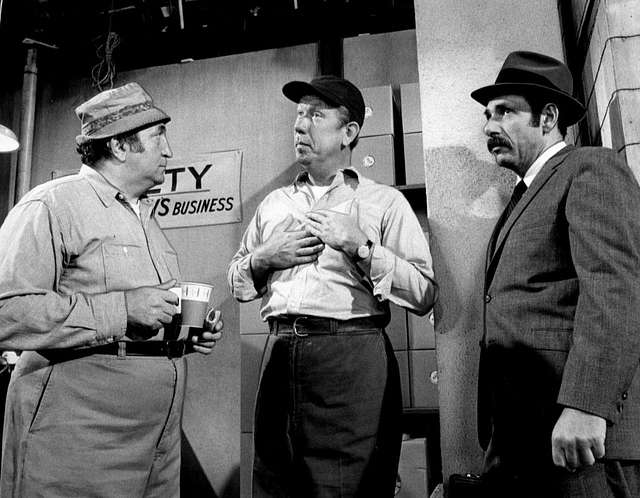
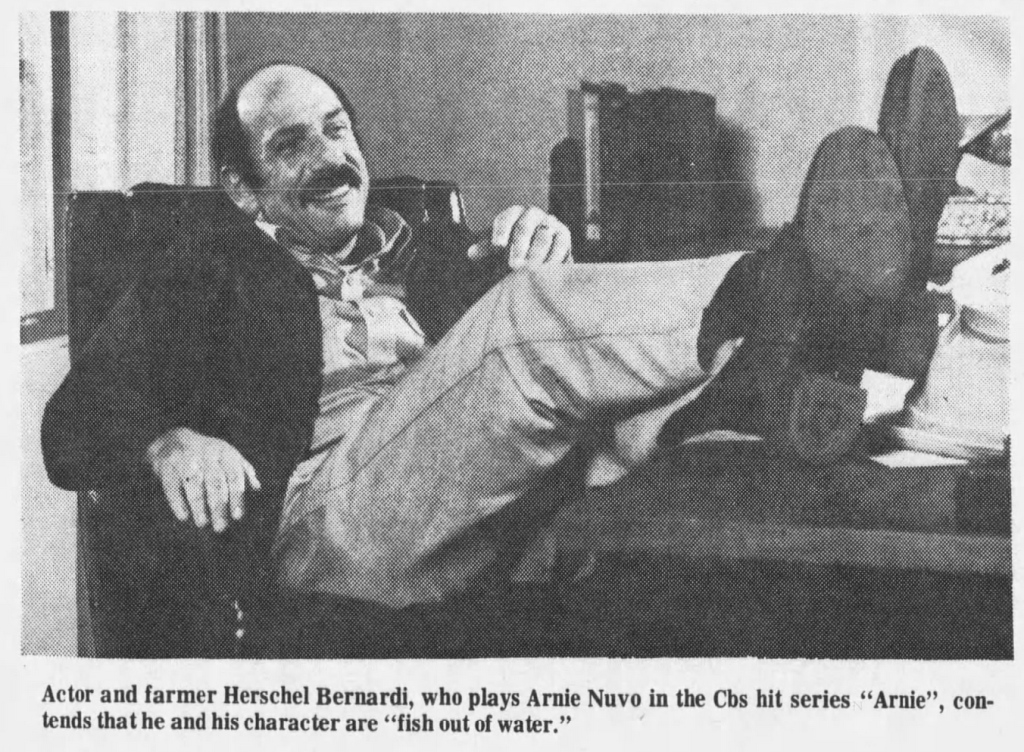
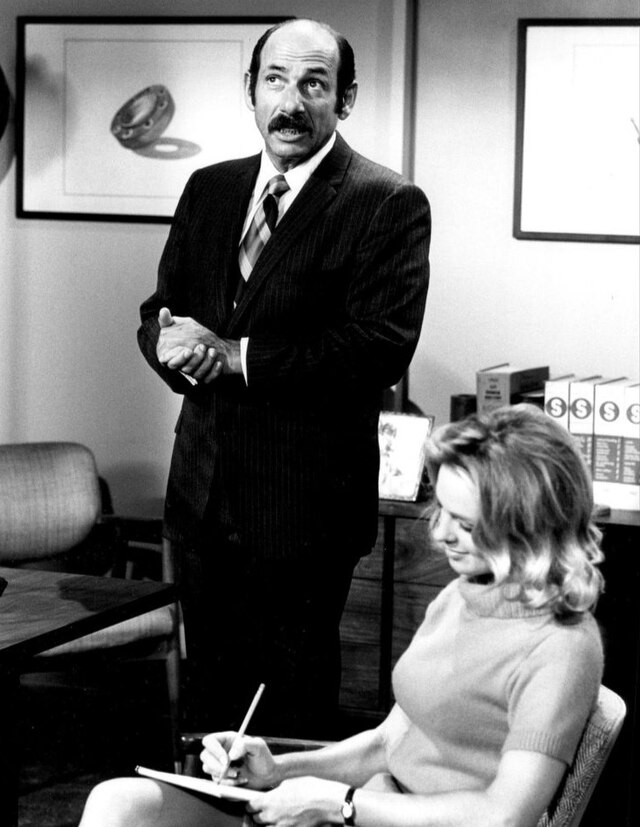
Arnie Nuvo (Herschel Bernardi) is a blue-collar employee at Continental Flange Co. who was promoted to an executive position out of the blue. Arnie tries has a difficult time related to his very wealthy boss and he still has a lot of friends outside of management. He still has a union card so he can mediate difficult labor situations and is respected by the workers.

Sue Ane Langdon played his wife Lilian, Del Russel was his son Richard, and Stephanie Steele was his daughter Andre. Rounding out the cast was Elaine Shore, his secretary Felicia; Tom Pedi, his friend Julius, who still works on the dock; and Roger Bowen, his boss Hamilton Majors Jr.

📷pinterest.com

The show was scheduled before The Mary Tyler Moore show on Saturday nights. Surprisingly, it received an Emmy nomination for best comedy series, but it didn’t receive very high ratings. Getting an Emmy nomination was impressive for this year. Its competition was Love American Style, The Mary Tyler Moore Show, The Odd Couple, and the winner, All in the Family.

Like it typically did, the network (and I’m not picking on CBS, they all did it), decided immediately to turn things topsy turvy instead of giving it some time. Arnie’s neighbor played by Dick Van Patten was let go and Charles Nelson Reilly, a tv chef named The Giddyap Gourmet, moved next door.

The series was moved to Monday night following My Three Sons which was moved from Saturday nights to Tuesday nights as well. That probably didn’t help the ratings because this was the last season of My Three Sons. As much as I love that show, it should have stopped a year earlier than it did. To make it more confusing half-way through the second season, Arnie moved back to Saturday and My Three Sons ended up on the schedule Thursday nights. Both shows were canceled by spring.

📷tralfaz.com

In addition to all the moving around, when it returned for its second season it was up against Monday Night Football, so I’m guessing that spot didn’t help attract people after it moved. Saturday nights its competition was weak; it was primarily up against the movie of the week, The Pearl Bailey Show, and Cade’s County.

The Television Academy interviews included both Eddie Foy and Dick Van Patten discussing this show.

Foy talked about the casting and said Bowen was the best cast member. He said it was a bit of a bland show, not a break-through series, but he thought Herschel was a big star at the time after starring in Zorba. Foy said it was a great show to work on and everyone in the cast had fun.

📷en.wikipedia.com

Dick Van Patten also talked about his time on the show. He said he had come to California for a play and while he was performing, Shirley Booth approached him and said she wanted him to talk to someone about joining the cast of Arnie as the neighbor. Van Patten said he didn’t remember much about the show which supports Foy’s view of it being a bit bland.

It sounds like the network was trying to take advantage of Bernardi’s fame at the time and maybe didn’t take as much care as it should in designing the perfect show for him.

Walter Cronkite was the Best, And “that’s the way it is.”

This month we are learning about our favorite news anchors from the past in What’s News? Today we are learning about the man everyone respected: Walter Cronkite.

📷televisionacademy.com

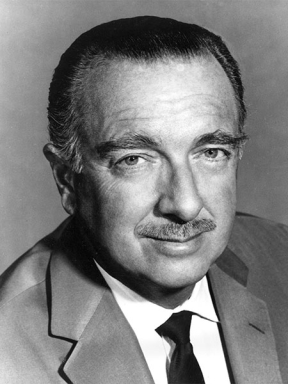
Cronkite was born in 1916 in St. Joseph, Missouri, an only child. His father was a dentist there. During the sixties and seventies, he was described as “the most trusted man in America.” Let’s learn why.

He lived in Kansas City, Missouri until he was ten. The family moved to Houston, Texas when his father took a position at the University of Texas Dental School. No surprise he was a boy scout, always prepared, and worked on the newspaper in high school. He went to the University of Texas, Austin beginning in 1933 and majored in political science. He remembered reading adventures of reporters in American Boy magazine and said they inspired him to be a journalist.

📷warfarehistory.com

Walter left college during his junior year in 1935, perhaps because of the Depression. He took on a number of newspaper reporting jobs, and became an announcer for WKY in Oklahoma City, Oklahoma. In 1936 he met Mary Maxwell, whom he married. After their marriage, he became a sports broadcaster with the name Walter Wilcox. He also joined United Press International in 1937.

Edward R. Murrow had gained a bit of fame covering WWII, and he invited Cronkite to join the Murrow Boys, war correspondents. Cronkite became one of the top reporters during the war, covering action in North Africa and Europe. He was one of eight journalists selected by the US Army Air Forces to join bombing raids over Germany. After the war, he covered the Nuremberg trials and worked for the United Press from Moscow until 1948.

📷Biograhy.com

In 1950, Cronkite joined CBS News in its television division, recruited by Murrow once again. He went to WTOP in Washington, DC, serving as the anchor of Up to the Minute after What’s My Line from 1951-62. 

In addition, from 1953-1957 Cronkite hosted You Are There, an enactment of historical vents on CBS. He also popped up on The Morning Show in 1954. He interviewed guests and chatted with Charlemagne, a lion puppet.

1960 found him covering the summer Olympics in Rome. By 1962, he was anchorman of CBS nightly newscast for a feature called “Walter Cronkite with the News” and by 1963 he became the anchor of the first thirty-minute nightly news program.

📷facebook.com

Cronkite reported on the arrival of The Beatles to the US on the CBS Morning News, but another event took precedence that day and the story aired on December 10. That story was John F. Kennedy’s assassination in 1963. Walter had been standing near the wire machine when the news about Kennedy broke, so he rushed to the studio, so CBS would be the first network to air the news. Cronkite continued to read breaking-news bulletins through the afternoon. Eventually he read “President Kennedy died at 1 p.m. Central Standard Time.” He then paused, put on his glasses, swallowed to maintain his composure and with emotion in his voice told the nation that VP Johnson would be taking the oath of office shortly. In 2006, Cronkite was doing an interview with Nick Clooney when he admitted, “I choked up, I really had a little trouble . . . my eyes got a little wet . . . Fortunately, I grabbed hold before I was actually crying.”

His reporting began to gain more viewers than the former number one Huntley-Brinkley Report. By 1968 Cronkite traveled to Vietnam after the Tet Offensive with Ernest Leiser, executive producer. He would report on location during that time. The night Cronkite mentioned on air that we were never going to win the war, Lyndon B. Johnson was said to have replied, “If I’ve lost Cronkite, I’ve lost Middle America.” Cronkite also covered the Democratic National Convention. Johnson didn’t run again, and in 1973 Cronkite reported about Johnson’s death. In 1972 he covered Richard Nixon’s visit to China.

📷posterazzi.com

Cronkite was known for his coverage of space travel. He reported on almost every manned spaceflight for two decades (1961-81). He was willing to put in the time to learn everything he could about astronauts and the work of NASA. When watching Apollo 11 take off, his excitement overcame him as he yelled, “Go, Baby, Go.”

One of Cronkite’s trademarks was ending the news with “And that’s the way it is” with the date. In 1980, during the Iran hostage crisis, he began to add the number of days they had been held hostage to the end of his news.

In February of 1980, Cronkite decided to retire; his last day was March 6, 1981, and he was succeeded by Dan Rather. His farewell statement was: “This is my last broadcast as the anchorman of The CBS Evening News; for me, it’s a moment for which I long have planned, but which, nevertheless, comes with some sadness. For almost two decades, after all, we’ve been meeting like this in the evenings, and I’ll miss that. But those who have made anything of this departure, I’m afraid have made too much. This is but a transition, a passing of the baton. A great broadcaster and gentleman, Doug Edwards, preceded me in this job, and another, Dan Rather, will follow.”

A few years later, Arizona State University named their journalism school after him. He interacted with the faculty and students and annually traveled there to present the Walter Cronkite Award for Excellence in Journalism.

📷messingaboutinsailboats.com

Cronkite also became a pop culture icon. He made an appearance in 1974 on The Mary Tyler Moore Show. He also appeared as himself on Murphy Brown. From 1981-2002, he hosted the Kennedy Center Honors.

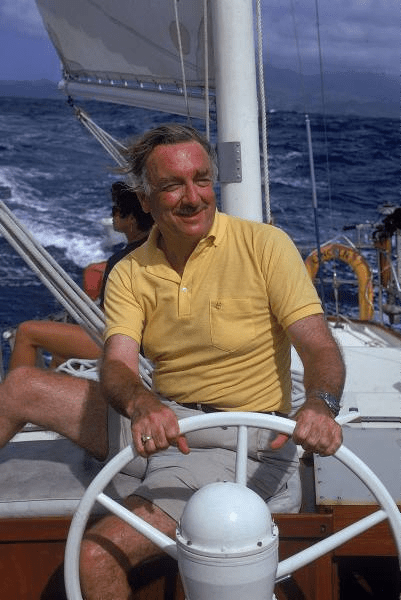
In his free time, Cronkite liked to sail.  He received the rank of commodore in the United States Coast Guard Auxiliary. Earlier in his career, he aspired to be a race car driver. He also loved music and had taken up drumming.

Cronkite passed away at his home in July of 2009 from cerebrovascular disease. Many journalists paid respect to him at the funeral including Tom Brokaw, Connie Chung, Katie Couric, Charles Gibson, Matt Lauer, Dan Rather, Andy Rooney, Morely Safer, Diane Sawyer, Meredith Vieira, and Barbara Walters.

Walter Cronkite had a career he could be proud of. He took his work seriously and was always prepared, taking the time to learn everything he could. Being the most-trusted man in America was no small feat, especially given the topics he broadcast about: politicians, the space race, and the Vietnam war. I can’t think of a news icon who has replaced his reputation. Wish we had a few Walter Cronkites today.

Burt Mustin: What a Character

This month we are looking at some of our favorite character actors. As we wrap up the series, we are ending on a high note with the amazing Burt Mustin. Like Charles Lane, Mustin had a prolific career in Hollywood and television. However, unlike Lane, Mustin was offered his first acting job at age 67 after he had retired.

📷Widener University Archives

Mustin was born in Pittsburgh in 1884. His father was a stockbroker. After high school, Mustin enrolled in the Pennsylvania Military College (now Widener University) with a degree in civil engineering. During his college career he played trombone in the band and played goalie for his hockey team.

After graduation, Mustin toured Europe, planning to work at his father’s brokerage firm. However, a financial panic destroyed the company.

One of Burt’s university classmates was Charles Spinney. According to Burt, Spinney displayed lots of photographs of young ladies from his hometown of Memphis, Tennessee. One day, he was showing them to Burt when he spotted the photo of what he referred to as “the prettiest girl in the room.” Mustin traveled to Memphis to meet her and in 1915 he married Frances Robina Woods. The couple had no children and remained together for their entire lives, with Frances passing away in 1969.

📷imdb.com

After working as an engineer for a few years, Mustin decided to try to sell automobiles. In an interview, Mustin admitted, “I was the worst engineer the school turned out.” He began selling Oakland Sensible Sixes and later Franklins, Lincolns, and Mercurys. WWII put an end to car sales for a few years, so Mustin began working for the Better Business Bureau and then the Chamber of Commerce. He stayed in Pittsburgh until he retired.

He did a bit of amateur acting and continued his passion for music. He was part of the oldest Gilbert and Sullivan troupe in the country, the Pittsburgh Savoyards; the Pittsburgh Opera; and an officer in the Society for the Preservation and Encouragement of Barbershop Quartet Singing in America. 

He was a founding member of the Pittsburgh Lions Club in 1921 and a life member in the Fellows Club of Pittsburgh. Mustin served as an announcer for the first weekly variety show on radio station KDKA.

📷that’sentertainment.com

After retiring, Mustin and his wife moved to Tucson, Arizona for her health where he continued acting. William Wyler saw him in a stage production of “Detective Story” and told Mustin to let him know if he ever wanted to pursue a film career. When Wyler was casting for Detective Story in 1951, Mustin reached out to him. The couple later moved to Los Angeles. Mustin would appear in 67 films overall.

In 1968 Mustin was cast in Speedway with Elvis and Nancy Sinatra. In one scene the stars have a lover’s quarrel in a coffee shop. When they make up, Elvis sings a song for his girl. Mustin is in the background cleaning the café and working at the counter. The producers felt the scene needed something else. That something else ended up being Mustin singing and dancing with a mop. No one on the set realized that Burt could sing before that adlibbed scene.

1951 was also the year that Mustin appeared on television in The Adventures of Kit Carson. He would find a new career in television for the next two decades, appearing in more than 130 series (which would equal more than 400 actual episodes).

📷imdb.com

During the fifties, he would be attracted to many westerns and dramas; however, he found his way onto a few comedies including The Great Gildersleeve, December Bride, and Our Miss Brooks.

If I listed half of the 1960s shows he appeared on, you would still be reading this blog next Monday when my new one is dropped. Take my word for it that he was on almost every popular sixties’ sitcom, including 14 episodes as Gus the fireman on Leave it to Beaver. Other sixties hits you can find him on include The Many Loves of Dobie Gillis, The Dick Van Dyke Show, The Joey Bishop Show, The Jack Benny Show, The Beverly Hillbillies, Get Smart, The Andy Griffith Show, The Lucy Show, Bewitched, Gomer Pyle USMC, Petticoat Junction, and My Three Sons, not to mention many dramas and westerns including Bonanza and Gunsmoke. He was no less busy in the seventies where we could catch him in Marcus Welby, The Mary Tyler Moore Show, The Brady Bunch, Love American Style, Adam-12, All in the Family, and Phyllis.

📷imdb.com

Johnny Carson loved having Mustin on The Tonight Show, where he was a fan favorite. He shared a lot of fun stories on the show. One of them was about him being at the first World Series for baseball in 1903 when the Pittsburgh Pirates played the Boston Red Sox. Unfortunately for Burt, Boston came back to win the series, but as a bonus he did get to see Honus Wagner play on the diamond.

Mustin passed away eight years after his wife at the age of 92. He left a gift to the college he was loyal to his entire life, enabling Widener University to renovate their theater. It is now named the Burton H. Mustin Theatre and Lecture Hall.

It’s hard to wrap your head around what a busy film and television career Mustin had. He was an actor for the last 25 years of his life, and with 67 movies and more than 400 episodes, that means that he accumulated about 20 credits per year which is almost two a month from age 67 to 92. Talk about an amazing career. Mustin proved that it’s never too late to find your next passion. Thanks for so many great memories Burt Mustin.

Florida Friebus: What a Character

📷danahallschool.com

As we continue our What a Character blog series, today we get to talk about the woman behind one of my favorite characters, Lillian Bakerman from The Bob Newhart Show. That woman is Florida Friebus.

Friebus was born in Massachusetts in 1909. She was named for her mother’s favorite aunt, not the southern state. Weirdly, her paternal grandmother was also named Florida. Her family was involved in the theater. Her father Theodore was a leading stage actor with Boston’s Castle Square Players and a silent film star. Her mom’s mother, Georgine Flagg, was part of the Augustin Daly stock company in Manhattan.

When she was only eight years old, Florida’s father passed away. Her mother had studied at the Dana Hall Schools and applied for a position of housemother there. Florida was able to study at Tenacre during this time. She participated in the first Christmas pageant in 1921. Florida not only learned a lot about acting, but she also was presented with classes in political history, music, art, languages, and literature.

📷facebook.com with Richard Waring

Friebus moved to New York to study at the Theater Guild School. She began her acting career in 1929 in when she appeared with the Civic Repertory Theater in “The Cradle Song.” In 1932, she worked on an adaptation of “Alice in Wonderland” with Eva Le Gallienne, and she took on the role of the Cheshire Cat.

In 1934, Friebus married Richard Waring. They would divorce in 1952, and she never remarried.

Friebus was elected to the Council of the Actors’ Equity Association in 1949, and she spent 16 years on the board.

Florida read stories to children on her KNXT show, Look and Listen, in Los Angeles.

📷imdb.com

Her first television role was in 1948 on The Ford Theater Hour. Her television drama appearances continued into the 1950s and she also appeared on several sitcoms, including The Goldbergs, Father Knows Best, Bachelor Father, and The Donna Reed Show. In 1959 she accepted a role that made her a household name: Winnie Gillis on The Many Loves of Dobie Gillis. For four seasons she tried to defend Dobie and his crazy dilemmas when his father became exasperated with him.

The show was based on a 1951 book, The Many Loves of Dobie Gillis by Max Shulman about the romantic adventures of a student at the University of Minnesota. Shulman wrote for the series. He would also write The Tender Trap which became a movie in 1955 and House Calls which became a 1978 movie; Shulman became head writer for the television series based on House Calls.

The sixties and seventies found Florida in a variety of both dramas and sitcoms. A few of these series included Ben Casey, Peyton Place, The Doris Day Show, The Mary Tyler Moore Show, The Partridge Family, Gunsmoke, Room 222, and Barnaby Jones.

📷sitcomsonline.com

In 1972 she accepted the role of Lillian Bakerman on The Bob Newhart Show. During the show’s run, she made 19 appearances trying to encourage the other patients in her therapy group. She is often seen knitting while the group talks. One of her fears is flying, and her catchphrase is “Isn’t that nice.”

Her last appearance was in 1982 on The New Odd Couple as, who else but Mrs. Bakerman.

In 1988, Friebus passed away from cancer at 78 years old.

Dick Schaal: What a Character

📷wikipedia.com

Today we began our “What a Character” blog series. Typically, when we discuss character actors, we are looking at actors who were busy in the forties, fifties, and sixties, but in the past sixty years, there have been a lot of great character actors as well. Today we are looking at the career of Richard Schaal.

Schaal was born in Chicago in 1928. His dad was a machinist, and his mom was a telephone operator. After he graduated, he ran a construction company before joining the Second City comedy troupe in 1959, not long after it began.

In 1950 he married Lois Treacy. I could not find a divorce date, but it was some time before 1964. They had a daughter Wendy who is also an actress.

Eventually he made his way to California. He had seventeen film credits on his resume; most of them were not too memorable, but he was in The Russians Are Coming, The Russians Are Coming and Slaughterhouse Five.

📷imdb.com

Television is where he made most of his acting appearances. He began his TV career in 1964 in East Side/West Side. This was a show I had not heard of before. Apparently, it was on for one year and starred George C. Scott as a social worker trying to help his clients in the mix of cultures that makes up New York City.

Schaal would find a few more roles in the sixties on several shows including The Dick Van Dyke Show, That Girl, and I Dream of Jeannie.

In the sixties, Schaal met Valerie Harper and they married in 1964.

During the seventies, he collected roles on many sitcoms including The Doris Day Show, The Partridge Family, Love American Style, The Bob Newhart Show, and The Mary Tyler Moore Show.

📷foxnews.com

On The Mary Tyler Moore Show, he played Howard Arnell, Paul Arnell, Chuckles the Clown, and Dino. Not surprisingly, he made appearances on Rhoda and Phyllis.

In 1970, Schaal and Harper wrote a script for Love American Style for “Love and the Visitor” which aired on season two, episode 5 where a bridegroom ends up in the wrong girl’s bedroom. Harper said they were part of the Writers Guild, but their hearts were in acting and once she got the part of Rhoda, the writing stopped.

Harper discussed Schaal during an interview with the Television Academy. She describes him as her former husband and good friend. She said she and Schaal hosted a talk show with Skitch Henderson for about a year in the mid-sixties. They did interviews and sketches. She said after that they decided to move to Los Angeles.

📷imdb.com The Russians Are Coming The Russians Are Coming

The seventies were also a busy time for Schaal who continued to find roles on television. You can see him on dramas such as Nero Wolfe and Hardcastle and McCormick. He also was on sitcoms including Harper Valley PTA and Just Our Luck. He had a recurring role during this decade on Trapper John MD from 1981-85. The show was a sequel of M*A*S*H and portrayed Trapper later in life. Schaal played Dr. David Sandler. He also accepted a role on It’s a Living in 1980. His daughter Wendy was part of the cast. She has a very successful career and has appeared in many popular series. From 2005-2023, she was one of the voices in American Dad.

In 1980 he tried marriage a third time with Tasha Brittain. They would divorce in 1989.

📷pinterst.com

Schaal retired in 1990 and passed away in 2014 in Los Angeles. No cause of death was provided. He did have spinal surgery in the late 90s and was in a wheelchair after that.

Sadly, I could not find a lot of information about Schaal or his personal life. He had a successful career, but it’s too bad there wasn’t more improvisational work at the time. It sounds like he was very gifted in that area. He didn’t have as much luck in love, but at least, according to Valerie Harper, he was a great guy and they remained good friends. He was one of those character actors who added so much to the television industry, especially in the sixties and seventies.


Marcia Wallace: What a Character

📷matchgamewikifandom.com

When trying to decide who to include in our Supportive Women blog series this month, Marcia Wallace was a no-brainer. Carol was one of my favorite characters on television on The Bob Newhart Show, and I love the fact that her role carried over into an episode of Murphy Brown.

Marcia Wallace was born in 1942 in Iowa. Her father owned a general store where she and her siblings often worked. After performing in a school play, one of her teachers encouraged her to pursue an acting career. After graduation, Marcia enrolled in Parsons College in Fairfield, Iowa where she received a full scholarship. She majored in English and Theater.

Upon her college graduation, Marcia decided to move to New York. The country gal had $148 in her savings. When she arrived in the Big Apple, she took on a variety of part-time jobs including typing scripts and substitute teaching. She joined a summer stock company and did a few commercials. She worked in a Greenwich Village nightclub for a year before creating an improv group, The Fourth Wall, with several friends. While she kept the friends, she lost 100 pounds.

Eventually, Wallace was offered a job with The Merv Griffin Show. When Merv decided to move to LA, he asked Wallace to move with them. She was able to obtain a few roles in series after moving to California. During the sixties and early seventies, she was on Bewitched, The Brady Bunch, Columbo, and Love American Style.

📷tvinsider.com

After Bill Paley had seen her on Merv Griffin, Grant Tinker (producer) called her to offer her a role on a new sitcom, The Bob Newhart Show. The role of Carol was written specifically for her.

Marcia loved her time on the sitcom. She said Bob was the Fred Astaire of comedy, making it look so easy. She also praised Bob for being a treasure. Because of the way the scripts were written, the show doesn’t date itself. It was about human relationships and people struggling to make them work and make life better.

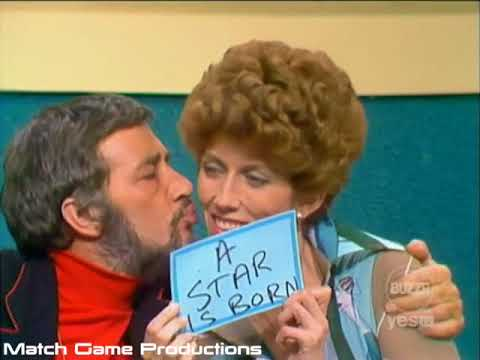
When The Bob Newhart Show went off the air six years later, Marcia jumped on the game show circuit. Shecould be seen on Password Plus; Super Password; Hollywood Squares; Crosswits; Hot Potato; The $25,000 Pyramid; Win, Lose, or Draw; Tattletales; To Tell the Truth; Family Feud; Card Sharks; and my favorite, Match Game.

📷youtube.com

Like so many actresses and actors who perform their role so well, Marcia was typecast after the show ended. In an interview, she said that “I have heard ‘You’re too recognizable for this part.’ I remember once, I desperately wanted to be on the series Nine to Five and they just weren’t going to see me because of that. Every once in a while, something would break my heart.”

Wallace also made appearances on The Love Boat and Fantasy Island in the seventies. During the eighties she would show up on CHiPs, Magnum PI, Taxi, Murder She Wrote, Night Court, and ALF, among other shows.

One of my favorite appearances of Wallace’s occurred in the mid-nineties on Murphy Brown. If you were a fan of that show, you know Murphy could not keep a secretary. There was even a support group that started of her former secretaries. However, when Carol Kester came to work for her, she was overjoyed. Carol was the role Wallace played on The Bob Newhart Show. Unfortunately for Murphy, at one point during the show, Bob Newhart shows up and convinces Carol to return to work for him and Jerry and Murphy lost her perfect assistant.

Most of Wallace’s work after 2000 was for voice work with one exception. In 2009, she had a recurring role on The Young and the Restless as Annie Wilkes for 14 episodes.

In 1985 Marcia was diagnosed with breast cancer. She survived it and became an activist and lecturer on the topic. In 2007, she won the Gilda Radner Courage Award for her work in this area.

In 1986 Marcia married Dennis Hawley in a Buddhist ceremony. Dennis renovated and managed hotels. The couple adopted a little boy, but Dennis passed away three years later.

📷imdb.com

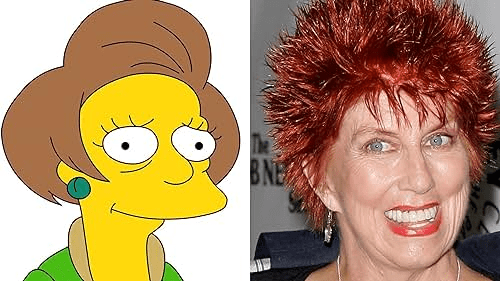
In 1989, a new type of show debuted called The Simpsons. Marcia was asked to provide the voice of Edna Krabappel, school teacher. She probably did not realize she would be associated with that role for another 24 years. Her role as Edna did not end until her passing.

In addition to her television work, Wallace performed on stage. She produced and starred in “An Almost Perfect Person,” a female version of “The Odd Couple,” “Same Time, Next Year” and many others.

In 2004, Wallace published an autobiography, Don’t Look Back, We’re Not Going That Way. She honestly discussed her breast cancer, the loss of her husband, her nervous breakdown, being a single mother, and the ups and downs of her career.

Marcia died from pneumonia and sepsis in 2013. Her coworkers commented on her passing. Yeardley Smith, who voices Lisa on The Simpsons, said “Heaven is now a much funnier place because of you, Marcia.” Bob Newhart said that “Marcia’s death came as quite a shock, she left us too early. She was a talented actress and dear friend.”

📷onceuponascreen.com

I’m so sad that Marcia was typecast and unable to get the roles that she wanted. The networks were very shortsighted during those decades. They didn’t give television fans enough credit for being resilient enough to love the character of Carol while being able to love another character played by Wallace. You saw the same things happen to Adam West, Alan Alda, and Henry Winkler. If that perspective had continued, we never would have had Mary Richards on The Mary Tyler Moore Show or Jay Pritchett from Modern Family. If someone could be a hit as Al Bundy and then go on to star in another show, anyone can get beyond being stereotyped. Marcia Wallace proved that anyone could survive life’s disappointments with determination and a sense of humor, and perhaps that was her greatest role for us.

Joan Tompkins: What a Character

We are starting a blog about Supportive Women, great actresses who made classic television so much better. I’m beginning with Joan Tompkins.

📷tvtime.com

Tompkins was born in 1915 in Mount Vernon, NY. She began her career in stock theater companies in New York in the thirties before appearing on Broadway in several shows including “My Sister Eileen,” “Pride and Prejudice,” and “Fly Away Home.” Henry Fonda was in several the plays with Joan.

In 1936 she married actor Stephen Ker Appleby in New York, but five years later they divorced. Appleby was born in Wales and known best for his 1960s movies. He lived to be 100. From 1942-1951 she was married to Bruce MacFarlane before they divorced. McFarlane died in 1967 and had 28 acting credits in television and film. Joan would then marry a third actor in 1951, Karl Swenson, “the man of a thousand voices.” The two worked together on the radio. Many fans of Little House on the Prairie would recognize Karl as Lars Hanson. Swenson obtained an amazing 175 credits, primarily on television during the two decades before his death.

After WWII Joan became a foster parent for a crippled Polish boy, Tomasz Machcinski. He later became a photographer. In 1994, their story was made into a documentary, “Child from a Catalog.” Machcinski’s life story was very interesting. He was born in the Kampinos Forest in Gorki, Poland. He spent his childhood living in hospitals and orphanages. After developing a relationship with Joan, he graduated as a precision mechanic in 1963. In 1966, he took up photography and created thousands of self-portraits. Some were as historic characters. He chose the stories, make up, and costumes. He once said that he didn’t “use wigs, tricks, but I use everything that happens to my body, such as hair regrowth, tooth loss, diseases, aging, etc.” He has had exhibits in Copenhagen, Beverly Hills, Warsaw, New York, and Paris. Machcinski passed away in 2022.

📷wallofcelebrities.com

Tompkins had a long radio career. She was the voice of Nora Drake on “This is Nora Drake” which was on CBS radio until 1959.

She began her television career in 1954 on an episode of Ponds Theater. Almost all of her 93 acting credits were for television shows. She had a recurring role on a soap, Valiant Woman, appearing in 176 of the 1027 episodes of the show as Marion Walker. Throughout the fifties, she showed up in several dramas as well as The Donna Reed Show, Bachelor Father, and Father Knows Best.

During the sixties, she had two recurring roles. She played Mrs. Brahms on Occasional Wife in 1966-67. I remember her on My Three Sons; between 1967-1970, she appeared as Lorraine Miller, Katie’s mom, nine times.

You can catch glimpses of her on many of your favorite shows from the sixties and seventies, including Hazel; The Danny Thomas Show; Perry Mason; Gomer Pyle: USMC; Dr. Kildare; The Man From UNCLE; Bewitched; Bonanza; The Brady Bunch; Marcus Welby, MD; The Mary Tyler Moore Show; The Mod Squad; and The Bob Newhart Show.

📷imdb.com My Three Sons

Her last television appearances were in 1980. She played Grandma Gertie in an episode of Eight is Enough and a physician in a made-for-tv film, The Night the City Screamed.

Karl and Joan moved to Beverly Hills where they founded an acting company. Karl directed the plays Joan appeared in. After Karl’s death in 1978, Joan joined a writing group and wrote several books. She died at home in 89.

Joan Tompkins is another one of those actresses that made television better during the fifties, sixties, and seventies. I’m glad we could learn a bit more about her and her career.

Vic Tayback: Cooking Up Some Fun

This month we are celebrating some of our favorite Supportive Men, actors who usually are not the star of a show but add the special flavor only they can to some of our favorite shows.

Before we move on to our topic today, can I just say a huge THANK YOU to all of you who have joined me on this journey through classic television. Today is my 400th blog and it has been so much fun. Next week will be 401, but for today we are looking at the career of Vic Tayback.

📷graduation photo

Most of us probably know him best as Mel on Alice; he played Mel Sharples in both the original movie, Alice Doesn’t Live Here Anymore, as well as the television show that was on for nine years.

Tayback was born in Brooklyn in 1930. His parents settled there after leaving Aleppo, Syria. During his teenage years, the family moved to California where he attended Burbank High School. He loved sports and played on a variety of teams, his favorite being football.

After high school, he enrolled at Glendale Community College. He also spent some time with the US Navy.

With his love of sports, he decided to attend the Frederick A. Speare School of Radio and TV Broadcasting to be a sports broadcaster. While there he was required to perform in a production of “Stalag 17” for one of his classes. He wasn’t thrilled about doing so, but he realized that he loved making people laugh and decided to switch his career to acting. While trying to break into the industry, he paid his dues driving a cab and working as a bank teller.

📷embarrassingtreasures.com Family Affair

The first of Tayback’s astounding 151 acting credits occurred in 1958 in a little-remembered series, Buckskin. This western was set in Annie O’Connell’s boarding house in Buckskin, Montana in 1880 and the stories were told by ten-year-old Jody. Vic continued to receive a few other appearances on television in the late fifties, as well as two films.

In the sixties, Tayback’s career took off. He would show up on 32 television episodes and 9 big-screen films, including With Six You Get Eggroll with Doris Day and Brian Keith. His tv roles were in comedies such as F-Troop, I Dream of Jeannie, Family Affair, Get Smart, The Monkees, and That Girl. He also could be seen in a variety of dramas that included 77 Sunset Strip, Dr. Kildare, Rawhide, Cimarron Strip, Star Trek, and Mission Impossible.
📷newyorkdailynews.com The Cheap Detective

The sixties also found Vic in the role of groom. In 1963, Tayback married Sheila Barnard, and they remained married until his death.

During the seventies, his appearances escalated to more than forty television series and ten movies. Some of his television shows included Bonanza, The Mary Tyler Moore Show, Bewitched, Columbo, Mannix, Ironside, Mod Squad, The Partridge Family, All in the Family, Barney Miller, Cannon, Medical Center, Family, and Hawaii Five-0. His movies included a few genres running from Disney’s The Shaggy DA to Papillon (Papillon was the story of a French convict who befriends a fellow criminal in South America in the 1930s, and he plans an escape).

It was during the mid-seventies that he was offered the role of Mel Sharples. In 1974 the movie was released, and the television show aired in 1976. The show was very popular with viewers. Vic said he and Mel were somewhat similar characters. While people still quote Flo on the show with her “Kiss my grits,” Tayback had his own tagline on the show, “Stow it.”

📷imdb.com Alice

If you didn’t see the show, it featured a greasy-spoon diner in Phoenix, Arizona. Alice moves there after the death of her husband with her son Tommy. She becomes a waitress at Mel’s along with sassy Flo and shy, gullible Vera. Despite the bad food, they have a lot of regulars who come in for a meal. If you want to visit the restaurant, the building it was based on is at 1747 NW Grand Ave in Phoenix and was called Pat’s Family Restaurant. (It was also featured in American Graffiti.) It is now called Mel’s Diner. According to Trip Advisor, it is ranked #448 out of 1795 restaurants in Phoenix.

📷imdb.com

The role of Mel won Tayback Golden Globe awards in both 1979 and 1980. In 1978 he was nominated for an Emmy as Supporting Actor in a Comedy. While he did not win, he was in some amazing company. That year, fellow nominees included Harry Morgan and Gary Burghoff for M*A*S*H, Tom Bosley in Happy Days, and Rob Reiner from All in the Family, who took home the win that year.

The series aired on Saturday nights and the first year was in the top thirty. In 1977, its second season, it was moved to Sunday nights, following All in the Family where it rose into the top ten. In 1979, All in the Family left the airwaves, and Alice then followed One Day at a Time. Seasons three-five, it continued to be in the top thirty. In 1981, the show was moved to Monday nights up against M*A*S*H where it fell out of the top 30. However, season seven found it back on Sundays following The Jeffersons where it rose back into the top thirty. However, it took another dive in ratings the next year and then was cancelled. I think it probably stayed on the air a year or two beyond when it should have. However, interestingly enough, the year it was cancelled, CBS introduced 15 new shows. I’m not sure most people have ever heard of any of them; they were all gone by 1986 with the exception of The Twilight Zone (reboot) and West 57th, which was a news show aimed at younger audiences.

Vic was also an avid horse-racing fan and owned quite a few thoroughbreds. On Alice, Mel was also a track fan, and sometimes the writers asked Mel for names of horses they could use, and he often gave them names of his horses.

On the show, Vic was often made fun of for his bad cooking. In a 1985 interview he said, “If I walked into a restaurant, the other diners would look around and say, ‘I hope you’re not cooking.’” Heinz then offered him the role of spokesperson for their Heniz 57 sauce and his line in the commercials, was “I used to be a lousy cook.” He was also remembered for an Aqua Velva commercial he did with Pete Rose.

Unfortunately, Tayback was a heavy smoker which caused heart trouble for him. While doing Alice, he had a triple-bypass surgery. While he did try to quit numerous times, he just could never kick the habit. In 1990, he died from a heart attack at age 60.

📷goldenglobes.com

While we were cheated of several decades of performances from Vic with his early death, he did leave an amazing legacy in the Company of Angels theater in Los Angeles. According to its website, “In 1959, a group of actors, including Tayback, Leonard Nimoy, Richard Chamberlin, and Vic Morrow founded the theater to provide a space for actors and other theater artists to work on their craft free of commercial constraints.”

Thank you, Vic Tayback, for deciding to make people laugh in your career and investing in the future of acting so those memories continue in the future.

David White: The Man Behind McMahon and Tate

This month our blog series is Supportive Men. These actors were not the stars of the series, but they contributed a lot of fun to the show. First up is David White who we know best as Larry Tate from Bewitched.

White was born near Denver, Colorado, in 1916. His family moved around a bit. He lived in Pennsylvania and Missouri and graduated from Los Angeles City College. He worked at the Pasadena Playhouse before enlisting in the Marine Corps during WWII. After his four years in the military, he began acting again with the Cleveland Play House.

📷pinterest.com On The Phil Silvers Show

In 1949, White found himself living in New York where he made his Broadway debut in “Leaf and Bough.” The theater critics were not kind in their reviews, and the show closed after three performances. The following year, he tried the stage again in “The Birdcage” with Maureen Stapleton. He was then given a role in “The Anniversary Waltz,” co-starring Macdonald Carey and Kitty Carlisle which ran for 611 nights. He paid his dues, working in a variety of jobs while trying to establish his acting career. His resume included a farm laborer, a truck driver, a doorman at the Roxy Theater, and working at the J.H. Taylor Management Co.

In the 1950s, David began his long television career. His first appearance was in The Philco Playhouse production of “Rich Boy” with Grace Kelly. While most of his roles were in dramatic shows and westerns, he did a few comedies including Father Knows Best, My Favorite Martian, The Farmer’s Daughter,  and My Three Sons. Most of his roles were as corrupt businessmen or arrogant politicians.

📷dvdizzy.com In The Apartment

In 1952, David married actress Mary Welch. Welch appeared in several successful plays on Broadway. She was a member of Lee Strasberg’s Actor’s Studio before opening her own school called The Welch Workshop. White and Welch worked together in only one production, at a regional theater, in “Tea and Sympathy.” In 1958 she died of complications from their second pregnancy. They had a son Jonathan and sadly, he died in 1988 in the bombing of the Pan Am Flight 103 over Lockerbie, Scotland. (This was a tragic incident when Libyan terrorists planted a bomb on a plane flying from London to New York. It exploded 35 minutes into the trip and killed all 259 people on board and 11 people in the neighborhood where it landed.)

After his wife died, White and his son moved to Hollywood where White launched a big-screen career. His film debut was in 1957 with Tony Curtis, Barbara Nichols and Burt Lancaster in The Sweet Smell of Success. He only had 16 movies in his credits, but they included The Apartment, Sunrise at Campbello, and Brewster’s Millons.

📷closerweekly.com On Bewitched

From 1964-1972, he perfected the comedic role of Larry Tate on Bewitched. As president of McMann & Tate, he was constantly firing Darrin for one reason or another, usually related to some circumstance caused by Samantha’s family. White also directed one episode of the series, “Sam’s Double Mother Trouble.”

During an interview with Herbie J. Pilato (author of Bewitched Forever), White said he “got the part because I was an honest man, and that’s how Larry and I were different. I’m not two-faced, and he was. I had more integrity than Larry ever had. I was smarter and had a deeper sense of values. I had to diminish who I was to play Larry, whom I viewed as a very insecure person who only had a certain brilliance in certain areas. He was smart enough to hire people who possessed the skills he did not—like Darrin. I wasn’t born to play Larry. I had to create him. He was a make-believe character of his own truth slated in a comedy series. When playing humor and farce you take that truth and stretch it as far as it will go. But not any farther. When I was playing Larry, though he was a funny character, I never tried to be funny. To me, acting has to do with fulfilling the needs of the character you’re playing, not the actor who’s playing him. Although the one thing the actor and the character have in common is that both have needs. A real heavy is a man who doesn’t have any moral structure whatsoever; one who ends up cheating or even killing someone. Larry was selfish, but he was never that extreme. If anything, he was still a little kid who never matured.”

📷x.com Bewitched

In that same interview, White said his favorite Bewitched episodes were “Moment of Truth” (Season 3, Episode 2 when Samantha has to tell Darrin Tabitha is also a witch and they try to keep the secret from the Tates), “Bewitched, Bothered and Infuriated” (Season 3, Episode 31 when Clara tells them about a future newspaper article that says Larry broke his leg on their trip, so Darrin and Samantha try to protect him while causing a lot of annoyance to Larry and Louise), and “Toys in Babeland” (Season 4, Episode 2 when Endora brings one of Tabitha’s toys to babysit her while she runs a quick errand which leads Tabitha to bring a lot of toys to life).

After the show ended, White continued both his television and film careers. He also continued in the theater, primarily with Theatre West and the Mark Taper Forum in Los Angeles.

📷imdb.com My Three Sons

During the seventies and eighties, he showed up in a variety of popular shows including Adam-12, Cagney and Lacey, Cannon, Columbo, Dallas, Dynasty, Love American Style, Mission Impossible, Qunicy M.E., Room 222, The Odd Couple, The Love Boat, The Mary Tyler Moore Show, and The Rockford Files.

After his son’s death, White became a bit of a recluse. He had just begun working again when he passed away from a heart attack in 1990 at the age of 74. Certainly, David White had a successful career, amidst his personal heartbreaks, appearing on the stage, in films, and on television. It would have been wonderful if he had another chance to be part of the cast of another hit show, maybe a dramatic role. However, if you only costar in one show, the role of Larry Tate and the memories we have of him on Bewitched is a great one to have.