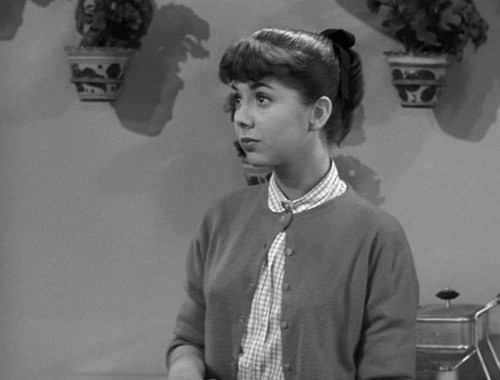
Florida Friebus: What a Character

đź“·danahallschool.com

As we continue our What a Character blog series, today we get to talk about the woman behind one of my favorite characters, Lillian Bakerman from The Bob Newhart Show. That woman is Florida Friebus.

Friebus was born in Massachusetts in 1909. She was named for her mother’s favorite aunt, not the southern state. Weirdly, her paternal grandmother was also named Florida. Her family was involved in the theater. Her father Theodore was a leading stage actor with Boston’s Castle Square Players and a silent film star. Her mom’s mother, Georgine Flagg, was part of the Augustin Daly stock company in Manhattan.

When she was only eight years old, Florida’s father passed away. Her mother had studied at the Dana Hall Schools and applied for a position of housemother there. Florida was able to study at Tenacre during this time. She participated in the first Christmas pageant in 1921. Florida not only learned a lot about acting, but she also was presented with classes in political history, music, art, languages, and literature.

đź“·facebook.com with Richard Waring

Friebus moved to New York to study at the Theater Guild School. She began her acting career in 1929 in when she appeared with the Civic Repertory Theater in “The Cradle Song.” In 1932, she worked on an adaptation of “Alice in Wonderland” with Eva Le Gallienne, and she took on the role of the Cheshire Cat.

In 1934, Friebus married Richard Waring. They would divorce in 1952, and she never remarried.

Friebus was elected to the Council of the Actors’ Equity Association in 1949, and she spent 16 years on the board.

Florida read stories to children on her KNXT show, Look and Listen, in Los Angeles.

đź“·imdb.com

Her first television role was in 1948 on The Ford Theater Hour. Her television drama appearances continued into the 1950s and she also appeared on several sitcoms, including The Goldbergs, Father Knows Best, Bachelor Father, and The Donna Reed Show. In 1959 she accepted a role that made her a household name: Winnie Gillis on The Many Loves of Dobie Gillis. For four seasons she tried to defend Dobie and his crazy dilemmas when his father became exasperated with him.

The show was based on a 1951 book, The Many Loves of Dobie Gillis by Max Shulman about the romantic adventures of a student at the University of Minnesota. Shulman wrote for the series. He would also write The Tender Trap which became a movie in 1955 and House Calls which became a 1978 movie; Shulman became head writer for the television series based on House Calls.

The sixties and seventies found Florida in a variety of both dramas and sitcoms. A few of these series included Ben Casey, Peyton Place, The Doris Day Show, The Mary Tyler Moore Show, The Partridge Family, Gunsmoke, Room 222, and Barnaby Jones.
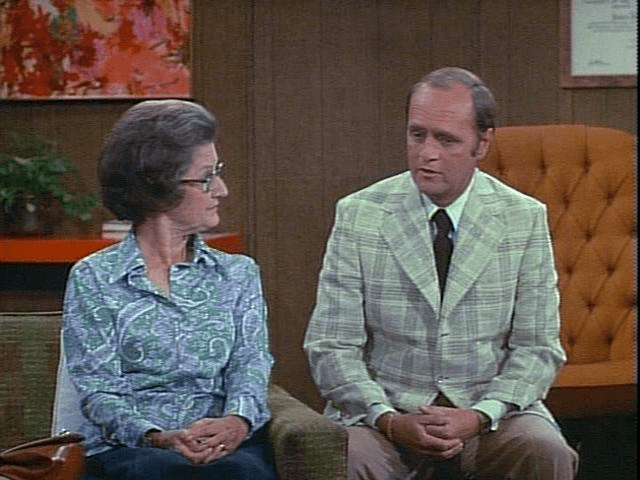
đź“·sitcomsonline.com

In 1972 she accepted the role of Lillian Bakerman on The Bob Newhart Show. During the show’s run, she made 19 appearances trying to encourage the other patients in her therapy group. She is often seen knitting while the group talks. One of her fears is flying, and her catchphrase is “Isn’t that nice.”

Her last appearance was in 1982 on The New Odd Couple as, who else but Mrs. Bakerman.

In 1988, Friebus passed away from cancer at 78 years old.
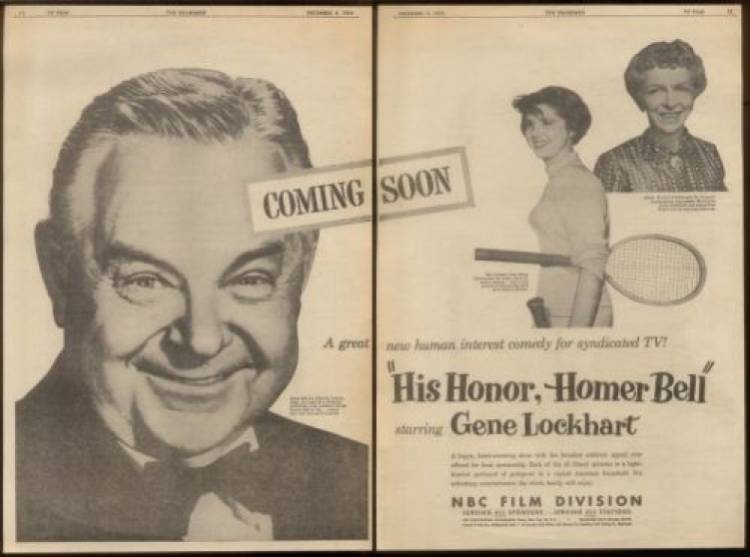
His Honor Homer Bell: Was It a Comedy? A Western? A Legal Drama? It Was a Mystery.

As we continue our “Don’t Judge Me” series, we check out a show full of mystery: His Honor, Homer Bell.

Photo: sitcomsonline.com

This show seemed to be unsure what genre it wanted to be. Was it a drama? A comedy? A western? Some shows were written by Si Rose who wrote for Bachelor Father and McHale’s Navy, but other writers included Michael Cramroy, a Dragnet writer and Jerome Coopersmith who wrote for Hawaii Five-0.

It also didn’t have a definite home. The show was made to go directly into syndication by NBC Films and taped in Brooklyn. There are different statistics about how many episodes were made of the show. Imdb lists only one episode. Some other sites indicate 38 episodes were made. To the best of my research ability, I believe there were 39 episodes including the pilot. It had a budget of one million dollars and episodes were listed in TV Guide.

Those TV Guide descriptions lead to another mystery. The show talks about being in the West but it must be a more contemporary west. In one episode, Judge Bell tries to acquire tickets for a sold-out football game and in another one he delivers a speech to the town traffic commission.

Photo: sitcomsonline.com

What we do know for sure is that the show debuted in 1955. The show followed the ups and downs of Homer Bell (Gene Lockhart) who was a respected and much-loved justice of the peace living in a small western town of Spring City. Bell was a widower who lived with Casey (Mary Lee Dearing) and their housekeeper Maude (Jane Moultrie).

Adding to the mystery is whether Casey was his daughter or an orphaned niece he was raising. I found several descriptions listing both cases. However, Casey was a tomboy, and her antics often caused problems for the judge. He was a caring man who went to great lengths to help others. He relied more on good old common sense than legal technicalities to make his decisions. The show was produced by Hy Brown and directed by Derwin Abbe.

Photo: sitcomsonline.com

Gene Lockhart, father of actress June Lockhart, transitioned from the big screen to the small screen for this series.

He was born in Ontario, Canada in 1891. His father was musical, and when a band he played with went overseas on tour, he took his family along with him. During most of that time, Gene went to school in London. When the family returned to Canada, Gene’s mother encouraged him to try out for a Broadway play. He moved to New York and received his first offer in 1917 as part of the cast in “The Riviera Girl.” He also began to write for the stage. One of his projects, “The Pierrot Players” toured Canada.

In 1924, Gene married Kathleen Arthur, an English actress and musician. Gene stayed busy. He continued to appear on the stage, he could be heard on radio, he became a writer for theatrical magazines, and he lectured on drama techniques at the Julliard School of Music.

Photo: imdb.com

In 1933, he was offered the role of Uncle Sid in “Ah, Wilderness.” His great reviews in the play led to a contract with RKO Pictures. While he occasionally returned to Broadway, notably in 1949 as Willy Loman in “Death of a Salesman,” he found his true calling as a Hollywood actor. He appeared in more than 125 films and was nominated for an Oscar for his work in Algiers in 1938. With 146 acting credits, he had about ten appearances on theater shows in the fifties on television.

Lockhart suffered a heart attack in his sleep in 1957.

Mary Lee Dearing (another mystery was her last name; most places credit her as “Dearing” but I’ve seen “Dearring” and “Deering”) was born in 1939 in New York City. She only has eight acting credits in addition to Homer Bell. She began her career on several theater dramas in the fifties, was on The Dick Van Dyke Show, The Danny Thomas Show, and The Brian Keith Show. I could find very little about her; most of her fame stems from appearing on the episode of Dick Van Dyke as a babysitter when Rob talks Laura into going to a party, leaving a sick Richie with the sitter.

Photo: sitcomsonline.com
Mary Lee Dearing as Janie on The Dick Van Dyke Show

Very little is known about Mary Moultrie as well. She was born in 1903 in Los Angeles. Her only other acting credits occurred in the fifties in several theater drama shows and on Mister Peepers and The Goldbergs.

By this time, you might be asking yourself—If there is more unknown than known about this show, why even write about it? We are losing so much information about the classic age of television. My philosophy is that if we keep the shows in the conversation, they won’t become totally lost. If anyone has any of the answers to the many questions about this show, I would love to hear from you. Besides, what television fan doesn’t love a mystery?

Note: In January of 2021, I received this information in an email from Diane Dearring and wanted to share it with you for an update on Mary:

I found the info on your site about Mary Lee Dearring (https://thewritelife61.com/tag/mary-lee-dearing/).  Mary Lee was my dad’s first cousin.  You mentioned on your site that you couldn’t find much info about her, so I thought I would share what I have with you.
Her maiden name was indeed Dearring.  However the spelling was originally Doering.  Her ancestors came to the US from Germany in 1853 and settled in Ohio,  Her father, my grandfather’s brother, was Ernest “Ernie” Dearring and her mother was Lene (Belisario) Dearring.  They owned a dance studio in NYC.  I haven’t been able to find out any information on the dance studio, but would dearly love to know more.
Mary Lee married Wallace Foster Tracy in 1966.  They had no children.