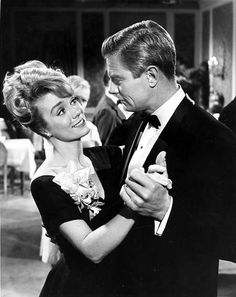
Sandra Gould: What a Character

We are winding up our blog series “What a Character” with Sandra Gould. I have to be honest, I had an unfair bias against Sandra Gould.  I didn’t know a lot about her career, I just knew that she replaced Alice Pearce as Gladys Kravitz, and it was a bad replacement. It wasn’t Sandra’s fault—I blame the show’s producers.
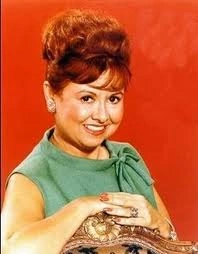
📷pinterest.com

Some actors truly are irreplaceable. Eartha Kitt, while a great Cat Woman, just wasn’t Julie Newmar. Imagine trying to replace Henry Winkler as the Fonz halfway into the show. Can you picture tuning into MASH and finding Hawkeye was now played by someone other than Alan Alda?  Pearce was perfect in that role and, despite her being nosy and annoying, she was likable and that is hard to do. Gould’s Gladys was loud and brash, and I felt like I heard fingernails on a chalkboard whenever she was in a scene.

As long as I’m oversharing, I never cared for Dick Sargent either. While he was able to replace Dick York in some ways, York was just Darrin. Okay, I’m done and ready to talk about the good aspects of Sandra Gould and her long career.

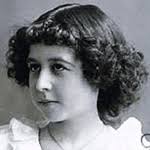
Gould was born in Brooklyn in 1916. She entered the entertainment business early becoming a kid dancer in the Cat Skills by age 13.

📷threads.com

Gould found a lot of success on radio, appearing on “My Friend Irma” and “Duffy’s Tavern.” Her first radio job came along when she was only 9 on “The Danny Thomas Show.” Gould was with Jack Benny for almost fifteen years.

In 1938 she married Larry Berns, a broadcasting executive. They were married until his death in 1965. Berns joined CBS in 1942 writing and producing radio and TV series including Our Miss Brooks. He later worked on McHale’s Navy and Broadside.

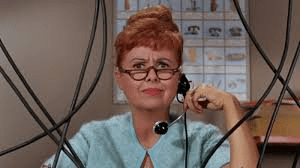
Sandra’s first role was in the big screen T-Men in 1947. Most of her roles were inept or gabby women, typically a telephone operator, nurse, receptionist, landlady, or saleswoman. Gould once mentioned that she played an operator more than any other actress. I did notice 10-15% of her roles mentioned switchboard operators.
📷facebook.com

While she continued to appear in movies, most of her acting credits came on television. She appeared in Oboler Comedy Theater in 1949. In the early days of television, many of the series were drama or comedy reenactments of movies or plays. Sometimes, new stories were written for these episodes. Gould continued with these roles into the mid-fifties.

From 1952-55 she appeared as Mildred on I Married Joan. This series starred Joan Davis and Jim Backus. He was a judge, and she was another “Lucy Ricardo” always getting into mischief or causing hardships for her husband.

📷tumblr.com

Gould was kept very busy with offers during the end of the fifties and throughout the sixties. She could be seen doing comedy on Our Miss Brooks, I Love Lucy, The Jack Benny Program, My Three Sons, The Brady Bunch, and I Dream of Jeannie among others. She also tried western life on Wagon Train. Her drama performances included Hawaiian Eye and I Spy. She even dipped her toe into animation on The Flintstones.

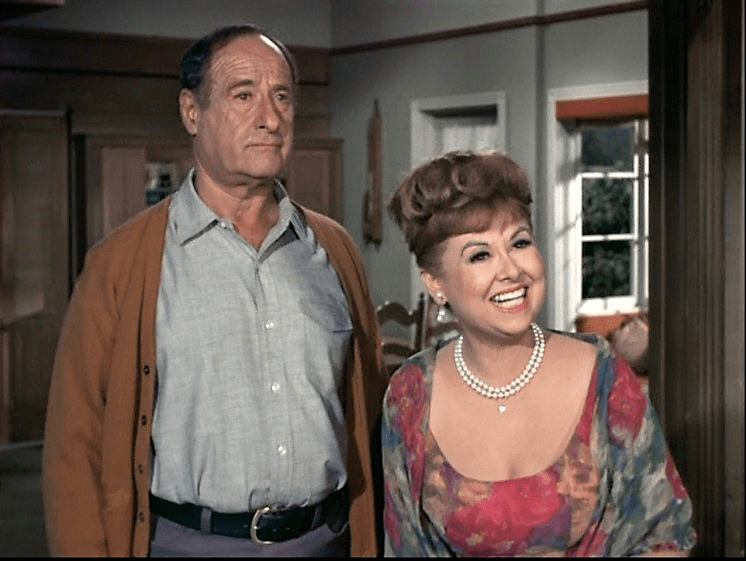
At the end of the sixties, she was given the Glady Kravitz role. Pearce and Gould split the character’s appearances: Pearce had 27 episodes with Gould having 29.

Gould had stepped away from acting for a time. She published two books for girls: Always Say Maybe and Sexpots and Pans. They both seem quite dated today in their advice to girls to get the right type of husband. At the time she accepted the role of Gladys she said she had gone through a very rough year. Her husband died. Then her writing partner Peter Barry died. Then Alice Pearce, who was a good friend of hers. She had no desire to take over the role, but George Tobias who played Abner and was also a friend, called her to come in for an audition.
📷imdb.com

I could not find any information about she and Barry collaborating. One article specifically mentioned that they wrote scripts for Honey West, Tammy, and The John Forsythe Show, but I don’t see either of their names as writers for these shows. Barry is listed as a writer for 23 shows in the late fifties and early sixties, and he was a radio scriptwriter. Perhaps they had written some scripts that were never filmed.

I guess I am in the minority on the Bewitched issue because most sites I visited described her role similarly, usually something like Hollywood Spotlight’s description: “her over-the-top performance and shrill voice were popular with viewers, and she succeeded ultimately in making the character her own.” She also reprised her role as Gladys in the sitcom Tabitha in 1977 which was about Darrin and Samantha’s daughter as an adult.

Some time during her stint on Bewitched, she got married again to Hollingsworth Morse, and they were together until his death in 1988. Hollingsworth was a director and assistant director on almost 90 programs and movies including McHale’s Navy, Dukes of Hazzard, and Mork and Mindy.

The seventies and eighties found her primarily in drama roles, although she could be spotted in a handful of sitcoms. You can catch her on Columbo, Marcus Welby MD, Ironside, Crazy Like a Fox, and MacGyver. During the nineties, she took on roles that were described as “old lady” on Friends and on her last appearance which was Boy Meets World in 1999.

📷bewitched wiki.com

Not long after filming this episode, Gould passed away from a stroke following heart surgery.

Gould had a long and successful career and certainly made the nosy, gabby character her own. I’m glad the job on Bewitched helped her get through a very sad and difficult time in her life. However, I still am claiming she was not right for Gladys who should have been written off the show and just replaced with a new neighbor. But I respect Gould and the characters she made her own on the big and little screens.
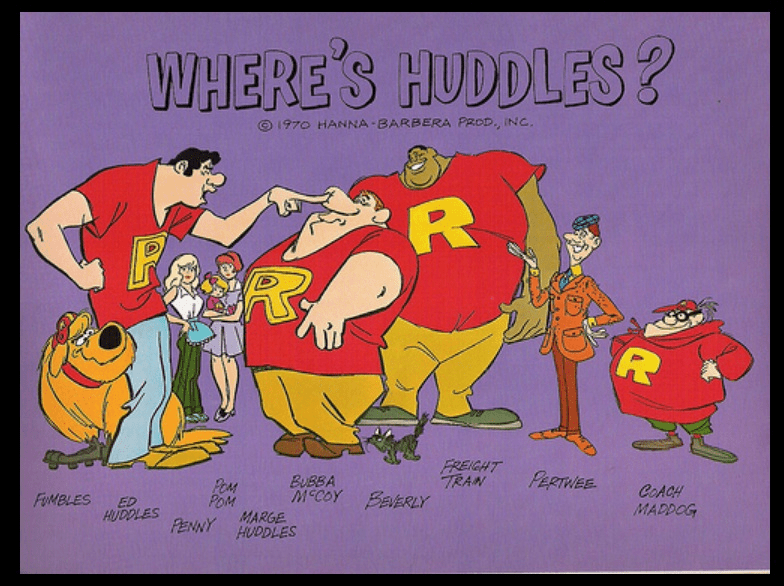
Where’s Huddles? You Only Have Ten Episodes to Find Him

This month’s blog series is titled “Get Animated.” Most of you are probably familiar with most of the shows we are discussing. However, today’s might be a bit more puzzling. It’s called Where’s Huddles?

📷imdb.com

This was a Hanna-Barbera Production that debuted on CBS in July of 1970. It was created as a summer replacement for Hee Haw. Some sources say it was replacing The Glen Campbell Goodtime Hour. The Campbell show had this timeslot in the fall and Hee Haw took if over for the winter. Both shows appeared on the schedule the following year.

When I was little, often either reruns were shown during the summer, or short-term replacement shows were created for potential long-term schedule spots.

This show was a primetime series meant to attract adults, much like The Flintstones was created to do with adult themes and a laugh track. I’m not gonna lie; I hated Hee Haw and I would have watched dentists performing root canals before watching Hee Haw.

📷ebay.com

The Flintstones had gone off the primetime schedule in 1966, so the network thought it might be time to try a new animation show in the evening.

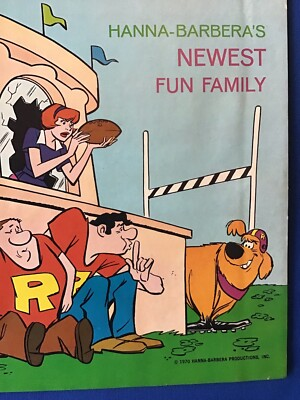
This series featured a professional quarterback, Ed Huddles (voiced by Cliff Norton). The team’s center, Bubba McCoy (voiced by Mel Blanc) is his neighbor. Rounding out the cast was Ed’s wife Marge (voiced by Jean Vander Pyl), Bubba’s wife Penny (voiced by Marie Wilson), PomPom, the Huddles’ daughter (Jean Vander Pyl), and another teammate Freight Train (voiced by Herb Jeffries). Claude Pertwee (voiced by Paul Lynde) was a grumpy neighbor who lived with his cat Beverley. He liked the wives, but he disliked the rest of his neighbors.

Huddles and company play for the Rhinos,  and their announcer was voiced by Dick Enberg, the voice of the Los Angeles Rams. Their coach was Mad Dog Maloney (voiced by Alan Reed).

As you can tell just by reading the descriptions, it was almost too similar to The Flintstones. Ed was taller and thinner than Fred and while his wife had red hair, it was a different style than Wilma.  Bubba’s wife was a more beautiful blonde. The characters on this show were voiced by many of the same people who worked on The Flintstones.

📷ebay.com

When the show wasn’t a hit, the network had to find a replacement show,  an unknown series, All in the Family, was put on the schedule.

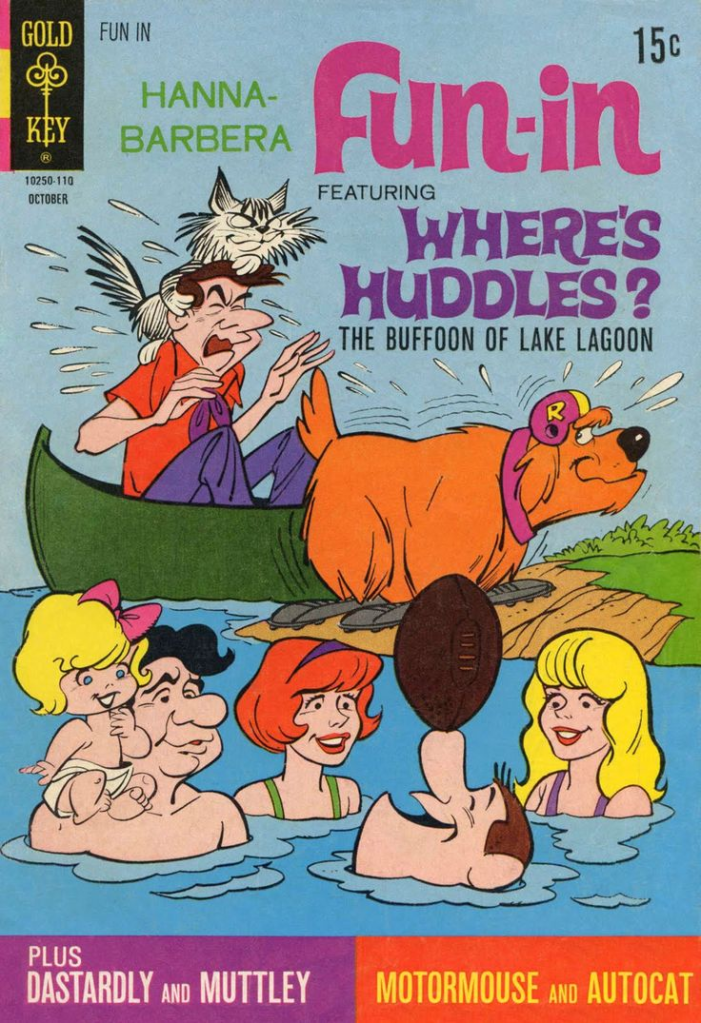
A comic book was released in 1971.

The theme song was similar but different for the opening and closing. The catchy tune’s lyrics were:

Opening: There’s a family down the street, the Huddles! The McCoys live right next door. Yes, I know the girls are alright Marge and Penny, but the fellas, they play football you know. Savages, that’s what they are. Give the ball and a cheer for Huddles, with point after touchdown every time! Savages!

Closing: There’s a family down the street, the Huddles! The McCoys live right next door. Give the ball and a cheer for Huddles, and he’s over the old goal line. With a point after touchdown every time!

📷pinterest.com

I don’t understand having the two variations, but the show wasn’t on long enough to tweak the theme anyway.

The show didn’t attract many viewers, and it was canceled after ten episodes. However, in the fall, Hanna-Barbera would try their hand at another series, one that I was much happier about- Josie and the Pussycats. You’ll learn more about this one next week.

Camp Runamuck: Campers Loved It More than Viewers

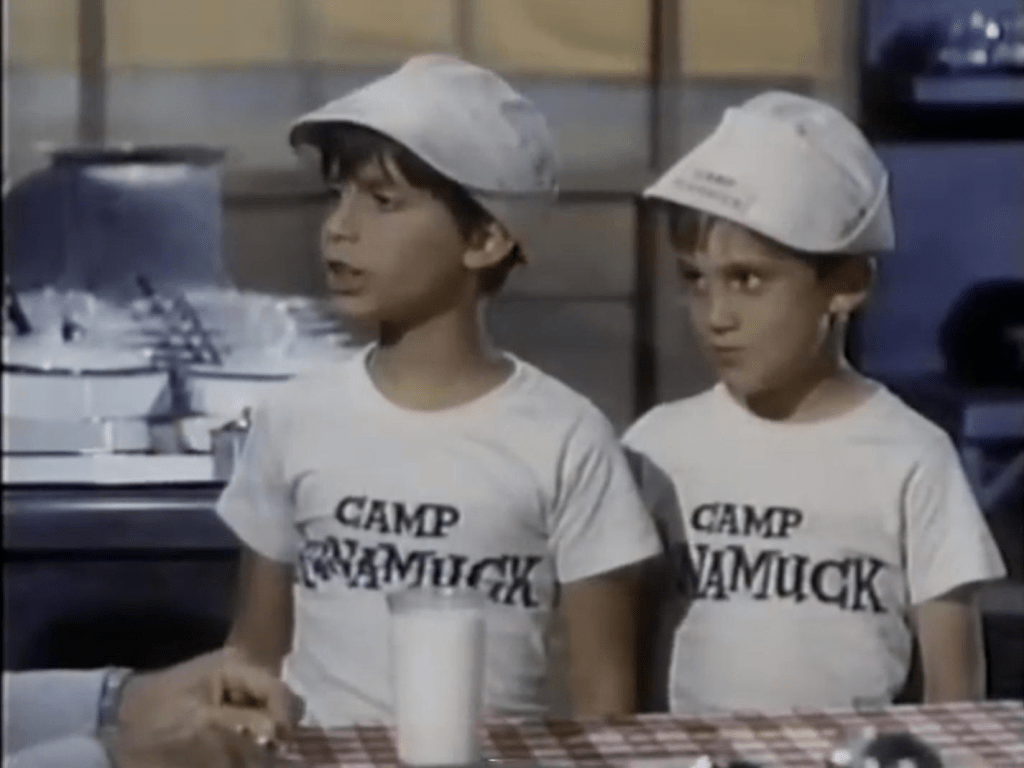
This month we are checking out a few sitcoms that are rarely remembered anymore. Today we are exploring the show Camp Runamuck. It debuted on NBC in 1965 and featured campers for 26 weeks before being cancelled.

📷imdb.com

Dave Madden was counselor Pruett; Commander Wivenhoe was played by Arch Johnson, and senior counselor Spiffy was played by David Ketchum. In the pilot, one of my favorites, Frank DeVol, played Doc Joslyn but illness forced him to hand over the part to Leonard Stone. Bobby Darrin sang the theme song.

If you are a fan of The Partridge Family, you will appreciate that this show was the introduction of actor Dave Madden, later Rueben who would manage the Partridges. Johnson began on television in the fifties, but this was his first cast role. Ketchum started his career a decade after Johnson and this was his second starring role after being in I’m Dickens, He’s Fenster in 1962. One camper who is featured in two of the 26 episodes is Maureen McCormick. This was the year she started her acting career, also appearing in Bewitched, The Farmer’s Daughter, and Honey West. Before becoming Marcia Brady, she would also show up in My Three Sons and I Dream of Jeannie.

Wivenhoe was an interesting camp leader. He didn’t like kids, didn’t like to part with his money, and didn’t appreciate the 6am morning wake-up song sung by the girls across the lake accompanied by a bugle. He did like playing golf and enjoying a quince for breakfast.

Across the lake was Camp Divine owned by Eulalia (Hermione Baddeley) who was helped by counselors Mahalia May (Alice Nunn) and Caprice Yeudleman (Nina Wayne).

The opening featured a peppy tune with fifes and you see the lake and hear the music before you see the camp counselors leading the campers (all in white; the poor laundry crew) marching down the road.

📷youtube.com

Most of the plots featured the counselors as opposed to the campers. Typical plots were the female campers being ordered to steal Wivenhoe’s bathtub so they could take a real bath and the boys getting it back. In another episode, the campers learn a civics lesson. They are given the task of electing a camp commander. However, the candidate who gets in becomes a dictator and tries to put everyone who had been in charge, namely the adults, in jail. This sounds vaguely familiar from the recent news.

In the credits I learned Cal Howard was in charge of visual gags. I never had seen that designation before in a sitcom. Howard, who was born in 1911 and passed away in 1993, had a long career as an actor and writer. He received 178 writing credits, mostly in animation. He worked for Walter Lanz and Walt Disney and wrote a few Bugs Bunny and Alvin and the Chipmunks episodes.

Just to add a sense of weirdness and whimsy to the series, two bears named Irving and Virginia would share their opinions of what was going on around the camp.

The series was up against The Wild Wild West and The Flintstones, pretty tough competition for the time. First of all it was on Friday nights when many viewers might be starting their weekend celebrations. The Flintstones was originally written for adults, but by 1965 families were watching the show together. The Wild Wild West was new, but immediately hit the top 30, and it was followed by another new CBS show, Hogan’s Heroes, and then Gomer Pyle, USMC, so most television fans were glued to that network Friday nights. Other new NBC shows included Get Smart, I Dream of Jeannie, and I Spy so competition was tough to retain a schedule spot. ABC didn’t have a lot of hits that year but they did debut three shows that I liked but all faded away within two seasons: Batman, Honey West, and Gidget.
Camp Runamuck might have gotten a second season if it didn’t have so much competition to deal with. If you loved camp as a kid, or hated camp as a kid, it might be worthwhile to watch a few shows and see what you think.

Father Knows Best: We All Grew Up in Springfield

Our last two shows are both set in Springfield, and we might do a bit of comparison and contrast next week. This week we are checking out the Anderson family on Father Knows Best.

📷wikimedia.com

The show debuted on NBC radio in 1949. For five years it was sponsored primarily by General Foods. None of the television cast members were part of the radio show, but you would recognize the voice of Jean Vander Pyl from The Flintstones.

A couple of months before the show ended on radio, it made its move to television. This was not all that unusual in the early days of television, but the show began on CBS for a year, then it was picked up by NBC for three years, and then it returned to CBS for two years.

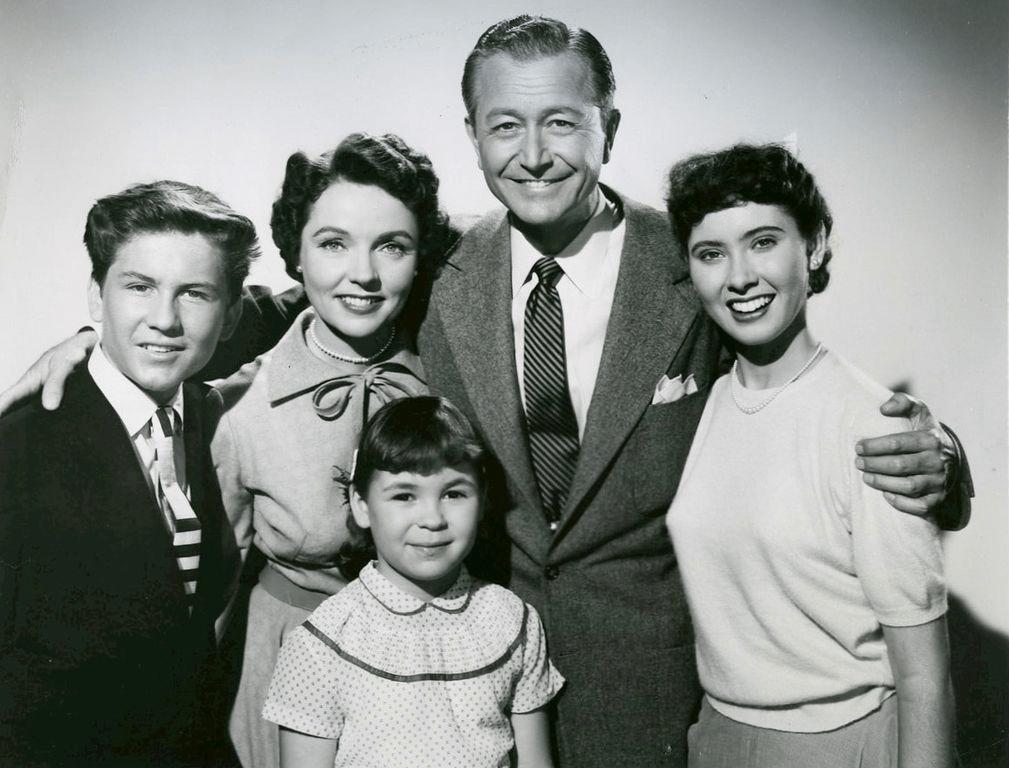
The pilot aired on an episode of The Ford Television Theatre and was called “Keep It in the Family.” While the show was picked up, only Robert Young was retained from the original cast. Joining him were Jane Wyatt as Margaret, Elinor Donahue as Betty, Bill Gray as Bud, and Lauren Chapin as Kathy.

📷evergreenarchives.com

I think we all have this stereotyped vision of the Anderson family in our memories. In fact, the US Department of the Treasury requested a 30-minute episode of the show that was never aired on television. It was distributed to schools, churches, and civic groups to promote the sale of savings bonds. However, when I watch the show today, I think it got some unfair criticism. There are several episodes when Margaret has just had it with cleaning and cooking for an ungrateful family. The kids are sometimes portrayed as thoughtless and self-absorbed. The three children often disappoint their parents and sometimes the parents are not good role models. I don’t say that in a negative way—it’s a realistic description of a lot of us as teenagers and parents at times.

📷imdb.com

Robert Young and his business partner Eugene B. Rodney developed the show with Screen Gems. Casting was not an easy task. One of the things they were trying to avoid was stereotyping. They wanted Bud to be absorbed but not flip. Young and Rodney mentioned that it was not easy to do the gags in the right tone, but they knew they had their Bud in Gray in a scene where Jim is worried about Betty getting too serious. Rodney relayed the following story: “As an example”, said Mr. Rodney, “when Jim, worried about Betty’s going steady, reads aloud a newspaper story about a girl eloping and taking $200 with which her aunt was to buy a TV set, our Bud had to be able to look up and ask seriously, ‘What size screen, dad?’ Billy Gray was the only actor that could do it the way we wanted.”

Kathy was a bit harder to cast for; seventy-eight girls auditioned for the role. Chapin had no acting experience before the show, but she seemed more like a regular kid. They wanted Betty to be attractive but not sophisticated. Donahue talked about her auditions in a Television Academy interview. She auditioned once and had to hop out of the tub and run to the audition with her hair a bit of a mess, and they told her she was too young for the part. Her agent got her hair cut, dressed her in a suit with heels and got another tryout for her, but they said she was too old. Her agent kept pestering them to give her one more shot and they did not want to, but finally Rodney agreed if her agent would quit calling him, so they brought her in again. She was all nerves and very anxious and Young tried to calm her down and she auditioned again and felt that she had embarrassed herself and that she had made a terrible impression. However, they called a month later to say that she had been hired.

📷wikimediacommons.com

Jane Wyatt was offered the role of Margaret and rejected it. She wanted to do a show in New York, but when they sent her the script and she read it, she loved it and agreed to the part.

The show began on Sunday nights. It seems a bit odd today that this wholesome family show on Sunday nights was sponsored by Lorillard’s Kent cigarettes. The show became popular with America, but the ratings were not high enough for Kent Cigarettes, and they decided not to extend the 26-episode contract. Fans sent letters, and television columnists got in on the action, encouraging fans to write the president of the CBS network. Kent canceled and Scott Paper then picked it up. Scott moved the show to NBC. By the second season, more than 19 million households watched the show on Wednesday evenings. In 1958 NBC decided to cancel the show, but CBS took it up again for two more years. In 1960 there was a writers’ strike and it lasted long enough that Robert Young decided he was ready to move on in his career. Jane Wyatt was also ready to retire and enjoy her family. The sad thing was that they were never able to say goodbye to each other or wind up the show.

📷imdb.com

Good scripts were critical for both Rodney and Young. They wanted character motivation. Roswell Rogers and Paul West, the primary writers for the show, took a lot of their material from their own lives. The two writers had seven children between them and included moral lessons built in.

The two major directors were Peter Tewksbury and William D. Russell. As co-owner of the show, Rodney served as producer. He knew everything about the characters. Jane Wyatt related an incident when she asked Rodney what she could do to improve her characterization of Margaret. Rodney told her to love her children as much as her husband. Wyatt realized at that moment that she had been concentrating on the relationship between Jim and Margaret more than her motherly feelings.

📷pinterest.com

If you are a pop culture fan, you will recognize the house as the home of Mr. Wilson on Dennis the Menace and Major Nelson on I Dream of Jeannie. If you pay close attention, sometimes you can see the house in episodes of Bewitched, Hazel, The Monkees, and The Partridge Family. Gracie Allen would have approved of the show’s interior. She liked to do the activity that she was supposed to be doing on the show, and the Andersons had working appliances in their kitchen. While the bedrooms were interchangeable so they could film any of the characters’ rooms, the kitchen had red wallpaper, white cabinets, and blue countertops. Every morning, coffee and sweet rolls were served, and lunches were kept in the refrigerator.

The theme song was titled “Waiting.” It had lyrics but they were never used on the show. It was written by Don A. Ferris and Irving Friedman.

The show was nominated for an Emmy 20 times with 6 wins: Robert Young won for Best Actor in 1957 and 1958, Jane Wyatt won for Best Actress in 1958, 1959 and 1960, and the show received Best Direction for A Single Episode in 1959.

📷closerweekly.com

The Andersons had a special place in the heart of many kids growing up during the fifties and in 1977, two reunion movies were made: Father Knows Best Reunion in May and Father Knows Best: Home for Christmas in December. We learn that Betty is a widow with two daughters, Bud is married with one son, and Kathy is recently engaged to a doctor.

Despite the abrupt ending of the show, the cast kept in touch. Donahue said that she really loved Robert Young and considered him her father figure. She, Chapin, and Gray all were in families without a father, although Gray saw his occasionally, so Robert did become a father for them. She said he never had a cross word for any of them and if they were behaving unprofessionally or causing trouble, he would take off his glasses and look down and that was their cue to do better. Perhaps that is why the show rings true for so many people. On the set, their “father” truly did know best.

The Munsters: The All-American Family?

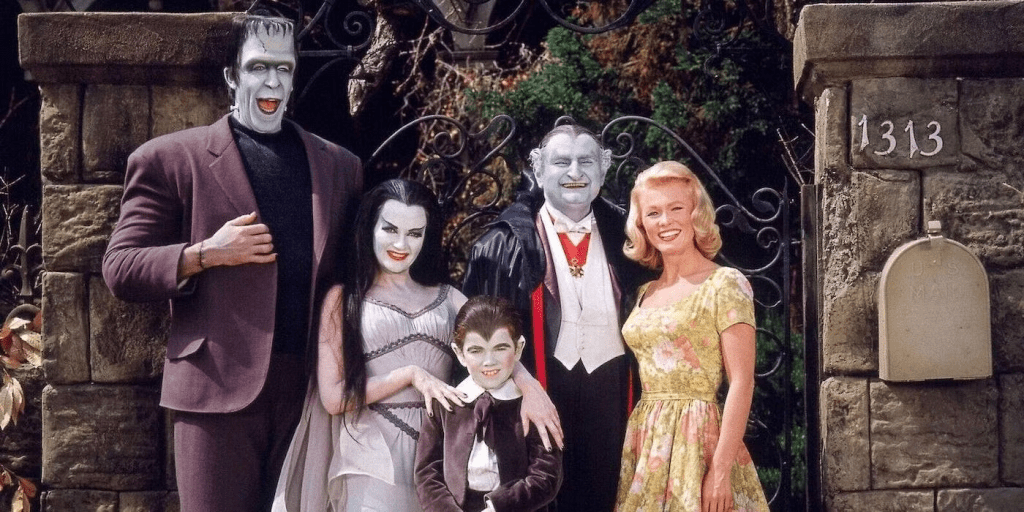
The Munsters Photo: collider.com

This month’s blog “theme is “Kinda Creepy.” These are not shows that will give you nightmares or have you sleeping with the nightlight on. But they did have a touch of ghoul or terror. First up is one of our All-American families, The Munsters.

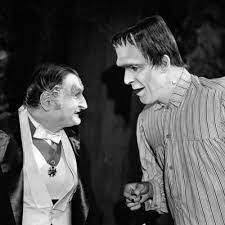
The creators of Leave It to Beaver, developed this series to be a satire of suburban life. The opening credit shows Lily handing her family their lunches as they run out the door just like Donna Reed did in The Donna Reed Show in the fifties. The Munsters are a perfectly normal family except for a few eccentric and trivial things like Herman (Fred Gwynne) being a Frankenstein, Lily (Yvonne De Carlo) being a vampire, Grandpa (Al Lewis) who can turn into a bat, and werewolf son Eddie (Butch Patrick). In real life, Lewis was a year younger than De Carlo who played his daughter and Gwynne was four years younger than De Carlo.

Photo: ebay.com

Living with the family is Lily’s niece Marilyn (Beverly Owen/Pat Priest), who seems a little abnormal to the family but looks like any high school girl of the time, except a little bit prettier. Owen was engaged when she got the part and did not think the show would be picked up. When it became popular, the cast convinced the network to release her from her contract, and Priest, who looked very similar, took over. Gwynne and Lewis had previously been part of the cast of Car 54, Where Are You? and were good friends. (To learn more about their friendship and their individual careers, see my blog from July 10, 2017.)

This series aired on CBS, and ABC featured The Addams Family whom we’ll meet next week. Both shows debuted in 1965 and were off the air after two seasons.

There were a few recurring characters including Paul Lynde as Dr. Edward Dudley (Dom DeLuise also played Dr. Dudley in one episode), Herman’s boss Mr. Gateman (John Carradine), and Clyde (Chet Stratton), a colleague of Herman’s.

Paul Lynde Photo: pinterest.com

The family lives at 1313 Mockingbird Lane. Herman works for Gateman, Goodbury and Graves, a funeral parlor, as a grave digger. In an interview with Daily Variety, Al Lewis, explained that with the unusual family, “they could do a lot of satirical pointed things on society that you couldn’t do on an ordinary show.”

The show actually had four pilots which I don’t think I have ever seen before. The first one was filmed in 1964 with Gwynne, Lewis, and Owen. Joan Marshall was Phoebe, Herman’s wife and Nate Derman was Eddie. For the second pilot, De Carlo replaced Marshall and changed her name to Lily. In the third edition, Patrick was brought on board to replace Derman. The cast stayed intact for the fourth pilot, but Eddie’s character was changed a bit. He was a bit of a brat and they toned it down.

The family had a pet dragon named Spot that lived under the stairs. When the staircase opened up, you could see the fire he was breathing and sometimes you would see his tail only.

Photo: hagerty.com

Makeup for the show was credited to Bud Westmore who had worked for Universal during their monster movie phase. However, the actual work was done by several people. Perc Westmore worked with Grandpa. Abe Haberman applied Lily’s new face, while Michael Westmore worked with Patrick and Priest. Bill Mumy was the original choice for Eddie, but his parents said “No” when they learned about how much makeup would be used for each episode.

Patrick was asked about the cast and how they got along in an interview with Fox News. He said it was a good relationship. If he had to pick another actor whom he bonded with more than another it would probably be Lewis. He discussed the amazing comedic timing that Gwynne and Lewis shared. He said that the person he enjoyed working with the most was his makeup man, Westmore. He said he was the first person he saw every morning. He also mentioned Westmore was a very handsome guy who owned a Jaguar and was a bachelor, so he looked up to him as a role model also.

Photo: vintageeveryday.com

Karl Silvera did Herman’s makeup. Gwynne had the toughest time of all the characters. He had to spend two hours in the makeup chair first thing in the morning. He wore forty pounds of foam rubber padding and drank copious amounts of lemonade. Despite that, he lost a lot of weight doing the show. In one month, he lost ten pounds. They also put a piece of foam latex on his head to flatten the top. His shoes were asphalt paver’s boots with four-inch soles. The producers rented a compressed air tank and would poke the nozzle inside his collar to blow cool air on him.

The show aired on Thursday nights at 7:30. Many shows began filming in color in the mid-sixties, but the studio did not want to pay the extra $10,000 per episode, so it was shot in black and white. For its debut year, it was number 18, tied with Gilligan’s Island, but it took a drastic drop for season two and landed at number 61. The show competed with The Flintstones and Daniel Boone in year one In year two, Batman debuted in color and The Munsters’ viewers switched networks in droves. The show was canceled with 70 episodes for syndication. From the comments that I read, I’m not sure Lewis and Gwynne would have continued another season anyway. They wanted a different type of humor and, of course, Gwynne had to endure so much with his costume.

If you were looking at the merchandising that accompanied the show, you would never guess it was only on for two seasons. Between 1965-68, 16 Gold Key Comics were produced. The show rolled out Colorforms, car model kits, both a Herman Munster doll and a puppet, and View Masters. You could also purchase several different action figure sets, a board game, and a lunch box, among other items.

Although the show, not surprisingly, never received an Emmy nomination, it was up for Best Television Series for a Golden Globe in 1965 which did surprise me.

The theme song was an instrumental, simply titled “The Munsters’ Theme.” It was composed by Jack Marshall. It was nominated for a Grammy in 1965. There are lyrics for the song, written by Bob Mosher, but they were never used on the air.

For a show that was only on the air for two seasons, it has had a lot of staying power. I think that it was so different and the fact that The Addams Family was also on two seasons and very similar just provided it with that perfect fan base. I do remember watching the show and buying The Munsters coloring books and paper dolls, but I don’t remember it being a “must see” for me. Of course, I was only five when it was canceled, so I primarily saw it in reruns. Sadly, I would also choose Batman over The Munsters, so I understand why the viewers drifted. However, it is never a waste of time to watch Fred Gwynne and Al Lewis in action. If you never watched the show or want to binge watch it, seventy episodes is an easy one to get through.

Ben Casey: The Bad Boy of Medicine

Medical series have been a staple since television started. This month we are checking out a few of the favorites in a blog series: “Examining Our Favorite Medical Shows.” First up is a show that was on in the sixties: Ben Casey.

Jaffe and Edwards Photo: ebay.com

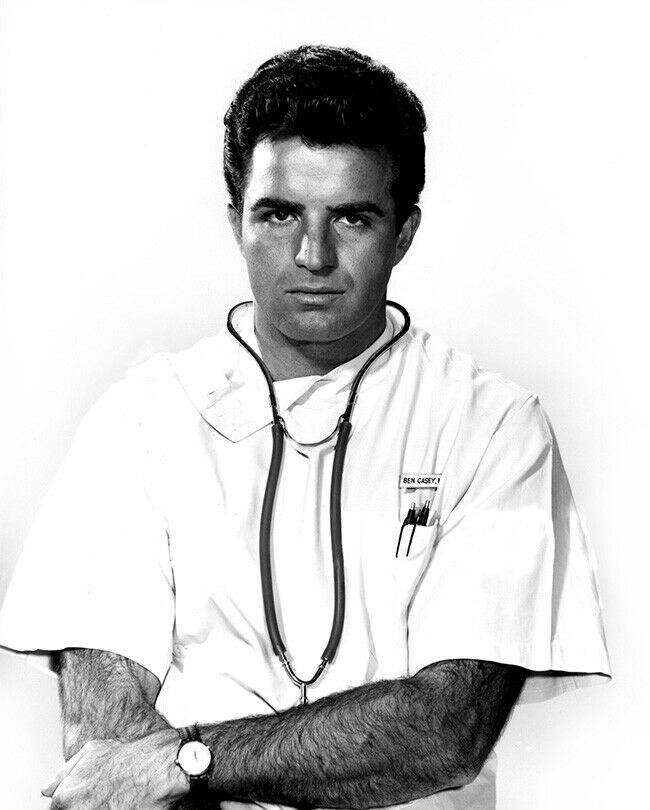
Ben Casey was on the air from 1961-66 on ABC. Created by James E. Moser, the character of Ben Casey was based on Dr. Allan Max Warner who was a neurosurgeon. Warner worked closely with the actors to show them how to handle instruments and patients. It was not a cheap show to produce. More than $50,000 of medical equipment was purchased for the show and each 60-minute episode had a budget of $115,000. Warner later changed to psychiatry because he said his association with the show prevented him from becoming board-certified. Dr. Joseph Ransohoff, another neurosurgeon, became the medical consultant.

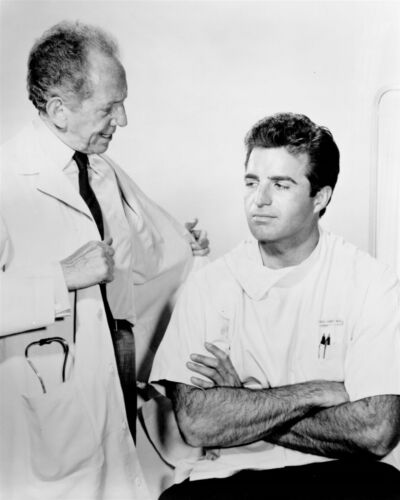
The series followed Ben Casey (Vince Edwards), an idealistic neurosurgeon at County General. Dr. David Zorba is his mentor (Sam Jaffe). In the final season, Jaffe left and the new chief of neurosurgery was Dr. Daniel Niles Freeland (Franchot Tone). Rounding out the cast were Dr. Ted Hoffman (Harry Landers), Dr. Maggie Graham (Bettye Ackerman), orderly Nick Kanavaras (Nick Dennis), and Nurse Willis (Jeanne Bates). The show had a gritty edge to it and featured the life of doctors working in a city hospital and the tough physical and ethical situations they had to deal with.

Several sources said that Cliff Robertson and Jack Lord turned down the role of Ben Casey. Also, Russell Johnson said he auditioned for the role, but was rejected and his next audition was for the role of the Professor on Gilligan’s Island. However, I read several other sources that mentioned that Bing Crosby discovered Edwards and planned a television show to feature his find. Bettye Ackerman’s character was cast as an anesthesiologist who was supposed to be Casey’s love interest but they never developed any chemistry. In real life, Ackerman was married to Jaffe.

Photo: nostalgiacentral.com

Filmed at Desilu Studios, the series was produced by Bing Crosby Productions. The show had 33 directors including Sydney Pollack; Vince Edwards directed seven of the episodes. However, its writing staff was even bigger with about 80 different people penning scripts. I never understood how that worked so well. As a writer, I would want to get to know the characters I was writing for and then continue to learn about them, but during the sixties, there were a lot of people who only contributed one or two scripts to any given series.

The theme music was written by David Raksin and pianist Valjean made it a top-40 hit.

The show was on Monday nights for its first three seasons. Season four, it moved to Wednesdays and returned to Mondays for the final two seasons. The first season it ranked in the top 20 and moved into the top 10 for its second year. Once the network moved the show to Wednesdays where it had to compete with The Beverly Hillbillies and The Dick Van Dyke Show, it fell out of the top thirty and never returned to its former popularity. During the last season, several changes were made. Casey fell in love with Jane Hancock, a woman who came out of a 13-year-long coma. The episodes also began to continue from one to another instead of being stand-alone stories, encouraging viewers to find out what happens the next week.

Photo: pinterest.com

During the run of the show, four novels were written based on the series (1962-3), as well as a daily (1962-1966) and Sunday (1964-1966) newspaper comic strip by Jerry Capp and ten Dell Comic books (1962-64). There was even a board game created called Ben Casey MD. And even more surprising was a doll called Dr. Ben Casey’s Patient. Surely children were not exposed to the show.

Photo: pinterest.com

Another medical show, Dr. Kildare, aired the same year as Ben Casey. The shows were often confused, but they were really quite different. Dr. Kildare was an intern who respected his mentors and the doctors he served under. He was the handsome guy next door, friendly and always striving to help his patients. Casey was brash and had already served his learning time, so he more often bucked the system and was not as respectful to the doctors working with him. He was handsome but in a more wild, bad boy, appearance. However, both shows tackled some very interesting and controversial subjects from the medical field.

Ben Casey might have gone off the air, but he did not disappear. The show has been parodied on a variety of shows including The Flintstones. “Ben Casey” was used by American troops in Vietnam War as slang for a medic. In 1988, a made-for-tv-movie The Return of Ben Casey brought Edwards back to the small screen. It was a syndicated show, and aired with the hope that it would be a pilot for a new series, but none of the networks picked it up.

Photo: collectors.com

The cast was not holding hands and singing Kumbaya, but it did function amidst a lot of dysfunction. Director Mark Rydell discussed Edwards’ gambling problem which became the show’s gambling problem. Landers who played Dr. Hoffman said Edwards was constantly asking the cast and crew for money to take to the race track, and he would be gone for hours at a time. He often came in with $20-30 thousand dollars in his pocket, demanding that he leave filming by 11; other stars had to stand in for him to tape the rest of the show. Despite his unprofessional behavior, several stars liked Edwards. Jaffe, who had many conflicts with Edwards, was not one of them which is why he eventually left the show. Director Jerry Lewis and guest star Sammy Davis Jr. also had problems with Edwards. Landers also mentioned that when Tone took over Jaffe’s role, he was constantly drunk on the set. When Landers directed the show, he kept Tone sitting down so viewers would not see that he was swaying.

Considering all the issues the show had, the number of writers contributing scripts, the unprofessional behavior of several of the actors, and the movement of the show from Monday to Wednesday where it had stiff competition, the show actually did well and was popular with viewers for five years. It set the tone for many of the shows that would follow including Marcus Welby, Medical Center, and ER. Next week we will learn more about Dr. Kildare.

Howard Morris: The Hamlet of Animation

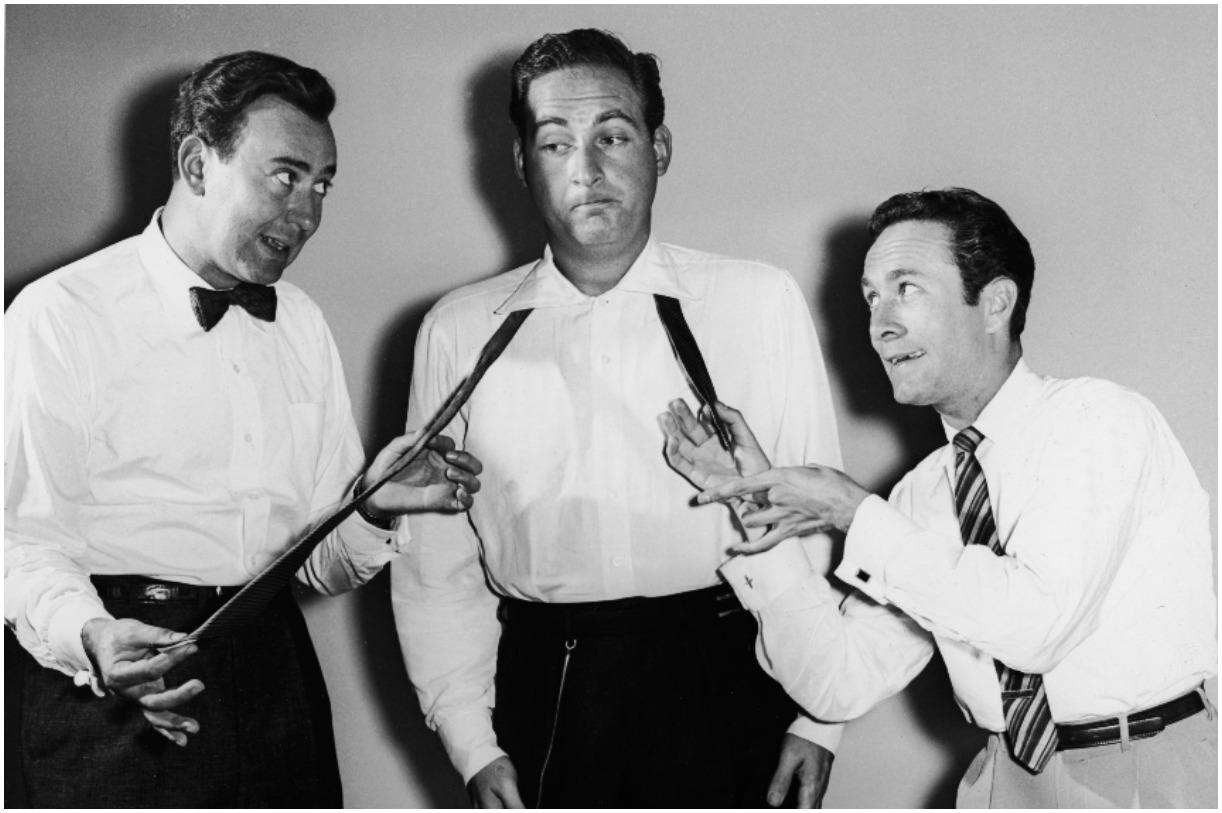
After learning about Your Show of Shows and the stars of the show, I turned my attention to the cast members. Carl Reiner and Howard Morris were the two actors who were most involved with the skits. Reiner had a long and successful career, and we’ll look at his life in more detail later, but today I would like to concentrate on Howard Morris. 

Howard Morris Theatre Credits and Profile
Photo: abouttheartist.com

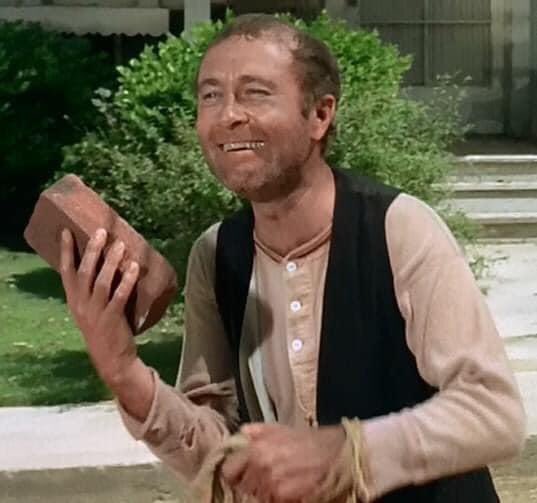
Most people recognize Morris as Ernest T Bass from The Andy Griffith Show. While I have a great appreciation for the series and the well-written scripts and delightful characters of Mayberry, I was never a big fan of Ernest T or the Darling family. They seemed to be a bit too over the top for me and diminished the reality of Mayberry.

J. Mark Powell on Twitter: "Howard Morris, better known as Mayberry's  rock-throwing Ernest T. Bass on @AndyGriffithShw, was born 101 years ago  today.… https://t.co/AwvE2WMBvR"
Ernest T Bass Photo: twitter.com

So, when I began to learn more about Morris who first became known to television fans for his work on Your Show of Shows, I was amazed at how versatile an actor he was and how much he accomplished during his career. 

Howard Morris was born in The Bronx in 1919. He later received a scholarship to attend New York University as a drama major, planning to work as a classically trained Shakespeare actor. During WWII he became first sergeant in the US Army Special Services unit. The group was based in Honolulu and entertained troops throughout the Pacific. Maurice Evans (who played Samantha’s father on Bewitched among other roles); Carl Reiner (whom we all know and love); and Werner Klemperer (Col Klink on Hogan’s Heroes) were all part of this unit.

In 1945 he married Mary Helen McGowan. While they were married until 1958; he had four other marriages during his life.

When Morris got the offer to appear in Sid Caesar’s new show, he was able to work with Reiner again. This was his first television or movie appearance, but it would not be his last.

Howard Morris - Net Worth, Bio, Wife, Children, Death, Biography - Famous  People Today
With Reiner and Caeser Photo: famouspeopletoday.com

One of the sketches from the show was a take on This is Your Life, the Ralph Edwards show. Morris said it was his favorite skit from the series. David Margolick wrote in the New Yorker in 2014 that “Though the competition is stiff, many feel that this sketch is the funniest that Your Show of Shows ever did . . . that night nearly sixty years ago, the show produced what is probably the longest and loudest burst of laughter—genuine laughter, neither piped in nor prompted—in the history of television.”

Morris moved to Hollywood in 1961. In the 1960s he began his multi-talented career of television actor, movie actor, director, and animation voice-over star. Unbelievably, he would rely on the quartet of skills the rest of his professional life, excelling in all of them.

Howard Morris (Ernest T. Bass) on The Lucy Show - Sitcoms Online Photo  Galleries
On The Lucy Show Photo: sitcomsonline.com

As a television actor, he appeared in a variety of series including The Dick Van Dyke Show, The Twilight Zone, The Lucy Show, The Andy Griffith Show, Love American Style, The Bob Newhart Show, Fantasy Island, Trapper John MD, The Love Boat, and Murder She Wrote.

Although he is known for his role of Ernest T Bass on The Andy Griffith Show, he was only made five appearances as that character on the show. Aaron Rubens sent him the script that introduced Ernest to Morris to look over and “fix.” Morris fell in love with the character. He said the show had a terrific cast, and they were wonderful people to work with. He said fans loved Ernest because he did whatever he felt like doing including spontaneously bad behavior choices that everyone wanted to make.

As a movie star, he appeared in several films throughout the sixties, seventies, and eighties. Some of the highlights were The Nutty Professor; With Six You Get Eggroll; High Anxiety; The History of the World, Part I; and Splash.

On The Many Faces (and Voices) of Howard Morris – (Travalanche)
Photo: travalanche.com

Not content with just acting in films, Morris became interested in directing early in his career. He began his directing career in the sixties and continued through the eighties. His first directing job was on The Bill Dana Show. He was very busy in the sixties and seventies, directing episodes of Gomer Pyle, USMC; The Dick Van Dyke Show; The Andy Griffith Show; The Patty Duke Show; the pilot of Get Smart; Bewitched; Love American Style; Hogan’s Heroes, and The Love Boat among others. He also directed for the big screen. You’ll see directing credits in his name for Who’s Minding the Mint?, With Six You Get Eggroll, and Don’t Drink the Water.

During an interview with the television academy, he said he loved directing Hogan’s Heroes. Robert Clary became one of his best friends for life. He also loved Klemperer. He said working on With Six You Get Eggroll was a wonderful experience. He said Doris Day just had a natural talent, and Brian Keith was a great guy. He felt being an actor allowed him to be a better director. He understood what the process was for the cast and was able to help them. He knew he could not teach them to act.

Perhaps the biggest surprise for a classically trained Shakespeare actor is that he had the most success in the animation world. I could not begin to list all his credits here, or you would still be reading next week when the new blog comes out. Beginning with Krazy Kat in 1962, he would go on to provide voices for more than fifty series. You will hear his voice in The Flintstones, The Jetsons, Mr. Magoo, The Magilla Gorilla Show, The Atom Ant Show, Duck Tales, a variety of Archie series, and Garfield and Friends.

Howard Morris voiced more than 100 characters on The Flintstones
Photo: metv.com

In a Television Academy interview, he admitted that he accepted voice-over work because he needed the money. It also appealed to him because you did not have to worry about wardrobe or make-up. He said the actors sat in the room together recording the show at the same time which allowed them to relate to each other better than today when everyone records by himself.

In 1962, he married Dolores Wylie and they were together until 1977. I read several sources that listed him being married five times but could not find confirmation of the other marriages, although one cite mentioned two other spouses, Judith and Kathleen and noted that he was married to one of his spouses twice. They all ended in divorce.

In 2005 Morris died from congestive heart failure. Carl Reiner was one of the people who gave a eulogy at his funeral.

The Andy Griffith Show" My Fair Ernest T. Bass (TV Episode 1964) - IMDb
Photo: imdb.com

Howard Morris had a very long and prolific career. About the only genre he did not act in was Shakespearean drama, which is what he trained for. I was curious about whether he enjoyed his comedic career, or if he was disappointed that he did not work more in drama.

During his Television Academy interview, when asked what advice he would give someone thinking about entering the acting or directing profession, he replied “to avoid it and shun every opportunity because it was too hard.” He certainly deserves to be remembered for more than being Ernest T Bass even though he is a much-loved character. Morris said he would like to be remembered as a guy that was able to reveal certain things of humor and reality to the public and for his great gratitude for the fans who have always been there.” Well said. And, well done.

Allan Melvin: What a Character!

We are winding down our blog series, “What A Character.” If you watched television between 1959 and 1989, you will definitely recognize this week’s character actor: Allan Melvin.

Category:Characters voiced and/or played by Allan Melvin | Legends of the  Multi Universe Wiki | Fandom
Photo: wikipedia.com

Melvin was born in 1923 in Kansas City, Missouri, but he always said he grew up in New York City where his parents moved to not long after his birth. After high school, he attended Columbia University, studying journalism before joining the US Navy in WWII.

He married Amalia Sestero in 1944 and they were together for his entire life and had two children. Amalia was also an actress and Melvin met her when he attended an actor’s group that she helped start.

All in the Family Star Allan Melvin Dies at 84 | PEOPLE.com
Photo: people.com

After being discharged from the Navy, Allan worked in the sound effects department of NBC Radio. He also had a nightclub act. He was on Arthur Godfrey’s Talent Scouts radio show which he won. His first television role was that of Corporal Steve Henshaw on The Phil Silvers Show. Melvin’s wife remembered that time fondly: “I think the camaraderie of all those guys made it such a pleasant way to work. They were so relaxed.”

After the show ended, Melvin was often typecast as a military character or the abrasive, but happy-go-lucky guy. Even when he was not a recurring character, he often had multiple appearances on a series.

Allan and Amalia moved their family to California, hoping for more television roles in the early sixties.

Throughout the sixties, Melvin was kept busy with television work, appearing on The Danny Thomas Show, The Bill Dana Show, Perry Mason, Lost in Space, Love American Style, and The Andy Griffith Show. He had two recurring roles: Art Miller on The Joey Bishop Show and Sol Pomerantz on the Dick Van Dyke Show.

Allan Melvin Bio
Photo: imayberry.com

He was often cast as the tough guy on The Andy Griffith Show, with eight appearances in all. Melvin discussed his time on the show and said “I always enjoyed doing the show. We had a lot of fun doing it, and they were a great bunch.”

From 1965-1969 you could find him on Gomer Pyle USMC as Sergeant Charlie Hacker.

As early as 1963, Melvin was doing voice work on The Flintstones.  His animation work would continue throughout his career and after about 1974, cartoon voices were his only gigs. One of his best-known roles is Magilla Gorilla.

Magilla Gorilla. | Cartoon photo, Classic cartoon characters, Vintage  cartoon

I’m not sure why, but Melvin only appeared in one movie, although it was a good one.  He was the desk sergeant at the end of the Doris Day-Brian Keith film, With Six You Get Eggroll. A couple of Andy Griffith writers wrote the screenplay, and Howard Morris, known as Ernest T Bass, directed the film.

In the 1970s he was cast in his two most memorable roles.

The Brady Bunch - Alice Nelson (Ann B. Davis) and her boyfriend Sam "The  Butcher" Franklin (Allan Melvin) pose … | The brady bunch, Old tv shows,  Classic television
Photo: pinterest.com

He was Sam Franklin, Alice’s boyfriend on The Brady Bunch. Sam owned a butcher shop and was an avid bowler. In a later movie, we learned that he finally made an honest woman of Alice. Ann B Davis said “Allan Melvin, neat guy, very tall. He was just a nice, open, big guy, and it was fun to play with him.”

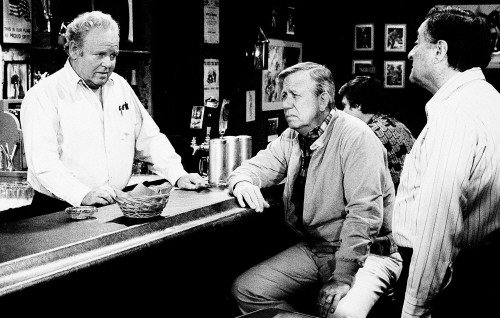
He was also neighbor and friend of Archie Bunker as Barney Hefner on All in the Family and Archie Bunker’s Place. Allan said it was a good experience and everyone’s input was welcome. Jason Wingreen, who played Harry the bartender on the show talked about Melvin in anther wordpress blog, classictvhistory (https://classictvhistory.wordpress.com/tag/allan-melvin/). When asked if he was the same in person as he was in character, Wingreen said, “He was more intelligent than that. Allan wrote little poems, little couplets of sorts, and they were very funny. Like limericks, but not quite limericks. Some of them were very intelligent and very, very funny. Never published. Allan and I became very close friends.”

Actor who summered in TC dies at 84 | Local News | record-eagle.com
With Carroll O’Connor on Archie’s Place Photo: record-eagle.coom

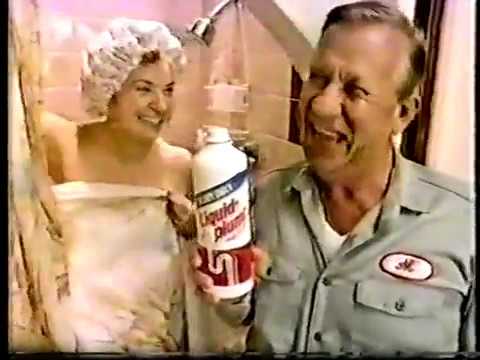
Melvin also did a lot of commercial work.  You could see him pitching products from Sugar Frosted Flakes to Remington razors to Liquid Plumr. He was the plumber for Liquid Plumr for fifteen years.

Liquid-Plumr ad w/Allan Melvin, 1981 - YouTube

In 2008, Melvin died from cancer.

Melvin certainly had a career to be proud of. One thing I never learned was when he decided that acting was the career he wanted. He became one of the most beloved and most-recognized character actors in the sixties and seventies–definitely a character worth celebrating.

Verna Felton Saves the Day

We are winding up our blogs for May, and I have a confession to make. For some reason, I failed to notice that there were five Mondays in May, so when I published my blog last week, I realized that I was short one blog. While scrambling to find a topic that still fit in with the other shows we learned about this month, it occurred to me that this week’s actress appeared on The Ann Sothern Show and I Love Lucy. She was also part of the cast of December Bride and Pete and Gladys. So, today we will learn about the woman behind Hilda Crocker: Verna Felton.

Photo: imdb.com

Verna Felton was born in Salinas, California in 1890. Verna entered show business at the young age of nine. Her father died just before her ninth birthday. He was a doctor, but he kept no records of payments due, and there was little cash in his account. Verna had performed at a local benefit for flood victims, where she caught the attention of a road show manager. He offered Verna a job, and after the death of her father, her mother accepted the job on her behalf. Verna grew up involved in theater community.

Photo: agecalculator.com

She was called “Little Verna Felton, the Child Wonder. By age 13 she was performing with the Allen Stock Company that toured the western United States and British Columbia in Canada. By age 20, she had a play written specifically for her by Herbert Bashford called “The Defiance of Doris.”

Photo: wix.com

She continued building her stage resume, acting in a variety of plays.

In 1923 Verna married Lee Millar who conducted the band in the acting troop. He was also a movie actor in the thirties and forties. Verna and Lee were married until his death in 1941. Their son Lee Carson Millar was born in 1924 and would also go on to become an actor who appeared on many of the most popular shows in the fifties and sixties.

From about 1930-1950, Verna could be heard on the radio. Her voice could be detected on a variety of shows including Red Skelton, Hattie Hirsch on Point Sublime, Dennis Day’s mother on his show, and a regular on both The Abbott and Costello Show and The Great Gildersleeve.

Photo: wiki.com

After transitioning from stage to radio, it was no surprise that Verna’s career in the forties and early fifties was spent on the big screen.

Television was a natural progression, and, in 1951, Verna had her first tv roles: as a nurse on Amos and Andy and as Mrs. Day on the Enzio Pinza Show. She continued her radio role as Dennis Day’s mother on his television show in 1952.

With Lucille Ball

During the early fifties, you could catch her on many of the most popular shows: The Adventures of Ozzie and Harriet, I Love Lucy, Burns and Allen, The Bob Hope Show, The Halls of Ivy, I Married Joan, and Where’s Raymond?

Verna would become best known as Hilda Crocker. She played that character on December Bride from 1954-1959 and again on Pete and Gladys during the 1960-61 season, a total of 182 episodes. She was nominated for an Emmy for Best Supporting Actress in 1958 and 1959. In both years, she lost to Ann B. Davis for Love That Bob.

With Spring Byington on December Bride
Photo: pinterest.com

Between the two series, she made appearances on The Many Loves of Dobie Gillis, The Real McCoys, The Ann Sothern Show, Miami Undercover, and The Jack Benny Show. She also accepted roles on a handful of shows after her life as Hilda, including My Three Sons, Wagon Train, and Dennis the Menace.

Felton had voiced several animation characters for Disney including the fairy godmother in Cinderella, the Queen of Hearts in Alice in Wonderland, Aunt Sarah in Lady and the Tramp, and Winifred the Elephant in The Jungle Book.

After voicing these fun characters, it was only natural for her to find a television animation character to play, and she found the perfect one in Pearl Slaghoople, Wilma’s mother on The Flintstones. Pearl looked a lot like Wilma but not as young or slim. She originally had red hair like her daughter which later became gray. She did not care for Fred and didn’t think he was good enough for Wilma and often nagged him to do better.

In 1966 Verna passed away from a stroke. Walt Disney would die a few hours later. About 25% of the movies Verna made were for Walt. Jungle Book, the last movie she made for him would debut a year after the two stars died.

Fred has a hard time loving his mother-in-law. Hence the phrase he said  repeatedly 'I love my mother-… | Flintstones, Classic cartoon characters,  Flintstone cartoon

Although Verna’s television career only spanned fourteen years, she appeared in many of the era’s best shows.  She did Broadway, radio, cinema, and animation as well and had a very full and successful career. It was fun getting to know Verna Felton a bit better.

Did I Tell You The One About The Farmer’s Daughter: The Chemistry of Inger Stevens and William Windom

Photo: abebooks.coom

This blog takes a look at a show that is beginning to fade from viewers’ memories. The Farmer’s Daughter debuted in the fall of 1963, starring Inger Stevens as Katy Holstrum and William Windom as Glen Morley.

The show was based on the 1947 movie of the same name starring Loretta Young and Joseph Cotten in the lead roles.

Katy was a student who needed to earn some money and became a governess/housekeeper for Morley’s boys, Steve (Mickey Sholdar), age 14 and Danny (Rory O’Brien), age 8. Morley is a congressman. While Morley is sophisticated and refined, Katy is a no-nonsense type of girl from Minnesota. Morley’s mother Agatha (Cathleen Nesbitt) also lives with the family. The cast is rounded out by Philip Coolidge as Cooper, the family’s butler. In the early seasons, it is obvious that Glen and Katy are falling for each other, and many of the plots are one of them being jealous of the other. In the movie, Katy runs for Congress, but she is not as involved in politics in the television show.

Photo: worthpoint.com

Screen Gems produced the show which aired on ABC. The show was sponsored by Lark Cigarettes and Clairol. The two stars often promoted the products at the end of the episode. In season one, the show was on Friday nights against Burke’s Law on CBS and The Fight of the Week on NBC. Season two found the show opposite The Flintstones and The Addams Family. The show moved to Tuesday nights for season three against A Man Called Shenandoah and Ben Casey. The show was never in the top 25 but, it had respectable ratings. The critics liked the show, and it was nominated for an Emmy for outstanding comedy in 1964 but lost to Mary Tyler Moore for The Dick Van Dyke Show. It was also nominated for Emmys for writing, directing, and best actress. Stevens won the Golden Globe for best female tv star. TV Guide conducted a popularity poll, and she won the female performer of the year with David Janssen of The Fugitive, winning male performer.

At the end of season two, Katy and Glen become engaged. The third season brought full-color episodes. Early in the third season, they marry. After that ratings fell significantly, and the show was not renewed for a fourth season. In the finale, Katy adopts Danny and Steve. The chemistry between Glen and Katie and waiting to see if they got together or not kept viewers tuning in.  Once they married, viewers were not as invested.

Photo: en.wikipedia.org

In 1957, Inger was signed to a seven-picture contract with Paramount. In 1959, she survived after swallowing an overdose of pills and she seemed to recover with a renewed zeal to work on her career and life situation.

Stevens became a favorite actress of many viewers after The Farmer’s Daughter. The cast and crew liked her very much and she was easy to work with. She never got upset when filming ran long or had complications. She and Windom often played practical jokes on each other to bring fun to the workplace. She recalled eating an onion sandwich one day right before they filmed a kissing scene.

After the show was cancelled, she was cast in the movie, A Guide for the Married Man in1967. She then starred in films with Jimmy Stewart, Dean Martin, and Clint Eastwood. She appeared in the made-for-tv film, Run Simon Run with Burt Reynolds in 1970. After seeing the film, Aaron Spelling cast her in an upcoming series, Zig Zag to air in the fall. The show was about a trio who work on hard-to-solve murders. When the show went on the air in 1970, Yvette Mimieux had to take over Inger’s role.

Photo: commons.wikimedia.org

Unfortunately, the sunny disposition Stevens portrayed to the world hid a sad and tragic life and she committed suicide before the show aired. Her housekeeper found her in April; she was semi-conscious and died on the way to the hospital. The cause of death was determined to be acute barbiturate intoxication. The public was saddened and surprised to learn how unhappy she was.

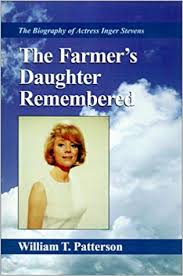
In 2000, William Patterson published the book, The Farmer’s Daughter Remembered. He dove into her life and tried to determine whether she meant to commit suicide or not.

Photo: pinterest.com

Windom also starred in the series, My World and Welcome to It as cartoonist John Monroe and as Dr. Seth Hazzlett on Murder She Wrote in 1985. His first movie role was in To Kill a Mockingbird in 1962. In addition to other films and Broadway, he traveled performing one-man shows of both James Thurber and Ernie Pyle. He passed away of congestive heart failure in 2012 at 88.

Cathleen Nesbitt would continue appearing in television series until 1982 when she passed away at age 93. Although she had appeared in many films, The Farmer’s Daughter was the only series she was featured in regularly.

Photo: en.wikipedia.org
Cathleen Nesbitt

Mickey Sholdar only appeared in five other shows after The Farmer’s Daughter. His last acting appearance was in the movie Babe. I could not verify how he spent his life up to now.

Photo: sitcomsonline.com
Mickey Sholdar and Rory O’Brien

Rory O’Brien, like Sholdar, only appeared in a few shows after the series ended. He was also in one film afterward, Little Big Man. O’Brien left the acting profession in the early 1970s. I could not find any other information on him either.

Photo: famousfix.com
Phillip Coolidge

Philip Coolidge was in many acclaimed movies before he took the role on The Farmer’s Daughter. Like most of his cast mates, he only appeared in a few shows in the mid-1960s, and he passed away in 1967.

Photo: pinterest.com

The show was aired in syndication on CBN, but I cannot find any other channels that carried it, and I cannot find any evidence that it was ever released on DVD. It’s too bad because the show featured a couple with great chemistry and the quick pace of the story and well-written dialogue that made the show memorable will be lost if no one is able to see the show in the future.