I Wish You a “Busy Christmas”

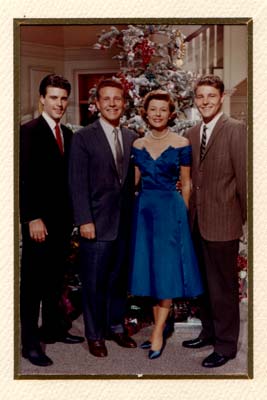
Merry Christmas!  I hope you are all enjoying a peaceful and happy day. We have a lot of holiday traditions in our family. When it comes to pop culture “must see” shows, we always watch Frosty, The Snowman; How the Grinch Stole Christmas; and a Charlie Brown Christmas, and the other specials are extras if we get them in.  Christmas movies are different for each generation.  I like White Christmas, while my oldest son never misses Elf.  But when it comes to television, one episode we all agree on is “Busy Christmas” from the Adventures of Ozzie and Harriet.  Our family makes an effort to watch this every year together. There is something charming about watching an episode that is more than 60 years old but still speaks to us in how we celebrate Christmas.  Ozzie, after vowing not to, involuntarily agrees to so many Christmas activities that he has no time to put up lights or buy a tree.
busy2

The show first aired in December 19, 1956 . It was the 12th episode of season 5. It was written by Jay Sommers, Don Nelson, Ozzie Nelson, and Alfred Nelson.  Alfred’s only writing credits were 4 Nelson episodes.  Ozzie, of course, helped write almost every episode.  Don Nelson, another brother, enjoyed a long writing career.  He helped Ozzie write the movie Here Come the Nelsons and he went on to write for a variety of shows including Bachelor Father, the Donna Reed Show, the Mothers-in-Law, the Doris Day Show, Bridget Loves Bernie, Herbie the Love Bug, Julia, The Ghost and Mrs. Muir, Nanny and the Professor, as well as a few episodes of Ozzie and Harriet’s later show, Ozzie’s Girls and 326 episodes of The Adventures of Ozzie and Harriet. Jay Sommers got credit for 146 of the Nelson episodes and went on to write for Dennis the Menace, wrote many Petticoat Junction shows, almost all the Green Acres scripts, and, surprisingly, Hello Larry which we looked at a few weeks ago.

Produced by Ozzie and Leo Pepin, the show’s set decoration was created by Jack Moore.  Moore had six Academy Award nominations and won for Little Women in 1949. The costume designer was George Sedilla, and the show was filmed at the General Service Studios, 1040 N. Las Palmas, Los Angeles.

In addition to the regular cast, Phil Arnold appears as a tailor and Isabelle Randolph is Mrs. Brewster.

This episode opens with Ozzie and Harriet looking at some of their Christmas cards.  Ozzie mentions he wished people took time to write in their cards.  He sees one that is a perfect example of what a card should say.  It has a very warm and sentimental message.  When Harriet agrees it is nice and asks who sent it, Ozzie replies, “Acme Cleaners.”


Modern Christmas cards were started by the Hall brothers whose company would become Hallmark.  They were post cards, but people did not have enough room to write what they wanted to tell people they didn’t see often. In the 1930s, Hallmark switched to a “book format” which is our card today.  The cards increased in popularity from the mid-1930s to the 1960s. Hallmark began commissioning famous artists to design cards including Salvador Dali, Grandma Moses, and Norman Rockwell. The Nelsons would have had to use regular postage stamps, because Christmas stamps did not debut until 1962. It’s funny that the switch to these cards was made so people could write more, but Ozzie’s complaint (and one you hear often today) is that people didn’t write anything personal.
 

busy12

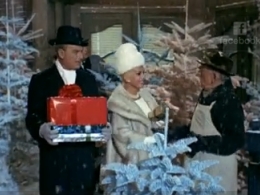
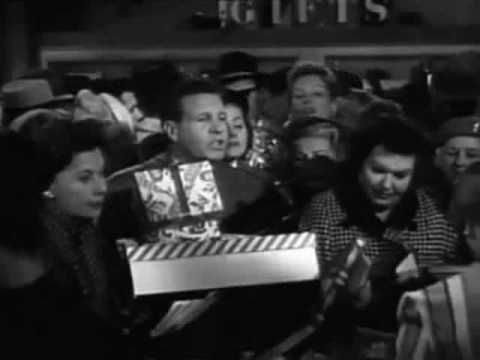
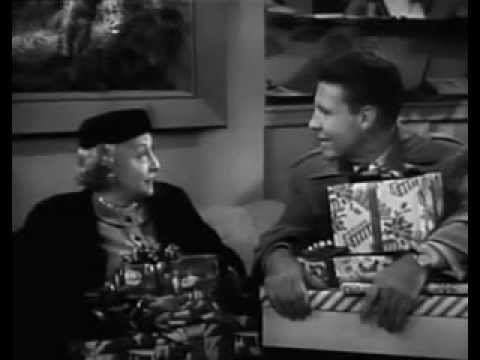
Scene 2 cuts to Ozzie trying to maneuver through a mad rush of people shopping in a department store.  His arms are full of wrapped packages. He tries to ask a clerk for a Donkey Party game.  Giving up, he takes cover in a seating area and ends up sitting next to Mrs. Brewster.  We learn it is a week before Christmas. They are watching a busy crowd and listening over the speaker as Irving Muller is lost and they attempt to find his mother.  Eventually they find her, but now Irving is gone.  Ozzie reminisces about a Christmas when he and Harriet were first married.  They were looking at the tree when all the sudden they heard “Silent Night” and were caught up in the beauty of the song and the carolers on Christmas Eve.  Mrs. Brewster says that is perfect because they would like the Nelsons to join them for caroling this Christmas Eve.  Ozzie says he’ll talk to Harriet, and if she agrees, they will.  Mrs. Brewster smiles and says Harriet has already agreed to it if Ozzie was willing. Over the loudspeaker they hear little Ozzie Nelson is missing and then the message is corrected that Mrs. Nelson is looking for Mr. Nelson.
busy10


Donkey Party was a version of pin-the-tail-on-the donkey. It came with a poster and 24-30 tails. Some of the other classic toys from this year are Candy Land, Mr. Potato Head, a Slinky Dog, and a Lone Ranger guitar.

busydonkey

Following World War II, the nation displayed an era of peace, productivity, and prosperity and this could be seen in the nation’s department stores.  At Christmas the windows were magical places where beautiful scenes were created, often with moving parts.  Ozzie’s presents were wrapped because that was a service department stores provided, saving the customer time later. Here are some vintage options Ozzie might have been able to choose from.


By Scene 3, a few days have passed. Ozzie is helping Harriet hang a wreath on the wall. When Harriet asks him about the tree and putting up lights, he says it’s too early to get the tree, and he decided not to put up lights this year.  He tells her he is not going to get overly busy again this year.  The doorbell rings and Doc Williams enters in.  Doc tells Ozzie that he has been appointed entertainment chairman of the Men’s Club for Christmas, and instead of the regular pageant, they have decided to do a shortened version of the Christmas Carol. Doc will be playing Bob Cratchet. Ozzie tells Harriet this is exactly what he was talking about.  They make one of the busiest men in town chairman and how unfair that is.  Doc looks confused and then starts to laugh.  He assumes Ozzie is auditioning for the role of Scrooge and he gives him the role. Doc asks when the lights are going up, and when Harriet says Ozzie isn’t putting them up this year, Ozzie says yes he is, he just hasn’t gotten around to it yet.


busyj

I have a beautifully illustrated book of  The Christmas Carol, and I try to find time to read it each year.  I also have a Scrooge in his striped night shirt, who is about 4 feet and I love him, although most of my family find him creepy.  My grandfather had a set of Dickens books and liked The Christmas Carol, and I find it inspiring that many generations have enjoyed and learned from this book.

Scene 4 finds Ozzie in his garage a day or so later trying to untangle lights. His friend Joe Randolph stops by and says the guy who always helped as Santa at the orphanage Christmas Eve party moved away.  Now they realized he used his own suit.  Ozzie offers his suit; however, Joe thinks his is also offering to be Santa.  Joe has to hurry off before Ozzie can explain.

busy11

Ozzie would be filling in for Santa because the real Big Guy was too busy Christmas Eve delivering gifts. NORAD began tracking his movements in 1955, so the Nelsons would have been able to follow his progress around the globe.

busy8

Scene 5 is December 23. Mrs. Brewster has dropped off a song, and Doc has dropped off his part. Ozzie climbs the ladder to hang lights and has Rick practice the part of Scrooge with him.  Rick, wearing a sheet like a ghost, leans out the window and plays Marley, ad-libbing the part till Ozzie tells him he must learn the part the way it’s written. David comes in the room and tells Rick to take off the sheet because it’s from David’s bed.  The boys get into a conversation and walk off, leaving Ozzie wondering what is going on.  Ozzie remembers he has to get the Santa suit out of the attic and goes to retrieve it. Mrs. Brewster stops by before he can get back on the ladder to bring more music and asks him to please learn the bass part, because she is short on basses. As he goes back up the ladder to put up the lights, he is called to dinner.


busy1

Scene 6 begins on Christmas Eve day.  Ozzie is walking around practicing his play part and singing his bass parts. He is just leaving the house to get a tree when the phone rings.  It’s Joe Randolph saying that there are so many children at the orphanage, they will have to do two parties instead of one.  Then Doc stops by and says he was called to the hospital for an emergency and Ozzie will have to go pick up the costumes. David offers to drive him.  They rush to pick up costumes from the tailor, then to the orphanage, and then to the play.  During the play, Ozzie knocks a picture off the wall, then drops a prop and, when he picks it up, his pants rip.

Everyone is back at home for Scene 7.  Ozzie is complaining that once again he was too busy.  He talks about how embarrassing the play was and how he hurt his knee hopping in and out of the car.  David says the audience thought what Ozzie did was part of the play and it was funny. Then David says he got a parking ticket.  That is the last straw for Ozzie, but when Harriet inspects it, she realizes it is an invitation to the Policeman’s Ball. At that moment, the carolers arrive to pick up the Nelson family. They are singing “Silent Night” and the family gets quiet and listens to the song, realizing how beautiful it is and what Christmas is all about.  Ozzie goes to get his coat which Harriet has put in the den.  Ricky comes into the hall with a Charlie Brown tree saying that was all they had left when he got to the lot.  As Ozzie opens the den door, a huge tree is revealed decorated with bulbs and tinsel with tons of presents under it. Harriet and Ricky said they did it while Dave and Ozzie were gone.

Tree decorations is one area that has changed drastically today.  Rarely do you see tinsel, garland, or snow flocking.  Back in the 1950s you might have seen bubble lights, or popcorn strands, and the rainbow colors of Shiny Brite ornaments.


They go outside for Scene 8 to join the carolers.  It begins to snow lightly. Doc mentions it’s too bad lights didn’t get put up, but then Ricky hits the light switch and he explains he and Harriet took care of those too. The group moves off singing “Deck the Halls.”

busy9

That’s the end of the 1956 episode, but in 1964, Ozzie replayed this show and added a Scene 10.  It is now 1964.  David is married to June Blair and they have a son Danny. Rick is married to Kris Harmon and they have a daughter Tracy. The entire Nelson family gathers around the tree.  Ricky plays his guitar, sitting in front of the fireplace and decorated tree and sings “The Christmas Song.”  While he sings, the camera pans around watching the rest of the family. It ends with everyone wishing the viewers a merry Christmas.


So much of our culture has changed today from 1956; however, thankfully many Christmas traditions remain.  We still send and get cards, although some of them are on the computer.  We still put up lights and a tree; we just tend to do it earlier, so we can enjoy it longer. We still do things for others like orphanage parties; we just don’t have actual orphanages much anymore. We also can get quiet, listening to “Silent Night” and be deeply touched by the season and what it means to us. This episode is a reminder of that for me every year, and I look forward to it.


Go Green, Green Acres That Is

In the 1950s, a lot of the top shows were set in residential or suburban areas:  Father Knows Best, Ozzie and Harriet, the Donna Reed Show, and December Bride to name a few.  In the early 1960s, the rural sitcom became the hottest genre.  In 1963 The Beverly Hillbillies was #1, Petticoat Junction was #4, and The Andy Griffith Show was #5. Filmways offered Paul Henning the chance to produce a new rural show with no pilot necessary.  Filmways was created in 1952, and the company was behind many successful shows including The Debbie Reynolds Show, The Pruitts of Southampton, Mr. Ed, The Addams Family, and Cagney and Lacey.

Paul Henning approached Jay Sommers to create the new rural comedy. Sommers based the series on a radio show he had written in 1950 —  Granby’s Green Acres.  Granby was based on a book, Acres and Pains by S.J. Perelman. The radio show only lasted for 13 episodes and starred Gale Gordon and Bea Benaderet. Granby was a former banker who moved to the country to run a farm.  He also had a daughter, and the general store owner was a major character, Will Kimble, played in the first episode by Howard McNear. A couple of titles proposed were Country Cousins and The Eddie Albert Show, but the final decision was Green Acres.

green4

Green Acres ran on CBS from 1965-1971 with solid ratings. It produced 170 episodes, all filmed in color.  Richard Bare directed most of the shows. At the end of each episode, Eva Gabor would say “This has been a Filmways presentation dahling.”

While the Beverly Hillbillies took a family out of the mountains and put them in Beverly Hills, Green Acres went with the opposite scenario.

The premise of the show was that Oliver Douglas  who had been a busy attorney in New York City decides he wants to move to the country to run his own farm. His wife Lisa  does not agree. He buys a farm unseen in Hooterville. We are never told where Hooterville is, and I think everyone has their own idea of which state it might be in. The house and farm are more run-down and dilapidated than Lisa ever imagined in her worst nightmare.  The citizens of Hooterville are a quirky set of characters.

green7

The debut show was done as a documentary narrated by John Daly, a former newscaster and the host then of What’s My Line.  Eddie Albert and Eva Gabor appeared on What’s My Line later in the fall as a thank you to Daly. As you can see below, Oliver’s mother is horrified by his choice.

green18

The theme song is memorable and tells the backstory of the Douglases:

Oliver: Green Acres is the place to be – Farm living is the life for me –Land spreading out so far and wide – Keep Manhattan, just give me the countryside.

Lisa: No, New York is where I’d rather stay – I get allergic smelling hay – I just adore a penthouse view – Darling, I love you but give me Park Avenue

Oliver: The chores

Lisa: The stores

Oliver: Fresh air

Lisa: Times Square

Oliver: You are my wife

Lisa: Goodbye city life

Both: Green Acres, we are there

Snippets of country and New York city were shown while the stars sing, and ends with both of them in the same pose as “American Gothic” by Grant Wood.

green1

Like the Andy Griffith Show, the series worked because of the interaction between these Hooterville citizens who become believable for us. Let’s meet the cast of characters.

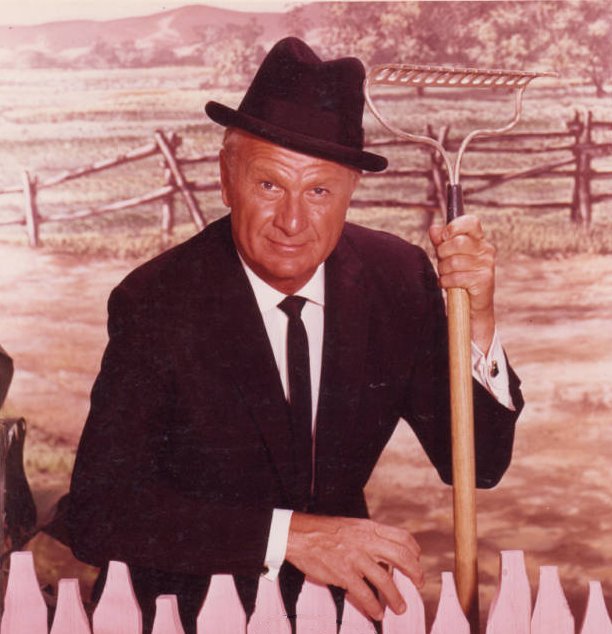
Oliver Wendell Douglas (Eddie Albert) – Oliver is intelligent, hard-working, and practical to a fault.  He has to deal with a kooky wife, a disapproving mother (played by Eleanor Audley who was only 5 months older than Albert), and the quirky neighbors that surrounded him. However, Oliver has a respect for the wisdom these people have about farming and rural life.  Despite the fact that he seems to be the only sane person in the valley, it’s obvious he truly has an affection for the folks he lives with.

albert

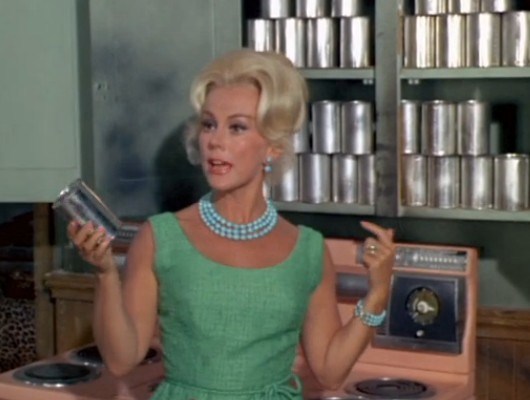
Lisa Douglas (Eva Gabor) – Lisa grew up in a wealthy Hungarian family. Her misuse of the English language is one of her endearing qualities. She has a hard time adjusting to farm life.  In one episode she is using a stapler to fix Oliver’s socks.  While Oliver is telling her how woman for centuries have sewn socks, Fred Ziffel, the most experienced farmer in Hooterville enters the room and tells her he notices she is mending socks; his wife does it the same way. Despite the fact that Lisa did not want to leave the city, she adapts to living in the country quickly and develops an understanding with the neighbors Oliver never attains.

green31

Eb Dawson (Tom Lester) – Eb is the farmhand who lives with the Douglases.  He comes off as naïve, but we understand Eb is much smarter than he lets on.  He is always trying to get less work for more money.  He calls them Mom and Dad which Lisa loves but drives Oliver crazy.

green17

Mr. Eustace Haney (Pat Buttram)- Mr. Haney is the unethical and dishonest salesman who originally sold Oliver the farm, which belonged to his family. He is always showing up to sell them something they need at outrageous prices. [Pat Buttram was Gene Autrey’s sidekick in the movies and tv; Smiley Burnette, Charley, who runs the Cannonball, the local train on Green Acres and Petticoat Junction, was Autrey’s sidekick in radio and movies and  Buttram replaced him when he moved on.]

green5

Sam Drucker (Frank Cady) – Sam was a busy guy; he ran the general store, he was the newspaper editor, was the only printer in town, he was part of the volunteer fire department, he was the justice of the peace, and he’s the postman. Apart from Oliver, he was the smartest and most sane person in the valley, and he and Oliver often commiserated about the crazy life going on around them.

Hank Kimball (Alvy Moore) – Mr. Kimball was the county agricultural agent who was supposed to help Oliver adjust to farming. He often loses his train of thought and rarely follows through on the news or information he is supposed to relay.

moore

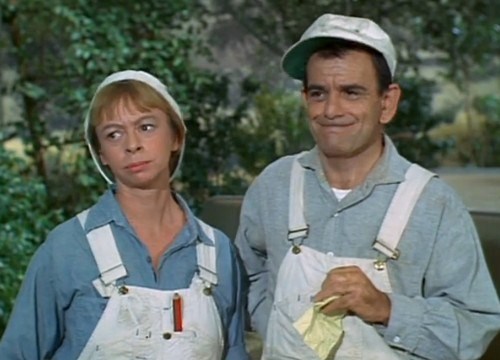
The Monroe Brothers – Alf (Sid Melton) and Ralph (Mary Grace Canfield) are a brother and sister team that Alf portrays as brother and brother in order get work. Their projects are never finished on time, and rarely finished the right way.

green8


Fred and Doris Ziffel (Hank Patterson and Barbara Pepper/Fran Ryan) – the Ziffels were successful farmers.  They had no children, but they had a pet pig that they considered a son.


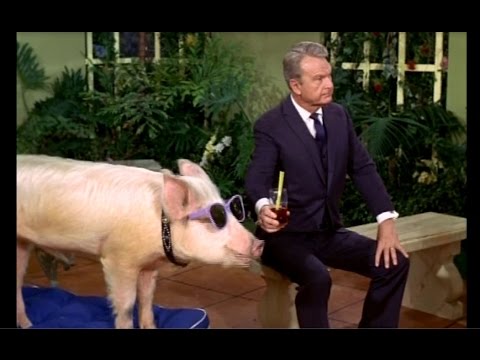
Arnold Ziffel – Arnold Ziffel was their pet pig and one of the most intelligent people in Hooterville. He understands English, attends the local grade school, lives inside in his own bedroom, can sign his name, and is a bit addicted to television watching, especially westerns. A new pig was used each season because they grew so fast. The Union demanded the pigs be payed $250 a day and were trained by Frank Inn. In 1967 Arnold won a Patsy award.

green20

Some of the other animals featured on the show included Eleanor the Cow; Bertram the rooster; Alice the hen; and Mr. Haney’s dog, Cynthia, a basset hound who had a huge crush on Arnold.

Green Acres had its fair share of guest stars including Parley Baer, Robert Cummings, June Foray, Alan Hale Jr., Elaine Joyce, Gordon Jump, Bernie Kopell, Al Lewis, Rich Little, Al Molinaro, Pat Morita, Jerry Van Dyke, and Jesse White.

The show was 25% surrealism, 25% satire, and 50% just plain fun.

Some of the running gags on the show were the fact that people, except Oliver, could see the credits running, and Lisa often commented on them. A lot of the jokes were at Oliver’s expense.  He was the only one in town who could not understand Arnold’s grunts. Also, whenever Oliver got passionate about something, he went into a monologue, usually patriotic, and everyone but him could hear fifes playing.

green3

Lisa’s hotcakes were good for many projects, just not eating. The Douglases had a feud with the phone company because they were supposed to move their phone inside.  Whenever they had to use the phone, Oliver had to climb up a phone pole to talk. Oliver had a Hoyt-Clagwell tractor which was usually breaking down, catching on fire, or falling apart.

green29

We also had the stark extremes of sophisticated New York living and rural life.  Lisa continued to dress in beautiful gowns and furs.  They slept in a huge, expensive bed, with an elaborate chandelier over their heads, but their closet had no back so neighbors walked in on and off. The fire department marching band often practices at Sam Drucker’s store but for all five years whenever they practice, they only know one song, There’ll Be a Hot Time in the Old Town Tonight.

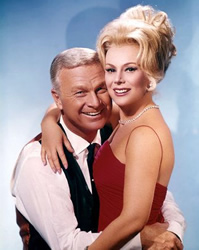
Although Lisa continues to threaten to move back to New York City, aided and abetted by Oliver’s mother, we know she loves him and will never leave without him.  Despite their arguments, Lisa and Oliver are frequently seen kissing and hints are given about them retiring to their room together. In real life, Albert and Gabor were dear friends and they are both buried in Westwood Village Memorial Park Cemetery in Los Angeles. Tom Lester, Eb, credited Albert with helping him as an actor and being a surrogate father to him; the two remained close friends until Albert passed away.

green10

There are many cross-overs with Petticoat Junction and the Beverly Hillbillies. Sam Drucker was featured in both Green Acres and Petticoat Junction. Some of the characters visited each other on various episodes. It is funny that Bea Benaderet starred in Petticoat Junction as well as the radio show Granby’s Green Acres which means Green Acres was based on her radio show and was a spin-off of her television show. In 1968, a Beverly Hillbillies Thanksgiving Show united cast members from all three shows.

green9

green6

With 170 episodes, it’s hard to come up with the best five, but after looking at various polls and tv guide reviews, I will do my best to represent the majority’s votes:

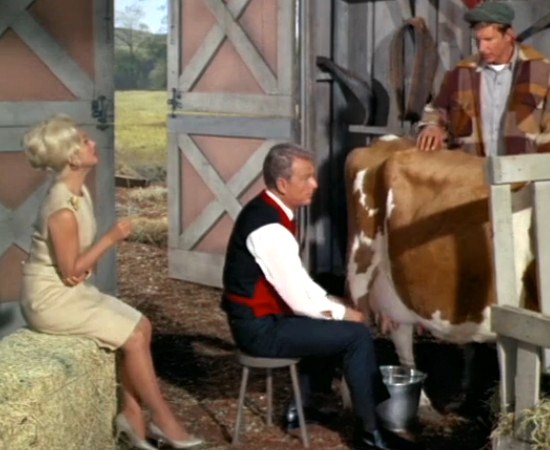
“Music to Milk By” – Eb wants to win a radio contest and he has to listen day and night which cuts into his chores, especially when the cow swallows the radio.

radio

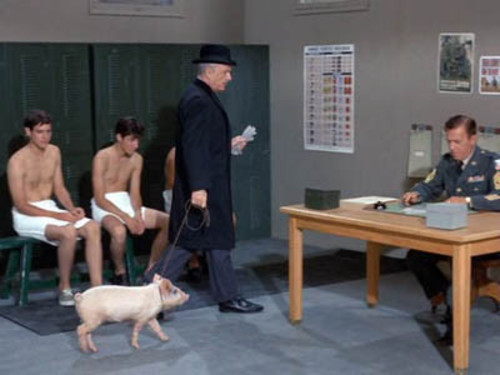
“I Didn’t Raise My Pig to be a Soldier” – Arnold Ziffel gets a draft notice. Oliver acts as his attorney before the draft board. They are assuming Oliver is making fun of them with the pig and the real Arnold is elsewhere. After a lot of explanations and some time in jail, Oliver convinces them Arnold is really a pig.  The end of the show has Oliver back before the draft board because Ralph Monroe, a woman, who they think is a man, has been drafted.

draft

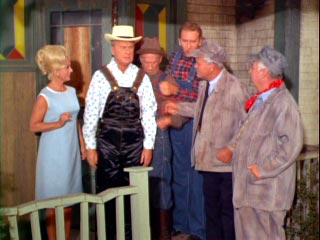
“The Hooterville Image” – The town agrees Oliver needs to do chores in overalls. He has been farming in a vest and dress shirt. They finally convince him to become more accepted by switching his attire until they see the overalls Lisa’s dress designer came up with.

green28

“The Computer Age” – Ralph Monroe joins a computer dating service. Oliver and Lisa disagree on whether that is a good idea. Oliver thinks it is. He also thinks computers are the best way to run a farm. To prove her point, Lisa uses the service to see if she and Oliver would have been paired up.

computer

“A Star Named Arnold is Born, Parts 1 and 2” – Arnold appears in a play at the local theater. Lisa arranges for an old friend to give him a chance in show business. In the second part, Lisa and Oliver chaperone his trip to Hollywood to star in a motion picture.

arnold

Oddly enough the top four were all from season 2, and “A Star Named Arnold Is Born” is from season 3.

green16

In Spring of 1971, Green Acres was still pulling in good ratings.  However, the Rural Purge of 1971 got rid of all shows that had country leanings whether they were audience favorites or not.


In full disclosure, I loved Petticoat Junction growing up, and I could not stand the Beverly Hillbillies.  I thought Green Acres was okay but if I missed it that was okay too.  As I’ve gotten older, I still love Petticoat Junction, and I still don’t care for the Beverly Hillbillies, but I have developed a much greater appreciation for Green Acres.  If a show was capable of having a sense of humor, this one did.   It never took itself seriously.  Eddie Albert was willing to be the straight guy to the rest of the ensemble. The character interaction worked, and no dialogue came off as too zany.  The citizens might not have always agreed or understood each other’s lifestyles, but they had affection and respect for each other. Lisa’s reading the credits and different characters addressing the audience brought us in on the jokes and made us part of the Green Acres family. Now when I watch the show, I laugh out loud – a lot! I don’t laugh at the characters, I laugh with them. For being a rural sitcom, this show has some sophisticated humor.  If you have not watched the show in a while, you owe it to yourself, as well as the cast and crew who created it, to get to know the folks in Hooterville.


The Amazing, But Much Too Short, Career of Richard Deacon

Richard Deacon, 1960s

Richard Deacon was born in Philadelphia, Pennsylvania in 1921, but most of his adolescence was spent in Binghamton, New York. When he was only 11, he contracted polio. He took up dancing to build up his leg muscles.

Deacon’s first career choice was to become a doctor.  He was working as an orderly at the Binghamton Hospital when World War II began. He tried to join the Navy; they suggested he try the Army.  He did and joined the medical corps.

After the war, he studied medicine at Ithaca College but soon switched to acting. He studied drama for a couple of years and was the actor in residence at Bennington College.  After spending some time in New York, he headed to California to look for work.  After paying his dues as a bartender, he finally got a break and was offered a role in a film, Invaders From Mars.

When he first began his career, Helen Hayes advised him to become a character actor as opposed to a leading man.  It was great advice, and he was one of the most beloved and prolific actors during the golden age of television. During his career, he appeared in 66 movies on the big screen, guest starred on 92 different television shows, and starred in six series.

In the 1950s, he appeared in 48 television shows including Burns and Allen, The Life of Riley, Bachelor Father, and the Gale Storm Show.  He had regular roles in two sitcoms.

The Charles Farrell Show debuted in 1956. Farrell played himself as the manager of the Palm Springs Racquet Club, a resort he actually owned and operated. It was a summer replacement for I Love Lucy and only lasted 12 episodes. Richard played Sherman Hall.

deacon8

In 1957, he got another chance at being a regular in a sitcom, Date with the Angels starring Betty White. Deacon played Roger Finley.  This show lasted one year.

Richard continued his productive acting career, appearing in 43 shows in the 1960s.  He could be seen in a wide range of shows including Bonanza, The Rifleman, My Three Sons, Make Room for Daddy, Perry Mason, The Donna Reed Show, The Twilight Zone, Mr. Ed, I Dream of Jeannie, Get Smart, The Munsters, and The Addams Family. He was also appearing in a number of films during this decade. He appeared in four sitcoms on a regular basis during the ’60s.

Leave It to Beaver aired from 1957-1963. Deacon played Fred Rutherford, father of Clarence, or Lumpy, Rutherford, Wally’s friend. During the 6 seasons it was on the air, Fred was in 63 episodes.

Part way through the series, he was offered another regular role, that of Mel Cooley on The Dick Van Dyke Show.  From 1961-1966, he brightened the screen in 82 shows, putting up with his brother-in-law’s bullying and Buddy Sorrel’s belittling. Deacon had high praise for everyone connected with The Dick Van Dyke Show.

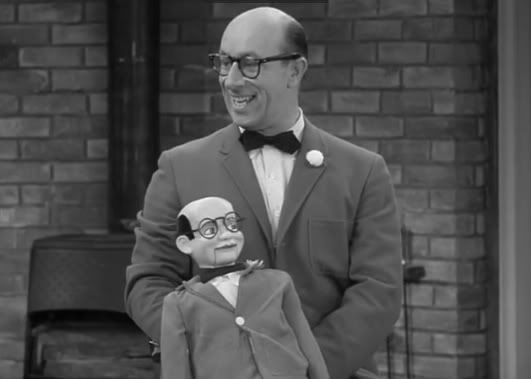
One day Morey Amsterdam was goofing around with Richard and said he didn’t think his hair had fallen out, he thought it had imploded and fallen into his brain, clouding his thinking.  Carl Reiner came running on the set and said to add that dialogue to the show.  From then on, there was an insult fest between Buddy Sorrell and Mel Cooley. When the writers were trying to come up with a comeback from Mel to Buddy, Reiner asked Deacon how he would respond to someone who continued to torment him.  Deacon replied, “Yeecchh!” and his trademark phrase was invented.

deacon9

Bud Molin, Dick Van Dyke Show film editor described Deacon as “the funniest human being on the face of the earth.” Carl Reiner said it was a joy to have him around and everyone on the show loved him.

Deacon, Leonard, Reiner, Paris

The Dick Van Dyke Show was one of the best shows ever written. It won the Outstanding Comedy Emmy in 1963, 1964, and 1966. After the cast of the Dick Van Dyke Show decided to end the show on its own terms, leaving the air with its quality reputation intact, Deacon was offered another sixties role.

Phyllis Diller had a fantastic cast on her show, The Pruitts of South Hampton, or The Phyllis Diller Show as it became known in syndication. This was about a formerly wealthy family who found out they owed $10,000,000 in back taxes.  They try to appear that they still have their wealth, while living in very reduced circumstances.  The cast included Louis Nye, John Astin, Reginald Gardiner, Paul Lynde, Gypsy Rose Lee, Billy De Wolfe, John McGiver, and Marty Ingels in addition to Diller and Deacon.  I don’t know how this show did not succeed, but it was taken off the air after only one year. Diller and Deacon continued to work together both on an episode of Love, American Style and in the production of Hello Dolly in the 1969-1970 season.

deacon14

Once the Diller show was canceled, Deacon was offered a role on The Mothers-In-Law starring Kaye Ballard and Eve Arden. Deacon took over the role of Roger Buell mid-way through the series. The concept was two families who didn’t necessarily get along were neighbors whose children  married so they had to find ways to get along and keep the peace.

deacon4

After the show was cancelled, he continued to stay busy with his acting career.  He also appeared in 17 episodes of Match Game and several Family Feud episodes.

deacon7

Deacon was a life-long bachelor.  He was a closeted gay man who had to keep his sexual orientation secret to keep his options open to work for companies like Disney. He was also a gourmet chef.  In the 1980s, he hosted a Canadian cooking show about microwave cooking, writing a book that sold almost two million copies. He spent a lot of his spare time working with SYNANON, an agency that helped teenage drug addicts.

On the night of August 8, 1984, he was suffered a heart attack in his Beverly Hills home. He was rushed to Cedars Sinai Hospital, where he died later that night. He was 63 years old.

deacon15 - Copy

Everything I read about Richard Deacon painted him as a gracious, friendly, very funny man who was caring and kind.  He had an amazing career, with 180 acting credits within a 30-year period.  The legacy he left was a rich and full acting life. Pretty good for a guy who chose to be a character actor and was humble enough to turn down two offers to star in his own show.

Shelly Fabares: A Life Spent in the Entertainment Industry

fabares2

Michele Ann Marie (Shelly) Fabares was born in 1944 in California.  She began acting at 3 and at age 10 she appeared in her first television show. Her aunt was the actress Nanette Fabray who also began acting as a child, and then went on to musical theater.

During the 1950s, Shelly appeared in several television shows including Annie Oakley, The Loretta Young Show, and the Twilight Zone, in addition to 8 others. She was part of the cast of Annette in 1958, playing Moselle Corey.  The star of the show was Annette Funicello.  She is an orphan who grew up in the country and now lives with her wealthy aunt and uncle, not fitting into the snobby community. The show was cancelled after 19 episodes. Annette was a life-long friend of Shelly’s. They met in seventh grade, and Shelly was at her bedside when she passed away from multiple sclerosis in 2013.

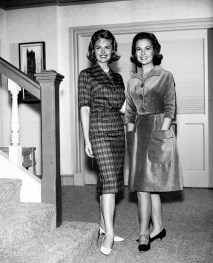
Later that year she was offered the part of Mary Stone on The Donna Reed Show. The show was on the air seven years. Shelly left the show in 1963 to pursue a film career but stayed close to the cast, especially Donna Reed who was a second mother to her. Paul Petersen and Fabares both described how amazing Donna Reed and Carl Betz were during their time on the show.  Realizing how tough the industry can be for young kids, they protected them and loved them as second parents. Both Shelly and Petersen pursued their music interests on the Donna Reed Show. In 1962, she recorded “Johnny Angel” which went to number 1 on the Billboard 100.

Shelly appeared in 13 films in the 1950s and 1960s, including three with Elvis Presley—Girl Happy in 1965, Spinout in 1966, and Clambake in 1967. She also appeared on television on The Ghost and Mrs. Muir, Daniel Boone, Lancer, and Bracken’s World. Shelly married Lou Adler in 1964.

fabares12

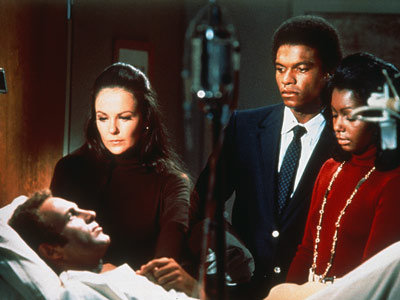
Her acting career continued to skyrocket in the 1970s.  She appeared as Joy Piccolo in Brian’s Song in 1971. She appeared in 26 television shows, three of them regular series. The Brian Keith Show was on the air from 1972-74. Keith was Dr. Sean Jamison and Shelly played his daughter, Dr. Ann Jamison.  The two of them ran a free pediatric clinic in Hawaii financed by a wealthy patron. Sticking with the medical theme, she joined the cast of The Practice in 1976-77 working with Danny Thomas. She played Jenny Bedford, the daughter of Dr. Jules Bedford. At the end of the decade she tried another sitcom, Highcliff Manor, which only lasted 6 episodes. I don’t remember this sitcom, but it seems an odd one: the manor, owned by Fabares’ character, Helen Blacke, was home to the Blacke Foundation, a research institute staffed by an eclectic group of eccentric characters. It sounds a bit like Scorpion, maybe just a couple decades’ too early.

She continued working on television in the 1980s, appearing on Fantasy Island, Mork and Mindy, Matt Houston, The Love Boat, Newhart, and Murder She Wrote.  She joined the cast of One Day at a Time, playing Francine Webster between 1978-1984. She also made the movie Hot Pursuit in 1987. The description of the movie is that young Danny is following his rich girlfriend’s family to the Caribbean. But suddenly he simply must take a chemistry test and cannot go with them. After they have left, he gets a leave from his professor and takes a plane to find them. But he is not quite sure where they are, and meets smugglers, crazy captains, and murderers. Fabares’ marriage to Lou Adler legally ended in 1980, although they had been separated since 1966. In 1984, she married M*A*S*H star Mike Farrell.

fabares8

Entering her 5th decade of acting, she made her last film, Love or Money in 1990. She continued her television work appearing in A Whole New Ballgame and the Justice League.  She also had a regular gig providing the voice for Martha Kent in Superman from 1996-99. In addition to the Donna Reed Show, the show that Fabares is best known for was Coach which ran throughout most of the 90s, from 1989-1997. As Christine Armstrong, she is the girlfriend, and later, wife of Coach Hayden Fox, played by Craig T. Nelson.  The show revolves around the football team that Fox coaches.  He lives for sports while Christine is not the least interested.  This causes a bit of friction and miscommunication in their relationship.

Fabares had a long and full career.  While her career kept her busy, she had to deal with several major life situations:

DONNA REED;SHELLEY FABARES

Donna Reed, her second mother, passed away in 1986 from pancreatic cancer.  Shelly adored Donna, and Donna’s final words were to make sure Shelly’s birthday gift was wrapped and delivered.

At the same time Reed was dying, Fabares’ mother was suffering from Alzheimers.

In 2000, Shelly needed a liver transplant because she had autoimmune hepatitis.

She had to deal with the death of her life-long friend Annette Funicello in 2013.

Few actors can begin acting as a child, transition into teen parts, transition into movie roles, and then continue acting as an adult in sitcom series, but she did that beautifully. Hopefully she and hubby Mike Farrell continue to enjoy a long and well-deserved retirement.

fabares1

Decorate With Style

With the Christmas shopping season fully in swing, I thought it would be fun to look at ways to decorate with movie and television collectibles. If you are looking for a unique gift for someone on your list or trying to come up with ideas to share with others, think about personalizing home décor with items that showcase pop culture favorites.

Whether you want to sprinkle a few items in around your house or devote an entire room to a theme, there are a lot of fun ideas to display your passions.

If you are shopping for children, think about purchasing a movie poster from the first movie they ever went to.  Our oldest son’s first movie at 3 was supposed to be an animated Christmas feature, but they had a problem with the film and showed Home Alone instead.  I thought he would be bored (or scared), but he loved it, and we commemorated that memory with a framed movie poster for his room. Maybe your child is older but has a movie she watches over and over.

collection1

Our middle son collected old board games.  We still have a lot of those and play them a lot. You can find games about shows from the 1950s up through the present. Here are just a few of the ones I’ve seen out there:  The Lone Ranger, Happy Days, McHales’s Navy, The Partridge Family, The Patty Duke Show, The Big Bang Theory, Modern Family, The Honeymooners, The Office, and hundreds more.

If you have an avid sports fan to buy for, think about decorating with movies and tv shows about sports. How about the lobby cards for Remember the Titans, a basketball signed by Gene Hackman from Hoosiers, or a Happy Gilmore script signed by the entire cast.

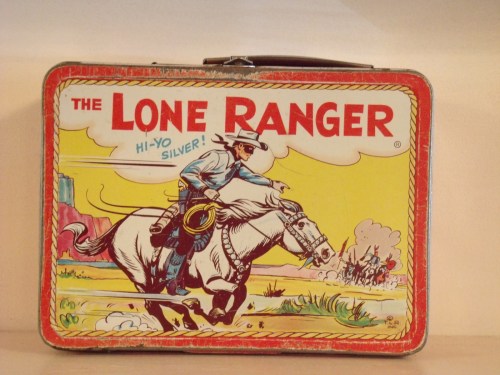
Decorating with western items can also be a fun theme. Consider redoing your guest room with a western flare.  What would you put in it?  How about Clint Eastwood’s hat from The Good, The Bad, and The Ugly.  I’ve seen a Roy Rogers bedspread, a John Wayne figurine, a Lone Ranger poster for the wall, and on the night stand place a couple of Bonanza tin cups for morning coffee and a CD player with a collection of Old West radio episodes.

collection4

Maybe you have a family member who loves Christmas.  You can find a variety of Christmas photos from classic television shows.  Or buy a small fake Christmas tree and decorate it with Hallmark ornaments from pop culture.

collection5

Perhaps you have someone who loves fashion.  There are a variety of items you can search for in that category. Many movies had photos taken when they tested their costumes. You can also find clothing, accessories, and jewelry worn on television shows or movies to wear or frame. I have a thirtysomething jacket that was made for the crew and cast and it’s a fun item to hang on the wall.

Someone who likes old advertising can use a variety of collectibles scattered throughout the house.  You can find stars promoting everything from cold cream to coffee.  We have an ad of Ozzie and Harriet Nelson in our laundry room for a Hot Point washing machine.

Do you have a doll collector on your list ?  There are hundreds of dolls out there from television series. I’ve seen I Love Lucy, George Burns, Maxwell Smart from Get Smart, That Girl, and Laverne and Shirley. In movie collectibles, you can find Gone with the Wind dolls, Wizard of Oz figures, and even Rock Hudson and Doris Day from Pillow Talk.

Coffee bars are becoming common in new homes.  If you have someone who loves entertaining that way, you’re in luck.  You can find coffee mugs, serving bowls, and tea sets to display.

Last, but not least, if you know someone who has one show they are drawn to use that as your theme.   The iconic show is The Andy Griffith Show.  You can find blankets, villages, cups, signs, clocks, and even canned food and muffin packages. However, any show whether it be The Donna Reed Show from the 1950s or Last Man Standing currently on television will have a lot of items to choose from. If you are looking for single show themes, consider advertising items–My Three Sons had a wood block invitation made for the press; props –a typewriter used on Will and Grace; tv guides; music boxes; paper dolls and coloring books; lunch boxes; or even light switch plates.

If you can’t find exactly what you’re looking for, make your own.  For example, you could enlarge the sheet music from the theme song and frame it. Or make a shadow box with a few treasured items. You can even make pillows or magnets.

With a little imagination, you can come up with that perfect gift for everyone on your list.  The bonus?  You get to stay cozy and warm inside when the winds are blowing and the snow is falling and watch your favorite shows while you shop for everyone on your gift list.