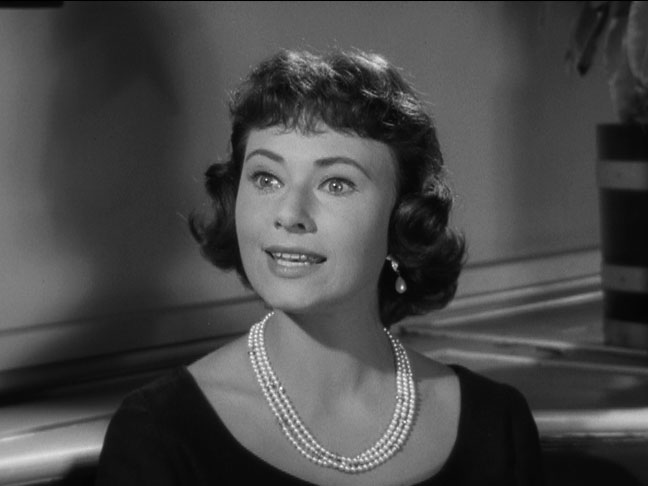
As we continue our What a Character blog series, today we get to talk about the woman behind one of my favorite characters, Lillian Bakerman from The Bob Newhart Show. That woman is Florida Friebus.
Friebus was born in Massachusetts in 1909. She was named for her mother’s favorite aunt, not the southern state. Weirdly, her paternal grandmother was also named Florida. Her family was involved in the theater. Her father Theodore was a leading stage actor with Boston’s Castle Square Players and a silent film star. Her mom’s mother, Georgine Flagg, was part of the Augustin Daly stock company in Manhattan.
When she was only eight years old, Florida’s father passed away. Her mother had studied at the Dana Hall Schools and applied for a position of housemother there. Florida was able to study at Tenacre during this time. She participated in the first Christmas pageant in 1921. Florida not only learned a lot about acting, but she also was presented with classes in political history, music, art, languages, and literature.
📷facebook.com with Richard Waring
Friebus moved to New York to study at the Theater Guild School. She began her acting career in 1929 in when she appeared with the Civic Repertory Theater in “The Cradle Song.” In 1932, she worked on an adaptation of “Alice in Wonderland” with Eva Le Gallienne, and she took on the role of the Cheshire Cat.
In 1934, Friebus married Richard Waring. They would divorce in 1952, and she never remarried.
Friebus was elected to the Council of the Actors’ Equity Association in 1949, and she spent 16 years on the board.
Florida read stories to children on her KNXT show, Look and Listen, in Los Angeles.
📷imdb.com
Her first television role was in 1948 on The Ford Theater Hour. Her television drama appearances continued into the 1950s and she also appeared on several sitcoms, including The Goldbergs, Father Knows Best, Bachelor Father, and The Donna Reed Show. In 1959 she accepted a role that made her a household name: Winnie Gillis on The Many Loves of Dobie Gillis. For four seasons she tried to defend Dobie and his crazy dilemmas when his father became exasperated with him.
The show was based on a 1951 book, The Many Loves of Dobie Gillis by Max Shulman about the romantic adventures of a student at the University of Minnesota. Shulman wrote for the series. He would also write The Tender Trap which became a movie in 1955 and House Calls which became a 1978 movie; Shulman became head writer for the television series based on House Calls.
The sixties and seventies found Florida in a variety of both dramas and sitcoms. A few of these series included Ben Casey, Peyton Place, The Doris Day Show, The Mary TylerMoore Show, The Partridge Family, Gunsmoke, Room 222, and Barnaby Jones.
📷sitcomsonline.com
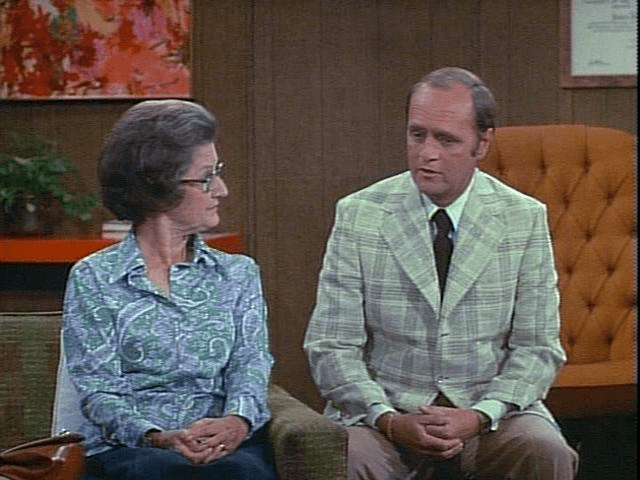
In 1972 she accepted the role of Lillian Bakerman on The Bob Newhart Show. During the show’s run, she made 19 appearances trying to encourage the other patients in her therapy group. She is often seen knitting while the group talks. One of her fears is flying, and her catchphrase is “Isn’t that nice.”
Her last appearance was in 1982 on The New Odd Couple as, who else but Mrs. Bakerman.
In 1988, Friebus passed away from cancer at 78 years old.
We are starting a blog about Supportive Women, great actresses who made classic television so much better. I’m beginning with Joan Tompkins.
📷tvtime.com
Tompkins was born in 1915 in Mount Vernon, NY. She began her career in stock theater companies in New York in the thirties before appearing on Broadway in several shows including “My Sister Eileen,” “Pride and Prejudice,” and “Fly Away Home.” Henry Fonda was in several the plays with Joan.
In 1936 she married actor Stephen Ker Appleby in New York, but five years later they divorced. Appleby was born in Wales and known best for his 1960s movies. He lived to be 100. From 1942-1951 she was married to Bruce MacFarlane before they divorced. McFarlane died in 1967 and had 28 acting credits in television and film. Joan would then marry a third actor in 1951, Karl Swenson, “the man of a thousand voices.” The two worked together on the radio. Many fans of Little House on the Prairie would recognize Karl as Lars Hanson. Swenson obtained an amazing 175 credits, primarily on television during the two decades before his death.
After WWII Joan became a foster parent for a crippled Polish boy, Tomasz Machcinski. He later became a photographer. In 1994, their story was made into a documentary, “Child from a Catalog.” Machcinski’s life story was very interesting. He was born in the Kampinos Forest in Gorki, Poland. He spent his childhood living in hospitals and orphanages. After developing a relationship with Joan, he graduated as a precision mechanic in 1963. In 1966, he took up photography and created thousands of self-portraits. Some were as historic characters. He chose the stories, make up, and costumes. He once said that he didn’t “use wigs, tricks, but I use everything that happens to my body, such as hair regrowth, tooth loss, diseases, aging, etc.” He has had exhibits in Copenhagen, Beverly Hills, Warsaw, New York, and Paris. Machcinski passed away in 2022.
📷wallofcelebrities.com
Tompkins had a long radio career. She was the voice of Nora Drake on “This is Nora Drake” which was on CBS radio until 1959.
She began her television career in 1954 on an episode of Ponds Theater. Almost all of her 93 acting credits were for television shows. She had a recurring role on a soap, Valiant Woman, appearing in 176 of the 1027 episodes of the show as Marion Walker. Throughout the fifties, she showed up in several dramas as well as The Donna Reed Show, Bachelor Father, and Father Knows Best.
During the sixties, she had two recurring roles. She played Mrs. Brahms on Occasional Wife in 1966-67. I remember her on My Three Sons; between 1967-1970, she appeared as Lorraine Miller, Katie’s mom, nine times.
You can catch glimpses of her on many of your favorite shows from the sixties and seventies, including Hazel; The Danny Thomas Show; Perry Mason; Gomer Pyle: USMC; Dr. Kildare; The Man From UNCLE; Bewitched; Bonanza; The Brady Bunch; MarcusWelby, MD; The Mary Tyler Moore Show; The Mod Squad; and The Bob Newhart Show.
📷imdb.com My Three Sons
Her last television appearances were in 1980. She played Grandma Gertie in an episode of Eight is Enough and a physician in a made-for-tv film, The Night the City Screamed.
Karl and Joan moved to Beverly Hills where they founded an acting company. Karl directed the plays Joan appeared in. After Karl’s death in 1978, Joan joined a writing group and wrote several books. She died at home in 89.
Joan Tompkins is another one of those actresses that made television better during the fifties, sixties, and seventies. I’m glad we could learn a bit more about her and her career.
This month’s blog series is “Time for Some Texas Tea.” We are learning about some of the stars of The Beverly Hillbillies. Today we are banking on getting to know Milburn Drysdale, also known as Raymond Bailey.
Bailey was born Raymond Thomas Bailey in 1934 in San Francisco, California. When he was only a teenager he made the trek to Hollywood to try his hand at acting. He had a tougher time breaking into the business and worked a lot of odd jobs including day laborer in a silent movie theater where he was fired after sneaking into a mob scene which I found pretty funny and creative. He also worked as a stockbroker and a banker which would come in handy later in his career.
Photo: thenationalwwiimuseum.com
When things did not seem to be working out, he moved to New York City. He had no better luck on the east coast than on the west coast, so he joined the crew as a merchant seaman and toured the world, including China, Japan, the Philippines, the Mediterranean, and Hawaii. While in Hawaii, he also worked on a pineapple plantation, acted in the community theater, and sang for a local radio station.
He decided to give Hollywood a second chance in 1938, and he actually began getting some small movie parts. His first credited role was in SOS Tidal Wave. He was Mr. West in The Green Hornet in 1940. He appeared in 30 movies before Pearl Harbor was struck. When the US entered WWII, he joined the US Merchant Marine. After his time was up, he returned to Hollywood.
In 1951, Bailey married Gaby George and they would remain married until his death. I could not learn much about Gaby, but she was born in another country, and they were married in Manhattan. I’m not sure if she came here earlier in her life or met Bailey while he was traveling the world. She would have been 37 when they married, and I believe she received naturalization papers when she was 55.
The Alfred Hitchcock Show “Breakdown” Photo: completehitchcock.com
Raymond continued receiving big-screen roles, and in 1952 he had his first television appearance in Tales of Tomorrow as Congressman Burns. He appeared in forty-six additional series during the decade of the fifties, including The Donna Reed Show, Jack Benny, Burns and Allen, Gunsmoke, and Private Secretary. His movie career continued with roles in 26 films including Sabrina, Picnic, King Creole, and Vertigo. In the mid-fifties, he also explored Broadway with roles in four plays.
While Bailey didn’t abandon his film career, the sixties found him on the small screen the majority of the time. In the early sixties, he could be seen on a variety of shows including Lassie, The Ann Sothern Show, BachelorFather, Perry Mason, Bonanza, My Three Sons, and Mister Ed. In 1961, he was offered his first regular role as Mr. Beaumont on My Sister Eileen. He appeared in 25 of the 27 episodes of the show.
Photo: ask.com
In 1962 he was offered the role he would become a household name for: Milton Drysdale on The Beverly Hillbillies. His time as a banker helped him manage millions of dollars in the Clampett accounts. Much to his wife’s chagrin, Drysdale talks the Clampetts into buying the mansion right next to his so he can keep a better eye on them and their money. He was their mentor as they adjusted from country life to city life as much as they could adjust.
Unfortunately, Bailey developed Alzheimer’s, and the symptoms began just as the show was ending. The Beverly Hillbillies was canceled during the “Rural Purge” when all country-related shows were ended by the network in 1971. After the series was canceled, Ray only had two acting credits; they were both in Disney movies that came out in the mid-seventies: Herbie Rides Again and The Strongest Man in the World.
With Nancy Kulp Photo: imdb.com
Baily then became a bit of a recluse until his death in 1980 from a heart attack. It sounds like the only non-family member he kept in touch with was Nancy Kulp who played his secretary Jane on The Beverly Hillbillies.
It was fun to learn more about the career of Raymond Bailey. He certainly defined the word “perseverance.” I’m glad he was able to do what he had a passion for. It would have been interesting to see how he would have done in another comedy series. His Alzheimer’s diagnosis probably ended his career twenty years earlier than it would have. It sounds like he found love and a fulfilling career and that is certainly a success no matter what your profession is.
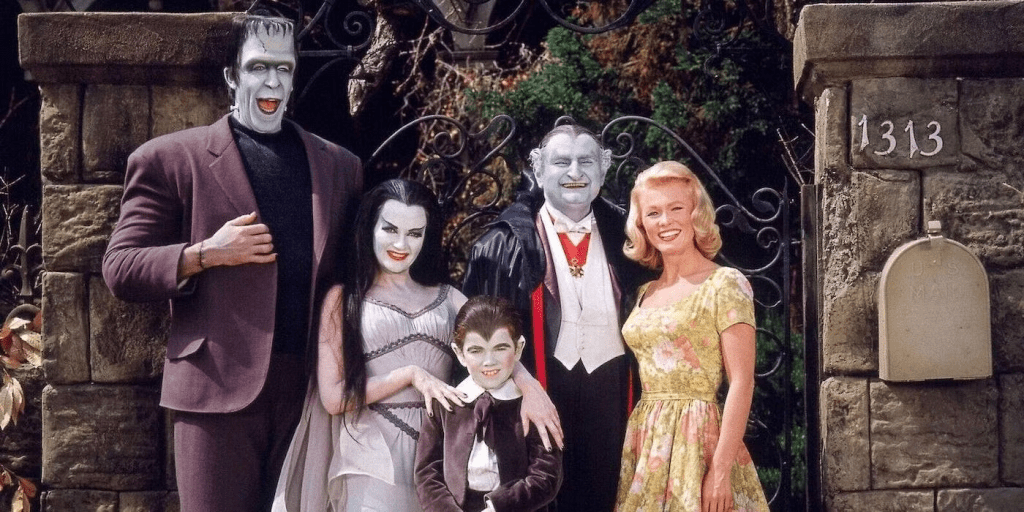
This month’s blog “theme is “Kinda Creepy.” These are not shows that will give you nightmares or have you sleeping with the nightlight on. But they did have a touch of ghoul or terror. First up is one of our All-American families, The Munsters.
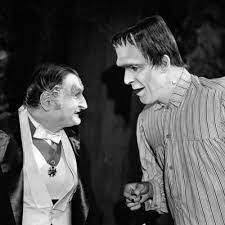
The creators of Leave It to Beaver, developed this series to be a satire of suburban life. The opening credit shows Lily handing her family their lunches as they run out the door just like Donna Reed did in The Donna Reed Show in the fifties. The Munsters are a perfectly normal family except for a few eccentric and trivial things like Herman (Fred Gwynne) being a Frankenstein, Lily (Yvonne De Carlo) being a vampire, Grandpa (Al Lewis) who can turn into a bat, and werewolf son Eddie (Butch Patrick). In real life, Lewis was a year younger than De Carlo who played his daughter and Gwynne was four years younger than De Carlo.
Photo: ebay.com
Living with the family is Lily’s niece Marilyn (Beverly Owen/Pat Priest), who seems a little abnormal to the family but looks like any high school girl of the time, except a little bit prettier. Owen was engaged when she got the part and did not think the show would be picked up. When it became popular, the cast convinced the network to release her from her contract, and Priest, who looked very similar, took over. Gwynne and Lewis had previously been part of the cast of Car 54, Where Are You? and were good friends. (To learn more about their friendship and their individual careers, see my blog from July 10, 2017.)
This series aired on CBS, and ABC featured The Addams Family whom we’ll meet next week. Both shows debuted in 1965 and were off the air after two seasons.
There were a few recurring characters including Paul Lynde as Dr. Edward Dudley (Dom DeLuise also played Dr. Dudley in one episode), Herman’s boss Mr. Gateman (John Carradine), and Clyde (Chet Stratton), a colleague of Herman’s.
Paul Lynde Photo: pinterest.com
The family lives at 1313 Mockingbird Lane. Herman works for Gateman, Goodbury and Graves, a funeral parlor, as a grave digger. In an interview with Daily Variety, Al Lewis, explained that with the unusual family, “they could do a lot of satirical pointed things on society that you couldn’t do on an ordinary show.”
The show actually had four pilots which I don’t think I have ever seen before. The first one was filmed in 1964 with Gwynne, Lewis, and Owen. Joan Marshall was Phoebe, Herman’s wife and Nate Derman was Eddie. For the second pilot, De Carlo replaced Marshall and changed her name to Lily. In the third edition, Patrick was brought on board to replace Derman. The cast stayed intact for the fourth pilot, but Eddie’s character was changed a bit. He was a bit of a brat and they toned it down.
The family had a pet dragon named Spot that lived under the stairs. When the staircase opened up, you could see the fire he was breathing and sometimes you would see his tail only.
Photo: hagerty.com
Makeup for the show was credited to Bud Westmore who had worked for Universal during their monster movie phase. However, the actual work was done by several people. Perc Westmore worked with Grandpa. Abe Haberman applied Lily’s new face, while Michael Westmore worked with Patrick and Priest. Bill Mumy was the original choice for Eddie, but his parents said “No” when they learned about how much makeup would be used for each episode.
Patrick was asked about the cast and how they got along in an interview with Fox News. He said it was a good relationship. If he had to pick another actor whom he bonded with more than another it would probably be Lewis. He discussed the amazing comedic timing that Gwynne and Lewis shared. He said that the person he enjoyed working with the most was his makeup man, Westmore. He said he was the first person he saw every morning. He also mentioned Westmore was a very handsome guy who owned a Jaguar and was a bachelor, so he looked up to him as a role model also.
Photo: vintageeveryday.com
Karl Silvera did Herman’s makeup. Gwynne had the toughest time of all the characters. He had to spend two hours in the makeup chair first thing in the morning. He wore forty pounds of foam rubber padding and drank copious amounts of lemonade. Despite that, he lost a lot of weight doing the show. In one month, he lost ten pounds. They also put a piece of foam latex on his head to flatten the top. His shoes were asphalt paver’s boots with four-inch soles. The producers rented a compressed air tank and would poke the nozzle inside his collar to blow cool air on him.
The show aired on Thursday nights at 7:30. Many shows began filming in color in the mid-sixties, but the studio did not want to pay the extra $10,000 per episode, so it was shot in black and white. For its debut year, it was number 18, tied with Gilligan’s Island, but it took a drastic drop for season two and landed at number 61. The show competed with The Flintstones and Daniel Boone in year one In year two, Batman debuted in color and The Munsters’ viewers switched networks in droves. The show was canceled with 70 episodes for syndication. From the comments that I read, I’m not sure Lewis and Gwynne would have continued another season anyway. They wanted a different type of humor and, of course, Gwynne had to endure so much with his costume.
If you were looking at the merchandising that accompanied the show, you would never guess it was only on for two seasons. Between 1965-68, 16 Gold Key Comics were produced. The show rolled out Colorforms, car model kits, both a Herman Munster doll and a puppet, and View Masters. You could also purchase several different action figure sets, a board game, and a lunch box, among other items.
Although the show, not surprisingly, never received an Emmy nomination, it was up for Best Television Series for a Golden Globe in 1965 which did surprise me.
The theme song was an instrumental, simply titled “The Munsters’ Theme.” It was composed by Jack Marshall. It was nominated for a Grammy in 1965. There are lyrics for the song, written by Bob Mosher, but they were never used on the air.
For a show that was only on the air for two seasons, it has had a lot of staying power. I think that it was so different and the fact that The Addams Family was also on two seasons and very similar just provided it with that perfect fan base. I do remember watching the show and buying The Munsters coloring books and paper dolls, but I don’t remember it being a “must see” for me. Of course, I was only five when it was canceled, so I primarily saw it in reruns. Sadly, I would also choose Batman over The Munsters, so I understand why the viewers drifted. However, it is never a waste of time to watch Fred Gwynne and Al Lewis in action. If you never watched the show or want to binge watch it, seventy episodes is an easy one to get through.
As we look at some of our favorite character actors, today we learn more about Hazel’s friend Rosie: Maudie Prickett. Prickett had a prolific career with more than 300 credits between the stage, film, and television.
Photo: bewitchedwikifandom.com
Maudie was born in 1914 in Oregon. Her birth name was Maudie Marie Doyle; she married Charles Fillmore Prickett II in 1941 and used her married name for her career. Charles was the co-founder and manager of the Pasadena Playhouse and later became an orthopedic surgeon. They remained married until his death in 1954 and had two children.
Prickett would amass 64 movie credits, with her first being Gold Mine in the Sky in 1938. Her last three movies were made in 1969: The Maltese Bippy, Rascal, and Sweet Charity. She typically played maids, secretaries, spinsters, or nosy neighbors. One of her most recognized movie roles was as Elsie the Plaza Hotel maid in North by Northwest.
In 1952 she received her first television roles, appearing on This is the Life, Hopalong Cassidy, The Doctor, and The Adventures of Superman. While most people are familiar with Hopalong Cassidy and Superman, they may not recognize the other shows. This is the Life was a religious show that began in 1952 and ended in 1988; each episode was a mini-drama that ends with someone becoming a Christian. The Doctor was a medical show where Warner Anderson as the doctor presented a story and then provided comments after the episode. Most of the series dealt with some type of emotional problem.
The look we were used to with Maudie Photo: imdb.com
For the next two decades, Maudie was quite busy with her television career. She often made multiple appearances on a show as different characters. She had a nice blend of both dramas and comedies on her resume.
In 1961 she married Dr. Eakle Cartwright who died in 1962. In 1966 she would try marriage one more time when she wed the mayor of Pasadena, Cyril Cooper who lived five more years.
While watching your favorite classic television shows, you will see her on westerns including Wagon Train, Bonanza, and Gunsmoke. She made her mark on medical series including Ben Casey and Marcus Welby MD. She also appeared in quite a few dramas including The Millionaire, The Untouchables, Lassie, Daniel Boone, The Mod Squad, and McMillan and Wife.
However, it was the sitcom genre that kept her busiest. During the fifties, she could be seen on Topper, Father Knows Best, Leave It to Beaver, and The Donna Reed Show. The sixties found her on Dennis the Menace, Bachelor Father, The Danny Thomas Show, Mister Ed, My Three Sons, Petticoat Junction, The Andy Griffith Show, The Doris Day Show, Gomer Pyle USMC, and Get Smart. During the seventies, she took roles on Mayberry RFD, Bewitched, Love American Style, and Room 222.
Best Friends – with Shirley Booth on Hazel Photo: pinterest.com
All of her recurring roles were on sitcoms: Date with the Angels, The Jack Benny Show, and Hazel. Date with the Angels was Betty White’s second sitcom, and Maudie played Cassie Murphy, a neighbor of the newlyweds. On The Jack Benny Show, she played Mrs. Gordon, the secretary of the Jack Benny Fan Club. Many people remember Prickett from Hazel where she played Rosie. Hazel and Rosie were best friends and always came through for each other but were also very competitive, especially when an eligible bachelor was involved.
In 1976, Maudie passed away from uremic poisoning at the young age of 61. Uremia occurs when there is an increase of toxins in the blood and usually occurs when the kidneys no longer filter them out. It can be treated with medication, dialysis, and transplant surgery, but for some reason, hers must have been untreated which lead to her death.
On Bewitched Photo: sitcomsonline.com
Maudie was a very busy lady, accumulating 164 acting credits between 1938 and 1974. I’m not sure if she was okay with being typecast or if she would have liked some other types of roles, but she certainly made the roles her own. You have to wonder how much more she would have accomplished if she had lived another twenty or thirty years. Her personal life was sad, having three husbands die before her and then she herself dying as middle age was beginning.
I know you read this comment a lot if you follow my blog, but we have another one of those character actors I wish we knew more about. The Television Academy rarely interviews them, and it is tough to find much information beyond their professional resume. One day I will make good on my promise and write a book about these wonderful people who made classic television so fun and believable.
This month we are looking at stories about some unique television writers. Today we are looking at a large group of writers who were lucky enough to write an episode for Bewitched.
Photo: wikipedia.com
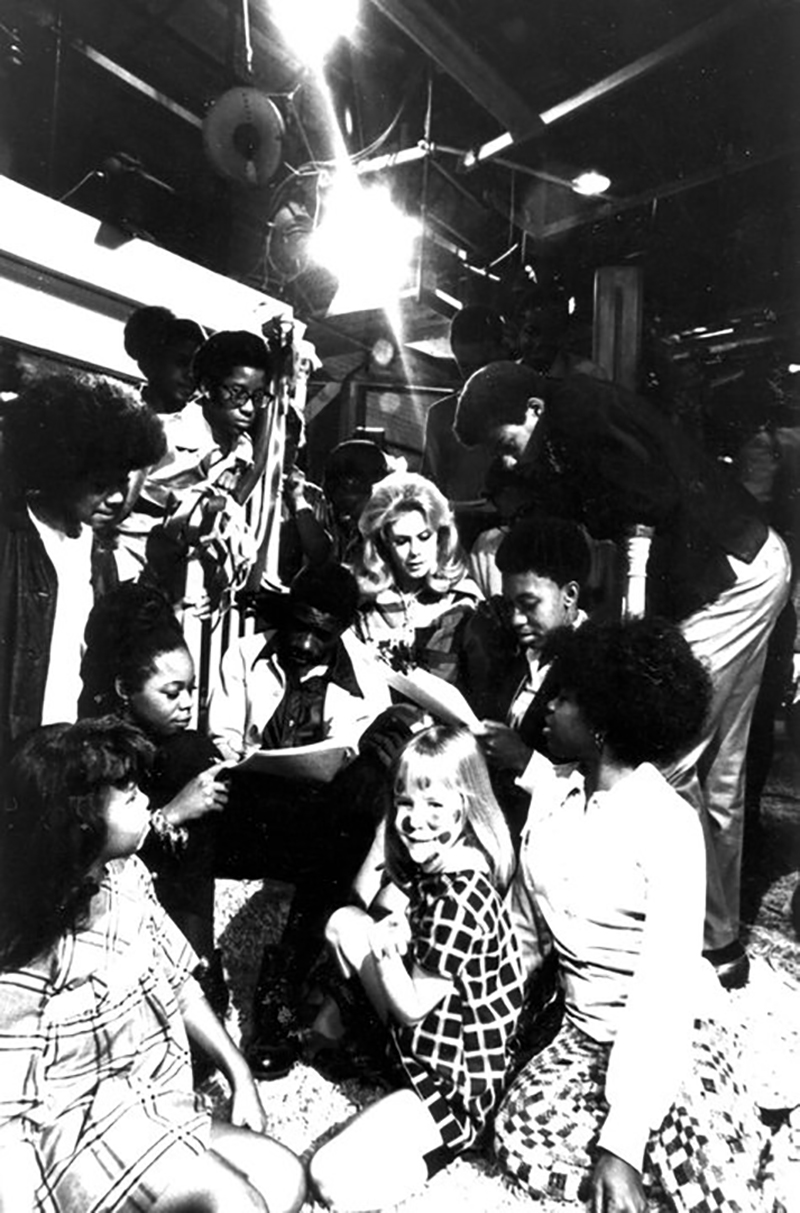
In 1969, Marcella Saunders, a young teacher at Jefferson High School in Los Angeles realized that her freshmen students were not able to read the short stories and poetry in their textbooks. She decided to try to teach them about writing using a television series. Her students were fans of Bewitched, Room 222, and Julia so she contacted the studios for each program. Bewitched was the only show to respond to her.
Saunders was able to meet with star Elizabeth Montgomery and her husband William Asher who produced and directed the show. She said most students at the school were unable to read, write, or comprehend at a high school level; 44% of students read at a third-grade level and less than 1% were at their ninth-grade level.
Photo: closerweekly.com
The Bewitched cast and crew invited the 26-member class to visit the set of Bewitched, and they paid for the transportation of the class from school to the studio. The students were impressed with their tour and decided to collaborate on a teleplay for the show with their teachers’ supervision. They wrote a script titled “Sisters at Heart” and presented it gift-wrapped to Montgomery and Asher. Montgomery and Asher were impressed with the quality of the script. Elizabeth said, “We’ve had bad scripts submitted by professional writers that weren’t as well written or creative.”
Barbara Avedon Photo: alchetron.com
Asher said the script only needed a little bit of reworking and asked Barbara Avedon if she would work with the class. Avedon, who had written for a variety of shows including The Ann Sothern Show, The Donna Reed Show, Bewitched, and Cagney and Lacey, agreed. She visited the school and described the scene she entered upon: “I was horrified. Locker doors were hanging off their hinges. There wasn’t a blade of grass in sight.”
Avedon said that she explained that they had to expand the script to fit a full half-hour. She promised the kids that no changes would be made without their approval. To work with industry requirements, the final script credited the teleplay to Avedon and Asher and the story to the students who were all listed in alphabetical order. Asher produced and directed the episode.
The class was able to attend a production and rehearsal meeting. The State of California gave the high school a grant to allow students to participate in the filming and post-production work. Screen Gems, along with Montgomery and Asher individually, also contributed to the funding. Two additional trips were planned, allowing fifty students to visit the set. Asher sent 30 copies of the script to be used in classrooms.
Saunders considered the project a great success. She said kids who thought they could not write were now writing three pages of script. One of Dick Sargent’s favorite memories of the show was one of the high school students who was given the role of assistant director. At one point, the kid screamed “Quiet on the set.”
The show became the thirteenth episode of season seven; it aired December 24, 1970 and was rerun around Christmas 1971. Montgomery introduced the episode by telling viewers that it “evoked the true spirit of Christmas . . . conceived in the image of innocence and filled with truth.”
Photo: pinterest.com
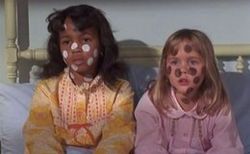
So, what was the episode about? The concept is that Tabitha’s (Erin Murphy) friend, Lisa Wilson (Venetta Rogers), was visiting. Lisa is African American and Tabitha is Caucasian. Tabitha is excited that they get to spend a few days together and says they will be sisters. Lisa’s father Keith (Don Marshall) works with Darrin (Dick Sargent) at McMann and Tate. Darrin fails to land a million-dollar advertising account with a toy company owned by Mr. Brockway (Parley Baer) because Brockway is racist and when he stopped by the house, he assumed Lisa was Darrin’s daughter and his wife was Lisa’s mother Dorothy (Janee Michelle) because Lisa mentioned her father worked at the agency.
Samantha (Elizabeth Montgomery) takes the girls to the park and when they announce they are sisters, another kid tells them they can’t be sisters because they have different skin colors. Tabitha creates a spell so that both girls have spots in the other’s skin tone. When Samantha finds the girls, she tells Tabitha to reverse the spell. She can’t, and Sam realizes that Tabitha wants the spots to remain subconsciously so they can be sisters. She explains to the girls that their appearance does not prevent them from being sisters, so Tabitha is able to reverse the spell before Lisa’s parents arrive.
In the meantime, Mr. Brockway tells Larry Tate (David White) that he wants Darrin removed from the account. When Darrin and Sam host a Christmas party that Lisa’s parents are at, everyone is introduced and Mr. Brockway realizes Darrin is married to Samantha. Mr. Brockway says to put Darrin back on the account, but when Larry learns he originally removed him because he thought he was married to a black woman, Larry tells him they don’t want his business. To teach Brockway a lesson, Samantha puts a spell on him so he sees everyone, himself included, with black skin. Realizing how unfair he has been, Mr. Brockway returns to the Stephens to apologize and is invited to Christmas dinner, which is an integrated turkey, white and dark meat.
Photo: fanpop.com
Montgomery always mentioned this episode as her favorite. Of course, the entire series was about overcoming prejudice but it was witches who were stereotyped. The episode received The Governor’s Award at the Emmy Awards in 1971.
I love this story at so many levels. How great that a teacher cared enough about her students to think outside the box to help them learn to read and write, and that Montgomery and Asher cared enough about the kids to give them such an amazing opportunity. I would love to know if any of those students ended up writing for a living. What a fun experience! And what a great Christmas message.
I thought it might be fun to look at some unique aspects of writing for sitcoms in this blog series. This month we’ll take a look at a variety of writing subjects.
To begin this series, I wanted to learn a bit about a classic sitcom writer, and Jay Sommers came to mind immediately. He wrote more than 400 scripts.
Sommers was born in 1917 in New York City. Before veering into comedy, he attended the City College of New York and studied the not-so-funny topic of chemistry. Apparently, he had good chemistry with his girlfriend’s father who thought he was pretty funny. The dad was an executive with Bristol Myers and the company sponsored many radio shows.
Photo: rusc.com
In 1940 his relationship with his then girlfriend’s dad led to Sommers receiving an offer to write for Milton Berle’s radio show. Jay did not keep the girl, but he kept the career. He would go on to write for a variety of radio shows including The Alan Young Show, Eddie Cantor, Spike Jones, Lum and Abner, and Red Skelton.
In 1950 he became the producer, director, and writer for a show called Granby’s Green Acres. It only ran for two months, but it would inspire him to create Green Acres for television a decade later. The show was based on a book by S.J. Perelman titled Acres and Pains. The premise of the show was that a wealthy banker wants to become a farmer, so he and his wife move to the country. The banker was played by Gale Gordon and his wife was Bea Benardaret.
Gordon and Benardaret Photo: wikiwand.com
Sommers’ first job as a writer on television was for The Peter Lind Hayes Show in 1950; the episode starred Gloria Swanson. In 1951 he wrote for the Colgate Comedy Hour, along with an episode of the Buster Keaton Show.
1953 brought him recognition for an episode of Our Miss Brooks (“Clay City Chaperone”). He became busier in 1954 writing for My Friend Irma, The Red Skelton Hour, and The Great Gildersleeve.
In the late fifties, he contributed to Blondie, Bachelor Father, and The Donna Reed Show.
Sommers really came into his own as a writer in the sixties. Along with a few screenplays, he wrote for The Adventures of Ozzie and Harriet, The Jim Backus Show, Dennis the Menace, The Beverly Hillbillies, and Grindl.
Sommers enjoyed the most lucrative part of his career from 1964 to 1970, working on Petticoat Junction and Green Acres. Paul Henning had created The Beverly Hillbillies and Petticoat Junction for CBS. In 1965, the network asked Henning to come up with a new sitcom and said he did not have to film a pilot or give a pitch; they trusted him to develop whatever he wanted. Sommers suggested a television version of his old radio show, Granby’s Green Acres. With Gale Gordon and Bea Benardaret already committed to other shows, the hunt began for two new stars for Green Acres.
Photo: globalnews.com Cast of Green Acres
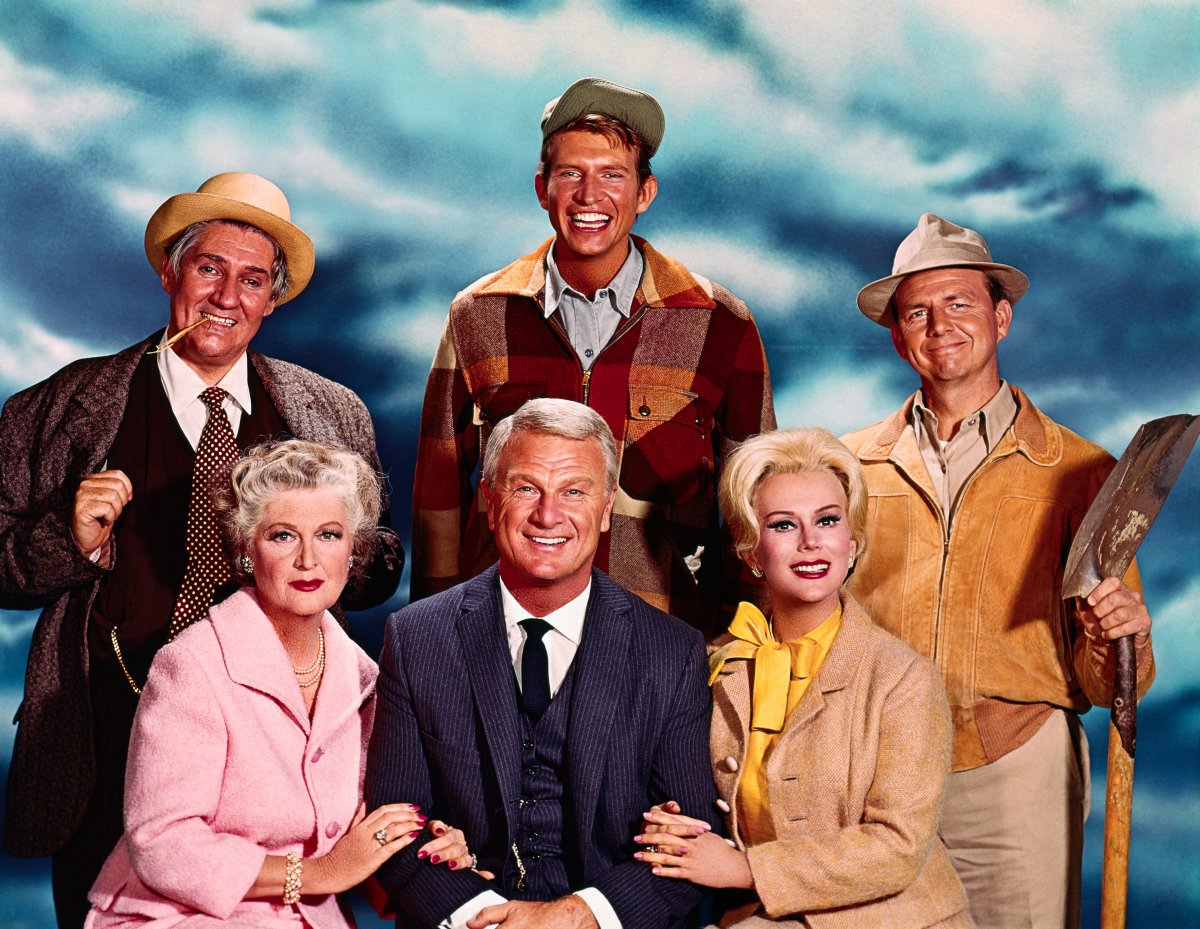
In the television show starring Eva Gabor and Eddie Albert, the banker is replaced by an attorney. Oliver Wendell Douglas and his wife Lisa leave glamorous Manhattan and move to a run-down farm in Hooterville. Lisa considers their handyman Eb their son and they bond with all the neighbors including Fred and Doris Ziffel and their pet pig Arnold, general store owner and postmaster Sam Drucker, and the folks from Petticoat Junction.
During an interview with the Television Academy, Paul Henning said his contribution was casting, and he let Jay do most of the writing and producing. The show resulted in 170 episodes and was canceled in 1971 when CBS decided to do a “rural purge” and get rid of any shows that fit that theme.
In another Television Academy interview with Richard L. Bare, who directed Green Acres, he said that he was the only director, Jay was the only producer, and that Jay and Dick Chevillat did all the writing. He said that the only other person on staff was a secretary. And, he said things worked out great. He said today there are way too many people on the set and it gets confusing.
More Hooterville favorites Photo: sitcomsonline.com
Jay continued writing in the seventies, but he did not write a lot. His shows that decade included Hot L Baltimore, Good Times, Ball Four, Alice, and Hello Larry.
Jay passed away in 1985 in Los Angeles from a heart ailment. It was very hard to find much personal information about Jay and no photos. I do know that at some point he married Barbara and they had several children. So sad that we don’t know a lot about some of the people who contributed so much to the golden age of television.
Jay Sommers left us much too early. He came out of a chemistry background, proving you don’t have to teach someone to be funny. He wrote for some of my favorite shows including The Adventures of Ozzie and Harriet, The Donna Reed Show, and Bachelor Father.
Photo: findagrave.com
Sommers worked on three of the most iconic television sitcoms in the 1960s: The Beverly Hillbillies, Petticoat Junction, and Green Acres. If you have been with me for a while, you know I never really cared for The Beverly Hillbillies. I really enjoy Petticoat Junction and I think it’s well written, but I think Green Acres was one of the best-written sitcoms on television. It’s not easy to write about quirky characters without them seeming unbelievable, but Jay did it. He created characters we fell in love with and truly liked. He produced and wrote brilliant scripts week after week for more than five years. They were clever, witty, and sophisticated without being over the top. His grave marker sums it up, “WRITER.” Thank you, Jay Sommers for introducing us to the good folks in Hooterville.
For those of you who are big fans of the “National Day of” calendars, you know that there are celebrations for National State Days. In my blog this month, we are learning about celebrities from those National State Days. We begin with National Minnesota Day and one of the stars born there is Marion Ross.
Marion was born in Watertown, MN in 1928. She moved from Waconia to Wilmar and then to Albert Lea. She must have always had stars in her eyes because at age 13 she changed the spelling of her name from Marian to Marion because she thought it would look better on a marquee. After her sophomore year in high school, she enrolled at the MacPhail Center for Music in Minneapolis. A year later, her family moved to California where she graduated from Point Loma High School.
Photo: ihearthollywood.com
Ross was named Most Outstanding Actress at San Diego State University; however, her major was archeology. After graduating in 1950, she did some summer theater in California and then began auditioning for films. The year she graduated, she eloped with Freeman Morse. They were married for 18 years.
Marion was successful in her movie career. Her first film was Forever Female with Ginger Rogers and William Holden in 1953. She would appear in 26 movies including The Glenn Miller Story and Sabrina. Ross recalled her time in Hollywood. She says it was a great time to be an actor. “All the stars ate in the studio’s dining room. Marlene Dietrich would come swooping into the room, and a hush would fall over the place. Those early days in Hollywood were just so thrilling, almost more than I could bear.”
Ironically, her first television role on Calvacade of America also took place in 1953. She would go on to have an amazing television career with more than 140 different roles on the small screen. While most of her appearances in the fifties were on the drama shows or westerns, she did show up on Life with Father as an Irish maid from 1953-55. She also was a teacher on The Donna Reed Show.
Photo: metv.com
Ross on Perry Mason
The sixties found her primarily on dramas such as Outer Limits, Dr. Kildare, and The Fugitive. However, she also received recurring roles on three series: The Gertrude Berg Show, Mr. Novak, and Paradise Bay. She was Mary Morgan on Paradise Bay, a soap opera set in California. Although the show was only on for a year, she appeared on 158 episodes before it ended.
Photo: metv.com
Her last role of that decade landed her on The Brady Bunch. When the kids get sick, Mike calls the boys’ male doctor and Carol calls the girls’ female doctor. Instead of choosing one, they decide to keep seeing their same patients.
The early seventies kept Ross busy on shows such as Hawaii Five-0, Love American Style, and Marcus Welby. In 1974 that Love American Style skit led to the show Happy Days where Marion reprised her role as Marion Cunningham. She continued her role as biological mother to Richie and Joanie (and poor Chuck occasionally) and as a surrogate mother to Fonzie for eleven years.
Photo: pinterest.com
In May of 2020, Ross did an interview on TVLine.com with Matt Webb Mitovich. He asked if she had a favorite episode from the show. She said there were two that were definitely favorites. One was when Marion gets mad at the family because they expect so much. She stood up for herself, told Howard he could have his food and took it out uncooked and put it in front of them, then storms out the door and went to work at Arnold’s. Her other favorite was the scene when she did the tango with Fonzie. She said Henry Winkler caught on right away but she had to work with a coach for a week to get it down right.
Photo: parademagazine.com
She also discussed the softball team Garry Marshall put together to keep everyone out of trouble in the off season. She said they played all over the US and continued, “And then at one point, we were invited to go to Europe. We went to Germany and played softball with the US infantry which was incredible. And then once our show was totally over, after we did our last show at Paramount, we all got on a plane at the crack of dawn and flew to Okinawa and played softball with the US infantry there.” She played rover but said she could hit. Her strategy was to hit the ball and then run with her arms raised up. Everyone was so afraid of hitting “the old lady” she would make it on first base.
Photo: yahoo.com
After the demise of Happy Days, Marion wasn’t content to sit back and enjoy life. She continued her television appearances and from 1984-2018 you could catch her on a variety of shows including Night Court, MacGyver,Grey’s Anatomy, and Hot in Cleveland. She had recurring roles on another six series. She played several different women named Emily on The Love Boat, as the iron-willed Jewish matriarch on Brooklyn Bridge, mean Grandmother Forman on That Seventies Show, Drew’s mother on TheDrew Carey Show, Marilyn Gilmore on The Gilmore Girls, and Ida Holden on Brothers and Sisters.
Marion was also able to get back on the stage. She took roles in “Arsenic and Old Lace”, “Steel Magnolias”, “Long Day’s Journey into Night”, “The Glass Menagerie”, “Pippin”, and “Barefoot in the Park.” She also toured the country in a one-woman show as poet Edna St. Vincent Millay in “A Lovely Light.”
Photo: albertleatribune.com
In 2008 the Albert Lea Civic Theater in Albert Lea, Minnesota changed the name of its venue to the Marion Ross Performing Arts Center. Marion retired in 2018. She could then concentrate on some of her hobbies which include gardening, reading, spending time with family, watching movies, listening to the radio, praying, and singing. Marion’s two children are also in the entertainment business, Jim as an actor and Ellen Kreamer as a writer/producer on many shows including Friends and one of my recent favorites, Trial & Error.
In 2018 Ross published her memoir, My Days, Happy & Otherwise. The book is described as “funny, poignant, and revealing.” It features Garry Marshall’s final interview, a foreword from Ron Howard, conversations with her own children, and her entire story.
Photo: parademagazine.com
With the Covid pandemic continuing, Ross is happy to be spending her time at her California home being in her garden and spending time with family. As she put it, “It is such a wonderful time to bond and connect with family even if we are not together. I also have been calling friends to see how they are and have a little chat.” Some good motherly advice for all of us.
As we continue looking at some of our well-known character actors, today we consider the career of Milton Frome. Frome was born in Philadelphia in 1909. He began acting in his mid-20s.
Photo: watchviooz.com
His first major movie role was in Ride ‘em Cowgirl in 1939. Frome would go on to appear in 55 movies (including The Nutty Professor, Bye Bye Birdie, and With Six You Get Eggroll), as well as five made-for-TV movies. He also had a thriving television career beginning with Chevrolet Tele-Theatre in 1950.
Photo: amazon.com
Appearing in 34 different shows during the fifties, he performed in a variety of genres including dramas, comedies and westerns.
Photo: jimnolt.com The Adventures of Superman
During that decade you would have seen him on I Love Lucy, Lassie, The Adventures of Superman, Playhouse Theater, The Thin Man, and The Gale Storm Show. He also worked with many comic legends on television, including Milton Berle, Red Skelton, and Dean Martin and Jerry Lewis.
Photo: tumblr.com I Love Lucy
His career escalated in the sixties when he would accept roles in 48 programs. He showed up in dramas, including The Twilight Zone, 77 Sunset Strip, and Dr. Kildare. He also found his way into many westerns such as Bat Masterson, Death Valley Days, Gunslinger, Big Valley, Rawhide, and Wagon Train. However, he seemed to excel at comedies and during the 1950s you could have spied him in many sitcoms. He accepted parts in Bachelor Father, Pete and Gladys, The Jim Backus Show, The Dick Van Dyke Show, Mister Ed, The Joey Bishop Show, I Dream of Jeannie, My Favorite Martian, The Donna Reed Show, Gomer Pyle USMC, Bewitched, The Monkees, The Patty Duke Show, Petticoat Junction, and The Andy Griffith Show.
Photo: coolcherrycream.com The Monkees
Frome was never offered a permanent role in a series, but he did have a recurring role in The Beverly Hillbillies, appearing eight times as Lawrence Chapman, who managed Jed Clampet’s Mammoth Studios.
Photo: imdb.com St. Valentine’s Day Massacre
His television career slowed down a bit in the 1970s and became nonexistent by 1983, but he did make appearances in shows like Ironside, Columbo, Here’s Lucy, The Streets of San Francisco, Sanford and Son, and Trapper John MD. He also appeared in two Love American Style episodes in 1971 and 1973. In the 1973 episode, “Love and the Anniversary,” he played “The Man” and his son Michael played a bellhop.
Photo: sitcomsonline.coom The Jerry Lewis Show
At some point, Frome married Marjorie Ann Widman, but I could not verify when they married. I also could not verify if Michael was their son, or his son from another relationship.*
Photo: batman.wikia.com Batman
Frome passed away in 1989 from congestive heart failure.
While it is now easy to analyze and detail an actor’s professional career, it was very tough to find any information about Frome’s personal life or his working relationships with other actors. It makes me sad that these hard-working actors who provided so much to our classic television-watching experiences are just not well known. Hopefully blogs like mine keep them in television viewers’ memories, and some day maybe I will have time to write a book about these unsung heroes of our pop culture history. Thanks for all you contributed to the golden age of television Milton Frome!
*In June of 2021, I heard from Jane Wallace Casey who provided some additional information for us: “I am Milton Frome’s niece. His first wife was Barbara Wallace with whom he had his son Michael.”
My blog theme for this month is “What a Character!” I am looking at the careers of four successful and hard-working actors. With 372 acting credits, perhaps there was no more prolific character actor than the beloved Charles Lane. He perfected the grumpy sourpuss always ready and gleeful to make life more complicated for others. His bio on imdb.com captures his type perfectly as the “scrawny, scowling, beady-eyed, beak-nosed killjoy who usually could be found peering disdainfully over a pair of specs, brought out many a comic moment simply by dampening the spirit of his nemesis.”
Photo: pinterest.com
However, despite that, we always knew there was more to him, and that his real persona was being covered up by his crotchety outward characteristics. His character Herman Bedloe on Petticoat Junction portrayed this dual-personality perfectly. Bedloe was always trying to shut down the train, but we knew he actually liked the Bradley family, and occasionally you would get a glimpse of the lonely and soft-hearted side of him.
He was born Charles Gerstle Levison in San Francisco in 1905. His family survived the 1906 earthquake. His father was an insurance executive, and Charles would follow in his footsteps for his first career.
Photo: newsfromme.com The Music Man
A friend, actor Irving Pichel, convinced Lane to try his hand at acting, and Lane joined the Pasadena Playhouse in the late 1920s. His first movie was City Girl in 1930, and his last was Acting on Impulse in 1993. During those six decades he had a successful career in both television and Hollywood. In 1933, Lane became one of the founding members of the Screen Actors Guild (SAG). In that year alone he made 23 films. There was an anecdote told about Lane that it was not uncommon for him to go to a movie, see himself on screen, and be surprised because he completely forgot he had been in the film. Starting out at $35 a day, by 1947 he was earning $750 a week.
His longest-running role was husband. In 1931 he married Ruth Covell; the couple had two children and were married until her death in 2002.
Photo: pinterest.com It’s a Wonderful Life
Perhaps most people recognize Lane from his role of rent collector for Henry Potter in It’s a Wonderful Life. Capra signed Lane to roles in ten of his movies. Lane was a corrupt attorney in Mr. Deeds Goes to Town (1936), an IRS agent in You Can’t Take It with You (1938), a newsman in Mr. Smith Goes to Washington (1939), a reporter in Arsenic and Old Lace (1944), and Blink Moran in State of the Union (1948). Among his most-cherished possessions was a letter from Capra where he wrote “Well, Charlie, you’ve been my No. 1 crutch.” Other popular films he was in include The Ghost and Mr. Chicken; It’s a Mad, Mad, Mad, Mad World; and The Music Man.
Photo: blogspot.com You Can’t Take It with You
During World War II, Lane joined the Coast Guard. When he returned to civilian life, his television career took off. His first role was on Burns and Allen in 1951. During the 1950s, he appeared in more than 30 shows including Topper, The Thin Man, Perry Mason, and The Ann Sothern Show. He was often seen on Lucille Ball shows. He and Lucy had become friends when they both worked for RKO, and he had a great respect for Desi Arnaz’s acting ability.
Photo: imdb2freeforums.net I Love Lucy
During this decade he was cast on the show Dear Phoebe in 1954. Peter Lawford starred in the show as a former college professor who writes an advice column under the name Miss Phoebe Goodheart. Meanwhile, his romantic interest is Mickey Riley portrayed by Marcia Henderson, the paper’s sports writer. Lane took on the role of Mr. Fosdick, their boss.
Photo: blogspot.com The Andy Griffith Show
The 1960s found him on almost every popular show of that decade. Tuning in to your favorite series, you would spy Lane on Bachelor Father, Pete and Gladys, Mister Ed, The Andy Griffith Show, The Joey Bishop Show, Get Smart, The Bing Crosby Show, The Man from UNCLE, The Donna Reed Show, Green Acres, Bewitched, and The Wild, Wild West, among many others.
Photo: sitcomsonline.com Gomer Pyle USMC
Lane had recurring roles on five shows during the 1960s. On Dennis the Menace, he was the pharmacist Mr. Finch. He also could be seen on his friend’s series, The Lucy Show as Mr. Barnsdahl, a local banker. The Phyllis Diller Show had a cast that should have made it a hit and from 1966-67, Lane played Maxwell. Although many characters appeared on both The Beverly Hillbillies and Petticoat Junction, Lane had two different roles on the two series. He appeared in 24 episodes of Petticoat Junction between 1963-1968 as Homer Bedloe, a railroad executive who is always trying to find a reason to shut down the Cannonball. On the Beverly Hillbillies, he portrayed Foster Phinney.
Photo: filmstarfacts.com Petticoat Junction
Lane continued with both his movie and television appearances throughout the 1970s, taking roles on The Doris Day Show, The Odd Couple, Family, Rhoda, Chicoand the Man, and he continued his television appearances into the 1980s and 1990s with shows that included Mork and Mindy, St. Elsewhere, LALaw, and Dark Shadows.
Photo: pinterest.com Bewitched
The decade of the seventies would find him cast in two additional series, Karen and Soap. Karen debuted in 1975, starring Karen Valentine as Karen Angelo. Karen works for an advocate group for the common American citizen, Open America, founded by Dale Busch, who was played by Lane. On Soap, Charles took on the role of Judge Petrillo who presided over Jessica Tate’s murder trial; however, because of Jessica’s husband, the judge lost $40,000 in a bad investment.
Photo: sitcomsonline.com Soap
Charles Lane was honored in 2005 when he turned 100. SAG proclaimed January 30 “Charles Lane Day,” and TV Land honored him in March for his long career. After receiving his award, he let it be known “in case anyone’s interested, I’m still available!”
Photo: allmovie.com TV Lands Award March 2005
Despite his being typecast in cranky roles, friends and family described him as funny, kind, and warm-hearted. Lane’s one vice was smoking. In 1990 he was rushed to the hospital when he was having problems breathing. When the doctor asked if he smoked, Lane informed him he had kicked the habit . . . 45 minutes earlier. He never smoked again and he lived another 12 years, dying peacefully in 2007.
Photo: blogspot.com Homer Bedloe
Although it’s tough on actors to be typecast so early in their career, it’s a double-edged sword, because it also provides a lot of opportunities for roles. Lane was an enigma; while he always convinced us that he was just as mean as could be, we also knew if someone would give him a chance, he could be reformed like Scrooge; he just needed the opportunity. It always makes me smile to come across Charles Lane in a move or television episode. It’s like seeing an old friend, or perhaps the neighbor who yelled at you to get off his yard. However, if you looked closely, you would see him watching and wanting to be part of the action. As you watch your favorite older classic shows, keep an eye open for him.























 thewritelife61