This month we are learning about sitcoms with one name, and today is Angie. Angie had a short run from February 1979 until September of 1980, producing 36 episodes. It was one of the few Garry Marshall shows not to be a long-running hit. He created it with Dale McRaven. We all know Marshall’s amazing career with Happy Days, Laverne and Shirley, The Odd Couple, not to mention all of his great movies. McRaven also had a prolific career as a producer and writer. He’s listed as producer for The Partridge Family, The Betty White Show, Mork and Mindy, and Perfect Strangers. His writing credits includes all of these shows, as well as The Dick Van Dyke Show, That Girl, Get Smart, The Odd Couple, and Room 222 among others.
📷ihearthollywood.com
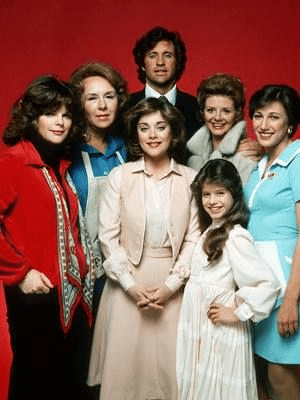
The cast was quite talented: Donna Pescow played Angie, Robert Hays was her boyfriend-later-husband, the amazing Doris Roberts was her mother Theresa before Raymond came along, and Debralee Scott played her sister Marie.
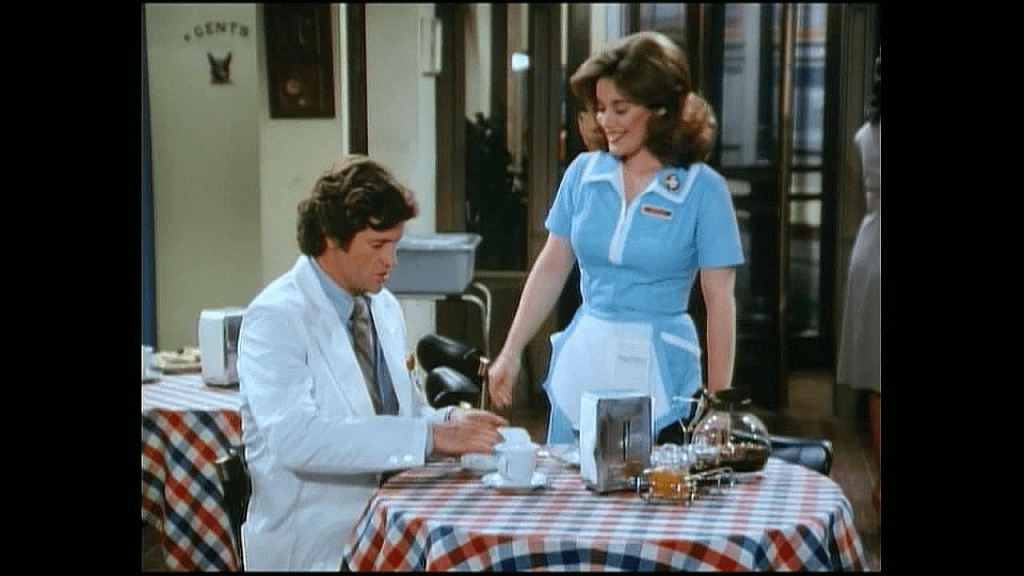
Bradley Benson is a young pediatrician who comes from a wealthy family comprised of his stuffy father Randall (John Randolph), his overbearing sister Joyce (Sharon Spelman), and her daughter Hillary (Tammy Lauren). The show is set in Philadelphia.
Angie is a coffee-shop waitress who falls in love with Brad. Many scenes are set in the diner with Angie’s friend and co-waitress Didi (Diane Robin). When their families argue about wedding plans, Brad and Angie elope. Later Angie’s mother plans a small family wedding for the two families to get to know each other, and Brad buys the coffee shop for Angie.
At the beginning of the second season, Angie sells the coffee shop to buy a salon with her mother.
📷imdb.com
The theme song was “Different Worlds,” written by Norman Gimbel and Charles Fox. Gimbel is still hard at work and has amassed 494 credits so far while Fox has 131 credits for many impressive television series and big-screen films. Maureen McGovern sang it; she’s best known for her top-forty hit “The Morning After.”
The show was sandwiched between Happy Days and Three’s Company on Tuesday nights, which ensured great ratings. This one was fifth its first week. The show just could not find its fan base. By the end of the season, the Nielsen ratings had fallen drastically, and the show had moved to Monday nights following Monday Night Football. Angie wasn’t the only show to struggle in this time slot. Once it was moved, three other shows—One in a Million, Goodtime Girls, and Laverne and Shirley—all tried this scheduling spot. I’m not sure if the shows were just not very good in 1979, if people were too busy to watch television, or the network heads were inexperienced, but when you look at the schedule from 1979 most prime times had a different show in the slot every season of the year. When it’s not only one show on a network moving, but many shows on a network moving and then all networks having a bunch of shows moving, how are viewers supposed to figure out where anything was? Out of the 54 new shows debuting in 1979, by the next season every network basically had one hit show out of the bunch: ABC-Hart to Hart, CBS-Trapper John MD, and NBC-The Facts of Life. While these are all decent shows, none of them were classics in my opinion. In 1980 another 30 shows were brand new.
📷rewatchclassictv.com
The show was put on hiatus. It did return in April on Saturday nights, but it was officially canceled in May.
When you look at this show on paper, it had all the right elements. First of all, we have Garry Marshall and Dale McRaven, very successful creators and writers. The cast was amazing. Even the theme song was composed and sung by extremely talented people. Then you have the fact that there were not a lot of great shows debuting this year; a decent show should have crushed it. So, what happened here?
I think I’m putting the blame for this one on the network. I watched the pilot and while pilots are meant to pull you back for the next one, most pilots aren’t the best of the series. Some of the pilots for shows I love are almost dreadful. This pilot was not dreadful. The characters were likable, the writing was funny, and the theme was not overdone over the years. It was similar to The Mothers-In-Law from a decade earlier but more of a Dharma and Greg (which came two decades later) where they fall in love despite their economic differences.
📷youtube.com
This series was better than a lot of shows that are currently on the air. I did watch another later episode where the couple elopes. Once again, the writing was good and the characters were a bit eccentric, but the writers knew how far to go to keep them likable and charming rather than odd. If ABC had kept it in a time slot for more than a month or two and given it a bit of time, it might have been a big hit.
If you want to check it out, let me know what you think. For a late seventies/early eighties show, it’s aged very well.
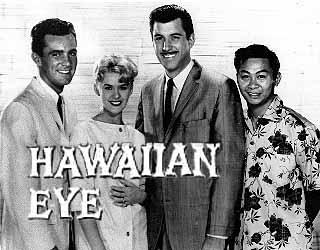
Welcome to this month’s blog series, “Crime Solvers of the Past.” Before there was Hawaii Five-0 or Magnum PI, there was Hawaiian Eye.
📷wikipedia.com
Warner Brothers was looking for possible television series to create. They sent one of their story editors, Jack Emanuel, to Hawaii to get some inspiration for a crime series, and Hawaiian Eye was born.
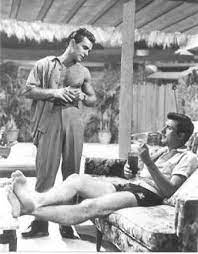
The show debuted on ABC in the fall of 1959 and continued until April 1963. Like the above-mentioned shows, this one also features a partnership. Tom Lopaka (Robert Conrad) and Tracy Steele (Anthony Eisley) own a detective agency that also provides security services, and it’s called Hawaiian Eye. The Hawaiian Village Hotel is one of their biggest clients and they provide an office/living space for the firm. Rounding out the cast was Cricket Blake (Connie Stevens), a local photographer and singer who helps the guys out; Kim Quisado (Poncie Ponce), a cab driver who plays the ukelele; Greg McKenzie (Grant Williams), a former engineer who helps out and later joins the firm, and Philip Barton (Troy Donahue), the hotel social director. Lt. Danny Quon (Mel Prestidge) also shows up off and on when the boys need help from the local police force.
Sprinkled among the 134 episodes, you’ll find lots of great character actors and guest stars popping up.
📷facebook.com
Robert Wagner was originally chosen for Lopaka, but he turned it down to continue his movie work. Warner Brothers produced this one, so there was a bit more feel of a movie set.
Ponce was the only cast member actually born in Hawaii, and when the show aired, his entire hometown shut down in order to watch their local boy. Ponce only ended up with 8 acting credits, one in Speedway with Elvis Presley. Most of his career was spent in the music side of the entertainment business singing and playing. While he played a uke on the show, in his personal life this talented guy also played piano, trumpet, sax, and harmonica. In fact, he was seen by William Orr, head of Warner Brothers as a singing waiter. Orr was so impressed he signed him for the show. However, he was not as impressed with his waiting abilities, so he became a cab driver!
Connie Stevens also started and ended her career in the music business. She was part of a cast for three television shows but garnered 72 acting credits during her career.
📷fanpix.net
The opening of the show was a voiced over with a narrator introducing the cast who is frolicking around in the water and on the beach. In the background a chorus sings “Hawaiian Eye” repeatedly.
The plots seem fun for the time. The duo helped a woman who thinks her husband is trying to kill her, chased down a former spy, investigated hotel crime, and there is a bit of a Love Boat feel to the show where one of the partners falls in love, and lots of women are strolling around the island.
It was not shot in Hawaii but in Burbank, in black and white film; the fact that it often takes place at the hotel, it’s not noticeable we’re not on the Island. It’s just missing the lush scenery the later series feature.
📷tvtime.com
The show aired Wednesday nights with its primary competition The Perry Como Show and I’ve Got a Secret which were top thirty shows the first season but had fallen out of the top thirty by season two, so maybe Hawaiian Eye gained some of their viewers. Season three, in addition to Perry Como, the show was up against The Dick Van Dyke Show. For its final season, it moved to Tuesday nights and was on at the same time as The Red Skelton Show and The Jack Benny Show which were in the top twenty and ten respectively. That seemed to end any hopes the show had to continue, and it was cancelled.
Unfortunately, I can’t find anywhere the DVD set was released but there are streaming services with it and a few private sellers with sketchy quality. If you enjoyed Hawaii Five-0 or Magnum, check out some of the episodes on YouTube. From everything I could find, the show had a great cast with a lot of chemistry, some interesting music performances, comic relief from Ponce, and good writing, everything you want to see in a popular series.
As we look at a few little-remembered shows from the past, today we are learning about My Sister Eileen. The series was adapted from short stories by Ruth McKenney published in The New Yorker. The stories became a book in 1938, a play in 1940 and two movies in 1942 and 1955.
📷wikipedia.com
In the 1955 Hollywood movie, two small-town sisters — an aspiring writer, Ruth (Betty Garrett), and a would-be actress, Eileen (Janet Leigh) — move to New York City. They find lodging in a shabby apartment and struggle to locate promising gigs. Ruth eventually meets magazine editor Bob Baker (Jack Lemmon), who tells her to write about her life experiences rather than fiction. As it turns out, Eileen’s life, with her various romantic encounters, is far more interesting, so Ruth steals the stories for herself.
This show joined the television schedule in 1960 and featured Elaine Stritch and Shirley Bonne (Ruth and Eileen Sherwood), who move to New York City. Like the movie, one is a writer and one is an actress. Living in a Greenwich brownstone, they become friends with a reporter Chick Adams (Jack Weston) and Ruth’s coworker Bertha (Rose Marie). Rounding out the cast is Eileen’s agent Marty Scott (Stubby Kaye), their landlord Mr. Appopoplous (Leon Belasco), Ruth’s boss D.X. Beaumont (Raymond Bailey), and their Aunt Harriet (Agnes Moorehead). The sisters are stereotyped with Ruth being the smart, plain one and Eileen being the beautiful and naïve one.
The pilot was seen on the Alcoa-Goodyear Theater with Anne Helm portraying Eileen.
Earl Hagen who composed “The Fishing Hole” for The Andy Griffith Show composed this theme as well.
📷imdb.com Rose Marie on the show
Rose Marie talked about being on this sitcom for the Television Academy. She said she was friends with the producer Dick Wesson. She said her character Bertha was a wise-cracking one similar to Sally on The Dick Van Dyke Show. Rose Marie didn’t like working with Elaine Stritch. She felt she was not very professional on this show; she said she came to work late and goofed off a lot.
In 1960 it appeared on the schedule on CBS opposite Hawaiian Eye and Perry Como’s Kraft Music Hall. Hawaiian Eye was on the air four years, and this was it’s second season. With Connie Stevens, Robert Conrad and Poncie Ponce, it was about two private investigators in Hawaii, a Korean war vet and a former police detective.
I don’t think the writing helped the show stay on the air too long. During the first season some of the plots included: Ruth’s boss ignores her pleas for a pay increase until he encounters her working as a waitress in a German restaurant — and in a skimpy costume and the Sherwood sisters decide to break their lease with a wild party to which they invite a one-man band, a junior Tarzan, and a fireman with his siren.
📷moviesanywhere.com 1955 film version
I’m guessing part of the problem was that it had appeared in so many versions already. Many people read the book. Lots of people saw one, if not two, of the movies. And the play was being featured around the country. I can see that having a television series which has to expand the hour-and-a-half play and film might not have enough material to draw out the same old plot and keep it interesting for more than a few episodes.
This one is another one that you’re probably better off watching the 1955 silver screen adaptation and skipping the television series.
This month our blog is devoted to The Bill Dana Show which was on the air for two seasons in the early sixties.
📷dvdplanetstore.com
Bill Dana is not a name remembered much anymore but, in the sixties, he was a huge celebrity. There is some tough talk about why he was so famous. During the late fifties and early sixties, especially as so many radio shows transitioned to television, there were some politically incorrect shows. This one teetered on the edge of it, in the same ways the show Life with Luigi did.
Bill Dana’s alter ego, Jose Jimenez, debuted on The Steve Allen Show in the late fifties. Jimenez was a Mexican immigrant. He saw the United States through a different lens than people who grew up here. He often was amused by what he saw going on around him. However, he was not the lazy stereotype Mexican. Jimenez was hard working and wise in many ways. He was not offensive in the way Amos and Andy were. Dana was a Hungarian Jewish man playing a Hispanic man so that was not well received either.
While I still love so many programs from the fifties and sixties that hold up well today and have delightful characters, many programs from this time make us cringe and we are embarrassed for the television industry at that time.
There are also many performers that may have bordered on sexual and ethnic political incorrectness, many of their characterizations may not be offensive, but I sure don’t find any humor in them.
📷 Jose Jimenez televisoinacademyawards.com
Remember this was during the Civil Rights Movement era, so things were beginning to get examined more closely in pop culture. Even if Jose was a good guy, his exaggerated accent set him up more of a caricature than a character.
While there was some blowback from the Latino community, many fans adored Jimenez. Danny Thomas and Sheldon Leonard decided to give Jose his own show after he made a few appearances on The Danny Thomas Show. NBC put the show on its schedule without even seeing a pilot because he was so popular.
While the quick sketches with Jose were in your face humor, putting the character in his own television series gave the writers time to develop him more and make him more dimensional. Leonard made this a workplace sitcom which was different for him since so many of their shows—The Dick Van Dyke Show, The Danny Thomas Show, That Girl, Good Morning World—were all balancing personal and work life. Earl Hagen, who wrote so many great tunes for the Leonard group, wrote this one as well.
The show aired September 22, 1963, and ran for a season and a half, ending January of 1965.
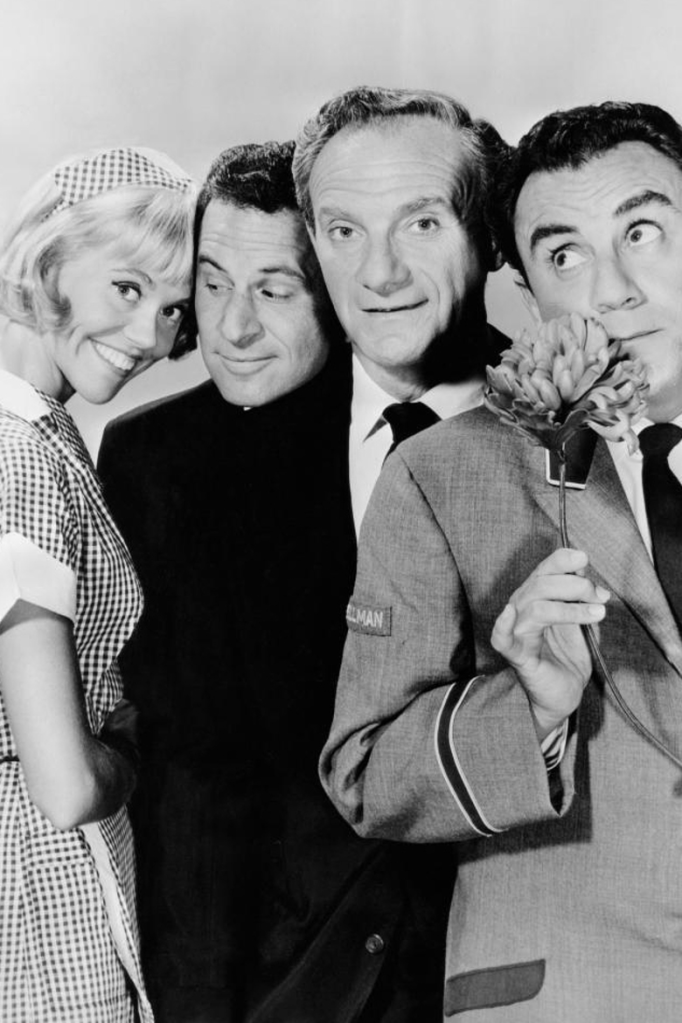
Jimenez is a bellhop at a luxury New York hotel. He lives in a special staff apartment, eats in the hotel kitchen, and interacts with most of the guests. He is surrounded by a great cast which we’ll get to know in more detail this month. Don Adams was Byron Glick, house detective. Jonathan Harris took on the role of Mr. Phillips, the hotel manager. Fellow bellhop Eddie (Gary Crosby) is always trying to get Jose to lose his rose-colored view of life. For season 2. Maggie Peterson plays waitress Susie.
The ratings were not great. Perhaps viewers had a harder time connecting this Jose to the caricature Jose. Certainly, more criticism came from the Latino community as the show went on. In addition to Jose, there was feedback on other shows that used stereotypical Mexican characters and in commercials like the Frito Bandito.
📷washingtonpost.com
Jose had one cameo role in Batman when he meets the duo and introduces himself as “My name—Jose Jimenez” in 1966. That was the final appearance of the character and a few years afterward, Dana read an obituary that he wrote for Jose at a Latino civil rights meeting in Los Angeles, and he became an activist for the Latino community, so there was some good coming out of the situation.
The show was canceled partway through season two. Another factor in the show’s ratings was the fact that it was on Sunday nights up against Lassie, a family favorite. However, the show did somehow receive an Emmy nomination for outstanding sitcom. No surprise it didn’t win. Despite being a mediocre show with some nugget of greatness here and there, it was up against McHale’s Navy, The Farmer’s Daughter, and the show that won, The Dick Van Dyke Show.
If The Bill Dana Show had just been a show about “a guy” who arrives from Mexico to work in a posh hotel, and we saw life through his eyes, good and bad in America, the concept could have been fun and more accepted. It appears that the writing was pretty good and it had a great cast. Jose was just not the character to build the show around.
As we are in the middle of our What in the World? blog series, today it’s a forgotten sitcom from the sixties: Good Morning World.
📷wikipedia.com
This series was created by Sam Denoff and Bill Persky, the team behind That Girl. The concept was based on Persky and Denoff’s time as writers for a New York radio station in the fifties.
In fact, William B. Williams, a WNEW DJ was given screen credit because the title was based on his daily greeting, “Hello, World.” William B. Williams was quite a character and an icon in the world of music. He was born in 1923 and after attending the University of Syracuse, he got a job with WAAT in New Jersey. He filled in for a DJ who failed to come to work but then was fired for, believe it or not, wearing red socks to work. He was hired by WNEW in New York City. He became a beloved radio icon. The radio station said at his funeral there was a huge crowd outside which included taxi drivers, sanitation workers, bookies, waitresses, singers, songwriters, politicians, housewives, first responders, and even the Rockettes.
📷radiohalloffame.com William B. Williams
According to the radio station’s website, “William B. Williams respected singers and songwriters, music and musicians, and it showed. He had a permanent, perhaps profound, effect on the lexicon of pop music.
He bestowed the ‘Count’ on Basie and the ‘Duke’ on Ellington. Billie Holiday was ‘Lady Day.’ Ella Fitzgerald was the ‘First Lady of Song.’ Louis Armstrong was ‘Pops.’ Sinatra was ‘Francis Albert,’ the ‘Chairman of the Board.’ Nat ‘King’ Cole was simply ‘Nathaniel.’”
The show was produced by Sheldon Leonard and Carl Reiner. Looking at that alone and you would expect it to be a hit.
The premise was two radio disc jockeys who have a morning show, “Lewis and Clarke,” in Los Angeles. Dave Lewis is happily married, and Larry is a lady’s man and party boy.
They had some problems casting this show. Roddy McDowell and Sharon Farrell were cast as the married couple. Then Ron Rifkin replaced McDowell. Then they were both let go and David Lewis was played by Joby Baker, his wife Linda was played by Julie Parrish, and Ronnie Schell was cast as Larry Clarke.
📷pinterest
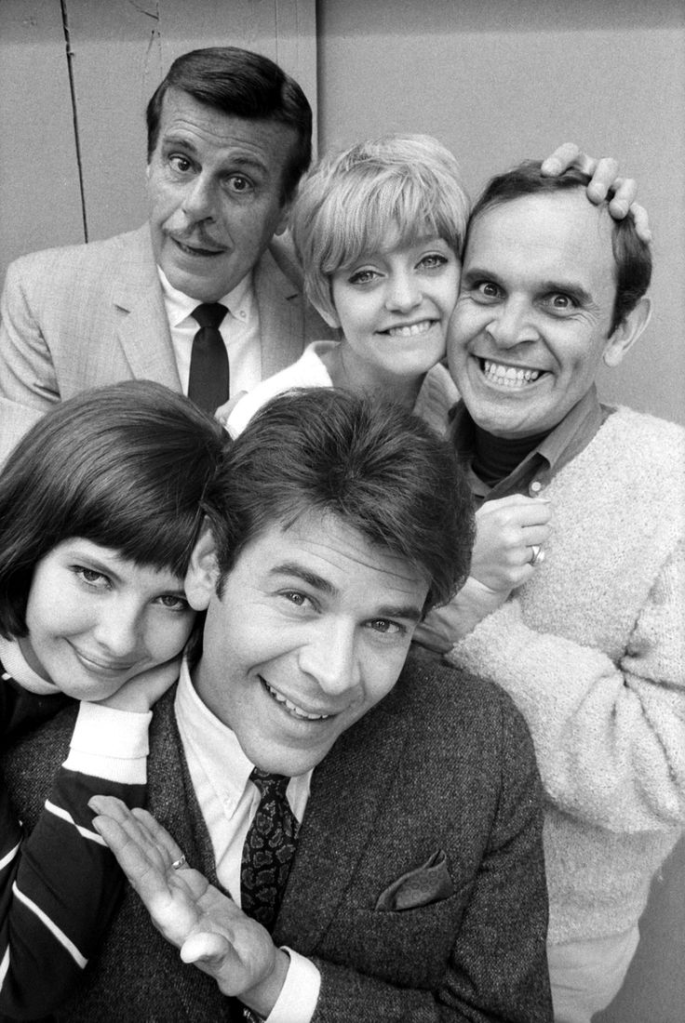
Billy de Wolfe and Goldie Hawn were fun additions to the cast. De Wolfe played Roland Hutton, the stuffy station manager. Hawn was Linda’s best friend Sandy Kramer.
The series debuted on CBS in 1967. It was on Tuesday nights, sponsored by Procter and Gamble. It was competing with N.Y.P.D., a police crime show and Tuesday Night at the Movies which began half an hour before Good Morning World.
Given that the talent behind The Dick Van Dyke Show was contributing to this show as well, it’s not surprising that it seems to be a mixture of The Dick Van Dyke Show and the later Mary Tyler Moore Show. Like Dick Van Dyke, the show features the DJs’ home and work life; like Mary Tyler Moore, you have a Lou Grant-type manager, and we learn about life at a radio station.
The theme music was by David Grusin. The opening was a different look for a sitcom. It’s a bouncy theme that begins with an alarm clock ticking, the guys quickly getting ready, morning traffic, life in LA, and the two DJs barely getting into their chairs before the show started.
The show was not awful in ratings, but the network had two concerns. They still were not sure Baker and Parrish were the right actors to play the married couple, and Parrish had some health concerns that affected the show. They were also concerned that the show did not pull in more of the viewers who were watching The Red Skelton Show which was on before Good Morning World. I don’t think that is surprising. I’m guessing people who enjoyed watching Red Skelton would not love this show as much and vice versa. Full disclosure, I am not a Red Skelton fan. I didn’t find his humor funny, and I have read too many stories shared by actors and writers who experienced his ego and lack of respect dealing with coworkers.
📷imdb.com
The network made the decision not to renew the show for a second season. Schell, who had been playing a private on Gomer Pyle: USMC, another Leonard/Reiner show, returned to military life with a promotion to corporal.
Goldie Hawn was free to accept an offer to appear on Martin and Rowan’s Laugh In which was a turning point for her career. De Wolfe became part of the cast of his close friend Doris Day’s show.
Baker never starred in another show, but he was a busy character actor. Parrish was later cast in Return to Peyton Place and also stayed busy in television; she later had a recurring role on Beverly Hills 90210.
This would be an easy series to binge watch with 26 episodes available. S’more Entertainment released the series on DVD in 2006 and its’ on Roku, so viewers can check it out for free.
This month we are looking at some of our favorite character actors. As we wrap up the series, we are ending on a high note with the amazing Burt Mustin. Like Charles Lane, Mustin had a prolific career in Hollywood and television. However, unlike Lane, Mustin was offered his first acting job at age 67 after he had retired.
📷Widener University Archives
Mustin was born in Pittsburgh in 1884. His father was a stockbroker. After high school, Mustin enrolled in the Pennsylvania Military College (now Widener University) with a degree in civil engineering. During his college career he played trombone in the band and played goalie for his hockey team.
After graduation, Mustin toured Europe, planning to work at his father’s brokerage firm. However, a financial panic destroyed the company.
One of Burt’s university classmates was Charles Spinney. According to Burt, Spinney displayed lots of photographs of young ladies from his hometown of Memphis, Tennessee. One day, he was showing them to Burt when he spotted the photo of what he referred to as “the prettiest girl in the room.” Mustin traveled to Memphis to meet her and in 1915 he married Frances Robina Woods. The couple had no children and remained together for their entire lives, with Frances passing away in 1969.
📷imdb.com
After working as an engineer for a few years, Mustin decided to try to sell automobiles. In an interview, Mustin admitted, “I was the worst engineer the school turned out.” He began selling Oakland Sensible Sixes and later Franklins, Lincolns, and Mercurys. WWII put an end to car sales for a few years, so Mustin began working for the Better Business Bureau and then the Chamber of Commerce. He stayed in Pittsburgh until he retired.
He did a bit of amateur acting and continued his passion for music. He was part of the oldest Gilbert and Sullivan troupe in the country, the Pittsburgh Savoyards; the Pittsburgh Opera; and an officer in the Society for the Preservation and Encouragement of Barbershop Quartet Singing in America.
He was a founding member of the Pittsburgh Lions Club in 1921 and a life member in the Fellows Club of Pittsburgh. Mustin served as an announcer for the first weekly variety show on radio station KDKA.
📷that’sentertainment.com
After retiring, Mustin and his wife moved to Tucson, Arizona for her health where he continued acting. William Wyler saw him in a stage production of “Detective Story” and told Mustin to let him know if he ever wanted to pursue a film career. When Wyler was casting for Detective Story in 1951, Mustin reached out to him. The couple later moved to Los Angeles. Mustin would appear in 67 films overall.
In 1968 Mustin was cast in Speedway with Elvis and Nancy Sinatra. In one scene the stars have a lover’s quarrel in a coffee shop. When they make up, Elvis sings a song for his girl. Mustin is in the background cleaning the café and working at the counter. The producers felt the scene needed something else. That something else ended up being Mustin singing and dancing with a mop. No one on the set realized that Burt could sing before that adlibbed scene.
1951 was also the year that Mustin appeared on television in The Adventures of Kit Carson. He would find a new career in television for the next two decades, appearing in more than 130 series (which would equal more than 400 actual episodes).
📷imdb.com
During the fifties, he would be attracted to many westerns and dramas; however, he found his way onto a few comedies including The Great Gildersleeve, December Bride, and Our Miss Brooks.
If I listed half of the 1960s shows he appeared on, you would still be reading this blog next Monday when my new one is dropped. Take my word for it that he was on almost every popular sixties’ sitcom, including 14 episodes as Gus the fireman on Leave it to Beaver. Other sixties hits you can find him on include The Many Loves of Dobie Gillis, The Dick Van Dyke Show, The Joey Bishop Show, The Jack Benny Show, The Beverly Hillbillies, Get Smart, TheAndy Griffith Show, The Lucy Show, Bewitched, Gomer Pyle USMC, PetticoatJunction, and My Three Sons, not to mention many dramas and westerns including Bonanza and Gunsmoke. He was no less busy in the seventies where we could catch him in Marcus Welby, The Mary Tyler Moore Show, The Brady Bunch, Love American Style, Adam-12, All in the Family, and Phyllis.
📷imdb.com
Johnny Carson loved having Mustin on The Tonight Show, where he was a fan favorite. He shared a lot of fun stories on the show. One of them was about him being at the first World Series for baseball in 1903 when the Pittsburgh Pirates played the Boston Red Sox. Unfortunately for Burt, Boston came back to win the series, but as a bonus he did get to see Honus Wagner play on the diamond.
Mustin passed away eight years after his wife at the age of 92. He left a gift to the college he was loyal to his entire life, enabling Widener University to renovate their theater. It is now named the Burton H. Mustin Theatre and Lecture Hall.
It’s hard to wrap your head around what a busy film and television career Mustin had. He was an actor for the last 25 years of his life, and with 67 movies and more than 400 episodes, that means that he accumulated about 20 credits per year which is almost two a month from age 67 to 92. Talk about an amazing career. Mustin proved that it’s never too late to find your next passion. Thanks for so many great memories Burt Mustin.
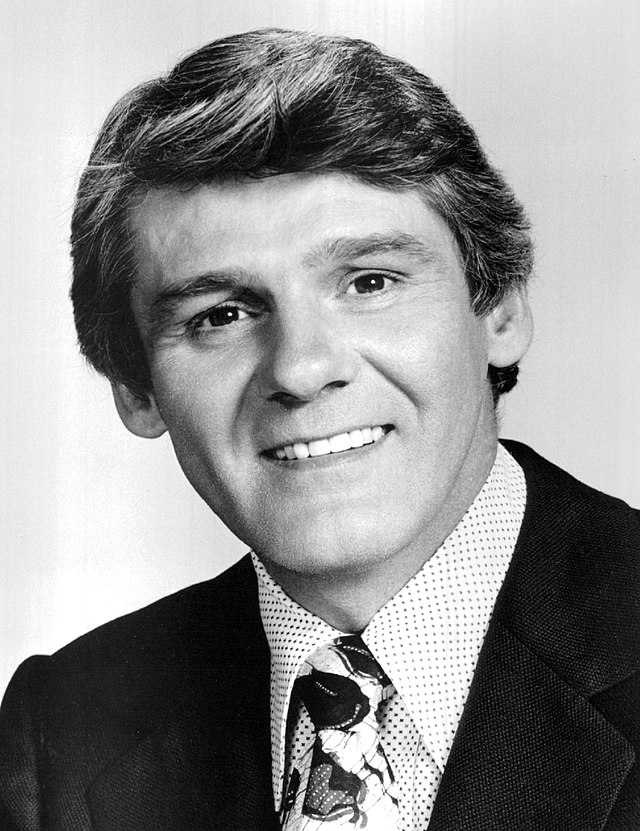
Today we began our “What a Character” blog series. Typically, when we discuss character actors, we are looking at actors who were busy in the forties, fifties, and sixties, but in the past sixty years, there have been a lot of great character actors as well. Today we are looking at the career of Richard Schaal.
Schaal was born in Chicago in 1928. His dad was a machinist, and his mom was a telephone operator. After he graduated, he ran a construction company before joining the Second City comedy troupe in 1959, not long after it began.
In 1950 he married Lois Treacy. I could not find a divorce date, but it was some time before 1964. They had a daughter Wendy who is also an actress.
Eventually he made his way to California. He had seventeen film credits on his resume; most of them were not too memorable, but he was in The Russians Are Coming, The Russians Are Coming and Slaughterhouse Five.
📷imdb.com
Television is where he made most of his acting appearances. He began his TV career in 1964 in East Side/West Side. This was a show I had not heard of before. Apparently, it was on for one year and starred George C. Scott as a social worker trying to help his clients in the mix of cultures that makes up New York City.
Schaal would find a few more roles in the sixties on several shows including The Dick Van Dyke Show, That Girl, and I Dream of Jeannie.
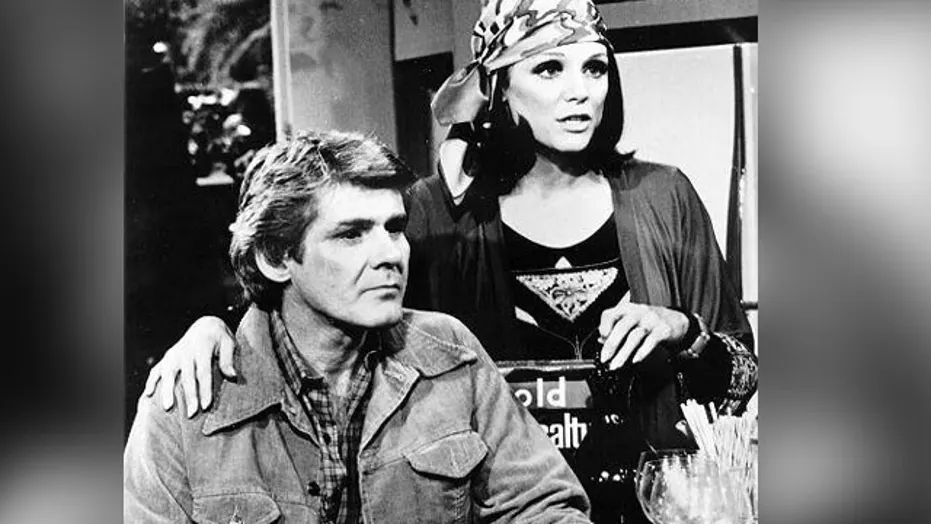
In the sixties, Schaal met Valerie Harper and they married in 1964.
During the seventies, he collected roles on many sitcoms including The Doris Day Show, The Partridge Family, Love American Style, The Bob Newhart Show, and The Mary Tyler Moore Show.
📷foxnews.com
On The Mary Tyler Moore Show, he played Howard Arnell, Paul Arnell, Chuckles the Clown, and Dino. Not surprisingly, he made appearances on Rhoda and Phyllis.
In 1970, Schaal and Harper wrote a script for Love American Style for “Love and the Visitor” which aired on season two, episode 5 where a bridegroom ends up in the wrong girl’s bedroom. Harper said they were part of the Writers Guild, but their hearts were in acting and once she got the part of Rhoda, the writing stopped.
Harper discussed Schaal during an interview with the Television Academy. She describes him as her former husband and good friend. She said she and Schaal hosted a talk show with Skitch Henderson for about a year in the mid-sixties. They did interviews and sketches. She said after that they decided to move to Los Angeles.
📷imdb.com The Russians Are Coming The Russians Are Coming
The seventies were also a busy time for Schaal who continued to find roles on television. You can see him on dramas such as Nero Wolfe and Hardcastle and McCormick. He also was on sitcoms including Harper Valley PTA and JustOur Luck. He had a recurring role during this decade on Trapper John MD from 1981-85. The show was a sequel of M*A*S*H and portrayed Trapper later in life. Schaal played Dr. David Sandler. He also accepted a role on It’s a Living in 1980. His daughter Wendy was part of the cast. She has a very successful career and has appeared in many popular series. From 2005-2023, she was one of the voices in American Dad.
In 1980 he tried marriage a third time with Tasha Brittain. They would divorce in 1989.
📷pinterst.com
Schaal retired in 1990 and passed away in 2014 in Los Angeles. No cause of death was provided. He did have spinal surgery in the late 90s and was in a wheelchair after that.
Sadly, I could not find a lot of information about Schaal or his personal life. He had a successful career, but it’s too bad there wasn’t more improvisational work at the time. It sounds like he was very gifted in that area. He didn’t have as much luck in love, but at least, according to Valerie Harper, he was a great guy and they remained good friends. He was one of those character actors who added so much to the television industry, especially in the sixties and seventies.
This month, our theme is Bam! Pow! Batman Villains. We have learned a bit about the careers of the Joker and Cat Woman, and today we are spending some time with the Riddler, portrayed by Frank Gorshin.
📷imdb.com
Gorshin started out as an impressionist and comedian before transitioning into acting.
Frank was born in Pittsburgh in 1933 into a blue-collar, middle-class family. His mom was a seamstress, and his father was a railroad worker. His paternal grandparents arrived in the US from Slovenia and his mother was born in Slovenia, coming to the Pittsburgh area as a young girl; his parents were very involved in the Slovenian community, both singing with the Preseren, a Slovenian singing society.
When he was 15, Gorshin got a part-time job as an usher at the Sheridan Square Theatre. He studied the mannerisms of the actors he watched in those movies and developed an impressionist act. Some of his favorite actors to mimic included James Cagney, Cary Grant, Al Jolson, and Edward Robinson. After entering a talent contest in 1951, he won a week-long engagement at the Carousel nightclub in New York.
Sadly, Gorshin’s older brother was hit by a car two days before and died. His parents convinced him to keep his performance schedule and sent him to New York.
After high school, Gorshin enrolled at the Carnegie Tech School of Drama (now Carnegie Mellon University).
📷imdb.com
At age 20, Frank was drafted into the US Army and sent to Germany. He was an entertainer in Special Services for a year and a half. When Gorshin left the Army, he began his acting career, appearing in four movies and on television in Alfred Hitchcock Presents.
I can’t imagine the horror Gorshin’s parents felt when getting a call in 1957 that their son had fallen asleep while driving from Pittsburgh to Hollywood, a 39-hour trip for a screen test. With their other son passing away from a car crash six years earlier, now they had to deal with the fact that their other son was in a coma with a fractured skull. Luckily, he made a full recovery.
Another big event occurring in 1957 was his marriage to Christina Randazzo. They had a son and separated later in life, but they never did divorce as far as I could tell.
Until his death, Gorshin would appear in more than sixty big-screen films. During the fifties, he only appeared in a handful of television series, but that would change in the 1960s. Some of the most memorable shows included The Defenders, The Munsters, Star Trek, and The High Chapparal. With his comedy act, he visited The Ed Sullivan Show four times. The first time he did his impressionist act on the series, he would be scheduled with this new band called The Beatles.
📷metv.com
The sixties also found him on Batman, his reason for being in this month’s blog series. He said that he developed a fiendish laugh at Hollywood parties. “I listened to myself laugh and discovered that the funniest jokes brought out the high-pitched giggle that I use on the show. With further study, I came to realize that it wasn’t so much how I laughed as what I laughed at that created the sense of the menace.”
He did not love the unitards that many of the comic book villains wore, so he asked for a green business suit and bowler hat, covered with question marks since he always left riddles for Batman and Robin to solve. He often said “Riddle me this, Batman” which became a catchphrase of the mid-sixties.
Gorshin said “When I was first approached to play the Riddler, I thought it was a joke. Then I discovered the show had a good script and agreed to do the role. Now I am in love with the character.”
📷imdb.com
Gorshin was the only villain to be nominated for an Emmy. He got the nod in 1966 for the episode “Hi Diddle Riddle.” He had some tough competition, going against Werner Klemperer as Colonel Klink on Hogan’s Heroes, Morey Amsterdam on The Dick Van Dyke Show, and winner Don Knotts on The Andy Griffith Show.
Gorshin was in ten episodes of the show, but after appearing numerous times, he was unavailable, and the producers replaced him with John Astin. I realized hindsight is 20/20 as they say, so the producers were never considering the effect the show would have on pop culture and the decades it would be a fan favorite, but that switch seems extreme. However, they did it with Julie Newmar and Eartha Kitt as well, so maybe they figured if you have to replace a villain, let’s replace them with someone very different from the original. Gorshin, however, was not a fan of being replaced but did get over it enough to accept his tenth episode role in season three and appeared as Riddler in the 1979 made-for-television movie Legends of the Superheroes.
Frank made his Broadway debut in 1969 in the musical biography, “Jimmy” which was about the controversial life of New York mayor Jimmy Walker.
Gorshin was very busy in the seventies and eighties. Among the twenty plus shows he appeared on were The Virginian, Martin and Rowan’s Laugh In, Ironside, Hawaii Five-0, Charlie’s Angels, and Murder She Wrote.
In the last three decades of his life, he spent more time making big-screen films. One thing I found surprising is that Gorshin appeared in three soap operas, all at different times in his career: General Hospital in 1963, The Edge of Night in 1982, and The Bold and the Beautiful in 1999.
In the early 2000s, Gorshin did a one-man Broadway show, portraying George Burns. He was reunited with his Batman cast in a made-for-tv movie, Return to the Batcave: The Misadventures of Adam and Burt. His last appearance was on CSI: Crime Scene Investigation on “Grave Danger” on which he played himself. The episode was directed by Quentin Tarantino and was dedicated to Gorshin.
📷discogs.com
Unfortunately, Gorshin was a heavy smoker throughout his life. Adam West once said that “Frank could reduce a cigarette to ash with one draw” and his nightclub performances warned patrons they would be exposed to a lot of second-hand smoke if they attended. Not surprisingly, he died from lung cancer, complicated by emphysema and pneumonia.
I enjoyed getting to know Frank Gorshin in this blog. While I was much more familiar with the careers of Burgess Meredith and Julie Newmar, Gorshin and Cesar Romero are actors I knew very little about. I hope you are also enjoying getting to know these fun “villains.”
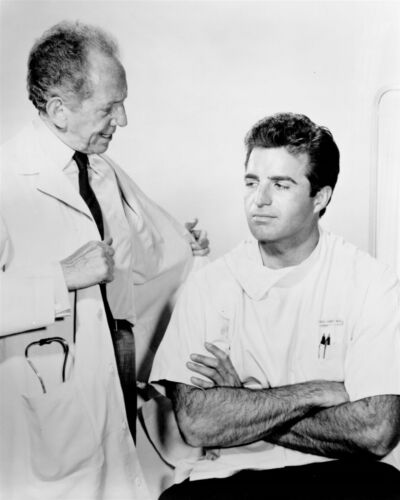
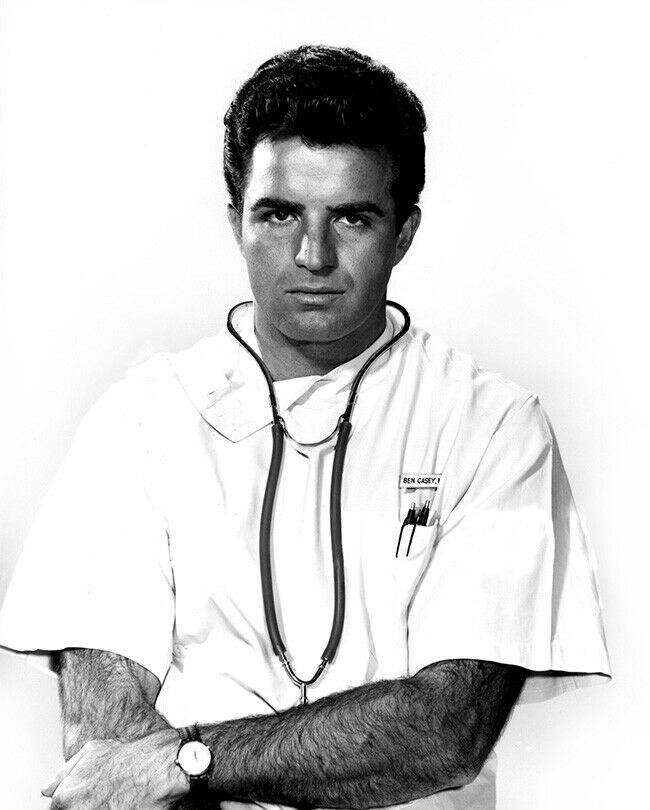
Medical series have been a staple since television started. This month we are checking out a few of the favorites in a blog series: “Examining Our Favorite Medical Shows.” First up is a show that was on in the sixties: Ben Casey.
Jaffe and Edwards Photo: ebay.com
Ben Casey was on the air from 1961-66 on ABC. Created by James E. Moser, the character of Ben Casey was based on Dr. Allan Max Warner who was a neurosurgeon. Warner worked closely with the actors to show them how to handle instruments and patients. It was not a cheap show to produce. More than $50,000 of medical equipment was purchased for the show and each 60-minute episode had a budget of $115,000. Warner later changed to psychiatry because he said his association with the show prevented him from becoming board-certified. Dr. Joseph Ransohoff, another neurosurgeon, became the medical consultant.
The series followed Ben Casey (Vince Edwards), an idealistic neurosurgeon at County General. Dr. David Zorba is his mentor (Sam Jaffe). In the final season, Jaffe left and the new chief of neurosurgery was Dr. Daniel Niles Freeland (Franchot Tone). Rounding out the cast were Dr. Ted Hoffman (Harry Landers), Dr. Maggie Graham (Bettye Ackerman), orderly Nick Kanavaras (Nick Dennis), and Nurse Willis (Jeanne Bates). The show had a gritty edge to it and featured the life of doctors working in a city hospital and the tough physical and ethical situations they had to deal with.
Several sources said that Cliff Robertson and Jack Lord turned down the role of Ben Casey. Also, Russell Johnson said he auditioned for the role, but was rejected and his next audition was for the role of the Professor on Gilligan’s Island. However, I read several other sources that mentioned that Bing Crosby discovered Edwards and planned a television show to feature his find. Bettye Ackerman’s character was cast as an anesthesiologist who was supposed to be Casey’s love interest but they never developed any chemistry. In real life, Ackerman was married to Jaffe.
Photo: nostalgiacentral.com
Filmed at Desilu Studios, the series was produced by Bing Crosby Productions. The show had 33 directors including Sydney Pollack; Vince Edwards directed seven of the episodes. However, its writing staff was even bigger with about 80 different people penning scripts. I never understood how that worked so well. As a writer, I would want to get to know the characters I was writing for and then continue to learn about them, but during the sixties, there were a lot of people who only contributed one or two scripts to any given series.
The theme music was written by David Raksin and pianist Valjean made it a top-40 hit.
The show was on Monday nights for its first three seasons. Season four, it moved to Wednesdays and returned to Mondays for the final two seasons. The first season it ranked in the top 20 and moved into the top 10 for its second year. Once the network moved the show to Wednesdays where it had to compete with The Beverly Hillbillies and The Dick Van Dyke Show, it fell out of the top thirty and never returned to its former popularity. During the last season, several changes were made. Casey fell in love with Jane Hancock, a woman who came out of a 13-year-long coma. The episodes also began to continue from one to another instead of being stand-alone stories, encouraging viewers to find out what happens the next week.
Photo: pinterest.com
During the run of the show, four novels were written based on the series (1962-3), as well as a daily (1962-1966) and Sunday (1964-1966) newspaper comic strip by Jerry Capp and ten Dell Comic books (1962-64). There was even a board game created called Ben Casey MD. And even more surprising was a doll called Dr. Ben Casey’s Patient. Surely children were not exposed to the show.
Photo: pinterest.com
Another medical show, Dr. Kildare, aired the same year as Ben Casey. The shows were often confused, but they were really quite different. Dr. Kildare was an intern who respected his mentors and the doctors he served under. He was the handsome guy next door, friendly and always striving to help his patients. Casey was brash and had already served his learning time, so he more often bucked the system and was not as respectful to the doctors working with him. He was handsome but in a more wild, bad boy, appearance. However, both shows tackled some very interesting and controversial subjects from the medical field.
Ben Casey might have gone off the air, but he did not disappear. The show has been parodied on a variety of shows including The Flintstones. “Ben Casey” was used by American troops in Vietnam War as slang for a medic. In 1988, a made-for-tv-movie The Return of Ben Casey brought Edwards back to the small screen. It was a syndicated show, and aired with the hope that it would be a pilot for a new series, but none of the networks picked it up.
Photo: collectors.com
The cast was not holding hands and singing Kumbaya, but it did function amidst a lot of dysfunction. Director Mark Rydell discussed Edwards’ gambling problem which became the show’s gambling problem. Landers who played Dr. Hoffman said Edwards was constantly asking the cast and crew for money to take to the race track, and he would be gone for hours at a time. He often came in with $20-30 thousand dollars in his pocket, demanding that he leave filming by 11; other stars had to stand in for him to tape the rest of the show. Despite his unprofessional behavior, several stars liked Edwards. Jaffe, who had many conflicts with Edwards, was not one of them which is why he eventually left the show. Director Jerry Lewis and guest star Sammy Davis Jr. also had problems with Edwards. Landers also mentioned that when Tone took over Jaffe’s role, he was constantly drunk on the set. When Landers directed the show, he kept Tone sitting down so viewers would not see that he was swaying.
Considering all the issues the show had, the number of writers contributing scripts, the unprofessional behavior of several of the actors, and the movement of the show from Monday to Wednesday where it had stiff competition, the show actually did well and was popular with viewers for five years. It set the tone for many of the shows that would follow including Marcus Welby, Medical Center, and ER. Next week we will learn more about Dr. Kildare.
This month is our blog series is “Potpourri Month” and we have a sub-theme every day; today’s is Propourri” for the pro who handles props. When you think of your favorite shows, there are props included in those great memories: the couch at Central Perk, Fonzie’s leather jacket, or the cereal boxes on Seinfeld’s refrigerator. First let’s learn a little about the Props Master and then we’ll take a look at some of our most-loved props.
The Fonz’s jacket Photo: ebay.com
The Prop Master heads up the Props Department. They are charged with acquiring, organizing, and safely handling the props for the shows.
Each episode has a list of props that will be needed for the show. The props master reviews the scripts and has meetings with various department heads to ensure everything that is needed is on the list.
Sometimes the props master does research to see what would be appropriate for a specific era or place. Cars were quite different in the fifties than the eighties. A grocery store does not look the same in China as it does in Atlanta.
During filming, the props master has to keep track of props and make sure everything is put back in its place.
So, what are some of the props that have become synonymous with our favorite series? Let’s put together a prop list that includes props from our favorite shows.
Living rooms have a lot of cool furniture. When you think of comfortable places to sit, you have to think of Modern Family’s couch, Archie’s chair from All in the Family, Chandler and Joey’s Barcaloungers from Friends, and Martin Crane’s duct-taped, worn chair on Frasier.
The Bunkers’ Chairs Photo: comparativemediastudies.com
Many of the Modern Family characters are interviewed on their couch which sits in front of their stairs to the second floor right as you enter the front door. The walls are Benjamin Moore’s Labrador Blue. The couch itself is from Sofu-U-Love and the primary-colored striped pillows are from Pottery Barn just in case you want an interview sofa of your own.
Archie Bunker’s chair is from the 1940s. It’s covered in an orange and yellow woven fabric. The props master purchased the chair from a thrift store in Southern California. Whenever anyone but Archie sits in the chair, it is made obvious to them that they need to find another seat.
The barcaloungers Joey and Chandler use were originally made in Buffalo New York, named after the company that made them. They have moving parts to allow for footrests and reclining. Joey’s Barcalounger is brown leather and he calls it “Rosita.”
Martin Crane’s chair is in the same color family as Archie Bunker’s. The prop department made it, so it’s a one-of-a-kind piece. It’s striped and quite unattractive looking especially with Frasier’s expensive tastes echoing in the rest of the room, but Martin loves it and Frasier loves Martin so it stays. In the first episode, a guy carries in the chair when Martin and his dog Eddie move in with Frasier. On the last episode, the same guy carries the chair out when Martin gets married and moves out. The chair is really almost a character during the run of the series.
Jeannie in her bottle Photo: blazenfluff.com
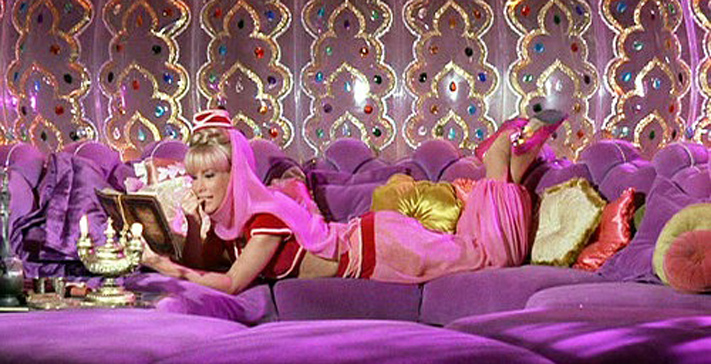
There are a lot of fun accessories from our favorite living rooms. Just a couple include Jeanne’s bottle from I Dream of Jeanne, the “M” that was on the wall in Mary Richard’s apartment on The Mary Tyler Moore Show, and the Chihuly sculpture from Frasier. Who can remember The Dick Van Dyke Show without thinking about the ottoman Rob Petrie might trip over?
Jeannie uses her Arabian glass bottle to sleep in and to hide in when someone other than Tony and Roger is in the house. The bottle has a long, purple couch with her blankets and pillows. She also has an Arabian candle, a photo of Tony, a mirror, and her book about genies.
Mary’s “M” stood for so much more than her first name. We knew that an independent, smart woman lived in that apartment. Everyone wanted to grow up and be able to put their own initial on the wall just like the brass one Mary had. When she moved to her newer, more modern apartment, the M went with her.
Martin’s chair on Frasier Photo: jacksonville.com
In contrast to Martin’s puke-colored chair on Fraiser, Frasier had so many expensive items scattered around his home. One of them was Dale Chiuly’s Macchia. This blown-glass vase was green and brown. It was worth $30,000 at the time, and the props master locked it up after filming each episode.
We all recall the opening of The Dick Van Dyke Show. Will he or won’t he? I think most of us remember him falling over the ottoman, but do you know sometimes he walked around it? Reiner wanted a clever opening for the show and while talking with John Rich, the director, they decide Rob will fall. But then Reiner suggested a variation, so they filmed him not tripping. No one ever knew from episode to episode if he would fall or not.
Burns and Allen have their closet adjoining the living room. While Fibber McGee and Molly have a ton of items in their closet, whenever Gracie opens hers, we see a collection of hats that men have left when they are in a hurry to get out of the Burns house after dealing with Gracie’s logic.
When I think of some of my favorite kitchen items, I think about Jerry Seinfeld’s refrigerator with its revolving display of cereals. I know if I visited My Three Sons, I would get to sit around the kitchen table where all the action happens on the show. And Gracie would definitely take me into her kitchen to have some coffee from the pot she almost always kept full for her and Blanche to talk over.
Jerry always has cereal in his cupboard. Some sources say he had up to seventeen at a time. Knowing that cereal doesn’t last all that long, he ate a lot of cereal. I’m hoping Fruit Loops was one of those choices.
My Three Sons’ table Photo: pinterest.com
While as viewers we love that the kitchen was the heart of the Douglas home. From the first episode when Steve got Chip to help him with the dishes to talk to him about “love,” to the grown boys gulping down orange juice at the table to leave early for their busy day, we spent a lot of time in that room. Uncle Charlie’s bedroom was just off the area, so he could come and talk with someone getting warm milk in the middle of the night. The actors might not have had the same warm, fuzzy feelings. Barry Livingston discussed their filming schedule because Fred MacMurray did all his filming in two short groups of days. He said sometimes, “you would sit at the kitchen table all day long and they would do close-ups. You would be sitting in the same place at the same table and you would do a close-up from 12-15 different episodes. All you would do was change your shirt because they couldn’t see anything below.”
Burns and Allen Photo: pinterest.com
Gracie and Blanche always made time to have coffee to talk over things. Whether it was 7 am, 1 pm, or 7 pm, the coffee pot was always on. Burns and Allen also did coffee ads for Maxwell House, so I am assuming that it was Maxwell House the friends drank daily on Burns and Allen.
I know if I explained every item to you in detail, we would still be on this blog next week, so I’ll just some up the rest of the categories.
Bedrooms: Beds are definitely the focal point. We have the Petries’ twin beds that are not convenient for a married couple. Lisa and Oliver Douglas had a very large bed on Green Acres; unfortunately, it was open to the outside where anyone could come in or out. Oscar Madison had a bed on The Odd Couple, but no one knew it because his room was so messy. We definitely remember Bob and Emily Hartley’s bed because not only was it important in The Bob Newhart Show but it was in the finale of Newhart. It is also hard not to recall Alex Keaton’s Ronald Regan poster that took up one of his bedroom walls on Family Ties.
Batman with bust and phone Photo: batnews.com
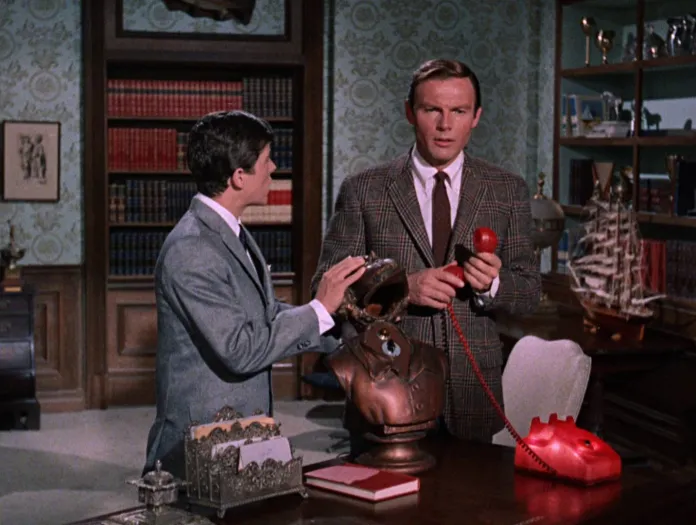
Libraries and Dens. Three specific rooms come to mind. On Batman, we had the Shakespeare bust that hid the bat phone in their library. We had George Burn’s television on Burns and Allen where he could watch was going on during the show without the other characters knowing he was listening in. Finally, we think back to The Brady Bunch where the six kids fought over what to watch on television and did their homework after school.
Garages: The Jetsons they kept their flying car in the garage, Last Man Standing where Tim kept his antique car, and The Adventures of Ozzie and Harriet, where they kept everything but the car. Ozzie was always out there looking for something.
Workplace: When characters go to work, we get a whole new scene full of fun props. Who would visit Dunder Mifflin without stopping by to see Pam at the front reception desk? Rob Petrie had a couch where the writers worked their magic. Central Perk featured the orange couch everyone remembers from Friends. The sofa was so beloved that replicas of it went on a world tour in 2019 for the shows’s 25th anniversary. The actual sofa used on the set was sold at auction in 2011 and it went for about $5000. Of course, Cheers would not have been the same without the stools for Norm and Cliff. Get Smart had so many fun props, it’s hard to choose; the Cone of Silence was certainly fun for everyone who could hear what was said inside by characters who thought they were speaking where no one could hear them. And Hogan’s Heroes also had a lot of fun items including the coffee pot that could relay anything said in Colonel Klink’s office.
Laverne Photo: pinterest.com
Clothing: While I love almost everything they wore on Burns and Allen, The Brady Bunch, and The Partridge Family, there are a few other pieces that really stand out. Who would not want to wear Fonzie’s leather jacket? Columbo’s coat might be a bit rumpled but it had been around to solve a lot of mysteries. Sally on McMillan and Wife had the San Francisco jersey that she wore to bed. And talk about special clothing, Laverne’s wardrobe with her iconic “L” on everything was a big part of Laverne and Shirley.
Unusual Items: Last, but definitely not least, we have those special objects that belong to specific characters. When you think about Radar on M*A*S*H, don’t you also think about his teddy bear? Barney Fife would never leave the house without his silver bullet. Half the plots would disappear if Gilligan’s Island did not have a radio for the Professor to try to repair and hear about the world outside the island. Buffy’s Mrs. Beasley on Family Affair was very popular; the doll was sold for decades after the show went off the air. Kojak’s lollipops had to be on the list. Also, if you are talking about “things,” how could we not include the “Thing” from The Addams Family?
I hope you enjoyed getting to know something about some of our favorite furniture and recalling special props from well-loved shows. If you want to see a couple of these items, visit The Smithsonian Museum in Washington D.C. where you can see Archie’s chair and Fonzie’s leather jacket. I’d love to hear your favorites.




















 thewritelife61