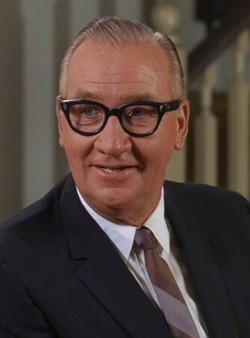
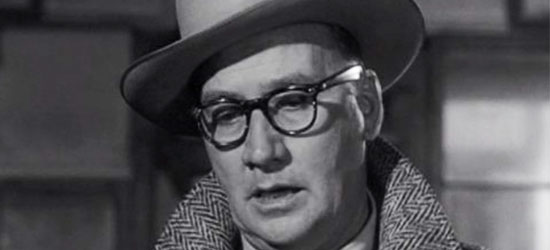
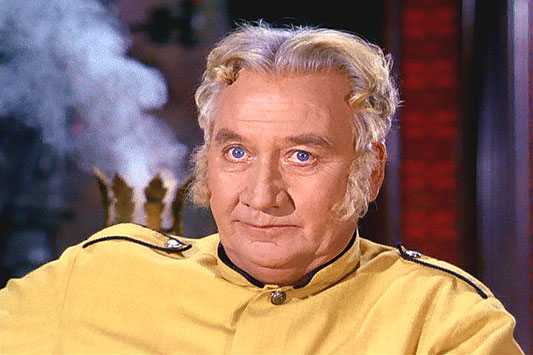
Frank Gorshin: Batman’s Most Puzzling Villain

This month, our theme is Bam! Pow! Batman Villains. We have learned a bit about the careers of the Joker and Cat Woman, and today we are spending some time with the Riddler, portrayed by Frank Gorshin.

📷imdb.com

Gorshin started out as an impressionist and comedian before transitioning into acting.

Frank was born in Pittsburgh in 1933 into a blue-collar, middle-class family. His mom was a seamstress, and his father was a railroad worker. His paternal grandparents arrived in the US from Slovenia and his mother was born in Slovenia, coming to the Pittsburgh area as a young girl; his parents were very involved in the Slovenian community, both singing with the Preseren, a Slovenian singing society.

When he was 15, Gorshin got a part-time job as an usher at the Sheridan Square Theatre. He studied the mannerisms of the actors he watched in those movies and developed an impressionist act. Some of his favorite actors to mimic included James Cagney, Cary Grant, Al Jolson, and Edward Robinson. After entering a talent contest in 1951, he won a week-long engagement at the Carousel nightclub in New York.

Sadly, Gorshin’s older brother was hit by a car two days before and died. His parents convinced him to keep his performance schedule and sent him to New York.

After high school, Gorshin enrolled at the Carnegie Tech School of Drama (now Carnegie Mellon University).
📷imdb.com

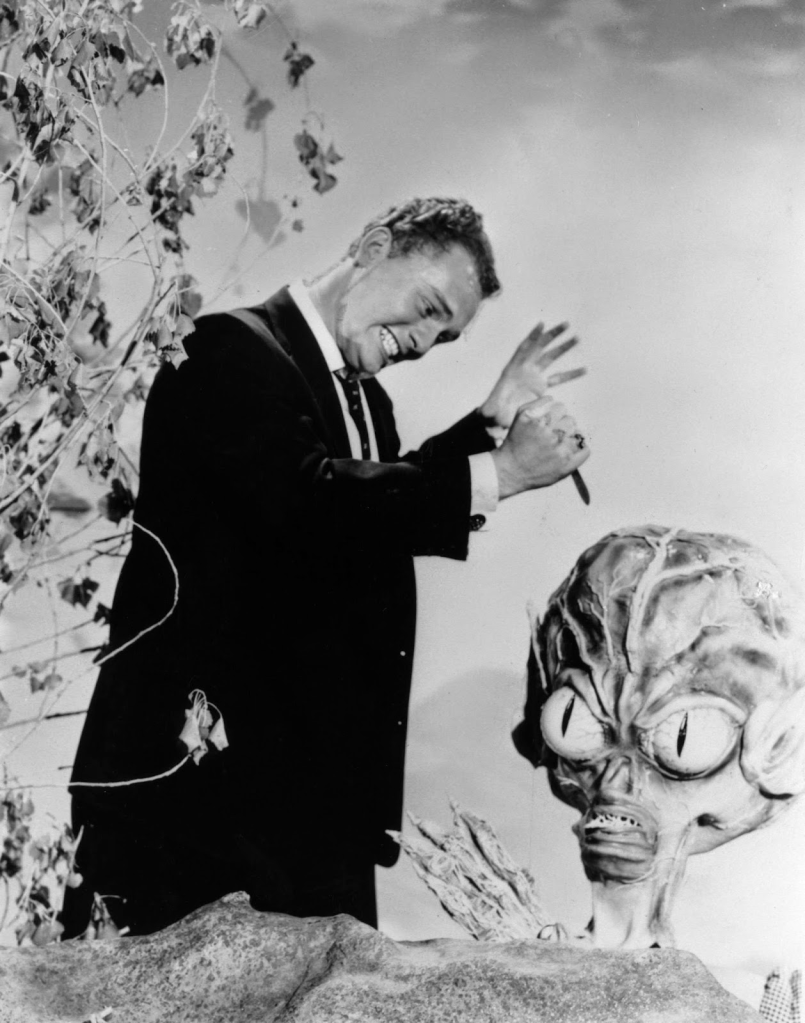
At age 20, Frank was drafted into the US Army and sent to Germany. He was an entertainer in Special Services for a year and a half. When Gorshin left the Army, he began his acting career, appearing in four movies and on television in Alfred Hitchcock Presents.

I can’t imagine the horror Gorshin’s parents felt when getting a call in 1957 that their son had fallen asleep while driving from Pittsburgh to Hollywood, a 39-hour trip for a screen test. With their other son passing away from a car crash six years earlier, now they had to deal with the fact that their other son was in a coma with a fractured skull. Luckily, he made a full recovery.

Another big event occurring in 1957 was his marriage to Christina Randazzo. They had a son and separated later in life, but they never did divorce as far as I could tell.

Until his death, Gorshin would appear in more than sixty big-screen films. During the fifties, he only appeared in a handful of television series, but that would change in the 1960s. Some of the most memorable shows included The Defenders, The Munsters, Star Trek, and The High Chapparal. With his comedy act, he visited The Ed Sullivan Show four times. The first time he did his impressionist act on the series, he would be scheduled with this new band called The Beatles.

📷metv.com

The sixties also found him on Batman, his reason for being in this month’s blog series. He said that he developed a fiendish laugh at Hollywood parties. “I listened to myself laugh and discovered that the funniest jokes brought out the high-pitched giggle that I use on the show. With further study, I came to realize that it wasn’t so much how I laughed as what I laughed at that created the sense of the menace.”

He did not love the unitards that many of the comic book villains wore, so he asked for a green business suit and bowler hat, covered with question marks since he always left riddles for Batman and Robin to solve. He often said “Riddle me this, Batman” which became a catchphrase of the mid-sixties.

Gorshin said “When I was first approached to play the Riddler, I thought it was a joke. Then I discovered the show had a good script and agreed to do the role. Now I am in love with the character.”
📷imdb.com

Gorshin was the only villain to be nominated for an Emmy. He got the nod in 1966 for the episode “Hi Diddle Riddle.” He had some tough competition, going against Werner Klemperer as Colonel Klink on Hogan’s Heroes, Morey Amsterdam on The Dick Van Dyke Show, and winner Don Knotts on The Andy Griffith Show.

Gorshin was in ten episodes of the show, but after appearing numerous times, he was unavailable, and the producers replaced him with John Astin. I realized hindsight is 20/20 as they say, so the producers were never considering the effect the show would have on pop culture and the decades it would be a fan favorite, but that switch seems extreme. However, they did it with Julie Newmar and Eartha Kitt as well, so maybe they figured if you have to replace a villain, let’s replace them with someone very different from the original. Gorshin, however, was not a fan of being replaced but did get over it enough to accept his tenth episode role in season three and appeared as Riddler in the 1979 made-for-television movie Legends of the Superheroes.

Frank made his Broadway debut in 1969 in the musical biography, “Jimmy” which was about the controversial life of New York mayor Jimmy Walker.

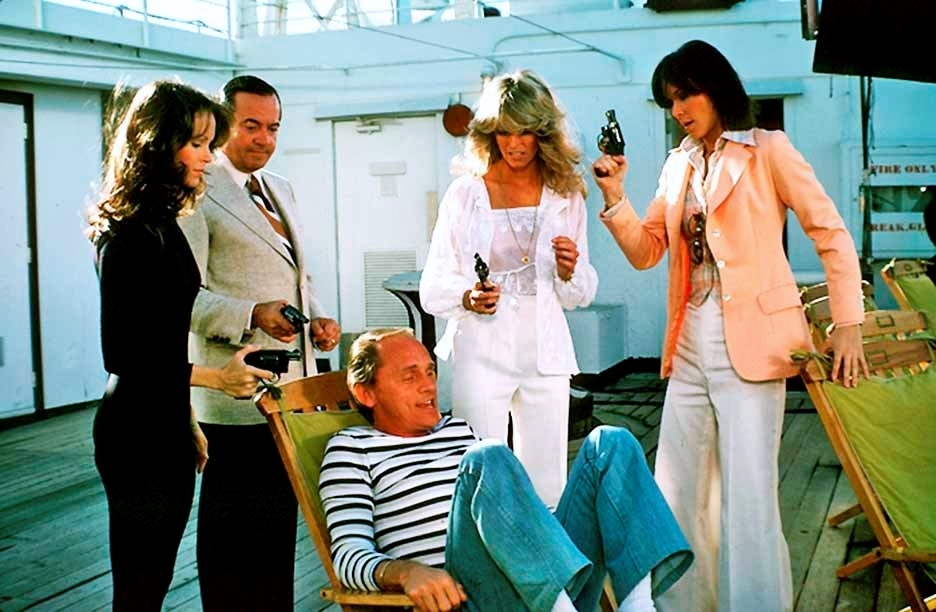
Gorshin was very busy in the seventies and eighties. Among the twenty plus shows he appeared on were The Virginian, Martin and Rowan’s Laugh In, Ironside, Hawaii Five-0, Charlie’s Angels, and Murder She Wrote.

In the last three decades of his life, he spent more time making big-screen films. One thing I found surprising is that Gorshin appeared in three soap operas, all at different times in his career: General Hospital in 1963, The Edge of Night in 1982, and The Bold and the Beautiful in 1999.

In the early 2000s, Gorshin did a one-man Broadway show, portraying George Burns. He was reunited with his Batman cast in a made-for-tv movie, Return to the Batcave: The Misadventures of Adam and Burt. His last appearance was on CSI: Crime Scene Investigation on “Grave Danger” on which he played himself. The episode was directed by Quentin Tarantino and was dedicated to Gorshin.

📷discogs.com

Unfortunately, Gorshin was a heavy smoker throughout his life. Adam West once said that “Frank could reduce a cigarette to ash with one draw” and his nightclub performances warned patrons they would be exposed to a lot of second-hand smoke if they attended. Not surprisingly, he died from lung cancer, complicated by emphysema and pneumonia.

I enjoyed getting to know Frank Gorshin in this blog. While I was much more familiar with the careers of Burgess Meredith and Julie Newmar, Gorshin and Cesar Romero are actors I knew very little about. I hope you are also enjoying getting to know these fun “villains.”

Julie Newmar: Batman’s Most Beautiful Villain

This month we are learning a bit about the Batman villains and their careers. No study of Batman’s favorite nemesis would be complete without Cat Woman, Julie Newmar. Julie shared the role of Cat Woman with Eartha Kitt who appeared the final television season and Lee Meriwether who was so catty in the Batman movie. What else did Julie Newmar do during her career? Let’s find out.

📷pinterest.com

Born Julia Chalene Newmeyer in 1933, Julie Newmar as she is known in the acting world, was a television and film actress, dancer, singer, and stage performer. But, as they say in the commercials, that’s not all. She also was known for writing, designing lingerie, and managing real estate investments.

Newmar was born in LA. Her father Don was head of the physical education department for the Los Angeles College. Her mother, of both Swedish and French descent, was a fashion designer under the name Chalene and later worked in real estate.

Julie began dancing early in life and performed as a prima ballerina with the Los Angeles Opera when she was only 15. With an IQ of 135, Newmar graduated from John Marshall High School at age 15. She continued dancing in films in the early fifties. At age 19, she was also working as a dancer/choreographer for Universal Studios. In 1954, she appeared in Seven Brides for Seven Brothers as Dorcas, one of the seven brides.

📷facebook.com

In 1955 she got her first Broadway appearance in “Silk Stockings.” She continued her movie and Broadway careers throughout her years in entertainment, appearing in 33 films in all.

Television is where Newmar gained most of her fame. Her first television appearance was on The Phil Silvers Show in 1957 and then Ominbus in 1959. But it was in the sixties that she became a household name. She started the decade in Adventure in Paradise in 1960, followed by a variety of shows including The Defenders, Route 66, and The Twilight Zone in the early sixties.

In 1964 she was offered the role of Rhoda on My Living Doll, where she played a robot. She was not enthralled with the choice of Bob Cummings as her costar and did not seem to enjoy her time on this show. She said that “They originally wanted Efrem Zimbalist Jr. It was not a flip part—it needed a straight actor who could play opposite this bizarre creature so the comedy would come off. That quality was lost when they hired Bob. The show could have been wonderful. I think it would have run for many seasons had they hired Efrem because he had the right qualities.”

📷classicfilmandtvcafe.com

After appearing in several comedies including The Beverly Hillbillies and F Troop, she received another recurring role as Cat Woman in Batman. She would appear in the series 13 times, 12 as Cat Woman, the only villain to make Batman question his morals, because we knew he was in love with her, and if she showed any sign of remorse, who knows where things might have gone. Her Cat Woman costume now lives at the Smithsonian Institution.

Newmar lived in Beekman Place in New York in the mid-sixties. One weekend her brother had come to visit her from Harvard. They were sitting around chatting when the phone rang. She was asked if she would like to play Cat Woman on the Batman series. She was a bit miffed because they said they were casting in California, and the role started on Monday. Her comment was “That’s how television is done: they never know what they are doing until yesterday.” When her brother heard Batman, he jumped up and said that was the favorite show at Harvard and they even skipped classes to watch it. He told her to take the role, so she did.

📷firstforwomen.com

After Batman, she finished out the sixties in The Monkees, Star Trek, Get Smart and It Takes a Thief. With 11 seventies offers, you can see her in shows such as Bewitched, Columbo, McMillan and Wife, Love American Style, The Bionic Woman, and The Love Boat. One of my favorite made-for-tv movies was The Feminist and the Fuzz. It had an exceptional cast, including Newmar who appeared in the movie along with Barbara Eden, David Hartman, Jo Anne Worley, Farrah Fawcett, Harry Morgan, Herb Edelman, Penny Marshall, and John McGiver. This ensemble was directed by Jerry Paris, who directed so many great shows from The Dick Van Dyke Show to Happy Days.

Her other starring role in the seventies was a marriage to J. Holt Smith, an attorney. After the wedding, Newmar moved to Forth Worth, Texas until 1984 when they divorced.

📷remindmagazine.com

The eighties was a more quiet decade for the actress but she did accept roles on CHiPs, Fantasy Island, and Hart to Hart. In 1992, she appeared in George Michael’s music video, “Too Funky,” She was still working in 2016 and 2017 in Batman animation features.

If you were a fan of Batman and Dark Shadows in the sixties, you were in luck when Newmar took on the role of Dr. Julia Hoffman (played in the original series by Grayson Hall) in Dark Shadows: Bloodline, the audio drama miniseries.

She was not just a pretty face, however. She received two US patents for pantyhose and one for a bra, under the name Nudemar. She also began investing in LA real estate and was credited with helping to improve the neighborhoods of La Brea Avenue and Fairfax Avenue. In one episode of My Living Doll, Rhoda is asked to play Chopin’s “Fantasie Impromptu” on the piano. Newmar played the piece herself. She had studied under concert pianist Dr. MacIntyre, and she said that scene is the only one she’s done with her playing the piano which had been her career choice before acting. One of Julie’s comments about herself was “Tell me I’m beautiful, it’s nothing. Tell me I’m intellectual—I know it. Tell me I’m funny, and it’s the greatest compliment in the world anyone could give me.”

📷closerweekly.com

Julie also enjoys art and gardening. She has a rose, a day lily, and an orchid named for her. Her gardens are often chosen as a spot for holding charity events.

Like Barbara Feldon from Get Smart, Julie Newmar is beautiful, bright, and funny. I hope she enjoyed her career. Obviously, she could have been a brain surgeon or any other profession of her choice. She seems like she would be a fun person to just hang out with and the conversation would never run out. Thank you, Julie Newmar for choosing the entertainment business over medical science for our sakes.

Just a Couple of Characters, Part 1: Edward Andrews and Herb Edelman

We’ve all experienced that moment we’re at the grocery store and see someone we know, but we can’t remember their name or how we know them. Maybe it was work or school, or their kids were friends with ours.  Sometimes we even remember we spent a lot of time with them and like them, but the name and relationship is just not there.

This month we are meeting some of our television friends that we’ve gotten to know, even if we can’t remember their names or what we watched them on. We’ll learn more about eight different character actors. We start off the month learning about Edward Andrews and Herb Edelman.

Edward Andrews

Photo: findagrave.com

I remember Edward Andrews from Doris Day and Disney comedies. Anyone who grew up in the 1960s or 1970s will remember this military man with a grandfatherly softness to him.

Andrews was born in Georgia in 1914. His father was a minister and their family moved a lot; he lived in Pittsburgh; Cleveland; and Wheeling, West Virginia. He had a very small part in a James Gleason production at age 12. He attended college at the University of Virginia. In 1935, he got his first part in a Broadway production, “So Proudly We Hail.” He continued in Broadway for the next twenty years, including a touring production of “I Know My Love” with Lunt and Fontaine. During that time, he took a leave from his career to serve in WWII. He was a Captain and commanding officer of Battery C with the 751st Artillery Battalion of the Army.

Photo: movieactors.com

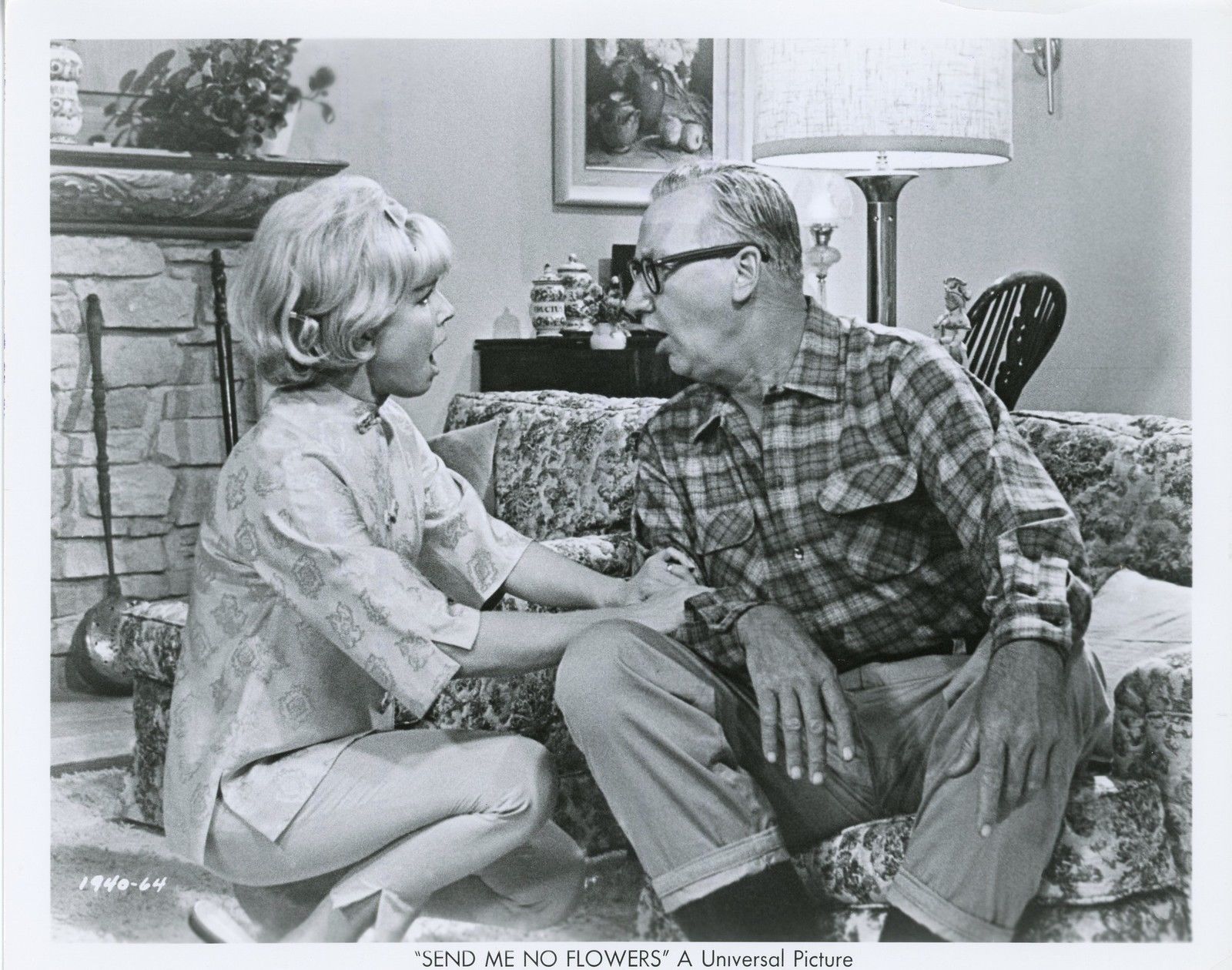
In 1955 he married Emily Barnes and they would have three children, remaining together until his death. About the same time, his movie career took off. Andrews looked older than his age which helped him get parts for older roles. He could play a grandfather, then turn around and handle a sleazy businessman or legalistic bureaucrat. He portrayed George Babbitt in Elmer Gantry in 1960. He worked for Disney playing the Defense Secretary in both The Absent-Minded Professor (1961) and Son of Flubber (1963). I remember him fondly in Doris Day’s movies, The Thrill of It All (1963), Send Me No Flowers (1964), and The Glass Bottom Boat (1966). One of his last roles was Grandpa Howard in Sixteen Candles in 1984. His movie credits totaled 46.

Photo: dorisday.com

Edward also kept busy with television appearances. One of the first actors to guest star on television, in 1950, Andrews was on Mama. As early as 1952, he began acting in the variety of drama shows on television. During the 1950s he would appear in eighteen of these shows including The US Steel Hour, Robert Montgomery Presents, Studio One in Hollywood, and Omnibus.

Photo: scsottrolling. blogspot.com
On The Wild Wild West

He showed up in westerns including The Real McCoys, Bonanza, Gunsmoke, and Rawhide. We saw him on medical and legal dramas such as Ben Casey, The Defenders, The Bold Ones, Ironside, and Owen Marshall, Counselor at Law. Mysteries and crime thrillers also found a place for him. You might remember him from Naked City, The Wild Wild West, The Mod Squad, Hawaii Five-0, McMillan and Wife, and Quincy, ME.

Photo: pinterest.com

Like his films, he seemed to excel in comedy. Andrews played George Baxter in the pilot for Hazel, but unfortunately when the show went into production, the part was recast with Don DeFore. He would guest star in some of the most popular sitcoms, including The Phil Silvers Show, The Andy Griffith Show, I Dream of Jeannie, Bewitched, The Paul Lynde Show, Love American Style, The Bob Newhart Show, and Three’s Company.

Photo: pinterest.com

In 1964 he starred in Broadside. Commander Adrian (Edwards) is not happy when a group of Waves are posted to his station on the South Seas island Ranakai. His men no longer have focus, so he spends the series trying to get the women relocated.

In 1970 he had a recurring role on The Doris Day Show as Colonel Fairburn. He also starred as Harry Flood in the show Supertrain in 1979. Playing on the Love Boat and Hotel themes, the show was about a bullet train that had new passengers each episode.

Photo: imdb.com
On Bewitched

Perhaps Andrews will be best remembered for his guest starring role on two Twilight Zone episodes, “Third From the Sun” (Andrews plays a company man who thinks a coworker William, a nuclear engineer, and his friend Jerry are going to steal a spaceship to leave Earth) and “You Drive” (Andrews hits a newspaper boy and then flees the scene, trying to hide the crime).

In all, he appeared on 118 different television series as well as made-for-television movies.

Photo: pinterest.com

Andrews enjoyed playing a character actor. He said it ensured more work and longevity in his career. He was quoted as saying, “What you get are people who speak to you. They know you from somewhere, but they don’t think of you as an actor. They stop and say, ‘Harry, how’s everything in Miami?’ I’ve learned by experience not to argue with them.”

In March of 1985, Andrews had a heart attack and passed away at age 70. With his white hair, and horn-rimmed glasses, Andrews was an adaptable character actor. Whether he was playing a lovable doctor, a nosy coworker, a fun-loving grandfather, or a despicable murderer, he was believable. He truly was a great character.

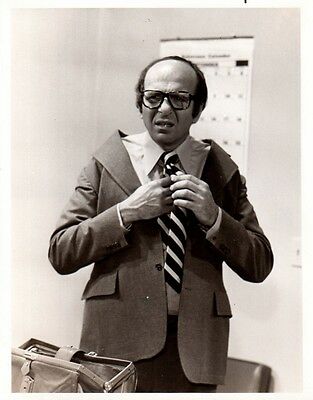
Herb Edelman

Herb Edelman, circa 1981
Photo: travsd.wordpress.com

Another fun actor everyone will recognize is Herb Edelman. Herb was born in Brooklyn, New York in 1933 in the midst of the Depression. Tall, lanky, and prematurely bald, he would go on to have a long career in movies and television.

Originally, Edelman wanted to be a veterinarian, and he went to school at Cornell but left after his first year. He served in the Army as an announcer for Armed Forces Radio. After he left the service, he started college again, this time studying acting at Brooklyn College. Once again, he dropped out. He made a living as a hotel manager and a cab driver.

Photo: cscottrollins.blogspot.com
In Barefoot in the Park

In the mid-1960s he began both his film and television careers. Some of his best-known roles were in the movies. He played Harry Pepper, a wise-cracking telephone operator, in Barefoot in the Park and Murray the Cop in The Odd Couple, as well as Harry Michaels in California Suite.

Photo: movie-mine.com
In The Odd Couple as Murray the cop

However, it was television where he received most of his work. In the 1960s, he began his career, appearing on a variety of shows, including That Girl, The Girl from U.N.C.L.E., and The Flying Nun. During these years he also dated and married Louise Sorel who he was wed to for six years.

Photo: en.wikipedia.com

In 1968, he accepted the role of Bert Gamus in The Good Guys. Bert and his friend Rufus (Bob Denver) open a diner, their dream. Bert’s wife Claudia (Joyce Van Patten) helped him serve customers.

In the 1970s, his career continued as he appeared in many shows every year. Some of the hit series we saw him on during this decade include Room 222, Bewitched, McMillan and Wife, The Partridge Family, Love American Style, Maude, Happy Days, Barney Miller, Kojak, and Charlie’s Angels.

Photo: sitcomsonline.com
On Barney Miller

In 1976, he was again cast in a show, Big John Little John. Edelman was a middle school teacher who drank out of the fountain of youth on vacation. Afterward, he would randomly turn into a thirteen-year-old and worked to keep the secret from his friends and coworkers. The show was short-lived.

Photo: picclick.com

Edelman’s work schedule did not slow down in the 1980s. He would have roles in the cast of five television shows and spent time in between guest starring on other shows such as Trapper John, Highway to Heaven, The Love Boat, and thirtysomething.

From 1980-81, he was cast as Reggie on Ladies’ Man, about a woman’s magazine with one male journalist. From 1981-82, he appeared as Commissioner Herb Klein on Strike Force. This show followed a strike force team that handles cases too difficult for the mainstream officers. The following year, he was Harry Nussbaum on Nine to Five, the show based on the movie about a group of office workers. From 1984-88, he was cast as Richard Clarendon on St. Elsewhere, a teaching hospital.

Photo: aveleyman.com
On Murder She Wrote

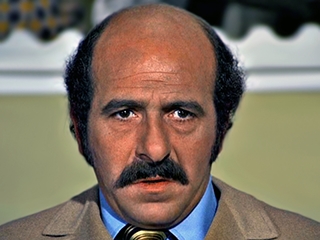
Although his roles decreased in the 1990s, he had one of his most memorable roles during those years as Stanley Zbornak, Dorothy’s ex-husband, on Golden Girls; he was nominated twice for his role on the show.

In 1990, he played Sergeant Levine on Knot’s Landing. Knot’s Landing was a night-time soap about the lives of the wealthy who live in a coastal suburb of LA. His last recurring role was Lieutenant Artie Gelber on Murder She Wrote, about a mystery writer who helps solve crimes.

Photo: imdb.com
On Golden Girls

Edelman died much too early in 1996 from emphysema at age 62.

Another character who was unforgettable in his movie and television roles. Whether playing a repairman, a cop, a teacher, or a ex-husband, he always came through as an authentic actor.

This Panelist Gets My “Blank” Endorsement: Brett Somers

I had so much fun learning about Fannie Flagg, that I decided to tackle getting to know some of the other regular Match Game panelists. Today we meet Brett Somers.  For someone who has fewer than ten acting credits for any given decade, Brett Somers became a well-known star. She became a household name after appearing on Match Game. Let’s learn a bit more about her life.

somers2

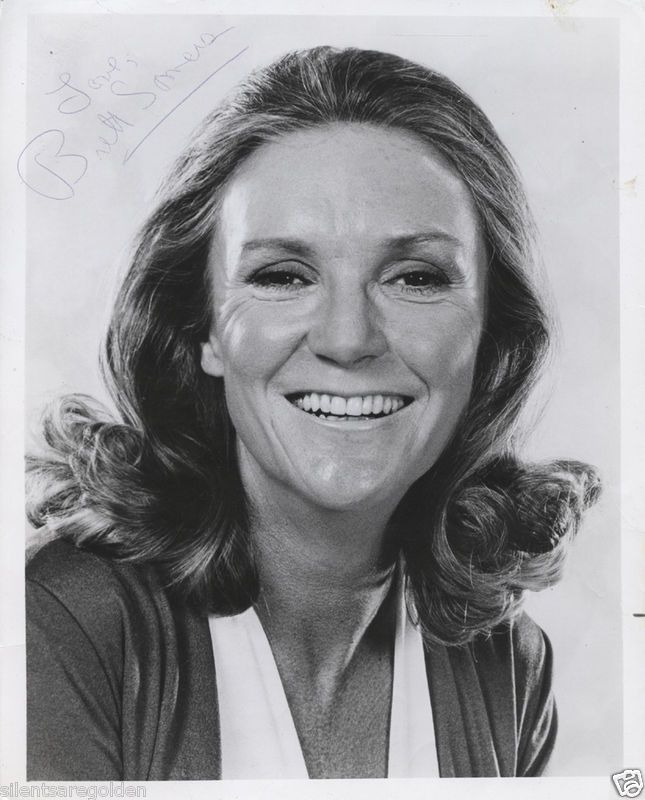
Brett was born in July of 1924, and her real name was Audrey Dawn Johnston. While she was born in Canada, she was raised in Maine and spent much of her life in New England. She left home at 18 to pursue an acting career. She chose her stage name for the character “Brett” in Hemingway’s The Sun Also Rises and her mother’s maiden name of “Somers.” She settled in Greenwich Village, married Robert Klein, and had a daughter. She was not married long before they divorced.

somers1

Brett joined the Actors Studio in 1952. She married Jack Klugman in 1953; they would have two sons. In the 1950s, Brett’s television appearances  were all on drama series such as Robert Montgomery Presents and The Kraft Theatre. In the 1960s she appeared primarily on westerns and legal dramas, including The New Breed, Have Gun Will Travel, and The Defenders. In the 1970s, she showed up on a lot of sitcoms. She was in Love American Style, The Mary Tyler Moore Show, and The Odd Couple with her husband Klugman to name a few. On The Odd Couple, she played the role of Blanche, Oscar’s ex-wife.

somers3

In addition to The Odd Couple, Brett had recurring roles on The New Perry Mason Show and Battlestar Gallactica.

Brett had her Broadway debut in Maybe Tuesday in 1957, which closed after five performances. She would appear onstage in Happy Ending, The Seven Year Itch, and The County Girl. She also appeared in three movies: Bus Riley’s Back in Town and A Rage to Live, both from 1965 and in Bone from 1972.

somers10

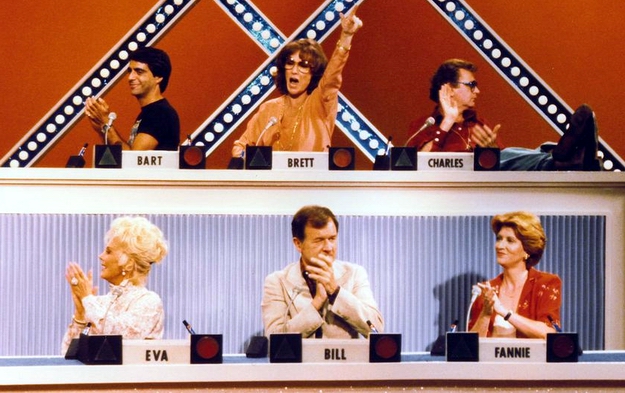
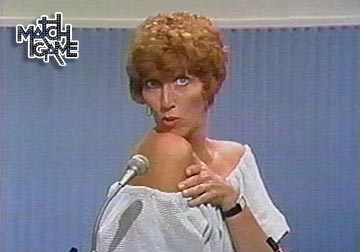
Despite her many television series appearancs, she is best known for her role as a panelist on the various versions of Match Game, amassing 1591 episodes overall. Some viewers compared the show to a cocktail party with money given away. What’s surprising, given her popularity on the show, is that she was not originally part of the cast. Klugman appeared on the first week of the show in 1973, and he suggested they try Somers. They did, and she never left. Her dry sense of humor and great wit provided her a job for nine years.

somers11

Match Game can be seen on The Game Show Network. The concept of the show was easy and fun. Two contestants were each given two questions with a blank in them, such as “The surgeon said, ‘The man I’m operating on must be a magician. When I reached in to pull out his appendix, I got a ___________ instead!’” Six celebrity panelists wrote down their answer to the question and then the contestant got a point for each person who matched their answer.

somers8

Brett and pal Charles Nelson Reilly, who often referred to her as “Susan,” kept each other in stitches and provided entertainment for the other panelists. In a September 12,  2012, Whitney McIntosh (in the blog ”This was Television”) referred to them as “rambunctious school children left to their own devices” which captures their relationship on the show perfectly. Their banter and quick quips kept viewers tuning in. For example, on one show, someone had mentioned that one of the younger panelists had a nice body. Charles turned to Brett remarking that her body was just as beautiful as the other woman’s.  The audience clapped, and Brett had just finished saying thank-you, when Charles added, “But you should take yours back because you’re putting a lot of wrinkles in it.” No one laughed harder than Brett.

In a Playbill interview in July of 2003, Andrews Gans asked Brett why she thought Match Game was still so popular. Somers paused and then answered, “Because of the fact that there was no structure to it. It was just six people having a good time and teasing one another. There was never any meanness. And people really sensed when Charles [Nelson Reilly] would jerk his head and go, ‘She seems a little odd today’ — they knew there was no meanness in it. And, Gene was the greatest straight man who ever lived. He would ask you the questions and would set it up for you. He was wonderful. And I think the relaxation of the atmosphere.”

somers4

After Brett died, Marcia Wallace, on of her best friends, discussed Brett’s career on Match Game. “She was my best friend. I made a lot of friends there. She and Charles were the heart and soul of the show. Their relationship just was magic. And then, of course, I think there was no better host in the world ever than Gene Rayburn. He was funny, he was sassy, he was naughty, he kept the game going, he made the contestants feel good, he set up the celebrities. He was perfect.”

somers9

Not long after Somers started with Match Game, she and Klugman separated. Three years later, in 1977, they divorced but remained friends. Although I read in many reports they never divorced, and many sites listed them as separated but never divorced. I believe California documents exist to show they did divorce a few years after their separation.

In 2003, Somers wrote, co-produced, and acted in a critically acclaimed one-woman cabaret show, An Evening with Brett Somers. Somers wrote the show with Mark Cherry, and he accompanied her on the piano and served as the director and arranger.

Brett shared her thoughts on doing a cabaret show–“It never occurred to me in a million years that I’d be doing a cabaret show. I was standing backstage, and I thought, ‘You’re an older person. You should be lying down somewhere in a nice cool bed watching TV!’ And I went out there, and I just had a great time.”

In 2004, Somers was diagnosed with stomach and colon cancer, but she continued to perform in the show. Brett had a period of remission but passed away in 2007 at her home in Connecticut.

In 2005, Somers reunited with Jack Klugman onstage in Danger, People at Large, three short comedies presented at Fairfield University. It was the first time in three decades that the former couple had performed together.

flagg

In my blog on Fannie Flagg a few weeks ago, I found her reflection on her friendship with Brett and Charles:

 Besides being hilarious, Brett and Charles were two of the smartest people I have ever known. On Match Game, they got such a big kick out of each other! They razzed one another and everybody else on the panel mercilessly, and they were particularly relentless on the people they really liked. It was never mean or hurtful, and they loved it when you razzed them back.

One of the happiest times in my life was in 1980 when I was doing “The Best Little Whorehouse in Texas” on Broadway, and Charles, Brett, and I were staying at the Wyndham Hotel at the same time. Every day at around 4 o’clock in the afternoon they would come to my room for cocktails. Many is the time I would come home from after the show and they would still be sitting there having a good time. The only thing that changed was the position of Charles’ toupee.
In the Gans interview, he asked Brett how she would like to be remembered. Her answer was “I would like them to think that I gave them pleasure and joy.”

I think we can all agree that is how we remember her!