The Debbie Reynolds Show: Her Sponsorship Went Up in Smoke

Before we get into our topic of the week I’m celebrating today. This is my 475th post! Thank you to everyone who has joined me in my journey.
We are in the final week of our blog series this month, “It’s Their Show.” We are winding down with The Debbie Reynolds Show. While most of the shows we learned about this month were on air in the late fifties and early sixties, The Debbie Reynolds Show appeared in 1969 on NBC.

The show was created by Jess Oppenheimer who Lucille Ball called “the brain” behind creating I Love Lucy. This month we learned a bit about Bob Carroll Jr. and Madelyn Pugh Davis who created and wrote for I Love Lucy and The Tom Ewell Show, and they are back to write for this sitcom as well.

The show didn’t get off to a great start because Reynolds was clear that she wanted no cigarette commercials on her show. However, NBC was courting American Tobacco as the sponsor and Debbie threw a fit. When the tobacco company learned Reynolds was threatening to quit, they pulled their funding. Reynolds assured NBC that she would agree to forego NBC’s promise of a second year of the series, and she gave up her ownership in an NBC film What’s the Matter with Helen?, although she was able to star in the film.

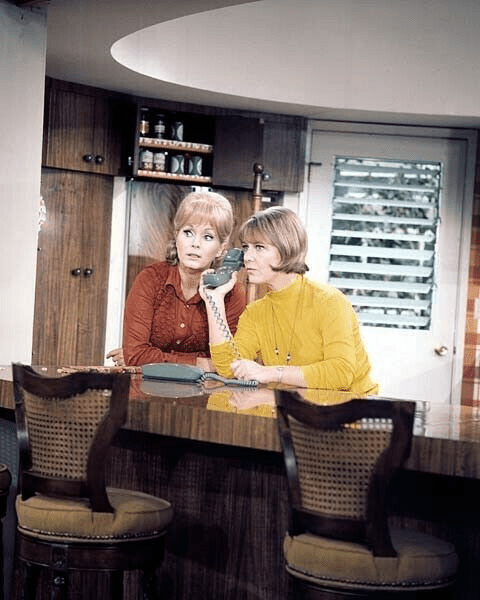
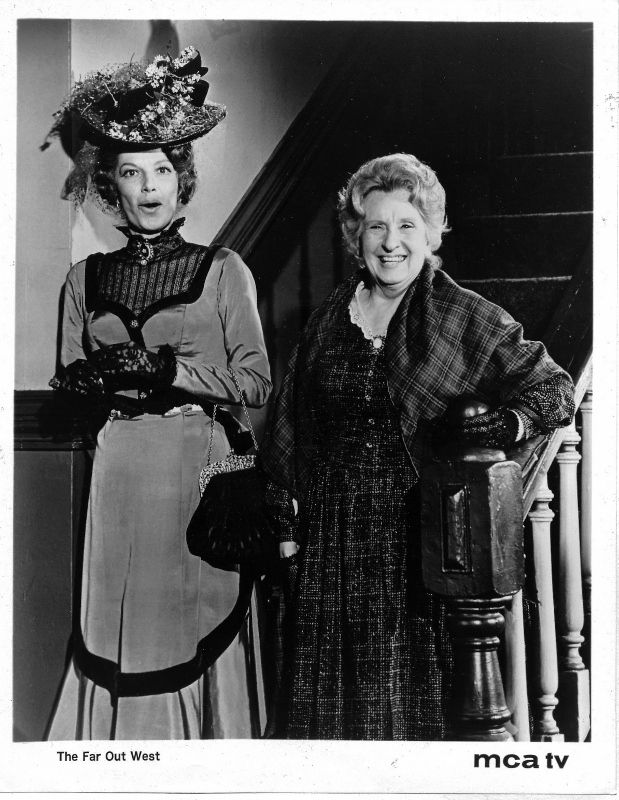
The plot of this show was that Reynolds was married to Jim (Don Chastain), a sportswriter for the Los Angeles Sun. Like Lucy always trying to get into show business, Debbie Thompson wants to be a reporter, and she comes up with various schemes to get her that job. Jim just wants her to be a stay-at-home wife.

📷📷pinterest.com

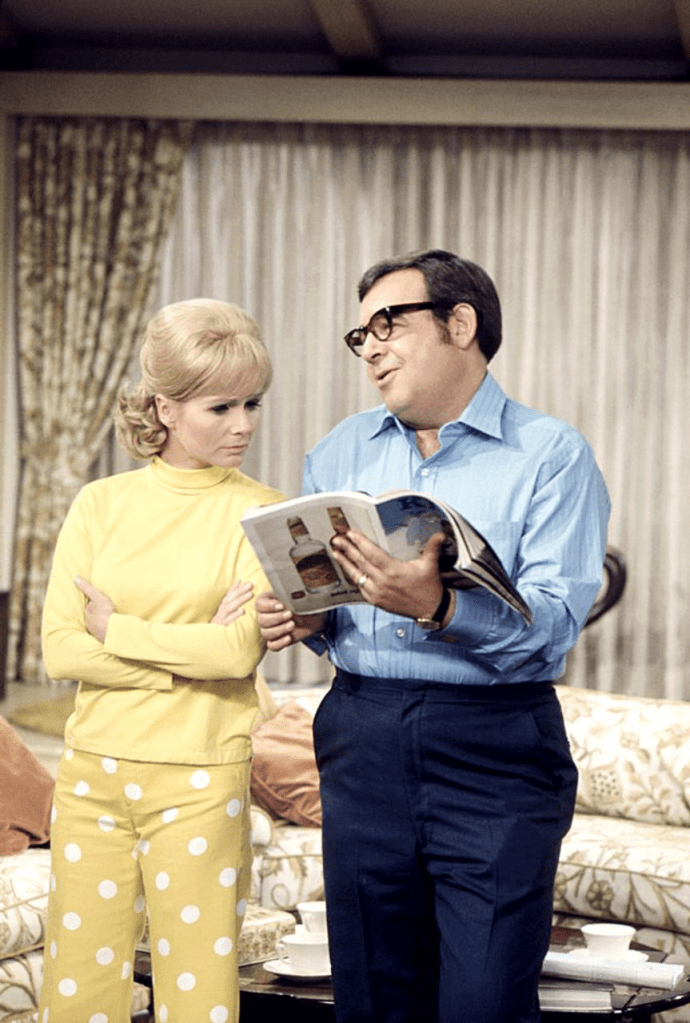
Rounding out the cast were Debbie’s sister Charlotte (Patricia Smith), Charlotte’s husband Bob (Tom Bosley) and Bruce (Bobby Riha), Debbie’s son. Like George Burns had done in his show, Debbie often addresses the audience directly.

Debbie Reynolds did double duty in this one, singing the theme for the show, “With a Little Love.”

Sadly, Reynolds was not in the same financial situation that many screen stars were when they agreed to try a television series. When the show was canceled after one season, she lived in her car for a while and her career never got back on track. For 35 years after this sitcom was canceled, Reynolds played bit parts, appeared as herself, or did animation. It must have been hard to tolerate after being a big star on the silver screen.

Tom Bosley talked about appearing in this sitcom in his interview with The Television Academy. He said the network allowed the cast to make seventeen episodes, but from the beginning they knew the show would be canceled because of the stunt Debbie and her PR rep pulled regarding the sponsorship.

📷moviemarket.com

Bosley thought Oppenheimer was a genius, but Bosley said even without the issue Reynolds had with the network, the show needed reworking for it to remain on the air. Bosley said Reynolds was very energetic, but she was bitter about her husband leaving her for Elizabeth Taylor, and her second husband was a gambler who left her with half a million dollars of debt to pay off.

To make ends meet, she went to Las Vegas to perform and started a costume museum to preserve the artifacts.

Unfortunately, this show was doomed from the start. While I admire Reynolds for standing up for what she believed in, the way she went about it was not helpful. It should have been written into her contract or handled in a nonpublic discussion. If Reynolds had let the network take care of sponsorships, things would have been okay. A few months after this show debuted, Congress took their anti-smoking initiative one step further and passed the Public Health Cigarette Smoking Act, banning the advertising of cigarettes on television and radio starting in 1971, so many shows walked away from tobacco companies in 1970. However, when Reynolds dug her heels in and threatened to quit, she not only lost her two-year minimum deal and her upcoming movie profits, but the studio was just biding its time because it had already decided to cancel the series because of her behavior.  

📷posterazzi.com

Even though Oppenheimer was described by everyone as an amazing creator and producer, this show felt like another I Love Lucy with a different occupation, and I’m guessing viewers felt that way too. It was similar to Sherwood Schwartz who kept revising The Brady Bunch for decades and kept writing sitcoms with the main characters somehow “lost” that were all duplicates of his Gilligan’s Island.

By 1969, it was time to move away from the hard-to-restrain wife in the sixties concept. In addition to being a copycat of I Love Lucy, I have to be honest. While I found something fun and charming about the other series we learned about this month, the episodes I tried to watch for this blog were painful. The characters were not likable, the writing was not witty or even easy to listen to, and considering what a great cast they had, the show just fell flat. Sadly, I recommend avoiding this one unless you are trying to put yourself to sleep some night.

Jess Oppenheimer: The Brains Behind I Love Lucy

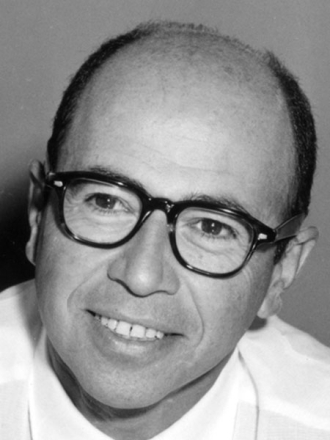
As we are learning all about Lucille Ball and her shows this first month of 2025, the month would not be complete without getting to know Jess Oppenheimer, the man Lucy called “the brains” behind I Love Lucy. He was also the producer and head writer of the show. Director William Asher said “he was the field general. Jess presided over all the meetings and ran the whole show. He was very sharp.”

📷televisionacademy.com

Oppenheimer was born in San Francisco in 1913. He took part in a study of gifted children in Stanford Professor Lewis Terman’s project. Ironically, one of Terman’s quotes about Jess was that he “could detect no signs of a sense of humor.” Jess’s father James owned the largest luggage store in San Francisco, but he died in an accident when Jess was 16.

Oppenheimer went on to attend Stanford in the 1930s. He started to spend a lot of his free time at radio station KFRC and performed in a comedy sketch he wrote for the show “Blue Monday Jamboree.”

In 1936 he moved to Hollywood and was hired as a writer on Fred Astaire’s radio show. He later went to work for Jack Benny as well as Edgar Bergen and Charlie McCarthy, George Burns and Gracie Allen, Bing Crosby, Marlene Dietrich, Judy Garland, Bob Hope, and Ginger Rogers.

When World War II began, Oppenheimer joined the US Coast Guard where he met Jack Dempsey and Cesar Romero. While he was there, he was diagnosed with double vision which had bothered him his entire life but had never been addressed.

Agent Ray Stark was Fanny Brice’s son-in-law and later Stark recruited him to write for her Baby Snooks Show based on his reputation in the Coast Guard.

In 1942, Oppenheimer met Estelle Weiss, an employee of Wallichs Music City. They married in 1947 and were together for the rest of his life.

📷wikipedia.com

In 1948, CBS hired Oppenheimer to write a script for a new radio show, “My Favorite Husband.” Several of the scripts portrayed the wife, played by Lucille Ball, as a sophisticated socialite. When Jess added slapstick comedy and transitioned her to a childlike, impulsive, naïve wife, the show was a big success.

In 1950, CBS moved the show to television to star Lucy and her real-life husband Desi Arnaz. Lucy demanded that Oppenheimer stay in charge. Jess suggested doing a show “about a middle-class working stiff who works very hard at his job as a bandleader and likes nothing better than to come home at night and relax with this wife who doesn’t like staying home and is dying to get into show business.” He suggested the title “I Love Lucy.”

For the first five seasons, Oppenheimer was the producer and head writer, with help from Madelyn Pugh and Bob Carroll Jr. as other writers. As part of his contract, Oppenheimer received 20% of the ownership in the show. He gave Pugh and Carroll each 5% of that amount.

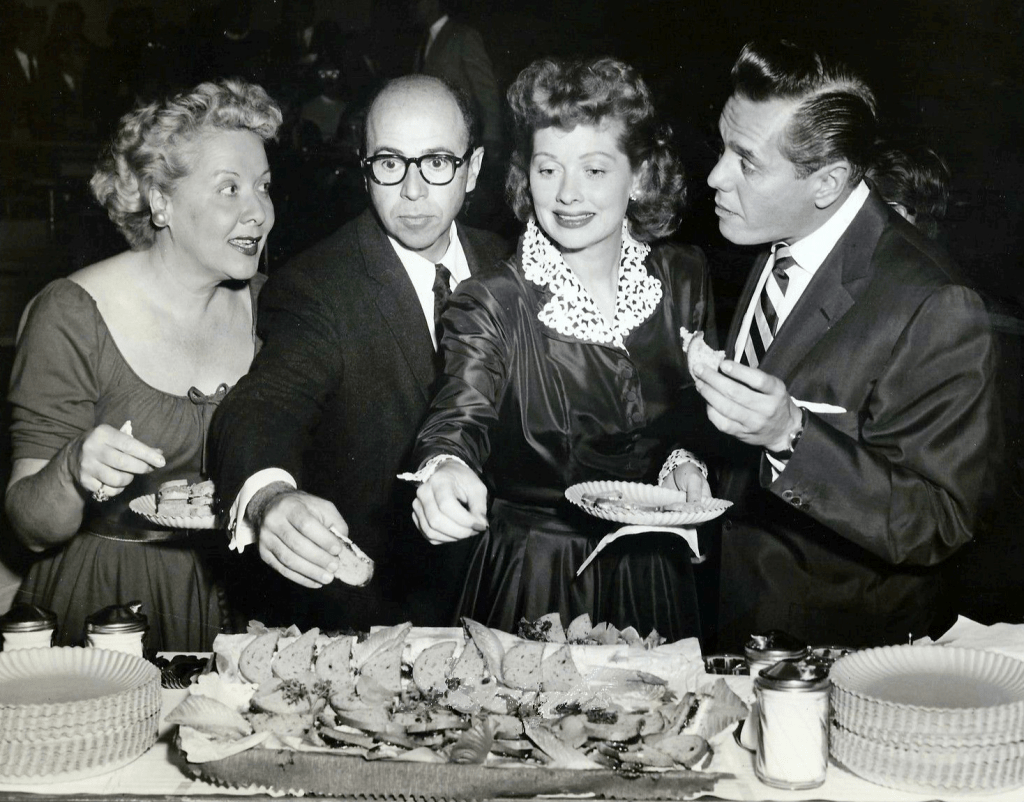
A wannabe actor, Oppenheimer appeared on I Love Lucy in two episodes. In #6, “The Audition,” he was one of three TV executives who audition Desi and in #127, “The Tour,” he walks in front of the bus before Ethel and Lucy board it. In one of the more famous episodes, #30, “Lucy Does a TV Commercial,” Jess is the voice that tells Lucy to go ahead and begin her commercial.

📷

In 1956, Oppenheimer moved to NBC where he became a producer of special shows.

During the sixties, Oppenheimer created and produced three other sitcoms. In 1960 he worked with Annie Farge and Marshall Thompson on Angel; in 1963 with Glynis Johns on Glynis, and with Debbie Reynolds on The Debbie Reynolds Show. He also was listed as writer, producer, and director for the 1967 season of Get Smart.

Oppenheimer received two Emmys and seven nominations. His Emmys were for Producer for Best Situation Comedy, I Love Lucy, in 1953 and 1954. He was also nominated for Producer for Best Situation Comedy, I Love Lucy, in 1952 and 1955; for Best Comedy Writer, I Love Lucy, in 1955 and 1956; for Best Single Program of the Year, General Motors 50th Anniversary Show in 1958; Program of the Year, The Danny Kaye Show with Lucille Ball in 1963; and Outstanding Program Achievement in Humor, The Danny Kaye Show with Lucille Ball in 1963.

He was also an inventor with 18 patents. One of his inventions was an in-the-lens teleprompter.

In 1962, Lucille Ball brought a new sitcom to television; however, Oppenheimer sued the show, claiming that Lucy Carmichael was Lucy Ricardo, his character, He received a financial settlement, and the character was changed, but unfortunately, it ruined the friendship between Oppenheimer and Ball.

The Oppenheimer family lived on Burlingame Avenue in Los Angeles. In a funny twist, Jess bought the house from MGM hairstylist Sydney Guilaroff; he was the person who turned Ball into a redhead for the 1943 movie, DuBarry was a Lady.

📷instagram

Jess’s best friends were Mel Blanc, Hans Conried, and Jerry Hausner, who had played Ricky’s agent on I Love Lucy.

In 1988, Oppenheimer had an intestinal surgery; he died shortly after from heart failure. At his death, Lucille Ball said he was “a true genius” and said that “she owed so much to his creativity and his friendship.”

I love hearing stories about people like Jess Oppenheimer and Sheldon Leonard who are creative geniuses and are the influence and inspiration for so many of the classic television shows.

Ruth McDevitt: What a Character – Delightfully Daffy

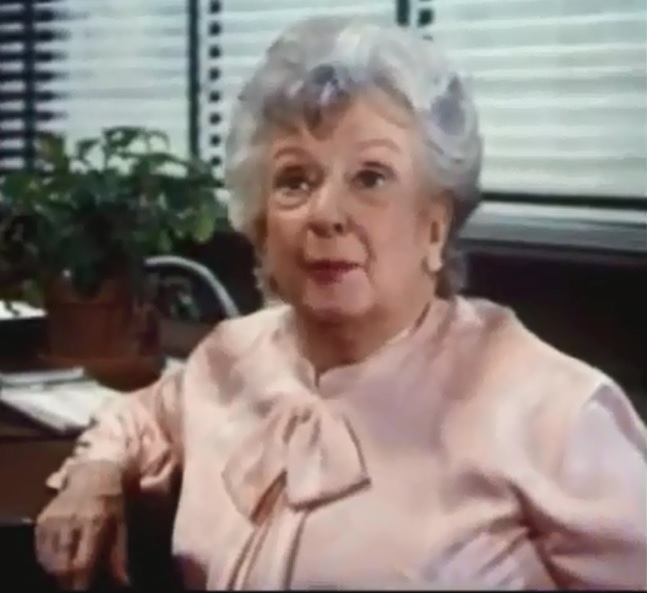
One of my favorite blog series is beginning again today: “What a Character !” Our first character actor is Ruth McDevitt. You might not recognize her name, but the minute you see a photo of her you will definitely recognize this busy television star. Her on-screen personality is perfectly captured in her imdb biography where she is described as “delightfully daffy and quite an apple dumpling of a darling, a cheerfully wizened character.”

On Love American Style with Meredith McCrae Photo: pinterest

Ruth was born in Michigan but she spent most of her early life in Ohio. Her father was the county sheriff and both of her parents were musicians. After graduation, she attended college (some sites give her college as Bowling Green and others Wooster) and after her graduation, she studied at the Toledo Dramatic Academy. She then moved to New York to attend the American Academy of Dramatic Art.

When she married Patrick McDevitt in 1928, she decided to devote her time to her husband, giving up her career. Her husband was a widowed contractor who lived in Florida, so she made the move south and participated in a variety of women’s clubs and community groups. Unfortunately, her husband passed away in 1934, and she then returned to her acting profession in her forties. She made her debut on Broadway in 1940 in several shows and later appeared in “Arsenic and Old Lace” in 1942 and “The Solid Gold Cadillac” in 1954.

In the thirties, Ruth also began her radio career, taking on the roles of Rosemary’s mother in “Keeping up with Rosemary” and Jane in “This Life is Mine.”

The Birds with Tippi Hedren Photo:

Ruth also found success on the big screen. Her first movie role was in The Guy Who Came Back in 1951. She would appear in a variety of movies during her career including The Birds, The Parent Trap, The Shakiest Gun in the West, Mame, and Angel in My Pocket.

With Frank DeVol in The Parent Trap Photo: imdb.com

It was in television that she found most of her fame. Her first appearances were in 1949 when she was cast in A Woman to Remember, The Ford Theater Hour, and Suspense. She continued to receive dramatic roles throughout the fifties. From 1953-54, she appeared in seven episodes of Mister Peepers as his mother.

Pistols and Petticoats Photo: pinterest

Ruth began the 1960s in several medical shows and then transitioned to comedies appearing in The Andy Griffith Show, The Ghost and Mrs. Muir, The Debbie Reynolds Show, I Dream of Jeanne, and Mayberry RFD. She received a recurring role in The Doctors in 1963 as Mrs. McMurtrie. She also became a cast member of Pistols and Petticoats in 1966. She was described as pistol-toting grannie, Effie Hanks. The show was set in Colorado in 1871 where the Hanks family are beloved residents and run things better than the sheriff does. It was canceled after its first season. Ann Sheridan starred in the tv series and she passed away a couple of months before the show was canceled.

The 1970s was Ruth’s busiest decade. She showed up in various dramas including Ironside, McCloud, Mannix, and The Rookies. She popped up in Gunsmoke and Little House on the Prairie and took part in the medical shows Marcus Welby and Medical Center.

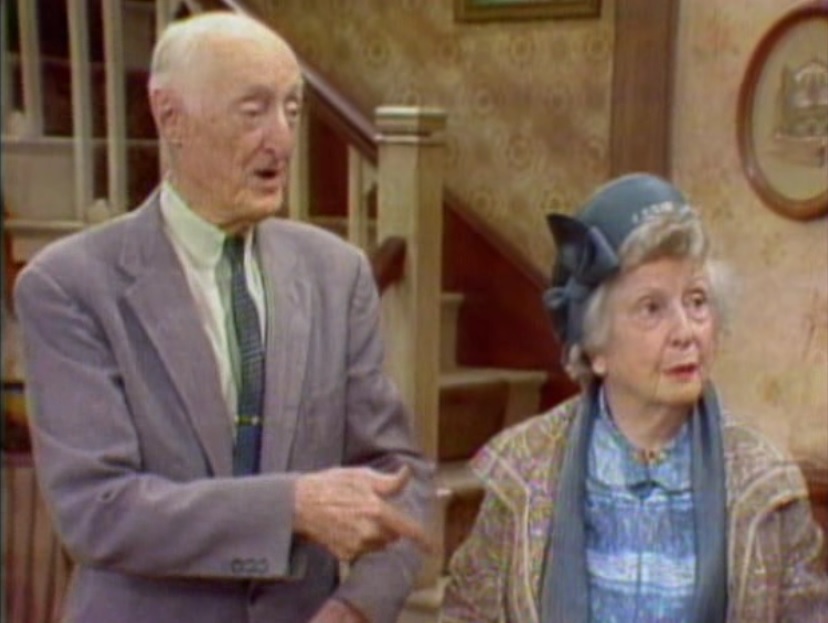
With Bert Mustin on All in the Family Photo:

However, comedies kept her employed. She accepted roles on My World and Welcome to It, The Courtship of Eddie’s Father, That Girl, Here’s Lucy, Love American Style, Nanny and the Professor, Bewitched, Room 222, and Phyllis. among others.

She accepted a recurring role on All in the Family as Jo Nelson from 1973-1975. Her last starring role was in Kolchak: The Night Stalker from 1974-1975. Darren McGavin plays a newspaper reporter who specializes in solving supernatural mysteries. His only friend was a coworker who also had a column in the paper played by McDevitt. The show supposedly inspired the X Files in part.

Photo: wiki-fandom.com

Ruth’s last two roles were in 1976 in made-for-tv movies. She passed away the same year from natural causes at age 80.

Whenever I write about these character actors, it makes me happy and sad. I respect them so much and appreciate the depth they add to make our television series better, but I am always disappointed that there is so little information available about their lives and careers. I very much enjoyed getting to know Ruth McDevitt a little better—she certainly was a character and we all benefit from that.

Go Green, Green Acres That Is

In the 1950s, a lot of the top shows were set in residential or suburban areas:  Father Knows Best, Ozzie and Harriet, the Donna Reed Show, and December Bride to name a few.  In the early 1960s, the rural sitcom became the hottest genre.  In 1963 The Beverly Hillbillies was #1, Petticoat Junction was #4, and The Andy Griffith Show was #5. Filmways offered Paul Henning the chance to produce a new rural show with no pilot necessary.  Filmways was created in 1952, and the company was behind many successful shows including The Debbie Reynolds Show, The Pruitts of Southampton, Mr. Ed, The Addams Family, and Cagney and Lacey.

Paul Henning approached Jay Sommers to create the new rural comedy. Sommers based the series on a radio show he had written in 1950 —  Granby’s Green Acres.  Granby was based on a book, Acres and Pains by S.J. Perelman. The radio show only lasted for 13 episodes and starred Gale Gordon and Bea Benaderet. Granby was a former banker who moved to the country to run a farm.  He also had a daughter, and the general store owner was a major character, Will Kimble, played in the first episode by Howard McNear. A couple of titles proposed were Country Cousins and The Eddie Albert Show, but the final decision was Green Acres.

green4

Green Acres ran on CBS from 1965-1971 with solid ratings. It produced 170 episodes, all filmed in color.  Richard Bare directed most of the shows. At the end of each episode, Eva Gabor would say “This has been a Filmways presentation dahling.”

While the Beverly Hillbillies took a family out of the mountains and put them in Beverly Hills, Green Acres went with the opposite scenario.

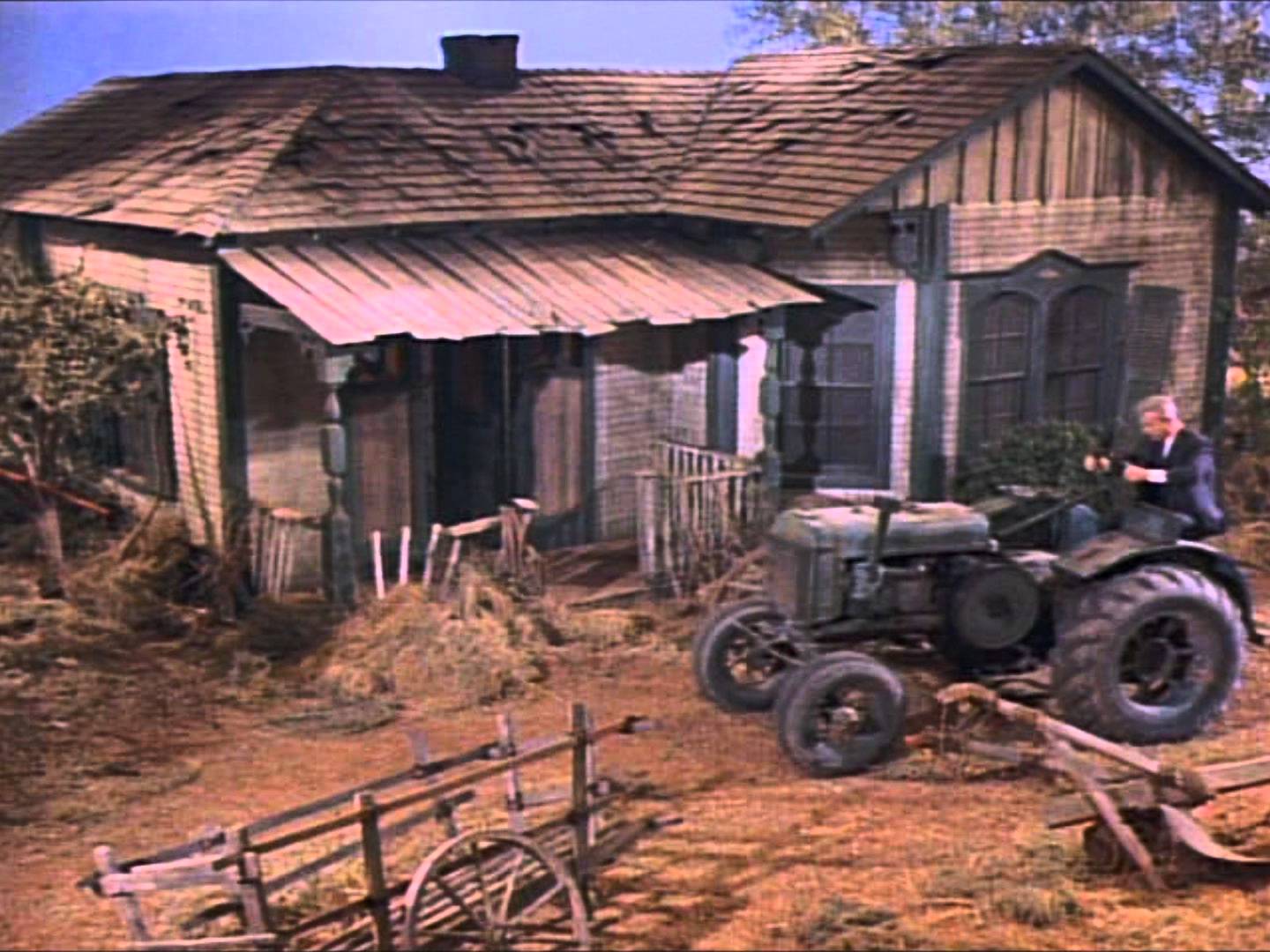
The premise of the show was that Oliver Douglas  who had been a busy attorney in New York City decides he wants to move to the country to run his own farm. His wife Lisa  does not agree. He buys a farm unseen in Hooterville. We are never told where Hooterville is, and I think everyone has their own idea of which state it might be in. The house and farm are more run-down and dilapidated than Lisa ever imagined in her worst nightmare.  The citizens of Hooterville are a quirky set of characters.
green7

The debut show was done as a documentary narrated by John Daly, a former newscaster and the host then of What’s My Line.  Eddie Albert and Eva Gabor appeared on What’s My Line later in the fall as a thank you to Daly. As you can see below, Oliver’s mother is horrified by his choice.
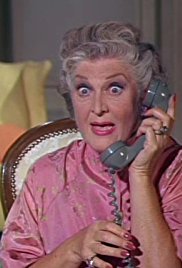
green18

The theme song is memorable and tells the backstory of the Douglases:

Oliver: Green Acres is the place to be – Farm living is the life for me –Land spreading out so far and wide – Keep Manhattan, just give me the countryside.

Lisa: No, New York is where I’d rather stay – I get allergic smelling hay – I just adore a penthouse view – Darling, I love you but give me Park Avenue

Oliver: The chores

Lisa: The stores

Oliver: Fresh air

Lisa: Times Square

Oliver: You are my wife

Lisa: Goodbye city life

Both: Green Acres, we are there

Snippets of country and New York city were shown while the stars sing, and ends with both of them in the same pose as “American Gothic” by Grant Wood.

green1

Like the Andy Griffith Show, the series worked because of the interaction between these Hooterville citizens who become believable for us. Let’s meet the cast of characters.

Oliver Wendell Douglas (Eddie Albert) – Oliver is intelligent, hard-working, and practical to a fault.  He has to deal with a kooky wife, a disapproving mother (played by Eleanor Audley who was only 5 months older than Albert), and the quirky neighbors that surrounded him. However, Oliver has a respect for the wisdom these people have about farming and rural life.  Despite the fact that he seems to be the only sane person in the valley, it’s obvious he truly has an affection for the folks he lives with.

albert

Lisa Douglas (Eva Gabor) – Lisa grew up in a wealthy Hungarian family. Her misuse of the English language is one of her endearing qualities. She has a hard time adjusting to farm life.  In one episode she is using a stapler to fix Oliver’s socks.  While Oliver is telling her how woman for centuries have sewn socks, Fred Ziffel, the most experienced farmer in Hooterville enters the room and tells her he notices she is mending socks; his wife does it the same way. Despite the fact that Lisa did not want to leave the city, she adapts to living in the country quickly and develops an understanding with the neighbors Oliver never attains.
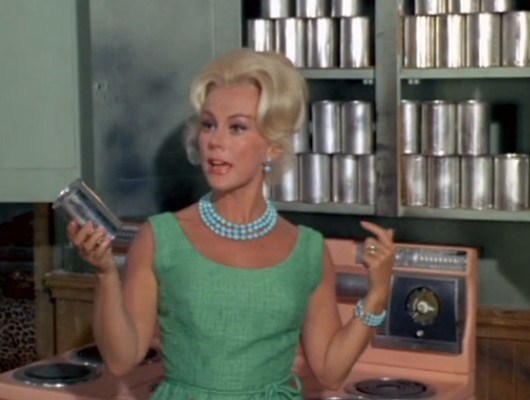
green31

Eb Dawson (Tom Lester) – Eb is the farmhand who lives with the Douglases.  He comes off as naïve, but we understand Eb is much smarter than he lets on.  He is always trying to get less work for more money.  He calls them Mom and Dad which Lisa loves but drives Oliver crazy.
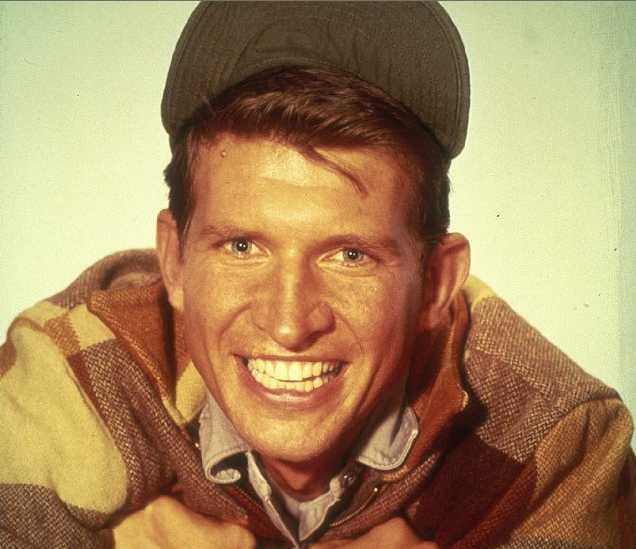
green17

Mr. Eustace Haney (Pat Buttram)- Mr. Haney is the unethical and dishonest salesman who originally sold Oliver the farm, which belonged to his family. He is always showing up to sell them something they need at outrageous prices. [Pat Buttram was Gene Autrey’s sidekick in the movies and tv; Smiley Burnette, Charley, who runs the Cannonball, the local train on Green Acres and Petticoat Junction, was Autrey’s sidekick in radio and movies and  Buttram replaced him when he moved on.]

green5

Sam Drucker (Frank Cady) – Sam was a busy guy; he ran the general store, he was the newspaper editor, was the only printer in town, he was part of the volunteer fire department, he was the justice of the peace, and he’s the postman. Apart from Oliver, he was the smartest and most sane person in the valley, and he and Oliver often commiserated about the crazy life going on around them.

Hank Kimball (Alvy Moore) – Mr. Kimball was the county agricultural agent who was supposed to help Oliver adjust to farming. He often loses his train of thought and rarely follows through on the news or information he is supposed to relay.
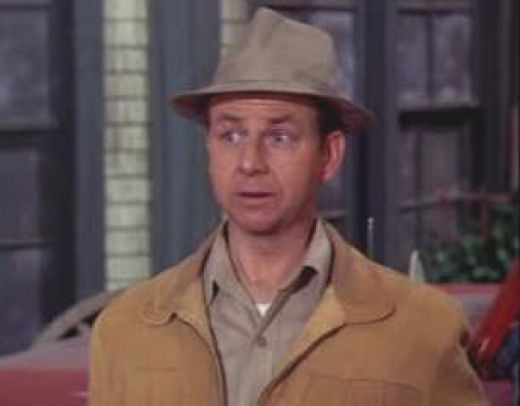
moore

The Monroe Brothers – Alf (Sid Melton) and Ralph (Mary Grace Canfield) are a brother and sister team that Alf portrays as brother and brother in order get work. Their projects are never finished on time, and rarely finished the right way.

green8


Fred and Doris Ziffel (Hank Patterson and Barbara Pepper/Fran Ryan) – the Ziffels were successful farmers.  They had no children, but they had a pet pig that they considered a son.


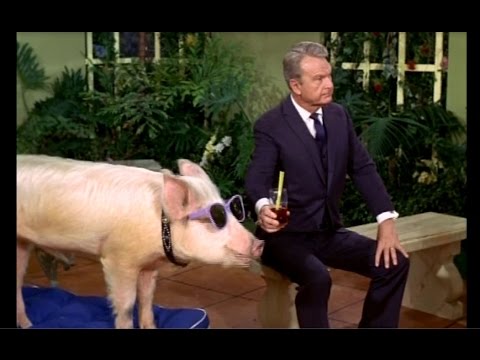
Arnold Ziffel – Arnold Ziffel was their pet pig and one of the most intelligent people in Hooterville. He understands English, attends the local grade school, lives inside in his own bedroom, can sign his name, and is a bit addicted to television watching, especially westerns. A new pig was used each season because they grew so fast. The Union demanded the pigs be payed $250 a day and were trained by Frank Inn. In 1967 Arnold won a Patsy award.
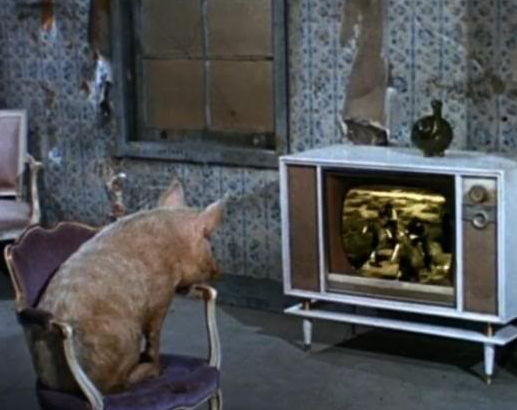
green20

Some of the other animals featured on the show included Eleanor the Cow; Bertram the rooster; Alice the hen; and Mr. Haney’s dog, Cynthia, a basset hound who had a huge crush on Arnold.

Green Acres had its fair share of guest stars including Parley Baer, Robert Cummings, June Foray, Alan Hale Jr., Elaine Joyce, Gordon Jump, Bernie Kopell, Al Lewis, Rich Little, Al Molinaro, Pat Morita, Jerry Van Dyke, and Jesse White.

The show was 25% surrealism, 25% satire, and 50% just plain fun.

Some of the running gags on the show were the fact that people, except Oliver, could see the credits running, and Lisa often commented on them. A lot of the jokes were at Oliver’s expense.  He was the only one in town who could not understand Arnold’s grunts. Also, whenever Oliver got passionate about something, he went into a monologue, usually patriotic, and everyone but him could hear fifes playing.

green3

Lisa’s hotcakes were good for many projects, just not eating. The Douglases had a feud with the phone company because they were supposed to move their phone inside.  Whenever they had to use the phone, Oliver had to climb up a phone pole to talk. Oliver had a Hoyt-Clagwell tractor which was usually breaking down, catching on fire, or falling apart.

green29

We also had the stark extremes of sophisticated New York living and rural life.  Lisa continued to dress in beautiful gowns and furs.  They slept in a huge, expensive bed, with an elaborate chandelier over their heads, but their closet had no back so neighbors walked in on and off. The fire department marching band often practices at Sam Drucker’s store but for all five years whenever they practice, they only know one song, There’ll Be a Hot Time in the Old Town Tonight.

Although Lisa continues to threaten to move back to New York City, aided and abetted by Oliver’s mother, we know she loves him and will never leave without him.  Despite their arguments, Lisa and Oliver are frequently seen kissing and hints are given about them retiring to their room together. In real life, Albert and Gabor were dear friends and they are both buried in Westwood Village Memorial Park Cemetery in Los Angeles. Tom Lester, Eb, credited Albert with helping him as an actor and being a surrogate father to him; the two remained close friends until Albert passed away.

green10

There are many cross-overs with Petticoat Junction and the Beverly Hillbillies. Sam Drucker was featured in both Green Acres and Petticoat Junction. Some of the characters visited each other on various episodes. It is funny that Bea Benaderet starred in Petticoat Junction as well as the radio show Granby’s Green Acres which means Green Acres was based on her radio show and was a spin-off of her television show. In 1968, a Beverly Hillbillies Thanksgiving Show united cast members from all three shows.
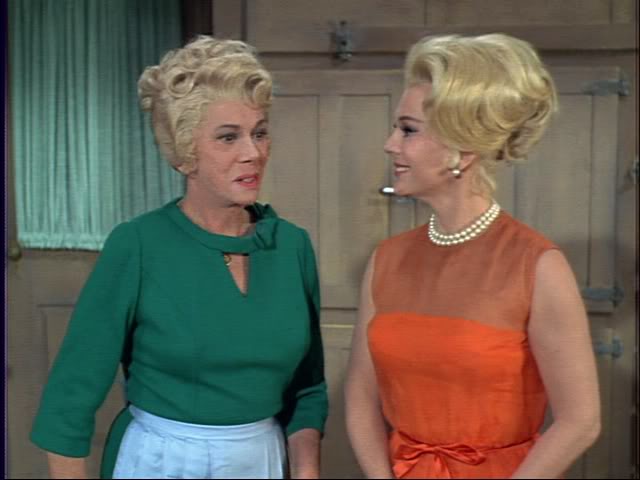
green9

green6

With 170 episodes, it’s hard to come up with the best five, but after looking at various polls and tv guide reviews, I will do my best to represent the majority’s votes:

“Music to Milk By” – Eb wants to win a radio contest and he has to listen day and night which cuts into his chores, especially when the cow swallows the radio.
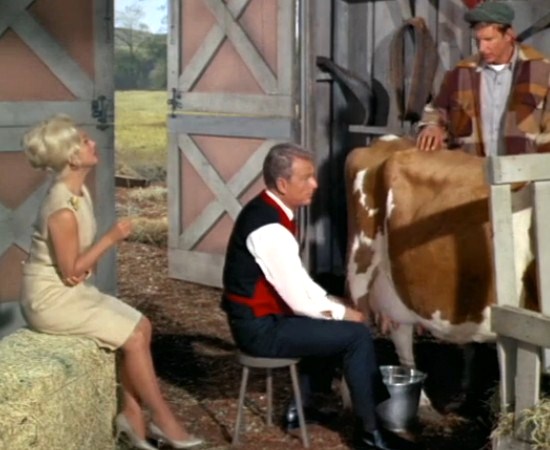
radio

“I Didn’t Raise My Pig to be a Soldier” – Arnold Ziffel gets a draft notice. Oliver acts as his attorney before the draft board. They are assuming Oliver is making fun of them with the pig and the real Arnold is elsewhere. After a lot of explanations and some time in jail, Oliver convinces them Arnold is really a pig.  The end of the show has Oliver back before the draft board because Ralph Monroe, a woman, who they think is a man, has been drafted.

draft

“The Hooterville Image” – The town agrees Oliver needs to do chores in overalls. He has been farming in a vest and dress shirt. They finally convince him to become more accepted by switching his attire until they see the overalls Lisa’s dress designer came up with.
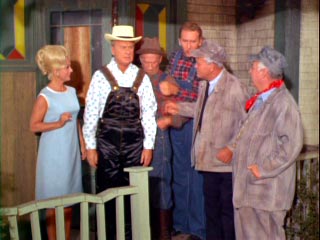
green28

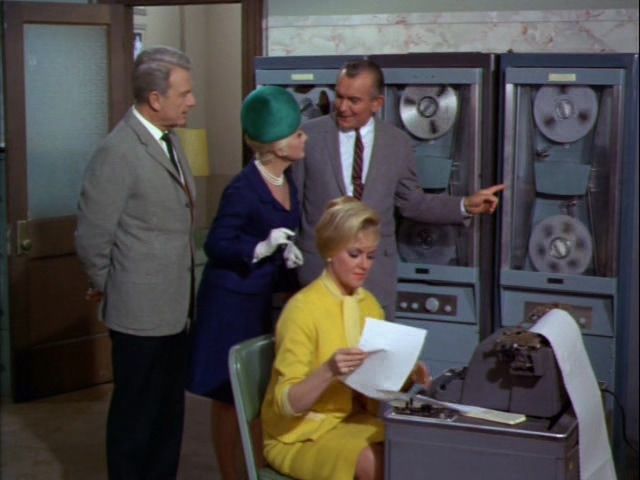
“The Computer Age” – Ralph Monroe joins a computer dating service. Oliver and Lisa disagree on whether that is a good idea. Oliver thinks it is. He also thinks computers are the best way to run a farm. To prove her point, Lisa uses the service to see if she and Oliver would have been paired up.
computer

“A Star Named Arnold is Born, Parts 1 and 2” – Arnold appears in a play at the local theater. Lisa arranges for an old friend to give him a chance in show business. In the second part, Lisa and Oliver chaperone his trip to Hollywood to star in a motion picture.
arnold

Oddly enough the top four were all from season 2, and “A Star Named Arnold Is Born” is from season 3.

green16

In Spring of 1971, Green Acres was still pulling in good ratings.  However, the Rural Purge of 1971 got rid of all shows that had country leanings whether they were audience favorites or not.


In full disclosure, I loved Petticoat Junction growing up, and I could not stand the Beverly Hillbillies.  I thought Green Acres was okay but if I missed it that was okay too.  As I’ve gotten older, I still love Petticoat Junction, and I still don’t care for the Beverly Hillbillies, but I have developed a much greater appreciation for Green Acres.  If a show was capable of having a sense of humor, this one did.   It never took itself seriously.  Eddie Albert was willing to be the straight guy to the rest of the ensemble. The character interaction worked, and no dialogue came off as too zany.  The citizens might not have always agreed or understood each other’s lifestyles, but they had affection and respect for each other. Lisa’s reading the credits and different characters addressing the audience brought us in on the jokes and made us part of the Green Acres family. Now when I watch the show, I laugh out loud – a lot! I don’t laugh at the characters, I laugh with them. For being a rural sitcom, this show has some sophisticated humor.  If you have not watched the show in a while, you owe it to yourself, as well as the cast and crew who created it, to get to know the folks in Hooterville.


Write On!

Happy Monday.  It’s National Encourage a Young Writer Day.  I love to encourage writers of all ages.  If you’re a writer, you know the two golden rules of writing.  (1) Write what you know and (2) Be original.  With those two qualifiers, one would think there would be a myriad of great shows out there about writers.  Not so.  It took a lot of exploring on my part to come up with 12 shows about writers in the past 70 years!

If writers are writing what they know, it seems writers know much more about incompetent parents, complex medical surgeries, and dating bachelors than they do about writing and writers.

Don’t get me started on being original. Unfortunately, any viewer knows that when one genre show succeeds, the next year will feature ten more just like it;  hence, the number of medical and police dramas currently on the schedule.  This doesn’t hold true anywhere else in life.  No grocer says avocados are so popular, let’s replace the oranges and apples with them.  No radio station decides to play the top five songs to the exclusion of the other songs.  That being said, I’ll jump off my soapbox before ranting about how the shows on today’s schedule are either amazingly written or not worth the time it takes to turn on the television. So, let’s look at shows about writers.

Apartment 3-C. In 1949 John and Barbara Gay played themselves.  Living in New York City, he was a writer.  The 15-minute show went off the air after one season. They moved to California where they raised their family and spent 66 years together. As far as I can tell, neither of them acted again, but John went on to be a prolific scriptwriter.

bethel leslie

Young and Gay/The Girls. Debuting in 1950 as Young and Gay, this series was based on an autobiographical novel written by Cornelia Otis Skinner and Emily Kimbrough. CBS bought the rights. After the first two episodes, the name was changed to The Girls.  The premise of the show was that two Bryn Mawr graduates come to Greenwich Village after spending time in Europe, trying to develop careers as an actress and a writer.  After a few more episodes, their acting career ended when the show was cancelled.

Dear Phoebe. In 1954, ex-college professor Bill Hastings, played by Peter Lawford, decided he wanted to try his hand at journalism.  The option he receives is becoming Phoebe Goodman, providing advice to the lovelorn. Ironically, his girlfriend, Mickey (Marcia Henderson), is the paper’s sports writer. After one season, they both received advice to seek new work when the show was cancelled.

mysistereileen1

My Sister Eileen. It would take half a decade before another show about a writer was produced. In 1960, My Sister Eileen aired.  The concept will sound vaguely familiar.  It’s based on a book and two movies about two sisters from Ohio who move to Greenwich Village wanting to be an actress and a writer. The sisters were played by Elaine Stritch and Shirley Boone. The only memorable thing about the show was the pairing of Rose Marie and Richard Deacon who went on to try their hand at another show a year later called The Dick Van Dyke Show.

The Dick Van Dyke Show. Hands down, this was the best comedy to debut about a writer.  It was also the longest running show, going off the air five years because the cast wanted to quit while the show was still successful. Rob Petrie (Dick Van Dyke) is the head writer of the Alan Brady Show, creating scripts with Sally (Rose Marie) and Buddy (Morey Amsterdam). Mel (Richard Deacon) is the long-suffering producer. This is one of the first shows to concentrate on work life. We get to see what goes on behind the scenes of a comedy/variety show. While Rob, Sally, and Buddy have lives outside the office, they are somewhat married to their work. Sally is always hunting for Mr. Right.  Buddy deals with more comedy at home because of his not-so-bright wife Pickles, although it’s obvious he is in love with Sally. Rob and Laura (Mary Tyler Moore) are both confident and intelligent adults and insecure parents, raising their son Richie (Larry Mathews) in New Rochelle. The show won an Emmy its first year and never left the top 20, producing 157 of the best-written sitcom episodes ever created.

Window on Main Street. Mention the name Robert Young, and most viewers fondly recall Father Knows Best or Marcus Welby.  In this 1961 show, Robert Young plays Cameron Garrett Brooks, an author.  After his son and wife pass away, he returns to his small home town of Millsburg to write about the town’s citizens. It must have been a very small town with few people to write about, because the series was cancelled after one year.

The New Loretta Young Show. Loretta Young starred in several shows using her name so it gets a bit confusing, but in this 1962 version, she plays Christine Massey, a children’s author and widow with 7 children. Living in Connecticut, she decides to get a job with Manhattan Magazine.  However, after meeting the editor she falls in love and marries him. Perhaps the network had a policy banning inter-company marriages, because the show was cancelled after six months.

writersblog2

Glynis. In 1963 Glynis Granville (played by Glynis Johns) moved to town. She is an amateur sleuth who solves crimes to have something to write about. Her husband Keith (Keith Andes) is an attorney.  She consults with a former policeman Chick Rogers (George Mathews). The show only lasted three months.  Jess Oppenheimer, the producer of I Love Lucy, apparently forgot this was a different show, airing episodes that were very Lucy-esque.

Please Don’t Eat the Daisies. In 1968, Please Don’t Eat the Daisies came to the small screen.  Based on Jean Kerr’s book, it was also a movie starring Doris Day about the Nash family.  James (Mark Miller) is a college professor and his wife Joan (Patricia Crowley) is a free-lance writer. The show featured their four sons, two of whom were twins, their large dog, and their housekeeper Martha (Ellen Corby). Faring better than most of our shows, this one lasted two years.

The Ghost and Mrs. Muir. This show about a writer, a widow Carolyn Muir (Hope Lange) who moves into an old house in Schooner Bay in New England, appeared in 1968. The house turns out to be haunted by Captain Daniel Gregg (Edward Mulhaney), a captain who built the house in the 1800s. This show was also based on a movie. Captain Gregg is annoyed with the interruption and noise of the new family, but ultimately falls in love with Carolyn. Charles Nelson Reilly plays the Captain’s nephew Claymore Gregg. Dabbs Greer is Noorie Coolidge, the owner of a local lobster restaurant, and Reta Shaw is their housekeeper Martha. The show was on NBC for one year then moved to ABC for one year.  Apparently, CBS declined its turn, so the show was cancelled.

The Debbie Reynolds Show. In 1969, another show produced by Jess Oppenheimer eerily reminiscent of I Love Lucy was on the fall schedule. Jim Thompson (Don Chastain) is a sports writer. His wife Debbie (Debbie Reynolds) is a stay-at-home wife who wants to be a feature writer. Jim discourages her, wanting her to stay home.  Instead of Ethel and Fred, we have her sister Charlotte (Patricia Smith) and her brother-in-law Bob (Tom Bosley).  After one season, the network decided they did not care if  Debbie worked or stayed home and sent the crew packing.

Suddenly Susan. Jump almost thirty years to 1996 and we have another show about a writer, Suddenly Susan, starring Brooke Shields. Susan leaves her husband-to-be at the altar and is forced to ask her ex brother-in-law (Judd Nelson) to hire her back at his magazine.  Most of the show is set in the workplace.  Luis Rivera (Nestor Carbonell), Vicki Groener (Kathy Griffith), and Nana (Barbara Barrie) round out the cast and appear on all the episodes.  (The photo above also includes Andrea Bendewald [the blonde] and David Strickland [laying down] who were in about half the episodes.) The show continued until 2000.

I should mention that because I focused on comedies I did not include Murder She Wrote or Castle, both having long runs of 12 and 8 years respectively. I did not include Everybody Loves Raymond because that show concentrated on his family life, and rarely revealed his writing profession.

I wish I had more encouraging words for writers who wanted to get involved in television.  About the only thing I can tell you, is if you want to develop a successful show around a writer, make it a drama for job security.