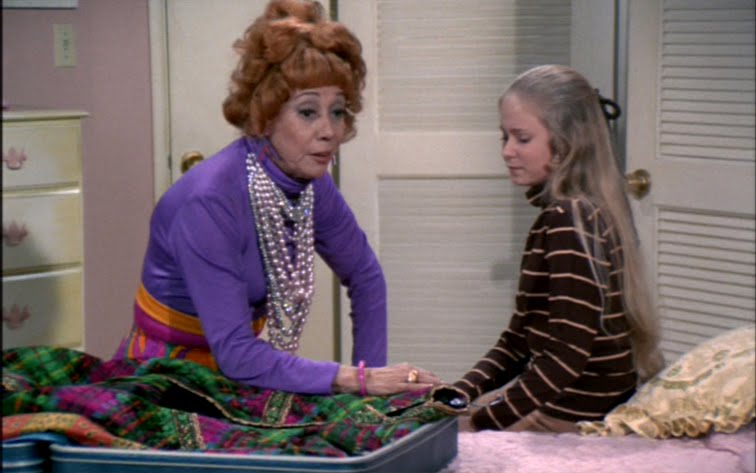
Sandra Gould: What a Character

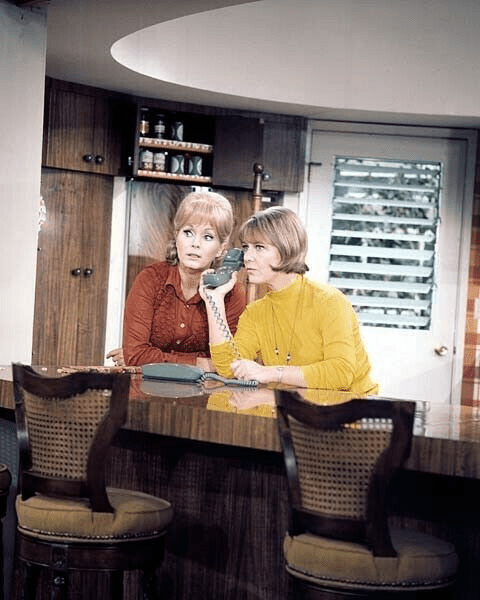
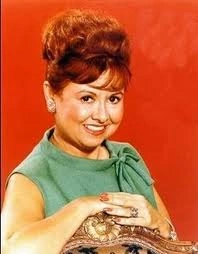
We are winding up our blog series “What a Character” with Sandra Gould. I have to be honest, I had an unfair bias against Sandra Gould.  I didn’t know a lot about her career, I just knew that she replaced Alice Pearce as Gladys Kravitz, and it was a bad replacement. It wasn’t Sandra’s fault—I blame the show’s producers.
📷pinterest.com

Some actors truly are irreplaceable. Eartha Kitt, while a great Cat Woman, just wasn’t Julie Newmar. Imagine trying to replace Henry Winkler as the Fonz halfway into the show. Can you picture tuning into MASH and finding Hawkeye was now played by someone other than Alan Alda?  Pearce was perfect in that role and, despite her being nosy and annoying, she was likable and that is hard to do. Gould’s Gladys was loud and brash, and I felt like I heard fingernails on a chalkboard whenever she was in a scene.

As long as I’m oversharing, I never cared for Dick Sargent either. While he was able to replace Dick York in some ways, York was just Darrin. Okay, I’m done and ready to talk about the good aspects of Sandra Gould and her long career.

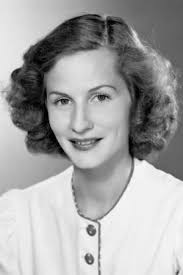
Gould was born in Brooklyn in 1916. She entered the entertainment business early becoming a kid dancer in the Cat Skills by age 13.

📷threads.com

Gould found a lot of success on radio, appearing on “My Friend Irma” and “Duffy’s Tavern.” Her first radio job came along when she was only 9 on “The Danny Thomas Show.” Gould was with Jack Benny for almost fifteen years.

In 1938 she married Larry Berns, a broadcasting executive. They were married until his death in 1965. Berns joined CBS in 1942 writing and producing radio and TV series including Our Miss Brooks. He later worked on McHale’s Navy and Broadside.

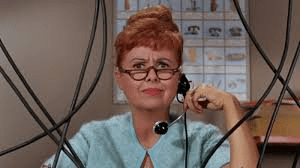
Sandra’s first role was in the big screen T-Men in 1947. Most of her roles were inept or gabby women, typically a telephone operator, nurse, receptionist, landlady, or saleswoman. Gould once mentioned that she played an operator more than any other actress. I did notice 10-15% of her roles mentioned switchboard operators.
📷facebook.com

While she continued to appear in movies, most of her acting credits came on television. She appeared in Oboler Comedy Theater in 1949. In the early days of television, many of the series were drama or comedy reenactments of movies or plays. Sometimes, new stories were written for these episodes. Gould continued with these roles into the mid-fifties.

From 1952-55 she appeared as Mildred on I Married Joan. This series starred Joan Davis and Jim Backus. He was a judge, and she was another “Lucy Ricardo” always getting into mischief or causing hardships for her husband.

📷tumblr.com

Gould was kept very busy with offers during the end of the fifties and throughout the sixties. She could be seen doing comedy on Our Miss Brooks, I Love Lucy, The Jack Benny Program, My Three Sons, The Brady Bunch, and I Dream of Jeannie among others. She also tried western life on Wagon Train. Her drama performances included Hawaiian Eye and I Spy. She even dipped her toe into animation on The Flintstones.

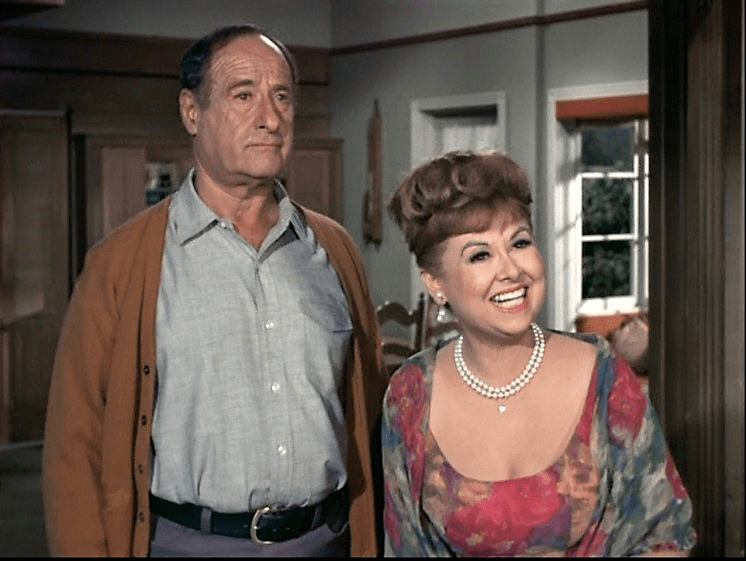
At the end of the sixties, she was given the Glady Kravitz role. Pearce and Gould split the character’s appearances: Pearce had 27 episodes with Gould having 29.

Gould had stepped away from acting for a time. She published two books for girls: Always Say Maybe and Sexpots and Pans. They both seem quite dated today in their advice to girls to get the right type of husband. At the time she accepted the role of Gladys she said she had gone through a very rough year. Her husband died. Then her writing partner Peter Barry died. Then Alice Pearce, who was a good friend of hers. She had no desire to take over the role, but George Tobias who played Abner and was also a friend, called her to come in for an audition.
📷imdb.com

I could not find any information about she and Barry collaborating. One article specifically mentioned that they wrote scripts for Honey West, Tammy, and The John Forsythe Show, but I don’t see either of their names as writers for these shows. Barry is listed as a writer for 23 shows in the late fifties and early sixties, and he was a radio scriptwriter. Perhaps they had written some scripts that were never filmed.

I guess I am in the minority on the Bewitched issue because most sites I visited described her role similarly, usually something like Hollywood Spotlight’s description: “her over-the-top performance and shrill voice were popular with viewers, and she succeeded ultimately in making the character her own.” She also reprised her role as Gladys in the sitcom Tabitha in 1977 which was about Darrin and Samantha’s daughter as an adult.

Some time during her stint on Bewitched, she got married again to Hollingsworth Morse, and they were together until his death in 1988. Hollingsworth was a director and assistant director on almost 90 programs and movies including McHale’s Navy, Dukes of Hazzard, and Mork and Mindy.

The seventies and eighties found her primarily in drama roles, although she could be spotted in a handful of sitcoms. You can catch her on Columbo, Marcus Welby MD, Ironside, Crazy Like a Fox, and MacGyver. During the nineties, she took on roles that were described as “old lady” on Friends and on her last appearance which was Boy Meets World in 1999.

📷bewitched wiki.com

Not long after filming this episode, Gould passed away from a stroke following heart surgery.

Gould had a long and successful career and certainly made the nosy, gabby character her own. I’m glad the job on Bewitched helped her get through a very sad and difficult time in her life. However, I still am claiming she was not right for Gladys who should have been written off the show and just replaced with a new neighbor. But I respect Gould and the characters she made her own on the big and little screens.

The Debbie Reynolds Show: Her Sponsorship Went Up in Smoke

Before we get into our topic of the week I’m celebrating today. This is my 475th post! Thank you to everyone who has joined me in my journey.
We are in the final week of our blog series this month, “It’s Their Show.” We are winding down with The Debbie Reynolds Show. While most of the shows we learned about this month were on air in the late fifties and early sixties, The Debbie Reynolds Show appeared in 1969 on NBC.

The show was created by Jess Oppenheimer who Lucille Ball called “the brain” behind creating I Love Lucy. This month we learned a bit about Bob Carroll Jr. and Madelyn Pugh Davis who created and wrote for I Love Lucy and The Tom Ewell Show, and they are back to write for this sitcom as well.

The show didn’t get off to a great start because Reynolds was clear that she wanted no cigarette commercials on her show. However, NBC was courting American Tobacco as the sponsor and Debbie threw a fit. When the tobacco company learned Reynolds was threatening to quit, they pulled their funding. Reynolds assured NBC that she would agree to forego NBC’s promise of a second year of the series, and she gave up her ownership in an NBC film What’s the Matter with Helen?, although she was able to star in the film.

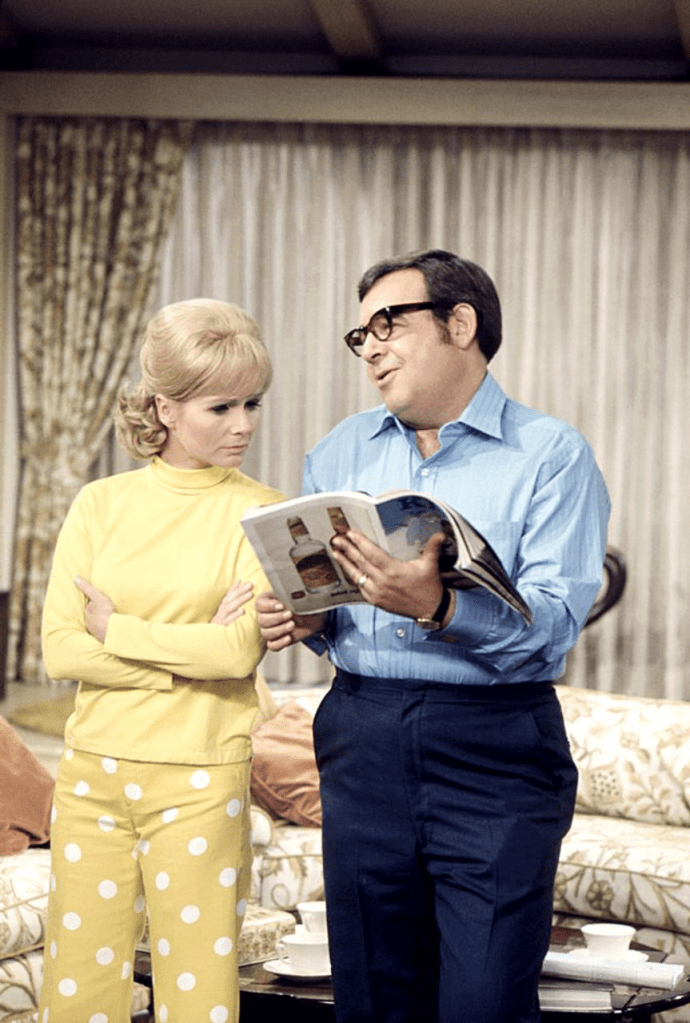
The plot of this show was that Reynolds was married to Jim (Don Chastain), a sportswriter for the Los Angeles Sun. Like Lucy always trying to get into show business, Debbie Thompson wants to be a reporter, and she comes up with various schemes to get her that job. Jim just wants her to be a stay-at-home wife.

📷📷pinterest.com

Rounding out the cast were Debbie’s sister Charlotte (Patricia Smith), Charlotte’s husband Bob (Tom Bosley) and Bruce (Bobby Riha), Debbie’s son. Like George Burns had done in his show, Debbie often addresses the audience directly.

Debbie Reynolds did double duty in this one, singing the theme for the show, “With a Little Love.”

Sadly, Reynolds was not in the same financial situation that many screen stars were when they agreed to try a television series. When the show was canceled after one season, she lived in her car for a while and her career never got back on track. For 35 years after this sitcom was canceled, Reynolds played bit parts, appeared as herself, or did animation. It must have been hard to tolerate after being a big star on the silver screen.

Tom Bosley talked about appearing in this sitcom in his interview with The Television Academy. He said the network allowed the cast to make seventeen episodes, but from the beginning they knew the show would be canceled because of the stunt Debbie and her PR rep pulled regarding the sponsorship.

📷moviemarket.com

Bosley thought Oppenheimer was a genius, but Bosley said even without the issue Reynolds had with the network, the show needed reworking for it to remain on the air. Bosley said Reynolds was very energetic, but she was bitter about her husband leaving her for Elizabeth Taylor, and her second husband was a gambler who left her with half a million dollars of debt to pay off.

To make ends meet, she went to Las Vegas to perform and started a costume museum to preserve the artifacts.

Unfortunately, this show was doomed from the start. While I admire Reynolds for standing up for what she believed in, the way she went about it was not helpful. It should have been written into her contract or handled in a nonpublic discussion. If Reynolds had let the network take care of sponsorships, things would have been okay. A few months after this show debuted, Congress took their anti-smoking initiative one step further and passed the Public Health Cigarette Smoking Act, banning the advertising of cigarettes on television and radio starting in 1971, so many shows walked away from tobacco companies in 1970. However, when Reynolds dug her heels in and threatened to quit, she not only lost her two-year minimum deal and her upcoming movie profits, but the studio was just biding its time because it had already decided to cancel the series because of her behavior.  

📷posterazzi.com

Even though Oppenheimer was described by everyone as an amazing creator and producer, this show felt like another I Love Lucy with a different occupation, and I’m guessing viewers felt that way too. It was similar to Sherwood Schwartz who kept revising The Brady Bunch for decades and kept writing sitcoms with the main characters somehow “lost” that were all duplicates of his Gilligan’s Island.

By 1969, it was time to move away from the hard-to-restrain wife in the sixties concept. In addition to being a copycat of I Love Lucy, I have to be honest. While I found something fun and charming about the other series we learned about this month, the episodes I tried to watch for this blog were painful. The characters were not likable, the writing was not witty or even easy to listen to, and considering what a great cast they had, the show just fell flat. Sadly, I recommend avoiding this one unless you are trying to put yourself to sleep some night.

Burt Mustin: What a Character

This month we are looking at some of our favorite character actors. As we wrap up the series, we are ending on a high note with the amazing Burt Mustin. Like Charles Lane, Mustin had a prolific career in Hollywood and television. However, unlike Lane, Mustin was offered his first acting job at age 67 after he had retired.

📷Widener University Archives

Mustin was born in Pittsburgh in 1884. His father was a stockbroker. After high school, Mustin enrolled in the Pennsylvania Military College (now Widener University) with a degree in civil engineering. During his college career he played trombone in the band and played goalie for his hockey team.

After graduation, Mustin toured Europe, planning to work at his father’s brokerage firm. However, a financial panic destroyed the company.

One of Burt’s university classmates was Charles Spinney. According to Burt, Spinney displayed lots of photographs of young ladies from his hometown of Memphis, Tennessee. One day, he was showing them to Burt when he spotted the photo of what he referred to as “the prettiest girl in the room.” Mustin traveled to Memphis to meet her and in 1915 he married Frances Robina Woods. The couple had no children and remained together for their entire lives, with Frances passing away in 1969.

📷imdb.com

After working as an engineer for a few years, Mustin decided to try to sell automobiles. In an interview, Mustin admitted, “I was the worst engineer the school turned out.” He began selling Oakland Sensible Sixes and later Franklins, Lincolns, and Mercurys. WWII put an end to car sales for a few years, so Mustin began working for the Better Business Bureau and then the Chamber of Commerce. He stayed in Pittsburgh until he retired.

He did a bit of amateur acting and continued his passion for music. He was part of the oldest Gilbert and Sullivan troupe in the country, the Pittsburgh Savoyards; the Pittsburgh Opera; and an officer in the Society for the Preservation and Encouragement of Barbershop Quartet Singing in America. 

He was a founding member of the Pittsburgh Lions Club in 1921 and a life member in the Fellows Club of Pittsburgh. Mustin served as an announcer for the first weekly variety show on radio station KDKA.

📷that’sentertainment.com

After retiring, Mustin and his wife moved to Tucson, Arizona for her health where he continued acting. William Wyler saw him in a stage production of “Detective Story” and told Mustin to let him know if he ever wanted to pursue a film career. When Wyler was casting for Detective Story in 1951, Mustin reached out to him. The couple later moved to Los Angeles. Mustin would appear in 67 films overall.

In 1968 Mustin was cast in Speedway with Elvis and Nancy Sinatra. In one scene the stars have a lover’s quarrel in a coffee shop. When they make up, Elvis sings a song for his girl. Mustin is in the background cleaning the café and working at the counter. The producers felt the scene needed something else. That something else ended up being Mustin singing and dancing with a mop. No one on the set realized that Burt could sing before that adlibbed scene.

1951 was also the year that Mustin appeared on television in The Adventures of Kit Carson. He would find a new career in television for the next two decades, appearing in more than 130 series (which would equal more than 400 actual episodes).

📷imdb.com

During the fifties, he would be attracted to many westerns and dramas; however, he found his way onto a few comedies including The Great Gildersleeve, December Bride, and Our Miss Brooks.

If I listed half of the 1960s shows he appeared on, you would still be reading this blog next Monday when my new one is dropped. Take my word for it that he was on almost every popular sixties’ sitcom, including 14 episodes as Gus the fireman on Leave it to Beaver. Other sixties hits you can find him on include The Many Loves of Dobie Gillis, The Dick Van Dyke Show, The Joey Bishop Show, The Jack Benny Show, The Beverly Hillbillies, Get Smart, The Andy Griffith Show, The Lucy Show, Bewitched, Gomer Pyle USMC, Petticoat Junction, and My Three Sons, not to mention many dramas and westerns including Bonanza and Gunsmoke. He was no less busy in the seventies where we could catch him in Marcus Welby, The Mary Tyler Moore Show, The Brady Bunch, Love American Style, Adam-12, All in the Family, and Phyllis.

📷imdb.com

Johnny Carson loved having Mustin on The Tonight Show, where he was a fan favorite. He shared a lot of fun stories on the show. One of them was about him being at the first World Series for baseball in 1903 when the Pittsburgh Pirates played the Boston Red Sox. Unfortunately for Burt, Boston came back to win the series, but as a bonus he did get to see Honus Wagner play on the diamond.

Mustin passed away eight years after his wife at the age of 92. He left a gift to the college he was loyal to his entire life, enabling Widener University to renovate their theater. It is now named the Burton H. Mustin Theatre and Lecture Hall.

It’s hard to wrap your head around what a busy film and television career Mustin had. He was an actor for the last 25 years of his life, and with 67 movies and more than 400 episodes, that means that he accumulated about 20 credits per year which is almost two a month from age 67 to 92. Talk about an amazing career. Mustin proved that it’s never too late to find your next passion. Thanks for so many great memories Burt Mustin.

Welcome To the Twilight Zone

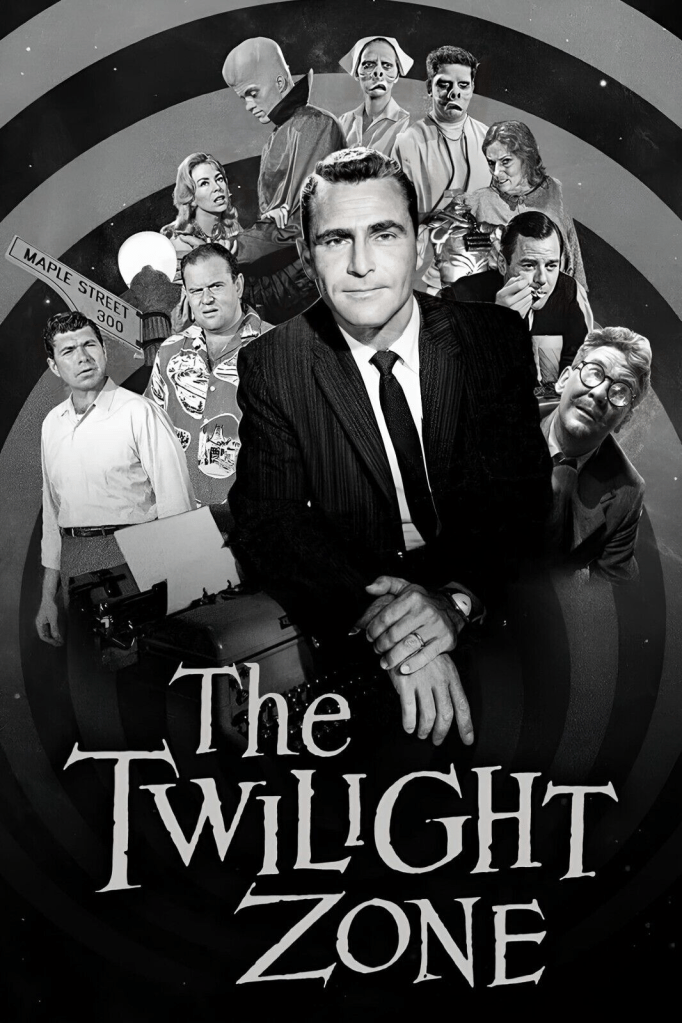
As we wind up our Eerie Shows blog series, we are ending with a show I remember being both fascinated by and totally creeped out by – The Twilight Zone. In 1958 CBS purchased a teleplay written by Rod Serling called “The Time Element.” It was introduced by Desi Arnaz. It became an anthology series called The Twilight Zone and was on the air from 1959-1964.

This show had more lives than The Brady Bunch. A second version debuted in 1985 and was on four years on CBS. From 2002-2003, it appeared again on UPN hosted by Forest Whitaker. But that still was not the end. In 2019, a fourth reboot was on for a season. In addition to the reboots, Steven Spielberg produced Twilight Zone: The Movie in 1983 starring Dan Aykroyd, Albert Brooks, and John Lithgow. Leonardo DeCaprio was rumored to be putting together a current film and Aron Eli Coleite was hired to write the screenplay. Four years later, Christine Lavaf was brought on to write a script. I could not find any information whether this movie was still in the works or not.

In this blog, I am focusing on the original series. While the show could be described as fantasy or science fiction, the episodes covered a lot of genres including absurdism, dystopian fiction, suspense, horror, and psychological thrillers.

📷reddit.com

The opening is one many of us remember: “There is a fifth dimension, beyond that which is known to man. It is a dimension as vast as space, and as timeless as infinity. It is the middle ground between light and shadow, between science and superstition, and it lies between the pit of man’s fears and the summit of his knowledge. This is the dimension of imagination. It is an area which we call The Twilight Zone.” The “Twilight Zone” was a term used by US Air Force pilots when crossing the day and night sides above the world.

📷wired.com

The series was produced by Cayuga Productions, Inc., owned by Serling. There were a lot of other famous writers who penned episodes on this show. Of the 156 episodes, Serling, Charles Beaumont, and Richard Matheson wrote 127 of them. Other famous writers included Ray Bradbury, Earl Hamner Jr., George Clayton Johnson, and Jerry Sohl. Many of the episodes were social commentaries about nuclear war, McCarthyism, racial inequality, and the greed of capitalism.

One of the earliest shows, “The Monsters Are Due on Maple Street,” is a great example of the Cold War and McCarthy subthemes. It aired in 1960, and the themes are still relevant today. The residents of Maple Street are alarmed when they hear rumors of monsters from outer space in their neighborhood. After a shadow passes by and a loud roar is heard, the citizens start accusing each other of being aliens. One man dies, another is physically attacked, and rioting occurs. We watch the residents destroy each other without seeing aliens involved. The twist is that there are aliens. They cut the power, but they let the humans destroy themselves. The message was if we think communists are in our midst, we’ll invent evidence to prove it and attack each other while Russia simply sits back and watches us destroy each other.
📷powerpop.com

All the shows were filmed in black and white. Seasons one, two, three and five were half-hour shows, while season four was an hour long. The Twilight Zone was never very high in the ratings, and the show struggled to find sponsors during its run. To save some money in season two, the network decided to shoot episodes on videotape instead of film. I’ve heard of this happening with several television shows in the sixties, but I wasn’t sure what the difference was. Apparently, videotape was very primitive at that time. Using videotape meant that the show was “camera-cut” which means using four cameras on a sound stage. Location shooting was not possible, and editing the tape was almost impossible. These disadvantages, along with the poor visual quality, made it hard to work with, and the technology was abandoned after a brief trial period.

The original theme for season one was composed by Bernard Herrmann. Season two switched to a theme by Marius Constant which is the most-remembered theme song. (The Grateful Dead performed the theme in 1985 for the reboot, Johnathan Davis of Korn composed the 2002 version, and Marco Beltrami was on board for the 2019 revival. The 1983 movie used composer Jerry Goldsmith.)

📷imdb.com

Several actors were in more than one episode and are noted for their appearances in the show: Jack Klugman, Burgess Meredith, Warren Oates, William Shatner, Jack Warden, Fritz Weaver, and William Windom.

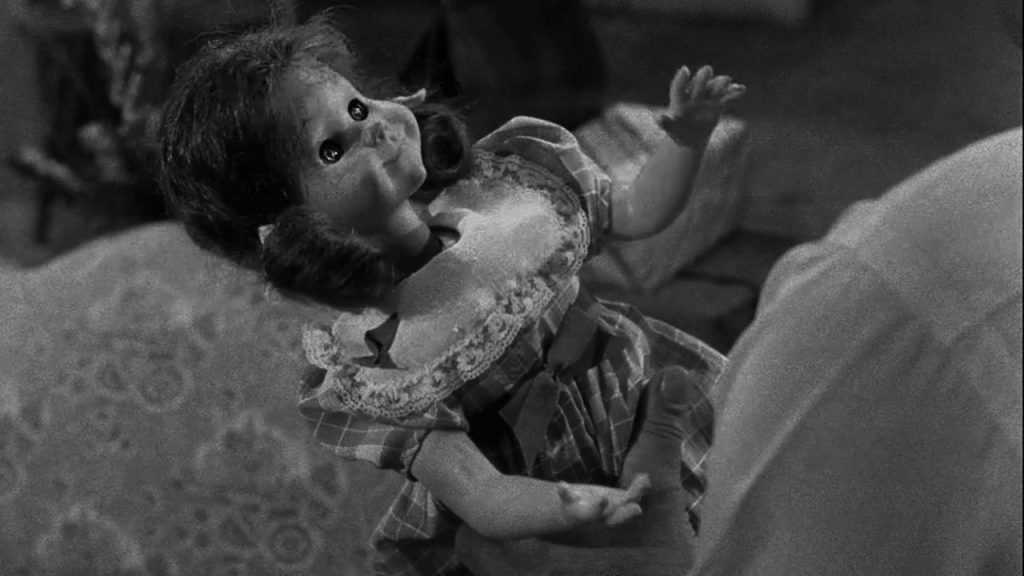
Everyone has their favorite scary episode. “The Dummy” from 1962 is about ventriloquist Jerry Etherson who thinks his dummy Willie is alive and evil. He locks Willie in a trunk, deciding to write a new act with another dummy, but Willie doesn’t like the plan.

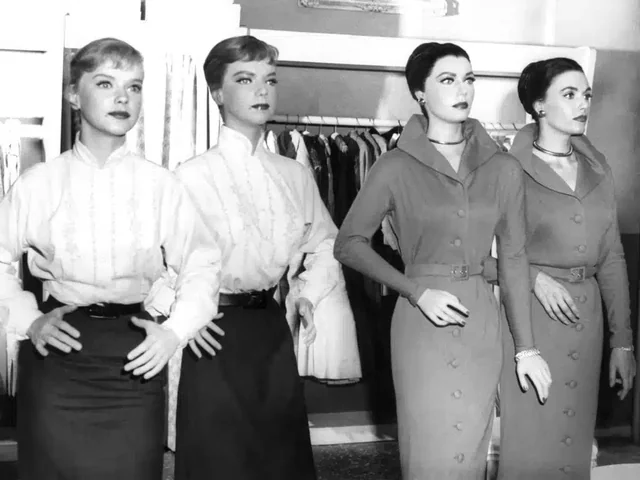
In “The After Hours,” a woman is locked in a department store after hours and it seems as though the mannequins have come to life. Even though no one is left in the store, she is treated badly by several “salespeople.”

📷imdb.com

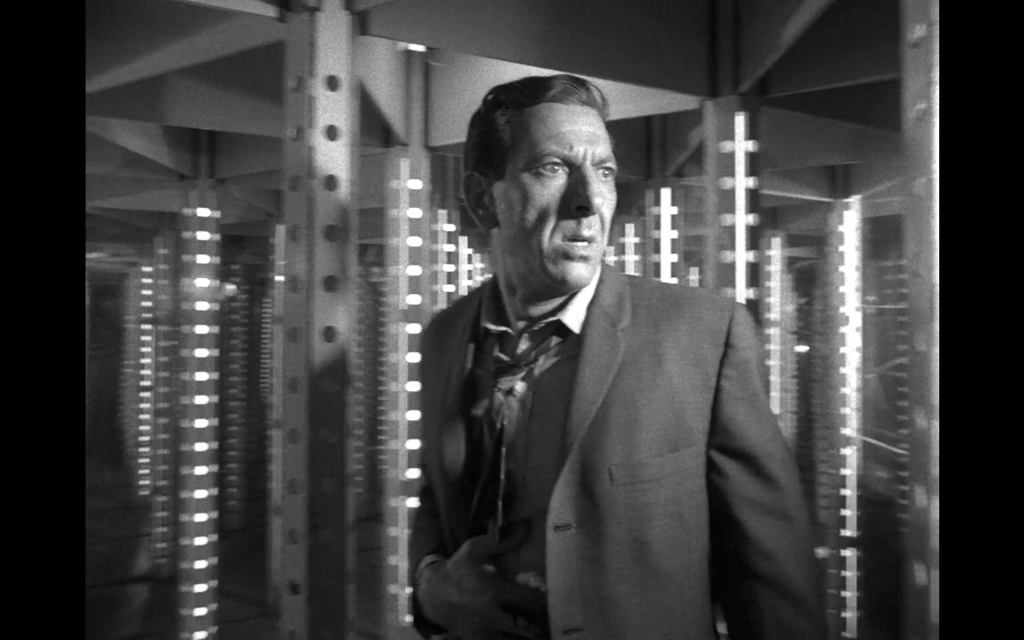
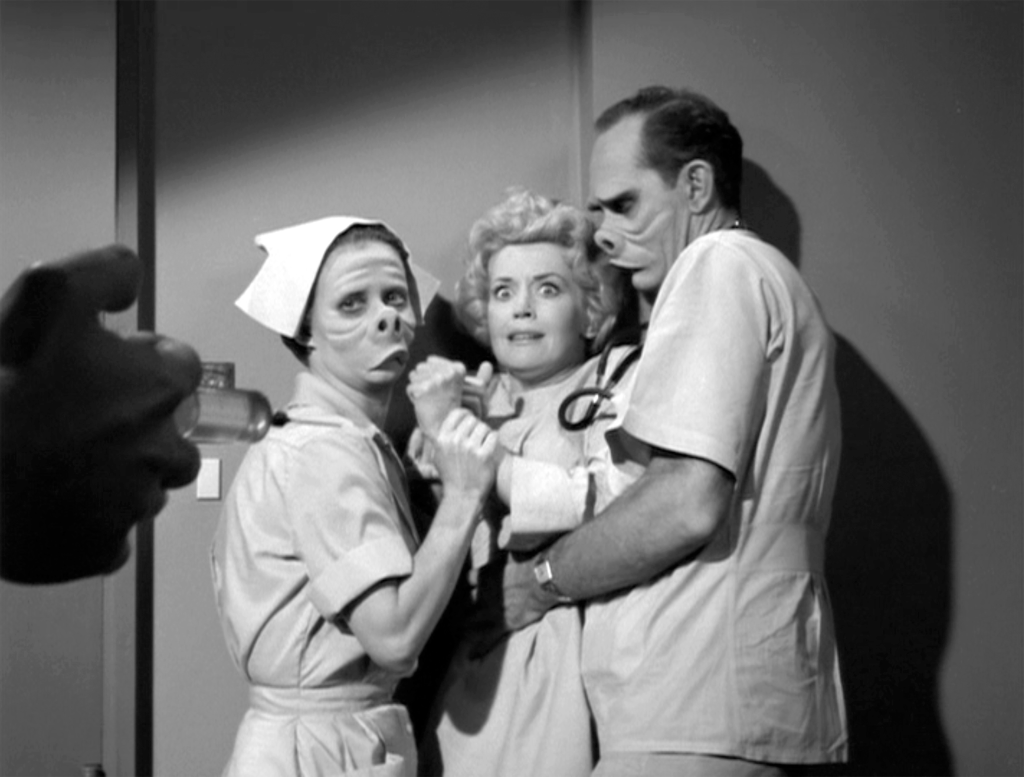
My most-remembered episode was “Eye of the Beholder.” Donna Douglas stars in this one about a young woman lying in a hospital bed with her head wrapped in bandages. She is waiting to see the outcome of a surgical procedure that was supposed to make her look “normal.” We see the bandages come off, we see the beautiful face of Donna Douglas, we see her look into a mirror, and then we hear her scream. When the scene pans out, everyone else has the face of a distorted pig and Douglas is devastated by her “ugliness.”

Also, like The Brady Bunch, the show has never been off the air since it debuted thanks to syndication. The episodes, despite being in black and white, have stood up to the test of time very well. Many things have changed in society since 1959, but people really have not changed much, and the stories are still applicable today. Newton Minnow who headed the FCC in 1961 is the person who called television a “vast wasteland.” The only series he praised was The Twilight Zone. (The US Minnow on Gilligan’s Island was named for Newton.)

📷paramountplus.com

There are some shows that are classics for their writing, some are classics for the quality of actors on the show, some are classics for their ability to transcend time and stay relevant for decades, and some are classics for the novelty they bring to the television schedule. The Twilight Zone is a classic because it does all these things and is as enjoyable to watch today as it was more than 60 years ago.

Marcia Wallace: What a Character

📷matchgamewikifandom.com

When trying to decide who to include in our Supportive Women blog series this month, Marcia Wallace was a no-brainer. Carol was one of my favorite characters on television on The Bob Newhart Show, and I love the fact that her role carried over into an episode of Murphy Brown.

Marcia Wallace was born in 1942 in Iowa. Her father owned a general store where she and her siblings often worked. After performing in a school play, one of her teachers encouraged her to pursue an acting career. After graduation, Marcia enrolled in Parsons College in Fairfield, Iowa where she received a full scholarship. She majored in English and Theater.

Upon her college graduation, Marcia decided to move to New York. The country gal had $148 in her savings. When she arrived in the Big Apple, she took on a variety of part-time jobs including typing scripts and substitute teaching. She joined a summer stock company and did a few commercials. She worked in a Greenwich Village nightclub for a year before creating an improv group, The Fourth Wall, with several friends. While she kept the friends, she lost 100 pounds.

Eventually, Wallace was offered a job with The Merv Griffin Show. When Merv decided to move to LA, he asked Wallace to move with them. She was able to obtain a few roles in series after moving to California. During the sixties and early seventies, she was on Bewitched, The Brady Bunch, Columbo, and Love American Style.

📷tvinsider.com

After Bill Paley had seen her on Merv Griffin, Grant Tinker (producer) called her to offer her a role on a new sitcom, The Bob Newhart Show. The role of Carol was written specifically for her.

Marcia loved her time on the sitcom. She said Bob was the Fred Astaire of comedy, making it look so easy. She also praised Bob for being a treasure. Because of the way the scripts were written, the show doesn’t date itself. It was about human relationships and people struggling to make them work and make life better.

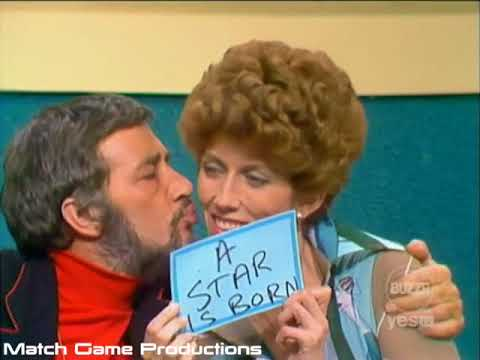
When The Bob Newhart Show went off the air six years later, Marcia jumped on the game show circuit. Shecould be seen on Password Plus; Super Password; Hollywood Squares; Crosswits; Hot Potato; The $25,000 Pyramid; Win, Lose, or Draw; Tattletales; To Tell the Truth; Family Feud; Card Sharks; and my favorite, Match Game.

📷youtube.com

Like so many actresses and actors who perform their role so well, Marcia was typecast after the show ended. In an interview, she said that “I have heard ‘You’re too recognizable for this part.’ I remember once, I desperately wanted to be on the series Nine to Five and they just weren’t going to see me because of that. Every once in a while, something would break my heart.”

Wallace also made appearances on The Love Boat and Fantasy Island in the seventies. During the eighties she would show up on CHiPs, Magnum PI, Taxi, Murder She Wrote, Night Court, and ALF, among other shows.

One of my favorite appearances of Wallace’s occurred in the mid-nineties on Murphy Brown. If you were a fan of that show, you know Murphy could not keep a secretary. There was even a support group that started of her former secretaries. However, when Carol Kester came to work for her, she was overjoyed. Carol was the role Wallace played on The Bob Newhart Show. Unfortunately for Murphy, at one point during the show, Bob Newhart shows up and convinces Carol to return to work for him and Jerry and Murphy lost her perfect assistant.

Most of Wallace’s work after 2000 was for voice work with one exception. In 2009, she had a recurring role on The Young and the Restless as Annie Wilkes for 14 episodes.

In 1985 Marcia was diagnosed with breast cancer. She survived it and became an activist and lecturer on the topic. In 2007, she won the Gilda Radner Courage Award for her work in this area.

In 1986 Marcia married Dennis Hawley in a Buddhist ceremony. Dennis renovated and managed hotels. The couple adopted a little boy, but Dennis passed away three years later.

📷imdb.com

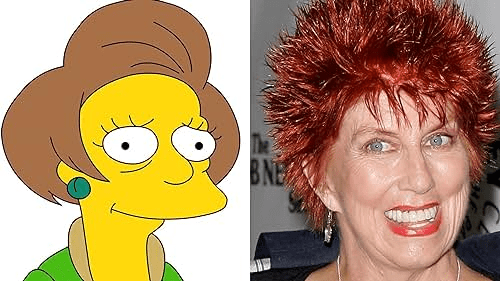
In 1989, a new type of show debuted called The Simpsons. Marcia was asked to provide the voice of Edna Krabappel, school teacher. She probably did not realize she would be associated with that role for another 24 years. Her role as Edna did not end until her passing.

In addition to her television work, Wallace performed on stage. She produced and starred in “An Almost Perfect Person,” a female version of “The Odd Couple,” “Same Time, Next Year” and many others.

In 2004, Wallace published an autobiography, Don’t Look Back, We’re Not Going That Way. She honestly discussed her breast cancer, the loss of her husband, her nervous breakdown, being a single mother, and the ups and downs of her career.

Marcia died from pneumonia and sepsis in 2013. Her coworkers commented on her passing. Yeardley Smith, who voices Lisa on The Simpsons, said “Heaven is now a much funnier place because of you, Marcia.” Bob Newhart said that “Marcia’s death came as quite a shock, she left us too early. She was a talented actress and dear friend.”

📷onceuponascreen.com

I’m so sad that Marcia was typecast and unable to get the roles that she wanted. The networks were very shortsighted during those decades. They didn’t give television fans enough credit for being resilient enough to love the character of Carol while being able to love another character played by Wallace. You saw the same things happen to Adam West, Alan Alda, and Henry Winkler. If that perspective had continued, we never would have had Mary Richards on The Mary Tyler Moore Show or Jay Pritchett from Modern Family. If someone could be a hit as Al Bundy and then go on to star in another show, anyone can get beyond being stereotyped. Marcia Wallace proved that anyone could survive life’s disappointments with determination and a sense of humor, and perhaps that was her greatest role for us.

Joan Tompkins: What a Character

We are starting a blog about Supportive Women, great actresses who made classic television so much better. I’m beginning with Joan Tompkins.

📷tvtime.com

Tompkins was born in 1915 in Mount Vernon, NY. She began her career in stock theater companies in New York in the thirties before appearing on Broadway in several shows including “My Sister Eileen,” “Pride and Prejudice,” and “Fly Away Home.” Henry Fonda was in several the plays with Joan.

In 1936 she married actor Stephen Ker Appleby in New York, but five years later they divorced. Appleby was born in Wales and known best for his 1960s movies. He lived to be 100. From 1942-1951 she was married to Bruce MacFarlane before they divorced. McFarlane died in 1967 and had 28 acting credits in television and film. Joan would then marry a third actor in 1951, Karl Swenson, “the man of a thousand voices.” The two worked together on the radio. Many fans of Little House on the Prairie would recognize Karl as Lars Hanson. Swenson obtained an amazing 175 credits, primarily on television during the two decades before his death.

After WWII Joan became a foster parent for a crippled Polish boy, Tomasz Machcinski. He later became a photographer. In 1994, their story was made into a documentary, “Child from a Catalog.” Machcinski’s life story was very interesting. He was born in the Kampinos Forest in Gorki, Poland. He spent his childhood living in hospitals and orphanages. After developing a relationship with Joan, he graduated as a precision mechanic in 1963. In 1966, he took up photography and created thousands of self-portraits. Some were as historic characters. He chose the stories, make up, and costumes. He once said that he didn’t “use wigs, tricks, but I use everything that happens to my body, such as hair regrowth, tooth loss, diseases, aging, etc.” He has had exhibits in Copenhagen, Beverly Hills, Warsaw, New York, and Paris. Machcinski passed away in 2022.

📷wallofcelebrities.com

Tompkins had a long radio career. She was the voice of Nora Drake on “This is Nora Drake” which was on CBS radio until 1959.

She began her television career in 1954 on an episode of Ponds Theater. Almost all of her 93 acting credits were for television shows. She had a recurring role on a soap, Valiant Woman, appearing in 176 of the 1027 episodes of the show as Marion Walker. Throughout the fifties, she showed up in several dramas as well as The Donna Reed Show, Bachelor Father, and Father Knows Best.

During the sixties, she had two recurring roles. She played Mrs. Brahms on Occasional Wife in 1966-67. I remember her on My Three Sons; between 1967-1970, she appeared as Lorraine Miller, Katie’s mom, nine times.

You can catch glimpses of her on many of your favorite shows from the sixties and seventies, including Hazel; The Danny Thomas Show; Perry Mason; Gomer Pyle: USMC; Dr. Kildare; The Man From UNCLE; Bewitched; Bonanza; The Brady Bunch; Marcus Welby, MD; The Mary Tyler Moore Show; The Mod Squad; and The Bob Newhart Show.

📷imdb.com My Three Sons

Her last television appearances were in 1980. She played Grandma Gertie in an episode of Eight is Enough and a physician in a made-for-tv film, The Night the City Screamed.

Karl and Joan moved to Beverly Hills where they founded an acting company. Karl directed the plays Joan appeared in. After Karl’s death in 1978, Joan joined a writing group and wrote several books. She died at home in 89.

Joan Tompkins is another one of those actresses that made television better during the fifties, sixties, and seventies. I’m glad we could learn a bit more about her and her career.

We Never Really Left Leave It to Beaver

This month we are learning about America’s favorite families. Today we are spending some time with the Cleaver family. In the past we have talked quite a bit about The Brady Bunch, and in some ways, Leave It to Beaver is like that show. The Brady Bunch portrayed the 1970s and although they have been on the air since that first episode debuted, the show never cracked the top twenty. The Cleavers taught us about the 1950s. That show also never got into the top thirty during its six-season run but has been on the air most of the past 65 years.

📷thetodayshow.com

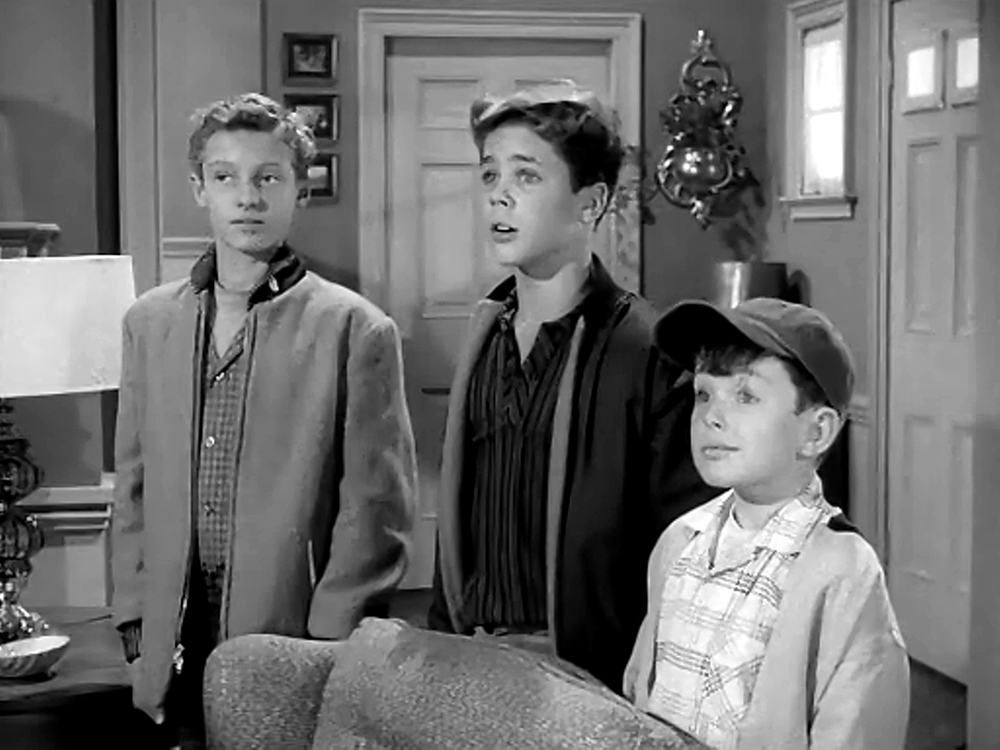
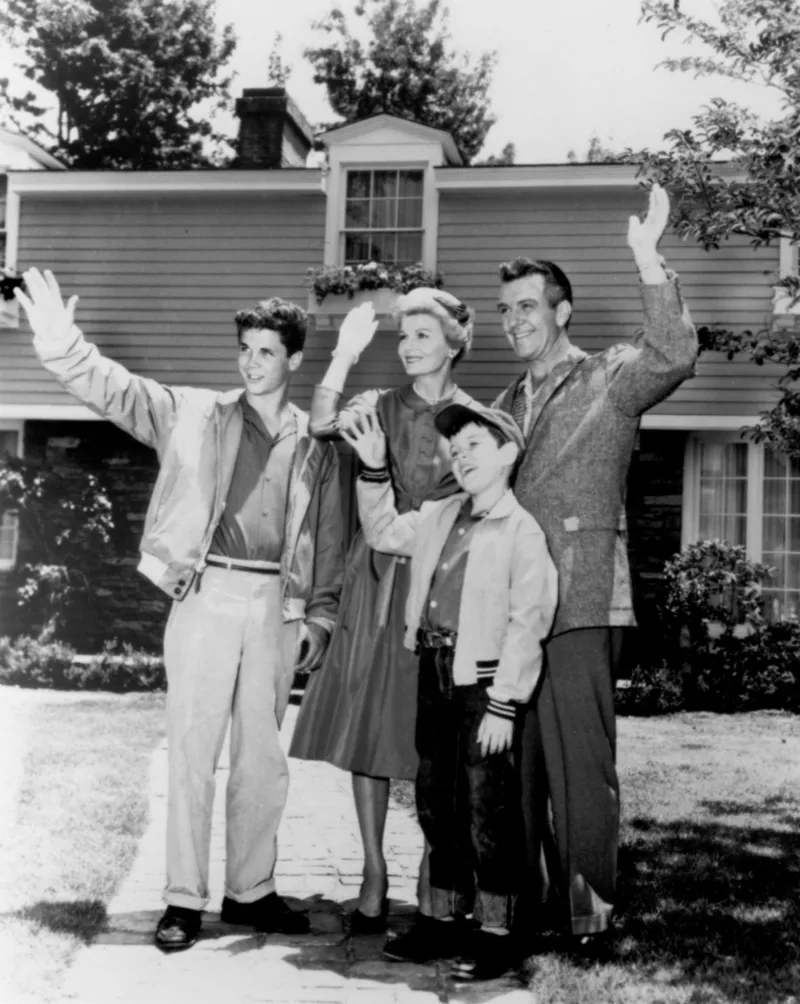
The show was originally written to feature Theodore or Beaver played by Jerry Mathers. Beaver gets into a lot of mischief, but he is a good kid and always means well. He has an older brother Wally, played by Tony Dow. His parents are Ward (Hugh Beaumont) and June (Barbara Billingsley). I thought it was interesting that all four of the stars appeared in every single episode of the show, 234 of them.

We also got to know some of the boys’ best friends as well. Beaver hangs out with Larry Mondello (Rusty Stevens) and Gilbert Bates (Stephen Talbot). He also spends time with Gus an old fireman played by Burt Mustin who seemed old even then. Wally is often with Clarence “Lumpy” Rutherford (Frank Bank) whose father is friends with Ward and Eddie Haskell (Ken Osmond). Eddie is overly polite to Ward and June who are never fooled by his manners; he often picks on Beaver.

Mathers said that when he went to the audition, he went in his Cub Scout uniform because he didn’t want to be late for the den meeting. He was so honest and innocent about wanting to get to his Scout meeting that the producers hired him.

📷imdb.com With Eddy Haskell

Tony Dow never planned on getting a part. He had been in one commercial but no television series. He was an athlete and a diving champion and great swimmer. He had been working out at the Hollywood athletic club and a lifeguard there asked Dow’s mom if Tony could go with him to the audition. Dow ended up getting the part. Mathers later corroborated the story in his blog, saying that the actor who was in the pilot grew five inches the following year and was as tall as Beaumont, so they decided to hire another kid for the role. They wanted someone who looked like an athlete, so they chose Dow.

Beaumont took some inspiration from his studies to be a wise and caring father. He held a Master of Theology degree from USC and was an ordained minister. In addition to acting, Beaumont wrote one entire episode, contributed to several others, and directed 23 episodes.

While Beaumont contributed to the scripts, the show was primarily created by Joe Connelly and Bob Mosher, and many of the plots were based on their children.

📷metacritic.com

CBS put Leave It to Beaver on the air Wednesday nights in 1957. I can see where the ratings might suffer because the show was on during the last half of both Wagon Train and Disneyland, so a lot of viewers were watching another show at the time.

The network decided to drop the show at the end of the year, but ABC picked it up and extended its run for five more years. The new network aired it Thursday nights up against repeats of I Love Lucy and a show I know nothing about called Jefferson Drum. The description is that a widowed father starts a newspaper in a western town. The next season the show appeared on Friday nights with another move the following year to Saturday nights. In its fifth season it stayed on Saturday nights but switched times and the sixth season found it on Thursday nights against Perry Mason and Dr. Kildare. At that point, Jerry Mathers wanted to have a normal high school life, and the show ended.

The theme of the show is probably one of the best-known television themes. It was “The Toy Parade” composed by David Kahn, Melvyn Leonard, and Mort Greene.

📷dvnet.com Still the Beaver

In 1983, “Still the Beaver” aired to catch us up on the Cleaver family. Beaumont had passed away, but the rest of the cast showed up for the reunion. It led to a reboot that ran for four years from 1985-89 called The New Leave It to Beaver. Beaver and Lumpy run Ward’s business. Beaver lives in their family home. June is still living there, taking care of Beaver’s two boys. Eddie Haskell is still in Mayfield with his son Freddie. Wally is now a lawyer living in town, married and expecting his first child.

Ward and June took a lot of heat for being stereotypical parents in the show. While there was definitely some unrealistic behavior, fans continued to flock to the show for decades and now, almost 70 years after the first airing, it is still on the air and gaining new generations of viewers. June gets made fun of for wearing pearls and high heels, but when she was asked about that, she admitted that she wore the pearls because she had an indentation on her neck that she thought did not look good on film and the pearls covered it up. She said she wore heels because she had to be taller than the boys.

📷latimes.com

Mathers is the only remaining primary cast member; the rest of the crew has passed away. He has admitted that the family on television was also close off the air. Mathers became good friends with Ken Osmond. When Dow passed away, Matters wrote, “It is with the utmost sadness I learned this morning of my costar and lifelong friend Tony Dow’s passing. He was not only my brother on tv but in many ways in life as well. Tony leaves an empty place in my heart that won’t be filled. He was always the kindest, most generous, gentle, loving, sincere, and humble man, that it was my honor and privilege to know. Of Beaumont, he said, “we had a good chemistry and . . . I was very glad that he was picked for the role and we had a wonderful friendship for his entire life until he passed away from a heart attack. Hugh and my dad had become friends and he occasionally came to our house to play cards with my father and his friends.” He also had fond words for Billingsley, that she was “a good friend and an even better mentor. . . I was lucky enough to work with her for six years and have a life-long relationship with her. She was a very kind woman and a generous philanthropist who supported many charities.”

Like some of the Brady kids, Mathers thought once he left the show, he left show business behind him. He attended Notre Dame High School in Sherman Oaks, California and had a typical teenage life. He enlisted in the US Air Force Reserves, attaining the rank of sergeant. He also was in a band called Beaver and the Trappers. After graduation, he worked as a loan officer at a bank and got involved in real estate. At the end of the 1970s, he decided to star with Dow in a stage production of “Boeing, Boeing” in Kansas City and afterward, the two of them toured in “So Long, Stanley” for 18 months. In 1981, Mathers began working as a DJ and, not long after, the reunion movie and reboot of the tv show was offered to him.

📷heraldweekly.com

I will admit that I have never been a huge fan of Leave It to Beaver. I never thought of it as a bad show, but I was just interested in other shows more. It is pretty incredible that it has been on the air for so many decades and still finds new viewers. I think I gravitate more to The Brady Bunch because it reflects the decade that I grew up in. It must be very strange for a person to live a role for six years, walk away at age 15 or so and then come back to it two decades later. From everything I read, both Mathers and Dow came away from their acting careers unscathed from so much of what you read other child actors had to endure. Along with Ron Howard, they seem to have been able to have a fairly normal life off the set. I think it’s great that Hugh Beaumont became friends with Mather’s father. They seem to have experienced the same great relationships with their tv parents that Patty Duke, Shelley Fabares, and Paul Petersen did. It’s always nice to hear that a show about a favorite American family in pop culture is also a great family away from the set.

Not Many of Us Can Compute Small Wonder

We are in the midst of our blog series “I Robot.” If you read last week’s blog, you will remember we were discussing My Living Doll, a science fiction comedy from the mid-sixties created by Howard Leeds.

Cast Photo: twitter.com

Today we are moving ahead two decades to look at another Howard Leeds’ show from the mid-eighties called Small Wonder, another science fiction sitcom.

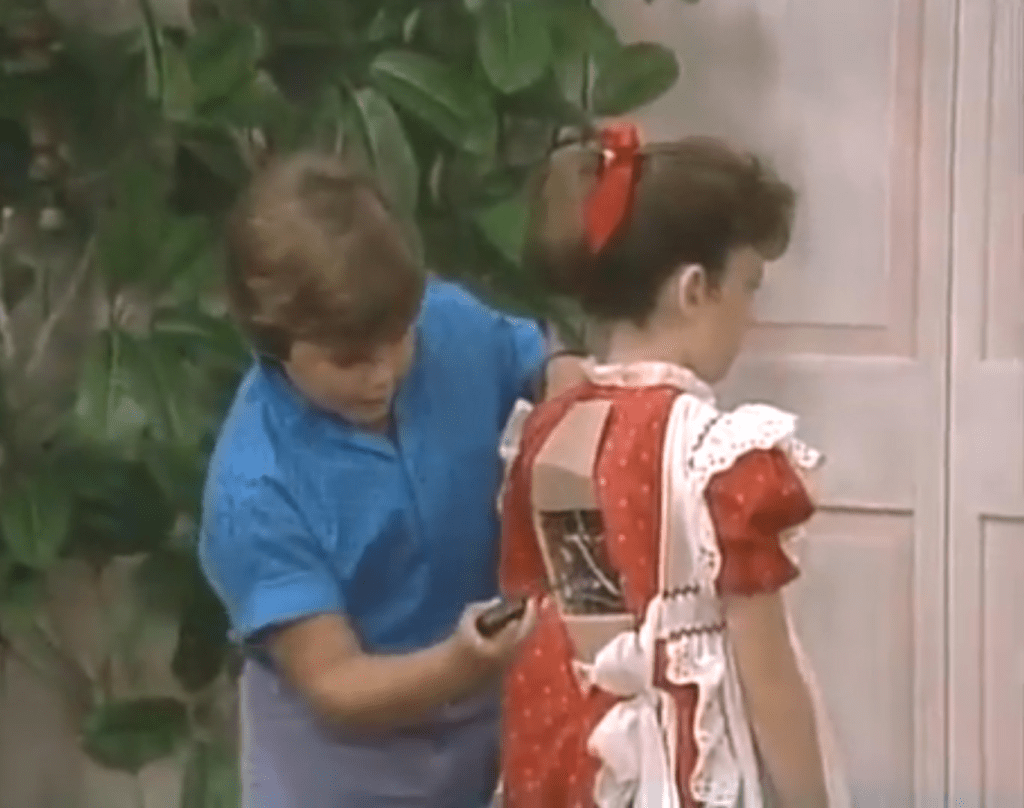
The concept of the show is that Ted Lawson (Dick Christie) and his family–wife Joan (Marla Pennington) and son Jamie (Jerry Supiran)–live in a typical residential area. Lawson has created V.I.C.I., an android that contains Voice Input Child Indenticant whom he calls Vicki (Tiffany Brissette). Lawson created the robot to help handicapped children, and she looks like a ten-year-old girl. Lawson has to take her home to learn about family environments and be “trained” for home service. Similar to Rhoda on My Living Doll, Vicki has an outlet under her right arm, a data port under her left arm, and an access panel in her back. She possesses superhuman strength and speed. Seth Green auditioned for the role of Jamie and, Candace Cameron Bure was up for the role of Vicki, along with 398 other girls.

The Lawsons have to keep her identity a secret and pass her off for a daughter they adopted. Their neighbor, ten-year-old Harriet (Emily Schulman), a la Gladys Kravitz, was very nosy and made the secret hard to maintain. Jamie works hard to scheme and find ways to get Vicki to make his life easier.

Rounding out the cast were Brandon and Bonnie Brindle (William Bogert and Edie McClurg) who were Harriet’s parents; Brandon was also Ted’s boss; Reggie (Paul C. Scott), Jessica (Lihann Jones), and Warren (Daryl Bartley), Jamie’s friends.

The show was on for four seasons and, of course, Brissette continued to grow and age, so in season three Ted gives Vicki an upgrade which allows her to wear current fashions, eat, and drink, making it easier to conceal her identity.

Photo: smallwonderreviewed.blogspot.com

Unfortunately for Leeds, this show has also been dubbed one of the worst sitcoms of all time, despite the fact that it was on for four years. Robert Bianco, TV critic for USA Today, wrote in 2002 that it was a contender for one of the worst TV shows of all time, and the BBC described it as the worst low-budget sitcom of all time (as an aside, the first season provided $300,000 per episode). Lest you think Leeds could not come up with a successful show; know that he also produced The Brady Bunch, The Ghost and Mrs. Muir, Silver Spoons, and The Facts of Life. He also wrote scripts for forty-two different shows.

Although it was not popular with critics, viewers seemed to enjoy it. The show was later sold to more than twenty countries, including Brazil, France, India, and Italy.

In 2015, Dave Nemetz spoke with Marla Pennington Rowan and Emily Schulman Webster about their time on the show. They both felt sorry for Brissette. She had a lot of skills such as singing, dancing, gymnastics, and piano playing, but all she could do on the show was to be a robot. She had to talk in a monotone while showing no emotions. Webster said it was so challenging for her but she was a pro. She mentioned that “she had to bite the inside of her cheeks to keep from smiling. That was tough. My heart sort of broke for her.”

Photo: pinterest.com

Both stars mentioned how hard the special effect filming was for Tiffany. It might be her head spinning around and around or lifting the couch with one arm to clean under it. Those scenes were filmed on Thursdays with the use of green screen technology. Webster said it was not easy and that “Tiffany had to endure it, it would take a lot of trial and error.” In addition to these talents, Vicki could shrink down to the size of a doll, extend to ten feet tall, channel electricity through her hands, and she possessed unlimited learning ability to improve products.

Rowan and Webster said the cast got along great, just like one big family. However, the parents of the minor stars surely did not. Three tutors were employed on the set because the parents could not agree on choosing the same one. Rowan mentioned that apparently, the parents thought they were the stars of the show.

The show was very popular with kids especially. However, power struggles were not confined to overbearing parents; the corporate level had plenty of controversy as well. I’m not sure why, but the show was owned by five different companies, and they did not agree on much either. Once they knew there were enough shows to put it into syndication the show was done. No one knew if they were going to be picked up for the next season or not; they weren’t, so there was never any finale produced.

One of the most memorable parts of the show might be the theme song. It’s lyrics are:

She’s a small wonder; pretty and bright with soft curls.

She’s a small wonder; a girl unlike other girls.

She’s a miracle and I grant you, she’ll enchant you at first sight.

She’s a small wonder, and she’ll make your heart take flight.

She’s fantastic, made of plastic; microchips here and there.

She’s a small wonder, brings love and laughter everywhere.

We understand her pain at watching the show. Photo:smallwonderrevisited.blogspot.com

So how did it work out for the trying parent/managers? None of the three children are actors any longer. Brissette is a nurse in Colorado, Supiran was broke and homeless in 2012 but is in a better place today, and Schulman Rowan writes cookbooks and is considering acting again. Her last role was in the show Christy in the mid-nineties.

If you watch Antenna TV you might be very familiar with the show. It’s no longer in the rotation, but I have watched it several times on the network in the past. It definitely is not anything I would clear my schedule for. I’m not sure I would classify it as the worst sitcom of all time; it seems in the past 40 years, we have come up with some pretty bad options. However, I certainly would not spend my time watching this one. I’m just going to chalk it up to fulfilling a need in the eighties on Saturdays that does not age well.

Nanny and the Professor: The Mary Poppins of the 1970s

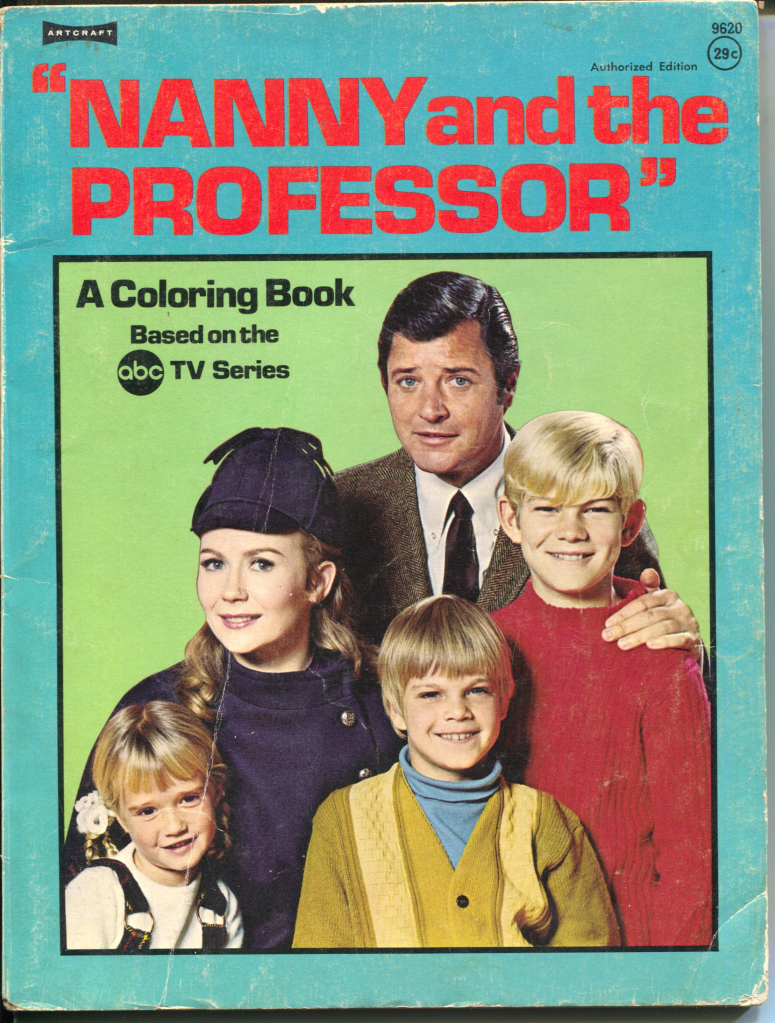
We are starting off the new year with a blog series taking a closer look at some of our favorite families. Between Mary Poppins and The Nanny, we had Nanny and the Professor. A lot of my friends don’t remember this show, but it was part of the ABC lineup for two years. It began its life on Wednesday nights in 1970 followed by The Courtship of Eddie’s Father and then Room 222. The second season, it moved to Friday nights airing after The Brady Bunch and before The Partridge Family. The short third season found the show on Monday nights up against Gunsmoke and Laugh In which surely set it up for failure.

The cast Photo: closerweekl.com

AJ Carothers and Thomas Miller created the show for 20th Century Fox Television.  Carothers was best known for his Disney movies, and this show has that same type of atmosphere. English-born Phoebe Figalilly (Juliet Mills) is hired by Professor Harold Everett (Richard Long) to be the housekeeper and nanny for this three children: very intelligent Hal (David Doremus), prankster Butch (Trent Lehman), and musical prodigy Prudence (Kim Richards) who had a pet rooster named Sebastian. Juliet Mills, sister to Parent Trap star Hayley Mills, was offered the role after auditioning in England. An open casting call was done for the role in London.

Nanny became very close to the three children, and she and Professor Long had a subtle romance. You could tell there was chemistry, and he began working less and hanging out with the family more often.

Nanny had a great intuition, but we were always left wondering if there was more to her secret knowledge than we were aware of. While the Professor hired her, she showed up unannounced for the job. Sometimes she hinted at being much older than she looked. One of the running gags of the show was that she always knew when people were at the front door or on the phone before the doorbell or phone rang. She also seemed to be able to communicate with animals including the kids’ dog Waldo. She also fixed up and drove around in a 1930 roadster which she named Arabella in honor of her favorite aunt.

Nanny had a lot of relatives who showed up at the Everett household from time to time. Uncle Alfred (John Mills, Juliet’s father) entertains the children with this stories and human flying act. Aunt Justine (Ida Lupino) and Aunt Agatha (Majorie Bennett) arrive in a hot air balloon. Uncle Horace (Ray Bolger) claims to be able to make it rain. Aunt Henrietta (Elsa Lanchester) comes with the circus; in another episode she helps get rid of a ghost.

Arabella Photo: ebay.com

Fun fact, the background music was taken from My Favorite Martian. The theme song was called “Nanny” and was written and sung by The Addrisi Brothers. The song is:

Soft and sweet
Wise and wonderful
Oooh our mystical magical nanny

Since the day that nanny came to stay with us
Fantastic things keep happening

Is there really magic in the things she does
Or is love the only magic thing that nanny brings

You know our nanny showed us you can make the impossible happen
Nanny told us have a little bit of faith and lots of love

Phoebe Figalilly is a silly name
And so many silly things keep happening
What is this magic thing about nanny
Is it Love Or is it Magic

The show might be done, but much of the merchandise that was used to promote the show still exists. Colorform sets, coloring books, paper dolls, comic books, View Master reels, and several books are available on ebay.com

Even though the move to Monday night could not have been good for ratings, Mills said the cast was stunned when the show was canceled. In a July 22, 2019 interview with foxnews.com, she said, “I think we were all shocked, actually, and not ready to move on.” She said she does not regret starring in the show, and that the cast was “wonderful, really, very professional and very good. She said the show had a special place in her heart. “I’m proud of it and have very, very happy memories of it, she said. “I’m still recognized all over the place for that as much as anything I’ve ever done, which is extraordinary. People just hear my voice and they turn around, ‘Hey Nanny.’”

Although Nanny and the Professor might not be as well known as other shows of its decade, it deserves to be remembered. Even though it never hit the 100-episode target for syndication, the show was played on other networks after it was canceled. I could not find any network showing reruns or anywhere to stream the show, and the DVDs are currently not available on Amazon but they are available on other DVD websites. It might be worth searching for to have a marathon weekend binge some cold, winter weekend.

Imogene Coca: Born to Perform

After learning about Your Show of Shows last week, we are going to take a closer look at some of the forces behind the award-winning show. We begin with Imogene Coca.

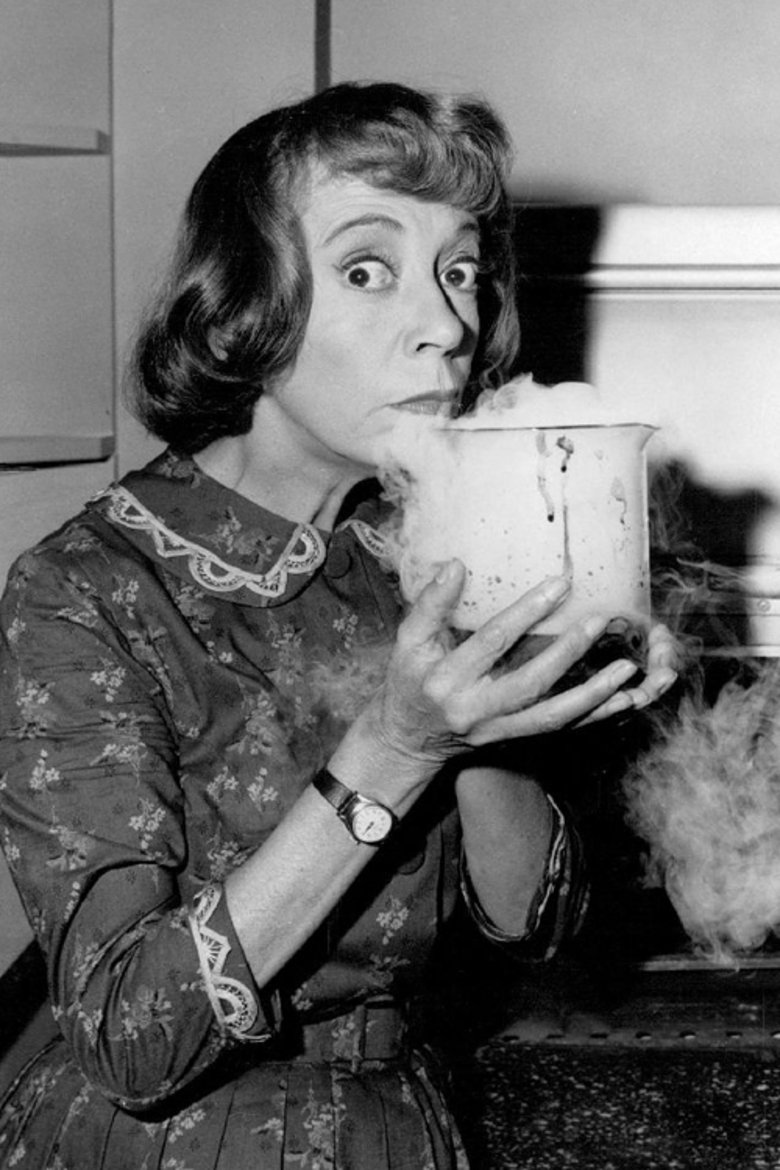
Imogene Coca - IMDb
Photo: imdb.com

Imogene Coca was born Emogeane Coca in 1908. Her father was a violinist and vaudeville orchestra conductor, and her mother was a dancer and magician’s assistant.

Emogeane Fernández Coca (1908 - 2001) - Genealogy
Photo: geni.com

She began appearing in vaudeville as a child acrobat. She also took piano, dance, and voice lessons as a child. She was drawn to dance and studied ballet and moved from Philadelphia to New York to become a dancer while still a teenager. Her first job was in the chorus of a Broadway musical, “When You Smile.” For a few decades, she appeared in stage musical revues, cabaret, summer stock, and movies.

In 1935, Coca married Bob Burton. They were married until 1955 when he passed away.

Coca discussed her early career: “I never thought of myself in comedy at all. I loved going to the theater and seeing people wearing beautiful clothes come down the staircase and start to dance. I wanted to play St. Joan.”

In her forties, Coca decided to add comedian to her slate of talents, and she was a natural. In 1948 she appeared on Buzzy Wuzzy on television. If you have never heard of it, don’t feel bad. I thought it might be a kid’s show. ABC was trying to develop its network, with all of its five stations. Jerry Bergen a comedian wanted to try a variety series. This 15-minute-long show lasted only four weeks.

She might not have had an illustrious beginning, but tv was good to Imogene. For fifty years, she would appear on tv, including six shows as a regular cast member.

The Sid Caesar, Imogene Coca, Carl Reiner, Howard Morris Special (TV  Special 1967) - IMDb
Photo: imdb.com with Caesar, Reiner and Morris

In 1950 she joined the cast of Your Show of Shows, becoming a household name. She was nominated for five Emmys on the show. She won the award in 1952 and lost the other years to Gertrude Berg, Lucille Ball, Red Skelton, and Eve Arden. When discussing the chemistry that she and Caesar had, Imogene said “Two people couldn’t be less alike than Sid and myself. But we kind of know what the other one’s going to do. We pick up each other’s vibes.”

A born comedian, Life magazine described her as taking “people or situations suspended in their own precarious balance between dignity and absurdity, and pushing them over the cliff with one single, pointed gesture.” A critic at the time, said she was not the typical, loud, brash comedian and was “a timid woman who, when aroused, can beat a tiger to death with a feather.”

Pin on Imogene
Photo: imdb.com Cast members

Your Show of Shows was a great success and everyone tuned in Saturday nights to catch the latest show. Fans loved the ongoing skits such as Coca and Caesar playing the bickering couple, the Hickenloopers or a Bavarian town clock that had real life figures and broke down whenever it chimed the hour.

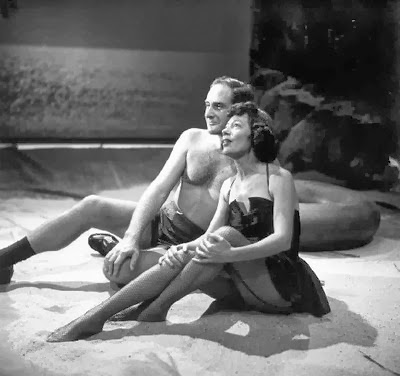
Many viewers mentioned the parodies the show did of movies. These were similar to the ones the Carol Burnett Show also did so well. Two of the scenes that came up often in viewers’ memories were the scene spoofing On the Waterfront when Marlon Brando tells his brother “I could have been a contender” and the parody of From Here to Eternity when Deborah Kerr and Burt Lancaster have a romantic moment on the beach. In Your Show of Shows version, the couple is continually hit with waves until they almost drown.

Comedy Legend Imogene Coca: I'm Cuckoo for Coca | The Scott Rollins Film  and TV Trivia Blog
From Here to Obscurity parody Photo: scottrollinsfilmandtvtriviablog

When the network chose to break up the Caesar-Coca team and give them their own shows, Coca had her own show, but it only lasted a year. For the rest of the fifties, she appeared primarily on drama shows which often aired plays.

In 1960, Imogene tried marriage a second time. She wed King Donovan and they would be together until his death in 1987.

From 1963-64, she joined the cast of Grindl which also lasted only one season. Coca played Grindl. She was an employee of the Foster Temporary Service, and she worked for Anson Foster (Jim Millhollin). Grindl accepts and completes a variety of jobs including babysitter, bank teller, and theater ticket taker. Most of the assignments get her involved in some type of crime or mystery. The show was on Sunday nights between Walt Disney’s Wonderful World of Color and Bonanza which was a great spot, but it also competed with the popular Ed Sullivan Show.

Grindl - DVD PLANET STORE
Grindl Photo: dvdplanetstore.com

In 1966-1967, she jumped into another new sitcom, It’s About Time. This wacky show was created by Sherwood Schwartz and also starred Jim Millhollin. The premise is that two astronauts who were traveling faster than light end up in prehistoric Earth time and when they are unable to return, make friends with the locals living there. This show preceded The Ed Sullivan Show but then ended up competing with Walt Disney’s Wonderful World of Color.

1966-67 Television Season 50th Anniversary: It's About Time (part 3 of 3) -  YouTube
It’s About Time Photo: youtube.com

During the seventies, she appeared on many shows, including Bewitched, Night Gallery, The Brady Bunch, and Love American Style.

Her busy career didn’t flounder in the eighties. She continued to guest star on shows including Trapper John, MD and Mama’s Family. She appeared in an episode of Moonlighting which produced her sixth Emmy nomination. She would lose to Shirley Knight for thirtysomething.

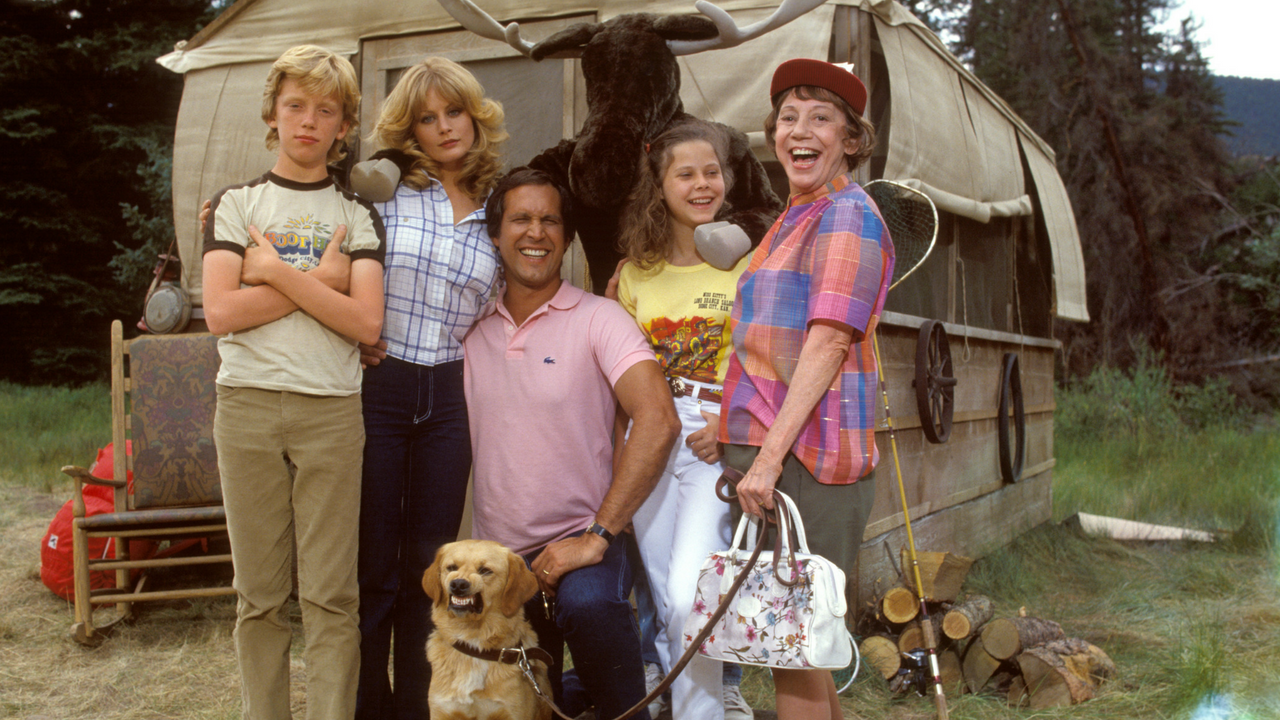
She was in movies off and on through the decades and perhaps is best known for her role of Aunt Edna in National Lampoon’s Vacation.

National Lampoon's Vacation – IFC Center
Aunt Edna in National Lampoon’s Vacation Photo: ifccenter.com

Of course, during these decades she also continued to appear on many variety and game shows. You will spot her in reruns of The Carol Burnett Show, The George Gobel Show, and Bob Hope and Dean Martin specials among other shows. She also did not ignore her early love of Broadway. She received a Tony Award nomination for “On the Twentieth Century.”

The Brady Bunch: Jan's Aunt Jenny | The Very Special Blog
On the Brady Bunch Photo: theveryspecialblog.com

In 1988 at age 80, Coca received the Lifetime Achievement Award in Comedy; her male counterpart receiving the award that year was George Burns. She was also honored in 1995 with the Women in Film Lucy Award, named for Lucille Ball.

Coca finished her career voicing characters for children’s programming. Sadly, she suffered from Alzheimer’s disease. She passed away at home in 2001. When he heard of her passing, Sid Caesar said, “All the wonderful times we shared together meant the world to me.”

Greatest Women in Comedy - Legacy.com
Photo: legacy.com

Imogene Coca was truly a special person. She had several different careers rolled into one. It’s hard to imagine that she did not begin comedy until her forties because she was one of the best. I’m sad that at the end of her life she was not able to retain the beautiful memories she gave us during her professional life. Thank you for creating a lifetime of special moments that you left for us.