Verna Felton Saves the Day

We are winding up our blogs for May, and I have a confession to make. For some reason, I failed to notice that there were five Mondays in May, so when I published my blog last week, I realized that I was short one blog. While scrambling to find a topic that still fit in with the other shows we learned about this month, it occurred to me that this week’s actress appeared on The Ann Sothern Show and I Love Lucy. She was also part of the cast of December Bride and Pete and Gladys. So, today we will learn about the woman behind Hilda Crocker: Verna Felton.

Photo: imdb.com

Verna Felton was born in Salinas, California in 1890. Verna entered show business at the young age of nine. Her father died just before her ninth birthday. He was a doctor, but he kept no records of payments due, and there was little cash in his account. Verna had performed at a local benefit for flood victims, where she caught the attention of a road show manager. He offered Verna a job, and after the death of her father, her mother accepted the job on her behalf. Verna grew up involved in theater community.
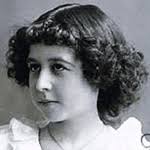
Photo: agecalculator.com

She was called “Little Verna Felton, the Child Wonder. By age 13 she was performing with the Allen Stock Company that toured the western United States and British Columbia in Canada. By age 20, she had a play written specifically for her by Herbert Bashford called “The Defiance of Doris.”

Photo: wix.com

She continued building her stage resume, acting in a variety of plays.

In 1923 Verna married Lee Millar who conducted the band in the acting troop. He was also a movie actor in the thirties and forties. Verna and Lee were married until his death in 1941. Their son Lee Carson Millar was born in 1924 and would also go on to become an actor who appeared on many of the most popular shows in the fifties and sixties.

From about 1930-1950, Verna could be heard on the radio. Her voice could be detected on a variety of shows including Red Skelton, Hattie Hirsch on Point Sublime, Dennis Day’s mother on his show, and a regular on both The Abbott and Costello Show and The Great Gildersleeve.

Photo: wiki.com

After transitioning from stage to radio, it was no surprise that Verna’s career in the forties and early fifties was spent on the big screen.

Television was a natural progression, and, in 1951, Verna had her first tv roles: as a nurse on Amos and Andy and as Mrs. Day on the Enzio Pinza Show. She continued her radio role as Dennis Day’s mother on his television show in 1952.

With Lucille Ball

During the early fifties, you could catch her on many of the most popular shows: The Adventures of Ozzie and Harriet, I Love Lucy, Burns and Allen, The Bob Hope Show, The Halls of Ivy, I Married Joan, and Where’s Raymond?

Verna would become best known as Hilda Crocker. She played that character on December Bride from 1954-1959 and again on Pete and Gladys during the 1960-61 season, a total of 182 episodes. She was nominated for an Emmy for Best Supporting Actress in 1958 and 1959. In both years, she lost to Ann B. Davis for Love That Bob.

With Spring Byington on December Bride
Photo: pinterest.com

Between the two series, she made appearances on The Many Loves of Dobie Gillis, The Real McCoys, The Ann Sothern Show, Miami Undercover, and The Jack Benny Show. She also accepted roles on a handful of shows after her life as Hilda, including My Three Sons, Wagon Train, and Dennis the Menace.

Felton had voiced several animation characters for Disney including the fairy godmother in Cinderella, the Queen of Hearts in Alice in Wonderland, Aunt Sarah in Lady and the Tramp, and Winifred the Elephant in The Jungle Book.

After voicing these fun characters, it was only natural for her to find a television animation character to play, and she found the perfect one in Pearl Slaghoople, Wilma’s mother on The Flintstones. Pearl looked a lot like Wilma but not as young or slim. She originally had red hair like her daughter which later became gray. She did not care for Fred and didn’t think he was good enough for Wilma and often nagged him to do better.

In 1966 Verna passed away from a stroke. Walt Disney would die a few hours later. About 25% of the movies Verna made were for Walt. Jungle Book, the last movie she made for him would debut a year after the two stars died.

Fred has a hard time loving his mother-in-law. Hence the phrase he said  repeatedly 'I love my mother-… | Flintstones, Classic cartoon characters,  Flintstone cartoon

Although Verna’s television career only spanned fourteen years, she appeared in many of the era’s best shows.  She did Broadway, radio, cinema, and animation as well and had a very full and successful career. It was fun getting to know Verna Felton a bit better.
Heigh-Ho Louis Nye!

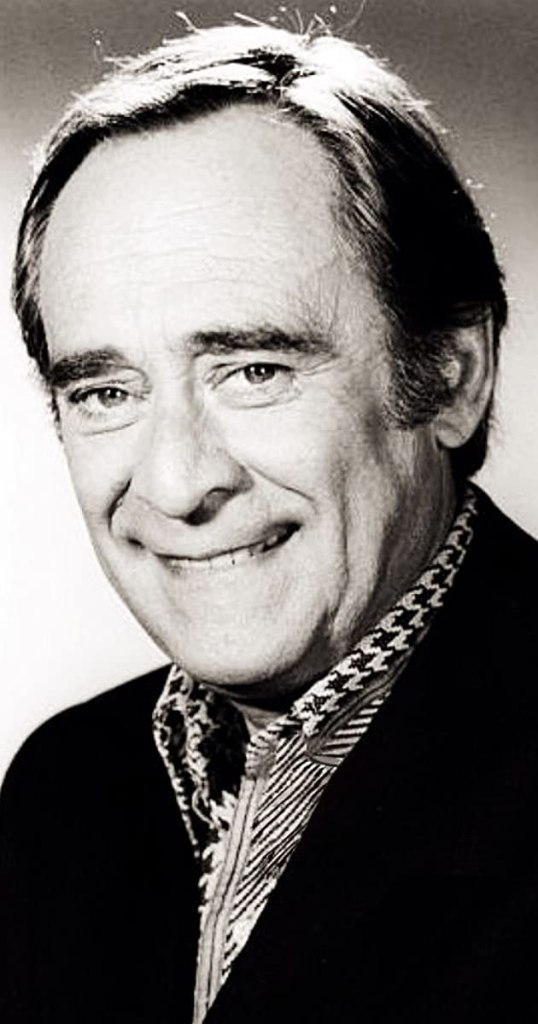
Finishing off our “Men of November” series is Louis Nye.  If you watched television in the sixties, you will recognize Louis, but you might not know why.

Photo:

Born Louis Neistat in Connecticut in 1917, he was the son of parents who emigrated to the US from the Russian Empire and became naturalized citizens in 1911. Louis wanted to get involved in acting but his grades weren’t good enough for him to participate in the drama club.  He opted for work on WTIC Radio instead. He also joined the Hartford Players.

The work on local radio led to his decision to move to New York City to work on the radio, often on soap operas. Nye married songwriter Anita Leonard in 1940. Unlike many Hollywood couples, they remained married until Nye’s death.

**FILE** Steve Allen, third from left, and some of the original cast members of the popular 1950’s television show, “Steve Allen Show,” gathered in Beverly Hills, Calif. in this Oct. 4, 1990 file photo to honor Allen and to celebrate the re-broadcast of 100 episodes of his show on HA! TV Comedy Channel. They are, from left: Tom Poston, Don Knotts, Allen, Louis Nye, Pat Harrington Jr., and Bill Dana. Nye died Sunday at his home in Los Angeles after a long battle with lung cancer, his son, Peter Nye, told The Associated Press on Monday. He was 92. (AP Photo/Kevork Djansezian, FILE)

World War II interrupted his career. He was assigned to run the recreation hall in Missouri. He would entertain troops and was able to meet Carl Reiner, who had a similar sense of humor, and who was also part of Special Services performing in shows across the Pacific.

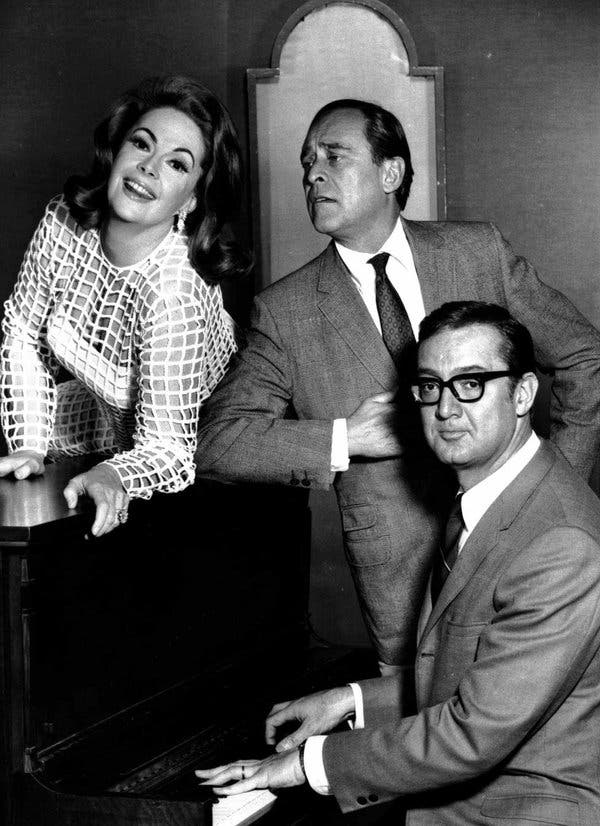
With Steve Allen and Jayne Meadows Photo: nytimes.com

After the war ended, he returned to New York, getting jobs on television and appearing on Broadway. His first tv role was on The Admiral Broadway Revue in 1949. He appeared on several shows during the fifties but was best known for his work on The Steve Allen Plymouth Show and the New Steve Allen Show. He became close to the entire cast which included Don Knotts, Tom Poston, Pat Harrington Jr., Dayton Allen, Gabriel Dell, and Bill Dana. Nye often portrayed wealthy citizens during the “Man on the Street” sketches. When he took on the role of Gordon Hathaway, the egotistical Country Club snob, saying “Hi-ho Steverino,” Allen often cracked up. When the show moved to Los Angeles, Nye went with it.

Photo: youtube.com

His first recurring role was that of dentist Delbert Gray on The Ann Sothern Show in 1960 and 1961. He was very busy during the sixties, appearing on a variety of shows including The Bob Hope Show, The Jack Benny Show, Mike Douglas, The Munsters, Jackie Gleason, and Phyllis Diller. From 1962-66, he would pop in on The Beverly Hillbillies as Sonny Drysdale, the spoiled stepson of banker Milburn Drysdale.

Photo: imdb.com

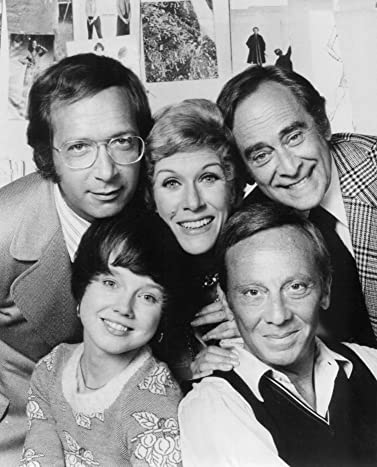
In the seventies, he could be seen on shows such as Laugh-In, Love American Style, Laverne and Shirley, Starsky and Hutch, and Fantasy Island. He was offered a permanent role on Needles and Pins in 1973. The show only lasted for 14 episodes. The series was about the garment industry. Women’s clothing manufacture Nathan Davidson (Norman Fell) works with a group of employees including characters played by Nye and Bernie Kopell.  It didn’t receive great reviews and many of the writers said it talked about the garment industry but showed very little and was set in one small spot, inhibiting what plots were even available.

During those decades Nye would also get offers on the big screen from time to time but most of the roles were smaller cameo parts. However, he appeared with a lot of celebrities in these epics including Bob Hope, Jack Lemmon, Lucille Ball, Dean Martin, Walter Matthau, and Jack Webb.

He also recorded several comedy albums using several of his characterizations. One of his most successful LPs was “Heigh-Ho Madison Avenue.” It parodied market research, advertising agencies and post-WWII society.  Some of the pieces on the album include “The Gray Flannel Blues,” “The Ten Commandments of Madison Avenue (Plus Big Bonus Commandments),” and “The Conspicuous Consumption Cantata.”

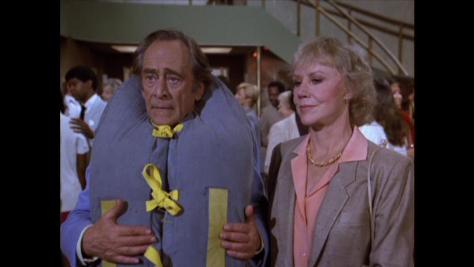
Asea on the Love Boat
Photo: drunk tv.com

He continued to keep busy in the eighties on a variety of shows including Here’s Boomer, Aloha Paradise, The Love Boat, The Cosby Show, and St. Elsewhere.

Curb Your Enthusiasm Photo: youtube.com

His last role was another recurring one where he played Jeff Garlin’s father on Curb Your Enthusiasm from 2000-2005. Nye passed away from lung cancer in 2005.

I’m not sure what to think about Nye’s career.  I think in the right role, he would have excelled in a television comedy or a big screen epic which he never had the opportunity to do. He was multi-talented and appeared on Broadway, in clubs, and on the radio, and he created comedy albums as well as appearing in movies and television. However, I often read quotes of his where he said he only wanted to be funny at parties and always considered himself a serious actor. He was so brilliant and funny with his 15 accents and wide range of characterizations that he seemed pigeon-holed as a comedy character actor early in his career. I wondered if he was sad that he never had the chance to appear in a classic drama, or if he accepted his successful career for what it was, just being thankful he was in the entertainment industry for his entire working life.

Photo: wikifandom.com

Since we cannot ask him directly, all we can do is tip our hats to him in appreciation for the decades of laughter and entertainment he provided for us. Thank you, Mr. Nye.