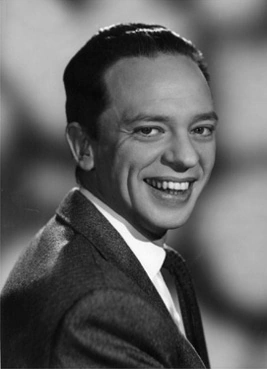
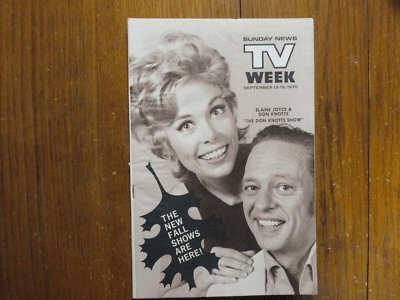
This month our theme is “Variety is the Spice of Life.” If I mention the name Don Knotts, almost everyone probably pictures Barney Fife from Mayberry. You might also think about some of his well-known movies including The Ghost and Mr. Chicken or The Shakiest Gun in the West. However, you might be surprised to know that Don Knotts had his own variety show on NBC for a season in 1970.
📷wikifandom.com
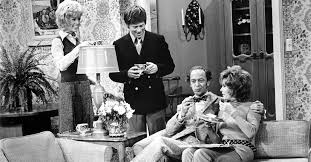
Don had a few regulars in his cast including Gary Burghoff, Louis Nye, and Elaine Joyce. He had musical guests interspersed with skits. Joyce might have made the worse choice in her entire career when she agreed to join this show because to do it, she turned down a chance to be part of the cast of The Carol Burnett Show.
Two recurring skits were about the process it took to put a weekly television show together and another one was similar to one Carol Burnett and Harvey Korman did called “The Front Porch” with Don and a guest sitting on a rocking chair discussing life.
Knotts’ show did not attract viewers. After a few episodes, the network hired Bob Sweeney who had directed The Andy Griffith Show. Don said Sweeney “came in and made some changes in the writing staff. Then he made some changes in the show creatively. And he did a good job, He improved the show, I thought.” Sweeney also hired Burghoff for the show.
While Andy Williams debuted the Osmond Brothers, Don’s claim to fame for his variety show was debuting The Carpenters.
While there were a lot of variety shows on television, the schedulers didn’t do Knotts any favors. His show was up against The Mod Squad on ABC and The Beverly Hillbillies and Green Acres on CBS. That is some tough competition. And this was an era when a family typically had one television, and the entire family had to agree on what they were watching together.
During his Television Academy interview, Don discussed his show. “We did all kinds of things, but in the end, the show just couldn’t compete with shows like The Carol Burnett Show, Donny & Marie, or Sonny & Cher. There was tremendous competition that season for variety, because everybody and his brother had a variety show.”
I think Don was right about why his show failed, but even with so many variety shows, I think there were a few other problems with this one. There were 12 other variety shows on the air during this year, including Knotts’ friend Jim Nabors, but scheduling was a huge barrier to overcome.
📷facebook.com
Also, Knotts was introduced to America as a cast member of The Steve Allen Show, and he was great on that one. I think the country wasn’t ready to accept him as a host on a show though. He spent his entire career as Barney Fife, an over-confident sidekick who helped the sheriff in Mayberry. His movie characters were all nervous, timid people who found a surprising way to beat the bad guys. Suddenly he was the star of the show and it’s a tough typecasting role for fans to adjust to.
That said, I’m putting this failure on the network for having too many variety shows on the air and not scheduling them against each other so the most popular ones rose to the top. And this was in the early seventies. Think about the shows that were starting at the time, very different shows from the fifties and sixties hits. Knotts was not the only one to fail at this time, so he could chalk it up to a life lesson learned and quickly wipe it from his memory.
As we get ready to “Go West Young Man,” today our blog series is getting to know the The Virginian (which is sometimes confusing because it was renamed The Men from Shiloh later for part of the series). This series debuted on NBC in 1962. It produced 249 episodes, running until 1971, making it the third longest-running western (Gunsmoke and Bonanza were the top two).
📷wikipedia.com
Lew Wasserman was involved with Universal, and they produced Wagon Train which was on NBC. Universal sold the series to ABC in 1962 after it had been on the air for three years, and NBC was not happy, but Wasserman told them that he had a new show for them, The Virginian.
It was also the first 90-minute western. Like Stagecoach West, it was set in the Wyoming Territory. While the pilot was black and white, the rest of the series was filmed in color.
The series was based on an Owen Wister novel, The Virginian: Horseman of the Plains which was published in 1902.
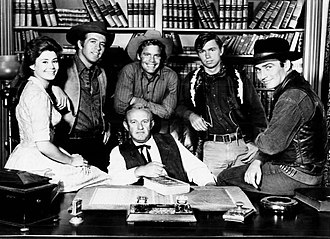
The series featured a foreman at the Shiloh Ranch near Medicine Bow played by James Drury. The foreman was never referred to by his name. Drury once said, “Nobody knows the name of my character, not even me.” His sidekick was Trampas (Doug McClure). Sheriff Abbott (Ross Elliott) also shows up on and off throughout the nine seasons. For the first four seasons, the ranch owner, Judge Henry Garth (Lee J. Cobb) and his daughter Betsy (Roberta Shore) also live there. The cast changed fairly often throughout the series, but Drury and McClure were along for the entire ride.
📷ebay.com
The plots of the show often revolve around themes of prejudice, injustice, being a responsible and hard worker, and standing up for the right thing.
During the final season, the show changed its title, and the series changed quite a bit. There was a new theme song, and it took on more of the character of the popular spaghetti westerns. Stewart Granger and Lee Majors joined the cast. While the ratings increased, the network was intent on cancelling the show, along with the rural purge that happened at that time.
Later when the show was no longer on the air, Drury discussed two of his castmates, one he admired and considered a friend and one he did not! About Grainger who joined the show for the last year, Drury said, “He was a disaster, and I couldn’t stand him. He wanted everything changed to make him the star of the show. . . . He also fired the whole camera crew and hired a new crew for his episodes.” However, on reflecting about his co-star Doug McClure, Drury recalled “off-screen Doug was quite like his character, and you couldn’t help but smile when he walked into a room because he was full of good humor and good spirits all the time. He could cheer anybody up. He became my best friend, and I still miss him terribly—you couldn’t ask for a better co-star.”
As you can imagine, being on the air for nine years meant a lot of guest stars showed up on the series, including Eddie Albert, Charles Bronson, Robert Culp, Joan Crawford, Bette Davis, Patty Duke, Robert Duvall, Harrison Ford, Jack Lord, Lee Marvin, Vera Miles, Leonard Nimoy, Ryan O’Neal, Robert Redford, George C. Scott, William Shatner and Franchot Tone.
📷facebook.com
The Virginian was on Wednesday nights for its entire run. When it began, it was up against Wagon Train on ABC while CBS ran CBS Reports and The Many Loves of Dobie Gillis. Both The Virginian and Wagon Train managed to hit the top thirty that year. The next year, its biggest competition was The Adventures of Ozzie and Harriet followed by The Patty Duke Show. The Nelsons hit the top thirty and The Virginian and The Patty Duke Show were in the top twenty. The show continued to be in the top twenty or top thirty for the rest of its run, hitting the top ten in 1966, despite being on at the same time as many popular sitcoms during those years, including Batman, The Beverly Hillbillies, The Courtship of Eddie’s Father, Gomer Pyle USMC, Lost in Space, MisterEd, and My Living Doll. It was still in the top twenty when it was canceled.
This show is fondly remembered by viewers who tuned it at the time. It’s been in syndication for decades, racking up new generations of fans. In one of his later interviews, Drury talked about the appeal of the show. He said, “People now tell me about their grandkids who discover the show on cable and start watching it. It’s a wonderful feeling to know the show is still viable after all these years.” That alone is reason to be proud of working on this show.
This month we are looking at some of our favorite character actors. As we wrap up the series, we are ending on a high note with the amazing Burt Mustin. Like Charles Lane, Mustin had a prolific career in Hollywood and television. However, unlike Lane, Mustin was offered his first acting job at age 67 after he had retired.
📷Widener University Archives
Mustin was born in Pittsburgh in 1884. His father was a stockbroker. After high school, Mustin enrolled in the Pennsylvania Military College (now Widener University) with a degree in civil engineering. During his college career he played trombone in the band and played goalie for his hockey team.
After graduation, Mustin toured Europe, planning to work at his father’s brokerage firm. However, a financial panic destroyed the company.
One of Burt’s university classmates was Charles Spinney. According to Burt, Spinney displayed lots of photographs of young ladies from his hometown of Memphis, Tennessee. One day, he was showing them to Burt when he spotted the photo of what he referred to as “the prettiest girl in the room.” Mustin traveled to Memphis to meet her and in 1915 he married Frances Robina Woods. The couple had no children and remained together for their entire lives, with Frances passing away in 1969.
📷imdb.com
After working as an engineer for a few years, Mustin decided to try to sell automobiles. In an interview, Mustin admitted, “I was the worst engineer the school turned out.” He began selling Oakland Sensible Sixes and later Franklins, Lincolns, and Mercurys. WWII put an end to car sales for a few years, so Mustin began working for the Better Business Bureau and then the Chamber of Commerce. He stayed in Pittsburgh until he retired.
He did a bit of amateur acting and continued his passion for music. He was part of the oldest Gilbert and Sullivan troupe in the country, the Pittsburgh Savoyards; the Pittsburgh Opera; and an officer in the Society for the Preservation and Encouragement of Barbershop Quartet Singing in America.
He was a founding member of the Pittsburgh Lions Club in 1921 and a life member in the Fellows Club of Pittsburgh. Mustin served as an announcer for the first weekly variety show on radio station KDKA.
📷that’sentertainment.com
After retiring, Mustin and his wife moved to Tucson, Arizona for her health where he continued acting. William Wyler saw him in a stage production of “Detective Story” and told Mustin to let him know if he ever wanted to pursue a film career. When Wyler was casting for Detective Story in 1951, Mustin reached out to him. The couple later moved to Los Angeles. Mustin would appear in 67 films overall.
In 1968 Mustin was cast in Speedway with Elvis and Nancy Sinatra. In one scene the stars have a lover’s quarrel in a coffee shop. When they make up, Elvis sings a song for his girl. Mustin is in the background cleaning the café and working at the counter. The producers felt the scene needed something else. That something else ended up being Mustin singing and dancing with a mop. No one on the set realized that Burt could sing before that adlibbed scene.
1951 was also the year that Mustin appeared on television in The Adventures of Kit Carson. He would find a new career in television for the next two decades, appearing in more than 130 series (which would equal more than 400 actual episodes).
📷imdb.com
During the fifties, he would be attracted to many westerns and dramas; however, he found his way onto a few comedies including The Great Gildersleeve, December Bride, and Our Miss Brooks.
If I listed half of the 1960s shows he appeared on, you would still be reading this blog next Monday when my new one is dropped. Take my word for it that he was on almost every popular sixties’ sitcom, including 14 episodes as Gus the fireman on Leave it to Beaver. Other sixties hits you can find him on include The Many Loves of Dobie Gillis, The Dick Van Dyke Show, The Joey Bishop Show, The Jack Benny Show, The Beverly Hillbillies, Get Smart, TheAndy Griffith Show, The Lucy Show, Bewitched, Gomer Pyle USMC, PetticoatJunction, and My Three Sons, not to mention many dramas and westerns including Bonanza and Gunsmoke. He was no less busy in the seventies where we could catch him in Marcus Welby, The Mary Tyler Moore Show, The Brady Bunch, Love American Style, Adam-12, All in the Family, and Phyllis.
📷imdb.com
Johnny Carson loved having Mustin on The Tonight Show, where he was a fan favorite. He shared a lot of fun stories on the show. One of them was about him being at the first World Series for baseball in 1903 when the Pittsburgh Pirates played the Boston Red Sox. Unfortunately for Burt, Boston came back to win the series, but as a bonus he did get to see Honus Wagner play on the diamond.
Mustin passed away eight years after his wife at the age of 92. He left a gift to the college he was loyal to his entire life, enabling Widener University to renovate their theater. It is now named the Burton H. Mustin Theatre and Lecture Hall.
It’s hard to wrap your head around what a busy film and television career Mustin had. He was an actor for the last 25 years of his life, and with 67 movies and more than 400 episodes, that means that he accumulated about 20 credits per year which is almost two a month from age 67 to 92. Talk about an amazing career. Mustin proved that it’s never too late to find your next passion. Thanks for so many great memories Burt Mustin.
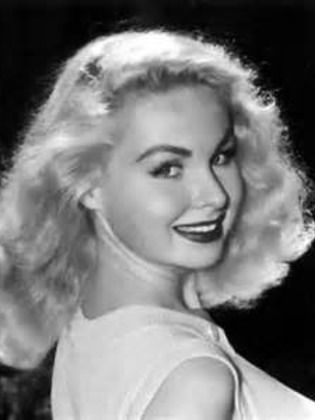
We are winding down our What a Character blog, about character actors in classic television shows. Today we are learning about Joyce Renee Brown, better known as Joi Lansing.
Lansing was born in Utah in 1929. Her father was a shoe salesman and orchestra musician, and her mom was a housewife.
Her parents divorced when she was young, and her stepfather Vernon Loveland adopted her. In 1940, the family moved to Los Angeles. Joi began modeling at 14 and was signed to an MGM contract, attending school at the studio.
Lansing began her film career in 1947, appearing in When a Girl’s Beautiful and Linda Be Good. She had uncredited roles in Easter Parade and Singing in the Rain, among others. Almost half of her 106 acting credits were for shorts and big-screen films.
📷rottentomatoes.com
Her first three marriages lasted less than some of her films. At 17 she was married for less than a year. In 1950 her marriage to Jerome Safron was annulled after four months, and her marriage to Lance Fuller in 1951 ended in divorce in 1953.
Her first television role came in 1952 in Racket Squad. This was a show I had not run across before, but it was on the air for three years. It had a Dragnet-like feel to it with the main character Captain Braddock explaining “What you are about to see is a real-life story, taken from the files of the police racket and bunco squads, business protective associations and similar sources around the country. It is intended to expose the confidence game – the carefully worked-out frauds by which confidence men take more money each year from the American public than all the bank robbers and thugs with their violence.
📷tumblr.com
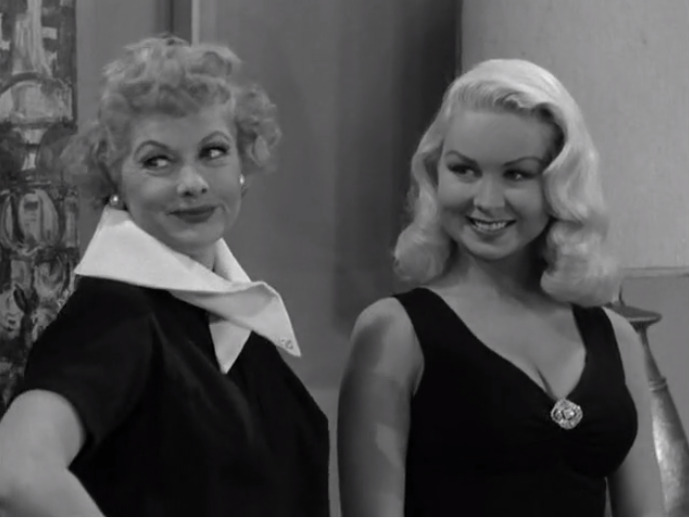
The early fifties kept her busy in drama series. In the the mid-to-late fifties, she appeared on I Love Lucy, The Gale Storm Show, December Bride, Perry Mason, Maverick, TheJack Benny Show, and Richard Diamond, Private Eye.
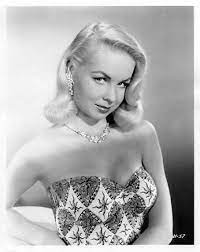
From 1955-59 she had a recurring role on The Bob Cummings Show with 24 appearances as Shirley, a model. While she was attending UCLA, a writer for the show spotted her. After being cast as pinup girls and stereotyped as a beautiful bombshell, this series proved Lansing had acting abilities, and it propelled her to receiving offers for better scripts.
In 1960, Lansing married Stan Todd and they remained married until her death. However, they had been separated for years.
Lansing was also a recording star. In the early sixties, she performed with Xavier Cugat and Les Paul. She recorded several songs during the sixties.
📷wikiwand.com Klondike
The sixties were split between film and television work. She accepted roles on ten shows including Klondike (7 episodes as Goldie), The Untouchables, The Joey Bishop Show, The Adventures of Ozzie and Harriet (12 episodes as various characters), Petticoat Junction, and The Beverly Hillbillies (6 episodes as Gladys Flatt, wife of musician Lester Flatt).
Lansing was in her last movie, Bigfoot, and last television role, The Governor and JJ, in 1970. While on the set of Bigfoot, she met Alexis Hunter who was playing a monkey in the film. Obviously, this was not a film to highlight on the resume. According to Hunter, the two fell in love and were together for three years until Joi’s death. Same-sex relationships were forbidden in Hollywood at the time, so they told people they were sisters. They had similar looks, so they got away with it.
Joi died from breast cancer in 1972 at only 43 years of age. Joi had been diagnosed with both breast and ovarian cancer in 1970 but went into remission. As a disclaimer, Bigfoot was the only acting role Hunter was credited with, and the revelation of her relationship with Lansing was only known from a book that Hunter wrote in 2015. I could not find any other documentation to back up her claim.
📷facebook.com
I am torn about Lansing’s career. She certainly had a successful career on paper, but she never got the break she deserved with the right acting role. Considering that she had 106 credits and passed away at only 43, one has to wonder how many more credits she could have amassed if she had worked for another two decades. I know there is a fine line of Hollywood actresses who might have the looks but not the talent, but for those who have both, Hollywood is not often fair, stereotyping them into “dumb blonde” or “pinup” roles. I had only been familiar with Lansing from The Bob Cummings Show, so it was interesting to learn more about her and her career.
We are learning about some of our favorite female character actresses. Today we are learning more about the life of Virginia Sale.
📷champaigncounty history museum.com
Virginia was born in 1899 in Illinois. Her father Frank was a dentist, and her mother Lillie Belle was a poet and truant officer for the Urbana Illinois School District. After graduation, she attended the University of Illinois for two years and then transferred to the American Academy of Dramatic Arts in New York where she graduated in the early twenties. Her brother Charles was a vaudeville comic, and he persuaded her to go to Hollywood to pursue a film career.
She began her career in Hollywood as an extra. In 1931, she did an interview for the Kansas City Star where she said “I had known an assistant director [named Ned] when I lived in New York. He introduced me to King Vidor, then casting for The Crowd. He gave me quite a good bit in the picture, although it lasted only five days. When asked how much salary I wanted, Ned told me to say $350 a week. ‘Well, I think you ought to work for us for $25 a day’ the casting director said. ‘That’s an awful comedown I protested,’ trembling in my boots. ‘All right then, let’s compromise on $35 a day,’ he said. I was awfully glad to get it.” That would be almost $600 a day currently.
📷x.com
During her first two years in Hollywood, Virginia lived at the Hollywood Studio Club. She appeared in 54 films between 1930 and 1935.
The Hollywood Studio Club was created as a safe place for starlets to live. Mary Pickford, along with several other women, was trying to raise money to construct a new building to house actresses. Will Hays gave $20,000 and soon after the studios contributed. Julia Morgan was hired as the architect. She designed an Italian Renaissance Revival style building that opened in 1926. The first floor had a spacious lobby, a library, writing rooms, a dining room, and a stage. The upper stories were single, double, and triple rooms. Men were only allowed to be on the first floor. You had to be between 18-35 years old, be seeking work as an actress, and could stay a maximum of three years. A hundred women lived there, paying $10-15 a week for room and board.
📷mayberrywikifandom.com
Barbara Hale, Donna Reed, Dorothy Malone, Ann B. Davis, Barbara Eden, Sharon Tate, and Sally Struthers were just a few of the women who lived there. The most famous resident was Marilyn Monroe. After the culture shift in the sixties and seventies, the residents decreased until the Club could no longer financially exist. In 1975 the doors were closed, and the contents were auctioned off.
In Hollywood Sale was often cast as an older woman, even though she was still in her twenties. She entered the movie entertainment business just as silent films were ending. Her first role was in Legionnaires in Paris in 1927. During her film work, she met actor and studio executive Sam Wren, and they married in 1935. In 1936 they had twins named Virginia and Christopher.
In the thirties, Virginia developed a one-woman show based on her life growing up in Illinois which she called “American Sketches.” She performed the piece more than 6000 times throughout the thirties, forties, and fifties, even touring Europe during WWII. This sounds like it would have been a fun show to see. Some of the different pieces of the performance included: “Traveling on the Illinois Central” where she portrays a mother trying to keep her son under control after a visit with relatives; “Life of the Party” where she is a giggling, talkative woman who annoys a young man she is trying to impress; “Mealtime in Indiana” where she impersonates a housewife trying to get ready for the Ladies Guild while preparing supper for her family; “Three O’Clock in the Morning” as a weary hostess trying to get her guests to go home, and “I Remember Abraham Lincoln” where she is Grandma Willoughby reminiscing about her encounters with Lincoln.
📷rottentomatoes.com
She also received some radio work, including a serial, For Those We Love, playing Martha the maid every Sunday for eight years.
Her film career continued to develop during those decades and she appeared in Topper, When Tomorrow Comes, They Died with Their Boots On, and Night and Day.
Sam served in WWII as part of the Air Corps. When he returned home, he had a six-year position as executive secretary for the Actor’s Equity. He was an executive at both Warner Brothers and Columbia studios.
📷imdb.com Topper
In 1949 as television was developing, she and Sam created a sitcom, Wren’s Nest which featured the life of the Wrens starring Virginia, Sam, and the twins. The show aired three times a week. Virginia took over writing duties on the show. Many of her scripts were based on real events that happened to the family. The series contained 47 episodes.
During the fifties, Sale took a break from the big screen, focusing on television shows and commercials. She appeared in several series in the fifties, but she hit her stride during the sixties. If you watch a lot of television from that decade, you can catch her in a variety of shows including The Many Lives of Dobie Gillis, Ben Casey, The BeverlyHillbillies, Wild Wild West, The Andy Griffith Show, Green Acres, and I Spy. She had a recurring role on Petticoat Junction where she played several characters. Her final television role was in Police Woman in 1975.
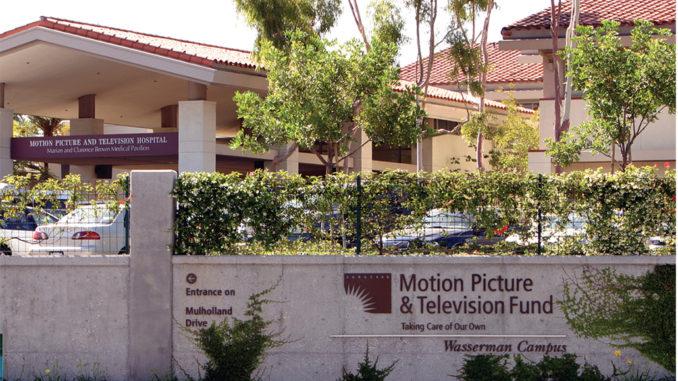
Sam passed away in 1962, and Virginia lived another thirty years, dying in 1992 from heart failure. Both Sam and Virginia are buried in Arlington National Cemetery. She spent her final years at the Motion Picture and Television Country Hospital in Woodland Hills, California.
📷
Sale could thank Mary Pickford for her home once again. Pickford was part of the Motion Picture Relief Fund which she founded with Joseph Schenck and Reverend Neal Dodd. When several former Hollywood stars died destitute in the thirties, 48 acres were purchased in the San Fernando Valley to build a Motion Picture Country House. In 1948, the Motion Picture Hospital was dedicated on the grounds. Later television actors were invited to live there as well. By that time, the site included a retirement community with individual cottages, administrative offices, and a hospital. Fees are based on the ability to pay. Actors, artists, backlot men, cameramen, directors, extras, producers and security guards are all eligible to live there. To live there, residents must be at least 70 and have worked in the entertainment industry for at least 20 years.
It was fun to learn not only about Virginia Sales but also the places she lived at the beginning and the end of her career.
This month we are learning a bit about the Batman villains and their careers. No study of Batman’s favorite nemesis would be complete without Cat Woman, Julie Newmar. Julie shared the role of Cat Woman with Eartha Kitt who appeared the final television season and Lee Meriwether who was so catty in the Batman movie. What else did Julie Newmar do during her career? Let’s find out.
📷pinterest.com
Born Julia Chalene Newmeyer in 1933, Julie Newmar as she is known in the acting world, was a television and film actress, dancer, singer, and stage performer. But, as they say in the commercials, that’s not all. She also was known for writing, designing lingerie, and managing real estate investments.
Newmar was born in LA. Her father Don was head of the physical education department for the Los Angeles College. Her mother, of both Swedish and French descent, was a fashion designer under the name Chalene and later worked in real estate.
Julie began dancing early in life and performed as a prima ballerina with the Los Angeles Opera when she was only 15. With an IQ of 135, Newmar graduated from John Marshall High School at age 15. She continued dancing in films in the early fifties. At age 19, she was also working as a dancer/choreographer for Universal Studios. In 1954, she appeared in Seven Brides for Seven Brothers as Dorcas, one of the seven brides.
📷facebook.com
In 1955 she got her first Broadway appearance in “Silk Stockings.” She continued her movie and Broadway careers throughout her years in entertainment, appearing in 33 films in all.
Television is where Newmar gained most of her fame. Her first television appearance was on The Phil Silvers Show in 1957 and then Ominbus in 1959. But it was in the sixties that she became a household name. She started the decade in Adventure in Paradise in 1960, followed by a variety of shows including The Defenders, Route 66, and TheTwilight Zone in the early sixties.
In 1964 she was offered the role of Rhoda on My Living Doll, where she played a robot. She was not enthralled with the choice of Bob Cummings as her costar and did not seem to enjoy her time on this show. She said that “They originally wanted Efrem Zimbalist Jr. It was not a flip part—it needed a straight actor who could play opposite this bizarre creature so the comedy would come off. That quality was lost when they hired Bob. The show could have been wonderful. I think it would have run for many seasons had they hired Efrem because he had the right qualities.”
📷classicfilmandtvcafe.com
After appearing in several comedies including The Beverly Hillbillies and F Troop, she received another recurring role as Cat Woman in Batman. She would appear in the series 13 times, 12 as Cat Woman, the only villain to make Batman question his morals, because we knew he was in love with her, and if she showed any sign of remorse, who knows where things might have gone. Her Cat Woman costume now lives at the Smithsonian Institution.
Newmar lived in Beekman Place in New York in the mid-sixties. One weekend her brother had come to visit her from Harvard. They were sitting around chatting when the phone rang. She was asked if she would like to play Cat Woman on the Batman series. She was a bit miffed because they said they were casting in California, and the role started on Monday. Her comment was “That’s how television is done: they never know what they are doing until yesterday.” When her brother heard Batman, he jumped up and said that was the favorite show at Harvard and they even skipped classes to watch it. He told her to take the role, so she did.
📷firstforwomen.com
After Batman, she finished out the sixties in The Monkees, Star Trek, Get Smart and It Takes a Thief. With 11 seventies offers, you can see her in shows such as Bewitched, Columbo, McMillan and Wife, Love American Style, The Bionic Woman, and The Love Boat. One of my favorite made-for-tv movies was The Feminist and the Fuzz. It had an exceptional cast, including Newmar who appeared in the movie along with Barbara Eden, David Hartman, Jo Anne Worley, Farrah Fawcett, Harry Morgan, Herb Edelman, Penny Marshall, and John McGiver. This ensemble was directed by Jerry Paris, who directed so many great shows from The Dick Van Dyke Show to Happy Days.
Her other starring role in the seventies was a marriage to J. Holt Smith, an attorney. After the wedding, Newmar moved to Forth Worth, Texas until 1984 when they divorced.
📷remindmagazine.com
The eighties was a more quiet decade for the actress but she did accept roles on CHiPs, Fantasy Island, and Hart to Hart. In 1992, she appeared in George Michael’s music video, “Too Funky,” She was still working in 2016 and 2017 in Batman animation features.
If you were a fan of Batman and Dark Shadows in the sixties, you were in luck when Newmar took on the role of Dr. Julia Hoffman (played in the original series by Grayson Hall) in Dark Shadows: Bloodline, the audio drama miniseries.
She was not just a pretty face, however. She received two US patents for pantyhose and one for a bra, under the name Nudemar. She also began investing in LA real estate and was credited with helping to improve the neighborhoods of La Brea Avenue and Fairfax Avenue. In one episode of My Living Doll, Rhoda is asked to play Chopin’s “Fantasie Impromptu” on the piano. Newmar played the piece herself. She had studied under concert pianist Dr. MacIntyre, and she said that scene is the only one she’s done with her playing the piano which had been her career choice before acting. One of Julie’s comments about herself was “Tell me I’m beautiful, it’s nothing. Tell me I’m intellectual—I know it. Tell me I’m funny, and it’s the greatest compliment in the world anyone could give me.”
📷closerweekly.com
Julie also enjoys art and gardening. She has a rose, a day lily, and an orchid named for her. Her gardens are often chosen as a spot for holding charity events.
Like Barbara Feldon from Get Smart, Julie Newmar is beautiful, bright, and funny. I hope she enjoyed her career. Obviously, she could have been a brain surgeon or any other profession of her choice. She seems like she would be a fun person to just hang out with and the conversation would never run out. Thank you, Julie Newmar for choosing the entertainment business over medical science for our sakes.
As we wind up our blog series, “Time for Some Texas Tea,” we are also reading the last blog of the year. We have been learning about the careers of several actors who appeared on The Beverly Hillbillies and today we have saved Buddy Ebsen who had the most successful career of the cast.
Ebsen was born Christian Ludolf Ebsen Jr. in 1908 in Illinois. He was the only son of four children born to his parents who had immigrated from Germany. His father was a choreographer and owned a dance studio. He was also a physical fitness advocate and operated a gym for the local school district. His mother was a painter.
Davy Crockett Photo: ebay.com
When Buddy was ten, his family moved to Florida for this mother’s health, eventually ending up in Orlando where he took dance at his father’s studio. Ebsen was a member of the swim team all four years and became a Florida State Champion. He graduated in 1926. Originally, he chose a career in medicine and attended the University of Florida at Gainesville. He transferred to Rollins College in Winter Park for a year to be closer to home and save money. They had no science courses, so his mom suggested he take an acting class. When the Florida land boom crashed, Ebsen could no longer afford his tuition and he had to drop out.
He moved to New York City and worked at a soda fountain to get by. Ebsen began his career in the entertainment industry as a dancer. He and his sister were known as The Baby Astaires and they performed in supper clubs and on vaudeville. They were booked at the Palace Theater in New York City after Walter Winchell saw them perform in Atlantic City and gave them a rave review.
In 1933 Buddy married Ruth Cambridge; their marriage ended in divorce in 1945 after having two daughters.
His first film was Broadway Melody of 1936. In that same year, he danced with Shirley Temple in Captain January. In 1938 he appeared with Judy Garland as his dance partner. Walt Disney brought Ebsen in to be filmed dancing in front of a grid so the animators could use it to draw the Silly Symphonie with Mickey Mouse.
Photo: wikipedia.com
MGM offered Buddy an exclusive contract but he turned it down, and Louis Mayer told him he would never work in Hollywood again. In 1939 the same MGM cast him as the Scarecrow in The Wizard of Oz. Ebsen and Ray Bolger swapped roles and Buddy became the Tin Man. He recorded the songs, went through all the rehearsals, and then began filming the movie. He began experiencing body aches, cramps, and shortness of breath which eventually landed him in the hospital. Doctors diagnosed him with an allergy to the aluminum dust in the makeup, and he had to give up the role and was replaced by Jack Haley.
Ebsen took up sailing after he recovered and learned it so well that he taught it to naval officer candidates. He was turned down every time he tried to enlist in the Navy. The US Coast Guard did accept his application, and he was made a lieutenant, junior grade. He served on the USS Pocatello which was a weather ship, recording weather 1500 miles west of Seattle. He was honorably discharged in 1946.
Photo: mycoastguard.com
Ebsen received permission from the Pocatello’s commanding officer to bring aboard costumes, props, and musical instruments. He wrote, cast, and directed vaudeville shows, concerts, and plays while on the sea. Rehearsals were held in the cramped steering room.
In 1945, Ebsen married fellow lieutenant Nancy Wolcott. They had four daughters and a son. Their marriage lasted 39 years but also ended in divorce.
In 1949, he made his television debut on The Chevrolet Tele-Theater. During the fifties, he continued to make films and to appear on television series.
Breakfast at Tiffany’s Photo: pinterest.com
During the decade of the sixties, he was very busy in both mediums. He made four big-screen films including Breakfast at Tiffany’s. He appeared primarily on television, with appearances on a variety of shows including Maverick, The Twilight Zone, The Andy Griffith Show, Gunsmoke, Bonanza, and Rawhide.
From 1962-71, Buddy became Jed Clampett, the head of the family who moves them to Beverly Hills after they earn millions from oil on their Tennessee land. The critics did not like The Beverly Hillbillies one bit. However, the viewers made the number one show several times. I have to side with the critics. Although the show still had high ratings in 1971, it was canceled by the network because they wanted to move their shows in a more “urban” direction.
Photo: allposters.com
Nancy Kulp seemed to be close to most of the cast especially Irene Ryan as Granny and Raymond Bailey, and Ebsen seemed to be close to most of the cast, especially Donna Douglas and Max Baer. However, Kulp and Ebsen were definitely not close. He was very much a conservative and she was decidedly liberal. Donna Douglas related that “they had a different view, so they had some heated discussions about that. They would go on for weeks.” In 1994, Kulp ran for US House of Representatives in her native Pennsylvania. Ebsen not only supported her opponent, he offered to make commercials talking about how liberal she was. He had no connection with Pennsylvania at the time. She claims he was just being spiteful, and he claims she did not know the issues.
After the cancellation of The Beverly Hillbillies, Ebsen appeared in Hawaii Five-0 and then in quite a run of made-for-television movies. In 1973, Buddy was offered his second starring role in a show as Barnaby Jones, a detective who comes out of retirement to investigate the death of his son. Lee Meriwether played his widowed daughter-in-law Betty. Barnaby Jones stayed out of retirement until 1980 when the show was canceled. The show was still receiving decent ratings, but Buddy decided he was ready for retirement.
Barnaby Jones Photo: ebay.com
When asked about Ebsen, Meriwether said, “He really worked at being at the top of his game. You had to keep up with him. I adored him. I think he had feelings for me too.” She later said that “he loved the idea of being a detective. We had CSI-type equipment in the office on the set and he liked doing his own tests.”
Despite a rumored relationship with Meriwether, in 1985, Ebsen married his third wife, Dorothy Knott, and they remained together until his death.
Except for a few credits here and there, Ebsen did not have a lot of acting credits after the mid-eighties. He did accept a recurring role on Matt Houston during season three of that show when he played Matt’s uncle for 22 episodes.
His last movie was a cameo in the big-screen film, The Beverly Hillbillies, and he played Barnaby Jones. His last acting role as a person was Burke’s Law in 1994. His last television appearance was a voice only for King of the Hill in 1999.
In addition to sailing, Ebsen had a lot of other interests. He was an avid coin collector. He also wrote several novels and books. He also released three albums, The Beverly Hillbillies with Irene Ryan in 1993, Buddy’s Originals in 2001, and Buddy Ebsen Says Howdy in 2003.
If that was not enough, he played the guitar, golfed, rode horses, painted, gardened, fished, and traveled.
Ebsen passed away in 2003. His Coast Guard papers are stored at the US Coast Guard Historian’s Office in Washington DC.
Photo: guideposts.com
Many of the rest of his records were given to the University of Wyoming American Heritage Center by his wife after he passed away. The gift included papers from all stages of his career, artwork created by him, his sailing trophies, and athletic medals among other items. The AHC has a large Hollywood and entertainment collection.
In October of 2022, a new exhibit was unveiled, “The Entertaining Life of Buddy Ebsen.” He certainly did have an entertaining life. While Jed Clampett made him famous, his career was much more interesting than that one role.
Thanks for getting to know Buddy Ebsen better and for taking this journey in 2023 to learn more about classic television and all the people who were important in that evolution.
This month’s blog series is “Time for Some Texas Tea.” We are learning about some of the stars of The Beverly Hillbillies. Today we are banking on getting to know Milburn Drysdale, also known as Raymond Bailey.
Bailey was born Raymond Thomas Bailey in 1934 in San Francisco, California. When he was only a teenager he made the trek to Hollywood to try his hand at acting. He had a tougher time breaking into the business and worked a lot of odd jobs including day laborer in a silent movie theater where he was fired after sneaking into a mob scene which I found pretty funny and creative. He also worked as a stockbroker and a banker which would come in handy later in his career.
Photo: thenationalwwiimuseum.com
When things did not seem to be working out, he moved to New York City. He had no better luck on the east coast than on the west coast, so he joined the crew as a merchant seaman and toured the world, including China, Japan, the Philippines, the Mediterranean, and Hawaii. While in Hawaii, he also worked on a pineapple plantation, acted in the community theater, and sang for a local radio station.
He decided to give Hollywood a second chance in 1938, and he actually began getting some small movie parts. His first credited role was in SOS Tidal Wave. He was Mr. West in The Green Hornet in 1940. He appeared in 30 movies before Pearl Harbor was struck. When the US entered WWII, he joined the US Merchant Marine. After his time was up, he returned to Hollywood.
In 1951, Bailey married Gaby George and they would remain married until his death. I could not learn much about Gaby, but she was born in another country, and they were married in Manhattan. I’m not sure if she came here earlier in her life or met Bailey while he was traveling the world. She would have been 37 when they married, and I believe she received naturalization papers when she was 55.
The Alfred Hitchcock Show “Breakdown” Photo: completehitchcock.com
Raymond continued receiving big-screen roles, and in 1952 he had his first television appearance in Tales of Tomorrow as Congressman Burns. He appeared in forty-six additional series during the decade of the fifties, including The Donna Reed Show, Jack Benny, Burns and Allen, Gunsmoke, and Private Secretary. His movie career continued with roles in 26 films including Sabrina, Picnic, King Creole, and Vertigo. In the mid-fifties, he also explored Broadway with roles in four plays.
While Bailey didn’t abandon his film career, the sixties found him on the small screen the majority of the time. In the early sixties, he could be seen on a variety of shows including Lassie, The Ann Sothern Show, BachelorFather, Perry Mason, Bonanza, My Three Sons, and Mister Ed. In 1961, he was offered his first regular role as Mr. Beaumont on My Sister Eileen. He appeared in 25 of the 27 episodes of the show.
Photo: ask.com
In 1962 he was offered the role he would become a household name for: Milton Drysdale on The Beverly Hillbillies. His time as a banker helped him manage millions of dollars in the Clampett accounts. Much to his wife’s chagrin, Drysdale talks the Clampetts into buying the mansion right next to his so he can keep a better eye on them and their money. He was their mentor as they adjusted from country life to city life as much as they could adjust.
Unfortunately, Bailey developed Alzheimer’s, and the symptoms began just as the show was ending. The Beverly Hillbillies was canceled during the “Rural Purge” when all country-related shows were ended by the network in 1971. After the series was canceled, Ray only had two acting credits; they were both in Disney movies that came out in the mid-seventies: Herbie Rides Again and The Strongest Man in the World.
With Nancy Kulp Photo: imdb.com
Baily then became a bit of a recluse until his death in 1980 from a heart attack. It sounds like the only non-family member he kept in touch with was Nancy Kulp who played his secretary Jane on The Beverly Hillbillies.
It was fun to learn more about the career of Raymond Bailey. He certainly defined the word “perseverance.” I’m glad he was able to do what he had a passion for. It would have been interesting to see how he would have done in another comedy series. His Alzheimer’s diagnosis probably ended his career twenty years earlier than it would have. It sounds like he found love and a fulfilling career and that is certainly a success no matter what your profession is.
This month’s blog series is “Time for Some Texas Tea,” stars of The Beverly Hillbillies. We begin our series with Elly May Clampett, played by Donna Douglas. Born Doris Ione Smith in Baton Rouge, Louisiana in 1932, Douglas’s upbringing could not have prepared her for her most famous role of Elly May Clampett any better, because she was a tomboy and loved animals. She had eight male cousins, and she wore their hand-me-downs, went fishing with them, and pitched on an all-boy softball team. In high school, she played softball and basketball, but did switch to cheerleading as she got older. Like many of her classmates during that era, she married shortly after high school. After she had a son, she and her husband Roland Bourgeois divorced three years after their wedding.
Photo: imdb.com
Donna won Miss Baton Rouge and Miss New Orleans. She then made the move to New York. She was offered a job as an illustration model for toothpaste ads. She began taking acting lessons while in the city.
In 1958, at age 27 she began her television career. That year she would appear on The Phil Silvers Show, but she was credited with the name Doris Bourgeois, her married name. In 1959 she would appear on The Steve Allen Show, Tightrope, US Marshal, and Bachelor Father.
Her movie career began the same year. She appeared in Career and would go on to show up in six movies before 1970 including Bells Are Ringing, Lover Come Back, and Frankie and Johnny which she starred in with Elvis Presley. Although they remained friends, and Elvis once visited the cast when they were in Memphis filming, I read a few different sources that relate that Donna fell in love with Elvis and was heartbroken he did not feel the same way. Her last big-screen appearance in 2013, Chronicles of Life Trials, was also her last acting credit of her professional life.
With the debut of the sixties, her career took off, and she received roles on twenty television shows in the first half of the decade. You can catch her in a variety of series including Route 66, The Sunset Strip, Hennessey, Pete and Gladys, Dr. Kildare, Jack Benny, Mister Ed, and The Joey Bishop Show.
With Alan Hale Jr. on Mister Ed Photo: reddit.com
She had a recurring role on Checkmate in 1961 as Barbara Simmons. The plot of the show was that two friends, Don Corey (Anthony George) and Jed Sills (Doug McClure) operate a high-priced detective agency called Checkmate, Inc. in San Francisco. A British criminologist, a former Oxford professor named Carl Hyatt (Sebastian Cabot) helps them.
Photo: etsy.com
In 1960 and 1962 she was in The Twilight Zone in two memorable appearances: I remember watching “Eye of the Beholder” when I was younger and the horror of watching it never left me. In the episode, Douglas is a patient in a hospital having plastic surgery to make her more beautiful. The tension is built as they get ready to unwrap her face. You hear the nurses and doctors talking, but no one’s face can be seen After reminding her that the surgery was not guaranteed to be successful, they finally remove the bandages. We suddenly see the beautiful Donna Douglas. A nurse hands her a mirror and Douglas screams hysterically. Then things move back in the shot and as we see the medical personnel around her, we see they look a bit hideous in our standards, and Donna is devastated that she has to remain so “ugly.”
Photo: kunr.com
In 1962, Paul Henning was developing a new show about a group of hillbillies who strike oil and move to Beverly Hills to buy a mansion and live the good life. They have a hard time adjusting to the California lifestyle and being millionaires. Douglas beat out hundreds of actresses to get the part of Elly May.
Donna said that she was never allowed to change her lines in the script and that now actors have that freedom, but back then producers were in charge instead of the actors.
Douglas received more fan mail than any other cast member on The Beverly Hillbillies, and she spent hours autographing photos and responding to her fans.
Apart from the spat between Nancy Kulp and Buddy Ebsen later in life, the cast of the show was very close. Douglas, Baer, and Ebsen attended Ryan’s memorial service. Irene Ryan put on a huge Christmas spread for the show’s cast and their families every year.
With Max Baer Photo: kroc-am.com
Douglas and Max Baer Jr. remained close friends for the rest of their lives Baer said “I spoke to her on a semi-regular basis. We weren’t the kind of people who would text, but we would call each other when there was something to share.” During the time of her death, one of Donna’s comments was, “Tell Maxie I thought I was going to get better.”
Max and Donna both visited Ebsen the week before he died, and Douglas gave a eulogy at his funeral. Later, when she discussed their relationship, she said he “was a wonderful man very much like my own father, a quiet, reserved, and caring person.”
After The Beverly Hillbillies was canceled, Donna took on a few roles in the seventies and could be seen on Night Gallery, Love American Style, Adam 12, and McMillan and Wife. During this decade she also tried marriage again with Robert Leeds, who had been the director for The Beverly Hillbillies. They married in 1971 and divorced in 1980. We only see Douglas once in the eighties on The Nanny, where she played herself.
Donna had two issues affecting her offers for television roles. After portraying Elly May Clampett for nine years, she was typecast in the role and her religious beliefs prevented her from appearing in anything in bad taste, immoral, or with nudity. She said she only wanted to do high-quality work and many of the scripts did not meet that criterion for her.
After her acting career, Douglas transitioned into gospel singing, real estate, and motivational speaking. She did not do much with her realty work, because she said while she told her clients all the things that were good about the homes, she also felt it necessary to tell them all the things that were bad about them which was not part of the corporate culture in LA at that time. She did perform frequently as a gospel singer and often gave talks for church youth groups, camps, and colleges. She recorded her first gospel album in 1982. Her gospel albums included “Back on the Mountain” and “Donna Douglas Sings Gospel I & II.” She also released several country records. This same year Donna enrolled at Rhema Bible Training Center in Broken Arrow, OK; she graduated in 1984 with a children’s ministry degree.
Douglas also penned a few books. She wrote Donna’s Critters and Kids: Children’s Stories with a Bible Touch and had an accompanying coloring book. In 2011 she wrote Miss Donna’s Mulberry Acres Farm. In 2013, she released a cookbook, Southern Favorites with a Taste of Hollywood. She included recipes from some of her acting friends including Max Baer, Pat Boone, Buddy Ebsen, Loretta Lynn, Gavin MacLeod, Dolly Parton, and Debbie Reynolds.
In a 2003 interview with “Confessions of a Pop Culture Addict,” she discussed her role of Elly May: “Elly May was like a slice out of my life. She is a wonderful little door opener for me because people love her, and they love the Hillbillies. Even to this day, it’s shown every day somewhere. But, as with any abilities, she may open a door for you, but you have to have substance or integrity to advance you through that door.” Donna also made the rounds for several fan conventions for the Beverly Hillbillies.
In 2011, Donna sued Mattel when they released an Elly May Barbie doll without her permission to use her likeness. It was settled behind closed doors, but you can still find the doll which came out in 2010 with a Samantha doll from Bewitched and a Jeannie doll from I Dream of Jeannie.
Donna also enjoyed gardening, responding to fan mail, and spending time with her friends and family. She moved back to Baton Rouge in 2005, and in 2015, she died from pancreatic cancer.
Some people might consider her career unlucky after the Beverly Hillbillies, because she was not able to attain the roles she really wanted to do. However, she was able to create new goals for herself, try out different careers in which she became successful.
Photo: tcm.com
As her life was moving from middle to older age, she was able to return home and spend the rest of the years in the place she loved and the place where her roots were. I think that is a successful and healthy life. She also chose to help raise money for charities and give back when she could have justified just enjoying her private life.
She is a great role model for all of us: strive for your dreams, adjust life when necessary, do your very best, give back to others, and remember where you came from. Pretty good advice and she walked the talk! Thank you for being you, Donna Douglas.
This month we are looking at some of our favorite classic television actors. If you are a big fan of Oklahoma or Green Acres, you will be well acquainted with our star today, Eddie Albert. Let’s learn a bit more about his life and career.
Photo: imdb.com
Eddie was born Edward Albert Heimberger in 1906 in Illinois. When he was one, his family moved to Minneapolis. When he was six, he became a paper boy. He and his schoolmate, Harriet Lake, were in the drama club. Harriet would later change her name to Ann Sothern. After graduating in 1926, Albert enrolled at the University of Minnesota to major in business.
He began his career in earnest, but the stock market crash derailed his job search. He worked a variety of jobs including singer, trapeze artist, and insurance salesman.
Photo: closerweekly.com
In 1933 he moved to New York City and cohosted a radio show called “The Honeymooners-Grace and Eddie Show,” with costar Grace Bradt. He was on the show three years and then Warner Brothers offered him a contract.
Albert also had an early career on Broadway with lead roles in “Room Service” and “The Boys From Syracuse.” He also began working on television. In 1936, NBC hosted a play of his “The Love Nest” on their experimental television station W2XBS, now WNBC.
His first movie role occurred in 1938 in Brother Rat. He would make 25 additional films during the next decade and then another 50 big-screen movies before his career ended, with his last one being the Narrator in Death Valley Days in 1995.
During his odd-job era, Albert had toured Mexico as a clown and trapeze artist with the Escalante Brother Circus while working for the US Army intelligence, photographing German boats in Mexican harbors. In 1942, he enlisted in the US Coast Guard. In 1943, he resigned in order to accept an offer as a lieutenant in the US Naval Reserve. He rescued 47 marines under heavy enemy fire in 1943 and was awarded a Bronze Star.
Eddie and Margo Photo: facebook.com
After returning from the War, Albert married Mexican actress, Margo. Their son also became an actor and their daughter took on the role of Eddie’s business manager. His son had more than 130 credits, the first being in 1963. You probably saw him on many of your favorite shows. Unfortunately, he passed away from lung cancer only a year after his father died.
During the late forties to the early sixties, Albert returned to Broadway for roles in “Miss Liberty,” “The Seven-Year Itch,” and “The Music Man.”
Albert had a long and active television career. During the fifty years that he was working in the industry, he appeared in almost 100 different shows. His first appearance was in the Ford Theater Hour in 1948.
Throughout the fifties, Eddie showed up in many of the early drama series on television. The sixties found him, along with most other actors of that decade, showing up on a variety of westerns, including Laramie, Tales of West Fargo, The Virginian, and Wagon Train. He was offered roles in several dramas as well, including Dr. Kildare, The Outer Limits, and The Man From U.N.C.L.E.
Photo: cinemacats.com
In 1965 he received the starring role of Oliver Douglas in Green Acres. For six seasons, he extolled the virtues of farming over the big city rat race. While Oliver had a harder time fitting into Hooterville life, his elegant wife Lisa was accepted immediately. If you have been reading my blog for a while, you know I love this show. I am more impressed with it now, fifty years later. There is so much sophisticated humor and wit in the show and I love getting to know the quirky characters who live in the Hooterville community. As Oliver Douglas, Albert was also on The Beverly Hillbillies and Petticoat Junction. The show was purged with the other rural comedies, even though the ratings were still quite high.
The seventies and eighties kept Albert busy on television and in films. He appeared on many shows including Columbo, McCloud, Here’s Lucy, Simon & Simon, Hotel, Murder She Wrote, and thirtysomething.
He opted to star in one more television series in Switch from 1975-78. He starred as ex-cop Frank McBride who started a detective agency with ex-con Pete Ryan (Robert Wagner).
Much of Eddie’s life was spent as an activist for social and environmental causes. He participated in the first Earth Day. He founded the Eddie Albert World Trees Foundation and was national chairman for the Boys Scouts of America’s conservation program. From 1985-1993, he was the spokesperson for the National Arbor Day Foundation. He was a trustee of the National Recreation and Park Association and became a member of the U.S. Department of Energy’s advisory board.
In addition, he was involved with Meals for Millions and was a consultant for the World Hunger Conference. Meals for Millions was a project that created nutritional meals for three cents each! They were sent to 129 different countries and added up to more than 6.5 million pounds of food. He and Albert Schweitzer participated in a documentary about malnutrition in Africa, and he often campaigned against DDT. He was also a director for the U.S. Council on Refugees and promoted organic gardening. Albert was also the founder of City Children’s Farms, a program to get inner-city kids involved in gardening.
I’m not sure when he had any other time for leisure and recreation, but he loved jogging, swimming, golfing, traveling, sculpting, beekeeping, sailing, reading, making wine, gardening, and playing guitar.
Photo: classicmoviehub.com
He 1995, Albert was diagnosed with Alzheimer’s disease. His son temporarily retired from acting to care for his father. In 2005, Eddie passed away from pneumonia.
When Albert passed away, we lost much more than an actor, although we did lose a great actor. I was so impressed with how much he did for the economy. He told a great story about his former costar Eva Gabor. She loved her fashion. They were great friends and like any couple, married or not, they had their differences. She never understood his passion for wildlife conservation. She asked him, “Every time you hear about a sick fish, you make a speech, vy?” And he patiently explained that we needed to preserve nature and save wild animals. A few days later she showed up in a gown made of feathers. He told her she should not be wearing it, and she said it was so chic. Albert told her that she was a role model, and when other women saw her gown, they would want one and many birds would die just to supply the feathers. Lisa just laughed and seriously said, “But Eddie, feathers don’t come from birds.” So he asked her where they did come from and she said, “Dahlink, Pillows! Feathers come from pillows.” In addition to being a great actor and an amazing activist, he was also a good and patient friend.





















 thewritelife61