They say, “Variety is the Spice of Life” and we are going to see if that’s true this month. During the fifties, sixties, and seventies, variety shows were a big part of the television schedule. If you were a singer or a dancer, you likely had an opportunity to have your own show.
📷imdb.com
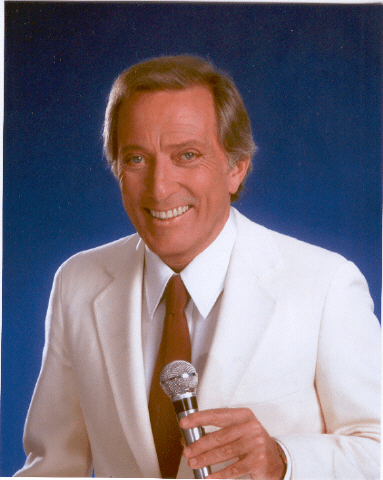
From 1962-1970, Andy Williams entertained us in our living rooms. Williams had a weekly series from 1962-1967 before deciding he wanted to cut back to three specials a year. By 1968 he changed his mind and went back to a weekly series that was on the air till 1971. When the show came back in 1968 it included more rock and roll, a talking bear, and psychedelic lighting which never seemed to fit what I thought of as Williams’ style.
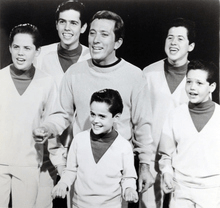
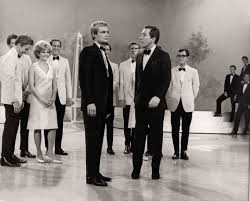
Like many variety shows, Williams had a cast of performers who helped out with skits and songs. During the run of his show, The Osmond Brothers, Jonathan Winters, Ray Stevens, and the Lennon Sisters were part of the act. In 1963 the show won for Outstanding Variety Series. Like Carol Burnett, guest stars also appeared weekly on the show. I remember watching his show, especially at Christmas and loved the Osmonds who Williams discovered at Disneyland; he originally introduced them as “a youthful barbershop harmony group from Odgen, Utah.”
📷thesaltlaketribune.com
Andy’s show debuted on NBC on Thursday nights. It was up against The Alfred Hitchcock Hour. The second season ended up on Tuesday nights taking on The Fugitive and The Jack Benny Show. Season three found it on Monday nights with the competition being a few new sitcoms and it continued in the same slot season four with Hazel as its strongest competitor. Believe it or not, season five found the show on Sunday night. No wonder it wasn’t in the top 30, no one could ever find it from year to year.
Once the show returned in 1968 with its 60s trippy themes it was on Saturday tackling the long-running The Jackie Gleason Show and the newer game shows Dating Game and Let’s Make a Deal. The only thing that changed the final year was that The Jackie Gleason Show was replaced with Mission Impossible. In addition to moving around so often, the show had to compete with a lot of other variety shows during that decade. Just a few others included Carol Burnett, Flip Wilson, Dean Martin, Dinah Shore, and Perry Como.
📷facebook.com
Eventually, Williams created his own very successful show in Branson, Missouri where he lived and performed until he passed away from bladder cancer in 2012.
I think overall Andy Williams had one of the more successful variety programs. No one did it better than Carol Burnett. I think Williams had a hard time trying to fit his style into the late sixties and early seventies. When he started, Perry Como and Nat King Cole were known for their variety series, but when his last show debuted, he was competing with people like Flip Wilson and Sonny and Cher. I’m exaggerating to a point, but it was like he began singing with Lawrence Welk and tried to change to singing with The Rolling Stones; he just needed to find his own lane and stay there.
As we continue with our “Favorite Crime Solvers of the Past,” we turn to 77 Sunset Strip. Even if you never watched the show, you might be familiar with the theme song where they snapped and kept repeating “77 Sunset Strip.”
📷facebook.com
Created by Roy Huggins, the show debuted on ABC in 1958 and ran until spring of 1964. This was the third appearance by Detective Stuart Bailey. In 1946, Huggins’ novel, The Double Take, was published. In 1948, Bailey stepped into the big screen, starring in I Love Trouble played by Franchot Tone. A decade later he showed up on television played by Efrem Zimbalist Jr.
Bailey, a former WWII secret agent and foreign languages professor, works with former government agent Jeff Spencer (Roger Smith). Their office is at 77 Sunset Strip, Suites 101 and 102. Suite 103 is occupied by Suzanne Fabry (Jacqueline Beer), a French switchboard operator who handles phones for several clients including Bailey and Spencer. Occasionally she helps them solve a crime.
Other characters come and go from the offices including Roscoe (Louis Quinn), who gives out horse-racing tips when he’s not at the track; he often is an operative for the duo.
📷allposters.com
Gerald “Kookie” Kookson (Ed Byrnes) is a bit of a kook. He loves rock and roll, is witty, appreciates looking good, and works as a valet at the club next door. But he wants to be a private detective and makes full partner during the show. Kookie provides some comedy with his slang like “ginchiest” for coolest or “piling up Zs” for sleeping. During season 2, Byrnes asked for more money with his character expanding his role, but the answer was a firm no, so he left the show. Warner Brothers eventually settled with him, and he returned in May of that year.
Other occasional visitors include Lt. Roy Gilmore (Byron Keith) and the Frank Ortega Trio (played by themselves), a jazz band, who perform next door. They recorded for Warner Brothers who was also behind the television show.
The show had a fun, witty edge to it making it interesting to watch the interactions of the characters in addition to the crime solving. Bailey and Spencer were updated versions of forties’ noir detectives. Some of the shows had very different plots, something like the shows Moonlighting would feature a few decades later. “The Silent Caper” had no dialogue and, in another one, Bailey finds himself in a ghost town and he’s the only main character in the episode. During the last season in “The Target,” roles were played by crew members who were usually behind the camera including director William Conrad, associate producer James Lydon, and writer Tony Barrett.
Guest stars were plentiful and included Robert Conrad, Dyan Cannon, Cloris Leachman, Shirley MacLaine, Elizabeth Montgomery, Mary Tyler Moore, Roger Moore, William Shatner, Marlo Thomas, Robert Vaughn, and Adam West.
📷starstills.com
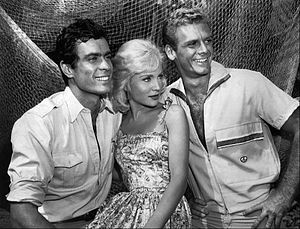
Mack David and Jerry Livingston wrote the famous theme which became a top 10 hit on the Billboard chart. The duo worked on several other Warner Brothers crime shows including Surfside Six, Bourbon Street Beat, and Hawaiian Eye, all based on the 77 Sunset Strip formula and exotic location.
By 1963, ratings were declining and the show revamped. If you read my blog often, you realize this is one of my pet peeves. If they want to change the casts, I understand that. However, in this one, like so often, Bailey is suddenly working alone and there is no mention made of any of the other characters, just as if they never existed. They did this on Happy Days, The Doris Day Show, and several other popular series.
In addition to booting the cast, Jack Webb was brought in as executive producer and William Conrad as director. And if the name William Conrad sounds familiar, yes, it is the same person as the man who starred on Cannon. During the fifties and sixties, Conrad racked up 32 directing credits.
Bailey is now a solo investigator. The title didn’t change, but the old office is no longer there nor the club nor the theme song. A new one written by Bob Thompson was used, and the show took on a darker, more serious nature. Bailey gets a secretary named Hannah who we rarely see.
📷ebay.com
The show was on Fridays for its entire run, just switching time slots now and then. By season two it was in the top ten. In seasons three through five, it got its biggest competition from Route 66, which it beat in the ratings. The final season, the show got moved to a later slot, going up against The Alfred Hitchcock Hour but, neither of them were in the top thirty.
Big surprise, viewers weren’t fans of the changes or the more serious tone of the show, and they drifted away. The show was cancelled in February. Efrem Zimbalist Jr. moved over to the FBI. Roy Huggins had a hugely successful career. He would write for and create more top shows including Run for Your Life, Maverick, Alias Smith and Jones, The Rockford Files, and The Fugitive. Viewers at least got the satisfaction of knowing that making such drastic changes to the show caused the end of that story. Stream a few of the early seasons on Philo, Roku, or Pluto TV and let me know what you think.
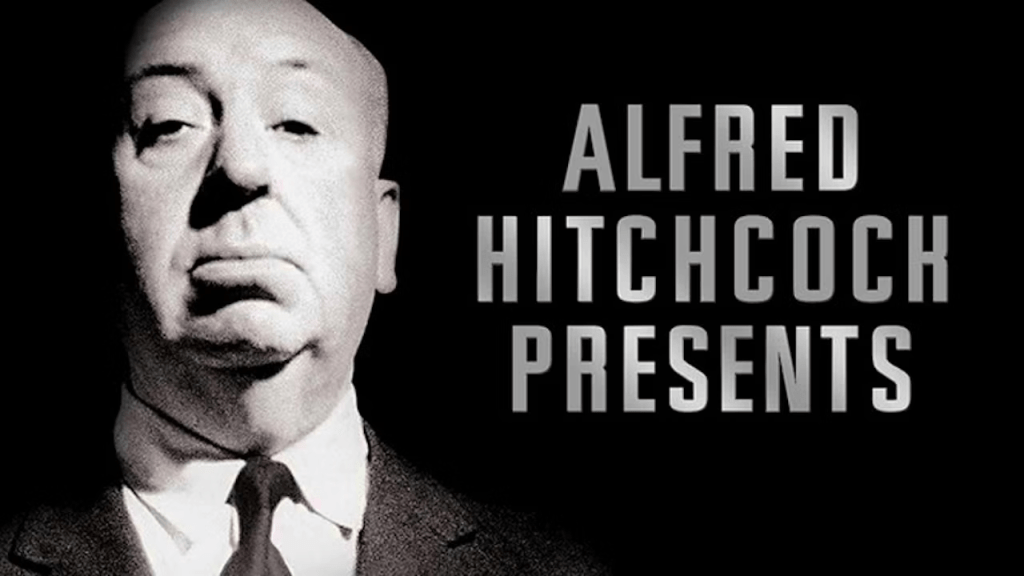
In October, we are tackling a blog series on Eerie Shows. It would be almost impossible to not include Alfred Hitchcock Presents which was on television for a decade.
The show premiered in 1955. Hitchcock had been directing films for more than three decades at that time. The series experienced several changes. It began as Alfred Hitchcock Presents on CBS but would switch both nights and networks during its run. In 1962 it became an hour-long show and was called The Alfred Hitchcock Hour.
Many fans recall the opening. There is a line-drawing of Hitchcock’s profile with the “Funeral March of a Marionette” playing in the background. Hitchcock appears at the edge of the screen and walks to the center where he fades into the caricature line drawing. Then he said, “Good evening.” The silhouette was one that Alfred drew. He began his entertainment career illustrating title cards for silent movies.
📷peacock.com
Hitchcock himself directed 17 of the episodes of the series. Two of those were nominated for Emmy awards: “The Case of Mr. Pelham” in 1955 with Tom Ewell and “Lamb to the Slaughter” in 1958 with Barbara Bel Geddes.
Hitchcock’s job during this series was to introduce the story and then to wrap it up at the end. Both the openings and closings were written by James B. Allardice. Allardice wrote for 38 different shows, many of them very popular series in the fifties and sixties. Norman Lloyd, who produced the show and appeared in five episodes, said Hitchcock respected Allardice so much that he never even changed a comma that he wrote.
The network demanded that if a character got away with murder during the show, then Hitchcock would let them know during the closing that he was eventually brought to justice; in the TV Guide, Hitch described this as “a necessary gesture to morality.” Lloyd gave an example of this in a Television Academy interview. In one episode, a woman kills her husband with a frozen lamb’s leg and gets away with it. At the end of the show, Alfred explains that she later remarried and tried the same trick again but when she took out the leg and hit her husband with it, it was not frozen enough, so he caught her in the act and turned her in.
📷genresnaps.com
The episodes were not your average thriller shows. They included drama, suspense, and humor. Audiences never knew just “who done it” till the end.
The show debuted on CBS on Sunday nights for five years, up against drama anthologies for two years and then competing with The Dinah Shore Show for three years. For the next two seasons it moved to NBC on Tuesday nights. It aired against The Many Loves of Dobie Gillis on CBS those years and against Wyatt Earp on ABC. For three months it went back to CBS on Thursdays before moving to Fridays on CBS the next season with The Price is Right and 77 Sunset Strip. The ninth year found it on CBS on Fridays with little competition and the final year it showed up on NBC’s schedule on Mondays against Ben Casey. I could never find the reason for cancelling the show. I’m assuming ratings began to decline but if anyone knows, I’d love to hear it.
NBC chose not to air a 1962 episode called “The Sorcerer’s Apprentice” because the sponsor felt the ending was too gruesome. In the episode, a magician’s helper is supposed to help in a trick where he “sawed” a woman in half, but he doesn’t realize he truly saws her in half.
📷thecompletehitchcock.com
As you might guess, with a new story every week, many celebrities appeared on the show including Charles Bronson, Bette Davis, Bruce Dern, Robert Duvall, Clint Eastwood, Peter Falk, Joan Fontaine, Peter Lorre, Walter Matthau, Steve McQueen, Vera Miles, Claude Rains, Robert Redford, Burt Reynolds, Thelma Ritter, George Segal, and Jessica Tandy.
In addition to the Hitchcock-directed episodes, the show received Emmy nominations for Best Series four times. In 1956 it was up for Best Action or Adventure Series, but it lost to Disneyland. The following year found the show in the Best Series – Half Hour or Less category, but it lost to The Phil Silvers Show. 1958 found it in the category of Best Dramatic Anthology Series. You would think that would be a no-brainer win for this show, but it lost to Playhouse 90. It had its fourth category nomination in 1959 as Best Dramatic Series – Less Than One Hour and lost to Alcoa Theatre. I guess the Emmy committee had a hard time determining categories for a few years.
In a different twist, NBC tried to air the show again in 1985. Hitchcock had passed away five years earlier from renal failure. A made-for-TV-movie combined new stories with colorized segments from the original show. It lasted a year before NBC canceled it. USA picked it up for three more seasons.
📷screentunes.com
The original show can still be seen on a few different networks including MeTV.
With Hitchcock’s popularity in 1955, it’s no wonder that this show was a successful series for a decade. The episodes were well written, and they had a wonderful cast of actors. Many people probably tuned in just to see Hitchcock, and his personality was larger than life, even if his behavior was a bit despicable at times. One of Alfred’s quotes about the show was that “television has brought murder back into the home – where it belongs.”
As we check out some of my favorite actresses this month, this week we learn about one of the most prolific actresses on the small screen. With more than 170 credits between 1938 and 2004, June Lockhart had a very successful career.
Photo: ebay.com
Perhaps destiny planned for June to become an actress. Both her parents, Canadian-born Gene and English-born Kathleen Lockhart, were actors and she traveled with them as a young child while they performed. Although she was born in New York City in 1925, she was brought up in Beverly Hills.
June with her parents Photo: mesquitelocalnews.com
She was only 8 when she took the role of Mimsey in “Peter Ibbetson” at the Metropolitan Opera.
In 1938, at age 13, June made her film debut in A Christmas Carol with her parents. She appeared in more than thirty movies, including Meet Me in St. Louis, Sergeant York, All This and Heaven Too, and The Yearling.
Photo: pinterest.com Meet Me in St. Louis
In 1948, she won a Tony for Outstanding Performance by a Newcomer for her role in “For Love or Money.”
Although her appearances in film and on Broadway would have been a lucrative career n themselves, it was in television that she found most of her fame. In 1949 she accepted a role on The Ford Theater Hour. During the 1950s she would make 56 appearances on drama theater shows. In addition, she was in Gunsmoke, Have Gun Will Travel, Rawhide, and Wagon Train.
In 1951 she married John Maloney. In 1959 they divorced and that same year, she married John Lindsay whom she was married to until 1970.
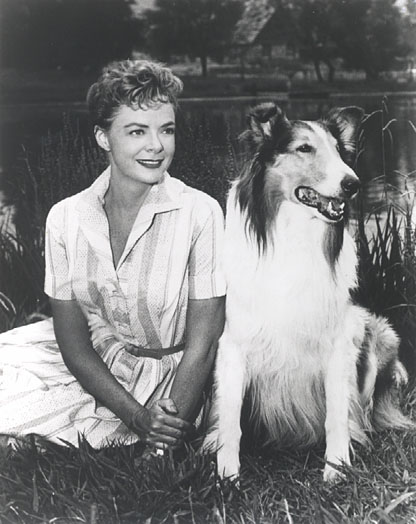
But it was in the television show, Lassie from 1958-1964 that she became a household name as Ruth Martin, Timmy’s (Jon Provost) mother. The show was about the Martin family’s life on the farm and the heroics of Timmy’s dog Lassie.
Photo: pinterest.com
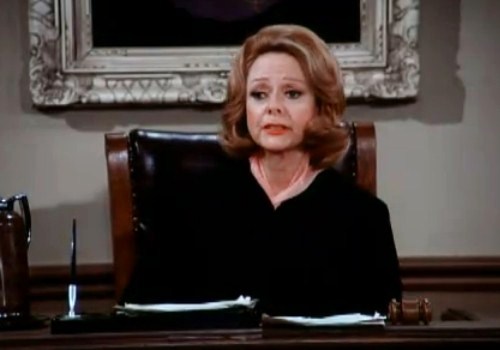
The 1960s continued to be very productive for her as an actress. She appeared in a variety of television shows, including the dramas Perry Mason, The Man from UNCLE, and The Alfred Hitchcock Hour and the comedies Bewitched, Family Affair, and The Beverly Hillbillies.
Photo: thenewyorktimes.com
She also starred in two long-lasting sitcoms. From 1965-1968 she was Maureen Robinson on Lost in Space. On the show, a family with three children travel with Major Don West to colonize a new planet. Dr. Zach Smith is a stowaway who tried to sabotage their mission by throwing their ship off course and ends up having to live with the people he thought were his enemies.
With Bill Mumy Photo: uncleoldiescollectible.com
In an interview with Bill Mumy who played her son Will on Lost in Space, he said that Lockhart always made time for the kids on the set. He said she kept them occupied between takes which she didn’t need to do. He said “she spent a lot of time nurturing Angela’s and my developing thought processes. Teaching us.”
Photo: thedailyissue.com
In 1968 she was offered a role as Dr. Janet Craig for the final two seasons of Petticoat Junction. Bea Benaderet, the star, passed away in 1968, and Janet filled in as a “mother” to the girls.
Although she would not take on any additional regular roles for sitcoms, she continued to keep busy through the 1970s, 1980s, 1990s, and 2000s. During these decades , she could be seen on Love American Style, Marcus Welby, Adam-12, Police Story, ElleryQueen, Happy Days, Magnum PI, Falcon Crest, Quincy, Murder She Wrote, FullHouse, Roseanne, Drew Carey, Grey’s Anatomy, and in Beverly Hills 90210 where she had a recurring role, along with 33 other series.
On Happy Days Photo: sitcomsline.com
Her last acting role was an animation movie, Bongee Bear and the Kingdom of Rhythm, in 2016.
Photo: famousbirthdays.com
Lockhart is an interesting person as well as a successful actress. She hosted the Tournament of Roses parade for eight years and the Macy Thanksgiving parade for five years.
During my research, I learned several surprising things about her. She was an Ambassador for the California State Parks system. She won the NASA award for Exceptional Public Achievement Medal for inspiring the public about space exploration in 2013. She served as a panelist with several White House correspondents on a quiz show Who Said That in the fifties. That job provided her with an open invitation to attend White House briefings which she did and said were fun.
Photo: flickr.com
Her hobbies included gold mining, antique motorcars, lighter-than-air aircraft, and learning about the Old West. She kept medical texts near her bed for nighttime reading. She was a member of a kite-flying club. She also loved old steam engines.
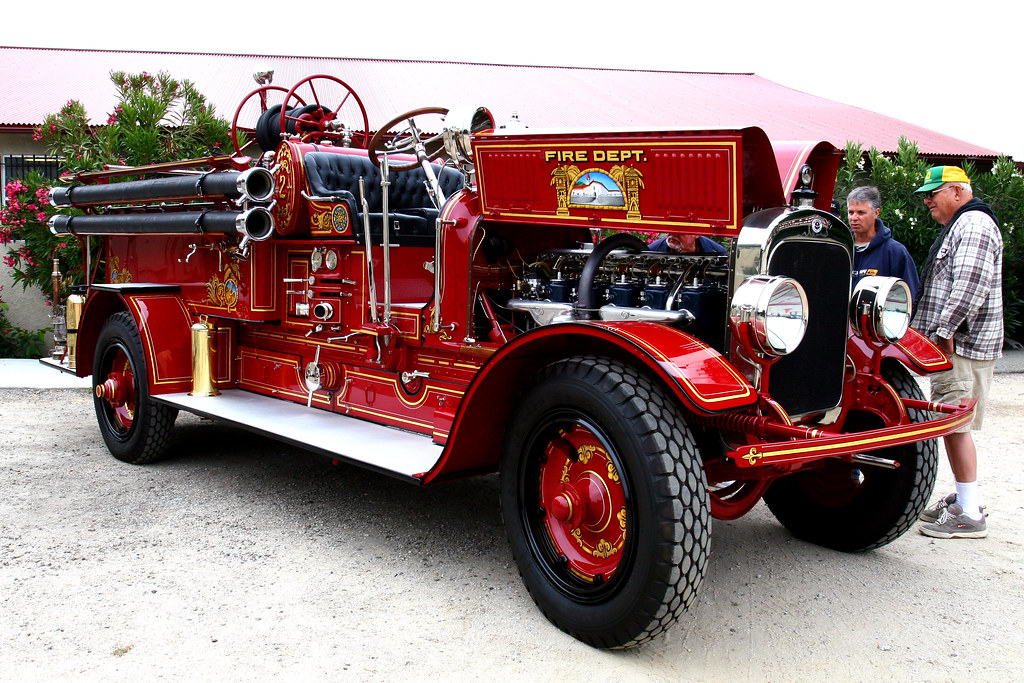
Photo: blogspot.com
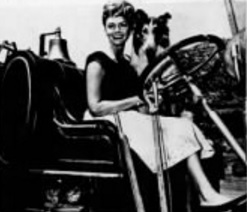
Her husband bought her a 1923 Seagrave pumper fire engine named “Cordelia Delilah Lindsay” which she drove around even though it got two miles to the gallon. She actually had the largest parking space at the studio.
If all those facts aren’t interesting enough, in an interview with Bill Mumy by the Archive of American Television, he relayed that she loved rock and roll. In 1967, she hired the Allman Brothers Band (then called Hour Glass) to play at her house. She took Angela Cartwright and Bill to the Whiskey-A-Go-Go. He also said that “in the 1980s she carried a picture of only one person in her wallet and it was David Bowie.”
Photo: pinterest.com
I’m truly impressed that with as busy as she was as an actress, she made time for both her two daughters and her television children, and enjoyed a ton of hobbies as well. It seems she had a joy for learning about new things and continued to add interests to her life. She is a great role model for all of us.
We wrap up
our series Just a Couple of Characters this week with Mary Wickes and Susan
Oliver. Mary and Susan are very different character actors, but you will
immediately recognize them. Let’s learn a bit more.
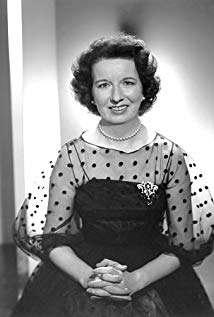
Mary Wickes
Photo: imdb.com
It’s not surprising that Mary shortened her last name to “Wickes” after being born Mary Wickenhauser in 1910 in St. Louis. Her father was a banker, and the family had plenty of money. After high school, Mary attended Washington University in St. Louis, majoring in political science, planning a career in law. One of her professors suggested she try theater, and she dipped her toe into it doing summer theater in Stockbridge, Massachusetts.
Photo: flickr.com
After deciding a career in acting was for her, she moved to New York. She quickly found a role in “The Farmer Takes a Wife” on Broadway in 1934. In this show, which starred Henry Fonda, Mary was Margaret Hamilton’s understudy. Mary had a chance to perform during the run and received excellent reviews.
Photo: tcm.com The Man Who Came to Dinner
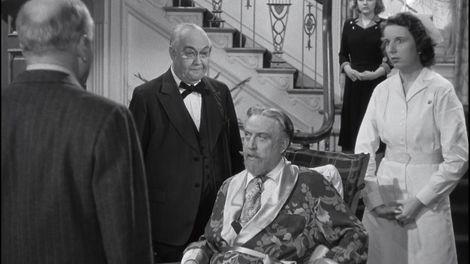
Mary understood that comedy was the field she needed to pursue. She was lucky enough to continue getting roles on Broadway, appearing in several shows throughout the 1930s, including “Stage Door” in 1936 and “Hitch Your Wagon” in 1937. She also was cast in “The Man Who Came to Dinner” as Nurse Preen with Monty Woolley. She continued to receive encouraging reviews. When Warner Brothers decide to turn the play into a movie, both Mary and Woolley were part of the cast. Mary became known for being a bit sarcastic and witty. She was given roles in the film, Now Voyager with Bette Davis, again playing a nurse.
Photo: viennasclassichollywood.com By the Light of the Silvery Moon
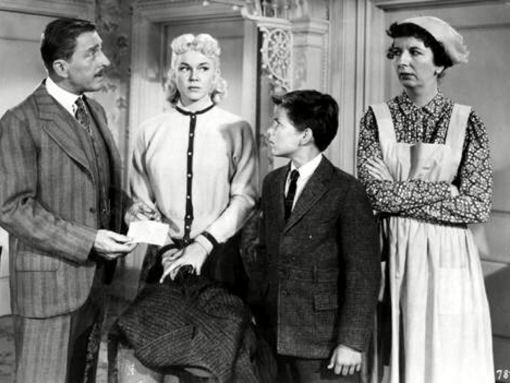
Mary flip flopped from Broadway to Hollywood, taking roles that interested her. She would appear in both Moonlight Bay (1951) and By the Light of the Silvery Moon (1953) with Doris Day; White Christmas (1954), and The Music Man (1962).
Mary had cornered the market in roles of smart-alecky teachers, nurses, and housekeepers in film. When she transitioned to television, she often continued in these roles. Her first two recurring roles were housekeepers named Alice on Halls of Ivy from 1954-55 and Katie on Annette in 1958. From 1956-1958, she played Liz O’Neill, Danny Thomas’s press agent on Make Room for Daddy. Throughout the 1950s she also appeared on numerous shows including Zorro.
Photo: pinterest.com
One of my favorite episodes with Mary was the 1952 episode “The Ballet” on I Love Lucy where Wickes played Madame Lamond, a formidable ballet teacher who taught Lucy. Wickes and Lucy would remain life-long friends. After Mary’s death, Lucie Arnez talked about her relationship with their family: “For my brother and me, Mary was just like one of the family. If any of us were sick or even in bed with a cold, Mary would show up at the backdoor with a kettle of chicken soup. She could be loud and boisterous and as demanding as any of the characters she played, but she was also very loving and giving. What a lady.” Mary would appear on numerous episodes of Lucille Ball’s other shows in the 1960s and 1970s.
Photo: aurorasginjoint.com
In the 1960s, Mary continued to show up on a variety of shows. We see her on My Three Sons, Bonanza, F-Troop, The Doris Day Show, The Donna ReedShow, and I Spy. She also had recurring roles on three shows during the decade: TheGertrude Berg Show, Dennis the Menace, and Temple Houston. In the Gertrude Berg Show, Mary was landlady, Winona Maxfield. She was hilarious on Dennis the Menace, playing Miss Cathcart, an older neighbor looking for a man. On Temple Houston, she played Ida Goff. Temple was Sam Houston’s real son who was a circuit-riding lawyer.
Photo: en.wikipedia.org The cast of Doc
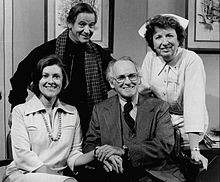
As Mary aged, she progressed to the cranky relative or nosy neighbor type of character. In the 1970s she was a regular on Julia, Doc, and The Jimmy Stewart Show. On Julia, she was Dr. Chegley’s wife, Melba. She went back to her role as a nurse on Doc. On the Jimmy Stewart Show, she is Mrs. Bullard. Two of my favorite episodes of her from the 1970s were her roles on Columbo and M*A*S*H. On Columbo, Mary plays a landlady of a victim who’s been murdered. She and Columbo have a priceless conversation during the show, “Suitable for Framing” in 1971. On M*A*S*H, Mary played Colonel Reese who is observing Margaret and the nurses.
Photo: aurorasginjoint.com
In the 1980s, Mary’s schedule slowed down a bit. She did revive her role as a maid on The Love Boat in 1981. From 1989-1991, she took another regular role as housekeeper Marie Murkin on Father Dowling Mysteries.
Photo: hometheaterforum.com
In the 1990s, Mary was doing more voice overs. She taped five episodes of Life with Louie which aired from 1995-1997 and was Laverne in The Hunchback of Notre Dame in 1996. Unfortunately, she would not live to see them on the big screen. In 1995, she passed away after having respiratory problems. While a patient in the hospital, she fell and broke her hip. She died of complications caused by the surgery.
Mary never married or had children and as part of her legacy, she left a $2 million donation in memory of her parents to the Television, Film and Theater Arts at Washington University.
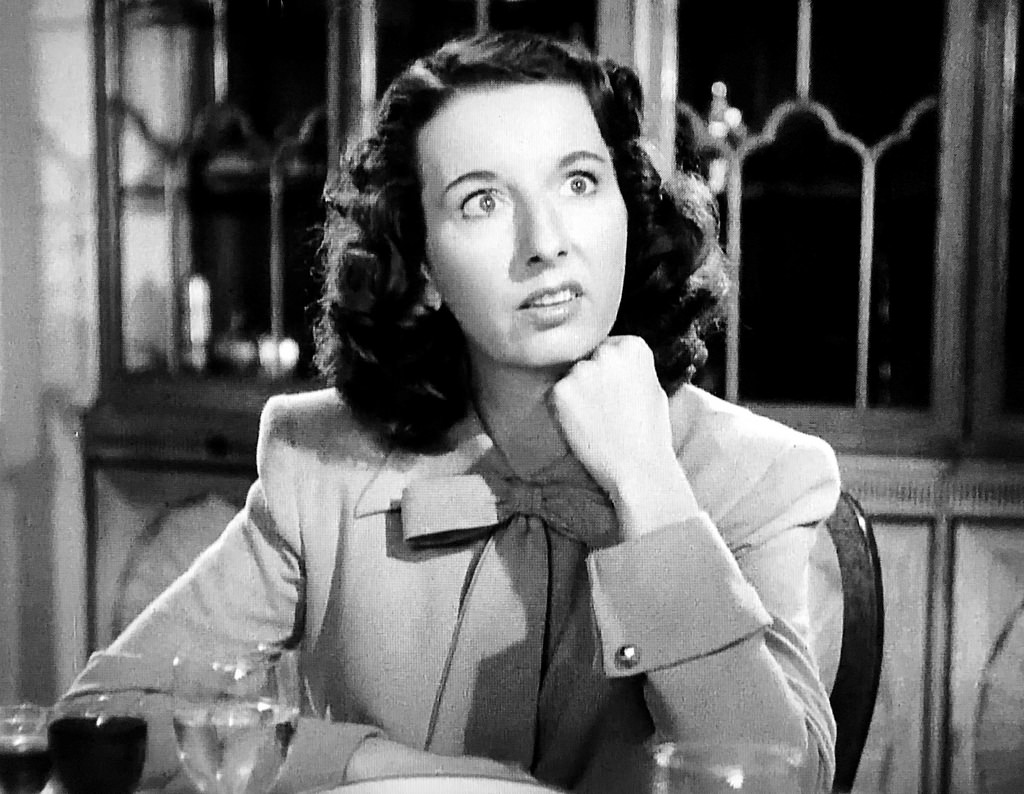
Susan Oliver
Photo: amazon.com
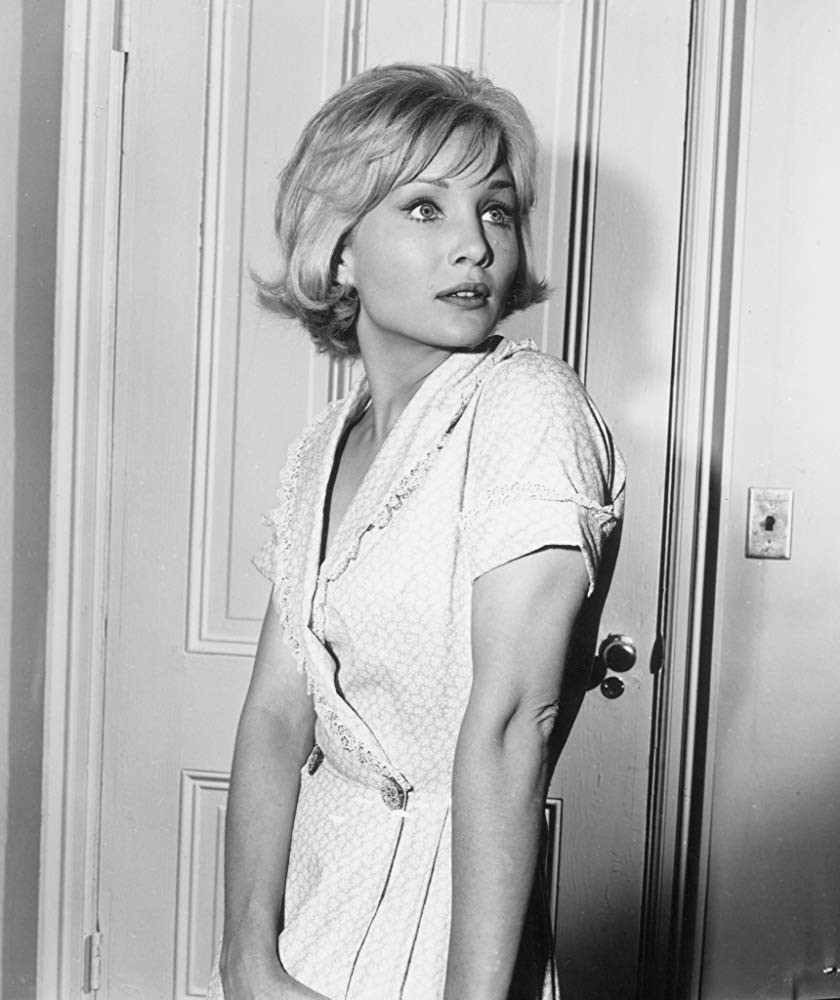
More than twenty years younger than Wickes, Susan Oliver was born in 1932 in New York City. Her real name as Charlotte Gercke. Her father was a political reporter for the New York World. Her parents divorced when she was quite young, and she grew up in boarding schools. She traveled with her father to Japan when he took a post there. She studied at the Tokyo International College, studying American pop culture. While Wickes was the wise-cracking comedic foil, Oliver was often the leading lady character with blue eyes, blonde hair and heart-shaped face.
Photo: trekdivos79.blogspot.com on The Wild Wild West
In 1949, she
traveled to LA to see her mother who had found her niche as “astrologer to the
stars.” Susan then enrolled at Swarthmore College. After graduation, she
continued acting courses at New York City’s Neighborhood Playhouse.
Her first Broadway part came in 1957 as the daughter or a Revolutionary veteran, “Small War on Murray Hill.”
Photo: manfuncle2014.blogspot.com The Man from U.N.C.L.E.
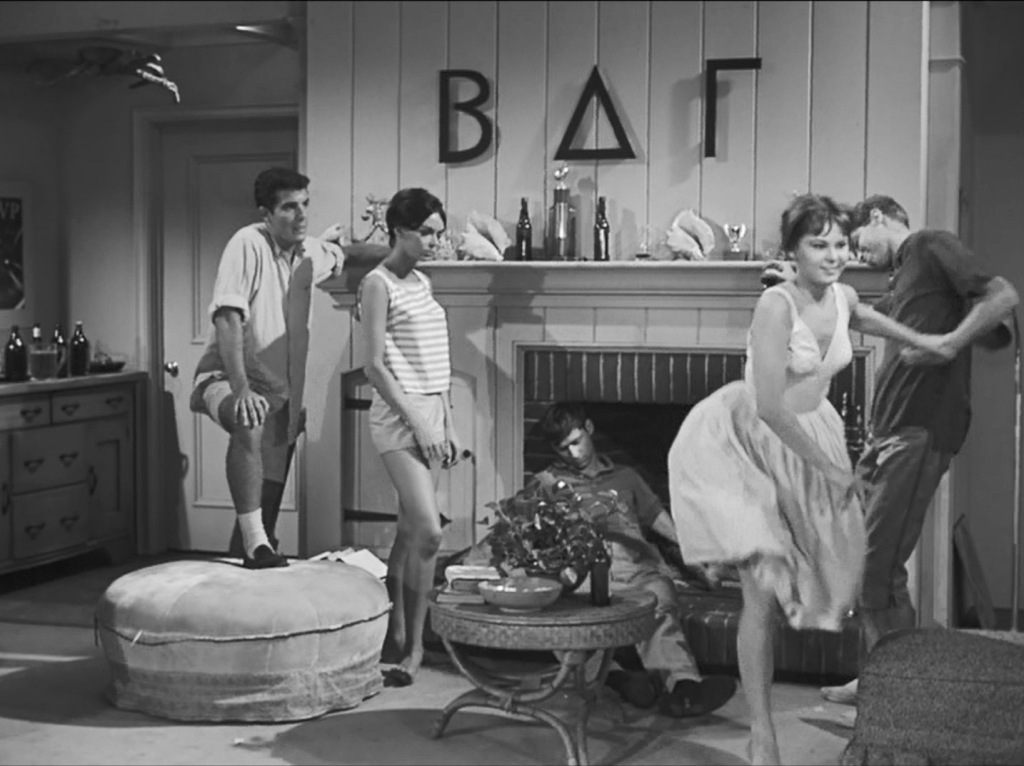
Returning to LA, she started a film career. Though she would appear in 15 big-screen movies, television is where she spent most of her time. She put in her due diligence in the 1950s and 1960s. Her first job was on The Goodyear Playhouse in 1955. She continued with a lot of drama and theater for the first few years of her career. She took roles in a variety of shows including: Father Knows Best, Suspicion, The David Niven Show, Bonanza, The Twilight Zone, The Adventures of Ozzie and Harriet, The Alfred Hitchcock Hour, Wagon Train, Route 66, The Fugitive, The Andy Griffith Show, Ben Casey, Mannix, Dr. Kildare, The Man from UNCLE, I Spy, Gomer Pyle, My Three Sons, and the Wild, Wild West.
Photo: imdb.com
I read several times that she turned down lead roles in series to retain her independence, but I never read any specific roles she turned down. In 1966 she accepted a recurring role of Ann Howard in Peyton Place. She had signed a contract for a year, but after five months, her character was killed on the show. She made a pilot for a show titled, “Apartment in Rome” that did not sell.
Photo: en.wikipedia.com on Peyton Place
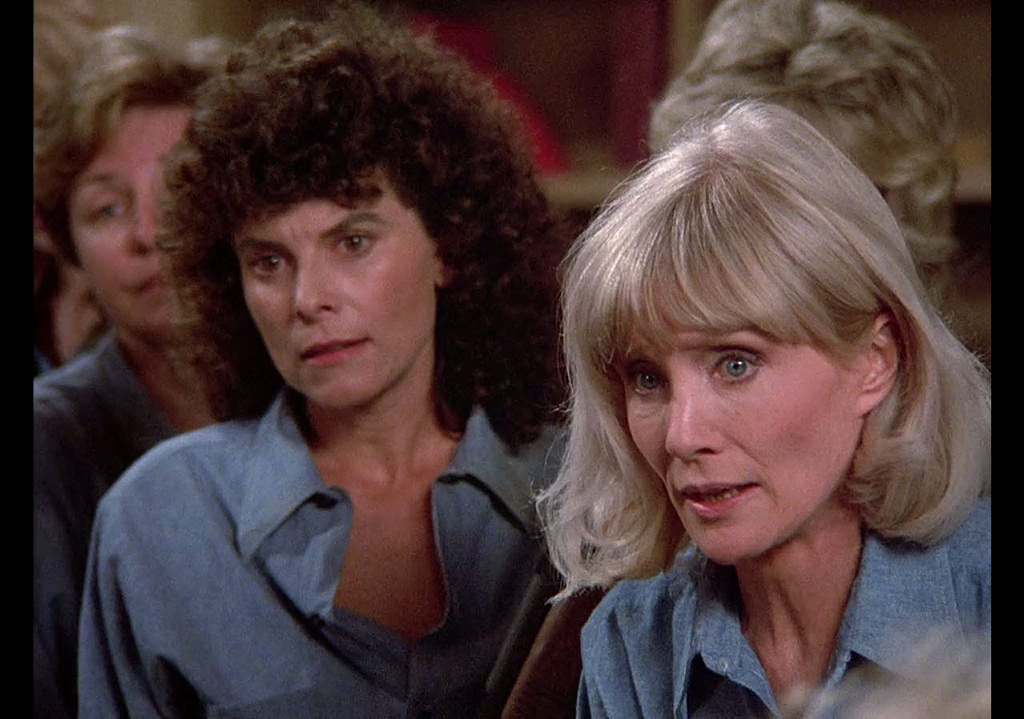
Oliver never did get another show of her own, but she continued to guest on shows throughout the 1970s and 1980s, including Love American Style, Gunsmoke, The FBI, Streets of San Francisco, The Love Boat, Magnum PI, Murder She Wrote, and Simon and Simon.
Photo: flickr.com on Murder She Wrote
One of the reasons, she didn’t want to be tied down was her interest in flying. In 1959, a Boeing 707 she was a passenger on plummeted 30,000 feet for the Atlantic Ocean before leveling out. After that scare, she decided to learn to become a pilot. In 1964, she started flying single-engine planes. Bill Lear brought her on board to become the first woman to train on his new Lear Jet. She would star in a movie about Amelia Earhart. She also later wrote about her flying experiences in an autobiography, Odyssey: A Daring Transatlantic Journey in 1983.
Photo: imdb.com
In the mid-1970s, she stopped accepting most acting roles and quit flying. She enrolled at the 1974 AFI Directing Workshop for Women with peers Lily Tomlin, Margot Kidder, Kathleen Nolan, and Maya Angelou. During the final season of M*A*S*H she directed an episode of the show. She would later direct an episode of Trapper John, MD.
At age 58, Oliver was diagnosed with colorectal, and eventually lung, cancer. She died in 1990.
Oliver was an
interesting actress. Apparently, she loved acting, but never wanted to be tied
down. She not only was a aviator and director but a writer. She was a practicing
Buddhist and a baseball expert as well.
Wickes and Oliver were very different women with very different interests and acting roles. They both remained single and devoted themselves to their careers. But they were both women who were always in demand for their acting ability.














 thewritelife61