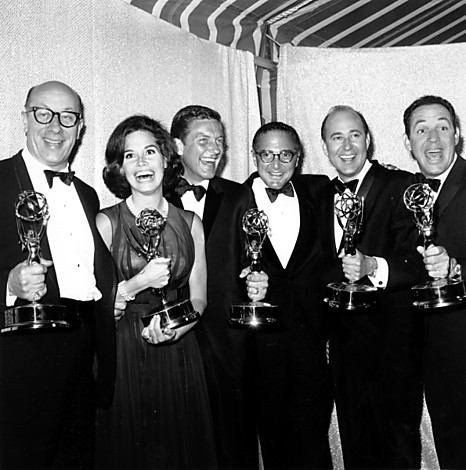
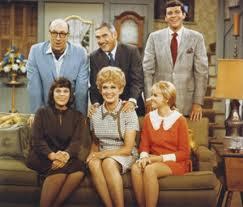
Blondie: Some Shows Are Better Being Forgotten

This month we are taking a look at some classic sitcoms that many people don’t remember anymore.

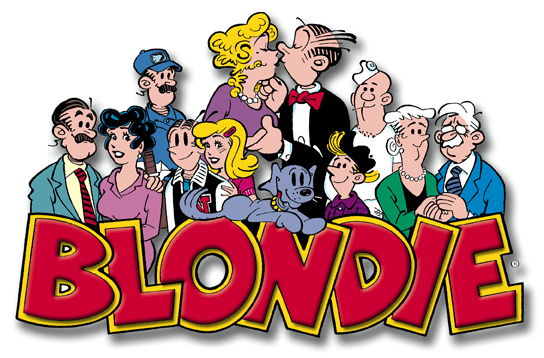
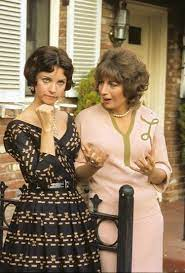
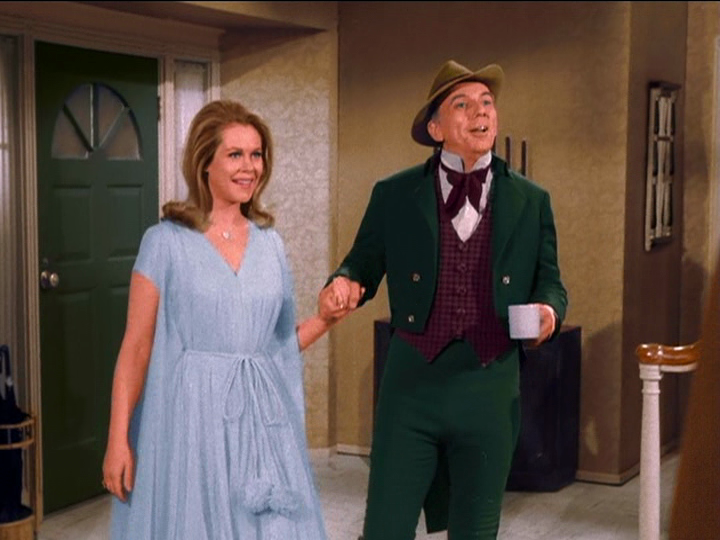
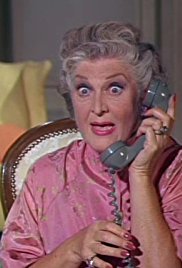
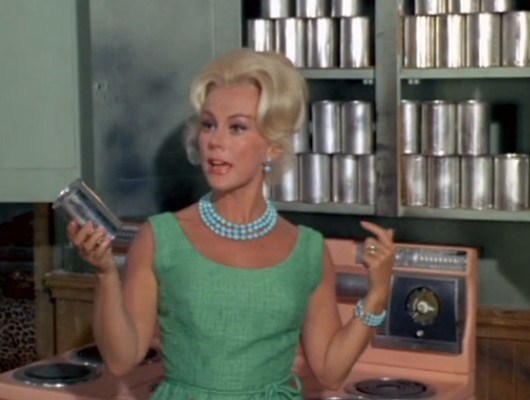
Blondie is one of those shows. It was based on the Chic Young comic strip and debuted on NBC in 1957, lasting one year. The series was resurrected in 1968 and the reboot also lasted a season.

📷wikipedia.com The 1957 version

Blondie had become very popular with fans. Beginning in 1938, 28 movies were made starring Penny Singleton and Arthur Lake. Blondie also showed up on the radio from 1939 to 1950.  Many products had been based on the characters including comic books, coloring books, lunch boxes, and board games.

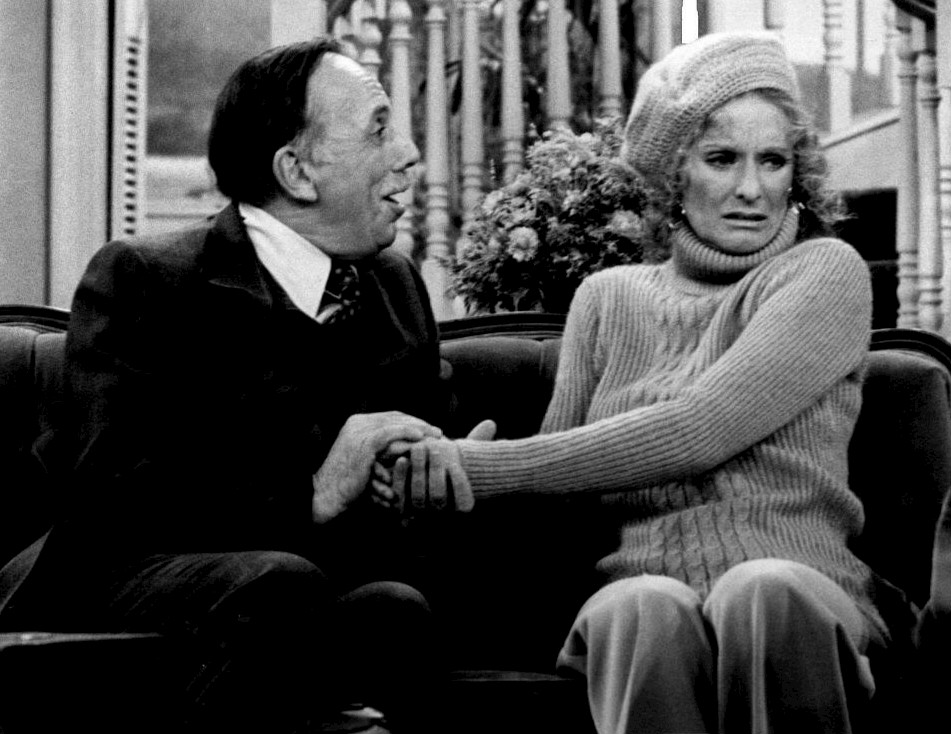
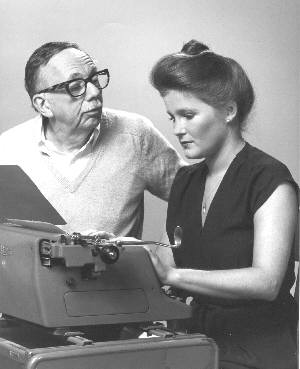
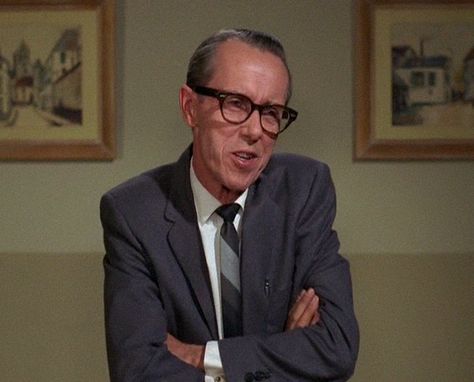
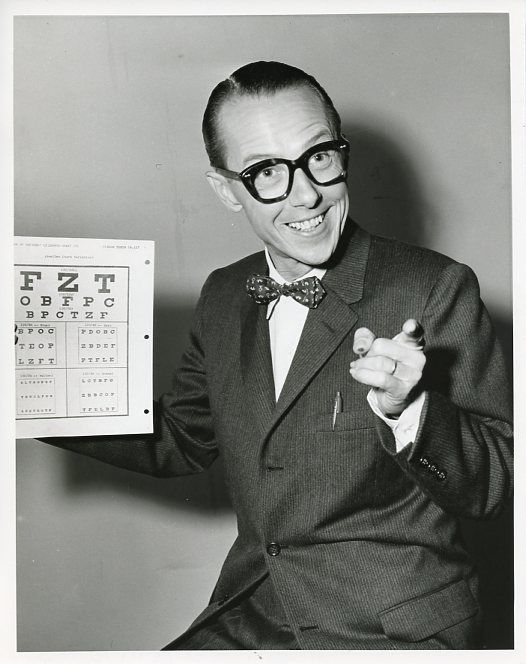
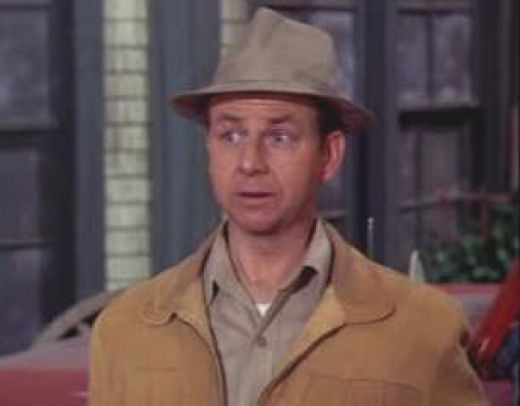
The 1957 series starred half the movie duo. Lake took on his role of Dagwood Bumstead, but Pamela Britton was offered the role of Blondie Bumstead. Their kids, Cookie and Alexander, were played by Ann Barnes and Stuffy Singer. Florenz Ames was boss J.C. Dithers with Elvia Allmana as his wife Cora. Rounding out the cast was Harold Peary as neighbor Herb Woodley.

📷imdb.com The 1968 version

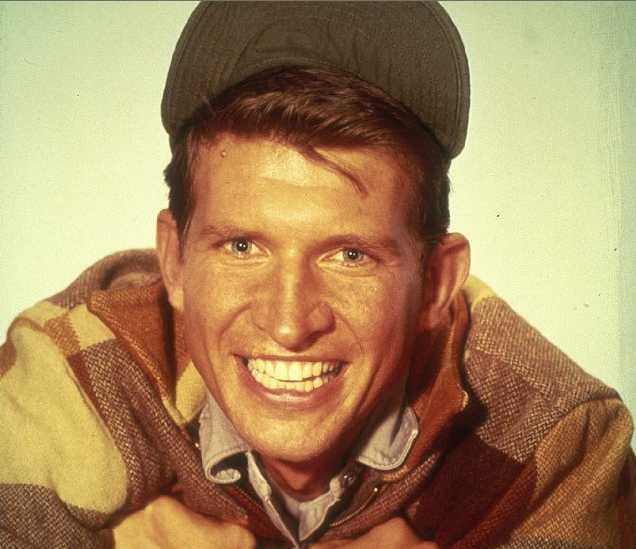
A decade later Will Hutchins and Patricia Harty play Dagwood and Blondie, Jim and Henny Backus play the Dithers, and Pamelyn Ferdin and Peter Robbins are their kids. The only advantage this series had over the original was color.

The comic strip, movies, radio show and both sitcoms all encompassed the familiar Bumstead elements: Dagwood being physically and socially awkward; their dog Daisy, and Dagwood’s love of napping and huge sandwiches.

The reboot was produced by Joe Connelly and Bob Mosher, the faces behind Leave It to Beaver and The Munsters. There was room in the schedule after the network cancelled He and She, a sitcom starring real life spouses Paula Prentiss and Richard Benjamin. The show is described on imdb.com as “Dick and Paula Hollister are a couple living in New York. Dick is a comic-book artist who has become famous for creating a superhero called Jetman, which has been turned into a TV show starring egocentric actor Oscar North.” During its one season of 26 episodes, the show received seven Emmy nominations, including a win for writing. It’s too bad that show was given the axe and Blondie moved in because the Prentiss-Benjamin show was much more creative and felt new, while Blondie felt extremely old.

No surprise, the ratings were not great. This is even worse when you see what the show was in competition with: The Ugliest Girl in Town, which would also be gone by 1969, and Daniel Boone. The one new 1968 show to return on CBS was Hawaii Five-0 which seems so much more sophisticated than Blondie; it’s hard to believe they both debuted the same year.

📷yahoo.com Hawaii Five-0

Perhaps the fans didn’t tune in because the critics panned the show before it aired. The Milwaukee Journal’s Wade Mosby said it was “a horrendously contrived piece of fluff that should have never been snatched from the comic pages.” Don Page of the Los Angeles Times called it “an unmitigated disaster,” and Cynthia Lowry of the Associated Press described it as “dismal.”

By November, rumors were that the show was already cancelled, and its last episode aired in January. The show probably relied too much on slapstick and unsophisticated humor; things that might have been fine in the 1930s but were passe by the 1960s. Sometimes a show is cancelled just because it’s a badly written and executed show. It seems Blondie fell into this category not once but twice.

Off the top of my head, I can only recall two comic strips becoming popular television shows: The Archies and The Addams Family. Because the Blondie characters were not very dimensional and got into the same situations over and over, they just never were able to translate into sustainable television characters. I think there’s a good reason that many people don’t remember this show and perhaps it’s better that way.

The Addams Family: And You Think Your Family is Strange

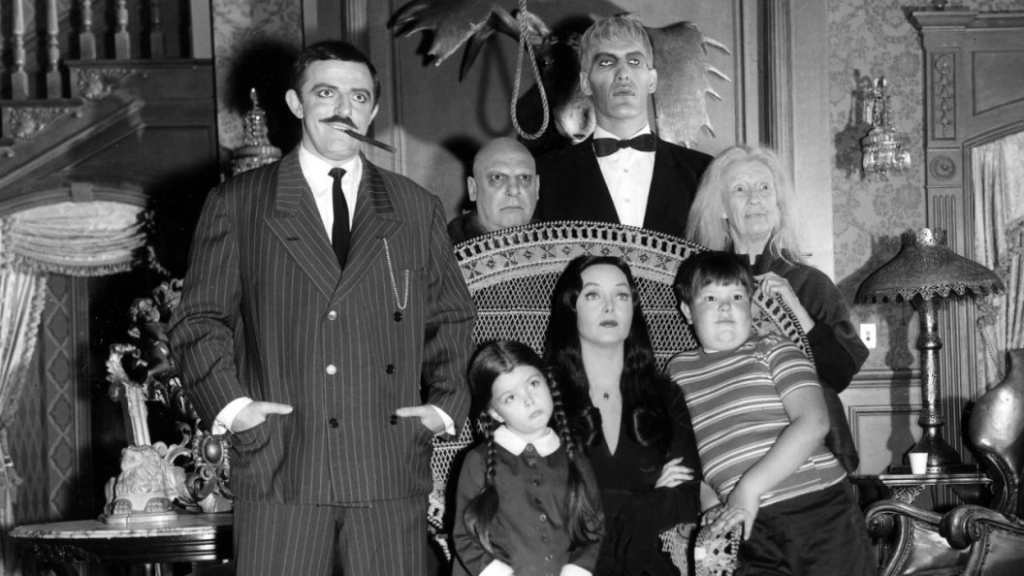
Cast Photo: comicstofilm.com

This month we continue with our “Kinda Creepy” blog series. Last week we talked about a show that debuted in fall of 1964 and was canceled in the spring of 1966, The Munsters. You can use the exact dates for our show today, The Addams Family.

ABC aired The Addams Family for two years, ending up with 64 episodes. Like The Munsters, this show was filmed in black and white. The Munsters was based on the typical suburban family while this series was created by David Levy and was based on Charles Addams’ New Yorker cartoons.
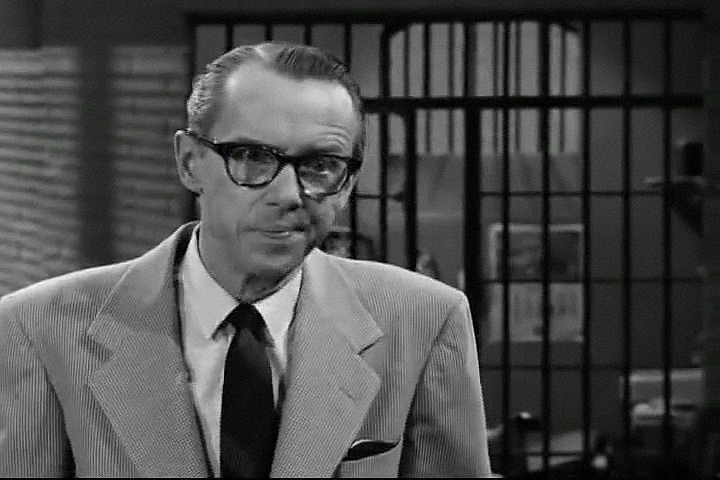
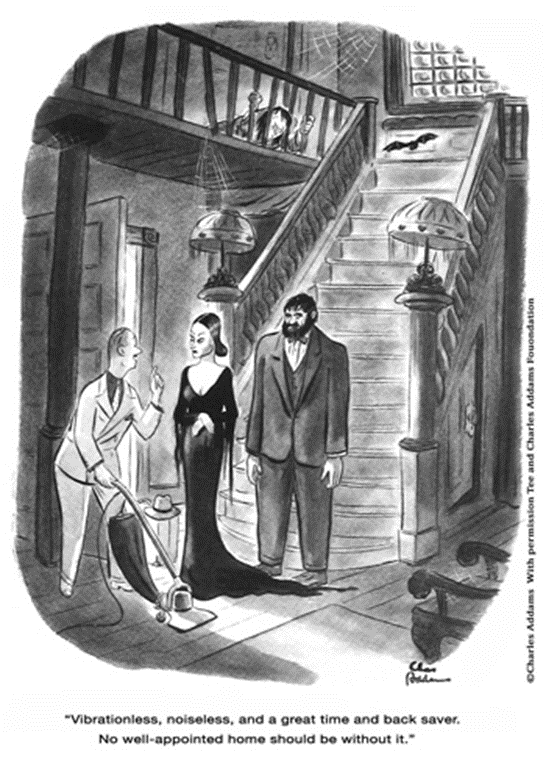
The first Addams Family cartoon was published in The New Yorker in 1938. The first illustration was titled “Vacuum Cleaner,” and it shows a salesman convincing “Morticia” to buy an appliance. The joke was that this was a house full of dirt and cobwebs, probably haunted. Addams was paid $85 for it. Addams did not intend for it to be a series, but New Yorker editor Harold Ross asked for more of them. Later, Gomez and the children were added. During the forties and fifties, 58 cartoons appeared in the publication.

In an interview before the show’s debut, Levy said that Addams was “a social commentator and a great wit.” It was produced by head writer Nat Perrin for Filmways, Inc. Perrin was a friend of Groucho Marx and had written for the Marx Brothers movies.
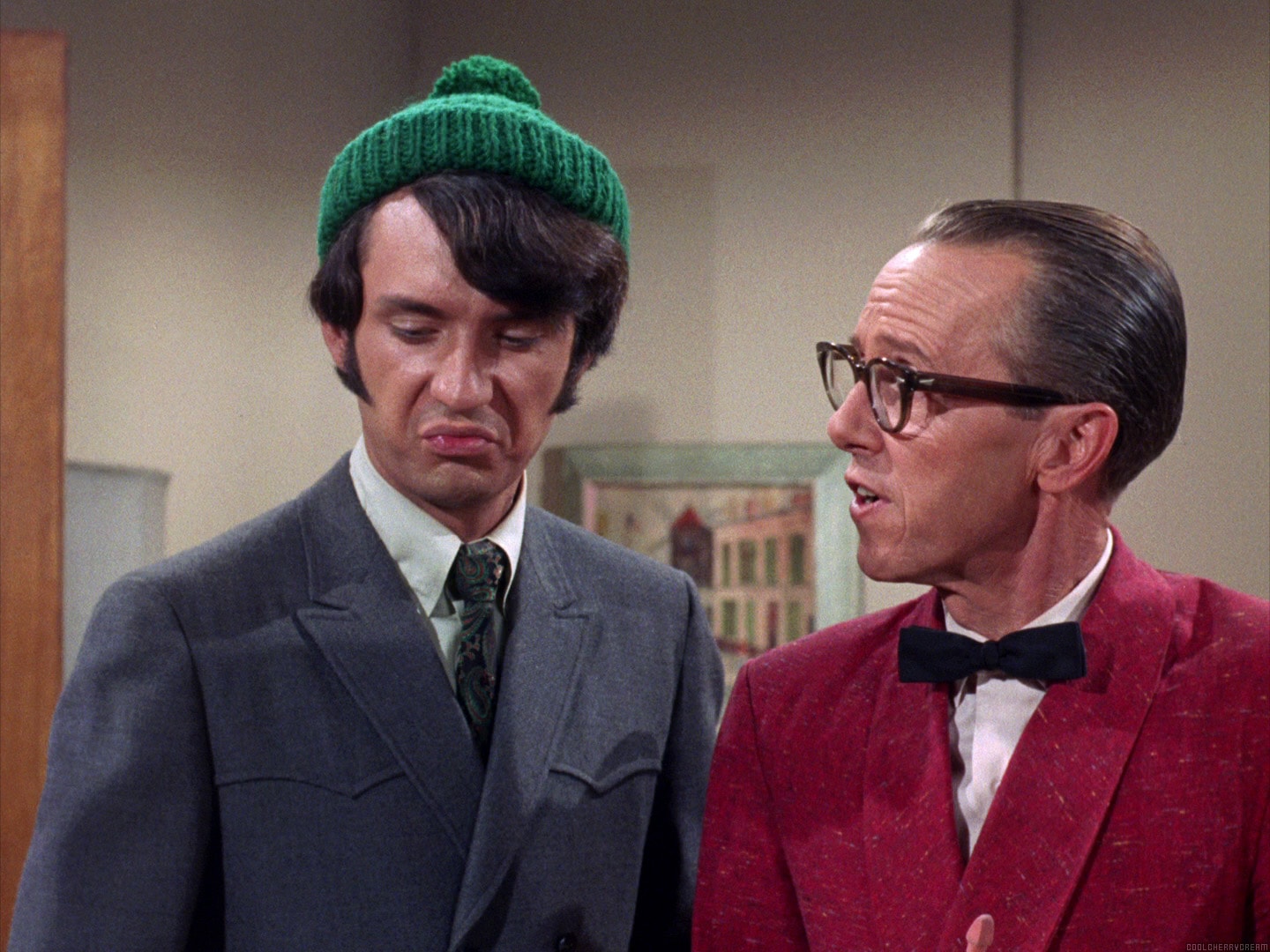
Like the Munsters family members, everyone in the Addams family is a bit off in some way. Wealthy former attorney Gomez Addams (John Astin) still is in love with his wife Morticia (Carolyn Jones) whom he often speaks to in French and refers to her as Cara Mia at times. Originally Carolyn turned down the offer to play Morticia because she was focusing on her movie career. She was persuaded to accept the role by her then-husband Aaron Spelling; the couple divorced not long after. Carolyn Jones had to endure sitting in the makeup chair for two hours every day. She worked with Nolan Miller to create a unique costume. Miller said that Morticia’s outfit was the most difficult one he had ever designed. The dress was very tight, especially around her feet. Gomez’s hobby is crashing model railroad trains. The prop department had to line Gomez’s pockets with asbestos because he put his lit cigars into his pockets.
The couple has two children: daughter Wednesday (Lisa Loring) and son Pugsley (Ken Weatherwax). They are polite children but Wednesday has a pet black widow spider and a headless doll named Marie Antoinette while Pugsley has a pet Octopus named Aristotle. Wednesday is named for the poem, which included “Wednesday’s child is full of woe.”

Photo: pinterest.com

In addition, Uncles Fester (Jackie Coogan), Grandmama (Blossom Rock), and the butler Lurch (Ted Cassidy) all live in the house. Fester enjoys playing with dynamite, Grandmama is always experimenting with potions and has a crystal ball, and Lurch always replies to his summons with “You rang?” Coogan was rejected for Uncle Fester. He went back home, shaved his head, and did his own makeup and costuming. Then he went back and got the part. Ted Cassidy got a lot of fan mail from teenage girls who thought he was so cute.

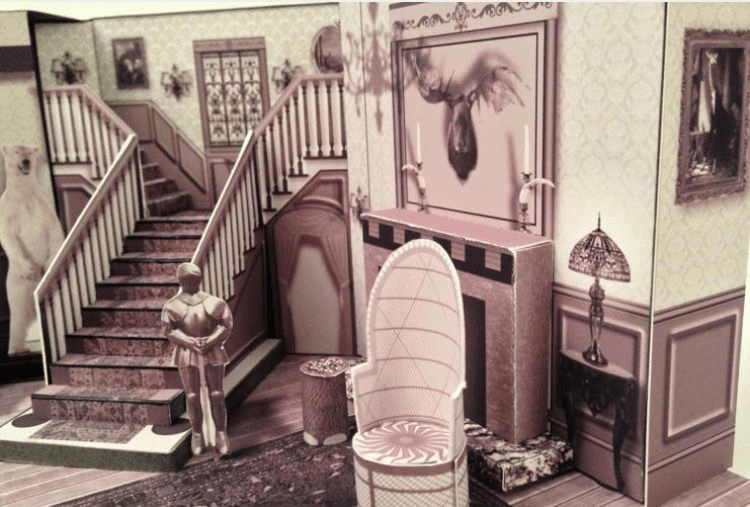
Their house décor is rather dark including a Venus flytrap, an art piece where a human leg protrudes from a swordfish’s mouth, and a taxidermied two-headed tortoise. The interior of the house was inspired by the apartment in Manhattan where Charles Addams lived. It contained suits of armor, an antique crossbow collection, and other oddities.

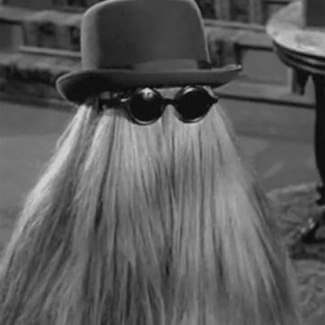
Cousin Itt Photo: costumerealm.com

Thing is a gloved hand which shows up in places around the house. Cousin Itt (Felix Silla), who is all hair except for a hat and sunglasses, visits from time to time as does Ophelia, Morticia’s sister. Gomez was supposed to marry Ophelia in an arranged marriage but when he saw Morticia, he could not go through with it. Ophelia is an expert in judo.

The family considers itself quite sophisticated and cultured and they don’t understand the general public’s reaction to their home and actions.

The theme was composed and sung by Vic Mizzy. He also snaps his fingers through the song. You could hear Ted Cassidy say “neat,” “sweet,” and “petite” during the lyrics. Mizzy would also write the memorable theme for Green Acres.

In the early seventies, there was a Saturday morning cartoon with the actors voicing their characters. In 1977, a reunion made-for-television film, Halloween with the New Addams Family, was filmed with all the original actors except Rock who was quite ill at the time.

Like so many shows of the sixties, a lot of memorabilia was released for this series. You can choose from trading cards, comic books, board games, lunch boxes, and a ton of action figures.

Photo: strongmuseumofplay.com

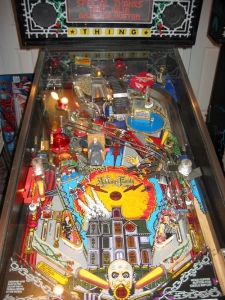
A major film, The Addams Family, was released in 1991 starring Raul Julia as Gomez, Angelica Huston as Morticia, and Christopher Lloyd as Uncle Fester. A sequel aired in 1993, Addams Family Values. In 1998 a reboot, The New Addams Family debuted on Fox and ran for two years just like the original. I honestly never saw either of the big-screen movies or any of the television reboots, so I cannot speak to whether they did the original show justice or not. The movie also spawned a popular pinball machine, which became the biggest-selling pinball machine of all time with more than 20,000 units sold since 1992.

Considering that both The Munsters and The Addams Family were only on the air for two years, and did not even rack up the typical number of shows needed for syndication, it is truly amazing that more than fifty years after the original shows aired, they are still very popular. I think like the Bewitched vs Jeannie debate, there are arguments for which family was more fun; my vote would have to go to The Addams Family, but if you have never watched either of the series, you should at least check a couple of episodes out. They probably would not work out so well to binge watch, because I think they would get boring quickly, but that is only one humble opinion.

The Munsters: The All-American Family?

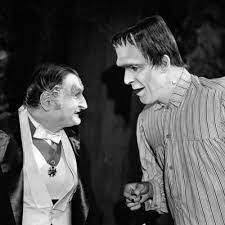
The Munsters Photo: collider.com

This month’s blog “theme is “Kinda Creepy.” These are not shows that will give you nightmares or have you sleeping with the nightlight on. But they did have a touch of ghoul or terror. First up is one of our All-American families, The Munsters.

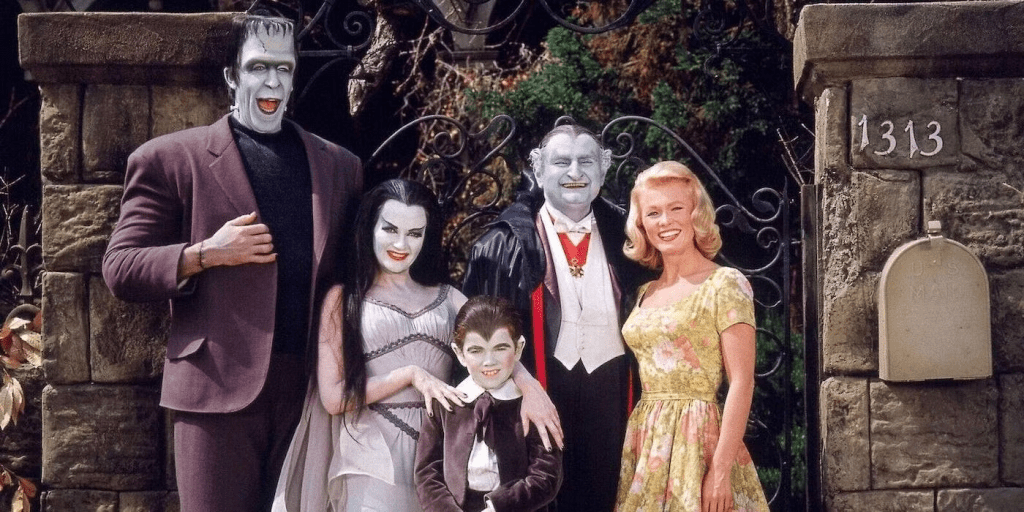
The creators of Leave It to Beaver, developed this series to be a satire of suburban life. The opening credit shows Lily handing her family their lunches as they run out the door just like Donna Reed did in The Donna Reed Show in the fifties. The Munsters are a perfectly normal family except for a few eccentric and trivial things like Herman (Fred Gwynne) being a Frankenstein, Lily (Yvonne De Carlo) being a vampire, Grandpa (Al Lewis) who can turn into a bat, and werewolf son Eddie (Butch Patrick). In real life, Lewis was a year younger than De Carlo who played his daughter and Gwynne was four years younger than De Carlo.

Photo: ebay.com

Living with the family is Lily’s niece Marilyn (Beverly Owen/Pat Priest), who seems a little abnormal to the family but looks like any high school girl of the time, except a little bit prettier. Owen was engaged when she got the part and did not think the show would be picked up. When it became popular, the cast convinced the network to release her from her contract, and Priest, who looked very similar, took over. Gwynne and Lewis had previously been part of the cast of Car 54, Where Are You? and were good friends. (To learn more about their friendship and their individual careers, see my blog from July 10, 2017.)

This series aired on CBS, and ABC featured The Addams Family whom we’ll meet next week. Both shows debuted in 1965 and were off the air after two seasons.

There were a few recurring characters including Paul Lynde as Dr. Edward Dudley (Dom DeLuise also played Dr. Dudley in one episode), Herman’s boss Mr. Gateman (John Carradine), and Clyde (Chet Stratton), a colleague of Herman’s.

Paul Lynde Photo: pinterest.com

The family lives at 1313 Mockingbird Lane. Herman works for Gateman, Goodbury and Graves, a funeral parlor, as a grave digger. In an interview with Daily Variety, Al Lewis, explained that with the unusual family, “they could do a lot of satirical pointed things on society that you couldn’t do on an ordinary show.”

The show actually had four pilots which I don’t think I have ever seen before. The first one was filmed in 1964 with Gwynne, Lewis, and Owen. Joan Marshall was Phoebe, Herman’s wife and Nate Derman was Eddie. For the second pilot, De Carlo replaced Marshall and changed her name to Lily. In the third edition, Patrick was brought on board to replace Derman. The cast stayed intact for the fourth pilot, but Eddie’s character was changed a bit. He was a bit of a brat and they toned it down.

The family had a pet dragon named Spot that lived under the stairs. When the staircase opened up, you could see the fire he was breathing and sometimes you would see his tail only.

Photo: hagerty.com

Makeup for the show was credited to Bud Westmore who had worked for Universal during their monster movie phase. However, the actual work was done by several people. Perc Westmore worked with Grandpa. Abe Haberman applied Lily’s new face, while Michael Westmore worked with Patrick and Priest. Bill Mumy was the original choice for Eddie, but his parents said “No” when they learned about how much makeup would be used for each episode.

Patrick was asked about the cast and how they got along in an interview with Fox News. He said it was a good relationship. If he had to pick another actor whom he bonded with more than another it would probably be Lewis. He discussed the amazing comedic timing that Gwynne and Lewis shared. He said that the person he enjoyed working with the most was his makeup man, Westmore. He said he was the first person he saw every morning. He also mentioned Westmore was a very handsome guy who owned a Jaguar and was a bachelor, so he looked up to him as a role model also.

Photo: vintageeveryday.com

Karl Silvera did Herman’s makeup. Gwynne had the toughest time of all the characters. He had to spend two hours in the makeup chair first thing in the morning. He wore forty pounds of foam rubber padding and drank copious amounts of lemonade. Despite that, he lost a lot of weight doing the show. In one month, he lost ten pounds. They also put a piece of foam latex on his head to flatten the top. His shoes were asphalt paver’s boots with four-inch soles. The producers rented a compressed air tank and would poke the nozzle inside his collar to blow cool air on him.

The show aired on Thursday nights at 7:30. Many shows began filming in color in the mid-sixties, but the studio did not want to pay the extra $10,000 per episode, so it was shot in black and white. For its debut year, it was number 18, tied with Gilligan’s Island, but it took a drastic drop for season two and landed at number 61. The show competed with The Flintstones and Daniel Boone in year one In year two, Batman debuted in color and The Munsters’ viewers switched networks in droves. The show was canceled with 70 episodes for syndication. From the comments that I read, I’m not sure Lewis and Gwynne would have continued another season anyway. They wanted a different type of humor and, of course, Gwynne had to endure so much with his costume.

If you were looking at the merchandising that accompanied the show, you would never guess it was only on for two seasons. Between 1965-68, 16 Gold Key Comics were produced. The show rolled out Colorforms, car model kits, both a Herman Munster doll and a puppet, and View Masters. You could also purchase several different action figure sets, a board game, and a lunch box, among other items.

Although the show, not surprisingly, never received an Emmy nomination, it was up for Best Television Series for a Golden Globe in 1965 which did surprise me.

The theme song was an instrumental, simply titled “The Munsters’ Theme.” It was composed by Jack Marshall. It was nominated for a Grammy in 1965. There are lyrics for the song, written by Bob Mosher, but they were never used on the air.

For a show that was only on the air for two seasons, it has had a lot of staying power. I think that it was so different and the fact that The Addams Family was also on two seasons and very similar just provided it with that perfect fan base. I do remember watching the show and buying The Munsters coloring books and paper dolls, but I don’t remember it being a “must see” for me. Of course, I was only five when it was canceled, so I primarily saw it in reruns. Sadly, I would also choose Batman over The Munsters, so I understand why the viewers drifted. However, it is never a waste of time to watch Fred Gwynne and Al Lewis in action. If you never watched the show or want to binge watch it, seventy episodes is an easy one to get through.

If We Were the Prop Master: Our Favorite Items On TV

    This month is our blog series is “Potpourri Month” and we have a sub-theme every day; today’s is Propourri” for the pro who handles props. When you think of your favorite shows, there are props included in those great memories: the couch at Central Perk, Fonzie’s leather jacket, or the cereal boxes on Seinfeld’s refrigerator. First let’s learn a little about the Props Master and then we’ll take a look at some of our most-loved props.

The Fonz’s jacket Photo: ebay.com

    The Prop Master heads up the Props Department. They are charged with acquiring, organizing, and safely handling the props for the shows.

    Each episode has a list of props that will be needed for the show. The props master reviews the scripts and has meetings with various department heads to ensure everything that is needed is on the list.

    Sometimes the props master does research to see what would be appropriate for a specific era or place. Cars were quite different in the fifties than the eighties. A grocery store does not look the same in China as it does in Atlanta.

    During filming, the props master has to keep track of props and make sure everything is put back in its place.

    So, what are some of the props that have become synonymous with our favorite series? Let’s put together a prop list that includes props from our favorite shows.

    Living rooms have a lot of cool furniture. When you think of comfortable places to sit, you have to think of Modern Family’s couch, Archie’s chair from All in the Family, Chandler and Joey’s Barcaloungers from Friends, and Martin Crane’s duct-taped, worn chair on Frasier.

The Bunkers’ Chairs Photo: comparativemediastudies.com

Many of the Modern Family characters are interviewed on their couch which sits in front of their stairs to the second floor right as you enter the front door. The walls are Benjamin Moore’s Labrador Blue. The couch itself is from Sofu-U-Love and the primary-colored striped pillows are from Pottery Barn just in case you want an interview sofa of your own.

Archie Bunker’s chair is from the 1940s. It’s covered in an orange and yellow woven fabric. The props master purchased the chair from a thrift store in Southern California. Whenever anyone but Archie sits in the chair, it is made obvious to them that they need to find another seat.

The barcaloungers Joey and Chandler use were originally made in Buffalo New York, named after the company that made them. They have moving parts to allow for footrests and reclining. Joey’s Barcalounger is brown leather and he calls it “Rosita.”

Martin Crane’s chair is in the same color family as Archie Bunker’s. The prop department made it, so it’s a one-of-a-kind piece. It’s striped and quite unattractive looking especially with Frasier’s expensive tastes echoing in the rest of the room, but Martin loves it and Frasier loves Martin so it stays. In the first episode, a guy carries in the chair when Martin and his dog Eddie move in with Frasier. On the last episode, the same guy carries the chair out when Martin gets married and moves out. The chair is really almost a character during the run of the series.

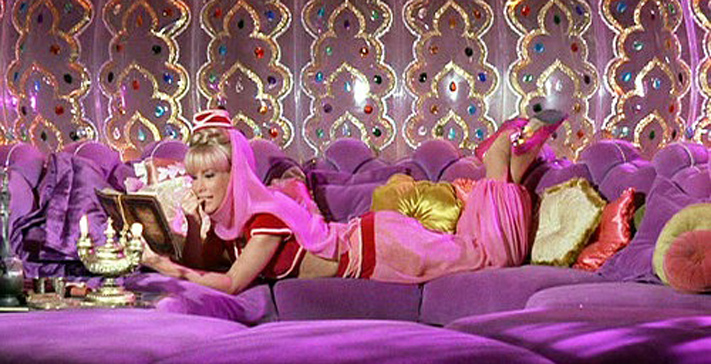
Jeannie in her bottle Photo: blazenfluff.com

There are a lot of fun accessories from our favorite living rooms. Just a couple include Jeanne’s bottle from I Dream of Jeanne, the “M” that was on the wall in Mary Richard’s apartment on The Mary Tyler Moore Show, and the Chihuly sculpture from Frasier. Who can remember The Dick Van Dyke Show without thinking about the ottoman Rob Petrie might trip over?

Jeannie uses her Arabian glass bottle to sleep in and to hide in when someone other than Tony and Roger is in the house. The bottle has a long, purple couch with her blankets and pillows. She also has an Arabian candle, a photo of Tony, a mirror, and her book about genies.

Mary’s “M” stood for so much more than her first name. We knew that an independent, smart woman lived in that apartment. Everyone wanted to grow up and be able to put their own initial on the wall just like the brass one Mary had. When she moved to her newer, more modern apartment, the M went with her.

Martin’s chair on Frasier Photo: jacksonville.com

In contrast to Martin’s puke-colored chair on Fraiser, Frasier had so many expensive items scattered around his home. One of them was Dale Chiuly’s Macchia. This blown-glass vase was green and brown. It was worth $30,000 at the time, and the props master locked it up after filming each episode.

We all recall the opening of The Dick Van Dyke Show. Will he or won’t he? I think most of us remember him falling over the ottoman, but do you know sometimes he walked around it? Reiner wanted a clever opening for the show and while talking with John Rich, the director, they decide Rob will fall. But then Reiner suggested a variation, so they filmed him not tripping. No one ever knew from episode to episode if he would fall or not.

Burns and Allen have their closet adjoining the living room. While Fibber McGee and Molly have a ton of items in their closet, whenever Gracie opens hers, we see a collection of hats that men have left when they are in a hurry to get out of the Burns house after dealing with Gracie’s logic.

When I think of some of my favorite kitchen items, I think about Jerry Seinfeld’s refrigerator with its revolving display of cereals. I know if I visited My Three Sons, I would get to sit around the kitchen table where all the action happens on the show. And Gracie would definitely take me into her kitchen to have some coffee from the pot she almost always kept full for her and Blanche to talk over.

Jerry always has cereal in his cupboard. Some sources say he had up to seventeen at a time. Knowing that cereal doesn’t last all that long, he ate a lot of cereal. I’m hoping Fruit Loops was one of those choices.

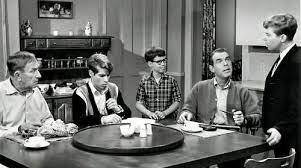
My Three Sons’ table Photo: pinterest.com

While as viewers we love that the kitchen was the heart of the Douglas home. From the first episode when Steve got Chip to help him with the dishes to talk to him about “love,” to the grown boys gulping down orange juice at the table to leave early for their busy day, we spent a lot of time in that room. Uncle Charlie’s bedroom was just off the area, so he could come and talk with someone getting warm milk in the middle of the night. The actors might not have had the same warm, fuzzy feelings. Barry Livingston discussed their filming schedule because Fred MacMurray did all his filming in two short groups of days. He said sometimes, “you would sit at the kitchen table all day long and they would do close-ups. You would be sitting in the same place at the same table and you would do a close-up from 12-15 different episodes. All you would do was change your shirt because they couldn’t see anything below.”
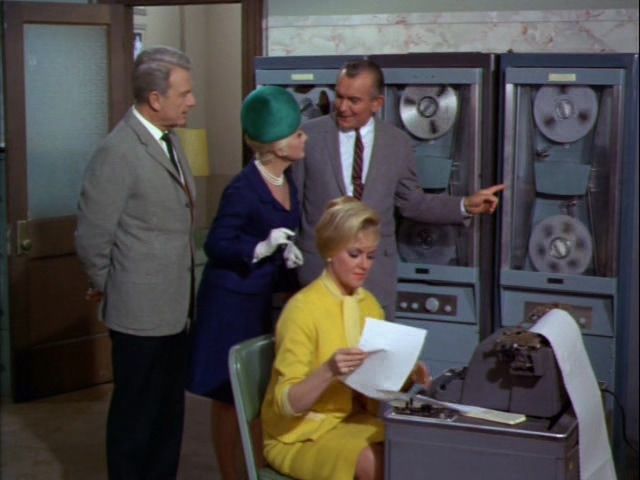
Burns and Allen Photo: pinterest.com

Gracie and Blanche always made time to have coffee to talk over things. Whether it was 7 am, 1 pm, or 7 pm, the coffee pot was always on. Burns and Allen also did coffee ads for Maxwell House, so I am assuming that it was Maxwell House the friends drank daily on Burns and Allen.

I know if I explained every item to you in detail, we would still be on this blog next week, so I’ll just some up the rest of the categories.
Bedrooms: Beds are definitely the focal point. We have the Petries’ twin beds that are not convenient for a married couple. Lisa and Oliver Douglas had a very large bed on Green Acres; unfortunately, it was open to the outside where anyone could come in or out. Oscar Madison had a bed on The Odd Couple, but no one knew it because his room was so messy. We definitely remember Bob and Emily Hartley’s bed because not only was it important in The Bob Newhart Show but it was in the finale of Newhart. It is also hard not to recall Alex Keaton’s Ronald Regan poster that took up one of his bedroom walls on Family Ties.

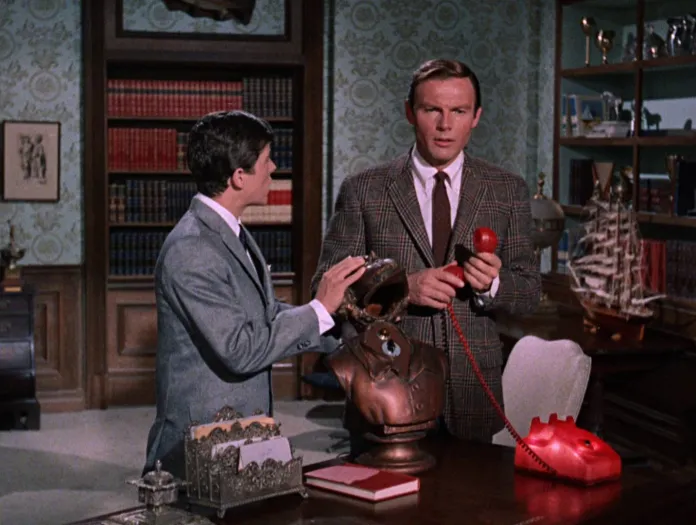
Batman with bust and phone Photo: batnews.com

Libraries and Dens.  Three specific rooms come to mind. On Batman, we had the Shakespeare bust that hid the bat phone in their library. We had George Burn’s television on Burns and Allen where he could watch was going on during the show without the other characters knowing he was listening in. Finally, we think back to The Brady Bunch where the six kids fought over what to watch on television and did their homework after school.

Garages: The Jetsons they kept their flying car in the garage, Last Man Standing where Tim kept his antique car, and The Adventures of Ozzie and Harriet, where they kept everything but the car. Ozzie was always out there looking for something.

Workplace: When characters go to work, we get a whole new scene full of fun props. Who would visit Dunder Mifflin without stopping by to see Pam at the front reception desk? Rob Petrie had a couch where the writers worked their magic. Central Perk featured the orange couch everyone remembers from Friends. The sofa was so beloved that replicas of it went on a world tour in 2019 for the shows’s 25th anniversary. The actual sofa used on the set was sold at auction in 2011 and it went for about $5000. Of course, Cheers would not have been the same without the stools for Norm and Cliff. Get Smart had so many fun props, it’s hard to choose; the Cone of Silence was certainly fun for everyone who could hear what was said inside by characters who thought they were speaking where no one could hear them. And Hogan’s Heroes also had a lot of fun items including the coffee pot that could relay anything said in Colonel Klink’s office.

Laverne Photo: pinterest.com

Clothing: While I love almost everything they wore on Burns and Allen, The Brady Bunch, and The Partridge Family, there are a few other pieces that really stand out. Who would not want to wear Fonzie’s leather jacket? Columbo’s coat might be a bit rumpled but it had been around to solve a lot of mysteries. Sally on McMillan and Wife had the San Francisco jersey that she wore to bed. And talk about special clothing, Laverne’s wardrobe with her iconic “L” on everything was a big part of Laverne and Shirley.

Unusual Items: Last, but definitely not least, we have those special objects that belong to specific characters. When you think about Radar on M*A*S*H, don’t you also think about his teddy bear? Barney Fife would never leave the house without his silver bullet. Half the plots would disappear if Gilligan’s Island did not have a radio for the Professor to try to repair and hear about the world outside the island. Buffy’s Mrs. Beasley on Family Affair was very popular; the doll was sold for decades after the show went off the air. Kojak’s lollipops had to be on the list. Also, if you are talking about “things,” how could we not include the “Thing” from The Addams Family?

I hope you enjoyed getting to know something about some of our favorite furniture and recalling special props from well-loved shows. If you want to see a couple of these items, visit The Smithsonian Museum in Washington D.C. where you can see Archie’s chair and Fonzie’s leather jacket. I’d love to hear your favorites.

Just a Couple of Characters, Part 3: Henry Jones and Olan Soule

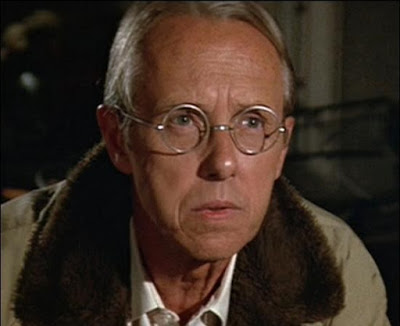
My series, “Just a Couple of Characters” continues with Part 3 today. This month, we learn more about actors we recognize but may not know much about. This week Henry Jones and Olan Soule are on the hot seat.

Henry Jones

Photo: en.wikipedia.org

Born in New Jersey in 1912 and raised in Pennsylvania, his grandfather was a first-generation Prussian immigrant who became a Representative. Henry went to St. Joseph’s College, a Jesuit school. He landed his first Broadway show in 1938, playing Reynaldo and a grave digger in “ Hamlet. ” Like many of the actors in the late 30s and early 40s, Henry joined the Army for World War II. He was a private. During his service, he was cast as a singing soldier, Mr.  Brown, in Irving Berlin’s “This is the Army.”

When he came back to the US, he married Yvonne Sarah Bernhardt Buerger in 1942. Sadly she passed away at age 22. This information was supplied by a blog reader, and I appreciate receiving the updated information because several sources refer to his divorce which is not the case. Yvonne’s father was a renowned surgeon. One of his patients had been Sarah Bernhardt which is where Yvonne go her middle name from.

Jones continued his stage roles and began a movie career. He had bit parts in 35 films, including The Bad Seed, Will Success Spoil Rock Hunter?, Vertigo, and Butch Cassidy and the Sundance Kid. He won a Supporting Actor Tony in 1958 for his performance of Louis Howe in “Sunrise at Campobello.”

Photo: fanpix.famousfix.com

In 1948 he married Judith Johnson. They had two children (one is actress Jocelyn Jones) but divorced in 1961.

Bridging the gap of television and film, he starred in seventeen tv movies as well.

Although his movie career kept him somewhat busy, it was nothing compared to his television work. Jones was credited with 205 acting appearances, meaning he had roles in 153 different television series. Jones was able to tackle a wide range of roles, being believable as a judge, a janitor, a murderer, or a minister. Jones had no illusions about becoming a romantic lead. He once said that “casting directors didn’t know what to do with me. I was never tall enough or good looking enough to play juvenile leads.”

Photo: findagrave.com

His first television appearance was in drama series, Hands of Mystery, in 1949. His work in the 1950s was primarily in theater shows about dramas. He also appeared in the George Burns and Gracie Allen Show and Father Knows Best.

Photo: michaelstvtray.com

He continued his drama roles into the 1960s. He also appeared in 3 episodes of The Real McCoys and westerns including Wagon Train, The Big Valley, and Daniel Boone. He showed up on mysteries such as the Man from U.N.C.L.E. and The Name of the Game. He also found work on unique shows including Lost in Space, Route 66, and the Alfred Hitchcock Show. Hitchcock liked his work and used him five times. He also appeared in several comedies, Bewitched and That Girl. He starred in Channing in 1963-64.  Jones played Fred Baker, a dean who mentors Professor Joe Howe who teaches English at Channing College while he writes his memoir about the Korean War.

During the 1970s, he continued to work on a variety of genre shows. We see him on westerns, The Virginian, Gunsmoke, and Bonanza. We see him in thrillers like The Mod Squad; McMillan and Wife; Owen Marshall, Counselor at Law; and The Six Million Dollar Man, on which he had a recurring role as Dr. Jeffrey, a scientist who built robots. However, comedies continued to be his mainstay, and he appeared in many of them including Nanny and the Professor, the Mary Tyler Moore Show, The Paul Lynde Show, The Doris Day Show, the Partridge Family, and Barney Miller.

commons.wikimedia.org

In addition to all his guest spots, he was cast in three shows during this decade. In The Girl with Something Extra, he played Owen Metcalf in 1973. The role he was best remembered for was Judge Johnathan Dexter on Phyllis. He was Phyllis’s father-in-law from 1975-1977. As Josh Alden, he appeared on Mrs. Columbo for thirteen episodes.

Photo: totallykate.com

Recurring roles comprised most of his television appearances in the 1980s. He continued to accept guest roles on such shows as Quincy ME, Cagney and Lacey, Magnum PI, Murder She Wrote, The Love Boat, and Mr. Belvedere. He would make regular appearances on Gun Shy, Code Name: Foxfire, Falcon Crest, and I Married Dora.

Jones continued to appear in shows in the 1990s, including Coach and Empty Nest. In 1999, he passed away after suffering from complications from an injury from a fall.

Olan Soule

Photo: pinterest.com

Olan Soule’s timeline was similar to Jones. He was born in Illinois in 1909, growing up in Iowa, and he passed away in 1994. While Jones’ grandfather arrived in America, Soule’s ancestors included three Mayflower passengers. He began his acting career on the radio.

In 1929 he married Norma Miller. They would be married until her death in 1992 and they had two children.

For eleven years, he was part of the cast of the soap, “Bachelor’s Children.” His roles changed when he transitioned to television. On radio, he could play any role, but his 135-pound frame prohibited him from getting many roles he played on radio. He told the Los Angeles Times during an interview that “People can’t get over my skinny build when they meet me in person after hearing me play heroes and lovers on radio.”

Photo: tralfaz.blogspot.com

However, he certainly was not lacking in roles. Soule is credited with more than 7000 radio episodes and commercials, 60 films, and 200 television series.

The 1950s found him appearing in many sitcoms, including George Burns and Gracie Allen, I Married Joan, I Love Lucy, December Bride, the Ann Sothern Show, and Dennis the Menace.

Photo: complete-hitchcock.com

He would appear regularly in Dragnet from 1952-59 and in Captain Midnight from 1954-56.

Photo: riflemanconnors.com

He got even busier in the 1960s, working nonstop. The only show he had a recurring role on was The Andy Griffith Show where he played choir director and hotel clerk John Masters. Other comedies he appeared on included The Jack Benny Show, Pete and Gladys, Bachelor Father, Make Room for Daddy, Mister Ed, My Favorite Martian, The Addams Family, The Monkees, Petticoat Junction, and That Girl. He also took on roles in suspense shows including One Step Beyond, the Alfred Hitchcock Show, and the Twilight Zone. He also specialized in westerns, including Maverick, Stage Coach West, Have Gun Will Travel, The Rifleman, Bonanza, Gunsmoke, and The Big Valley.

Photo: pinterest.com

He started the 1970s continuing to show up on series such as Family Affair, My Three Sons, McMillan and Wife, Cannon, Police Woman, and a recurring role on the comedy Arnie.

Photo: monkees.coolcherrycream.com

In the mid-1970s he began appearing on Battlestar Galactica and Project UFO. Most of his career in the decade was spent providing voiceovers for animated shows, primarily Batman.

The Towering Inferno Director: John Guillermin US Premiere: 10 December 1974 Copyright 1974 Twentieth Century Fox Film Corporation and Warner Bros. Inc.

In 1994, Soule died from lung cancer at age 84.

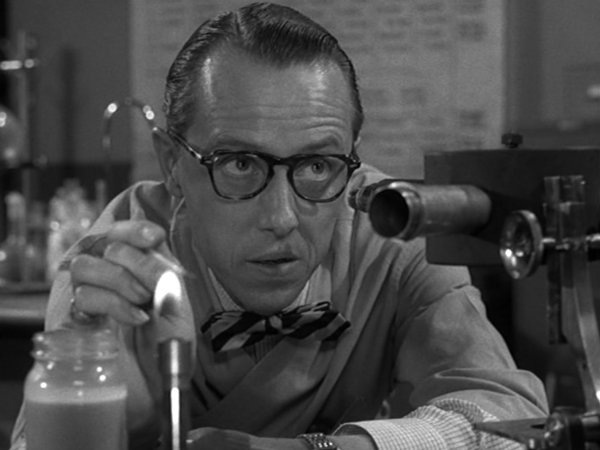
Both Soule and Jones were prolific actors who had long and successful careers. Neither one of them were the leading men type of actors, but they could tackle a wide range of roles. Soule once said, “Because of my build and glasses, I’ve mostly played lab technicians, newscasters, and railroad clerks.” Not a bad life for someone who loves acting. If you watch Antenna or Me Tv, chances are you will see these two characters pop up quite often.

Just a Couple of Characters, Part 2: Hope Summers and Madge Blake

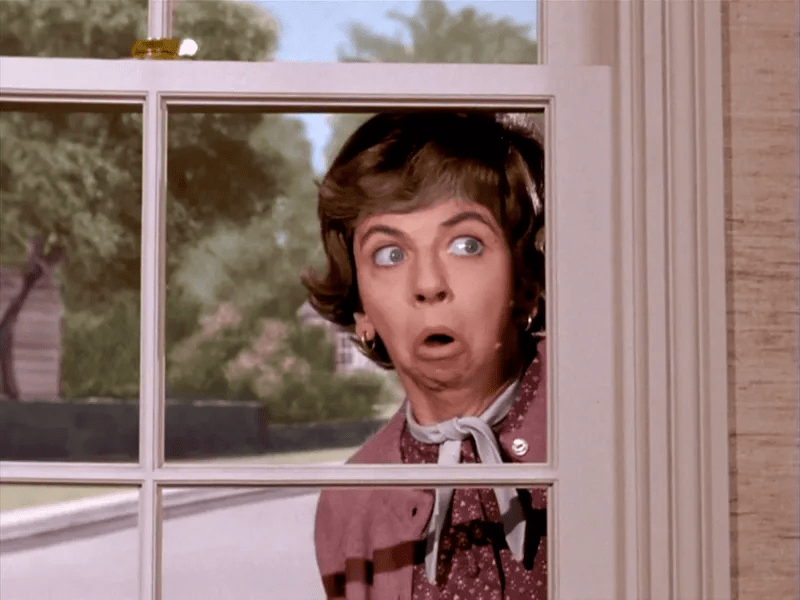
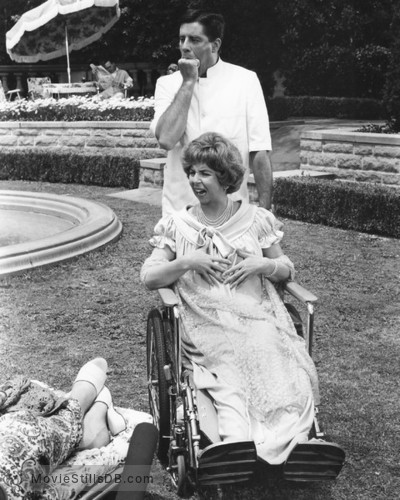
Today we continue our series, Just A Couple of Characters, about character actors we recognize but might not know much about. Hope Summers and Madge Blake are two actresses you will recognize if you watched sitcoms in the 1960s or 1970s.

Hope Summers

Photo: en.wikipedia.org

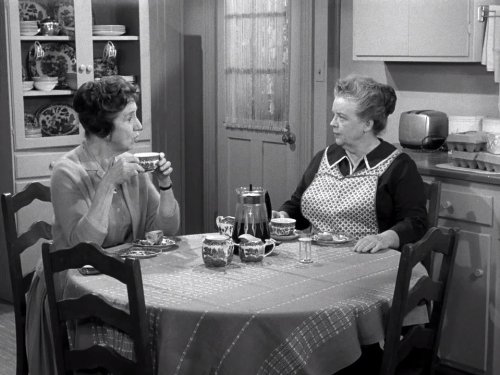
Born Sarah Hope Summers in 1902 in Mattoon, Illinois, Hope Summers often played the friendly, but nosy, neighbor. She’s best recognized as Clara from The Andy Griffith Show.

Summers became interested in theater early in her life. She attended Northwestern, majoring in speech. After graduation she stayed at the University and taught speech and diction. She then moved to Peoria and headed the Speech Department at Bradley University. She joined a few community theaters, putting on one-woman shows. She also acted in a few dramatic radio shows.

She married Claude Witherell in 1927, and they were married until his death in 1967. The couple had two children.

In 1950, she transitioned to television. She appeared in an early comedy series, Hawkins Falls: A Television Novel. Like Edward Andrews, she was often cast in roles older than her actual age. She became a popular actress quickly. She continued to appear in a variety of shows throughout the 1950s including Bachelor Father, Private Secretary, Wagon Train, Dennis the Menace, and the Loretta Young Show.

Photo: cscottrollins.blogspot.com
On The Rifleman

From 1958-1960, she would appear in The Rifleman as Hattie Denton.

In 1961, she received the role she would become most famous for, Clara, Bee’s best friend on The Andy Griffith Show. When Andy Griffith left the show in 1968, Hope continued with Mayberry RFD in her role of Clara for five episodes. Clara was a lonely spinster who lived next door to Andy and his family. She and Bee had fun sharing bits of gossip and talking about current events. Clara had a good heart and though she and Bee could get upset with each other, they truly cared about each other.

Photo: sitcomsonline.com

While playing the role of Clara, she continued to guest in series throughout the 1960s. She appeared on many of the hit shows of that time such as Dr. Kildare, Gunsmoke, Make Room for Daddy, Hazel, My Three Sons, The Dick Van Dyke Show, Petticoat Junction, The Phyllis Diller Show, Marcus Welby, That Girl, and Bewitched.

Photo: mash.fandom.com

During the 1970s, Summers kept her career going strong, appearing in Hawaii Five-0, M*A*S*H, Little House on the Prairie, and Welcome Back Kotter.

Photo: peorian.com
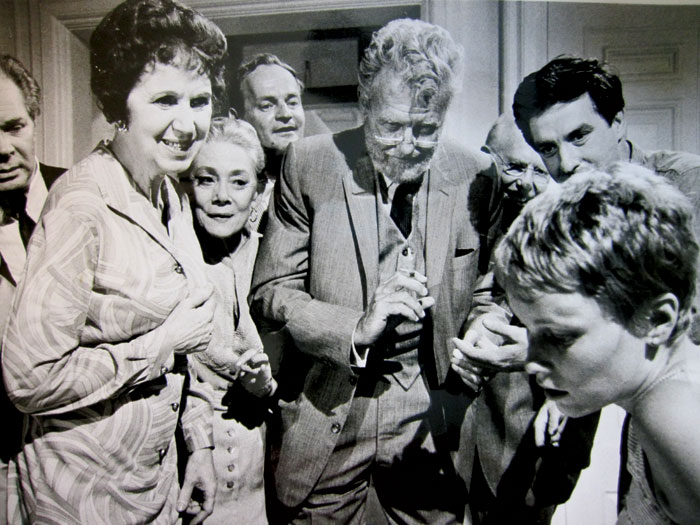
Playing a nice witch in Rosemary’s Baby

Although, Summers began her acting career during the second half of her life, she was also featured in several well-known movies. In 1960, she was in Inherit the Wind, The Shakiest Gun in the West, and Rosemary’s Baby in 1968, among others.

Photo: famousfix.com

Summers also was famous as the voice of Mrs. Butterworth in commercials.

In 1978 she was diagnosed with congestive heart failure and quit acting. She passed away from the disease in 1979.

Madge Blake

Photo: listal.com

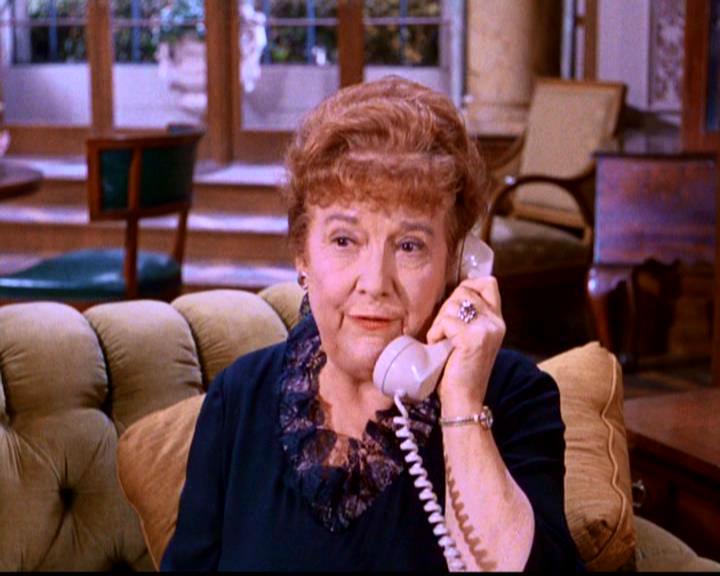
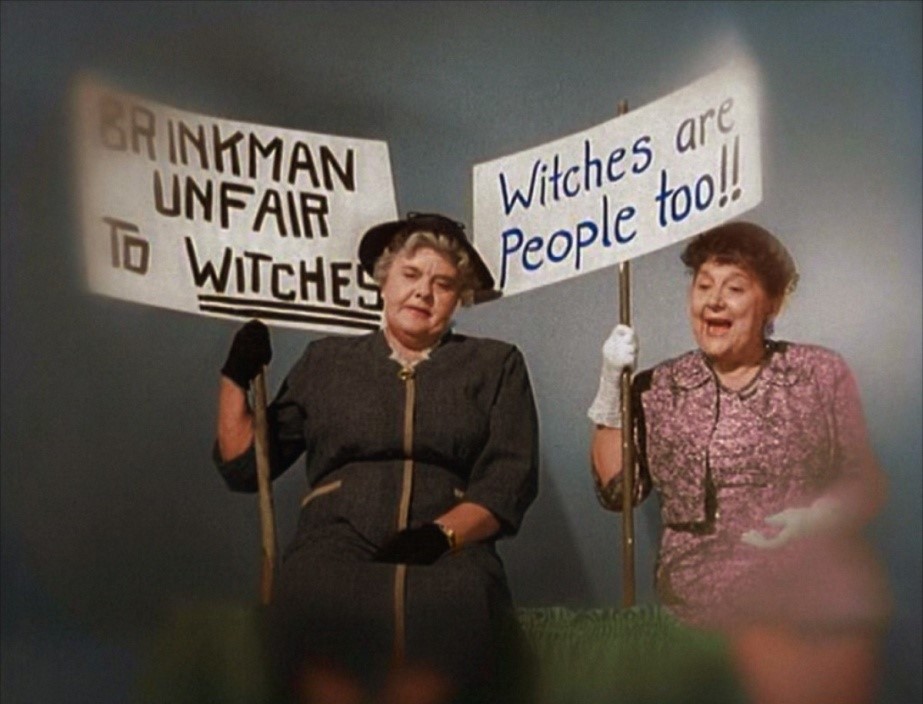
While Hope Summers was part of the cast of The Andy Griffith Show, Madge Blake was busy portraying Aunt Harriet on Batman.

Born Madge Cummings in 1899 in Kansas, she, like Hope Summers, became interested in acting at a young age. Her father was a Methodist minister and he refused to allow her to give it a try. Oddly enough, Madge’s maternal uncle was Milburn Stone, Doc on Gunsmoke.

Photo: imdb.com

Although they later divorced, Madge married James Blake and they had one child. She had a fascinating career. Both she and James worked for the government during the war. They had top secret clearance for their project working on the construction of the detonator for the atomic bomb in Utah. They also performed tests on equipment used in the Manhattan Project.

Photo: actorz.ru

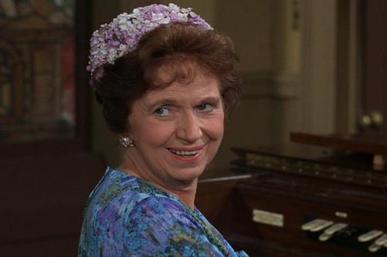
Also, like Summers, Blake turned to acting at a later age. When she was 50, she enrolled at the Pasadena Playhouse to study acting. She only had twenty years in the business, yet she managed to achieve an impressive 124 acting credits.

Photo: icollectors.com
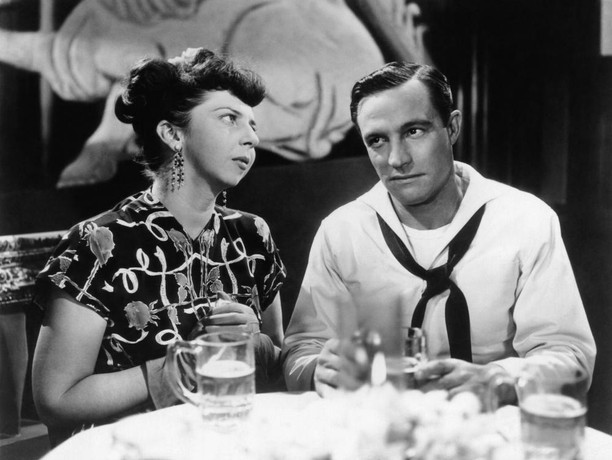
Singin’ in the Rain

Blake would appear in 47 films in smaller, but impressive, roles. Some of her movies included An American in Paris, Singin’ in the Rain, Brigadoon, The Tender Trap, Bells Are Ringing, Ain’t Misbehaving, and The Solid Gold Cadillac.

Photo: pinterest.com
Margaret Mondello

Beginning her television career in 1954, she racked up an impressive amount of guest star roles and several recurring roles. She played Tillie, the president of the Jack Benny fan club on The Jack Benny Show. She played Larry Mondello’s mother on Leave It to Beaver. An interesting aside is that she was asked to play Aunt Bee on The Andy Griffith Show where she would have worked with Hope Summers. Because she was locked into the role of Mrs. Mondello, she declined. She took the role of Mrs. Barnes, Joey’s mother, on The Joey Bishop Show. On the Real McCoys, she played Flora MacMichael, Grandpa McCoy’s love interest; Nurse Phipps on Dr. Kildare; and the role she became best known for, Aunt Harriet on Batman.  

Photo: channel.superhero.com

The network was worried about Batman and Robin living alone together on Batman, so the role of Aunt Harriet was added. The story line was that she raised Bruce Wayne in the family mansion. Their interaction with Aunt Harriet was also a reason for the dynamic duo to appear in their non-hero roles more often.

It would seem that coming into acting later in life and then appearing in so many movies and recurring television appearances would have kept her quite busy. But in addition to these appearances, she was cast in many of the most popular shows during her twenty years on television. During that time, you can find her on dramas like Public Defender, Lassie, The Restless Gun, and the Man from U.N.C.L.E.

Photo: tumblr.com
On I Love Lucy

Of course, she was meant to play comedy and she appeared on an incredible number of sitcoms. Just to name a few, there of them: George Burns and Gracie Allen Show, I Love Lucy, Private Secretary, Father Knows Best, Bachelor Father, The Adventures of Ozzie and Harriet, The Donna Reed Show, Make Room for Daddy, Bewitched, The Addams Family, My Favorite Martian, The Dick Van Dyke Show, Gomer Pyle, and The Doris Day Show. Pretty amazing.

Photo: vitabrevis.americanancestors.org
On Bewitched

I read over and over that one of her best performances was in the pilot for Dennis the Menace where she plays Dennis’s babysitter. I have not been able to watch that show, but I will definitely check that out.

Photo: allstarpics.famousfix.com
On Dennis the Menace

In 1969, Blake passed away from a heart attack after she broke her leg. She was only 70, or we might have had a much longer list of television series for her.

Hope Summers and Madge Blake had a lot in common. They both became interested in acting at an early age, they both had major careers before acting, they both began acting in the second half of their life, they both played neighborly types–Summers, nosier, and Blake, more ditzy. They also both had respectable film careers paralleling their television ones. Their television roles may have been smaller, but they were memorable, they are definitely two characters worth watching.

Did I Tell You The One About The Farmer’s Daughter: The Chemistry of Inger Stevens and William Windom

Photo: abebooks.coom

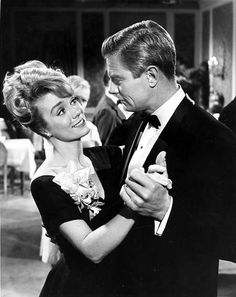
This blog takes a look at a show that is beginning to fade from viewers’ memories. The Farmer’s Daughter debuted in the fall of 1963, starring Inger Stevens as Katy Holstrum and William Windom as Glen Morley.

The show was based on the 1947 movie of the same name starring Loretta Young and Joseph Cotten in the lead roles.

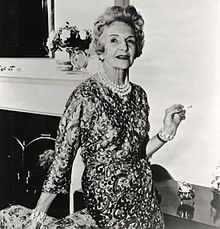
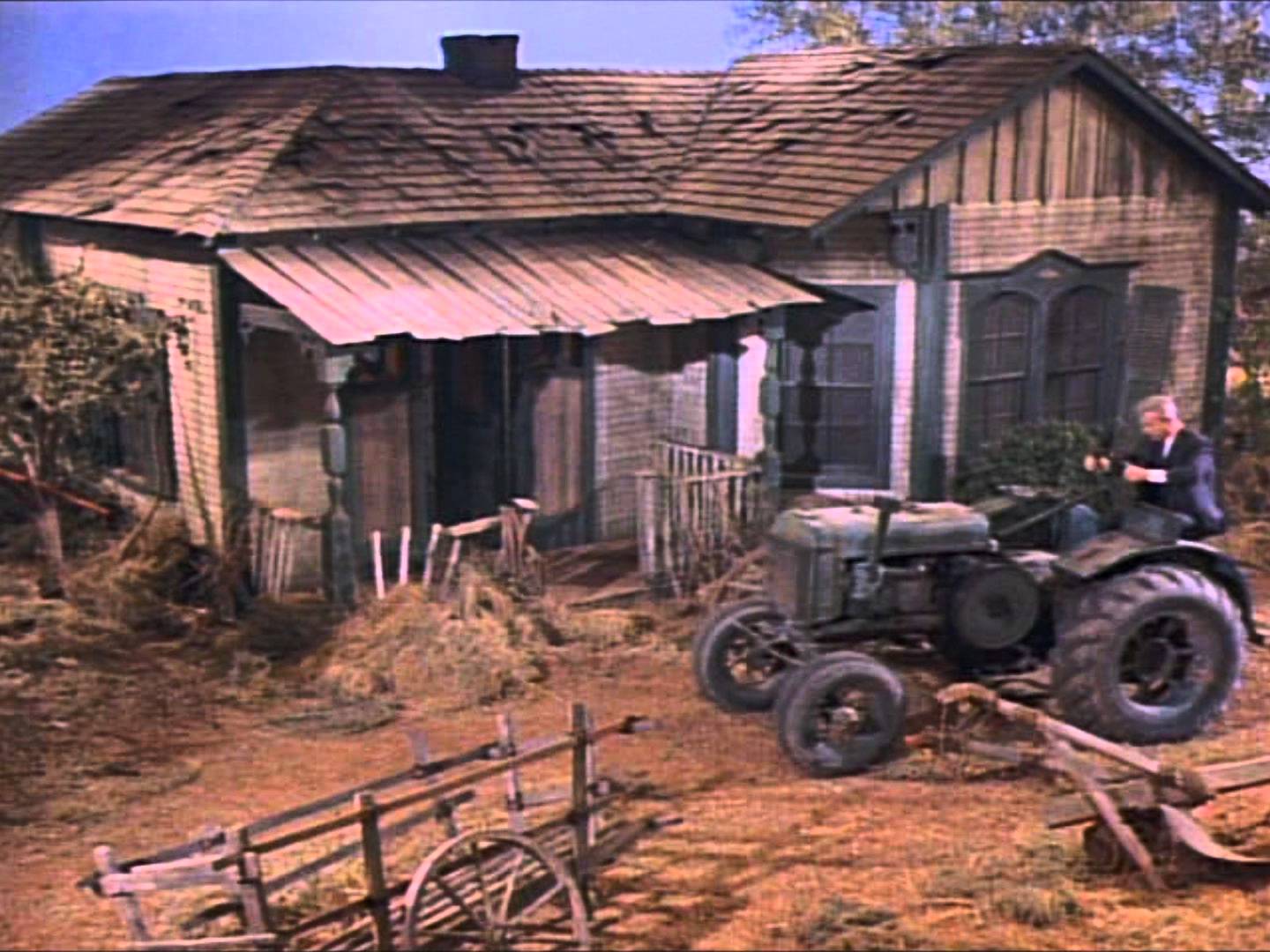
Katy was a student who needed to earn some money and became a governess/housekeeper for Morley’s boys, Steve (Mickey Sholdar), age 14 and Danny (Rory O’Brien), age 8. Morley is a congressman. While Morley is sophisticated and refined, Katy is a no-nonsense type of girl from Minnesota. Morley’s mother Agatha (Cathleen Nesbitt) also lives with the family. The cast is rounded out by Philip Coolidge as Cooper, the family’s butler. In the early seasons, it is obvious that Glen and Katy are falling for each other, and many of the plots are one of them being jealous of the other. In the movie, Katy runs for Congress, but she is not as involved in politics in the television show.

Photo: worthpoint.com

Screen Gems produced the show which aired on ABC. The show was sponsored by Lark Cigarettes and Clairol. The two stars often promoted the products at the end of the episode. In season one, the show was on Friday nights against Burke’s Law on CBS and The Fight of the Week on NBC. Season two found the show opposite The Flintstones and The Addams Family. The show moved to Tuesday nights for season three against A Man Called Shenandoah and Ben Casey. The show was never in the top 25 but, it had respectable ratings. The critics liked the show, and it was nominated for an Emmy for outstanding comedy in 1964 but lost to Mary Tyler Moore for The Dick Van Dyke Show. It was also nominated for Emmys for writing, directing, and best actress. Stevens won the Golden Globe for best female tv star. TV Guide conducted a popularity poll, and she won the female performer of the year with David Janssen of The Fugitive, winning male performer.

At the end of season two, Katy and Glen become engaged. The third season brought full-color episodes. Early in the third season, they marry. After that ratings fell significantly, and the show was not renewed for a fourth season. In the finale, Katy adopts Danny and Steve. The chemistry between Glen and Katie and waiting to see if they got together or not kept viewers tuning in.  Once they married, viewers were not as invested.

Photo: en.wikipedia.org

In 1957, Inger was signed to a seven-picture contract with Paramount. In 1959, she survived after swallowing an overdose of pills and she seemed to recover with a renewed zeal to work on her career and life situation.

Stevens became a favorite actress of many viewers after The Farmer’s Daughter. The cast and crew liked her very much and she was easy to work with. She never got upset when filming ran long or had complications. She and Windom often played practical jokes on each other to bring fun to the workplace. She recalled eating an onion sandwich one day right before they filmed a kissing scene.

After the show was cancelled, she was cast in the movie, A Guide for the Married Man in1967. She then starred in films with Jimmy Stewart, Dean Martin, and Clint Eastwood. She appeared in the made-for-tv film, Run Simon Run with Burt Reynolds in 1970. After seeing the film, Aaron Spelling cast her in an upcoming series, Zig Zag to air in the fall. The show was about a trio who work on hard-to-solve murders. When the show went on the air in 1970, Yvette Mimieux had to take over Inger’s role.

Photo: commons.wikimedia.org

Unfortunately, the sunny disposition Stevens portrayed to the world hid a sad and tragic life and she committed suicide before the show aired. Her housekeeper found her in April; she was semi-conscious and died on the way to the hospital. The cause of death was determined to be acute barbiturate intoxication. The public was saddened and surprised to learn how unhappy she was.

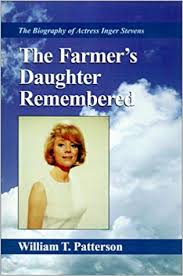
In 2000, William Patterson published the book, The Farmer’s Daughter Remembered. He dove into her life and tried to determine whether she meant to commit suicide or not.

Photo: pinterest.com

Windom also starred in the series, My World and Welcome to It as cartoonist John Monroe and as Dr. Seth Hazzlett on Murder She Wrote in 1985. His first movie role was in To Kill a Mockingbird in 1962. In addition to other films and Broadway, he traveled performing one-man shows of both James Thurber and Ernie Pyle. He passed away of congestive heart failure in 2012 at 88.

Cathleen Nesbitt would continue appearing in television series until 1982 when she passed away at age 93. Although she had appeared in many films, The Farmer’s Daughter was the only series she was featured in regularly.

Photo: en.wikipedia.org
Cathleen Nesbitt

Mickey Sholdar only appeared in five other shows after The Farmer’s Daughter. His last acting appearance was in the movie Babe. I could not verify how he spent his life up to now.

Photo: sitcomsonline.com
Mickey Sholdar and Rory O’Brien

Rory O’Brien, like Sholdar, only appeared in a few shows after the series ended. He was also in one film afterward, Little Big Man. O’Brien left the acting profession in the early 1970s. I could not find any other information on him either.

Photo: famousfix.com
Phillip Coolidge

Philip Coolidge was in many acclaimed movies before he took the role on The Farmer’s Daughter. Like most of his cast mates, he only appeared in a few shows in the mid-1960s, and he passed away in 1967.

Photo: pinterest.com

The show was aired in syndication on CBN, but I cannot find any other channels that carried it, and I cannot find any evidence that it was ever released on DVD. It’s too bad because the show featured a couple with great chemistry and the quick pace of the story and well-written dialogue that made the show memorable will be lost if no one is able to see the show in the future.

Go Green, Green Acres That Is

In the 1950s, a lot of the top shows were set in residential or suburban areas:  Father Knows Best, Ozzie and Harriet, the Donna Reed Show, and December Bride to name a few.  In the early 1960s, the rural sitcom became the hottest genre.  In 1963 The Beverly Hillbillies was #1, Petticoat Junction was #4, and The Andy Griffith Show was #5. Filmways offered Paul Henning the chance to produce a new rural show with no pilot necessary.  Filmways was created in 1952, and the company was behind many successful shows including The Debbie Reynolds Show, The Pruitts of Southampton, Mr. Ed, The Addams Family, and Cagney and Lacey.

Paul Henning approached Jay Sommers to create the new rural comedy. Sommers based the series on a radio show he had written in 1950 —  Granby’s Green Acres.  Granby was based on a book, Acres and Pains by S.J. Perelman. The radio show only lasted for 13 episodes and starred Gale Gordon and Bea Benaderet. Granby was a former banker who moved to the country to run a farm.  He also had a daughter, and the general store owner was a major character, Will Kimble, played in the first episode by Howard McNear. A couple of titles proposed were Country Cousins and The Eddie Albert Show, but the final decision was Green Acres.

green4

Green Acres ran on CBS from 1965-1971 with solid ratings. It produced 170 episodes, all filmed in color.  Richard Bare directed most of the shows. At the end of each episode, Eva Gabor would say “This has been a Filmways presentation dahling.”

While the Beverly Hillbillies took a family out of the mountains and put them in Beverly Hills, Green Acres went with the opposite scenario.

The premise of the show was that Oliver Douglas  who had been a busy attorney in New York City decides he wants to move to the country to run his own farm. His wife Lisa  does not agree. He buys a farm unseen in Hooterville. We are never told where Hooterville is, and I think everyone has their own idea of which state it might be in. The house and farm are more run-down and dilapidated than Lisa ever imagined in her worst nightmare.  The citizens of Hooterville are a quirky set of characters.

green7

The debut show was done as a documentary narrated by John Daly, a former newscaster and the host then of What’s My Line.  Eddie Albert and Eva Gabor appeared on What’s My Line later in the fall as a thank you to Daly. As you can see below, Oliver’s mother is horrified by his choice.

green18

The theme song is memorable and tells the backstory of the Douglases:

Oliver: Green Acres is the place to be – Farm living is the life for me –Land spreading out so far and wide – Keep Manhattan, just give me the countryside.

Lisa: No, New York is where I’d rather stay – I get allergic smelling hay – I just adore a penthouse view – Darling, I love you but give me Park Avenue

Oliver: The chores

Lisa: The stores

Oliver: Fresh air

Lisa: Times Square

Oliver: You are my wife

Lisa: Goodbye city life

Both: Green Acres, we are there

Snippets of country and New York city were shown while the stars sing, and ends with both of them in the same pose as “American Gothic” by Grant Wood.

green1

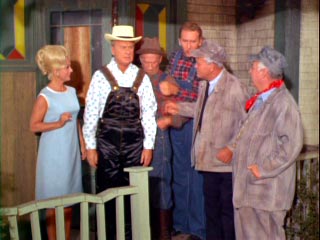
Like the Andy Griffith Show, the series worked because of the interaction between these Hooterville citizens who become believable for us. Let’s meet the cast of characters.

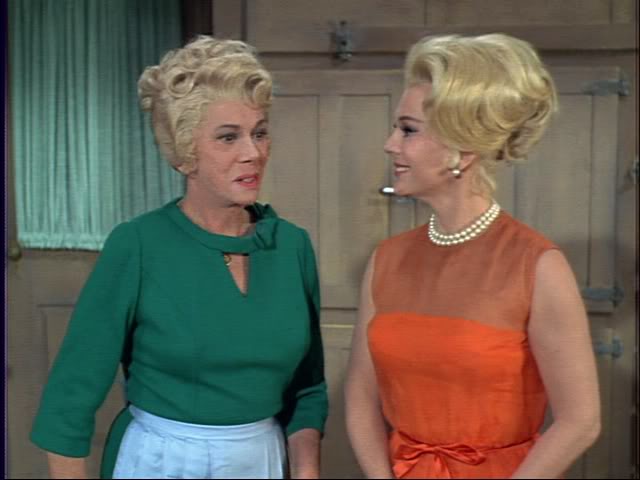
Oliver Wendell Douglas (Eddie Albert) – Oliver is intelligent, hard-working, and practical to a fault.  He has to deal with a kooky wife, a disapproving mother (played by Eleanor Audley who was only 5 months older than Albert), and the quirky neighbors that surrounded him. However, Oliver has a respect for the wisdom these people have about farming and rural life.  Despite the fact that he seems to be the only sane person in the valley, it’s obvious he truly has an affection for the folks he lives with.

albert

Lisa Douglas (Eva Gabor) – Lisa grew up in a wealthy Hungarian family. Her misuse of the English language is one of her endearing qualities. She has a hard time adjusting to farm life.  In one episode she is using a stapler to fix Oliver’s socks.  While Oliver is telling her how woman for centuries have sewn socks, Fred Ziffel, the most experienced farmer in Hooterville enters the room and tells her he notices she is mending socks; his wife does it the same way. Despite the fact that Lisa did not want to leave the city, she adapts to living in the country quickly and develops an understanding with the neighbors Oliver never attains.

green31

Eb Dawson (Tom Lester) – Eb is the farmhand who lives with the Douglases.  He comes off as naïve, but we understand Eb is much smarter than he lets on.  He is always trying to get less work for more money.  He calls them Mom and Dad which Lisa loves but drives Oliver crazy.

green17

Mr. Eustace Haney (Pat Buttram)- Mr. Haney is the unethical and dishonest salesman who originally sold Oliver the farm, which belonged to his family. He is always showing up to sell them something they need at outrageous prices. [Pat Buttram was Gene Autrey’s sidekick in the movies and tv; Smiley Burnette, Charley, who runs the Cannonball, the local train on Green Acres and Petticoat Junction, was Autrey’s sidekick in radio and movies and  Buttram replaced him when he moved on.]

green5

Sam Drucker (Frank Cady) – Sam was a busy guy; he ran the general store, he was the newspaper editor, was the only printer in town, he was part of the volunteer fire department, he was the justice of the peace, and he’s the postman. Apart from Oliver, he was the smartest and most sane person in the valley, and he and Oliver often commiserated about the crazy life going on around them.

Hank Kimball (Alvy Moore) – Mr. Kimball was the county agricultural agent who was supposed to help Oliver adjust to farming. He often loses his train of thought and rarely follows through on the news or information he is supposed to relay.

moore

The Monroe Brothers – Alf (Sid Melton) and Ralph (Mary Grace Canfield) are a brother and sister team that Alf portrays as brother and brother in order get work. Their projects are never finished on time, and rarely finished the right way.

green8


Fred and Doris Ziffel (Hank Patterson and Barbara Pepper/Fran Ryan) – the Ziffels were successful farmers.  They had no children, but they had a pet pig that they considered a son.


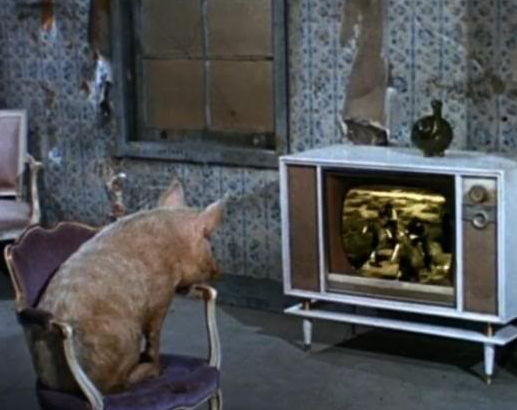
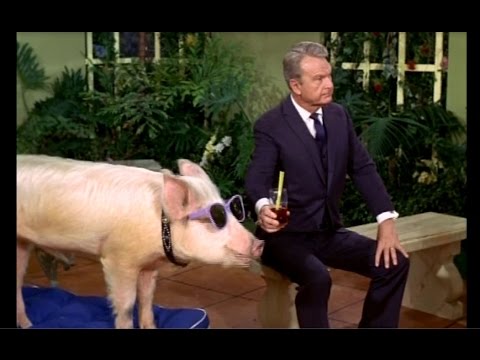
Arnold Ziffel – Arnold Ziffel was their pet pig and one of the most intelligent people in Hooterville. He understands English, attends the local grade school, lives inside in his own bedroom, can sign his name, and is a bit addicted to television watching, especially westerns. A new pig was used each season because they grew so fast. The Union demanded the pigs be payed $250 a day and were trained by Frank Inn. In 1967 Arnold won a Patsy award.

green20

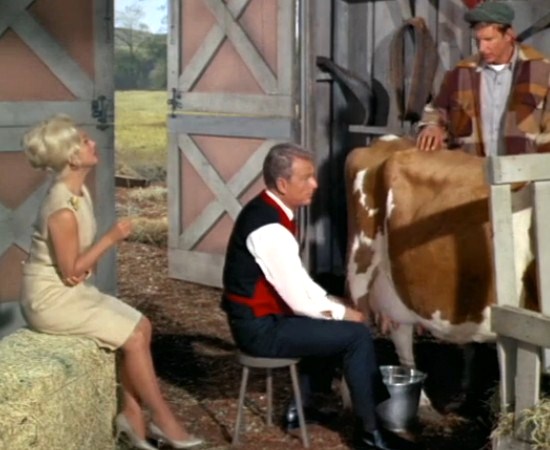
Some of the other animals featured on the show included Eleanor the Cow; Bertram the rooster; Alice the hen; and Mr. Haney’s dog, Cynthia, a basset hound who had a huge crush on Arnold.

Green Acres had its fair share of guest stars including Parley Baer, Robert Cummings, June Foray, Alan Hale Jr., Elaine Joyce, Gordon Jump, Bernie Kopell, Al Lewis, Rich Little, Al Molinaro, Pat Morita, Jerry Van Dyke, and Jesse White.

The show was 25% surrealism, 25% satire, and 50% just plain fun.

Some of the running gags on the show were the fact that people, except Oliver, could see the credits running, and Lisa often commented on them. A lot of the jokes were at Oliver’s expense.  He was the only one in town who could not understand Arnold’s grunts. Also, whenever Oliver got passionate about something, he went into a monologue, usually patriotic, and everyone but him could hear fifes playing.

green3

Lisa’s hotcakes were good for many projects, just not eating. The Douglases had a feud with the phone company because they were supposed to move their phone inside.  Whenever they had to use the phone, Oliver had to climb up a phone pole to talk. Oliver had a Hoyt-Clagwell tractor which was usually breaking down, catching on fire, or falling apart.

green29

We also had the stark extremes of sophisticated New York living and rural life.  Lisa continued to dress in beautiful gowns and furs.  They slept in a huge, expensive bed, with an elaborate chandelier over their heads, but their closet had no back so neighbors walked in on and off. The fire department marching band often practices at Sam Drucker’s store but for all five years whenever they practice, they only know one song, There’ll Be a Hot Time in the Old Town Tonight.

Although Lisa continues to threaten to move back to New York City, aided and abetted by Oliver’s mother, we know she loves him and will never leave without him.  Despite their arguments, Lisa and Oliver are frequently seen kissing and hints are given about them retiring to their room together. In real life, Albert and Gabor were dear friends and they are both buried in Westwood Village Memorial Park Cemetery in Los Angeles. Tom Lester, Eb, credited Albert with helping him as an actor and being a surrogate father to him; the two remained close friends until Albert passed away.

green10

There are many cross-overs with Petticoat Junction and the Beverly Hillbillies. Sam Drucker was featured in both Green Acres and Petticoat Junction. Some of the characters visited each other on various episodes. It is funny that Bea Benaderet starred in Petticoat Junction as well as the radio show Granby’s Green Acres which means Green Acres was based on her radio show and was a spin-off of her television show. In 1968, a Beverly Hillbillies Thanksgiving Show united cast members from all three shows.

green9

green6

With 170 episodes, it’s hard to come up with the best five, but after looking at various polls and tv guide reviews, I will do my best to represent the majority’s votes:

“Music to Milk By” – Eb wants to win a radio contest and he has to listen day and night which cuts into his chores, especially when the cow swallows the radio.

radio

“I Didn’t Raise My Pig to be a Soldier” – Arnold Ziffel gets a draft notice. Oliver acts as his attorney before the draft board. They are assuming Oliver is making fun of them with the pig and the real Arnold is elsewhere. After a lot of explanations and some time in jail, Oliver convinces them Arnold is really a pig.  The end of the show has Oliver back before the draft board because Ralph Monroe, a woman, who they think is a man, has been drafted.

draft

“The Hooterville Image” – The town agrees Oliver needs to do chores in overalls. He has been farming in a vest and dress shirt. They finally convince him to become more accepted by switching his attire until they see the overalls Lisa’s dress designer came up with.

green28

“The Computer Age” – Ralph Monroe joins a computer dating service. Oliver and Lisa disagree on whether that is a good idea. Oliver thinks it is. He also thinks computers are the best way to run a farm. To prove her point, Lisa uses the service to see if she and Oliver would have been paired up.

computer

“A Star Named Arnold is Born, Parts 1 and 2” – Arnold appears in a play at the local theater. Lisa arranges for an old friend to give him a chance in show business. In the second part, Lisa and Oliver chaperone his trip to Hollywood to star in a motion picture.

arnold

Oddly enough the top four were all from season 2, and “A Star Named Arnold Is Born” is from season 3.

green16

In Spring of 1971, Green Acres was still pulling in good ratings.  However, the Rural Purge of 1971 got rid of all shows that had country leanings whether they were audience favorites or not.


In full disclosure, I loved Petticoat Junction growing up, and I could not stand the Beverly Hillbillies.  I thought Green Acres was okay but if I missed it that was okay too.  As I’ve gotten older, I still love Petticoat Junction, and I still don’t care for the Beverly Hillbillies, but I have developed a much greater appreciation for Green Acres.  If a show was capable of having a sense of humor, this one did.   It never took itself seriously.  Eddie Albert was willing to be the straight guy to the rest of the ensemble. The character interaction worked, and no dialogue came off as too zany.  The citizens might not have always agreed or understood each other’s lifestyles, but they had affection and respect for each other. Lisa’s reading the credits and different characters addressing the audience brought us in on the jokes and made us part of the Green Acres family. Now when I watch the show, I laugh out loud – a lot! I don’t laugh at the characters, I laugh with them. For being a rural sitcom, this show has some sophisticated humor.  If you have not watched the show in a while, you owe it to yourself, as well as the cast and crew who created it, to get to know the folks in Hooterville.


The Amazing, But Much Too Short, Career of Richard Deacon

Richard Deacon, 1960s

Richard Deacon was born in Philadelphia, Pennsylvania in 1921, but most of his adolescence was spent in Binghamton, New York. When he was only 11, he contracted polio. He took up dancing to build up his leg muscles.

Deacon’s first career choice was to become a doctor.  He was working as an orderly at the Binghamton Hospital when World War II began. He tried to join the Navy; they suggested he try the Army.  He did and joined the medical corps.

After the war, he studied medicine at Ithaca College but soon switched to acting. He studied drama for a couple of years and was the actor in residence at Bennington College.  After spending some time in New York, he headed to California to look for work.  After paying his dues as a bartender, he finally got a break and was offered a role in a film, Invaders From Mars.

When he first began his career, Helen Hayes advised him to become a character actor as opposed to a leading man.  It was great advice, and he was one of the most beloved and prolific actors during the golden age of television. During his career, he appeared in 66 movies on the big screen, guest starred on 92 different television shows, and starred in six series.

In the 1950s, he appeared in 48 television shows including Burns and Allen, The Life of Riley, Bachelor Father, and the Gale Storm Show.  He had regular roles in two sitcoms.

The Charles Farrell Show debuted in 1956. Farrell played himself as the manager of the Palm Springs Racquet Club, a resort he actually owned and operated. It was a summer replacement for I Love Lucy and only lasted 12 episodes. Richard played Sherman Hall.

deacon8

In 1957, he got another chance at being a regular in a sitcom, Date with the Angels starring Betty White. Deacon played Roger Finley.  This show lasted one year.

Richard continued his productive acting career, appearing in 43 shows in the 1960s.  He could be seen in a wide range of shows including Bonanza, The Rifleman, My Three Sons, Make Room for Daddy, Perry Mason, The Donna Reed Show, The Twilight Zone, Mr. Ed, I Dream of Jeannie, Get Smart, The Munsters, and The Addams Family. He was also appearing in a number of films during this decade. He appeared in four sitcoms on a regular basis during the ’60s.

Leave It to Beaver aired from 1957-1963. Deacon played Fred Rutherford, father of Clarence, or Lumpy, Rutherford, Wally’s friend. During the 6 seasons it was on the air, Fred was in 63 episodes.

Part way through the series, he was offered another regular role, that of Mel Cooley on The Dick Van Dyke Show.  From 1961-1966, he brightened the screen in 82 shows, putting up with his brother-in-law’s bullying and Buddy Sorrel’s belittling. Deacon had high praise for everyone connected with The Dick Van Dyke Show.

One day Morey Amsterdam was goofing around with Richard and said he didn’t think his hair had fallen out, he thought it had imploded and fallen into his brain, clouding his thinking.  Carl Reiner came running on the set and said to add that dialogue to the show.  From then on, there was an insult fest between Buddy Sorrell and Mel Cooley. When the writers were trying to come up with a comeback from Mel to Buddy, Reiner asked Deacon how he would respond to someone who continued to torment him.  Deacon replied, “Yeecchh!” and his trademark phrase was invented.

deacon9

Bud Molin, Dick Van Dyke Show film editor described Deacon as “the funniest human being on the face of the earth.” Carl Reiner said it was a joy to have him around and everyone on the show loved him.

Deacon, Leonard, Reiner, Paris

The Dick Van Dyke Show was one of the best shows ever written. It won the Outstanding Comedy Emmy in 1963, 1964, and 1966. After the cast of the Dick Van Dyke Show decided to end the show on its own terms, leaving the air with its quality reputation intact, Deacon was offered another sixties role.

Phyllis Diller had a fantastic cast on her show, The Pruitts of South Hampton, or The Phyllis Diller Show as it became known in syndication. This was about a formerly wealthy family who found out they owed $10,000,000 in back taxes.  They try to appear that they still have their wealth, while living in very reduced circumstances.  The cast included Louis Nye, John Astin, Reginald Gardiner, Paul Lynde, Gypsy Rose Lee, Billy De Wolfe, John McGiver, and Marty Ingels in addition to Diller and Deacon.  I don’t know how this show did not succeed, but it was taken off the air after only one year. Diller and Deacon continued to work together both on an episode of Love, American Style and in the production of Hello Dolly in the 1969-1970 season.

deacon14

Once the Diller show was canceled, Deacon was offered a role on The Mothers-In-Law starring Kaye Ballard and Eve Arden. Deacon took over the role of Roger Buell mid-way through the series. The concept was two families who didn’t necessarily get along were neighbors whose children  married so they had to find ways to get along and keep the peace.

deacon4

After the show was cancelled, he continued to stay busy with his acting career.  He also appeared in 17 episodes of Match Game and several Family Feud episodes.

deacon7

Deacon was a life-long bachelor.  He was a closeted gay man who had to keep his sexual orientation secret to keep his options open to work for companies like Disney. He was also a gourmet chef.  In the 1980s, he hosted a Canadian cooking show about microwave cooking, writing a book that sold almost two million copies. He spent a lot of his spare time working with SYNANON, an agency that helped teenage drug addicts.

On the night of August 8, 1984, he was suffered a heart attack in his Beverly Hills home. He was rushed to Cedars Sinai Hospital, where he died later that night. He was 63 years old.

deacon15 - Copy

Everything I read about Richard Deacon painted him as a gracious, friendly, very funny man who was caring and kind.  He had an amazing career, with 180 acting credits within a 30-year period.  The legacy he left was a rich and full acting life. Pretty good for a guy who chose to be a character actor and was humble enough to turn down two offers to star in his own show.

The Butler Did It

butler2

When we mention the word butler, we usually think of the prim and proper English gentleman, stern-faced, polishing the silver, decanting the wine, and keeping an eye on the staff.

According to the International Butler Academy, there are a few million butlers serving today. They typically take care of travel arrangements, packing, household finances, and other general duties. Salaries vary from $50,000-$150,000 per year, but most include room and board, the use of a car, a cell phone, and 4 weeks of vacation.

When we think about butlers on television, some might come to mind quickly:  Lurch on The Addams Family, Alfred from Batman, Hudson from Upstairs, Downstairs, Benson from Soap, and Mr. Caron from Downton Abby.

Today, let’s look at shows that feature a butler as one of the main characters. This was an interesting blog for me.  I had only seen 1 of these 5 shows, so I learned a lot this week.

Our Man Higgins (1962-63)

Alice and Duncan MacRoberts are looking forward to receiving an unexpected inheritance from Scotland.  You can only imagine what they were hoping for.  Instead, they received a butler, Higgins. Higgins is the proper butler who lends a hand with their adventurous children while they teach him how to relax and have fun. Sterling Holloway played Higgins.  After 34 episodes, the network gave Higgins way more than 4 weeks of vacation.

butler1


The Good Life (1971)

In between I Dream of Jeannie and Dallas, Larry Hagman starred in this show with Donna Mills, David Wayne, Danny Goldman, and Hermione Baddeley. Albert and Jane Miller were middle class citizens, tired of their boring routines.  They got the crazy idea to find work as servants for a wealthy family. Their employer, Charles Dutton, hires them as a butler and cook, not realizing they haven’t been professionally trained.  His wife is constantly trying to find ways to get them fired.  Dutton’s son Nick discovers their true identity and thinks the whole thing is hilarious, so he never gives their secret away.  The network apparently didn’t see the humor Nick did because they cancelled the show after 13 weeks.  In the show’s defense, it was up against All in The Family which scored incredible ratings when it aired.

The Two of Us (1981-82)

Nan Gallagher (Mimi Kennedy) is a television talk show host and a single mother.  She decides to place an ad to hire a nanny and ends up with Robert Brentwood (Peter Cook), an English butler. He is able to use his many talents, including being multilingual and a gourmet cook.  The show also features Nan’s agent Cubby Royce (Oliver Clarke) and her daughter Gabrielle (Dana Hill). The show came in as a replacement in 1981 and the critics gave it high praise.  Most of them wrote about the intelligent writing and the chemistry between the cast.  Unfortunately, when it entered the schedule the next fall, the ratings fell.  After 20 episodes, the network decided to send Brentwood back to England.


Mr. Belvedere (1985-1990)

Based on a novel and a movie, Mr. Belvedere debuted in 1985. Christopher Hewitt plays Lynn Aloysius Belvedere, a proper English butler, who previously worked for Winston Churchill and has connections to the royal family. The Owens place an ad for someone to help watch the kids and guess who answers the ad?  Mr. Belvedere has an ulterior purpose. He is recording their experiences in his diary so he can write a novel later. George Owens, played perfectly by Bob Uecker, is a sportswriter and his wife Marsha (Ilene Graff) is a law student.  Mr. Belvedere bonds with the kids no matter how hard he tries not to: teen Kevin (Rob Stone), tweener Heather (Tracy Wells), and grade school age Wesley (Brice Beckham).

Marblehead Manor

Randolf Stonehill (Bob Fraser) is the third generation to own Marblehead Manor which is somewhere in New England. Albert Dudley (Paxton Whitehead) is the third generation to work as a butler at Marblehead Manor. Randolf is the heir to a corn oil fortune. He is married to Hillary (Linda Thorson). The staff at the manor is quite a bunch of eccentrics.  There’s Jerry (Phil Morris) the chauffeur, Dwayne (Rodney Scott Hudson) the handyman, Lupe (Dyana Ortelli) the cook and her son Elvis (Humberto Ortiz), and Rick (Michael Richards) the gardner. To add an even weirder spin, the characters often dress as other people for comic effect.

After watching a few of these episodes, you just might decide to attend the International Butler Academy. It looks like an interesting life.