Stagecoach West: Experiencing Life in Outpost

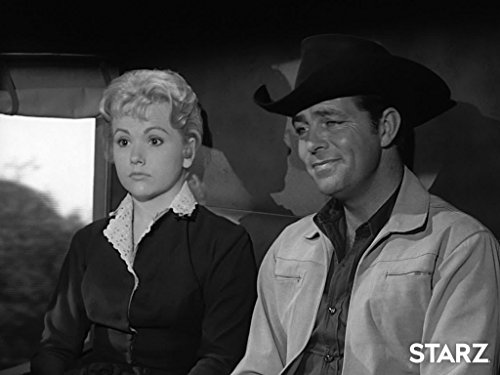
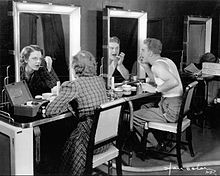
As we celebrate westerns this month in our blog series “Go West Young Man,” we are tuning in to Stagecoach West which traveled across the air waves from 1960-1961. The show debuted in October of 1960 with the final episode airing in June of 1961. For the summer, reruns of the show continued. The thirty-eight episodes were on Tuesday nights.

📷wikipedia.com

The show features two Civil War veterans, Luke Perry (Wayne Rogers) and Simon Kane (Robert Bray), who own a stagecoach line and share driving duties in the Wyoming territory. It was fun to see a young Rogers decades before he showed up in Korea bantering with Alan Alda. During their trips they run into murders, robberies, range wars, renegade soldiers, and passengers who have their own drama. Simon’s son Davey (Richard Eyer) often travels with the men.

They are based in Outpost, a small frontier town. We get to know several townspeople including Dan Murchison (John Litel) who runs the general store and bank; Zeke Bonner (James Burke) who rents rooms at The Halfway House; Hugh Strickland (Robert J. Stevenson), the Marshal in Timberline; and Doc Apperson (played by J. Pat O’Malley and Sydney Smith).

📷rottentomatoes.com

Vincent M. Fennelly was the producer and there were several directors, with Thomas Carr taking the helm most often. There was also a long list of writers, but D.D. Beauchamp and Mary Beauchamp penned many of the scripts. From what I could learn about the Beauchamps, they didn’t work together but wrote their own episodes. Mary was known for her work on Bat Masterson and Tales of West Fargo in addition to this show. D.D. (Daniel Deronda) is best remembered as a writer for Daniel Boone. His third wife was Mary Mitchell, so I am guessing that Mary Mitchell and Mary Beauchamp are the same person. Sounds like she and her husband were cremated, so there is no findagrave site for her.

The theme song was composed by Skip Martin and Terry Gilkyson. This was the only time I could find where this duo worked together. They had very different careers. Gilkyson was part of The Weavers and The Easy Riders. In 1960 he went to work for Walt Disney and was nominated for an Oscar for “The Bare Necessities” in Jungle Book. Martin worked with jazz and swing bands in the 1930s and 40s including Count Basie and Glenn Miller. With Les Brown, he was given credit for writing “I’ve Got My Love to Keep Me Warm.” In the 1950s he moved to Hollywood where he worked on Singin’ in the Rain and A Star is Born.

📷westernserieswiki.com

Richard Eyer in an interview said the show “kept me busy and was usually fun. It was a very positive experience. When they hired me, it was sort of a transitional point . . when we did the pilot I was 13 and quite young . . . we started production eight months [later] . . . I was into puberty and adolescence.”

Tuesday nights’ competition in 1960 was Thriller on NBC and The Tom Ewell Show and The Red Skelton Show on CBS. Thriller was an interesting show hosted by Boris Karloff. It began as an anthology focusing on crime but later transitioned to gothic horror stories. The Tom Ewell Show also began and ended in 1960. Ewell plays a real estate agent who lives with a lot of women, namely his wife, daughters, and mother-in-law. ABC aired The Rifleman and The Legend of Wyatt Earp before Stagecoach West.

The show never gained viewers, so it was cancelled in June. If you follow me, you know I don’t have the most positive feelings about Red Skelton and how he treated the people who worked for him, but it was a very popular show and some of the episodes were in color, so a lot of people were tuning into to watch him. I wonder if because two westerns were on earlier in the evening, people were ready to watch another genre. In addition to this night of programming, there were another 15 westerns on during the evenings on the other days of the week. The other factor that comes into play is that both The Rifleman and The Many Loves of Dobie Gillis on CBS were in the top thirty. I wonder how many viewers watched The Rifleman on ABC and then switched networks to Dobie Gillis on NBC and then never returned to ABC for the rest of the evening.

It would be a fun and easy binge watch if you want to tune in even to see the guest stars and learn some of the issues that were dealt with during this era of travel.

Gather Round: It’s Time for Tales of Wells Fargo

📷pinterest.com

This month we are Riding the Range, exploring some of the westerns from the fifties and sixties. One of those shows that was on the air from 1957-1962 was Tales of Wells Fargo.

The show was produced by Revue Productions and set in the 1870s and 1880s. Gene Reynolds was one of the creators of the show, along with Frank Gruber and James Brooks. Reynolds would go on to great success as a director, producer and writer, and my favorite of his was M*A*S*H. Although this show was set in the same time as Daniel Boone, it was better at getting history correct. The show featured special agent Jim Hardie (Dale Robertson) with his horse Jubilee. It was loosely based on the life of real detective Fred J. Dodge. Sometimes Hardie ran into characters from history including Jesse James and Belle Starr.

📷pinterest.com Fred J. Dodge

Fred Dodge was born in California in 1854. He went to work as an undercover agent for Wells Fargo, working in California, Nevada, and Arizona. In 1979 he was in Tombstone and recommended hiring Wyatt Earp as guard for the stage line. He became great friends with Earp. Later Dodge became constable of Tombstone while working undercover. In 1890 he left his undercover work and became a known employee of Wells Fargo in Texas. He purchased a 2,000-acre ranch near Boerne, Texas and when he retired in 1917, he lived there with his family. Dodge was described as an intelligent and successful investigator. He wrote 27 journals during his career, noting his activities and travels in them. Some of these were used for Tales of West Fargo.

I had always assumed this show was about stagecoach travel, but it was not, although stage coaches played a part. In the mid-1800s, the Wells Fargo stage line was the primary connection between the East and West coasts. Wells Fargo did not operate a stage coach line, but they did use that form of transportation for money, gold and other valuables to be delivered. Trains are involved in many of the plots. One of the trains used in the show would eventually travel to Hooterville and be renamed the Cannonball.

📷imdb.com

The first five seasons were black and white half-hour shows, while the final season switched to a color, hour-long show. During the last season, Hardie settles on a ranch near San Francisco and several recurring characters (Jack Ging, William Demarest, Virginia Christine, Lory Patrick, and Mary Jayne Saunders) were added to the series. Earle Lyon replaced Nat Holt as producer in 1960.

The theme song was written by Stanley Wilson and Mort Greene. Wilson was a prolific composer, amassing 147 credits for composing and 278 for music department credit on television and in movies. Mort Greene was best known as a writer for The Red Skelton Show and for his musical role for Leave it to Beaver.

The number of well-known actors who appeared on the show was surprising. Here are just a few of the huge number: Claude Akins, Eddie Albert, Hugh Beaumont, Dan Blocker, Charles Bronson, Edgar Buchanan, Harry Carey Jr., Chuck Connors, Buddy Ebsen, Beverly Garland, George Kennedy, Tina Louise, Steve McQueen, Jack Nicholson, Leonard Nimoy, Denver Pyle, Jason Robards, Vito Scotti, Dawn Wells, and Adam West.

📷mysteryfile.com

It was an NBC show. The pilot premiered on Schlitz Playhouse of Stars. Its biggest competition was Father Knows Best in seasons two and three. It was very popular with the viewers. The show was in the top ten during seasons one through four. For the sixth season, with an entire new cast, new theme song, and color, it was almost like a new show. NBC moved it to Saturday nights against Perry Mason and ratings declined drastically, costs went up significantly, and it was canceled.

Robertson thought the key to the popularity of the show was because it was not geared specifically to adults or kids. It was a family show. When Robertson first read the script, it was terrible, but he owed Nat Holt a favor, so he accepted the role, assuming that it would never make it. Robertson received a 50% ownership in the show, so he said of course it made him want the show to be better and he convinced them to replace most of the original script. He said that he enjoyed his time on the show a lot and that the crew was close and professional. They never went over schedule or over budget during the entire run.

📷thehollywoodreporter.com

The first two seasons were released on DVD in 2011 if you want to check them out. It sounds like this was a solid show. The network supported them, the cast was close, the production team was on top of things, and they all enjoyed their time with the show. That is a rare thing to hear in the television business. They took a gamble in the last season, and it didn’t work out, but perhaps it was for the best. It sounds like the actual show ended the season before because the last season things changed so much it was a completely new production. I would like to read more about Fred Dodge. His life sounds fascinating.

Eddie Albert: The John Muir of Hollywood

This month we are looking at some of our favorite classic television actors. If you are a big fan of Oklahoma or Green Acres, you will be well acquainted with our star today, Eddie Albert. Let’s learn a bit more about his life and career.

Photo: imdb.com

Eddie was born Edward Albert Heimberger in 1906 in Illinois. When he was one, his family moved to Minneapolis. When he was six, he became a paper boy. He and his schoolmate, Harriet Lake, were in the drama club. Harriet would later change her name to Ann Sothern. After graduating in 1926, Albert enrolled at the University of Minnesota to major in business.

He began his career in earnest, but the stock market crash derailed his job search. He worked a variety of jobs including singer, trapeze artist, and insurance salesman.

Photo: closerweekly.com

In 1933 he moved to New York City and cohosted a radio show called “The Honeymooners-Grace and Eddie Show,” with costar Grace Bradt. He was on the show three years and then Warner Brothers offered him a contract.

Albert also had an early career on Broadway with lead roles in “Room Service” and The Boys From Syracuse.” He also began working on television. In 1936, NBC hosted a play of his “The Love Nest” on their experimental television station W2XBS, now WNBC.

His first movie role occurred in 1938 in Brother Rat. He would make 25 additional films during the next decade and then another 50 big-screen movies before his career ended, with his last one being the Narrator in Death Valley Days in 1995.

During his odd-job era, Albert had toured Mexico as a clown and trapeze artist with the Escalante Brother Circus while working for the US Army intelligence, photographing German boats in Mexican harbors. In 1942, he enlisted in the US Coast Guard. In 1943, he resigned in order to accept an offer as a lieutenant in the US Naval Reserve. He rescued 47 marines under heavy enemy fire in 1943 and was awarded a Bronze Star.

Eddie and Margo Photo: facebook.com

After returning from the War, Albert married Mexican actress, Margo. Their son also became an actor and their daughter took on the role of Eddie’s business manager. His son had more than 130 credits, the first being in 1963. You probably saw him on many of your favorite shows. Unfortunately, he passed away from lung cancer only a year after his father died.

During the late forties to the early sixties, Albert returned to Broadway for roles in “Miss Liberty,” “The Seven-Year Itch,” and “The Music Man.”

Albert had a long and active television career. During the fifty years that he was working in the industry, he appeared in almost 100 different shows. His first appearance was in the Ford Theater Hour in 1948.

Throughout the fifties, Eddie showed up in many of the early drama series on television. The sixties found him, along with most other actors of that decade, showing up on a variety of westerns, including Laramie, Tales of West Fargo, The Virginian, and Wagon Train. He was offered roles in several dramas as well, including Dr. Kildare, The Outer Limits, and The Man From U.N.C.L.E.

Photo: cinemacats.com

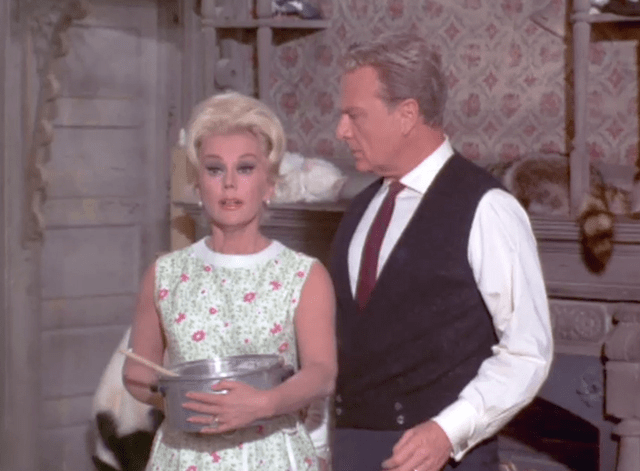
In 1965 he received the starring role of Oliver Douglas in Green Acres. For six seasons, he extolled the virtues of farming over the big city rat race. While Oliver had a harder time fitting into Hooterville life, his elegant wife Lisa was accepted immediately. If you have been reading my blog for a while, you know I love this show. I am more impressed with it now, fifty years later. There is so much sophisticated humor and wit in the show and I love getting to know the quirky characters who live in the Hooterville community. As Oliver Douglas, Albert was also on The Beverly Hillbillies and Petticoat Junction. The show was purged with the other rural comedies, even though the ratings were still quite high.

The seventies and eighties kept Albert busy on television and in films. He appeared on many shows including Columbo, McCloud, Here’s Lucy, Simon & Simon, Hotel, Murder She Wrote, and thirtysomething.

He opted to star in one more television series in Switch from 1975-78. He starred as ex-cop Frank McBride who started a detective agency with ex-con Pete Ryan (Robert Wagner).

Much of Eddie’s life was spent as an activist for social and environmental causes. He participated in the first Earth Day. He founded the Eddie Albert World Trees Foundation and was national chairman for the Boys Scouts of America’s conservation program. From 1985-1993, he was the spokesperson for the National Arbor Day Foundation. He was a trustee of the National Recreation and Park Association and became a member of the U.S. Department of Energy’s advisory board.

In addition, he was involved with Meals for Millions and was a consultant for the World Hunger Conference. Meals for Millions was a project that created nutritional meals for three cents each! They were sent to 129 different countries and added up to more than 6.5 million pounds of food. He and Albert Schweitzer participated in a documentary about malnutrition in Africa, and he often campaigned against DDT. He was also a director for the U.S. Council on Refugees and promoted organic gardening. Albert was also the founder of City Children’s Farms, a program to get inner-city kids involved in gardening.

I’m not sure when he had any other time for leisure and recreation, but he loved jogging, swimming, golfing, traveling, sculpting, beekeeping, sailing, reading, making wine, gardening, and playing guitar.

Photo: classicmoviehub.com

He 1995, Albert was diagnosed with Alzheimer’s disease. His son temporarily retired from acting to care for his father. In 2005, Eddie passed away from pneumonia.

When Albert passed away, we lost much more than an actor, although we did lose a great actor. I was so impressed with how much he did for the economy. He told a great story about his former costar Eva Gabor. She loved her fashion. They were great friends and like any couple, married or not, they had their differences. She never understood his passion for wildlife conservation. She asked him, “Every time you hear about a sick fish, you make a speech, vy?” And he patiently explained that we needed to preserve nature and save wild animals. A few days later she showed up in a gown made of feathers. He told her she should not be wearing it, and she said it was so chic. Albert told her that she was a role model, and when other women saw her gown, they would want one and many birds would die just to supply the feathers. Lisa just laughed and seriously said, “But Eddie, feathers don’t come from birds.” So he asked her where they did come from and she said, “Dahlink, Pillows! Feathers come from pillows.” In addition to being a great actor and an amazing activist, he was also a good and patient friend.

Marcus Welby, MD: Every Family’s Doctor

The Cast Photo: tvtropes.com

This month we are “Examining Our Favorite Medical Series.” Beginning in 1969 and staying on the air for seven seasons, this show was a show that the entire family could agree to watch. In fact, on The Partridge Family, there is at least one episode where the Partridges are watching Marcus Welby, MD.

Marcus Welby (Robert Young) is a family doctor who truly likes and knows his patients. Sometimes he even made house calls. Dr. Steven Kiley (James Brolin) is his business partner and they both rely on Nurse/Office Manager Consuelo Lopez (Elena Verdugo).

Produced by David Victor and David J. O’Connell, the show aired on Thursday nights. Victor also produced episodes of Dr. Kildare as well as The Man from U.N.C.L.E., Owen Marshall, Counselor at Law, and Lucas Tanner, among others. O’Connell produced episodes from several series but he was kept busy in the Editorial Department for a slew of shows, including Tales of West Fargo, Bachelor Father, Leave It to Beaver, The Jack Benny Show, Wagon Train, McHale’s Navy, and The Munsters. (In the future, I will definitely look into a show about editors for a blog.)

Welby and Kiley were very different. Kiley rode a motorcycle to work while Welby drove a sedan. Welby was a widower; he started his career as a doctor in the US Navy during the war. He enjoyed sailing on the ocean. Welby often wanted to use more radical treatments than his younger partner who was more conservative in his patient care. A lot of ailments were tackled on the series including impotence, depression, brain damage, breast cancer, epilepsy, Alzheimer’s, rape, and abortion.

Photo: WorthPoint.com

The two doctors had a private practice with operating privileges at Lang Memorial Hospital. Both doctors had girlfriends, Myra (Anne Baxter) and Janet (Pamela Hensley). Welby’s daughter (Christine Belford) and grandson (Gavin Brendan) were often on the set as was Kathleen Faverty (Sharon Gless), an assistant program director.

In season two the show made it to number one for ABC. Both Young and Brolin won Emmys and the show won an Emmy for Outstanding Dramatic Series.

After seven seasons of medical storylines, the show’s viewership began to wane. Many of the medical series were running out of steam at that time. Once ratings continued on the decline, the show was canceled.

Photo: decider.com

However, eight years later, The Return of Marcus Welby, MD aired. Young and Verdugo continued their roles although Brolin was no longer available. It must have done well, because a second movie was filmed in 1988–Marcus Welby, MD – A Holiday Affair. This would be the last acting role Young would accept.

I have many fond memories of watching this show when I was young with my family. Marcus Welby reminded me of our family doctors; he was kind, gentle, smart, and had a great bedside manner. And he made house calls! Don’t get me wrong, there are still many doctors with his characteristics and they kind of make house calls now over the computer but it’s not the same. Thanks, Dr. Welby, for caring for all of us for seven years.

In Memory of Adam West

west1

Adam West was born William West Anderson on September 19, 1928 in Walla Walla, Washington.  He just passed away this summer on June 9. His father farmed and his mother gave up her career as an opera singer and concert pianist.  Like all kids, he had a collection of comic books including Batman. When his parents divorced, he moved to Seattle with his mother. He attended Whitman College in Washington and graduated with a BS in literature. He was drafted into the Army and became an announcer on the American Forces Network television.

After his service career, he became a milkman until he moved to Hawaii to pursue a career in television. In 1959, he took on his stage name of Adam West and moved to Hollywood with his wife and children. He quickly became an actor and appeared in 33 television shows, including 77 Sunset Strip, Maverick, Hawaiian Eye, Tales of West Fargo, Perry Mason, Gunsmoke, Petticoat Junction, and Bewitched.
west4

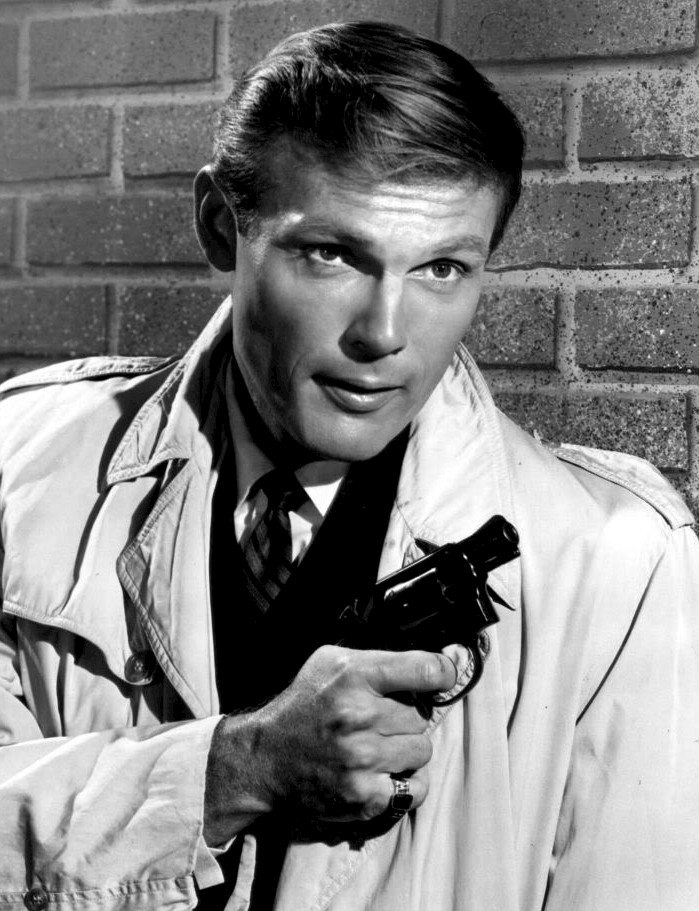
In 1966, William Dozier, producer for a new show about Batman decided to cast West over Lyle Waggoner after seeing him as a James Bond-type character in a Nestle Quik commercial. DC Comics described Batman as 6’2” and that was West’s height.
west2

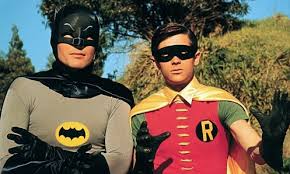
When the series ended, he and Burt Ward found themselves typecast as Batman and Robin.  He did a series of appearances about the Batman character while pursuing a movie career. He ended his career with 49 movies to his credit.

He appeared in 78 television shows after Batman ended including The Big Valley, Emergency, Alice, Police Woman, Laverne and Shirley, The Love Boat, Hart to Hart, Murphy Brown, Diagnosis Murder, News Radio, Drew Carey, King of Queens, and 30 Rock.

After 1990, he apparently embraced his Batman character and appeared on numerous television shows as himself or Batman. When asked about this, he said, “I think it evolved. I learned a long time ago that because people love Batman, I should too. I learned that I shouldn’t resent it even though it prevented me from getting other roles. I really had to become fond of Batman in order to deal with it. I embraced it.”

In 1957, he and his first wife Billie divorced.  He married  dancer Frisbie Dawson in 1957 and divorced in 1962. In 1970, he married Marcelle, and they were together until his death.  He had two children with each of his wives and two stepchildren.

In 1994, he wrote an autobiography Back to the Batcave. In 2012, he received a star on the Hollywood Walk of Fame on Hollywood Boulevard.

west8

West loved outdoor activities and had a lot of hobbies including fishing, sailing, hiking, skiing, golfing, riding motorcycles, swimming, surfing, dancing, traveling, as well as spending time with his family, listening to classic rock, reading, and watching movies.

West died after a short battle with leukemia at age 88. The next week, LA shined the bat signal on city hall to honor him.

While West certainly had a full and varied career despite his typecasting from Batman, I would like to spend some time looking at the series that gave him his fame. Typically, I am not really into super heroes, but I loved this show when I was younger and still get a kick out of watching the campy comedy. I can still hear the narrator saying, “Same bat time, same bat channel.” The show was canceled not only because of low ratings but also because the special effects and lighting had tremendous costs.  When ABC dropped it, they tried to find another network to take it over.  They had no offers, so they dismantled the set. Two weeks later, NBC offered to pick up the show, but decided it was too expensive to start from scratch.
batman4

In the 1960s, Ed Graham Productions received the rights to the comic strip Batman and intended to produce an adventure show similar to Superman or The Lone Ranger. ABC was thinking about a prime time show so DC Comics bought back the rights and sold them to 20th Century Fox. 20th Century gave it to William Dozier to produce.  Dozier had never read comic books and felt that the show should take a campy, pop-art approach. The show was originally an hour-long series, but with only half-hour time slots available, it was changed to a bi-weekly half-hour show.

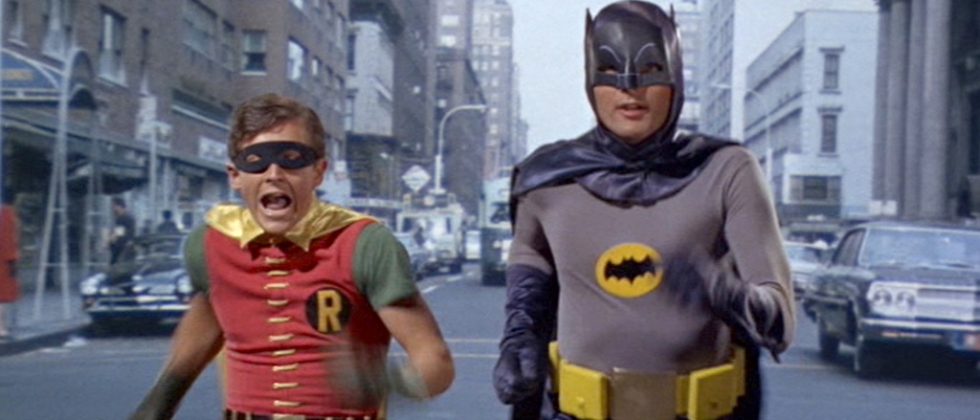
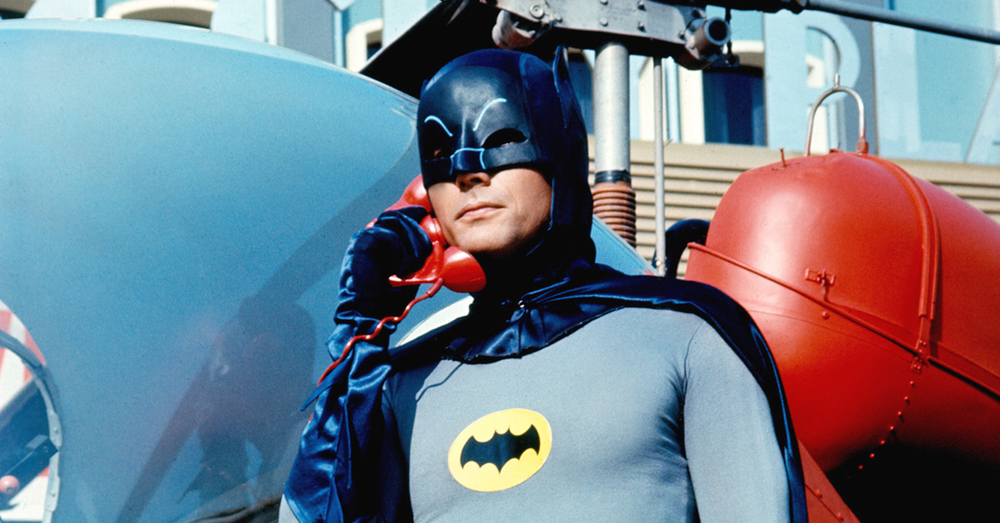
The concept of the show was that millionaire Bruce Wayne and his ward Dick Grayson lead a double life in Gotham City.  When they move a shelf in their library and slide down the bat pole to the bat cave, they become Batman and Robin.  Only their butler Alfred is aware of their real identity. Police Commissioner Gordon calls them on the batphone, often referring to them as the dynamic duo. They usually hop in their bat mobile and speed to city hall to learn what villain is up to no good in their city.
west5

Adam West took the role of Batman/Bruce Wayne and Burt Ward was Robin/Dick Grayson. Other cast members included Alan Napier as Alfred the Butler, Neil Hamilton as Commissioner Gordon, Stafford Repp as Chief O’Hara, Madge Blake as Aunt Harriet, and Yvonne Craig as Batgirl.

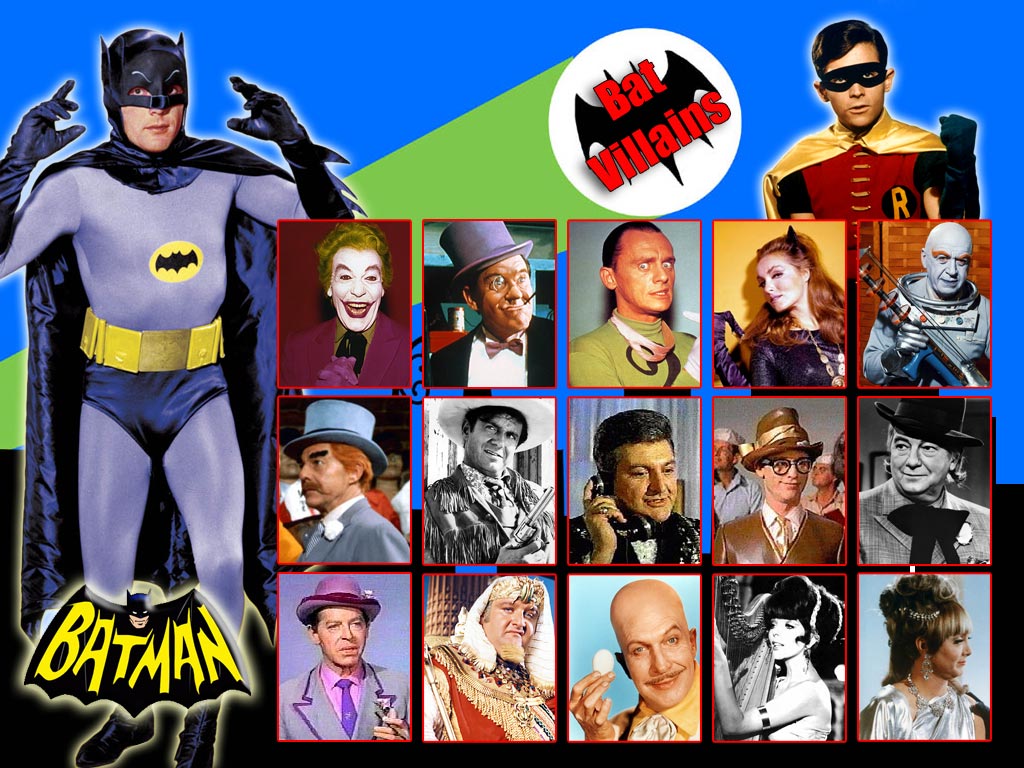
My favorite villians included Julie Newmar and Eartha Kitt as Cat Woman, in love with Batman but not willing to give up her criminal life; Burgess Meredith as Penguin always carrying an umbrella; Frank Gorshin as The Riddler leaving riddles for clues; Vincent Price as Egghead a bald-headed genius who loves eggs; Cesar Romero as the Joker who leaves jokes for clues; and Victor Buono as King Tut when evil and Professor William McElroy as his non-evil personality.

The show aired twice a week on back-to-back nights. The first episode would set up the situation and end with the dynamic duo in some dangerous situation. Batman and Robin would get their assignment from the Commissioner and then, using a series of clues, try to figure out who the villain is and then how to defeat them. At some point, there was always a fistfight with the villain’s entourage at which time the villain typically escaped. During the fight, words would pop up on the screen like POW, BAM, ZONK, BOOM. Then the crime fighters would go to look for them at which point the dangerous and perhaps deadly situation occurred and the next episode would summarize what happened on the previous episode before defeating the bad guys for good. They often used inventions like shark repellant bat spray to aid them in their search.

batman5

In Season 3, Bat Girl was added to the cast. The ratings were starting to fall so Dozier wanted to bring in a girl character to attract female viewers. Her real identity was Barbara Gordon, the Commissioner’s daughter.  The Commissioner never seemed to realize she was familiar to him. Because of low ratings, the show also became a once a week series in the third season.  Eartha Kitt took over the Catwoman role since Newmar was filming a movie at the time. Madge Blake’s health was failing, and her role was limited to two appearances during the last season.

The show was cancelled before the next season but it has continued to be popular in reruns. In 1966, an album was released “Batman: The Exclusive Original Soundtrack Album.” It included music by Nelson Riddle, dialogue excerpts from several of the characters in the show, as well as the Batman theme song, Batusi A Go Go, and several other tunes.

A lot of collectibles were produced during the run of the show including trading cards, Batmobile kits, coloring books, lunch boxes, board games, and View-Master reels. In 2013, Mattel designed an action figure line based on the tv characters, and several Hot Wheels/Matchbox cars have been produced. The Batmobile from the show was auctioned in 2013, selling for $4.2 million.  The huge profits from the car as well as the line of action figures prove the continuing interest in and success of this show now 50 years old.

Here are some fun facts I found about the series:

A total of 352 “Holy” words were used by Robin from “Holy Agility” to “Holy Zorro”.

Cesar Romero’s Joker laugh was created almost by accident. Shortly after being cast, Romero met with producers to discuss his role on his series. While waiting to meet with them, Romero happened to see conceptual art of Joker’s costuming. Romero felt the pictures almost looked absurd, and as a result spontaneously broke out into a playfully loud and almost manic laughter. A producer overhearing it responded by telling Romero “That’s it, that’s your Joker’s laugh!”

Burgess Meredith had not smoked in 20 years when he was cast as the Penguin. He came up with the Penguin’s distinctive squawking sound because the cigarettes were irritating his throat. Like his trademark “quack”, the Penguin’s waddling was largely a result of improvisation by Burgess Meredith, as he found it difficult to stand and walk straight while wearing the rubber padded fat suit that was part of his costuming.

Before going on the air, this show received the worst audience test scores in the history of ABC. It only went on the air because so much money had already been invested in it.

This was one of the “in” shows to appear on if you were a big name in Hollywood during the 1960s, and many top names guested on the show, including many who didn’t do much TV otherwise. Those performers who weren’t cast as guest villains could frequently be seen popping their heads out of windows to exchange a few words with Batman and Robin when the latter would be climbing up a building wall. Frank Sinatra, Natalie Wood, and Cary Grant were all fans of the show, and wanted to be on it, but the producers were never able to come up with the right roles for any of them. During the run of the series, this show crossed over with The Green Hornet (1966).

The “Giant Lighted Lucite Map of Gotham City” is a reverse image of St. Louis, right down to Forest Park, Fairground Park, Tower Grove Park, Lafayette Park, and Horseshoe Lake on the Illinois side, as well as the other river and road networks.

Each main villain had their own theme music.

In the first season, Burt Ward (Robin) was paid $350 per week.

Yvonne Craig has stated that she briefly did have a stunt double, but did most of her stunts herself. She actually operated the Batgirl Cycle herself as well. She was an accomplished biker at the time, and actually owned a bike.

Adam West (Bruce Wayne / Batman), Burt Ward (Dick Grayson / Robin) and  Neil Hamilton (Commissioner Gordon) are the only actors to appear in all 120 episodes of the series.

Suzanne Pleshette was one of the original choices to play Catwoman before Julie Newmar landed the role.

The show aired from January 12, 1966 to March 14, 1968 on ABC for 120 episodes. It was one of few TV series to be seen on 2 different nights a week: 7:30 Wednesdays and Thursdays. It remained there for a season and a half (Jan. 1966-Aug. 1967) until it was moved back once a week (Thursdays 7:30) for its final season. The episodes were generally two-parters: Wednesday’s episode was a cliffhanger, resolved in Thursday’s episode. The 1966-1967 season had 2 3-parter episodes (“The Zodiac Crimes/The Joker’s Hard Times/The Penguin Declines”[ep. #2.37-9, 1/11-12 & 18/1967] and “Penguin is a Girl’s Best Friend/Penguin Sets a Trend/Penguin’s Disastrous End”[ep. #2.42-4, 1/26/, 2/1 & 2/1967]) which left cliffhangers that would be solved the following week. When the series was reduced to (mostly) one part episodes during season three, the cliffhanger death traps and threats were still used, but greatly scaled back and occurring at the middle commercial break.

The three primary cast members of The Addams Family each made appearances on Batman. Carolyn Jones played the villainess Marsha, Queen of Diamonds, and John Astin played the Riddler during the second season. Additionally, Ted Cassidy had a window cameo, appearing in his part as Lurch from The Addams Family. Interestingly, Cassidy’s cameo took place in a story involving the Penguin, with whom Jones’ character Marsha teamed up in one of the three-part stories.

In episode 7, Alfred refers to Robin as Mr. Ward, and not Mr. Grayson.

While Superheroes and the movies and television shows they appear in seem to cycle up and down throughout the decades, the popularity of the Batman television show has never wavered.  The fact that Mattel would create action figures based on the original stars almost 50 years after the show debuted says a lot about the fans and the place the show holds in their hearts.

Thank you Adam West for creating such a memorable and well-loved character.  Rest in peace.
batman2