Empty Nest: These Birds Kept Flying Home

This month we are looking at sitcoms dealing with careers in our “Work It Out” series. Today I also am learning a lot about a show that I thought was okay but had a big following and was quite popular for seven seasons: Empty Nest.
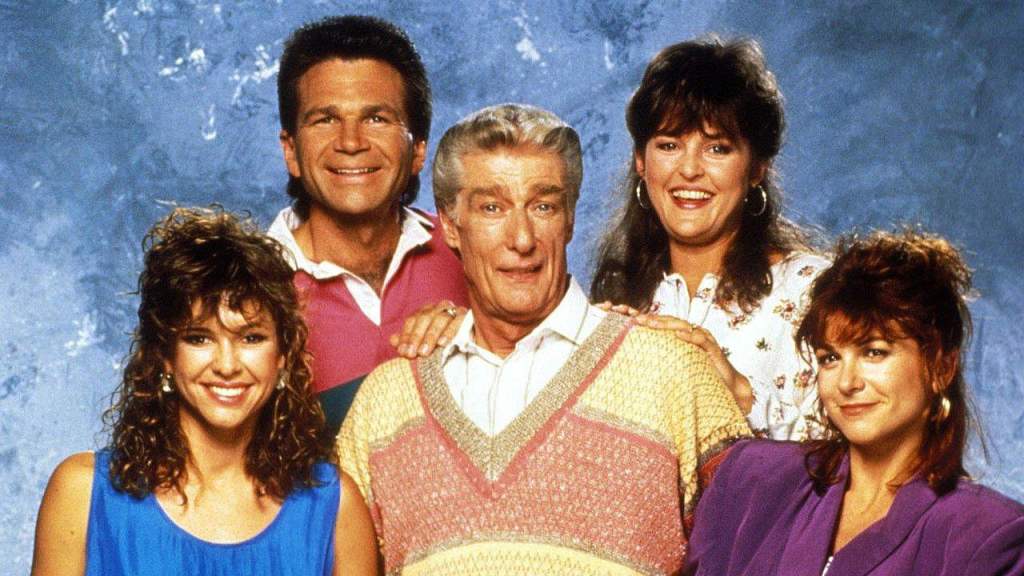
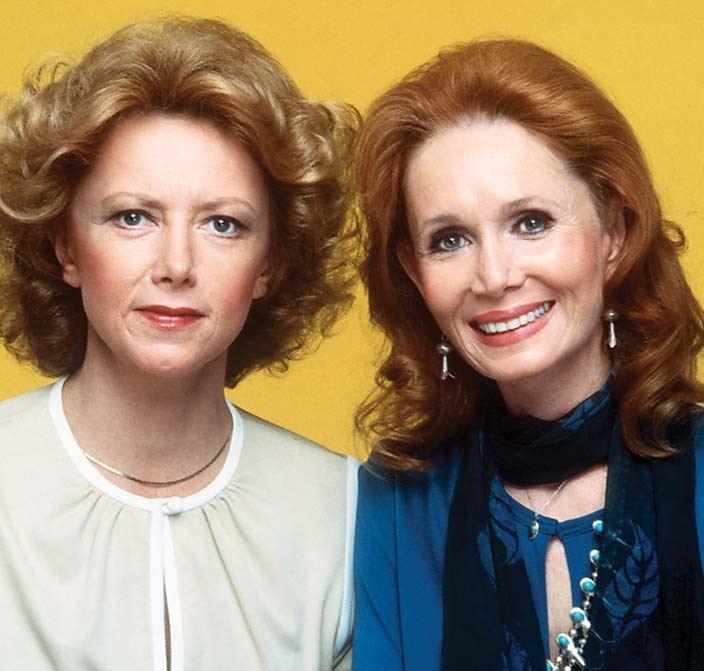
Cast Photo: omigods.com

This show was produced by Witt/Thomas/Harris Productions, the same team that produced Benson which we learned about last week. It was a spin-off of The Golden Girls which also was produced by the group. However, it is a stretch to connect the original episode and this series. In 1987 George (Paul Dooley) and Renee (Rita Moreno) were a couple who lived next to the Girls. They were suffering from Empty Nest Syndrome after their daughter (Jane Hamick) left for college and their son (Geoffrey Lewis) lived on his own. They had a neighbor Oliver (David Leisure).

Rita did not think the show was very well written. She said Susan Harris was ill at the time. The Corliss house and neighbor was about the only thing that was included in the new show.

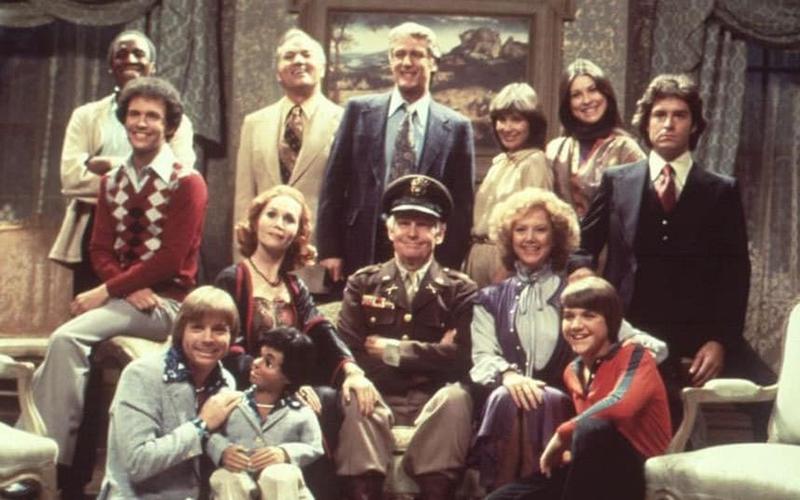
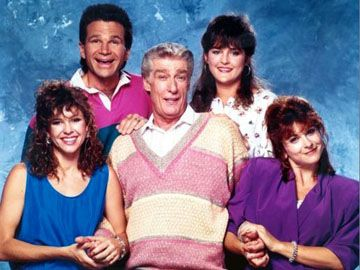
On Empty Nest, Dr. Harry Weston (Richard Mulligan) is a widowed pediatrician. His two adult daughters Barbara (Kristy McNichol) and Carol (Dinah Manoff) move back in with him. Rounding out the cast was neighbor Charley (David Leisure) and Weston’s nurse Laverne (Park Overall). Carol is the oldest and had gone through a bad divorce. Barbara was the middle child and was a tough, undercover cop. Their youngest sister Emily was off at college and never seen in the first three seasons. When McNichol left the show early in the fifth season, Emily (Lisa Rieffel) moved back home but she left after that year, and for the final two seasons, only Carol remained at home, although McNichol did return for the finale. Charley bonded with Harry and considered him a surrogate father figure. Their dog Dreyfuss (Bear) also lived with the crew.

Photo: sitcomsonline.com

Bear’s father was a Golden Retriever mix and his mother was a St. Bernard. Bear’s entire family was in show business. His father was in Father Murphy and Summer Rental with John Candy. His brother was in both Steel Magnolias and The Bodyguard. His children continued the tradition taking roles in several movies including Homeward Bound II. Mulligan and Bear were close. Richard would greet him every morning and give him a treat.

The cast was well aware of each other before working together. McNichol had worked with Manoff who played her friend on Family earlier in the 80s. Mulligan had played Manoff’s father on Soap. Mulligan and McNichol worked together on The Love Boat. And, McNichol and Leisure were in the movie You Can’t Hurry Love in 1988.

Photo: mattbrowningbooks.com

The reason this show is considered in this month’s blog is that a lot of the show revolved around Harry’s medical practice. He worked at a hospital for the first five seasons with his nurse Laverne. The two are good friends. For the final two seasons, Harry retires and then decides to help out an inner city clinic run by Dr. Maxine Douglas (Marsha Warfield). When Laverne is fired by Harry’s replacement, he hires her at the clinic.

Photo: imdb.com

Some notable guest stars who showed up along the way included Don Adams, Diana Muldaur, Loni Anderson, Mayim Bialik, Angie Dickinson, Zsa Zsa Gabor, Shirley Jones, Audrey Meadows, and Doris Roberts.

The theme song was “Life Goes On,” written by John Bettis and George Tipton; it was performed by Billy Vera.

Critics liked the show. In 1988, TV Guide said “it’s a simple premise, but it’s vintage Harris and like everything else she does, Empty Nest has been meticulously thought out and superbly cast. Each of the regulars is carefully drawn, consistently realized . . . as for Empty Nest, it’s warm and entertaining comedy . . if you like the humor in Golden Girls, you’ll enjoy Empty Nest. And even if you don’t like Golden Girls, sample Empty Nest anyway. Trust us.” In 1992, TV Guide still liked the show and said, “Harry Weston is delicious and Dreyfuss the dog is delightful. Empty Nest is home to an experienced ensemble that knows its way around a sitcom.”

Mulligan was nominated for an Emmy for Outstanding Actor in a Comedy in 1989, 1990, and 1991, winning in 1989. He was beat out by Ted Danson for Cheers in 1990 and Burt Reynolds for Evening Shade in 1991.
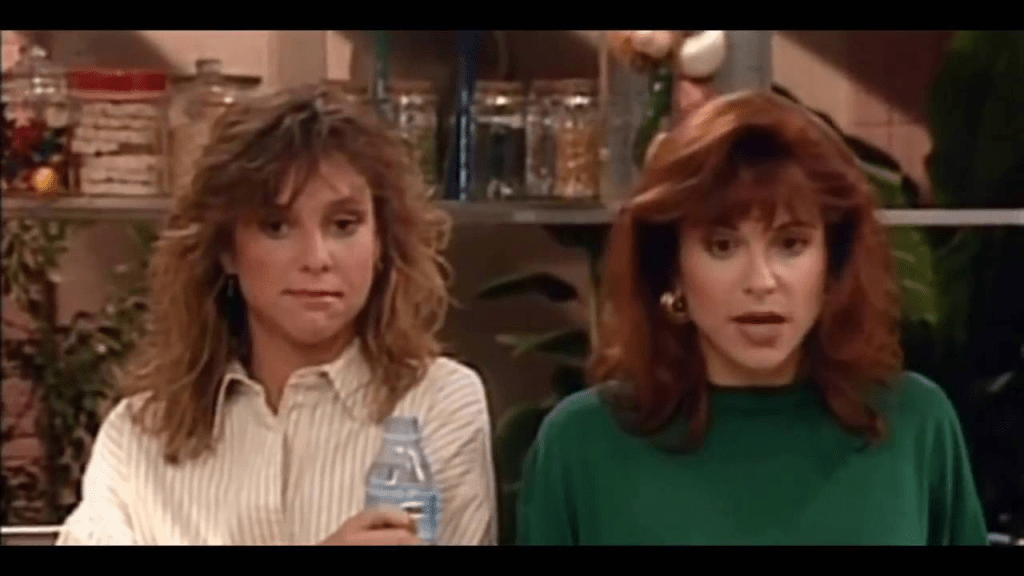
Photo: sunny107.9.com

Most viewers loved the show the first four seasons, but after McNichol left and Harry retired, the quality seemed to wane. The show was in the top for seasons one through three. However, after that, it slowly declined, coming in #23 for season four, #45 for season five, #62 for season six, and #118 for season seven, so there was no surprise when it was canceled.

Grace Zabriskie appeared in the very first and very last episode of the series. In episode one, she was a woman who dated Harry, and in the finale, she played Laverne’s mother.

One of the typical plots that a lot of people mentioned as one of their favorites was episode 22 from season 1 where we watch Dr. Weston visit five different patients during one episode. At the end of the show, we realize that we have been following Billy from a newborn to 18 years of age, and we understand how much influence a family doctor can have on one patient.

Rue McClanahan talked about how Park Overall would spend her breaks roller skating in the parking lot. However, during season five, she broke her leg doing so and had to miss several episodes and spend several more with crutches in a cast.

Mayim Bialik Photo: wordpress.com

I have read a few times in the past few years doing research that Bea Arthur could be very difficult to work with. She was not the favorite on The Golden Girls set and, apparently, she caused an issue on Empty Nest as well. She despised gum chewing and would make the crew spit out their gum. When she guest starred on Empty Nest, she saw Manoff chewing gum and told her to get rid of it. When Manoff declined, Arthur stormed off the set. Speaking of Manoff, she was able to direct seven episodes of the series during the last three seasons. She directed five other shows including an episode of Sabrina, the Teen-Aged Witch. She was also credited with writing two of the Empty Nest episodes.

I do remember watching the early seasons of this show and thinking it was a decent show. I did not remember that McNichol had to leave for mental health reasons, so I’m guessing I stopped watching it before she quit. However, being in the top ten for three years is, or at least was at the time, a good indication of quality and then you add in TV Guide liking the show and Mulligan’s nominations for Emmy awards, and it presents good evidence of a well-rounded show. I did read that Overall could be a bit difficult on the set, and one of those comments came directly from her.
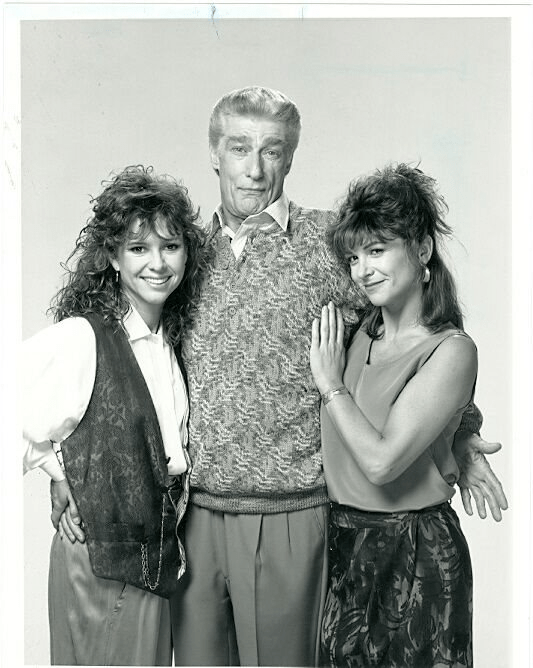
Photo: collectors.com

Marty Pollio, guest starred in season six when things weren’t so great and still had good things to say about the cast. He said that “it was an honor to be doing scenes with Richard Mulligan, he was talented beyond belief, and a great guy too. I never realized what a good actress Dinah Manoff was until I watched her work on this particular episode . . . nice person as well. The set was pretty relaxed and friendly. . . I had a really good time on this one.” It would probably have been better for the quality of the show to be a four-season show than a seven-season show.

I agree with TV Guide. If you were a fan of Golden Girls, you definitely should check out the first three seasons of Empty Nest. And even if you are in that small group of people who did not like Golden Girls, you should watch a few episodes and see what you think. However, that is easier said than done. There is no official DVD set; however, there are bootlegs on several places. I also could not find any streaming channels showing it. YouTube does have at least the first episode. Perhaps with all the classic tv channels out there, this show will make a comeback.
Benson: Still Standing

Photo: tvtunesquiz.com

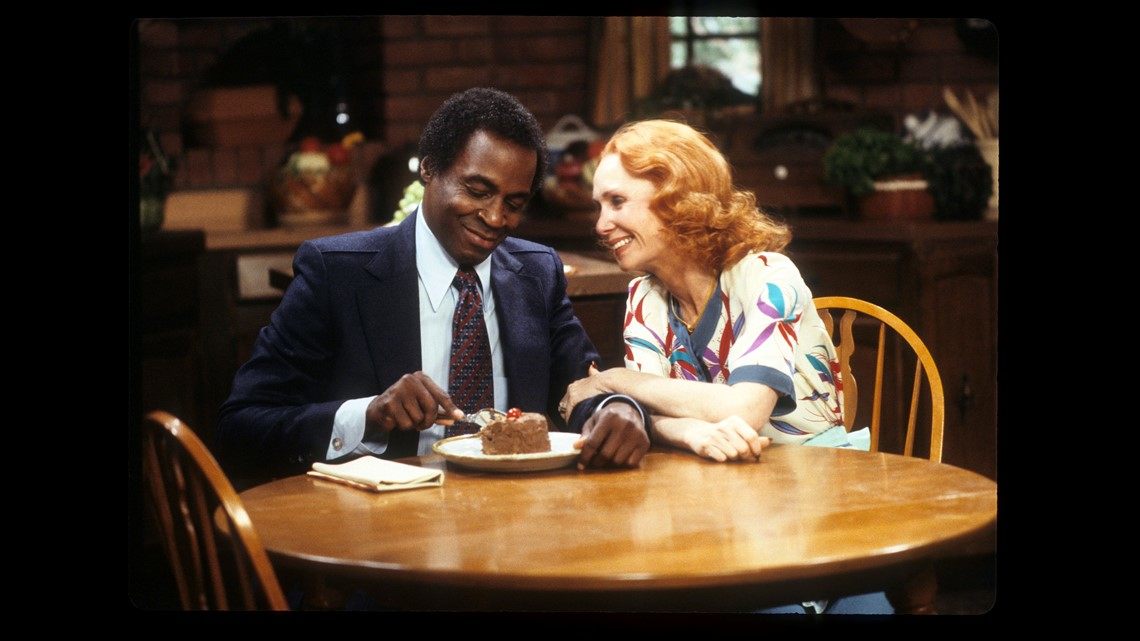
In this month’s series, “Work It Out” we are looking at some of our favorite sitcoms that revolve around work and careers. This week we are checking out one of my favorite characters on television. He started as a minor role in a controversial show, and went on to make a name for himself; the show is literally named for his character, Benson.

The series was created by Susan Harris, and produced by Witt/Thomas/Harris Productions.

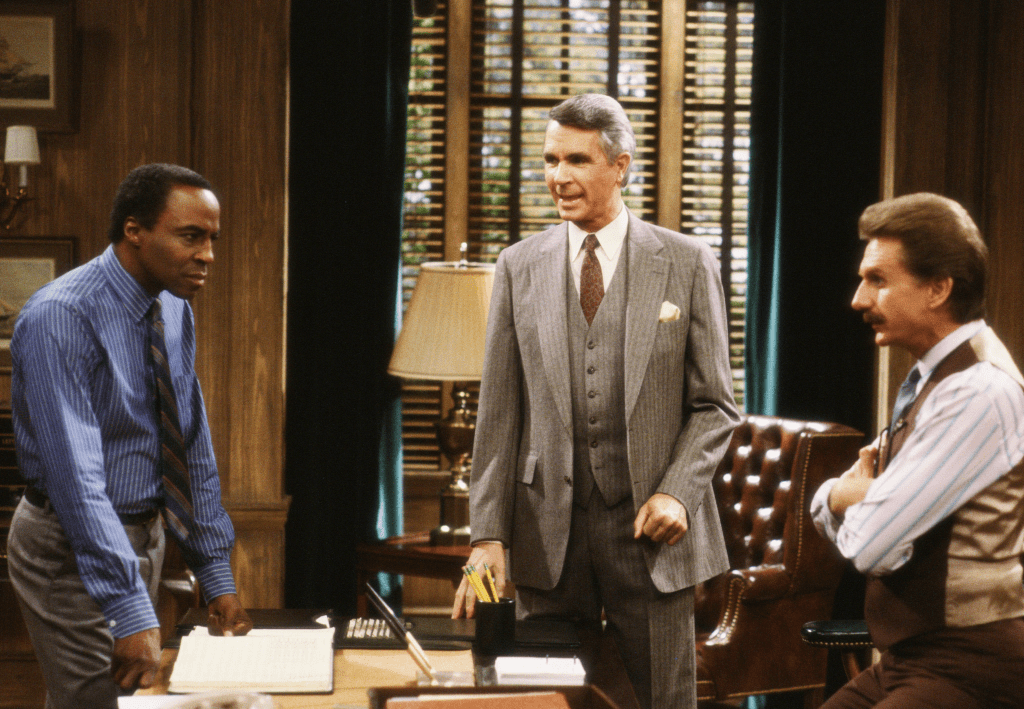
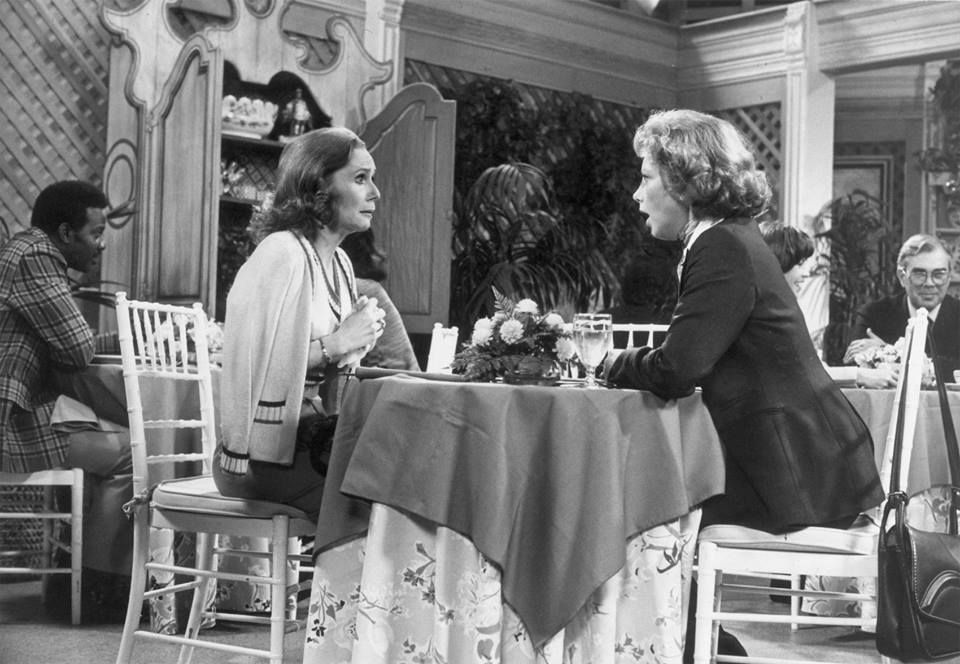
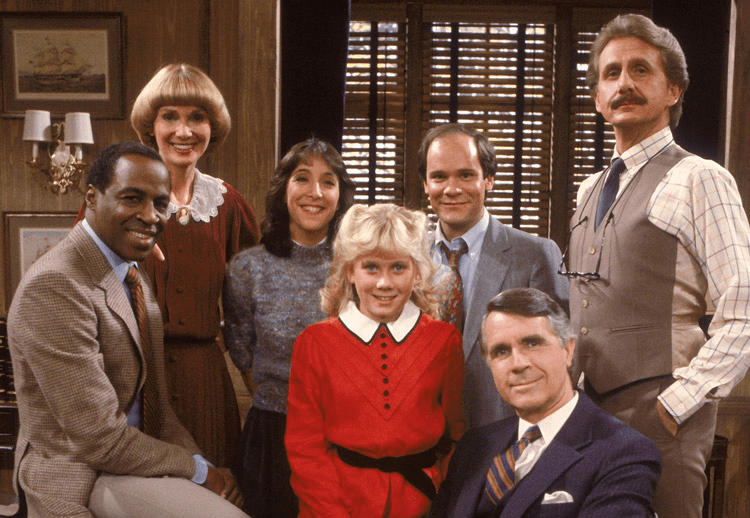
Benson (Robert Guillaume) worked for the Tate family on Soap and later went to help out Governor Eugene Gatling (James Noble), Jessica Tate’s cousin. Benson started in the governor’s household but was so competent that it didn’t take long to move him into the role of state budget director and then lieutenant governor.

Photo: hellobeautiful.com

Any time that you have a show about politics, there is room for sarcasm and humor, and this show featured both. Benson has an enjoyable, sarcastic wit. By that I mean, most characters would come off arrogantly with so much sarcasm, but Benson is so sophisticated and wise that he just gets away with it. And to be honest, he typically is only sarcastic when the character or the action calls for it.

Photo: dvdizzy.com

One of the people who often gets his sarcasm is the cook Gretchen (Inga Swenson). Clayton Endicott III (Rene Auberjonois) also gets his fair share. In season three, Denise Stevens (Didi Conn) is Benson’s press secretary. Rounding out the cast is the governor’s daughter Katie (Missy Gold), who is about ten, and only gets respect from Benson.

Jerry Seinfeld had a short-lived role on Benson, and this was his first acting job. He played Frankie, a delivery boy, but apparently, he had some differences with the cast or crew and was let go.

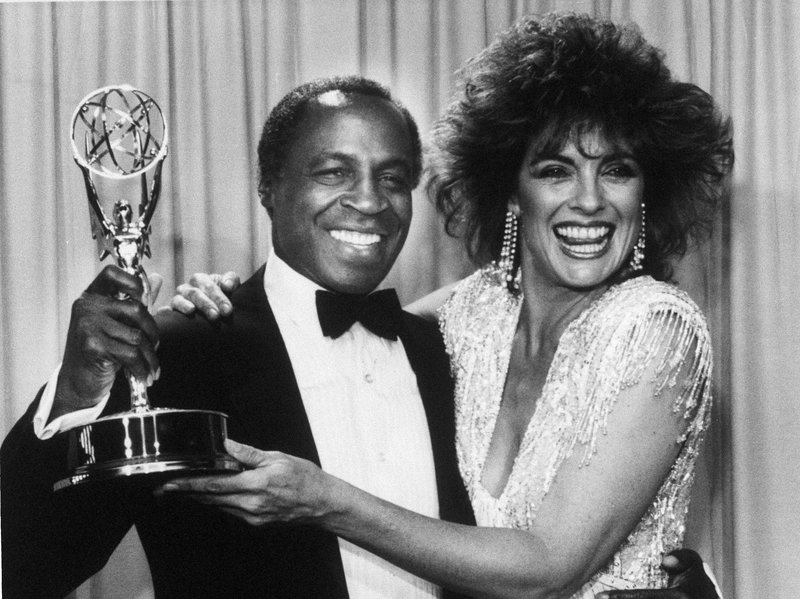
The show was nominated for seventeen Emmy nominations. Robert Guillaume was nominated for Outstanding Supporting Actor in 1980 and every year from 1982-1985, winning in 1985. He lost to Richard Mulligan for Soap in 1980, to Alan Alda for M*A*S*H in 1982, Judd Hirsch for Taxi in 1983, and John Ritter for Three’s Company in 1984. Swenson was nominated for supporting actress in 1980, 1982 and 1985. Auberjonois was also nominated for supporting actor in 1984.

Photo: NewYorkTimes.com

Guillaume said that for him, the show was always about that fact that a black man was standing on his own two feet and after he had to deal with anyone, he was still standing. But most people put it in a box, deciding that it was about a black man who was the smartest man in the room and he was very militant. He said that Benson looked at people’s ability, not their skin color but that was not what viewers took away from the show.

Robert Guillaume would not have been thought the most likely person to star in a sitcom for most of his career. He was born in St. Louis in 1927 and raised by his grandmother. He loved music and idolized several singers including Paul Robeson. He joined the army from 1945-47. While attending St. Louis University and Washington University where he majored in music, he worked as a postal clerk and a streetcar driver.

When he was 30, he won a scholarship for a classical music three-month stint in Colorado. In 1959 he toured Europe with Quincy Jones, Clark Terry, and Harold Nicholas in “Free and Easy.” During the sixties and seventies, he worked in musical theater, in a variety of productions.

His first television appearance was on Julia in 1969. During the seventies, he only had a few television roles but they were all in very popular shows including Marcus Welby, MD; Sanford and Son; All in the Family; The Jeffersons; and Good Times. His role of Benson on Soap began in 1977.

Because Benson was thought of simply as a sitcom, Guillaume said the work he was most proud of was not Benson or Soap; his favorite role was when he was on Sports Night. This is a series that I will definitely be checking out for future blogs. Whether you get to know him on Soap or Benson, Benson is just a fun character to get to know.

Golden Girls: Friends for Life

We are wrapping up our series, “Girls, Girls, Girls.” At the beginning of the month, we learned about a show that featured four women who spent much of their life together for seven years (Designing Women). Today we end our series with another show that featured a quartet of women that also ran for seven years.

In September of 1985, a new type of sitcom debuted. This show featured four retired women who lived life together, relying on humor to make things work. The show, Golden Girls, was on the air seven years, ending in 1992 and producing 177 episodes. The show was always on Saturday nights with the seventh season moving to an earlier hour.

Photo: tvseriesfinale.com

I read two different versions about the creation of the show, so take your pick. Maybe the truth is somewhere in the middle. One version is that the idea came from Brandon Tartikoff, an NBC executive. When he was visiting his aunt one day, he noticed that she and her next-door neighbor who was her best friend, argued a lot but loved each other. He thought the concept would make a great show.

The other version credits NBC senior vice president Warren Littlefield. He was in the audience when Selma Diamond and Doris Roberts acted in a skit called “Miami Nice,” a parody of the popular Miami Vice. The skit featured old people living in Miami.

Either way, Susan Harris created the show itself, and it was produced by Witt/Thomas/Harris Productions, with Tony Thomas and Harris serving as original executive producers. After the first year, Harris was not as involved with the show, but still oversaw the scripts.

Photo: housebeautiful.com

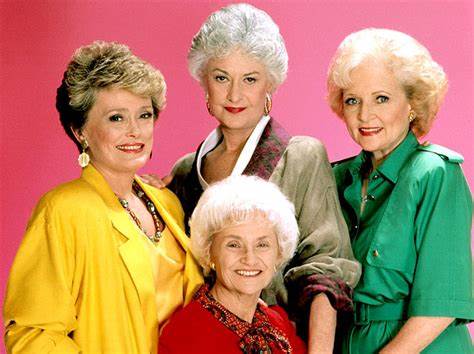
The four main characters are quite different which is probably why the series was so successful. Blanche (Rue McLanahan) owns the house in Miami. Two women, widow Rose Nylund (Betty White) and divorcee Dorothy Zbornak (Bea Arthur) respond to an ad on a grocery store bulletin board to become Blanche’s roommates. In the pilot episode, the retirement home where Dorothy’s 80-year-old mother Sophia (Estelle Getty) lives burns down, so she joins the trio. All four of the characters appeared in every episode.

Photo: marginallyhuman@wordpress.com

Blanche worked for an art museum. She grew up in a wealthy family, living on a plantation outside Atlanta. When she married her husband George, they moved to Miami. With six kids, Blanche should be a busy family matriarch, but she was man-hungry and always involved in some romantic entanglement much to the chagrin of Rose.

Photo: goldengirls.wikia.com

Dorothy was a substitute teacher. She became pregnant in high school and married the father, Stanley. Stan and Dorothy moved to Miami but after 38 years of marriage, he had an affair with an airline stewardess and left Dorothy.

Photo: buzzfeed.com

Rose lived most of her life in a small farming town, St. Olaf, Minnesota. She and husband Charlie were happily married with five children. After he passes away, she moves to Florida and works at a counseling center. At one point she works for a consumer reporter at a local television station. Rose had an on-again, off-again relationship with a college professor, Miles Webber, during the run of the show.

Photo: thebettergoldengirls.wikia.com

Sophia left Italy to get out of an arranged marriage and ended up in New York where she met Salvadore Petrillo. Sophia also has a variety of jobs on the show, including a fast-food worker and a developer of a spaghetti sauce and sandwich business. Sophia is the only character to marry during the seven seasons. She married Max Weinstock, but they separated soon after the wedding.

The role of Sophia was the first one cast. Estelle Getty had received rave reviews for her performance in Torch Song Trilogy. Although Getty played Dorothy’s mother, in reality she was a year younger than Arthur. It took Getty three hours in make-up to transform into the older Sophia, donning a white wig, heavy make-up and thick glasses. Apparently, even though she was an experienced actress, she suffered from stage fright and often froze on camera. This affliction got worse as the show continued, and by the fifth season, she was reading her lines from cue cards. McClanahan tried to describe what Getty suffered with, “She’d panic. She would start getting under a dark cloud the day before tape day . . . you could see a big difference in her that day. She’d be walking around like Pig-Pen under a black cloud. By tape day, she was unreachable. She was just as uptight as a human being could get. When your brain is frozen like that, you can’t remember lines.”

Photo: refinery29.com

Originally McClanahan was cast as Rose and White as Blanche. White had portrayed Sue Ann Nivens, a man-crazy woman, on the Mary Tyler Moore Show. Director Paul Bogart felt they should switch roles.

McClanahan came up with the idea that Blanche should have a southern accent which she exaggerated to make the character more interesting. Apparently, one of the set jokes was where Rue McClanahan might be sleeping on the set. She was often found napping in different places.

Although Harris created Dorothy as a “Bea Arthur type,” the producers originally wanted Elaine Stritch for the part, but her audition did not go well. Arthur didn’t want to do the show because she didn’t want her and McClanahan to be portrayed as Maude and Vivian as they were in the show Maude. After reading the script and learning about the role switch of her coworkers, she came on board.

Costume designer Judy Evans created a different look for each of the cast members. Rose was down home and Midwestern. Sophia relied on comfortable clothing. Dorothy had a “pulled-together, no nonsense” look. Blanche was sexy with flowing outfits. Rue had a clause written into her contract that she be allowed to keep all Blanche’s clothing, which was custom made. By the end of the series, she filled thirteen closets with the designer wardrobe. Late McClanahan would create a more affordable line of clothing for QVC, “A Touch of Rue” based on Blanche’s show wardrobe.

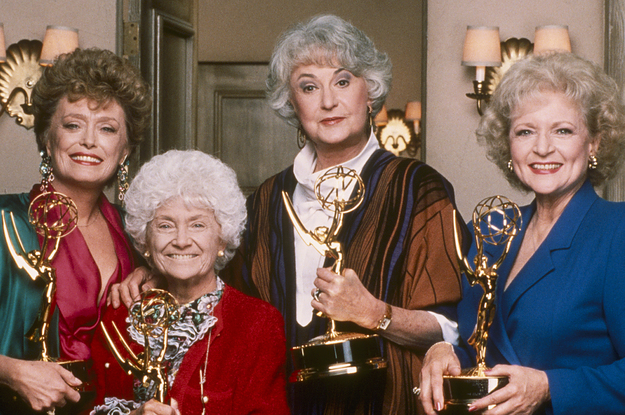
(Left to right) The cast of television series The Golden Girls Rue McClanahan, Betty White, Estelle Getty and Beatrice Arthur are shown in a scene from the show in this undated publicity handout photo.
Photo: sydneymorningherald.com

While the characters argued from time to time, you knew they loved and cared about each other and were a family, even if they made each other crazy at times. In reality, Arthur was very difficult to get along with. Betty White, who seems to love everyone, admits she did not have a good relationship with Arthur. Apparently, White’s positive and perky manner irritated Bea. McClanahan said Bea was very eccentric and hard to be friendly with. However, White, always the professional, never revealed their difficulties until after Arthur passed away. White and McClanahan became close friends during the show’s run. White always loved game shows and she found a kindred spirit in Rue. They frequently played games between takes.

Photo: entertainmentweekly.com

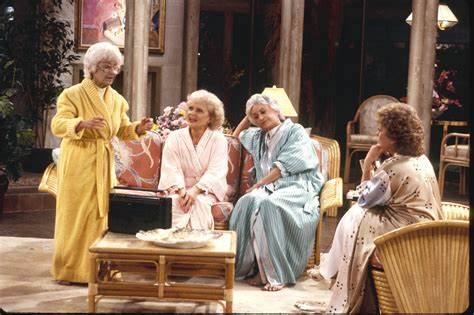
The house was often a fifth character on the show. The exterior of the home, which was supposed to be at 6151 Richmond Street, was part of the backstage studio tour ride at Disney’s Hollywood Studios for the first two seasons. Designer Ed Stephenson used a “Florida look” for the home with wooden accents, columns, cypress doors, rattan furniture, and tropical prints. Of course, Blanche’s bedroom featured pink carpeting and a vanity table. Dorothy’s room was filled with books and intricate wallpaper. Rose’s walls are covered with clouds, and her room contained a lot of ruffles and chintz. Sophia’s room was also modern with dainty floral wallpaper and mahogany furniture covered by bedding with a satin trim.

If you watch the scenes in the kitchen, you will notice that although four people live there, there are only three chairs at the table. If all four girls were sitting there, someone had their back to the camera, so the director solved the problem by only having three of them in the scene at a time.

Photo: popsugar.co.uk

Often the plots would feature one of the characters mired in a problem, typically involving their family, their love life, or ethical dilemmas. When they gathered around the table to talk, the stories they told would help each other, even though Rose’s stories from her youth typically had no connection to the current problem and Sophia’s stories were often made up. Many controversial issues were covered during the show including same-sex marriage, elder care, homelessness, HIV/AIDS, immigration, death, assisted suicide, and discrimination whether racial, sexual or gender.

The critics praised the show, and the public adored it. For six of the seven seasons, the show ranked in the top ten. Both Betty White and Estelle Getty received seven Emmy nominations during the seven-year period, while Bea Arthur and Rue McClanahan each received four. Fun fact, all of them won an Emmy during the run of the show. Overall, the show received 68 Emmy nominations.

Photo: aarp.com

The Queen Mother loved the show so much that she asked the quartet to come to England and perform for her personally. When the cast assembled in London, they appeared in an episode about the visit to the Queen.

After the seventh season, when the show had dropped into the top 30, Bea Arthur decided to leave the show. In the finale, Dorothy finally meets the man for her, who happens to be Blanche’s uncle Lucas (Leslie Nielsen), and they move to Atlanta. Sophia is uncertain whether she should move with them or stay in Miami and, in the end, decides to stay in Florida.

When the series ended, White, McClanahan, and Getty reprised their Golden Girls roles and starred in The Golden Palace about a hotel. The series ended after the first year and never enjoyed the rankings of the original, coming in 57th for the year.

Harris developed two spinoffs from the original series. Empty Nest starred Richard Mulligan as pediatrician Harry Weston who lives next to the women with his two grown daughters. The show was also very popular and lasted seven years as well.

The Cast of Empty Nest
Photo: 123movie.care

Empty Nest then launched a show about some of the nurses who worked in Weston’s hospital, simply titled Nurses. While this series was never as popular as Golden Girls or Empty Nest, it did last three years.

The cast of Nurses
Photo: tvseriesfinale.com

Although I enjoyed The Golden Girls, I actually did not watch it often.  I think maybe because it was on Saturday nights during a time that I was not likely home in the evening. I did enjoy it when I caught an episode but was never the fanatic many of my friends were. I think I should let the “Girls” have the last words about their series:

Dorothy: You know, sometimes I can’t believe my ears.
Sophia: I know. I should’ve taped them back when you were seven.

UNITED STATES – MAY 13: THE GOLDEN GIRLS – 9/24/85 – 9/24/92, ESTELLE GETTY, BEA ARTHUR, (Photo by ABC Photo Archives/ABC via Getty Images)

[Dorothy and Sophia come home after Sophia’s best friend’s funeral]

Sophia: Well, I guess Phyllis Glutman will be my new best friend.

Dorothy: I thought you hated Phyllis Glutman.

Sophia: I do, but at the rate my friends are going, I won’t have to spend too much time with her.

Photo: entertainmentweekly.com

Rose: You know what I think?

Blanche: No, do you?

Soap: A Series That Bubbled Over with Controversy

We are continuing our series of Oddly Wonderful shows. Next week we look at a show that was a parody of life as a soap opera, and today we learn about a show that was a parody of a soap opera as real life, sort of. After making that crystal clear, let’s delve into Soap, a series which aired from 1977-1981 on ABC, originally on Tuesday nights at 9:30 ET. During those four seasons, only 88 episodes were produced, an average of 22 per year.

Photo: tvseriesfinale.com

Soap followed the lives of two families, the Tates and the Campbells. Throw in some melodrama, some ridiculous plots, some wacky characters, and some bizarre story lines and you have a truly unique sitcom. The show was taped before a live studio audience which would have been a fun event to be at.

The show was created by Susan Harris, who also was a writer/producer of The Golden Girls, Nurses, Benson, Empty Nest, and I’m a Big Girl Now. Soap was the working name of the show, but no one could come up with a better name, so it transitioned into the actual title of the show.

Photo: findagrave.com

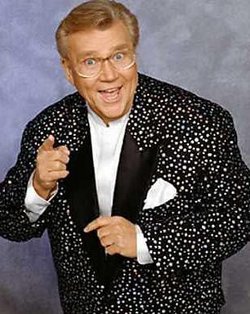
Rod Roddy was the announcer for each episode. Most viewers recognize him as game show guru announcer for The Price is Right and The Love Connection. Casey Kasem, the host of the top 40 shows at the time was the narrator in the pilot. When he found out some of the upcoming themes of the show, he backed out, and they had to re-record the pilot with Roddy.

This was a very funny and controversial show. It took on many issues including racism, homosexuality, murder, religion, and family dynamics. The scripts were extremely witty and while there was some physical humor, most of it was intellectual. The fact that it made fun of soaps with its unbelievable plots and characters only added to the reality of the show in a strange way. Some of the shows included alien abduction, demon possession, kidnapping, murder, and insanity.

Photo: imdb.com

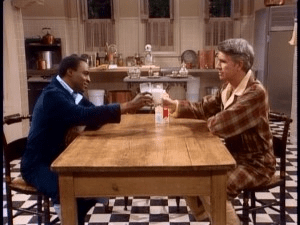
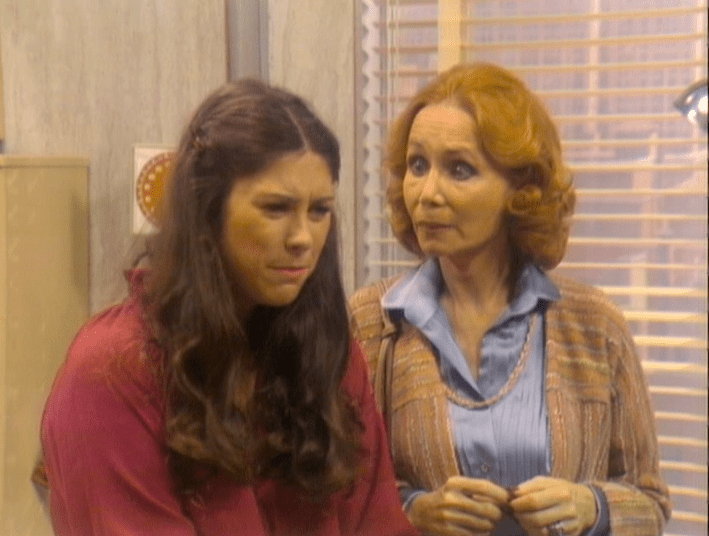
The show starred Katherine Helmond as Jessica Tate and Cathryn Damon as her sister, Mary Campbell. Jessica was married to Chester (Robert Mandan) and Katherine was married to Burt (Richard Mulligan). They live in Dunn’s River, Connecticut.

The Tates were very wealthy and upper class. Like most soaps, both Jess and Chester have affairs with other people. They employ a butler/cook named Benson (Robert Guillaume). He was very sarcastic and spoke his mind freely. He can’t stand Chester or their daughter Eunice (Jennifer Salt), but he likes Jessica, their daughter Corinne (Diana Canova) their son, Billy (Jimmy Baio, brother of Scott). Benson was one of the most popular characters and he later got a spinoff, Benson which aired from 1979-1986.

Photo: kgw.com

The Campbells are a working-class family. Mary has a son from her first marriage, Danny Dallas (Ted Wass). He is training to be a gangster. The Mob gives him the task of killing his stepfather, telling him Bert killed his birth father. Danny refuses and, he has to go on the run. Later he realizes Bert did kill the man he thought was his father, but it was self-defense. His hiding from the Mob results in him taking on a variety of disguises throughout the shows. Of course, in soap opera fashion, eventually he finds out his mother had an affair with his uncle Chester before he married Jess, and he is his real father. When the Mob boss’s daughter Elaine (Dinah Manoff) falls in love with Danny, he is safe. Mary also has a son with Bert named Jodie (Billy Crystal) who is gay and having an affair with an well-known NFL quarterback.

The first season ends with Jessica convicted of the murder of Peter Campbell (Robert Urich), who is Bert’s son from a first marriage. He was a tennis pro. The announcer ends the season by telling us that Jess is innocent, but one of five characters did commit the murder. We will find out who in season two.

Photo: jacksonupperco.com

Some of the future subplots included Corinne dating a priest, Chester getting amnesia, Eunice having an affair with a Congressman, and Bert’s abduction by aliens.

Another popular character was Chuck Campbell (Jay Johnson) who was also from Bert’s first marriage. He is a ventriloquist and always has Bob, his dummy, with him. They dress alike, and while Chuck is quiet and introverted, Bob is loud, rude, and extroverted.

Photo: pinterest.com

Season two and three found the show on Thursday nights. It moved to Wednesdays in season four. The show was riddled with controversy before it aired and that continued to a lesser extent all four seasons. The controversy seemed to increase the popularity of the show. It was supposed to run five seasons and then end. The fourth season, like the prior ones, ended with several cliffhangers but after it aired, ABC cancelled the show. It cited low ratings, but there were always rumors that the sponsors were unhappy with the show, and they put pressure on ABC.

Soap’s reputation has increased since it went off the air. Time magazine panned the show before it debuted, but in 2007, it named the series one of the “Best 100 Shows of All Time.”

Photo: groovyhistory.com

Considering the low number of episodes produced each year, it’s impressive to see it garnered seventeen Emmy nominations. It was nominated for Outstanding Comedy Series three years; Richard Mulligan was nominated for Outstanding Lead Actor in a Comedy twice, winning in 1980; Cathryn Damon was nominated for Outstanding Lead Actress in a Comedy Series four years; Robert Guillaume was nominated and won for Outstanding Supporting Actor in a Comedy Series in 1979 (he was the first black actor to win the award); Jay Sandrich was nominated for Outstanding Directing in a Comedy Series twice; the show won Outstanding Art Direction in a Comedy Series in 1978; and was nominated for Outstanding Achievement in Video Tape Editing in a Comedy Series in 1978.

Photo: npr.org

The DVDs were released between 2003 and 2008.

A recent series, Trial By Error, reminds me of Soap in a more contemporary setting. Both shows relied on bizarre plots and clever dialogue, and they both work, producing very funny shows. They both produced fewer episodes a year than a typical sitcom. Watching an entire year’s worth of this type of comedy might be too much. The outrageous actions of well-developed characters kept the show fun and interesting.

Though it was a different type of comedy, it was not a show that I watched often. Like most of these shows, I’ve called “oddly wonderful,” I’m not sure I would want to watch it in reruns. It was a product of its time and might not hold up as well in 2019, although sadly, most of the issues Soap dealt with are still being dealt with today.

Photo: pinterest.com