Don Adams: Always Smart

This month our blog series is titled “All About The Bill Dana Show.” The first week in March we learned about the show and now we have been spending time with some of the cast. We end our series with Don Adams.

Adams was born Donald James Yarmy in Manhattan in 1923. Don was a blend of cultures, Hungarian Jewish on his dad’s side and Irish-American on his mom’s. Don was raised Catholic while his brother Dick was raised Jewish. I could not find out what their sister decided to do. She later became a writer under the name Gloria Burton and wrote a script for Get Smart. His brother was also an actor. Dick has about 50 acting credits and appeared in many of the most popular sitcoms during the sixties and seventies, including three appearances on Get Smart.

Adams dropped out of high school and went to work as a theater usher. In 1941 he joined the US Marine Corp. At one point he was injured during a Japanese assault on Tulagi. He was the only survivor from his platoon. While recovering, he came down with blackwater fever, a side effect from malaria and was evacuated to New Zealand. He was not expected to recover, but when he did, he was sent back to the US as a Marine drill instructor.

After his discharge, he moved to Florida to work as a comedian. He refused to do material he considered “blue” and was fired.

In 1947 he married Adelaide Efantis, and her stage name was Adelaide Adams. Don decided to take the name Adams as well for his stage name. He worked as a commercial artist and cashier to support their family.

In 1954, Don was the winner of Arthur Godfrey’s Talent Scouts with a comedy act written by Bill Dana. He began making appearances on The Steve Allen Show, where Dana was a writer. In 1961 he became a regular on the Perry Como Show.

About this time, Don and Adelaide divorced, and Adams married Dorothy Bracken, another actress. They split up in 1977 when he married Judy Luciano, also an actress but that marriage also ended in divorce. (I could only find one credit for his last two wives; Bracken was on Get Smart, while Luciano appeared on The Love Boat.)

While discussing his marriages, Don said “I’m no longer independently wealthy. I guess it’s the result of too many wives, too many kids and too much alimony. I’ve been paying alimony since I was 14 and child support since 15. That’s a joke, but not by much. . . I like getting married, but I don’t like being married.”

In 1963 Adams was offered the role of Byron Glick, hotel detective on The Bill Dana Show. As we’ve discussed this month, the show was on the air for a season and a half. While working on the show, Don was also the voice of cartoon Tennessee Tuxedo which he continued doing until 1973.

During those years he also made an appearance on The Danny Thomas Show and on Pat Paulsen’s Comedy Hour.

In 1965 he was offered the role of Maxwell Smart in a new spy satire, Get Smart.

The sixties saw westerns being overtaken by spy shows such as The Man From U.N.C.L.E., I Spy, The Pink Panther, and The Avengers. Mel Brooks and Buck Henry decided to try their hand at writing a campy sitcom and Get Smart was born.

The role of Smart was created for Tom Poston, but ABC turned it down, and NBC said yes. They had Adams under contract, so he got the part. Rounding out the cast was Edward Platt as the Chief and Barbara Feldon as Agent 99.

Smart and 99 had great chemistry and married in a later season. Feldon and Adams remained life-long friends.

One of the most memorable parts of the show was all the catch phrases Adams created on the show including “Sorry about that Chief,” “Would you believe,” and “Missed it by that much.”

In addition to acting, Adams worked as a producer and director on the show. He was nominated for an Emmy from 1966-1969. He won three of those, losing to William Windom for the little-remembered one-season show, My World and Welcome to It. Lloyd Haynes from Room 222 and Bill Cosby for The Bill Cosby Show were also nominated that year.

The show moved to CBS for the final season, but the ratings never recovered, and the show was canceled after that year.

Like so many of our successful actors with unusual characters, Adams suffered from typecasting after the show ended. He did become part of two additional sitcom casts during his career.

In 1971 he was on The Partners. According to imdb.com, the plot is that “Lennie Crooke and George Robinson are inept detectives teamed up to solve crimes. Captain Andrews is their exasperated boss, Sgt. Higgenbottom is a smarmy co-worker, and Freddy confesses to most of the neighborhood crimes.” Adams played Crooke, but the show only produced 20 episodes.

In 1985, Adams tried a sitcom again on Check it Out. This one was about a grocery store and its employees. Adams played Howard Bannister. The show lasted three seasons, ending in 1988. The show was not very popular in the US but was a hit in Canada.

In between those two shows, Adams appeared in a handful of series including Fantasy Island, The Fall Guy, The Love Boat, Empty Nest, and Nick Freno: Licensed Teacher. He made most of his salary appearing in nightclubs. He also had his Smart character resurrected in several big screen films and television series.

Because of the typecasting, he returned to animation and found a lot of success, especially with Inspector Gadget which he voiced from 1983-1999.

He also tried his hand at a game show. Called Don Adams’ Screen Test, it had an interesting concept. The show was filmed in two 15-minute parts; Adams would randomly select an audience member to recreate a scene from a Hollywood movie such as From Here to Eternity with Adams as director. It ended after 26 episodes.

In his spare time, it sounds like he visited the racetracks, betting on horses. He also spent a night a week at the Playboy Mansion playing cards with Caan and Rickles. He loved history and studied Abraham Lincoln and Adolf Hitler in depth. He also wrote poetry and painted.

Don passed away in 2005 from a lung infection and lymphoma. The eulogists at his funeral included James Caan, Bill Dana, Barbara Feldon, and Don Rickles.

It’s hard to know what to make of Adams’ career. Obviously, he was hard working, an excellent Marine, and a man of many interests. He was fired for not performing blue material but then put horse racing and gambling above the needs of his family, according to several of his friends. He created the amazing role of Maxwell Smart, one of the best characters in television history, but that feat kept him from achieving other great roles in the following decades due to typecasting. It sounds like Check It Out was very popular in Canada, so maybe if he had been given a few chances to create characters different from Smart in a couple other sitcoms, it would have helped.

I feel bad for those actors who are so successful in the characters they help create that they are barred from future jobs, but then again, those characters are some of the best actors in television: George Reeves as Superman, Ray Walston as My Favorite Martian, Henry Winkler from Happy Days, Frank Cady from Green Acres, and Jack Klugman from The Odd Couple. I guess you trade being warmly remembered for fewer quality roles.

Apart from Get Smart, I knew little about Adams before writing this blog, so it was fun to get to know him a bit.
Hello Darlin’: The Career of Larry Hagman

This month we are taking a close-up of five famous television male stars. If you were a television fan in the sixties, you will remember Larry Hagman as Tony on I Dream of Jeannie. If you watched Dallas in the eighties, you will remember him as the cad J.R. Ewing. However, Hagman had more than 100 acting credits and several other television starring roles, as well as credits as a producer and director. We’ll learn more about his career and these forgotten shows in this blog.

Photo: Idreamoflarry.com

Hagman was born in 1931 in Texas. His father was an accountant and lawyer who became a DA. His mother was the famous actress, Mary Martin. His parents divorced when he was five. When his mother received a Paramount contract, he lived with his maternal grandmother in Texas and California.

When Larry was nine, his mother married Richard Halliday. The couple had a baby in 1941, but Larry was sent to an academy, Black Foxe Military Institute and later to Woodstock Country School in Vermont.

His mother resumed her Broadway career in New York City, so Larry lived with his grandmother in California until she passed away when he was sent to live with his mother.

Photo: hollywoodreporter.com

Larry moved to back to Weatherford, his home town, to attend high school, and he graduated from there. Larry’s father wanted him to become a lawyer and join his practice. Larry worked for an oilfield equipment manufacturer for a summer, but was drawn to the acting profession. In the fall of 1949, he enrolled in Bard College in New York to major in drama and dance but he dropped out after his freshman year.

In 1950, Larry took on acting roles at Margaret Webster’s school, The Woodstock Playhouse in New York. The summer after his freshman year, he worked in Dallas as a production assistant and did some acting in Margo Jones’s theater company. He then traveled a bit with the St. John Terrell’s Music Circus. From 1951-1952, he appeared in “South Pacific” with his mother in London.

The following year, Hagman received his draft notice and enlisted in the Air Force. He was stationed in London and spent most of his military service entertaining troops in Europe.

Photo: tvseriesfinale.com

In 1954, Larry married Maj Axelsson. She grew up in Sweden and they met in London. They had two children and were longtime residents of Malibu, California. They were married until his death.

When he left the Air Force in 1956, he returned to New York City, appearing in a couple of off-Broadway plays. His wife made costumes for a variety of productions. In 1957, Hagman received his first television roles, appearing in West Point, Goodyear Playhouse, Studio One, and Omnibus. His Broadway debut was in “Comes a Day” in 1958.

Larry continued his dual Broadway and television careers through the remainder of the fifties. One of his roles was on Decoy, which was the first crime drama to star a female police officer (Beverly Garland) and he portrayed three different characters on Sea Hunt.

Searching for Tomorrow Photo: pinterest.com

In 1960 he had his first recurring role as Cliff Williams on Search for Tomorrow.

In 1964, he made began receiving offers to act on the big screen. He appeared in The Cavern, Ensign Pulver, and Fail Safe that year.

Hagman had been a heavy smoker but quit in 1965. He later became the chairman of both the American Cancer Society and the Great American Smokeout.

The next year, he received the role that made him a household name: Captain Anthony Nelson on I Dream of Jeannie. He rejoined the Air Force, but this time in a fictional service. The show was on the air for five seasons.

Photo: amazon.com

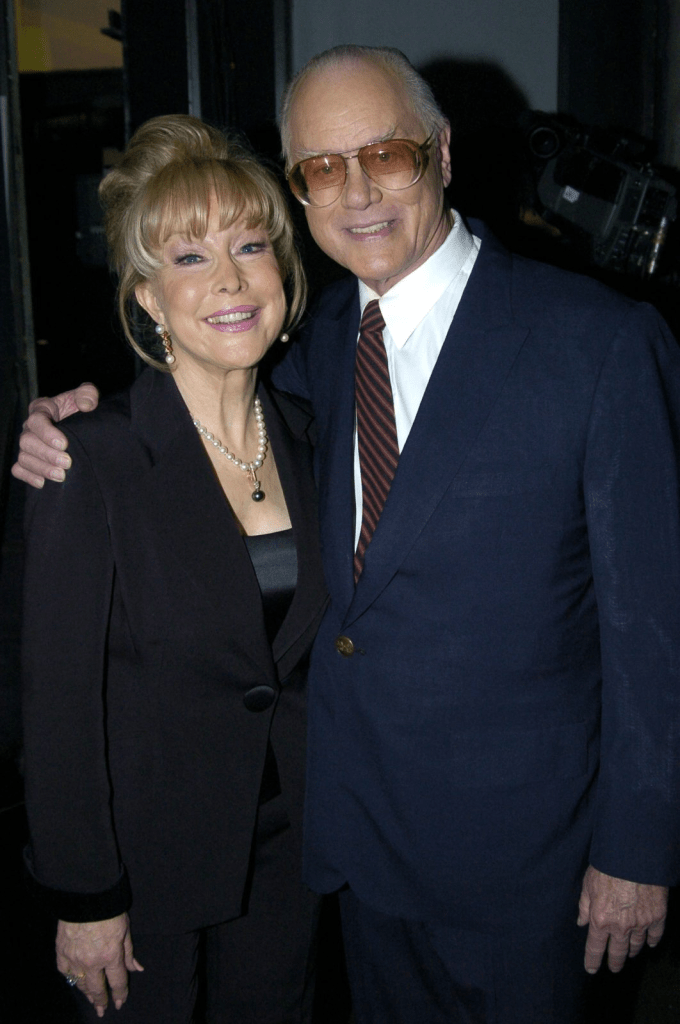
Two reunion movies were made later (I Dream of Jeannie: 15 Years Later in 1985 and I Still Dream of Jeannie in 1991), but Hagman was not in the cast. I read that he was busy with Dallas and family vacations during the times the movies were filmed. They did not replace his character; they focused more on Roger, Jeannie, and Tony’s son with Tony being unavailable on assignment. However, Hagman did appear with Bill Daily and Barbara Eden in several reunion-type shows, and he and Eden remained good friends.

When the show ended, Hagman took on various guest spots on shows including Love American Style. A year later, he again tried a sitcom role. He was cast as Albert Miller in The Good Life. He starred with Donna Mills as a couple who pose as servants. The show lasted a season before being canceled.

A year later there was a repeat of the cycle when he starred in Here We Go Again with Diana Baker as a newlywed couple moves into a home located near both their former spouses’ homes. Again, it lasted one season.

I read that his mother was forced to kick him out of the house when he lived with her and his stepfather because of his heavy drinking. After the cancellation of this show, his father passed away and he reconciled with his mother.

For most of the seventies, he continued guest starring in television shows including Marcus Welby, Barnaby Jones, MacMillan and Wife, and The Rockford Files and big-screen movies including Harry and Tonto and Superman.

Photo: nytimes.com

An entire new group of fans began watching Larry from 1978-1991 when he appeared as one of the major characters on Dallas. Two of the most-watched television episodes were the cliffhanger episode, “A House Divided” from 1980 when JR was shot (but viewers did not know who did it) and “Who Done It” when it was revealed that the shooter was his sister-in-law and mistress, Kristin.

Hagman was nominated for two Emmy Awards for his portrayal of JR in 1980 and 1981. He was beat out by Ed Asner for Lou Grant in 1980 and Daniel J. Travanti for Hill Street Blues in 1981.

Unlike I Dream of Jeannie, when reunion Dallas movies were made in 1996 and 1998, Hagman was part of the cast and listed as producer.

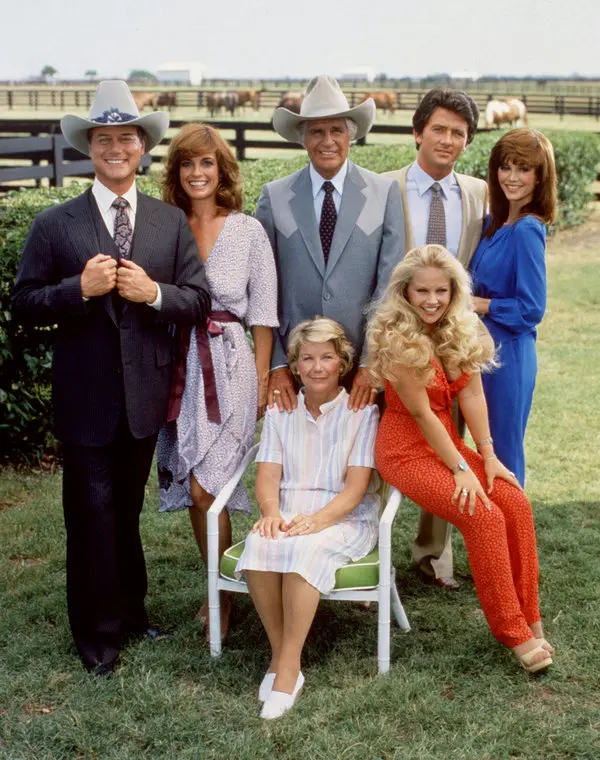
Larry always said Dallas was his favorite show, and he loved being a part of it. Both his children appeared on the show. His old costar Barbara Eden joined the cast for the final season as Lee Ann, fittingly as a character from JR’s past. The show was filmed at Southfork Ranch in Texas and after his death, Larry’s ashes were scattered there.

In an unusual reboot, Hagman reprised his role of Ewing on a new Dallas from 2012-2013.

Between the original and reboot of Dallas, Hagman once again received offers to star in two new series. One was Orleans in 1997 when he played Judge Luther Charbonnet. Unfortunately, the series only lasted for eight episodes, but he received some of the best reviews of his career for the role. In 2006, he took on the role of Burt Landau on Nip and Tuck which lasted one season.

Photo: latimes.com

Hagman also wore a directing hat. He began directing three episodes of I Dream of Jeannie in 1967. He would also direct two episodes of The Good Life, 32 episodes of Dallas (he also was listed as producer for 74 episodes), seven episodes of In The Heat of the Night in the early nineties starring one of his best friends Carroll O’Connor, and one feature film: Beware! The Blob which was a sequel to the cult classic 1958 horror film, The Blob. He produced a made-for-tv movie in 1993 called Staying Afloat which he also starred in. The plot was that Alex, a millionaire’s son, has trouble managing money so his father cuts him off. The IRS is pursuing him, and he has a lot of debt when an FBI agent offers to help with his financial issues if Alex becomes a government informant to take down a man who once burned Alex and he happily agrees.

In 1995, Hagman had a liver transplant after being diagnosed with liver cancer. He also had cirrhosis of the liver which was a result of heavy drinking. He had stopped drinking earlier in his life, but the damage was done.

In 2001, Larry added author to his resume after writing Hello Darlin’: Tall (And Absolutely True) Tales About My Life. In 2007, he gave an interview, sharing his passion for alternative energy creation. He and his wife had a solar-powered, energy-efficient home named “Heaven” in Ojai, California, where they promoted a green lifestyle. The couple also owned a home in Sundsvall, Sweden, her hometown and they visited there often.

In 2008, Maj was diagnosed with Alzheimer’s disease. Hagman cared for her as long as possible, but she required 24-hour nursing care by 2010.

The following year, Hagman learned he had Stage 2 throat cancer. He had the tumor removed and went into remission. In 2012, he was diagnosed with myelodysplastic syndrome, a preleukemia condition. The actor died in November from acute myeloid leukemia.

Hagman with Eden Photo: startsat60.com

His friend Barbara Eden said, “Larry was one of the most intelligent actors I ever worked with.” Later she said that their on-screen chemistry on the set of Jeannie was not just work and their timing was right. She could not explain it; it was wonderful.

Two of his Dallas castmates were at his bedside when he passed away. Linda Gray who played his wife on the show said Larry was “her best friend for 35 years” and that “he brought joy to everyone he knew. He was creative, generous, funny, loving, and talented and I will miss him enormously. He was an original and lived life to the fullest.” His brother on the show was played by Patrick Duffy who said “Friday I lost one of the greatest friends to ever grace my life. The loneliness is only what is difficult, as Larry’s peace and comfort is always what is important to me.”

Hagman with Gray and Duffy Photo: huffpost.com

Fans reported that Hagman often had people who requested his autograph tell him a joke or sing him a song first.

Hagman said his idols were Jack Benny, John Wayne, Dick Powell, and his future Dallas castmates, Barbara Bel Geddes and Jim Davis. He credited his good friend Carrol O’Connor as his acting mentor, saying that, “Carroll is really my mentor. He knows more about show business than any other actor I know.” During his Dallas years, he paid that back by mentoring several coworkers including Charlene Tilton.

Hagman also enjoyed hunting, backpacking, fishing, skiing, sailing, golfing, and collecting canes, hats, flags, and art. I’m so glad that he was not typecast as Tony and was able to continue his career with several other sitcoms and that he truly enjoyed his many years associated with Dallas. When you love what you are doing, people love you for doing it.

In Memory of Adam West

west1

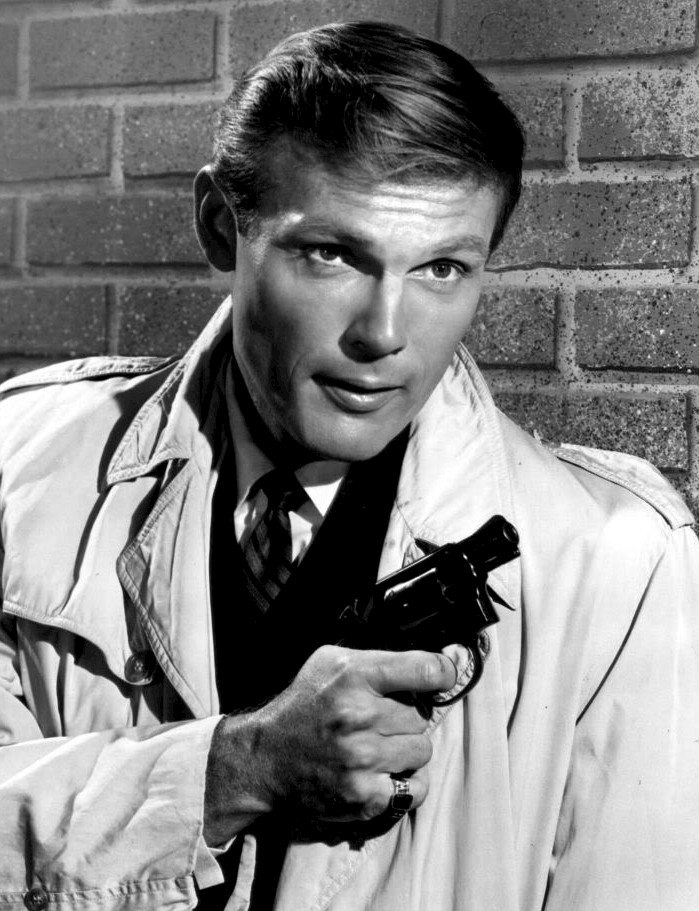
Adam West was born William West Anderson on September 19, 1928 in Walla Walla, Washington.  He just passed away this summer on June 9. His father farmed and his mother gave up her career as an opera singer and concert pianist.  Like all kids, he had a collection of comic books including Batman. When his parents divorced, he moved to Seattle with his mother. He attended Whitman College in Washington and graduated with a BS in literature. He was drafted into the Army and became an announcer on the American Forces Network television.

After his service career, he became a milkman until he moved to Hawaii to pursue a career in television. In 1959, he took on his stage name of Adam West and moved to Hollywood with his wife and children. He quickly became an actor and appeared in 33 television shows, including 77 Sunset Strip, Maverick, Hawaiian Eye, Tales of West Fargo, Perry Mason, Gunsmoke, Petticoat Junction, and Bewitched.

west4

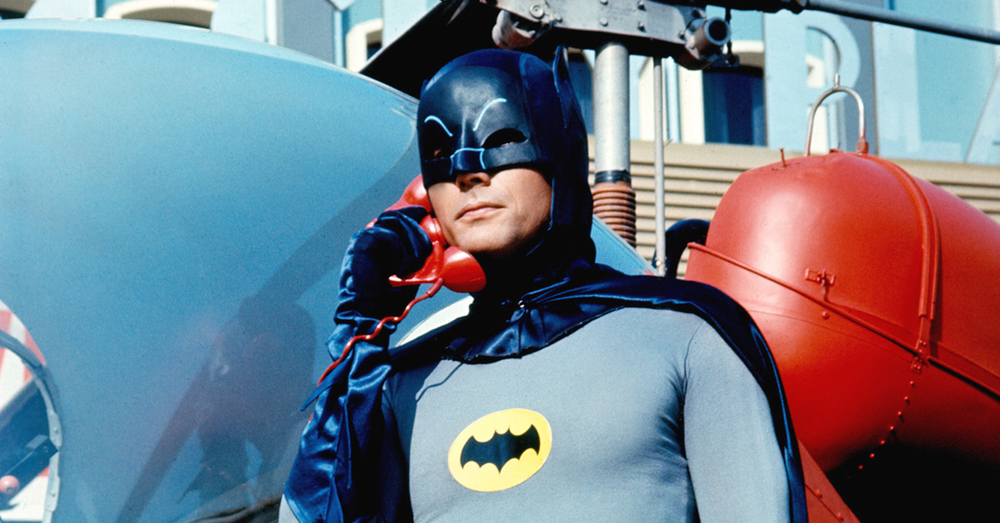
In 1966, William Dozier, producer for a new show about Batman decided to cast West over Lyle Waggoner after seeing him as a James Bond-type character in a Nestle Quik commercial. DC Comics described Batman as 6’2” and that was West’s height.

west2

When the series ended, he and Burt Ward found themselves typecast as Batman and Robin.  He did a series of appearances about the Batman character while pursuing a movie career. He ended his career with 49 movies to his credit.

He appeared in 78 television shows after Batman ended including The Big Valley, Emergency, Alice, Police Woman, Laverne and Shirley, The Love Boat, Hart to Hart, Murphy Brown, Diagnosis Murder, News Radio, Drew Carey, King of Queens, and 30 Rock.

After 1990, he apparently embraced his Batman character and appeared on numerous television shows as himself or Batman. When asked about this, he said, “I think it evolved. I learned a long time ago that because people love Batman, I should too. I learned that I shouldn’t resent it even though it prevented me from getting other roles. I really had to become fond of Batman in order to deal with it. I embraced it.”

In 1957, he and his first wife Billie divorced.  He married  dancer Frisbie Dawson in 1957 and divorced in 1962. In 1970, he married Marcelle, and they were together until his death.  He had two children with each of his wives and two stepchildren.

In 1994, he wrote an autobiography Back to the Batcave. In 2012, he received a star on the Hollywood Walk of Fame on Hollywood Boulevard.

west8

West loved outdoor activities and had a lot of hobbies including fishing, sailing, hiking, skiing, golfing, riding motorcycles, swimming, surfing, dancing, traveling, as well as spending time with his family, listening to classic rock, reading, and watching movies.

West died after a short battle with leukemia at age 88. The next week, LA shined the bat signal on city hall to honor him.

While West certainly had a full and varied career despite his typecasting from Batman, I would like to spend some time looking at the series that gave him his fame. Typically, I am not really into super heroes, but I loved this show when I was younger and still get a kick out of watching the campy comedy. I can still hear the narrator saying, “Same bat time, same bat channel.” The show was canceled not only because of low ratings but also because the special effects and lighting had tremendous costs.  When ABC dropped it, they tried to find another network to take it over.  They had no offers, so they dismantled the set. Two weeks later, NBC offered to pick up the show, but decided it was too expensive to start from scratch.

batman4

In the 1960s, Ed Graham Productions received the rights to the comic strip Batman and intended to produce an adventure show similar to Superman or The Lone Ranger. ABC was thinking about a prime time show so DC Comics bought back the rights and sold them to 20th Century Fox. 20th Century gave it to William Dozier to produce.  Dozier had never read comic books and felt that the show should take a campy, pop-art approach. The show was originally an hour-long series, but with only half-hour time slots available, it was changed to a bi-weekly half-hour show.

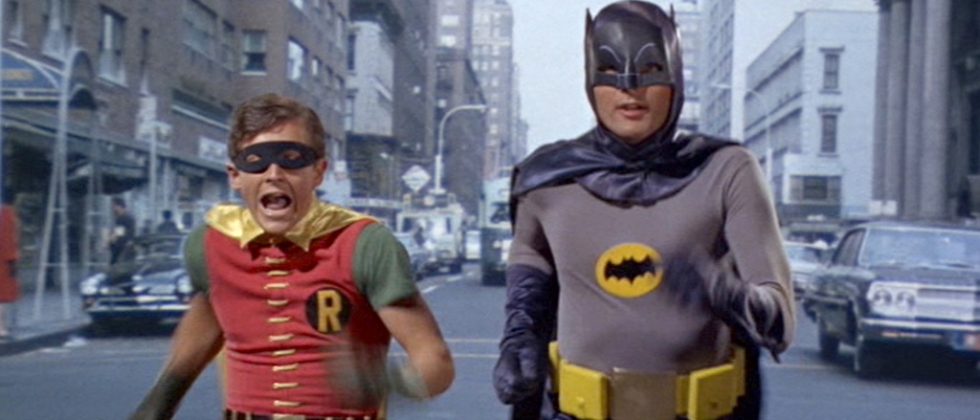
The concept of the show was that millionaire Bruce Wayne and his ward Dick Grayson lead a double life in Gotham City.  When they move a shelf in their library and slide down the bat pole to the bat cave, they become Batman and Robin.  Only their butler Alfred is aware of their real identity. Police Commissioner Gordon calls them on the batphone, often referring to them as the dynamic duo. They usually hop in their bat mobile and speed to city hall to learn what villain is up to no good in their city.

west5

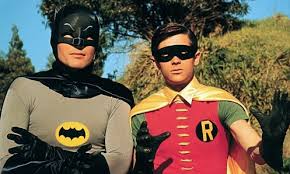
Adam West took the role of Batman/Bruce Wayne and Burt Ward was Robin/Dick Grayson. Other cast members included Alan Napier as Alfred the Butler, Neil Hamilton as Commissioner Gordon, Stafford Repp as Chief O’Hara, Madge Blake as Aunt Harriet, and Yvonne Craig as Batgirl.

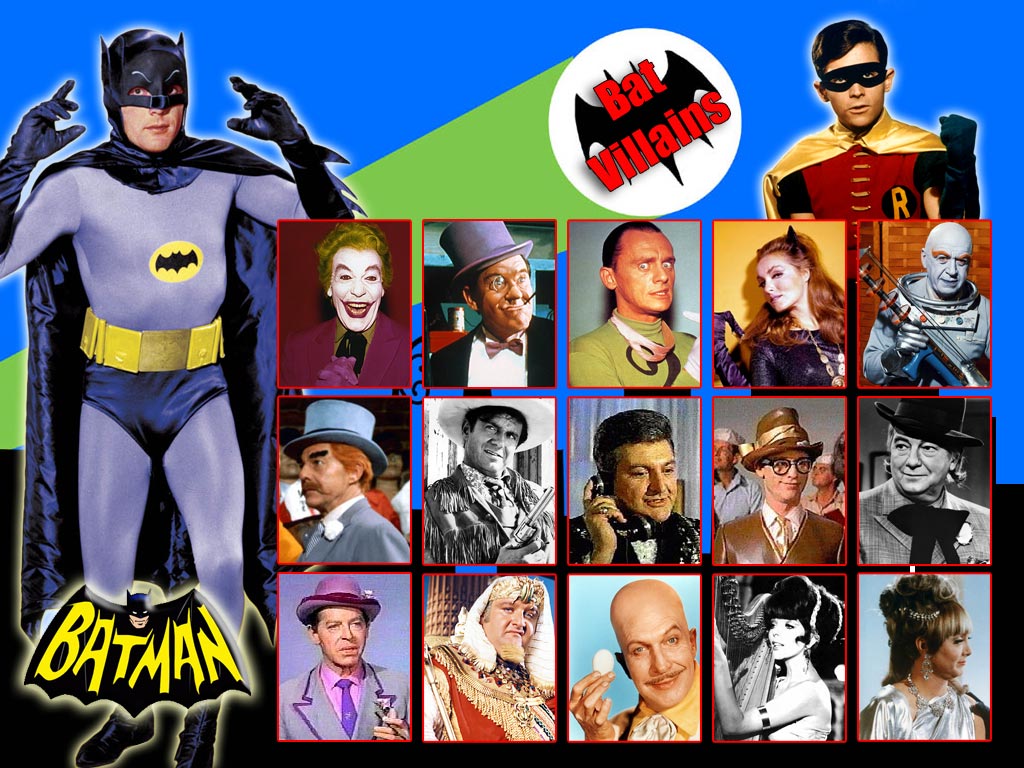
My favorite villians included Julie Newmar and Eartha Kitt as Cat Woman, in love with Batman but not willing to give up her criminal life; Burgess Meredith as Penguin always carrying an umbrella; Frank Gorshin as The Riddler leaving riddles for clues; Vincent Price as Egghead a bald-headed genius who loves eggs; Cesar Romero as the Joker who leaves jokes for clues; and Victor Buono as King Tut when evil and Professor William McElroy as his non-evil personality.

The show aired twice a week on back-to-back nights. The first episode would set up the situation and end with the dynamic duo in some dangerous situation. Batman and Robin would get their assignment from the Commissioner and then, using a series of clues, try to figure out who the villain is and then how to defeat them. At some point, there was always a fistfight with the villain’s entourage at which time the villain typically escaped. During the fight, words would pop up on the screen like POW, BAM, ZONK, BOOM. Then the crime fighters would go to look for them at which point the dangerous and perhaps deadly situation occurred and the next episode would summarize what happened on the previous episode before defeating the bad guys for good. They often used inventions like shark repellant bat spray to aid them in their search.

batman5

In Season 3, Bat Girl was added to the cast. The ratings were starting to fall so Dozier wanted to bring in a girl character to attract female viewers. Her real identity was Barbara Gordon, the Commissioner’s daughter.  The Commissioner never seemed to realize she was familiar to him. Because of low ratings, the show also became a once a week series in the third season.  Eartha Kitt took over the Catwoman role since Newmar was filming a movie at the time. Madge Blake’s health was failing, and her role was limited to two appearances during the last season.

The show was cancelled before the next season but it has continued to be popular in reruns. In 1966, an album was released “Batman: The Exclusive Original Soundtrack Album.” It included music by Nelson Riddle, dialogue excerpts from several of the characters in the show, as well as the Batman theme song, Batusi A Go Go, and several other tunes.

A lot of collectibles were produced during the run of the show including trading cards, Batmobile kits, coloring books, lunch boxes, board games, and View-Master reels. In 2013, Mattel designed an action figure line based on the tv characters, and several Hot Wheels/Matchbox cars have been produced. The Batmobile from the show was auctioned in 2013, selling for $4.2 million.  The huge profits from the car as well as the line of action figures prove the continuing interest in and success of this show now 50 years old.

Here are some fun facts I found about the series:

A total of 352 “Holy” words were used by Robin from “Holy Agility” to “Holy Zorro”.

Cesar Romero’s Joker laugh was created almost by accident. Shortly after being cast, Romero met with producers to discuss his role on his series. While waiting to meet with them, Romero happened to see conceptual art of Joker’s costuming. Romero felt the pictures almost looked absurd, and as a result spontaneously broke out into a playfully loud and almost manic laughter. A producer overhearing it responded by telling Romero “That’s it, that’s your Joker’s laugh!”

Burgess Meredith had not smoked in 20 years when he was cast as the Penguin. He came up with the Penguin’s distinctive squawking sound because the cigarettes were irritating his throat. Like his trademark “quack”, the Penguin’s waddling was largely a result of improvisation by Burgess Meredith, as he found it difficult to stand and walk straight while wearing the rubber padded fat suit that was part of his costuming.

Before going on the air, this show received the worst audience test scores in the history of ABC. It only went on the air because so much money had already been invested in it.

This was one of the “in” shows to appear on if you were a big name in Hollywood during the 1960s, and many top names guested on the show, including many who didn’t do much TV otherwise. Those performers who weren’t cast as guest villains could frequently be seen popping their heads out of windows to exchange a few words with Batman and Robin when the latter would be climbing up a building wall. Frank Sinatra, Natalie Wood, and Cary Grant were all fans of the show, and wanted to be on it, but the producers were never able to come up with the right roles for any of them. During the run of the series, this show crossed over with The Green Hornet (1966).

The “Giant Lighted Lucite Map of Gotham City” is a reverse image of St. Louis, right down to Forest Park, Fairground Park, Tower Grove Park, Lafayette Park, and Horseshoe Lake on the Illinois side, as well as the other river and road networks.

Each main villain had their own theme music.

In the first season, Burt Ward (Robin) was paid $350 per week.

Yvonne Craig has stated that she briefly did have a stunt double, but did most of her stunts herself. She actually operated the Batgirl Cycle herself as well. She was an accomplished biker at the time, and actually owned a bike.

Adam West (Bruce Wayne / Batman), Burt Ward (Dick Grayson / Robin) and  Neil Hamilton (Commissioner Gordon) are the only actors to appear in all 120 episodes of the series.

Suzanne Pleshette was one of the original choices to play Catwoman before Julie Newmar landed the role.

The show aired from January 12, 1966 to March 14, 1968 on ABC for 120 episodes. It was one of few TV series to be seen on 2 different nights a week: 7:30 Wednesdays and Thursdays. It remained there for a season and a half (Jan. 1966-Aug. 1967) until it was moved back once a week (Thursdays 7:30) for its final season. The episodes were generally two-parters: Wednesday’s episode was a cliffhanger, resolved in Thursday’s episode. The 1966-1967 season had 2 3-parter episodes (“The Zodiac Crimes/The Joker’s Hard Times/The Penguin Declines”[ep. #2.37-9, 1/11-12 & 18/1967] and “Penguin is a Girl’s Best Friend/Penguin Sets a Trend/Penguin’s Disastrous End”[ep. #2.42-4, 1/26/, 2/1 & 2/1967]) which left cliffhangers that would be solved the following week. When the series was reduced to (mostly) one part episodes during season three, the cliffhanger death traps and threats were still used, but greatly scaled back and occurring at the middle commercial break.

The three primary cast members of The Addams Family each made appearances on Batman. Carolyn Jones played the villainess Marsha, Queen of Diamonds, and John Astin played the Riddler during the second season. Additionally, Ted Cassidy had a window cameo, appearing in his part as Lurch from The Addams Family. Interestingly, Cassidy’s cameo took place in a story involving the Penguin, with whom Jones’ character Marsha teamed up in one of the three-part stories.

In episode 7, Alfred refers to Robin as Mr. Ward, and not Mr. Grayson.

While Superheroes and the movies and television shows they appear in seem to cycle up and down throughout the decades, the popularity of the Batman television show has never wavered.  The fact that Mattel would create action figures based on the original stars almost 50 years after the show debuted says a lot about the fans and the place the show holds in their hearts.

Thank you Adam West for creating such a memorable and well-loved character.  Rest in peace.

batman2

Shelly Fabares: A Life Spent in the Entertainment Industry

fabares2

Michele Ann Marie (Shelly) Fabares was born in 1944 in California.  She began acting at 3 and at age 10 she appeared in her first television show. Her aunt was the actress Nanette Fabray who also began acting as a child, and then went on to musical theater.

During the 1950s, Shelly appeared in several television shows including Annie Oakley, The Loretta Young Show, and the Twilight Zone, in addition to 8 others. She was part of the cast of Annette in 1958, playing Moselle Corey.  The star of the show was Annette Funicello.  She is an orphan who grew up in the country and now lives with her wealthy aunt and uncle, not fitting into the snobby community. The show was cancelled after 19 episodes. Annette was a life-long friend of Shelly’s. They met in seventh grade, and Shelly was at her bedside when she passed away from multiple sclerosis in 2013.

Later that year she was offered the part of Mary Stone on The Donna Reed Show. The show was on the air seven years. Shelly left the show in 1963 to pursue a film career but stayed close to the cast, especially Donna Reed who was a second mother to her. Paul Petersen and Fabares both described how amazing Donna Reed and Carl Betz were during their time on the show.  Realizing how tough the industry can be for young kids, they protected them and loved them as second parents. Both Shelly and Petersen pursued their music interests on the Donna Reed Show. In 1962, she recorded “Johnny Angel” which went to number 1 on the Billboard 100.

Shelly appeared in 13 films in the 1950s and 1960s, including three with Elvis Presley—Girl Happy in 1965, Spinout in 1966, and Clambake in 1967. She also appeared on television on The Ghost and Mrs. Muir, Daniel Boone, Lancer, and Bracken’s World. Shelly married Lou Adler in 1964.

fabares12

Her acting career continued to skyrocket in the 1970s.  She appeared as Joy Piccolo in Brian’s Song in 1971. She appeared in 26 television shows, three of them regular series. The Brian Keith Show was on the air from 1972-74. Keith was Dr. Sean Jamison and Shelly played his daughter, Dr. Ann Jamison.  The two of them ran a free pediatric clinic in Hawaii financed by a wealthy patron. Sticking with the medical theme, she joined the cast of The Practice in 1976-77 working with Danny Thomas. She played Jenny Bedford, the daughter of Dr. Jules Bedford. At the end of the decade she tried another sitcom, Highcliff Manor, which only lasted 6 episodes. I don’t remember this sitcom, but it seems an odd one: the manor, owned by Fabares’ character, Helen Blacke, was home to the Blacke Foundation, a research institute staffed by an eclectic group of eccentric characters. It sounds a bit like Scorpion, maybe just a couple decades’ too early.

She continued working on television in the 1980s, appearing on Fantasy Island, Mork and Mindy, Matt Houston, The Love Boat, Newhart, and Murder She Wrote.  She joined the cast of One Day at a Time, playing Francine Webster between 1978-1984. She also made the movie Hot Pursuit in 1987. The description of the movie is that young Danny is following his rich girlfriend’s family to the Caribbean. But suddenly he simply must take a chemistry test and cannot go with them. After they have left, he gets a leave from his professor and takes a plane to find them. But he is not quite sure where they are, and meets smugglers, crazy captains, and murderers. Fabares’ marriage to Lou Adler legally ended in 1980, although they had been separated since 1966. In 1984, she married M*A*S*H star Mike Farrell.

fabares8

Entering her 5th decade of acting, she made her last film, Love or Money in 1990. She continued her television work appearing in A Whole New Ballgame and the Justice League.  She also had a regular gig providing the voice for Martha Kent in Superman from 1996-99. In addition to the Donna Reed Show, the show that Fabares is best known for was Coach which ran throughout most of the 90s, from 1989-1997. As Christine Armstrong, she is the girlfriend, and later, wife of Coach Hayden Fox, played by Craig T. Nelson.  The show revolves around the football team that Fox coaches.  He lives for sports while Christine is not the least interested.  This causes a bit of friction and miscommunication in their relationship.

Fabares had a long and full career.  While her career kept her busy, she had to deal with several major life situations:

DONNA REED;SHELLEY FABARES

Donna Reed, her second mother, passed away in 1986 from pancreatic cancer.  Shelly adored Donna, and Donna’s final words were to make sure Shelly’s birthday gift was wrapped and delivered.

At the same time Reed was dying, Fabares’ mother was suffering from Alzheimers.

In 2000, Shelly needed a liver transplant because she had autoimmune hepatitis.

She had to deal with the death of her life-long friend Annette Funicello in 2013.

Few actors can begin acting as a child, transition into teen parts, transition into movie roles, and then continue acting as an adult in sitcom series, but she did that beautifully. Hopefully she and hubby Mike Farrell continue to enjoy a long and well-deserved retirement.

fabares1