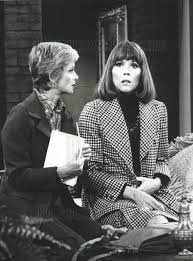
As we take a peek at some one-named sitcoms, today we travel back about fifty years to 1973 and visit Diana which debuted on NBC. Created by Leonard Stern, the show was filmed in front of a live audience. Stern was the creator behind several series including McMillan and Wife and He and She. In addition to this show, he wrote for several series including The Phil Silvers Show, Get Smart, and Holmes and Yo-Yo. He has a decent amount of producing credits including executive producer for Get Smart.
📷en.wikipedia.com
The premise is that divorced Diana Smythe (Diana Rigg) moves from London to New York City as a fashion coordinator for a department store. Her brother lets her live in his apartment while he’s out of town. Not only does Diana have to deal with learning about life in America, she has to take care of her brothers great dane Gulliver. Quickly, she realizes a lot of women have keys to her brother’s apartment and they show up regularly.
Rounding out the cast was neighbor Holly (Carole Androsky), copywriter Howard (Richard B. Shull), window decorator Marshall (Robert Moore), her bosses Norman and Norman Bronik (David Sheiner and Barbara Barrie), and friend Jeff (Richard Mulligan), a mystery novel writer.
Jerry Fielding composed the Diana theme. Fielding was a three-time Oscar nominee with 115 composing credits including McMillan and Wife, Mannix, Hogan’s Heroes, and Star Trek. He also was listed as part of the music department for lots of great series and movies.
📷wikimediacommons.com
Riggs took on the role due to the success of The Mary Tyler Moore Show and wanted to do something similar. I will say they tried a bit too hard to be similar. Their apartments are almost identical, and the work set was also set up with one coworker next to Diana and her boss’s office to the right. The show was placed on the Monday night schedule before Here’s Lucy. It was up against Gunsmoke and TheRookies. Gunsmoke had been on forever and was still in the top 20 while The Rookies was in the top 30. While a lot of shows debuted in 1973, the only real hit was Happy Days.
This show might have wanted to emulate The Mary Tyler Moore Show, but it lacked a few things including the amazing cast, the great writing, and the perfect timeslot. Fans never warmed up to this show and the ratings never took off, so the show was canceled before the end of the season.
📷facebook.com
It wasn’t a terrible show, but it wasn’t anything worth watching either. I thought the dialogue was not great and it tried way too hard. The jokes seem a bit tired. While the cast also wasn’t awful, they weren’t overly likable either. I think that there were valid reasons this one was canceled after only 15 episodes. At least she had The Avengers to remember which was a much better and beloved show. Diana summed up how this series fared when she related a story that when she arrived in American, the network had her picked up at the airport in a limousine and when she left America after a canceled show, they sent her to the airport in a shabby, yellow cab. I guess limousines and shabby cabs are part of all of our lives.
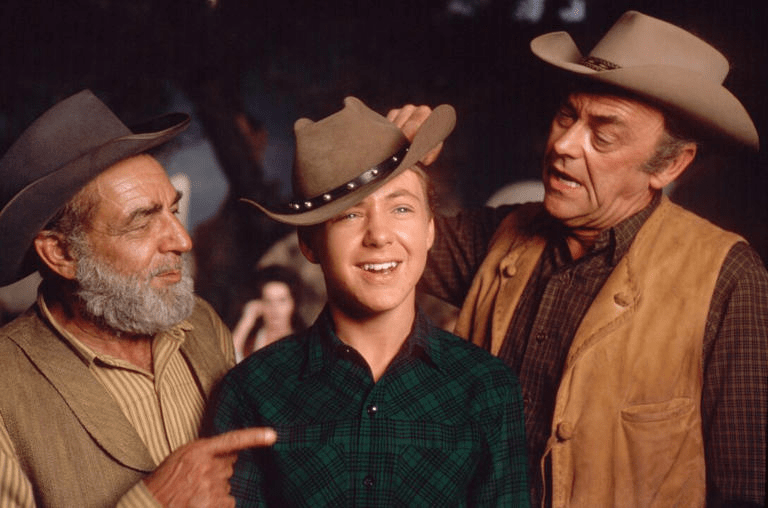
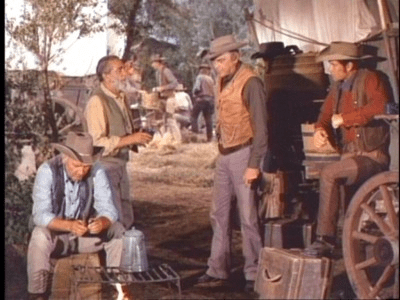
This month we are celebrating, “Go West Young Man” by taking a look at some of the westerns from the fifties and sixties. Up today is Wagon Train. This series debuted on NBC in 1957; in 1962 it moseyed over to ABC for its final three seasons. Lew Wasserman was involved with Universal which produced Wagon Train. When they sold the series to ABC, NBC was not happy, but Wasserman told them that he had a new show for them, The Virginian, which we’ll learn about in two weeks.
📷pinterest.com
The series was very popular, jumping to number one immediately. The plot is that a large wagon train is traveling through the west from Missouri to California. Ward Bond starred as the wagon master Seth Adams (when he died in 1960, John McIntire took over). Robert Horton played scout Flint McCullough; eventually he opted to leave and was replaced by Robert Fuller. Oddly, Horton and Fuller shared a birthday and were six years apart in age.
If I listed all the guest stars during the eight seasons, you would still be reading this next Monday. Just know, there were a lot.
The show was adapted from a 1950 John Ford film titled Wagon Master. In a 1960 episode, John Ford stepped in to direct an episode, “The Colter Craven Story.” One guest star I have to mention in this one was John Wayne. He speaks from the shadows as General Sherman (Wayne’s real name was Marion Michael Morrison, so for this credit, he went by Michael Morris) in this episode.
The original theme song was written by Henri Rene and Bob Russell and conducted by Stanley Wilson. A more contemporary theme accompanied season two, and it changed a few more times during the run of the show.
📷msn.com
The show had a huge budget for the time: $100,000 (about a million in today’s world of television). It was about 40% more expensive than most westerns at the time, and that is part of why it was able to feature so many guest stars.
When Gene Roddenberry pitched Star Trek to the networks, he described it as “a Wagon Train traveling across the universe.” He also hired writer Gene L. Coon who wrote 23 episodes of Wagon Train.
While wagon trains are considered an icon from our history, so was the product of the series’ first sponsor, the Edsel Division of the Ford Motor Co.
The show was an hour long and shot in black and white for the first six seasons. For season seven, the network filmed the show in color and increased the length to 90 minutes. The ratings were still high but didn’t increase, so the network could not justify the changes, and the television show went back to an hour in black and white.
📷dvdtalk.com
The show was placed on Wednesday nights up against Leave it to Beaver and Disneyland. Even with that competition, it was in the top thirty and by its second season, had jumped to the top ten where it stayed until it was sold to ABC. ABC kept the show on Wednesday nights, and it ran against The Virginian, both being in the top thirty in 1962.
So many people have fond memories of this show. It was on six seasons, but I think it was finally cancelled even though it was in the top thirty because of the western overload, ushering in the shows like Get Smart, The Man From UNCLE, Lost in Space, and The Smothers Brothers Show. Check out your favorite guest stars who were on the show and watch those episodes to see what it was like.
As we wind up our What in the World? blog series this month, we end with Bracken’s World. Just like the other shows we covered, this one began in the sixties, 1969, and just like the others, it was on for less than two seasons.
Dorothy Kingsley created the series for NBC. This was her only foray into television; she was a screenplay writer for most of her career. Kingsley wanted to concentrate on the “little people” who work at the studio, rather than the executives. In one blog I read that props from Twentieth Century Fox where the show was filmed were often carted around in the background for authenticity. It would be fun to go back and make a list of the props that were shown around the set; specifically mentioned were props from Planet of the Apes and Land of the Giants.
Watch.plex.tv.com captures the essence of the show in its description “In the glitzy realm of Century Studios, powerful executive John Bracken shapes Hollywood’s fate, navigating ambition, romance, and betrayal through the eyes of his astute secretary Sylvia, who holds the key to both secrets and success.”
Century Studios was a movie studio. John Bracken owned the company, and he was never seen during the first season. Similarly to the way Charlie interacted with Charlie’s Angels, we only heard Bracken on the telephone, voiced by Warren Stevens. Sylvia Caldwell (Eleanor Parker) was his secretary. There were some impressive cast members in this show including stunt man Dennis Cole, Jeanne Cooper, Madlyn Rhue, Linda Harrison, Elizabeth Allen, Karen Jensen, and Laraine Stephens. Most of them played starlets waiting for their big break. Peter Haskell as producer Kevin Grant seemed to be responsible for a lot of the success of the show. Tom Selleck had a recurring role of Roger Haines during the first season. The characters dealt with the problems of the movie industry—drugs, sex, alcohol, and amoral executives.
Being a Hollywood studio, there were also a lot of great guest stars including Anne Baxter, Shelley Fabares, Sally Field, Lee Grant, Carolyn Jones, Ricardo Montalban, Edward G. Robinson, Martin Sheen, Richard Thomas, Forrest Tucker and Raquel Welch.
The series was on Friday nights in the hole filled when Star Trek was canceled. It was referred to as the “Friday night death slot.” The show’s competition was Love American Style and CBS Friday Night at the Movies, which started an hour before Bracken’s World did. I’m not sure when this death slot switched because at that same time, I recall loving Friday nights in the early seventies featuring The Brady Bunch, The Partridge Family, Room 222, The Odd Couple, and Love American Style.
The show’s ratings were not good, so for the second season, things were changed a bit. Parker left part way through season one because she didn’t like the scripts. We now got to see John Bracken in person, but he sounded like Leslie Nielsen who played him instead of John Warren. Dennis Cole was also shown out the door.
Jeanne Cooper had a very different view of the show than Parker. Cooper played one of the starlet’s mom who was also her agent. She said that it allowed viewers to go behind the scenes of a movie studio to get a realistic depiction of what happened when the cameras were off. She said that the cast can take much more time filming movies to discuss the script, but that is not the way television works, and Parker never understood the difference between the two mediums. Cooper felt the writing was much more sophisticated than shows had produced before and that it led the way for shows like LA Law and Boston Legal.
According to Cooper, there were two reasons for the demise of the show. One was that she said Bracken should never have been exposed. He should have stayed a voice who ran a studio like a Louis B. Mayer type. She also said the show was very expensive to produce. Often shows were ordered six at a time back then which gave the crew some wiggle room to have a few expensive shows and then cut back when it got viewers locked in to average out the cost. NBC would only buy two or three at a time. Finally, Stan Rubin, the executive producer, said NBC had to agree to a minimum of four-episode commitments at a time and they refused, so the show was canceled.
The show did seem to be a bit ahead of its time. Perhaps if it had debuted a few years later, it would have found more viewers.
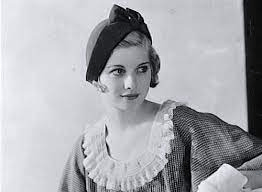
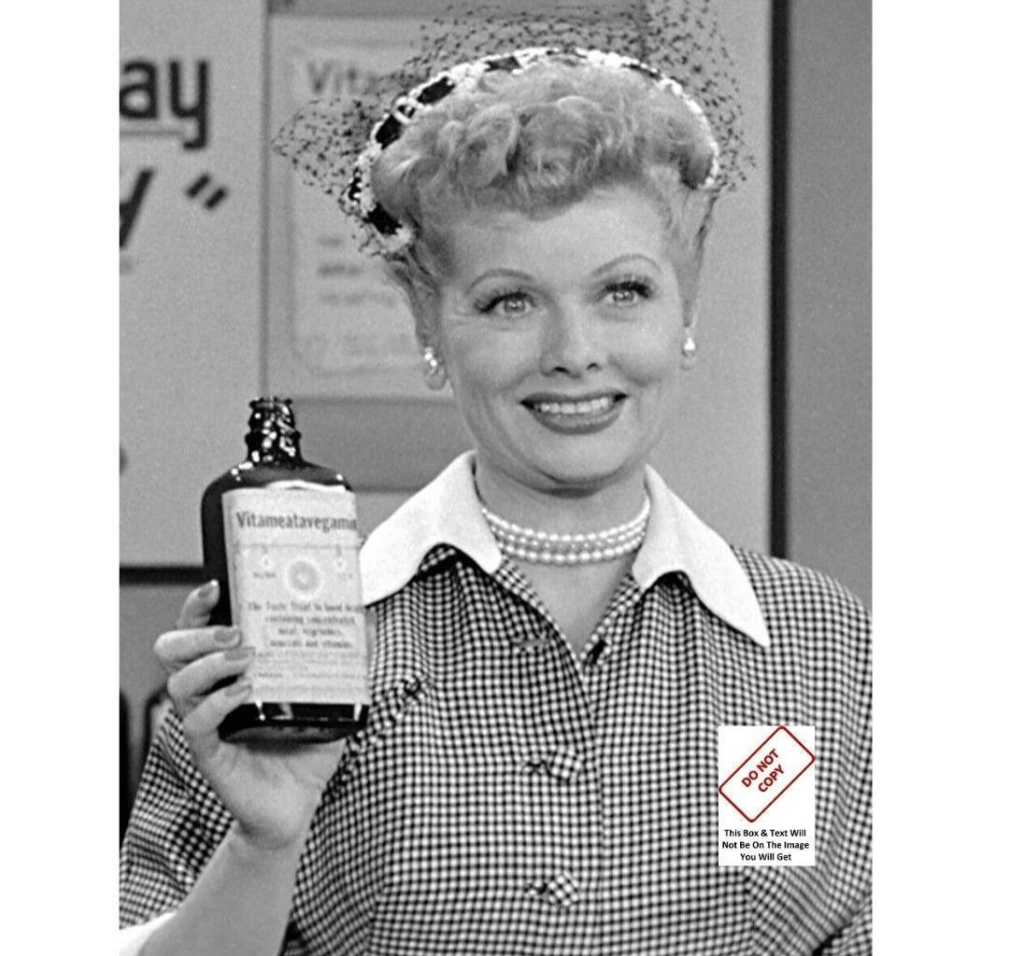
This month we are learning why We All Love Lucy. We’ll delve into her sitcoms and get to know Jess Oppenheimer and hear about his role in her television life. But today, we are starting with the woman herself, Lucille Ball.
📷facebook. A young Lucille Ball
Lucille Desiree Ball was born August 6, 1911, in Jamestown, New York. She was the only daughter of Henry Durrell Ball, a lineman for Bell Telephone, and Desiree Evelyn Hunt Ball. They lived at 60 Stewart Avenue. The family belonged to the Baptist Church there, and many of her relatives were among some of the first European settlers in Massachusetts.
The family moved frequently for her father’s career, but Jamestown always had a claim on Lucy, and they celebrate her in many ways there. The family lived in Montana, New Jersey, and Michigan before her father passed away from typhoid fever at age 27 in 1914.
Her mother returned to New York, living in Celoron, a summer resort on Chautauqua Lake. The road she grew up on is now named Lucy Lane. Celoron had an amusement park with a boardwalk, the Pier Ballroom, a roller coaster, a bandstand, and a stage.
📷Good Housekeeping
Lucy’s mother remarried four years later. It was her stepfather who encouraged Lucy to audition for his Shriner’s chorus line, which gave her the first taste of what it would be like to be in show business. When she was 16 the family returned to Jamestown.
When Lucy was only 14, she was dating a 21-year-old hoodlum. Her mother was devastated by the situation and finally enrolled Lucy in the John Murra Anderson School for Dramatic Arts in New York City to encourage her in her theater career. Ball did not love the school, and her instructors told her she would not be successful in the entertainment business. Luckily, Lucy did not take their comments to heart. She later said that “one of the things I learned the hard way was that it doesn’t pay to get discouraged. Keeping busy and making optimism a way of life can restore faith in yourself.”
In an attempt to prove the school wrong, Lucy began working as an in-house model for Hattie Carnegie. This was where she first changed her hair. Being a brunette, Carnegie taught Ball to bleach her hair blonde. Her modeling was interrupted for two years when she dealt with the effects of rheumatic fever.
At the ripe old age of 21, Ball returned to New York City to pursue an acting career. She went back to the Carnegie agency and became the Chesterfield Cigarette Girl.
📷Brittanica
In 1933 she was in Roman Scandals as a Goldwyn Girl; while playing a slave girl, she had to have her eyebrows entirely shaved off, and they never grew back. Some of the things an actor goes through for roles is crazy. After that movie she moved to Hollywood to try a film career. After becoming a contract player for RKO Radio Pictures, she received a decent amount of work. At this time, she met the Marx Brothers, appearing in Room Service. She also worked with Fred Astaire and Ginger Rogers in several musicals.
When she registered to vote in 1936, both she, her brother, and her mother registered as Communists. During that year she signed a document as a Communist supporting Emil Freed for assembly and was appointed delegate to the State Central Committee of the Communist Party of California.
Ball later claimed she never had a strong political affiliation. In 1944, Lucy can be seen in a newsreel fund raising for Franklin Roosevelt. She also mentioned that she voted for Eisenhower in 1952 when he was on the Republican docket. In 1953 Ball met with HUAC and gave a sealed testimony. She said that she voted Communist at her grandfather’s insistence and did not know she had been appointed a delegate. Before filming episode 68 of their show, her husband and co-star Desi addressed the audience and said Lucy was not a Communist; she was just influenced by her grandfather. He joked that “the only thing red about Lucy is her hair, and even that is not legitimate.”
📷pinterest
In the late thirties, she dabbled in radio to earn some additional money. She was a regular on “The Phil Baker Show” and on “The Wonder Show” where she met announcer Gale Gordon.
In 1940 Lucy met Desi Arnaz when they both appeared in the movie Too Many Girls. They fell in love immediately, and before the year was out, they eloped. Arnaz was drafted in 1942, but a knee injury kept him from active service, and he was placed in Hollywood organizing and performing USO shows for wounded GIs.
Lucy finally got her big break in 1943. Arthur Freed was making a movie based on the play “DuBarry Was a Lady”; he bought it for Ann Sothern, but when she turned it down, she recommended her best friend, Lucille Ball.
In 1944, Ball filed for divorce, but the couple reconciled before it went through. Lucy and Desi had Lucie in 1951 when Lucy was almost 40, and son Desi was born during the series and written into the scripts in 1953. Mom and son appeared on the first cover of TV Guide which came out in 1953.
📷HollywoodHistoricPhotos.com
Ball continued to make movies throughout the forties and kept a foot in radio. In 1948 she was cast as Liz Cooper on the radio show, “My Favorite Husband” on CBS.
When CBS wanted to transition the show to television, Lucy wanted Desi to be her television husband. CBS said no, so the couple went on the road with an act to prove the popularity of the them working together and CBS backed down.
The show was incredibly successful. (If you want to learn more details about the series and all the history that it produced, keep an eye out for my blog which will post January 13, 2025.) The couple created their own production company and had many “firsts” with technology producing their show. During filming breaks of the show, Lucy and Desi made two movies: The Long, Long Trailer in 1954 and Forever, Darling in 1956.
After years of turmoil and ups and downs in their marriage, the couple divorced. However, they continued to remain in each other’s lives through their children and their relationship. Later in life, Lucy said “Desi was the great love of my life. I will miss him until the day I die.”
📷closerweekly.com Ball and Vance
Lucy bought Desi’s share in the production company which produced a variety of shows including Mission: Impossible, Star Trek, and The Untouchables. In 1967 Lucy sold her shares to Gulf+Western, owned by Paramount, for $17 million, which would translate into $138 million today.
Lucy married Gary Morton in 1961. At the time, Morton was a comedian 13 years younger than Lucy. He said he had never seen an episode of I Love Lucy. Ball hired Morton for her production company, teaching him the television business.
For the next decade, Lucy worked on a number of television specials. She also tried sitcom life again. She starred in The Lucy Show from 1962-68 and in Here’s Lucy from 1968-1974. We’ll discuss these shows the last week of January. Many of Lucy’s friends appeared on these shows. Her close friends included Mary Jane Croft, Judy Garland, Ethel Merman, Barbara Pepper, Ginger Rogers, Ann Sothern, Vivian Vance, and Mary Wickes.
📷ebay.com
Ball kept busy acting during the early 1980s. Desi Arnaz passed away in 1986. In 1988 Lucy had a mild heart attack. She appeared at the 1989 Academy Awards show and she and co-presenter Bob Hope were given standing ovations. She died a month later. Lucy had been a heavy smoker, and her cause of death was abdominal aortic aneurysm which is seen more in smokers.
Lucy always sent flowers to Carol Burnett on her birthday. The day before she died, she ordered them, and they were delivered a few hours after Carol learned of her death.
Lucy was cremated and her ashes were interred in Forest Lawn Cemetery with her mother’s remains. In 2002, both women’s remains were moved to the Hunt family plot in Jamestown. In Jamestown you can find the Lucille Ball Desi Arnaz Museum & Center for Comedy and the Lucille Ball Little Theater.
In 2009 a statue of Lucy was erected in Celoron. Many people called it “scary,” and it became known as “Scary Lucy,” which I totally endorse. In 2016, a more lifelike statue was created to replace Scary, but the scary statue had become so popular, it was left on display with the new one as its neighbor.
📷youtube.com The different sides of Lucy
Those two statues symbolize my relationship with the show. I appreciate the show and everything it did to create the classic age of television. Whether it’s technical filming strategies, the writing, the way the business was run, everything was important in this show. However, I have to admit, it’s not a show I choose to watch. It changed the entire course of television in similar ways that All in the Family would do a few decades later, but I honestly don’t enjoy watching either of these series. That might be a fault in my genes, but I also have to be honest.
However, Lucy Ricardo, while we may think of her as naïve and sophisticated, traditional and unconventional, submissive and disobedient, was an important icon in the way that women thought about themselves in the fifties.
Women had been brought in to work and gain independence while so many men were overseas fighting, and then they were asked to give it all up and go back to a domestic and tranquil life. Leslie Feldman, a political scientist and author of The Political Theory of I Love Lucy, writes that Lucy was “a transitional figure—she’s on the cutting edge. . . Are [women] going to stay home and be wives and mothers? Are they going to go to work? Or are they going to do both? And what if they really do better and earn more money than their husbands? What about that? That’s an element of Lucy too.”
📷biography.com
Lucy was a force in show business. While she was not alone in taking control of her own career—Donna Reed, Betty White, and Ann Sothern were also powerhouses in establishing their own companies and running them—Lucy did it with the nation watching her. Even the choices she made about whether to divorce Desi or not were all done in the public eye and were sending messages whether people chose to receive them or not.
Lucille Ball was an amazing actress and an amazing business person. Apart from whether I enjoy watching the show or not, it changed the history of television and the way sitcoms were written, cast, and remembered. Thank you, Lucille Ball, for not listening when your instructors told you that you would never make it in show business. You not only made it in television, you truly made television what it is today.
It’s Eerie Shows month. Last week we learned about Alfred Hitchcock Presents, a thriller anthology show. Today we have another anthology series of science fiction themes – The Outer Limits. The show examined the nature of man every week and included many classic science fiction themes such as life in outer space, time travel, and human evolution.
The original title of the show was Please Stand By. It was on ABC from 1963-65. Joseph Stefano was the producer for season one and the creative guiding force, writing more episodes than anyone else. He was the writer of Hitchcock’s film, Psycho. Harlan Ellison, a prolific writer, wrote two episodes for season two. Robert Towne wrote a script for the show and later received an Oscar for his writing for Chinatown.
The show also employed a well-known cinematographer in Conrad Hall. He worked on a variety of television shows and in film, winning Oscars for Butch Cassidy and the Sundance Kid, American Beauty, and Road to Perdition; he was nominated for another seven movies.
📷imdb.com
The shows began with a Control Voice saying:
“There is nothing wrong with your television set. Do not attempt to adjust the picture. We are controlling transmission. If we wish to make it louder, we will bring up the volume. If we wish to make it softer, we will tune it to a whisper. We will control the horizontal. We will control the vertical. We can roll the image, make it flutter. We can change the focus to a soft blur or sharpen it to crystal clarity. For the next hour, sit quietly and we will control all that you see and hear. We repeat: There is nothing wrong with your television set. You are about to participate in a great adventure. You are about to experience the awe and mystery which reaches from the inner mind to The Outer Limits.”
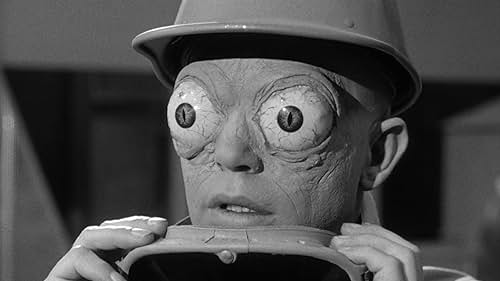
Seasons one and two were a bit different with season two focusing more on hard science. Sometimes we forget that special effects were not something these crew members had much experience with on television. Often, the cast was experimenting, just trying to find solutions to creating these new effects. Robert Justman, who was one of the assistant directors on the show, talked about how they created monsters on the show in his Television Academy interview. He said for one of the first monsters, they had planned to use a negative image instead of a positive one, but that was not enough. He got the idea to rub the image with Vaseline and it created these iridescent spots on it which gave them their monster.
📷moviemarket.com
The music for season one was by Dominic Frontiere and season two was supplied by Harry Lubin. Frontiere was credited with 59 shows and films, including Matt Houston and Vega$. Lubin was best known for his music on The Loretta Young Show and One Step Beyond.
Season one garnered good ratings and their fans were very loyal. However, the ratings dipped in season two after changing focus and moving from Monday to Saturday night. Stefano knew that competing with The Jackie GleasonShow on Saturday night meant the show was over, and he left before season two started.
The episodes of The Outer Limits were often confused with The Twilight Zone, not only by viewers but by actors appearing in them. We’ll learn more about The Twilight Zone next week.
Another fan of the show was Gene Roddenberry. He was often on set, and the show would become a big influence on Star Trek later in the decade. A lot of the crew, cast, costumes, and props on The Outer Limits made their way into StarTrek episodes.
📷theguardian.com
Like so many shows, this one was revived in 1995, and it ran for seven seasons.
I’m not sure why but I don’t remember watching this show in reruns the way I did The Twilight Zone. Maybe it was not shown as often or maybe it was on when our family was watching other shows, but it was interesting to learn what made it different from The Twilight Zone. I’m not sure how many of the “monster” episodes would compete with the special effects of today, but it’s worth taking a look at a few of them and the science they not only developed but the technology that was invented.
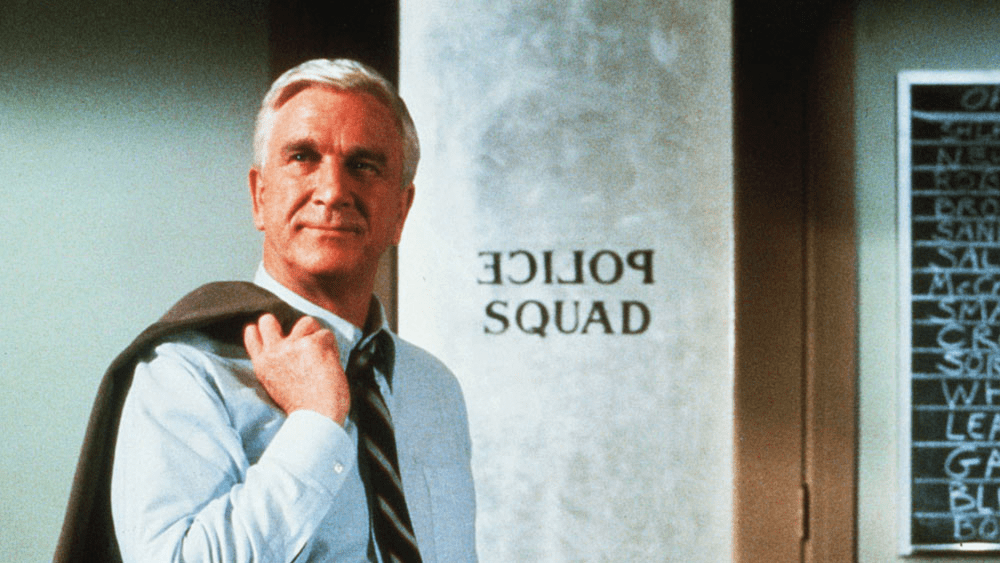
In this last blog in our series of Supportive Men, today’s actor might not be someone most people expect to see when talking about television. When most people think about Leslie Nielsen, they think of Airplane! and some of his other movies. While he did have a prolific movie career, he also has a well-deserved place in television. This guy amassed 259 (150 in television) acting credits during his six-decade long career.
📷tmdb.com
Nielsen was born in Saskatchewan, Canada in 1926. His mother was from Wales, and his father was a Royal Canadian Mounted Policeman. His older brother served in politics, being a Canadian Member of Parliament, a cabinet minister, and a Deputy Prime Minister of Canada. I read several sources that said his father was abusive, and Leslie wanted to move out as soon as possible.
Leslie enlisted in the Royal Canadian Air Force, serving until the end of WWII. He was legally deaf, wearing hearing aids most of his life, but he was able to train as an aerial gunner.
After the war, he worked as a disc jockey in Calgary, Alberta before enrolling at the Lorne Greene Academy of Radio Arts in Toronto. He was offered a scholarship at the Neighborhood Playhouse in New York.
📷wikipedia.com Bonanza
He made five television appearances in 1950 with the first being on The Actor’s Studio. He continued working in television, primarily on dramatic theater series, through the 1950s. In 1956, he had his first big-screen roles, appearing in four movies that year including Ransom, Forbidden Planet,The Vagabond King, (Nielsen later referred to this film as the “Vagabond Turkey”) and The Opposite Sex.
Leslie discussed his role in Forbidden Planet: “Supposedly a science fiction version of Shakespeare’s The Tempest . . . The Trekkies today regard it as the forerunner of StarTrek. I just had to wear a tight uniform and make eyes at Anne Francis. I was pretty thin back then.”
He became an American citizen in 1958 but continued to be proud of his Canadian citizenship as well.
While most of his credits for the late fifties were movies, he jumped back into television in the sixties, appearing in forty different shows. Many of them were dramatic theater roles, but you can spot him in Alfred Hitchcock Presents, Route 66, Wagon Train, DanielBoone, The Wild Wild West, Dr. Kildare, Bonanza, The Man From U.N.C.L.E., and Gunsmoke. His only recurring role during this decade was on Peyton Place where he played Kenneth and Vincent Markham in 18 episodes.
📷pinterest.com on M*A*S*H
The seventies were almost a repeat of the sixties. His recurring role was on The Bold Ones. He also appeared in Medical Center, Mod Squad, M*A*S*H, Barnaby Jones, Hawaii Five-0, Kojak, Columbo, and The Love Boat.
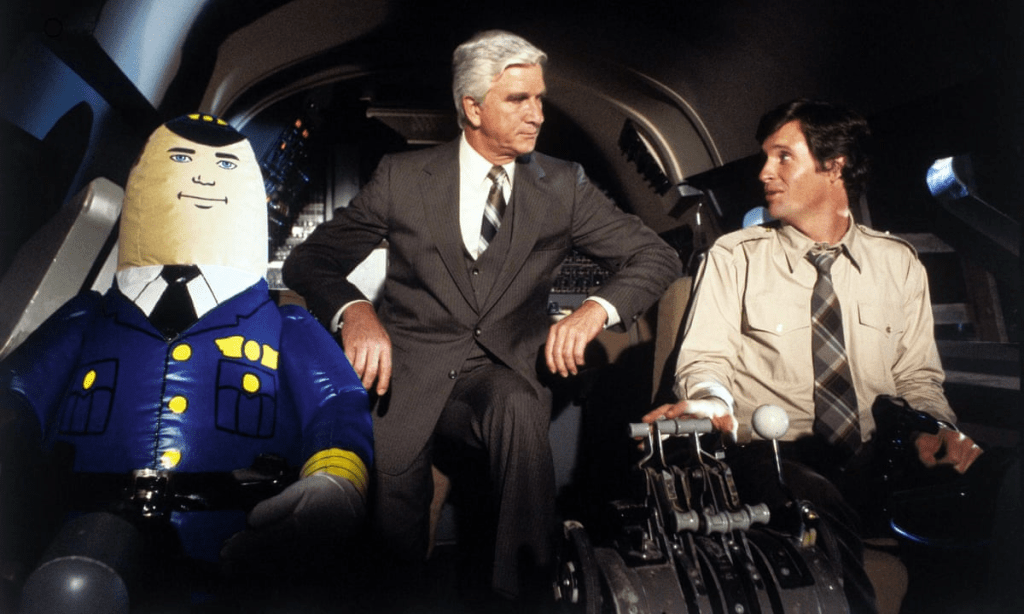
1980 brought him the role of Dr. Rumack on Airplane!. Nelson’s deadpan delivery of lines in that movie is what most fans today remember about his career. Of course, his response to the line of “Surely you can’t be serious?” of “I am serious. And don’t call me Shirley” is still repeated today. Leslie said, “he was pleased and honored that he had a chance to deliver that line.” Film critic Roger Ebert once called him “the Laurence Olivier of spoofs.”
📷themoviebuff.com Airplane!
He continued in these types of roles in Police Squad and Naked Gun and the sequels. His movie roles increased in the eighties and nineties, but he continued to accept television roles off and on. You can catch him on Murder She Wrote, Highway to Heaven, Who’sthe Boss, The Golden Girls, and Evening Shade.
His roles continued throughout the 2000s until his death, but the last decade included fewer memorable shows, although he worked less overall. When reflecting on this, Neilsen said that “I’m afraid if I don’t keep moving, they’re going to catch me . . . I am 81 years old, and I want to see what’s around the corner, and I don’t see any reason in the world not to keep working. But I am starting to value my down time a great deal because I am realizing there might be other things to do that I am overlooking.”
📷npr.org Police Squad
While Nielsen was very successful in his career, he was not as successful with his marriages. From 1950-56, he was married to Monica Boyar. His longest relationship was with wife Alisande Ullman from 1958-1973. He then married Brooks Oliver for two years from 1981-83 and then Barbaree Earl from 2001-2010.
One of his hobbies was golfing, and he later did some humorous instruction videos about the sport. He once said, “I have no goals or ambition. I do, however, wish to work enough to maintain whatever celebrity status I have so that they will continue to invite me to golf tournaments.”
Nielsen died in his sleep in 2010 from pneumonia.
He received two Walk of Fame stars: one in Hollywood in 1988 and one in Toronto in 2001. Nielsen was known for his flatulence gags, especially on movie sets, and his tombstone says “Let ‘er Rip.”
While Nielsen’s career is impressive, what I loved most about him is that he seemed to thoroughly enjoy life. That’s a great reminder for us all. Our best role should be enjoying life to the best of our ability.
This month we are celebrating some of our favorite Supportive Men, actors who usually are not the star of a show but add the special flavor only they can to some of our favorite shows.
Before we move on to our topic today, can I just say a huge THANK YOU to all of you who have joined me on this journey through classic television. Today is my 400th blog and it has been so much fun. Next week will be 401, but for today we are looking at the career of Vic Tayback.
📷graduation photo
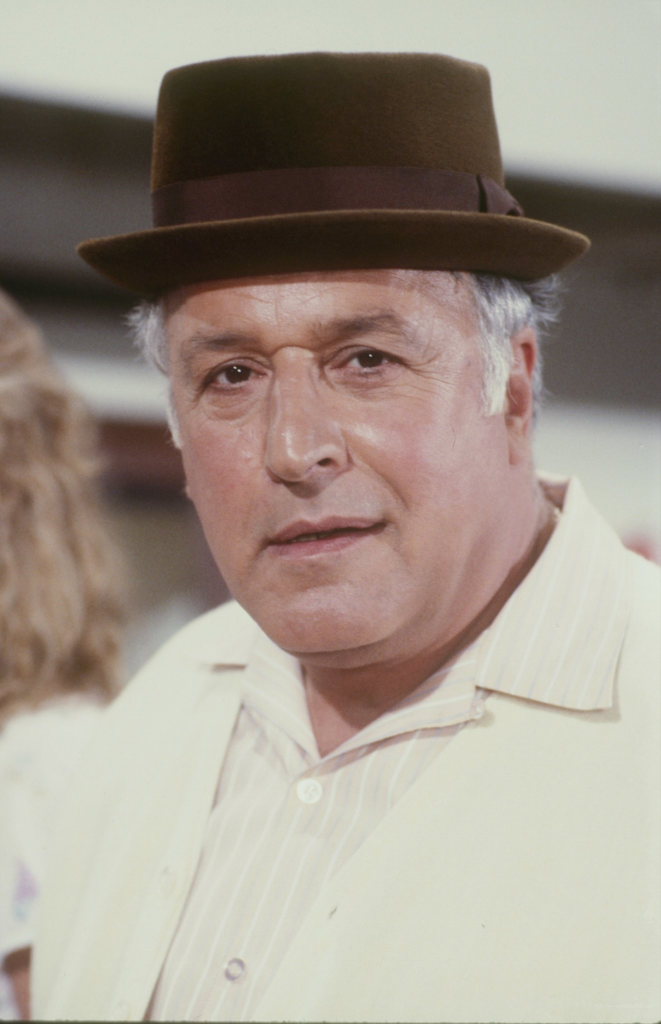
Most of us probably know him best as Mel on Alice; he played Mel Sharples in both the original movie, Alice Doesn’t Live Here Anymore, as well as the television show that was on for nine years.
Tayback was born in Brooklyn in 1930. His parents settled there after leaving Aleppo, Syria. During his teenage years, the family moved to California where he attended Burbank High School. He loved sports and played on a variety of teams, his favorite being football.
After high school, he enrolled at Glendale Community College. He also spent some time with the US Navy.
With his love of sports, he decided to attend the Frederick A. Speare School of Radio and TV Broadcasting to be a sports broadcaster. While there he was required to perform in a production of “Stalag 17” for one of his classes. He wasn’t thrilled about doing so, but he realized that he loved making people laugh and decided to switch his career to acting. While trying to break into the industry, he paid his dues driving a cab and working as a bank teller.
📷embarrassingtreasures.com Family Affair
The first of Tayback’s astounding 151 acting credits occurred in 1958 in a little-remembered series, Buckskin. This western was set in Annie O’Connell’s boarding house in Buckskin, Montana in 1880 and the stories were told by ten-year-old Jody. Vic continued to receive a few other appearances on television in the late fifties, as well as two films.
In the sixties, Tayback’s career took off. He would show up on 32 television episodes and 9 big-screen films, including With Six You Get Eggroll with Doris Day and Brian Keith. His tv roles were in comedies such as F-Troop, I Dream of Jeannie, Family Affair, Get Smart, The Monkees, and That Girl. He also could be seen in a variety of dramas that included 77 Sunset Strip, Dr. Kildare, Rawhide, Cimarron Strip, Star Trek, and Mission Impossible.
📷newyorkdailynews.com The Cheap Detective
The sixties also found Vic in the role of groom. In 1963, Tayback married Sheila Barnard, and they remained married until his death.
During the seventies, his appearances escalated to more than forty television series and ten movies. Some of his television shows included Bonanza, TheMary Tyler Moore Show, Bewitched, Columbo, Mannix, Ironside, Mod Squad, The Partridge Family, All in the Family, Barney Miller, Cannon, Medical Center, Family, and Hawaii Five-0. His movies included a few genres running from Disney’s The Shaggy DA to Papillon (Papillon was the story of a French convict who befriends a fellow criminal in South America in the 1930s, and he plans an escape).
It was during the mid-seventies that he was offered the role of Mel Sharples. In 1974 the movie was released, and the television show aired in 1976. The show was very popular with viewers. Vic said he and Mel were somewhat similar characters. While people still quote Flo on the show with her “Kiss my grits,” Tayback had his own tagline on the show, “Stow it.”
📷imdb.com Alice
If you didn’t see the show, it featured a greasy-spoon diner in Phoenix, Arizona. Alice moves there after the death of her husband with her son Tommy. She becomes a waitress at Mel’s along with sassy Flo and shy, gullible Vera. Despite the bad food, they have a lot of regulars who come in for a meal. If you want to visit the restaurant, the building it was based on is at 1747 NW Grand Ave in Phoenix and was called Pat’s Family Restaurant. (It was also featured in American Graffiti.) It is now called Mel’s Diner. According to Trip Advisor, it is ranked #448 out of 1795 restaurants in Phoenix.
📷imdb.com
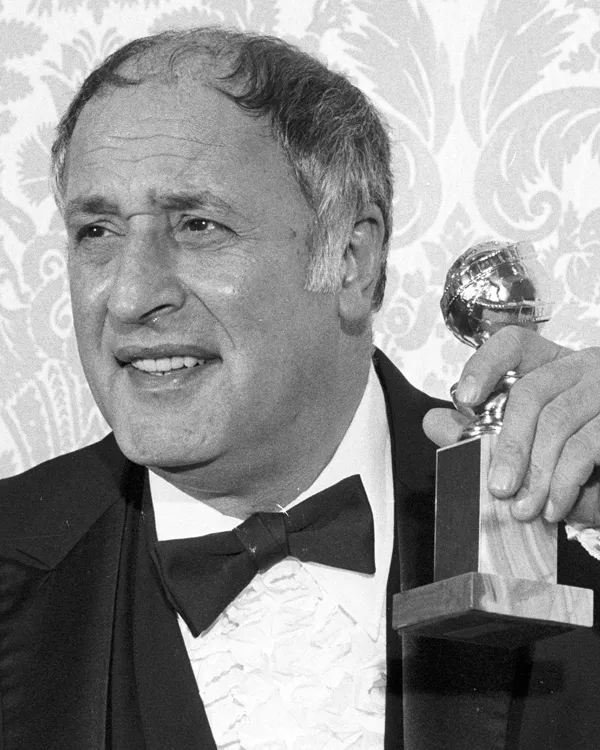
The role of Mel won Tayback Golden Globe awards in both 1979 and 1980. In 1978 he was nominated for an Emmy as Supporting Actor in a Comedy. While he did not win, he was in some amazing company. That year, fellow nominees included Harry Morgan and Gary Burghoff for M*A*S*H, Tom Bosley in Happy Days, and Rob Reiner from All in the Family, who took home the win that year.
The series aired on Saturday nights and the first year was in the top thirty. In 1977, its second season, it was moved to Sunday nights, following All in the Family where it rose into the top ten. In 1979, All in the Family left the airwaves, and Alice then followed One Day at a Time. Seasons three-five, it continued to be in the top thirty. In 1981, the show was moved to Monday nights up against M*A*S*H where it fell out of the top 30. However, season seven found it back on Sundays following The Jeffersons where it rose back into the top thirty. However, it took another dive in ratings the next year and then was cancelled. I think it probably stayed on the air a year or two beyond when it should have. However, interestingly enough, the year it was cancelled, CBS introduced 15 new shows. I’m not sure most people have ever heard of any of them; they were all gone by 1986 with the exception of The Twilight Zone (reboot) and West 57th, which was a news show aimed at younger audiences.
Vic was also an avid horse-racing fan and owned quite a few thoroughbreds. On Alice, Mel was also a track fan, and sometimes the writers asked Mel for names of horses they could use, and he often gave them names of his horses.
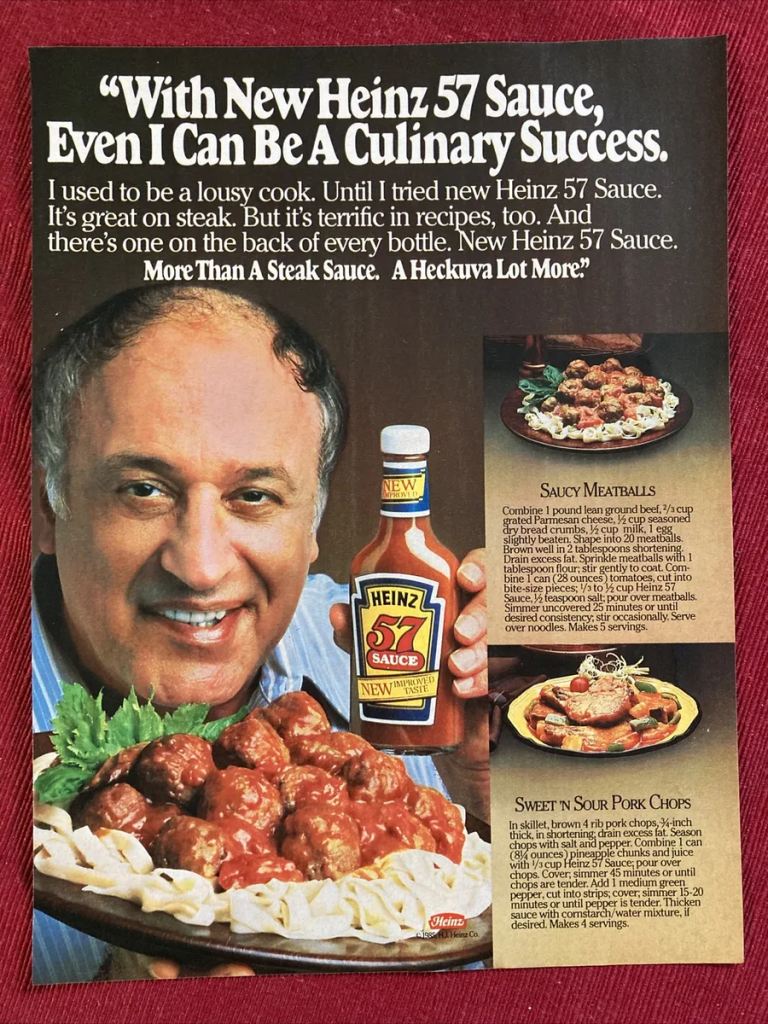
On the show, Vic was often made fun of for his bad cooking. In a 1985 interview he said, “If I walked into a restaurant, the other diners would look around and say, ‘I hope you’re not cooking.’” Heinz then offered him the role of spokesperson for their Heniz 57 sauce and his line in the commercials, was “I used to be a lousy cook.” He was also remembered for an Aqua Velva commercial he did with Pete Rose.
Unfortunately, Tayback was a heavy smoker which caused heart trouble for him. While doing Alice, he had a triple-bypass surgery. While he did try to quit numerous times, he just could never kick the habit. In 1990, he died from a heart attack at age 60.
📷goldenglobes.com
While we were cheated of several decades of performances from Vic with his early death, he did leave an amazing legacy in the Company of Angels theater in Los Angeles. According to its website, “In 1959, a group of actors, including Tayback, Leonard Nimoy, Richard Chamberlin, and Vic Morrow founded the theater to provide a space for actors and other theater artists to work on their craft free of commercial constraints.”
Thank you, Vic Tayback, for deciding to make people laugh in your career and investing in the future of acting so those memories continue in the future.
This month, our theme is Bam! Pow! Batman Villains. We have learned a bit about the careers of the Joker and Cat Woman, and today we are spending some time with the Riddler, portrayed by Frank Gorshin.
📷imdb.com
Gorshin started out as an impressionist and comedian before transitioning into acting.
Frank was born in Pittsburgh in 1933 into a blue-collar, middle-class family. His mom was a seamstress, and his father was a railroad worker. His paternal grandparents arrived in the US from Slovenia and his mother was born in Slovenia, coming to the Pittsburgh area as a young girl; his parents were very involved in the Slovenian community, both singing with the Preseren, a Slovenian singing society.
When he was 15, Gorshin got a part-time job as an usher at the Sheridan Square Theatre. He studied the mannerisms of the actors he watched in those movies and developed an impressionist act. Some of his favorite actors to mimic included James Cagney, Cary Grant, Al Jolson, and Edward Robinson. After entering a talent contest in 1951, he won a week-long engagement at the Carousel nightclub in New York.
Sadly, Gorshin’s older brother was hit by a car two days before and died. His parents convinced him to keep his performance schedule and sent him to New York.
After high school, Gorshin enrolled at the Carnegie Tech School of Drama (now Carnegie Mellon University).
📷imdb.com
At age 20, Frank was drafted into the US Army and sent to Germany. He was an entertainer in Special Services for a year and a half. When Gorshin left the Army, he began his acting career, appearing in four movies and on television in Alfred Hitchcock Presents.
I can’t imagine the horror Gorshin’s parents felt when getting a call in 1957 that their son had fallen asleep while driving from Pittsburgh to Hollywood, a 39-hour trip for a screen test. With their other son passing away from a car crash six years earlier, now they had to deal with the fact that their other son was in a coma with a fractured skull. Luckily, he made a full recovery.
Another big event occurring in 1957 was his marriage to Christina Randazzo. They had a son and separated later in life, but they never did divorce as far as I could tell.
Until his death, Gorshin would appear in more than sixty big-screen films. During the fifties, he only appeared in a handful of television series, but that would change in the 1960s. Some of the most memorable shows included The Defenders, The Munsters, Star Trek, and The High Chapparal. With his comedy act, he visited The Ed Sullivan Show four times. The first time he did his impressionist act on the series, he would be scheduled with this new band called The Beatles.
📷metv.com
The sixties also found him on Batman, his reason for being in this month’s blog series. He said that he developed a fiendish laugh at Hollywood parties. “I listened to myself laugh and discovered that the funniest jokes brought out the high-pitched giggle that I use on the show. With further study, I came to realize that it wasn’t so much how I laughed as what I laughed at that created the sense of the menace.”
He did not love the unitards that many of the comic book villains wore, so he asked for a green business suit and bowler hat, covered with question marks since he always left riddles for Batman and Robin to solve. He often said “Riddle me this, Batman” which became a catchphrase of the mid-sixties.
Gorshin said “When I was first approached to play the Riddler, I thought it was a joke. Then I discovered the show had a good script and agreed to do the role. Now I am in love with the character.”
📷imdb.com
Gorshin was the only villain to be nominated for an Emmy. He got the nod in 1966 for the episode “Hi Diddle Riddle.” He had some tough competition, going against Werner Klemperer as Colonel Klink on Hogan’s Heroes, Morey Amsterdam on The Dick Van Dyke Show, and winner Don Knotts on The Andy Griffith Show.
Gorshin was in ten episodes of the show, but after appearing numerous times, he was unavailable, and the producers replaced him with John Astin. I realized hindsight is 20/20 as they say, so the producers were never considering the effect the show would have on pop culture and the decades it would be a fan favorite, but that switch seems extreme. However, they did it with Julie Newmar and Eartha Kitt as well, so maybe they figured if you have to replace a villain, let’s replace them with someone very different from the original. Gorshin, however, was not a fan of being replaced but did get over it enough to accept his tenth episode role in season three and appeared as Riddler in the 1979 made-for-television movie Legends of the Superheroes.
Frank made his Broadway debut in 1969 in the musical biography, “Jimmy” which was about the controversial life of New York mayor Jimmy Walker.
Gorshin was very busy in the seventies and eighties. Among the twenty plus shows he appeared on were The Virginian, Martin and Rowan’s Laugh In, Ironside, Hawaii Five-0, Charlie’s Angels, and Murder She Wrote.
In the last three decades of his life, he spent more time making big-screen films. One thing I found surprising is that Gorshin appeared in three soap operas, all at different times in his career: General Hospital in 1963, The Edge of Night in 1982, and The Bold and the Beautiful in 1999.
In the early 2000s, Gorshin did a one-man Broadway show, portraying George Burns. He was reunited with his Batman cast in a made-for-tv movie, Return to the Batcave: The Misadventures of Adam and Burt. His last appearance was on CSI: Crime Scene Investigation on “Grave Danger” on which he played himself. The episode was directed by Quentin Tarantino and was dedicated to Gorshin.
📷discogs.com
Unfortunately, Gorshin was a heavy smoker throughout his life. Adam West once said that “Frank could reduce a cigarette to ash with one draw” and his nightclub performances warned patrons they would be exposed to a lot of second-hand smoke if they attended. Not surprisingly, he died from lung cancer, complicated by emphysema and pneumonia.
I enjoyed getting to know Frank Gorshin in this blog. While I was much more familiar with the careers of Burgess Meredith and Julie Newmar, Gorshin and Cesar Romero are actors I knew very little about. I hope you are also enjoying getting to know these fun “villains.”
This month we are learning a bit about the Batman villains and their careers. No study of Batman’s favorite nemesis would be complete without Cat Woman, Julie Newmar. Julie shared the role of Cat Woman with Eartha Kitt who appeared the final television season and Lee Meriwether who was so catty in the Batman movie. What else did Julie Newmar do during her career? Let’s find out.
📷pinterest.com
Born Julia Chalene Newmeyer in 1933, Julie Newmar as she is known in the acting world, was a television and film actress, dancer, singer, and stage performer. But, as they say in the commercials, that’s not all. She also was known for writing, designing lingerie, and managing real estate investments.
Newmar was born in LA. Her father Don was head of the physical education department for the Los Angeles College. Her mother, of both Swedish and French descent, was a fashion designer under the name Chalene and later worked in real estate.
Julie began dancing early in life and performed as a prima ballerina with the Los Angeles Opera when she was only 15. With an IQ of 135, Newmar graduated from John Marshall High School at age 15. She continued dancing in films in the early fifties. At age 19, she was also working as a dancer/choreographer for Universal Studios. In 1954, she appeared in Seven Brides for Seven Brothers as Dorcas, one of the seven brides.
📷facebook.com
In 1955 she got her first Broadway appearance in “Silk Stockings.” She continued her movie and Broadway careers throughout her years in entertainment, appearing in 33 films in all.
Television is where Newmar gained most of her fame. Her first television appearance was on The Phil Silvers Show in 1957 and then Ominbus in 1959. But it was in the sixties that she became a household name. She started the decade in Adventure in Paradise in 1960, followed by a variety of shows including The Defenders, Route 66, and TheTwilight Zone in the early sixties.
In 1964 she was offered the role of Rhoda on My Living Doll, where she played a robot. She was not enthralled with the choice of Bob Cummings as her costar and did not seem to enjoy her time on this show. She said that “They originally wanted Efrem Zimbalist Jr. It was not a flip part—it needed a straight actor who could play opposite this bizarre creature so the comedy would come off. That quality was lost when they hired Bob. The show could have been wonderful. I think it would have run for many seasons had they hired Efrem because he had the right qualities.”
📷classicfilmandtvcafe.com
After appearing in several comedies including The Beverly Hillbillies and F Troop, she received another recurring role as Cat Woman in Batman. She would appear in the series 13 times, 12 as Cat Woman, the only villain to make Batman question his morals, because we knew he was in love with her, and if she showed any sign of remorse, who knows where things might have gone. Her Cat Woman costume now lives at the Smithsonian Institution.
Newmar lived in Beekman Place in New York in the mid-sixties. One weekend her brother had come to visit her from Harvard. They were sitting around chatting when the phone rang. She was asked if she would like to play Cat Woman on the Batman series. She was a bit miffed because they said they were casting in California, and the role started on Monday. Her comment was “That’s how television is done: they never know what they are doing until yesterday.” When her brother heard Batman, he jumped up and said that was the favorite show at Harvard and they even skipped classes to watch it. He told her to take the role, so she did.
📷firstforwomen.com
After Batman, she finished out the sixties in The Monkees, Star Trek, Get Smart and It Takes a Thief. With 11 seventies offers, you can see her in shows such as Bewitched, Columbo, McMillan and Wife, Love American Style, The Bionic Woman, and The Love Boat. One of my favorite made-for-tv movies was The Feminist and the Fuzz. It had an exceptional cast, including Newmar who appeared in the movie along with Barbara Eden, David Hartman, Jo Anne Worley, Farrah Fawcett, Harry Morgan, Herb Edelman, Penny Marshall, and John McGiver. This ensemble was directed by Jerry Paris, who directed so many great shows from The Dick Van Dyke Show to Happy Days.
Her other starring role in the seventies was a marriage to J. Holt Smith, an attorney. After the wedding, Newmar moved to Forth Worth, Texas until 1984 when they divorced.
📷remindmagazine.com
The eighties was a more quiet decade for the actress but she did accept roles on CHiPs, Fantasy Island, and Hart to Hart. In 1992, she appeared in George Michael’s music video, “Too Funky,” She was still working in 2016 and 2017 in Batman animation features.
If you were a fan of Batman and Dark Shadows in the sixties, you were in luck when Newmar took on the role of Dr. Julia Hoffman (played in the original series by Grayson Hall) in Dark Shadows: Bloodline, the audio drama miniseries.
She was not just a pretty face, however. She received two US patents for pantyhose and one for a bra, under the name Nudemar. She also began investing in LA real estate and was credited with helping to improve the neighborhoods of La Brea Avenue and Fairfax Avenue. In one episode of My Living Doll, Rhoda is asked to play Chopin’s “Fantasie Impromptu” on the piano. Newmar played the piece herself. She had studied under concert pianist Dr. MacIntyre, and she said that scene is the only one she’s done with her playing the piano which had been her career choice before acting. One of Julie’s comments about herself was “Tell me I’m beautiful, it’s nothing. Tell me I’m intellectual—I know it. Tell me I’m funny, and it’s the greatest compliment in the world anyone could give me.”
📷closerweekly.com
Julie also enjoys art and gardening. She has a rose, a day lily, and an orchid named for her. Her gardens are often chosen as a spot for holding charity events.
Like Barbara Feldon from Get Smart, Julie Newmar is beautiful, bright, and funny. I hope she enjoyed her career. Obviously, she could have been a brain surgeon or any other profession of her choice. She seems like she would be a fun person to just hang out with and the conversation would never run out. Thank you, Julie Newmar for choosing the entertainment business over medical science for our sakes.
Since this month is a Potpourri Month, I thought it might be fun to look at the career of stuntmen on television. I’m calling this one “Propourri” because you have to be well trained to do these types of stunts.
Left to right: stuntmen Bob Miles, Bob Herron, Whitey Hughes, actor Michael Dunn, stuntman John Hudkins, Bill Shannon, and actor Quintin Sondergaard. Photo: famousfix.com
A stuntman or stuntwoman is a person who performs dangerous action sequences in a movie or television show. They have usually had extensive training to do these perilous moves safely. Sometimes they are hired as a team with a stunt crew, rigging coordinator, and special effects coordinator.
Stuntmen like Evel Knievel are daredevils who perform for a live audience. If someone fills in for a specific actor all the time, they are stunt doubles. So, what type of stunts do these professionals perform? Sometimes it’s car crashes, explosions, fights, or falls.
The first stuntmen to entertain audiences were performers who traveled around, often in circuses. Later these types of performers worked with Buffalo Bill and in shows that celebrated the Old West.
Today we are going to concentrate on television performers. Currently, stunt professionals must be certified to obtain the insurance producers need to obtain.
The Academy of Television Arts and Sciences now awards Emmys for stunt coordinators but there is no Oscar for this work.
Life-threatening injuries are not uncommon in this work and sadly, deaths do still occur. While most of my research found stuntmen killed in movies, I only found one relating to television. In 1985, Reid Rondell was killed in a helicopter explosion filming Airwolf.
I thought it would be fun to look at the careers of a few stuntmen from the golden age of television. Most of these men made their money in films, but all three of them had successful careers working on television shows as well.
Whitey Hughes
Photo: findagrave.com
Whitey Hughes was born in 1920 in Arkoma, Oklahoma. He grew up on a farm, so in addition to working with plows and horse teams, he learned to break horses with his father. When he was sixteen, the family moved to Los Angeles. After graduating from high school, Whitey became a Screen Actors Guild member in 1947.
Whitey began his movie career in 1946. During the fifties, he worked on a lot of western films. Hughes said that in the early part of his career, he often had to be a double for the leading lady. (We’ll come back to this subject later in the blog.) He did stunt work for a variety of actresses including Anne Baxter, Rita Hayworth, Barbara Hershey, Virginia Mayo, Stephanie Powers, and Lana Turner.
Photo: westernclippings.com
Speaking of women, one of the roles, Whitey loved best was being the husband of Dotti; they were married for seventy years.
During the fifties, Whitey worked on a lot of westerns including Cheyenne. In the sixties, you would see him on Rawhide or as Kurt Russell’s double on The Magical World of Disney. If you want to see him in action, the best show to watch would be The Wild Wild West; his crew did some amazing things on that show and Whitey coordinated the stunt work for 1965-1968.
The eighties found him in Fantasy Island, Wonder Woman, and BJ and the Bear while in the nineties he was part of Little House on the Prairie and The Fall Guy. His last work was in a movie in 1998. In 2009, Whitey died in his sleep. It is good he died peacefully; I can’t imagine the toll that this type of work took on his body for fifty years.
Hal Needham
Photo: themoviedatabase.com
Hal Needham was born in 1931 in Memphis, Tennessee. He served as a paratrooper in the US Army during the Korean War. After the war, he worked as an arborist doing tree-topping services. He was also the billboard model for Viceroy Cigarettes while he was trying to establish his career in Hollywood.
Hal’s first big job was the stunt double for Richard Boone on Have Gun, Will Travel. From 1957-63 he was in 225 episodes. During the sixties, he would show up in many television series including Laramie, Wagon Train, Laredo, The Wild, Wild West, Star Trek, Gunsmoke, Big Valley, and Mannix.
Hal was the highest-paid stuntman in the world. That seems fitting because during his career he broke 56 bones, broke his back twice, punctured a lung, and lost a few teeth.
Needham was responsible for wrecking hundreds of cars, fell from many buildings, was dragged by horses, perfected boat stunts and was the first human to test the car airbag.
He revolutionized the work of stuntmen and worked to get his craft recognized and appreciated. He mentored up-and-coming professionals.
With Burt Reynolds Photo: youtube.com
His career transitioned from a stuntman to a stunt coordinator to a second unit director to a director. In all, he would work on 4500 television episodes and in 310 films, according to imdb.com. He made his directing debut on a movie he wrote called Smokey and the Bandit with Burt Reynolds and would go on to direct Hooper and The Cannonball Run for Reynolds among other series and films.
In 1977 Gabriel Toys debuted the Hal Needham Western Movie Stunt Set with a cardboard saloon movie set, lights, props, a movie camera, and an action figure that could break through a balcony railing, break a table and crash through the window. They have become highly collectible.
Photo: pinterest.com
Needham owned a NASCAR race team. He also set a Guinness World Record as the financier and owner of the Budweiser Rocket Car which is now on display at the Smithsonian’s National Air and Space Museum.
He also managed to win both an Emmy and an Oscar. Reynolds and Needham were close friends; Needham lived in Reynold’s guest house for 12 years and their relationship was used as the basis for the plot in Once Upon a Time in Hollywood.
Bob Herron
Bob Herron was born in 1924 in California. When his parents divorced, he moved to Hawaii with his father. The swimming and high diving he did there was a boost to his stunt career. His mother married Ace Hudkins who was a supplier of horses to the movie industry. Herron helped his stepfather in this business before enlisting in the Navy.
Photo: imdb.com
In 1950 he began doing stunt work. His first job was on Rocky Mountain with Errol Flynn and he was shot off horses. This would be a piece of cake compared to his role in Oklahoma Crude where he fell 55 feet from the top of an oil derrick into a stack of boxes.
In the sixties, he began his stunt work on television. He was in Gunsmoke, I Spy, I Dream of Jeannie, The Man from UNCLE, The Girl from UNCLE, Star Trek, Mission Impossible, Get Smart, and Bonanza. He doubled for Ross Martin in The Wild, Wild West. During the seventies, he appeared on Petrocelli, Little House on the Prairie, Marcus Welby, The Mary Tyler MooreShow, The Rockford Files, Kojak, and Charlie’s Angels among other shows. He was still going in the eighties doing his stunts on Hart to Hart, Magnum PI, Remington Steele, the Dukes of Hazzard, Matt Houston, Airwolf, The A-Team, and MacGyver. Despite being almost seventy, he continued in the nineties on shows like Father Dowling’s Murder Mysteries, The Wonder Years, and Murder She Wrote.
I did smile a bit to see shows like I Dream of Jeannie and The Mary Tyler Moore Show on this list. The Jeannie episode is one where she brings her great-grandfather to Cocoa Beach to show Tony how to desalinate water and the Mary episode is one where Sue Anne falls in love with someone who doesn’t return the feelings. I guess it proves you never know where a stunt person will show up.
I don’t know how he managed to survive sixty years performing dangerous stunts but he must have been in amazing physical shape.
I did promise to come back to men having to double for women in the forties and fifties. Thankfully, that is no longer the case, and women’s numbers are increasing among the 3400 stunt performers in SAG.
Former gymnast Shauna Duggins did the hard fighting work in Jennifer Garner’s show Alias. Because pay is determined by union contracts, stuntwomen do not suffer from the pay discrimination that sometimes shows up in the industry. Stunt performers are paid a minimum of $1005 for one day of work and they can negotiate higher pay based on their experience.
Shauna Duggins and Jennifer Garner Photo: broadwayworld.com
Duggins was at the University of California Davis when she first thought about being a stuntwoman. She learned more about martial arts and spent hours working out in gyms after graduation. In 2000 she auditioned for stunt work in The X Files as Krista Allen’s double and got the job. Then she was in Charlie’s Angels for Kelly Lynch and Cameron Diaz.
It was after that movie that she got the role on Alias where she worked for five years. To protect these women, SAG has a 24/7 hotline for performers to phone if they feel they have been the victim of sexual abuse.
In 2018 Duggins won an Emmy after twenty years in the business. Her advice to young women who decide to make this their career: “train as much as you can in various skills. Go to different gyms with stunt performers, train with all of them and just learn from each other.”
I’m glad we took some time to learn about the tough and dangerous job these performers do. It was so interesting to learn a little bit about some of these industry stars.

















 thewritelife61