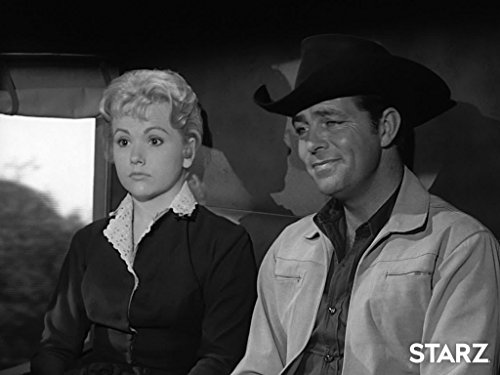
Wagon Train: Heading West

This month we are celebrating, “Go West Young Man” by taking a look at some of the westerns from the fifties and sixties. Up today is Wagon Train. This series debuted on NBC in 1957; in 1962 it moseyed over to ABC for its final three seasons. Lew Wasserman was involved with Universal which produced Wagon Train. When they sold the series to ABC, NBC was not happy, but Wasserman told them that he had a new show for them, The Virginian, which we’ll learn about in two weeks.

📷pinterest.com

The series was very popular, jumping to number one immediately. The plot is that a large wagon train is traveling through the west from Missouri to California. Ward Bond starred as the wagon master Seth Adams (when he died in 1960, John McIntire took over). Robert Horton played scout Flint McCullough; eventually he opted to leave and was replaced by Robert Fuller. Oddly, Horton and Fuller shared a birthday and were six years apart in age.

If I listed all the guest stars during the eight seasons, you would still be reading this next Monday. Just know, there were a lot.

The show was adapted from a 1950 John Ford film titled Wagon Master. In a 1960 episode, John Ford stepped in to direct an episode, “The Colter Craven Story.” One guest star I have to mention in this one was John Wayne. He speaks from the shadows as General Sherman (Wayne’s real name was Marion Michael Morrison, so for this credit, he went by Michael Morris) in this episode.

The original theme song was written by Henri Rene and Bob Russell and conducted by Stanley Wilson. A more contemporary theme accompanied season two, and it changed a few more times during the run of the show.
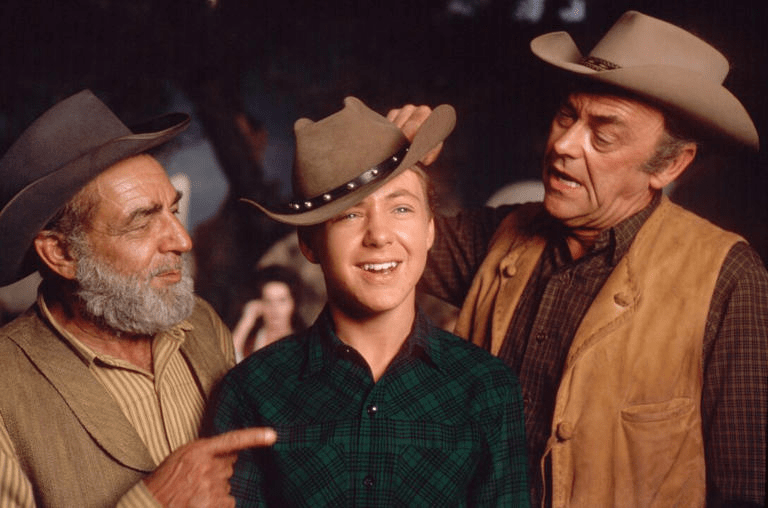
📷msn.com

The show had a huge budget for the time: $100,000 (about a million in today’s world of television). It was about 40% more expensive than most westerns at the time, and that is part of why it was able to feature so many guest stars.

When Gene Roddenberry pitched Star Trek to the networks, he described it as “a Wagon Train traveling across the universe.” He also hired writer Gene L. Coon who wrote 23 episodes of Wagon Train.

While wagon trains are considered an icon from our history, so was the product of the series’ first sponsor, the Edsel Division of the Ford Motor Co.

The show was an hour long and shot in black and white for the first six seasons. For season seven, the network filmed the show in color and increased the length to 90 minutes. The ratings were still high but didn’t increase, so the network could not justify the changes, and the television show went back to an hour in black and white.
📷dvdtalk.com

The show was placed on Wednesday nights up against Leave it to Beaver and Disneyland. Even with that competition, it was in the top thirty and by its second season, had jumped to the top ten where it stayed until it was sold to ABC. ABC kept the show on Wednesday nights, and it ran against The Virginian, both being in the top thirty in 1962.

So many people have fond memories of this show. It was on six seasons, but I think it was finally cancelled even though it was in the top thirty because of the western overload, ushering in the shows like Get Smart, The Man From UNCLE, Lost in Space, and The Smothers Brothers Show. Check out your favorite guest stars who were on the show and watch those episodes to see what it was like.

Gather Round: It’s Time for Tales of Wells Fargo

📷pinterest.com

This month we are Riding the Range, exploring some of the westerns from the fifties and sixties. One of those shows that was on the air from 1957-1962 was Tales of Wells Fargo.

The show was produced by Revue Productions and set in the 1870s and 1880s. Gene Reynolds was one of the creators of the show, along with Frank Gruber and James Brooks. Reynolds would go on to great success as a director, producer and writer, and my favorite of his was M*A*S*H. Although this show was set in the same time as Daniel Boone, it was better at getting history correct. The show featured special agent Jim Hardie (Dale Robertson) with his horse Jubilee. It was loosely based on the life of real detective Fred J. Dodge. Sometimes Hardie ran into characters from history including Jesse James and Belle Starr.

📷pinterest.com Fred J. Dodge

Fred Dodge was born in California in 1854. He went to work as an undercover agent for Wells Fargo, working in California, Nevada, and Arizona. In 1979 he was in Tombstone and recommended hiring Wyatt Earp as guard for the stage line. He became great friends with Earp. Later Dodge became constable of Tombstone while working undercover. In 1890 he left his undercover work and became a known employee of Wells Fargo in Texas. He purchased a 2,000-acre ranch near Boerne, Texas and when he retired in 1917, he lived there with his family. Dodge was described as an intelligent and successful investigator. He wrote 27 journals during his career, noting his activities and travels in them. Some of these were used for Tales of West Fargo.

I had always assumed this show was about stagecoach travel, but it was not, although stage coaches played a part. In the mid-1800s, the Wells Fargo stage line was the primary connection between the East and West coasts. Wells Fargo did not operate a stage coach line, but they did use that form of transportation for money, gold and other valuables to be delivered. Trains are involved in many of the plots. One of the trains used in the show would eventually travel to Hooterville and be renamed the Cannonball.

📷imdb.com

The first five seasons were black and white half-hour shows, while the final season switched to a color, hour-long show. During the last season, Hardie settles on a ranch near San Francisco and several recurring characters (Jack Ging, William Demarest, Virginia Christine, Lory Patrick, and Mary Jayne Saunders) were added to the series. Earle Lyon replaced Nat Holt as producer in 1960.

The theme song was written by Stanley Wilson and Mort Greene. Wilson was a prolific composer, amassing 147 credits for composing and 278 for music department credit on television and in movies. Mort Greene was best known as a writer for The Red Skelton Show and for his musical role for Leave it to Beaver.

The number of well-known actors who appeared on the show was surprising. Here are just a few of the huge number: Claude Akins, Eddie Albert, Hugh Beaumont, Dan Blocker, Charles Bronson, Edgar Buchanan, Harry Carey Jr., Chuck Connors, Buddy Ebsen, Beverly Garland, George Kennedy, Tina Louise, Steve McQueen, Jack Nicholson, Leonard Nimoy, Denver Pyle, Jason Robards, Vito Scotti, Dawn Wells, and Adam West.

📷mysteryfile.com

It was an NBC show. The pilot premiered on Schlitz Playhouse of Stars. Its biggest competition was Father Knows Best in seasons two and three. It was very popular with the viewers. The show was in the top ten during seasons one through four. For the sixth season, with an entire new cast, new theme song, and color, it was almost like a new show. NBC moved it to Saturday nights against Perry Mason and ratings declined drastically, costs went up significantly, and it was canceled.

Robertson thought the key to the popularity of the show was because it was not geared specifically to adults or kids. It was a family show. When Robertson first read the script, it was terrible, but he owed Nat Holt a favor, so he accepted the role, assuming that it would never make it. Robertson received a 50% ownership in the show, so he said of course it made him want the show to be better and he convinced them to replace most of the original script. He said that he enjoyed his time on the show a lot and that the crew was close and professional. They never went over schedule or over budget during the entire run.

📷thehollywoodreporter.com

The first two seasons were released on DVD in 2011 if you want to check them out. It sounds like this was a solid show. The network supported them, the cast was close, the production team was on top of things, and they all enjoyed their time with the show. That is a rare thing to hear in the television business. They took a gamble in the last season, and it didn’t work out, but perhaps it was for the best. It sounds like the actual show ended the season before because the last season things changed so much it was a completely new production. I would like to read more about Fred Dodge. His life sounds fascinating.