The Tom Ewell Show: Surrounded by Women

Thanks for joining me today. We are having fun with this month’s blog series, “It’s Their Show,” and today we are taking a closer look at The Tom Ewell Show. The shows we are delving into this month were all movie stars jumping from the big screen to the small screen. Some of them landed on their feet and some didn’t.
📷ebay.com

While most of the shows we are covering have a star we all know, Tom Ewell is no longer a household name. His first movie was in 1940, and he’s probably best known for The Seven-Year Itch with Marilyn Monroe. He did become a television fixture, starring in the soap Search for Tomorrow as well as a cast member of Baretta in the seventies and Best of the West in the eighties.

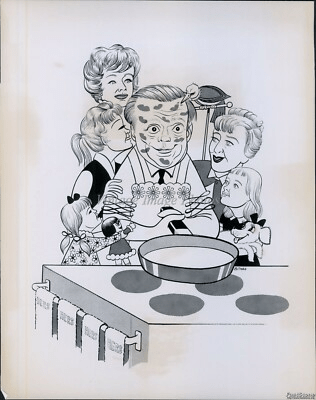
The Tom Ewell Show debuted on CBS in 1960 and was on for one season. The premise is about a guy who has to navigate life with a lot of women: his wife (Marilyn Erskine), daughters (Cynthia Cherault,  Sherry Alberoni and Eileen Chesis), mother-in-law (Mabel Albertson), and a female dog and a parakeet.

Tom Potter is described as a “bumbling” father. I’m not sure why so many shows in the early days featured a wife who caused complications for her husband or a bumbling husband. Potter was a real estate agent. Rounding out the cast are friends pharmacist Howie Fletcher (Norman Fell) and Jim Rafferty (Barry Kelley).

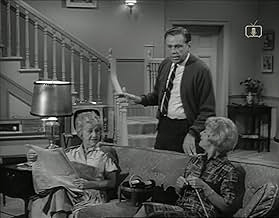
Potter loves sports, but the rest of his household is not too interested. Often, he is watching a sporting event on television while telling his family about the high points when they obviously could care less.
📷imdb.com

The concept of the show was set up in the opening which showed Tom looking around and then being put into a house before seeing the house overrun by women.

The show was created by Madelyn Pugh Davis and Bob Carroll Jr. who wrote for I Love Lucy. Pugh Davis said she based the show on her family. Her family had all girls and a mother-in-law in the house.

Ewell owned the production company in partnership with Davis and Carroll and Four Star Productions. Quaker Oats and Proctor and Gamble alternated sponsorship of the show.

Time reviewed the show after its debut and said “The Tom Ewell Show leads a relentless parade of situation comedies, all designed to show that American family life is as cute as a freckle on a five-year-old. The show, which might also be titled Father Knows Nothing, presents the comic with the excavated face as a bumbler named Potter who is trapped in the customary format: Harassed Man Beaten Down by Wife, Three Daughters, Mother-in-Law. In the opening episode, Ewell could find no better way to outsmart his spendthrift women than closing his bank account and ruining his own credit. For those who may have tuned out early, the women were all set to start spending again.” Not a great review.

📷imdb.com

This makes the female characters sound very unappealing, but on the show, his wife and daughters were delightful. His mother-in-law liked him and they often bantered back and forth; I think it’s worth watching the show just to see Mabel Albertson in action. However, the plots left a bit to be desired: Tom teaching his wife to drive a car, his daughter learning to play the tuba; and the typical sibling issues of everyone wanting to use the phone and the bathroom at the same time.

The show struggled finding viewers. Associated Press television critic Cynthia Lowry interviewed Ewell that fall, and he said that he had read both the positive and negative reviews of the show. He agreed with the critics who felt that Potter was too inept, and the comedy centered more on that and their family life. He said for December episodes, that issue would be addressed in the writing, and the family dog and parakeet were being dropped from the show. Unfortunately, it was not enough to attract viewers, and the show was canceled after one season.

📷youtube.com “Spelling Bee”

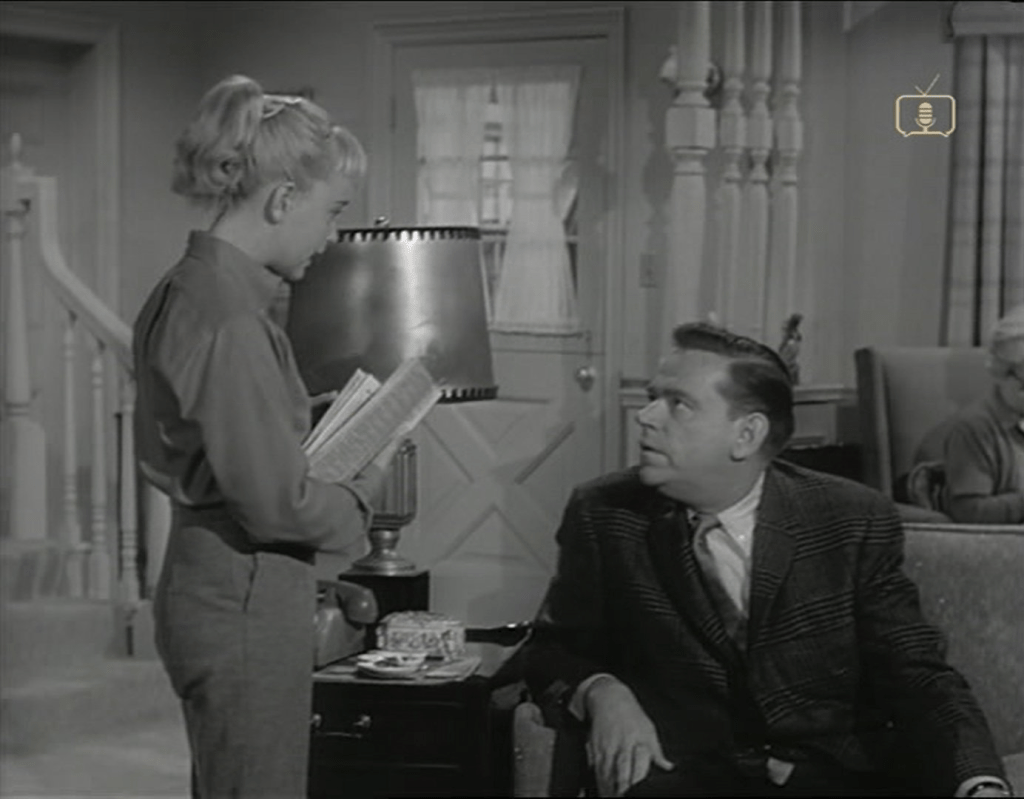
In an episode I watched, “The Spelling Bee,” from late November, Tom is trying to interest his family in golf. When he finally got them to watch a golf match, the females were more interested in what the golf spectators were wearing. And then his youngest daughter ran in and turned the station to a kid’s show. One of his girls is practicing her spelling to try to win a trip to Washington DC by winning the all-state spelling bee.

When Tom leaves the house, he continues to run into fathers and sons who are playing baseball, going fishing, working together, or talking about sports. Tom daydreams he has three boys, but we realize that he is holding a skein of yarn for his daughter while he does so. He tries to talk his oldest girl into going into the real estate business. Later he tries to talk his middle daughter Debbie into giving up spelling for golf. He also tries to get his wife to go bowling with him. When Tom realizes that one of his friends has a son trying to win the spelling bee as well, he turns it into a big sports event and is determined to beat them.

He buys a bunch of dictionaries and then gets up early to “train” Debbie. However, she had already left the house and when she returns, he finds out she’s been on the driving range practicing her golf, so they can be in a father and child golf match. He drills her on spelling the rest of the day. That night Debbie comes down with laryngitis.
📷imdb.com

Her grandmother gives her honey and lemon. The following night they attend the spelling bee, and Tom gives Debbie a pep talk, but then he reminds her he loves her no matter what. Of course, the final two contestants are Debbie and the son of Tom’s friend. She wins, and she and her dad get to travel to Washington, DC where they meet the President. The show ends with Tom telling his friend about all the great non-sport talents his girls have. It was a cute show, and the characters were all likable. There were a few great one-liners. It would not make my top 25 shows, but it was much better than many of the sitcoms in the sixties.

The show had a decent time slot. It was on Tuesday nights at nine, competing with Stagecoach West and Thriller. While both of those shows garnered decent ratings, neither of them was in the top thirty. The primary director was Hy Averback, who would later direct twenty episodes of MASH. So, they had the right elements in place, but the show just could never find its fans.

Larry Rhine talked about writing for the show. Rhine said Ewell was a nice man, but he said Ewell didn’t think the kids should be involved in the show much because they didn’t have the caliber of other actors. Rhine told Ewell they could consider them more as props which seems like a strange concept for a family show, considering that the episode I watched revolved around the daughters.

📷imdb.com

Rhine said Ewell found the show was over when he was on the set one day and he was called to the telephone about a trip he was supposed to take with CBS, and he was told that he was no longer part of the group because he had been fired.

I’m guessing part of the problem with this show getting renewed is that it debuted when westerns were still king and many of the television schedule spots were already filled with them. While it was definitely not a terrible show, the sixties were on the cusp of introducing very different sitcoms than the family-based ones that filled the fifties’ slots. By 1965 we would be tuning into Batman, Honey West, Hogan’s Heroes, The Smothers Brothers Show, and I Dream of Jeannie. However, that said, there are worse ways to spend a weekend than viewing a season of The Tom Ewell Show.
The Virginian: Where Nobody Knows Your Name

As we get ready to “Go West Young Man,”  today our blog series is getting to know the The Virginian (which is sometimes confusing because it was renamed The Men from Shiloh later for part of the series). This series debuted on NBC in 1962. It produced 249 episodes, running until 1971, making it the third longest-running western (Gunsmoke and Bonanza were the top two).

📷wikipedia.com

Lew Wasserman was involved with Universal, and they produced Wagon Train which was on NBC. Universal sold the series to ABC in 1962 after it had been on the air for three years, and NBC was not happy, but Wasserman told them that he had a new show for them, The Virginian.

It was also the first 90-minute western. Like Stagecoach West, it was set in the Wyoming Territory. While the pilot was black and white, the rest of the series was filmed in color.

The series was based on an Owen Wister novel, The Virginian: Horseman of the Plains which was published in 1902.

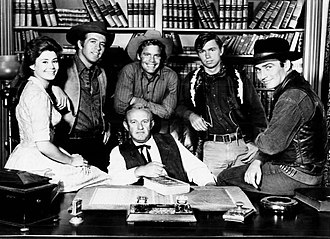
The series featured a foreman at the Shiloh Ranch near Medicine Bow played by James Drury. The foreman was never referred to by his name. Drury once said, “Nobody knows the name of my character, not even me.” His sidekick was Trampas (Doug McClure). Sheriff Abbott (Ross Elliott) also shows up on and off throughout the nine seasons. For the first four seasons, the ranch owner, Judge Henry Garth (Lee J. Cobb) and his daughter Betsy (Roberta Shore) also live there. The cast changed fairly often throughout the series, but Drury and McClure were along for the entire ride.

📷ebay.com

The plots of the show often revolve around themes of prejudice, injustice, being a responsible and hard worker, and standing up for the right thing.

During the final season, the show changed its title, and the series changed quite a bit. There was a new theme song, and it took on more of the character of the popular spaghetti westerns. Stewart Granger and Lee Majors joined the cast. While the ratings increased, the network was intent on cancelling the show, along with the rural purge that happened at that time.

Later when the show was no longer on the air, Drury discussed two of his castmates, one he admired and considered a friend and one he did not! About Grainger who joined the show for the last year, Drury said, “He was a disaster, and I couldn’t stand him. He wanted everything changed to make him the star of the show.  . . . He also fired the whole camera crew and hired a new crew for his episodes.” However, on reflecting about his co-star Doug McClure, Drury recalled “off-screen Doug was quite like his character, and you couldn’t help but smile when he walked into a room because he was full of good humor and good spirits all the time. He could cheer anybody up. He became my best friend, and I still miss him terribly—you couldn’t ask for a better co-star.”

As you can imagine, being on the air for nine years meant a lot of guest stars showed up on the series, including Eddie Albert, Charles Bronson, Robert Culp, Joan Crawford, Bette Davis, Patty Duke, Robert Duvall, Harrison Ford, Jack Lord, Lee Marvin, Vera Miles, Leonard Nimoy, Ryan O’Neal, Robert Redford, George C. Scott, William Shatner and Franchot Tone.

📷facebook.com

The Virginian was on Wednesday nights for its entire run. When it began, it was up against Wagon Train on ABC while CBS ran CBS Reports and The Many Loves of Dobie Gillis. Both The Virginian and Wagon Train managed to hit the top thirty that year. The next year, its biggest competition was The Adventures of Ozzie and Harriet followed by The Patty Duke Show. The Nelsons hit the top thirty and The Virginian and The Patty Duke Show were in the top twenty. The show continued to be in the top twenty or top thirty for the rest of its run, hitting the top ten in 1966, despite being on at the same time as many popular sitcoms during those years, including Batman, The Beverly Hillbillies, The Courtship of Eddie’s Father, Gomer Pyle USMC, Lost in Space, Mister Ed, and My Living Doll. It was still in the top twenty when it was canceled.

This show is fondly remembered by viewers who tuned it at the time. It’s been in syndication for decades, racking up new generations of fans. In one of his later interviews, Drury talked about the appeal of the show. He said, “People now tell me about their grandkids who discover the show on cable and start watching it. It’s a wonderful feeling to know the show is still viable after all these years.” That alone is reason to be proud of working on this show.

Stagecoach West: Experiencing Life in Outpost

As we celebrate westerns this month in our blog series “Go West Young Man,” we are tuning in to Stagecoach West which traveled across the air waves from 1960-1961. The show debuted in October of 1960 with the final episode airing in June of 1961. For the summer, reruns of the show continued. The thirty-eight episodes were on Tuesday nights.

📷wikipedia.com

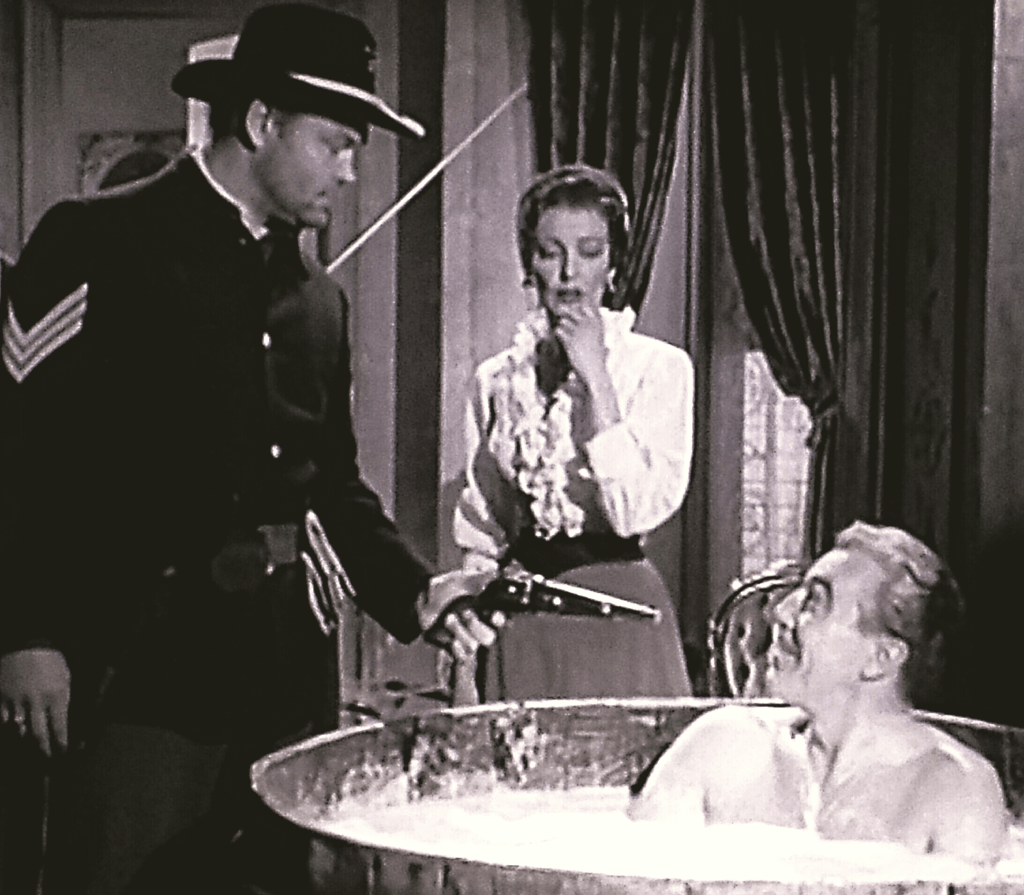
The show features two Civil War veterans, Luke Perry (Wayne Rogers) and Simon Kane (Robert Bray), who own a stagecoach line and share driving duties in the Wyoming territory. It was fun to see a young Rogers decades before he showed up in Korea bantering with Alan Alda. During their trips they run into murders, robberies, range wars, renegade soldiers, and passengers who have their own drama. Simon’s son Davey (Richard Eyer) often travels with the men.

They are based in Outpost, a small frontier town. We get to know several townspeople including Dan Murchison (John Litel) who runs the general store and bank; Zeke Bonner (James Burke) who rents rooms at The Halfway House; Hugh Strickland (Robert J. Stevenson), the Marshal in Timberline; and Doc Apperson (played by J. Pat O’Malley and Sydney Smith).

📷rottentomatoes.com

Vincent M. Fennelly was the producer and there were several directors, with Thomas Carr taking the helm most often. There was also a long list of writers, but D.D. Beauchamp and Mary Beauchamp penned many of the scripts. From what I could learn about the Beauchamps, they didn’t work together but wrote their own episodes. Mary was known for her work on Bat Masterson and Tales of West Fargo in addition to this show. D.D. (Daniel Deronda) is best remembered as a writer for Daniel Boone. His third wife was Mary Mitchell, so I am guessing that Mary Mitchell and Mary Beauchamp are the same person. Sounds like she and her husband were cremated, so there is no findagrave site for her.

The theme song was composed by Skip Martin and Terry Gilkyson. This was the only time I could find where this duo worked together. They had very different careers. Gilkyson was part of The Weavers and The Easy Riders. In 1960 he went to work for Walt Disney and was nominated for an Oscar for “The Bare Necessities” in Jungle Book. Martin worked with jazz and swing bands in the 1930s and 40s including Count Basie and Glenn Miller. With Les Brown, he was given credit for writing “I’ve Got My Love to Keep Me Warm.” In the 1950s he moved to Hollywood where he worked on Singin’ in the Rain and A Star is Born.

📷westernserieswiki.com

Richard Eyer in an interview said the show “kept me busy and was usually fun. It was a very positive experience. When they hired me, it was sort of a transitional point . . when we did the pilot I was 13 and quite young . . . we started production eight months [later] . . . I was into puberty and adolescence.”

Tuesday nights’ competition in 1960 was Thriller on NBC and The Tom Ewell Show and The Red Skelton Show on CBS. Thriller was an interesting show hosted by Boris Karloff. It began as an anthology focusing on crime but later transitioned to gothic horror stories. The Tom Ewell Show also began and ended in 1960. Ewell plays a real estate agent who lives with a lot of women, namely his wife, daughters, and mother-in-law. ABC aired The Rifleman and The Legend of Wyatt Earp before Stagecoach West.

The show never gained viewers, so it was cancelled in June. If you follow me, you know I don’t have the most positive feelings about Red Skelton and how he treated the people who worked for him, but it was a very popular show and some of the episodes were in color, so a lot of people were tuning into to watch him. I wonder if because two westerns were on earlier in the evening, people were ready to watch another genre. In addition to this night of programming, there were another 15 westerns on during the evenings on the other days of the week. The other factor that comes into play is that both The Rifleman and The Many Loves of Dobie Gillis on CBS were in the top thirty. I wonder how many viewers watched The Rifleman on ABC and then switched networks to Dobie Gillis on NBC and then never returned to ABC for the rest of the evening.

It would be a fun and easy binge watch if you want to tune in even to see the guest stars and learn some of the issues that were dealt with during this era of travel.

Cesar Romero: Batman’s Most Joy-Filled Villain

We are winding up our series: Bam! Pow! Batman Villains. Today it’s all about The Joker: Cesar Romero.

📷turnerclassicmovies.com

Romero was born in New York City in 1907. His father was an import/export merchant, and his mother was a concert singer. He grew up in Bradley Beach, New Jersey. His father lost most of his money during the 1929 Wall Street Crash.

Romero teamed up with dancer Lisbeth Higgins and they formed a professional dance partnership, appearing in nightclubs and theaters throughout New York City including the Ambassador Roof and the Montmartre Café. Although he had no professional training, he was often compared to Fred Astaire. He also was cast in several off-Broadway productions including “Stella Brady” and “Dinner at Eight.”

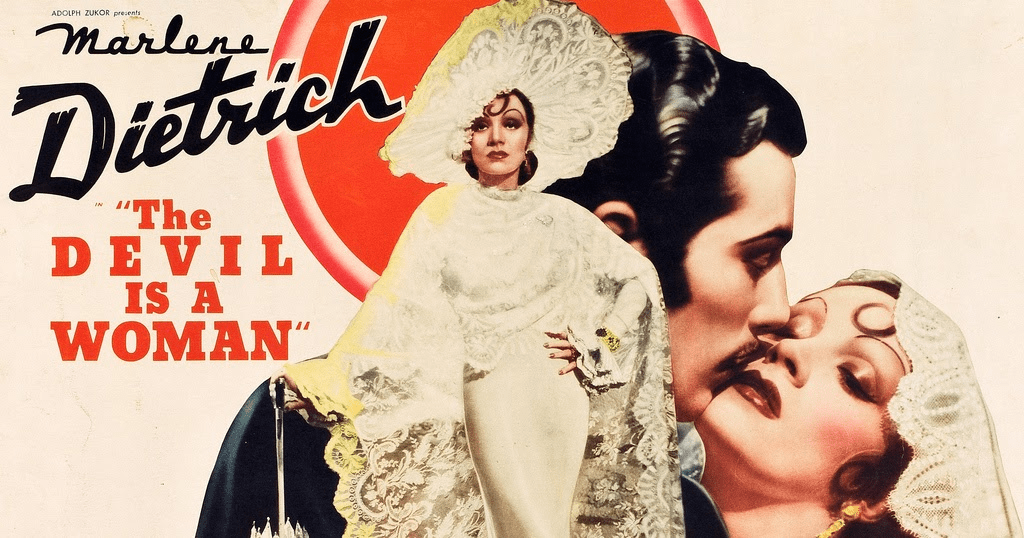
Later Romero would refer to himself as the Latin from Manhattan and he provided for his family members who followed him to Hollywood. He played the stereotypical Latin lover during the thirties and forties, including The Devil is a Woman with Marlene Dietrich in 1935. However, he also made westerns and did a bit of dancing during these decades on the big screen.

His friendship with Frank Sinatra brought him roles in Around the World in 80 Days, Pepe, Marriage on the Rocks, and Oceans’ 11.

📷imdb.com Wagon Train

In 1942, Cesar enlisted in the US Coast Guard, serving in the Pacific Theater of Operations. After his military career ended, Romero returned to his acting career.

His television career began in 1948 in the show, Variety. During the fifties he was primarily appearing on dramas, but he did show up on Private Secretary with Ann Sothern and continued his western roles on Wagon Train, Zorro, and Death Valley Days.

The sixties kept him extremely busy on television. He kept people laughing on Pete and Gladys, The Ann Sothern Show, Get Smart, and Here’s Lucy. He rode the range on Stagecoach West, Bonanza, Rawhide, and Daniel Boone. He stayed dramatic on shows including 77 Sunset Strip, Dr. Kildare, and Ben Casey.

📷wallpaper.com

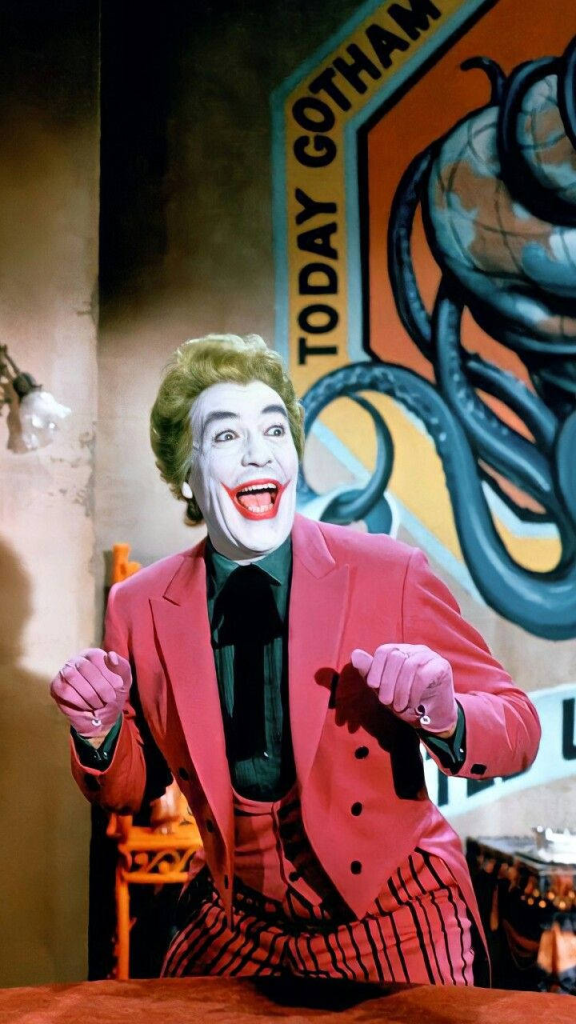
However, the show he was best known for in the sixties, is the show that made him part of my blog series this month, Batman. He had to endure a long time in the make-up chair. He refused to shave his mustache for the role, so white face makeup was smeared all over his face until it was hidden.

Romero admitted that this role reinvigorated his career. When he was offered the role of the Joker, he was 59 years old. Romero said the role was “the kind of part where you can do everything you’ve been told not to do as an actor. You can be as hammy as you want.”

He discussed how surprised he was when William Dozier called him about the show. He said Dozier told him that “the important characters were all villains. They had done the first two with the Riddler and the Penguin with Frank Gorshin and Burgess Meredith, and now they were ready to do the third, and the villain was the Joker. He said, ‘I would like you to play the part.’ So, I said I would like to read the script and know what it is all about. He said, ‘Come on over to the studio, and I will show you the film of the first episode.’ Of course, it was great. I said, ‘Let me read this Joker part, and if it is as good as the first one, hell yes, I will do it.’ So I read the script, and I thought it was a gas, and I said, ‘Sure, I’ll do it.’”

No serious villain, the Joker was cheerful and extroverted. He oozed goofiness and always appeared to be having a great time carrying out his nefarious activities. Dressed in his famous purple costume, he had his own automobile that could rival the Batmobile.

📷facebook.com

While most of the villains saw Batman and Robin as roadblocks in their evil schemes and problems to take care of, the Joker found great joy in taking down the superheroes. In one episode he says “Oh, but I must, I must! Why, outwitting Batman is my sole delight, my heaven on earth, my very paradise!”

You couldn’t miss him if you watched almost any television in the 1970s and 1980s. He appeared on a ton of shows, just a few of which included Bewitched, Nanny and the Professor, Love American Style, The Love Boat, Night Gallery, Mod Squad, Ironside, Medical Center, Charlie’s Angels, and Hart to Hart.

From 1985-88, he was a regular on Falcon Crest. Earl Hamner Jr., the creator of The Waltons, created this show featuring the Gioberti family, owners of Falcon Crest Winery. Romero played the love interest of matriarch Angela Channing, played by Jane Wyman.

He finished his career in the 1990s. He was in his eighties when he appeared on The Golden Girls, and Murder She Wrote, his last television role.

Romero also played a role in politics. As a registered Republican, he was very involved in many campaigns. He worked for Nixon-Lodge in 1960 and later supported Lodge in his run for President. When Lodge did not get the results that he hoped for, Romero turned his support to Barry Goldwater for the general election. He also worked for his friend George Murphy in his run in the California senate race. He later helped Ronald Reagan in his gubernatorial runs in California as well as his presidential campaigns.

It was reported in many articles that Romero had 30 tuxedos and more than 500 suits. That is not surprising because he had a clothing line, Cesar Romero Ltd. He was also a model and spokesperson for Petrocelli suits in the sixties.

Romero stopped acting in 1990. He remained busy though with several ventures including hosting classic movie programs on television. In 1994, Romero died from complications of a blood clot on New Year’s Day. He was being treated for bronchitis and pneumonia.

I enjoyed getting to know a bit more about Cesar Romero, but, I have to admit, that I don’t feel like I know him much better than I did before. He seemed to have been stereotyped as a Latin lover and then again as the Joker. I would like to go back and watch some of his appearances on westerns. It was hard to find much information about Romero beyond his career and political interests.

📷etsy.com

I know The Joker was not his most challenging role, but he will always have a place in America’s heart for the work he did on Batman as will these fun super villains we got to know this month.