The Life of Riley: A Series of Revoltin’ Developments

This month we are talking about classic television shows. Because it was early in the history of television, many of these shows began on the radio. Our series today was no different. It had a lot of lives. Like Ozzie and Harriet Nelson or Our Miss Brooks, it went from radio to television to film. However, in addition to those different genres, this show probably has the record for the first reboot. Today we learn all about The Life of Riley.

📷wikipedia.com

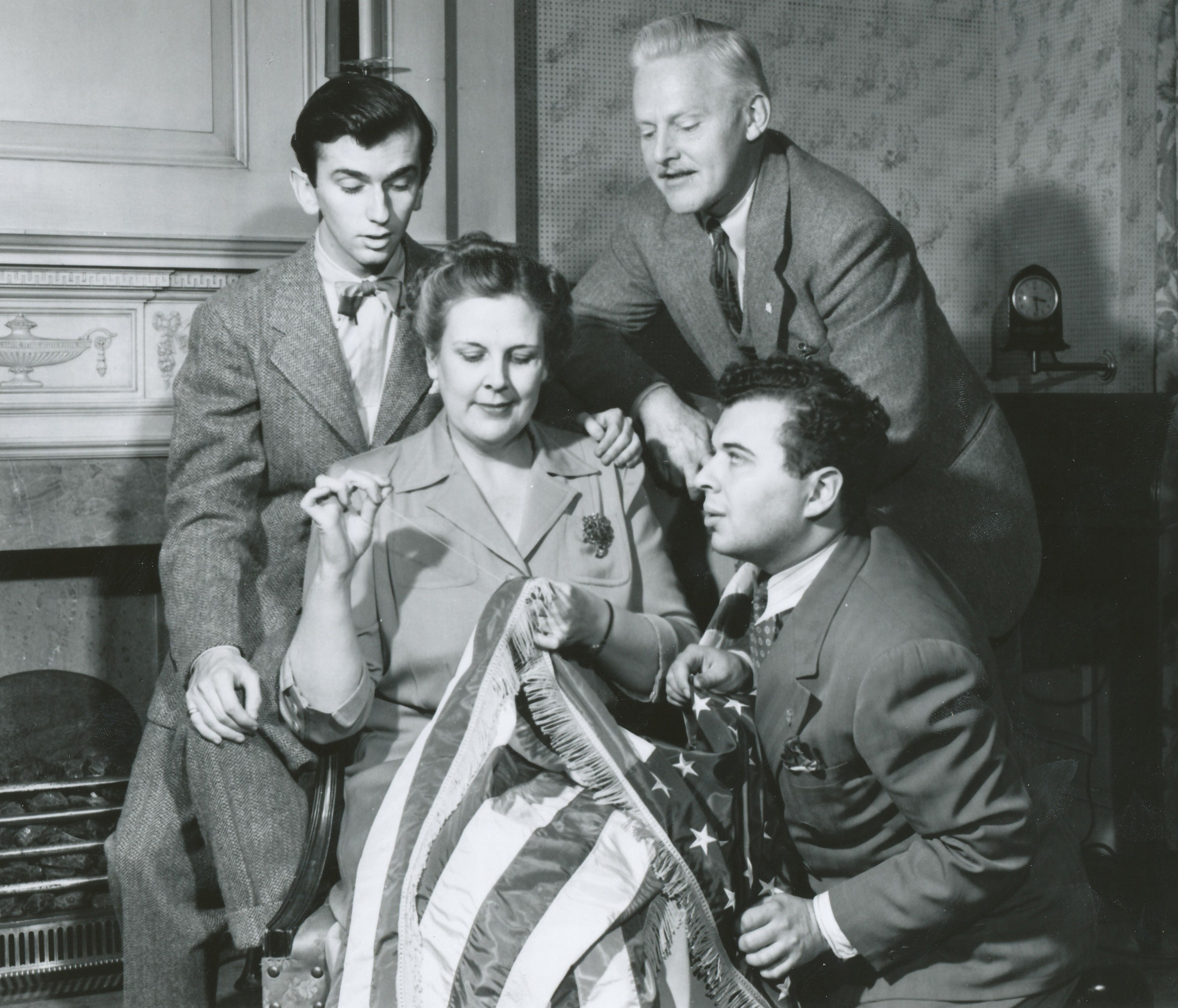
The Life of Riley began on the radio. Throughout the forties, you could tune in to hear Chester Riley, voiced by William Bendix, getting into a lot of different trouble while his long-suffering wife Peg (Paula Winslow), tried to help him. He had two kids, Babs (Barbara Eller) and Junior (Tommy Cook, Bobby Ellis, Scotty Beckett). His best friend Jim Gillis was often in the middle of the screw-ups with him. Another recurring character favorite was Riley’s friend Digby O’Dell, local undertaker, played by John Brown.

The family lived in California, and Riley was a blue-collar worker; he was a riveter at the Cunningham Aircraft plant.  Riley is stubborn and opinionated, and knows his way is the right way. His family and neighbors think otherwise.

The original radio concept was created to star Groucho Marx, but the sponsor could not see Marx in a sitcom role. Gummo Marx who had become an agent, worked with the original sponsors, The American Meat Institute, to develop the show. Later the show was sponsored by Proctor and Gamble and then by Pabst Blue Ribbon Beer.

In 1949 in a weird twist, there was a film version coming out as well as an ABC Blue Network television sitcom. Bendix had signed on for the film, so that prevented him from playing Riley on television. The film did well, earning $1.6 million.
📷iamachildoftelevision.com The Jackie Gleason Riley

Jackie Gleason took on that role with Rosemary DeCamp as Peg. Gloria Winters was Babs, Larru Reese was Junior, Sid Tomack was Gillis, and Brown continued to play O’Dell. It only was on the air from October 1949 to March 1950. I’m not sure why it disappeared from the schedule so quickly. Producer Irving Brecher and Pabst Brewing Co. could not agree on extending the series to a 39-episode season. Apparently, the ratings were not high enough for the sponsor to want to continue with the series. It competition was a Feature Theater on Dumont and Suspense on CBS. Suspense also began in 1949 and began as a radio show. It was an anthology series that often featured literature adapted for television. It was on the air until 1954, although the radio show was on the air from 1942-1962. However, it won the first Emmy Award for Best Film Made For and Shown on Television. Six shows were nominated, but the only other show remembered today was The Lone Ranger.

📷imdb.com

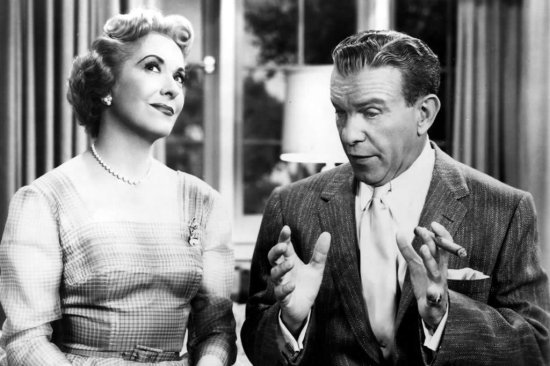
In 1953, a reboot was made for NBC. William Bendix was back as Riley and this series continued on the air for six seasons. In this second, better-known series, Marjorie Reynolds was Peg, Lugene Sanders was Babs, and Wesley Morgan was Junior. Gillis was played by Tom D’Andrea and his wife Honeybee was played by Gloria Blondell. Digger O’Dell was not mentioned. John Brown had been named on the Hollywood Blacklist during the McCarthy debacle years, so he was prevented from taking the role. Many people use Riley’s catch phrase, even if they are not sure where it was originally from: “What a revoltin’ development this is.” Riley made $59 a week, and money was often one of his concerns.

Four of the six seasons found the show in the top 30, and 217 episodes were produced. Oddly, season five was filmed and broadcast in color, while season six was back to black and white. The show was on Friday nights for its entire run. The first three seasons it faced its biggest competition against Topper for two years and Our Miss Brooks for season three.

Dell Comics featured the show in one of its comic books in 1958. It was included in the Four Color series. It has held its value with most editions going for about $200-$300 online.

While I have watched a fair number of episodes of The Life of Riley, I have to admit it was never one of my favorites. Shows from this era are very hit or miss with me. I do like all the versions of Our Miss Brooks, and I love Burns and Allen and Jack Benny, but I got quickly got tired of the circumstances Riley continually found himself in and his mispronunciation of words and his lack of knowledge which he never realized. I am also in the small, small minority of people who felt the same way about I Love Lucy. I can watch one or two episodes here and there but not on a regular basis, although the scripts and acting on I Love Lucy carried it much further than Life of Riley.

However, Life of Riley was popular in the fifties and is still well-known today, so it found its audience of fans. If you want to try it out, there are limited opportunities. Interestingly, there is a DVD of the Gleason episodes and there are several recordings available of the radio show. However, for the Bendix television series, I could only find one option and half the shows are Our Miss Brooks so it is not even an entire season, just two episodes. I could not find any networks currently streaming the show either.
Mary Kay and Johnny and Company: The First Sitcoms

We are in the midst of our “They Were the First” blog series. In past weeks we’ve learned about the first crime drama and the first news show. Today we take a peek at some of the first sitcoms on the air.

She Was the First Lucy, but Where Is the Love?
Mary Kay and John Stearns Photo: gr8erdays.com

The very first sitcom I could find evidence for was Mary Kay and Johnny which debuted in 1947. This show was only on three or four seasons, but it produced 301 episodes so it was on more often than once a week. The description on imdb.com is that it’s about the “adventures and misadventures of the strait-laced bank employee Johnny Sterns and his zany wife Mary Kay.”

Real-life spouses Mary Kay Stearns and John Stearns played the married couple that the show centered on. Nydia Westman played Mary Kay’s mother and Howard Fischer played Howie. When the Stearns had a baby named Christopher, he also became their son on the show.

The show was shot live in New York and sponsored by Anacin. During the first season, Anacin tested the market to see how many people might be watching the show because TV ratings had not been collected at that time. They offered a free mirror to the first 200 viewers who submitted comments about the show; to their surprise, more than 9,000 viewers sent letters.

Believe it or not, this was the first married couple to share a bed. At some point, networks rethought this decision, because it would be a battle for years during the fifties and sixties.

So, what were some of the other earliest sitcoms? Here are a few of the other sitcoms that were on during the early years of the golden age.

the laytons | THAT'S ENTERTAINMENT!
Photo: jacksonupperco.com

The Laytons. This short-lived show was on the air from August to October of 1948 on the Dumont network. However, it was notable in that it was the first show to feature an African American in a recurring role. I could only find detailed information for one episode which starred Vera Tatum as Ruth Layton, Amanda Randolph as Martha, and Elizabeth Brew as Ginny Layton. From what I could determine it moved to Dumont after running locally for a month.

Growing Paynes (1948-1949) | New york broadway, Elaines, Theatre poster
Elaine Stritch Photo: pinterest.com

The Growing Paynes. From 1948-49, this show followed the “trials and tribulations” of an insurance salesman and his screwball wife.  I’m not sure why all the wives were screwballs in the forties. The show had a cast overhaul after the first couple of months. John Harvey and Judy Parish were replaced by Ed Holmes and Elaine Stritch. The sponsor was Wanamakers Department Store. This show is historically important because it was the first sitcom to work the sponsor’s business into the script. Despite the change in casting, the show was cancelled after ten months.

Golden Age of Radio: Program #123 | WMKY
Photo: wmky.com

The Aldrich Family. This well-known family made the leap from radio to television in 1949. The show centered around the Aldrich son Henry and his family who lived on Elm Street in Centerville.  Imdb.com lists 18 episodes but five seasons so it was on sporadically apparently like The Jack Benny Show when it began on the small screen. I’m not sure how this show survived five seasons. While Jameson House played Sam Aldrich, during the 18 episodes, there were three different women playing his wife Mary and five different actors who showed up as his son Henry.

The Life of Riley. This show also began life as a radio show. There were two versions of the show and the second version was the better known one.  In this earlier version from 1949, Riley is played by Jackie Gleason and his wife Peg is Rosemary DeCamp. Their son Riley Jr. was played by Lanny Rees and Gloria Winters took on the role of their daughter Bab. The other cast member was Jim Gillis, Riley’s friend, played by Sid Tomack. The show primarily focuses on Riley’s home life though we hear about life at the aircraft plant he works in as a riveter. His catchphrase was “What a revoltin’ development this is.”

The Life of Riley: A matter of perspective | CharlesPaolino's Blog
Photo: charlespaolino.com

The show only lasted for 26 episodes; at that time, a full season was 39. Their sponsor was Pabst Blue Ribbon Beer and part way through the year the company decided it would rather put more money into the Pabst Blue Ribbon Bouts, a boxing show.

This show also made history. It was the first sitcom to win an Emmy, beating out The Silver Theater and The Lone Ranger.

William Bendix could not accept this role because, oddly enough, he was filming a movie, The Life of Riley. He would perfect the role in the second television version which debuted in 1953.

Amazon.com: I Remember Mama TV Show (aka.- Mama Television Series ) : Peggy  Wood, Dick Van Patten, Judson Laire, Rosemary Rice, Robin Morgan, Don  Richardson: Movies & TV
Photo: amazon.com

Mama. This show ran from 1949-1957, producing 178 episodes. Peggy Wood starred as Mama Hansen and Judson Laire played her husband Papa Hansen. A young Dick Van Patten appeared as their son Nels, Rosemary Rice was daughter Katrin, and Robin Morgan was daughter Dagmar.

The show chronicled the lives of a family who recently immigrated to San Francisco shortly after 1910. The movie starring Irene Dunne was also very popular. Many viewers fondly recalled the series as a heart-warming and tender show. Like, most of these early shows, it was shot live so there are no reruns available for this much-loved show.

It, too, made history, being the first show listed as a comedy drama which was not the new thing that we thought it was in the 1970s.

Beginning in 1950, the sitcom genre would become the king of the television schedule. That was the year one of my all-time favorite shows, The George Burns and Gracie Allen Show aired and the two popular, but disgraceful shows, Beulah and Amos ‘n Andy hit the air.

The George Burns and Gracie Allen Show | TIME
George Burns and Gracie Allen Photo: timemagazine.com

It was interesting to go back to learn about the first sitcoms which are not well-known or available for viewing. It’s television history we don’t want to lose. These were the pioneers of classic television, and it’s amazing how each series made history of its own that often would not be repeated for several decades.