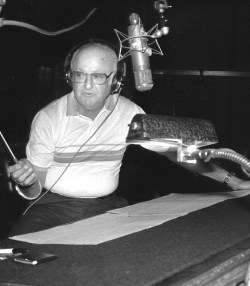
Jonathan Harris: Oh the Pain

This month our blog series is “All About The Bill Dana Show,” and we are learning about the careers of some of the cast members. Last week we looked at the life of Maggie Peterson, and today we are getting to know Jonathan Harris.

📷LostinSpaceWikiFandom.com

Harris was born Jonathan Daniel Charasuchin in the Bronx in 1914. His father worked in Manhattan’s garment district. His family often took in borders to make ends meet, and when they did, the border got Jonathan’s room, and he slept on a couple of dining room chairs.

By age 12, Harris was working at a pharmacy as a stockboy. Although money might have been short, Harris’s family’s love of music and theater was not. As a family they listened to opera in the dining room. Whenever they had some extra cash, they would take in a Broadway play. Harris was interested in archeology, poetry, and Shakespeare. He disliked his Bronx accent and taught himself to develop a British one.

Harris was able to graduate at age 16 from James Monroe High School. His pharmacy job paid off when he graduated from Fordham University with a pharmacology degree in 1936. Before entering college, Jonathan took the name “Harris” in place of his birth name.

In 1938 Harris married his high school sweetheart, Gertrude Bregman. They were married until his death.

While working in several pharmacies, Harris also worked on his acting skills. He created a phony resume which he used to land a spot in a local acting company. In 1942 he played a Polish officer in the Broadway production, “The Heart of a City.” He was persistent. He said that he went to Mr. Miller’s office to audition for a part in the play for two weeks, and everyday Mr. Miller’s secretary sent him away. Finally, she let him in, and Mr. Miller gave him his first part. Then he lied and said he could do a Polish accent. He then went to the Polish Consulate to listen to how they talked. So, despite a fake resume, being turned away for weeks, and then lying about an accent, he was a success in the play.
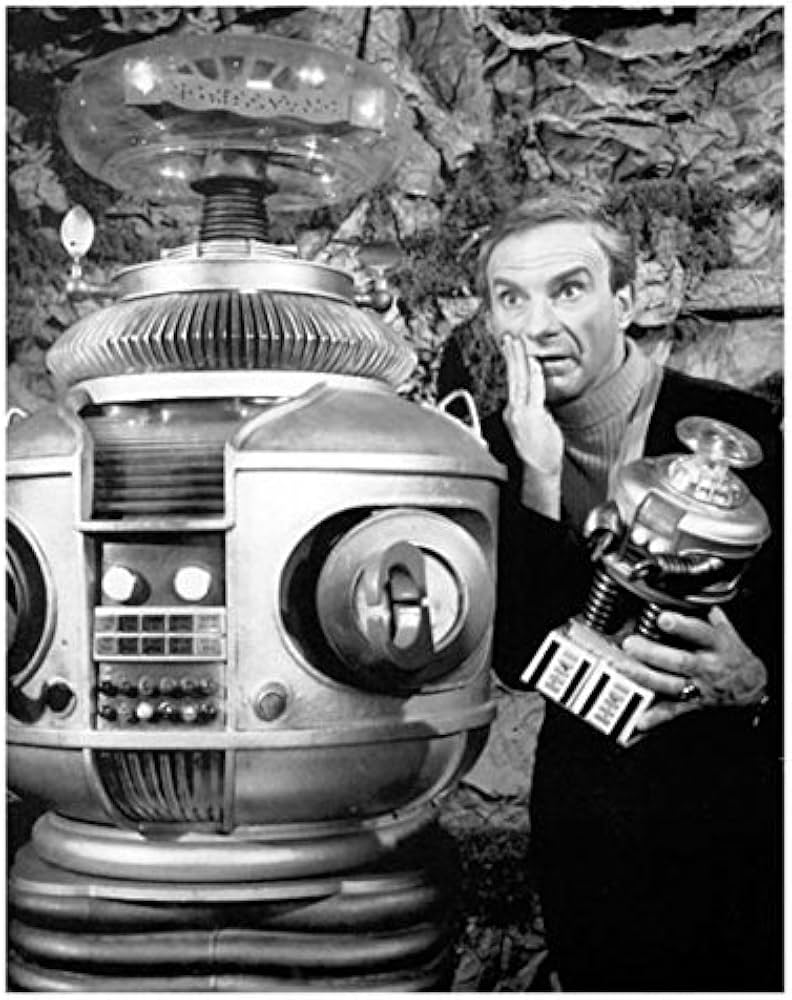
📷amazon.com

In 1949, Harris made his television debut in The Chevrolet Tele-Theatre. Throughout the fifties he would continue to appear in dramatic playhouse series.

In 1959 he had a recurring role in Zorro as Don Carlos Fernandez as well as an appearance on Father Knows Best.

The sixties brought him roles in several well-known series including The Twilight Zone, Bonanza, and The Adventures of Ozzie and Harriet.

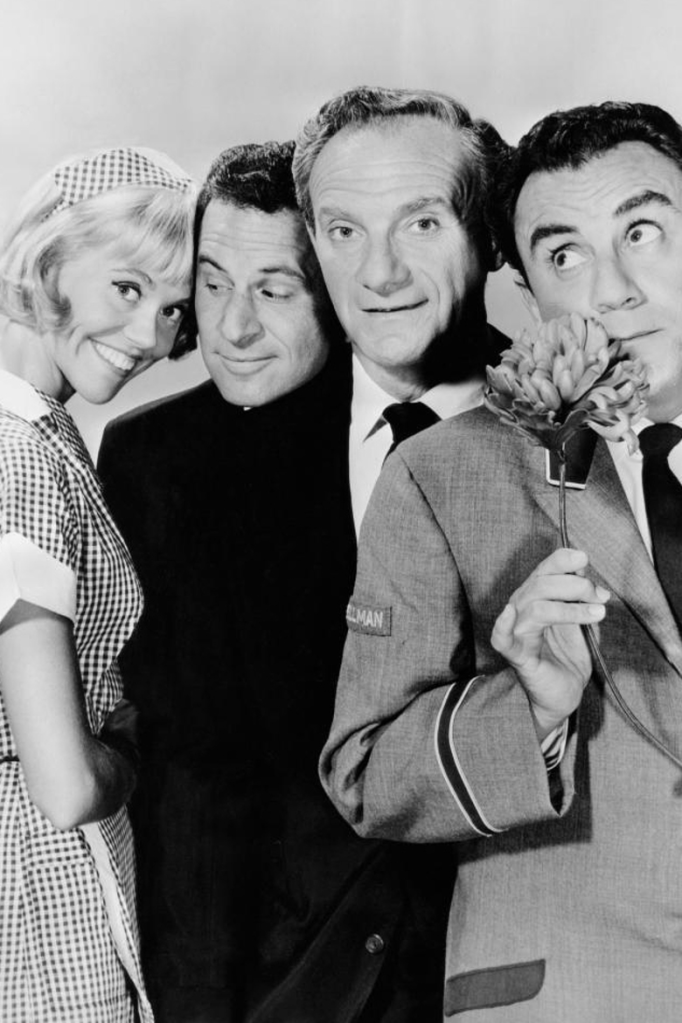
In 1963 he was offered the role of Mr. Phillips, the hotel manager on The Bill Dana Show. I won’t elaborate on this series, but if you missed the first blog in March, you can read about this show which was on the air for a season and a half.

Harris did an interview with the Television Academy. He said that when he read the script for The Bill Dana Show, he decided he had to come up with some other characteristics for Mr. Phillips. He made him devoid of humor. But he said he was a different man with his wife on the show, played by Amzie Strickland. Harris said Bill Dana was wonderful to work with. He also said that the writing was so good on that show that he never had to re-write anything. However, if something felt off, he would ask Sheldon Leonard about changing it, and Leonard was always open minded about revisions.

Harris continued to appear on dramatic shows while waiting for his next role.
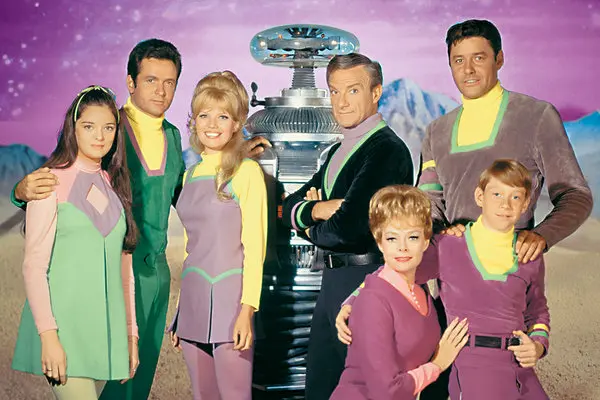
📷thenewyorktimes.com

In 1965 Lost in Space was put on the fall schedule. Harris played Dr. Zachary Smith. Neither his role nor the Robot were in the pilot of the series, but they were both brought in before the show began.

The show was a big hit with viewers. Harris felt his character, who was not trusted by the family, needed a bit of comedy, so he began to adlib his dialogue. Irwin Allen, creator of the show, approved the changes and allowed him to be considered a writer. Harris said he was a good re-writer, but he was never a writer.

Bill Mumy, who played the son on the show and interacted with Smith quite a bit said that Harris “truly, truly singlehandedly created the character of Dr. Zachary Smith that we know—this man we love to hate, coward who would cower behind the little boy, ‘Oh the pain! Save me, William! That’s all him.”

The show was still high in the ratings during its third season, but the writers were running out of ideas, and the show was canceled after 83 episodes.

📷imdb.com

In the seventies, Harris joined the casts of two Saturday morning series, Space Academy and Uncle Croc’s Block. Uncle Croc’s Block was a very weird show in my memory. Even though it was on Saturday mornings, he parodied kids’ shows. Uncle Croc, played by Charles Nelson Reilly, butts heads with his program director Basil Bitterbottom, Harris’s role; Phyllis Diller played Witchy Goo to round out the cast. Uncle Croc has a sidekick Rabbit Ears and introduced the cartoons.

He also continued to appear on other series, and you can spot him in The Ghost and Mrs. Muir, Land of the Giants, Get Smart, Bewitched, McMillan and Wife, Love American Style, and Vega$.

After the mid-seventies, most of his work was in the animation field.

He also became a drama coach, and Chuck Norris was one of his students.

📷billmumy.com

In 1990, the cast of Lost in Space reunited for the 25th anniversary. More than 30,000 fans attended the event.

Harris also spent time on his hobbies, which were many. He loved gourmet cooking, watching movies, reading, traveling, painting, magic, playing piano, gardening, dancing, knitting, and spending time with this family. He also kept his interest in listening to opera that he cultivated as a child.

He passed away in 2007 from a blood clot that traveled to his heart.

Harris was a talented actor. I’m not sure why he was never offered another sitcom or a chance to play a different type of character. I’m glad he found a home in animation, but I wonder if he regretted leaving Broadway for television. It was fun to learn more about this man and his career.
The Bill Dana Show: Really It Was The Jose Jimenez Show

This month our blog is devoted to The Bill Dana Show which was on the air for two seasons in the early sixties.

📷dvdplanetstore.com

Bill Dana is not a name remembered much anymore but, in the sixties, he was a huge celebrity. There is some tough talk about why he was so famous. During the late fifties and early sixties, especially as so many radio shows transitioned to television, there were some politically incorrect shows. This one teetered on the edge of it, in the same ways the show Life with Luigi did.

Bill Dana’s alter ego, Jose Jimenez, debuted on The Steve Allen Show in the late fifties. Jimenez was a Mexican immigrant. He saw the United States through a different lens than people who grew up here. He often was amused by what he saw going on around him. However, he was not the lazy stereotype Mexican. Jimenez was hard working and wise in many ways. He was not offensive in the way Amos and Andy were. Dana was a Hungarian Jewish man playing a Hispanic man so that was not well received either.

While I still love so many programs from the fifties and sixties that hold up well today and have delightful characters, many programs from this time make us cringe and we are embarrassed for the television industry at that time.

There are also many performers that may have bordered on sexual and ethnic political incorrectness, many of their characterizations may not be offensive, but I sure don’t find any humor in them.

📷 Jose Jimenez televisoinacademyawards.com

Remember this was during the Civil Rights Movement era, so things were beginning to get examined more closely in pop culture. Even if Jose was a good guy, his exaggerated accent set him up more of a caricature than a character.

While there was some blowback from the Latino community, many fans adored Jimenez. Danny Thomas and Sheldon Leonard decided to give Jose his own show after he made a few appearances on The Danny Thomas Show. NBC put the show on its schedule without even seeing a pilot because he was so popular.

While the quick sketches with Jose were in your face humor, putting the character in his own television series gave the writers time to develop him more and make him more dimensional. Leonard made this a workplace sitcom which was different for him since so many of their shows—The Dick Van Dyke Show, The Danny Thomas Show, That Girl, Good Morning World—were all balancing personal and work life. Earl Hagen, who wrote so many great tunes for the Leonard group, wrote this one as well.

The show aired September 22, 1963, and ran for a season and a half, ending January of 1965.

Jimenez is a bellhop at a luxury New York hotel. He lives in a special staff apartment, eats in the hotel kitchen, and interacts with most of the guests. He is surrounded by a great cast which we’ll get to know in more detail this month. Don Adams was Byron Glick, house detective. Jonathan Harris took on the role of Mr. Phillips, the hotel manager. Fellow bellhop Eddie (Gary Crosby) is always trying to get Jose to lose his rose-colored view of life. For season 2. Maggie Peterson plays waitress Susie.

The ratings were not great. Perhaps viewers had a harder time connecting this Jose to the caricature Jose. Certainly, more criticism came from the Latino community as the show went on. In addition to Jose, there was feedback on other shows that used stereotypical Mexican characters and in commercials like the Frito Bandito.

📷washingtonpost.com

Jose had one cameo role in Batman when he meets the duo and introduces himself as “My name—Jose Jimenez” in 1966. That was the final appearance of the character and a few years afterward, Dana read an obituary that he wrote for Jose at a Latino civil rights meeting in Los Angeles, and he became an activist for the Latino community, so there was some good coming out of the situation.

The show was canceled partway through season two. Another factor in the show’s ratings was the fact that it was on Sunday nights up against Lassie, a family favorite. However, the show did somehow receive an Emmy nomination for outstanding sitcom. No surprise it didn’t win. Despite being a mediocre show with some nugget of greatness here and there, it was up against McHale’s Navy, The Farmer’s Daughter, and the show that won, The Dick Van Dyke Show.

If The Bill Dana Show had just been a show about “a guy” who arrives from Mexico to work in a posh hotel, and we saw life through his eyes, good and bad in America, the concept could have been fun and more accepted. It appears that the writing was pretty good and it had a great cast. Jose was just not the character to build the show around.

Good Morning World: Tune In

As we are in the middle of our What in the World? blog series, today it’s a forgotten sitcom from the sixties: Good Morning World.

📷wikipedia.com

This series was created by Sam Denoff and Bill Persky, the team behind That Girl. The concept was based on Persky and Denoff’s time as writers for a New York radio station in the fifties.

In fact, William B. Williams, a WNEW DJ was given screen credit because the title was based on his daily greeting, “Hello, World.” William B. Williams was quite a character and an icon in the world of music. He was born in 1923 and after attending the University of Syracuse, he got a job with WAAT in New Jersey. He filled in for a DJ who failed to come to work but then was fired for, believe it or not, wearing red socks to work. He was hired by WNEW in New York City. He became a beloved radio icon. The radio station said at his funeral there was a huge crowd outside which included taxi drivers, sanitation workers, bookies, waitresses, singers, songwriters, politicians, housewives, first responders, and even the Rockettes.

📷radiohalloffame.com William B. Williams

According to the radio station’s website, “William B. Williams respected singers and songwriters, music and musicians, and it showed. He had a permanent, perhaps profound, effect on the lexicon of pop music.

He bestowed the ‘Count’ on Basie and the ‘Duke’ on Ellington. Billie Holiday was ‘Lady Day.’ Ella Fitzgerald was the ‘First Lady of Song.’ Louis Armstrong was ‘Pops.’ Sinatra was ‘Francis Albert,’ the ‘Chairman of the Board.’ Nat ‘King’ Cole was simply ‘Nathaniel.’”

The show was produced by Sheldon Leonard and Carl Reiner. Looking at that alone and you would expect it to be a hit.

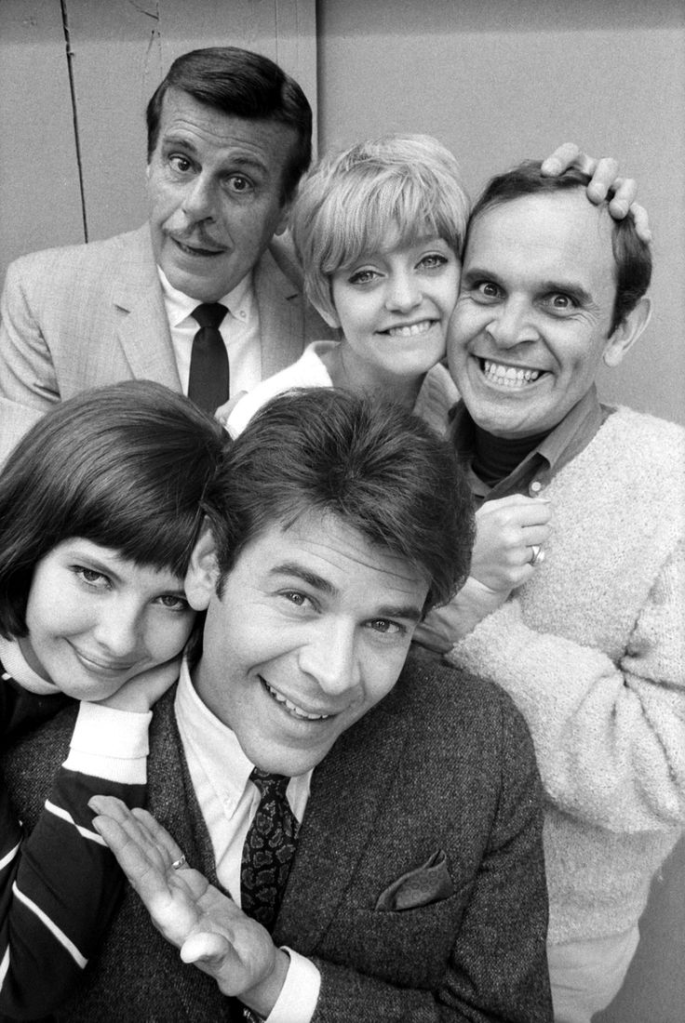
The premise was two radio disc jockeys who have a morning show, “Lewis and Clarke,” in Los Angeles. Dave Lewis is happily married, and Larry is a lady’s man and party boy.

They had some problems casting this show. Roddy McDowell and Sharon Farrell were cast as the married couple. Then Ron Rifkin replaced McDowell. Then they were both let go and David Lewis was played by Joby Baker, his wife Linda was played by Julie Parrish, and Ronnie Schell was cast as Larry Clarke.

📷pinterest

Billy de Wolfe and Goldie Hawn were fun additions to the cast. De Wolfe played Roland Hutton, the stuffy station manager. Hawn was Linda’s best friend Sandy Kramer.

The series debuted on CBS in 1967. It was on Tuesday nights, sponsored by Procter and Gamble. It was competing with N.Y.P.D., a police crime show and Tuesday Night at the Movies which began half an hour before Good Morning World.

Given that the talent behind The Dick Van Dyke Show was contributing to this show as well, it’s not surprising that it seems to be a mixture of The Dick Van Dyke Show and the later Mary Tyler Moore Show. Like Dick Van Dyke, the show features the DJs’ home and work life; like Mary Tyler Moore, you have a Lou Grant-type manager, and we learn about life at a radio station.

The theme music was by David Grusin. The opening was a different look for a sitcom. It’s a bouncy theme that begins with an alarm clock ticking, the guys quickly getting ready, morning traffic, life in LA, and the two DJs barely getting into their chairs before the show started.

The show was not awful in ratings, but the network had two concerns. They still were not sure Baker and Parrish were the right actors to play the married couple, and Parrish had some health concerns that affected the show. They were also concerned that the show did not pull in more of the viewers who were watching The Red Skelton Show which was on before Good Morning World. I don’t think that is surprising. I’m guessing people who enjoyed watching Red Skelton would not love this show as much and vice versa. Full disclosure, I am not a Red Skelton fan. I didn’t find his humor funny, and I have read too many stories shared by actors and writers who experienced his ego and lack of respect dealing with coworkers.

📷imdb.com

The network made the decision not to renew the show for a second season. Schell, who had been playing a private on Gomer Pyle: USMC, another Leonard/Reiner show, returned to military life with a promotion to corporal.

Goldie Hawn was free to accept an offer to appear on Martin and Rowan’s Laugh In which was a turning point for her career. De Wolfe became part of the cast of his close friend Doris Day’s show.

Baker never starred in another show, but he was a busy character actor. Parrish was later cast in Return to Peyton Place and also stayed busy in television; she later had a recurring role on Beverly Hills 90210.

This would be an easy series to binge watch with 26 episodes available. S’more Entertainment released the series on DVD in 2006 and its’ on Roku, so viewers can check it out for free.

My World . . . And Welcome To It: Just a Fantasy

This month we are in the midst of What in the World? Every sitcom has the word “world” in it. On deck today is My World . . . and Welcome to It. This half-hour show was based on the cartoons of James Thurber. It debuted in 1969 and was on the air for a year.

📷martin crookall- wordpress.com

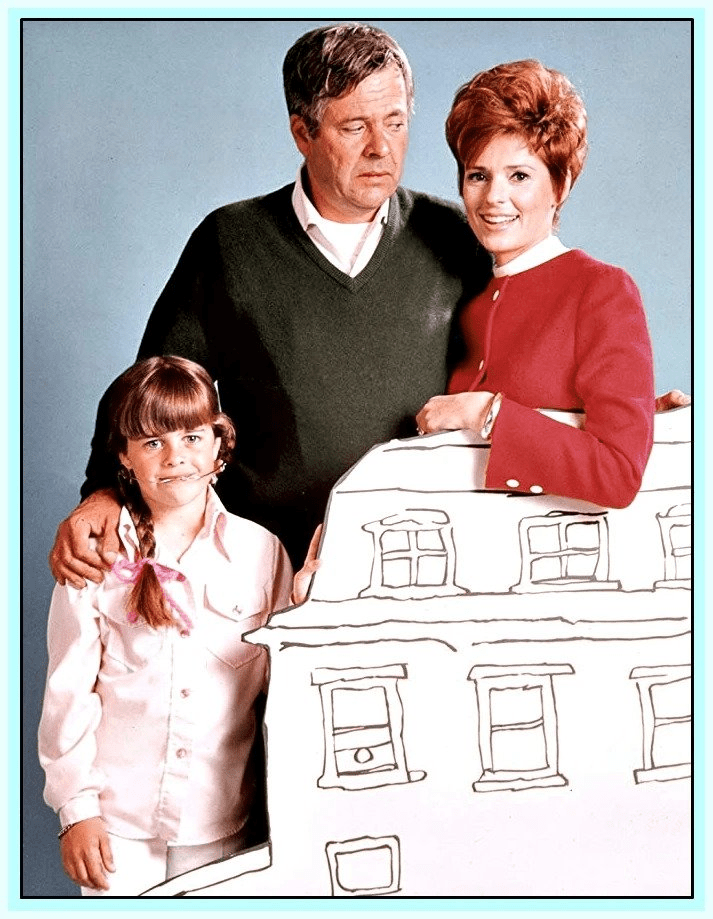
William Windom played John Monroe a cartoonist who works for a magazine similar to the New Yorker called The Manhattanite. Monroe lives with his wife Ellen (Joan Hotchkis) and their daughter Lydia (Lisa Gerritsen). John often daydreams about his daughter’s future and the “older” Lydias were played by Talia Shire and Cindy Williams.

The name John Monroe was Thurber’s alto-ego in his book Owl in the Attic. He frequently daydreams and those are cleverly incorporated into the series.

The episodes opened with John observing different aspects of his life. The use of the cartoons created a fantasy life dream world where he escaped life situations he could not process.

Mel Shavelson created the show for NBC. He wrote and directed the pilot with one of my all-time favorites Sheldon Leonard as executive producer. The animation in the series was done by DePattie-Freleng Enterprises.

Rounding out the cast was Henry Morgan as Philip Jensen, a magazine writer based on Robert Benchley and Harold J. Stone as editor Hamilton.

📷moviedatabase.com

The show was on Monday nights at 7:30 and was up against Gunsmoke. While it had a lot of great reviews from the critics, the viewers were not there in droves. Percy Shain of the Boston Globe referred to the show as “a joy and treasure.” Bob Williams of the New York Post wrote that it was “it’s warm, it’s witty, and it’s a sophisticated cut above the best of the TV network situation comedies.”

Not every critic treated it so kindly, however. Jack Gould of the New York Times felt it was “hackneyed gibberish relieved only by an occasional Thurber drawing” and Norman Mark of the Chicago Daily News decided that it “tried to appeal to all parts of the TV audience and failed.”

Perhaps Barry Harrison of the Washington Evening Star understood the show better than the other critics and had “an uneasy feeling [that] it is not long for TV.” His prediction came true when the series was canceled after one season.

According to Howard Anderson Jr. in his Television Academy interview, one of the major reasons for the cancellation was that it was so expensive to do the filming with a blue screen behind Windom for all the animation.

And then after it was canceled, it won the Emmy for Outstanding Comedy and Windom picked up the Emmy for Leading Role in a Comedy. The series it was up against included Love American Style, Room 222, The Bill Cosby Show, and The Courtship of Eddie’s Father. Windom won over Lloyd Haynes in Room 222 and Bill Cosby of The Bill Cosby Show.

📷billmadison.blogspot.com

The fans did send a lot of mail to the network, but with the so-so ratings and the fact that the animation made this one an expensive show to create, NBC did not put it back on the schedule.

After the show ended, Windom created a one-man play based on Thurber’s works and toured the country throughout the seventies. Perhaps if the network had given it some time after winning the Emmys, this show might have been more successful. It sounds like an interesting concept, although I also get the feeling that it might not have appealed to women; many of the descriptions I read discussed John’s fantasies that his wife and daughter were things to escape from. It’s worth taking a look at and seeing how it has fared over the last sixty years.

Shirley’s World: Doomed to Fail

As we ponder the What in the World? blog series this month, today we are taking a look at Shirley’s World.

This sitcom starred Shirley MacLaine as a photographer. For a variety of reasons, this show was doomed to fail. Let’s learn why that was the case.

📷imdb.com

ABC aired this show in 1971. It was co-produced by ITC Entertainment, a British company and American producer Sheldon Leonard. As I’ve said many times, Sheldon is one of my favorite classic television people. When he did a show, quality was guaranteed. In this sitcom, Shirley Logan (Shirley MacLaine) worked at World Illustrated magazine and her editor Dennis Croft (John Gregson) sent her around the world on assignments. However, Shirley always managed to find herself in dangerous situations while trying to help clients she was only supposed to photograph. One site described it as “the indomitable and highly resourceful Shirley met more than her share of high drama and intrigue—meeting would-be Soviet defectors, interviewing film stars, and even becoming a circus clown—with a few hilarious moments along the way.”

The opening of the show is very confusing. It’s a collage of photos one after another of Shirley with her camera out and about. If you didn’t know what the show was about, and it sounds like a lot of the crew and cast never did figure that out, you would assume this was a documentary or a mystery show. It does not read as a comedy.

There is a similarity to Sheldon Leonard’s series I Spy with shows set around the world. Rather than being videotaped, this series was shot on film. Because it was set all over, the producers decided against a laugh track or live audience. This gave the sense of a mini film; although laugh tracks can be annoying, the lack of laughter was also a detriment for a sitcom.

📷rewatchclassictv.com

I could not determine what set things off, but MacLaine and her British crew had what was often described as a “mutual loathing” of each other. She also seemed to have issues with the writers. After voicing often how much she disliked some of the scripts, she was banned from seeing them until 48 hours before shooting began. Eleven writers were credited with scripts, including Rob Reiner. From what I read about “fans,” the writing did leave a lot to be desired.

The show aired Wednesday nights. It was up against the second half of Medical Center and the NBC Mystery Movie which included Columbo, McMillan and Wife, and McCloud. So not only was it against two shows in the top 20, but if someone began watching either of those two shows, they were not switching halfway through the episode to watch Shirley’s World.

David Hofstede reviewed the show in his Comfort TV blog in February of 2023 (https://comforttv.blogspot.com/2023/02/shirley-you-cant-be-serious-visiting.html). As he tells us, “I gave up after ten episodes because all of them suffered from the same flaws. There’s nothing here for a viewer to follow that seems at all credible. Shirley MacLaine’s acting talent is unquestionable, from The Apartment to Sweet Charity to Terms of Endearment. Yet here she doesn’t seem to know what to do with the character or the situations she encounters. She laughs in serious moments—is that because she didn’t know what else to do?”

📷rewatchclassictv.com

Another review mentioned that apart from one small reference to Shirley being from Idaho, we don’t know anything about her.

In the early decades of television, we saw many stars who made that transition to television beautifully—Burns and Allen, Jack Benny, Debbie Reynolds, but there are also plenty like Henry Fonda and Jimmy Stewart who didn’t.

I understand 20/20 is everything as we look back in time, but it’s hard to understand how this show even got on the air. We have a great film star in MacLaine and an amazing producer in Leonard, and that is about it for the positives.

The show was expensive to create due to overseas locations and untypical filming techniques, it was poorly written, the character was never developed, the bi-nation crew didn’t get along, it was put on the schedule against two top-twenty shows that were an hour long, and never seemed to figure out if it was a sitcom, a drama, or a mystery.

Some things are just not meant to be, and Shirley’s World appears to be one of them.

Frances Bavier

We are kicking off the new year learning about some of our favorite women from the golden age of television. Today we learn about an actress who was often described as difficult to work with personally but a consummate actress. Today let’s meet Frances Bavier, everyone’s favorite aunt.

Photo: mayberryfandom.com

Born in a traditional brownstone in New York City in 1902, Frances planned on becoming a teacher and attended Columbia University. However, she felt drawn to the stage and found herself enrolled at the American Academy of Dramatic Arts. Graduating in 1925, she received her first Broadway role the same year, appearing in “The Poor Nut.” Her big break came in the production of “On Borrowed Time.” Her last Broadway appearance was in 1951 with Henry Fonda in “Point of No Return.”

A young Frances image: Twitter

Bavier would be part of the Broadway scene for a few decades before moving into films. Perhaps her best-known silver screen role was Mrs. Barley in The Day the Earth Stood Still. Bavier would continue to appear in movies throughout her career including her last performance which was in Benji in 1974.

In 1928 Frances married Russell Carpenter, a military man, and they divorced in 1933. During WWII Frances toured with the USO to entertain the troops. Frances reflected on her marriage later in life and said that he was a very charming man but did not understand her need to be an actress. She said as much as she loved him, she loved acting more.

Her first television roles were in drama series such as Ford Television Theater, Chevron Theater, and Pepsi Cola Playhouse among others in the early fifties. The mid-fifties found her in a variety of series, including Duffy’s Tavern, The Lone Ranger, Dragnet, The Ann Sothern Show, Perry Mason, and Wagon Train.

On the Lone Ranger Photo: imdb.com

Frances would be offered two recurring roles in sitcoms during this time. From 1954-56, she was one of the cast members of It’s a Great Life as Amy Morgan who ran a boarding house. When that show ended, she was cast on The Eve Arden Show as Nora, Eve’s mother and housekeeper.

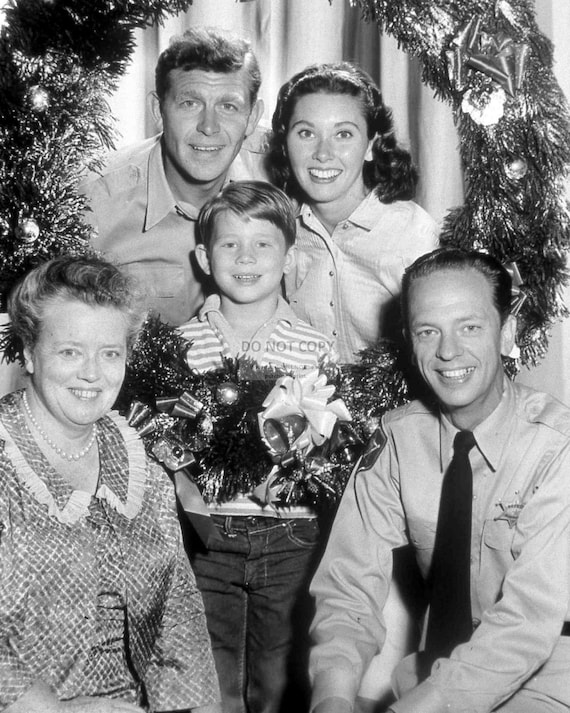
In 1960 she happened to be cast as Henrietta Perkins in an episode of Make Room for Daddy with Danny Thomas. That particular show featured a little town called Mayberry where Danny and his boys were pulled over for speeding and met Sheriff Andy Taylor. When that episode became its own show, Henrietta Perkins transitioned to Aunt Bee.

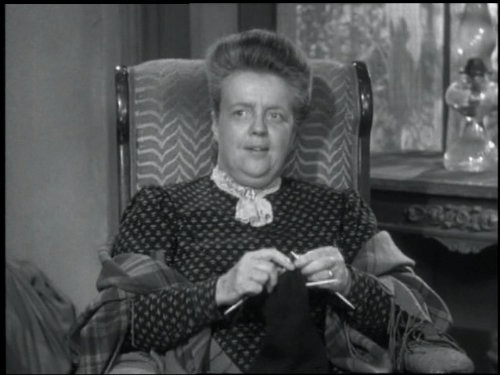
Aunt Bee was a major character in The Andy Griffith Show, and Bavier continued with the show when it became Mayberry R.F.D. with Ken Berry as the star. Bavier was nominated and won the Emmy for her role in 1967.

Early Cast of The Andy Griffith Show 5X7 8X10 | Etsy
An early season with Ellie Walker Photo: etsy.com

Fans loved the relationship Andy and Aunt Bee had, although in real life Andy and Frances were not close. The entire staff was cautious in their approach when working with her because she was easily offended. Ron Howard, always tactful, was pressed on his relationship with her and just replied that “I just don’t think she enjoyed being around children that much.” Producer Sheldon Leonard commented, “[She] was a rather remote lady. Highly professional and a fine comedienne, fine actress with very individual character. She was rather self-contained and was not part of the general hi-jinks that centered upon Andy on the set.”

Producer Richard Linke commented that “She was very touchy and moody due to her age, and you had to be very careful how you treated her and what you said around her. I think Andy offended her a few times, but they became very close friends.”

“I think Frances thought I was a gentleman,” mused actor Jack Dodson, who played Howard Sprague on the show. “I’m not, really, not any more so than anybody else. Since I had fewer scenes to do with her, I had fewer opportunities to swear in front of her, which is why we never had any difficulties. Frances was temperamental and moody, but she kept 99 percent of that to herself. Once in a while, she would get mad at someone. She was the only person in the whole company whose feelings you had to be careful not to hurt.”

Pop culture historian Geoffrey Mark, wrote, “She was a very talented lady, but she was very difficult to work with, and nobody could really figure it out. Eve Arden had trouble with her on The Eve Arden Show. That’s the earliest I can point to where Frances was already getting to be persnickety. I can only repeat what I was told, but on The Andy Griffith Show, Howard Morris, who played Ernest T. Bass on the show and directed episodes of it, said that directing Frances was like stepping on a landmine. If you would ask her to move three inches to the right to get in the proper frame, or, ‘Could you stand up when you say that line?’, she’d blow a fuse and refuse. It was, like, ‘I’m an actress and I know what I’m doing. How dare you try to tell me when to walk and where?’ It’s like yes, you are an actress, but an actress takes direction from the director. Why in the world would you make what is already a stressful situation more stressful?”

Emmy with Don Knotts Photo: 99.9 kekb

However, Andy mentioned during a Larry King interview that Frances phoned him four months before her death and apologized to him for being difficult to work with. Perhaps being alone and reflecting on her past behavior gave her some perspective on the situation, because she told a reporter with the Times Record in Troy, NY that “I don’t have a lot of friends. I don’t see how anyone my age working as hard as I do can have a big social life. I get very annoyed with people and the older I get, the crankier I am. This work has had an effect on my personality. I’m impatient with people and oriented to action.”

In 1972, Bavier retired. She bought a home in Siler City, North Carolina. The stately house is a three-story brick home with stone accents and located at 503 West Elk St. The house was built in 1951 by a local doctor. When asked about her choice of retirement, she said that she “fell in love with North Carolina, all the pretty roads and trees.”

Photo: newsobserver.com

It must have been a bit of a lonely life though. She was pretty much a recluse and lived with 14 house cats. She had no children, and there was no family living nearby. She promoted both Easter Seals and Christmas Seals and often wrote letters to her fans. In an interview with the San Bernardino County Sun, she talked about one of her hobbies: launching imaginary expeditions to remote corners of the world via her collection of maps. During the production of The Andy Griffith Show, Frances mentioned in an interview in the Charlotte News that when she felt lonely, she went to a supermarket and somebody would always look at her and smile and say “Why, hello, Aunt Bee.”

Aunt Bee and Clara My Hometown.mpg - YouTube
With Hope Summers in Mayberry Photo: youtube.com

Frances realized the 3700 residents of Siler City had a difficult job relating to her as well. As she put it during a local TV interview, she was “a 70-year-old lady that probably wants to be alone and they’re having a problem with trying to be friendly and show their friendliness, and at the same time not intrude. That makes it very difficult for them. Living here has been a difficult adjustment for me. I have a great deal to learn from Siler City and North Carolina. It’s an entirely different and new way of life.”

Some Credit, Please, for Aunt Bee | Classic Movie Hub Blog
Photo: classicmoviehub.com

When she passed away in 1989, she left a trust fund of $100,000 to the police department in Siler City that would provide an annual bonus to all police personnel. Most of her $700,000 estate was left to the hospital foundation. She was buried in her adopted hometown, and her tombstone reads “Aunt Bee. To live in the hearts of those left behind is not to die.”

Frances mentioned in several interviews that she loved the character of Bee, but it was hard to be stereotyped in one role. She told The Charlotte News that “Once in a while I get a hankering to play a really bad woman. . . I was really vicious in a Lone Ranger episode, but so many people wrote in outraged at what I was doing, I guess it was a mistake. Sometimes it gets me down to think I’ve lost my own identity as an actress. But other times I get a lift when I realize that I’m really doing quite well.

I can’t imagine having to become another person for so much of my life and always having to be that person to so many people that you would feel like people didn’t really know you as you. The Andy Griffith Show is one of those shows that you read about where the cast truly had a special bond and formed close ties, and Frances must have felt bad that she was not part of that group even if it was her own choice to be excluded. She must have developed a love for Mayberry since she decided to find a small town similar to it where she could live out the rest of her life. Even though she says she never got over her homesickness for New York, she chose to be buried in Siler City as well. I’d like to think she finally found her own Mayberry where she could live and bond with the community as Frances instead of Bee, but it sounds like that continued to be a struggle for her.  I hope she realizes how many people loved her character and the joy she has brought to so many fans in the past six decades.

https://reelrundown.com/animation/A-Psyche-Analysis-of-Charlie-Brown-and-his-Friends  2021-04-05T15:32:42.000Z weekly  https://images.saymedia-content.com/.image/t_share/MTc0MDU3Njg5NDgyMDEyMjI2/a-psyche-analysis-of-charlie-brown-and-his  ...
Photo: reelrundown.com

The Dick Van Dyke Show: Writing At Its Best

This blog series is “It’s My Show,” about actors who featured their names in the titles of shows. I’ve definitely saved the best for last: The Dick Van Dyke Show. During the past five plus years of writing my blog, I have realized that my favorite shows are those that feature amazing writing and concentrate on relationships. This show is no exception.

Review: The Dick Van Dyke Show, “The Curious Thing About Women” | This Was  Television
Photo: thiswastelevision.com

From 1961 till 1966, this show aired on CBS, resulting in 158 episodes. Created by Carl Reiner, it was produced by Calvada Productions. Calvada was named for Carl Reiner, Sheldon Leonard, Dick Van Dyke, and Danny Thomas. The show was filmed at Desilu Studios in front of a live audience. Bill Persky and Sam Denoff wrote 29 of the episodes.

The theme song was written by the great Earle Hagen. (For more on Hagen, you can see my blog from December 10, 2018; Hagen wrote many great theme songs including The Danny Thomas Show, Gomer Pyle, I Spy, The Mod Squad, and most memorably, The Andy Griffith Show.)

The Story of Dick Van Dyke and the Ottoman – Once upon a screen…
Photo: pinterest

The opening of the show had Rob walking into the living room. In one version, he trips over an ottoman, falling on the floor. In the another, he steps around the ottoman. You never knew which opening you would see, a fun element of the show.

I love that this show realized our professional lives are equally important to our personal and family life, and this show not only featured both, but often they meshed together just like all our lives do.

Not only was Rob Petrie’s (Dick Van Dyke) work life part of the show, but he was a television writer, which provided even more insights into what we were watching. Rob writes “The Alan Brady Show” with cowriters Sally (Rose Marie) and Buddy (Morey Amsterdam). Mel (Richard Deacon) is star Alan Brady’s (Carl Reiner) producer. Buddy and Mel have an ongoing feud, insulting each other on a daily basis. (In real life, Deacon and Amsterdam were good friends and often came up with new insults when they had drinks together after work.) Reiner originally planned on starring in the show and played Petrie in the pilot, but he was persuaded to give the role to another actor by Leonard.

The Dick Van Dyke Show' Changed Television as We Know It
Moore, Van Dyke and Mathews–Photo: wideopencountry.com

Rob’s home life consisted of wife Laura (Mary Tyler Moore), son Ritchie (Larry Mathews), and neighbors/best friends Jerry and Millie Helper (Jerry Paris and Ann Morgan Guilbert). Paris directed 84 of the show’s episodes and would go on to a career as a director later.

Recap and React: The Dick Van Dyke Show, season 2, episodes 11 – 15 – The  Motion Pictures
Moore, Paris, Guilbert, and Van Dyke
Photo: motionpictures.com

In the pilot, titled “Head of the Family,” Barbara Britton played Laura, Gary Morgan played Ritchie, Morty Gunty played Buddy, and Sylvia Miles played Sally. Jack Wakefield played Alan Sturdy who was the star of the tv show.

The characters are very much like people we all know, except maybe a bit funnier. Rob loved his wife and son. He was a big fan of cowboy movies and Laurel and Hardy. He met Laura, a USO dancer, when he was in the Army as a Special Services Sergeant in Camp Crowder, Missouri. His brother Stacey appeared on the show a few times (played by real life brother Jerry Van Dyke). Richie is a typical kid who gets in trouble sometimes but is a good kid, just curious and looking to test his boundaries. Their neighbors Millie and Jerry have a son about Richie’s age, and they are their best friends; Jerry is also their dentist.

Mary Tyler Moore | Couple sleeping, Bed, Classic television
Moore, Van Dyke–Photo: pinterest.com

The only thing not realistic about his home life is that Rob and Laura have twin beds. Reiner asked the network to allow the couple to sleep in the same bed, but they would not approve it, so like most sitcom married couples, they had separate beds.  About the only couples who were able to get around the challenge were the Stephens on Bewitched and Katie and Robbie on My Three Sons. The network also didn’t love that Moore wore capri pants but they did end up allowing her to do so.

Rob’s coworkers are also endearing characters. Buddy is energetic and sarcastic. He is married to Pickles and shares a lot of jokes about some of the scatterbrained things she does. We know he is in love with Sally, but they never take their relationship anywhere other than friendship. She is often making fun of herself for looking for a man, but we realize she is very lonely. Mel is an excellent producer who puts up with a lot from both Buddy and Alan.

The Best 'Dick Van Dyke Show' Episodes, Ranked
Amsterdam, Deacon, Van Dyke, Marie, Moore–Photo: vulture.com

Van Dyke had to give up Bye, Bye Birdie to star in the show but definitely made the right choice. The role of Laura was a hard one to cast. Sixty actresses auditioned for the character. Moore almost chose not to go, and when she did, she lied about her age, making herself older than she was. Sally Rogers was based on Lucille Kallen who wrote for Your Show of Shows and Selma Diamond who wrote for Caesar’s Hour.

After the first season, CBS said they were cancelling the show. Procter & Gamble threatened to remove all its advertising and viewers complained loudly. The network didn’t need to worry about ratings in season two; the show was in the top ten by episode three and was popular for the rest of its time on air.

To color or not was a big question during the sixties. Reiner actually considered filming the show in color in the third season until he found out it would add $7000 per episode (the equivalent of about $59,000 today).

Carl Reiner, beloved creator of 'Dick Van Dyke Show,' dies | Taiwan News |  2020/07/01
Deacon, Moore, Van Dyke, Leonard, Reiner, Paris
Photo: taiwannews.com

I’m not the only one who thought this was an amazing show. The series was nominated for 25 Emmy awards and won 15 of them. Reiner won three times for writing, Van Dyke three times for acting, and Moore twice for leading actress in a comedy role.

Some of my favorite episodes are “Pink Pills and Purple Parents” (season 4) a flashback to when Laura meets Rob’s parents. She takes some anti-anxiety medicine Millie gives her. She gets a bit loopy and Rob’s mother thinks she has a drinking problem; “The Ghost of a Chantz” (season four) where Rob, Laura, Buddy, and Sally spend the night in what’s said to be a haunted cabin. Characters disappear one by one and finally we learn that Mel pranked them to test out a concept for a show called Sneaky Camera; “Coast to Coast Big Mouth” (season five) when Laura reveals on a TV game show that Alan is bald and wears a toupee. Laura bravely goes to the office to apologize; another one about Laura, “The Curious Thing About Women” (season one) when Rob writes a comedy skit about Laura’s bad habit of reading his mail. All her friends tease her after it airs, and she tries to deny it, but when a package comes to the house, she opens it and an inflatable raft opens up which she cannot put back; and finally, “That’s My Boy” (season 3) when Rob is convinced that the hospital switched their son with another boy born that day. He has to resolve this, and invites the other couple over to discuss the situation.  When Rob opens the door, he sees an African American couple, and it gets one of the longest audience laughs than any other sitcom episode.

Carl Reiner Knew TV Like the Back of His Head - The New York Times
Moore, Reiner–Photo: nytimes.com

CBS may have wanted to end the show after season one, but they did not want to end it after season five. However, the cast made the decision to quit while they were still producing high-quality shows. I appreciate that they did this. One of the saddest things for me as a viewer is when a show goes on a year or two longer than it should and the quality diminishes greatly.

I just can’t think of anything about this show that needed improving.  It had a great cast, great writers, likable characters, and a timeless quality. Sixty years after the show began, it is just as funny and easy to watch as it was then. Thank you, Carl Reiner and cast, for knowing how to make a memorable show and when to end it to keep it that way.

Surprise, Surprise, Surprise! It’s Gomer Pyle USMC.

Continuing my “We Salute You!” blog series, today we look at one of the most-loved television characters, Gomer Pyle.

Photo: pinterest.com
Danny Thomas in Mayberry

In the late 1950s Make Room for Daddy was one of the most popular sitcoms. On one episode in February of 1960, Danny found himself in Mayberry, picked up for going through a stop sign. Although Sheriff Taylor came off a bit of a country bumpkin, viewers enjoyed the episode and the following fall, The Andy Griffith Show (TAGS) aired on CBS. When the series debuted, Andy was portrayed more of a wise sage and the folks of Mayberry were a quirky but lovable bunch. The show was in the top ten every year it was on the air. In fact, it seemed to get better as it went, making #3 in 1966-1967 and #1 in 1967-68. Andy left the show the following year, and it turned into Mayberry RFD which continued for three more seasons. The first two it was also in the top 10 and the third year it slipped a bit into the top 15. Although it was one of the most successful shows on CBS’s schedule, it was eliminated with a lot of other popular shows in the famous rural purging in the early seventies.

One night, Andy Griffith saw Jim Nabors performing at The Horn in Santa Monica and decided he would be a perfect fit for Mayberry. He offered him a job, and Gomer Pyle began working at Wally’s gas station.

Two writers, Everett Greenbaum and Jim Fritzell were said to have created the character. Greenbaum had dealt with an incompetent gas station attendant. He stopped by a station with motor trouble. The man could not think of any way to fix it except to keep adding gas to the tank, so Greenbaum thought a character based on him should be part of an episode on TAGS. He derived the name from Gomer Cool, a writer and Denver Pyle, the actor. Everett and Greenbaum (along with many TAGS writers) would continue to write for TAGS as well as Pyle episodes.

Gomer was one of the most popular characters on the show. Surprisingly he was only in 23 episodes in the two years he was with the show. Traveling around the country, you would be able to hear people repeating his “gawwwleee,” “surprise, surprise, surprise,”  or “shazzam” which all became part of our language at the time.

Photo: dailymailreporter.com
Gomer at Wally’s Gas Station

Because Gomer Pyle was so popular, Andy, Aaron Ruben, and Sheldon Leonard decided to give him his own show and Gomer Pyle USMC was created. In this show, Gomer who is naïve, kind-hearted and morally upright has to deal with life in the marine corps and his gruff Sergeant Carter (Frank Sutton). Although Carter gets driven to distraction by Pyle and his “do-gooding,” we all realize he has a soft spot for Pyle and his main concern is protecting him.

Photo: pinterest.com
Carter and Pyle

The show was on the air from 1964-69 and had a solid supporting cast. Like TAGS, Gomer Pyle USMC was in the top ten for its entire run.

Photo: mayberrywikia.com
With Ted Bessell

The show was on Friday nights, except for season three when it moved to Wednesdays. I was a bit surprised it stayed in the top ten, because it had some competition at times. Season one it was opposite Jack Benny and Twelve O’Clock High. Season two it went up against Honey West on one network and a variety of music shows on the other. Season three it was at the same time as Peyton Place and season four it was on opposite Star Trek.

Although the show depicted military life on base, war was never discussed. The series began at Camp Wilson in North Carolina and was moved to the fictional Camp Henderson in California. The actual show was filmed at Camp Pendleton and, along with TAGS, at Desilu’s Cahuenga studio and the RKO Forty Acres backlot. Unlike TAGS, Pyle used a single-camera setup because much of the shooting was outside.

Photo: pinterest.com
Don Rickles, Guest Star

The US Marine Corps worked with Leonard, giving the show unlimited access to their equipment because they felt the series was good for their image. The opening scene of the show was that of marching recruits from the Marine Corps Recruit Depot in San Diego. Nabors commented that it was very difficult for him to see that footage because so many of those service men were killed in Vietnam. In real life, Frank Sutton could not pass the Marine Corps physical for WWII but was able to serve in the US Army, taking part in 14 assault landings including Luzon and Bataan.

Photo: wikipedia.com

I had heard of universities bestowing honorary degrees to actors even if they did not attend the school, but I did not realize the military could do something similar. During the show, Gomer’s highest rank was Private First Class. In 2001, the US Marine Corps gave Nabors an honorary promotion to Lance Corporal, and in 2007 he was raised to Corporal.

Obviously, there were a lot of military vehicles used in the filming of the show. Chrysler Corporation provided them. Jeeps were also prominent in the show, but Jeep did not become part of Chrysler until 1987. As an aside, the vehicles for TAGS were provided by Ford.

Photo: sitcomsonline.com
Gomer and his friend Duke Slater

Pyle’s loyalty and good-natured attitude made him a favorite of both his platoon members and many of the women whom he came in contact with. One of Pyle’s friends was Duke Slater played by Ronnie Schell. Schell was written off after the third season when he left to star in Good Morning World. When that sitcom did not get renewed, he returned to Pyle. Some of the other platoon members included Roy Stuart as Corporal Boyle, Forrest Compton as Colonel Edward Gray, Ted Bessell as Frankie, and William Christopher as Lester.

Gomer gets to meet a lot of people when he goes to town. He especially loves movies and one of his favorite all-time pictures was Godzilla.

Photo: pinterest.com
Sergeant Carter and his girlfriend Bunny

As mentioned, Sergeant Carter eventually becomes a father figure to Gomer. Carter’s girlfriend Bunny (Barbara Stuart) also tried to help Gomer (I could not find anything to indicate that Roy and Barbara Stuart are related). Gomer often causes trouble between Carter and Bunny by trying to “help” Carter. In season three, Gomer also got a girlfriend in Lou-Ann Poovie (Elizabeth MacRae). She is a singer in a local nightclub, but eventually Gomer talks her into returning to Turtle Creek, NC to marry her old beau Monroe. She leaves but returns, informing Gomer she wants him for her boyfriend, and she gets a new job as a clerk at a record store.

Photo: sitcomsonline.com
Gomer and Lou-Ann

Several TAGS alumni made appearances on the show. Allan Melvin was part of the cast as Staff Sergeant Hacker for four years, Carter’s rival on the show. Denver Pyle who was Briscoe Darling on TAGS showed up on Gomer Pyle as a farmer. Andy, Aunt Bee, Goober and Opie all were seen at the base at one time or another, including when Opie ran away from home.

With a show on the air so long, many well-known guest stars showed up at Camp Henderson as well, including Carol Burnett, Ted Knight, Rob Reiner, Don Rickles, and Jerry Van Dyke.

Photo: directexpose.com

After the fifth season, Nabors expressed an interest to do a variety show, so Gomer Pyle was not renewed. He brought Ronnie Schell and Frank Sutton along for his new show which was on the air for two seasons. Carol Burnett called Nabors her good luck charm. He was one of her best friends and he was always on her season opener each year.

Photo: pinterest.com
Best Friends

In an interview with Jim for American Profile, writer Paulette Cohn (Jim Nabors Lives Happily in Hawaii, January 13, 2008) quoted Carol Burnett’s perspective of Nabors vs Pyle: “ ‘The one thing Jim has in common with Gomer is his kindness,’ says actress and comedienne Carol Burnett, Nabors’ long-time friend, who named him godfather to her daughter Jody. ‘He loves people and is very gregarious. But he is also very smart. Not that Gomer wasn’t, but Jim isn’t naïve. He keeps his eye on things.’ ”

Considering how popular Gomer Pyle USMC has been in reruns, I was surprised to learn it wasn’t until 2006 that CBS Home Entertainment released the show on DVD. By 2008, all the seasons were available.

Photo: blogspot.com

Let’s end with a few quotes that captures the essence of the show’s characters.

Gomer: I’m gonna be a fighting fool, you’ll see.

Sergeant Carter: Well, you’re halfway there.

************************************************************************

Gomer: One of my favorite little sayings is, ‘To avoid criticism, say nothing, do nothing, be nothing.’

************************************************************************

Gomer: A word of kindness is seldom spoken in vain, while witty sayings are as easily lost as the pearls slipping from a broken string.

***********************************************************************

Carter: All I can say is, if the idea of desertion ever crossed your mind, you’ll never find a better time to look into it.

************************************************************************

Carter: I don’t get it Pyle, how come you can knock that Phillips flat, yet you can’t handle that little Lombardi guy?

Gomer: Well sir, you see the big feller needed a lesson, the little feller didn’t.

Photo: abcnews.com

Although Gomer Pyle USMC might not be everyone’s cup of tea, it was a well-done and popular show. I think its success, like TAGS and many of the other shows considered classics, comes from the fact that it’s a character-driven show. We start to consider the characters our friends and enjoy spending time with them. The show can currently be seen on MeTV nightly at 9 pm EST.

Make Room for Daddy: The Show That Persevered

As we wind up our salute to fathers during Father’s Day month, we finish with Make Room for Daddy. This iconic show doesn’t get the respect that I Love Lucy did, but it is one of the first iconic family sitcoms. This sitcom had to survive cast changes, network moves, and ratings fluctuations.

Photo: famousfix.com

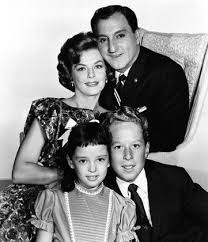
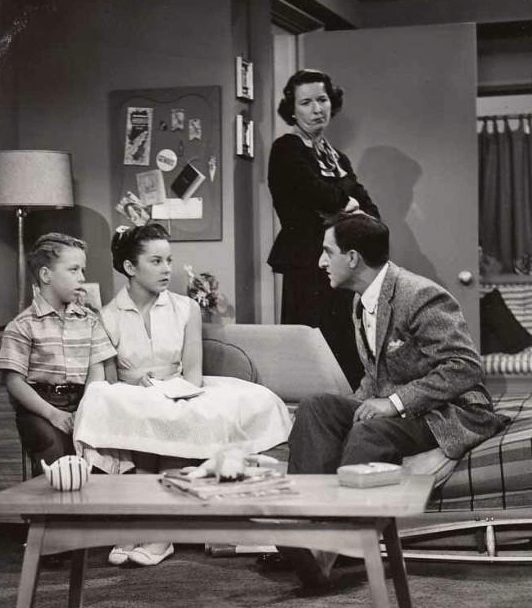
The show debuted on ABC in 1953. In 1957, it moved to CBS until 1964 when it went off the air. Danny Williams (Danny Thomas), a nightclub singer and comedian, tries to balance his work life with his family life. Danny obviously loves his children but is not an overly affectionate dad and is just as likely to tell his son Rusty, “I love you, you little jerk.”

In March of 1953, Thomas singed a contract for the show and picked Desilu Studios for filming because of their three-camera method. Several of the working titles for the show were “The Children’s Hour” and “Here Comes Daddy.”

The title of the show was from a Thomas family joke. Whenever Danny was away for work, his children had the run of the house. They slept in the master bedroom with their mother, even putting clothes in the dresser there, so when he came home from a tour or a filming, he told them it was time to spread out and “make room for daddy.”

Danny has three children (two in seasons 1-4 and three in seasons 5 and after): Terry (Sherry Jackson and later Penney Parker), Linda (Lelani Sorenson, then Angela Cartwright), and Rusty (Rusty Hamer). The first three seasons his wife Margaret was played by Jean Hagen. They had Terry and Rusty. Louise (Louise Beavers) was their maid. When Beavers passed away, Amanda Randolph took over the role. Terry was later played by Penney Parker. Mary Tyler Moore auditioned for the role, but Danny felt Mary’s nose did not match his as well as Parker’s.

Photo: en.wikipedia.org

The show was filmed live before 300 people, so there was a lot of pressure on the younger kids to know their lines. All three children continued in successful acting careers after the show. (Unfortunately, Hamer had a harder time finding good roles as an adult and committed suicide at 42. Cartwright left acting to focus on a career as a photographer.  Jackson continued acting.)

Photo: pureflix.com

With Danny Thomas’s connections, you can imagine the quality of guest stars this show was able to feature. Some of the bigger names include Lucille Ball, Milton Berle, Sammy Davis Jr., Jimmy Durante, Shirley Jones, and Dinah Shore. If you looked at a Who’s Who in Comedy Sitcoms, you would find a huge percentage of them on this show.

Like many shows from this era, the original sponsor was The American Tobacco Company, advertising its brands like Lucky Strike, Pall Mall, and Tareyton.

While the theme song went through variations during the run of the show, it was always a version of “Danny Boy.”

Photo: youtube.com

The show was popular and did well in the ratings but had not made the top 30 after three years. Jean Hagen decided to leave the show.

At the beginning of the fourth season, the title changed to The Danny Thomas Show. Thomas and producer Sheldon Leonard were trying to decide how to explain Hagen’s absence. Divorce was not acceptable and filling the same role with another actress didn’t seem like a good option either. They decided to have her die between seasons.

The emphasis of the show now switched to Danny being a widower. The family moved from their home to an apartment. Danny dated occasionally and almost got engaged to singer before learning she didn’t like children. The ratings were declining with the new format, so it was decided to have Danny marry again.

Mary Wickes played the role of Liz O’Neal, Danny’s press agent from 1955-1957.

Photo: jacksonupperco.com
Mary Wickes in the background

At the end of the 1957 season, Rusty becomes ill, and Danny hires Kathy O’Hara (Marjorie Lord) as his nurse. Kathy was a widow with a young girl (Lelani Sorenson). Danny and the kids both fall in love with her and they become engaged in the season finale. ABC cancelled the show, but CBS* was looking for a show to take over the spot of I Love Lucy which was ending its production, so they took it over and put it on the schedule for the fall of 1957.

The first episode of the fifth season “Lose Me in Las Vegas” centered on Danny and Kathy who had married an were on their honeymoon. Angela Cartwright took over the role of Kathy’s daughter from Sorenson. Danny adopted Linda. The family moved into a larger apartment. The ratings skyrocketed, and it was the number 2 show by the end of the season.

Photo: peoplequiz.com

Sherry Jackson decided to leave the show during season six, and her absence was explained by her going to a school in Paris. Jackson had a five-year contract which she honored. She and Hagen had been very close, and Jackson wanted to leave when Hagen did, but Hagen only had a three-year contract.

In season seven, Terry comes back, now played by Penney Parker. During the season she gets engaged and eventually marries Pat (Pat Harrington Jr.), a friend of Danny’s. Terry and Pat move to California and are rarely mentioned afterward.

Photo:closerweekly.com

Make Room for Daddy might have had the first spinoff of a character not in the cast. In one of the episodes from 1960, “Danny Meets Andy Griffith,” Danny is pulled over in Mayberry and is detained in the jail. Sheriff Andy Taylor is featured in the show, and The Andy Griffith Show was created.

“The Danny Thomas Show” (aka “Make Room for Daddy”) Pat Carroll, Sid Melton circa 1950s Photo by Gabi Rona

For the final two seasons, Danny and Kathy traveled for much of the series. They toured Europe while Rusty and Linda stayed home with Danny’s manager Charlie (Sid Melton) and his wife Bunny (Pat Carroll). Thomas decided to retire from the show in 1964. The show ended on a high note, still ranking number nine.

Photo: pinterest.com

Although the show ended in 1964, NBC brought back the main cast of Thomas, Lord, Cartwright, Hamer, Jackson, Randolph, and Hans Conried, Uncle Tonoose, to star in a two-hour reunion special, The Danny Thomas TV Family Reunion.  Having a reunion show was another first accomplished by this sitcom.

Photo: en.wikipedia.org

In 1969, CBS created their own reunion special, titled Make Room for Grandaddy. It had such high ratings that CBS put it on the schedule, but Thomas didn’t like the time slot and pulled the show.

In 1970, ABC tried again. Sherry Jackson again was Terry, but her husband now was Bill; what happened to Pat? Terry had a six-year-old son Michael (Michael Hughes) whom Terry left with Danny and Kathy (still played by Thomas and Lord) to join Bill, a soldier stationed overseas. The show only lasted one year. One of the reasons given was that Sheldon Leonard was no longer controlling the scripts and actors, and the show was moved from Wednesdays to Thursdays during the season.

The show was so popular with kids that a comic book series was developed.

Photo: pinterest.com

As I mentioned, this show does not get the credit it deserves. While Danny tended to be short-tempered and Kathy was the voice of reason, the scripts for the entire series were well written and realistic. It had an extremely talented cast. Unlike some series, the children really carried the show. The children acted like children, not mature adults, in most ways, but they created great characters and were very funny. Rusty always had a viewpoint on any given situation. Their moments are the ones that make this show so memorable. Many of the episodes center around the kids. A typical example is “Casanova Junior ” : Rusty hasn’t asked a girl to the school dance because he has no confidence. Danny gives him some pointers and now the girls are falling all over themselves to go out with Rusty. The only problem is Rusty, he’s gone from no confidence to treating the girls badly and Danny is not happy about it.

Photo: facebook.com

The show ended in the top ten. It created the first sitcom spinoff of a non-cast member and the first reunion movie. I specify “non-cast” member because December Bride included Pete Porter in its cast, and he talked about his wife Gladys. Later the show Pete and Gladys was created.

Despite the challenges it faced with cast members coming and going, the change from ABC to NBC, and the characters growing up on the show with changed the dynamics of the series, the show continued to garner great ratings and was given a second life in a new series in Make Room for Grandaddy. Along with The Donna Reed Show, it was one of the trend-setting family sitcoms from the 1950s and ’60s.

*Thanks to reader Howard Ian Stern for letting me know I originally had the wrong network listed.

Earle Hagen Whistles a Happy Tune

We don’t often notice music in the background of our favorite shows, but it has a significant impact on our appreciation for a series. One of my favorite CDs in the 1980s was the music from thirtysomething. I admit I didn’t often pay attention to the music while watching the show, but I loved listening to the soundtrack.

hagen14

Photo: findagrave.com

Today we get to spend some time learning about one of the most prolific songwriters in the television industry: Earle Hagen. Earle was born in the Midwest in 1919, in Chicago, but moved with his family to Los Angeles. He began playing the trombone in junior high school.

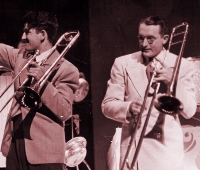
At age 16 he left home to play with some of the best big bands in the country: Tommy Dorsey, Benny Goodman, Ray Noble.

hagen2earlhagen.net

Photo: earlehagen.net

During his time with Noble, when he was only 20, Hagen composed the song “Harlem Nocturne” as a tribute to Duke Ellington and Johnny Hodges. It would be recorded by numerous musicians over the years and later was adopted as the theme for both Mickey Spillane’s Mike Hammer and The New Mike Hammer.

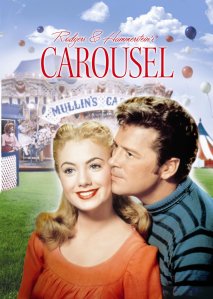
In 1940 Earle was hired by CBS as a staff musician. Like many of the composers we have been learning about, Hagen enlisted in the military for World War II. When he came home, he became an orchestrator and arrangement writer for 20th Century Fox. He worked on a variety of films including Gentlemen Prefer Blondes and Carousel.

In 1943 he married Lou Sidwell, a big band singer. They would remain married until she passed away in 2002 and produce two sons.

When Earle accepted the Irwin Kostal Tribute Award in 2000, he explained that “In 1953, the studios committed to large screen production and we went from 38 pictures a year to one. There were other pictures on the planning board but not immediate enough to support the huge studio staffs. So, along with 1199 other people, I migrated to television.”

The first show he worked on was a short-lived series, It’s Always Jan which was on the air from 1955-56.

Then Hagen met Sheldon Leonard. As he says, “There again my good fortune held. I teamed up with Danny Thomas and Sheldon Leonard at a time when they were starting a string of hits that lasted 17 years.” Earle wrote the theme for Make Room for Daddy.

Those 17 years were busy. Leonard initiated the practice of using original music for sitcoms, so a lot of background music was required. Hagen said that during that era, the composer was part of the creative team. His opinion was asked for and respected in pre-production, production, and post-production.

He loved working in television. He said that there was “something about the immediacy of TV that I enjoyed. It was hard work, with long hours and endless deadlines, but being able to write something one day and hear it a few days later appealed to me. I think a statistic of which I am most proud is that in the 33 years I spent in television I was associated with some three thousand shows. Every one of them was recorded in Los Angeles with a live orchestra.”

His work continued with Leonard, and he wrote the theme song for The Dick Van Dyke Show.

hagen6

Photo: brioux.tv

Then Sheldon asked him to come up with a theme for a show about some gentle town folks and their sheriff. Earle said he struggled a while trying to come up with the perfect theme. As he described the process: It’s like “peeling an onion. Half of coming up with something good is throwing away what’s not.” Finally, he had a brainstorm and “he simply whistled the catchy tune which entered his head.” It’s the whistling of Hagen we hear on The Andy Griffith Show when we hear “The Fishin’ Hole.” Despite the difficulty of coming up with the theme song, Hagen enjoyed his time with The Andy Griffith Show. He said, “I guess my favorite show . . . was The Andy Griffith Show. It covered the spectrum from warmth to complete zaniness. It also was easy to write. Worthwhile, when you are doing four or five different series a week.”

hagen5

Photo: mtairynews.com

He went on to work on several shows in the 1960s, including The Bill Dana Show, That Girl, Accidental Family, Gomer Pyle USMC, Mayberry RFD, and The Mod Squad. Hagen based the Mod Squad theme on Schoenberg’s 12-tone scale which added some tension to the scenes, along with a jazzy theme song.

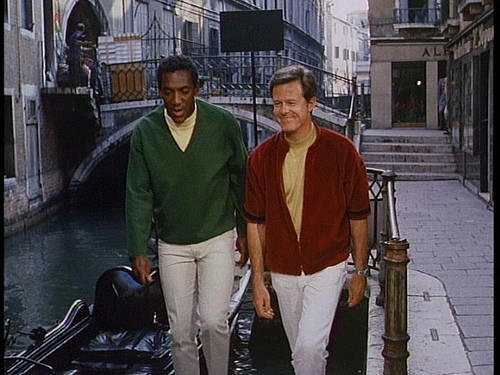
Hagen’s songs are some of the most recognizable ones in television. However, his most innovative and beautiful scores were done for a show that is not remembered much today, I Spy. Leonard wanted original soundtracks for each episode. This humorous spy show was filmed in locations all around the world, so the music had to vary as well.

hagen9

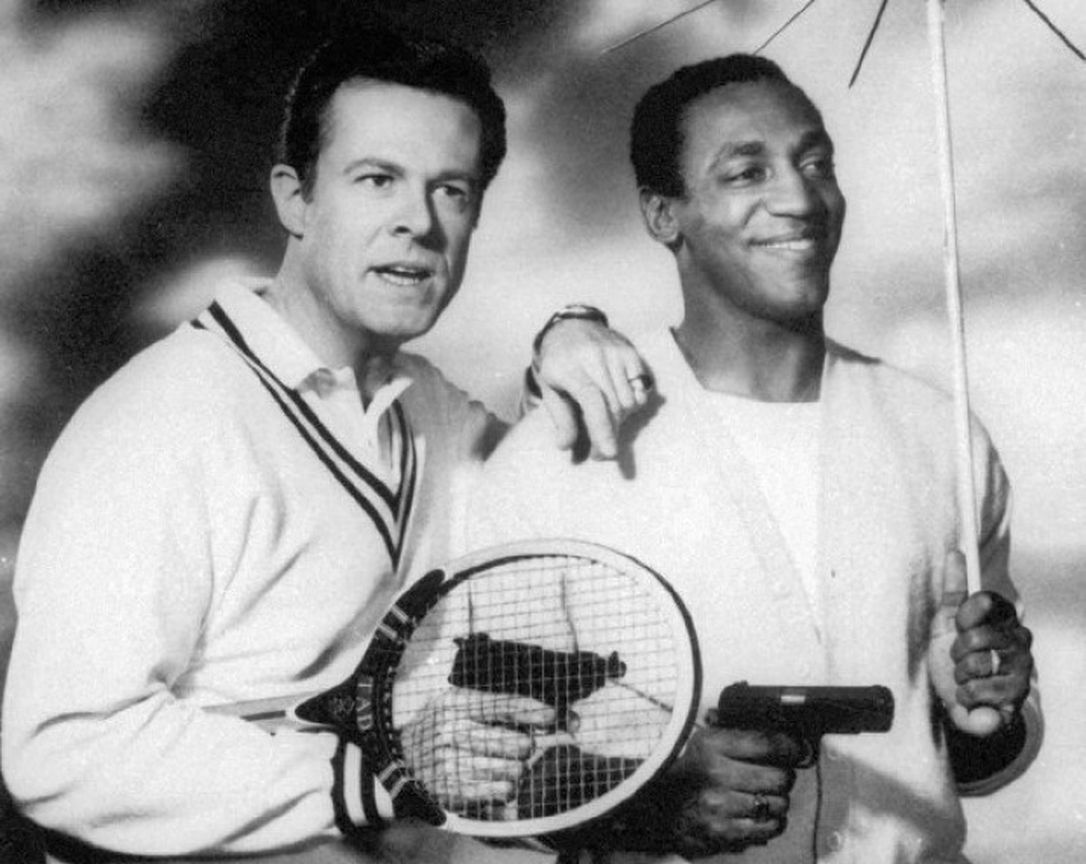
This was the first show to star an African American. Bill Cosby and Robert Culp were spies who took on assignments around the globe. I would like to say that the reason for the lack of the show being rerun is due to Bill Cosby and the poor personal choices he made which has resulted him being sentenced to jail and the shows he was involved with disappearing from television schedules. However, I rarely remember this show being available even before Cosby’s criminal trials, and I’m not sure why that is. In 2008, all three seasons of DVDs were released.

On the website earlehagen.net, we read that “During the run of the series he amassed one of the most comprehensive collections of ethnic music in existence at that time–some of it on commercial records bought in the countries he visited with the production team, but much of it taped live in situ with local musicians. These recordings containing priceless material of musical genres never before recorded, and in some cases, now extinct, were then mixed into the background music produced by the studio orchestra in Los Angeles.  The result was what has been deemed ‘the richest musical palette ever composed for any American television series.’ ”

hagen10

Photo: desertnews.com

Sheldon relied on Hagen to literally scout the world for filming locations. The couple visited Japan, Hong Kong, Bangkok, India, Israel, Greece, Italy, France, and New York. Hagen discussed this trip. “Before the show started, at Sheldon Leonard’s invitation, Lou (my wife of 58 years so far), and I were invited to go on a `round the world trip with the Leonard’s scouting locations for the upcoming series, I Spy. On that 52-day trip we traveled first class, stayed in first class accommodations and at every airport were met by a car, driver, and interpreter, who stayed with us as long as we were in the country.”

Earle wanted viewers to remember that these were US spies so he named his music “semi jazz,” which fused local world cultures with American jazz music.

Deborah Young-Groves discusses the variety of music Hagen used in her article, Creating the Perfect Vibes for “I Spy.”

“And who could forget the frantic–almost joyous–chase across the University of Mexico in ‘Bet Me A Dollar’–Spanish brass–almost Copeland-esque (remember ‘El Salon Mexico’?), too loud to ignore but erratic and happy. And yet, like Copeland, Hagen only scored where he deemed appropriate. In that very same episode the child, who urgently seeks help for Kelly, runs in utter silence.  We hear only his pounding feet and his sobbing gasps.

But the two best episodes for music are ‘Home to Judgment’ and ‘The Warlord,’ for equally fascinating reasons. ‘The Warlord’ borrows heavy oriental imagery for the action sequences (always punctuated by that American jazz – but it works) using snare drums and brass.  How Hagen can get a trumpet to sound Asian simply by a jagged sequence of notes is still a mystery to me!

Then he changes completely and takes a plangent delicate note for the love theme between Chuang Tzu and Katherine, caught between their separate worlds.  It is somber, powerful and almost painful – one of the saddest pieces of music I have ever heard.”

hagen11

Photo: thestar.com

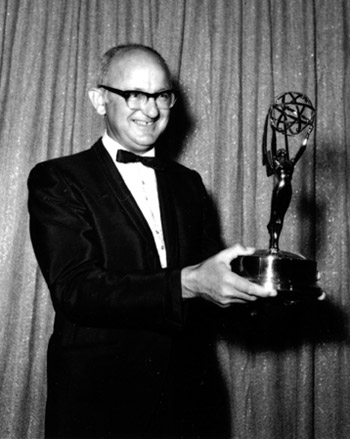
I Spy was on the schedule for three seasons. Hagen was nominated for an Emmy all three years for his work on the show, and he won it the last year the show aired. When asked about his favorite episodes, Hagen said, “Some of the shows of course stand out in memory: ‘Tatia,’ ‘Laya,’ ‘Home to Judgment’ ‘Warlord,’ and one of my favorites, ‘Mainly on The Plains.’ ”

hagen3

Photo: planetoftheapes.com

The music was so memorable on this show, that Hagen was able to record two albums from the series. The first album was recorded by Warner Brothers and the second was Capitol. He said he enjoyed the Capitol album more only because he was able to work on in the off season, so he had more time to devote to it.

hagen1

Earle would continue with his work on television throughout the 1970s, working on a variety of shows, including The New Perry Mason, Eight is Enough, and Mary Hartman, Mary Hartman. In the 1980s, he worked on Dukes of Hazard.

During the last decades of his life he taught and wrote books on scoring and music arrangements. He wrote the textbook, Scoring for Films: A Complete Text. In 2000, he published his autobiography, Memoirs of a Famous Composer Nobody Ever Heard Of.

In 2005, he married his second wife, Laura Roberts. Hagen died from natural causes in 2008.

In 2011, he was inducted into the Television Academy Hall of Fame.

Perhaps his website sums up his career best: “When one considers the vast range Earle Hagen’s career has covered, and just where he was at each stage in his life—playing trombone in the big bands during the 30s, writing arrangements for Frank Sinatra, working at 20th Century Fox during the reign of Alfred Newman, creating TV themes and scores for Sheldon Leonard shows, not to mention teaching brilliant young composers the art of scoring, and publishing the top texts in his field—it can truly be said that he lived through the best times in each of these worlds.”

hagen4

Photo: themusicsover.com

Earle Hagen was another one of the great pioneers in the golden age of television and he should be celebrated for his amazing career.