Virginia Sale: What a Character

We are learning about some of our favorite female character actresses. Today we are learning more about the life of Virginia Sale.

📷champaigncounty
history museum.com

Virginia was born in 1899 in Illinois. Her father Frank was a dentist, and her mother Lillie Belle was a poet and truant officer for the Urbana Illinois School District. After graduation, she attended the University of Illinois for two years and then transferred to the American Academy of Dramatic Arts in New York where she graduated in the early twenties. Her brother Charles was a vaudeville comic, and he persuaded her to go to Hollywood to pursue a film career.

She began her career in Hollywood as an extra. In 1931, she did an interview for the Kansas City Star where she said “I had known an assistant director [named Ned] when I lived in New York. He introduced me to King Vidor, then casting for The Crowd. He gave me quite a good bit in the picture, although it lasted only five days. When asked how much salary I wanted, Ned told me to say $350 a week. ‘Well, I think you ought to work for us for $25 a day’ the casting director said. ‘That’s an awful comedown I protested,’ trembling in my boots. ‘All right then, let’s compromise on $35 a day,’ he said. I was awfully glad to get it.” That would be almost $600 a day currently.

📷x.com

During her first two years in Hollywood, Virginia lived at the Hollywood Studio Club. She appeared in 54 films between 1930 and 1935.

The Hollywood Studio Club was created as a safe place for starlets to live. Mary Pickford, along with several other women, was trying to raise money to construct a new building to house actresses. Will Hays gave $20,000 and soon after the studios contributed. Julia Morgan was hired as the architect. She designed an Italian Renaissance Revival style building that opened in 1926. The first floor had a spacious lobby, a library, writing rooms, a dining room, and a stage. The upper stories were single, double, and triple rooms. Men were only allowed to be on the first floor. You had to be between 18-35 years old, be seeking work as an actress, and could stay a maximum of three years. A hundred women lived there, paying $10-15 a week for room and board.

📷mayberrywikifandom.com

Barbara Hale, Donna Reed, Dorothy Malone, Ann B. Davis, Barbara Eden, Sharon Tate, and Sally Struthers were just a few of the women who lived there. The most famous resident was Marilyn Monroe. After the culture shift in the sixties and seventies, the residents decreased until the Club could no longer financially exist. In 1975 the doors were closed, and the contents were auctioned off.

In Hollywood Sale was often cast as an older woman, even though she was still in her twenties. She entered the movie entertainment business just as silent films were ending. Her first role was in Legionnaires in Paris in 1927. During her film work, she met actor and studio executive Sam Wren, and they married in 1935. In 1936 they had twins named Virginia and Christopher.

In the thirties, Virginia developed a one-woman show based on her life growing up in Illinois which she called “American Sketches.” She performed the piece more than 6000 times throughout the thirties, forties, and fifties, even touring Europe during WWII. This sounds like it would have been a fun show to see. Some of the different pieces of the performance included: “Traveling on the Illinois Central” where she portrays a mother trying to keep her son under control after a visit with relatives; “Life of the Party” where she is a giggling, talkative woman who annoys a young man she is trying to impress;
“Mealtime in Indiana” where she impersonates a housewife trying to get ready for the Ladies Guild while preparing supper for her family; “Three O’Clock in the Morning” as a weary hostess trying to get her guests to go home, and “I Remember Abraham Lincoln” where she is Grandma Willoughby reminiscing about her encounters with Lincoln.

📷rottentomatoes.com

She also received some radio work, including a serial, For Those We Love, playing Martha the maid every Sunday for eight years.

Her film career continued to develop during those decades and she appeared in Topper, When Tomorrow Comes, They Died with Their Boots On, and Night and Day.

Sam served in WWII as part of the Air Corps. When he returned home, he had a six-year position as executive secretary for the Actor’s Equity. He was an executive at both Warner Brothers and Columbia studios.

📷imdb.com Topper

In 1949 as television was developing, she and Sam created a sitcom, Wren’s Nest which featured the life of the Wrens starring Virginia, Sam, and the twins. The show aired three times a week. Virginia took over writing duties on the show. Many of her scripts were based on real events that happened to the family. The series contained 47 episodes.

During the fifties, Sale took a break from the big screen, focusing on television shows and commercials. She appeared in several series in the fifties, but she hit her stride during the sixties. If you watch a lot of television from that decade, you can catch her in a variety of shows including The Many Lives of Dobie Gillis, Ben Casey, The Beverly Hillbillies, Wild Wild West, The Andy Griffith Show, Green Acres, and I Spy. She had a recurring role on Petticoat Junction where she played several characters. Her final television role was in Police Woman in 1975.

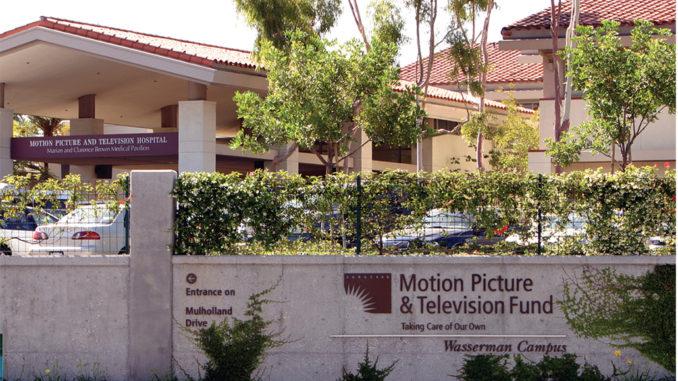
Sam passed away in 1962, and Virginia lived another thirty years, dying in 1992 from heart failure. Both Sam and Virginia are buried in Arlington National Cemetery. She spent her final years at the Motion Picture and Television Country Hospital in Woodland Hills, California.
📷

Sale could thank Mary Pickford for her home once again. Pickford was part of the Motion Picture Relief Fund which she founded with Joseph Schenck and Reverend Neal Dodd. When several former Hollywood stars died destitute in the thirties, 48 acres were purchased in the San Fernando Valley to build a Motion Picture Country House. In 1948, the Motion Picture Hospital was dedicated on the grounds. Later television actors were invited to live there as well. By that time, the site included a retirement community with individual cottages, administrative offices, and a hospital. Fees are based on the ability to pay. Actors, artists, backlot men, cameramen, directors, extras, producers and security guards are all eligible to live there. To live there, residents must be at least 70 and have worked in the entertainment industry for at least 20 years.

It was fun to learn not only about Virginia Sales but also the places she lived at the beginning and the end of her career.
Mister Ed:

In the 1960s we had some crazy sitcom situations: a wife who was a witch, a genie who was found in a bottle, a dead mother who inhabited a car, and the Munsters who tried to adjust to a normal human world.  One show that was not that incredible was Mister Ed. If someone said they were writing a show about a talking horse, it should sound a bit far-fetched, but when you watched the show, it all seemed quite plausible. Let’s take a look at what made Mister Ed a fairly well-written and enjoyable series.

mred8


Mister Ed was developed by Arthur Lubin, a producer and director. Lubin had worked on the Francis the talking mule movies. He wanted to make a similar show for television. He was unable to gain the rights to Francis, but then he heard about children’s author Walter R. Brooks. Brooks had a series of short stories about a talking horse. His stories were published by Bantam, but since he passed away in 1958, he was never able to see the television show his work inspired.

mred1


The pilot was financed by George Burns and filmed at his McCadden Studio. It was titled “Wilbur Pope and Mister Ed.” Scott McKay played Wilbur Pope, Sandra White played his wife, and Mr. Ed was played by a chestnut gelding that was temperamental and difficult to work with.


mred5

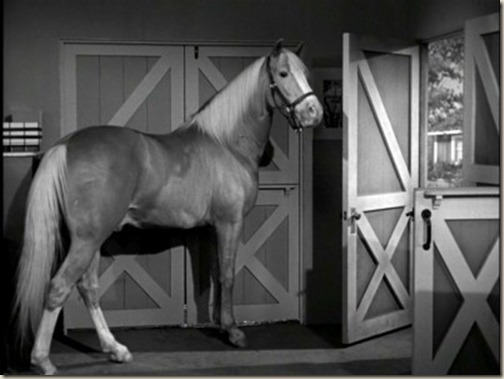
Lubin was not able to sell the show to one of the major networks, so he financed it as a syndication sitcom. The cast was switched up a bit. Bamboo Harvester, a golden Palamino, was brought in as Ed and his voice was kept secret at the time but was Rocky Lane, an older Western star.

Allan Young came on board as the now named Wilbur Post, and Connie Hines played his wife Carol. Young was actually a blonde but in the black and white version, his hair blended into the horse’s, so Connie Hines’ hairdresser would dye Young’s hair brunette. Originally Lubin discussed naming it The Alan Young Show, but Alan did not want to do that in case it bombed. He did, however, buy into the show, which resulted in his earning a lot of money later.

Ed’s singing voice was provided by Sheldon Allman. However, the line “I am Mister Ed” at the end of the theme song was done by the song’s composer, Jay Livingston.

Jay Livingston and Ray Evans wrote the theme song. An instrumental version was used for the first seven episodes, and then lyrics were added. The lyrics are:

A horse is a horse, of course, of course.

And no one can talk to a horse, of course.

That is, of course, unless the horse is the famous Mister Ed.

Go right to the source and ask the horse.

He’ll give you the answer that you’ll endorse.

He’s always on a steady course.

Talk to Mister Ed.

People yakkity-yak a streak and waste your time of day,

But Mister Ed will never speak unless he has something to say.

A horse is a horse, of course, of course.

And this one’ll talk ’til his voice is hoarse.

You never heard of a talking horse?

Well listen to this: I am Mister Ed.


ed7


The first 26 episodes were so popular, CBS picked it up. It aired on CBS from October 1961 until February 1966. During the sixth season, CBS moved the show from the prime time schedule and broadcast it on later on Sunday afternoon. There are 143 episodes in all, and they were all filmed in black and white.


lark

Photo: Hooniverse.com

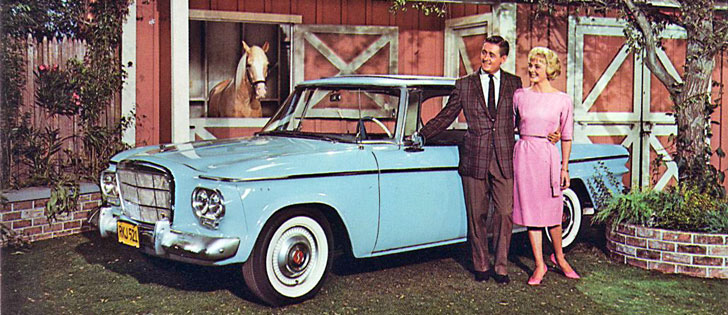
Lubin got Studebaker Packard Corporation to sponsor the show in syndication which it continued to sponsor once CBS picked it up. The Posts own a 1962 Lark convertible. Studebaker’s sales plummeted in the early 1960s, and production stopped in 1963. From then on, Ford provided the cars seen on the show.

Ed also had a double named Pumpkin, a quarterhorse, which was his stunt double. Later Pumpkin was featured in a pudding commercial and went on to appear in another Filmways Presentation show, Green Acres.

The Posts live in Los Angeles. Wilbur was an architect.

mred7

Photo: youtube.com

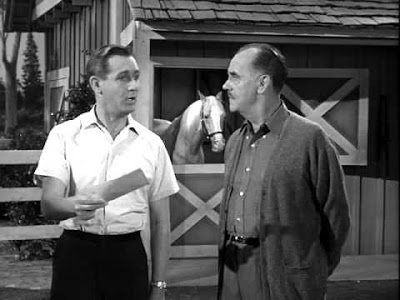
The Posts’ neighbors and friends were Roger and Kay Addison played by Larry Keating and Edna Skinner.  Keating died in the middle of the series, and Edna continued on the show. Later Wilbur’s former commanding officer, Col. Gordon Kirkwood (Leon Ames) and his wife Winnie (Florence MacMichael) moved into the Addisons’ home.

guest2

Both the Addisons and the Kirkwoods think Wilbur is a bit nuts. They often hear him talking to himself and, to cover for Ed, he gets involved in a lot of awkward situations. Wilbur is also a bit accident prone.

Wilbur’s wife resented the time Wilbur liked to spend with his horse instead of her. Her father, Mr. Higgins (Jack Albertson), thought she should leave Wilbur and considered him a “kook.”

mred9

Mr. Ed only talks to Wilbur. The only reason given for Ed refusing to talk to anyone else is that he thought Wilbur was the only person worth talking to. It worked because Ed was not treated as an unbelievable horse who could talk. He appeared as an equal character. Ed was also quite intelligent. He could read and play chess. He was able to use the phone to get information.  Bamboo Harvester really could answer the phone; he just could not have a conversation. He was also able to open the barn door. Ed would also pout at times when he didn’t get his way and threatened to run away a lot.

mred6

Photo: itschess.blogspot

In an online article, “The World of Mr. Ed-What You Didn’t Know About the Talking Horse,” written by Ed Gross on April 24, 2018, he quoted Ben Starr who wrote 42 of the episodes. He explained that the reason the show worked was because he and producer Lou Derman “really knew how to do that show because we figured out how to make it work for kids and grownups. You had to take care of the grownups, and that was our secret.”

Mister Ed featured a lot of famous guest stars including Mae West, Clint Eastwood, George Burns, Zsa Zsa Gabor, Leo Durocher, Jon Provost, Sebastian Cabot, Donna Douglas, Irene Ryan, Alan Hale Jr., Neil Hamilton, William Bendix, Sharon Tate, and Jack LaLanne.


ed2

Bamboo Harvester was trained by Les Hilton.  At a time when trainers could be considered somewhat cruel, Hilton was always respectful of his animals and never used force or abuse on them. Hilton had to be on the set whenever the horse was. To make Ed appear to be talking, Hilton originally used a nylon thread to open his mouth. Bamboo Harvester was quite smart though and learned to talk on cue whenever Hilton touched his hoof. A story made the rounds that Ed was made to talk by applying peanut butter to the horse’s mouth, but later Young admitted he made that up because it was more interesting than the real story.


ed5

Bamboo Harvester appeared to be a professional. He usually only needed one take to complete his action. Hilton had to teach him to play a variety of sports including riding a skateboard. However, when he got tired of working for the day, he just walked off the set. He received twenty pounds of hay and a gallon of sweet tea daily.

Apparently Young and the horse became close. Young had a great respect for his co-star and after the show ended, he would make trips to see Bamboo Harvester in his retirement.

ed4


I could not find a definite date of death for the horse. There are a lot of conflicting stories about it. Young claimed that the horse was in a stable in California where he lived on Hilton’s property. One version is that one day when Hilton was out of town, Bamboo Harvester was given a tranquilizer because he was having trouble getting up and he died hours later. Another story I read was that the horse was euthanized in 1970 in Oklahoma. He was reported to be suffering from arthritis and kidney problems.

One story I did confirm is that a horse did die in February of 1979 in Oklahoma, but it was not Bamboo Harvester, but a horse that posed for still pictures for the show which led to false reports of his being Mr Ed when he died.

Apparently, a reboot was planned for the Fox network in 2004, starring Sherman Hemsley as the voice of Mr. Ed, David Alan Basche as Wilbur, and Sherilyn Fenn as Carol. I could not find any information whether a pilot was ever filmed or not.

Another movie version was discussed in 2012 when Waterman Entertainment announced they were developing a new feature film based on the television show. Once again, I could not find any further information on the movie.


Mister Ed was popular during its run. A lot of collectible products were created in the 1960s including comic books and board games.

Mister Ed was not a show on my “must-watch” list, and I don’t watch a lot of the reruns. However, when I do catch one, I never feel like I wasted my time. The show worked and felt believable. Currently, it is not on either Me TV or Antenna TV, but it is available on DVD.