
We kick off this new year getting to know one of my favorite entertainers, Jack Benny. While many radio stars had a hard time transitioning to television, Jack, along with his best friend George Burns, made it look easy. Jack’s radio show started in 1932. In 1950 he decided to make the leap to tv, and his show would be on the air until 1965 when he decided it was time to quit.
The series produced 258 episodes. Jack tested the water first, appearing randomly on television before settling into a weekly schedule ten years after the first show debuted (From 1955-1960 he was on every other week). George Balzer and Sam Perrin would write for the show for the entire run, given credit for 255 episodes. Ralph Levy, who helped George and Gracie get their show underway, came on board in 1951 and left in 1962. The well-respected Fred De Cordova directed the most episodes, 75.

Jack’s first shows were filmed at Burns’ McCadden Productions studio and later at Universal Television. His opening and closing monologues were done in front of a live audience but a laugh track was inserted for consistency. Jack brought his quirky radio crew with him: Don Wilson, Eddie “Rochester” Anderson, Dennis Day, Mary Livingstone, and Mel Blanc. Benny’s wife was Sadie Marks. He met her at age 14 in 1919, and they didn’t exactly hit it off. However, in 1927 they realized they were in love and married that year. Benny asked his wife to fill in for a live comedy show to play “Mary Livingstone.” Sadie did and showed her comic persona. She began to appear regularly and later legally changed her name to Mary Livingstone.
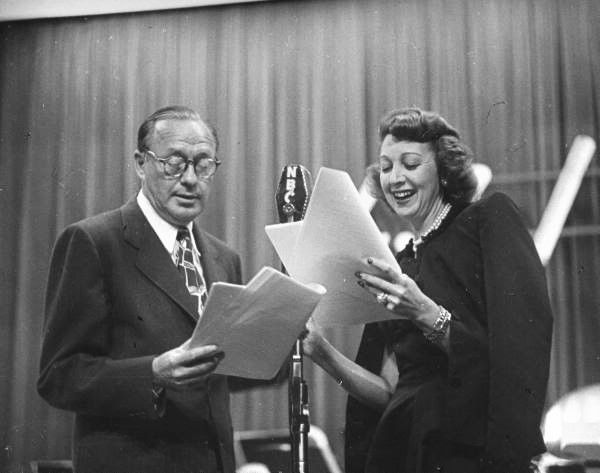
Benny understood the radio show was so successful because listeners bonded with the characters and considered them friends. Television just added another dimension for viewers to be able to see the characters.
Jack always underplayed his character, often giving the best lines to his cast. He had great timing, knowing when to tell a joke and when to say nothing. It was often said that he did not say funny things, but he said things funny. His catchphrases, “Well” (with a long pause) and “Now, cut that out” are still part of pop culture today.

In the classic age of comedy, sponsors were the key to survival, and Jack was always able to obtain some of the most well-known companies. During his run, he was sponsored by Lucky Strike, Lever Brothers Lux, State Farm Insurance, Lipton Tea, Miles Laboratories, and most memorably, General Foods’ Jell-O. The sponsors never minded that he often made fun of them or their ads. Often, they were some of the funniest moments in the show.

The first show aired in October of 1950. Benny’s first line on that live Sunday night telecast was, “I’d give a million dollars to know what I look like!”
The show’s format didn’t vary much from week to week. Typically, it began with a monologue. The orchestra might play a song or Jack and announcer Don Wilson might have a discussion such as:
DonWilson: I don’t think you know how much it means to me to do the commercial. After all I’m not a funny man. I can’t sing or dance. I don’t lead a band. What are you paying me for?
Jack: Don, you’re hanging yourself.
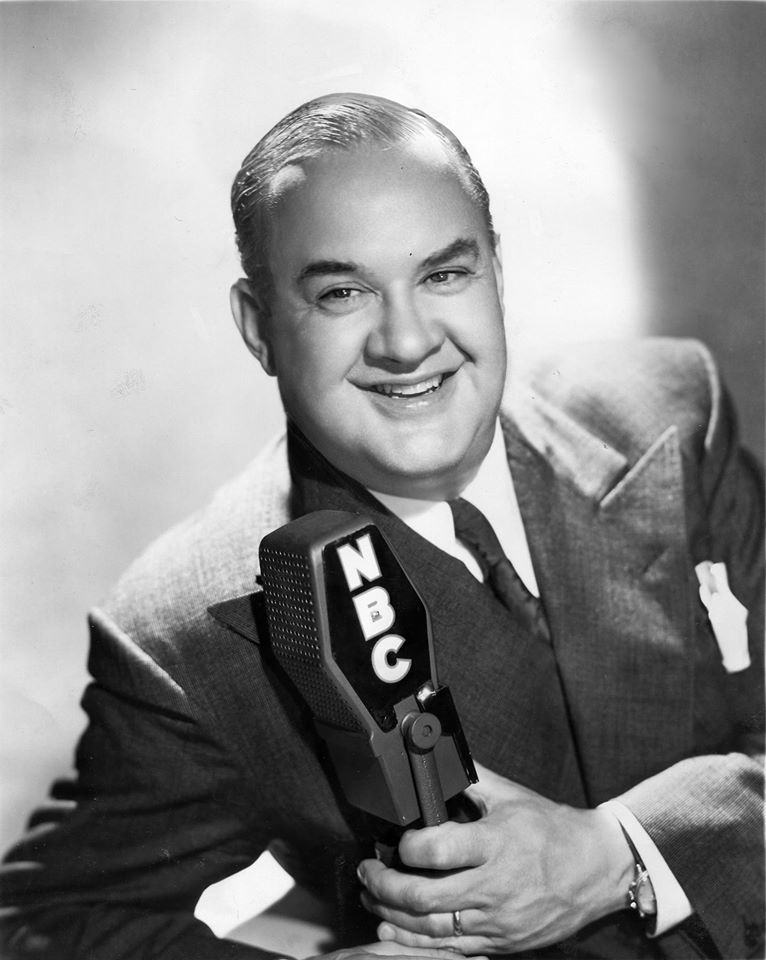
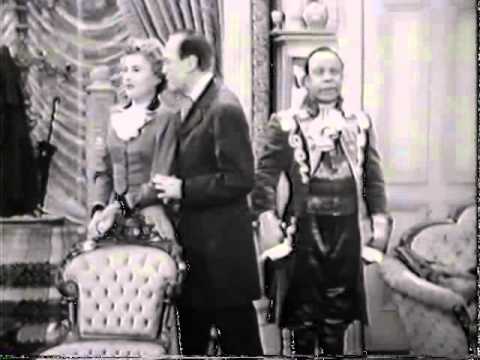
The cast would discuss a current situation, often referring to Benny’s age or frugality, or Mary would read a letter from her mother. Dennis Day would then sing a song followed by a skit, a mini-play, or a satire of a movie. Before Carol Burnett’s incredible movie satires, Jack Benny’s writers created some humorous shows. One example was a 1952 show. It was based on Gaslight from 1944. Called “Autolight,” it starred Barbara Stanwyck.
Jack continued to feature special guest stars, was a penny pincher, refused to admit he was over 39 years old, and continued to drive his old Maxwell. Here he is with Marilyn Monroe discussing his age:
Marilyn Monroe: What about the difference in our ages?
Jack: Oh, it’s not that big a difference. You’re twenty-five and I’m thirty-nine.
Marilyn Monroe: I know, Jack. But what about twenty-five years from now when I’m fifty and you’re thirty-nine?
Jack: Gee, I never thought of that.

Jack’s view on saving money: “Any man who would walk five miles through the snow, barefoot, just to return a library book so he could save three cents – that’s my kind of guy.”

Mel Blanc not only “played” the Maxwell but portrayed a variety of characters. Once Benny made the comment, “There’s only five real people in Hollywood. Everyone else is Mel Blanc.”
Viewers today criticize the way Rochester was treated on the show, but when comparing Benny’s show to Amos ‘n Andy and other shows during the time period, a stark difference can be seen. Rochester was the first black actor to have a recurring role on a radio show. He called Jack, “Jack” or“Mr. Benny” and quite often got the best of him by outwitting him or pointing out one of his deficiencies.
Here’s a typical conversation between Jack and Rochester:
Jack: What do you think of this card I wrote for Don? “To Don from Jacky, Oh golly, oh shucks. I hope that you like it, it cost forty bucks.”
Rochester: It would’ve been hard to rhyme a dollar ninety-eight.
Jack Benny: We’re a little late, so good night, folks.
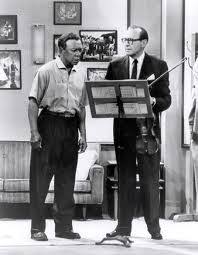
The character interactions and the great skits are what made the show so popular. In Jim Bishop’s book about President John F. Kennedy, A Day in the Life of President Kennedy, he wrote that JFK was too busy to watch television, but he always made time for The Jack Benny Show.
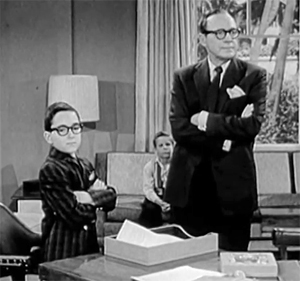
Jack passed away in 1974. In real life, he was the opposite of the character he played, very generous and a gifted violin player.
His papers, including television archives of his series and special broadcasts and more than 296 television scripts were given to UCLA.

The Jack Benny Program can currently be seen early mornings Sunday through Thursday on Antenna TV.
 thewritelife61