Our theme for March is “Variety is the Spice of Life.” We are looking at several variety shows that debuted in the sixties and seventies. After discussing three shows that weren’t super successful on television, today we look at a long-running show: The Dean Martin Show.
📷chrisnersinger.com
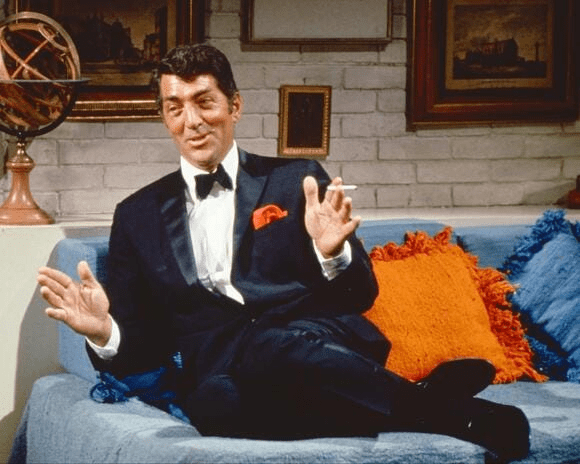
Debuting in 1965 and lasting nine seasons, The Dean Martin Show was on NBC. His theme song was the iconic “Everybody Loves Somebody.” For most of its life, it was on Thursday nights. Season nine brought a change of nights as well as a new format.
Like Judy Garland, whose show we learned about last week, Martin was not sure he wanted to commit to a television schedule, feeling as though he would not be able to take on his favorite movie roles and nightclub performances. So, he asked for a “list of musts” that he knew NBC would not agree to. He asked for a lot of money, a one-day-a-week work schedule of Sunday, and permission for him to only announce ads and sing when he felt like it. Imagine his surprise when they agreed to every demand.
Martin always presented as a shy, drunk playboy, and he continued with this image for the television show. He made it obvious that he was reading his lines from cue cards and if he goofed, it became part of the taped show.
📷imdb.com
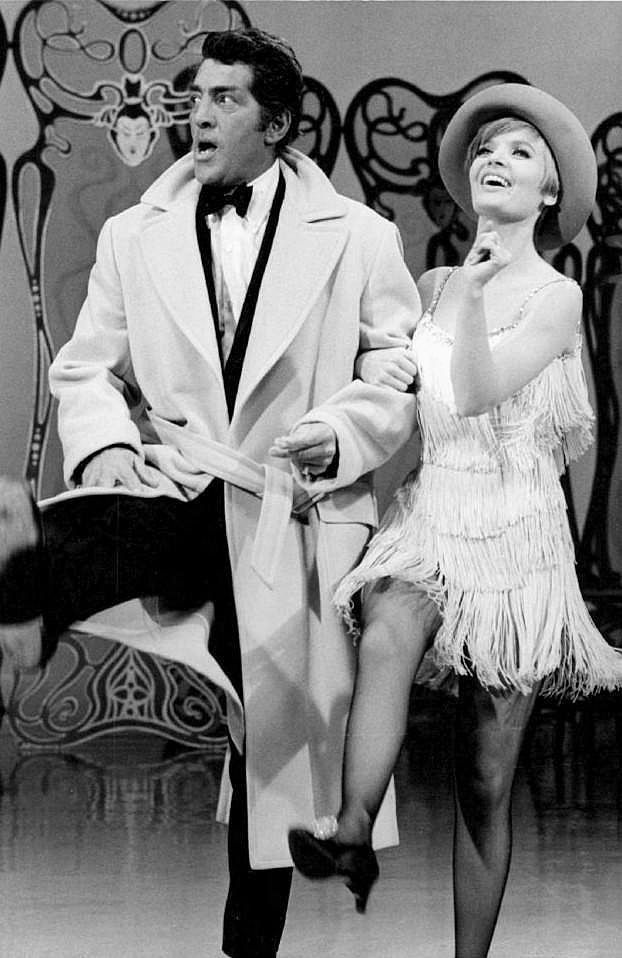
The show had a few recurring features every week. Martin typically sang two songs per show. Sometime during the show, a knock on the closet door led to Martin opening the door to reveal a celebrity guest and Martin himself didn’t know who would be on the other side of the door. The show usually ended with a production number featuring Martin and his guests.
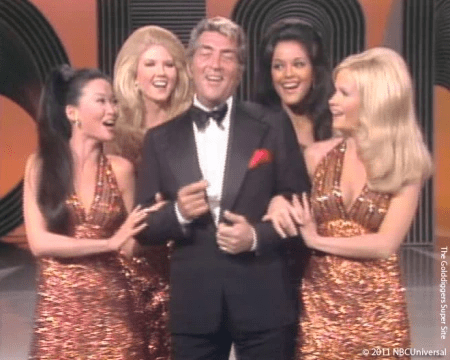
Cast members were hired who did sketches throughout the show. These stars included Tom Bosley, Rodney Dangerfield, Dom DeLuise, Kay Medford, Charles Nelson Reilly, and Nipsey Russell. In later seasons, The Golddiggers appeared. This was a group of chorus girls who first started on the summer replacement show. Not only were Martin’s goofs part of the show, but Charles Nelson Reilly once told a story that on the way to rehearsal, he was driving a convertible, and the script flew out of the car. He wasn’t too concerned though because he said the way the show was done, the script really didn’t matter much.
If you name a celebrity, they were probably on this show. Just a small sampling includes Eddie Albert, Steve Allen, Louis Armstrong, Lucille Ball, Tony Bennett, Rosemary Clooney, Sammy Davis Jr., Phyllis Diller, Duke Ellington, Ella Fitzgerald, Bob Hope, Ethel Merman, Bob Newhart, Dinah Shore, and Frank Sinatra.
The show was nominated for an Emmy 12 times including best variety, music or comedy series in 1968, 1969, and 1970.
📷wordpress.com Golddiggers
The show had decent ratings for the first year but after that it was never great, never awful. It was up against The Thursday Night Movie on CBS and a variety of different shows on ABC which changed from year to year all eight seasons. For the final season, the show was moved to Friday nights, against the popular Love American Style. From 1973-1974 it was titled The Dean Martin Comedy Hour and episodes were celebrity roasts.
The Television Academy did an interview with Greg Garrison, producer and director for The Dean Martin Show. He said there was some turmoil in the first year trying to figure out what this show was. He said they had Bertha the Elephant on one episode, and no adults were interested in that at 10 pm.
Garrison said Martin was extremely generous. Every year he gave Garrison a ten percent ownership in the show until he had 50%. Garrison then told him to stop offering him more because 50% was the most he would agree to. He described Martin as the kindest, nicest, and most generous man he knew. Garrison said he was able to do whatever he wanted to on the show and Martin never second-guessed him. Garrison said one of the hardest decisions he made was cutting Zsa Zsa Gabor’s sketch. He said she gave him no end of trouble, so he finally said they were done, and the sketch was cut. She protested and he told her she would get her check, but the skit was done and it was.
📷wikipedia.com
This was a successful show for almost a decade. It’s hard to find a lot of information about it though. Unlike The Carol Burnett Show where everyone was working together all the time, Martin only showed up on Sundays and most of the time it was the rest of the cast, so perhaps not as many stories were shared.
I watched an episode from 1970, and it was typical of a variety show for the time. Martin began by telling jokes like he put his contacts in backwards and looked at himself all night, so he got no sleep. He talked about going back to his neighborhood where the mayor had a car waiting for him, but luckily, he got out of the way just in time before getting hit. He also mentioned that he and his dog went to school together for years until they had to part because the dog graduated.
He then sang a song all the while holding onto his cigarette. In most of his appearances on the show he had a cigarette or a glass of apple juice purported to be alcohol. Ann Margaret and Bob Newhart were the guest stars in this one. He then went into a skit with Newhart. The show held up pretty well for being more than fifty years old. I admit I feel spoiled after watching The Carol Burnett Show, which I think is impossible to compete with for almost any other variety show, but Martin came across as likeable and the show was better than I anticipated. If you want to check out a few of them, you can get the “Best Of” his shows on Amazon.
This month we are exploring The Bill Dana Show for our blog series. Last week we talked a bit about the show itself, and for the rest of the weeks, we are looking at some of the other cast members’ careers. Today we begin with Bill Dana himself.
📷findagrave.com
Dana was born William Szathmary in Quincy, Massachusetts in 1924. He was the youngest of six children. His older brother Arthur was fluent in several languages and inspired Bill to learn different accents.
Dana served with the US Army during WWII as a machine gunner and was awarded the Bronze Star Medal.
After the war, Bill enrolled at Emerson College. After graduation, he was hired as a page at NBC’s Studio 6B, or 30 Rock. He was also trying to break into comedy performing around New York. During the fifties he appeared on The Imogene Coca Show. He also did some writing and producing for The Spike Jones Show.
He met Don Adams and began writing routines for him in the fifties. He and Don would be part of each other’s lives for a bit. Don would be one of the cast members on The Bill Dana Show. Dana would appear on Adams’ show Get Smart, and Dana’s older brother Irving was the composer of the Get Smart theme song. Bill would also cowrite the script for the Get Smart film The Nude Bomb.
📷thenewyorktimes.com
In the late fifties, Steve Allen hired Dana as a writer. Bill created a character, Jose Jimenez, for the “Man in the Street” segments of Allen’s show. Soon Jose became his alter ego. He made appearances as Jose on The Red Skelton Show, The Spike Jones Show, The Danny Thomas Show, and The Ed Sullivan Show. He even had a comedy album featuring the character.
Dana told a story on Ed Sullivan’s show that some people truly thought he was Jose Jimenez. One lady who met him out and about asked if his birth name was Jose Jimenez and he told her, “No, it’s Bill Szathmary.” She said “Wow, no wonder you changed it to Jimenez.”
In 1961, Dana began a recurring role on The Danny Thomas Show. He played Jimenez as an elevator operator. People responded so well that Danny Thomas and Leonard Sheldon spun off the character, now a bellhop at a luxury New York hotel, and The Bill Dana Show was created. In addition to Adams, Jonathan Harrison was part of the cast and Maggie Peterson joined them in season two. The show was on the air for one and a half seasons.
As we discussed last week, some people saw Jimenez as a hard-working immigrant who noticed some of the crazy things Americans did, and others saw him as a stereotyped Latino caricature. The pre-show Jimenez fit the second description better and the show Jimenez leaned more toward the first portrayal. However, as the character developed, viewers were not flocking to the show. It was also up against Lassie which at the time was a huge family show on Sunday nights.
📷wikipedia.com
The last time Jimenez was on the screen as a character was a 1966 episode of Batman in a cameo on the famous wall. Later Dana apologized for his caricature of Jimenez and became a bit of an activist for Latino causes. The National Hispanic Media Coalition endorsed the Jose Jimenez character and invited Dana to sit on their advisory board.
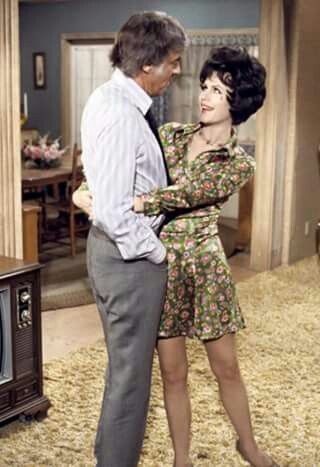
Dana jumped back and forth from actor to writer for a couple of decades. He wrote the script for All in the Family’s episode “Sammy’s Visit” starring Sammy Davis Jr. He also wrote for Bridget Loves Bernie, Chico and the Man, Donny and Marie, The Smothers Brothers Comedy Hour, and Matlock.
His acting landed him in The Courtship of Eddie’s Father, Love American Style, The SnoopSisters, Police Woman, McMillan and Wife, Ellery Queen, Switch, Vega$, Fantasy Island, The Facts of Life, and Empty Nest among a few others.
He had recurring roles on two additional shows during his career. He was on St. Elsewhere as Howie Mandel’s character’s father for three episodes. He also was Angelo on six episodes of The Golden Girls.
One of his last projects was founding the American Comedy Archives at Emerson College. He and Jenni Matz interviewed more than 60 comedians for this archive, including Phyllis Diller, Norman Lear, Carl Reiner, Betty White, and Jonathan Winters.
Dana was a man of many talents. He also ran a talent management company and an advertising agency. He wrote a book, The Laughter Prescription, with Dr. Laurence J. Peter.
Dana passed away in June of 2017 at his home in Nashville.
Certainly, Dana had a full career. I think starting off with the Jose debacle probably kept him from getting different roles early in his career. He also didn’t seem to know what he wanted to be when he grew up. Was he a comedy writer? A dramatic writer? A variety show writer? Was he an actor? A talent agent? An author? Not that you can’t be more than one thing in life, but in the span of three decades he never seemed to settle on one or two careers. Hopefully he had fun and enjoyed all the different hats he wore.
As we wind up our Riding the Range blog series, we end with another show set in the 1880s: The Rifleman.
📷boomermagazine.com
The series was set in the New Mexico Territory and starred Chuck Connors as Lucas McCain and Johnny Crawford as his son Mark. The show was on ABC from 1958 through April 1963. Lucas McCain was one of the first single parents on television.
The show was created by Arnold Laven and developed by Sam Peckinpah. Peckinpah would go on to direct many famous westerns. The pilot episode was written by Peckinpah and Dennis Hopper starred in it. It was aired on Dick Powell’s Zane Grey Theatre. Some famous people worked behind the scenes. Connors would write several of the episodes and Robert Culp, who would become the co-star of I Spy, wrote a two-part episode. Ida Lupino directed “The Assault” in 1961.
McCain was a Union soldier in the American Civil War. His wife died from smallpox when their son was six, and McCain and Mark move from Oklahoma to New Mexico where Lucas buys a ranch outside North Fork. McCain is not a perfect father; he is often stubborn and opinionated. Sometimes he seems overprotective of his son. He tries to teach Mark life lessons. In one episode, he tells him “A man doesn’t run from a fight, Mark, but that doesn’t mean you go looking to run to one.”
📷remmetsweeney.com
Chuck Connors was offered the role of McCain but turned it down because he thought the salary was too low. Several other actors were tested but no one had the same chemistry with the young boy that Connors did, so they made him another offer with a higher salary.
There are some North Fork folk who show up on many of the shows including bartender Marshal Micha Torrance (Paul Fix), Frank (Bill Quinn), hotel owner Lou (Patricia Blair), blacksmith Nels (Joe Higgins), banker John (Harlan Warde), general store owners Milly (Joan Taylor) and Hattie (Hope Summers), and hotel clerk Eddie (John Harmon). Bill Quinn was Bob Newhart’s father-in-law. Patricia Blair left in 1963 to star in Daniel Boone. Hope Summers moved to Mayberry after the show ended and became Aunt Bee’s best friend. Joan Taylor only did a few shows after The Rifleman, but she came into the show with quite a few television appearances. Higgins, Warde, and Harmon were prolific actors who had very successful careers.
📷amazon.com
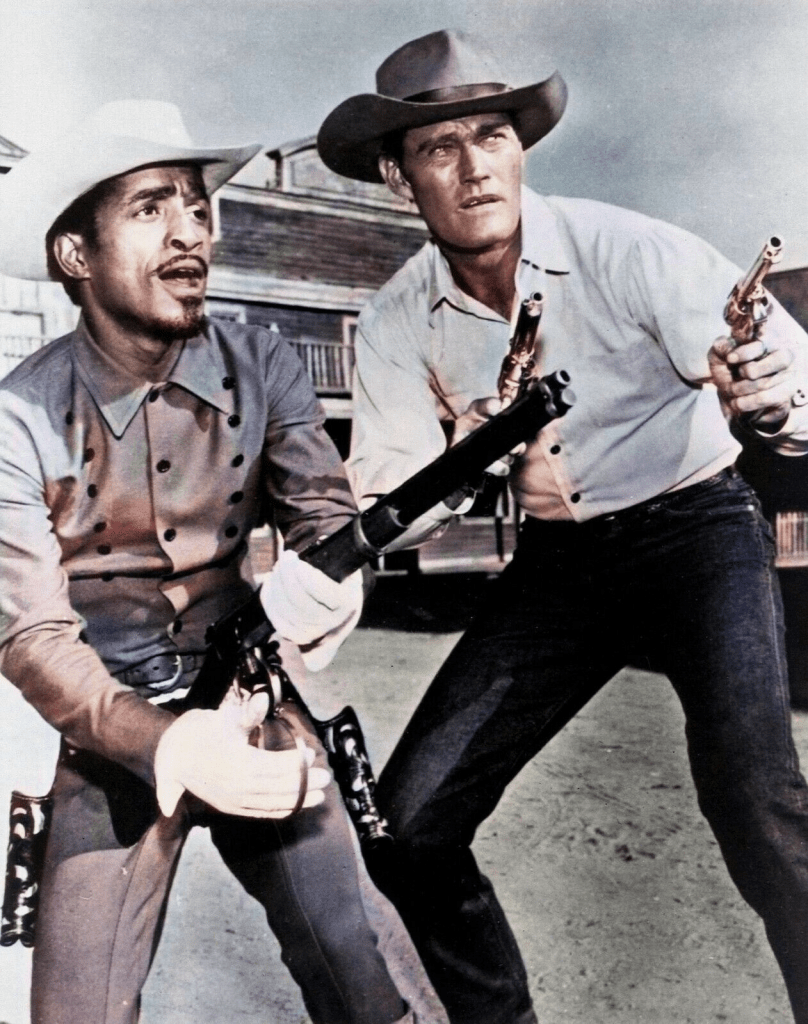
Quite a few well-known stars make their appearance during the run of the show. Some of them include Harry Carey Jr., John Carradine, Lon Chaney Jr., Ellen Corby, Robert Culp, Sammy Davis Jr., Jack Elam, Dabbs Greer, Buddy Hackett, Michael Landon, Agnes Moorehead, Denver Pyle, Pernell Roberts, Robert Vaughn, and Adam West.
There were so many westerns on the air during the fifties and sixties that most of them needed a hook to set them apart. McCain was called The Rifleman because he used a modified Winchester Model 1892 rifle with a large ring lever. The lever design allowed him to cock the rifle by spinning it in his hand and it was rigged to rapid fire which we saw demonstrated in the opening of every show. I guess no one was bothered by the fact that McCain used a rifle that would not be invented until ten years later than the time the show was set in.
The show was on Tuesday nights for the first three seasons. For season four, it moved to Mondays. After the fifth season, the show was canceled due to low ratings. However, Connors and Crawford remained life-long friends. Connors admired Crawford’s work on the set and said he always respected the cast and crew.
📷ebay.com
Crawford began his career as a Mouseketeer, one of the original 24. After the show ended, he became a pop singer with five hits. “Cindy’s Birthday” was his most famous and it was No. 8 on the Billboard 100 in 1962. Crawford came into the show with thirty acting credits, and he would go on to have thirty more after the show ended, but he never starred in another series.
Fun fact, The Rifleman was one of the few American shows that was allowed to be shown on Russian television. Apparently Breshnev loved the show. Later he met Chuck Connors when he came to the US. The actor made several trips to Russia.
I have seen this show on MeTV, and it is okay. I’m guessing that the reason it was on five seasons, and the reason it was canceled after five seasons, is because it was another western. Almost every western seemed to be successful in the fifties and sixties, but five years seems to be about the length of most of them with the exception of Gunsmoke, Bonanza and a handful of others. I have to admit that I am not drawn to McCain as a character, although I didn’t dislike him either. If you like westerns and have not seen it, it might be worth checking out.
Medical series have been a staple since television started. This month we are checking out a few of the favorites in a blog series: “Examining Our Favorite Medical Shows.” First up is a show that was on in the sixties: Ben Casey.
Jaffe and Edwards Photo: ebay.com
Ben Casey was on the air from 1961-66 on ABC. Created by James E. Moser, the character of Ben Casey was based on Dr. Allan Max Warner who was a neurosurgeon. Warner worked closely with the actors to show them how to handle instruments and patients. It was not a cheap show to produce. More than $50,000 of medical equipment was purchased for the show and each 60-minute episode had a budget of $115,000. Warner later changed to psychiatry because he said his association with the show prevented him from becoming board-certified. Dr. Joseph Ransohoff, another neurosurgeon, became the medical consultant.
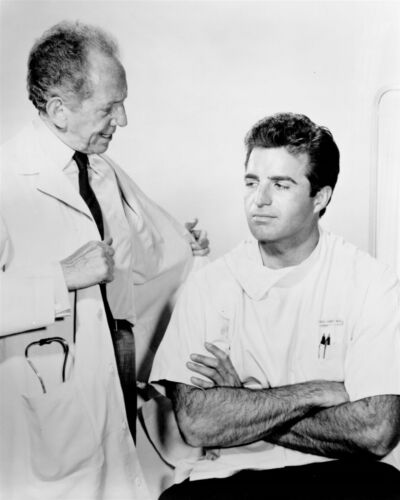
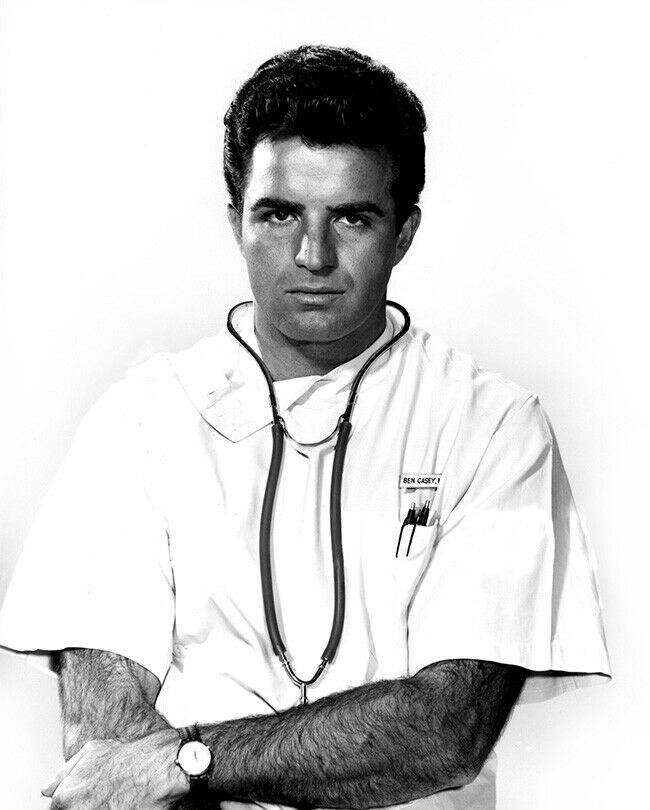
The series followed Ben Casey (Vince Edwards), an idealistic neurosurgeon at County General. Dr. David Zorba is his mentor (Sam Jaffe). In the final season, Jaffe left and the new chief of neurosurgery was Dr. Daniel Niles Freeland (Franchot Tone). Rounding out the cast were Dr. Ted Hoffman (Harry Landers), Dr. Maggie Graham (Bettye Ackerman), orderly Nick Kanavaras (Nick Dennis), and Nurse Willis (Jeanne Bates). The show had a gritty edge to it and featured the life of doctors working in a city hospital and the tough physical and ethical situations they had to deal with.
Several sources said that Cliff Robertson and Jack Lord turned down the role of Ben Casey. Also, Russell Johnson said he auditioned for the role, but was rejected and his next audition was for the role of the Professor on Gilligan’s Island. However, I read several other sources that mentioned that Bing Crosby discovered Edwards and planned a television show to feature his find. Bettye Ackerman’s character was cast as an anesthesiologist who was supposed to be Casey’s love interest but they never developed any chemistry. In real life, Ackerman was married to Jaffe.
Photo: nostalgiacentral.com
Filmed at Desilu Studios, the series was produced by Bing Crosby Productions. The show had 33 directors including Sydney Pollack; Vince Edwards directed seven of the episodes. However, its writing staff was even bigger with about 80 different people penning scripts. I never understood how that worked so well. As a writer, I would want to get to know the characters I was writing for and then continue to learn about them, but during the sixties, there were a lot of people who only contributed one or two scripts to any given series.
The theme music was written by David Raksin and pianist Valjean made it a top-40 hit.
The show was on Monday nights for its first three seasons. Season four, it moved to Wednesdays and returned to Mondays for the final two seasons. The first season it ranked in the top 20 and moved into the top 10 for its second year. Once the network moved the show to Wednesdays where it had to compete with The Beverly Hillbillies and The Dick Van Dyke Show, it fell out of the top thirty and never returned to its former popularity. During the last season, several changes were made. Casey fell in love with Jane Hancock, a woman who came out of a 13-year-long coma. The episodes also began to continue from one to another instead of being stand-alone stories, encouraging viewers to find out what happens the next week.
Photo: pinterest.com
During the run of the show, four novels were written based on the series (1962-3), as well as a daily (1962-1966) and Sunday (1964-1966) newspaper comic strip by Jerry Capp and ten Dell Comic books (1962-64). There was even a board game created called Ben Casey MD. And even more surprising was a doll called Dr. Ben Casey’s Patient. Surely children were not exposed to the show.
Photo: pinterest.com
Another medical show, Dr. Kildare, aired the same year as Ben Casey. The shows were often confused, but they were really quite different. Dr. Kildare was an intern who respected his mentors and the doctors he served under. He was the handsome guy next door, friendly and always striving to help his patients. Casey was brash and had already served his learning time, so he more often bucked the system and was not as respectful to the doctors working with him. He was handsome but in a more wild, bad boy, appearance. However, both shows tackled some very interesting and controversial subjects from the medical field.
Ben Casey might have gone off the air, but he did not disappear. The show has been parodied on a variety of shows including The Flintstones. “Ben Casey” was used by American troops in Vietnam War as slang for a medic. In 1988, a made-for-tv-movie The Return of Ben Casey brought Edwards back to the small screen. It was a syndicated show, and aired with the hope that it would be a pilot for a new series, but none of the networks picked it up.
Photo: collectors.com
The cast was not holding hands and singing Kumbaya, but it did function amidst a lot of dysfunction. Director Mark Rydell discussed Edwards’ gambling problem which became the show’s gambling problem. Landers who played Dr. Hoffman said Edwards was constantly asking the cast and crew for money to take to the race track, and he would be gone for hours at a time. He often came in with $20-30 thousand dollars in his pocket, demanding that he leave filming by 11; other stars had to stand in for him to tape the rest of the show. Despite his unprofessional behavior, several stars liked Edwards. Jaffe, who had many conflicts with Edwards, was not one of them which is why he eventually left the show. Director Jerry Lewis and guest star Sammy Davis Jr. also had problems with Edwards. Landers also mentioned that when Tone took over Jaffe’s role, he was constantly drunk on the set. When Landers directed the show, he kept Tone sitting down so viewers would not see that he was swaying.
Considering all the issues the show had, the number of writers contributing scripts, the unprofessional behavior of several of the actors, and the movement of the show from Monday to Wednesday where it had stiff competition, the show actually did well and was popular with viewers for five years. It set the tone for many of the shows that would follow including Marcus Welby, Medical Center, and ER. Next week we will learn more about Dr. Kildare.
Today is the last blog of the series on our favorite sitcom families and the last blog of the year. We have been to Long Island, Detroit, and Los Angeles, and now we are heading back to New York. Today we are going to visit the Huxtables.
Photo: people.com
I will admit, I have put off writing this blog for years. It is a very difficult one for me to write about. Writing this blog makes me mad, sad, and strangely joyful at the same time.
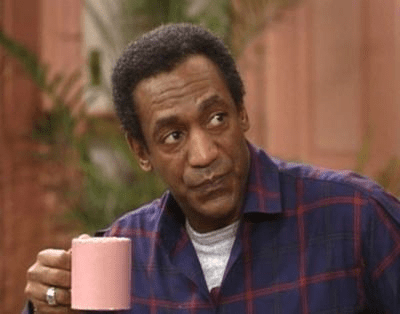
It makes me mad because of Bill Cosby’s despicable behavior. It makes me sad because this amazing show has been tarnished through no fault of its own. After Cosby’s arrest, the show disappeared from the airwaves. The rest of the cast has to suffer because of the bad behavior of one person. But, if I take my own advice, and I choose to celebrate the characters, not the people behind them, I can still find joy in this well-written and truly funny show.
Marcy Carsey and Tom Werner were two ABC executives who had worked on Mork & Mindy, Three’s Company, and Welcome Back Kotter. They were looking for a celebrity to star in their new show. Bill Cosby helped create this show which became The Cosby Show and was a staple on Thursday nights on NBC for eight seasons. It was the number one show on television for five of those years.
Photo: chicagotribune.com
The Huxtables were an upper-class family living in a Brooklyn Heights brownstone. Father Cliff (Cosby) was an obstetrician and mother Clair (Phylicia Rashad) was an attorney. They had five kids: Sondra (Sabrina Le Beauf), Denise (Lisa Bonet), Theo (Malcolm Jamal Warner), Vanessa (Tempestt Bledsoe), and Rudy (Keisha Knight Pulliam).
Vanessa Williams and Whitney Houston were both considered for the role of Sondra. Originally Rudy was planned to be a boy, and Jaleel White was brought in to audition.
A couple of famous kids who appeared on the show went on to be stars including Alicia Keys and Adam Sandler.
Photo: tripsavvy.com
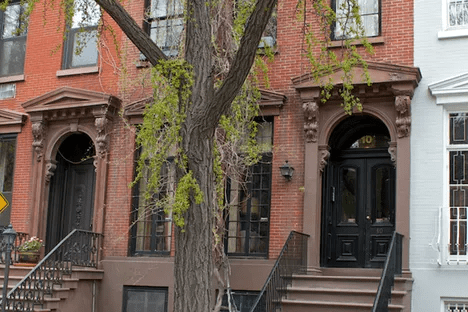
The brownstone they lived in was a house we got to know well. It was actually located in Manhattan’s Greenwich Village.
The theme music, “Kiss Me,” was composed by Stu Gardner and Bill Cosby. Seven different versions showed up during the run of the series. Under Stu Gardner’s supervision, two albums were produced: A House Full of Love: Music from the Cosby Show in 1986 and Total Happiness in 1987.
When daughter Denise went off to college, a spin-off show was created. A Different World was about her time at Hillman College, a fictional historic black college.
The show often promoted art and music. Musicians like Miles Davis, BB King, Stevie Wonder, and Sammy Davis Jr. appeared on the series. Much of the artwork that was featured in the house was by Synthia Saint James and Varnette Honeywood.
Photo: pinterest.com
This was an important series for so many reasons. It was the one of the first shows to have an upper middle class family who was black. At this point in time, the sitcom had become a dying art. This show was responsible for bringing the sitcom back to life. It featured music, art, and culture which is seen on very few sitcoms. It was well written and very funny, yet had its heart-warming moments. The kids all were very different just like our own families, so everyone had someone they could identify with. I do understand the human behind the character is often not what we would hope for.
A lot of stars have disappointed us with their behavior behind the scenes. Usually I can move beyond that. However, I have had two times when it has been extremely difficult for me. I love The Philadelphia Story and Harvey. They are two of my go-to movies when I am looking for something to watch on a weekend. When I heard about the racist comments Jimmy Stewart made during his career, I did not watch them for years. It was really hard for me to view them in the same way I did before that knowledge.
The Cosby Show was the other difficult one for me. I remember a story my dad told me. He was staying at a hotel in Illinois for business; he went down to the restaurant this quiet weekday evening for dinner and a drink. He was sitting at one table, Bill Cosby was sitting at another table, and only two other tables were occupied by diners. At one of these tables sat two women who were obviously excited to see him, and finally, they approached him to ask for an autograph. My dad said he rebuffed them and was quite rude, and they went back to their table, extremely embarrassed. That unkind and egotistical behavior always stuck with me. While, I totally appreciate that stars have a right to refuse to sign autographs, there is a kind and tactful way to say no.
Photo: philadelphiatribune.com
In the New York Times, Wesley Morris wrote an article on June 18, 2017, titled “How to Think About Bill Cosby and The Cosby Show.” He described the importance of the show for its “portrayal of black people as happy, stable, well off, and free of white oppression and guilt; for sneaking into typical sitcom high jinks the occasional, hilarious, often poignant lessons about gender equality, friendship, and marriage; and for proving that such a depiction could be a ratings winner.”
He then went on to talk about Cosby’s court trial. He summarized, “Guilty or not, Mr. Cosby’s courthouse behavior acknowledged an additional trial: the one going on in our hearts. I don’t need a jury to know that this trial has worn mine out.” I could not agree more. It took me some time, but I have come to love this show again. I find the show innocent of any negative connotations placed on it because of Cosby’s behavior. However, the trial inside myself did wear my heart out. While I am still trying to like Cliff Huxtable, it’s hard not to remember the hardships brought about by Bill Cosby. It’s a work in progress.
As we continue our Murder, Mystery, and Mayhem series, we move from Maine where senior citizen Jessica Fletcher solved mysteries to the streets of Los Angeles, where a hip trio infiltrates the counterculture to solve crimes.
Photo: pinterest.com
Airing from
1968 till 1973, The Mod Squad was a
unique concept. Created by Buddy Ruskin, a Los Angeles police officer, the show
took eight years to become a reality. Ruskin based the concept on his time as a
squad leader for an undercover narcotic division in the 1950s.
Aaron
Spelling was the executive producer. Spelling worked on a number of projects
from 1960 onward, but his biggest hit shows were still in his future when he
took the helm of The Mod Squad.
As soon as the jazzy theme song by Earl Hagen began, we knew this was a different type of show. The sixties hippie culture and counterculture drug scene had not been explored in depth on television before.
Photo: pinterest.com
In order to
get the necessary evidence, three young team members were trained to go
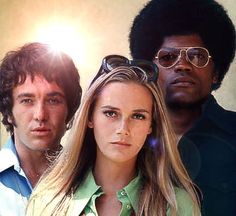
undercover to solve cases. Michael Cole was Pete Cochran, a wealthy kid who was
arrested for stealing a car; Peggy Lipton was Julie Barnes, who had run away
from a bad home situation; and Clarence Wlliams II was Linc Hayes, who was
arrested during the Watts riots. Captain Adam Greer (Tige Andrews) supervised
the trio. He mentored them and provided “parently” advice and wisdom. He
hand-picked them for his team. (Similarly, Spelling’s Charlie’s Angel’s would also feature a father figure hand picking
three non-traditional members for his crime-solving team.)
None of these kids were innocent, and their records were eliminated when they chose to work with the LA police. But they soon realized they had the ability most cops did not to inconspicuously fit in to help stop criminals from killing or hurting other young adults.
Photo: pinterest.com
Similar to Room 222, which aired almost the same
time, The Mod Squad covered a lot of
socially relevant topics: abortion, domestic violence, drug addiction, child
abuse, police brutality, illegal immigration, and racism. Though the pilot was
written sixty years ago, these issues are still on the front page today.
The writers, including Tony Barrett, Harve Bennett, Sammy Hess, and Buddy Ruskin, created realistic characters. These three outcasts were a bit rebellious; they lived in the gray instead of black or white. They understood good people sometimes did bad things, and racism and domestic violence were not to be tolerated. Their speech and clothing marked them as quintessentially 1960s. Linc often said “Solid” or “Keep the faith.” You would probably hear “groovy” at least once an episode.
Photo: tvinsider.com
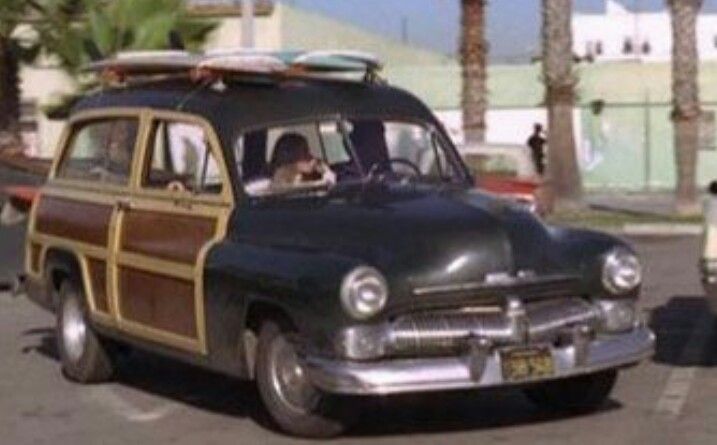
The team traveled in an old green 1950 Mercury wood-paneled station wagon that they affectionately referred to as “Woody.” Unfortunately, it was burned in an accident at the end of the second season.
Photo: pinterest.com
The show was definitely controversial. It aired at a time when westerns, rural sitcoms, and Lawrence Welk were popular. The episodes pushed the envelope a bit on topics that had been taboo on television in the past. The team was like a family and on one episode, Linc gave Julie a brotherly kiss on the cheek which had the network up in arms, but not one complaint came in. Their relationship with Captain Greer helped America see how the generation gap could be bridged.
Photo: davidcassidy.com Stars David Cassidy and Marion Ross
Despite the
controversy, the show attracted a lot of famous guest stars. Some of the actors
who can be spotted during the show’s run include Ed Asner, Jim Backus, Tom
Bosley, David Cassidy, Tyne Daley, Sammy Davis Jr., Tony Dow, Andy Griffith,
Carolyn Jones, Leslie Nielsen, Stefanie Powers, Vincent Price, Robert Reed,
Marian Ross, Sugar Ray Robinson, Martin Sheen, Bobby Sherman, Danny Thomas,
Daniel Travanti, and Billy Dee Williams.
Each episode ended with the squad walking away from the camera.
Photo: gettyimages.ca
The show was
extremely popular given its uniqueness. It was the 28th most popular
show its first year and number 11 in its third season. The show received seven
Emmy and four Golden Globe nominations. In 1970, it was nominated for
Outstanding Series. During its final year, it only ranked 54 and the “hipness”
of the show was starting to age a bit, so it was cancelled.
It did have
an afterlife. In 1979, a tv movie, The
Return of the Mod Squad, aired on ABC with the original cat. In 1999, a
big-screen film was released starring Giovanni Ribisi, Omar Epps, Claire Danes,
and Dennis Farina. Don’t feel bad if you don’t remember it; not many people do.
Photo: pinterest.com
The Mod Squad could be seen on MeTV in 2014 and 2015. Apart from that, it has not fared well in syndication. Like Room 222, the show can feel dated quickly due to its language and fashion.
Photo: eaumg.com
The show is still celebrated for its ground-breaking scripts, and in 1997, TV Guide included an episode, “Mother of Sorrow” as 95th of the greatest 100 episodes of all time.
Photo: nndb.com
While you probably won’t find it on television, it is available on DVD. Although the show may not be known by many people today, it was one of the first shows to break the barriers of going where television had not been before. In many ways, it paved the way for the creation of shows such as All in the Family, The Mary Tyler Moore Show, and Miami Vice. What more could you ask for: relevant topics, well-rounded characters, and exciting plots. Although its language and fashions date it, it captures a unique time in our history and is worth exploring.
As we wind up our salute to fathers during Father’s Day month, we finish with Make Room for Daddy. This iconic show doesn’t get the respect that I Love Lucy did, but it is one of the first iconic family sitcoms. This sitcom had to survive cast changes, network moves, and ratings fluctuations.
Photo: famousfix.com
The show debuted on ABC in 1953. In 1957, it moved to CBS until 1964 when it went off the air. Danny Williams (Danny Thomas), a nightclub singer and comedian, tries to balance his work life with his family life. Danny obviously loves his children but is not an overly affectionate dad and is just as likely to tell his son Rusty, “I love you, you little jerk.”
In March of 1953, Thomas singed a contract for the show and picked Desilu Studios for filming because of their three-camera method. Several of the working titles for the show were “The Children’s Hour” and “Here Comes Daddy.”
The title of
the show was from a Thomas family joke. Whenever Danny was away for work, his
children had the run of the house. They slept in the master bedroom with their
mother, even putting clothes in the dresser there, so when he came home from a
tour or a filming, he told them it was time to spread out and “make room for
daddy.”
Danny has three children (two in seasons 1-4 and three in seasons 5 and after): Terry (Sherry Jackson and later Penney Parker), Linda (Lelani Sorenson, then Angela Cartwright), and Rusty (Rusty Hamer). The first three seasons his wife Margaret was played by Jean Hagen. They had Terry and Rusty. Louise (Louise Beavers) was their maid. When Beavers passed away, Amanda Randolph took over the role. Terry was later played by Penney Parker. Mary Tyler Moore auditioned for the role, but Danny felt Mary’s nose did not match his as well as Parker’s.
Photo: en.wikipedia.org
The show was filmed live before 300 people, so there was a lot of pressure on the younger kids to know their lines. All three children continued in successful acting careers after the show. (Unfortunately, Hamer had a harder time finding good roles as an adult and committed suicide at 42. Cartwright left acting to focus on a career as a photographer. Jackson continued acting.)
Photo: pureflix.com
With Danny
Thomas’s connections, you can imagine the quality of guest stars this show was
able to feature. Some of the bigger names include Lucille Ball, Milton Berle, Sammy
Davis Jr., Jimmy Durante, Shirley Jones, and Dinah Shore. If you looked at a
Who’s Who in Comedy Sitcoms, you would find a huge percentage of them on this
show.
Like many
shows from this era, the original sponsor was The American Tobacco Company,
advertising its brands like Lucky Strike, Pall Mall, and Tareyton.
While the theme song went through variations during the run of the show, it was always a version of “Danny Boy.”
Photo: youtube.com
The show was
popular and did well in the ratings but had not made the top 30 after three
years. Jean Hagen decided to leave the show.
At the
beginning of the fourth season, the title changed to The Danny Thomas Show. Thomas and producer Sheldon Leonard were
trying to decide how to explain Hagen’s absence. Divorce was not acceptable and
filling the same role with another actress didn’t seem like a good option
either. They decided to have her die between seasons.
The emphasis
of the show now switched to Danny being a widower. The family moved from their
home to an apartment. Danny dated occasionally and almost got engaged to singer
before learning she didn’t like children. The ratings were declining with the
new format, so it was decided to have Danny marry again.
Mary Wickes played the role of Liz O’Neal, Danny’s press agent from 1955-1957.
Photo: jacksonupperco.com Mary Wickes in the background
At the end of the 1957 season, Rusty becomes ill, and Danny hires Kathy O’Hara (Marjorie Lord) as his nurse. Kathy was a widow with a young girl (Lelani Sorenson). Danny and the kids both fall in love with her and they become engaged in the season finale. ABC cancelled the show, but CBS* was looking for a show to take over the spot of I Love Lucy which was ending its production, so they took it over and put it on the schedule for the fall of 1957.
The first episode of the fifth season “Lose Me in Las Vegas” centered on Danny and Kathy who had married an were on their honeymoon. Angela Cartwright took over the role of Kathy’s daughter from Sorenson. Danny adopted Linda. The family moved into a larger apartment. The ratings skyrocketed, and it was the number 2 show by the end of the season.
Photo: peoplequiz.com
Sherry Jackson decided to leave the show during season six, and her absence was explained by her going to a school in Paris. Jackson had a five-year contract which she honored. She and Hagen had been very close, and Jackson wanted to leave when Hagen did, but Hagen only had a three-year contract.
In season seven, Terry comes back, now played by Penney Parker. During the season she gets engaged and eventually marries Pat (Pat Harrington Jr.), a friend of Danny’s. Terry and Pat move to California and are rarely mentioned afterward.
Photo:closerweekly.com
Make Room for Daddy might have had the first spinoff of a character not in the cast. In one of the episodes from 1960, “Danny Meets Andy Griffith,” Danny is pulled over in Mayberry and is detained in the jail. Sheriff Andy Taylor is featured in the show, and The Andy Griffith Show was created.
“The Danny Thomas Show” (aka “Make Room for Daddy”) Pat Carroll, Sid Melton circa 1950s Photo by Gabi Rona
For the final two seasons, Danny and Kathy traveled for much of the series. They toured Europe while Rusty and Linda stayed home with Danny’s manager Charlie (Sid Melton) and his wife Bunny (Pat Carroll). Thomas decided to retire from the show in 1964. The show ended on a high note, still ranking number nine.
Photo: pinterest.com
Although the show ended in 1964, NBC brought back the main cast of Thomas, Lord, Cartwright, Hamer, Jackson, Randolph, and Hans Conried, Uncle Tonoose, to star in a two-hour reunion special, The Danny Thomas TV Family Reunion. Having a reunion show was another first accomplished by this sitcom.
Photo: en.wikipedia.org
In 1969, CBS
created their own reunion special, titled Make
Room for Grandaddy. It had such high ratings that CBS put it on the schedule,
but Thomas didn’t like the time slot and pulled the show.
In 1970, ABC tried again. Sherry Jackson again was Terry, but her husband now was Bill; what happened to Pat? Terry had a six-year-old son Michael (Michael Hughes) whom Terry left with Danny and Kathy (still played by Thomas and Lord) to join Bill, a soldier stationed overseas. The show only lasted one year. One of the reasons given was that Sheldon Leonard was no longer controlling the scripts and actors, and the show was moved from Wednesdays to Thursdays during the season.
The show was so popular with kids that a comic book series was developed.
Photo: pinterest.com
As I mentioned, this show does not get the credit it deserves. While Danny tended to be short-tempered and Kathy was the voice of reason, the scripts for the entire series were well written and realistic. It had an extremely talented cast. Unlike some series, the children really carried the show. The children acted like children, not mature adults, in most ways, but they created great characters and were very funny. Rusty always had a viewpoint on any given situation. Their moments are the ones that make this show so memorable. Many of the episodes center around the kids. A typical example is “Casanova Junior ” : Rusty hasn’t asked a girl to the school dance because he has no confidence. Danny gives him some pointers and now the girls are falling all over themselves to go out with Rusty. The only problem is Rusty, he’s gone from no confidence to treating the girls badly and Danny is not happy about it.
Photo: facebook.com
The show ended in the top ten. It created the first sitcom spinoff of a non-cast member and the first reunion movie. I specify “non-cast” member because December Bride included Pete Porter in its cast, and he talked about his wife Gladys. Later the show Pete and Gladys was created.
Despite the challenges it faced with cast members coming and going, the change from ABC to NBC, and the characters growing up on the show with changed the dynamics of the series, the show continued to garner great ratings and was given a second life in a new series in Make Room for Grandaddy. Along with The Donna Reed Show, it was one of the trend-setting family sitcoms from the 1950s and ’60s.
*Thanks to reader Howard Ian Stern for letting me know I originally had the wrong network listed.
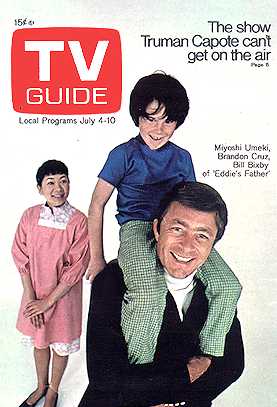
In our quest to celebrate some of our favorite fathers, we jump into the world of Tom Corbett on The Courtship of Eddie’s Father.
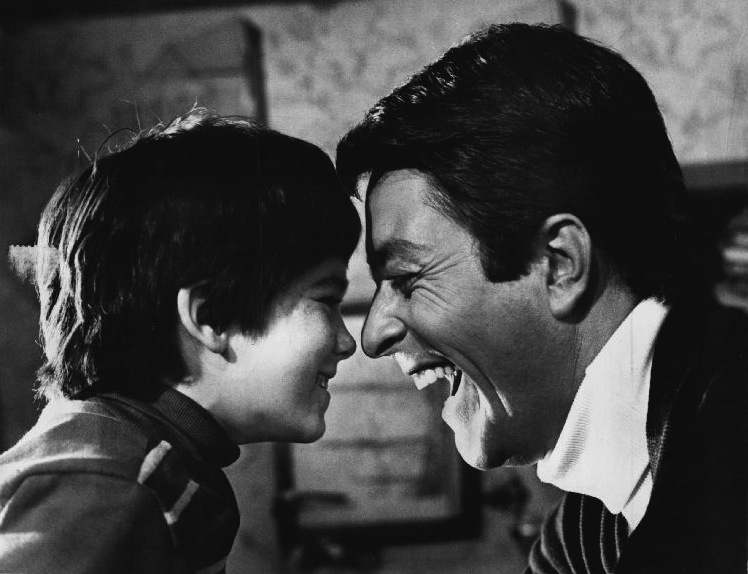
THE COURTSHIP OF EDDIE”S FATHER, Bill Bixby, Brandon Cruz, 1969-1972. TM and Copyright (c) 20th Century Fox Film Corp. All Rights Reserved. Courtesy: Photo: tvdads.com
The series debuted on television in September of 1969 and lasted until spring of 1972. The show was based on a 1963 film starring Glen Ford and Ron Howard, which was based on a novel, The Courtship of Eddie’s Father by Mark Toby.
Photo: pinterest.com
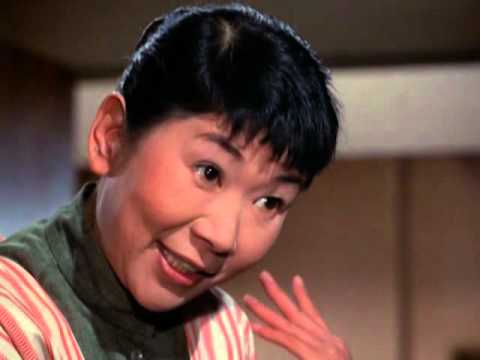
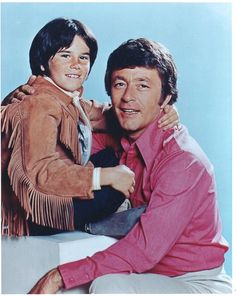
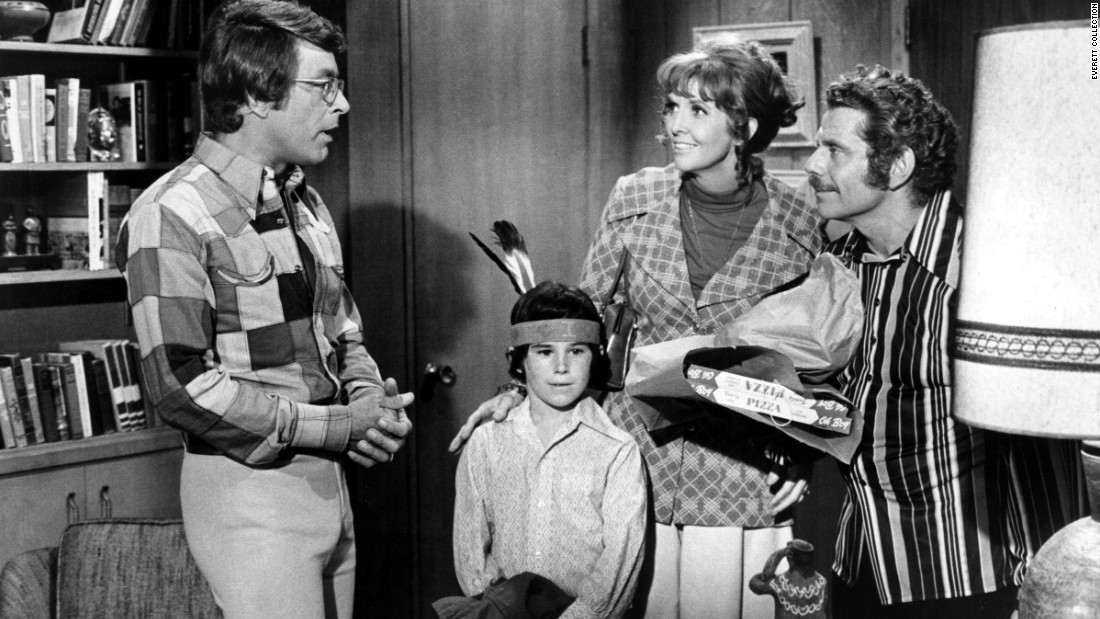
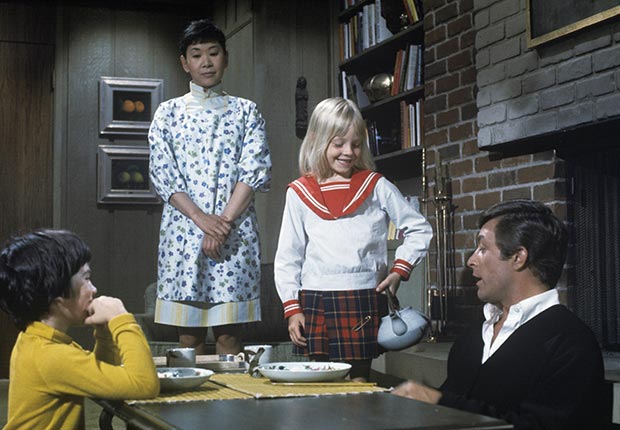
Tom Corbett (Bill Bixby) is a magazine publisher in his 30s. His wife Helen passed away, and he is raising his son Eddie (Brandon Cruz) who is six with the help of his housekeeper Mrs. Livingston (Miyoshi Umeki). Eddie thought his father needed to remarry, so he plotted to set his father up with various women. As the show continued, the plots were less about Tom marrying and more around daily life for him and his son. Rounding out the cast is Norman (James Komack), Tom’s friend and photographer for the magazine; Tina (Kristina Holland), Tom’s secretary; and Joey (Jodie Foster), Eddie’s friend.
Photo: dvdtalk.com Komack and Holland
Mrs. Livingston was a bit formal, but we also saw her smile at some of Eddie’s antics. We knew she cared about him. She called Tom “Mr. Eddie’s father.”
Photo: youtube.com
Miyoshi Umeki
who played Mrs. Livingston would retire from acting after the show went off the
air. She went to work with her husband who had a film editing equipment and
rental business.
It was a talented cast, and everyone seemed to work well together. Tom was a loving and fun father but also made sure Eddie had discipline when necessary. With all the chaos going on in America like the Vietnam War and the Manson Murders, it was a heart-warming show about a unique family. Each episode ended with a heart-to-heart talk between father and son.
Photo: pinterest.com
Here is a
typical plot from the show. This episode from 1972 was titled “The Choice”: Tom
starts dating Eddie’s substitute pediatrician, Liz Park. Before things get too
serious between the two of them, Liz tells Tom that she is going to Switzerland
for three years to study. Although they are attracted to each other, and it
will be hard to break up, they decide to keep dating till she leaves. When they
get closer, she decides not to go to Switzerland. After one of their dates,
they come back to Tom’s and find Eddie with a high fever. Liz treats him and
she realizes that pediatric surgery, her chosen field, is too important to give
up and ends up leaving for Switzerland.
There was an impressive list of guest stars on the show including Willie Aames, Yvonne Craig, Bill Dana, Sammy Davis Jr., Will Geer, Pat Harrington, Tippi Hedren, Carol Lawrence, Anne Meara, Erin Moran, Pat Morita, Suzanne Pleshette, Lori Saunders, Jerry Stiller, Sally Struthers, Cicely Tyson, and George Takei.
Photo: cnn.com
James Komack
was not only part of the cast, but he was the creator and executive producer of
the show. During the run of the show, Bixby would try his hand at directing and
directed eight episodes. (He would go on to direct 92 other episodes of shows as
well as tv movies.) Other directors on the show included Hal Cooper, Harry
Falk, Randall Hood, Leslie Martinson, Alan Rafkin, and Bob Sweeney.
The popular
theme song was written and performed by Harry Nilsson. While the show was playing,
scenes of Tom and Eddie bonding in various moments appeared. The lyrics were:
People let me
tell you ’bout my best friend,
He’s a warm-hearted
person who’ll love me till the end.
People let me
tell you ‘bout my best friend,
He’s a one
boy cuddly toy, my up, my down, my pride and joy.
People let me
tell you ’bout him he’s so much fun
Whether we’re
talkin’ man to man or whether we’re talking son to son.
Cause he’s my
best friend.
Yeah, he’s my best friend.
Photo: memorabletv.com
Bixby
received an Emmy nomination in 1971. (In that same year, Komack was nominated
for producer and Umeki was nominated for a Golden Globe for supporting actress.)
The show continued to have good ratings
for season two, but during the third season, Komack started putting more emphasis
on his role. Bixby didn’t agree with the focus and ratings began to plummet,
and the show was cancelled.
DVDs were released between 2011 and 2014.
Like so many of the popular 1960s shows, this one was slated for a reboot. Nicholas Cage wanted to remake the film but lost interest when his son got too old for the role. In 2003, the WB filmed a pilot based on the show with Ken Marino and Josh Hutcherson but it was never picked up.
Although the show was not real life, it did mirror it. Cruz came from a broken home and when it got too unbearable to stay there, Bixby let Brandon live with him. Cruz said Bixby’s life had some sadness and despair in it. His six-year-old son died from a throat infection and his wife, actress Brenda Benet, committed suicide less than a year after.
Cruz is now a case manager for Walking Miracles Malibu, a drug and alcohol recovery community. He has nothing but praise for Bixby. “James Komack was the producer, writer, co-star and director, but Bill set the tone of what went on the set. If Bill was happy, everybody was happy because he was the easiest guy to work with when he was happy, and that was pretty much all the time. He was a very private guy, he didn’t let a lot out.”
Photo: scifimusings.blogspot.com
Brandon relayed something that occurred on the set one day. “He showed everybody how to treat other people nicely. A guy got fired on the set one day, and I don’t know what he’d done, but he was one of my favorite guys on the crew. I told Bill, ‘Hey, I really like that guy.’ And he got his job back because Bill wanted me happy. It’s just the way he worked. It was a big family, and everybody loved working on that show.”
Photo: commons.wikimedia.org
Cruz and Bixby stayed close and in touch till Bixby died. They called each other on their birthdays, and Brandon’s son is named Lincoln Bixby Cruz.
The show demonstrated how close and loving Tom and Eddie were. They truly were best friends, and it’s nice to know some of that closeness carried over into their real life as well.
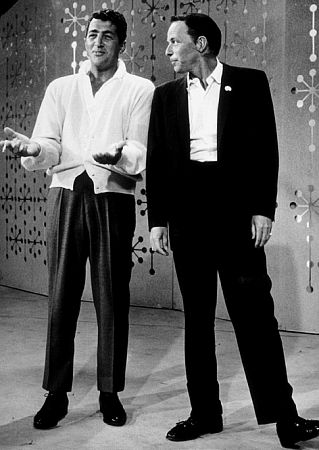
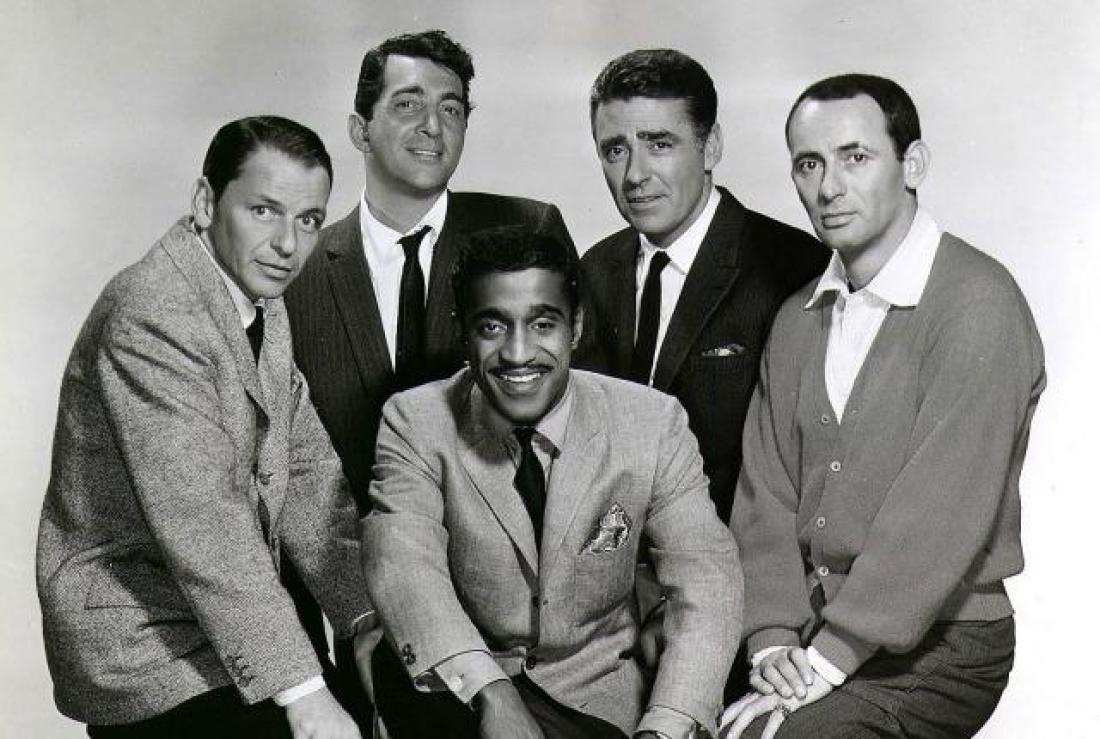
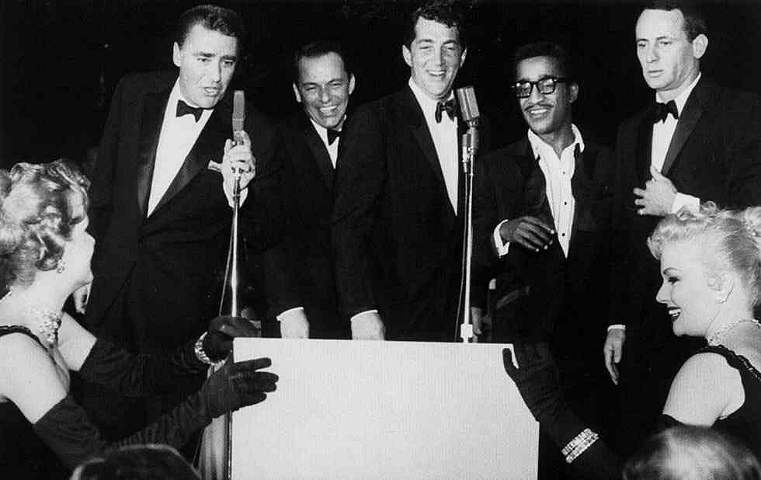
For some reason, the group including Frank Sinatra, Dean Martin, Joey Bishop, Peter Lawford, and Sammy Davis Jr. have been referred to the Rat Pack since the 1960s. The original rat pack was coined by Lauren Bacall about a group who gathered at her home whom she referred to as a pack of rats. The group we know as the Rat Pack preferred to call themselves the Clan or the Summit. Whatever they chose to call themselves, they had a hip, cool aura.
When one of the members of the group was scheduled to perform at Las Vegas, another one or two of the Clan would often show up as well. Because concert goers knew this, their shows tended to sell out. The Sands marquee promoted the possibility during one of Dean Martin’s shows when they put up “DEAN MARTIN – MAYBE FRANK – MAYBE SAMMY.”
I thought it would be fun to look at
the Rat Pack on television and see how much influence this group had. Let’s
start with Old Blue Eyes.
FRANK SINATRA
Frank began
his film career in the 1940s. In 1953 he had one of his most famous roles in From Here to Eternity. I was surprised
to learn that he began appearing on television in the mid-1950s as well. He
showed up in The Colgate Comedy Hour
in 1954, The Producer’s Showcase in
1955, and The Thin Man in 1958.
In the 1970s
we find Frank showing up on Laugh-In
for several appearances.
He also sang
a few lullabies on Make Room for
Granddaddy, Danny Thomas’ revival of his hit show Make Room for Daddy from the 1950s. I was amazed at the talent of
actors who guest starred on the reboot considering the short time it was on the
air, but that is a topic for a future blog. On this episode, he bumps into
Danny. His wife Kathy is not happy Danny is bringing home a guest for dinner on
“hamburger night” but then she learns it’s Frank. He sings “All the Way” and
“Baa Baa Black Sheep” for Danny’s grandson, Michael.
Photo: imdb.com
Jumping ahead a decade, we find Frank’s last two television roles, one as himself and one as a New York cop.
Frank had met
Tom Selleck in Hawaii on one of his trips. In 1987 Frank appeared as Michael
Doheny, a retired police sergeant on Selleck’s show, Magnum PI. Frank and his entourage traveled to Hawaii (although he
worked for scale) and took over a floor at The Colony Surf in Diamond Head. In
this episode he returns to help find the men who kidnapped his granddaughter.
There were plans for Sinatra to return in season eight as well but Selleck cut
back on the number of episodes he was filming, and the show was never written.
Photo: kiwireport.com
In 1989 Sinatra showed up on Who’s the Boss as himself. Angela is invited to an exclusive party, but she gets waylaid by a work issue. Mona and Tony decide to take the tickets, but they can’t get in when they get there and then Angela shows up, which results in all three of them being thrown out of the gala. As Frank is showing up to sing, Tony gets to meet him and tell him he is his idol.
DEAN MARTIN
Not surprisingly Dean’s first appearance on television was on Make Room for Daddy in 1958. He portrayed himself. Danny calls on Dean to help him out with his daughter Terry who has been not very nice to a boy at school who likes her. Danny learns she is ignoring the boy because she has a crush on Dean. The plan works, and she and Donald get together.
Photo: youtube.com
During the same year, Dean shows up on The Phil Silvers Show. Bilko (Silvers) is sent to Yucca Flats to work on a nuclear test program. Ritzik is amazed by one of the scientist’s machines. They skip the base and head for Las Vegas, so Rupert can demonstrate his gambling skills. Dean Martin is an unnamed gambler they run into.
In 1964 Martin got on the western bandwagon, appearing in Rawhide. Martin is stalking Hispanic cattlemen. His wife wants him to drop the assignment and retire to her family’s plantation with her, but he refuses, and she seeks help from Gil Favor, the boss of a never-ending cattle drive.
We see Martin
pop up on a Bob Hope special in 1968 and a Red Skelton show in 1970.
Photo: vegasmagazine.com
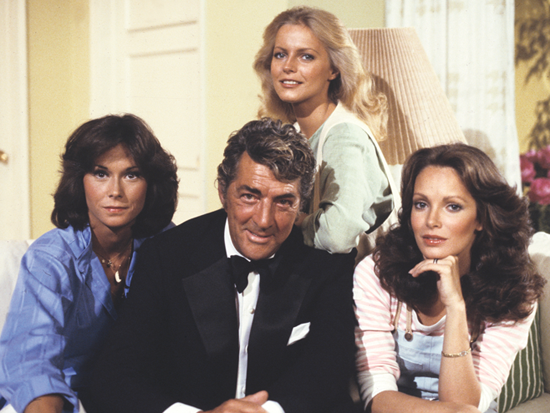
In 1978 Martin made an appearance on a show that surprised me: Charlie’s Angels. Martin plays the owner of the Tropicana Casino who hires the Angels to investigate several suspicious deaths that he thinks are part of a plot to make him think he’s going crazy. This was a two-part season opener and instead of singing, Martin got to display his magic skills. Naturally, he becomes romantically involved with one of the Angels, Sabrina played by Kate Jackson.
Fittingly,
Dean’s last appearance was in the show Vega$
in 1979 as himself.
JOEY
BISHOP
Bishop’s first role was not much of a stretch. He played a
comedian on RichardDiamond in 1959. Bishop’s plays Joey
Kirk and hires Diamond to determine who is following him and why, leading to a complicated
murder plot.
He appeared in the DuPont
Show of the Month in 1960 and The
Dick Powell Theater in 1963.
Like most of the Rat Pack, Bishop made an appearance on Make Room for Daddy in 1961. As Joey
Mason, he helps out Danny. Danny has flown from the east coast to the west
coast and took two sleeping pills. However, there are four conventions in town
and his assistant forgot to make him a reservation.
In 1965 he is Fred Jackson on an episode of Valentine’s Day starring Tony Franciosa
and Jack Soo about a young eligible bachelor who lives with his valet, a
poker-playing con artist who saved his life while they were in the Army.
Photo: tvtropes.com
From 1961-1965, Joey stars in The Joey Bishop Show as Joey Barnes. Barnes is the host of a talk show. He has to deal with his personal and professional life as a celebrity. A lot of guest stars show up playing themselves as guests on his show or friends of his. The show produced 125 episodes. I have recently been watching it on Antenna TV where it now is shown every morning.
In 1967, Joey had a cameo on Get Smart. Max and 99 are sent on an assignment to rescue Don
Carlos, the dictator of San Saludos. A general has imprisoned him and wants to
marry his daughter. Max and 99 try to disguise themselves as flamenco dancers.
When they are also thrown in jail, a guard, played by Bishop, attempts to bribe
the firing squad.
In the 1970s we find Joey on Chico and the Man in 1976. He plays an inept burglar and when Ed
doesn’t press charges, every lowlife crook appears at the business.
In 1981 Bishop appears as Dr. Burton on Trapper John MD.
Photo: basementrejects.com
In 1985 Bishop again takes on the role of a comedian on Hardcastle and McCormick. That same year he also played another comedian on Murder She Wrote.
PETER LAWFORD
Drama
shows were very popular in the early days of television. Lawford appeared in
quite a few of these shows from 1953-1965.
Photo: en.wikipedia.org
In 1954 he took on the role of Bill Hastings on Dear Phoebe. The show was on the air for two years, resulting in 32 episodes. Hastings works for a daily newspaper in a large city. He becomes the author of a lonely hearts column and advises his readers as “Phoebe” while trying to deal with his own issues in his personal life.
Photo: sitcomsonline.com
From 1957-1959, he was Nick Charles on the television version of The Thin Man. The show was very popular with 723 episodes filmed. Similar to the films, Nick marries Nora and lives in a luxurious Park Avenue apartment in New York. He was previously a private detective and many of his underworld friends get him involved in mysteries he has to solve.
Lawford
appeared as himself on an episode of Jack Benny’s show in 1961.
He also played himself on The Patty Duke Show in 1965. Patty is selected to find a star to perform at the high school prom. Sammy Davis Jr. also guest stars on the episode.
Photo: imdb.com
Apparently,
Sammy and Peter enjoyed working together because they guest starred on an
episode of The Wild Wild West in 1966.
Lawford is a wealthy ranch owner and Davis is a hired hand Jeremiah.
While Bishop showed up on Get Smart, Lawford chose the more realistic I Spy in 1967.
Like
Sinatra, he also appeared on Laugh-In
but must have enjoyed it more because he was on ten different episodes.
During
the 1970s, Lawford shows up on a variety of television show genres. He would be
on the western The Virginian in 1971,
Born Free about Elsa the lion in
1974, The Love Boat and Fantasy Island, the bizarre comedy High Cliffe Manor, the crime drama Hawaii Five-0, the dramady Supertrain, and The Jeffersons.
Photo: pinterest.com
In addition, he was featured on Bewitched in 1972. Lawford played Harrison Woolcott, a client of Darrin and Larry’s. Sam’s cousin Serena decides she wants to date him and try the mortal life for a while.
Photo: pinterest.com
He made several appearances during seasons four and five of The Doris Day Show. As Dr. Peter Lawrence, he begins a romance with Doris in 1972-1973.
SAMMY
DAVIS JR
Sammy probably appeared in the most television shows. Like
Peter, he began in drama shows and guest starred in several episodes of General Electric Theater.
He then appeared in The
Lawman in 1961, Frontier Circus,Cain’s Hundred, 77 Sunset Strip, The Rifleman,
and Hennessey in 1962.
In 1963 he was on Ben
Casey.
Like the other Rat Pack actors, he was on Make Room for Daddy in 1963 and the
revival Make Room for Granddaddy in
1970.
As mentioned before, he guest starred in The Patty Duke Show in 1965 and The Wild Wild West in 1966, both with
Peter Lawford.
Photo: pinterest.com
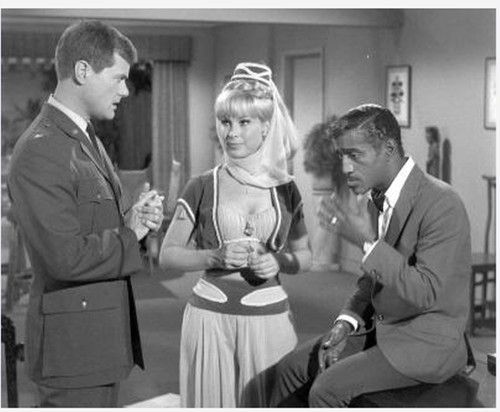
In 1967, he showed up on I Dream of Jeannie as himself. Tony tries to get Sammy Davis Jr to sing for General Peterson’s party. When he is already booked, Jeannie tries to help by duplicating himself, so he can be in two places at one time.
Davis also took a role in The Beverly Hillbillies in 1969.
Photo: tvinsider.com
The same year he took on his first of three roles on Mod Squad. His first role was a black priest who becomes the target of a bad guy after the church suspends him. The hood is afraid he will reveal his confession now that he no longer is part of the church. The next episode he appeared on was in the role of Billy Lee Watson, a recovered drug addict. He runs a half-say house and is accused of rape of a man’s daughter who he has been trying to help. Her father accused Billy of the rape and after investigating, it turned out Billy was her actual father. The last episode of Mod Squad he appeared on in 1970 had Davis portraying Willie Rush and actor and friend of Linc’s. He says someone is trying to kill him.
Photo: tumblr.com
The 1970s continued to be a productive time for Davis on television. He would go on to appear in The Name of the Game in 1970, The Courtship of Eddie’s Father in 1972, nine episodes of Laugh-In, and like his friend Dean Martin, an episode of Charlie’s Angels in 1977. He plays himself on Charlie’s Angels. When he hosts a charity event that includes a celebrity look alike contest, an attempt is made to kidnap him. The Angels take on the job of his bodyguards and Bosley becomes his chauffeur.
The 1980s were also busy times for him. He appeared as
himself on several Norman Lear shows including Archie Bunker’s Place and The
Jeffersons. He also could be seen on Fantasy
Island, Pryor’s Place, Gimme a Break, The Cosby Show and Hunter
in the 1980s.
Photo: atlantablackstar.com
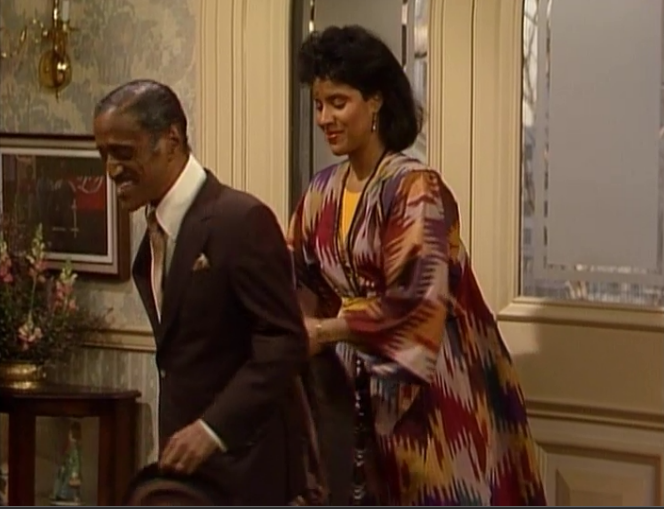
One thing that surprised me was his roles on One Life to Live and General Hospital. I have seen a few stars like Carol Burnett who chose to appear on a soap opera. Davis had a recurring role on General Hospital; he didn’t seem to me to be the type of actor who would be interested in a soap opera, but he did receive an Emmy nomination for his role on General Hospital. Sammy was also nominated for an Emmy for his work on The Cosby Show.
While Joey Bishop hosted some of the Emmy Award shows, I
did not find any nominations for the other members of the Rat Pack.
Photo: peoplequiz.com
Overall, I was surprised how extensive the television careers were for the Summit members. I think of them more in their performing or movie careers and did not expect them to see that they guest starred in so many shows and starred in some of their own television series. Check out some of these shows or make a batch of popcorn and watch the ensemble in the original Ocean’s Eleven.
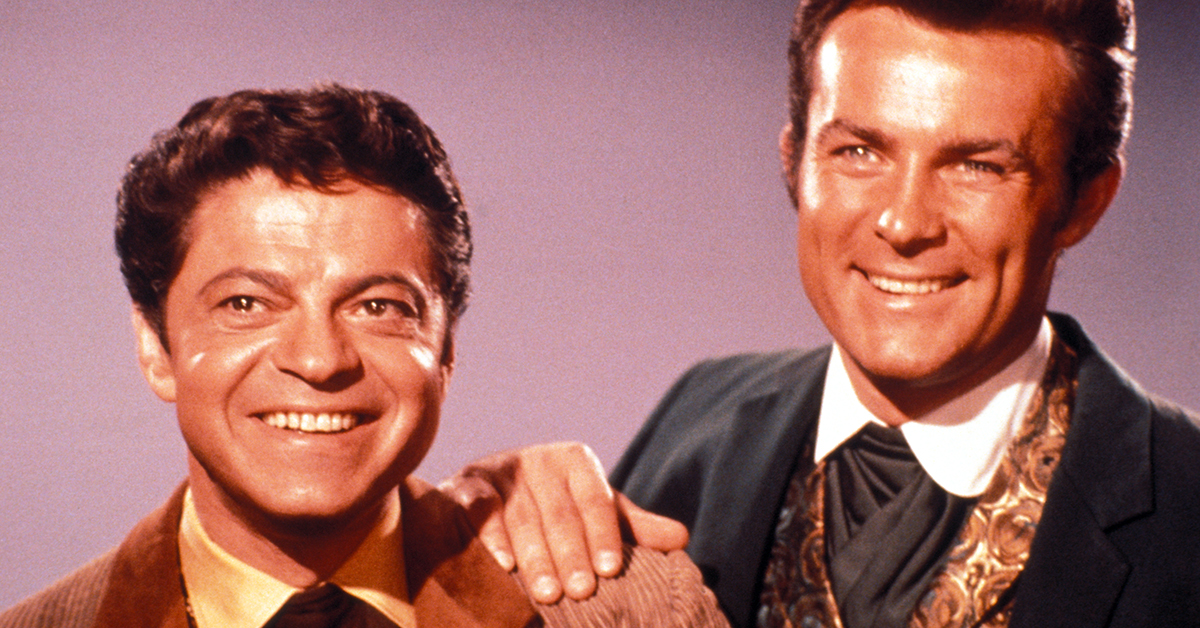
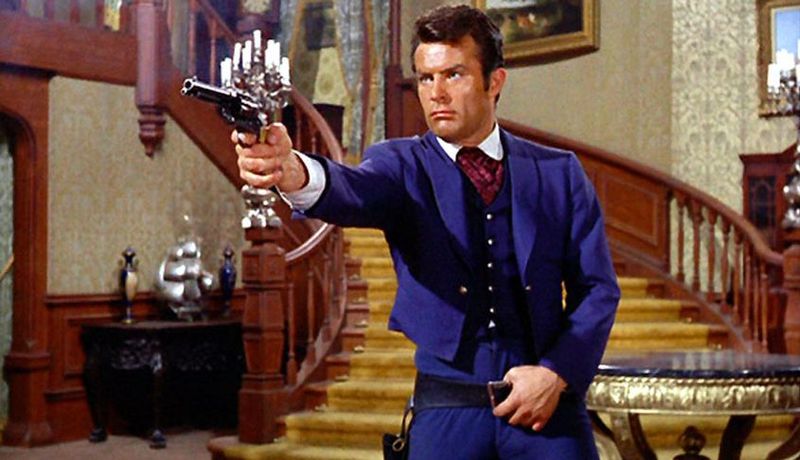
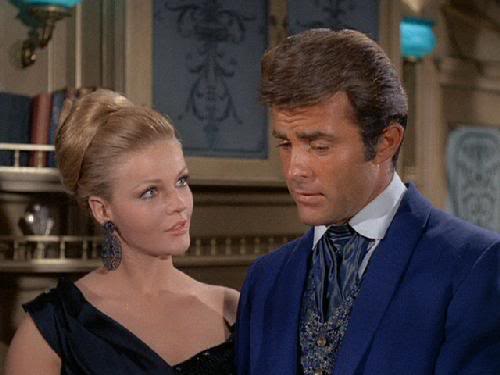
There was no specific category for the Wild Wild West when it first debuted in 1965. Part western, part spy show, part thriller. Now, it might be called steampunk. Westerns had been extremely popular through the 1950s and into the 1960s, but in the mid-1960s, the spy genre was gaining ground. Creator Michael Garrison combined the two. Secret Service agents Jim West (Robert Conrad) and Artemis Gordon (Ross Martin), work for President Ulysses Grant and travel the country by luxury train, the Wanderer. Oh yeah, and they have a ton of technology to make the job more exciting. Artemis is a master of disguise. Like James Bond, they had clever gadgets on hand, beautiful women in the wings, and delusional, but brilliant, enemies to fight against.
Photo: decades.com
The series debuted in 1965 and ran for four seasons, resulting in 104 episodes. Unfortunately, Garrison died a year into the show and didn’t live to see its completion. The show was filmed at CBS Studio Center. The 70-acre lot was used for Gunsmoke, Rawhide, and Gilligan’s Island as well.
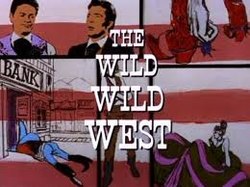
The theme song was written by Richard Markowitz. The intro had an animated sequence that continued to be filled in throughout the show. This was quite unique to this program.
Conrad claimed to be the 17th actor to audition for the role of James West. Originally, Rory Calhoun was announced as the co-star. Conrad wore three-inch heels to hide that he was only 5’8”. Due to his height, the casting office was barred from hiring women over 5’6” for the show. The first few episodes used stuntmen, but Conrad felt that it slowed production down too much, so he volunteered to do his own stunts. During season three, he fell from a chandelier and hit a concrete floor, leaving him with a concussion and weeks of hospitalization for dizziness.
Photo: artworkproduction.ca
Ross played over 100 different characters during the run of the series. He sketched out the ideas for the characters himself and then worked with the make-up artists to get the right look. During the fourth season, Martin broke a leg when he dropped a rifle, stepped on it, and rolled his foot over it. When the shell ejected, it burned his eye. Ross also suffered from a heart attack in 1968. Several other agents “filled” in for Martin while he recuperated.
Photo: writeups.org
Considering the show was only on for four years, it featured a number of guest stars including Ed Asner, John Astin, Jim Backus, Ed Begley, Victor Buono, Jackie Coogan, Yvonne Craig, Sammy Davis Jr., Jack Elam, Norman Fell, Bernard Fox, Mary Frann, Beverly Garland, Alan Hale Jr., Boris Karloff, Richard Kiel, Ted Knight, Harvey Korman, Martin Landau, Sue Ane Langdon, Peter Lawford, Ida Lupino, Burgess Meredith, Agnes Moorehead, Phyllis Newman, Leslie Nielsen, Carroll O’Connor, Pat Paulsen, Suzanne Pleshette, Richard Pryor, Don Rickles, Pernell Roberts, Katherine Ross, William Schallert, Vito Scotti, Ray Walston, Jesse White, and Keenan Wynn.
The train was also a co-star of the show. The spies had two different trains. The first was used for season one when the shows were filmed in black and white. It was a Sierra Railroad No. 3 which was not built until 1891, a mere technicality I guess. The Rogers Locomotive and Machine Works built it in New Jersey. Footage was shot in Jamestown, California. This same train was the Cannonball in Petticoat Junction.
Photo: metv.com
The shows filmed in color featured a train decorated with green and gold and it was full of fun gadgets. This one was built in 1875 by the Baldwin Locomotive Works in Philadelphia. It was used in many films over the years.
Photo: tripadvisor.co.uk
Both these trains are on display at the Nevada State Railroad Museum. They were only featured in exterior shots. The interiors of the trains were designed by art director Albert Heschong with set decorator Raymond Molyneaux. It reportedly cost $35,000 in 1965. To put this in perspective, the average house in 1965 cost less than $4,000! The train was as resourceful as West and Gordon. A remote control under the table could immediately lock the door. A statue turned upside down unlocked a wall safe. A telegraph set was hidden in a book on the desk. Pistols could be fired by activating a fireplace switch. The pool table had exploding balls while cue sticks could fire bullets.
Photo: tvoftheabsurd.com
Many of the guest stars were villains in the show. The most famous villain was Dr. Miguelito Loveless played by Michael Dunn. He had a recurring role, appearing on ten episodes. He always managed to escape at the end of the show. West and Artemis never did catch him, and a TV movie filmed later relays that he died in 1880 from ulcers brought on by the stress of his plans always being foiled by West and Gordon.
Like Batman, Jim West always seems to have the right gadget at his disposal when he needs it. Some of his more fun props included a sleeve gun as well as a gun concealed in his heel. He also occasionally carried a blowtorch in his heel. Passkeys were stored under his lapel. He kept a variety of fuses sewn into hems in his clothes. To descend into a pit or be hoisted up on a roof, he had a hand-held motor-driven winch. Glass cutters which often are useful were available. Wires placed in his hat had many uses. Battery-powered drills helped the boys escape metal cages. His kit bag held a large balloon. A miniature player made villains think shot guns were being fired. Of course, every smart secret service man wears a bulletproof vest and is always equipped with tear gas or smoke bombs. They even had a cigar that would produce smoke when thrown on the ground and a coin that exploded when exposed to heat.
Photo: thegoldencloset.com
There typically were two fights in each episode choreographed by Whitey Hughes. Following the 1968 assassinations of Dr. Martin Luther King and Robert Kennedy, a National Commission on the Causes and Prevention of Violence was formed. Violence on television was listed as one of the problems, and The Wild Wild West was cited as a violent show. So, despite high ratings, the series was cancelled near the end of its fourth season as a concession to Congress over television violence.
Photo: antiquatednotions.typepad.com
However, the show was then released into syndication and at one time was listed on 99 different local channels, so the violence on television was not curbed by its cancellation.
Several books and comic books were created based on the show. In 1979, the two stars returned to television with a movie, The Wild Wild West Revisited. In 1980, they showed up again in More Wild Wild West. Rumors existed that the duo would do a reboot of the series, but Ross died in 1981 so it never came to fruition.
A movie was made in 1999 based on the original show, but it was not received well. Will Smith later expressed regret for his role in the film. The Golden Raspberry (Razzie) is awarded to the worst films. When the 1999 film was awarded five Razzies, Conrad accepted them on behalf of the movie to show his displeasure with the remake.
The show’s success primarily stemmed from the fact that Artemus and West trusted each other completely, and their banter and technological gadgets made the show a pleasure to watch. And did I mention, the boys loved women on and found a romance on every show. We’ll let the characters have the last word:
Artemus Gordon: “Naomi. ’My sweetness’. That’s what Naomi means in Hebrew, did you know that ?”
Naomi Buckley: “Really ? And what does Artemus mean ?”
James West: “It means ’He who wastes little time‘.”





























 thewritelife61