Little House on the Prairie: Drama On and Off the Set

This month we are visiting with some of our favorite families. I absolutely would have included The Waltons this month if we had not covered the show recently. However, another historic family, the Ingalls, is on the schedule. Little House on the Prairie was on the air for nine seasons. Many of us got to know the family through Laura Ingalls Wilder’s books.
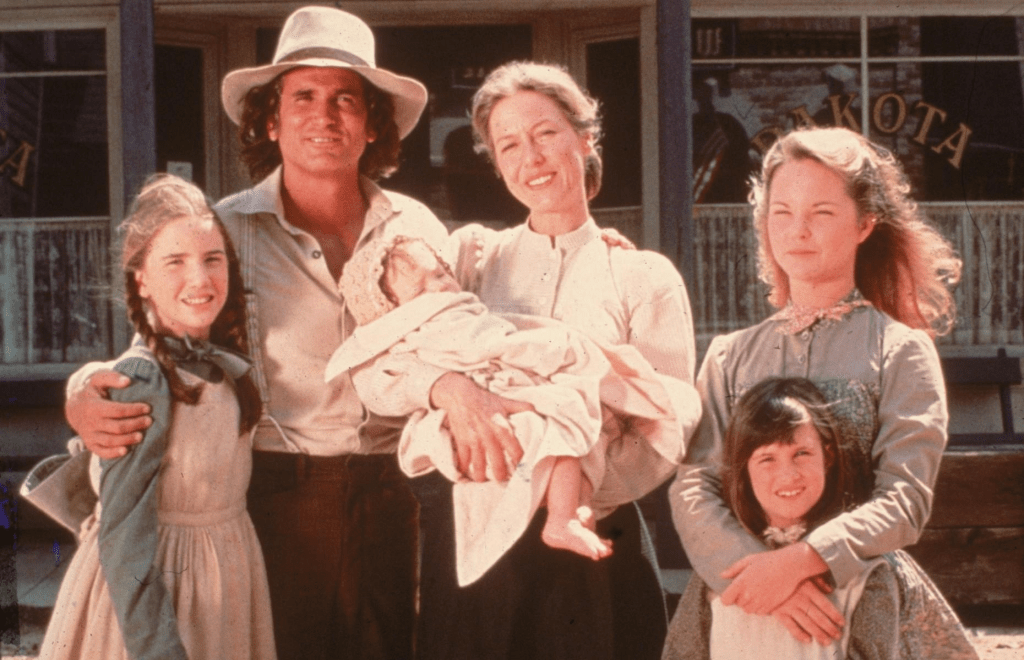
📷lovemoney.com

Television producer Ed Friendly acquired the film and television rights from the books. Oddly enough, the other show Friendly is known for as producer is Rowan and Martin’s Laugh In. He decided to make Little House a two-hour pilot and asked Michael Landon to direct it. Landon agreed to do so if he could also play Pa, Charles Ingalls. The pilot aired in March of 1974, and in September the series began.

Along with starring in the show, Landon continued to direct as well; he directed 87 of the 204 episodes. The other directors included William F. Claxton, Victor French, Maury Dexter, and Leo Penn.

Landon also got in on the writing of several episodes. He had written several scripts for Bonanza when he appeared on that show, and several of them were recycled for Little House.

📷showbizcheatsheet.com

Like The Waltons, while this series was often happy with comedic notes, it dealt with many serious issues as well, including alcoholism, drug addiction, poverty, racism, child abuse, and rape. The show focused on the struggles and joys of a pioneer family living in the late 1800s.

Along with Landon, Karen Grassle played Ma, Melissa Gilbert played Laura, Melissa Sue Anderson was Mary, with Lindsay and Sidney Greenbush alternating as Carrie. In addition to the Ingalls family, other town folk on the show included Nellie Oleson (Alison Arngrim), Nels Oleson (Richard Bull), Harriet Oleson (Katherine “Scottie” MacGregor, and Miss Beadle (Charlotte Stewart).

Some of the guest stars included Willie Aames, Anne Archer, Lew Ayres, Hermione Baddeley, Ken Berry, Ray Bolger, Ernest Borgnine, Johnny and June Carter Cash, Burl Ives, Charles Lane, Vera Miles, Sean Penn, and Ray Walston.

📷wikifandom.com

The theme song, “The Little House,” was written and conducted by David Rose. Rose won two Emmys for his work on the show.Although the pilot ranked #3 for the 1974 ratings, the first two seasons were much lower. Season 3 found the show on Monday nights where it remained one of the highest-ranking series through season 7. Season 8 had a significant decline and season 9, with the loss of most of the family members, never really caught on with viewers. However, season two is the only year the show was not in the top 30. The schedule was a bit crazy when you analyze it. Although, this show did have to compete with The Jeffersons and WKRP in Cincinnati, because they were half-hour shows and this was an hour show, many people probably continued watching the second half. For many of these years, there were up to six different shows in this time spot on CBS and many of them changed from year to year, so there were rarely shows in this spot against Little House for more than a month or two.

After eight seasons, both Michael Landon and Karen Grassle were ready to move on; however, Landon did stay on as a director and writer. The show focused on Laura Almanzo and the younger generation for the ninth and final season.

The show was loved by critics as well as viewers and received sixteen Emmy nominations. The series won four of them, all for music and cinematography. The only cast member nominated was Melissa Sue Anderson; she lost to Sada Thompson for Family.
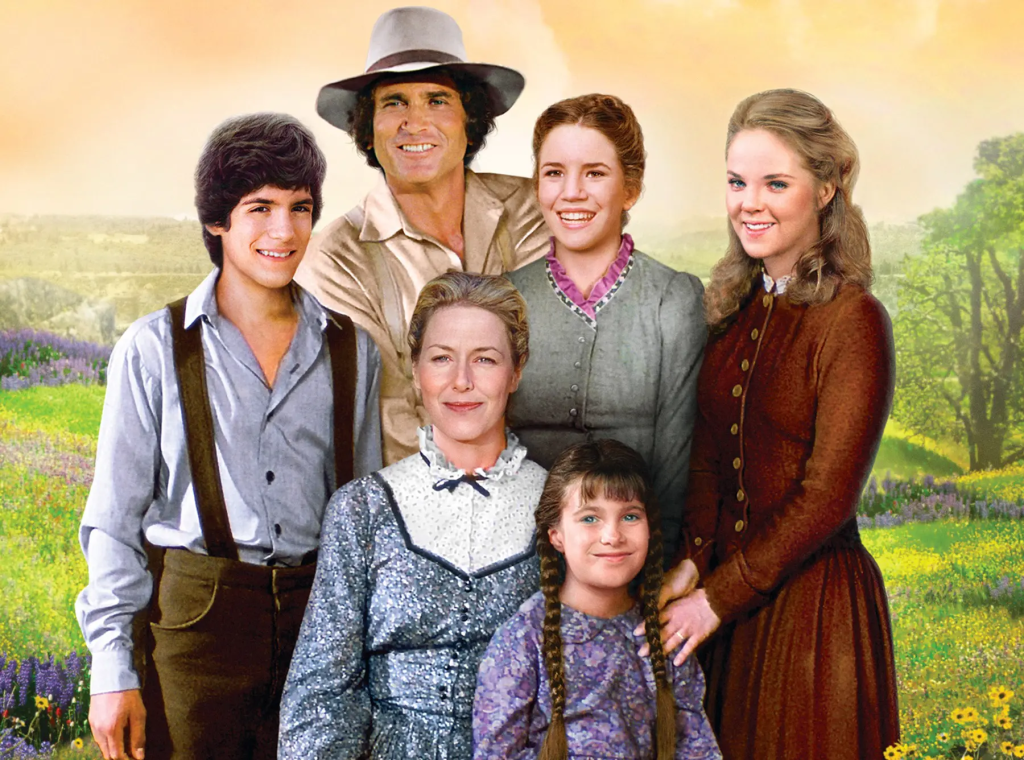
📷littlehouseontheprairie.com

Viewers were not ready to leave the Ingalls for good. Three made-for-tv movies were written: Little House: Look Back to Yesterday in 1983, Little House: The Last Farewell and Little House: Bless All the Dear Children, both in 1984. In 2008 the Ingalls’ lives also became a musical at the Guthrie Theater.

One fun story is when the show moved from Paramount to MGM Studios in the late seventies, they were uncovering sets so they could build new ones and found the yellow brick road from the Wizard of Oz which delighted the kids in the cast; I’m guessing it delighted many of the adults as well.

Another fun story was learning what the cast ate on the show. Since beef stew was a popular meal in the 1800s, the family often had that for its meal and when they did, they were actually eating Dinty Moore Beef Stew. When they had chicken, it was KFC that appeared on their plates.

The kids must have been troopers because each episode took about seven days to shoot. They were on location at Big Sky Ranch for four days and in the studio for interior shots about three days. In addition, they were probably witnesses to off-air scenes that were not the best. Grassle and Landon were not close, probably because his role seemed much bigger than hers and he was directing as well. Unfortunately, both Grassle and Landon were alcoholics, and alcohol was part of their life on set. During season four, Grassle quit when she realized the seriousness of her problem. Landon was never able to kick his dependence and died from pancreatitis.

📷pinterest.com

Gilbert said that Michael Landon had interesting ways to inspire his kids to get emotional on the set. He worked himself up to become very emotional and with eyes full of tears would ask her “Do you know how much I love you?” which would bring tears to her eyes as well.

It might have been a way to get her to cry, but it was not a lie. Gilbert lost her own father when she was eleven, and Landon became a second father to her. He often had Gilbert at his house on the weekends. She said it was a huge house and the kids ran through the house at will. Often Landon would hide behind doorways and jump out and scare them. Gilbert said Landon provided her with a lot of great advice. The most memorable for her was that nothing is more of a priority than home and family, and no success is as important as loving your people and contributing to a community. And to have fun above all in your career.

That is sage fatherly advice for us all to remember.
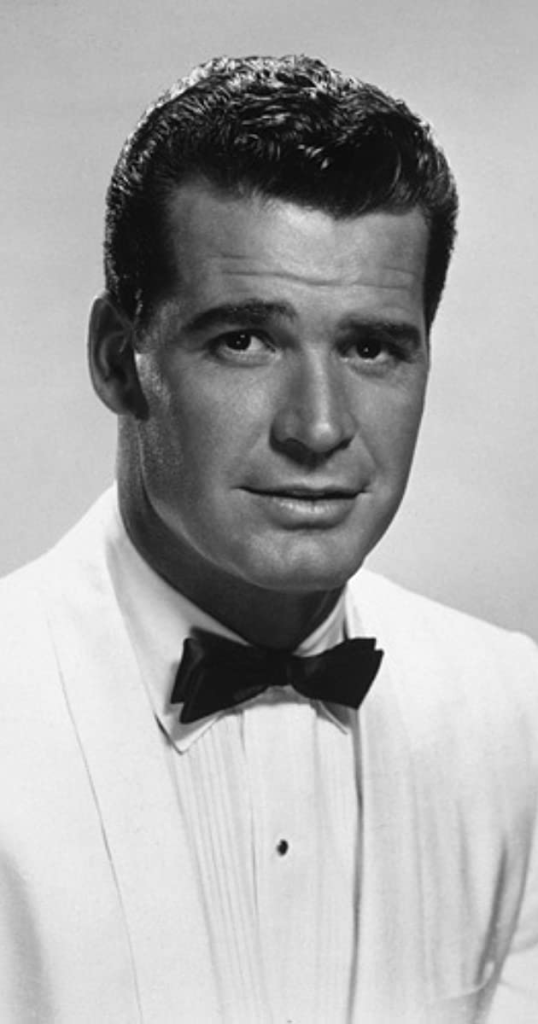
James Garner: Moving Forward

Photo: imdb.com

Today we are winding up our blog series about some of our favorite actors. We finish today with one of my favorites who had a dual big-screen and small-screen career, James Garner.

Garner was born in Norman, Oklahoma as James Scott Bumgarner in 1928. His mother died when he was 4, and his father ran a small store and the family lived above it. When James was 7 the store burned down and his father left the boys and gave them to relatives to raise. Later he moved to Los Angeles and became a carpet layer. James’ first stepmom was very abusive, and they finally had a fight when he hit her and she took off. His second stepmother was a total opposite of the first. He called her Mama Grace and said she was a real mother to him.

At 16 James dropped out of high school to join the Merchant Marines. He liked his shipmates but could never get over his chronic seasickness. In 1945 Garner moved to Los Angeles and enrolled in high school. He was a popular student and played both football and basketball, but he was a terrible student. He moved back to Norman the next year to try high school there again. He dropped out before graduating.

He then joined the California Army National Guard where he served his first seven months in Los Angeles. Then he went to Korea for 14 months as a rifleman in the 5th Regimental Combat Team. He was wounded twice and received two Purple Hearts. He also received his diploma from high school.

After he left the military, he had a variety of odd jobs including laying carpet with his father, pumping gas, installing telephones, chauffeur, dishwasher, janitor, lifeguard, grocery clerk, salesman, oil field worker, and modeling men’s clothing. His entry into the entertainment business is a bit different than most people’s. He was supposed to read lines to lead actors for Broadway production, “The Caine Mutiny Court Martial” in 1954. He was also given a minor, non-speaking role. As he was on the stage, he began to learn about the art of acting.

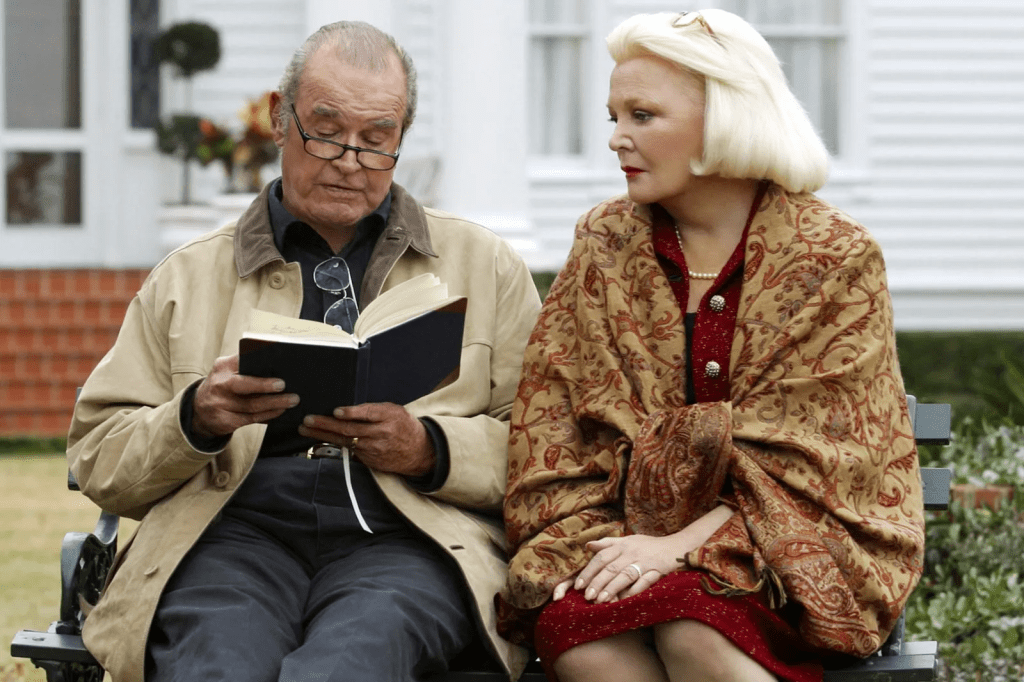
The Notebook Photo: GlamourUK.com

In 1955 he received a bit part on Cheyenne on television. He was also in Warner Brothers Presents. These small parts led to several offers to act in commercials and a larger offer from Warner Brothers to sign a contract for $200 a week. Garner began his big-screen career with Toward the Unknown in 1956. His film career included 46 additional movies with his last being The Notebook.

It was also 1956, when he married his wife Lois Fleishman Clarke; they would remain married until his death, and the couple had two daughters. They had a very short courtship. They met at the Beverly Hills Courthouse at a political rally for Adlai Stevenson and were a married couple two weeks later.

The couple bought a house in the Los Angeles neighborhood of Brentwood where their neighbors were Steve McQueen, O.J. Simpson, Arnold Schwarzenegger, Maria Shriver, and Mark Harmon. They were still living there when James passed away.

Maverick Photo: wikimediacommons.com

His successful movie career did not halt his television career. From 1957 to 1962, Garner starred as Bret Maverick on Maverick. Garner developed the type of role he would be known for as the calm, good-natured, likable, smart guy who gets out of trouble using his wit and street smarts. The show was not canceled by the network; unfortunately, Garner and the producers had a dispute over money, and he decided not to come back for the next season.

In August of 1963, Garner was one of several stars who accompanied Martin Luther King Jr. in his March on Washington. He later also recalled sitting in the third row while listening to King’s “I Have a Dream” speech.

In 1964 he made what he called his favorite film, The Americanization of Emily with Julie Andrews. He played the personal attendant of a Navy admiral and he said it contained the most impassioned speech of his career.

During the sixties and seventies, he continued making movies and showing up in a few places on television, shows like Rowan and Martin’s Laugh In, The Tonight Show, and several tv movies, one about Bret Maverick.

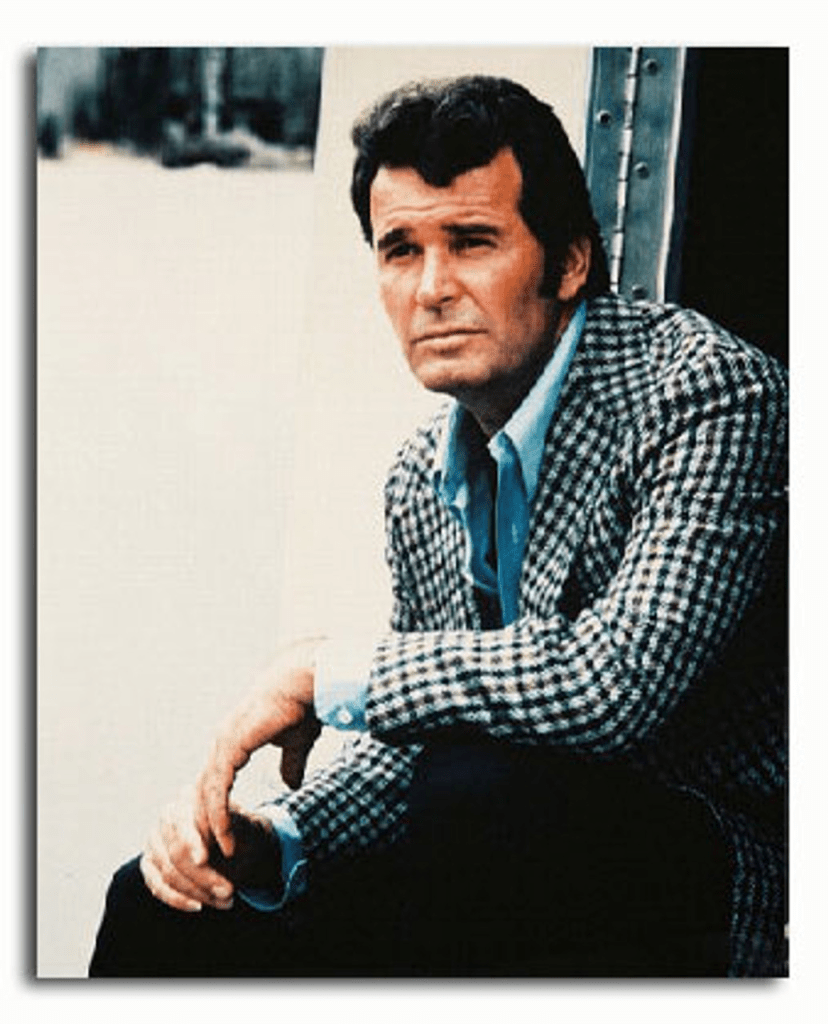
In 1974 he accepted his second role as star of a television series on The Rockford Files. He played Jim Rockford until 1980. Again, the network did not cancel the show which was still very popular but Garner had been having back pain and did not feel that he should continue the weekly series. He probably made the right choice because he was hospitalized with a bleeding ulcer during 1979; he would have quintuple heart bypass surgery in 1988; and both knees replaced in 2000.

Rockford Files Photo: starstills.com

In 1977 Garner began making commercials for Polaroid with Mariette Hartley. They were so convincing of being a married couple, that Hartley had a shirt made that said “I am not James Garner’s wife!” The couple filmed more than 300 commercials together.

After John Ritter passed away in 2003, Garner joined the cast of 8 Simple Rules as Cate’s father Joe and was on the show for the final three seasons.

Garner worked with several charities and foundations during his career. In 2003, he gave $500,000 to the James Garner Chair in the School of Drama for the University of Oklahoma to fund the first-endowed position at that school. He also volunteered with Save the Children.

In 2011, Garner wrote an autobiography called The Garner Files: A Memoir, cowritten with Jon Winokur.

Some of Garner’s hobbies included spending time with his family and political activism. However, his biggest passion was sports. He was a big fan of the Oakland Raiders and could often be seen on the sidelines with the team. He loved golfing. He was inducted into the Off Road Motorsports Hall of Fame in 1978. He owned the American International Racing team in the late sixties and he drove the pace cars for the Indianapolis 500 in 1975, 1977, and 1986.

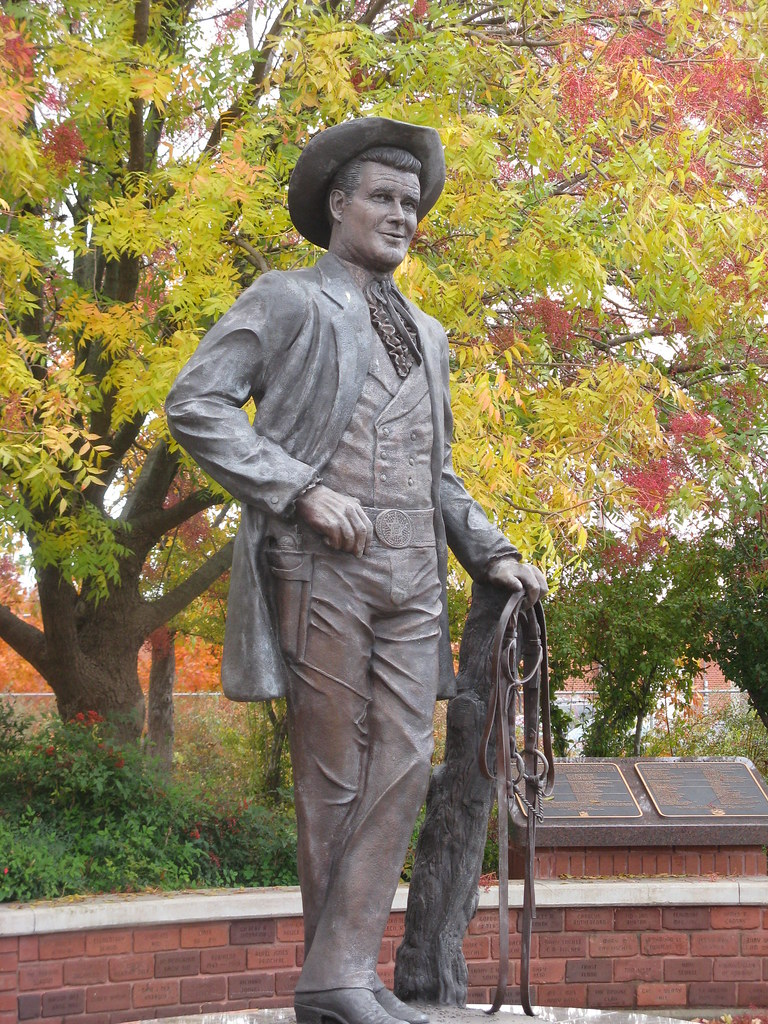
Photo: flickr.com

He was also honored by his hometown of Norman, Oklahoma. He has a street named after him there and in 2006, a ten-foot bronze statue as Bret Maverick was erected there.

He was also loved by his coworkers. In 1973, John Wayne named Garner the best American actor in an interview. He was also close friends with Tom Selleck, Sally Field, and Clint Eastwood. When he passed away in 2014 from a heart attack, Sally Field said “My heart just broke. There are few people on this planet I have adored as much as Jimmy Garner. I cherish every moment I spent with him and relive them over and over in my head. He was a diamond.” He was nominated for 15 Emmy awards during his television career, winning in 1977 as Outstanding Lead Actor in a Drama Series for The Rockford Files.

He didn’t do a lot of comedy but I think he was a funny guy. When he was asked if he would ever consider a nude scene, he said “No, I don’t do horror films.”

James always said he was not concerned with fame; he just wanted to make a good living at something he enjoyed. That comes across as something he truly believed in, not just talking the talk. He lived in the same house and was married to the same woman for most of his life. He did work he was proud of and was very successful in both film and television. He loved sports and his career allowed him to participate in more of those activities that he loved. He was also a generous man, giving to causes that he thought were important.

Move Over Darling Photo: moviescene.com

Although not the most important films in his portfolio, I always think of him acting with Doris Day in The Thrill of it All and Move Over Darling. I enjoyed learning about his life and respect him as a person. He never complained about the terrible childhood he had or used it to make excuses when he did make a poor choice; he said you have to just keep moving forward and he moved forward in an honorable way. Thanks for sharing your life with us  and letting us travel forward with you, James Garner.

Barbara Feldon Did Not Have to Get Smart: She Was Born That Way

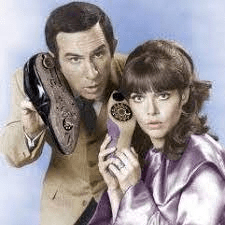
This month’s blog is taking a look at some Supportive Women. First up is Barbara Feldon, costar with Don Adams in Get Smart.

Photo: getsmartwikifandom.com

Feldon was born Barbara Anne Hall in 1933 in Pennsylvania, near Pittsburgh. During an interview with Emerson College, Barbara talked about the ecstasy of performing in a little band in first grade. When things stopped, she got to play her triangle, and the thought that everyone was watching her, and her mother’s pride in seeing her made her want to perform more. In sixth grade she went into the gym to watch her friend doing her ballet lessons. The teacher invited Barbara to join them and played Tchaikovsky’s Nutcracker music; that combination of music and movement took her away to another place. She was hooked at that point, and she knew that she wanted to dance.

She trained at the Pittsburgh Playhouse and then graduated from Carnegie Mellon University with a BA in drama in 1955. They didn’t have a dance program, and her mother thought Bennington, where she wanted to go for dance, was too expensive and too liberal. While she enjoyed acting, it never had the enchantment for her that dance did.

Feldon made her way to New York and studied at the HB Studio. She briefly had a career as a showgirl at the Copacabana. She said “that was my first professional job in New York and it was probably the highlight of my whole career. We got to dance with Jimmy Durante. Oh, my God, it was a thrill.” They replaced the girls every three months so, then she went on to appear in The Ziegfield Follies. She landed one job that never made it to Broadway. A friend of hers who was a model talked her into exploring a modeling career.

Photo: punkglobe.com

She worked as a model and was in a Revlon commercial about a hair pomade for men, Top Brass. Feldon said commercials were excellent training to get experience in acting. You do the same scene over and over, maybe more than forty times, but you have to keep that spontaneity. “You must remember to stress each word properly and come in on a split-second when that camera rolls.”

Like several actresses that we have discussed in this blog, before Feldon got her first big break, she appeared on a game show. In this instance, she was on The $64,000 Question in 1955, and she won the grand prize of $64,000 in the category of Shakespeare.

She didn’t use her winnings to buy a mansion or live the typical party life. She opened an art gallery with a man who was a photographer and ad man who was no longer interested in advertising named Lucien Verdoux Feldon. Barbara would be the subject of a Warhol pop art painting in 1965.

In 1958 Barbara married Lucien Feldon. They divorced nine years later. She had a longer relationship with one of the Get Smart producers, Burt Nodella and when that ended, she moved back to New York City.

After her commercial debut, she received offers for several television roles in the early sixties including The Man From U.N.C.L.E. and Flipper. She was also offered a chance to appear on East Side/West Side with George C. Scott. Colleen Dewhurst was her mentor and Scott’s wife. He asked her to play his girlfriend in the next episode. Talent Associates which produced the show was working with Mel Brooks and Buck Henry on a potential spy spoof called Get Smart. Her second television role was as a spy. So, when Talent Associates was casting for a spy on Get Smart, she was an obvious choice.

Photo: facebook.com

She turned down the role at first because she didn’t want to move from New York to California, but she did love the script. They agreed to offer her a two-year contract instead of a five-year contract, and she accepted. Her first review was in TV Guide which compared her to the dog and concluded that the dog came off better. She was devastated and humiliated. In later years, the reviewer rated her performance much better.

From 1965 till 1970, Feldon was known as Agent 99 working with Maxwell Smart for CONTROL. In both 1968 and 1969, she was nominated for an Emmy for Outstanding Lead Actress in a Comedy Series. Lucille Ball won for The Lucy Show in 1968 and Hope Lange won for The Ghost and Mrs. Muir in 1969.

Women at the time looked at Feldon as an example of a powerful woman; Feldon commented that young women said “she was a role model for them because she was smart and always got the right answer.” If you look closely in the early seasons, you will typically see Feldon sitting and Adams standing because she was taller than he was. Once she even had to bury her feet in the sand. While Adams was the blundering, awkward Smart, it was Agent 99 who was really the “smart” one, getting him out of trouble during their spy missions.

Feldon said that she is not a comedienne; she is an actress who can play comedy. She said that she is the worst person to tell a joke to because she doesn’t always get it. She never enjoyed drama much because the actual acting on camera was wonderful but the long, boring hours waiting were very tedious, and if you have a tearful scene, you have to be able to keep the momentum.

During the run of Get Smart, Feldon also appeared on Rowan & Martin’s Laugh In and The Dean Martin Show.

Photo: imdb.com

After the show ended, she would appear on 20 additional television series including Cheers and Mad About You. She made fifteen made-for-tv movies, one of which was a 1989 movie, Get Smart, Again. She also could be found in six big-screen films including The Last Request, her last acting role, in 2006.

During my research, I read an article where pop culture historian Geoffre Mark commented on one of her movies, Fitzwilly, which I admit I have never seen. He said that it was a gem of a movie and that “Dick Van Dyke is brilliant in it and Barbara plays his love interest and she’s brilliant in it. She was playing a version of herself: a beautiful, sensual, highly intelligent woman with a strong moral compass and a loving heart. That’s what the character is and that’s who Barbara is.” According to imdb.com, the plot of the 1967 movie is that a butler and the staff of an eccentric aged philanthropist whose family wealth is exhausted engage in larceny and crimes to maintain her lifestyle and provide funds for her charitable activities.

Feldon was offered a cameo in the Get Smart movie with Anne Hathaway and Steve Carrell in 2008, but she declined. She said that “times have changed too much. The psychology of the writers and the audience has changed radically. Get Smart belongs in the 1960s, or it’s not going to be Get Smart.”

Despite her comment of Get Smart staying in the sixties, in 1995 Feldon took on the role of Agent 99 again in a brief reboot of Get Smart. Feldon discussed that series with The (Westchester County NY) Journal News reporter Karen Croke in 2017. She said that she and Adams never became friends after the original Get Smart. She said he was a lovely man and very funny, but they had their jobs to do and did their acting and then parted ways for the day. After they worked together on this series, they became very close friends in a way they could not have in their original show. She said once Don Adams died, Max also died and she can’t do any work as 99 without Max now. That might be the real reason she turned down the cameo in the Carrell-Hathaway film.

Photo: imdb.com

Barbara said it’s hard to make friendships on a set because it’s more like a factory and when you’re not acting, you might be resting or talking to your agent. The only person she said she was able to maintain a good relationship with after acting with him, was Alan Alda.

Apparently, she still enjoyed games shows and she appeared regularly in several of them including Hollywood Squares and The $20,000 Pyramid.

Feldon lost interest in acting, but she did numerous television and radio commercials and documentaries. In 1977, Barbara hosted a news show called Special Edition. In the 1990s she had a one-woman show she took around the country. She has also taken up writing and had two of her pieces published in Metropolitan Magazine. She wrote a book about living as a single person in 2003 called Living Alone and Loving It. She also enjoys writing poetry. In talking about her book, Barbara said, “I had been in relationships my whole life. I’d been married, then had lived with someone for several years. After those, I just assumed I would find another relationship. But it didn’t happen. As time went on with some good guidance, I learned how to live alone really happily. I’ve met a number of people—men and women—who feel living by themselves is a second-rate life. I thought that was sad, and since I had this technique of living alone, I decided to write a book. And I’m really glad I did.”

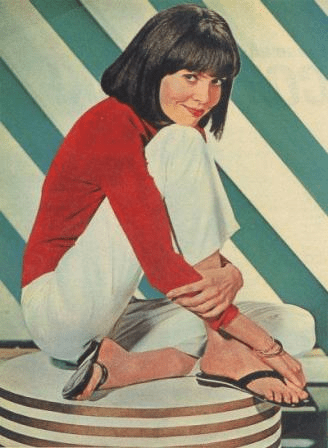
Photo: pixels.com

Feldon said that she has nothing but gratitude for Get Smart. She said acting is not a kind career and you only have a few years to be able to find your place, and she is grateful for being in the right place at the right time. I think after learning about Barbara Feldon, she manages to put herself in the right place at the right time often.

Now, her life sounds almost perfect. She lives where she wants to, is open to meeting a lot of people, attends concerts, advocates for the arts, and travels and writes whenever she wants to. During her life, she has managed to learn from so many experiences and during her life journey she definitely “got smart.”