Book ’em Danno: Hawaii Five-O or 0

This month we are looking at some recent reboots of popular shows from the the past. We are ending our series with what I think was the best of the reboots in recent history: Hawaii Five-O.

Originally, one source said the show was developed with a house detective for a chain of Hawaiian hotels. Someone on the production team thought it would limit the plots too much, so it was expanded to crime throughout Hawaii.

📷imdb.com

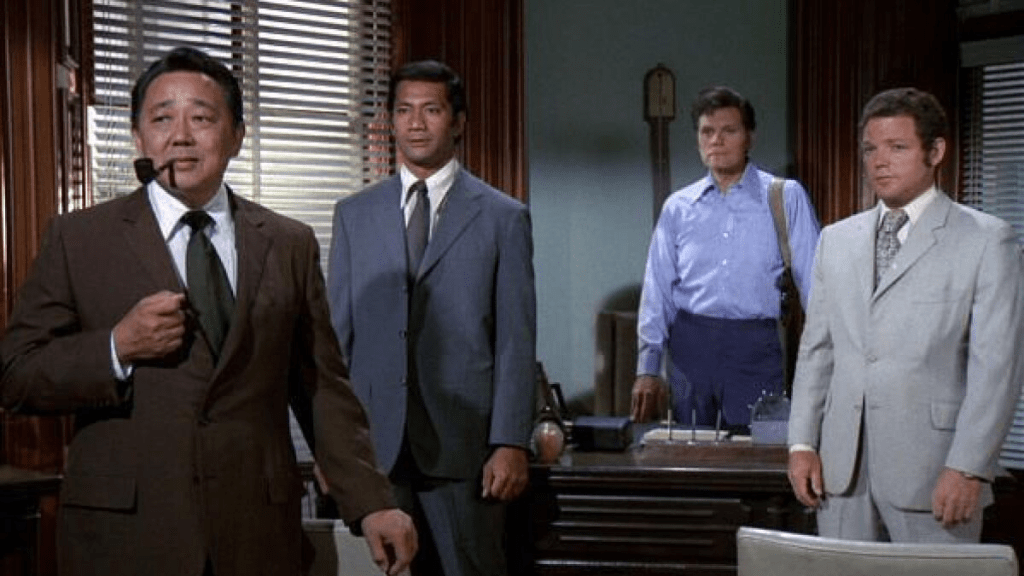
From 1968 to 1980, Hawaii Five-O was on CBS. Created by Leonard Freeman and set in Hawaii, it starred Jack Lord as Captain Steve McGarrett, former Korean War veteran. McGarrett heads a special task force appointed by the governor. His team includes Danny Williams (James MacArthur), Chin Ho Kelly (Kam Fong), Kono Kalakaua (Zulu). Police officer Duke Luekla (Herman Wedemeyer) lent a hand often. The task force is run out of offices at the Iolani Palace.

Richard Boone was offered the part of McGarrett, but he turned it down. Gregory Peck was also in consideration for the role. Eventually, Jack Lord auditioned on a Wednesday, received the part, and was in Hawaii filming on Monday. Lord was the only actor to appear in all 281 episodes of the series. A couple members of the cast came on board with little-to-no acting experience. Zulu, who played Kono, was a beach boy and local DJ. Fong, who played Kelley, had been a police officer in Honolulu for sixteen years before retiring to work in real estate.

McGarrett and his team investigated crimes by international secret agents, organized crime syndicates, and ordinary criminals. Some of the villains were played by celebrities including Gavin MacLeod, Ross Martin, and Ricardo Montalban.

📷internetmoviefirearmsdatabase.com

McGarrett’s ongoing battle throughout much of the series is with Wo Fat (Ihigh Dhiegh), a rogue intelligence officer from China. In the finale, “Woe to Wo Fat,” McGarrett is finally able to land him in jail. However, the series ends with Wo Fat retrieving a file from his boot, making us wonder if we might be able to escape. The name “Wo Fat” came from a restaurant in downtown Honolulu.

In the original show, little time was given to the personal lives of the team; the plots all centered around solving the crime of the week.

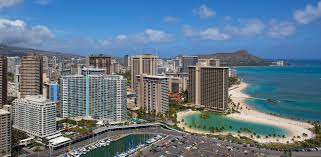
The show was filmed in Hawaii: the first location was in Pearl City in a hut where the roof leaked and rats gnawed at cables; then it moved to Fort Ruger and for the final four seasons, a set was built at Diamond Head. Hawaii had only been a state for nine years when the series started, so most Americans were not familiar with the islands.
📷instrumentationengineering.com

Fans often talked about the beauty of the scenery for the show. They also appreciated the intelligent writing and believable plots.

Many locals were used in the show, partly because the television and movie industry was not well represented in Hawaii, so everyone learned along the way. This made the cast much more diverse than most shows in the sixties.

The show was known for its theme song written by Morton Stevens. The Ventures recorded the theme, and it reached No. 4 on the Billboard Hot 100 chart. It was popular with high school and college bands across the country; when I was a majorette in the mid-seventies, it was one of the songs our band performed.

One of the most popular catchphrases from the seventies was “Book ‘em Danno,” a phrase used sparingly in the reboot.

The original Five-O was the longest-running crime show until Law & Order surpassed it in 2002. In began on Thursdays but moved to Wednesdays later in the year. From 1971-1974 it aired on Tuesdays. In 1975 it started out on Friday nights, moving to Thursdays where it stayed till 1979. That December it moved to Tuesdays for two months before switching to Saturdays for the rest of its run. This doesn’t seem like a great strategy for keeping fans.
📷facebook.com

While the show was popular with viewers, its only two Emmy wins were for music composition. It received ten nominations, but the only person to be nominated for acting was a special guest appearance by Helen Hayes in 1976. There were no nominations for acting, writing, or best series.

A one-hour pilot for a reboot was made in 1996 but never aired on television. Written by Stephen J. Cannell, it starred Gary Busey and Russell Wong as the Five-O team along with MacArthur who returned as Danny Williams, now governor of Hawaii.
📷releasedate.me

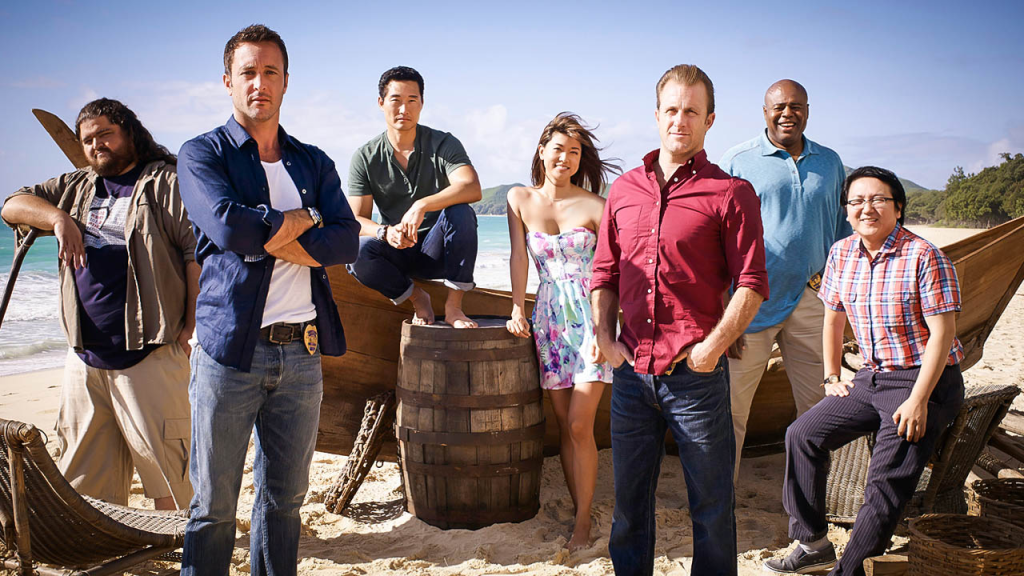
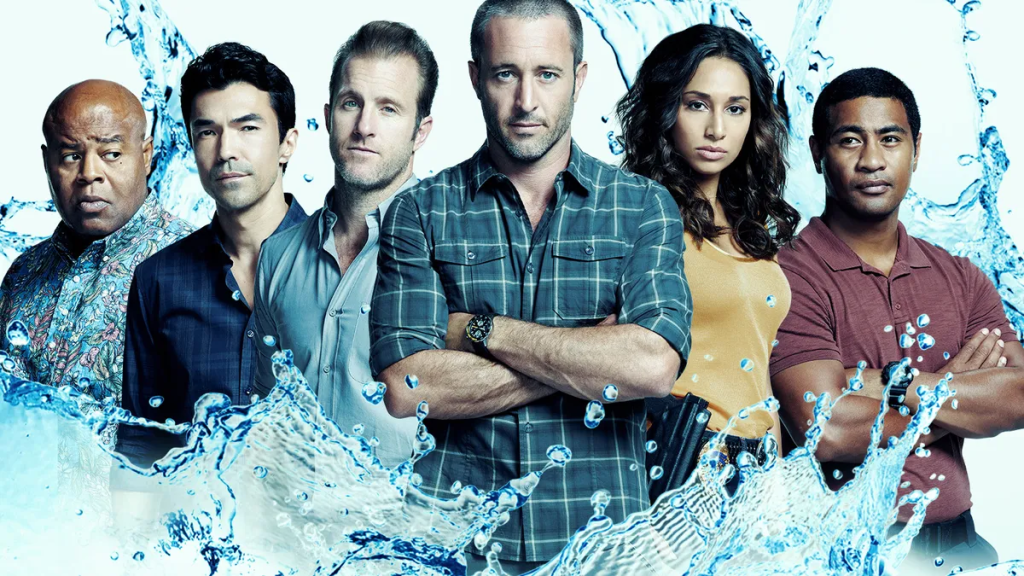
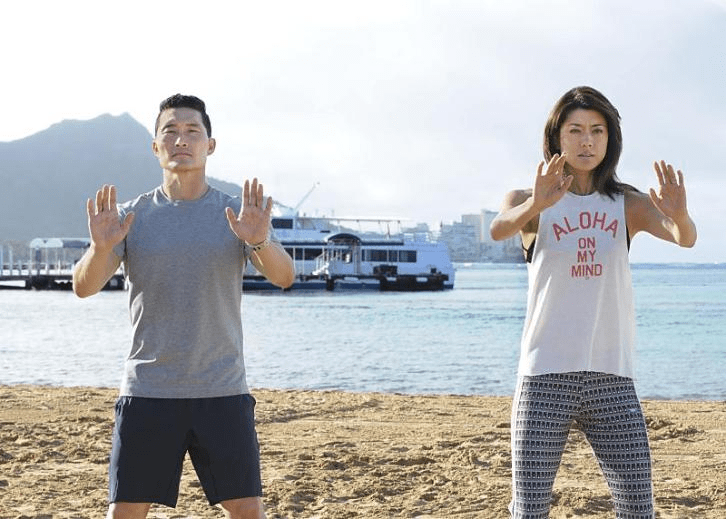
The reboot we are discussing today began in 2010, also on CBS. To distinguish it from the original show, it was Hawaii Five-0 (using a zero in place of a capital letter O). Most of the characters are similar to the original. They are still a special task force appointed by the governor who is now a woman, Pat Jameson (Jean Smart). Steve McGarrett (Alex O’Louglin), a former Navy SEAL and son of Jack Lord’s character, partners with Danny Williams (Scott Caan) in this version. Other teammates included Chin Ho Kelly (Daniel Dae Kim) and Kono Kalakaua (Grace Park). Kono’s gender switched from the a male to bring a female perspective to the team.

For the eighth season Tani Rey (Meaghan Rath) and Junior Reigns (Beulah Koale) came on board. Several other regulars during the years included Lou Grover (Chi McBride), medical examiner Max Bergman (Masi Oka), Jerry Ortega (Jorge Garcia), Chin’s classmate and a local conspiracy theorist whose vast knowledge often comes in handy, and Sgt Duke Lukela (Dennis Chun) is still around from the original show.
📷tvguide.com

A season or two into the show, Steve’s girlfriend, Lt. Catherine Rollins (Michelle Borth) works with the team and Adam Noshimuri (Ian Anthony Dale) joins the group. When Dr. Bergman heads overseas, he is replaced by Noelani Cunha (Kimee Balmilero). Another member of the surrogate family is Kamekona (Taylor Wily) who owns a food stand. He often helps the team because he knows almost everyone and has great intel for Steve and Danny. In this version, Steve’s father was a cop and Steve is still hunting down Wo Fat to avenge his father’s death. Chin and Kono are cousins and eventually Kono and Adam marry.

O’Loughlin was born in Canberra, Austrialia on August 24, 1976, and Caan was born in Los Angeles on August 23, 1976, but since Australia is twenty-four hours ahead of the US time, they were essentially born on the same day. Perhaps that’s why they had such great chemistry. Their witty bantering is fun to listen to. They remind me of an older couple who have been married a long time. They know each other so well, and can afford to be critical, because you know they have each other’s backs and would die for each other if they needed to.

This new version continued to show the beauty of the Hawaiian Islands. Viewers learned more about the culture of the state.
📷spoilertv.com

In the reboot we also got to know the characters much better; half the show concentrated on their personal lives and how those lives sometimes had an effect on what they did as detectives, right or wrong.

Peter M. Lenkov, who was one of the creators of this reboot, was also part of the team that debuted MacGyver and Magnum PI reboots, all of which are set in Hawaii.

The show was popular with viewers when it returned to the schedule. The Honolulu Advertiser wrote that “a smart script, slick production values and maybe a splash of nostalgia got the remake of Hawaii Five-0 placed on the CBS prime-time lineup this fall.”

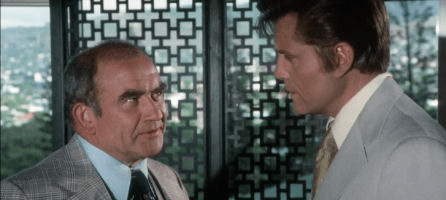
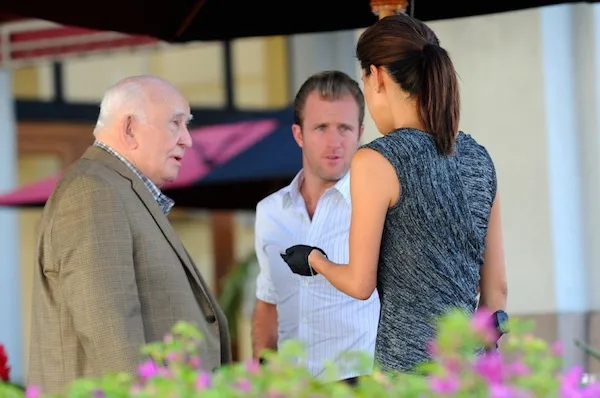
One fun carryover from the original series was the character of August March. Played by Ed Asner in the original show in season two, March was a jeweler who was arrested by Lord’s character. In season three of the reboot, August March is back played by Asner again.
📷inner toob.com Asner on the original . . . and

The series debuted on Monday nights. Season four found it on Fridays where it stayed for the final seven seasons.

Viewers had strong reactions to the theme song. For the early shows, the original theme song was used but updated which fans did not appreciate, so the original theme was used for most of this series as well.
the reboot. 📷tvline.com

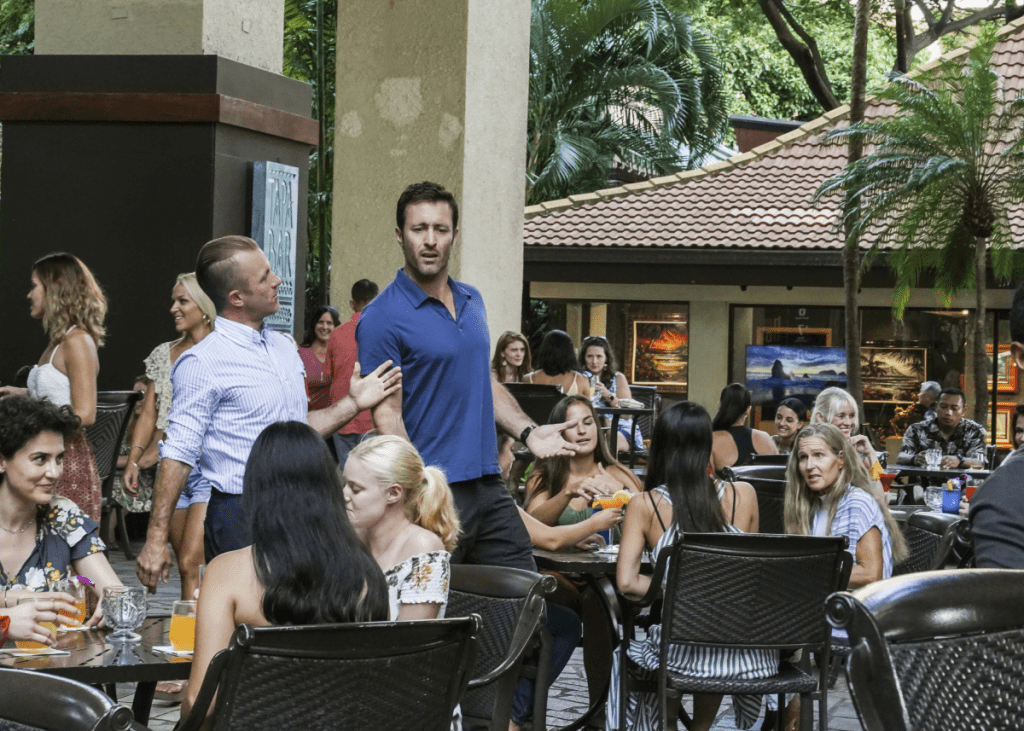
The new show had a positive impact on Hawaii’s economy. Businesses that were featured on the show saw an increase in visitors. When McGarrett mentioned Kona Brewing Company beers were his choice of beverage, sales shot up 60%.

One fun fact for those car collectors is that Jack Lord drove a Mercury Marquis in several seasons of the first show. On this edition, Steve works on his father’s car. The owner, stuntman John Nordlum, allowed the show to use the car, which still has its old license plate of F6-3958.
📷micoope.com

Comparing these shows is a little tough because television culture and shows changed so much during the 42 years that the show was off the air. The original series had 281 episodes while the reboot comes in with 240. I remember watching the original as a kid, and it was just another police drama to me. Personally, I like the reboot. Continuing to portray the culture as another character adds a lot of charm to the show. I would rather see the personal lives of the characters especially because they spend a lot of time out of work together and that adds to their team chemistry. I also like the banter between Steve and Danny.

There have been many reboots of classic shows, especially on other streaming services, and most of them do not live up to the original standards at best and can be plain awful at worst. This is one of the few that did it right and succeeded for all the right reasons. If you never saw the original, check out a season or two and compare the shows for yourself.
Robert Conrad: Go West Young Man

We are in the midst of getting up close and personal with some of our favorite television stars. Up today is Robert Conrad. Conrad was born Conrad Robert Falk in 1935 in Chicago. His parents were practically kids themselves when he was born at 17 and 15. His mother, Alice Hartman, was later the first publicity director for Mercury Records when she went by the name Jackie Smith. After divorcing Robert’s father, she later married Eddie Hubbard, a Chicago radio personality in 1948. They gave Robert one sibling before divorcing in 1958.

Photo: people.com

Conrad grew up in Chicago. He dropped out of school at age 15 to work for Consolidated Freightways and later was a milk truck driver for Bowman Dairy.

He studied theater arts at Northwestern University and then decided to pursue an acting career. He also studied singing with Dick Marx.

When he was 25 he met actor Nick Adams while visiting James Dean’s gravesite in Indiana. Adams had been a friend of James, and he talked Robert into moving to California for his acting career. (Adams died from an overdose in 1968.)

Adams was able to secure Bob a small part in the movie Juvenile Jungle which enabled him to join the Screen Actors Guild. Conrad continued to receive movie offers throughout his career, with his last role being in 2002 in Dead Above Ground.

In 1952 he eloped with Joan Kenlay. They had five children.

During the late fifties, Warner Brothers signed Conrad to an acting contract. He also worked in their recording division, releasing several versions including LPS, EPs, 33 1/3, and 45 rpm records. In 1961, he made the Billboard charts with Bye Bye Baby which hit 113.

In 1959, he made his television debut on Bat Masterson. He would appear in nine different series in 1959.

Photo: imdb.com

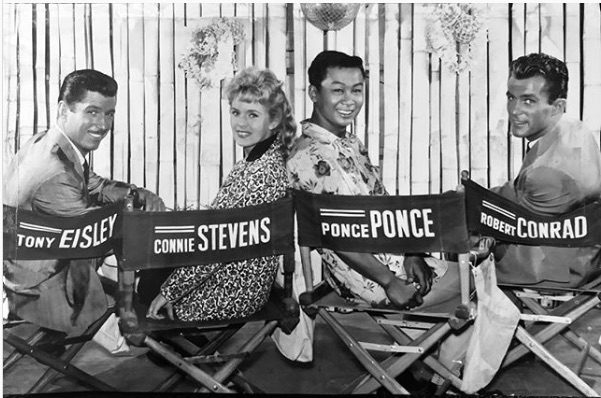
Warner Brothers created a detective show, 77 Sunset Strip. Conrad appeared on the show as detective Tom Lopaka. After appearing on four episodes, he was offered his own series, Hawaiian Eye which was on the air for four years. Set in Hawaii, this series featured Conrad as Thomas Jefferson Lopaka and his partner Tracy Steele, a Korean war vet and former city police detective played by Anthony Eisley. Their office was located at a swanky hotel where they were also the house detectives. Connie Stevens completed the trio as a scatterbrained nightclub singer and photographer Cricket Blake.

Photo: mortystv.com

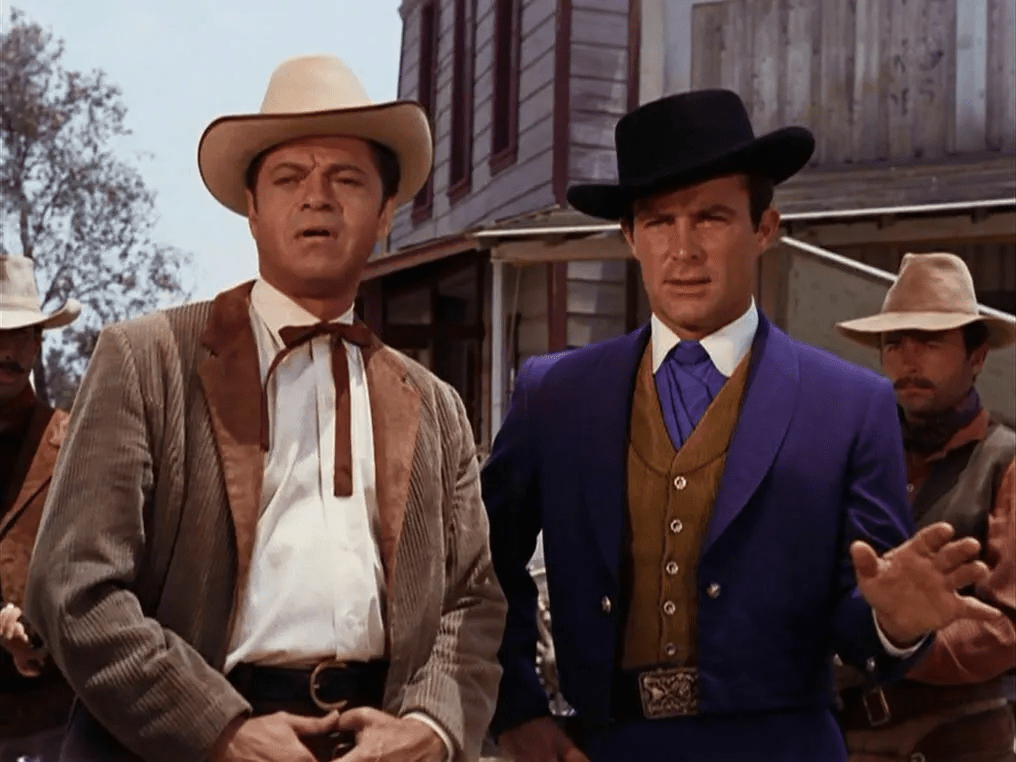
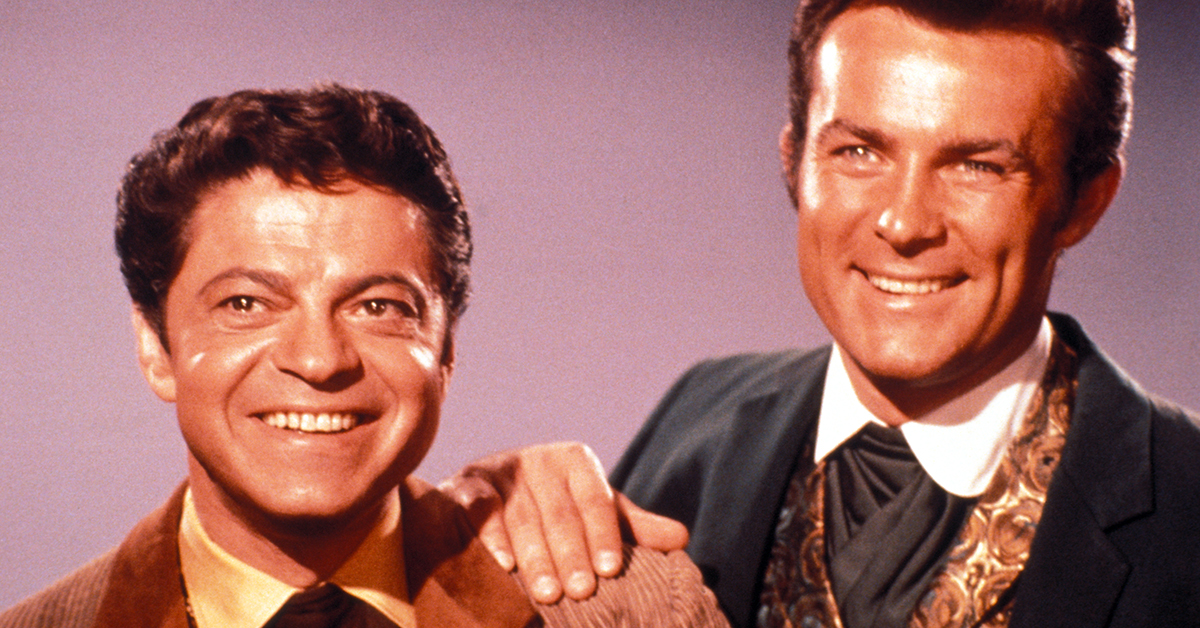
After the show went off the air, Conrad continued with several movies and television appearances until he received word in 1965 that he had been cast as government agent James West on the Wild Wild West with Ross Martin as his partner Artemus Gordon. For five seasons, the two agents worked together to solve cases primarily in the western region of the United States, often reporting to President Ulysses S Grant for their assignments. Conrad made $5000 a week for this show; it doesn’t sound like a lot today, but it was quite an increase from the $300 he made a week on Hawaiian Eye. Robert performed almost all of his own stunts on the show and was inducted into the Stuntman’s Hall of Fame.

Photo: pinterest.com

Later Conrad said he didn’t like that his character didn’t really act; it was just physical confrontation and stunts. He said he and stuntman Whitey Ford choreographed the fights. Although that made him unhappy, he enjoyed his time on the show because he loved working with Martin.

Conrad took on several television and movie roles for two years until he was offered another sitcom offer to star in The DA where he played LA District Attorney Paul Ryan. The show only lasted one season, but then he went directly into Assignment: Vienna where he played a rugged American spy Jake Webster. Unfortunately, this show only lasted eight episodes.

Photo: ebay.com Cast of Baa Baa Black Sheep

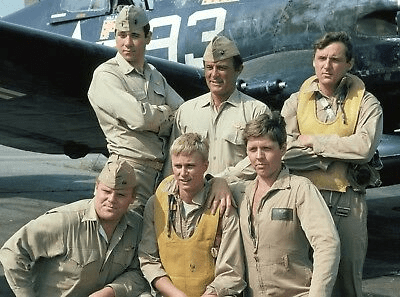
After this short-lived series, Conrad waited four years to try his hand at television again. From 1976-78, he took on the role of tough-guy ace pilot, Pappy Boyington in Baa Baa Black Sheep. Pappy led the US Marine Attack Squadron 214, a group of “black sheep” pilots who were not as committed to the Marines as they were having a good time. However, they were great at their job and desperately needed in World War II. Conrad directed three of the shows.

During the run of this show, Robert and Joan divorced after 25 years of marriage.

For the next fifteen years, Robert bounced back and forth between television appearances and movies. While he showed up on the big screen, television movies were where he earned most of his money between 1979-1995.

He would attempt to star in five additional series, none of which were very successful. In 1979, he was the star of The Duke about an ex-boxer Duke Ramsey who becomes a private investigator in Chicago. After only three episodes, the refs called the match. I’m guessing Conrad did his own boxing in this show because he was a semi-professional boxer and had an undefeated record of 4-0-1.

That same year he went on to star in A Man Called Sloane. Sloane is a freelance spy who often accepts assignments from a secret government agency. He must have had to go into hiding quickly because he was off the air after twelve episodes.

In 1983, Conrad married again. He and LaVelda Fann were married from 1983-2010.

In 1987 he joined High Mountain Rangers as Jesse Hawkes. Hawke led his family on adventures in the wilderness where he was employed in law enforcement and rescue. No one requested a baker’s dozen, so after twelve episodes, he was done again. The following year his series lasted half as long, six episodes only, when he played Jesse Hawkes once again, but on this version, he and his sons fight crime in San Francisco. Sticking with the same theme, in 1995 he became Griffin Campbell on High Sierra Search and Rescue, leading volunteers in a remote mountain town in dangerous rescue missions. Again, after six episodes, he was done.

While none of these shows could find an audience, there was some realism in the roles because Conrad was a deputy sheriff for eight years or so in Bear Valley, California where he lived.

For the last few years of his career, he took on various tv and movie roles. His last television role was in 2000 on Nash Bridges.

Photo: mortystv.com

After 2000, he managed to stay busy with a variety of projects. He ran for President of the Screen Actors Guild in 2005. In 2006 he provided introductory material for the DVD set of The Wild Wild West. He began hosting a weekly national radio show called The PM Show with Robert Conrad on DRN Digital Talk Radio.

In 2020, Conrad died from heart failure. He was 84.

It would have been interesting to see what Conrad’s career would have looked like if he had received some different types of roles. He did test for the role of Anthony Nelson on I Dream of Jeannie and was offered the role of Hannibal Smith on The A-Team but turned it down to pursue his own projects. I would have liked to see him in a comedy role.

Is It A Western? A Spy Show? A Thriller? No, It’s The Wild Wild West

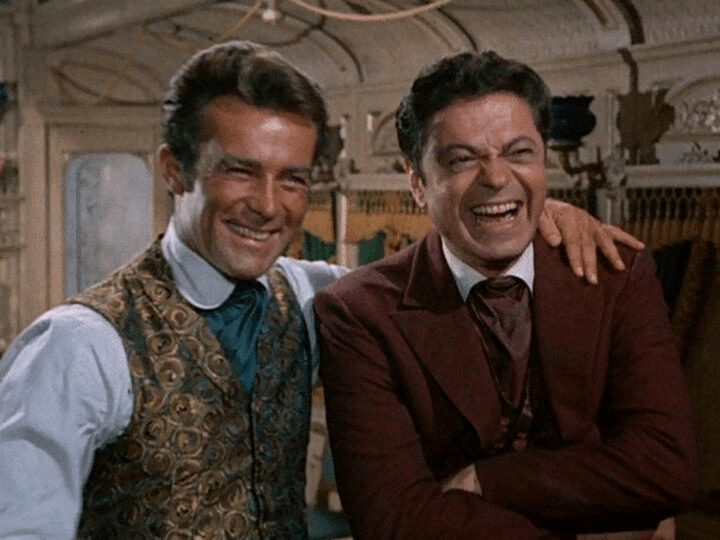
There was no specific category for the Wild Wild West when it first debuted in 1965.  Part western, part spy show, part thriller.  Now, it might be called steampunk. Westerns had been extremely popular through the 1950s and into the 1960s, but in the mid-1960s, the spy genre was gaining ground. Creator Michael Garrison combined the two. Secret Service agents Jim West (Robert Conrad) and Artemis Gordon (Ross Martin), work for President Ulysses Grant and travel the country by luxury train, the Wanderer.  Oh yeah, and they have a ton of technology to make the job more exciting. Artemis is a master of disguise.  Like James Bond, they had clever gadgets on hand, beautiful women in the wings, and delusional, but brilliant, enemies to fight against.

Photo: decades.com

The series debuted in 1965 and ran for four seasons, resulting in 104 episodes. Unfortunately, Garrison died a year into the show and didn’t live to see its completion. The show was filmed at CBS Studio Center. The 70-acre lot was used for Gunsmoke, Rawhide, and Gilligan’s Island as well.

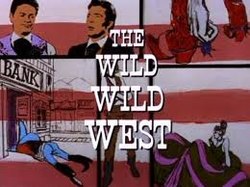
The theme song was written by Richard Markowitz. The intro had an animated sequence that continued to be filled in throughout the show. This was quite unique to this program.

Conrad claimed to be the 17th actor to audition for the role of James West. Originally, Rory Calhoun was announced as the co-star. Conrad wore three-inch heels to hide that he was only 5’8”. Due to his height, the casting office was barred from hiring women over 5’6” for the show. The first few episodes used stuntmen, but Conrad felt that it slowed production down too much, so he volunteered to do his own stunts. During season three, he fell from a chandelier and hit a concrete floor, leaving him with a concussion and weeks of hospitalization for dizziness.

Photo: artworkproduction.ca

Ross played over 100 different characters during the run of the series. He sketched out the ideas for the characters himself and then worked with the make-up artists to get the right look. During the fourth season, Martin broke a leg when he dropped a rifle, stepped on it, and rolled his foot over it. When the shell ejected, it burned his eye. Ross also suffered from a heart attack in 1968. Several other agents “filled” in for Martin while he recuperated.

Photo: writeups.org

Considering the show was only on for four years, it featured a number of guest stars including Ed Asner, John Astin, Jim Backus, Ed Begley, Victor Buono, Jackie Coogan, Yvonne Craig, Sammy Davis Jr., Jack Elam, Norman Fell, Bernard Fox, Mary Frann, Beverly Garland, Alan Hale Jr., Boris Karloff, Richard Kiel, Ted Knight, Harvey Korman, Martin Landau, Sue Ane Langdon, Peter Lawford, Ida Lupino, Burgess Meredith, Agnes Moorehead, Phyllis Newman, Leslie Nielsen, Carroll O’Connor, Pat Paulsen, Suzanne Pleshette, Richard Pryor, Don Rickles, Pernell Roberts, Katherine Ross, William Schallert, Vito Scotti, Ray Walston, Jesse White, and Keenan Wynn.

The train was also a co-star of the show. The spies had two different trains. The first was used for season one when the shows were filmed in black and white. It was a Sierra Railroad No. 3 which was not built until 1891, a mere technicality I guess. The Rogers Locomotive and Machine Works built it in New Jersey. Footage was shot in Jamestown, California. This same train was the Cannonball in Petticoat Junction.

Photo: metv.com

The shows filmed in color featured a train decorated with green and gold and it was full of fun gadgets. This one was built in 1875 by the Baldwin Locomotive Works in Philadelphia. It was used in many films over the years.

Photo: tripadvisor.co.uk

Both these trains are on display at the Nevada State Railroad Museum. They were only featured in exterior shots. The interiors of the trains were designed by art director Albert Heschong with set decorator Raymond Molyneaux. It reportedly cost $35,000 in 1965. To put this in perspective, the average house in 1965 cost less than $4,000! The train was as resourceful as West and Gordon. A remote control under the table could immediately lock the door. A statue turned upside down unlocked a wall safe. A telegraph set was hidden in a book on the desk. Pistols could be fired by activating a fireplace switch. The pool table had exploding balls while cue sticks could fire bullets.

Photo: tvoftheabsurd.com

Many of the guest stars were villains in the show. The most famous villain was Dr. Miguelito Loveless played by Michael Dunn. He had a recurring role, appearing on ten episodes. He always managed to escape at the end of the show. West and Artemis never did catch him, and a TV movie filmed later relays that he died in 1880 from ulcers brought on by the stress of his plans always being foiled by West and Gordon.

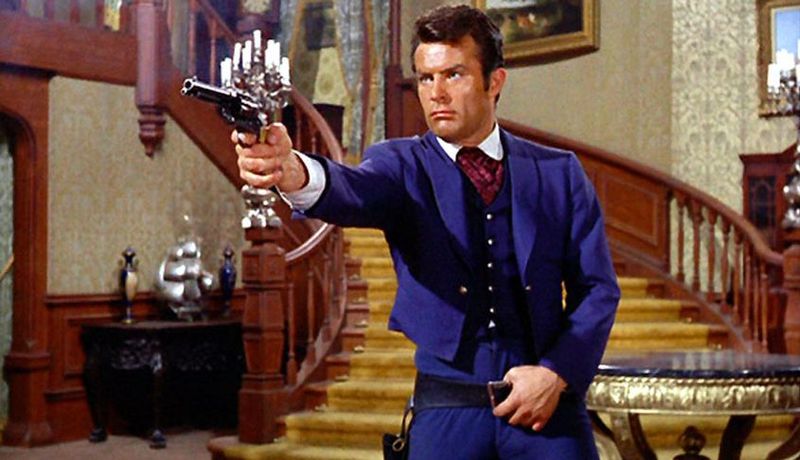
Like Batman, Jim West always seems to have the right gadget at his disposal when he needs it. Some of his more fun props included a sleeve gun as well as a gun concealed in his heel. He also occasionally carried a blowtorch in his heel. Passkeys were stored under his lapel. He kept a variety of fuses sewn into hems in his clothes. To descend into a pit or be hoisted up on a roof, he had a hand-held motor-driven winch. Glass cutters which often are useful were available. Wires placed in his hat had many uses. Battery-powered drills helped the boys escape metal cages. His kit bag held a large balloon. A miniature player made villains think shot guns were being fired. Of course, every smart secret service man wears a bulletproof vest and is always equipped with tear gas or smoke bombs. They even had a cigar that would produce smoke when thrown on the ground and a coin that exploded when exposed to heat.

Photo: thegoldencloset.com

There typically were two fights in each episode choreographed by Whitey Hughes. Following the 1968 assassinations of Dr. Martin Luther King and Robert Kennedy, a National Commission on the Causes and Prevention of Violence was formed. Violence on television was listed as one of the problems, and The Wild Wild West was cited as a violent show. So, despite high ratings, the series was cancelled near the end of its fourth season as a concession to Congress over television violence.

Photo: antiquatednotions.typepad.com

However, the show was then released into syndication and at one time was listed on 99 different local channels, so the violence on television was not curbed by its cancellation.

Several books and comic books were created based on the show. In 1979, the two stars returned to television with a movie, The Wild Wild West Revisited. In 1980, they showed up again in More Wild Wild West. Rumors existed that the duo would do a reboot of the series, but Ross died in 1981 so it never came to fruition.

A movie was made in 1999 based on the original show, but it was not received well. Will Smith later expressed regret for his role in the film. The Golden Raspberry (Razzie) is awarded to the worst films. When the 1999 film was awarded five Razzies, Conrad accepted them on behalf of the movie to show his displeasure with the remake.

Photo: stupendouslyamazinglycoololdtv.blogspot.com

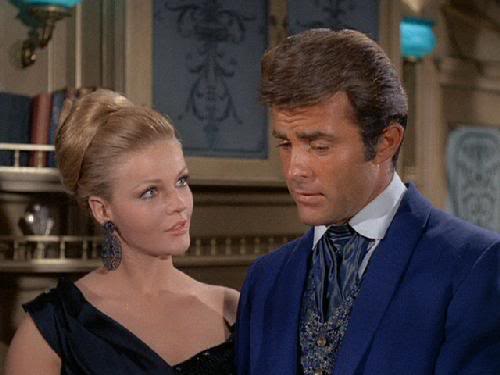
The show’s success primarily stemmed from the fact that Artemus and West trusted each other completely, and their banter and technological gadgets made the show a pleasure to watch. And did I mention, the boys loved women on and found a romance on every show. We’ll let the characters have the last word:

Artemus Gordon: “Naomi. ’My sweetness’. That’s what Naomi means in Hebrew, did you know that ?”

Naomi Buckley: “Really ? And what does Artemus mean ?”

James West: “It means ’He who wastes little time‘.”

Photo: filmscoremonthly.com

Artemus Gordon: “I didn’t know you liked toys.”

James West: “Toys, no. Dolls, yes.”