A Tribute to Rose Marie

rosemarie2

Rose Marie had one of the longest-running careers in the entertainment industry – more than 90 years in the business. During her career, she was in vaudeville, on the radio, in the movies, performed in live concerts around the country, did some Broadway, and became most famous for her television performances.


rosemarie6

Born in 1923 as Rose Marie Mazetta, she won a contest at 3 and began performing as Baby Rose Marie. On her official site, she mentions she was born the same day the Broadway show Rose Marie opened. In 1927 at the age of 4 she was featured in a Vitaphone short that opened with Al Jolson’s Jazz Singer.


rosemarie21

By age 5, she had her own national radio show. She worked in vaudeville with Edgar Bergen and Milton Berle. She made several records, and the first one released was with Fletcher Henderson’s orchestra. By 1933 at age 10, she was starring in her first film, International House. During these years, she performed at the White House three times—for Presidents Coolidge, Hoover, and Franklin Roosevelt.


Rose Marie

It was during her vaudeville stint that the doorman informed her and her father that a gentleman wanted to see them in the back alley.  The “gentleman” was Al Capone who called her father Happy Hank and told them that “the guys” wanted to meet Rose Marie. She was taken to Capone’s house the next day where she performed for about 24 guys.  Al gave her a ring with three diamonds which she still had when she passed away. He said they would always take care of her.  He was true to his word. Even after he was incarcerated, Rose Marie was met and protected by the mob for her entire career.  Decades after the most notorious gangsters were gone, men showed up at her shows checking on her just to make sure she was doing okay, getting work,  and not in need of anything. Later she learned that her father, who was an actor by trade, was Capone’s arsonist, the one who burned down buildings of men who disappointed the gangster. There is an article about her meeting with Capone on The Mob Museum’s website. (The Mob Museum is located in Las Vegas.)

rosemarie20


As a teenager, Rose Marie transitioned to clubs, touring the United States. In order to make her sets longer, she began to add comedy to her singing acts.


In 1946 she met Bobby Guy who as with the Kay Kyser Orchestra. They were engaged within a week, and he remained the love of her life until he passed away in 1964. They had one child, Georgianna. Guy would become the lead trumpeter on The Tonight Show.


It was also in 1946 that Rose Marie opened the Flamingo with Jimmy Durante. Jimmy Durante mentored her earlier in her career and she loved him. He was always mentioned as one of her favorite people.  At that time, the only other hotels in Vegas were the Last Frontier and El Rancho. Bugsy Siegel owned the Flamingo, and Rose Marie received work in clubs from her mob connections. She also had a 40-year friendship with Frank Sinatra that was also probably tied to some of their mob connections.


In 1951, Rose Marie tried her hand at Broadway, appearing in Top Banana with Phil Silvers. She knew Silvers from appearing on his radio show with Alice Faye. She played their daughter and Sheldon Leonard (who would hire her for The Dick Van Dyke Show) played their son.
rosemarie5

In 1954, Top Banana was made into a film. Once again Phil Silvers was in it. Rose Marie recorded her musical numbers. The producer tried to manipulate her to have sex with him. She said no in front of several people, and in retaliation he cut all her numbers from the film. In 2017 before her death, she shared the incident on Twitter to help support the women who have been exposing the sexual assault in Hollywood. She appeared in ten movies after that, most of them in the 1980s and 1990s, but she quickly became disillusioned with the film industry.

rosemarie14


Tired of the Hollywood politics, Rose Marie embraced the new television culture. She appeared in Gunsmoke in 1957 and would continue to receive roles in the new medium through 2011. During her career, she appeared on 48 different shows.

In the 1950s, she had a recurring role in The Bob Cummings Show as Martha Randolph and she appeared in The Many Loves of Dobie Gillis. The first sitcom she had a permanent role in was My Sister Eileen; she played the sisters’ friend Bertha. The show ran for 24 shows during 1960 and 1961.


rosemarie17

In 1961, Sheldon Leonard cast Rose Marie in the role of Sally Rogers on The Dick Van Dyke Show. She recommended Morey Amsterdam for the role of Buddy Sorrel whom she had known since age 9. The show was originally to star the office cast with the home life coming in second; however, as things changed, Mary Tyler Moore became the costar with the home life dominating the scripts and Sally and Buddy were featured less. The show produced 158 episodes and is undoubtedly one of the best written sitcoms ever produced. She and Morey received the same salary despite her being a woman. That sounds only fair today, but at the time it was not the normal practice. She loved working on The Dick Van Dyke Show. When asked about her time on the show, Rose Marie said, “We loved each other, we helped each other . . . We were really very close.”


After The Dick Van Dyke Show ended, Rose Marie took roles on several shows including The Monkees and My Three Sons. In 1969, she received a role as Myrna Gibbons on The Doris Day Show, playing Doris’s friend and coworker.


She showed up in many series during the 1980s and 1990s including The Love Boat, Mr. Belvedere, Suddenly Susan, Wings, and was a cast member in Hardball, about a struggling baseball team.


In the 1990s, Rose Marie would take on the role of Frank Fontana’s mother on Murphy Brown. Later she would appear in S.W.AT. as Hilda providing doughnuts and coffee, as well as comic relief, on the show.

rosemarie28

In the late 1990s and early 2000s, Rose Marie transitioned to voice overs for such shows as Hey Arnold and Garfield.

Rose Marie also liked game shows and was a regular on Hollywood Squares through all the different versions.


From 1977-1981, she performed across the country with Helen O’Connell, Rosemary Clooney, and Margaret Whiting. They called the show 4 Girls 4. Rosemary’s nephew, George drove their bus for them.  At some point they made enough money to afford airfare, and George Clooney went on to create a little career for himself.


Rose Marie received the 2184th star on the Hollywood Walk of Fame in 2000. Her baby shoes, along with 40 other items, have become artifacts in the Smithsonian’s American History Museum.

Her hobbies included cooking Italian meals, knitting, and reading; she especially loved Stephen King novels.


rosemariebook

When she first appeared as Baby Rose Marie, someone handed her a bouquet of roses, but she needed to take her bow, so she handed them off and said, “Hold the Roses.” That became the title of her autobiography that was published in 2002.


rosemarielaugh

She was the subject of a documentary Wait For Your Laugh in 2017. Dick Van Dyke said that was her catchphrase, and whenever they were anywhere something funny happened, even a waiter dropping a tray full of food, she always repeated the phrase.


rosemarie10

She accomplished so much in her career you wonder how she could have had any regrets, but she was denied two accomplishments.  She received three Emmy nominations for her role as Sally Rogers but never won an Emmy.  She also wanted to direct and never had an opportunity to do so.


rosemarie3

Sadly, Rose Marie passed away in December. Happily, she left an amazing legacy of performances in a variety of mediums for us to remember her by. While she was so much more than a television star, Sally Rogers will always be one of my favorite characters. Thank you Rose Marie for so many fond memories.

Verrry Interrresting!

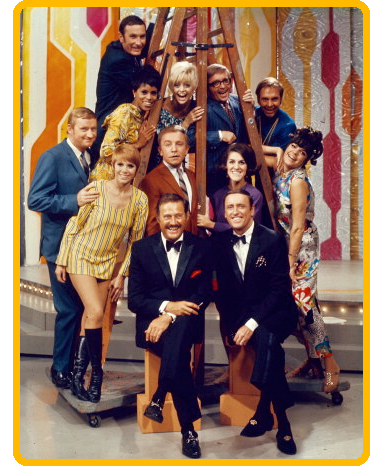
Occasionally, a show is so entrenched in the time and culture it debuts in, it becomes almost impossible to describe or understand away from its original setting. Dan Rowan and Dick Martin were nightclub comics who co-hosted a special called Laugh-In in 1967.  The name was a play on words based on the love-in’s and sit-in’s happening in the 1960s.  The special was so popular it was turned into a weekly series. I think of Laugh-In as Sesame Street for adults.  Both shows debuted in the late 60s and had a rapid-fire approach, continually moving on to the next segment so the viewer would not get bored. The show captured the counterculture movement and the lime green, turquoise, fuschia, deep orange, bright yellow, and paisley flowers kept our eyes moving as quickly as the jokes did. The show lasted six seasons.

laughin1

Regular cast members who went on to other careers included Ruth Buzzi, Gary Owens, Alan Sues, Arte Johnson, Henry Gibson, Lily Tomlin, Richard Dawson, Jo Anne Worley, Goldie Hawn, Judy Carne, Dave Madden, and Flip Wilson.

Numerous celebrities flocked to the show.  Movie stars that were reeled in included John Wayne, Jack Benny, Peter Lawford, Zsa Zsa Gabor, Charles Nelson Reilly, Debbie Reynolds, Rock Hudson, Jack Lemmon, Edward G. Robinson, Sally Field, Orson Welles, and Rita Hayworth.  Noted musicians included Sammy Davis Jr., Dinah Shore, Johnny Cash, Perry Como, Liberace, Bing Crosby, Cher, Rosemary Clooney, and Liza Minelli. Sports stars tackled the chore including Joe Namath, Wilt Chamberlin, Sugar Ray Robinson, and Howard Cosell.  Comedians who laughed their way on the show included Rich Little, Don Rickles, Bob Hope, Bob Newhart, Paul Lynde, and Carol Burnett. Classic tv stars who accepted starring roles were Tim Conway, Carl Reiner, Steve Allen, Jim Backus, Ernest Borgnine, Eve Arden, Andy Griffith, Desi Arnaz, and Wally Cox.

The format rarely changed from week to week.  Rowan and Martin opened each show with a dialogue; Rowan acted as the straight man, and Martin took on the gullible role. Then the regular cast, along with celebrities, danced against a psychedelic background, firing off one-liners and short gags. Comedy bits, taped segments, and sketches filled in the rest of the hour and always ended with Rowan telling Martin to “Say goodnight, Dick” and Dick replying, “Goodnight Dick.”

Some of the regular features were:

laughinn

The Cocktail Party where the cast stood around spouting politically and sexually suggestive jokes.

Letters to Laugh-In where the cast read letters.

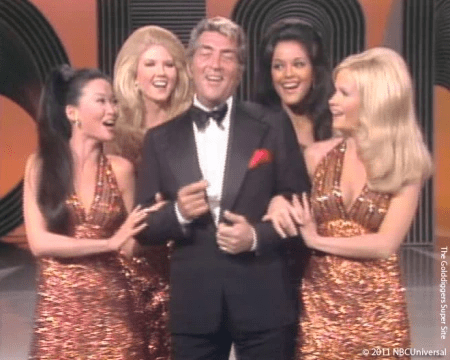
ROWAN AND MARTIN'S LAUGH-IN,  Teresa Graves, Pamela Rodgers, 1969-1970.

It’s a Mod, Mod World where go-go dancers danced in bikinis with puns and word play phrases painted on their bodies.

farkel

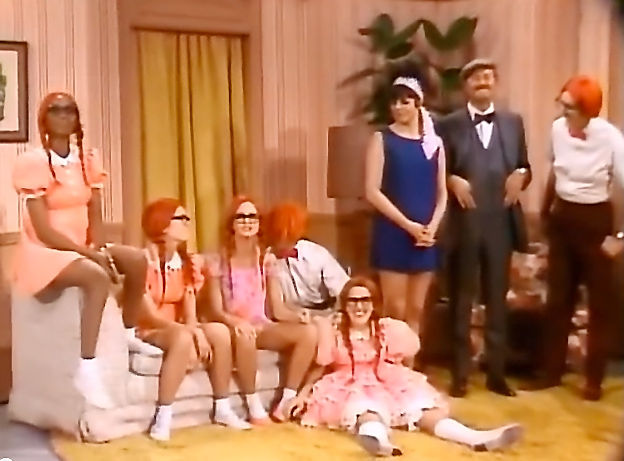
The Farkel Family about a group of red-headed, freckled family members.

fickle

The Flying Fickel Finger of Fate Award where dubious achievements were celebrated.

Laugh-In Looks as the News was comparable to the Saturday Night Live news sketches of today.

New Talent Time showing various weird skills.

Many of the regular cast members had their own skits that were repeated during the series’ run:

carne

Judy Carne was always tricked into saying “Sock it to Me” which then caused her to get doused with water, fall through a trap door, or endure some other indignity. Sometimes celebrities ended up being the ones to say “Sock it to me,” the most famous being Richard Nixon when he was campaigning for president.

buzzi

Arte Johnson played Tyrone, an inappropriate senior citizen who tries to seduce geriatric Ruth Buzzi as Gladys, forcing her to eventually hit him with her purse.

laughinc

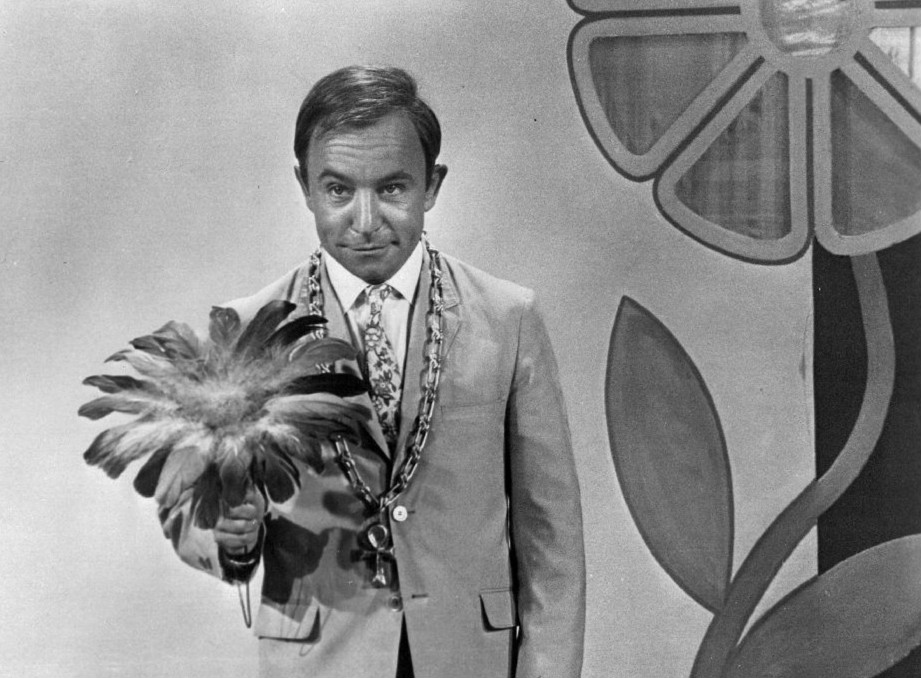
Henry Gibson came on stage holding an oversized paper flower, reciting poetry.

Lily Tomlin performed skits as Ernestine, a telephone operator or Edith Ann, a young girl sitting in a rocking chair. (Personal note:  When I was in 4th grade, I performed an Ernestine and an Edith Ann skit for our talent show.  Why a 9-year-old was watching Laugh-In and the school approved the skits, I can’t say, but I remember getting a lot of compliments.  And Lily Tomlin didn’t sue me for stealing her material!)

sues

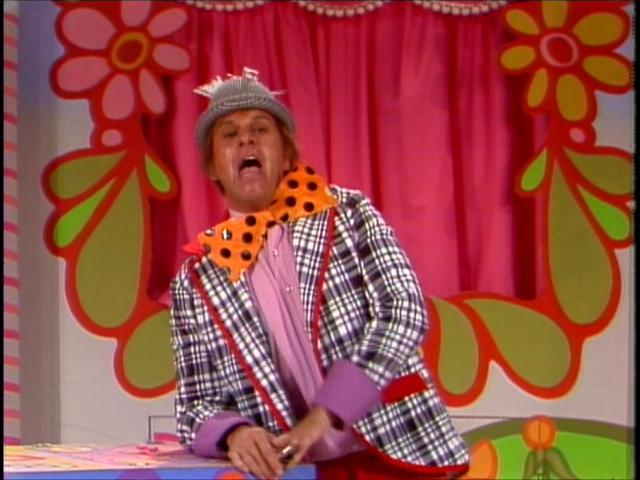
Alan Sues portrayed Uncle Al, a children’s show host, who was short tempered and often in bad shape from his late partying nights.

laughinh

Flip Wilson was Geraldine.

laughin6

Jo Anne Worley would say “Bor-ing” in the midst of jokes.

laughing

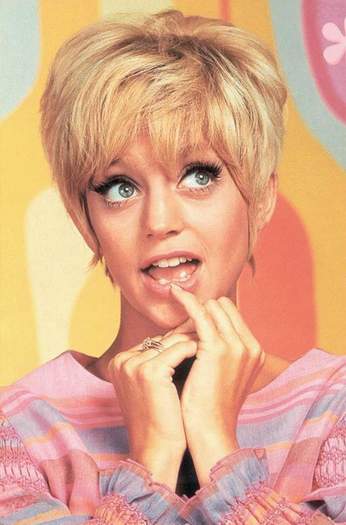
Goldie Hawn as the ditzy blonde.

The series also became known for some of its catch phrases including “Look that up in your Funk & Wagnalls,” “You bet your sweet bippie,” “Beautiful downtown Burbank,” “Is that a chicken joke?,” “Sock it to me,” “Here come de judge,” and “Verrrry Interesting.”

The show was one of the highest rated shows in the late 1960s. It was in the top 4 of the top 40 shows for its entire run. It won Emmy and Golden Globe awards. The Nielsen polling determined it was the most-watched show in seasons 1 and 2.

The show had its own magazine for a year.  Trading cards were sold with catch phrases and images from the show. Several records were produced capturing the humor of the time.  There was even a set of View-master reels made, as well as lunch boxes and other memorabilia.

laughinrev

Laugh-In debuted fifty years ago, but still feels new and edgy. Because the show has not been syndicated in re-runs, it is hard for the current generation to imagine how very different this show was from anything else that appeared on television before it.  The closest show to capturing any of its essence since then is Saturday Night Live.  This was a time when everything was changing: civil rights, Vietnam, women’s lib, the hippie lifestyle, psychoactive drugs, anti-authoritarianism, freedom of speech and assembly, and environmental concerns, especially littering and pollution.

The Generation Gap was a real concept in the 1960s but this show might have come as close as anything else to bridge that gap. Families sat down together to watch the show. Many of the phrases still have a life of their own decades later even thought decades of kids have never seen the show.  Plan your own little sit-in when you check out a couple of the you-tube videos to get a flavor of what the series was like.