Angie: Always on the Move

This month we are learning about sitcoms with one name, and today is Angie. Angie had a short run from February 1979 until September of 1980, producing 36 episodes. It was one of the few Garry Marshall shows not to be a long-running hit. He created it with Dale McRaven. We all know Marshall’s amazing career with Happy Days, Laverne and Shirley, The Odd Couple, not to mention all of his great movies. McRaven also had a prolific career as a producer and writer. He’s listed as producer for The Partridge Family, The Betty White Show, Mork and Mindy, and Perfect Strangers. His writing credits includes all of these shows, as well as The Dick Van Dyke Show, That Girl, Get Smart, The Odd Couple, and Room 222 among others.
📷ihearthollywood.com

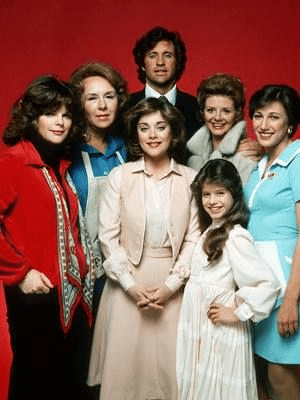
The cast was quite talented: Donna Pescow played Angie, Robert Hays was her boyfriend-later-husband, the amazing Doris Roberts was her mother Theresa before Raymond came along, and Debralee Scott played her sister Marie.

Bradley Benson is a young pediatrician who comes from a wealthy family comprised of his stuffy father Randall (John Randolph), his overbearing sister Joyce (Sharon Spelman), and her daughter Hillary (Tammy Lauren). The show is set in Philadelphia.

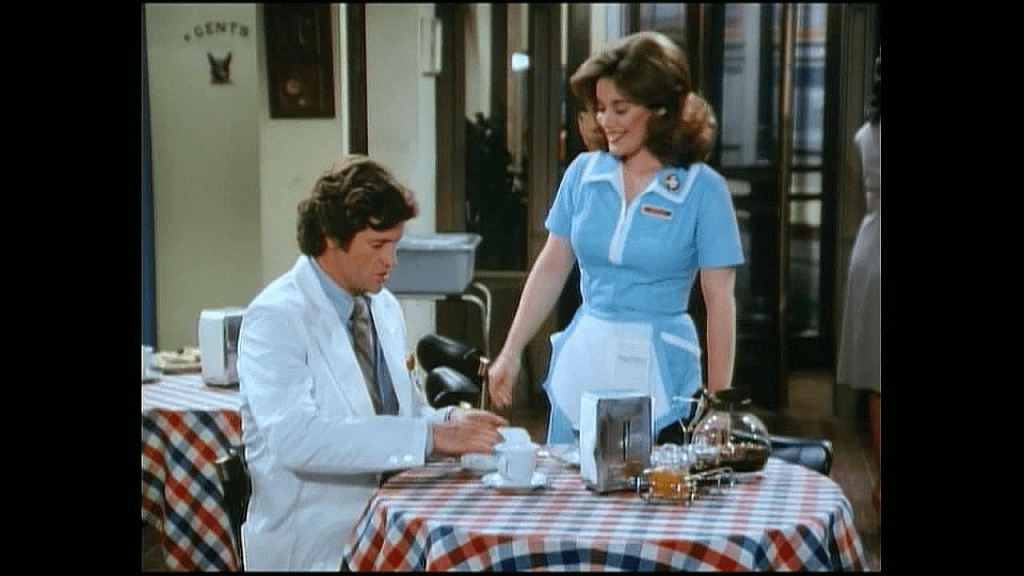
Angie is a coffee-shop waitress who falls in love with Brad. Many scenes are set in the diner with Angie’s friend and co-waitress Didi (Diane Robin). When their families argue about wedding plans, Brad and Angie elope. Later Angie’s mother plans a small family wedding for the two families to get to know each other, and Brad buys the coffee shop for Angie.

At the beginning of the second season, Angie sells the coffee shop to buy a salon with her mother.

📷imdb.com

The theme song was “Different Worlds,” written by Norman Gimbel and Charles Fox. Gimbel is still hard at work and has amassed 494 credits so far while Fox has 131 credits for many impressive television series and big-screen films. Maureen McGovern sang it; she’s best known for her top-forty hit “The Morning After.”

The show was sandwiched between Happy Days and Three’s Company on Tuesday nights, which ensured great ratings. This one was fifth its first week. The show just could not find its fan base. By the end of the season, the Nielsen ratings had fallen drastically, and the show had moved to Monday nights following Monday Night Football. Angie wasn’t the only show to struggle in this time slot. Once it was moved, three other shows—One in a Million, Goodtime Girls, and Laverne and Shirley—all tried this scheduling spot. I’m not sure if the shows were just not very good in 1979, if people were too busy to watch television, or the network heads were inexperienced, but when you look at the schedule from 1979 most prime times had a different show in the slot every season of the year. When it’s not only one show on a network moving, but many shows on a network moving and then all networks having a bunch of shows moving, how are viewers supposed to figure out where anything was? Out of the 54 new shows debuting in 1979, by the next season every network basically had one hit show out of the bunch: ABC-Hart to Hart, CBS-Trapper John MD, and NBC-The Facts of Life. While these are all decent shows, none of them were classics in my opinion. In 1980 another 30 shows were brand new.

📷rewatchclassictv.com

The show was put on hiatus. It did return in April on Saturday nights, but it was officially canceled in May.

When you look at this show on paper, it had all the right elements. First of all, we have Garry Marshall and Dale McRaven, very successful creators and writers. The cast was amazing. Even the theme song was composed and sung by extremely talented people. Then you have the fact that there were not a lot of great shows debuting this year; a decent show should have crushed it. So, what happened here?

I think I’m putting the blame for this one on the network. I watched the pilot and while pilots are meant to pull you back for the next one, most pilots aren’t the best of the series. Some of the pilots for shows I love are almost dreadful. This pilot was not dreadful. The characters were likable, the writing was funny, and the theme was not overdone over the years. It was similar to The Mothers-In-Law from a decade earlier but more of a Dharma and Greg (which came two decades later) where they fall in love despite their economic differences.
📷youtube.com

This series was better than a lot of shows that are currently on the air. I did watch another later episode where the couple elopes. Once again, the writing was good and the characters were a bit eccentric, but the writers knew how far to go to keep them likable and charming rather than odd. If ABC had kept it in a time slot for more than a month or two and given it a bit of time, it might have been a big hit.

If you want to check it out, let me know what you think. For a late seventies/early eighties show, it’s aged very well.
Don Adams: Always Smart

This month our blog series is titled “All About The Bill Dana Show.” The first week in March we learned about the show and now we have been spending time with some of the cast. We end our series with Don Adams.

Adams was born Donald James Yarmy in Manhattan in 1923. Don was a blend of cultures, Hungarian Jewish on his dad’s side and Irish-American on his mom’s. Don was raised Catholic while his brother Dick was raised Jewish. I could not find out what their sister decided to do. She later became a writer under the name Gloria Burton and wrote a script for Get Smart. His brother was also an actor. Dick has about 50 acting credits and appeared in many of the most popular sitcoms during the sixties and seventies, including three appearances on Get Smart.

Adams dropped out of high school and went to work as a theater usher. In 1941 he joined the US Marine Corp. At one point he was injured during a Japanese assault on Tulagi. He was the only survivor from his platoon. While recovering, he came down with blackwater fever, a side effect from malaria and was evacuated to New Zealand. He was not expected to recover, but when he did, he was sent back to the US as a Marine drill instructor.

After his discharge, he moved to Florida to work as a comedian. He refused to do material he considered “blue” and was fired.

In 1947 he married Adelaide Efantis, and her stage name was Adelaide Adams. Don decided to take the name Adams as well for his stage name. He worked as a commercial artist and cashier to support their family.

In 1954, Don was the winner of Arthur Godfrey’s Talent Scouts with a comedy act written by Bill Dana. He began making appearances on The Steve Allen Show, where Dana was a writer. In 1961 he became a regular on the Perry Como Show.

About this time, Don and Adelaide divorced, and Adams married Dorothy Bracken, another actress. They split up in 1977 when he married Judy Luciano, also an actress but that marriage also ended in divorce. (I could only find one credit for his last two wives; Bracken was on Get Smart, while Luciano appeared on The Love Boat.)

While discussing his marriages, Don said “I’m no longer independently wealthy. I guess it’s the result of too many wives, too many kids and too much alimony. I’ve been paying alimony since I was 14 and child support since 15. That’s a joke, but not by much. . . I like getting married, but I don’t like being married.”

In 1963 Adams was offered the role of Byron Glick, hotel detective on The Bill Dana Show. As we’ve discussed this month, the show was on the air for a season and a half. While working on the show, Don was also the voice of cartoon Tennessee Tuxedo which he continued doing until 1973.

During those years he also made an appearance on The Danny Thomas Show and on Pat Paulsen’s Comedy Hour.

In 1965 he was offered the role of Maxwell Smart in a new spy satire, Get Smart.

The sixties saw westerns being overtaken by spy shows such as The Man From U.N.C.L.E., I Spy, The Pink Panther, and The Avengers. Mel Brooks and Buck Henry decided to try their hand at writing a campy sitcom and Get Smart was born.

The role of Smart was created for Tom Poston, but ABC turned it down, and NBC said yes. They had Adams under contract, so he got the part. Rounding out the cast was Edward Platt as the Chief and Barbara Feldon as Agent 99.

Smart and 99 had great chemistry and married in a later season. Feldon and Adams remained life-long friends.

One of the most memorable parts of the show was all the catch phrases Adams created on the show including “Sorry about that Chief,” “Would you believe,” and “Missed it by that much.”

In addition to acting, Adams worked as a producer and director on the show. He was nominated for an Emmy from 1966-1969. He won three of those, losing to William Windom for the little-remembered one-season show, My World and Welcome to It. Lloyd Haynes from Room 222 and Bill Cosby for The Bill Cosby Show were also nominated that year.

The show moved to CBS for the final season, but the ratings never recovered, and the show was canceled after that year.

Like so many of our successful actors with unusual characters, Adams suffered from typecasting after the show ended. He did become part of two additional sitcom casts during his career.

In 1971 he was on The Partners. According to imdb.com, the plot is that “Lennie Crooke and George Robinson are inept detectives teamed up to solve crimes. Captain Andrews is their exasperated boss, Sgt. Higgenbottom is a smarmy co-worker, and Freddy confesses to most of the neighborhood crimes.” Adams played Crooke, but the show only produced 20 episodes.

In 1985, Adams tried a sitcom again on Check it Out. This one was about a grocery store and its employees. Adams played Howard Bannister. The show lasted three seasons, ending in 1988. The show was not very popular in the US but was a hit in Canada.

In between those two shows, Adams appeared in a handful of series including Fantasy Island, The Fall Guy, The Love Boat, Empty Nest, and Nick Freno: Licensed Teacher. He made most of his salary appearing in nightclubs. He also had his Smart character resurrected in several big screen films and television series.

Because of the typecasting, he returned to animation and found a lot of success, especially with Inspector Gadget which he voiced from 1983-1999.

He also tried his hand at a game show. Called Don Adams’ Screen Test, it had an interesting concept. The show was filmed in two 15-minute parts; Adams would randomly select an audience member to recreate a scene from a Hollywood movie such as From Here to Eternity with Adams as director. It ended after 26 episodes.

In his spare time, it sounds like he visited the racetracks, betting on horses. He also spent a night a week at the Playboy Mansion playing cards with Caan and Rickles. He loved history and studied Abraham Lincoln and Adolf Hitler in depth. He also wrote poetry and painted.

Don passed away in 2005 from a lung infection and lymphoma. The eulogists at his funeral included James Caan, Bill Dana, Barbara Feldon, and Don Rickles.

It’s hard to know what to make of Adams’ career. Obviously, he was hard working, an excellent Marine, and a man of many interests. He was fired for not performing blue material but then put horse racing and gambling above the needs of his family, according to several of his friends. He created the amazing role of Maxwell Smart, one of the best characters in television history, but that feat kept him from achieving other great roles in the following decades due to typecasting. It sounds like Check It Out was very popular in Canada, so maybe if he had been given a few chances to create characters different from Smart in a couple other sitcoms, it would have helped.

I feel bad for those actors who are so successful in the characters they help create that they are barred from future jobs, but then again, those characters are some of the best actors in television: George Reeves as Superman, Ray Walston as My Favorite Martian, Henry Winkler from Happy Days, Frank Cady from Green Acres, and Jack Klugman from The Odd Couple. I guess you trade being warmly remembered for fewer quality roles.

Apart from Get Smart, I knew little about Adams before writing this blog, so it was fun to get to know him a bit.

Bracken’s World: Ahead of Its Time

As we wind up our What in the World? blog series this month, we end with Bracken’s World. Just like the other shows we covered, this one began in the sixties, 1969, and just like the others, it was on for less than two seasons.

Dorothy Kingsley created the series for NBC. This was her only foray into television; she was a screenplay writer for most of her career. Kingsley wanted to concentrate on the “little people” who work at the studio, rather than the executives. In one blog I read that props from Twentieth Century Fox where the show was filmed were often carted around in the background for authenticity. It would be fun to go back and make a list of the props that were shown around the set; specifically mentioned were props from Planet of the Apes and Land of the Giants.

Watch.plex.tv.com captures the essence of the show in its description “In the glitzy realm of Century Studios, powerful executive John Bracken shapes Hollywood’s fate, navigating ambition, romance, and betrayal through the eyes of his astute secretary Sylvia, who holds the key to both secrets and success.”

Century Studios was a movie studio. John Bracken owned the company, and he was never seen during the first season. Similarly to the way Charlie interacted with Charlie’s Angels, we only heard Bracken on the telephone, voiced by Warren Stevens. Sylvia Caldwell (Eleanor Parker) was his secretary. There were some impressive cast members in this show including stunt man Dennis Cole, Jeanne Cooper, Madlyn Rhue, Linda Harrison, Elizabeth Allen, Karen Jensen, and Laraine Stephens. Most of them played starlets waiting for their big break. Peter Haskell as producer Kevin Grant seemed to be responsible for a lot of the success of the show. Tom Selleck had a recurring role of Roger Haines during the first season. The characters dealt with the problems of the movie industry—drugs, sex, alcohol, and amoral executives.

Being a Hollywood studio, there were also a lot of great guest stars including Anne Baxter, Shelley Fabares, Sally Field, Lee Grant, Carolyn Jones, Ricardo Montalban, Edward G. Robinson, Martin Sheen, Richard Thomas, Forrest Tucker and Raquel Welch.

The series was on Friday nights in the hole filled when Star Trek was canceled. It was referred to as the “Friday night death slot.” The show’s competition was Love American Style and CBS Friday Night at the Movies, which started an hour before Bracken’s World did. I’m not sure when this death slot switched because at that same time, I recall loving Friday nights in the early seventies featuring The Brady Bunch, The Partridge Family, Room 222, The Odd Couple, and Love American Style.

The show’s ratings were not good, so for the second season, things were changed a bit. Parker left part way through season one because she didn’t like the scripts. We now got to see John Bracken in person, but he sounded like Leslie Nielsen who played him instead of John Warren. Dennis Cole was also shown out the door.

Jeanne Cooper had a very different view of the show than Parker. Cooper played one of the starlet’s mom who was also her agent. She said that it allowed viewers to go behind the scenes of a movie studio to get a realistic depiction of what happened when the cameras were off. She said that the cast can take much more time filming movies to discuss the script, but that is not the way television works, and Parker never understood the difference between the two mediums. Cooper felt the writing was much more sophisticated than shows had produced before and that it led the way for shows like LA Law and Boston Legal.

According to Cooper, there were two reasons for the demise of the show. One was that she said Bracken should never have been exposed. He should have stayed a voice who ran a studio like a Louis B. Mayer type. She also said the show was very expensive to produce. Often shows were ordered six at a time back then which gave the crew some wiggle room to have a few expensive shows and then cut back when it got viewers locked in to average out the cost. NBC would only buy two or three at a time. Finally, Stan Rubin, the executive producer, said NBC had to agree to a minimum of four-episode commitments at a time and they refused, so the show was canceled.

The show did seem to be a bit ahead of its time. Perhaps if it had debuted a few years later, it would have found more viewers.

My World . . . And Welcome To It: Just a Fantasy

This month we are in the midst of What in the World? Every sitcom has the word “world” in it. On deck today is My World . . . and Welcome to It. This half-hour show was based on the cartoons of James Thurber. It debuted in 1969 and was on the air for a year.

📷martin crookall- wordpress.com

William Windom played John Monroe a cartoonist who works for a magazine similar to the New Yorker called The Manhattanite. Monroe lives with his wife Ellen (Joan Hotchkis) and their daughter Lydia (Lisa Gerritsen). John often daydreams about his daughter’s future and the “older” Lydias were played by Talia Shire and Cindy Williams.

The name John Monroe was Thurber’s alto-ego in his book Owl in the Attic. He frequently daydreams and those are cleverly incorporated into the series.

The episodes opened with John observing different aspects of his life. The use of the cartoons created a fantasy life dream world where he escaped life situations he could not process.

Mel Shavelson created the show for NBC. He wrote and directed the pilot with one of my all-time favorites Sheldon Leonard as executive producer. The animation in the series was done by DePattie-Freleng Enterprises.

Rounding out the cast was Henry Morgan as Philip Jensen, a magazine writer based on Robert Benchley and Harold J. Stone as editor Hamilton.

📷moviedatabase.com

The show was on Monday nights at 7:30 and was up against Gunsmoke. While it had a lot of great reviews from the critics, the viewers were not there in droves. Percy Shain of the Boston Globe referred to the show as “a joy and treasure.” Bob Williams of the New York Post wrote that it was “it’s warm, it’s witty, and it’s a sophisticated cut above the best of the TV network situation comedies.”

Not every critic treated it so kindly, however. Jack Gould of the New York Times felt it was “hackneyed gibberish relieved only by an occasional Thurber drawing” and Norman Mark of the Chicago Daily News decided that it “tried to appeal to all parts of the TV audience and failed.”

Perhaps Barry Harrison of the Washington Evening Star understood the show better than the other critics and had “an uneasy feeling [that] it is not long for TV.” His prediction came true when the series was canceled after one season.

According to Howard Anderson Jr. in his Television Academy interview, one of the major reasons for the cancellation was that it was so expensive to do the filming with a blue screen behind Windom for all the animation.

And then after it was canceled, it won the Emmy for Outstanding Comedy and Windom picked up the Emmy for Leading Role in a Comedy. The series it was up against included Love American Style, Room 222, The Bill Cosby Show, and The Courtship of Eddie’s Father. Windom won over Lloyd Haynes in Room 222 and Bill Cosby of The Bill Cosby Show.

📷billmadison.blogspot.com

The fans did send a lot of mail to the network, but with the so-so ratings and the fact that the animation made this one an expensive show to create, NBC did not put it back on the schedule.

After the show ended, Windom created a one-man play based on Thurber’s works and toured the country throughout the seventies. Perhaps if the network had given it some time after winning the Emmys, this show might have been more successful. It sounds like an interesting concept, although I also get the feeling that it might not have appealed to women; many of the descriptions I read discussed John’s fantasies that his wife and daughter were things to escape from. It’s worth taking a look at and seeing how it has fared over the last sixty years.

Florida Friebus: What a Character

📷danahallschool.com

As we continue our What a Character blog series, today we get to talk about the woman behind one of my favorite characters, Lillian Bakerman from The Bob Newhart Show. That woman is Florida Friebus.

Friebus was born in Massachusetts in 1909. She was named for her mother’s favorite aunt, not the southern state. Weirdly, her paternal grandmother was also named Florida. Her family was involved in the theater. Her father Theodore was a leading stage actor with Boston’s Castle Square Players and a silent film star. Her mom’s mother, Georgine Flagg, was part of the Augustin Daly stock company in Manhattan.

When she was only eight years old, Florida’s father passed away. Her mother had studied at the Dana Hall Schools and applied for a position of housemother there. Florida was able to study at Tenacre during this time. She participated in the first Christmas pageant in 1921. Florida not only learned a lot about acting, but she also was presented with classes in political history, music, art, languages, and literature.

📷facebook.com with Richard Waring

Friebus moved to New York to study at the Theater Guild School. She began her acting career in 1929 in when she appeared with the Civic Repertory Theater in “The Cradle Song.” In 1932, she worked on an adaptation of “Alice in Wonderland” with Eva Le Gallienne, and she took on the role of the Cheshire Cat.

In 1934, Friebus married Richard Waring. They would divorce in 1952, and she never remarried.

Friebus was elected to the Council of the Actors’ Equity Association in 1949, and she spent 16 years on the board.

Florida read stories to children on her KNXT show, Look and Listen, in Los Angeles.

📷imdb.com

Her first television role was in 1948 on The Ford Theater Hour. Her television drama appearances continued into the 1950s and she also appeared on several sitcoms, including The Goldbergs, Father Knows Best, Bachelor Father, and The Donna Reed Show. In 1959 she accepted a role that made her a household name: Winnie Gillis on The Many Loves of Dobie Gillis. For four seasons she tried to defend Dobie and his crazy dilemmas when his father became exasperated with him.

The show was based on a 1951 book, The Many Loves of Dobie Gillis by Max Shulman about the romantic adventures of a student at the University of Minnesota. Shulman wrote for the series. He would also write The Tender Trap which became a movie in 1955 and House Calls which became a 1978 movie; Shulman became head writer for the television series based on House Calls.

The sixties and seventies found Florida in a variety of both dramas and sitcoms. A few of these series included Ben Casey, Peyton Place, The Doris Day Show, The Mary Tyler Moore Show, The Partridge Family, Gunsmoke, Room 222, and Barnaby Jones.

📷sitcomsonline.com

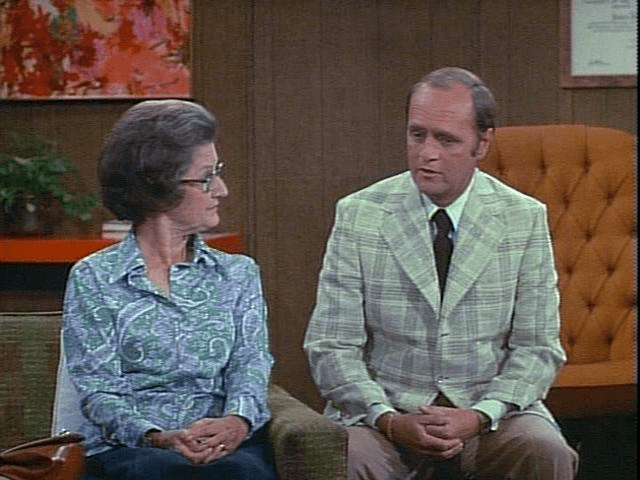
In 1972 she accepted the role of Lillian Bakerman on The Bob Newhart Show. During the show’s run, she made 19 appearances trying to encourage the other patients in her therapy group. She is often seen knitting while the group talks. One of her fears is flying, and her catchphrase is “Isn’t that nice.”

Her last appearance was in 1982 on The New Odd Couple as, who else but Mrs. Bakerman.

In 1988, Friebus passed away from cancer at 78 years old.

Noam Pitlik: What a Character

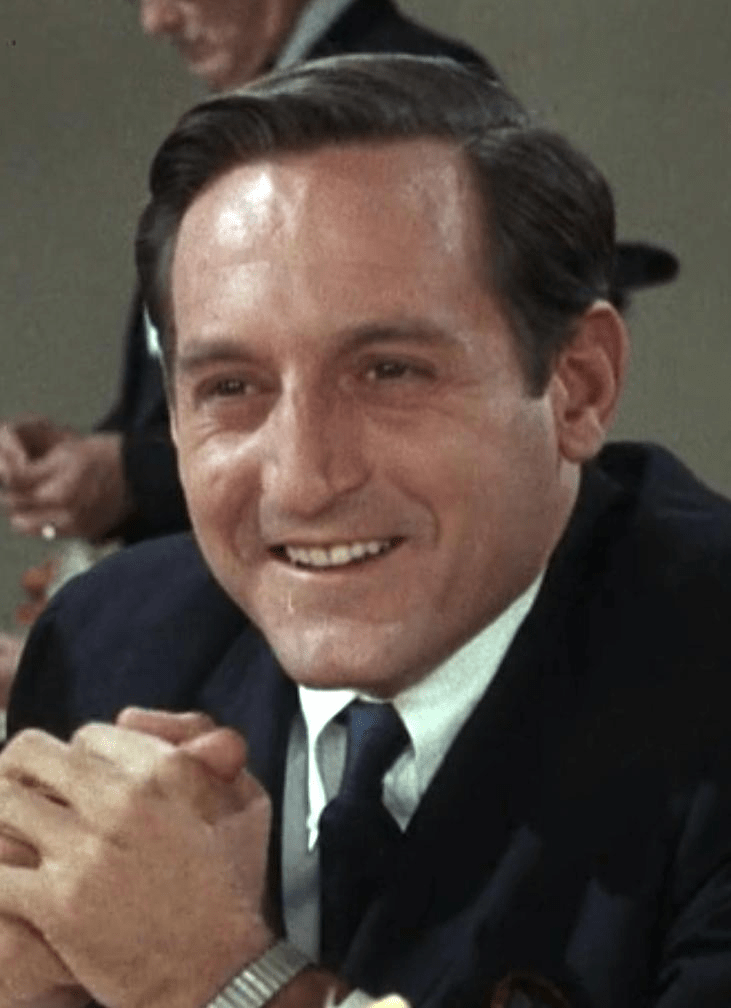
📷imdb.com

This month we are right in the middle of one of my favorite blog series, What a Character. This week we are delving into the career of Noam Pitlik; in addition to his acting, he won an Emmy for his work as a director. Which show? Let’s find out.

Pitlik was born in Philadelphia in 1932. After graduating from high school, he enrolled at Gratz College and later was a theater major at Temple University in 1954. Pitlik had a two-year stunt in the Army and earned a master’s degree in theater at New York University.

He began his acting career on WCAU in a western. In 1951, he was hired for the set design and construction crew for the Philadelphia Experimental Theater. He carried a bit of his hometown with him when he was part of the Summer Theater Guild in Indiana, Pennsylvania in the “Philadelphia Story.” He was hired for his Broadway debut in an off-Broadway production of The Threepenny Opera.”

📷imdb.com

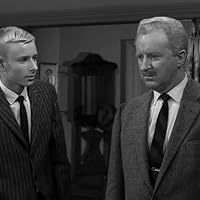
In 1961 he moved to Los Angeles and received his first television roles, appearing on Cain’s Hundred and Dr. Kildare. Cain’s Hundred was not a show I remembered hearing much about. It was about a former underworld lawyer who works with the federal government to bring the top 100 criminals to justice. The show lasted one season. Pitlik had a variety of offers for shows throughout the sixties. Most of them were dramas and westerns, but we also see him on My Favorite Martian, The Munsters, Gidget, The Flying Nun, The Monkees, The Andy Griffith Show, The Doris Day Show, Get Smart, That Girl, and I Dream of Jeannie.

During the sixties, he married for the first time. His marriage with Jesse Blostein in 1967 would only last three years.

Pitlik also appeared in fourteen films and eight made-for-tv movies. The most memorable films are The Graduate, Fitzwilly, and The Fortune Cookie.

📷famousfix.com

The seventies were his most prolific decade of acting. He appeared in 26 different series, often in 2-5 different episodes. You’ll see Pitlik in reruns in a variety of genres including Hogan’s Heroes, Room 222, Bewitched, Love American Style, All in the Family, The FBI, Cannon, Mannix, The Partridge Family, The Bob Newhart Show, The Odd Couple, and Barney Miller. His last acting appearance was in Becker in 1998.

The seventies were also when he tried the role of husband again, marrying Linda Hirsch in 1974; this marriage also lasted three years.

He began directing in the seventies and obtained 39 directing credits throughout the next two decades.

📷imdb.com

In an interview with Temple University for the Alumni Review in 1979, Pitlik said that the switch in his career was not “a case of my needing to change functions for economic reasons.  I used to figure out what I made a day as an actor, and it was obscene. I changed for emotional reasons. I had become very frustrated by the kinds of things I was doing in acting, and I was looking for a change in my life that would be more challenging. I enjoyed acting, but I never seemed to get enough to do.” His first episode as director was on The New Dick Van Dyke Show. He directed 12 episodes for The Practice and 11 for Taxi.

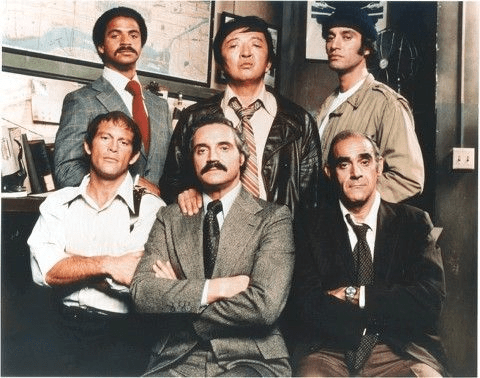
However, Barney Miller was where he perfected his skill as director for 102 of its 171 episodes. In 1979, he won an Emmy as Director for the show. He beat out Paul Bogart for All in the Family, Alan Alda and Charles Dubin for M*A*S*H, and Jay Sandrich for Soap. He also received a Peabody Award and a Directors Guild of America Award for his work on Barney Miller. He lost the Emmy in 1981 to James Burrows for Taxi. His co-nominees included Jerry Paris for Happy Days, Linda Day for Archie Bunker’s Place, Burt Metcalfe and Alan Alda for M*A*S*H, and Rod Daniel for WKRP in Cincinnati.

📷tumblr.com Cast of Barney Miller

In the Temple interview, Pitlik said that his “main responsibility is to create an atmosphere in which each of the people involved in the production can conform to their best work. Although a director oversees all aspects of the production, there are many people involved, and he’s dependent on all of them. There’s no more collaborative business than the television business. Each person contributes to the success or failure of a show whether he or she is a writer, actor, cameraman, or whatever.”

In 1995 he began directing episodes of The Home Court and did so for 14 of the 20 episodes. I must admit I do not remember this show at all. The synopsis was Sydney Solomon was a family court judge who had to deal with the toughest prosecuting attorneys and repeat offenders. However, her biggest challenges came when dealing with her kids, four boys aged 11-19.

📷pinterest.com

Pitlik had better luck with his third marriage to Susan Whittaker which lasted from 1986 until his death in 1999. Whittaker was a television producer. Noam passed away from lung cancer at age 66.

Like Jerry Paris, Pitlik had a very successful acting career before finding his passion behind the camera. If you are responsible for directing a series, Barney Miller is a great accomplishment. It was fun to learn more about his career both in front of and behind the camera.

David White: The Man Behind McMahon and Tate

This month our blog series is Supportive Men. These actors were not the stars of the series, but they contributed a lot of fun to the show. First up is David White who we know best as Larry Tate from Bewitched.

White was born near Denver, Colorado, in 1916. His family moved around a bit. He lived in Pennsylvania and Missouri and graduated from Los Angeles City College. He worked at the Pasadena Playhouse before enlisting in the Marine Corps during WWII. After his four years in the military, he began acting again with the Cleveland Play House.

📷pinterest.com On The Phil Silvers Show

In 1949, White found himself living in New York where he made his Broadway debut in “Leaf and Bough.” The theater critics were not kind in their reviews, and the show closed after three performances. The following year, he tried the stage again in “The Birdcage” with Maureen Stapleton. He was then given a role in “The Anniversary Waltz,” co-starring Macdonald Carey and Kitty Carlisle which ran for 611 nights. He paid his dues, working in a variety of jobs while trying to establish his acting career. His resume included a farm laborer, a truck driver, a doorman at the Roxy Theater, and working at the J.H. Taylor Management Co.

In the 1950s, David began his long television career. His first appearance was in The Philco Playhouse production of “Rich Boy” with Grace Kelly. While most of his roles were in dramatic shows and westerns, he did a few comedies including Father Knows Best, My Favorite Martian, The Farmer’s Daughter,  and My Three Sons. Most of his roles were as corrupt businessmen or arrogant politicians.

📷dvdizzy.com In The Apartment

In 1952, David married actress Mary Welch. Welch appeared in several successful plays on Broadway. She was a member of Lee Strasberg’s Actor’s Studio before opening her own school called The Welch Workshop. White and Welch worked together in only one production, at a regional theater, in “Tea and Sympathy.” In 1958 she died of complications from their second pregnancy. They had a son Jonathan and sadly, he died in 1988 in the bombing of the Pan Am Flight 103 over Lockerbie, Scotland. (This was a tragic incident when Libyan terrorists planted a bomb on a plane flying from London to New York. It exploded 35 minutes into the trip and killed all 259 people on board and 11 people in the neighborhood where it landed.)

After his wife died, White and his son moved to Hollywood where White launched a big-screen career. His film debut was in 1957 with Tony Curtis, Barbara Nichols and Burt Lancaster in The Sweet Smell of Success. He only had 16 movies in his credits, but they included The Apartment, Sunrise at Campbello, and Brewster’s Millons.

📷closerweekly.com On Bewitched

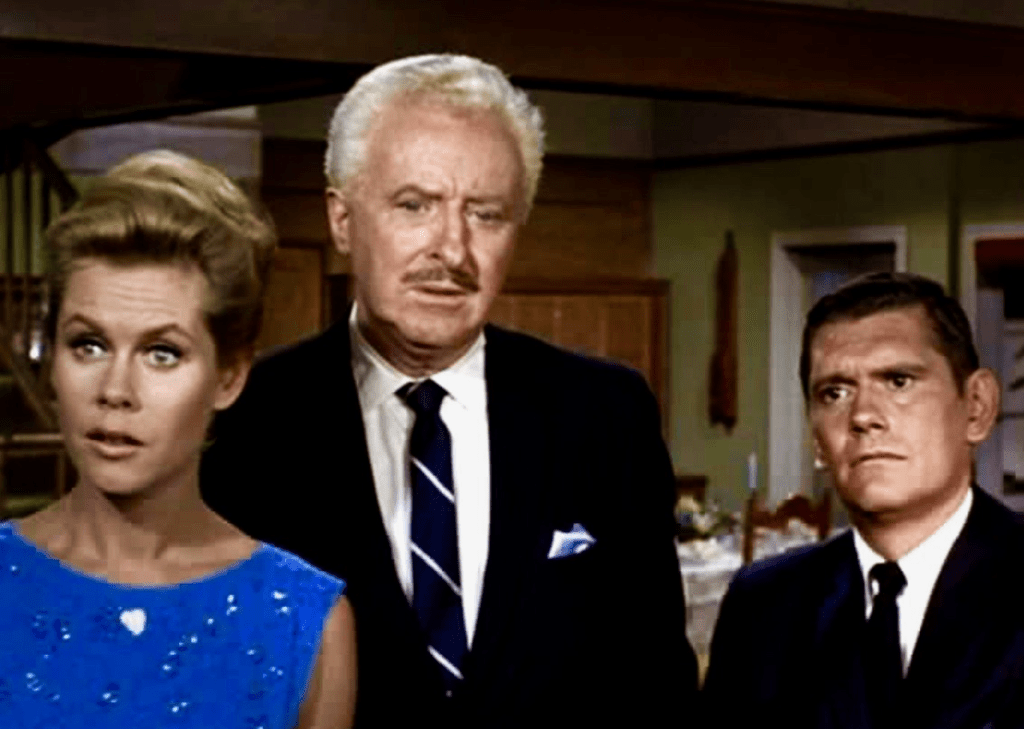
From 1964-1972, he perfected the comedic role of Larry Tate on Bewitched. As president of McMann & Tate, he was constantly firing Darrin for one reason or another, usually related to some circumstance caused by Samantha’s family. White also directed one episode of the series, “Sam’s Double Mother Trouble.”

During an interview with Herbie J. Pilato (author of Bewitched Forever), White said he “got the part because I was an honest man, and that’s how Larry and I were different. I’m not two-faced, and he was. I had more integrity than Larry ever had. I was smarter and had a deeper sense of values. I had to diminish who I was to play Larry, whom I viewed as a very insecure person who only had a certain brilliance in certain areas. He was smart enough to hire people who possessed the skills he did not—like Darrin. I wasn’t born to play Larry. I had to create him. He was a make-believe character of his own truth slated in a comedy series. When playing humor and farce you take that truth and stretch it as far as it will go. But not any farther. When I was playing Larry, though he was a funny character, I never tried to be funny. To me, acting has to do with fulfilling the needs of the character you’re playing, not the actor who’s playing him. Although the one thing the actor and the character have in common is that both have needs. A real heavy is a man who doesn’t have any moral structure whatsoever; one who ends up cheating or even killing someone. Larry was selfish, but he was never that extreme. If anything, he was still a little kid who never matured.”

📷x.com Bewitched

In that same interview, White said his favorite Bewitched episodes were “Moment of Truth” (Season 3, Episode 2 when Samantha has to tell Darrin Tabitha is also a witch and they try to keep the secret from the Tates), “Bewitched, Bothered and Infuriated” (Season 3, Episode 31 when Clara tells them about a future newspaper article that says Larry broke his leg on their trip, so Darrin and Samantha try to protect him while causing a lot of annoyance to Larry and Louise), and “Toys in Babeland” (Season 4, Episode 2 when Endora brings one of Tabitha’s toys to babysit her while she runs a quick errand which leads Tabitha to bring a lot of toys to life).

After the show ended, White continued both his television and film careers. He also continued in the theater, primarily with Theatre West and the Mark Taper Forum in Los Angeles.

📷imdb.com My Three Sons

During the seventies and eighties, he showed up in a variety of popular shows including Adam-12, Cagney and Lacey, Cannon, Columbo, Dallas, Dynasty, Love American Style, Mission Impossible, Qunicy M.E., Room 222, The Odd Couple, The Love Boat, The Mary Tyler Moore Show, and The Rockford Files.

After his son’s death, White became a bit of a recluse. He had just begun working again when he passed away from a heart attack in 1990 at the age of 74. Certainly, David White had a successful career, amidst his personal heartbreaks, appearing on the stage, in films, and on television. It would have been wonderful if he had another chance to be part of the cast of another hit show, maybe a dramatic role. However, if you only costar in one show, the role of Larry Tate and the memories we have of him on Bewitched is a great one to have.

Burgess Meredith: America’s Favorite Villain

Bam! Pow! It’s Batman Villain Month. We will be looking at the career of an actor who played a Batman baddie every week this month. We are beginning with my favorite, The Penguin, played by Burgess Meredith.

📷pinterest.com

Oliver Burgess Meredith was born in Cleveland, Ohio in 1907. His father was a physician, and his mother was born into a family of Methodist revivalists. Burgess followed his Methodist faith for his entire life. After high school, he enrolled at Amherst College, until 1932 when he became a reporter for the Stamford Advocate. He worked in a variety of jobs while getting started in acting including retail, an editor, a merchant marine, and a runner on Wall Street.

He joined Eva Le Gallienne’s Civic Repertory Theatre in New York City. His Broadway debut was in this company’s “Romeo and Juliet” in 1930. His film debut came in 1935 in Winterset. Later in his career, he would return to Broadway as a director. He shared a Tony Award with James Thurber for their collaboration on “A Thurber Carnival” in 1960, and he earned a Tony nomination for his staging of “Ulysses in Nighttown” in 1974. In the late seventies, he directed Fionnula Flanagan’s one-woman play, “James Joyce’s Women” which toured for several years.

Meredith had more success in acting than marriage. Helen Derby Merrien Burgess was his wife from 1932-1935. His marriage to actress Margaret Perry only lasted two years, ending in 1938.

In 1942, Burgess enlisted in the US Army Air Forces for WWII, reaching the rank of captain. He was discharged in 1945. Meredith married another actress, Paulette Goddard, and they were together from 1944-1949. However, in 1951 he married Kaja Sundsten and they were together until his death.

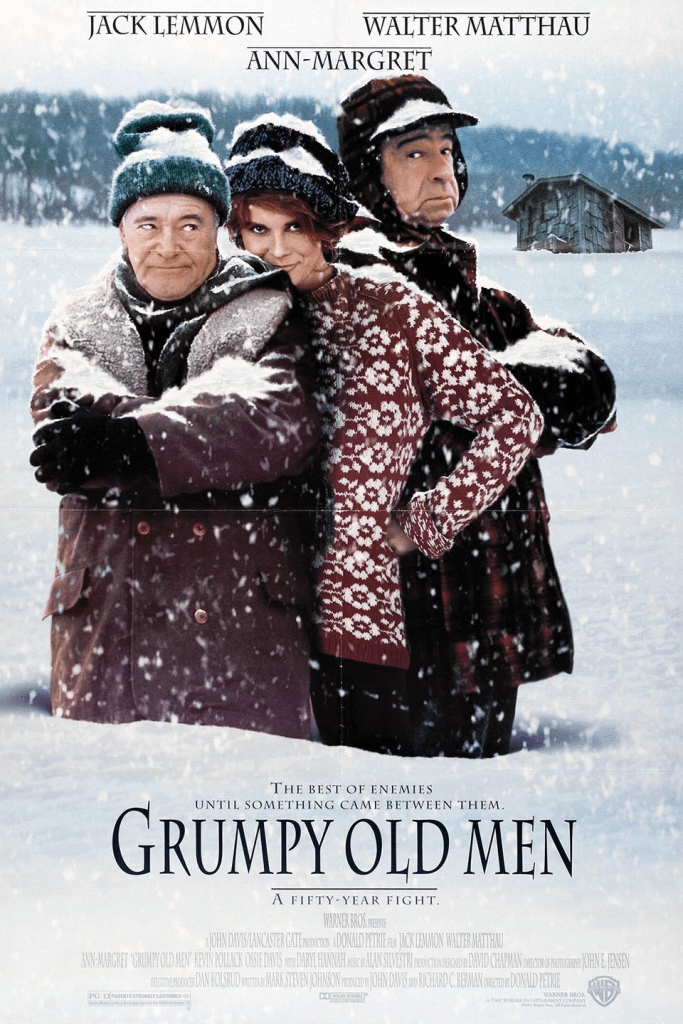
Meredith would appear in 80 movies during his career, as well as a number of made-for-television movies. He might be best known in the past few decades for Grumpy Old Men and Grumpier Old Men in the 1990s.

However, it was television where he found the most acclaim. His first appearances came in 1949 on the Ford Theater Hour and The Silver Theater. Throughout the fifties he continued receiving offers for theatric roles on these types of programs. During the early sixties, he was everywhere. You could catch his appearances on dramas such as The Naked City, Ben Casey, The Twilight Zone, The Bold Ones, Room 222, Ironside, and Mannix. He rode onto many western sets including Wagon Train, Rawhide, The Wild, Wild West, Bonanza, Daniel Boone, and The Virginian. He found his way onto several comedies such as Please Don’t Eat the Daisies and The Monkees.

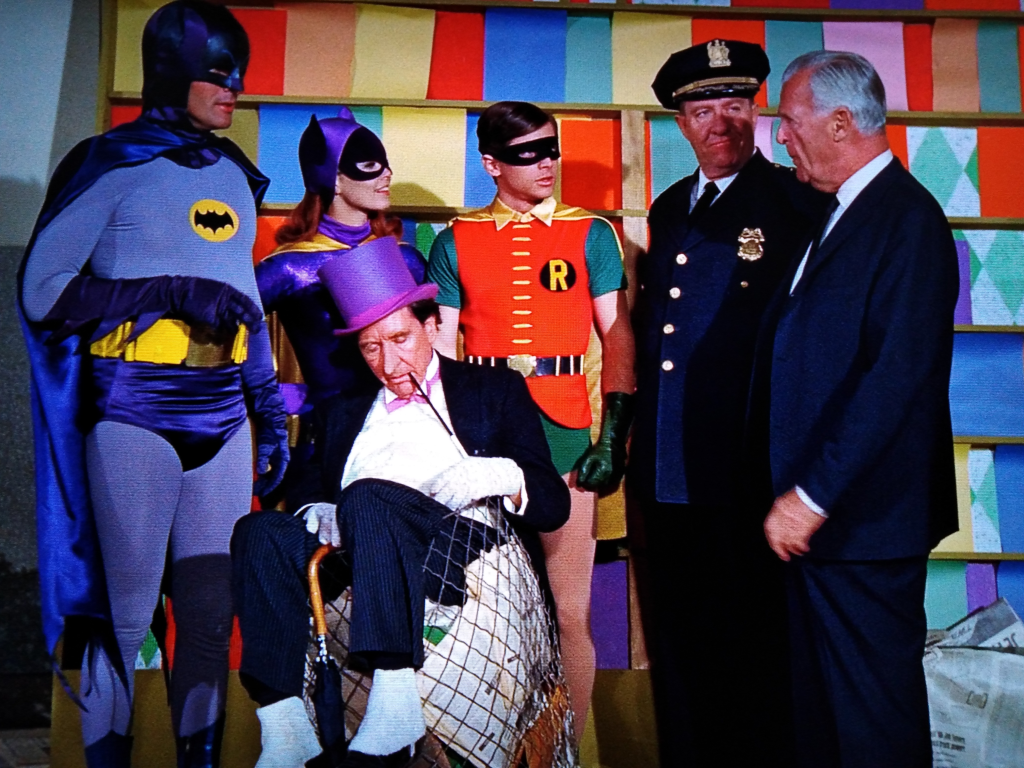
Given the astounding number of drama shows that he chose roles on, it is a bit surprising that one of his best-known roles was the campy, humorous 1960s series Batman. From 1966-1968, he made 21 appearances as the Penguin. When he appeared on The Monkees, it was also as the Penguin. Originally the producers wanted Spencer Tracy for the role of Penguin. Tracy said he would not accept the offer unless his character was allowed to kill Batman. So, Meredith got the role. The cast loved him, and the producers made sure there was always a Penguin script waiting so whenever Burgess was free, it could be filmed.

📷dcdatabase.com

He was perfect for the role with his raspy voice and that iconic Penguin laugh. The laugh came about because Burgess had given up smoking but had to smoke for his role on Batman. When he coughed, he covered it up with his trademark laugh. When asked why he did Batman, he replied that he did it “for two reasons, one of which was the salary. The other was that, after the first few episodes, Batman became the in-thing to do. Everybody would either play a villain or appear as himself in that cameo showcase where a celebrity would poke his head through the window of a building that Batman and Robin were climbing. Actually, we didn’t get as much money from the show as you might think, although we were paid decent money for the feature film version. The main impetus to continue appearing on Batman—beyond the desire to get some TV work—was that it was fashionable.”

Later in his career, Burgess continued appearing on the big screen and provided voice-over work and a bit of animation. Unfortunately, he was named as an unfriendly witness by the House Un-American Activities Commission which ended his studio work for several decades. Burgess also did commercial work and was known for his roles for Skippy Peanut Butter and United Air Lines.

📷imdb.com

Meredith was a life-long Democrat and was generous to the Democratic party. He was an environmentalist and tried to end pollution. He was also fascinated by intelligent animals, especially dolphins. One night he said he felt a dolphin needed help while staying at a friend’s beach house. He ran out to the beach and found a dolphin caught in a net under a dock and was able to save its life. He was nominated for two Academy Awards, both for Supporting Actor in Rocky and The Day of the Locust. A 21-acre park in Pomona, New York was named for him; he provided the funding to incorporate the village.

In 1997, Meredith died from complications of Alzheimer’s. His former Batman costar, Adam West, spoke at his memorial service.

While almost all of the bad guys on Batman were memorable, the Penguin and Cat Woman were by far my favorites. We will look at the career of Julie Newmar next week.

Nanny and the Professor: The Mary Poppins of the 1970s

We are starting off the new year with a blog series taking a closer look at some of our favorite families. Between Mary Poppins and The Nanny, we had Nanny and the Professor. A lot of my friends don’t remember this show, but it was part of the ABC lineup for two years. It began its life on Wednesday nights in 1970 followed by The Courtship of Eddie’s Father and then Room 222. The second season, it moved to Friday nights airing after The Brady Bunch and before The Partridge Family. The short third season found the show on Monday nights up against Gunsmoke and Laugh In which surely set it up for failure.

The cast Photo: closerweekl.com

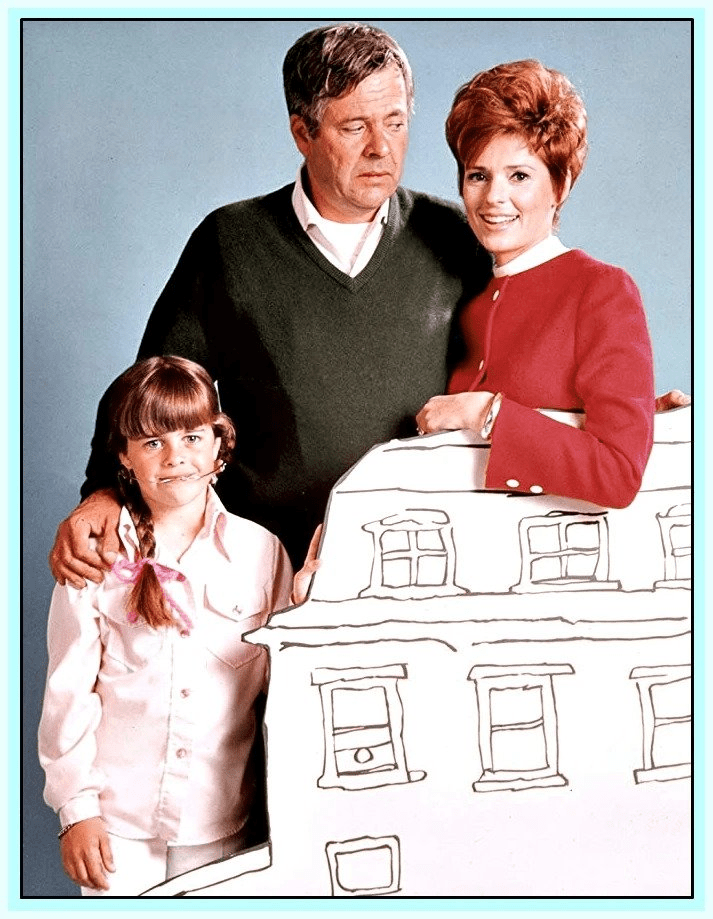
AJ Carothers and Thomas Miller created the show for 20th Century Fox Television.  Carothers was best known for his Disney movies, and this show has that same type of atmosphere. English-born Phoebe Figalilly (Juliet Mills) is hired by Professor Harold Everett (Richard Long) to be the housekeeper and nanny for this three children: very intelligent Hal (David Doremus), prankster Butch (Trent Lehman), and musical prodigy Prudence (Kim Richards) who had a pet rooster named Sebastian. Juliet Mills, sister to Parent Trap star Hayley Mills, was offered the role after auditioning in England. An open casting call was done for the role in London.

Nanny became very close to the three children, and she and Professor Long had a subtle romance. You could tell there was chemistry, and he began working less and hanging out with the family more often.

Nanny had a great intuition, but we were always left wondering if there was more to her secret knowledge than we were aware of. While the Professor hired her, she showed up unannounced for the job. Sometimes she hinted at being much older than she looked. One of the running gags of the show was that she always knew when people were at the front door or on the phone before the doorbell or phone rang. She also seemed to be able to communicate with animals including the kids’ dog Waldo. She also fixed up and drove around in a 1930 roadster which she named Arabella in honor of her favorite aunt.

Nanny had a lot of relatives who showed up at the Everett household from time to time. Uncle Alfred (John Mills, Juliet’s father) entertains the children with this stories and human flying act. Aunt Justine (Ida Lupino) and Aunt Agatha (Majorie Bennett) arrive in a hot air balloon. Uncle Horace (Ray Bolger) claims to be able to make it rain. Aunt Henrietta (Elsa Lanchester) comes with the circus; in another episode she helps get rid of a ghost.

Arabella Photo: ebay.com

Fun fact, the background music was taken from My Favorite Martian. The theme song was called “Nanny” and was written and sung by The Addrisi Brothers. The song is:

Soft and sweet
Wise and wonderful
Oooh our mystical magical nanny

Since the day that nanny came to stay with us
Fantastic things keep happening

Is there really magic in the things she does
Or is love the only magic thing that nanny brings

You know our nanny showed us you can make the impossible happen
Nanny told us have a little bit of faith and lots of love

Phoebe Figalilly is a silly name
And so many silly things keep happening
What is this magic thing about nanny
Is it Love Or is it Magic

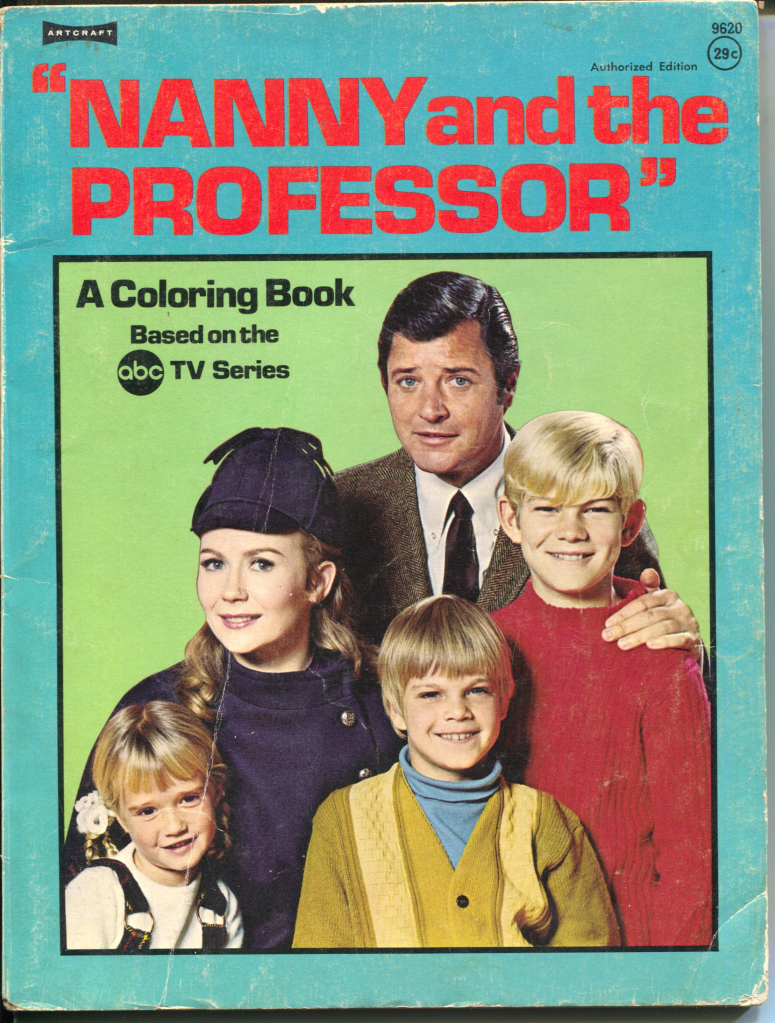
The show might be done, but much of the merchandise that was used to promote the show still exists. Colorform sets, coloring books, paper dolls, comic books, View Master reels, and several books are available on ebay.com

Even though the move to Monday night could not have been good for ratings, Mills said the cast was stunned when the show was canceled. In a July 22, 2019 interview with foxnews.com, she said, “I think we were all shocked, actually, and not ready to move on.” She said she does not regret starring in the show, and that the cast was “wonderful, really, very professional and very good. She said the show had a special place in her heart. “I’m proud of it and have very, very happy memories of it, she said. “I’m still recognized all over the place for that as much as anything I’ve ever done, which is extraordinary. People just hear my voice and they turn around, ‘Hey Nanny.’”

Although Nanny and the Professor might not be as well known as other shows of its decade, it deserves to be remembered. Even though it never hit the 100-episode target for syndication, the show was played on other networks after it was canceled. I could not find any network showing reruns or anywhere to stream the show, and the DVDs are currently not available on Amazon but they are available on other DVD websites. It might be worth searching for to have a marathon weekend binge some cold, winter weekend.

Maudie Prickett: What a Character – Prim and Proper

As we look at some of our favorite character actors, today we learn more about Hazel’s friend Rosie: Maudie Prickett. Prickett had a prolific career with more than 300 credits between the stage, film, and television.

Photo: bewitchedwikifandom.com

Maudie was born in 1914 in Oregon. Her birth name was Maudie Marie Doyle; she married Charles Fillmore Prickett II in 1941 and used her married name for her career. Charles was the co-founder and manager of the Pasadena Playhouse and later became an orthopedic surgeon. They remained married until his death in 1954 and had two children.

Prickett would amass 64 movie credits, with her first being Gold Mine in the Sky in 1938. Her last three movies were made in 1969: The Maltese Bippy, Rascal, and Sweet Charity. She typically played maids, secretaries, spinsters, or nosy neighbors. One of her most recognized movie roles was as Elsie the Plaza Hotel maid in North by Northwest.

In 1952 she received her first television roles, appearing on This is the Life, Hopalong Cassidy, The Doctor, and The Adventures of Superman. While most people are familiar with Hopalong Cassidy and Superman, they may not recognize the other shows. This is the Life was a religious show that began in 1952 and ended in 1988; each episode was a mini-drama that ends with someone becoming a Christian. The Doctor was a medical show where Warner Anderson as the doctor presented a story and then provided comments after the episode. Most of the series dealt with some type of emotional problem.

The look we were used to with Maudie Photo: imdb.com

For the next two decades, Maudie was quite busy with her television career. She often made multiple appearances on a show as different characters. She had a nice blend of both dramas and comedies on her resume.

In 1961 she married Dr. Eakle Cartwright who died in 1962. In 1966 she would try marriage one more time when she wed the mayor of Pasadena, Cyril Cooper who lived five more years.

While watching your favorite classic television shows, you will see her on westerns including Wagon Train, Bonanza, and Gunsmoke. She made her mark on medical series including Ben Casey and Marcus Welby MD. She also appeared in quite a few dramas including The Millionaire, The Untouchables, Lassie, Daniel Boone, The Mod Squad, and McMillan and Wife.

However, it was the sitcom genre that kept her busiest. During the fifties, she could be seen on Topper, Father Knows Best, Leave It to Beaver, and The Donna Reed Show. The sixties found her on Dennis the Menace, Bachelor Father, The Danny Thomas Show, Mister Ed, My Three Sons, Petticoat Junction, The Andy Griffith Show, The Doris Day Show, Gomer Pyle USMC, and Get Smart. During the seventies, she took roles on Mayberry RFD, Bewitched, Love American Style, and Room 222.

Best Friends – with Shirley Booth on Hazel Photo: pinterest.com

All of her recurring roles were on sitcoms: Date with the Angels, The Jack Benny Show, and Hazel. Date with the Angels was Betty White’s second sitcom, and Maudie played Cassie Murphy, a neighbor of the newlyweds. On The Jack Benny Show, she played Mrs. Gordon, the secretary of the Jack Benny Fan Club. Many people remember Prickett from Hazel where she played Rosie. Hazel and Rosie were best friends and always came through for each other but were also very competitive, especially when an eligible bachelor was involved.

In 1976, Maudie passed away from uremic poisoning at the young age of 61. Uremia occurs when there is an increase of toxins in the blood and usually occurs when the kidneys no longer filter them out. It can be treated with medication, dialysis, and transplant surgery, but for some reason, hers must have been untreated which lead to her death.

On Bewitched Photo: sitcomsonline.com

Maudie was a very busy lady, accumulating 164 acting credits between 1938 and 1974. I’m not sure if she was okay with being typecast or if she would have liked some other types of roles, but she certainly made the roles her own. You have to wonder how much more she would have accomplished if she had lived another twenty or thirty years. Her personal life was sad, having three husbands die before her and then she herself dying as middle age was beginning.

I know you read this comment a lot if you follow my blog, but we have another one of those character actors I wish we knew more about. The Television Academy rarely interviews them, and it is tough to find much information beyond their professional resume. One day I will make good on my promise and write a book about these wonderful people who made classic television so fun and believable.