Good Morning World: Tune In

As we are in the middle of our What in the World? blog series, today it’s a forgotten sitcom from the sixties: Good Morning World.

📷wikipedia.com

This series was created by Sam Denoff and Bill Persky, the team behind That Girl. The concept was based on Persky and Denoff’s time as writers for a New York radio station in the fifties.

In fact, William B. Williams, a WNEW DJ was given screen credit because the title was based on his daily greeting, “Hello, World.” William B. Williams was quite a character and an icon in the world of music. He was born in 1923 and after attending the University of Syracuse, he got a job with WAAT in New Jersey. He filled in for a DJ who failed to come to work but then was fired for, believe it or not, wearing red socks to work. He was hired by WNEW in New York City. He became a beloved radio icon. The radio station said at his funeral there was a huge crowd outside which included taxi drivers, sanitation workers, bookies, waitresses, singers, songwriters, politicians, housewives, first responders, and even the Rockettes.

📷radiohalloffame.com William B. Williams

According to the radio station’s website, “William B. Williams respected singers and songwriters, music and musicians, and it showed. He had a permanent, perhaps profound, effect on the lexicon of pop music.

He bestowed the ‘Count’ on Basie and the ‘Duke’ on Ellington. Billie Holiday was ‘Lady Day.’ Ella Fitzgerald was the ‘First Lady of Song.’ Louis Armstrong was ‘Pops.’ Sinatra was ‘Francis Albert,’ the ‘Chairman of the Board.’ Nat ‘King’ Cole was simply ‘Nathaniel.’”

The show was produced by Sheldon Leonard and Carl Reiner. Looking at that alone and you would expect it to be a hit.

The premise was two radio disc jockeys who have a morning show, “Lewis and Clarke,” in Los Angeles. Dave Lewis is happily married, and Larry is a lady’s man and party boy.

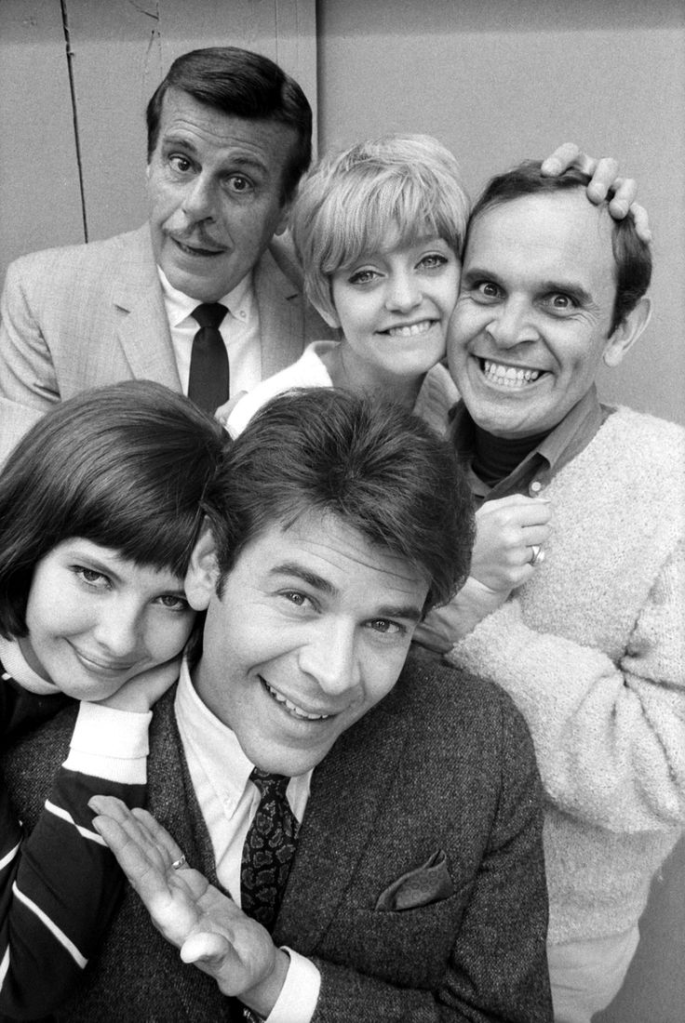
They had some problems casting this show. Roddy McDowell and Sharon Farrell were cast as the married couple. Then Ron Rifkin replaced McDowell. Then they were both let go and David Lewis was played by Joby Baker, his wife Linda was played by Julie Parrish, and Ronnie Schell was cast as Larry Clarke.
📷pinterest

Billy de Wolfe and Goldie Hawn were fun additions to the cast. De Wolfe played Roland Hutton, the stuffy station manager. Hawn was Linda’s best friend Sandy Kramer.

The series debuted on CBS in 1967. It was on Tuesday nights, sponsored by Procter and Gamble. It was competing with N.Y.P.D., a police crime show and Tuesday Night at the Movies which began half an hour before Good Morning World.

Given that the talent behind The Dick Van Dyke Show was contributing to this show as well, it’s not surprising that it seems to be a mixture of The Dick Van Dyke Show and the later Mary Tyler Moore Show. Like Dick Van Dyke, the show features the DJs’ home and work life; like Mary Tyler Moore, you have a Lou Grant-type manager, and we learn about life at a radio station.

The theme music was by David Grusin. The opening was a different look for a sitcom. It’s a bouncy theme that begins with an alarm clock ticking, the guys quickly getting ready, morning traffic, life in LA, and the two DJs barely getting into their chairs before the show started.

The show was not awful in ratings, but the network had two concerns. They still were not sure Baker and Parrish were the right actors to play the married couple, and Parrish had some health concerns that affected the show. They were also concerned that the show did not pull in more of the viewers who were watching The Red Skelton Show which was on before Good Morning World. I don’t think that is surprising. I’m guessing people who enjoyed watching Red Skelton would not love this show as much and vice versa. Full disclosure, I am not a Red Skelton fan. I didn’t find his humor funny, and I have read too many stories shared by actors and writers who experienced his ego and lack of respect dealing with coworkers.

📷imdb.com

The network made the decision not to renew the show for a second season. Schell, who had been playing a private on Gomer Pyle: USMC, another Leonard/Reiner show, returned to military life with a promotion to corporal.

Goldie Hawn was free to accept an offer to appear on Martin and Rowan’s Laugh In which was a turning point for her career. De Wolfe became part of the cast of his close friend Doris Day’s show.

Baker never starred in another show, but he was a busy character actor. Parrish was later cast in Return to Peyton Place and also stayed busy in television; she later had a recurring role on Beverly Hills 90210.

This would be an easy series to binge watch with 26 episodes available. S’more Entertainment released the series on DVD in 2006 and its’ on Roku, so viewers can check it out for free.
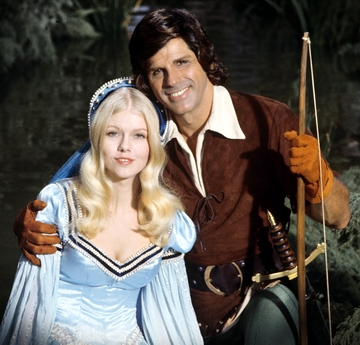
When Things Were Rotten: No “Happily Ever After” for this Tale

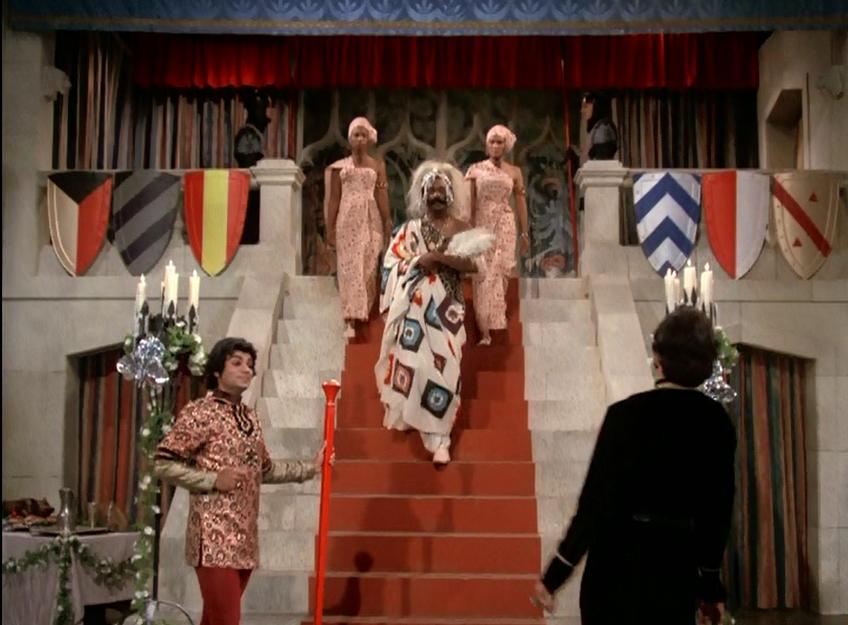
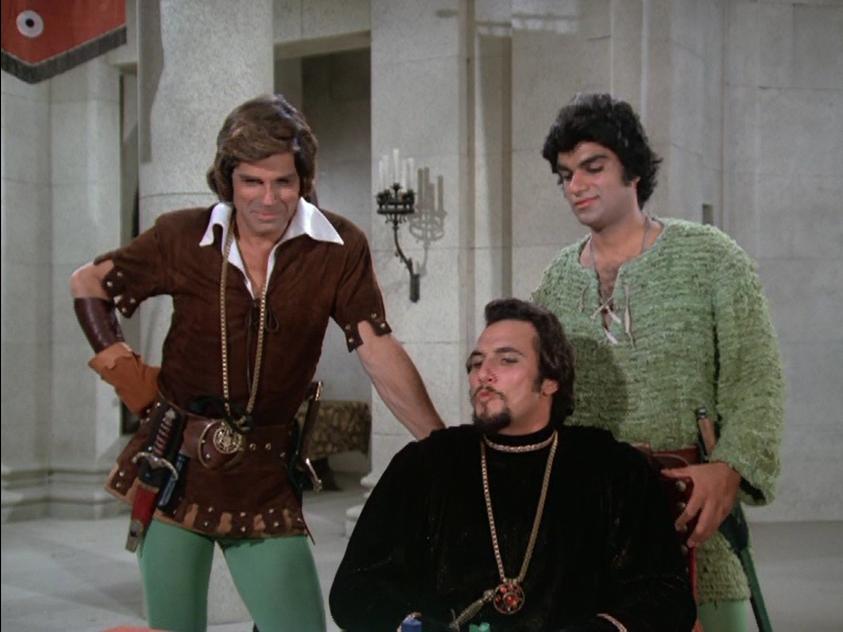
This month’s series is “Living in the Past: Timeless Comedies.” For our first blog, we travel back to the 12th century to Sherwood Forest to a time When Things Were Rotten. After viewing one episode of this show, you knew it could only have been created by the comic legend Mel Brooks. In this case, he had the help of John Boni and Norman Stiles.

Photo: nostalgiacentral.com

Debuting in 1975 on ABC, Brooks considered what life would have been truly like if the legend was just hype, and Robin and his Merry Men were just a bunch of buffoons. The series has many of the traits found in Brooks’ Blazing Saddles or Monty Python episodes.

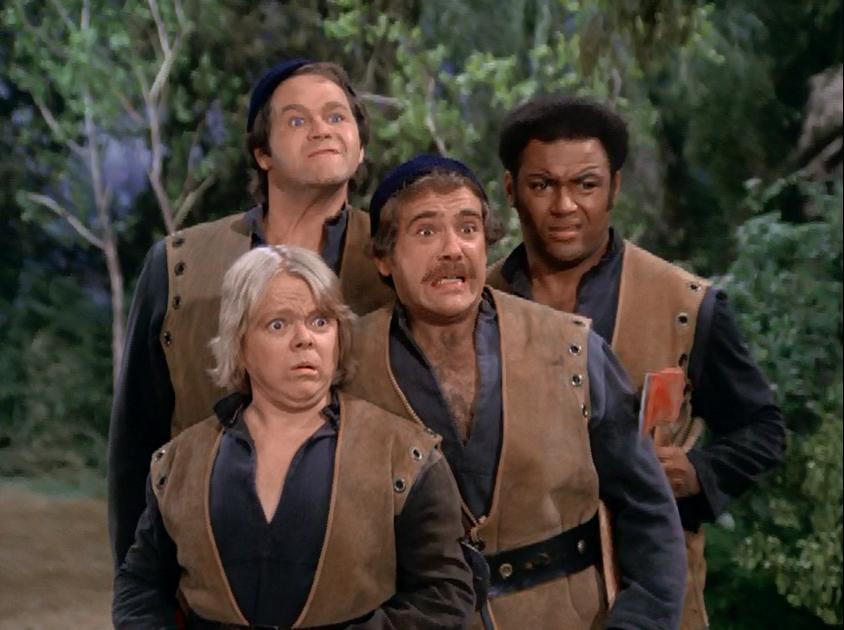
Reading the list of brilliant cast members, this show seems like one that should have been a huge hit, but in reality, it only lasted for thirteen episodes. Based on its brief airing, perhaps Robert Klein was wise to turn down the role of Robin. Dick Gautier, who worked with Brooks on Get Smart, agreed to take on the role of the heroic leader. Henry Polic II played the Sheriff of Nottingham who always got taken in by the gang. Ron Rifkin is Prince John. Misty Rowe, known best for her Hee-Haw performances, is Maid Marian. The Merry Men were indeed merry, being made up of Bernie Kopell, Dick Van Patten, Richard Dimitri (who had a dual role as identical twin brothers), and David Sabin.

Photo: sitcomsonline.com

Of course, in this parody, slapstick is involved in every episode. The sight gags were always described as hilarious, and every script was full of great one-liners. It was definitely not everyone’s cup of tea. For example, at times the sheriff was said to be barking mad and he would literally bark. In one episode, the “barking” sheriff asks Bertram to hang up some banners and a cutaway scene shows a husband, wife and two children on a wall saying, “Hi, we’re the Banners.” Another example is Richard the-Lion-Hearted coming ashore after the Crusades to be met by an umpire, yelling “Safe,” at which point the sheriff shouts, “Kill the umpire.” The humor came fast and furious at a rapid-fire pace. Brooks described the construction of the show by saying: “We took great liberties, and the writing was very crazy and funny.”

Photo: imdb.com

Unlike some parodies, the production of the show was high quality with lavish costumes and sets. Every episode featured a well-known guest star. Dudley Moore appeared as a piano-playing sheik named Achmed Muhammad Ben Gazzara. Other stars included Carl Ballantine, John Byner, Sid Caesar, Paul Williams, and Mel Brooks himself. Brooks said his favorite episode was “The French Disconnection” starring Caesar as a French ambassador.

Photo: imdb.com

The theme song was written by Lee Adams and Charles Strouse who had done the well-known theme for All in the Family as well as many composing for many popular musicals. The lyrics were:

“Once upon a time when things were rotten,
Not just food, but also kings were rotten.
Everybody kicked the peasants,
Things were bad and that ain’t good,
Then came Robin Hood (Ba-bahh!)

“Soon a band of merry men he’d gotten,
They wore outfits made of plain green cotton,
Helping victims was their business.
Boy oh boy was business good —
Good for Robin Hood!

“They laughed, they loved, they fought, they drank,
They jumped a lot of fences.
They robbed the rich, gave to the poor —
Except what they kept for expenses!

“So when other legends are forgotten
We’ll remember back when things were rotten.
Yay for Robin Hood!”

When Things Were Rotten was definitely a product of its time. Like Laugh-In or even Sesame Street, viewers had no time to reflect on a comment. Things moved at a frenetic pace. One of the New York Times critics, John O’Connor, timed the gags and noted there was a new one every fifteen seconds.

Photo: imdb.com

The critics gave the series great reviews and mentioned its inventiveness and quick humor. The ratings never backed up the praise however. Brooks had a different perspective. In an interview with Frank DeCaro in the New York Times (7-19-2013), Brooks discussed the show’s ending. “The show was canceled, Mr. Brooks said, not because it failed to find an audience — ‘The ratings weren’t bad,’ he insisted — but because, as a one-camera show, shot like a film, it just cost too much to produce. ‘I was very happy with When Things Were Rotten,’ he said. “We were on our way to doing 36 episodes, and then someone at Paramount called and said, ‘Mel, could you do it as a three-camera show?’ I said, ‘You mean like “I Love Lucy”? Are you crazy?’” When the network pulled the plug, Mr. Brooks remembers, friends offered their condolences. ‘Everybody said, ‘I’m sorry it didn’t work.’ I said: ‘It did work. It was just too expensive.’”

Photo:

The same reason many viewers might still appreciate the show today is also one of the factors of its demise. The show depended on fans knowing a lot of pop culture knowledge. People who love cultural history would have a blast watching the show, but the younger generations whom don’t have that database in the brain might feel disconnected.

Photo: imdb.com

Of course, the television schedule always has a lot of sway about whether a show is a hit or a flop. This show was on Wednesday nights. Its competition was Tony Orlando and Dawn and Little House on the Prairie. While Tony Orlando and Dawn was on its last legs and would not return in 1976, Little House on the Prairie was very popular. This was the second season for the show which had a huge audience; the show would continue until 1983.

Photo: nytimes.com
Comedy legend Mel Brooks

The show might have ended, but Brooks could not let the concept go. In 1993, his film, Robin Hood: Men in Tights would continue the concept. In this version, Cary Elwes as Robin leads his men, but if you look closely, you might think The Abbot (Dick Van Patten) resembles Friar Tuck in When Things Were Rotten.

Photo: imdb.com

One interesting technological advancement is that a show like this typically would never have been released on DVD because of its short run. Now, however, manufactured-on-demand makes the show available on Amazon. It’s the perfect length for a week-end marathon. You might realize that When Things Were Rotten, they were also pretty good and funny.