Good Times Doesn’t Always Mean Good Show

Last week we looked at shows that debuted in 1973, fifty years ago in our “Potpourri” blog series. Today we are concentrating on one of the successful shows of that 1973 class (and there were not a lot of them): Good Times and I’m am considering this blog “Flopourri” for Florida Evans.
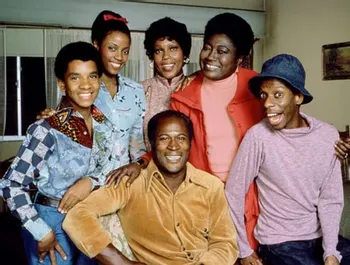
Cast of Good Times Photo: tvtropes.com

For those of you who have been with me for the past six and a half years. You may be surprised to find me featuring a Norman Lear show. I readily admit that I have a Norman Lear bias. It’s nothing personal with Norman, but I just did not enjoy most of his shows: All in the Family, The Jeffersons, Maude, Diff’rent Strokes, Sanford and Son, and Carter Country, among others. I did think that Mary Hartman, Mary Hartman was an interesting concept, just too hard to sustain, and I admit that I liked Fernwood Tonight. I still bypass these shows on MeTV and Antenna TV when they are on the schedule. However, I will be the first to say that they were important historical shows in the evolution of television. They were relevant shows that changed the way sitcoms were written and presented a lot of important topics for people to debate.

So, whether I enjoyed watching Good Times or not, and it was not, it was an important show that gained a devoted following and was on for six seasons, producing 133 episodes. The show was produced by Lear and created by Eric Monte and Mike Evans. Evans played Lionel Jefferson on The Jeffersons. He left the show to work on this series and when Good Times was canceled, he returned to The Jeffersons.

Florida Evans (Esther Rolle) was Maude’s maid. Maude was a spinoff from All in the Family and Good Times was a spinoff from Maude, so this was the first show to be created from a spinoff.

Photo: showbizzcheatsheets.com

The Evans family lives in the Chicago projects. The area is not named but the opening and closing credits show photos of Cabrini-Green. The family consisted of Florida, her husband James (John Amos), their kids JJ, 17 (Jimmie Walker), Thelma, 16 (BerNadette Stanis), and Michael, 13 (Ralph Carter). The show also featured Florida’s best friend Willona (Ja’Net DuBois) and Nathan Bookman (Johnny Brown), the building superintendent. The family never has enough money. James is often out of work, but he also works two jobs when he gets a chance to bring in money for their family. He is a proud man and does not believe in handouts.

Many of the shows deal with gang warfare, financial issues, muggings, unemployment, rent parties, racism, and evictions. It was one of the first shows to have an almost all-black cast. Florida and James are good parents who try to teach their children values and ethical behavior. Michael was an especially interesting character who was intelligent, an advocate who loved African American history, and tried his best to make the world a better and more fair place to live.
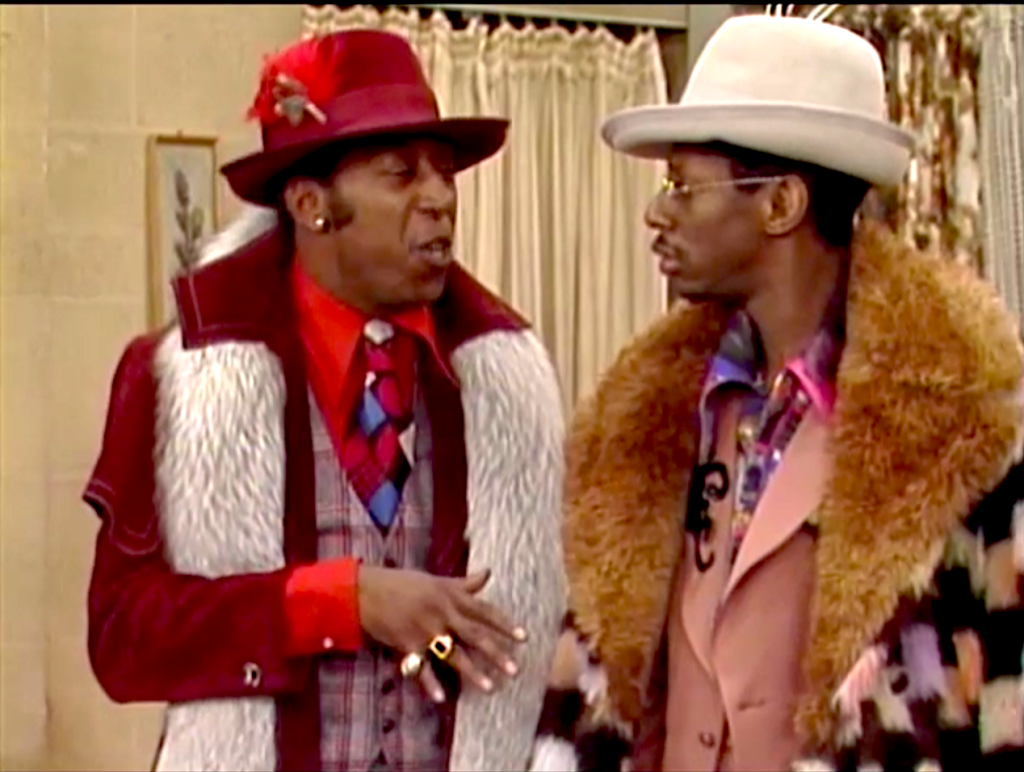
Photo: JacksonUpperco.com

Other recurring characters include Ned the Wino (Raymond Allen), who often can be seen in their building. In one episode, JJ, an artist, paints Ned as Jesus and, in another, well-meaning Michael tries to reform him by letting him stay at their house but it does not work out. Carl Dixon (Moses Gunn) is a shop owner in the area. After James’ death, Florida begins dating him and eventually they marry and move to Arizona. Esther tells Willona in a later season that Carl died from lung cancer. Pimp Marion Williams (Theodore Wilson) is a neighbor who is known for his flashy clothing and jewelry. Lenny (Dap Sugar Willie) is the neighborhood hustler who sells stolen items. Wanda (Helen Martin) runs a women’s support group in their building. Alderman Fred C. Davis (Albert Reed Jr.) is a politician with a shady past.

A lot of celebrities appeared on the show during its run including Debbie Allen, Sorrell Booke, Rosalind Cash, William Christopher, Gary Coleman, Alice Ghostley, Ron Glass, Robert Guillaume, Gordon Jump, Jay Leno, Charlotte Rae, Philip Michael Thomas, and Carl Weathers.

The theme, a gospel-sounding song with a choir in the background, was composed by Dave Grusin and the lyrics were written by Alan and Marilyn Bergman. It talked about the hard living conditions the family had to endure which was not thought of as “Good Times.” Performed by Jim Gilstrap and Blinky Williams, the lyrics were:

Good Times.
Any time you meet a payment. – Good Times.
Any time you need a friend. – Good Times.
Any time you’re out from under.
Not getting hassled, not getting hustled.
Keepin’ your head above water,
Making a wave when you can.

Temporary lay offs. – Good Times.
Easy credit rip offs. – Good Times.
Scratchin’ and surviving. – Good Times.
Hangin in a chow line – Good Times.
Ain’t we lucky we got ’em – Good Times.

Photo: thatsentertainment.com

One of my favorite things about the show was the use of nicknames, maybe because my family is fond of nicknames as well. James called Thelma “Baby Girl” and referred to Michael as the “Militant Midget” for his activism. Willona’s name for Michael was “Gramps,” while JJ called him “Miguel.” The other residents also got their own monikers including Willona as “The Rona Barrett of the Projects” and Wanda as “Weeping Wanda.”

Good Times was created as a show that focused on Rolle and Amos. Both stars expected the show to deal with serious topics even though it was a comedy. They also wanted the characters to be positive role models.

JJ began to be featured in more of the episodes. “Dynomite” became his catchphrase and he said it at least once in every episode. As the writers focused more on his character and the way he behaved, important topics were put on the back burner sometimes.

Both Rolle and Amos felt that the character of JJ and the way he was being developed as more of a foolish and unintelligent person was creating a negative role model. Both stars became disillusioned with the direction of the show and voiced their criticism, Amos more often. They thought the uneducated, slacker type of behavior that JJ expressed was harmful to young viewers. Lear finally fired Amos at the end of the third season because of his negative opinions. The cast had no idea that he had been fired until they read the script where he passed away. Rolle quit at the end of season four.

Walker didn’t see it the same way. He said in an interview that he does not remember saying one word to Amos or Rolle that was not part of the script. He defended his character saying that he didn’t commit overly criminal acts on the show and compared his character to the Fonz on Happy Days. He does have a point. He was deeply hurt that Amos and Rolle, along with many black community members, considered his character a “perpetuation of negative stereotypes.”

Photo: showbizcheatsheet.com

Perhaps part of the controversy came from Walker’s own personality. He considered himself a comedian, not an actor. He said he was never comfortable with the dramatic storylines. Lear wanted Jimmie to take acting classes but he refused. Rolle, Amos, and Carter were dramatic actors and took their roles more seriously. When Rolle died in 1998, Walker was the only cast member who did not attend her funeral.

In season five, Janet Jackson joined the cast as Penny, an abused girl abandoned by her mother, adopted by Willona. Ratings began to decline. With Rolle’s absence, the essence of the show was gone.

Producers asked Rolle to come back even as a guest role. Rolle rejoined the cast for season six after she was promised higher-quality scripts. She also wanted the character of Carl Dixon written out of the show. She felt Florida would not have remarried so quickly, but that was how writers depicted her absence from the show when she left.

However, it was too late and the show continued to decline in ratings. The continual moving of the show on the schedule also didn’t help things. The show began on Friday nights for season one; moved to Tuesdays for seasons two and three; had two different time slots on Wednesdays for seasons four and five; and ended up moving three different times for season six: Saturday at 8 for episode one, Saturday at 8:30 for episodes 2-10, and Wednesdays at 8:30 for episodes 11-22.
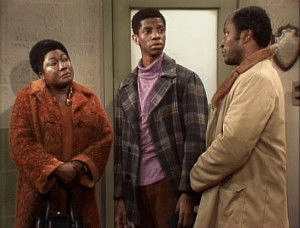
Photo: pinterest.com

The series finale in 1979 gave each character a happy-ever-after. JJ becomes a comic book artist. Michael begins college and moves into the dorms. Thelma and her husband move to the Gold Coast when he gets an offer from the Chicago Bears. Thelma is pregnant and they ask Florida to move with them to help care for the baby. Coincidentally, Willona becomes head buyer for her boutique and moves into the same luxury apartments with Penny.

Unfortunately, the show is remembered now more for its controversy than anything else. Amos talked about his “early departure from the show, I felt that with two younger children—one of whom aspired to become a Supreme Court Justice . . . and the other a surgeon . . . there was too much emphasis being put on J.J. and his chicken hat saying ‘Dynomite!” every third page when just as much emphasis and mileage could have been gotten out of my other two children and the concomitant jokes and humor that could have come out of that.” He later said in an interview with VladTV that the scripts on the show led to “an inaccurate portrayal of African-Americans. Their perception or their idea of what a Black family would be and what a Black father would be was totally different from mine, and mine was steeped in reality.”

He did have good things to say about Rolle and her character: “Florida was the glue that kept the family together. It showed a Black family that had the same trials and tribulations as the rest of America, especially those who were financially challenged . . . it told the story of who we were on a comedic basis. And I’ve always contended, as some of my mentors taught me, the best way to get a message across to people is through humor.”
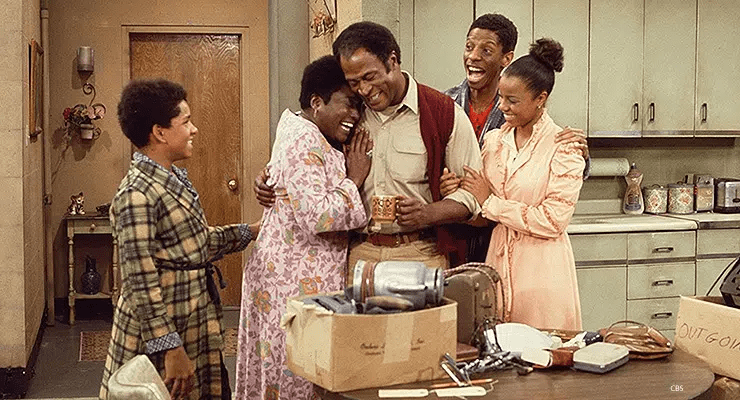
Photo: urbanhollywood411.com

Rolle concurred as she told Ebony in 1975 about JJ: “He’s eighteen and he doesn’t work. . . He can’t read or write. He doesn’t think. The show didn’t start out to be that. Michael’s role of a bright, thinking child has been reduced.”

Walker was interviewed at age 70 by Rebeka Knott and still disagrees with his costars. In that interview, he said that his co-stars, “killed the goose that laid the golden egg. These people, anytime you said anything, they get crazy, they get upset. They don’t get it man.”

So, what are we to make of the show and its success or failure? It still remains an important program in television history. It featured a black cast and focused on a family that struggles with many issues both white and black low-income families could identify with. If Michael had appeared in a reality show as an adult, perhaps it would have been The Cosby Show. A lot of families, black and white, could identify with the issues of that show as well. And, hopefully, they understood where the success of that second generation came from–parents who worked hard and taught their children important values and emphasized hard work and goals that allowed the next generation to have more success than the previous one.
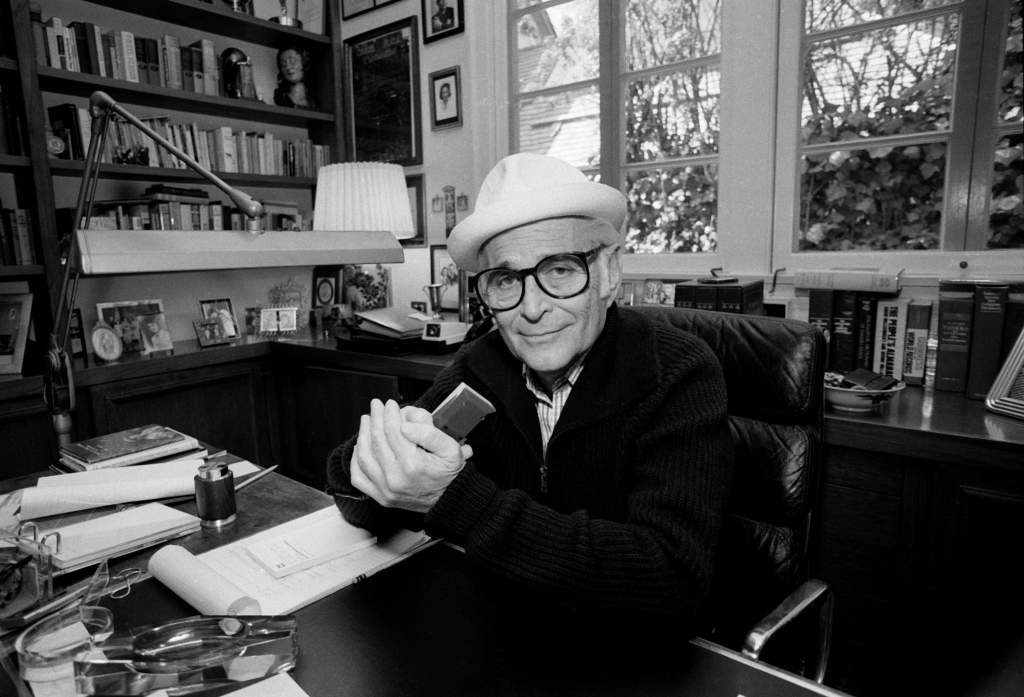
Norman Lear Photo: vibe.com

It’s actually what any good television show does. Regardless of the setting and the characters, it teaches us about how other people live and provides plots many of us can identify with or teaches us about other characters whom we can appreciate and learn more about their individual struggles and journeys whether they follow the same path we do or take a different fork in the road.

It would be interesting to talk with Rolle and Amos today to get their perspective. They were right to ask for better scripts and to showcase their other children who had bigger dreams and hopes. But perhaps Walker is also not that far off. He did portray a different type of character– one that obviously many people identified with or enjoyed spending time with. Don’t most families have a combination of good and not-so-good role models? Hopefully, we learn as much from the characters in our lives who make poorer decisions as we do from those who choose wisely. I’ll leave it up to you whether you think the tv show is worth watching today or not.

Strength in Numbers: Barney Miller

Currently, we are in the series, “Crime Isn’t Funny . . . or Is It?” Today we get to learn a bit more about a show which, along with MASH and The Mary Tyler Moore Show, had one of the best roster of characters ever written. I like to describe Barney Miller as a sitcom with a flair for drama. It debuted in January of 1975 and left the airwaves in May of 1982.

Photo: pinterest.com

It was set primarily in a New York Police Department station, supposedly the 12th precinct. NYPD has not had a 12th precinct since 1910. If you were a fan of Castle, you’ll notice that the set was refurbished for that show in 2009.

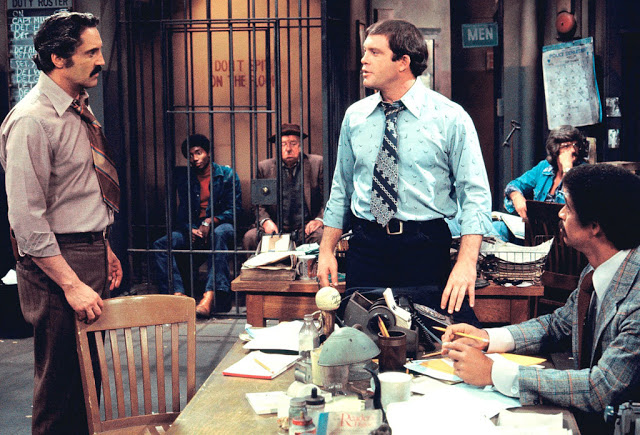
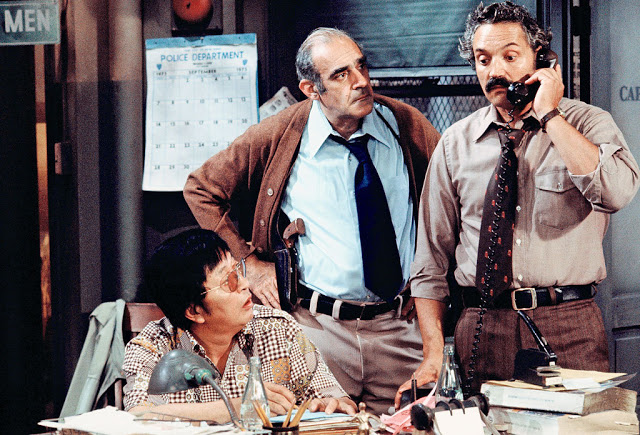
Most of the action took place in the squad room and Captain Miller’s office. Typically, there were two to three subplots surrounding the suspects that were brought into the station or something one of the detectives were dealing with personally.

Photo: pinterest.com

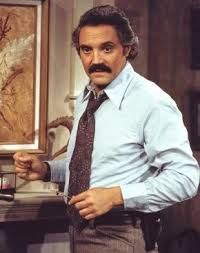
Captain Barney Miller (Hal Linden) is the practical and calm one in the precinct. His sense of humor allows him to deal with his staff and the city. He gets frustrated by all the red tape the city requires but is able to maintain peace and discipline in his precinct.

Photo: imdb.com

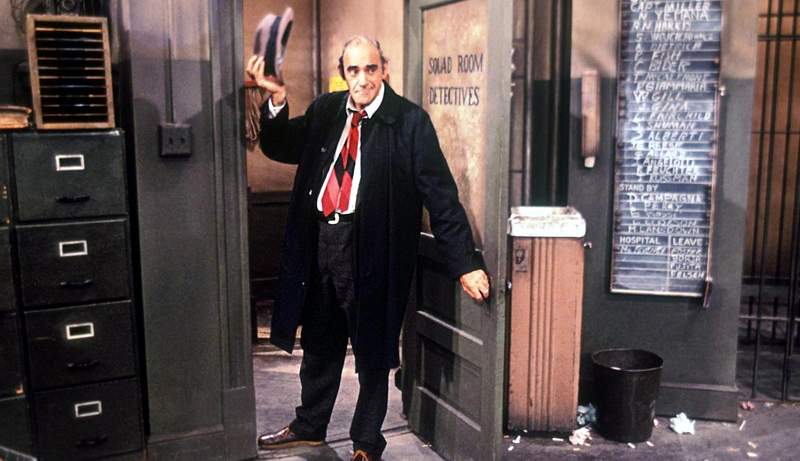
Sergeant Philip Fish (Abe Vigoda) is the oldest member and is getting close to retirement at the beginning of the show. Fish leaves the show and gets his own spinoff for a few years before returning to the show in season 7.

Photo: pinterest.com

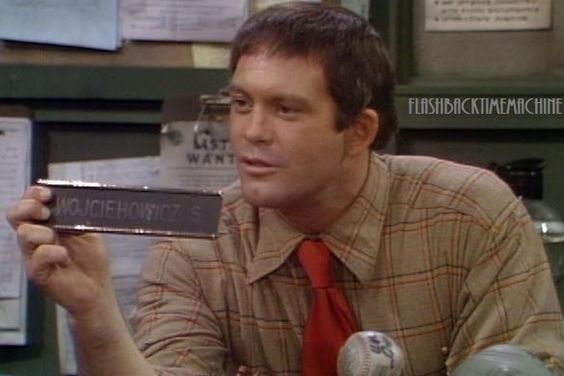
Detective “Wojo” Wojciehowicz (Max Gail) is a bit naïve but has a heart of gold. He sticks to the rules which sometimes causes conflict with his coworkers.

UNITED STATES – OCTOBER 19: BARNEY MILLER – “Non-Involvement” 11/18/76 Ron Glass (Photo by ABC Photo Archives/ABC via Getty Images)

Detective Ron Harris (Ron Glass) is the intellectual of the office. He often seems more concerned with his private life and his appearance than his job. He is also a writer. Later in the series he produces a best seller, Blood on the Badge.

Photo: unclemikesmusings.com

Sergeant Nick Yemana (Jack Soo) is philosophical and sarcastic. During the run of the show, he often makes wry observations about life and the station as other things are going on. Soo passed away during the run of the show and was not on the last three seasons.

Photo: pinterest.com

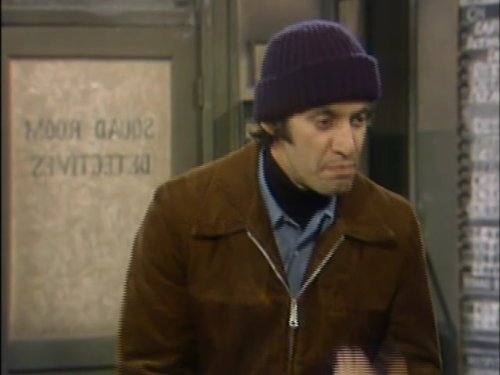
During seasons 1 and 2, Sergeant Miguel Amanguale (Gregory Sierra) was part of the cast. He gets worked up easily when things don’t go well and then rants in rapid Spanish.

Photo: aboatagainstthecurrent.blogspot

Appearing first in season 2, Sergeant Arthur Dietrich (Steve Landesberg) loves to share his knowledge of pretty much everything. However, he can’t seem to decide on the perfect career.  He comes to police work after leaving both the law and medical fields.

Pinterest.com

Inspector Frank Luger (James Gregory) is the thorn in everyone’s side. He is often rambling and old-fashioned, if not worse, in his views.

Photo: imdb.com

Officer Carl Levitt (Ron Carey) is a hard-working employee who aspires to being promoted. Levitt is brought on board in season three.

Photo: sitcomsonline.com

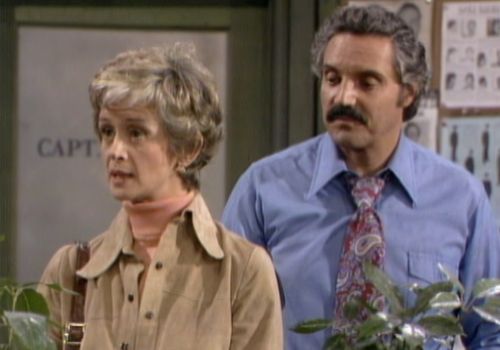
Originally Barney’s wife Elizabeth (Barbara Barrie) was a regular character, but after season two she is seen in infrequently, even though Barney refers to her a lot. Once Barrie realized the show was focusing on the precinct, she asked to be released from her contract.

The show was created by Danny Arnold and Theodore J. Flicker. Noam Pitlik directed the majority of the episodes. The pilot originally was unsold. It appeared in a summer anthology series, Just for Laughs, as “The Life and Times of Captain Barney Miller” and only Linden and Vigoda carried into the series. While the pilot was never shown in syndication, it is part of the Shout Factory’s DVD set and was rewritten as the episode, “Ramon.”

The theme song which had several versions during the run of the show was an instrumental jazz piece written by Jack Elliott and Allyn Ferguson.

The cast of “Barney Miller” in September 1976: Ron Glass, Max Gail, Hal Linden, Abe Vigoda, Jack Soo.

Because most scenes were shot in the precinct, the show was filmed like a play. Only about a dozen of the episodes (out of 171 total) were shot outside that set. The way the show was filmed was compared to a marathon session. Seasons one and two were taped in front of an audience and a laugh track was used for additional scenes. Arnold would often rewrite or restage scenes after the audience left to allow for quiet moments. It was not uncommon for a taping to begin in the afternoon and continue late into the night or into the early morning hours.

Emmy-winner writer Ken Levine talked with Tom Reeder, one of the writers on Barney Miller in his blog (http://kenlevine.blogspot.com/2011/10barney-miller-inside-look). Reeder described his time working on the show:

“The day a show was taped, the actors would hang around on the stage waiting for pages to be sent down. Then—sometimes at 2 a.m.—they would have to learn new scenes. Ron Carey (Officer Levitt) would get his fairly quickly: ‘Here’s your mail, Captain.’ On the other hand, poor Steve Landesberg (Dietrich) might have to memorize long speeches explaining how nuclear fission works. Employing a live audience became impractical as lengthy reshoots became commonplace.” By Season 4, only a quiet laugh track was used when necessary.

Barney Miller received praise from police officers, who appreciated the realistic dialogue and quirky characters. In 2005, The New York Times published an op-ed by New York detective Lucas Miller about his view of the show:

“Real cops are not usually fans of cop shows. […] Many police officers maintain that the most realistic police show in the history of television was the sitcom Barney Miller, […] The action was mostly off screen, the squad room the only set, and the guys were a motley bunch of character actors who were in no danger of being picked for the N.Y.P.D. pin-up calendar. But they worked hard, made jokes, got hurt and answered to their straight-man commander. For real detectives, most of the action does happen off screen, and we spend a lot of time back in the squad room writing reports about it. Like Barney Miller’s squad, we crack jokes at one another, at the cases that come in, and at the crazy suspect locked in the holding cell six feet from the new guy’s desk. Life really is more like Barney Miller than NYPD Blue, but our jokes aren’t nearly as funny.”

The show took a while to become a hit. During an interview in November of 2018 with Hal Linden on CloserWeekly.com’s Classic TV & Film Podcast, Linden discussed why there was a lag time till the show found its audience. “ ‘It took a long time for people to catch onto it and become fans,’ Hal tells us during our exclusive conversation. ‘The reason? It wasn’t in your face. It was very subtle, basically. It was relationship, not punchlines. And everybody played it relatively realistically. All the comedy came from outside, in our reaction to the people coming in from outside, and that was not something that was expected in that time. Everything else was more straight line/punchlines. It was more sketchy than realistic. Happy Days, that’s what was expected. And there’s a lot of shows today that are quite sketchy. But [series creator] Danny Arnold envisioned it very differently, and he put the limitations on our doing shtick. His limitation was, ‘Would you go to a police officer for help who behaved like that?’ There was a lid on everything. You could never go too far just to get a laugh. You had to be a police officer, a real police officer that could do his job. Actually, that lesson stood me in good stead for the rest of my television career in terms of what works, how far you can go, or how far not to go.’ ”

It also probably did not help that in its first four and a half seasons it was up against fan favorite Hawaii Five-0.

Photo: criticsatlarge.com

The show garnered a lot of awards. It was nominated for an Emmy for Outstanding Comedy Series every year from 1976 to 1981 and won in 1982. It also won for writing in 1980 and directing in 1979 in addition to other nominations. It also won a Peabody in 1978.

The show was not cancelled by the network. Arnold ended production because he was worried about repeating storylines after eight seasons.

The blackboard is to the right. Photo: nostalgiacentral.com

After the show ended, the chalkboard which listed whether the policemen were on or off-duty, and the cell door were given to the Smithsonian Television Museum. In addition to the cast of actors in the show, the duty board listed the names of the technicians who worked on the show. The museum also has the police badges used by the actors and Yemana’s coffee mug.

In an article by Ed Gross from February 26, 2018, Hal Linden reflects on his time with the hit series:

“I have nothing but fond memories of Barney. It was certainly the best television experience I ever had, and I mean that from a creative standpoint, because it was like being in a stage company. Like a repertory company that would work together; we knew each other, and we were able to contribute to each other. I have never had as creative an experience in television since.”

Photo: criticsatlarge.com

The character-driven scripts are what makes the show memorable today.  There have been technological advances in procedures and detective work, but the fact that people are still the same make the show fun to watch almost fifty years later.  In an article in Today.com by Gael Fashingbauer Cooper from October of 2011, several scenes from the show were discussed that capture the characters’ personalities.

Jack Soo’s Nick Yemana was known for his bad coffee, but in one episode he reveals to Barney that he is using rain water that’s leaking through the ceiling to make a fresh pot. ‘It’s coming through the ceiling, that moldy, termite-infested ceiling!’ protests Barney. ‘It filters out the impurities,’ Yemana insists.  Abe Vigoda, played Phil Fish. But even in the 1970s, Fish was the oldster of the precinct. In a touching scene, Barney tells him he doesn’t think of him as old, but as experienced. ‘In an emergency, you’d be the first one I’d call,’ the captain says loyally. ‘You should call me first, I need time to put my teeth in,’ Fish responds.  Steve Landesberg’s brainy Arthur Dietrich always had a little too much information. When a young black teenager called him “honky,” he’s not offended, instead he explains the word’s etymology. (Who knew it derived from the nasal tone African-Americans believed Caucasians speak with?) His explanation unnerves the kid more than a deluge of profanity ever could have. Hal Linden’s calm and cool Captain Barney Miller held the entire station together, but when he erupted, stand back. He once threatened to stuff a towel in the mouth of a loud-mouthed guy in the jail cell. When the guy blasted back that he wasn’t scared, Miller’s response was ‘You haven’t seen our towel!’ Max Gail’s Stan Wojciehowicz’s was a gentle soul, one who often seemed too kind for a police job. In one episode, Miller tries to explain racism to Harris by using a Polish joke. The gag is funny, but the scene itself is less humorous than it is sweet. ‘Well I thought (racial) differences weren’t important,’ Wojo says. ‘They’re not, but they are.’ Miller responds, only confusing the matter further.  In a classic episode, Wojo’s girlfriend made brownies for the squad, but this being the 1970s, they were hash brownies. When Miller finds out, he orders Ron Glass’ always cool and classy Nathan Harris to have them analyzed. Which he does, by tossing another one in his mouth. ‘NOT THAT WAY!’ howls Miller. He later tells Harris to ‘stay home till you feel better.’ ‘OK, Barn, I’ll stay, but I ain’t never gonna feel no better,’ a herbally happy Harris announces.”

Photo: nostalgiacentral.com

I love the pictures that each of the above snippets portrays of the cast.  I’ll end with a quote by Yemana, who may have been my favorite character on the show. In the episode “Copy Cat” from season 4, Yemana is asked if he likes cop shows:

Det. Sgt. Yemana: No, I don’t watch shows like that. I can’t enjoy them because, being a cop myself, I spot the mistakes and inaccuracies and the fantastic things that in real life never happen.
Victim: On the show they caught him!
Yemana: Good example!

Celebrating Fifty Years of The Odd Couple

Photo: wondersinthedark.wordpress.com

The Odd Couple debuted in 1970. Today we are celebrating its fiftieth anniversary with fifty fun facts.

Fifty Fun Facts

  • 1. Although the show was based on The Odd Couple, a movie written by Neil Simon, Simon did not want his name associated with the television show. However, once he began watching it and realized the quality of the show, he changed his mind and made an appearance during the fifth season in “Two on the Aisle.”
  • 2. The Odd Couple was based on Simon’s brother and a friend of his who were living together and having some conflict. While watching their interactions, he decided it would be a great idea for a play.
  • 3. The Odd Couple had many lives: it began as a play, was made into a movie starring Walter Matthau and Jack Lemmon in 1968, a tv show in 1970, a revised play about women, another tv show starring Matthew Perry and Thomas Lennon in 2015 which was on the air three years.
  • 4. In 1982, an African American version of the show was created starring Ron Glass and Demond Wilson. Called The New Odd Couple, it wasn’t new because it used the original eight scripts from the Klugman-Randall series. It was canceled part way through the season.
  • 5. The show was developed by Garry Marshall and Jerry Belson.
  • 6. The Odd Couple first aired on Friday, the 13th (November 13, 1970).
  • 7. Garry Marshall appears in four different episodes: the one mentioned in fact #3 and as a drummer and as Man 1 and Man 2.
  • 8. Garry’s sister Penny Marshall played Oscar’s secretary Myrna Turner. On her last appearance, she marries a man named “Sheldn” (the “o” had been eliminated from his birth certificate. Sheldn was played by Rob Reiner, Penny’s husband at the time. Garry and his sister Ronnie played Myrna’s siblings Werner and Verna in the same episode.
  • 9. Oscar’s ex-wife Blanche was played by his real wife, Brett Somers. During the show Brett Somers and Jack Klugman got a divorce in real life.
  • 10. The Odd Couple ran on Broadway for 964 performances.
  • 11. In 1985, Simon rewrote the play with female leads, Olive and Florence. Rita Moreno and Sally Struthers were the leads.
  • 12. Originally Dean Martin and Art Carney were considered for the part of Felix.
  • 13. Both Mickey Rooney and Martin Balsam were considered for the role of Oscar.
  • 14. Actor Richard Stahl appears in nine different episodes as nine different characters.
  • 15. Jerry Paris, Jerry Helper from The Dick Van Dyke Show, directed 18 of The Odd Couple episodes.
Photo: pokerlistings.com
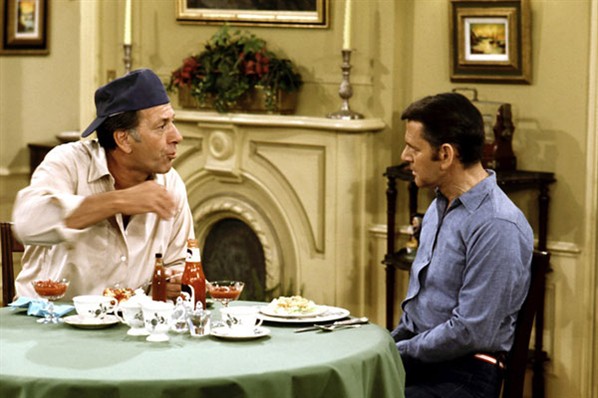
  • 16. Oscar plays poker regularly with a group of guys including Murray, Roy, Speed, and Vinnie. Sometimes Felix is allowed to play with them.
  • 17. Murray’s wife who is often talked about but seen in only one episode is Mimi.
  • 18. A cartoon was created for Saturday mornings called “The Oddball Couple.” Spiffy and Fleabag, a cat and dog, are based on Oscar and Felix.
  • 19. The first season was filmed in the same apartment as the 1968 move with one camera and a laugh track. Randall hated that set-up and the next year they began using three cameras and filmed in front of a live audience.
  • 20. Oscar and Felix were said to live at 1049 Park Avenue in New York which was a real address. The actual building was used during the opening credits and exterior shots. Usually a 1966 Ford four-door station wagon or a red VW Beatle are often seen outside the building. The actual tenants got mail for Oscar and Felix.
Photo: movieforum.com
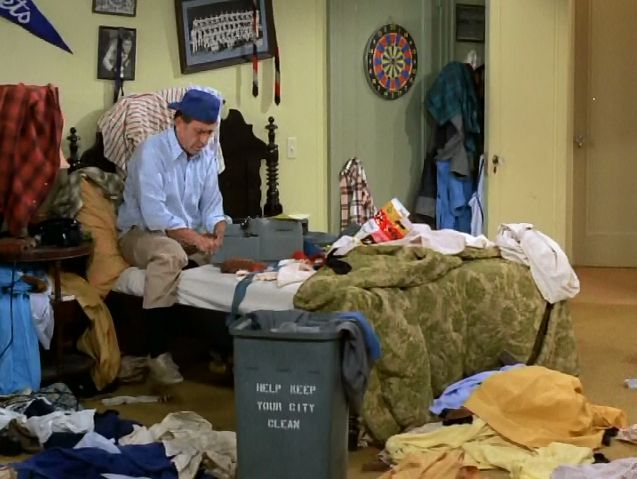
  • 21. One problem the producers had was how to show Oscar was a slob and Felix a neatnik. They couldn’t have the kitchen or living room messy because obviously Felix would keep it clean. Finally, they decided to create Oscar’s bedroom and it was always a mess.
  • 22. During the first season of the show, the guys date two English sisters, the Pigeon sisters, who live in the same apartment building.
  • 23. The Odd Couple was not a ratings success and every season, it was up for cancellation. The summer rerun ratings saved it each year.
  • 24. For some reason, there were inconsistent stories on the show about how Felix and Oscar met. One episode said they were childhood friends. Several references talk about how they met in the army. One episode told the story of how they met while serving on jury duty together.
Photo: youtube.com
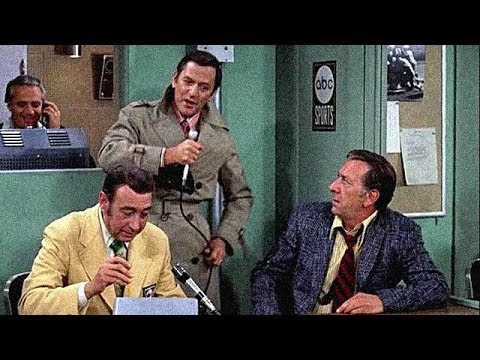
  • 25. Howard Cosell was brought onto the show to help boost ratings. That was a bit of a gamble since Cosell was voted most loved and most hated sportscaster.
  • 26. Tony’s middle name is Leonard and his sister’s name is Edna. Those were the names given to Felix’s two children on the show.
  • 27. Monty Hall showed up twice on the show. He and Oscar had been college roommates.
  • 28. Oscar’s favorite meal is lasagna with French fries and Boston cream pie is his favorite dessert.
  • 29. Don’t let Oscar order pizza. When he orders one with the works, it includes a fried egg on top.
  • 30. Felix and Murray played in a band that featured 1930s music called The Sophisticatos. In one episode they had to play country music and changed their name to Red River Unger and his Saddle Sores.
  • 31. Oscar’s middle name is Trevor.
  • 32. When Elinor Donahue was hired to play Miriam, Felix’s girlfriend, her last name was Welby. Donahue worked on Father Knows Best with Robert Young who later went on to star in Marcus Welby MD.
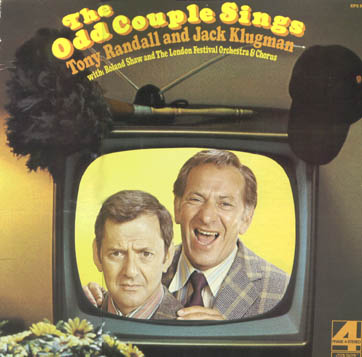
  • 33. Klugman and Randall recorded an album “The Odd Couple Sings” for London Records.
  • 34. ABC always wanted guest stars on the show to boost the ratings, so the writers started including guest stars that would not boost the ratings, opera singers and ballet dancers for instance, which drove the network crazy.
  • 35. In one episode, singer Richard Fredericks is injured playing in one of Oscar’s soft ball games so Oscar has to stand in for Fredericks in Rigoletto, an opera that Felix was producing.
  • 36. Like Harvey Korman and Tim Conway, Jack and Tony used to crack each other up. On one episode they dress as a horse to appear on Let’s Make a Deal. Klugman had to hide himself because he was laughing so hard.
Photo: pinterest.com
  • 37. Klugman’s favorite episode was when the two friends made an appearance on Password with Allen Ludden and Betty White. Felix, who had always wanted to be on the game show, caused a lot of problems on the show and eventually they threw him off the show. His adlib when that happened was “Oh, boy, what a gyp.” Klugman said that was how he felt when Tony died.
  • 38. You can always tell when Felix is really upset because he begins honking.
  • 39. In one episode, Dick Clark plays himself as a radio DJ. He calls Oscar to let him know he has won a new car.
  • 40. Both Willie Aames and Leif Garrett play Leonard, Felix’s son. They would both go on to successful careers and they would both act in the same show again when they appeared on Family.
  • 41. When Oscar tries a dating service, he uses the fake name of Andre La Plume and ends up on a date with Felix’s ex-wife.
  • 42. When Oscar saves Felix’s life, Felix attempts to play “Home on the Range” on his saxophone to thank him.
  • 43. On one episode, the train breaks down in a tunnel. Felix decides to entertain the passengers with an improvised hand puppet he calls Harvey Hankie.
  • 44. Jack Klugman and Tony Randall promoted several products together. They did commercials for the game Yahtzee and their photo was on the box for years. They also did a promotion for Eagle Snacks and Yoplait yogurt.
  • 45. Klugman believed in syndication of the show. He convinced Randall to give up part of his salary for the syndication rights. It was the right move, and they made a lot of money after the show was cancelled.
  • 46. Both Klugman and Randall were up for Emmys every year the show was on. Jack won in 1971 and 1973. When Randall won in 1975, the show had been cancelled and he mentioned during his acceptance speech that he wished he had a job.
  • 47. The final episode had two planned endings. Felix and his ex-wife are getting remarried and Oscar is getting his home back. If the series didn’t get picked up, the marriage took place. If the series did get picked up, the wedding was cancelled by Gloria because Felix was so picky about the wedding details.
  • 48. In 1993, Randall and Klugman worked together filming a television movie called The Odd Couple: Together Again. Klugman had gone through throat cancer treatments and this was written into the movie script. The plot of the movie is Felix helping Oscar recover and becoming overly involved in his daughter’s wedding.
  • 49. Although Klugman didn’t appreciate what the show meant to people when it first began, later in life, he said “he would have people come up and tell him, ‘I grew up with you. I sat on the couch with my mother or my father, and we laughed with you.’ And suddenly the people have faces, and names, and feelings. It’s been invigorating! You know, you don’t count on that; you don’t know that you’re really entertaining people or having an effect on people’s lives. I had a guy from Sports Illustrated who did an interview with me say he became a sportswriter because I was a sportswriter on The Odd Couple. Yeah, it’s like wow, you’re kidding. Now I’m getting this in person, and I really love it.”
  • 50. Randall and Klugman became life-long friends while working on the series. They developed a close bond. Because they both had a lot of character, they became close and helped take care of each other in old age.