The Felony Squad: They Were Men Against Evil

This month we are taking a look at some of our favorite “Crime Solvers of the Past.” Today we wrap up the blog series with The Felony Squad which ran three seasons, debuting on ABC in 1966.

📷blu-ray.com

Originally titled “Men Against Evil,” the show was going to be more of a soap opera feel which was broadcast twice a week. However, by the time the show aired, most of the personal relationships had been taken out of the plot. The series focused on Sergeant Sam Stone (Howard Duff) and Rookie Detective Jim Briggs (Dennis Cole). Rounding out the cast was Desk Sergeant Dan Briggs (Ben Alexander), also known as Dad to Jim and District Attorney Adam Fisher (Len Wayland). The first seasons included Captain Frank Nye (Barney Phillips) while later seasons featured Captain Ed Franks (Robert DoQui).

The show was known for having some big names in directing, writing, and guest stars. Many of the directors racked up more than 75 credits each and included George McCowan who worked on The Mod Squad and Cannon, Allen Reisner known for Hawaii Five-0, Lee Katzin who directed Mission Impossible, Laslo Benedek known for work on Perry Mason, and Vincent McEveety who directed stars in Murder She Wrote, Heat of the Night, and Simon & Simon. Howard Duff jumped behind the camera in season two to direct “Deadly Abductors” after directing seven episodes of Camp Runamuck a couple of years earlier.

Crafting scripts for the show were writers such as Richard Murphy who was the creator of this show, Don Brinkley who worked on Trapper John and Medical Center, Jack Turley who wrote for Cannon and The Man from UNCLE, and John Kneubuhl who also wrote for the Wild Wild West.
📷pinterest.com

A handful of the guest stars included Ed Asner, Richard Dreyfuss, Robert Duvall, Roddy McDowell, Ricardo Montalban, George Takei, Vic Tayback, and Cicely Tyson.

The Felony Squad theme was composed by Pete Rugolo. Rugolo had 83 credits in the business including writing music for a wide variety of television genres including Leave It to Beaver, The Fugitive, and Family. This theme was an instrumental and very reminiscent of a sixties action movie.

I couldn’t find a lot of reviews, but the New York Times’ Jack Gould described it as “a very old-fashioned and conventional yarn about tight-lipped detectives doing a day’s work.”

The series was on Monday nights until 1968 when it was moved to Fridays. The first two seasons the show was up against The Andy Griffith Show which was in the top ten. For the final season, the show moved to the weekend where it was up against an Andy Griffith Show spinoff, Gomer Pyle USMC, which was also a top ten.

The show obviously did well to stay on the air three years when it faced such tough competition. I wonder if being a 30-minute show as opposed to an hour was part of its downfall. No matter how great the writers are, it’s tough to get sophisticated and detailed enough with a plot to wrap up in half an hour. The show certainly found talented directors, writers, cast members, and guest stars. The show was shot in color and had a different feel to it, more realistic. The action is right in your face like you’re on set instead of watching from far off. Considering it maintained decent ratings before it was moved, it would have been interesting to see what would have happened if this show had been the competition with a newer show to see how it fared. Fans loved it, so if you want to see something different, check out a few episodes. I’m not sure why this series isn’t seen more, but YouTube is your best bet to find the most available episodes. Also, as a fun aside, if you want to see Stone, check out Batman’s second season episode, “The Impractical Joker,” when Duff as Stone peers out the window while watching the Dynamic Duo climb the wall.
The Virginian: Where Nobody Knows Your Name

As we get ready to “Go West Young Man,”  today our blog series is getting to know the The Virginian (which is sometimes confusing because it was renamed The Men from Shiloh later for part of the series). This series debuted on NBC in 1962. It produced 249 episodes, running until 1971, making it the third longest-running western (Gunsmoke and Bonanza were the top two).

📷wikipedia.com

Lew Wasserman was involved with Universal, and they produced Wagon Train which was on NBC. Universal sold the series to ABC in 1962 after it had been on the air for three years, and NBC was not happy, but Wasserman told them that he had a new show for them, The Virginian.

It was also the first 90-minute western. Like Stagecoach West, it was set in the Wyoming Territory. While the pilot was black and white, the rest of the series was filmed in color.

The series was based on an Owen Wister novel, The Virginian: Horseman of the Plains which was published in 1902.

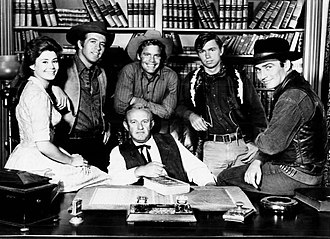
The series featured a foreman at the Shiloh Ranch near Medicine Bow played by James Drury. The foreman was never referred to by his name. Drury once said, “Nobody knows the name of my character, not even me.” His sidekick was Trampas (Doug McClure). Sheriff Abbott (Ross Elliott) also shows up on and off throughout the nine seasons. For the first four seasons, the ranch owner, Judge Henry Garth (Lee J. Cobb) and his daughter Betsy (Roberta Shore) also live there. The cast changed fairly often throughout the series, but Drury and McClure were along for the entire ride.

📷ebay.com

The plots of the show often revolve around themes of prejudice, injustice, being a responsible and hard worker, and standing up for the right thing.

During the final season, the show changed its title, and the series changed quite a bit. There was a new theme song, and it took on more of the character of the popular spaghetti westerns. Stewart Granger and Lee Majors joined the cast. While the ratings increased, the network was intent on cancelling the show, along with the rural purge that happened at that time.

Later when the show was no longer on the air, Drury discussed two of his castmates, one he admired and considered a friend and one he did not! About Grainger who joined the show for the last year, Drury said, “He was a disaster, and I couldn’t stand him. He wanted everything changed to make him the star of the show.  . . . He also fired the whole camera crew and hired a new crew for his episodes.” However, on reflecting about his co-star Doug McClure, Drury recalled “off-screen Doug was quite like his character, and you couldn’t help but smile when he walked into a room because he was full of good humor and good spirits all the time. He could cheer anybody up. He became my best friend, and I still miss him terribly—you couldn’t ask for a better co-star.”

As you can imagine, being on the air for nine years meant a lot of guest stars showed up on the series, including Eddie Albert, Charles Bronson, Robert Culp, Joan Crawford, Bette Davis, Patty Duke, Robert Duvall, Harrison Ford, Jack Lord, Lee Marvin, Vera Miles, Leonard Nimoy, Ryan O’Neal, Robert Redford, George C. Scott, William Shatner and Franchot Tone.

📷facebook.com

The Virginian was on Wednesday nights for its entire run. When it began, it was up against Wagon Train on ABC while CBS ran CBS Reports and The Many Loves of Dobie Gillis. Both The Virginian and Wagon Train managed to hit the top thirty that year. The next year, its biggest competition was The Adventures of Ozzie and Harriet followed by The Patty Duke Show. The Nelsons hit the top thirty and The Virginian and The Patty Duke Show were in the top twenty. The show continued to be in the top twenty or top thirty for the rest of its run, hitting the top ten in 1966, despite being on at the same time as many popular sitcoms during those years, including Batman, The Beverly Hillbillies, The Courtship of Eddie’s Father, Gomer Pyle USMC, Lost in Space, Mister Ed, and My Living Doll. It was still in the top twenty when it was canceled.

This show is fondly remembered by viewers who tuned it at the time. It’s been in syndication for decades, racking up new generations of fans. In one of his later interviews, Drury talked about the appeal of the show. He said, “People now tell me about their grandkids who discover the show on cable and start watching it. It’s a wonderful feeling to know the show is still viable after all these years.” That alone is reason to be proud of working on this show.

Good Evening Alfred Hitchcock

📷noizetv.com

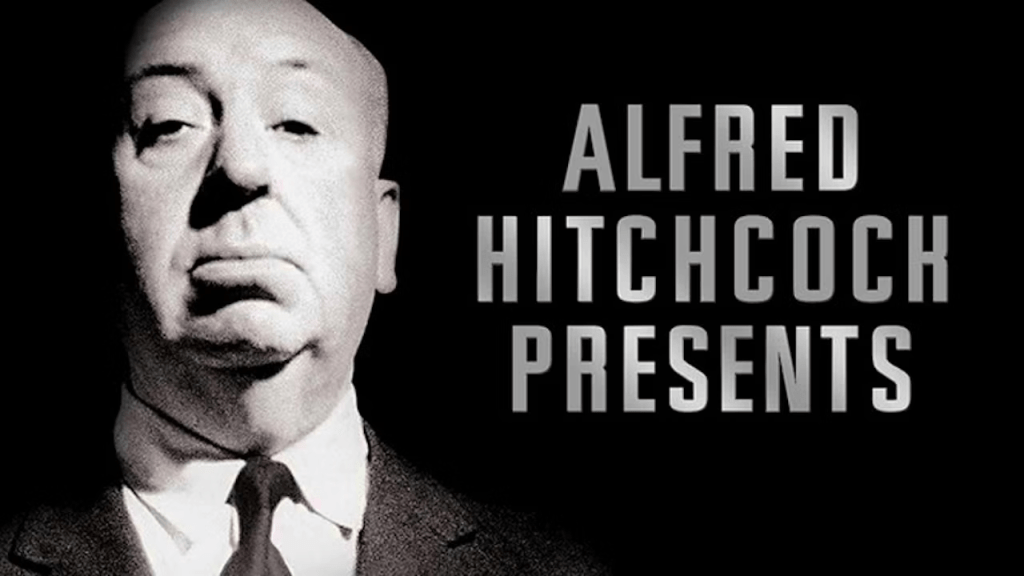
In October, we are tackling a blog series on Eerie Shows. It would be almost impossible to not include Alfred Hitchcock Presents which was on television for a decade.

The show premiered in 1955. Hitchcock had been directing films for more than three decades at that time. The series experienced several changes. It began as Alfred Hitchcock Presents on CBS but would switch both nights and networks during its run. In 1962 it became an hour-long show and was called The Alfred Hitchcock Hour.

Many fans recall the opening. There is a line-drawing of Hitchcock’s profile with the “Funeral March of a Marionette” playing in the background. Hitchcock appears at the edge of the screen and walks to the center where he fades into the caricature line drawing. Then he said, “Good evening.” The silhouette was one that Alfred drew. He began his entertainment career illustrating title cards for silent movies.

📷peacock.com

Hitchcock himself directed 17 of the episodes of the series. Two of those were nominated for Emmy awards: “The Case of Mr. Pelham” in 1955 with Tom Ewell and “Lamb to the Slaughter” in 1958 with Barbara Bel Geddes.

Hitchcock’s job during this series was to introduce the story and then to wrap it up at the end. Both the openings and closings were written by James B. Allardice. Allardice wrote for 38 different shows, many of them very popular series in the fifties and sixties. Norman Lloyd, who produced the show and appeared in five episodes, said Hitchcock respected Allardice so much that he never even changed a comma that he wrote.

The network demanded that if a character got away with murder during the show, then Hitchcock would let them know during the closing that he was eventually brought to justice; in the TV Guide, Hitch described this as “a necessary gesture to morality.” Lloyd gave an example of this in a Television Academy interview. In one episode, a woman kills her husband with a frozen lamb’s leg and gets away with it. At the end of the show, Alfred explains that she later remarried and tried the same trick again but when she took out the leg and hit her husband with it, it was not frozen enough, so he caught her in the act and turned her in.

📷genresnaps.com

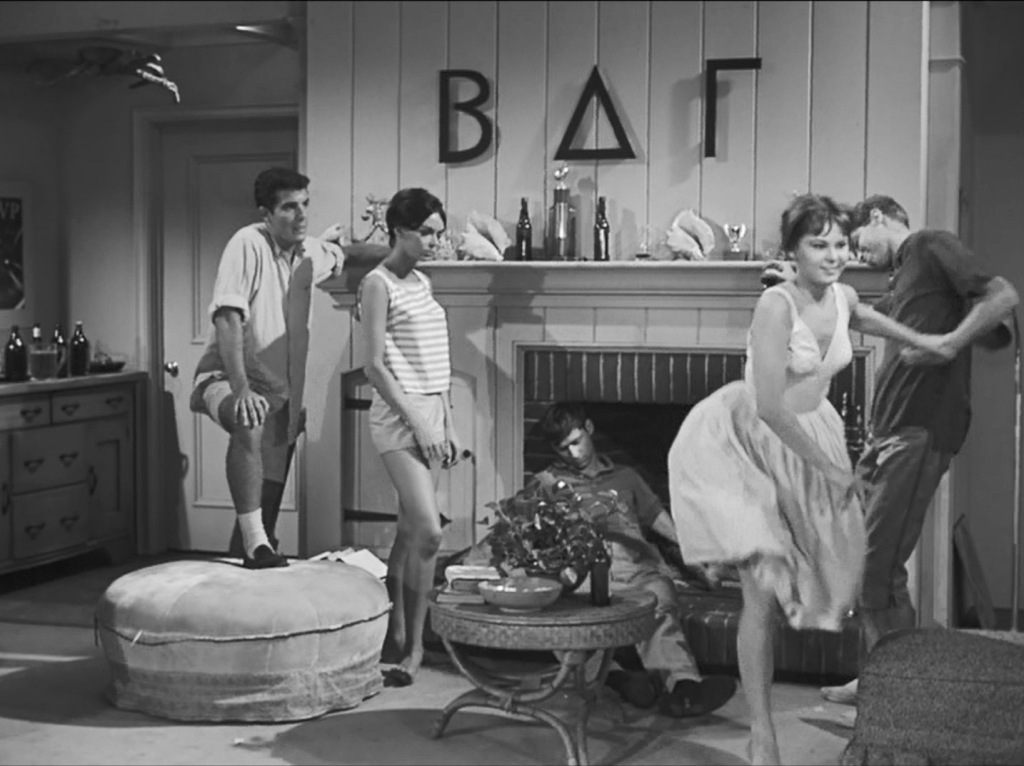
The episodes were not your average thriller shows. They included drama, suspense, and humor. Audiences never knew just “who done it” till the end.

The show debuted on CBS on Sunday nights for five years, up against drama anthologies for two years and then competing with The Dinah Shore Show for three years. For the next two seasons it moved to NBC on Tuesday nights. It aired against The Many Loves of Dobie Gillis on CBS those years and against Wyatt Earp on ABC. For three months it went back to CBS on Thursdays before moving to Fridays on CBS the next season with The Price is Right and 77 Sunset Strip. The ninth year found it on CBS on Fridays with little competition and the final year it showed up on NBC’s schedule on Mondays against Ben Casey. I could never find the reason for cancelling the show. I’m assuming ratings began to decline but if anyone knows, I’d love to hear it.

NBC chose not to air a 1962 episode called “The Sorcerer’s Apprentice” because the sponsor felt the ending was too gruesome. In the episode, a magician’s helper is supposed to help in a trick where he “sawed” a woman in half, but he doesn’t realize he truly saws her in half.

📷thecompletehitchcock.com

As you might guess, with a new story every week, many celebrities appeared on the show including Charles Bronson, Bette Davis, Bruce Dern, Robert Duvall, Clint Eastwood, Peter Falk, Joan Fontaine, Peter Lorre, Walter Matthau, Steve McQueen, Vera Miles, Claude Rains, Robert Redford, Burt Reynolds, Thelma Ritter, George Segal, and Jessica Tandy.

In addition to the Hitchcock-directed episodes, the show received Emmy nominations for Best Series four times. In 1956 it was up for Best Action or Adventure Series, but it lost to Disneyland. The following year found the show in the Best Series – Half Hour or Less category, but it lost to The Phil Silvers Show. 1958 found it in the category of Best Dramatic Anthology Series. You would think that would be a no-brainer win for this show, but it lost to Playhouse 90. It had its fourth category nomination in 1959 as Best Dramatic Series – Less Than One Hour and lost to Alcoa Theatre. I guess the Emmy committee had a hard time determining categories for a few years.

In a different twist, NBC tried to air the show again in 1985. Hitchcock had passed away five years earlier from renal failure. A made-for-TV-movie combined new stories with colorized segments from the original show. It lasted a year before NBC canceled it. USA picked it up for three more seasons.

📷screentunes.com

The original show can still be seen on a few different networks including MeTV.

With Hitchcock’s popularity in 1955, it’s no wonder that this show was a successful series for a decade. The episodes were well written, and they had a wonderful cast of actors. Many people probably tuned in just to see Hitchcock, and his personality was larger than life, even if his behavior was a bit despicable at times. One of Alfred’s quotes about the show was that “television has brought murder back into the home – where it belongs.”