The Felony Squad: They Were Men Against Evil

This month we are taking a look at some of our favorite “Crime Solvers of the Past.” Today we wrap up the blog series with The Felony Squad which ran three seasons, debuting on ABC in 1966.

📷blu-ray.com

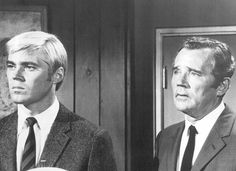
Originally titled “Men Against Evil,” the show was going to be more of a soap opera feel which was broadcast twice a week. However, by the time the show aired, most of the personal relationships had been taken out of the plot. The series focused on Sergeant Sam Stone (Howard Duff) and Rookie Detective Jim Briggs (Dennis Cole). Rounding out the cast was Desk Sergeant Dan Briggs (Ben Alexander), also known as Dad to Jim and District Attorney Adam Fisher (Len Wayland). The first seasons included Captain Frank Nye (Barney Phillips) while later seasons featured Captain Ed Franks (Robert DoQui).

The show was known for having some big names in directing, writing, and guest stars. Many of the directors racked up more than 75 credits each and included George McCowan who worked on The Mod Squad and Cannon, Allen Reisner known for Hawaii Five-0, Lee Katzin who directed Mission Impossible, Laslo Benedek known for work on Perry Mason, and Vincent McEveety who directed stars in Murder She Wrote, Heat of the Night, and Simon & Simon. Howard Duff jumped behind the camera in season two to direct “Deadly Abductors” after directing seven episodes of Camp Runamuck a couple of years earlier.

Crafting scripts for the show were writers such as Richard Murphy who was the creator of this show, Don Brinkley who worked on Trapper John and Medical Center, Jack Turley who wrote for Cannon and The Man from UNCLE, and John Kneubuhl who also wrote for the Wild Wild West.
📷pinterest.com

A handful of the guest stars included Ed Asner, Richard Dreyfuss, Robert Duvall, Roddy McDowell, Ricardo Montalban, George Takei, Vic Tayback, and Cicely Tyson.

The Felony Squad theme was composed by Pete Rugolo. Rugolo had 83 credits in the business including writing music for a wide variety of television genres including Leave It to Beaver, The Fugitive, and Family. This theme was an instrumental and very reminiscent of a sixties action movie.

I couldn’t find a lot of reviews, but the New York Times’ Jack Gould described it as “a very old-fashioned and conventional yarn about tight-lipped detectives doing a day’s work.”

The series was on Monday nights until 1968 when it was moved to Fridays. The first two seasons the show was up against The Andy Griffith Show which was in the top ten. For the final season, the show moved to the weekend where it was up against an Andy Griffith Show spinoff, Gomer Pyle USMC, which was also a top ten.

The show obviously did well to stay on the air three years when it faced such tough competition. I wonder if being a 30-minute show as opposed to an hour was part of its downfall. No matter how great the writers are, it’s tough to get sophisticated and detailed enough with a plot to wrap up in half an hour. The show certainly found talented directors, writers, cast members, and guest stars. The show was shot in color and had a different feel to it, more realistic. The action is right in your face like you’re on set instead of watching from far off. Considering it maintained decent ratings before it was moved, it would have been interesting to see what would have happened if this show had been the competition with a newer show to see how it fared. Fans loved it, so if you want to see something different, check out a few episodes. I’m not sure why this series isn’t seen more, but YouTube is your best bet to find the most available episodes. Also, as a fun aside, if you want to see Stone, check out Batman’s second season episode, “The Impractical Joker,” when Duff as Stone peers out the window while watching the Dynamic Duo climb the wall.

Bracken’s World: Ahead of Its Time

As we wind up our What in the World? blog series this month, we end with Bracken’s World. Just like the other shows we covered, this one began in the sixties, 1969, and just like the others, it was on for less than two seasons.

Dorothy Kingsley created the series for NBC. This was her only foray into television; she was a screenplay writer for most of her career. Kingsley wanted to concentrate on the “little people” who work at the studio, rather than the executives. In one blog I read that props from Twentieth Century Fox where the show was filmed were often carted around in the background for authenticity. It would be fun to go back and make a list of the props that were shown around the set; specifically mentioned were props from Planet of the Apes and Land of the Giants.

Watch.plex.tv.com captures the essence of the show in its description “In the glitzy realm of Century Studios, powerful executive John Bracken shapes Hollywood’s fate, navigating ambition, romance, and betrayal through the eyes of his astute secretary Sylvia, who holds the key to both secrets and success.”

Century Studios was a movie studio. John Bracken owned the company, and he was never seen during the first season. Similarly to the way Charlie interacted with Charlie’s Angels, we only heard Bracken on the telephone, voiced by Warren Stevens. Sylvia Caldwell (Eleanor Parker) was his secretary. There were some impressive cast members in this show including stunt man Dennis Cole, Jeanne Cooper, Madlyn Rhue, Linda Harrison, Elizabeth Allen, Karen Jensen, and Laraine Stephens. Most of them played starlets waiting for their big break. Peter Haskell as producer Kevin Grant seemed to be responsible for a lot of the success of the show. Tom Selleck had a recurring role of Roger Haines during the first season. The characters dealt with the problems of the movie industry—drugs, sex, alcohol, and amoral executives.

Being a Hollywood studio, there were also a lot of great guest stars including Anne Baxter, Shelley Fabares, Sally Field, Lee Grant, Carolyn Jones, Ricardo Montalban, Edward G. Robinson, Martin Sheen, Richard Thomas, Forrest Tucker and Raquel Welch.

The series was on Friday nights in the hole filled when Star Trek was canceled. It was referred to as the “Friday night death slot.” The show’s competition was Love American Style and CBS Friday Night at the Movies, which started an hour before Bracken’s World did. I’m not sure when this death slot switched because at that same time, I recall loving Friday nights in the early seventies featuring The Brady Bunch, The Partridge Family, Room 222, The Odd Couple, and Love American Style.

The show’s ratings were not good, so for the second season, things were changed a bit. Parker left part way through season one because she didn’t like the scripts. We now got to see John Bracken in person, but he sounded like Leslie Nielsen who played him instead of John Warren. Dennis Cole was also shown out the door.

Jeanne Cooper had a very different view of the show than Parker. Cooper played one of the starlet’s mom who was also her agent. She said that it allowed viewers to go behind the scenes of a movie studio to get a realistic depiction of what happened when the cameras were off. She said that the cast can take much more time filming movies to discuss the script, but that is not the way television works, and Parker never understood the difference between the two mediums. Cooper felt the writing was much more sophisticated than shows had produced before and that it led the way for shows like LA Law and Boston Legal.

According to Cooper, there were two reasons for the demise of the show. One was that she said Bracken should never have been exposed. He should have stayed a voice who ran a studio like a Louis B. Mayer type. She also said the show was very expensive to produce. Often shows were ordered six at a time back then which gave the crew some wiggle room to have a few expensive shows and then cut back when it got viewers locked in to average out the cost. NBC would only buy two or three at a time. Finally, Stan Rubin, the executive producer, said NBC had to agree to a minimum of four-episode commitments at a time and they refused, so the show was canceled.

The show did seem to be a bit ahead of its time. Perhaps if it had debuted a few years later, it would have found more viewers.