Stagecoach West: Experiencing Life in Outpost

As we celebrate westerns this month in our blog series “Go West Young Man,” we are tuning in to Stagecoach West which traveled across the air waves from 1960-1961. The show debuted in October of 1960 with the final episode airing in June of 1961. For the summer, reruns of the show continued. The thirty-eight episodes were on Tuesday nights.

📷wikipedia.com

The show features two Civil War veterans, Luke Perry (Wayne Rogers) and Simon Kane (Robert Bray), who own a stagecoach line and share driving duties in the Wyoming territory. It was fun to see a young Rogers decades before he showed up in Korea bantering with Alan Alda. During their trips they run into murders, robberies, range wars, renegade soldiers, and passengers who have their own drama. Simon’s son Davey (Richard Eyer) often travels with the men.

They are based in Outpost, a small frontier town. We get to know several townspeople including Dan Murchison (John Litel) who runs the general store and bank; Zeke Bonner (James Burke) who rents rooms at The Halfway House; Hugh Strickland (Robert J. Stevenson), the Marshal in Timberline; and Doc Apperson (played by J. Pat O’Malley and Sydney Smith).

📷rottentomatoes.com

Vincent M. Fennelly was the producer and there were several directors, with Thomas Carr taking the helm most often. There was also a long list of writers, but D.D. Beauchamp and Mary Beauchamp penned many of the scripts. From what I could learn about the Beauchamps, they didn’t work together but wrote their own episodes. Mary was known for her work on Bat Masterson and Tales of West Fargo in addition to this show. D.D. (Daniel Deronda) is best remembered as a writer for Daniel Boone. His third wife was Mary Mitchell, so I am guessing that Mary Mitchell and Mary Beauchamp are the same person. Sounds like she and her husband were cremated, so there is no findagrave site for her.

The theme song was composed by Skip Martin and Terry Gilkyson. This was the only time I could find where this duo worked together. They had very different careers. Gilkyson was part of The Weavers and The Easy Riders. In 1960 he went to work for Walt Disney and was nominated for an Oscar for “The Bare Necessities” in Jungle Book. Martin worked with jazz and swing bands in the 1930s and 40s including Count Basie and Glenn Miller. With Les Brown, he was given credit for writing “I’ve Got My Love to Keep Me Warm.” In the 1950s he moved to Hollywood where he worked on Singin’ in the Rain and A Star is Born.

📷westernserieswiki.com

Richard Eyer in an interview said the show “kept me busy and was usually fun. It was a very positive experience. When they hired me, it was sort of a transitional point . . when we did the pilot I was 13 and quite young . . . we started production eight months [later] . . . I was into puberty and adolescence.”

Tuesday nights’ competition in 1960 was Thriller on NBC and The Tom Ewell Show and The Red Skelton Show on CBS. Thriller was an interesting show hosted by Boris Karloff. It began as an anthology focusing on crime but later transitioned to gothic horror stories. The Tom Ewell Show also began and ended in 1960. Ewell plays a real estate agent who lives with a lot of women, namely his wife, daughters, and mother-in-law. ABC aired The Rifleman and The Legend of Wyatt Earp before Stagecoach West.

The show never gained viewers, so it was cancelled in June. If you follow me, you know I don’t have the most positive feelings about Red Skelton and how he treated the people who worked for him, but it was a very popular show and some of the episodes were in color, so a lot of people were tuning into to watch him. I wonder if because two westerns were on earlier in the evening, people were ready to watch another genre. In addition to this night of programming, there were another 15 westerns on during the evenings on the other days of the week. The other factor that comes into play is that both The Rifleman and The Many Loves of Dobie Gillis on CBS were in the top thirty. I wonder how many viewers watched The Rifleman on ABC and then switched networks to Dobie Gillis on NBC and then never returned to ABC for the rest of the evening.

It would be a fun and easy binge watch if you want to tune in even to see the guest stars and learn some of the issues that were dealt with during this era of travel.

Everybody’s Friend, Marie Wilson

This month our blog series is “They Call Me Wilson,” and we will be looking at actors with the last name of Wilson.  Today we begin our series with Marie Wilson, a familiar face in television in the 1950s.

See the source image
Photo: e.n. wikipedia.org

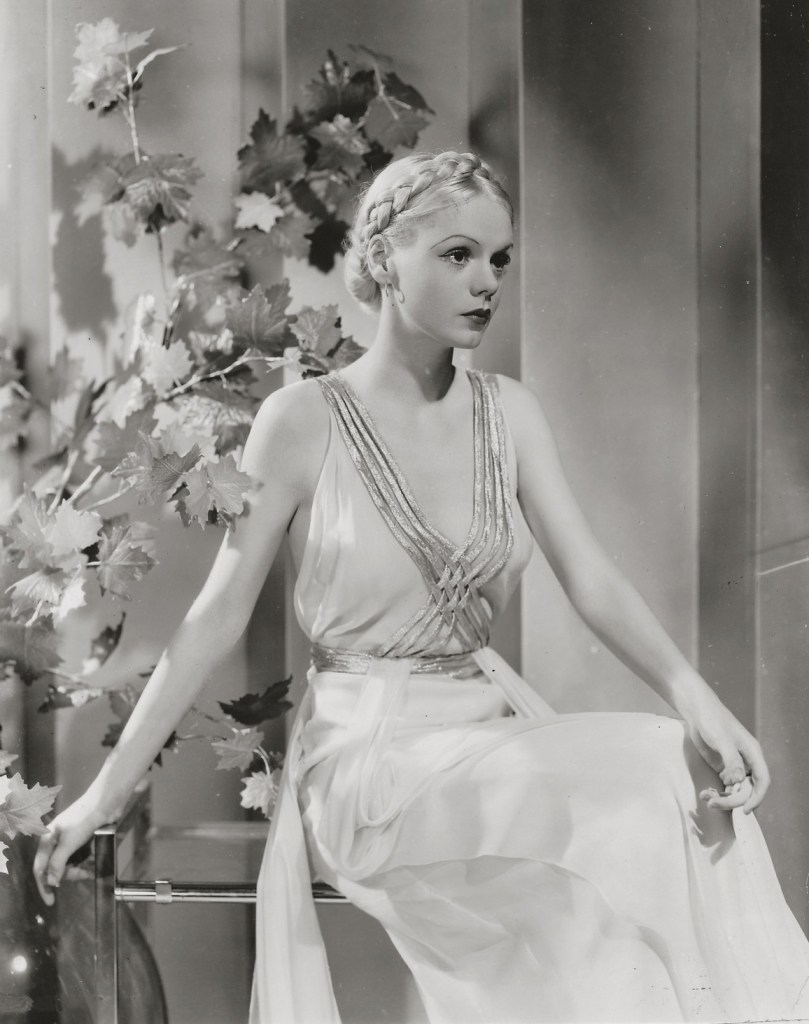
Marie was born Katherine Elizabeth Wilson in August of 1916 in California. Her nickname in high school was “Maybelle.” After her father died, the family moved to Hollywood. She graduated from high school in 1933, and by 1934, she had received her first movie credit. One source mentioned that her parents divorced when she was only seven months old and her father, Wally Wilson, passed away when she was five. She received an $11,000 trust which helped her take time to pursue a career in acting. Her stepfather, Frank White, raised her.

Photo: blogspot.com

Her first role was as a passenger in Down to Their Last Yacht, but she would go on to appear in more than fifty films. The plot of this movie was that a family loses everything in the Depression except their yacht. Several men who feel bad for their daughter decide to host a Monte Carlo night.  The group rigs the roulette wheel so that the house is the winner although she knows nothing about it.

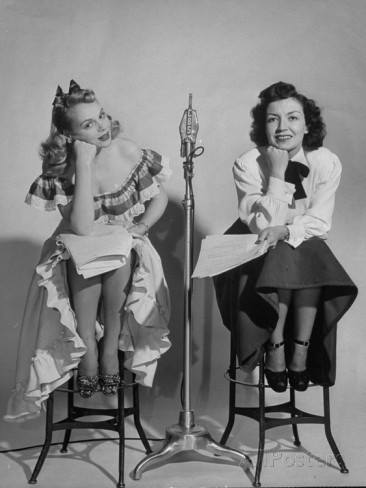
From 1947 to 1953 she also accepted a role on radio as the scatterbrained Irma on My Friend Irma. The show was very popular with well-written scripts and accomplished acting.

Wilson with Cathy Lewis–Photo: oldtimeradiodownloads.com

During this time, she also starred in a couple of films about Irma in My Friend Irma and My Friend Irma Goes West. A duo by the name of Dean Martin and Jerry Lewis starred in the movie version of My Friend Irma.

See the source image

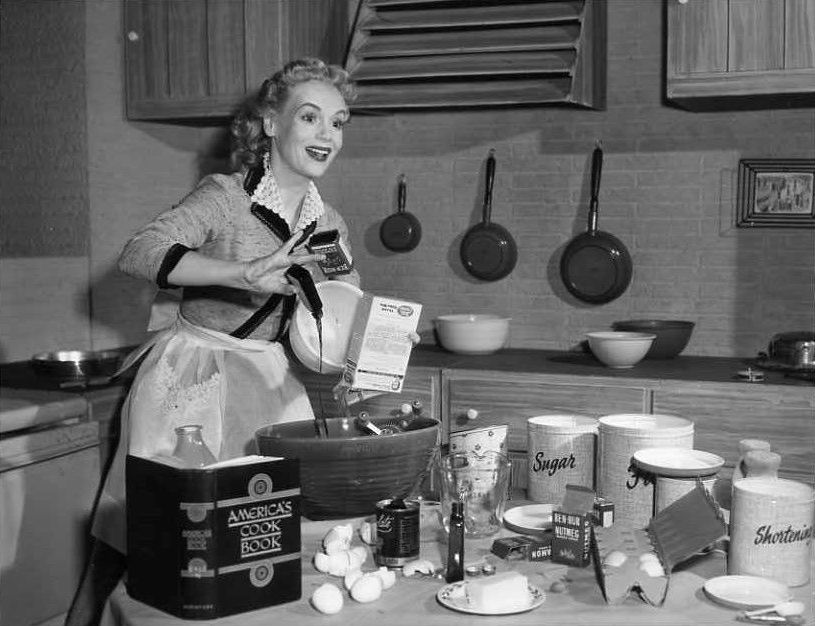
Not content with Irma occupying space in two big medias, My Friend Irma aired on television from 1952-1954. Irma was a secretary living with roommate and friend Jane Stacy (Cathy Lewis) in a run-down apartment owned by Mrs. O’Reilly (Gloria Gordon). Neighbor Professor Kropotkin (Sig Arno) got involved in the girls’ lives as well as Jane’s boyfriend, millionaire Richard Rhinelander III (Brooks West) whose mother was played by the amazing Margaret Dumont. After Jane moves to Panama at the end of season one, Kay Foster (Mary Shipp) became Irma’s new roommate. Her boyfriend was Joe Vance (Hal March). The new neighbor was Mr. Corday (John Carradine), an actor and just for some new plots, Irma’s seven-year-old nephew Bobby (Richard Eyer) moves into the apartment.

Photo: oldtimeradiodownloads.com

During her time on radio, she married actor Allan Nixon. Apparently, he struggled because he was a bit player while her career flourished.  He was arrested numerous times for drunk and disorderly conduct, and they divorced in 1950. Another big disappointment occurred in 1950 when she lost the role of Billie Dawn in Born Yesterday to Judy Holliday.

The following year she married Robert Fallon, another fellow actor, and they remained together until her death in 1972.

Marie’s appearances on television waned in the sixties.  She appeared on The Ed Sullivan Show in 1960 and on Comedy Spot in 1962. Comedy Spot had a different premise.  As a summer replacement for Red Skelton, it featured unsold pilots for comedy series and reruns from comedic anthology shows.

Photo: oldtimeradioclassics.com

In 1963 she would appear on two episodes of Burke’s Law and in one episode of Empire.

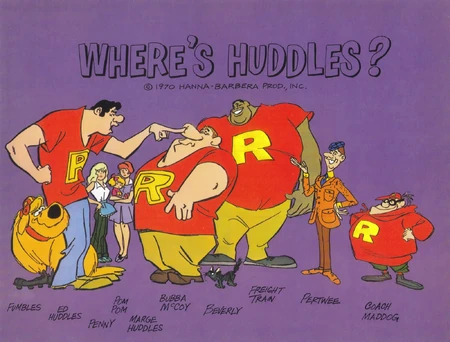
In 1970 she returned to a weekly animation series on Where’s Huddles? She had the role of football wife Penny McCoy. Unfortunately, it was cancelled after only ten episodes. This show was about the lives of football families on and off the field and featured a lot of talent including Paul Lynde, Jean Vander Pyl, Allan Reed, and Mel Blanc.

See the source image
Photo: hanna-barbera.wikia.com

Her last appearance was on Love American Style as Margaret Cooperman in 1972 in “Love and the Girlish Groom.”

Wilson was recognized for each of her Irma media hits with a Walk of Fame star for radio at 6301 Hollywood Boulevard, for television at 6765 Hollywood Boulevard, and for movies at 6601 Hollywood Boulevard.

Photo: pinterest.com

Not many actresses can claim their leg is a famous sculpture but Wilson’s left leg was used to cast a 35-foot sculpture located outside the Theme Hosiery plant in Los Angeles. The leg was wearing nylons to promote them to the public in 1949.

Marie had a long and successful career but was typecast early in life and unable to shake that image.  It may have contributed her loss of the part in Born Yesterday which might have changed her career dramatically. Discussing her life in entertainment, Wilson said “Show business has been very good to me and I’m not complaining, but some day I just wish someone would offer me a different kind of role. My closest friends admit that whenever they tell someone they know me, they have to convince them that I’m really not dumb. To tell you the truth, I think people are disappointed that I’m not.”

See the source image
Photo: pinterest.com

As we’ve seen so often in this blog, it’s hard not to be grateful for a lucrative career in entertainment, but it’s tough to be locked into one type of role and never given a chance to show your depths as an actor. Thanks for being our friend, Marie.