Hey Mulligan! The Mickey Rooney Show


This month our blog series is “It’s Their Show.” Today we are taking a look at The Mickey Rooney Show. This show debuted on NBC in 1954. It was on for one season, producing 39 episodes.

📷singingnewstv.com

Rooney plays Mickey Mulligan, a Guest Relations Staff member who works at a television network, hoping to land an acting career by taking acting lessons at night. It’s interesting that they set the show at a television network, because only 56% of families had televisions in 1954. It’s also interesting that Rooney was playing a young adult, although he was in his mid-thirties.

Mulligan is not content with his salary of $47.62 a week. Lucky for him, his girlfriend Pat (Carla Balenda) is a secretary to the studio program manager, Charles Brown (John Hubbard). Rounding out the cast is the head of the network (John Hoyt) and Mickey’s best friend Freddie (Joey Forman). Freddie also works at the network, and the two friends often grab lunch at the Hamburger Hut.

📷internetarchive.com

To make ends meet, Mickey lives with his parents, Joe (Regis Toomey) and Nell (Claire Carleton). Joe is a retired police officer who met his wife when he arrested her because she was a burlesque dancer.

There were a lot of talented people behind the camera on this show. Blake Edwards was one of the creators,  an executive producer, and one of the writers on the show. He would write and produce several shows including Richard Diamond Private Detective and Peter Gunn before moving into movies in the sixties. Later in life he would be known for the Pink Panther movies and marrying Julie Andrews.

Van Alexander was an arranger for Capitol Records, and he produced the soundtrack for the show. He was a collaborator with Ella Fitzgerald and worked on Bewitched and I Dream of Jeanne as well as big-screen productions.
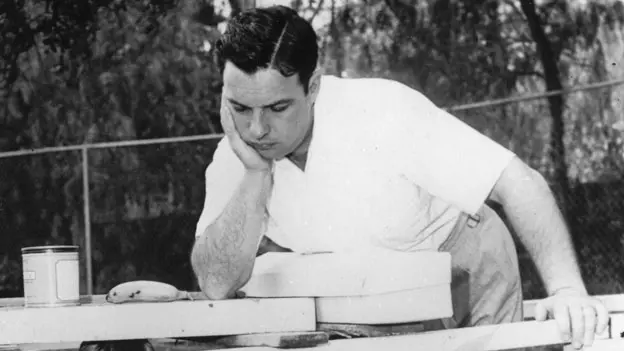
📷BBC.com Van Alexander

Leslie H. Martinson was one of the primary directors for the show, working on 33 of the episodes. In a Television Academy interview, he discussed working on the series. He said he often had to shoot around Mickey’s role because Mickey was off at the racecourse and then they’d film him when he showed up. He said Rooney was a genius with the way he reacted to things and often his expressions made the entire scene worthwhile.

NBC scheduled the show on Saturday night against The Jackie Gleason Show, which was one of the most popular shows on television at the time. There were some derogatory comments made about Gleason by Rooney that got leaked to the public, and it caused a lot of turmoil for the show before it even aired.

📷amazon.com

The show started with a tagline, sort of like the beginning of That Girl had. While Rooney is boxing, someone yells “Hey Mulligan.” I watched episode 8 of the first year, “Tiger Mulligan.” In this episode, Mulligan’s parents are watching television when Mickey comes home from the gym where he’s working out to be an amateur boxer. His dad is ecstatic, but his mom is not too happy. His girlfriend agrees with her, and she doesn’t like having to sit around by herself at night. His mom, who is a fun character, convinces him that he’s trained too hard and is overly weak. She sets him up by gluing some items to the shelf and making a jar impossible to open. He thinks his mom is stronger than he is and that he needs to pull out of the fight. However, his dad realizes what she’s up to and when he calls her on it, Mickey gets excited for the match. However, at the ring he realizes that his opponent looks like a weakling but has a strong right arm. The fight ends with both of them passing out when they see blood. I really enjoyed the writing, the characters, and the music; I will say that the laugh track was a bit hard to get used to though.

I know something has to go up against the big hits on the television schedule, but it seems like this would have been a fun show if it had competed against a show that wasn’t in the top ten. The entire series is available on DVD if you want to check it out.
Richard Diamond, Private Detective: Living His Best Life

This month we are discovering some of our favorite “Crime Solvers of the Past.” Up today is a show I listen to on old-time radio quite often: Richard Diamond, Private Detective.

Dick Powell stared on the radio series which began in 1949, and the show ended its run four years later in 1953.

📷wikimedia.org

The television show went on the air in the summer of 1957. CBS aired the show through fall of 1959 when it moved to NBC for its final season. It was much more common in the fifties and sixties for shows to shift networks.

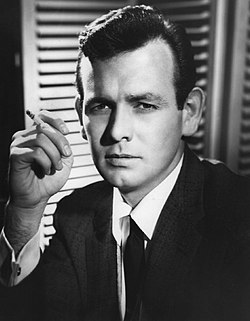
David Janssen starred as Diamond, a former cop in the New York Police Department. The television show kept the film noir atmosphere. It also kept the New York City location and showcased Diamond’s wit and charm with the ladies. Rounding out the cast was Diamond’s former superior Lt. Dennis McGough (Regis Toomey).

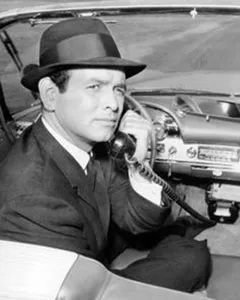
The third season moved Diamond to Los Angeles, and everything took on a new look. His life became more glamorous, and he lived in the Hollywood Hills and had a swimming pool. Apparently, private eyes earned a much bigger fee in Los Angeles. After taxis in New York, Diamond drove a new convertible which included a car phone, a high-tech feature for that time period. Lt. McGough remained in New York, and the LA police weren’t so fond of Diamond and his interference with their cases.

📷thrillingdetectives.com

Diamond’s phone calls are collected by Sam.  Often she passes the messages on to Diamond on his phone car. Car phones were pretty cool in this era. We don’t see her face, but we do see her legs on a regular basis. I’ll take their word for it that Sam was played by Mary Tyler Moore for part of season three and Roxane Brooks filled out the rest of year three and season four. No one knew who Sam was until Mary Tyler Moore modeled hosiery in the TV Guide and let the cat out of the bag. She was immediately fired and replaced with Brooks. I also read a version that Moore asked for a raise and was denied it and fired, which prompted her to talk about her identity as Sam on the show.

The theme also took on a contemporary jazz score that was now used for the theme song.

📷famousfixx.com

Apparently, NBC demoted Diamond because for the final season, he lost his ranch house with the fireplace and sunken living room. He lived in an apartment and worked from a typical, small office. The show lost a lot of its elegance, and fans probably missed Diamond’s former life after getting used to him in year three. Lt. Pete Kile (Russ Conway) has now found mutual respect with Diamond and the two of them work together on many of his cases. He also has an understanding with Karen (Barbara Bain), his new girlfriend.

Guest stars were plentiful on the show. Some of the appearances included Claude Akins, Ed Begley, Joey Bishop, Whitney Blake, Charles Bronson, Jack Cassidy, Jack Elam, Charles Lane, and Ruta Lee.

📷posterazzi.com

ABC aired the show on Thursday nights up against Zorro and You Bet Your Life, both shows in the top thirty. The next season it moved to Sunday nights and took on The Loretta Young Show. NBC moved the show to an earlier time slot on Mondays against The Kate Smith Show and the popular western Cheyenne. I’m guessing most families tuned in to one of its competitor’s series that early in the evening.

Maxwell House sponsored season one and Kent Cigarettes took over for season two. It seems that in the fifties coffee and cigarettes are what kept most detectives going.

From what I’ve concluded, the show didn’t age as well as the radio show. It lost some of its comedy and playful dialogue and became more somber and serious. The fact that Richard’s living conditions changed three times, along with the spot on the tv schedule where the show lived, probably didn’t help viewers stay tuned.

Let me qualify that I read many people’s views of the show who thought some of the seasons as high quality as you could get. However, I am just going to keep listening to the radio show and take a pass on watching Diamond’s more stressed-out, serious side on television.

Cheyenne: Introducing Jim Baumgartner

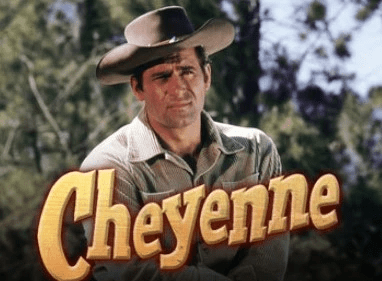
In June, we are advising “Go West Young Man” as we peek back at a few of our favorite westerns. First up is Cheyenne. Cheyenne debuted in 1955; it was the first hour-long Western. It would remain on the air for eight years, producing 108 episodes.

📷rewatchclassictv.com

Clint Walker starred as Cheyenne Bodie, a cowboy who explores the wild west after the Civil War. Early in the show, we learn that Bodie’s parents were killed by an unknown Native American tribe. A Cheyenne tribe found him and raised him till he was 12 when they sent him to live with a White family.

Because Cheyenne is traveling, guest stars change from week to week. The series was part of Warner Brothers Presents which alternated a weekly show with Cheyenne, Casablanca, and Kings Row.

For the first four seasons, the show was on Tuesday nights; then it moved to Mondays for the final four years. It was in the top thirty, and often the top twenty, for most of its television life, despite being up against The Phil Silvers Show; Richard Diamond, Private Detective; Dragnet; and the game shows To Tell the Truth and I’ve Got a Secret. Because Warner Brothers was used to making movies, the television show was produced with a movie feel to it.

In 1958, Walker went on strike. His contract stipulated that he had to give Warner Brothers 50% of his personal appearance fees, and he could only record music with the Warner Brothers label. He wanted 100% of his fees and to be able to record wherever he chose. I never learned what they settled on, but Walker returned to the show.

📷wikipedia.com

During his travels, Cheyenne often advocates for justice in the places he visits, sometimes working as a sheriff or deputy. Another theme of the show is the distrust of Native Americans. Cheyenne is sympathetic to their plight and is loyal to the Cheyenne tribe that raised him. Many of the plots were taken directly from Warner Brothers movies of the past and reworked a bit.

The theme song was composed by William Lava and Stanley Davis Jones. They both worked on The Mickey Mouse Club with Jones composing for the Spin and Marty shorts. Lava also provided music for Zorro, The Twilight Zone, and 77 Sunset Strip.

During Clint Walker’s interview with the Television Academy, he talked about his time on the show. He said he became aware of how many people liked the show when they sent him out to functions, and he started to realize how many fans he had in each town and then thinking of all the towns in the United States. He received a lot of fan mail from people who liked the values of the show. Some young men told him they no longer had fathers or uncles, and he was their role model.

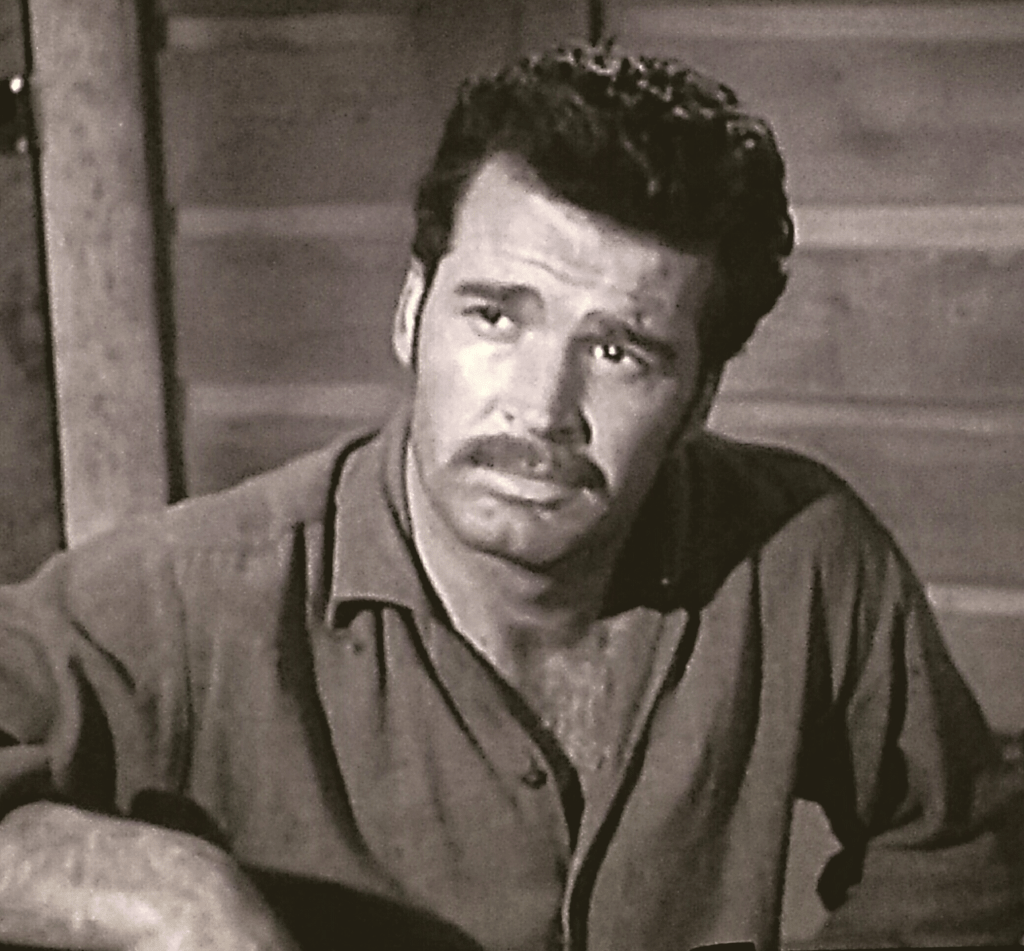
📷imdb.com James Garner

I also heard a fun story about casting during this show. Richard Bare explained during his interview that he was in a bar one night and a friend introduced him to an actor. The next day a meeting was called where Jack Warner informed them that he wanted some new faces introduced during the show. Bare remembered the young actor he met at the bar the night before but couldn’t remember his name. He called the bar and was told that the actor’s name was Jim Baumgartner, so he asked them to tell him to come to the studio when he showed up again. Finally, Baumgartner called Bare the day before they began shooting. He came in and did an audition. The crew was going on location the next day, so they had to decide immediately if he was part of the show. When Jack Warner saw the clips, he said to give that kid a seven-year contract, and that’s how James Garner started working in westerns.

There is no doubt Cheyenne was a popular show. It was interesting enough to keep viewers’ attention for an hour. The episodes seem to be well written. In an era when there were tons of westerns to watch, this one was in the top section of that list. The show still can be streamed on several places. If you want to live in the Old West for a bit, why not join Cheyenne and see what it was like.