My Sister Eileen: Version Five

As we look at a few little-remembered shows from the past, today we are learning about My Sister Eileen. The series was adapted from short stories by Ruth McKenney published in The New Yorker. The stories became a book in 1938, a play in 1940 and two movies in 1942 and 1955.

đź“·wikipedia.com

In the 1955 Hollywood movie, two small-town sisters — an aspiring writer, Ruth (Betty Garrett), and a would-be actress, Eileen (Janet Leigh) — move to New York City. They find lodging in a shabby apartment and struggle to locate promising gigs. Ruth eventually meets magazine editor Bob Baker (Jack Lemmon), who tells her to write about her life experiences rather than fiction. As it turns out, Eileen’s life, with her various romantic encounters, is far more interesting, so Ruth steals the stories for herself.

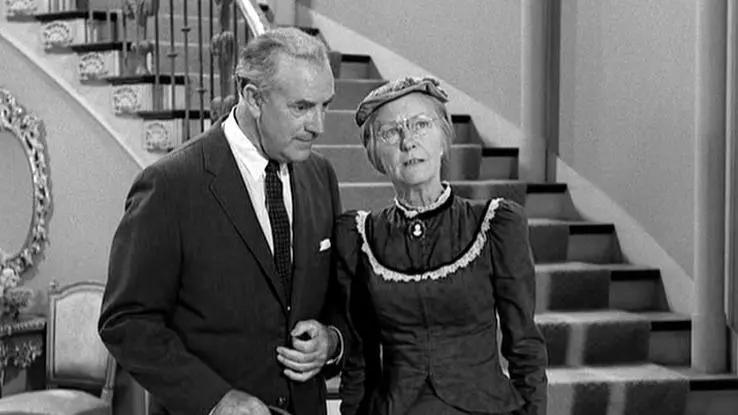
This show joined the television schedule in 1960 and featured Elaine Stritch and Shirley Bonne (Ruth and Eileen Sherwood), who move to New York City. Like the movie, one is a writer and one is an actress. Living in a Greenwich brownstone, they become friends with a reporter Chick Adams (Jack Weston) and Ruth’s coworker Bertha (Rose Marie). Rounding out the cast is Eileen’s agent Marty Scott  (Stubby Kaye), their landlord Mr. Appopoplous (Leon Belasco), Ruth’s boss D.X. Beaumont (Raymond Bailey), and their Aunt Harriet (Agnes Moorehead). The sisters are stereotyped with Ruth being the smart, plain one and Eileen being the beautiful and naĂŻve one.

The pilot was seen on the Alcoa-Goodyear Theater with Anne Helm portraying Eileen.

Earl Hagen who composed “The Fishing Hole” for The Andy Griffith Show composed this theme as well.

đź“·imdb.com Rose Marie on the show

Rose Marie talked about being on this sitcom for the Television Academy. She said she was friends with the producer Dick Wesson. She said her character Bertha was a wise-cracking one similar to Sally on The Dick Van Dyke Show. Rose Marie didn’t like working with Elaine Stritch. She felt she was not very professional on this show; she said she came to work late and goofed off a lot.

In 1960 it appeared on the schedule on CBS opposite Hawaiian Eye and Perry Como’s Kraft Music Hall. Hawaiian Eye was on the air four years, and this was it’s second season. With Connie Stevens, Robert Conrad and Poncie Ponce, it was about two private investigators in Hawaii, a Korean war vet and a former police detective.

I don’t think the writing helped the show stay on the air too long. During the first season some of the plots included: Ruth’s boss ignores her pleas for a pay increase until he encounters her working as a waitress in a German restaurant — and in a skimpy costume and the Sherwood sisters decide to break their lease with a wild party to which they invite a one-man band, a junior Tarzan, and a fireman with his siren.

đź“·moviesanywhere.com 1955 film version

I’m guessing part of the problem was that it had appeared in so many versions already. Many people read the book. Lots of people saw one, if not two, of the movies. And the play was being featured around the country. I can see that having a television series which has to expand the hour-and-a-half play and film might not have enough material to draw out the same old plot and keep it interesting for more than a few episodes.

This one is another one that you’re probably better off watching the 1955 silver screen adaptation and skipping the television series.

Raymond Bailey: Banking On a Starring Role

Photo: rottentomatoes.com

This month’s blog series is “Time for Some Texas Tea.” We are learning about some of the stars of The Beverly Hillbillies. Today we are banking on getting to know Milburn Drysdale, also known as Raymond Bailey.

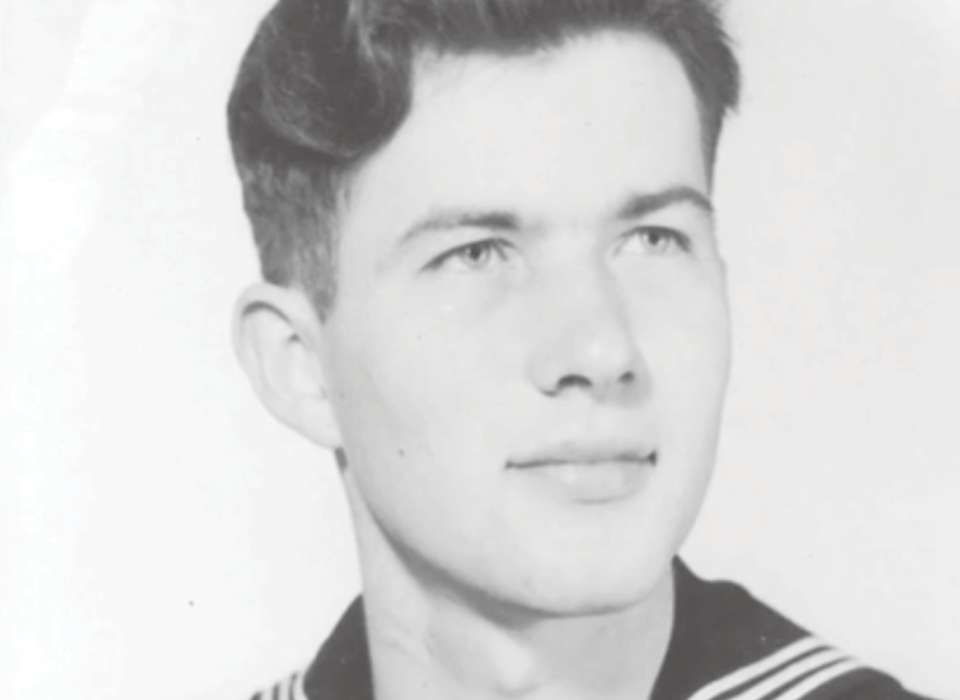
Bailey was born Raymond Thomas Bailey in 1934 in San Francisco, California. When he was only a teenager he made the trek to Hollywood to try his hand at acting. He had a tougher time breaking into the business and worked a lot of odd jobs including day laborer in a silent movie theater where he was fired after sneaking into a mob scene which I found pretty funny and creative. He also worked as a stockbroker and a banker which would come in handy later in his career.

Photo: thenationalwwiimuseum.com

When things did not seem to be working out, he moved to New York City. He had no better luck on the east coast than on the west coast, so he joined the crew as a merchant seaman and toured the world, including China, Japan, the Philippines, the Mediterranean, and Hawaii. While in Hawaii, he also worked on a pineapple plantation, acted in the community theater, and sang for a local radio station.

He decided to give Hollywood a second chance in 1938, and he actually began getting some small movie parts. His first credited role was in SOS Tidal Wave. He was Mr. West in The Green Hornet in 1940. He appeared in 30 movies before Pearl Harbor was struck. When the US entered WWII, he joined the US Merchant Marine. After his time was up, he returned to Hollywood.

In 1951, Bailey married Gaby George and they would remain married until his death. I could not learn much about Gaby, but she was born in another country, and they were married in Manhattan. I’m not sure if she came here earlier in her life or met Bailey while he was traveling the world. She would have been 37 when they married, and I believe she received naturalization papers when she was 55.

The Alfred Hitchcock Show “Breakdown” Photo: completehitchcock.com

Raymond continued receiving big-screen roles, and in 1952 he had his first television appearance in Tales of Tomorrow as Congressman Burns. He appeared in forty-six additional series during the decade of the fifties, including The Donna Reed Show, Jack Benny, Burns and Allen, Gunsmoke, and Private Secretary. His movie career continued with roles in 26 films including Sabrina, Picnic, King Creole, and Vertigo. In the mid-fifties, he also explored Broadway with roles in four plays.

While Bailey didn’t abandon his film career, the sixties found him on the small screen the majority of the time. In the early sixties, he could be seen on a variety of shows including Lassie, The Ann Sothern Show, Bachelor Father, Perry Mason, Bonanza, My Three Sons, and Mister Ed. In 1961, he was offered his first regular role as Mr. Beaumont on My Sister Eileen. He appeared in 25 of the 27 episodes of the show.

Photo: ask.com

In 1962 he was offered the role he would become a household name for: Milton Drysdale on The Beverly Hillbillies. His time as a banker helped him manage millions of dollars in the Clampett accounts. Much to his wife’s chagrin, Drysdale talks the Clampetts into buying the mansion right next to his so he can keep a better eye on them and their money. He was their mentor as they adjusted from country life to city life as much as they could adjust.

Unfortunately, Bailey developed Alzheimer’s, and the symptoms began just as the show was ending. The Beverly Hillbillies was canceled during the “Rural Purge” when all country-related shows were ended by the network in 1971. After the series was canceled, Ray only had two acting credits; they were both in Disney movies that came out in the mid-seventies: Herbie Rides Again and The Strongest Man in the World.

With Nancy Kulp Photo: imdb.com

Baily then became a bit of a recluse until his death in 1980 from a heart attack. It sounds like the only non-family member he kept in touch with was Nancy Kulp who played his secretary Jane on The Beverly Hillbillies.

It was fun to learn more about the career of Raymond Bailey. He certainly defined the word “perseverance.” I’m glad he was able to do what he had a passion for. It would have been interesting to see how he would have done in another comedy series. His Alzheimer’s diagnosis probably ended his career twenty years earlier than it would have. It sounds like he found love and a fulfilling career and that is certainly a success no matter what your profession is.