Bracken’s World: Ahead of Its Time

As we wind up our What in the World? blog series this month, we end with Bracken’s World. Just like the other shows we covered, this one began in the sixties, 1969, and just like the others, it was on for less than two seasons.

Dorothy Kingsley created the series for NBC. This was her only foray into television; she was a screenplay writer for most of her career. Kingsley wanted to concentrate on the “little people” who work at the studio, rather than the executives. In one blog I read that props from Twentieth Century Fox where the show was filmed were often carted around in the background for authenticity. It would be fun to go back and make a list of the props that were shown around the set; specifically mentioned were props from Planet of the Apes and Land of the Giants.

Watch.plex.tv.com captures the essence of the show in its description “In the glitzy realm of Century Studios, powerful executive John Bracken shapes Hollywood’s fate, navigating ambition, romance, and betrayal through the eyes of his astute secretary Sylvia, who holds the key to both secrets and success.”

Century Studios was a movie studio. John Bracken owned the company, and he was never seen during the first season. Similarly to the way Charlie interacted with Charlie’s Angels, we only heard Bracken on the telephone, voiced by Warren Stevens. Sylvia Caldwell (Eleanor Parker) was his secretary. There were some impressive cast members in this show including stunt man Dennis Cole, Jeanne Cooper, Madlyn Rhue, Linda Harrison, Elizabeth Allen, Karen Jensen, and Laraine Stephens. Most of them played starlets waiting for their big break. Peter Haskell as producer Kevin Grant seemed to be responsible for a lot of the success of the show. Tom Selleck had a recurring role of Roger Haines during the first season. The characters dealt with the problems of the movie industry—drugs, sex, alcohol, and amoral executives.

Being a Hollywood studio, there were also a lot of great guest stars including Anne Baxter, Shelley Fabares, Sally Field, Lee Grant, Carolyn Jones, Ricardo Montalban, Edward G. Robinson, Martin Sheen, Richard Thomas, Forrest Tucker and Raquel Welch.

The series was on Friday nights in the hole filled when Star Trek was canceled. It was referred to as the “Friday night death slot.” The show’s competition was Love American Style and CBS Friday Night at the Movies, which started an hour before Bracken’s World did. I’m not sure when this death slot switched because at that same time, I recall loving Friday nights in the early seventies featuring The Brady Bunch, The Partridge Family, Room 222, The Odd Couple, and Love American Style.

The show’s ratings were not good, so for the second season, things were changed a bit. Parker left part way through season one because she didn’t like the scripts. We now got to see John Bracken in person, but he sounded like Leslie Nielsen who played him instead of John Warren. Dennis Cole was also shown out the door.

Jeanne Cooper had a very different view of the show than Parker. Cooper played one of the starlet’s mom who was also her agent. She said that it allowed viewers to go behind the scenes of a movie studio to get a realistic depiction of what happened when the cameras were off. She said that the cast can take much more time filming movies to discuss the script, but that is not the way television works, and Parker never understood the difference between the two mediums. Cooper felt the writing was much more sophisticated than shows had produced before and that it led the way for shows like LA Law and Boston Legal.

According to Cooper, there were two reasons for the demise of the show. One was that she said Bracken should never have been exposed. He should have stayed a voice who ran a studio like a Louis B. Mayer type. She also said the show was very expensive to produce. Often shows were ordered six at a time back then which gave the crew some wiggle room to have a few expensive shows and then cut back when it got viewers locked in to average out the cost. NBC would only buy two or three at a time. Finally, Stan Rubin, the executive producer, said NBC had to agree to a minimum of four-episode commitments at a time and they refused, so the show was canceled.

The show did seem to be a bit ahead of its time. Perhaps if it had debuted a few years later, it would have found more viewers.

Linda Evans’ Destiny was Working with John Forsythe

This month we are looking at some of our favorite “Supportive Women.” Today we are taking a closer look at the career of Linda Evans.

Photo: vintageeveryday.com

Born Linda Evenstad in 1942 in Hartford, Connecticut, she was the middle child of three sisters. Both her parents were professional dancers. When she was six months old, the family moved to North Hollywood. Linda graduated from Hollywood High School with Stefanie Powers, who we will be talking about next week. Like Morgan Fairchild, who we will be discussing in two weeks, Linda took drama classes to help her deal with shyness.

Linda was engaged to Patrick Curtis, but they never married. He later became a press agent and married Raquel Welch.

Linda’s first two roles were on two of my favorite sitcoms. In 1960, she guest starred on Bachelor Father where Bentley Greg (John Forsythe) raised his niece Kelly (Noreen Corcoran) with the help of his houseboy Peter (Sammee Tong). Her second appearance was on The Adventures of Ozzie and Harriet. During the sixties, she would appear on a variety of shows including Dr. Kildare, Wagon Train, and My Favorite Martian.

Photo: pinterest.com

Her first made-for-tv movie was 1962’s Buttons with Beaus, and her first big screen feature came a year later in Twilight of Honor; her second movie was Beach Blanket Bingo in 1965 where she played Sugar Kane.

It was in 1965 that Evans began dating film director John Derek. They would marry in 1968 and separate in 1973 when Linda learned he was dating the actress who became known as Bo Derek.

1965 was also the year she was offered her first role as a regular cast member of a series. She became Audra Barkley from 1965-1969 on The Big Valley. The western was very popular. Similar to Bonanza, in this show, Victoria Barkley managed to raise her family and keep the villains at bay.

She and Barbara Stanwyck, who played her mother Victoria on the show, became very close. Stanwyck continued to refer to her as Audra after the show ended. Linda says Barbara was a great mentor and friend to her.

In 1967 when Derek was filming Evel Knievel’s famous motorcycle jump over the fountains at Caesar’s Place in Las Vegas, he asked Linda to take over one of the cameras, and she shot the famous footage of Knievel’s devastating crash.

During the 1970s she kept busy with television appearances on dramas including McCloud, Banacek, Harry O, McMillan and Wife, and The Rockford Files.

With “mom” Barbara Stanwyck Photo: imdb.com

In 1975, she married Stan Herman, a real estate tycoon. They were married four years before splitting up. She never married again.

From 1976-1977 she again accepted a role as a regular on the show Hunter. The series only lasted fourteen episodes before being canceled. Not to be confused with the show from the 1980s, in this one, US government special agents James Hunter (Tony Franciscus) and Marty Shaw (Evans) take on missions around the world. He posed as a bookstore owner, and her cover was a model. I admit I have never seen this show, but it sounds like a seventies version of I Spy.

During the 1980s, her career was split between two primary shows: The Love Boat and Dynasty. Dynasty was on the air from 1981-1989. When Dallas became extremely popular, ABC commissioned Aaron Spelling to come up with a primetime soap opera of its own. Evans was back on the air working with John Forsythe again as Blake Carrington, her wealthy husband. The basic premise of the show was that it was an upper-class version of the Hatfields and the McCoys with the Carringtons and the Colbys feuding in the oil business in Denver, Colorado.

Dynasty with Forsythe and Collins Photo: imdb.com

Evans and Forsythe remained close friends for the rest of his life. She said he was “so magical. This show was so serious and he was funny personally. We’d be fighting and people would be strangling each other and he made me laugh all day long, I’ll be forever grateful to him for that.” The person Linda was often strangling was Joan Collins who played Alexis Carrington Colby, Blake’s first wife.

By 1984 the show had reached number one in the rankings. Linda was nominated for an Emmy for Outstanding Lead Actress in a Drama Series in 1983. She was beat out by Tyne Daly from Cagney and Lacey.

After the show was canceled, Evans stepped out of the limelight for the most part. She did film five made-for-tv movies during the 1990s and guest starred on Germany’s version of The Love Boat, Das Traumschiff, in 2020. In 2021, she was in a big-screen feature, Swan Song.

In 2011 Evans published a book, Recipes for Life: My Memories, a combination of candid memoir and inspirational cookbook. Despite her perfect figure, one of her weaknesses is pizza. On premierspeakers.com on April 10, 2018, she was quoted as saying “I love pizza so much, that if you wake me up in the middle of the night and ask me if I’d like to eat a slice, I’ll say YES. Kenny Rogers used to have it delivered to me while I was filming The Gambler.

Photo: dailyexpress.com

Linda seemed to enjoy her career. She is remembered for several well-known characters in Audra Barkley and Crystal Carrington. While she has given up acting for the most part, I would not be surprised to see her back on the big screen for another part or two if it’s the right offer.

McHale’s Navy: Set Adrift in a Sea of Comedy

Ahoy matey. We are currently in the middle of the “We Salute You!” blog series. Today we go behind the scenes of one of the most popular military sitcoms: McHale’s Navy.

Photo: blogspot.com

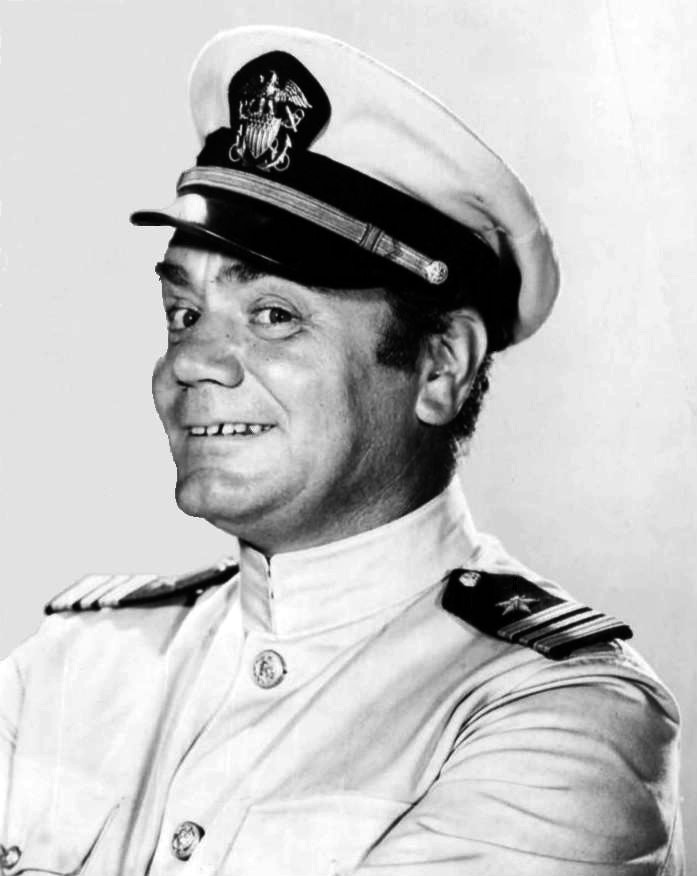
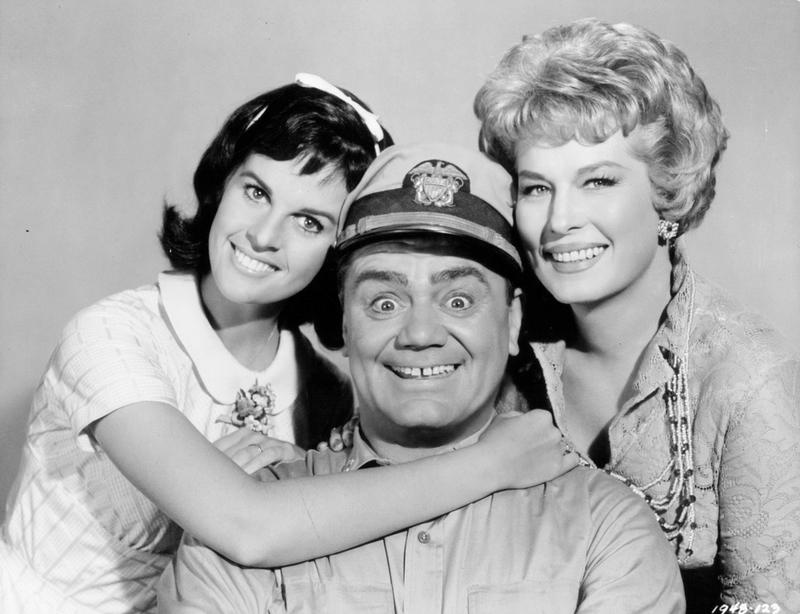
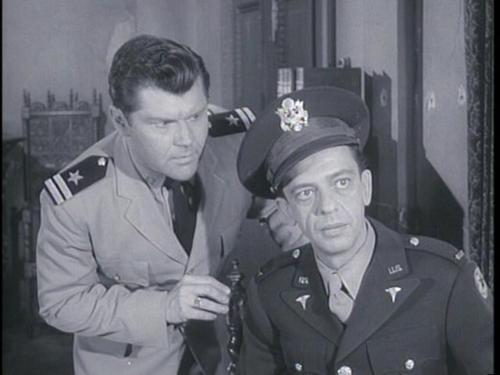
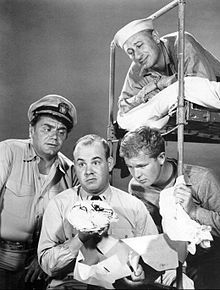
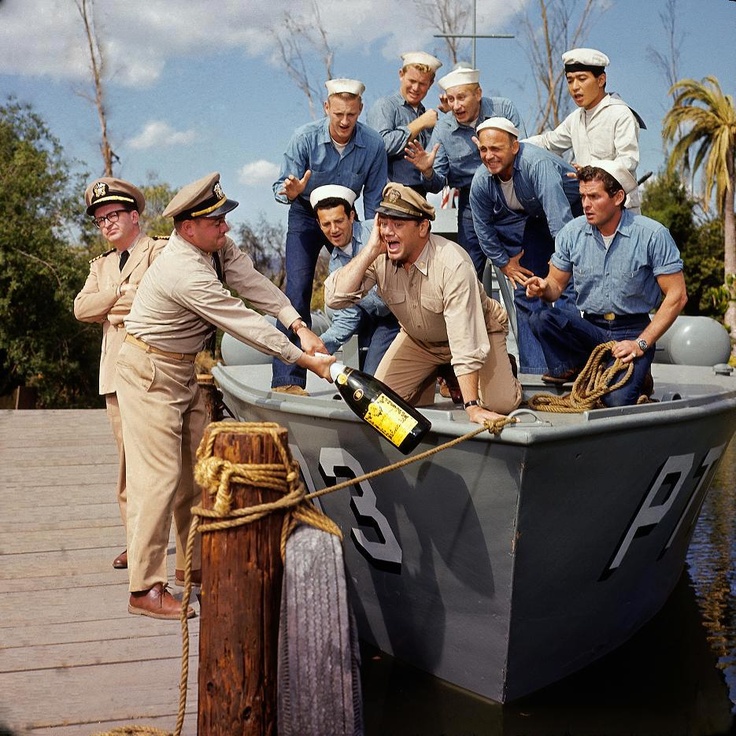
The series is centered around the adventures of a US Navy crew aboard the PT boat PT-73 during WWII. One of the best crews in the Navy, they often try to outwit Captain Binghamton (Joe Flynn) and his aide Lt. Carpenter (Bob Hastings). Stationed in the South Pacific, the crew often is involved in antics to make life more enjoyable during wartime. Quinton McHale (Ernest Borgnine) is fun-loving but sometimes has to reign his crew in when they go too far.

Debuting on ABC in 1962, the show sailed on for four seasons, producing 138 episodes. In April of 1962, a drama on Alcoa Premiere a/k/a Fred Astaire’s Premier Theatre aired that was titled Seven Against the Sea with Borgnine as the lead. It became the pilot for what would become McHale’s Navy.

Photo: thehollywoodreporter.com

Edward Montagne who was the producer of the new show had worked on The Phil Silvers Show. Montagne decided to turn the dramatic Seven Against the Sea into a “Bilko in the Navy” type of show. He recruited some of the actors and writers who had appeared on the prior series.

The basic plot of the show is that while these are respected, hard-working men when necessary, they have a lot of wacky schemes involving women, making money, and having fun. Captain Binghamton’s goal is to get rid of the entire bunch. The crew is said to live on an island across the bay from Taratupa, the fictional base. The geographic distance gives them extra time and more freedom to get into and out of their complicated situations.

Similar to The Phil Silvers Show, this sitcom also had a very large cast compared to most other shows.

Photo: wikiwand.com

McHale is a strong, competent leader and goes to great pains to protect his crew. He likes to wear Hawaiian type clothing when off duty. Sometimes the crew uses the PT boat to go deep-sea fishing or water skiing. When the crew has laundry, they put the clothes into a barrel with holes, add soap and drag it behind the boat. McHale speaks Japanese, Italian, and some of the local island dialects.

Photo: pauldavisoncrime.com

Ensign Charles Parker (Tim Conway) is McHale’s goofy second-in command. McHale calls him “Chuck.” Conway captured the lovable, naïve, bungler perfectly. He often refers to his home town Chagrin Falls, Ohio which was Conway’s hometown. Parker says he worked for the Chagrin Falls Gazette. Parker is too dizzy to get much respect, and his resume is full of errors and ineptitude. For example, it’s mentioned that he crashed a destroyer escort into a dock, and he called a naval airstrike on a gasoline dump. He has all the naval regulations memorized but can’t remember his serial number. From time to time, Parker is asked by the crew to impersonate President Roosevelt when calling Binghamton.

In the first episode, Parker is assigned to the crew. We learn that they have gone through several men already who could not put up with their insubordinate behavior and one of them even had a nervous breakdown. The men like Parker and treat him better than their previous ensigns.

Conway later stated that he and Ernest Borgnine had a wonderful working relationship both on and off the set. In the late 1990s, they would voice Mermaid Man and Barnacle Boy on  SpongeBob SquarePants.

Photo: pinterest.com

Captain Wallace Binghamton, who the crew calls “Old Leadbottom” because he once took a bullet in the butt, previously managed a yacht club, although at times it’s mentioned he was the editor of a yachting magazine. He is gruff and grumpy and dreams about being promoted. He spends much of his time trying to catch McHale and the boys in one of their schemes. He is blind without his glasses, so sometimes the crew knocks them off to prevent him from seeing something incriminating. One of his most-uttered lines is “Why me? Why is it always me?”

Photo: pinterest.com

A typical interaction between Binghamton and McHale follows:

Binghamton: Commander, how would you and your men like two weeks with nothing to do but play gin rummy, go surfing, have luaus with steel drum bands, dancing girls, hmm?

McHale: Two whole weeks? Woo hoo, oh that’d be a wonderful change sir. Yes sir.

Binghamton: Knock it off McHale. That’s what you do every week.

Photo: thewrap.com

Binghamton’s aide is Lt. Elroy Carpenter who is also inept. He talks too much and is clumsy. He often gets the brunt of Binghamton’s tirades.

Photo: pinterest.com

McHale’s crew is composed of Quartermaster George Christopher (Gary Vinson), Radioman Willy Moss (John Wright), Torpedoman’s Mate Lester Gruber (Carl Ballantine), Motor Machinist Mate Harrison Bell (Billy Sands), Gunner’s Mate Virgil Edwards (Edson Stroll), and Seaman Joseph Haines (Gavin MacLeod). Houseboy Fuji (Yoshido Yoda) was often found cavorting with the crew. He is boyish, fun loving, and loyal to McHale. Fuji was a deserter from the Japanese Navy, but the captain knows nothing about his existence. In exchange for not living in a POW section, he acts as houseboy for the crew.

Photo: groovyhistory.com

Although the crew is always chasing women and trying to throw parties that they can invite them to, McHale has several romantic relationships during the show. Nurse Molly Turner (Jane Dulo) from New Jersey is always trying to trap him in a serious relationship. Two other love interests are Kate O’Hara (Joyce Jameson) and Maggie Monohan (Jean Willes).

Photo: tumblr.com
The great Don Knotts

A lot of guest stars dropped anchor on the show including Jerry Colonna, Bernard Fox, Pat Harrington Jr., Arte Johnson, Ted Knight, George Kennedy, Don Knotts, Bernie Kopell, Sue Ane Langdon, Marlo Thomas, and Raquel Welch.

Photo: lingerandlook.com

The PT-73 is almost like a character on the show. It was a 72-foot type II Vosper motor torpedo boat. The war ended before the boat (PT-694) could be sent to Russia, and it was then purchased by Howard Hughes. He loaned or sold it to Universal Pictures.

Photo: Wikipedia.com

The set of the Pacific Ocean naval base was built on the back lot of Universal Studios.  After the show went off the air, it became an attraction on the studio tour.

In one episode, McHale replaces Binghamton temporarily during an inspection and learns what a hard job he actually has. While that gives him some respect for the captain, they still don’t see eye to eye. Sometimes Binghamton tries to get them legitimately transferred for a scheme and other times he is not above inventing a story such as the time he tried to get them sent away by telling a psychiatrist that they are suffering from combat fatigue.

Photo: pinterest.com

For the final season, the crew, including Fuji, is transferred to Italy to the coastal town of Voltafiore. Many plot twists come about from the crooked Mayor Lugatto and the quirky residents. The move probably came about to be able to add some additional plot lines but it was perhaps too far-fetched for viewers, and the show was cancelled.

The show had a consistent schedule for most of its run. The first season it was on Thursday night up against The Twilight Zone and Hazel. The second and remaining seasons it was on Tuesday nights against Red Skelton on CBS and a variety of shows on NBC, including the forgettable Redigo and You Don’t Say, as well as The Man from UNCLE, Hullabaloo, and Dr. Kildare.

Photo: moviepostershop.com

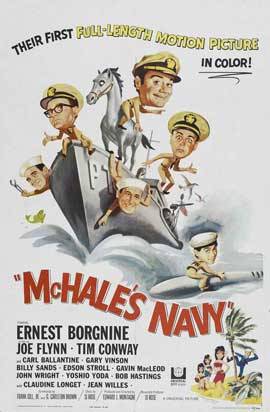
During the run of the show, two big-screen movies were made based on the series: McHale’s Navy in 1964 and McHale’s Navy Joins the Air Force in 1965. Borgnine was unavailable for the second film due to a schedule conflict. The first film brought in a respectable $2,250,000 and the second netted $1,500,000.

Photo: ebay.com

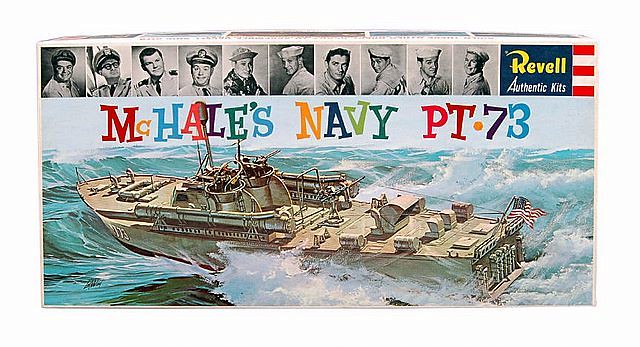
McHale’s Navy was a popular show both in the 1960s and in syndication. It may have been one of the first shows to produce related merchandise. Trading cards, comic books, a board game, 3-ring binders, and a model of the PT-73 were some of the items available to its fans. The show was well-written and the characters were fun and quirky. Unfortunately, a show like this can only sustain so many similar plots before it begins to feel like you’re watching repeats.

Photo: flickr.com
Revell :: McHale’s Navy :: PT 73 Boat

The show is currently on Antenna TV Saturdays from 7-8 pm eastern time. It is also available on DVD. Take some time and enjoy getting to know McHale and his PT-73 crew.