Happy Birthday to me! Since it is my birthday today, I decided my gift to myself was to write about my favorite television show, My Three Sons. The show was on the air from 1960-1972, for a total of 382 episodes. It debuted on ABC, and in 1965 it moved to CBS. The show was based on a widower, Steve Douglas, who is an aeronautical engineer trying to raise three boys after his wife’s death. Her father, Bub, moves in to take over the housekeeping duties.
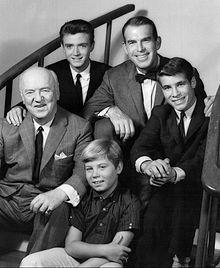
Although Don Fedderson often gets credit for developing My Three Sons, the show was created by George Tibbles and produced by Don Fedderson Productions. When the series moved to CBS in 1965, the latter network assumed full production responsibilities (in association with Fedderson Productions) until the end of the series in 1972. CBS now holds the series’ copyright.
George Tibbles wrote for a variety of shows and penned the Woody Woodpecker Song, recorded by Kay Kyser. Some of the episodes he wrote for My Three Sons include “Chip Off the Old Block” (1960), “Bob in the Ointment” (1960), “Countdown” (1960), “Birds and Bees” (1961), “Tramp the Hero” (1961), “Mike in Charge” (1961), “Bud Gets a Job” (1962), “Stage Door Bub” (1964), “Charley and the Kid” (1965), “Brother Ernie” (1965), “Moving Day” (1967), “Robbie Loves Katie” (1967), “Inspection of the Groom” (1967), “The Great Pregnancy” (1968), and “Instant Co-Worker” (1969).
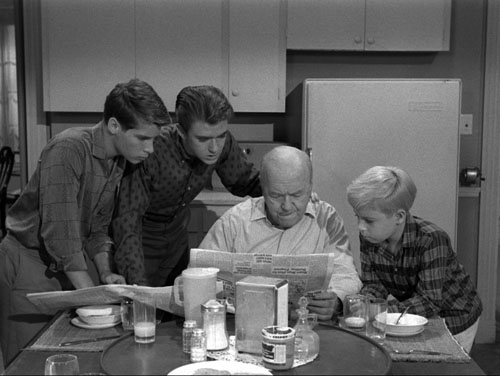
Peter Tewksbury directed the first season. These early episodes held to no specific generic type, so that any episode from one week to the next might be either comedic or dramatic. Tewksbury’s episodes are also unusual for their use of cross-talk (a way of having the voices of off-screen characters heard in the background of the soundtrack, just under the voices of the main characters). Using this clever directorial twist, Tewksbury realistically portrayed the chaotic, fast-paced, and ever-changing sequence of events that was the daily routine of living in the Douglas household.
An example of Tewksbury’s use of cross-talk is the fourth episode, “Countdown,” which chronicles the Douglas family’s attempts to wake up, prepare for the day, have breakfast, and get out of the house by a common, agreed-upon time, all carefully synchronized to a televised rocket launch countdown – to comical and often ironic effect. Once the entire family was ready, they realized it was not a week-day and they had been running around like crazy for nothing. Tewksbury returned to directing feature films after concluding the season because the producers could not handle his perfectionist attitude, which was costing thousands of dollars in lost time and reshoots.
The succeeding director, Richard Whorf, took over the reins for one season and was in turn followed by former actor-turned-director Gene Reynolds from 1962 to 1964. James V. Kern, an experienced Hollywood television director who had previously helmed the “Hollywood” and “Europe” episodes of I Love Lucy, continued in this role for two years until his untimely death in late 1966. Director James Sheldon was also contracted to finish episodes that had been partly completed by Kern to complete that season. Fred De Cordova was the show’s longest and most consistent director of the series (108 episodes) until he left in 1971 to produce The Tonight Show Starring Johnny Carson. Earl Bellamy rounded out the series as director of the show’s final year.
When the show was first created, potential writers were told to emphasize the following elements: originality, simplicity, honesty, legitimacy, natural comedy, seriousness of premise, scope and character development.
I love the first episode – it not only established the family relationships, but set the direction the comedy would take. This was a family who might tease each other unmercifully but also knew they could always count on each other no matter what the situation was. The family members were far from perfect but they were realistic.
One of the most memorable parts of the show was the theme song. Lawrence Welk’s version of the instrumental theme song, written by Frank De Vol, peaked at No. 55 on the Billboard Hot 100 in 1961.
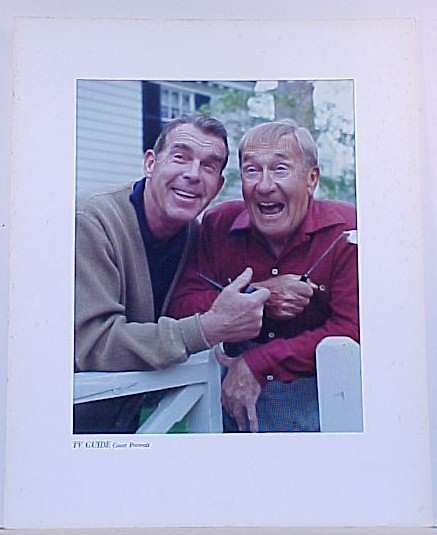
In 1960, Fred MacMurray was one of the most respected and highest-paid actors in Hollywood. It was almost inconceivable that he would star in a television show. The role was originally offered to Eddie Albert who turned down not only this role, but Wilbur Post on Mr. Ed as well. MacMurray took on the role when he was guaranteed that he would only have to spend 65 days a year filming the show. What was referred to as the MacMurray Method was 65 days of consecutive taping with the rest of the cast having to film around these scenes later. He was also given a 50% ownership in Don Fedderson Productions.
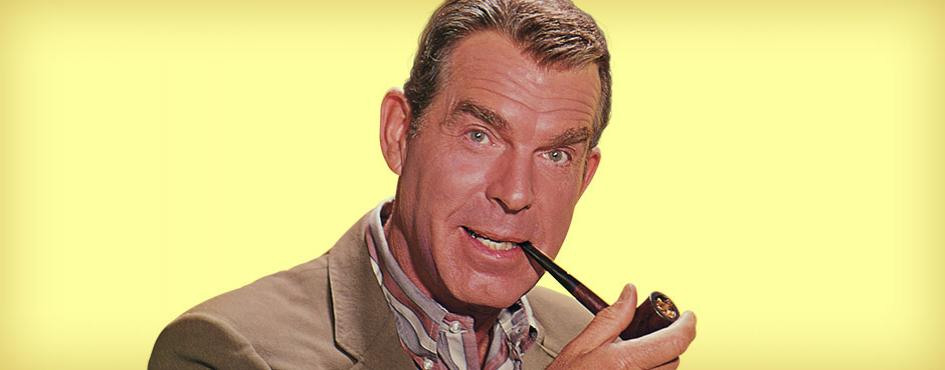
MacMurray was a very down-to-earth guy. His grandfather immigrated from Scotland. He was born in Illinois in 1908 and grew up in Beaver Dam, Wisconsin. He worked in a canning factory and for an American Legion band, went to Carroll College, and earned money playing in a band there. After his first wife, Lillian Lamont died, he married June Haver, a former actress who left a convent to marry him. They adopted twin daughters. They had a 200-acre ranch on the Russian River and his interests included his workshop, building picture frames, painting water colors, golfing, watching some television, and cooking. Hedda Hopper’s description of him was, “He’s as down to earth as applesauce or the boy next door.”
When Barry Livingston was asked about him, he said, “He was basically a guy from the Midwest, Midwest sensibilities, and even though he was super, super wealthy, just really had modest taste and just really wanted to be accepted as your average Joe. I mean, he drove a Pontiac station wagon that happened to be our sponsor. . . his wife would pack a brown-paper-bag lunch.”
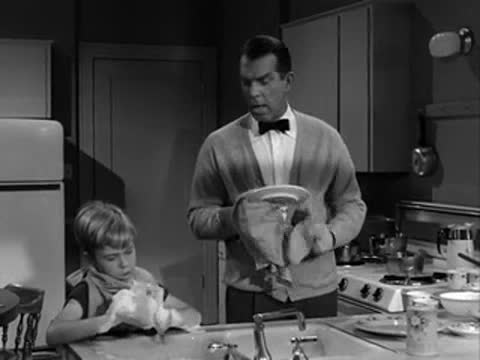
Steve Douglas was known for his cardigan sweaters. Steve was always ready with guidance, gentle words, and loving wisdom.
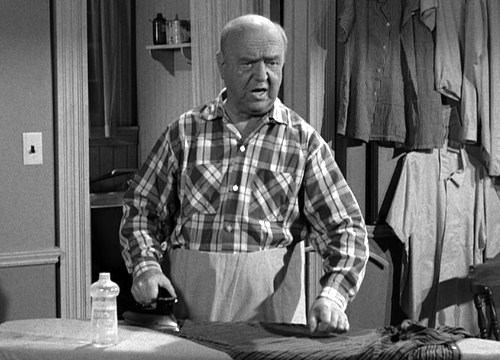
William Frawley, best known as Fred Mertz on I Love Lucy, accepted the role of Bub. He was an expert on barbershop quartets. In 1958, he made an album, “Bill Frawley Sings the Old Ones.” He was 68 in 1961 and had spent 28 years in Hollywood, 46 as a performer. He grew up in Burlington, IA where his father sold real estate. At 21 he landed a job in a musical chorus in Chicago. He married in 1916, divorcing Louise in 1927 and never married again. In 1933, he moved to Hollywood with a long-term Paramount contract. His old friends include Joe DiMaggio and Johnny Gallaudet.
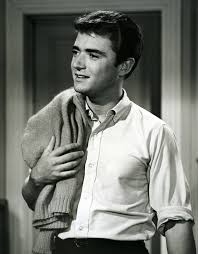
Timothy Considine played Mike, the oldest son on the show. He was a former child actor and young adult actor of the late 1950s and early 1960s. He later became a writer, photographer, and automotive historian. Considine’s most noted acting roles were in the 1955–1957 Disney TV serials Spin and Marty (he played Spin) and The Hardy Boys (he played older brother Frank opposite Tommy Kirk as Joe), both of which appeared in 15-minute segments on the Mickey Mouse Club; and in the Disney motion picture The Shaggy Dog. Considine is an automobile historian, photographer, and writer who specializes in motor sports. He is the author of The Photographic Dictionary of Soccer, The Language of Sport, and American Grand Prix Racing: A Century of Drivers and Cars. He has also filled in for the late William Safire as writer of the “On Language” column in The New York Times Magazine.
Tim Considine quit the show after arguing with Don Fedderson.
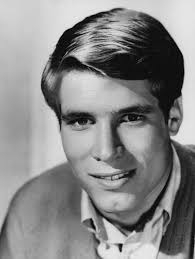
Don Grady, who played middle son Robbie and was the brother of actress Lani O’Grady, got 8 times the fan-mail the other boys did, mostly from young girls. Grady was born Don Louis Agrati in San Diego, California, the son of Mary B. (née Castellino), a talent agent, and Lou Anthony Agrati, a sausage maker. He grew up in Lafayette, California before being signed by Walt Disney and leaving the area. He graduated from Burbank High School in 1962.
Grady appeared on 20 different tv series before 1972, including two episodes of Love American Style. During production of My Three Sons, Grady appeared with his own band The Greefs on the series, writing two original songs for the show.
After My Three Sons ended in 1972, Grady pursued a musical career. His works included music for the Blake Edwards comedy film Switch, the theme song for The Phil Donahue Show and for EFX, a Las Vegas multimedia stage show which starred Michael Crawford, David Cassidy, Tommy Tune, and Rick Springfield. As a stage performer, he starred in the national tour of Pippin and had roles in Godspell and Damn Yankees.
He passed away in 2012 from cancer.
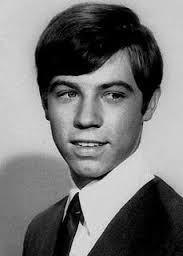
Stanley Livingston took on the role of Chip (Richard), originally the youngest son. He was named for the scientist Stanley Livingston. His parents moved from Baltimore to LA to open a furniture store. He was one of the kids riding trikes and fire engines on “You Asked for It.” In 1957, he was recommended as a double for Jon Provost on Lassie by Mrs. Loven, who taught him to swim. Tina Hill was his first agent, and Lois Auer was his first drama coach. He and Barry were neighbor kids on Ozzie and Harriet.
By age 11, he earned $20,000 a year. He shared that, “The food on My Three Sons is lousy. The prop man cooks it. The eggs are sticky and the potatoes are lumpy. It’s so bad we try to get eating scenes on the first take.”
John Stevens was a production/coordinator in 1961. In TV Guide in 1962, he was quoted, “Because of the way we shoot around MacMurray, filming My Three Sons is a jigsaw puzzle for an adult. We once shot all the scenes in the upstairs hall and bedroom from 21 scripts, one after the other. In one, Stanley would have to be happy over something in a comedy, and five minutes later, said in a melodrama. I never once saw him rattled, confused or upset.”
In 1965, the fourth season, Frawley retired due to poor health, dying a year later. Wm Demarest, Bub’s brother, the boys’ uncle and a former sailor took his place. To explain Considine’s absence, Mike married his long-time girlfriend and accepted a job as a college professor. Ernie entered the family and was officially adopted.
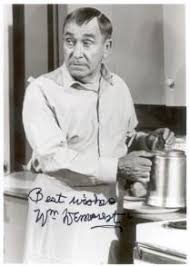
William Demarest started in show business at age 9. He was involved with vaudeville, Broadway, movies (150) and television. In 1899, he and his brothers were musicians. He played the cello, wearing velvet suits, Rubinstein played the piano, and George the violin. He was born in St. Paul in February 1892 and then moved to New Jersey where his parents separated. Later in life he went to LA and entered the army during WWI, eventually becoming a sergeant. In 1927, he was a Warner’s New Comedy Find. In his first picture, Finger Prints, a silent, he was a gangster. He appeared in 24 movies in two years. He appeared in The Jazz Singer and was nominated for an Academy Award for his role in The Jolson Story. In 1930, he headlined a bill with an orchestra, the CA Collegians who had a sax player named Fred MacMurray. In 1933, he went back to Hollywood and stayed. He was a talent agent before appearing in Preston Sturges’ The Great McGinty and The Miracle of Morgan’s Creek. He can’t remember how many movies he did, but his 100th was Pardon My Past with MacMurray. They were also in Hands Across the Table. His retirement plans were to move to a home he and his wife Lucille had on the 12th fairway at Canyon Country Club in Palm Springs.
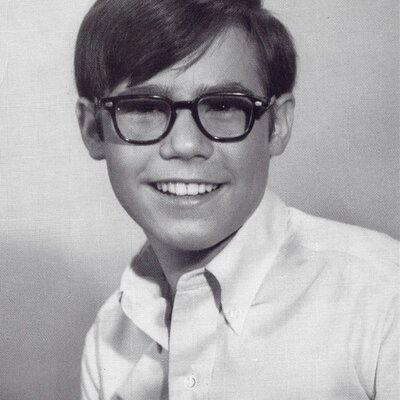
Barry Livingston debuted on the show as Chip’s friend Ernie, an orphan. Barry began his career as a child actor in the late 1950s. He considers his film debut a role he won as one of the sons of Paul Newman in the film Rally ‘Round the Flag, Boys! (1958) with his older brother Stanley who by this time was already working as a child actor. He was let go from the film when he was told that he needed to get glasses to successfully correct his astigmatism. His first professional onscreen appearance was in a small, uncredited role in the 1961 film The Errand Boy, followed by roles in The Adventures of Ozzie & Harriet, on The Dick Van Dyke Show and (as “Arnold Mooney,” son of banker Theodore J. Mooney portrayed by Gale Gordon) on The Lucy Show. In 1965, he joined the cast of the ABC sitcom My Three Sons as next door neighbor Ernie Thompson.
His older brother, Stanley Livingston, was already a series regular as Chip Douglas. Livingston joined the cast permanently (his character was adopted into the family, keeping the show’s title intact) and remained with the series until its end in 1972.
After the series run of My Three Sons ended in 1972, Livingston continued his acting career with 142 acting credits. Most recently he appeared as a jury member in Trial and Error.
In October 2011, Barry Livingston released his anecdote-filled autobiography, The Importance of Being Ernie (Citadel Press) — detailing his career from My Three Sons to Mad Men and beyond.
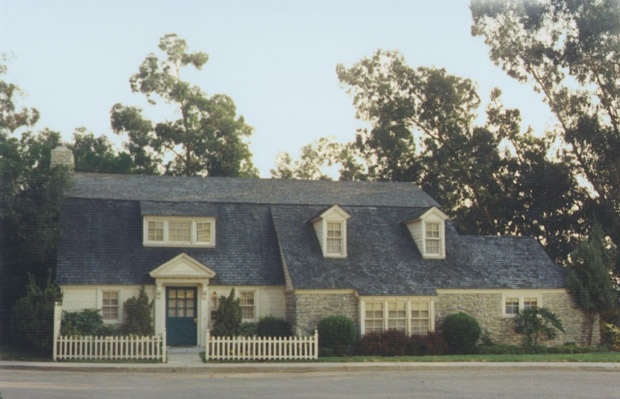
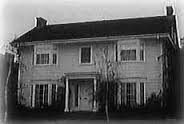
To boost ratings, the family moved to Hollywood, CA in 1967. The family’s home in California was previously featured as the farm in Gene Autry’s 1940 musical Melody Ranch. Located on the Republic Pictures backlot, the barn was given a suburban facade in the 1950s. It wasn’t that far from Gilligan’s lagoon, which was also on the lot.
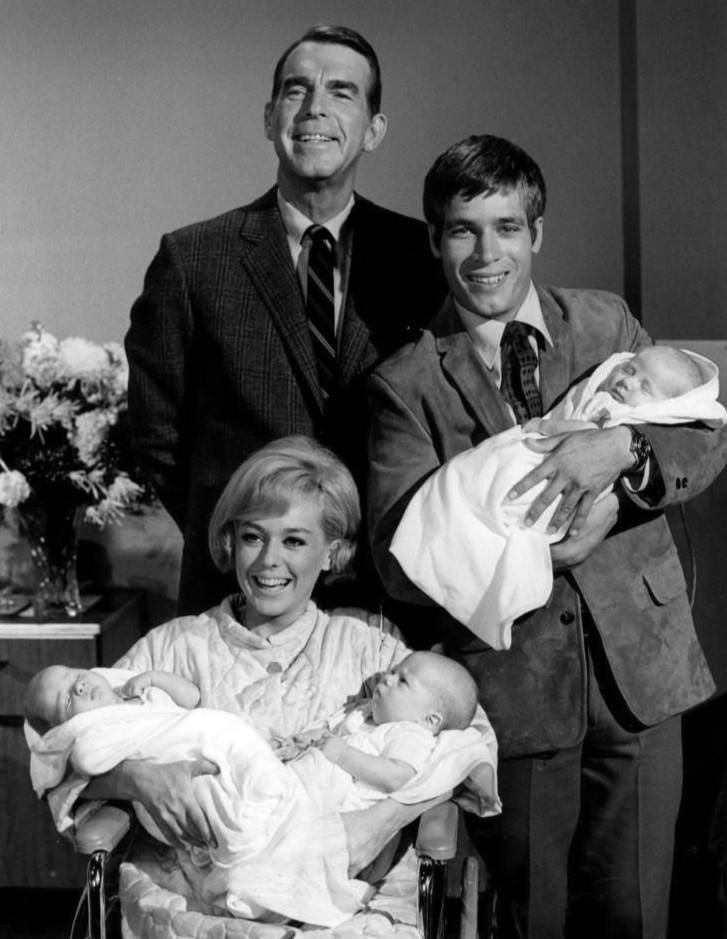
Robbie meets his future wife in California, and they eventually marry and have triplets. The triplets posed some issues. They had to find two sets of twins so three could be on camera and one on reserve. They had to be born between June 17 and 24, have light hair, blue eyes, and be California residents. They could only be on the set for 2 hours a day, in front of the camera only 20 min and each exposure could not last more than 30 seconds due to the bright lights.
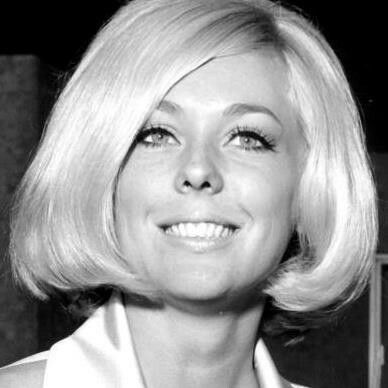
Tina Cole played Katie but she was not a rookie on the show. She previously appeared on three other episodes as three different characters before taking the role of Katie Miller Douglas. She was also a member of the Four King Cousins, a subgroup of the King Family Singers. In 1963 she played the minor (uncredited) role of Ruth Stewart in Palm Springs Weekend, a spring break party film set in Palm Springs, California. After leaving television, Cole was the director of the Sacramento Children’s Theatre. She was an acting coach at the John Robert Powers acting schools in Roseville and Elk Grove, California and in 2013 returned to on screen acting. She has several movies coming out in 2017.
In 1970, another change occurred in the family. Steve goes to school to talk with the substitute teacher about Ernie. After being gone hours, with Ernie extremely worried, Steve comes home only to realize they never even brought up Ernie’s behavior and they had another date scheduled. They ended up marrying, and Barbara’s daughter Dodie moves into the house.
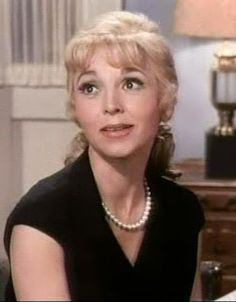
Beverly Garland had a long acting resume when she accepted the part of Barbara. Her hobbies were flower beading and crewel work. She starred in her first show Decoy in 1958 in New York where she played a tough police woman. Born Beverly Fessenden in Santa Cruz, CA in 1930, she was an only child. She took violin lessons. At 18 she married Bob Campbell, 20 in Vegas. They divorced 4 months later. She worked odd jobs, summer stock, and commercials. She married Richard Garland but they divorced in 1953. In that same year, she won an Emmy for Medic. She appeared in a variety of shows – Gunsmoke, Rawhide, Dr. Kildare, and The Farmer’s Daughter. She married Fillmore Pajeau Crank, a widower with two kids in 1960, and the couple had two more children.
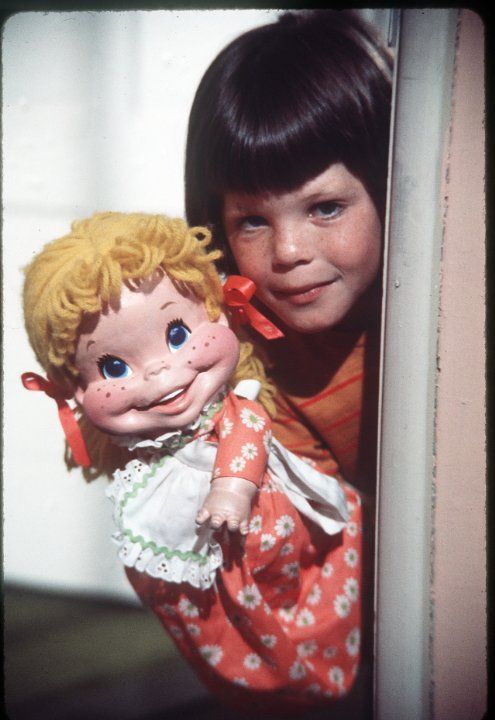
Dodie was played by Dawn Lyn, the real-life sister of 80s pop idol Leif Garrett. Dawn Lyn made her acting debut at the age of four. She was the original Prudence in the pilot for Nanny and the Professor. By the time the pilot sold, Dawn had been released from her contract and cast as Dodie in My Three Sons. The Nanny producers sued unsuccessfully to get her back. She worked steadily to financially support her family until her mid-teens. She says at that time her petite stature began to work against her.
Dawn decided to branch out of acting and has done many things over the years, including owning a boutique on Pier 39 in San Francisco. Though she has not actively pursued acting, she has not totally closed the door on the idea either.
Later in the season, Chip elopes with his girlfriend Polly Williams.
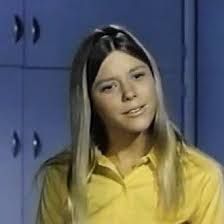
In 1964, Ronne Troup, who played Polly, was working as a television background extra appearing (uncredited) in some fourth season black-and-white episodes of My Three Sons in classroom scenes featuring co-star Don Grady. She also worked as an uncredited extra in classroom scenes on Gidget. She appeared, uncredited, as a teen party guest in the Bob Hope film I’ll Take Sweden in 1965. In 1966, she made her film debut as part of the all-girl ensemble in Columbia Films’ The Trouble with Angels, where she is prominent in the graduation scene. In December 1966 (at age 21), she was cast as Sister Bertrille and had begun filming the pilot for Columbia/Screen Gems’ The Flying Nun when she was dropped after the studio’s first choice Sally Field finally agreed to accept the role.
In 1968, she played the role of Leslie Hayden in Danger Island, the cliffhanger serial that was featured on the Banana Splits Adventure Hour children’s program on Saturday mornings.
She appeared on Family Affair in 1970 in the episode “Desert Isle: Manhattan Style.” She was subsequently offered the role of Polly Williams Douglas, wife of Chip Douglas on My Three Sons, a role she played for two years (1970–72). In the Season 4 episode of The Partridge Family entitled “Hate Thy Neighbor” (1973), she appeared as Donna Stevens, the daughter of the new family who move in next door to the Partridges.
She continued acting through the 1990s.
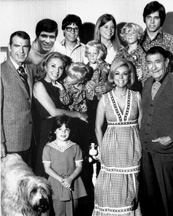
I have always felt that My Three Sons doesn’t get the respect it deserves. It consistently focused on character development. Problems do occur in the Douglas household – the boys fight and call each other names. Real problems come up. The show ran for 12 seasons. The issues were the ones we all faced growing up – not often major but important to young people.
The show survived cast and location changes without sacrificing quality. Bub left and Charley came on board. Mike got married and moved away so Ernie took his place. The family moved from New York to California. Robbie met Katie, went to college, and had a family of his own. Chip married and moved out of the house. Steve eventually remarried also, gaining a daughter.
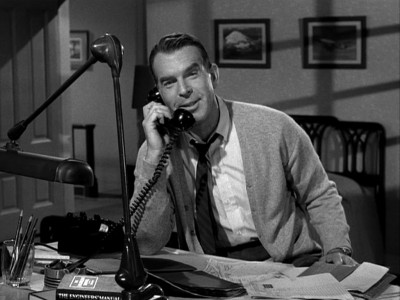
I grew up with the Douglas family and appreciated what I learned from the show. Many critics of the show complain about it, along with many of the 1960s sitcoms, being too warm and fuzzy. I do understand that some kids in the 1960s and 1970s were exposed to awful home situations with abuse or addiction, but that was not reality for most kids. I too experienced living with alcoholism and the strain it caused on my parents’ marriage, but most of the issues I had to deal with were the same ones as the kids on the show: why the boy I liked didn’t know I existed, that I told a white lie to get out of doing something I didn’t want to do, or that a friend had said something to hurt my feelings. That was reality for me and my siblings.
The characters were fully developed and became friends and people we chose to spend time with every week. This show was on when I was born and continued on the air until I was in 7th grade – that covers a lot of nurturing lessons during those needy years. The writers did a lot of fun quirks I don’t see on other shows. On one show I remember, Charley playing Solitaire and almost every time someone walked in the room, they pointed out a move. It was not addressed, but continued to happen just like in real life. In one episode, Ernie was trying to do something in the background; I forget what the actual detail was, but he was struggling to accomplish it as the other characters interacted. His issue was never referred to; it was just there. I also appreciate in this era of shows where it isn’t unusual to spend thousands and thousands of dollars each episode on costumes, My Three Sons was more realistic. The cast got a wardrobe for the season. You would see them wearing the same clothing over and over just like we did.
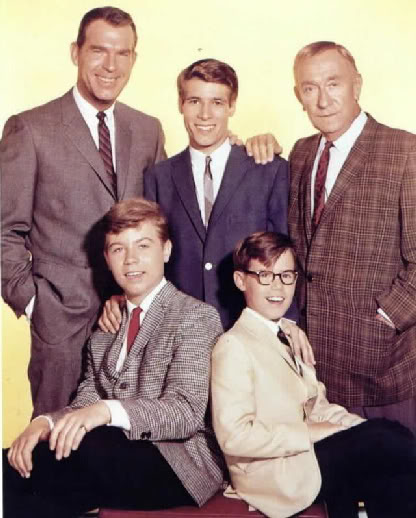
After I grew up, the show continued to resonate with me, although I later identified more with Katie and Robbie and later with Steve. Steve Douglas was always a father figure in my life. On our first date, Dan and I went back to my place and watched My Three Sons which TV Land aired later at night. When I became pregnant with our first child, I gave him a Steve Douglas cardigan to announce the event. I began to collect My Three Sons memorabilia, including a radio that sat in the Douglas kitchen, even though we only had two boys. Nine years after our first son was born, we found out we were unexpectedly pregnant, and I did end up with three sons. Our youngest was named Seth, for a variety of reasons: Seth was the third son of Adam and Eve, but also because Seth Bryant was the founder of Bryant Park where the Douglas boys grew up. My Three Sons will always have a special place in my heart, and it’s one of the shows I can watch episodes over and over and find something new each time.



 thewritelife61