The Virginian: Where Nobody Knows Your Name

As we get ready to “Go West Young Man,”  today our blog series is getting to know the The Virginian (which is sometimes confusing because it was renamed The Men from Shiloh later for part of the series). This series debuted on NBC in 1962. It produced 249 episodes, running until 1971, making it the third longest-running western (Gunsmoke and Bonanza were the top two).
📷wikipedia.com

Lew Wasserman was involved with Universal, and they produced Wagon Train which was on NBC. Universal sold the series to ABC in 1962 after it had been on the air for three years, and NBC was not happy, but Wasserman told them that he had a new show for them, The Virginian.

It was also the first 90-minute western. Like Stagecoach West, it was set in the Wyoming Territory. While the pilot was black and white, the rest of the series was filmed in color.

The series was based on an Owen Wister novel, The Virginian: Horseman of the Plains which was published in 1902.

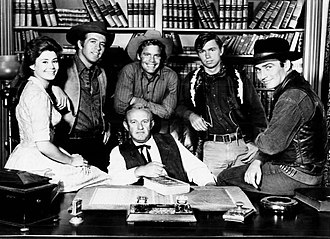
The series featured a foreman at the Shiloh Ranch near Medicine Bow played by James Drury. The foreman was never referred to by his name. Drury once said, “Nobody knows the name of my character, not even me.” His sidekick was Trampas (Doug McClure). Sheriff Abbott (Ross Elliott) also shows up on and off throughout the nine seasons. For the first four seasons, the ranch owner, Judge Henry Garth (Lee J. Cobb) and his daughter Betsy (Roberta Shore) also live there. The cast changed fairly often throughout the series, but Drury and McClure were along for the entire ride.

📷ebay.com

The plots of the show often revolve around themes of prejudice, injustice, being a responsible and hard worker, and standing up for the right thing.

During the final season, the show changed its title, and the series changed quite a bit. There was a new theme song, and it took on more of the character of the popular spaghetti westerns. Stewart Granger and Lee Majors joined the cast. While the ratings increased, the network was intent on cancelling the show, along with the rural purge that happened at that time.

Later when the show was no longer on the air, Drury discussed two of his castmates, one he admired and considered a friend and one he did not! About Grainger who joined the show for the last year, Drury said, “He was a disaster, and I couldn’t stand him. He wanted everything changed to make him the star of the show.  . . . He also fired the whole camera crew and hired a new crew for his episodes.” However, on reflecting about his co-star Doug McClure, Drury recalled “off-screen Doug was quite like his character, and you couldn’t help but smile when he walked into a room because he was full of good humor and good spirits all the time. He could cheer anybody up. He became my best friend, and I still miss him terribly—you couldn’t ask for a better co-star.”

As you can imagine, being on the air for nine years meant a lot of guest stars showed up on the series, including Eddie Albert, Charles Bronson, Robert Culp, Joan Crawford, Bette Davis, Patty Duke, Robert Duvall, Harrison Ford, Jack Lord, Lee Marvin, Vera Miles, Leonard Nimoy, Ryan O’Neal, Robert Redford, George C. Scott, William Shatner and Franchot Tone.

📷facebook.com

The Virginian was on Wednesday nights for its entire run. When it began, it was up against Wagon Train on ABC while CBS ran CBS Reports and The Many Loves of Dobie Gillis. Both The Virginian and Wagon Train managed to hit the top thirty that year. The next year, its biggest competition was The Adventures of Ozzie and Harriet followed by The Patty Duke Show. The Nelsons hit the top thirty and The Virginian and The Patty Duke Show were in the top twenty. The show continued to be in the top twenty or top thirty for the rest of its run, hitting the top ten in 1966, despite being on at the same time as many popular sitcoms during those years, including Batman, The Beverly Hillbillies, The Courtship of Eddie’s Father, Gomer Pyle USMC, Lost in Space, Mister Ed, and My Living Doll. It was still in the top twenty when it was canceled.

This show is fondly remembered by viewers who tuned it at the time. It’s been in syndication for decades, racking up new generations of fans. In one of his later interviews, Drury talked about the appeal of the show. He said, “People now tell me about their grandkids who discover the show on cable and start watching it. It’s a wonderful feeling to know the show is still viable after all these years.” That alone is reason to be proud of working on this show.

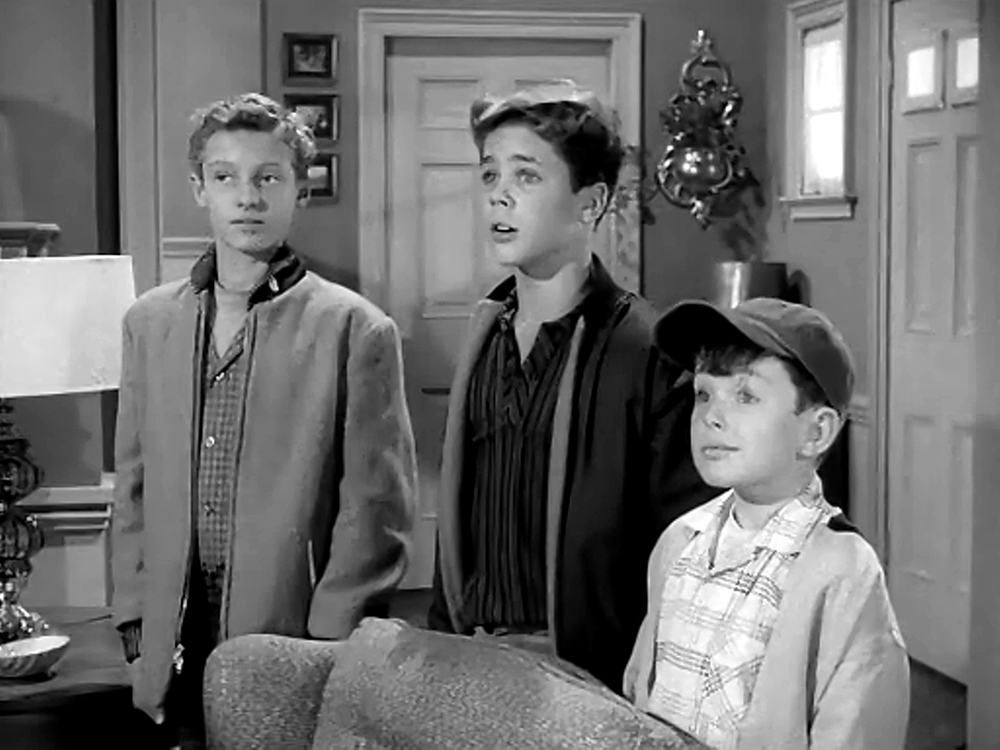
We Never Really Left Leave It to Beaver

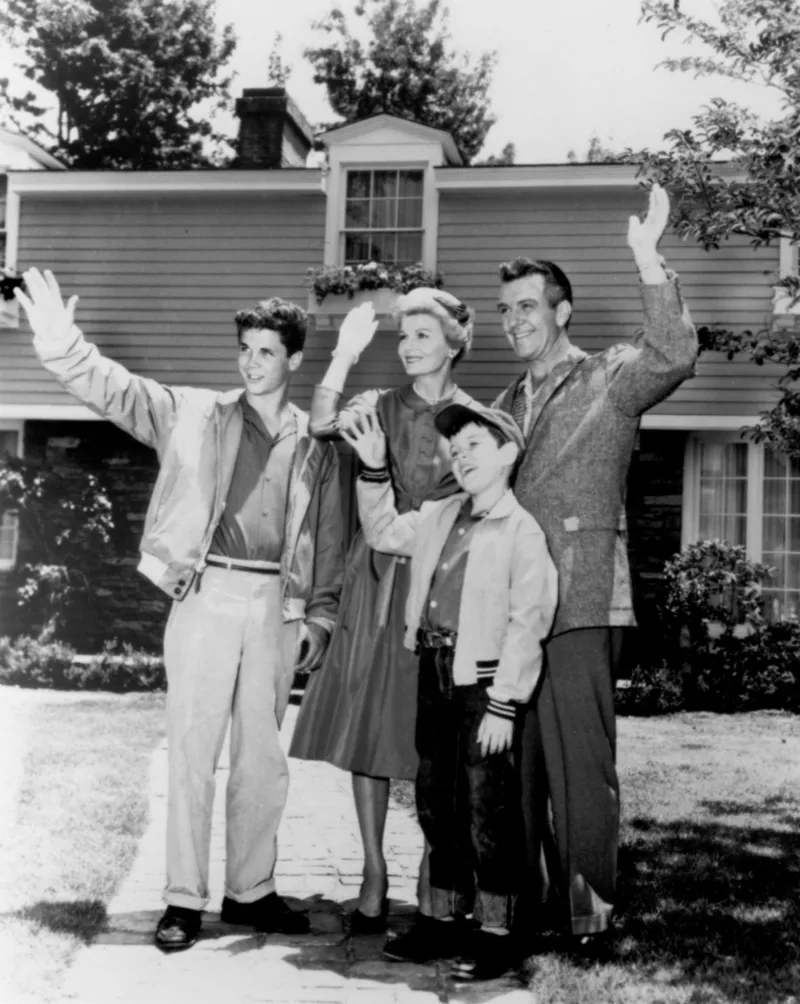
This month we are learning about America’s favorite families. Today we are spending some time with the Cleaver family. In the past we have talked quite a bit about The Brady Bunch, and in some ways, Leave It to Beaver is like that show. The Brady Bunch portrayed the 1970s and although they have been on the air since that first episode debuted, the show never cracked the top twenty. The Cleavers taught us about the 1950s. That show also never got into the top thirty during its six-season run but has been on the air most of the past 65 years.

📷thetodayshow.com

The show was originally written to feature Theodore or Beaver played by Jerry Mathers. Beaver gets into a lot of mischief, but he is a good kid and always means well. He has an older brother Wally, played by Tony Dow. His parents are Ward (Hugh Beaumont) and June (Barbara Billingsley). I thought it was interesting that all four of the stars appeared in every single episode of the show, 234 of them.

We also got to know some of the boys’ best friends as well. Beaver hangs out with Larry Mondello (Rusty Stevens) and Gilbert Bates (Stephen Talbot). He also spends time with Gus an old fireman played by Burt Mustin who seemed old even then. Wally is often with Clarence “Lumpy” Rutherford (Frank Bank) whose father is friends with Ward and Eddie Haskell (Ken Osmond). Eddie is overly polite to Ward and June who are never fooled by his manners; he often picks on Beaver.

Mathers said that when he went to the audition, he went in his Cub Scout uniform because he didn’t want to be late for the den meeting. He was so honest and innocent about wanting to get to his Scout meeting that the producers hired him.

📷imdb.com With Eddy Haskell

Tony Dow never planned on getting a part. He had been in one commercial but no television series. He was an athlete and a diving champion and great swimmer. He had been working out at the Hollywood athletic club and a lifeguard there asked Dow’s mom if Tony could go with him to the audition. Dow ended up getting the part. Mathers later corroborated the story in his blog, saying that the actor who was in the pilot grew five inches the following year and was as tall as Beaumont, so they decided to hire another kid for the role. They wanted someone who looked like an athlete, so they chose Dow.

Beaumont took some inspiration from his studies to be a wise and caring father. He held a Master of Theology degree from USC and was an ordained minister. In addition to acting, Beaumont wrote one entire episode, contributed to several others, and directed 23 episodes.

While Beaumont contributed to the scripts, the show was primarily created by Joe Connelly and Bob Mosher, and many of the plots were based on their children.

📷metacritic.com

CBS put Leave It to Beaver on the air Wednesday nights in 1957. I can see where the ratings might suffer because the show was on during the last half of both Wagon Train and Disneyland, so a lot of viewers were watching another show at the time.

The network decided to drop the show at the end of the year, but ABC picked it up and extended its run for five more years. The new network aired it Thursday nights up against repeats of I Love Lucy and a show I know nothing about called Jefferson Drum. The description is that a widowed father starts a newspaper in a western town. The next season the show appeared on Friday nights with another move the following year to Saturday nights. In its fifth season it stayed on Saturday nights but switched times and the sixth season found it on Thursday nights against Perry Mason and Dr. Kildare. At that point, Jerry Mathers wanted to have a normal high school life, and the show ended.

The theme of the show is probably one of the best-known television themes. It was “The Toy Parade” composed by David Kahn, Melvyn Leonard, and Mort Greene.

📷dvnet.com Still the Beaver

In 1983, “Still the Beaver” aired to catch us up on the Cleaver family. Beaumont had passed away, but the rest of the cast showed up for the reunion. It led to a reboot that ran for four years from 1985-89 called The New Leave It to Beaver. Beaver and Lumpy run Ward’s business. Beaver lives in their family home. June is still living there, taking care of Beaver’s two boys. Eddie Haskell is still in Mayfield with his son Freddie. Wally is now a lawyer living in town, married and expecting his first child.

Ward and June took a lot of heat for being stereotypical parents in the show. While there was definitely some unrealistic behavior, fans continued to flock to the show for decades and now, almost 70 years after the first airing, it is still on the air and gaining new generations of viewers. June gets made fun of for wearing pearls and high heels, but when she was asked about that, she admitted that she wore the pearls because she had an indentation on her neck that she thought did not look good on film and the pearls covered it up. She said she wore heels because she had to be taller than the boys.

📷latimes.com

Mathers is the only remaining primary cast member; the rest of the crew has passed away. He has admitted that the family on television was also close off the air. Mathers became good friends with Ken Osmond. When Dow passed away, Matters wrote, “It is with the utmost sadness I learned this morning of my costar and lifelong friend Tony Dow’s passing. He was not only my brother on tv but in many ways in life as well. Tony leaves an empty place in my heart that won’t be filled. He was always the kindest, most generous, gentle, loving, sincere, and humble man, that it was my honor and privilege to know. Of Beaumont, he said, “we had a good chemistry and . . . I was very glad that he was picked for the role and we had a wonderful friendship for his entire life until he passed away from a heart attack. Hugh and my dad had become friends and he occasionally came to our house to play cards with my father and his friends.” He also had fond words for Billingsley, that she was “a good friend and an even better mentor. . . I was lucky enough to work with her for six years and have a life-long relationship with her. She was a very kind woman and a generous philanthropist who supported many charities.”

Like some of the Brady kids, Mathers thought once he left the show, he left show business behind him. He attended Notre Dame High School in Sherman Oaks, California and had a typical teenage life. He enlisted in the US Air Force Reserves, attaining the rank of sergeant. He also was in a band called Beaver and the Trappers. After graduation, he worked as a loan officer at a bank and got involved in real estate. At the end of the 1970s, he decided to star with Dow in a stage production of “Boeing, Boeing” in Kansas City and afterward, the two of them toured in “So Long, Stanley” for 18 months. In 1981, Mathers began working as a DJ and, not long after, the reunion movie and reboot of the tv show was offered to him.

📷heraldweekly.com

I will admit that I have never been a huge fan of Leave It to Beaver. I never thought of it as a bad show, but I was just interested in other shows more. It is pretty incredible that it has been on the air for so many decades and still finds new viewers. I think I gravitate more to The Brady Bunch because it reflects the decade that I grew up in. It must be very strange for a person to live a role for six years, walk away at age 15 or so and then come back to it two decades later. From everything I read, both Mathers and Dow came away from their acting careers unscathed from so much of what you read other child actors had to endure. Along with Ron Howard, they seem to have been able to have a fairly normal life off the set. I think it’s great that Hugh Beaumont became friends with Mather’s father. They seem to have experienced the same great relationships with their tv parents that Patty Duke, Shelley Fabares, and Paul Petersen did. It’s always nice to hear that a show about a favorite American family in pop culture is also a great family away from the set.

The Flying Nun: Soaring to Success Followed By a Crash Landing

This month we are in the midst of the series, “Girls, Girls, Girls.” Today we take a look at another sitcom whose cast was primarily female.

From 1965-1966, Gidget starring Sally Field was on the air. When it was cancelled after only 32 episodes, producers were scrambling to find another vehicle for Field.  Harry Ackerman, with co-producers Bernard Slade (who would create The Partridge Family and just passed away last week) and Max Wylie came up with The Flying Nun. They based it on a book published in 1965, The Fifteenth Pelican by Tere Rios. Beginning on ABC in September of 1967, the show continued through the fall of 1970, resulting in 82 episodes.

I did read that Patty Duke was the first choice for the show, so I’m assuming when she turned it down, they asked Sally Field. Apparently, they were trying to find a show for Field, but this show was not created for her. Field also turned it down, thinking it was a silly concept, so the producers went to their third choice, Ronne Troup, who would play Polly on My Three Sons. Troup began filming the pilot. Sally’s stepdad, Jock Mahoney, told her she should reconsider because she might not get another chance in show business if she didn’t accept the role. When Sally informed the producers that she had changed her mind, Troup was let go.

Photo: sitcomsonline.com

In the hour-long pilot, we meet Elsie Ethrington. Elsie, who grew up in Chicago, is arrested in New York during a protest. We learn that the rest of her family has chosen medicine for their vocation. (In a later episode, we meet one of her birth sisters who is a physican played by Elinor Donohue.) Elsie goes to Puerto Rico. She is impressed with the missionary work her aunt has been doing, so she ends her relationship with her boyfriend, a toy salesman, and becomes a nun at the Convento San Tanco, taking on the name Sister Bertrille. In one episode, Sister Bertrille watches home movies of her life and what we are actually seeing is footage from Gidget.

Photo: pinterest.com

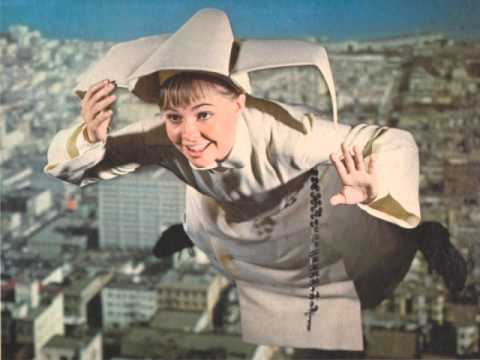
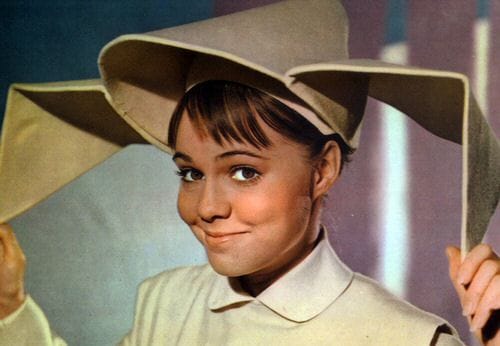
One day Sister Bertrille, who is only 90 pounds, realized that the heavily starched cornette on her head, allowed her to be able to “fly” as the high winds picked her up. As she tried to explain to several people, “when lift plus thrust is greater than load plus drag, anything can fly.” Of course, a nun flying around town caused quite a stir. Field said she was humiliated by her directors as she was hung from a crane and moved around the set like a prop.

Photo: pinterest.com

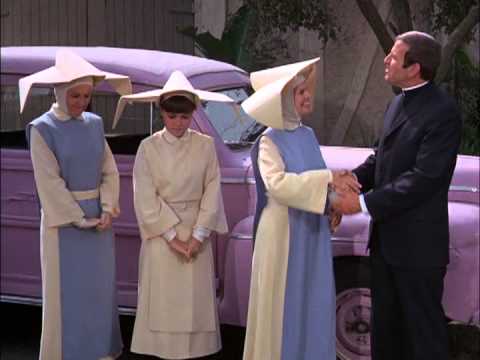
The Reverend Mother Placido (Madeleine Sherwood) runs the convent. She is kind, but strict. Sister Jacqueline (Marge Redmond), who sees the humor in most situations, becomes good friends with Sister Bertrille. Sister Ana (Linda Dangcil) and Sister Sixto (Shelley Morrison) are also friends of hers. The other major characters are Captain Gaspar Fomento (Vito Scotti) who is a police officer that the nuns keep from learning about Sister Bertrille’s flying ability and Carlos Ramirez (Alejandro Rey) who owns a casino and is a ladies’ man. Ramirez was raised by the nuns, and they constantly try to reform him. He will not be reformed, but out of appreciation, he always tries to help them, and Sister Bertrille is constantly involving him in zany schemes or asking him to finance some plan of hers.

Photo: flickr.com

This was the first (and perhaps only) sitcom to be set in Puerto Rico. Although the pilot and opening and closing credits were shot in Puerto Rico, the show was shot at Warner Brothers Ranch in Burbank, California.

The producers were worried about how Catholics would react to the show. They asked the National Catholic Office for Radio and Television to serve as an advisor. The show actually was popular with Catholic religious leaders who felt the show “humanized” the image of nuns.

The show was also popular with viewers of every other religion. The first two years, it aired Thursday nights, competing with Daniel Boone. The sitcom was sandwiched between Batman and Bewitched. Although it was declared a hit immediately, the ratings eroded during the two years.

Photo: epguides.com

The producers had a hard time deciding on a focus for the show. During the second season it contained more slapstick comedy. The third season it went back to the warm and fuzzy feelings it used in the first season. For the third season, the network moved the show to Wednesdays and put it up against The Glen Campbell Goodtime Hour which insured its cancellation. It didn’t help in the third year that Field was pregnant. She mentioned in an interview that “you can only imagine what a pregnant flying nun looked like,” and the crew had to hide her behind props and scenery.

Photo: thenewyorktimes.com

Critics never took to the show, but the public kept it on the air three times longer than Gidget. Many fans remember the series fondly. The plots were often heart-warming. In “With Love from Irving,” a pelican falls in love with Sister Bertrille. When Sister Bertrille is forced to go to the dentist for a toothache, Dr. Paredes puts her under hypnosis. The doctor gives them a suggestion that whenever they hear “red,” she and the Reverend Mother will switch personalities. In another show, Sister Bertrille wants Carlos to finance an expedition to find a bell that sunk long ago that was supposed to go to the convent because their old one is rusted and they can’t afford a new one. Carlos uses the opportunity to woo a young woman, but Sister Bertrille tags along. The girlfriend gets thrown overboard, but the bell is found in the end.

Relying on uplifting morals (pun intended) and Field’s delightful and talented performances, the show continued on the air. Marge Redmond was nominated for an Emmy as supporting actress. Unfortunately, she was up against Marion Lorne, who won it for her role of Aunt Clara on Bewitched.

TV Guide ranked the show number 42 on its worst tv shows of all times list in 2002. However, it continues to do well in syndication and has an international fan club.

Photo: ebay.com

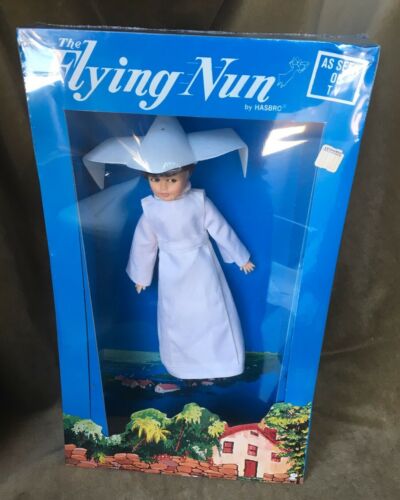
While the show was on the air, it sold a variety of merchandise, including paper dolls, lunch boxes, trading cards, view master reels, a board game, and a doll.

Photo: ebay.com

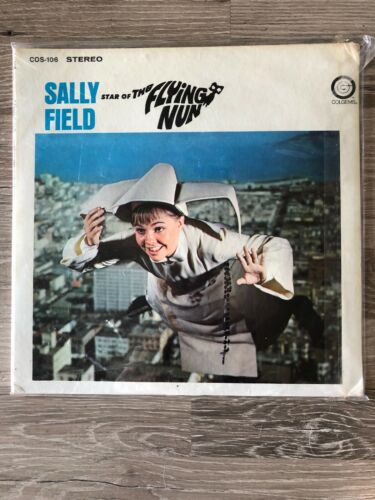
Sally Field released a soundtrack LP with songs from the series in 1967. Dell Comics came out with four comic books based on the series in 1968.

Photo: ebay.com
Photo: ebay.com

I must admit I was not a big fan of the show. However, I have gone back and watched quite a few episodes for this blog, and it is better than I remembered it. Although the concept does sound as silly as Field thought, the show is charming and can be quite funny at times. Although it might not be in your top 25, it probably deserves a second look if you have not seen it for a while.

Photo: listal.com

Double Trouble: The Patty Duke Show

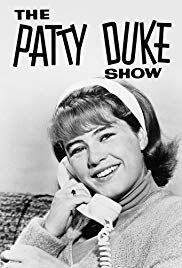
The Patty Duke Show was one I always enjoyed, but it was never a “must watch” for me. I think I viewed it as a show that was “good” because it wasn’t “bad.” I decided it was time to give it a more in-depth exploration.

Photo: imdb.com

Patty Duke began her television and movie career in the mid-1950s. She appeared on a handful of shows in that decade. In 1962 she took on her Oscar-winning role of Helen Keller in The Miracle Worker. The following year she received her own television series at age 16. The show would continue until 1966, producing 105 episodes.

Patty not only starred in the show as Patty Lane, but she was also Cathy Lane, Patty’s identical twin. The girls’ fathers are not only brothers but identical twins, hence the look-alike cousins. Although they look the same, they have very different personalities. You can tell them apart because Patty’s hair is usually flipped up while Cathy has a more sophisticated hairdo, usually curled down. Patty was chatty and a typical New York teenager who loves rock and roll. Cathy is more cultured and loves the ballet and classical music. Patty gets herself into some big misadventures and Cathy usually bales her out.

Photo: youtube.com

The plots were situations that were likely to happen to a teenager in the sixties. For example, Patty wants to buy a new dress, so she starts a babysitting service that goes awry; Patty falls in love with her French teacher; or after school the kids eat a cake, only to find out it was for a contest. The three of them bake a replacement without their parents realizing what happened.  There were also episodes that could only involve twins. In one show, Cathy accidentally is given a shot for Patty. Cathy has a bad reaction to it and must miss the school dance. Patty decides to go to the dance with Cathy’s boyfriend as “Cathy” so her relationship with the boy continues.

Patty’s double is Rita McLaughlin Walter. She usually was seen only as “the back of a head” and at times you can see her as a background character. Rita continued her acting career and was seen in As The World Turns from 1970-1981.

Having a star with a dual role was challenging at the time. Special effects were not very high-tech in the mid-1960s. When Duke played both characters in the same frame, a split screen was used.

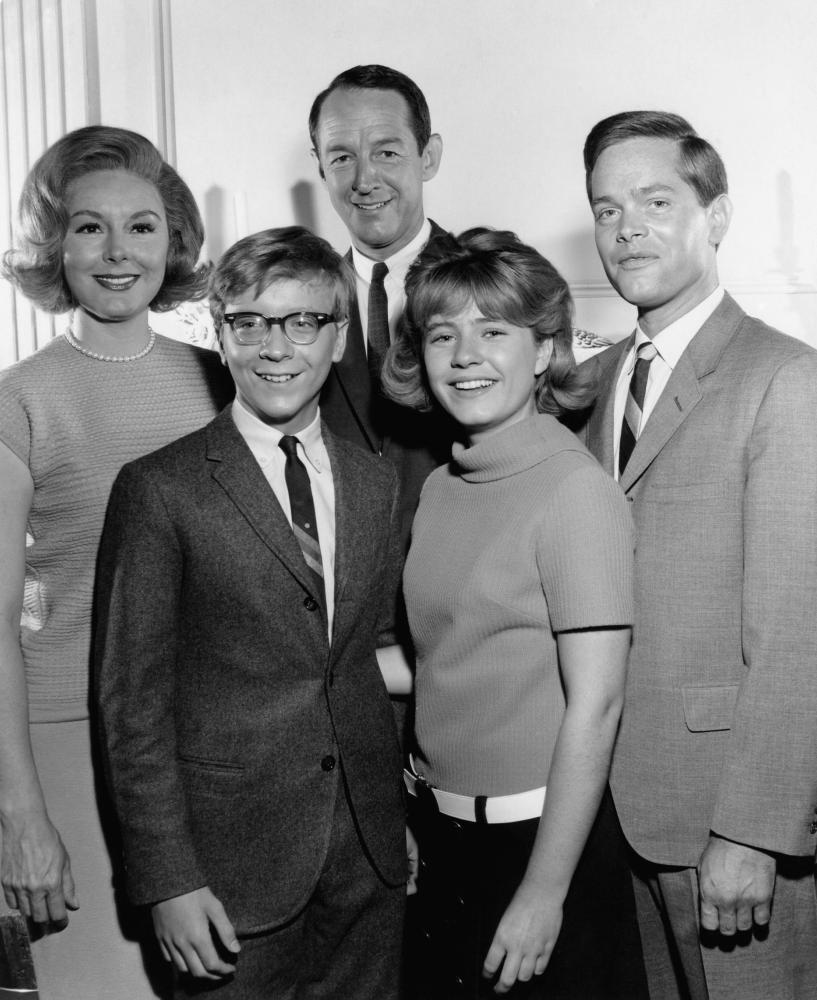
With Cathy’s family in Europe, she is sent to New York to live with her aunt and uncle, Patty’s parents are Natalie (Jean Byron) and Martin (William Schallert). Martin manages a newspaper. Patty has a younger brother Ross (Paul O’Keefe) and a boyfriend Richard (Eddie Applegate).

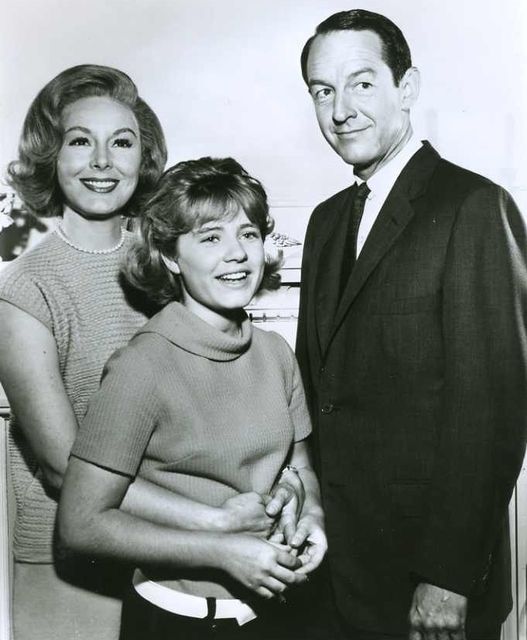
THE PATTY DUKE SHOW, (l-r): Jean Byron, Paul O”Keefe, William Schallert, Patty Duke, Eddie Applegate, 1963-66

ABC wanted to feature Duke in her own show but didn’t have a concept. The show’s creators were Sidney Sheldon and William Asher. (Sheldon would go on to create I Dream of Jeannie and Asher would was the producer for Gidget and Bewitched with his wife Elizabeth Montgomery.) Patty spent a week with the Sheldon family so Sidney could observe her. Sidney said he felt she almost had a dual personality and that gave him the idea to have the identical cousins. Asher and Sheldon wrote most of the episodes.

Because Patty was a minor, the show was filmed in New York City where child labor laws were more liberal than in California. The taping took place at Chelsea Studios in Manhattan. When Duke turned 18 in the last season, the entire production was moved to California, even though Duke preferred to stay in New York.

Photo: dvdtalk.com

The theme song, “Cousins,” was sung by the Skip Jacks, the same group that sang the theme for The Flintstones. At the time, Stella Stevens, a future actress, was part of the group. The lyrics captured the opposite personalities the cousins had. The song was composed by Sid Raimin and Robert Wells. The lyrics are:

Meet Cathy, who’s lived most everywhere,

From Zanzibar to Barclay Square

But Patty’s only seen the sight

A girl can see from Brooklyn Heights

What a crazy pair!

But they’re cousins,

Identical cousins all the way

One pair of matching bookends,

Different as night and day

Where Cathy adores a minuet,

The Ballet Russes, and crepe suzette,

Our Patty loves to rock and roll,

A hot dog makes her lose control

What a wild duet!

Still, they’re cousins,

Identical cousins and you’ll find,

They laugh alike, they walk alike,

At times they even talk alike

You can lose your mind,

When cousins are two of a kind

When asked what she did to give each cousin her own personality, Duke said, “it was to eliminate certain behaviors for each character. For instance, Cathy never talks with her hands. Patty always talks with her hands. Cathy would never wear ruffles, because they weren’t dignified. Patty would wear anything that was hot for a minute. But it was hard to get a whole person for each of them.”

Photo: boringoldwhiteguy.blogspot.com

Patty said although she played a typical Brooklyn teen, she was not one. She lived a very isolated life. Her managers were very strict and may have been abusive. She lived with them and worked most of her childhood. When she had to do a teenage dance, they needed to bring in regular kids to show her.

The show did well in the ratings every year it aired. However, ABC decided to get rid of all their black and white shows and replace them with color production. United Artists asked for a lot of money to make the change and the network decided it would be cheaper to acquire a new show rather than spend a lot of money moving from black and white to color on this show, although there may have been more factors to the decision. Patty was trying to terminate her relationship with her managers once she became a legal adult. Patty also suffered from mental health issues but at this time didn’t realize what was going on. Later she would be diagnosed with bipolar disorder.

The series went into syndication almost immediately and continued into the 1970s. In 1988, the show debuted on Nick at Nite where it stayed until 1993. Currently it is on and off ME Tv’s schedule. DVDs were released in 2009 and 2010.

Photo: pinterest.com

Although the show ended in 1966, in 1999 a tv movie was filmed, The Patty Duke Show: Still Rockin’ in Brooklyn Heights. All the original characters returned. We learn that Patty and Richard had gotten married and had a son who is also married with a daughter. Patty and Richard are divorced when the movie begins but reconcile at the end. Cathy lives in Scotland with her teenage son; she is a widow. The plot is a standard one. Patty is a drama teacher at Brooklyn Heights High School and her old nemesis Sue Ellen wants to raze it and put up a mall.

Photo: youtube.com

The 1999 movie was not Patty Lane’s last appearance, however. In 2009, Duke starred in a Social Security public service announcement (psa) as both Patty and Cathy. Though Jean who played her mother passed away in 2006, Schallert and reprised his role for a second Social Security psa.

Photo: littlethings.com

Duke always remained close to her “father” and “brother.” She said Schallert was the “dad I never got to spend time with.”  “He has always been able to make me laugh until I had to spit up. He was also a solid figure to me.” She also revealed that “the family we created in the show was very much a family. That was my safety zone.”

Photo: forums.tcm.com

The Patty Duke Show was a solid show. Like The Donna Reed Show, it captured a slice of life in the 1960s. Patty received an Emmy nomination in 1964 and a Golden Globe nomination in 1966.

Photo: pinterest.com

Sadly, Patty told a story later in life that she was not able to watch the show when she was acting on it. One day when she was visiting her husband at a military base, she was in the waiting room, clicking through tv channels for something to watch and there she was on the screen. It must have been a very strange feeling to see yourself looking happy and normal at a time that was sad and confusing.

Photo: express.co.uk

Since the cast was so close, they provided Patty some normalcy and security in a life that was anything but most of the time. The show is about a typical teenager played by a teenager.  It should have been Duke’s easiest role, yet it was one of her toughest, because she had never experienced a normal life. While that is sad, I’m happy she was able to find a safe haven for a time with the Lane family.