The Elegance of What’s My Line

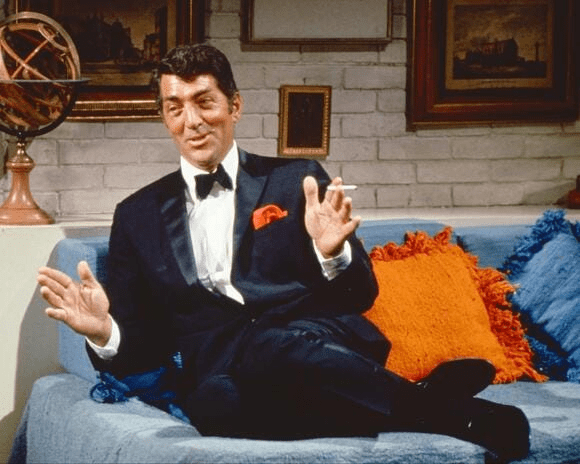
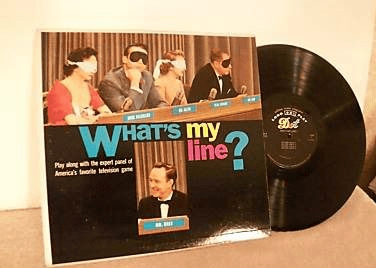
This month, we are looking at popular fifties stars and shows. While the show we are talking about today outlasted the fifties by almost another decade, it gained its popularity during the 1950s. Today we are learning about What’s My Line.

📷wikipedia.com

This panel game show was on CBS. It debuted in 1950 and ran until 1967. The show was produced by Mark Goodson and Bill Todman, and the working title was Occupation Unknown. Perhaps the title should have been What’s My Schedule. The show began on Thursday nights as a live show. Later in season one, it switched to every other Wednesday and then moved to every other Thursday. In October of 1950, it landed on Sunday nights where it would remain throughout the rest of its life.

The original series, which was usually broadcast live, debuted on Thursday, February 2, 1950, at 8:00 p.m. ET. After airing alternate Wednesdays, then alternate Thursdays, finally on October 1, 1950, it had settled into its weekly Sunday 10:30 p.m. ET slot where it would remain until the end of its network run on September 3, 1967.

📷imdb.com

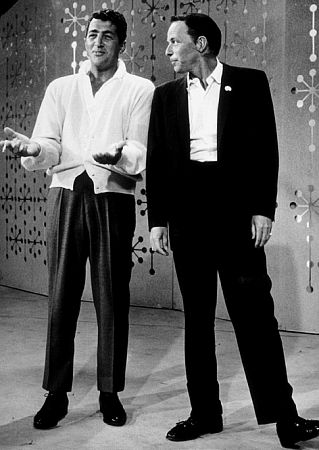
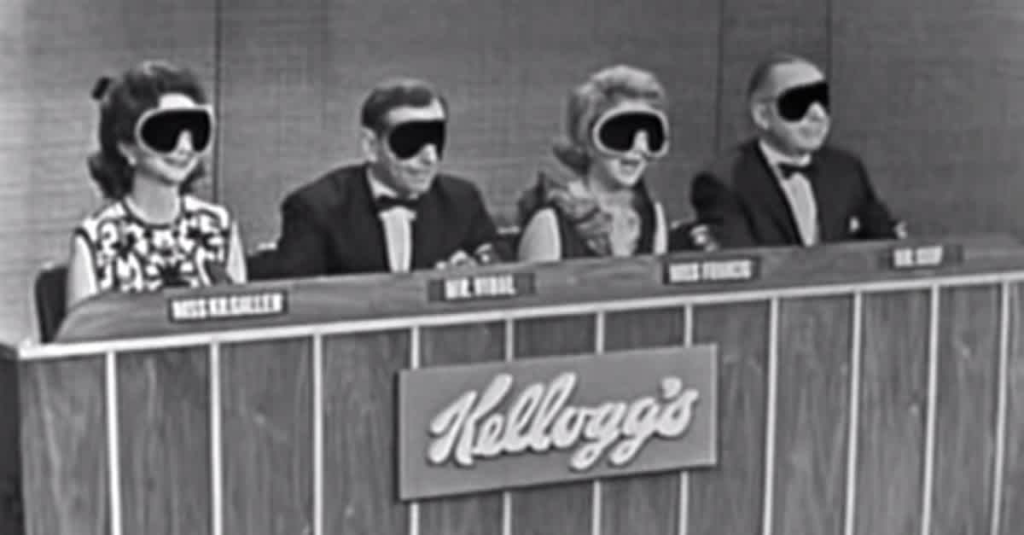
Celebrity panelists ask contestants questions to figure out their occupation. While most of the contestants were not famous, there was a “mystery guest” segment. The panelists were blindfolded for this segment and asked questions to determine the celebrity. People enjoyed watching the panelists banter with each other and the sophisticated humor they shared with us.

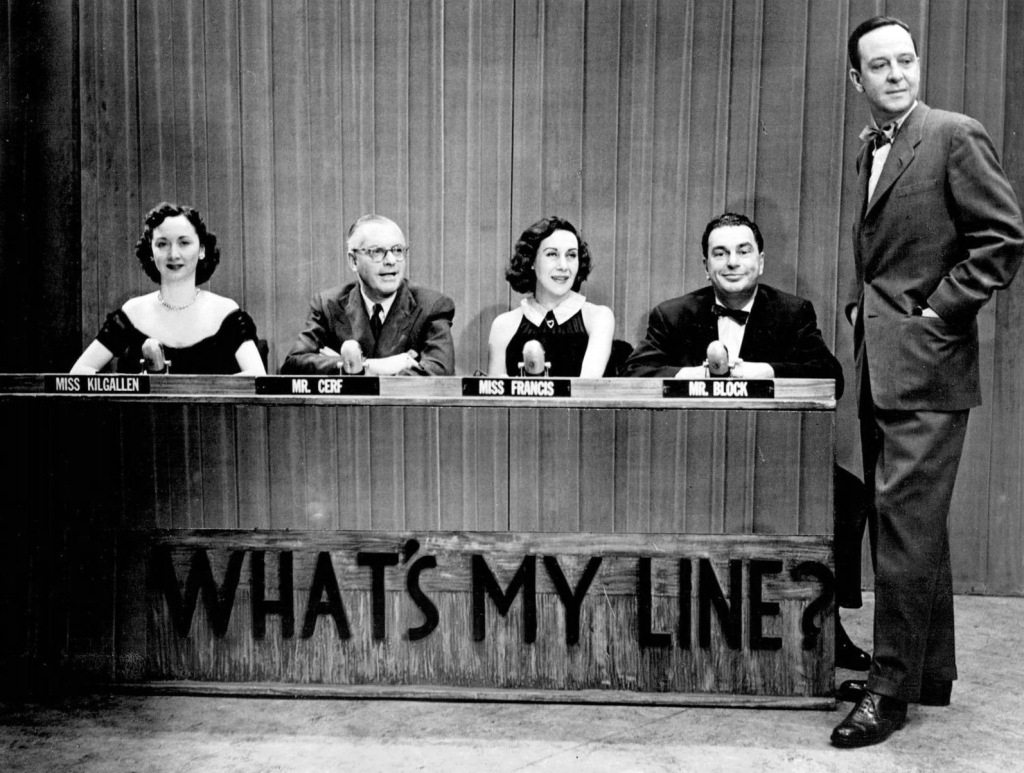
Each episode had four panelists. The most famous panelists were Dorothy Kilgallen, Arlene Francis, and Bennett Cerf. John Daly was the moderator. The first show in the series featured New Jersey governor Harold Hoffman, Kilgallen, poet Louis Untermeyer, and psychiatrist Richard Hoffman. Later in season one, Arlene Francis came  on board with Kilgallen, Untermeyer and writer Hal Block. In season two, Cerf replaced Untermeyer and Steve Allen took over for Block in season three. When Steve Allen left to host The Tonight Show, comedian Fred Allen was part of the panel from 1954 until his death in 1956. Kilgallen was killed in 1965 and her replacement varied for two years. Her death is a mystery itself and well worth reading about. Many people think she was killed because of her investigation into JF Kennedy’s assassination.

📷facebook.com

The panelists started the series wearing business clothing, but by 1953 they shifted to formal attire with the men showing up in suits and ties and women in formal gowns and gloves. Unfortunately, we never got to see the beautiful colors of these clothes. Until 1966 everything was filmed in black and white. In the final season, the show was broadcast in color, but the kinescopes were saved in black and white.

Both critics and television viewers liked the show, and it won an Emmy for Best Quiz or Audience Participation Show in 1952, 1953, and 1958.

Because it was a game show, most of the 700 episodes were on kinescope, 16 mm filming. Because many original shows in that era were recorded via kinescope onto silver nitrate film, many networks destroyed recordings to recover the silver. After learning that the network was not keeping the recordings, Goodson and Todman offered to pay for the broadcast and retained the recordings from season three on, however many of those were also lost along the way. A variety of the episodes are stored at different archive centers around the country. My home state houses one from 1951 at the University of Wisconsin Center for Film and Theater Research in Madison.

📷facebook.com

The remaining kinescopes which have been digitized have been seen on television on the Game Show Network and 757 of them exist on YouTube.

Many of us remember the reruns and seeing the contestant come on stage and write their name on a chalkboard as Daily said “Will you enter and sign in please.” The very first contestant was Pat Finch who was a hat check girl at the Stork Club.

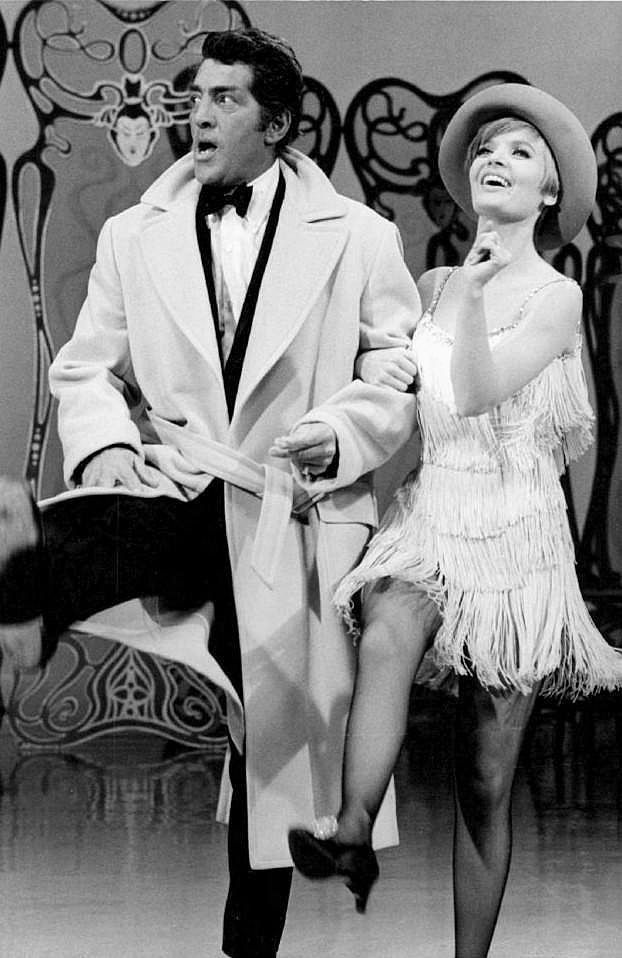
The first mystery guest was New York Yankees shortstop Phil Ruzzuto. Many of these guests used fake voices to answer questions. Some of the mystery guests who appeared on the show included Julie Andrews, Louis Armstrong, Lucille Ball, Jack Benny, James Cagney, Gary Cooper, Joan Crawford, Salvador Dali, Sammy Davis Jr., Doris Day, Aretha Franklin, Ava Gardner, Judy Garland, Jackie Gleason, Alfred Hitchcock, Bob Hope, Ginger Rogers, Roy Rogers, Eleanor Roosevelt, James Stewart, Elizabeth Taylor, and John Wayne.

📷littlethings.com Blindfolds come out for a mystery guest

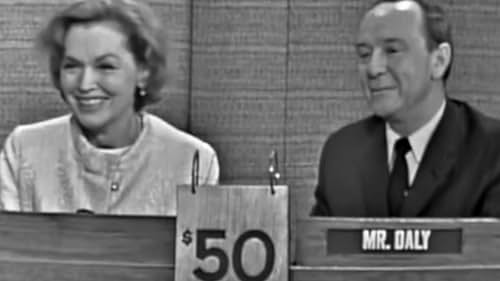
The emcee would choose a panelist who could ask yes or no questions. If the answer was yes, they could continue until they got a no response and then the next panelist would be able to pose questions. If the contestants answered no, Daily flipped a card; when the contestant had ten cards, they won $50.

If you have heard of or even used the term “Is it bigger than a breadbox?,” you might want to know that it came from the show. Steve Allen asked the question in 1953, and it became a standard question after that night. In fact, on one episode, the guest was a breadbox maker, and when Daly could not help laughing at the question, Allen figured it out.

In 1967 The New York Times broke a story that CBS was canceling many of their game shows. None of the panelists had been told that the show was not renewed. Despite the fact that the low costs of the game shows made them profitable, the low ratings led the network to conclude that game shows were no longer suitable for prime-time schedules.

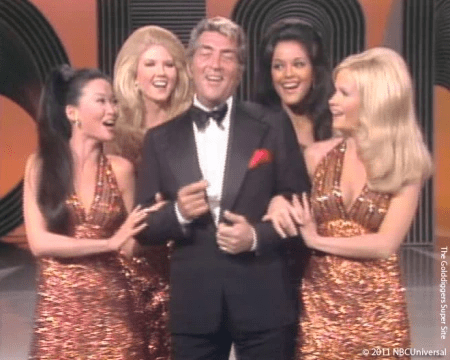
After the show was canceled in 1967, it did go into syndication five days a week. Soupy Sales joined Francis and Cerf on the panel of the reboot. A variety of other panelists took the fourth seat including Joyce Brothers, Jack Cassidy, Bert Convy, Joel Grey, Meredith MacRae, Henry Morgan, Gene Rayburn, and Nipsey Russell. The show ended in 1974. Cerf died during the run of the syndicated series.

It’s hard to believe, but Colonel Harland Sanders was on the show as founder of Kentucky Fried Chicken, although he was not easily recognized at the time, so he was not a mystery guest. While no president ever appeared while in office, Ford, Carter, and Reagan all appeared on the show.

📷youtube.com We switched to a first-name basis in the 70s

It would be fun to see this show on television today, but I’m afraid it would not be the same. In the way that Dick Cavett had a manner of interacting with guests to ask amazing questions with his humor and intelligence, this game show had that same atmosphere. Today, I think the banter would border more on crudeness than wit. There is something charming about a panel of very intelligent people talking with each other, trying to determine the identities of the people they were interviewing while being dressed to the nines that was fun to sit in on and be a part of. I guess that’s why this show is in our series where we are saluting the fifties because that was the era where it could shine.

Car 54, Where Are You: Muldoon and Toody: The Bert and Ernie of the NYPD

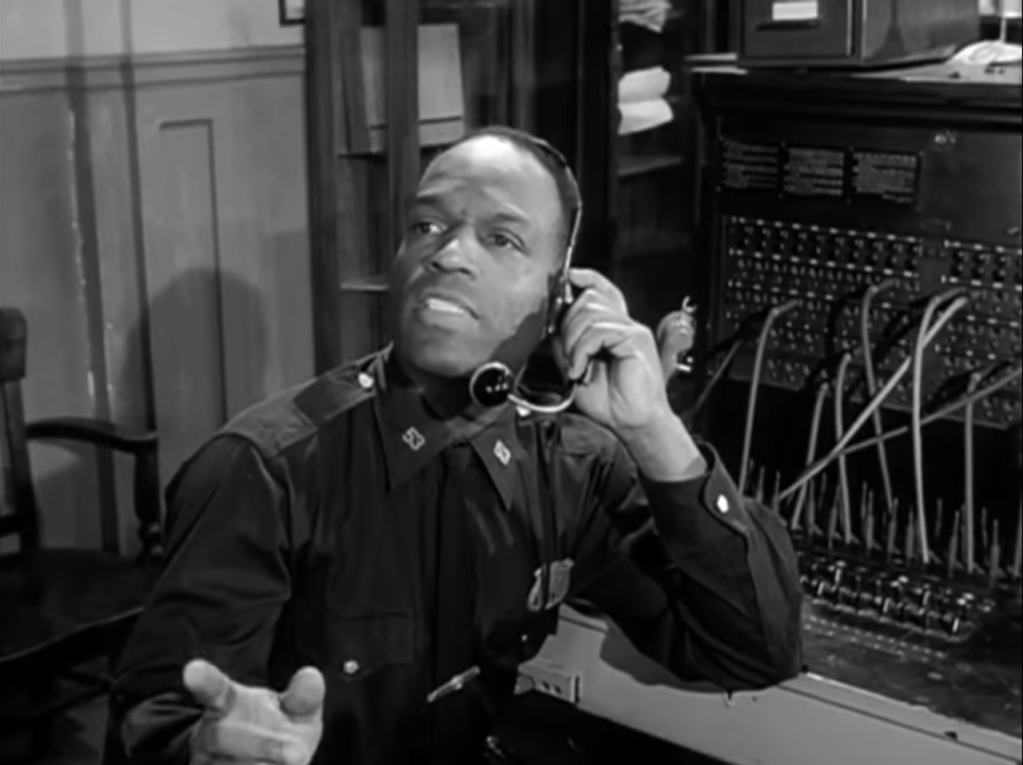
Car 54, Where Are You? aired on NBC beginning September of 1961. I was surprised to learn that there are only 60 episodes in this series. The show revolves around officers Gunther Toody, Badge 1432 (Joe E. Ross) and Francis Muldoon, Badge 723 (Fred Gwynne). Their patrol car is Car 54, and they are with the 53rd precinct in New York. Toody and Muldoon are complete opposites which is why they get along so well. Toody is short, extremely talkative and not overly bright.  He’s married to Lucille (Beatrice Pons), a bit of a loud, overbearing woman. Muldoon is tall, quiet and very smart. He’s a bachelor who lives with his mother (Ruth Masters) and two younger sisters.

Photo: imdb.com

Rounding out the large cast are officers Dave Anderson (Nipsey Russell), Omar Anderson (Ossie Davis), Kissel (Bruce Kirby), Nelson (Jim Gormley), Nicholson (Hank Garrett, O’Hara (Albert Henderson), Schnauser (Al Lewis), Steinmetz (Joe Warren), and Wallace (Frederick O’Neal), as well as Captain Block (Paul Reed), Sergeant Abrams ( Nathaniel Frey), Sylvia Schnauser (Charlotte Rae), and Claire Block (Patricia Bright).

A young Nipsey Russell Photo: yahoo.com

Nat Hiken (the creative force behind The Phil Silvers Show) created the series. He wrote many of the scripts and also directed several episodes, one of which he won an Emmy for. The show was nominated for three other Emmys. It was up for Outstanding Program Achievement in the Field of Humor in 1961 which went to The Bob Newhart Show (not that Bob Newhart show, this was a variety show hosted by Newhart) and for Outstanding Writing Achievement in Comedy in both 1961 and 1962 but got beat out both years by Carl Reiner for The Dick Van Dyke Show.

As recounted in Martin Grams, Jr.’s book Car 54, Where Are You?, after visiting a New York police precinct house and noticing what a communal feel it had, unlike any of the depictions of police on television, Hiken came up with the idea for a police-themed situation comedy. He continued to do research by spending weeks in a precinct squad room during late 1960, getting a feel for how the officers talked and interacted amongst each other, members of the community, and even repeat offenders, who were often treated more like family than threats. Hiken enlisted the support of Eupolis Productions and then pitched the idea to Proctor & Gamble, who agreed to finance a pilot.

Fred Gwynne and Al Lewis were coworkers before they were relatives Photo: shoutfactorytv.com

According to Kliph Nesteroff in the definitive account of Joe E. Ross’ tawdry life off-screen, “King of Slobs: The Life of Joe E. Ross,” Hiken originally wanted to cast Jack Weston in the role of Gunther Toody (televisionheaven.co.uk says it was Jack Warden) and Mickey Shaughnessy as Francis Muldoon, but contract negotiations broke down with both, so he turned to Ross and Fred Gwynne as suitable replacements, though in Ross’ case he later regretted it.

John Strauss who had collaborated with Hiken on the theme song for The Phil Silvers Show, teamed up with Hiken once again for this theme. Strauss was married to Charlotte Rae, who appeared on the show. Strass was the composer, and Hiken wrote the lyrics. The familiar theme song is:

There’s a hold-up in the Bronx,

Brooklyn’s broken out in fights;

There’s a traffic jam in Harlem

That’s backed up to Jackson Heights.

There’s a scout troop short a child,

Khrushchev’s due at Idlewild,

Car 54, where are you?

The show was originally titled “The Snow Whites.” (Maybe because the sponsor made Chlorox bleach.) The show was given a great time slot on Sunday nights between Walt Disney’s Wonderful World of Color and Bonanza. The producers thought the working title would confuse viewers since the show followed Disney. Since the theme song was already written, the last line of the song became the show’s title.

Critics were split on the show. While many people praised the series, some reviewers considered it disrespectful. The Chicago Sun Times deemed it “a preposterous (and sometimes cruel) depiction of the policeman.” The Dallas Times Herald stated, “The humor might be there, all right, but not much of it was showing.” The Alabama Journal complained, “It is insulting to the law enforcement and to the general public.” However, many policemen liked the show and found it funny.

The show was filmed at Biograph Studios in the Bronx and on location. The cars were painted bright red and white which photographed perfectly. There is some controversy about the patrol cars. Some articles listed them as Savoys, some as Dodges. According to Martin Grams blog from May 4, 2012,  “On June 29, 1961, Arthur Hershkowitz signed the contract and during the first week of July, the following four automobiles were delivered to Eupolis Productions”: two 1961 Plymouth Belvederes, one Dodge Dart, and one Plymouth, all four-door sedans. Grams said “the cars were returned to the dealership and when the show was renewed for season two, the following cars were delivered”: two 1962 Plymouth Belvederes, three 1962 Plymouth Furys, one 1962 Dart 330, and a 1962 Chrysler New Yorker.  One article I read said that the large circular object on the dashboard between the officers was an auxiliary fan used before air conditioning was available.

Despite the success of Car 54, which placed 20th in the ratings for 1961-62, Hiken soon began to feel overwhelmed with his responsibilities.  Apparently, NBC wanted part ownership in the show in exchange for renewing it for season three, and Hiken would not agree to the deal. The show’s sponsor Proctor and Gamble tried to talk CBS into taking the show over, but there was no room on their schedule. Hiken was a bit burnt out with writing, directing, and overseeing the show and was exasperated with Ross who caused a lot of issues not remembering his lines, so Hiken ended the show and never worked on another series again.

Considering the short time that the show was on the air, there was a full slate of guest stars including Carl Ballantine, Tom Bosley, Wally Cox, Hugh Downs, Margaret Hamilton, Katherine Helmond, Hal Linden, Mitch Miller, Charles Nelson Reilly, Sugar Ray Robinson and Jean Stapleton.

The episodes are well written and similar to other sitcoms at the time.

Photo: shoutfactory.com

In one, Toody is feeling henpecked by Lucille, but musters the courage to become king of his castle after seeing a stirring performance of Shakespeare’s “The Taming of the Shrew.”

In another, Muldoon shares a childhood experience when the kids at school called him “Horse Face.” Toody, trying to console him, says “Don’t worry Francis, kids just repeat what other people say” and later added “After all, Francis, everybody liked Black Beauty.”

One script has Toody working an undercover detail in Brooklyn with a female cop posing as his wife and a small boy as his child. When his wife’s sister spots him, the rumors begin.

Even though there were only 60 episodes, the show went into syndication in 1964. It was one of the staples on Nick at Nite in the 1980s, aired on Comedy Central in the 1990s, and a few years ago it could be seen on both MeTV and Decades. The show came out on DVD in 2011 and 2012.

Like any show that was even somewhat successful, the show had a film made based on the series in 1994. The big screen version starred John C. McGinley as Muldoon, David Johansen as Toody, Rosie O’Donnell as Toody’s wife Lucille and Fran Drescher as Velma Velor. Not surprisingly, it was a dud. One reviewer said it “was one of the worst movies to ever come out of Hollywood.”

One fun fact I learned doing research for this blog was that this show was William Faulkner’s favorite tv show. He hated television but visited a friend’s house weekly to watch the show.

Photo: amazon.com

This show debuted during the decade when merchandising was a big part of every show. There were at least six comic books based on the show. There was a board game, puppets of Toody and Muldoon, and a car model.

The show was funny in its prime, but I’m not sure it holds up as well today as other shows from the sixties. However, two seasons of DVDs is not a large investment, so check out an episode on youtube and see what you think.

The Friendship and Careers of Fred Gwynne and Al Lewis

Fred Gwynne was born in New York in July of 1926 and died in Maryland in 1993.  Al Lewis was born in New York in April of 1923 and passed away in New York in February of 2006. At first glance, they don’t seem to have a lot in common, but a closer look reveals why they enjoyed a long friendship.

Fred Gwynne

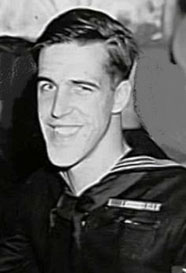
Fred Gwynne grew up in New York and had a very wealthy and advantaged upbringing.  He was a radioman in the Navy during World War II.  When the war was over, Gwynne entered Harvard, studying drawing and dramatics. He became a member of their Hasty Pudding Club, being involved with many theatrical productions. Gwynne graduated in 1951 and went on to work for a Shakespeare repertory company. He was a talented man with a variety of interests and earned his living from several careers.  He was a copywriter, a musician, a book illustrator, and a commercial artist.

gwynne2

In 1952, he made his Broadway debut, acting with Helen Hayes in “Mrs. McThing.” The play ran for 320 performances.  In 1953, he performed in his second Broadway play, “The Frogs of Spring” which had a much shorter run.  In 1954, he had a small role in On the Waterfront with Marlon Brando.

He also began appearing on television in the 1950s, and most of his roles were on dramas such as Kraft Theater or DuPont Show of the Week.

The one exception was The Phil Silvers Show where he appeared in 1955 and 1956. The producer of this show, Nat Hiken, went on to create a similar show called Car 54 Where Are You? about New York policemen.  He cast Gwynne as one of the leads, Francis Muldoon. The show ran for two seasons and when it was cancelled, Gwynne went back to his theatrical dramas.

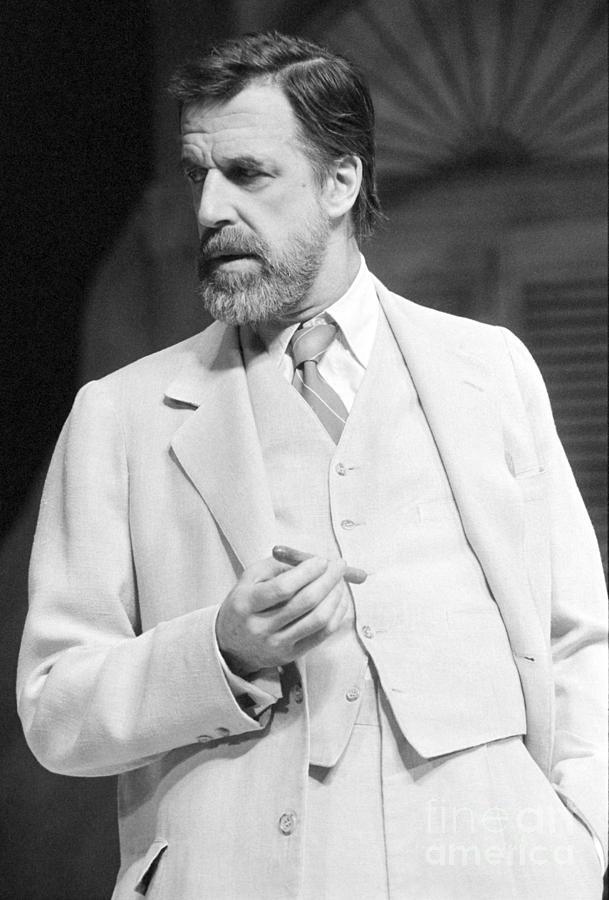
In 1964, the creators of Leave It to Beaver, decided on a different concept for a show called The Munsters.  Fred was cast as the lead role.  While this show also ran two years, the part of Herman Munster was much harder to overcome than Francis Muldoon had been.  Gwynne struggled to find new roles, and when he was unsuccessful, he went back to Broadway.  He did make one pilot during these years for a show called Guess What I Did Today, but no network picked it up. His favorite Broadway performance was Big Daddy in 1974 when he starred in “Cat On a Hot Tin Roof.”

gwynne7bigdaddy

During the 1980s, his cinema career picked up and he ended up with 15 movies to his credit from 1979-1992. Included in this list are The Cotton Club, The Secret of My Success, Fatal Attraction, Ironweed, Pet Sematary, and My Cousin Vinny.

His book writing and illustrating also continued.  His first book, The Best in Show, was published in 1958.  The King Who Rained came out in 1970, and Simon and Schuster published A Chocolate Moose for Dinner in 1976 and A Little Pigeon Toad in 1988.

Throughout most of his career, Gwynne lived a quiet life far from Hollywood. He was married to his first wife Roxy from 1952-1980 and his second wife from 1981 until his death from pancreatic cancer in 1993.

Al Lewis

Al Lewis claimed he was born in 1910 and was a circus performer in the 1920s.  He also said he went to Columbia and graduated with a PhD in child psychology.  After he passed away, his son confirmed that he was born in 1923, and Columbia had no record of him attending school with his given name or his stage name.  His son thought he made himself older to get the role of Grandpa in The Munsters because in real life Yvonne DeCarlo was a year older than he was.

Some of his other jobs included a salesman,  hot dog vendor for the Brooklyn Dodgers, waiter, pool room owner, and store detective.  He was a good basketball player in high school and apparently worked as a basketball scout at some time in his early life. A friend convinced him to join an actor’s workshop in 1949 and that led to a career in vaudeville. In the 1950s and 1960s, he appeared in a variety of TV shows including US Steel Hour, Route 66, Lost in Space, and Gomer Pyle.  He too was cast in the Phil Silvers Show which later resulted in his role of Patrolman Leo Schnauzer in Car 54 Where Are You?

lewis8

In 1964, he too was offered a role in The Munsters. In 1966 when the show went off the air, he continued making television appearances and starred in cinema movies.  During the 1970s and 1980s, he appeared on Night Gallery, Green Acres, Love American Style, Here’s Lucy, Taxi, and Best of the West.  His career featured 22 films including They Shoot Horses Don’t They, Boatniks, Used Cars, Married to the Mob, and a remake of Car 54 Where Are You?

lewis5shoothorses

Like Gwynne, he was married twice:  to Marge from 1956-1977 and to Karen from 1984 until his death from heart complications in 2006. Lewis also published several children’s books during his acting career.

Midway through his career he opened an Italian restaurant, Grandpa’s Bella Gente, which Gwynne designed the logo for. He also got into radio and was featured on Howard Stern’s Show often.

lewis6

It is surprising that both of these stars were in two sitcoms which both lasted only two years. Let’s take a look at the shows that made them household names.

Car 54 Where Are You?

gwynnelewis4

This sitcom, set in the 53rd precinct in Brooklyn was an early Barney Miller. Gwynne played Francis Muldoon.  His partner, Gunther Toody, was his exact opposite.  While Muldoon was a bachelor, an intellectual, calm and quiet, Toody was married, naïve, excitable, and talkative. In one show, when the precinct is debating splitting up the two men, Muldoon says “I guess most of the men are smarter than Gunther and less trouble than Gunther, but  . . . well, I’m so used to Gunther.  When he chatters away, the days just fly by.  I’d just be lost without Gunther.” Gunther concurs, “You mean ride around with someone next to me that’s not Muldoon? Francis is a quiet man. He doesn’t say a word. He just sits there all day thinking. It’s very comforting for a man like me to know there’s someone next to him doing the thinking for both of us.” Of course, they split them up only to partner them up again because no one else could take the silence or constant chatter.

Al Lewis played Officer Leo Schnauzer, appearing in every episode.

Policemen were split on their view of the show.  Some took offense and felt they were portrayed in a negative light, while others enjoyed it and identified with some of the comedic elements. It was filmed in The Bronx at Biograph Studio.  There was a large sign out front identifying it as the 53rd precinct till a woman came in pleading to save her from her abusive husband and the sign was quickly taken down.

Originally titled Snow Whites, the show aired at 8:30 eastern time Sunday nights between The Wide World of Disney and Bonanza.  The only clue I could find for the original name was that the show was sponsored by Proctor and Gamble who made several detergents for clothing. It was filmed in black and white, but the police cars were red and white so they would show up better on black and white film. The show also starred Beatrice Pons, Charlotte Rae, Nipsey Russell, Alice Ghostley, and Larry Storch.

Perhaps what the show is best remembered for was its catchy theme song.  Anyone who viewed an episode or two can probably remember the fun lyrics:

There’s a hold up in the Bronx, Brooklyn’s broken out in fights.

There’s a traffic jam in Harlem that’s backed up to Jackson Heights.

There’s a scout troop short a child; Kruschev’s due at Idlewild . . .

Car 54, where are you?


The Munsters

gwynnelewis1

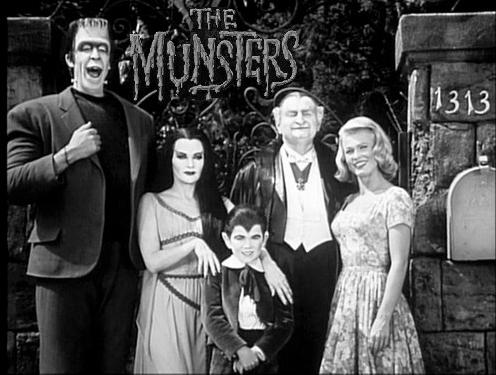
In 1964, the creators of Leave It to Beaver decided to feature another “wholesome” family who just happens to live at 1313 Mockingbird Lane in Mockingbird Heights. The family consists of Grandpa who is always experimenting in his lab; Herman who is the funeral director at Gateman, Goodbury, and Graves; his wife Lilly, a vampire; their son Eddie who is a werewolf; and their beautiful black-sheep Marilyn.  Marilyn was beautiful but they viewed her as odd looking and she seemed to get a lot of dates but when she brings them home, they never ask her out again. The family also owns two pets – Spot, a prehistoric animal Grandpa rescued and Igor, a bat.  They lived a somewhat normal life but drank bat milk and cooked in a cauldron. On the hour, a cuckoo clock chimed and a raven, voiced by Mel Blanc, appeared and said “Nevermore.”

gwynne4

All the actors had to endure a two-hour make-up session, but Gwynne had the worst time because he had to wear 40-50 pounds of padding.  One day he lost 10 pounds filming under the lights.  They gave him gallons of lemonade between takes and later rigged a way to blow cool air on him underneath the material.

The entire family could have been played by different actors.  John Carradine was offered the role of Herman. The pilot featured Joan Marshall as the wife and instead of Lilly, her name was Phoebe. Marilyn was played by Beverly Owens for 13 episodes and then Pat Priest took over for the rest of the show’s run. Eddie was first offered to Bill Mumy, Will Robinson from Lost in Space, and Grandpa to Bert Lahr from The Wizard of Oz.

After the show was cancelled, the Munster mobile often traveled to memorabilia shows.  There was also a Dragula built with purple silk upholstery and chrome pipes for the exhaust. Although the show was only on the air for two years, there were a lot of collectibles such as board games, lunch boxes, paper dolls, and coloring books.

gwynnelewis6

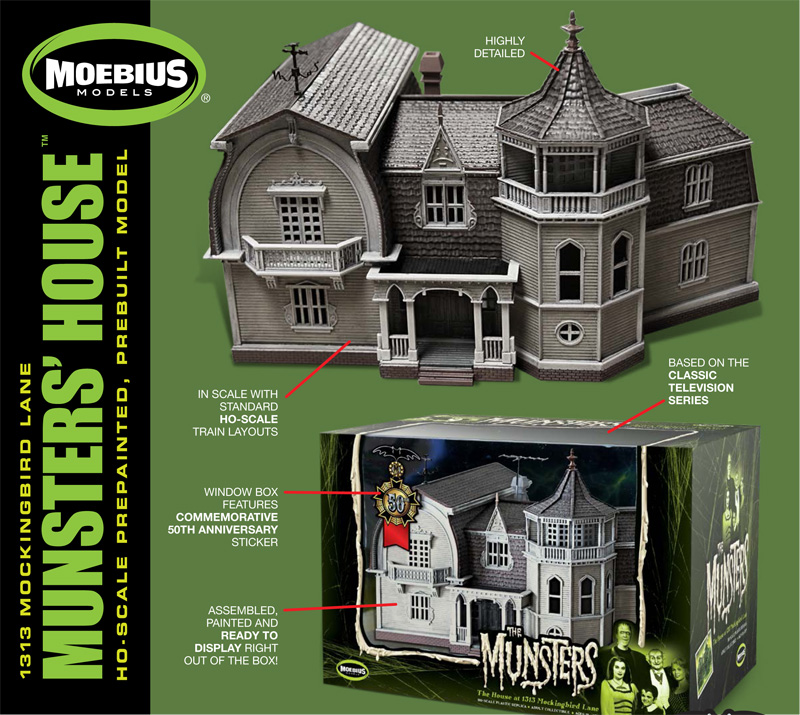
In 2001, the McKee family of Waxahachie, Texas was such a huge fan of the show that the family built their 5000+ square foot house to exactly resemble the Munsters’ home including the crooked weather vane and grand staircase that lifted up to feed Spot.

Both Gwynne and Lewis were born in New York.  They both appeared on the show Brenner early in their careers. Both were tapped from their roles in The Phil Silvers Show to play roles on Car 54 Where Are You? They both went on to star in The Munsters.  Neither of them ever had another series.  They both chose to live on the east coast. They both wrote children’s books.  They were each married twice and married to their second spouse for the rest of their lives. They both had a lot of success in the movies as well as television. They were both men with fascinating careers before they ever entered acting.  I learned a lot about these interesting friends.  Happy Birthday to Fred Gwynne would have been 91.