My Sister Sam: Sisters in Every Way

This month our blog is all about Sibling Rivalry. It’s a bit unusual because it features two sitcoms and two dramas. I thought it might be fun to start and end with the sitcoms, and today we are learning all about My Sister Sam.
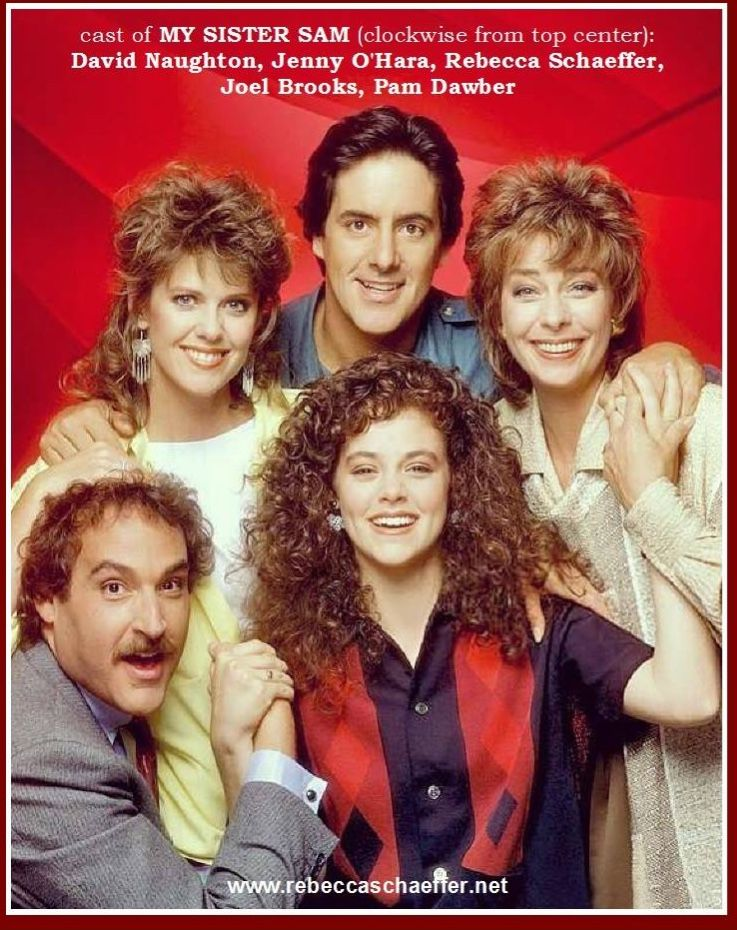
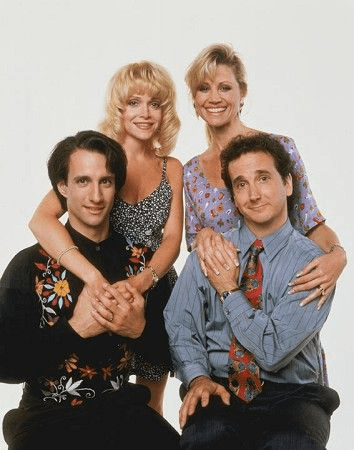
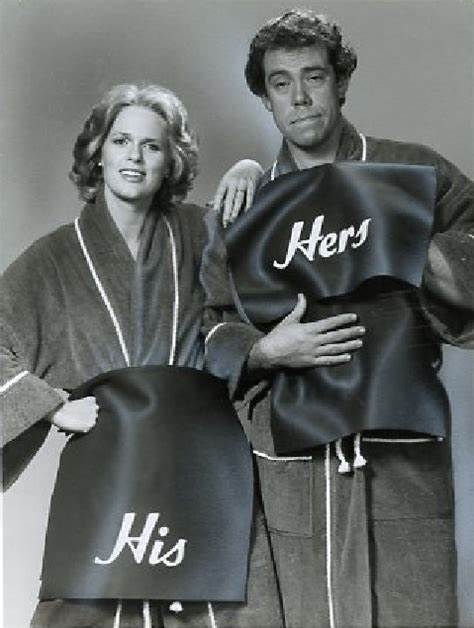
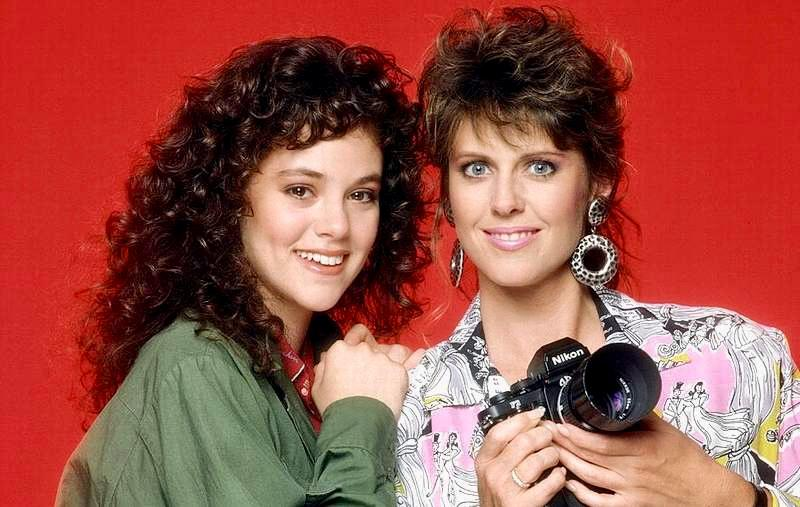
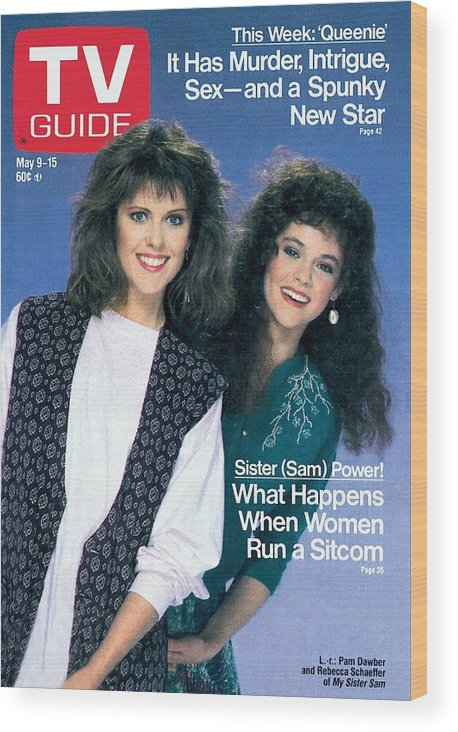
From 1986 to 1988, My Sister Sam aired on CBS.  Samantha Russell (Pam Dawber) is a freelance photographer who lives in San Franciso. Her life is turned upside down when her 16-year-old sister Patti (Rebecca Schaeffer) shows up on her doorstep to live with her. They are 13 years apart in age, and Patti had been living with their aunt and uncle in Oregon since the death of their parents. In real life, Schaeffer grew up in Oregon.

The cast is rounded out by coworkers Jordan Lucas, Sam’s agent (Joel Brooks); her assistant Dixie (Jenny O’Hara); and neighbor/photojournalist Jack (David Naughton), who is a ladies’ man.

The sisters have great chemistry, but they have very different personalities. Sam is a bit uptight and alphabetizes her juices in the refrigerator. Patti is a Valley girl, very laid back and a wanna-be rock star who plays the guitar.

In a Chicago Tribune interview in 1987, Dawber gave her philosophy of the show: “I see Sam as a woman who’s successful, who has a beautiful apartment but who doesn’t have the answers. Plus, she has to cope with a teenager who’d put her sister on a pedestal—she moved in because she thought Sam’s life was perfect—but finds out that she’s pretty neurotic. I mean, here is a woman, for openers, who’s compulsively neat, who needs to have control in her life.”
📷imdb.com

Their personal relationship mirrored their television one. Dawber said she considered Schaeffer a sister. She mentored her and even invited her to move into her home in LA where Dawber lived with Mark Harmon, her then-boyfriend, now husband. Dawber said that “We just kind of fell into this sisterly thing, . . . Cause I’d had a sister. My sister passed away when she was 22 and I was 25. And so having another young girl in the house was something I was very comfortable with. It was good for us.”

Pam Dawber’s production company, Pony Productions, developed the show created by Stephen Fischer. The screenplay was written by Fischer and Diane English. Dawber wanted to base her character a bit on Mindy from Mork and Mindy. She said that she was “not a comedian. I’m a reactor to all the zany people who revolve around me.” English and Mimi Weber took on the producer role, with the show filmed at The Burbank Studio. English would go on to write for Murphy Brown.
The theme song, which I admit I don’t remember, was called “Room Enough for Two,” and it was written by Steve Dorff and John Bettis. Kim Carnes, who had a hit with “Betty Davis Eyes,” sang the song. Dorff later was the composer for Murphy Brown and Murder She Wrote. Bettis worked on The Godfather, Part III and Star Trek V.

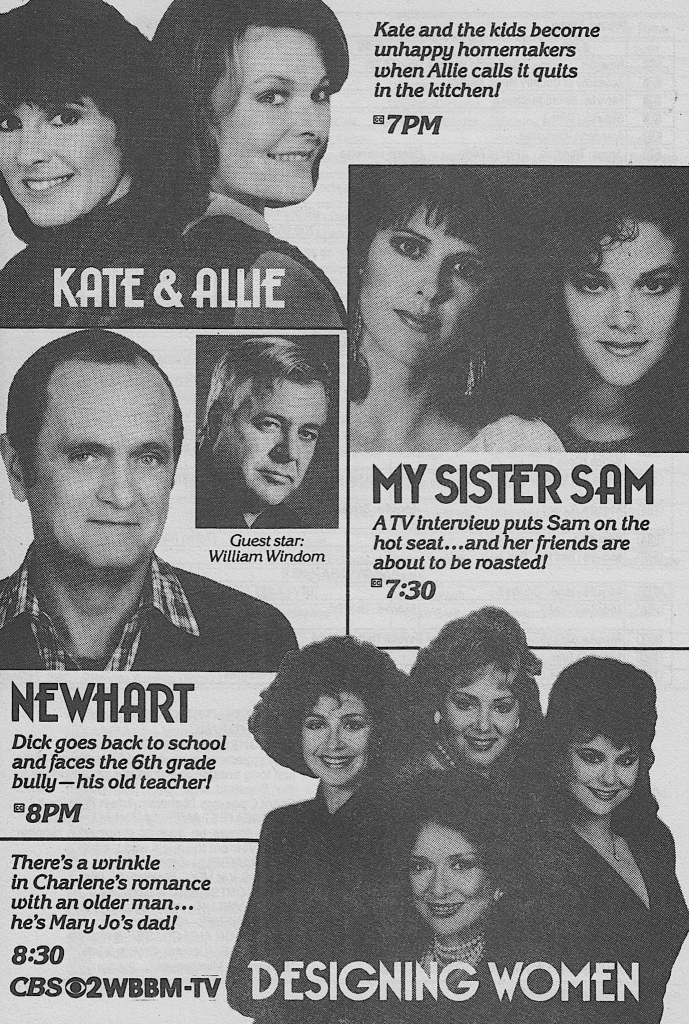
The show had a great time slot between Kate and Allie and Newhart on Monday nights. It ranked 21 overall. Of course, the networks rarely leave well enough alone, so they moved the show to Saturday nights opposite The Facts of Life. The end of the second season found the show down 50 points at 71overall. The network was toying with canceling the show, but after receiving a lot of fan letters, they brought it back in March of 1988. It moved to Tuesday nights and the ratings increased. However, the ratings did not stay that high, probably because the competition was Who’s the Boss and Matlock. In April, CBS canceled it outright, leaving 12 unaired episodes.

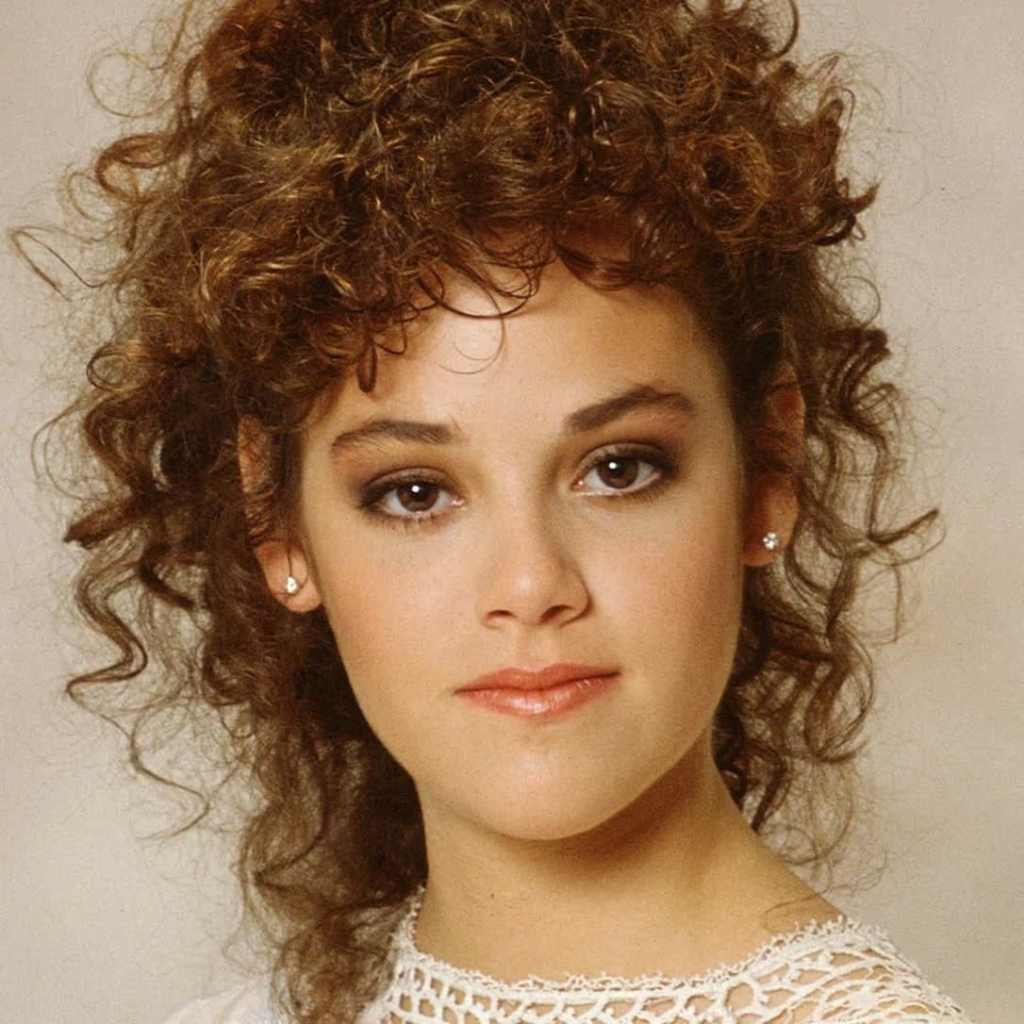
Sadly, a year after the show was canceled, Schaeffer was murdered in her home by an obsessed fan. After living with Pam, Schaeffer got her own place. She was living in West Hollywood when she was killed. Dawber said she told Schaeffer not to put her real name on her mailbox. Dawber had a scare with a stalker earlier in her career, and she learned not to put her real address on her driver’s license or anything that a fan could track you down with. Schaeffer didn’t listen and her name was on her mailbox.

The man who killed her, Robert Bardo, said he saw her in a promo in 1986 and began watching the show. He sent her fan letters. At one point, he flew from Arizona to LA to the studio to look for her. He took gifts to the studio several times, but studio security always stopped him. Bardo returned to Arizona. After the show was canceled, Schaeffer took on several movie roles which were very different from her role as Patti. One love scene enraged Bardo. Bardo was stopped from buying a gun due to mental health issues. He convinced his brother to buy him one for target practice. Then he boarded a bus to LA. He hired a private detective to find Schaeffer’s address; the detective located it through the Department of Motor Vehicles.

One morning Schaeffer was waiting for delivery of a script of The Godfather III for an audition with Francis Ford Coppola. Bardo rang her bell, and she answered thinking it was the delivery person. He introduced himself and told her she had sent him a card and photo after receiving fan mail. She explained she was busy that day, so he went to a local diner. He returned to her house, and she said he was wasting his time expecting any relationship with her. Then he shot her point blank. He got away and returned to Tucson but was apprehended a day later after running in and out of traffic, shouting that he was the one who killed Rebecca Schaeffer.
📷plex.com

Dawber was filled with grief and anger. She reunited with the cast of My Sister Sam for a Public Service Announcement for gun control, and she testified before Congress for stricter gun laws. After Schaeffer’s death, California passed an anti-stalking law in 1990. Now all fifty states have one on the books. Bardo was sent to California where he was found guilty of first-degree murder. He was sentenced to life in prison without the possibility of parole.

My Sister Sam was a ground-breaking show having women in so many of the critical roles. During the Chicago Tribune interview, Dawber said that “the significant thing is that My Sister Sam is a show about women that is run by women. . . . Not only are three of our five regular cast members women, but we have a female executive producer, two writer-producers, and a director. It really wasn’t intentional. It just happened that way.”
It would have been interesting to see how the show fared if it had kept its original time slot and the plots that would have been written as Patti became an adult. Did she begin to resemble her sister more or did she keep her carefree personality? And would her sister adopt some of her less serious traits? Almost every review I read about the show said it was genuinely funny, adorable, relatable, etc. With all the moving around the schedule and “is it on the air or not” decisions, only 44 episodes were created, so there aren’t enough for syndication or DVDs.

And of course, it’s devastating what happened to Rebecca Schaeffer. She was a rising star, and you have to wonder what type of career she would have had if she had lived more than 22 years. Dawber had to experience the death of another sister much too young to die. I’m glad a lot of laws came out of the experience, but it was such a brutal murder. Now, 35 years later, our country is still dealing with devastating murders because not enough laws have been created.

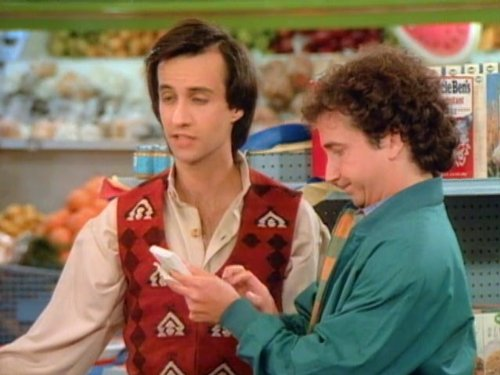
We Love Spending Time with “Perfect Strangers”

Linn -Baker and Pinchot Photo: tvfinales.com

We are talking about our favorite duos from the eighties and nineties in our blog August series. Although most of these shows feature husband and wife teams, today we are turning the dial back to a show about two cousins: Perfect Strangers. I am always envious of my husband because they have a group of first cousins who are very close and grew up together. While I have scads of second cousins, once removed and such, I have no first cousins and always missed those relationships. Perfect Strangers is about two cousins who develop that type of relationship.

Perfect Strangers is another one of those shows that was quite popular when it was on the air, and it was for eight years, but it doesn’t get much recognition any longer.

The series was created by Dale McRaven for ABC; McRaven was also the creative force behind Mork and Mindy. Bronson Pinchot had appeared in Beverly Hills Cop as Serge, a gay art gallery employee who had a foreign accent. ABC signed on to the project based on Pinchot starring. However, in the meantime, Pinchot had signed on to Geena Davis’s sitcom, Sara. Sara was quickly canceled and Bronson became available, so a pilot was made with Louie Anderson in the role of the American cousin. It was obvious that this was not the best pairing, and eventually the role was offered to Mark Linn-Baker after an appearance he made on Moonlighting. He and Pinchot had great chemistry and the show was placed between Who’s the Boss and Moonlighting, very popular shows, on Tuesday nights.

Photo: imdb.com

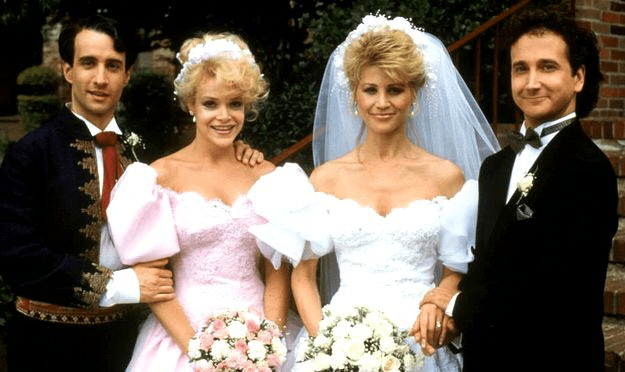
The short first season of six episodes debuted in March of 1986. The show was about Larry Appleton (Linn-Baker), a Wisconsin boy, who moved to Chicago and was enjoying life on his own after growing up in a large family. His utopia is shattered when his cousin Balki Bartokomous (Pinchot), arrives from Mypos, a Mediterranean island, intending to move in with him. Balki’s name was originally Vev, but Pinchot suggested Balki based on his sister’s nickname for her dog. Larry Appleton got his name because Lawrence University is in Appleton, Wisconsin, where I graduated from high school. Neither actor went to Lawrence, but both of them are Yale alumni. Both Linn-Baker and Pinchot got not only their BA degree from Yale but also both received their Masters of Fine Arts in drama.

Larry tells Balki he needs to live somewhere else. Balki had been a shepherd, and most of his impressions of what America was like were taken from pop culture, television shows, and commercials. Larry, a photographer, relents and invites Balki to live there, thinking of himself as more worldly and able to teach Balki the truth about American life. Ironically, it is often Larry who is more inept and gets the pair into some interesting situations.

Photo: pinterest.com

Season two found the show on Wednesday nights. The cousins begin dating flight attendants–Jennifer (Melanie Wilson) dates Larry and Mary Anne (Rebeca Arthur) dates Balki. They meet the girls at the gym and realize that they live in the same building.

In season three, Balki is able to stop sleeping on the living room sofa and gets his own room when the pair moves into a much larger apartment. Somehow Jennifer and Mary Anne still live in their building but no one ever talks about moving. Larry is hired as a reporter for the Chicago Chronicle, and Balki is hired for the mail room. For some reason, halfway through the season the show was moved from its successful spot on Wednesdays to Fridays.

During season five, Harriette (Jo Marie Payton-France), the elevator operator, was given a new show, Family Matters which was also on Friday nights. That show, which for better or worse, introduced America to Steve Urkel, was on the air for nine years. Larry and Jennifer are still going strong while Balki and Mary Anne are lukewarm. Larry proposes to Jennifer during season six.

Season seven finds Jennifer and Larry in a large Victorian house. Of course, they realize they need renters to afford the expensive Chicago mortgage and who moves in but Balki and Mary Anne. Balki becomes an animator with his own comic strip at the newspaper. Eventually, Mary Anne moves out but in the finale, they reconcile, marry, and travel to Mypos for their honeymoon. The show retained its viewers but then it was moved to Saturday nights in February of 1992 before returning to Fridays. The TGIF campaign for ABC’s Friday night shows was very successful, and the network was trying to do something similar for Saturday nights.

Season eight, ironically also a six-episode season, picks up several months after the wedding, and we realize that both Jennifer and Mary Anne are noticeably pregnant. In the finale of the series, babies Robespierre and Tucker join the show.

Photo: pinterest.com

The first six seasons found the show consistently in the top forty. Given its placement between two popular shows in its debut year, five of the first six episodes landed in the top ten. After the show was moved to Saturdays, it experienced a drastic decline in viewers. When the show was moved back to Fridays, it found its audience again. The show’s final season was supposed to be thirteen episodes but it was shortened to six. It was in the top twenty for the final season, and 15 million households watched the finale.

The theme song for the show, “Nothing’s Gonna Stop Me Now,” was written by Jess Frederick and Bennett Salvay. They composed the themes for Full House, Step-by-Step, and Family Matters as well.

We have talked about a lot of shows who have some famous fans and this show was no exception. Bronson Pinchot said Nelson Mandela was a fan of the show. Pinchot was invited to a banquet in South Africa where President Mandela was in attendance. One of the President’s assistants gave Bronson a note that read, “I’m dying to meet you, but if I go to your table, I have to go to everyone’s table. But I wanted you to know that I know my cousin is here.” Later that evening Bronson met Winnie Mandela.

Photo: pinterest.com

The Emmys also recognized the show. In 1987 Bronson Pinchot was nominated for a Lead Actor in a Comedy Series. He did not win, but had some tough competition with Ted Danson for Cheers, Harry Anderson for Night Court, Bob Newhart for Newhart, and, winner, Michael J. Fox for Family Ties. Two years later, Doris Roberts was nominated for Outstanding Guest Actress in a Comedy and lost to Colleen Dewhurst for Murphy Brown. Other nominees included Diahann Carroll for A Different World, Eileen Brennan for Newhart, and Maxine Stewart for The Wonder Years.

I’m sure that Perfect Strangers is in syndication somewhere, but I cannot remember the last time I saw it listed on television. There is a DVD set out for the entire series. I do remember watching this show most weeks and enjoying it, although it was not in my Top Ten. Yes, it had some too-typical and obvious plotlines like the girls living in the same building and both Balki and Mary Anne moving into the Appletons’ new house. However, the writing was pretty good and the characters were fully developed. The twist of naïve Balki often being wiser than native Larry is also a fun influence. It’s definitely a show that deserves more recognition than it has received in the past three decades. I’d love to know if you take some time to watch the DVDs, find it on the air somewhere, or just have fond memories of watching it in the past.

St. Elsewhere: Medicine Doesn’t Always Give Us The Ending We Wanted

Today we are winding up our blog series, “Examining Some of Our Favorite Medical Shows.” Six years seems to be the magic number of seasons for many medical shows and it was no different for our series today: St. Elsewhere.

Photo: starstills.com

St. Elsewhere was created by Joshua Rand and John Falsey. It aired on NBC from 1982-88. It was produced by MTM Enterprises, Mary Tyler Moore’s company that also produced Hill Street Blues; both shows had large casts, realistic plots, and continuing storylines.

The show was talked about a lot, but I was surprised to learn that it never ranked higher than 47th in the Nielsen ratings, and that was in the final season. The reason it stayed on the air so long despite lower ratings was that it did very well with the 18-49 year age group with the networks were trying to appeal to. It did win 13 Emmys for writing, acting, and directing. (Overall the show won 13 Emmys out of 62 nominations.)

St. Elsewhere was set in St. Eligius Hospital, a rundown Boston teaching hospital. Its elevators don’t work and they still use an ancient tube system to send messages from one floor to another. Apparently “St. Elsewhere” was a slang term that referred to not well-equipped hospitals that served patients who were turned away from more well-respected institutions. The building that served as the hospital façade was the Franklin House on East Newton Street in Boston, which was originally a hotel for women. Young working women lived there including Faye Dunaway after she graduated from Boston University.

The show intertwined the professional and private lives of the medical staff and patients. It dealt with many cutting-edge social issues including heart transplants, artificial hearts, AIDS, religious conflicts, suicide, and gender identities.

Photo: people.com

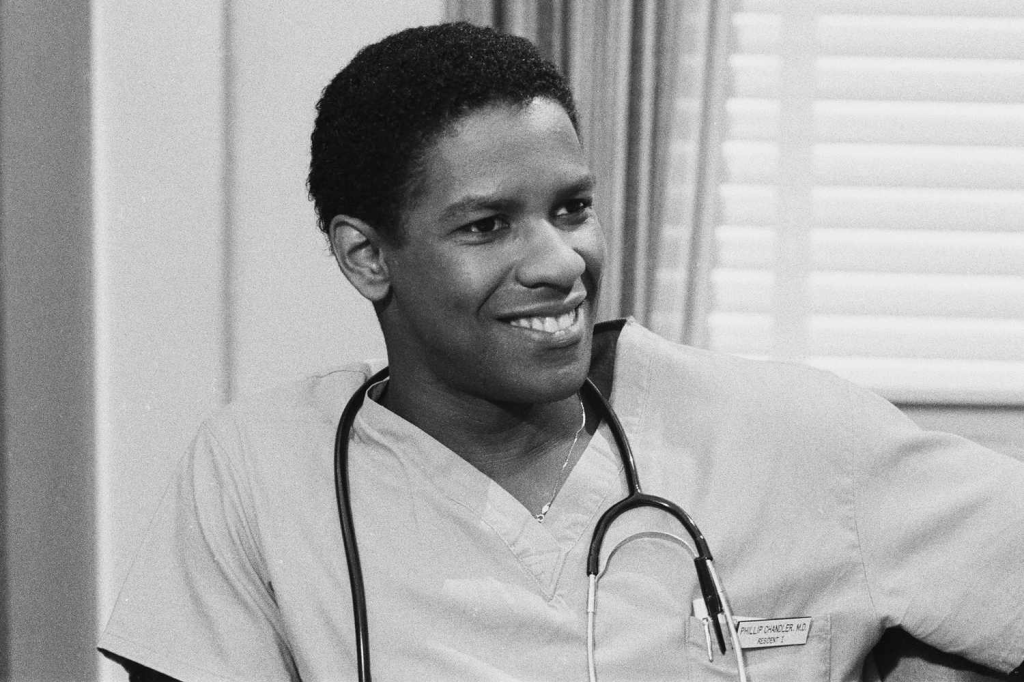
Surgeon Dr. Mark Craig (William Daniels) informs the staff that their hospital was considered a “dumping ground.” Craig helped train the interns along with Dr. Donald Westphall (Ed Flanders) and Dr. Auschlander (Norman Lloyd). Flanders was a popular character and the role was originally offered to Hal Linden who turned it down. Other members of the stellar cast included Ed Begley Jr. (playing Dr. Ehrlich), David Birney (playing Dr. Samuels), Mark Harmon (playing Dr. Caldwell), Ronnie Cox (playing Gideon), Helen Hunt (playing Clancy Williams), Howie Mandel (playing Dr. Fiscus), Christina Pickles (playing Nurse Rosenthal), and Denzel Washington (playing Dr. Chandler). This was a fitting role for Denzel who was a pre-med student in college.

Daniels was sent five scripts. He thought the writing was wonderful and having so many scripts displayed how the ensemble cast would be used. He might have a large part one week and then three weeks with small parts. He said Dr. Craig was like him in many ways. He ran the gamut from angry to nice in minutes. It fit his temperament and was wonderful to play him.

Daniels met a surgeon and followed him around the hospital, including in the operating room for an open-heart surgery procedure. He said he used some of the medical information, but he did not like the surgeon as a person and did not model Dr. Craig on him. He said using so much medical jargon was difficult and he had to learn about it before he went in to rehearse. He said that Dr. Craig had some funny lines in the show. He said he did not have any input with the writers on his character; in fact, they never really saw the writers.

Photo: ebay.com

Among the many guest stars were James Coco and Doris Roberts who both picked up Emmys as a mentally challenged boyfriend and a bag lady. It was an interesting storyline where two couples are followed through their medical care. One couple is upper middle class and the other has no money. Nothing is said; there are only observations of the action. The wealthier woman leaves the hospital with no cure but a high hospital bill for many tests. The bag lady, Cora, learns she needs to have both feet amputated because of gangrene, but she needs to take care of Arnie, her mentally challenged boyfriend, so she refused the surgery.

Roberts was asked about her role on the show in a Television Academy interview. She said Coco had received the script and called her to say she needed to audition for the role of his girlfriend. When Doris reached out, they declined, so she reached out to Bruce Paltrow, who was a producer and writer for the show, and she was hired. She did a lot of research watching homeless people. She realized that most people squatted because they did not want to lie down because they were worried about having things stolen. This is how her character got gangrene. When asked about what she thought happened to the character she said she thinks she died shortly after. Roberts got emotional discussing the role and said it still makes her cry. She said it was the best dramatic role she ever played.

Doris said one funny moment came at the Emmy Awards. When they called her name, she did not know what to do with her purse, so she handed it to Jimmy Coco. The next name called was his so he came on stage with the purse and mentioned he didn’t use one often but it came from Doris. Then a few nights later he was on the Tonight Show, and when he came on stage he had her purse and in it was a cigar, a half-eaten sandwich, and a few other items.

Photo: ebay.com

The show was classified as a drama, but it included comedy, as well as inspiring moments of interaction and care. One of these scenes is when Jack, a resident, has to deal with his wife’s death. She is an organ donor, and her heart is given to a female patient. Jack sneaks into the patient’s room when she is sleeping so he can listen to his wife’s heart.

Jazz musician Dave Grusin composed the theme. Grusin won twelve Grammys. He won an Academy Award for his score of The Milagro Beanfield War in 1988. He also scored some popular films including The Graduate, On Golden Pond, The Fabulous Baker Boys, and Tootsie. Before writing the theme for St. Elsewhere, he cowrote the themes for Good Times and Baretta.

One of the most interesting things about the writing on St. Elsewhere was the number of allusions to other television shows and movies and several cross-overs. There are many of these but some of the most fun ones for me included (1) the public loudspeakers often page characters from other television shows, (2) one of the characters on The White Shadow, Warren Coolidge, becomes an orderly and sometimes wears Carver high school shirts, (3) a psychiatric patient who watches The Mary Tyler Moore Show believes that he is Mary Richards and has an encounter with Betty White, and she says she is not Sue Anne Nivens, (4) Dr. Craig once mentions serving in Korea with B.J. Hunnicutt, and (5) the teaching doctors are seen at the bar at Cheers in one episode.

Photo: imdb.com

The hour-long show started on Tuesday nights. The show was canceled after the first year. Then Grant Tinker changed his mind and they were back on the air. For the second season, it was moved to Wednesdays where it remained until it was canceled.

The finale of this show gets talked about almost as much as Newhart. However, while fans loved the Newhart ending, there was a lot of controversy over the ending of St. Elsewhere.

Warning: This is a spoiler alert if you haven’t seen the show and want to watch it. After wrapping up several storylines, the final scene is a much younger Dr. Westphal and his son Tommy (Chad Allen) who has autism. Westphal is obviously a construction worker. Dr. Auschlander appears to be Westphal’s father. Tommy is playing with a snow globe and the two “doctors” discuss the fact that Tommy spends much of his day staring at the snow globe. They set the globe down and when the camera goes in close, we see St. Eligius inside.

We are left to assume that the entire series had been Tommy’s imagination. In other words, the show was fiction but the fiction was also fiction inside someone’s mind. Viewers understandably were confused and upset.

Photo: paleymatters.com

Later the cast did a special on Entertainment Weekly and was asked to share their thoughts about the finale. Here are a few of the comments. Chad Allen said, “From the mind of a young person whose fantasies were coming to life before him, it was neat.” William Daniels said he was “shocked, actually. I had no idea of their plans to do that. . . it was a provocative ending. A surprise to everybody.” Ed Begley Jr. felt that “it was quite fitting for what they had done the previous six years. They always tried to be out there, beyond the limits of what was being done before. They tried to think outside the box. . . . It was bold and shocking and upset some people.  . . . It was highly unpredictable, just like every episode.” Howie Mandel knew it would offend half the viewers and appeal to the other half, but he described it as “ahead of its time, pretty ingenious, and creative and not like anything else.” Mark Harmon had been killed off earlier in the series, but said, “It made me smile when I heard about what they did because it was so them. They made a choice. and the choice is interesting.” Noman Lloyd said he “never bought it. I said at the time we were shooting, ‘This is a cheat.’ For me, it was a cheat.”

I will admit this was not a show I regularly watched. I find the entire philosophy of the ending fascinating. Many felt they had been cheated by getting pulled into the lives of characters for six years that never existed. However, if they are on a television series, did they ever exist? It shows how real characters become to us when we invest in a show and invite these people into our homes every week.
If you didn’t watch the show in the eighties, you can find it on Hulu and make your own decision about the finale. I do admit that I never look at snow globes the same way anymore.

If We Were the Prop Master: Our Favorite Items On TV

    This month is our blog series is “Potpourri Month” and we have a sub-theme every day; today’s is Propourri” for the pro who handles props. When you think of your favorite shows, there are props included in those great memories: the couch at Central Perk, Fonzie’s leather jacket, or the cereal boxes on Seinfeld’s refrigerator. First let’s learn a little about the Props Master and then we’ll take a look at some of our most-loved props.

The Fonz’s jacket Photo: ebay.com

    The Prop Master heads up the Props Department. They are charged with acquiring, organizing, and safely handling the props for the shows.

    Each episode has a list of props that will be needed for the show. The props master reviews the scripts and has meetings with various department heads to ensure everything that is needed is on the list.

    Sometimes the props master does research to see what would be appropriate for a specific era or place. Cars were quite different in the fifties than the eighties. A grocery store does not look the same in China as it does in Atlanta.

    During filming, the props master has to keep track of props and make sure everything is put back in its place.

    So, what are some of the props that have become synonymous with our favorite series? Let’s put together a prop list that includes props from our favorite shows.

    Living rooms have a lot of cool furniture. When you think of comfortable places to sit, you have to think of Modern Family’s couch, Archie’s chair from All in the Family, Chandler and Joey’s Barcaloungers from Friends, and Martin Crane’s duct-taped, worn chair on Frasier.

The Bunkers’ Chairs Photo: comparativemediastudies.com

Many of the Modern Family characters are interviewed on their couch which sits in front of their stairs to the second floor right as you enter the front door. The walls are Benjamin Moore’s Labrador Blue. The couch itself is from Sofu-U-Love and the primary-colored striped pillows are from Pottery Barn just in case you want an interview sofa of your own.

Archie Bunker’s chair is from the 1940s. It’s covered in an orange and yellow woven fabric. The props master purchased the chair from a thrift store in Southern California. Whenever anyone but Archie sits in the chair, it is made obvious to them that they need to find another seat.

The barcaloungers Joey and Chandler use were originally made in Buffalo New York, named after the company that made them. They have moving parts to allow for footrests and reclining. Joey’s Barcalounger is brown leather and he calls it “Rosita.”

Martin Crane’s chair is in the same color family as Archie Bunker’s. The prop department made it, so it’s a one-of-a-kind piece. It’s striped and quite unattractive looking especially with Frasier’s expensive tastes echoing in the rest of the room, but Martin loves it and Frasier loves Martin so it stays. In the first episode, a guy carries in the chair when Martin and his dog Eddie move in with Frasier. On the last episode, the same guy carries the chair out when Martin gets married and moves out. The chair is really almost a character during the run of the series.

Jeannie in her bottle Photo: blazenfluff.com

There are a lot of fun accessories from our favorite living rooms. Just a couple include Jeanne’s bottle from I Dream of Jeanne, the “M” that was on the wall in Mary Richard’s apartment on The Mary Tyler Moore Show, and the Chihuly sculpture from Frasier. Who can remember The Dick Van Dyke Show without thinking about the ottoman Rob Petrie might trip over?

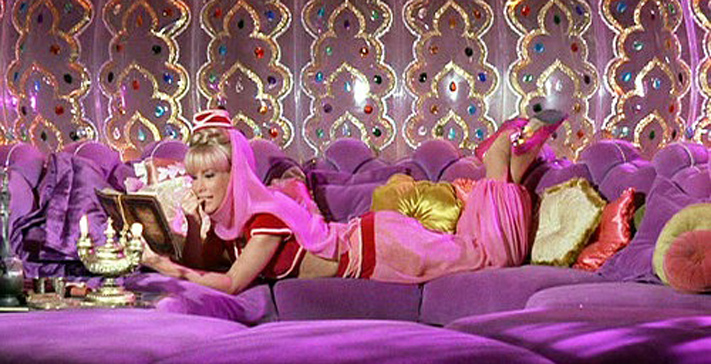
Jeannie uses her Arabian glass bottle to sleep in and to hide in when someone other than Tony and Roger is in the house. The bottle has a long, purple couch with her blankets and pillows. She also has an Arabian candle, a photo of Tony, a mirror, and her book about genies.

Mary’s “M” stood for so much more than her first name. We knew that an independent, smart woman lived in that apartment. Everyone wanted to grow up and be able to put their own initial on the wall just like the brass one Mary had. When she moved to her newer, more modern apartment, the M went with her.

Martin’s chair on Frasier Photo: jacksonville.com

In contrast to Martin’s puke-colored chair on Fraiser, Frasier had so many expensive items scattered around his home. One of them was Dale Chiuly’s Macchia. This blown-glass vase was green and brown. It was worth $30,000 at the time, and the props master locked it up after filming each episode.

We all recall the opening of The Dick Van Dyke Show. Will he or won’t he? I think most of us remember him falling over the ottoman, but do you know sometimes he walked around it? Reiner wanted a clever opening for the show and while talking with John Rich, the director, they decide Rob will fall. But then Reiner suggested a variation, so they filmed him not tripping. No one ever knew from episode to episode if he would fall or not.

Burns and Allen have their closet adjoining the living room. While Fibber McGee and Molly have a ton of items in their closet, whenever Gracie opens hers, we see a collection of hats that men have left when they are in a hurry to get out of the Burns house after dealing with Gracie’s logic.

When I think of some of my favorite kitchen items, I think about Jerry Seinfeld’s refrigerator with its revolving display of cereals. I know if I visited My Three Sons, I would get to sit around the kitchen table where all the action happens on the show. And Gracie would definitely take me into her kitchen to have some coffee from the pot she almost always kept full for her and Blanche to talk over.

Jerry always has cereal in his cupboard. Some sources say he had up to seventeen at a time. Knowing that cereal doesn’t last all that long, he ate a lot of cereal. I’m hoping Fruit Loops was one of those choices.

My Three Sons’ table Photo: pinterest.com

While as viewers we love that the kitchen was the heart of the Douglas home. From the first episode when Steve got Chip to help him with the dishes to talk to him about “love,” to the grown boys gulping down orange juice at the table to leave early for their busy day, we spent a lot of time in that room. Uncle Charlie’s bedroom was just off the area, so he could come and talk with someone getting warm milk in the middle of the night. The actors might not have had the same warm, fuzzy feelings. Barry Livingston discussed their filming schedule because Fred MacMurray did all his filming in two short groups of days. He said sometimes, “you would sit at the kitchen table all day long and they would do close-ups. You would be sitting in the same place at the same table and you would do a close-up from 12-15 different episodes. All you would do was change your shirt because they couldn’t see anything below.”

Burns and Allen Photo: pinterest.com

Gracie and Blanche always made time to have coffee to talk over things. Whether it was 7 am, 1 pm, or 7 pm, the coffee pot was always on. Burns and Allen also did coffee ads for Maxwell House, so I am assuming that it was Maxwell House the friends drank daily on Burns and Allen.

I know if I explained every item to you in detail, we would still be on this blog next week, so I’ll just some up the rest of the categories.

Bedrooms: Beds are definitely the focal point. We have the Petries’ twin beds that are not convenient for a married couple. Lisa and Oliver Douglas had a very large bed on Green Acres; unfortunately, it was open to the outside where anyone could come in or out. Oscar Madison had a bed on The Odd Couple, but no one knew it because his room was so messy. We definitely remember Bob and Emily Hartley’s bed because not only was it important in The Bob Newhart Show but it was in the finale of Newhart. It is also hard not to recall Alex Keaton’s Ronald Regan poster that took up one of his bedroom walls on Family Ties.

Batman with bust and phone Photo: batnews.com

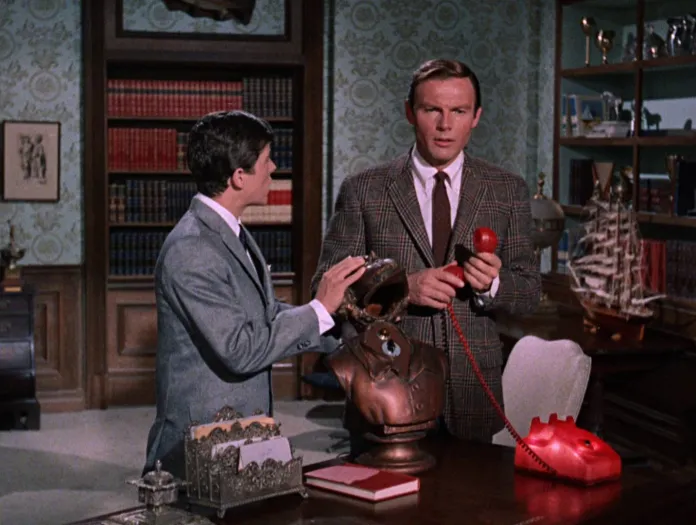
Libraries and Dens.  Three specific rooms come to mind. On Batman, we had the Shakespeare bust that hid the bat phone in their library. We had George Burn’s television on Burns and Allen where he could watch was going on during the show without the other characters knowing he was listening in. Finally, we think back to The Brady Bunch where the six kids fought over what to watch on television and did their homework after school.

Garages: The Jetsons they kept their flying car in the garage, Last Man Standing where Tim kept his antique car, and The Adventures of Ozzie and Harriet, where they kept everything but the car. Ozzie was always out there looking for something.

Workplace: When characters go to work, we get a whole new scene full of fun props. Who would visit Dunder Mifflin without stopping by to see Pam at the front reception desk? Rob Petrie had a couch where the writers worked their magic. Central Perk featured the orange couch everyone remembers from Friends. The sofa was so beloved that replicas of it went on a world tour in 2019 for the shows’s 25th anniversary. The actual sofa used on the set was sold at auction in 2011 and it went for about $5000. Of course, Cheers would not have been the same without the stools for Norm and Cliff. Get Smart had so many fun props, it’s hard to choose; the Cone of Silence was certainly fun for everyone who could hear what was said inside by characters who thought they were speaking where no one could hear them. And Hogan’s Heroes also had a lot of fun items including the coffee pot that could relay anything said in Colonel Klink’s office.

Laverne Photo: pinterest.com

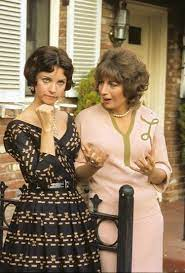
Clothing: While I love almost everything they wore on Burns and Allen, The Brady Bunch, and The Partridge Family, there are a few other pieces that really stand out. Who would not want to wear Fonzie’s leather jacket? Columbo’s coat might be a bit rumpled but it had been around to solve a lot of mysteries. Sally on McMillan and Wife had the San Francisco jersey that she wore to bed. And talk about special clothing, Laverne’s wardrobe with her iconic “L” on everything was a big part of Laverne and Shirley.

Unusual Items: Last, but definitely not least, we have those special objects that belong to specific characters. When you think about Radar on M*A*S*H, don’t you also think about his teddy bear? Barney Fife would never leave the house without his silver bullet. Half the plots would disappear if Gilligan’s Island did not have a radio for the Professor to try to repair and hear about the world outside the island. Buffy’s Mrs. Beasley on Family Affair was very popular; the doll was sold for decades after the show went off the air. Kojak’s lollipops had to be on the list. Also, if you are talking about “things,” how could we not include the “Thing” from The Addams Family?

I hope you enjoyed getting to know something about some of our favorite furniture and recalling special props from well-loved shows. If you want to see a couple of these items, visit The Smithsonian Museum in Washington D.C. where you can see Archie’s chair and Fonzie’s leather jacket. I’d love to hear your favorites.

Honoring National West Virginia Day with Don Knotts

As we continue with our National State Day Celebrations, this week finds us in West Virginia. Who else can we pick but Don Knotts?

See the source image
Photo: amazon.com

Born in 1924 in Morgantown, WV, Don Knotts was the youngest of four boys. Don had a rough youth. His parents were farmers and his mother was 40 when he was born. His father suffered from mental illness, and Don’s birth led to a nervous breakdown. His father died when he was 13 and his mother made her living running a boarding house after that. At an early age, Don began performing as a ventriloquist and comedian at church and school functions.

After graduation, Knotts began college but then enlisted in the army, serving during WWII from 1943-1946. He toured the Pacific Islands entertaining the GIs as a comedian. In 1948 he graduated from West Virginia University with a major in education, a member of the honor society.

See the source image
Photo: pinterest.com

Before graduating, Knotts married Kathryn Metz. They would remain married until 1964 when they divorced. After college, the couple moved to New York to pursue a career in the entertainment industry.

See the source image
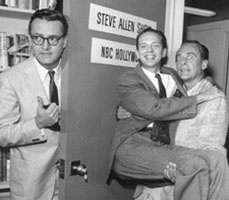
Steve Allen, Knotts, and Louis Nye–Photo: ebay.com

Believe it or not, his first role was in the soap opera Search for Tomorrow, and he would become part of the cast from 1953-1955. In 1956, he got his big break on the Steve Allen Show, playing a nervous man. He stayed with the show until 1959. The Tonight Show relocated to Hollywood with Jack Paar as host in 1959, and Don went with him. However, during his time on the show, he had a role in the play “No Time for Sergeants” and then in the film version with Andy Griffith.

See the source image
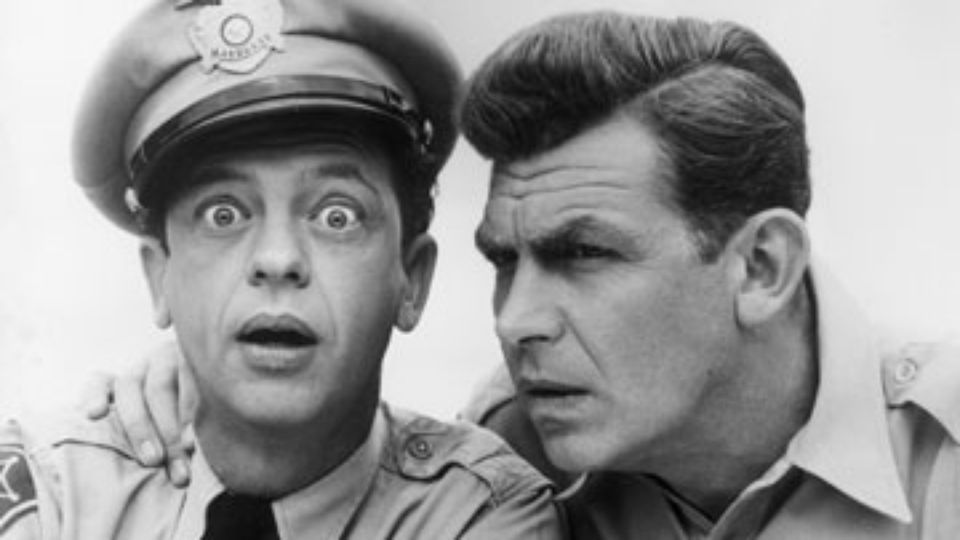
Andy Griffith and Knotts-Photo: tvseriesfinales.com

In 1960 Andy Griffith was putting together his own sitcom, The Andy Griffith Show, and he offered Knotts the role of Barney Fife, deputy. During his time as Barney, Knotts received five Emmy awards (three during his first five years).

See the source image
Photo: bobshideout.com

The Museum of Broadcast Communications sums up Barney’s character perfectly:

“Self-important, romantic, and nearly always wrong, Barney dreamed of the day he could use the one bullet Andy had issued to him, though he did fire his gun on a few occasions. He always fired his pistol accidentally while still in his holster or in the ceiling of the court house, at which point he would sadly hand his pistol to Andy. This is why Barney kept his one very shiny bullet in his shirt pocket. In episode #196, Andy gave Barney more bullets so that he would have a loaded gun to go after a bad guy that Barney unintentionally helped escape. While Barney was forever frustrated that Mayberry was too small for the delusional ideas that he had of himself, viewers got the sense that he couldn’t have survived anywhere else. Don Knotts played the comic and pathetic sides of the character with equal aplomb.”

See the source image
Mayberry Family: Knotts, Ron Howard, Griffith, Frances Bauvier–
Photo: tvtropes.com

Originally, Don was supposed to be the straight man to Andy’s character, but Griffith quickly realized the reverse would make the show more successful. Andy always said he wanted to be done after five years. During that fifth year, Knotts began to search for his next job. He signed a five-film contract with Universal Studios. Then, Andy decided not to quit after season five, but since Knotts was already committed, he left the show in 1965.

See the source image
Knotts with Betty Lynn–Photo: mesquitelocalnews.com

From everything I’ve read, it seems like the cast of TAGS got along very well. Although Frances Bavier seemed to take things more personally than others, the actors seemed to enjoy working together. Betty Lynn who played Barney’s girlfriend Thelma Lou described Knotts as “a very quiet man. Very sweet. Nothing like Barney Fife.” Mark Evanier, a television writer, called him “the most beloved person in all of show business.”

See the source image

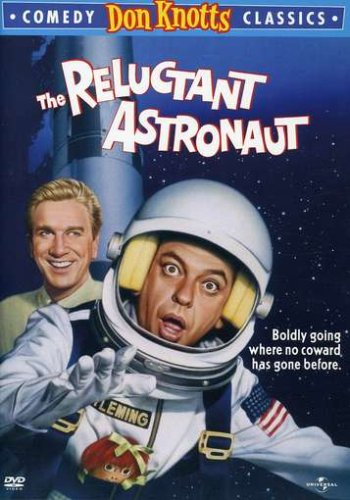
Knotts family-viewable films were very popular including It’s a Mad, Mad, Mad, Mad World; The Incredible Mr. Limpet; The Ghost and Mr. Chicken; The Reluctant Astronaut; The Shakiest Gun in the West; The Love God?; and How to Frame a Figg.

One of my favorite roles of Don’s was as the shoe salesman in the Doris Day-James Garner movie, Move Over Darling.

He also returned to Mayberry for several episodes. (Two of his Emmys came from these guest spots.)

See the source image
Doris Day and Knotts–
Photo: pinterest.com

Knotts also kept busy on other television shows including appearances on The Bill Cosby Show, Here’s Lucy, Fantasy Island, The Love Boat, Newhart, and That Seventies Show.

Also, during these years, Knotts tried marriage again wedding Loralee Czuchna in 1974. The couple called it quits in 1983.

He received his second starring role in 1979 as Mr. Furley on Three’s Company. Knotts replaced Stanley and Helen Roper (Norman Fell and Audra Lindley) who left for their own spin-off show.

See the source image
Suzanne Somers and Knotts–
Photo: history garage.com

He became the new landlord for the trio upstairs. He would stay with the show until it ended in 1984, racking up 115 episodes. I will admit that I did not enjoy the show, and I felt Knott’s performance was over the top and too stereotyped; I felt that way about the other characters also.

Don and Andy remained close friends throughout their lives. When Andy returned to television as Matlock, Knotts also received a role on the show as Les Calhoun, Matlock’s neighbor from 1988-1992.

See the source image
Knotts and Griffith in later years–
Photo: sitcomsonline.com

Don suffered from macular degeneration, and eventually it caused him to become virtually blind. In 2002 Don married a third time when Frances Yarborough became his wife.

Knotts died in 2006 from pulmonary and respiratory complications from pneumonia related to lung cancer.

Off screen, Knotts seemed to be a very funny guy. His daughter Karen said, “Here’s the thing about my dad. He had this funniness that was just completely, insanely natural.”

See the source image
Photo: directexpose.com

He told his daughter his high school years were some of his happiest. His home town loved him too, and a statue honoring him was unveiled in 2006 in front of the Metropolitan Theatre. The statue was designed by local artist Jamie Lester, another West Virginia native.

See the source image
Photo: guardianlv.com

Don Knotts had a spectacular career. As a young man, he got a job in a chicken factory and spent his days pulling feathers off dead chickens because he was told he had no future in the acting profession. It would have been hard for him to imagine at the time the legacy of performances he would leave—television shows and movies that generations of fans would watch. More than sixty years after Barney Fife put that bullet in his pocket for the first time, viewers continue to watch and love the Mayberry residents as they go about life in their small town. And the fact that the place where he first learned about life cared enough to fundraise and build a memorial to honor him says a lot. Thank you Don Knotts for showing us the importance of humor and following your dreams!


Hi Bob! We’re Always Happy to See The Bob Newhart Show

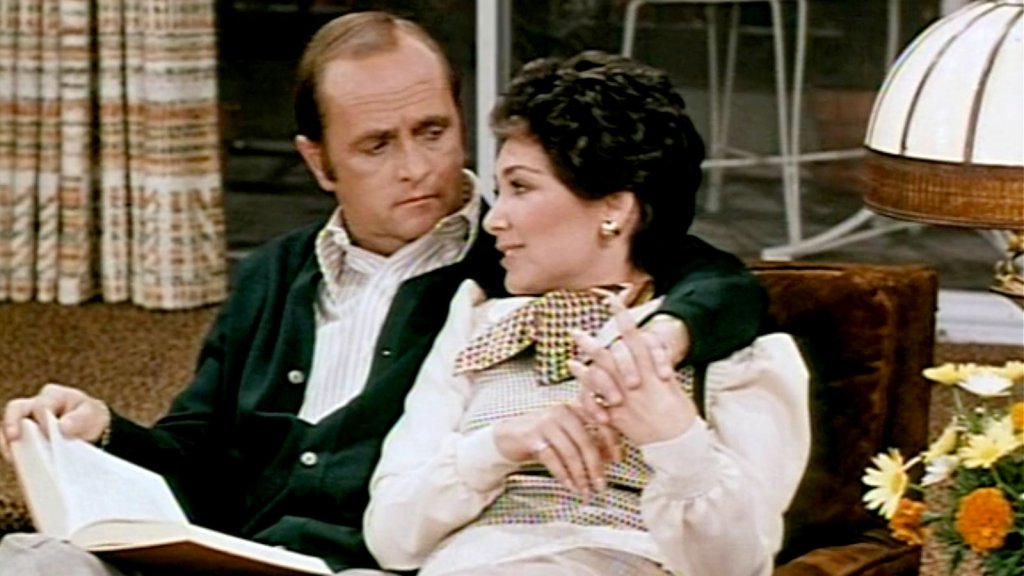
From 1972-1978 we were able to benefit from the sage advice of Dr. Robert Hartley from the comfort of our own living rooms. Created by David Davis and Lorenzo Music, and produced by MTM Enterprises, The Bob Newhart Show gifted us with 142 episodes for us treat ourselves to after the show left the air.

Photo: tvtropes.com

In an online article by Marc Freeman in April of 2018, Dave Davis discussed the evolution of the sitcom. “Lorenzo and I wrote a segment for Bob on Love American Style. Bob wasn’t available. So, we got Sid Caesar. A few years later, we did a script for Bob for the Mary Tyler Moore Show. Again, Bob wasn’t available. After we became story editors on Mary’s show, MTM Enterprises decided to branch out and asked Lorenzo and me to do a pilot. We knew exactly what we wanted to do. We wanted a show with Bob.”

Photo: wikipedia.com

When Bob Newhart was approached about starring in the show, he required two changes from the original concept. First, he wanted his character to be a psychiatrist instead of a psychologist. This seems like a minor request, but he was very wise because he did not want anyone to think the show was making fun of mental illness. He also insisted that his character not have children. The “father doesn’t know best but thinks he does” underlying concept was not one he wanted the show to focus on. Bob was careful when creating the character of Bob Hartley. Newhart once said “the key to building a show around a stand-up is maintaining the integrity of the persona you create.” This was definitely true for the Bob Newhart Show.

Photo: connectcollectorz.com

The show has a very simple premise in that we see Bob dealing with the same everyday problems the rest of us did. It was grounded in reality. Bob was the straight man. He was surrounded by all these quirky characters, but they were believable and likeable.

Photo: sitcomsonline.com

The show moves back and forth between Bob’s practice and his home; we get to know his co-workers and his friends and family. At work, he shares his floor and receptionist Carol Kester (Marcia Wallace) with orthodontist Jerry Robinson (Peter Bonerz) and urologist Bernie Tupperman (Larry Gelman). Carol and Jerry become two of his best friends. We also get to know some of his regular patients including Elliot Carlin (Jack Riley), Emile Peterson (John Fiedler), and Mrs. Bakerman (Florida Friebus).

Photo: imdb.com

Bob is married to Emily (Suzanne Pleshette) who is a school teacher. Across the hall is the apartment of their friend and neighbor Howard Borden (Bill Daily), an airline navigator. Although Bob insisted on no children, in many ways, Howard was Bob and Emily’s child.

Photo: sitcomsonline.com

In season four of the show, Howard meets and begins dating Bob’s sister Ellen (Pat Finley) and they eventually marry, making Howard a legal family member.

Photo: thefrog’seyebrows blogspot.com

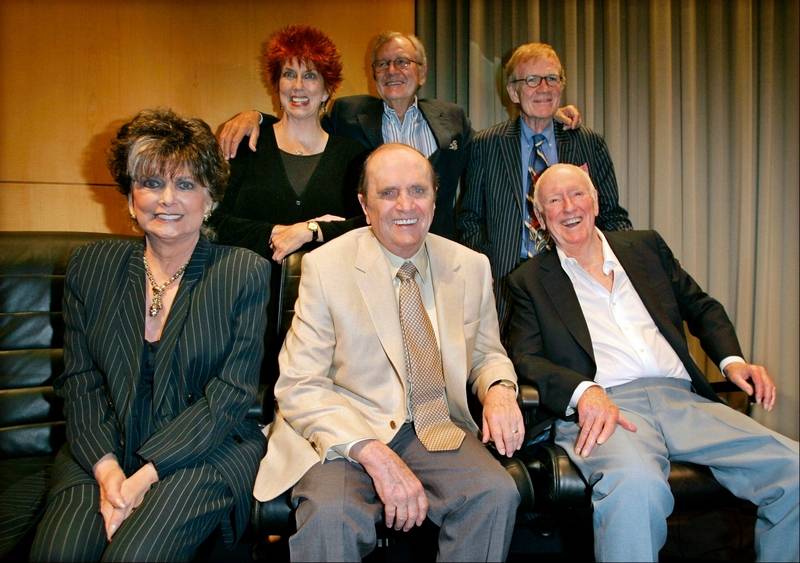
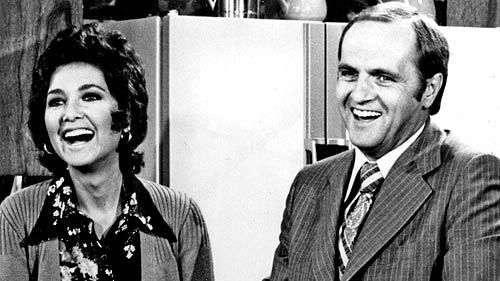
Bob and Emily were the only characters to appear in all 142 episodes. Suzanne Pleshette was asked to play Emily after she appeared on The Tonight Show Starring Johnny Carson one night. She was seated next to Bob, and the producers thought the two of them had great chemistry. In real life Bob and Suzy, as he called her, were best friends. He spoke at her funeral. When he recalled their time together, he said “Her laugh. Her laugh. We just laughed. We just had a great time. We all loved each other and respected each other and we got paid for it.” Bob also remains close friends with Marcia Wallace.

Photo: nytimes.com

They worked so well as a couple because Emily is very bright and funny. She and Bob argued because they were both a bit stubborn, but they always found a way to compromise at the end of the day. Bob often shared his wisdom through stories. He would do a bit of a monologue that related to what was happening on the show. It was referred to as the “Emily, sit down” moment.

Photo:kennethinthe212.com

The phone is also important on the show. If you are familiar with Newhart’s career, you realize some of the first skits that escalated his stand-up career were phone conversations. On this show, we often hear a one-sided conversation when he chats with friends or patients. One example of this is:

Bob:  “Yes, this is Dr. Hartley. What can I do for you?

Well, Mr. Johnson, smiling and whistling while you work doesn’t seem to be a problem you should – you should see a psychologist about.

You drive a hearse?”

Although all the major characters on the show were like family to the Hartleys, the mailman on the show was truly family. Bill Quinn who played the postman was Bob Newhart’s father-in-law.

Photo: imdb.com

Bonerz who played Jerry became interested in directing. He ended up directing 29 episodes of this show and then went on to a successful career as a director. He directed episodes on a variety of shows including E/R, Alf, Wings, Murphy Brown, Friends, and Home Improvement. His view of the importance of the show was that “the most interesting thing about the show and why its successful is that it brings up things that come up in your life. That’s what art’s supposed to do. That’s what TV should be doing. When it does, people remember it and reflect how much they like it.”

Photo: allmovie.com

The show was on Saturday nights. For the first five seasons, it followed The Mary Tyler Moore Show airing at 9:30 EDT and its competition on NBC was Saturday Night at the Movies. For season five, the show was changed to earlier in the evening against Starsky and Hutch on ABC. For its final year, The Mary Tyler Moore Show was off the air and Bob’s show aired at 8 pm Saturday opposite Fish and The Bionic Woman. The sitcom placed in the top 20 for the first three seasons and the top 30 for season four.

Photo: blogspot.com, holiday film reviews

Bob had requested the network move the show to a different night. That didn’t happen, and the television executives wanted Emily to have a baby, even though Bob had specified that not be part of the plot. So, he ended the show after six years. When asked about ending the show, he said, “I could see what was coming in situation comedy, and I didn’t want to be a part of it. If we’d gone another year, they’d have had the guy and two girls living in the apartment above us, a Martian living on the same floor next door to three girl detectives. The floor below us would have been occupied by a fraternity and a sorority.”

If you read my blog on Bob Newhart recently, you know how incensed I was that this show never won an Emmy, and was only nominated once, and Newhart never received an Emmy for any of his sitcoms in the seventies and eighties. It would take his recurring role on The Big Bang Theory as Professor Proton for him to win the Emmy.

However, the show was ranked ninth and fiftieth on “TV Guide’s 100 Greatest Episodes of All Times in 1997.”

Photo: flickr.com

In 2004, TV Land picked this show as one of the series it commemorated with a sculpture. A statue of Newhart seated in a chair facing an empty couch is located in the Navy Pier entertainment complex.

I have to admit I was not a big fan of the finale of The Bob Newhart Show. Bob closes his practice in Chicago and accepts a teaching position at a small college in Oregon. I just don’t picture Bob and Emily being happy in a small Oregon town. However, the finale for Bob Newhart’s sitcom, Newhart, more than makes up for this ending.

Photo: pinterest.com

Bob Newhart credits his wife Ginnie with coming up with the idea for the finale of Newhart. Newhart is set in Vermont where Bob and his wife Joanna run a historic inn. They have to deal with some wacky locals and their maid and handy man. This show ran eight years. In the finale, Bob wakes up in bed. We hear him restless and wanting to talk about his dream. Suddenly we realize he and Emily Hartley are in bed together. Part of their conversation is:

Emily:  All right, Bob? What is it?

Bob: I was an innkeeper in this crazy little town in Vermont.

Emily: No more Japanese food before you go to bed.

Another great television moment occurred on Murphy Brown in 1994. Bonerz was the director of the sitcom. Of course, we remember how fast Murphy went through secretaries. She found fault with all of them. In this episode, Marcia Wallace appears as Carol Kester. She is Murphy’s 66th secretary. Murphy thinks Carol is a wonderful secretary, and she is finally satisfied. However, Bob Newhart shows up as Bob Hartley, begging Carol to come back to work for him.

Photo: pinterest.com

One of the iconic lines from the show was “Hi Bob.” Howard Borden said it 118 times, Jerry said it 43, Carol came in at 36, and Emily at 17. Even minor characters would utter the line from time to time, and Bob said it once himself. College students turned this into a drinking game watching the reruns, taking a shot whenever the line occurred.

Photo: dailyherald.com

The best evidence that this was one of the best sitcoms ever produced is that people still love it today, more than four decades after it went off the air. The comedy is timeless. Let’s give Bob Newhart the final word about what the show meant to him. As he reflected the show’s legacy, he said, “I’m very proud of the show, the cast and the writing. Look at how long it’s lasted and how long people have enjoyed it. I run into people more and more who come up to me and say, ‘We used to sit as a family and watch your show.’ They look upon it as a wonderful time in their life. It’s very real to them and an important part of their life. It’s nice to be remembered that you made people laugh.”

Photo: pinterest.com

Don’t Blink: Shows That Received Pink Slips by the Holidays

One thing I have learned doing blogs the past four years is how many shows don’t make it. Although every year has its share of flops, some years are just notorious for having weak programming. The late 1970s was a period of just truly awful shows. Bob Newhart who starred in The Bob Newhart Show decided to quit in 1978. When asked about ending the show, he said, “I could see what was coming in situation comedy, and I didn’t want to be a part of it. If we’d gone another year, they’d have had the guy and two girls living in the apartment above us, a Martian living on the same floor next door to three girl detectives. The floor below us would have been occupied by a fraternity and a sorority.” As bad as that sounds, the shows that the networks put on the air during this time were even worse. Let’s take a look at some of the programming that didn’t make it through a season in the late 1970s.

A Year at the Top

Photo: imdb.com
Note the young Paul Shaffer

Believe it or not, in 1976 Norman Lear teamed up with Don Kirshner of Rock Concert fame for a sitcom about the music business. This show was supposed to begin in January of that year but was delayed until summer with an entirely different cast. Two young pop stars Greg and Paul (Greg Evigan and Paul Shaffer—yes the Paul Shaffer from David Letterman) move to LA for their big break. They meet a potential agent named Hanover (Gabriel Dell) who agrees to sign them if . . . and if you think the concept is weird so far, get this: Hanover is the devil’s son, and they need to sign over their souls to become famous. The pair never actually sign the contract. It might have taken a year to get on the air but it only lasted five weeks.

Quark

Photo: newyorktimes.com

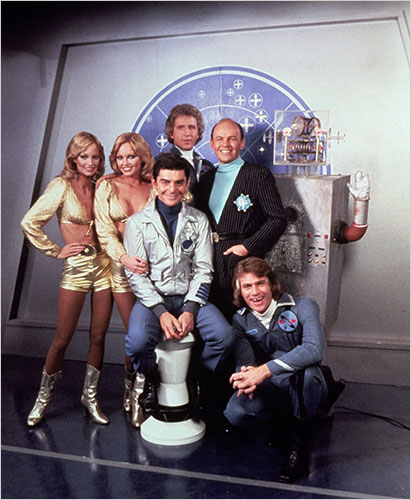
This show’s concept was also a bit of a reach. It took place on Perma 1, a space station in 2222. Adam Quark (Richard Benjamin) had a mission to clean up all the trash in outer space. Quark took orders from a giant disembodied head called, what else, The Head, along with Perma 1’s architect Otto Palindrome (Conrad Janis). If you think this sounds crazy, wait till you learn about Quark’s crew: a part fish/part fowl first officer, a humanoid vegetable named Ficus, clones Betty 1 and Betty 2, and Andy the Robot, a walking junk pile. I was surprised not that it was cancelled after two months, but that it lasted two months. I was also surprised to learn that Buck Henry was the creative force behind this series.

Sanford Arms

Photo: humormillmag.com

A year later in 1977 we have another interesting set-up. When Redd Foxx and Demond Wilson, the two stars, the only stars, left the show Sanford and Son, Norman Lear was left with a show title only. Aunt Esther (LaWanda Page) had been one of the cast members on Sanford and Son and suddenly she was at the hub of this new show. Phil Wheeler (Theodore Wilson) a widower with teenagers buys the house, the junkyard and Esther’s rooming house and tries to start a residential hotel. A month or so later, before he could even make his first payment, the show was done.

Another Day

Photo: wikipedia.com

David Groh (who had played Rhoda’s husband) is Don Gardner, a struggling businessman who can’t make ends meet. His wife Ginny (Joan Hackett) has to get a job, and they both had to deal with their introverted son Mark (Al Eisenmann) and their extroverted daughter Kelly (Lisa Lindgren), as well as Don’s mom Olive (Hope Summers who had played Clara on The Andy Griffith Show) who is critical of all of them. Don struggled through a few episodes and was finished.

Apple Pie

Photo: wikipedia.com

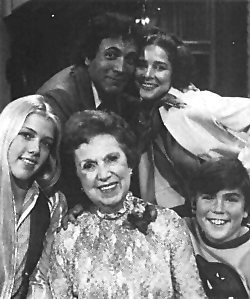
A lonely hairdresser played by Rue McClanahan named Ginger-Nell Hollyhock placed ads in the newspaper for a family. The family that she “found” included a daughter (Caitlin O’Heaney) who tap-danced, a son (Derrel Maury) who wanted to fly like a bird, an elderly grandfather (Jack Gilford), and con-artist Fast Eddie (Dabney Coleman). The show was set in Kansas City in 1933. It took place during the Depression and depression is what anyone watching felt, although the pain was fleeting. After one episode the network decided no one wanted this family.

Hanging In

This one was so bad they didn’t want any evidence so there are no photos.

Another flop came along with a star who had been another star’s spouse. Bill Macy who played Maude’s long-suffering husband starred in this show as Louis Harper, a former football hero who did not have the right credentials to be a university president. He has a desire to help the underprivileged, but the rest of the faculty is more concerned about raising money. Other cast members included high-pressure dean Maggie Gallager (Barbara Rhoades), PR man Sam Dickey (Dennis Burkley), and housekeeper Pinky Nolan (Nedra Volz). No finals for this series; it was cancelled after a few weeks.

Hizzoner

Photo: imdb.com

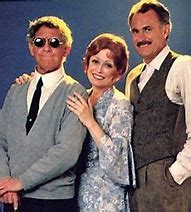
David Huddleston plays Mayor Cooper who runs a small Midwestern town. The cast included the mayor’s secretary Ginny (Diana Muldaur), the mayor’s daughter (Kathy Cronkite, yes Walter’s daughter) and several other quirky characters. While the mayor is quite conservative, his children are left-wing liberals. Apparently, the mayor broke out into song at least once an episode. I guess, he was singing the blues because the show was cancelled after 7 episodes.

In the Beginning

Photo: collectors.com

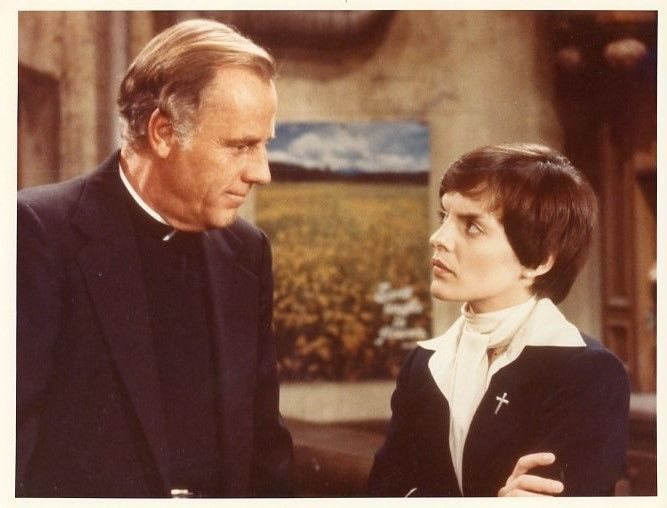
The year 1978 just keeps getting worse for television series. Father Daniel Cleary, played by McLean Stevenson, works in a community center in the heart of Baltimore. Sister Agnes (Priscilla Lopez) works with him. She loves her neighborhood; Father Cleary does not. She is fairly liberal and he is not. It ended almost before it began after seven episodes.

Miss Winslow & Son

Photo: sitcomsonline.com

In this one, an unmarried woman (Darleen Carr) who is an art designer, decides rather than marry a man whom she doesn’t love, she will become a single mother after getting pregnant. Her next-door neighbor Mr. Neistadter (Roscoe Lee Browne) hates kids. Her wealthy and snobby parents are divided about her situation; her father (Elliot Reed) is much more sympathetic than her mother (Sarah Marshall). Before the baby had its first check-up, the show was off the air.

13 Queen’s Boulevard

Photo: sitcomsonline.com

This show was about “a hilarious group of tenants in a garden complex in Queens, New York.” In the first episode, one of the tenants, Felicia Winters (Eileen Brennan) decides to host a class reunion and invites her best friend and spouse, her ex-husband, the class “sexpot,” Fat Hughie, and the class photographer. I don’t know what could possibly go wrong; however, not much went right since it was gone within two months.

Turnabout

Photo: bionicdisco.com

I get Freaky Friday, but in this series the husband and wife switch places. A magic statue allows them to inhabit each other’s bodies.  Sam Alston (John Schuck) is a sportswriter and his wife Penny (Sharon Gless) is a cosmetics executive. The couple tries to live both their own life and their spouse’s life whenever they switch back and forth. They also must focus on keeping the switch a secret. We never know who is who, and all the audience knew is they didn’t like either one of them, and the show was cancelled after a few weeks.

Waverly Wonders

Photo: sitcomsonline.com

NBC decided Joe Namath would be a good person to build a sitcom around. However, he’s not a football player in this show; he’s a former pro basketball player, Joe Casey, who now teaches history at Waverly High in Wisconsin. Linda Harris (Gwynne Gilford) is the principal and Mr. Benton, who they call “Old Prune Face” (Ben Piazza) was the former coach. The only problem is Joe Casey is a bad history teacher and a bad coach. That apparently makes for a bad show because it was cancelled after three episodes aired, although nine were made.

Struck by Lightning

Photo: metershow.com

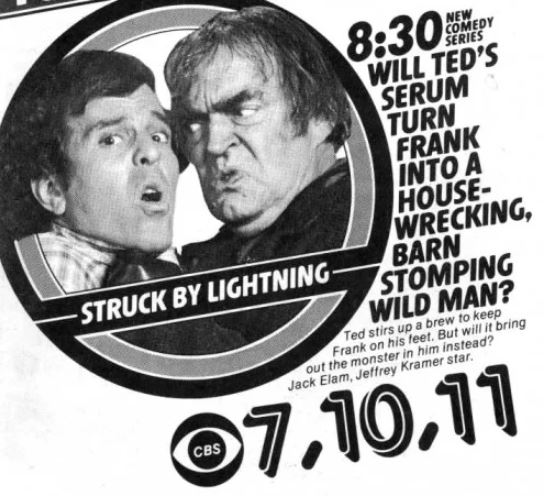
If you think the concept of some of these shows was weird, wait to you hear about this one. Frank (Jack Elam) is the caretaker of an old inn in Massachusetts. A science teacher, Ted Stein (Jeffrey Kramer) inherits the inn and decides to sell it. Then he realizes that Frank was really a 231-year-old Frankenstein monster. Ted just happens to be the great-great-grandson of the original Dr. Frankenstein. So, they decide to run the inn together. Rounding out the cast was Glenn (Bill Erwin) who had been living there forever, Nora (Millie Slavin) who managed the inn before Ted came, Noras son Brian (Jeff Cotler), and real estate agent Walt (Richard Stahl). Apparently, the only thing “great” about the show was Ted’s relationship to Frankenstein because the network canceled it after five episodes.

So, you might be wondering with all these awful shows, what made it on the air more than a couple of months during the late 1970s. In 1977 the only shows that made it to the next season were Three’s Company and Soap. In 1978 Mork and Mindy and Taxi were the “classics” followed by Diff’rent Strokes and WKRP in Cincinnati. Without Robin Williams, Mork and Mindy would probably have been another concept that would have lasted a couple of weeks. In 1979, out of 21 shows that debuted that fall, Facts of Life was the only one that returned for a second season. With the exception of Taxi and WKRP, I would not rate any of these shows true classics, although you could make a good case for Soap. Anyway, the bar was set pretty low for success during the late 1970s.

At least television viewers could go to the movies for a bit of entertainment.  This was the era of Animal House, Annie Hall, Close Encounters of the Third Kind, Grease, Kramer vs Kramer, Rocky, Saturday Night Fever, and Smokey and the Bandit. Things stayed pretty glum on the small screen until 1982 when Cheers, Newhart, and Family Ties saved us.

“Oh, Millie”: The Career of Ann Morgan Guilbert

Anyone who watched the Dick Van Dyke Show knows that the supporting cast was a big part of the show. While Sally and Buddy helped Rob come up with the perfect jokes at work, Millie and Laura were a great comedy team at home. Ann Guilbert continued to find other great supporting roles after the show ended. She was still fine-tuning those roles when she passed away in 2016. She was then playing a grandmother on Life in Pieces.

Ann Morgan Guilbert was born in Minneapolis, MN in 1928. She was an only child and her father worked for the Veterans’ Administration. He moved the family around for jobs quite often. Growing up, she lived in Tucson, AZ; Asheville, NC; Livermore, CA; and El Paso, TX. The family was in Milwaukee, WI during her high school years.

Until she was 14, Ann wanted to be a nurse, but from that time on, she knew she had the acting bug.

When her father took a job in San Francisco, Ann decided to go with her parents and attended Stanford University where she majored in theater arts. Her first part there was as Topsy in “Uncle Tom’s Cabin.” She realized that she liked to make people laugh.

Photo: hollywoodreporter.com

While in school, she met fellow major George Eckstein. They married in 1951. Although they majored in theater arts, George went to law school and Ann worked as a legal secretary. During the summer when George was off, they went to Ashland, Oregon for the Shakespeare Festival where she specialized in playing “nutty” ladies. George was drafted and sent to El Paso; Ann went with him. She was involved in the Little Theater there.

When Ann joined the Screen Actors Guild, there was an actress named Ann Gilbert, so Ann was asked to change her name. She went with her real name, Ann Morgan Guilbert. Morgan was her mother’s maiden name. (Her mother was related to Mayflower passenger William Brewster.)

George practiced law for a short time and decided he wanted to get back into the entertainment business. He got a job producing The Billy Barnes Revue. Ann had a part in the show and Carl Reiner saw her in that performance in two different cities.

Before The Dick Van Dyke Show, Guilbert made three appearances on television on My Three Sons, Hennessey, and Alfred Hitchcock Presents.

Jerry Paris, who played her husband on The Dick Van Dyke Show, had been a friend of her and her husband for a long time. He took Ann in to audition for the role of Millie, his wife. She was hired and was on the show for the entire five years it was on the air. Millie was based on one of Reiner’s neighbors from New York who would do things like take out the garbage on the wrong day or paint herself into a corner of a room. She said she wasn’t given a contract for the first two years. During the third season, Reiner wanted to provide her with one, but she said things had been going along well enough.

Photo: nytimes.com

Ann became pregnant early in the first season. She was afraid to tell Reiner, worrying she would be replaced because it was so early in the show’s life. However, he was very happy for her, and they hid her pregnancy behind large tops or props. That baby is actress Hallie Todd, who is best known as Lizzie’s mother on Lizzie McGuire. George and Ann would have another daughter Nora, an acting teacher and writer.

Ann’s favorite part of the show was Thursdays when the cast would sit around the table with the writers to look at the new script. Ann thought their writers were hysterical. Some of them included Reiner, Garry Marshall (who would go on to create The Odd Couple, Happy Days, Laverne and Shirley, and Mork and Mindy), as well as Bill Persky and Sam Denoff (who wrote for many shows, including That Girl.) Everyone had a say in the script and could throw out one-liners or make suggestions.

The Dick Van Dyke Show ended in 1966 and that same year George and Ann divorced. George was best known for being the writer and producer of The Fugitive.

Photo: weaversdepartmentstore.com

Guilbert said she never watched the reruns much. She recalled, “When I do see them, it seems like it never happened. I just can’t remember it at all.” Once the show ended, Ann, like so many fellow actresses, was typecast as Millie. During the 1970s and 1980s, she would guest star on some of the best sitcoms on the air including The Andy Griffith Show, I Dream of Jeannie, Room 222, The Partridge Family, Love American Style, Barney Miller, Cheers, and Newhart.

In 1969 Ann married character actor Guy Raymond. About that time, she decided to give Broadway a try. Her daughter said Ann loved performing on stage and that is when she felt her career was most important. She appeared in “The Matchmaker,” “Arsenic and Old Lace”, “Waiting for Godot”, “To Kill a Mockingbird”, “Harvey”, “Green Grow the Lilacs”, among others. She won the Helen Hayes Award for Outstanding Lead Actress in a Non-Resident Production in 1988 for her role of Alma in “The Immigrant: A Hamilton County Album”.

She also appeared in eight movies during her career including A Guide for the Married Man, Viva Max!, and Grumpier Old Men.

Photo: imdb.com

But Guilbert didn’t give up on television. In 1990, she starred in The Fanelli Boys. Ann played Teresa Fanelli. She is a recent widow living in Brooklyn and heading for Florida to live when her adult boys all move back in. Frankie is a ladies’ man, Ronnie dropped out of school, Dom is a scammer, and Anthony runs the family business, a funeral home which is $25,000 is debt. Teresa’s brother Angelo is a priest who gives advice to the boys, but not always good advice.

Photo: syracuse.com

She made several guest appearances in the 1990s but had recurring roles on Empty Nest, Picket Fences, and Seinfeld.

Photo: today.com

The role many younger tv fans know her best is Yetta in The Nanny. She would join the cast, appearing in 56 shows between 1993 and 1999. She had fun doing the role. When she met with the wardrobe staff, they decided she would dress outrageously. She was able to wear sequined jackets, jazzy pants, and crazy tops. She also appreciated working with Ray Charles, who played her boyfriend.

During this time, her second husband passed away in 1997.

Photo: express.co.uk

Ann would continue guesting on shows into the 2000s, including Grey’s Anatomy in 2015 and Modern Family in 2013. She also was cast in the show Getting On from 2013-2015. This was a dark comedy on HBO that took place in the geriatric wing of a financially failing hospital. Laurie Metcalf of Roseanne and The Big Bang also was part of the cast.

MODERN FAMILY – “ClosetCon ’13” – With some urging from Claire, Jay begrudgingly agrees to return to ClosetCon this year, and things get interesting when Jay is reunited with some old colleagues. Cam takes Mitch and Lily to the Tucker family farm for the first time and is excited to fold them into country life, that is until Grams pays an unexpected visit. And back at home, Phil, Gloria and the kids get into some mischief involving Jay’s very delicate Apollo 13 spacecraft model, on “Modern Family,” WEDNESDAY, NOVEMBER 20 (9:00-9:31 p.m., ET), on the ABC Television Network. (ABC/Ron Tom) ANN GUILBERT

Her last series was Life in Pieces. She played Gigi, Joan’s mother. She was in two episodes before she passed away in 2016. One of the episodes, “Eyebrow Anonymous Trapped Gem” was dedicated to her memory. In a tribute to her, each of the four stories involve her character.

Photo: mashable.com
Unfortunately, her Yetta character and Ann both refused to give up smoking.

Her doctor had been trying to convince her to give up her several-pack-a-day cigarette habit, but she refused and talked about it often. She died from cancer at age 87.

Cheers to a funny lady who kept us laughing for more than fifty years.

Life Coach: Hayden Fox

Many of us enjoyed the Super Bowl yesterday. Maybe you are a football fanatic, maybe you just wanted to catch the commercials, or perhaps, like many of us, you just wanted someone, anyone, besides the Patriots to win this year. For many Americans, the Super Bowl has become an unofficial holiday.  We prepare certain foods, we throw parties, and decorate the house.

Many movies have been written about football; my favorite is still Remember the Titans, although Brian’s Song (appropriately with Shelly Fabares as Joy Piccolo) still makes me cry. On television we had Friday Night Lights, but when I think back to the classic sitcoms, the only show that came to mind was Coach.

Photo: pinterest.com

I remember watching Coach when it was originally on the air from 1989-1997, but my viewing was hit and miss. In my defense, I had two young children then, and they kept my evenings busy. This past year, I caught part of the Coach marathon on Decades. I’ve also been watching it on Antenna TV, and I’ve enjoyed it a lot. The characters still ring true for me. Hayden, Christine, Luther, Dauber, and Judy are just exaggerated enough to be fun and quirky. My youngest son attends Minnesota State Mankato, and I knew there were some connections with the show, but I was unsure what they were. I decided this was the perfect time to learn some of the behind-the-scene details of the show and celebrate our national pastimes of football and television watching.

COACH – “Did Someone Call Me Snorer?” – Airdate: January 9, 1995. (Photo by ABC Photo Archives/ABC via Getty Images) L-R: BILL FAGERBAKKE;JERRY VAN DYKE;CRAIG T. NELSON

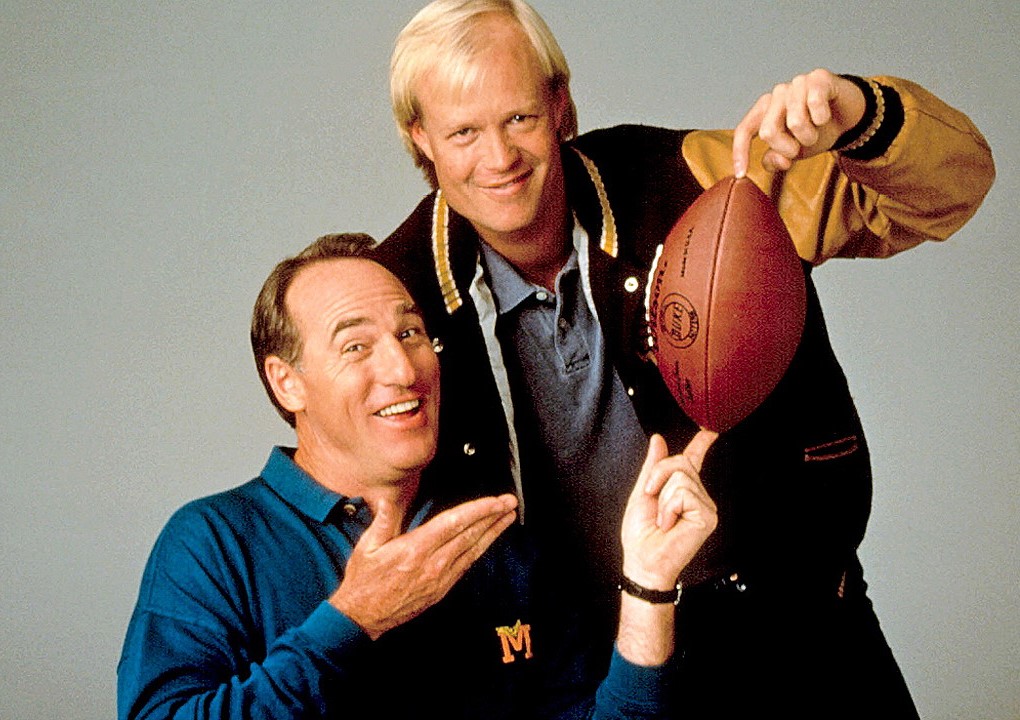
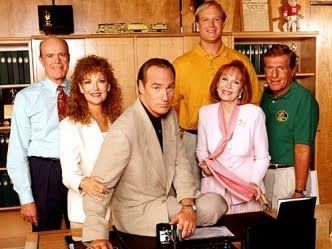
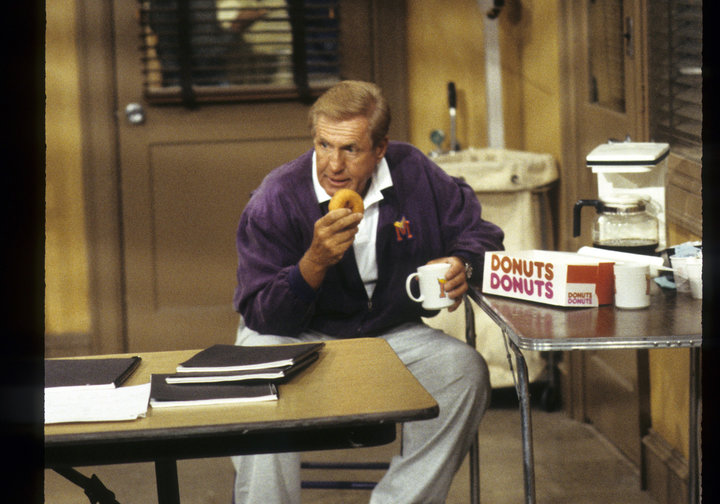
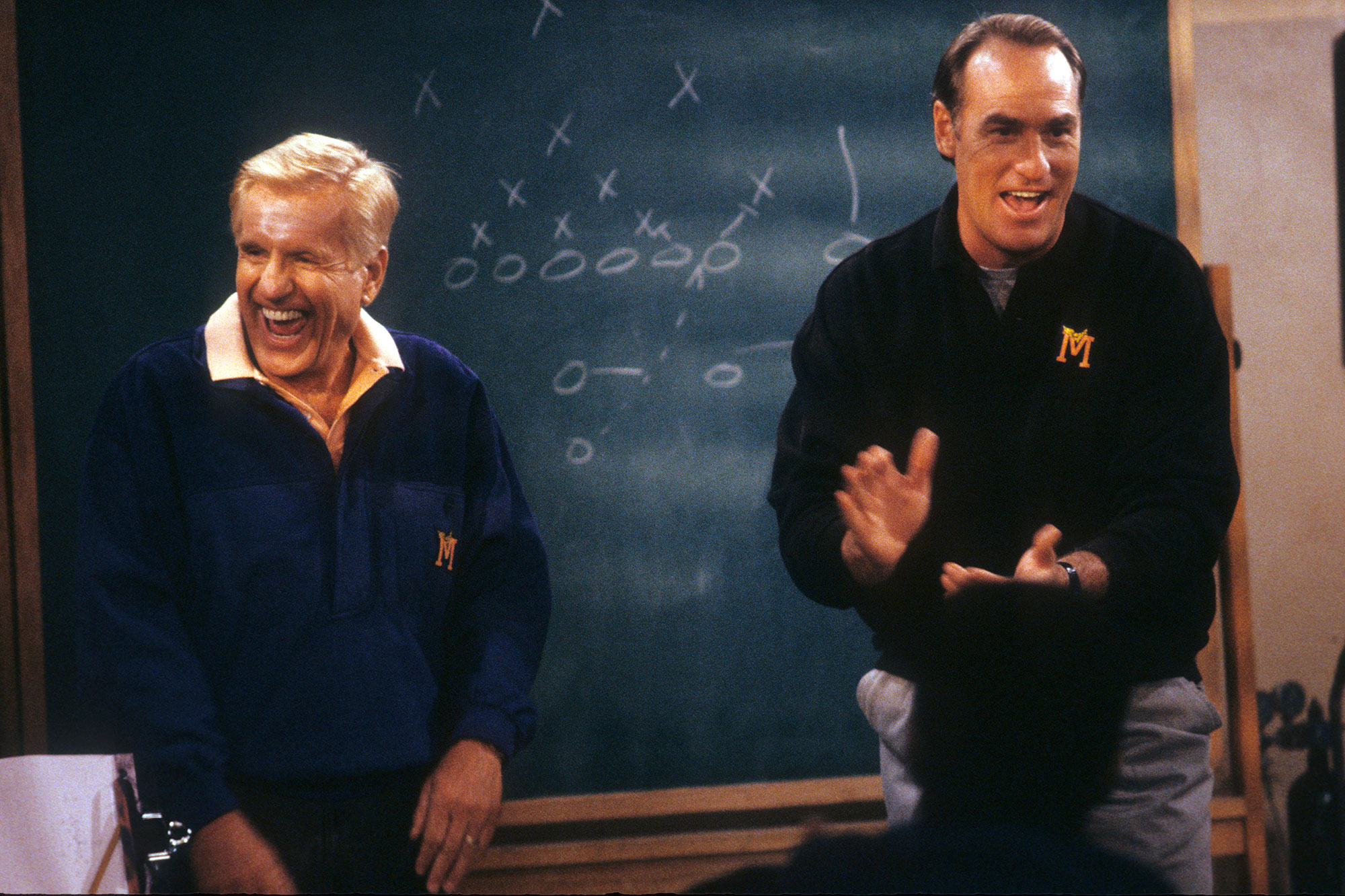
Hayden Fox (Craig T. Nelson) is the head coach of a NCAA Division I college football team. His staff, primarily Michael “Dauber” Dybinski (Bill Fagerbakke, later the voice of Patrick on SpongeBob Square Pants) and Luther Van Dam (Jerry Van Dyke), help him coach the Screaming Eagles. His girlfriend is Christine Armstrong (Shelly Fabares), a local newscaster. Christine doesn’t especially love sports, but she loves Hayden even though his narrow mindedness can make her crazy. Their relationship is a give and take that gradually entwines them and allows them to grow together, understanding more about each other, but still retaining very different personalities and points of view. Hayden truly cares about his friends, he just has a gruff manner when showing it. Feelings make him uncomfortable.

Photo: pinterest.com

In addition to Christine, Hayden has to learn to be a father again. His ex-wife raised their daughter, and now Kelly (Clare Carey) has enrolled at Minnesota State. Kelly has much more in common with Christine than with Hayden. Eventually she dates and marries Stu, a guy Hayden cannot relate to at all. In 1991, the marriage ends in divorce when Stu falls in love with someone else, and Hayden is relieved to have him out of their lives. Kelly graduates in 1993 and is offered a job at an ad agency in New York and only guest stars after that time. Oddly enough, Carey was born in Zimbabwe and grew up in California but got the part because she was a believable Midwesterner.

Photo: imdb.com

In addition to trying to influence the players on his team to become good men and citizens, Hayden “parents” Dauber who is much younger and Luther who is much older. Luther is a bachelor and has a lack of self-confidence, but he’s a great coordinator and Hayden appreciates him. Dauber has a heart of gold but is not the most intelligent though he can be wise at times. He continues to work with the team, eventually gathering three degrees and dating the women’s basketball coach, Judy (Pam Grier).

Judy and Hayden do not see eye to eye, and she does not have the patience or motivation to be nice to Hayden. Hayden often has harsh words for his athletic director Howard Burleigh, (Kenneth Kimmins) who always has his finger on the bottom line, but Hayden and Christine are friends with Howard and his wife Shirley (Georgia Engels) and, despite their working relationship, we see their underlying friendship developing.

At the end of season seven, Hayden is offered an NFL dream job with the Orlando Breakers. He accepts and takes his staff with him. By this time, he and Christine are married, so she also moves with the coaching staff. The owner of the team, Doris Sherman (Katherine Helmond), is more interested in the perks she gets being an owner than the success of the team. However, Fox gets the Breakers to a wild spot playoff game in the last season, although they lose to Buffalo. Also in the final season, Christine and Hayden adopt a baby boy. The Breakers were a parody of the Jacksonville Jaguars who, like the Breakers, entered the NFL in 1995 and made the playoffs against Buffalo in their second year as a team. The view Hayden sees when he looks out his office window at the stadium is actually the Milwaukee County Stadium, another tie to my Midwest.

Photo: tvtropes.org

In the season finale, the cast thanks the audience for nine years of support. Van Dyke refuses to believe the series is really over, despite all his co-stars trying to convince him. The fans also are treated to an summary of what the characters did after Coach. Hayden and Christine return to Minnesota to raise their son, even though other NFL teams are interested in Fox as a coach. Luther and Doris are in a relationship, and they build a house similar to Graceland as a tribute to Elvis. Howard and Shirley sell their rare collection of Barbie dolls and use the proceeds to buy a dinner theater in Florida. Dauber takes over the Breakers team as head coach. He wins back-to-back Super Bowls, and when he retires, he joins the Monday Night Football crew as an announcer.

COACH – “Inconceivable” – Airdate: October 17, 1994. (Photo by ABC Photo Archives/ABC via Getty Images) JERRY VAN DYKE

Barry Kemp originally created the role of Hayden Fox for Dabney Coleman, but when ABC was ready to air the show, Coleman was unavailable. Kemp was also the creator of Newhart, and he gives a nod to his previous hit from time to time. In one episode, Christine is reading a book, How To Fly Fish by Dick Louden. In the finale, when Christine and Hayden return to his cabin, there just happen to be several people living there: Larry, Darryl and his “other brother Darryl,” whom all Newhart fans recognize immediately.

Another interesting twist on Coach was the appearance of stars who had personal relationships with the cast. Nanette Fabray, Shelly’s aunt, shows up as Mildred Armstrong, Christine’s mother. Mike Farrell, from M*A*S*H, Shelly’s husband, also appears on an episode. Nelson’s son, Noah, guest stars as a football player in one show, a delivery boy in one show, and the biological father of Fox’s adopted son in two later episodes. Perhaps the most unusual appearance was related to Luther. When Luther learns he was adopted and attends his birth family’s reunion, he tells Hayden that there was no way he could be related to any of these people. At that moment, a guy walks by them. He doesn’t have any lines, but it is Dick Van Dyke, Jerry’s brother.

Photo: twitter.com

Other guest stars included Tim Conway, Elinor Donahue, Lisa Kudrow, Dick Martin, Lucy Liu, Tom Poston, Rob Schneider, and Alan Young.

This show might have more stars appearing as themselves as any sitcom ever. Just a few of these sports heroes include Troy Aikman, George Allen, Dick Butkus, Mike Ditka, Eddie George, Frank Gifford, Kathie Lee Gifford, Bob Griese, Lou Holtz, Keith Jackson, Jimmy Johnson, Keyshawn Johnson, Jerry Jones, Al Michaels, Hank Stram, Joe Theismann, and Johnny Unitas.

Kemp was an alumnus of The University of Iowa. He chose the name Hayden Fox as a tribute to Iowa coach Hayden Fry. Even though the show is supposed to be set in Minnesota, much of it is filmed in Iowa. Many of the exterior shots on the show were taped at the Memorial Union. A couple of residence halls and the Field House also end up on the show.

The theme song was performed by the Iowa State University marching band. They won a national contest, earning the right to record the song.

The footage of football games is actually film from The University of Minnesota football seasons.

The Screaming Eagles was a nod to the line of Harley-Davidson motorcycles which Nelson collected.

Photo: A real photo from Mankato. I could not find a history of the names but how appropriate to have “Armstrong” for Christine and “Nelson” for Hayden’s real name.

In 1989 when the show first aired, there was no Minnesota State University. However, in 1998 Mankato State University became Minnesota State University Mankato ( and Moorhead became Minnesota State University Moorhead). However, there are some similarities between Mankato and the fictional college. Both have purple and gold as their school colors. The campus is about an hour from St. Paul-Minneapolis as is Mankato. (Christine lives in the Twin Cities when they first begin dating.) Hayden lives on a lake and in Mankato, faculty members do live on Lake Washington. The television university was founded in 1867, and Mankato was also created at that time.

Although the finale summed up the lives of the characters, that was not the end of the story. In 2015, NBC ordered 13 episodes of a Coach sequel. Nelson and Kemp came up with a concept where Hayden’s son takes a coaching job at a small college in Pennsylvania. The plan was to retain the original viewers while attracting a new, younger audience. Hayden, now a widower, comes out of retirement to be his son’s assistant coach. Dauber, now married to Judy, also signs on to help with the team. The pilot was filmed, but then NBC changed its mind. There are rumors that the revival may still happen, and other networks might be considering it. We’ll have to stay tuned.

Although the reboot has not come to fruition yet, Nelson, Van Dyke, and Fagerbakke did star again in an episode of The District. Nelson starred in the show from 2000-2004. In “The Black Widow Maker,” Jerry is a grumpy small-town judge and Bill is a police officer.

It’s too bad that the revival has not been fully developed. Considering the shows that were resurrected, often badly, this one sounds like it might have been a hit. Nelson won an Emmy during his time on Coach, but the network moved the show constantly, making it hard for fans to become loyal viewers. It was on every night except Thursday and Sunday. It survived because it worked. The writing was solid, and the characters were realistic. Hayden always had good intentions, and Christine was aware of that. Also, the show was able to survive the changes with Kelly graduating and moving, with the NFL team move; the crew stayed together while circumstances kept the show fresh.

Photo: people.com

The show went on the Antenna TV schedule last January. Do yourself a favor and get to know the Minnesota State crew.

Let’s end with some dialogue that captures the relationship between Hayden and Christine’s real marriage and Hayden and Luther’s work marriage:

Assistant Coach Luther Van Dam: I’ve made out my will, and I’d like you to be my executioner.

Coach Hayden Fox: I think you mean “executor.”

************************************************************************

Coach Hayden Fox to his wife: You think I didn’t respect you Christine, but the truth is, I didn’t even think of you.

Poor Hayden, even when he takes two steps forward, he fumbles and loses yardage.