Dan Rather: Didn’t “Love” Tennis in 1987

This month we are learning about some of our favorite newscasters from the past. It’s hard to compare today’s news atmosphere with 24/7 coverage of everything, but the three network newscasts held a different importance in the fifties, sixties, and seventies. Nightly newscasters were highly respected and listened to. Dan Rather is one of the news correspondents who straddled these two eras. He would cover President Kennedy’s assassination, Watergate, the fall of the Berlin Wall, the Gulf War, 9/11, and the Iraq War.

📷facebook.com A young Dan Rather

He was born in 1931 in Texas where his father was an oil pipe lineman. The family moved to Houston where he attended grade school, middle school, and high school, graduating in 1950. As a youngster, Dan was bedridden with rheumatic fever. During that time, he was fascinated by radio broadcasts by Edward R. Murrow and Eric Sevareid.

He enrolled at Sam Houston State Teachers College, graduating in 1953 with a degree in journalism. During those years, he was the editor of the school newspaper and worked at KSM-FM radio as a play-by-play announcer for high school and university football games.

He briefly attended South Texas College of Law before enlisting in the Marine Corps. When the Marines found out about his rheumatic fever, he was honorably discharged.

In 1957 Rather married Jean Goebel and they had two children. Their daughter became an activist and environmentalist, and their son was ADA in the District Attorney’s office in Manhattan.

📷nationalportraitgallery

Rather began his career in his home state. In September 1961, Rather was reporting during Hurricane Carla, and he saved thousands of lives, initiating an evacuation of 350,000 residents, becoming a household name overnight. He created the first radar weather report by overlaying a transparent map over a radar image of the hurricane.

His reporting on the assassination of Kennedy in Dallas got him promoted to White House correspondent at CBS News.

Later he would serve as a foreign correspondent in both London and Vietnam before returning to the White House. He was at the White House during Nixon’s presidency, covering his trip to China, the Watergate scandal, and Nixon’s resignation. During this time, Peter Jennings was at ABC, and Tom Brokaw was at NBC.

He joined the 60 Minutes cast in 1975.

After Walter Cronkite’s retirement, Rather became the anchor for the CBS Evening News from 1981-2005. For most of those years, he signed off with “That’s part of our world tonight.” Rather was often criticized for being outspoken and brash on things he didn’t agree with. In 1987, he was upset that his broadcast that night was being cut short for a tennis match; he walked off the set early, causing CBS to transmit a blank signal for six minutes.

In 1994, Sam Houston State University renamed its mass communications building after Rather.

Rather had a 2004 report on 60 Minutes II about President Bush’s military record with the Texas Air National Guard. His report was based on documents that were questioned for their authenticity. Rather admitted that the authenticity could not be proven. Rather later stated that “If I knew then what I know now, I would not have gone ahead with the story as it was aired, and I certainly would not have used the documents in question.”
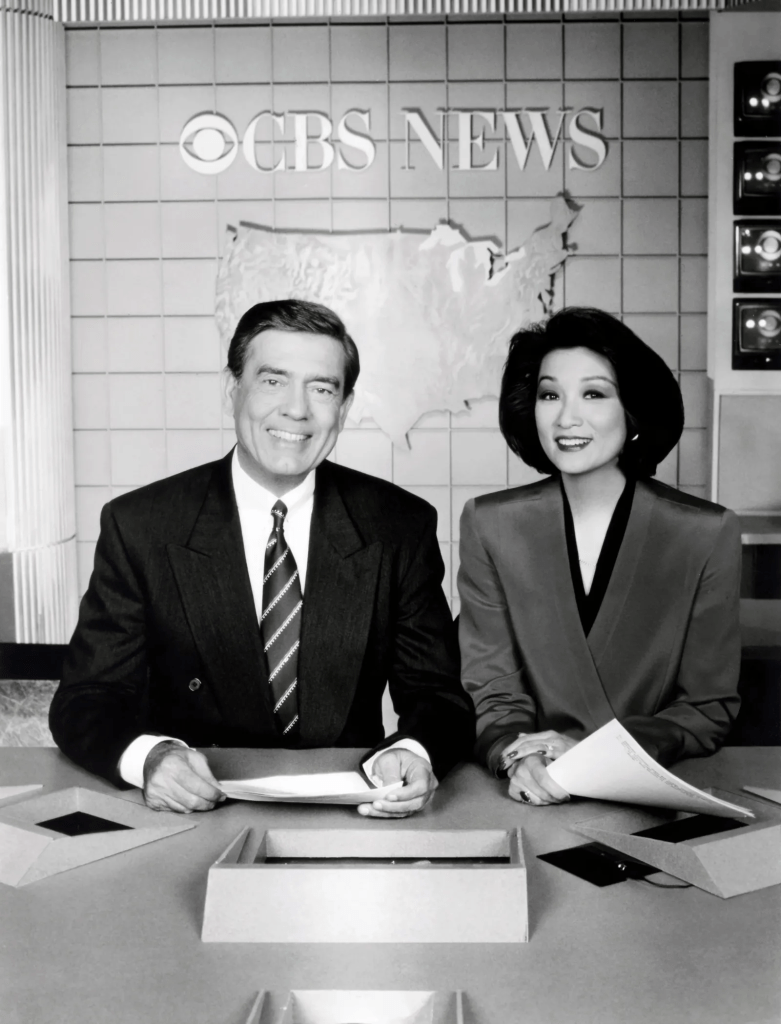
📷vanityfair.com

When his contract ended the next year, he was let go. At his final CBS news broadcast, Rather ended his report with the following: “We’ve shared a lot in the 24 years we’ve been meeting here each evening, and before I say ‘Good night’ this night, I need to say thank you. Thank you to thousands of wonderful professionals at CBS News, past and present, with whom it’s been my honor to work over these years. And a deeply felt thanks to all of you, who have let us into your homes night after night; it has been a privilege, and one never taken lightly.”

He then hosted Dan Rather Reports, an investigative news program on AXS TV (known then as HDNet) from 2006-2013. During this time, he released an autobiography, Rather Outspoken: My Life in the News.

After 2013, Rather produced several series and documentaries. He also was a frequent guest on news shows, including The Rachel Maddow Show and The Last Word with Lawrence O’Donnell. He also wrote for “The Huffington Post” and “Mashable.”

📷tvtropes.com

In 2016, he joined SiriusXM Radio with “Dan Rather’s America.”

Dan Rather had an interesting career. He received high praise and loud criticism. He was quickly promoted and quickly fired. He covered many of the top stories from 1960 – 2015. He conducted interviews with some of the world’s leaders including Fidel Castro and Nelson Mandela. He was part of network news, documentaries, independent stations, and Sirius Radio. However, no matter what was happening around him, he stuck to his principles and covered the news the way he thought was best for the American public. You have to admire that.

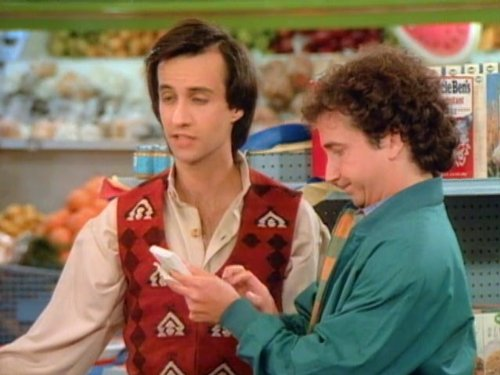
We Love Spending Time with “Perfect Strangers”

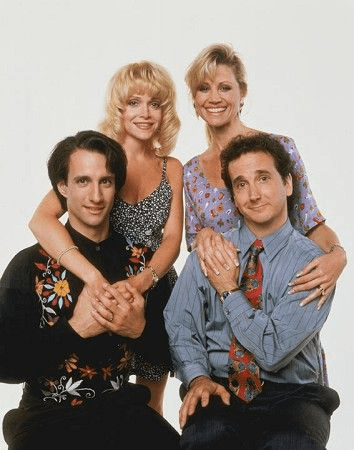
Linn -Baker and Pinchot Photo: tvfinales.com

We are talking about our favorite duos from the eighties and nineties in our blog August series. Although most of these shows feature husband and wife teams, today we are turning the dial back to a show about two cousins: Perfect Strangers. I am always envious of my husband because they have a group of first cousins who are very close and grew up together. While I have scads of second cousins, once removed and such, I have no first cousins and always missed those relationships. Perfect Strangers is about two cousins who develop that type of relationship.

Perfect Strangers is another one of those shows that was quite popular when it was on the air, and it was for eight years, but it doesn’t get much recognition any longer.

The series was created by Dale McRaven for ABC; McRaven was also the creative force behind Mork and Mindy. Bronson Pinchot had appeared in Beverly Hills Cop as Serge, a gay art gallery employee who had a foreign accent. ABC signed on to the project based on Pinchot starring. However, in the meantime, Pinchot had signed on to Geena Davis’s sitcom, Sara. Sara was quickly canceled and Bronson became available, so a pilot was made with Louie Anderson in the role of the American cousin. It was obvious that this was not the best pairing, and eventually the role was offered to Mark Linn-Baker after an appearance he made on Moonlighting. He and Pinchot had great chemistry and the show was placed between Who’s the Boss and Moonlighting, very popular shows, on Tuesday nights.

Photo: imdb.com

The short first season of six episodes debuted in March of 1986. The show was about Larry Appleton (Linn-Baker), a Wisconsin boy, who moved to Chicago and was enjoying life on his own after growing up in a large family. His utopia is shattered when his cousin Balki Bartokomous (Pinchot), arrives from Mypos, a Mediterranean island, intending to move in with him. Balki’s name was originally Vev, but Pinchot suggested Balki based on his sister’s nickname for her dog. Larry Appleton got his name because Lawrence University is in Appleton, Wisconsin, where I graduated from high school. Neither actor went to Lawrence, but both of them are Yale alumni. Both Linn-Baker and Pinchot got not only their BA degree from Yale but also both received their Masters of Fine Arts in drama.

Larry tells Balki he needs to live somewhere else. Balki had been a shepherd, and most of his impressions of what America was like were taken from pop culture, television shows, and commercials. Larry, a photographer, relents and invites Balki to live there, thinking of himself as more worldly and able to teach Balki the truth about American life. Ironically, it is often Larry who is more inept and gets the pair into some interesting situations.

Photo: pinterest.com

Season two found the show on Wednesday nights. The cousins begin dating flight attendants–Jennifer (Melanie Wilson) dates Larry and Mary Anne (Rebeca Arthur) dates Balki. They meet the girls at the gym and realize that they live in the same building.

In season three, Balki is able to stop sleeping on the living room sofa and gets his own room when the pair moves into a much larger apartment. Somehow Jennifer and Mary Anne still live in their building but no one ever talks about moving. Larry is hired as a reporter for the Chicago Chronicle, and Balki is hired for the mail room. For some reason, halfway through the season the show was moved from its successful spot on Wednesdays to Fridays.

During season five, Harriette (Jo Marie Payton-France), the elevator operator, was given a new show, Family Matters which was also on Friday nights. That show, which for better or worse, introduced America to Steve Urkel, was on the air for nine years. Larry and Jennifer are still going strong while Balki and Mary Anne are lukewarm. Larry proposes to Jennifer during season six.

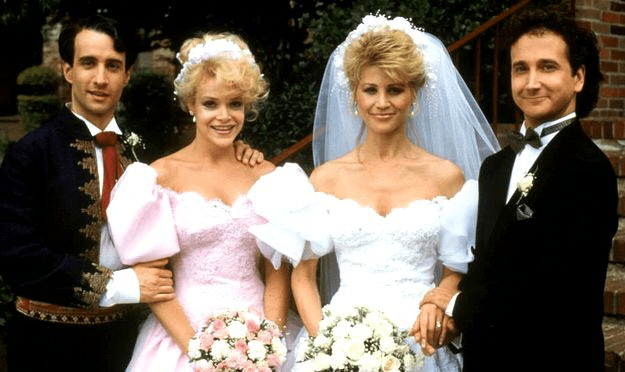
Season seven finds Jennifer and Larry in a large Victorian house. Of course, they realize they need renters to afford the expensive Chicago mortgage and who moves in but Balki and Mary Anne. Balki becomes an animator with his own comic strip at the newspaper. Eventually, Mary Anne moves out but in the finale, they reconcile, marry, and travel to Mypos for their honeymoon. The show retained its viewers but then it was moved to Saturday nights in February of 1992 before returning to Fridays. The TGIF campaign for ABC’s Friday night shows was very successful, and the network was trying to do something similar for Saturday nights.

Season eight, ironically also a six-episode season, picks up several months after the wedding, and we realize that both Jennifer and Mary Anne are noticeably pregnant. In the finale of the series, babies Robespierre and Tucker join the show.

Photo: pinterest.com

The first six seasons found the show consistently in the top forty. Given its placement between two popular shows in its debut year, five of the first six episodes landed in the top ten. After the show was moved to Saturdays, it experienced a drastic decline in viewers. When the show was moved back to Fridays, it found its audience again. The show’s final season was supposed to be thirteen episodes but it was shortened to six. It was in the top twenty for the final season, and 15 million households watched the finale.

The theme song for the show, “Nothing’s Gonna Stop Me Now,” was written by Jess Frederick and Bennett Salvay. They composed the themes for Full House, Step-by-Step, and Family Matters as well.

We have talked about a lot of shows who have some famous fans and this show was no exception. Bronson Pinchot said Nelson Mandela was a fan of the show. Pinchot was invited to a banquet in South Africa where President Mandela was in attendance. One of the President’s assistants gave Bronson a note that read, “I’m dying to meet you, but if I go to your table, I have to go to everyone’s table. But I wanted you to know that I know my cousin is here.” Later that evening Bronson met Winnie Mandela.

Photo: pinterest.com

The Emmys also recognized the show. In 1987 Bronson Pinchot was nominated for a Lead Actor in a Comedy Series. He did not win, but had some tough competition with Ted Danson for Cheers, Harry Anderson for Night Court, Bob Newhart for Newhart, and, winner, Michael J. Fox for Family Ties. Two years later, Doris Roberts was nominated for Outstanding Guest Actress in a Comedy and lost to Colleen Dewhurst for Murphy Brown. Other nominees included Diahann Carroll for A Different World, Eileen Brennan for Newhart, and Maxine Stewart for The Wonder Years.

I’m sure that Perfect Strangers is in syndication somewhere, but I cannot remember the last time I saw it listed on television. There is a DVD set out for the entire series. I do remember watching this show most weeks and enjoying it, although it was not in my Top Ten. Yes, it had some too-typical and obvious plotlines like the girls living in the same building and both Balki and Mary Anne moving into the Appletons’ new house. However, the writing was pretty good and the characters were fully developed. The twist of naïve Balki often being wiser than native Larry is also a fun influence. It’s definitely a show that deserves more recognition than it has received in the past three decades. I’d love to know if you take some time to watch the DVDs, find it on the air somewhere, or just have fond memories of watching it in the past.

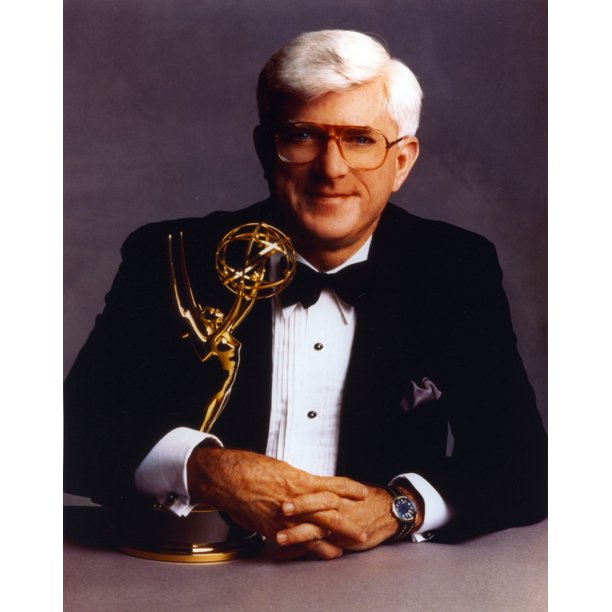
The Boundless Enthusiasm of The Phil Donahue Show

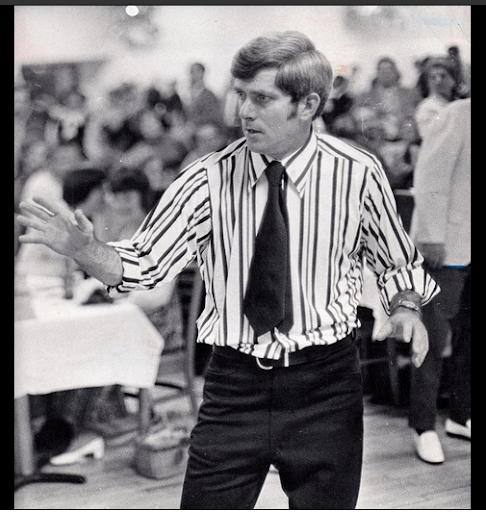
Last week we learned a bit about The Mike Douglas Show which debuted in Cleveland.  Today we get the back story on The Phil Donahue Show which also started in Ohio, in Dayton, in 1967. In 1970 it went into syndication and was seen weekdays until 1996.

Photo: daytonarenaproject.com

Donahue was a reporter at WLWD and when the Johnny Gilbert Show ended, Phil got his chance to host his own show. In 1974, Phil moved his show to Chicago. In 1985 He moved to 30 Rockefeller Plaza in New York City.

Photo: columbiajournalismreview.com

Donahue described himself as “the Cal Ripken” of television hosts. With interviews every weekday for more than a decade, about 7000 total, it’s hard to argue with him. Donahue was interested less in celebrities and more about investigative-type stories and popular issues. He covered topics such as interracial marriages, homosexuality, bigotry, poverty, drug trafficking, political scandals, cross dressing, the Catholic priest abuse of young boys, and current events. However, he did do interviews with important newsmakers including Ronald Reagan, Nelson Mandela, and Jane Fonda. He shunned tabloid-type stories that Jerry Springer and Geraldo Rivera featured.

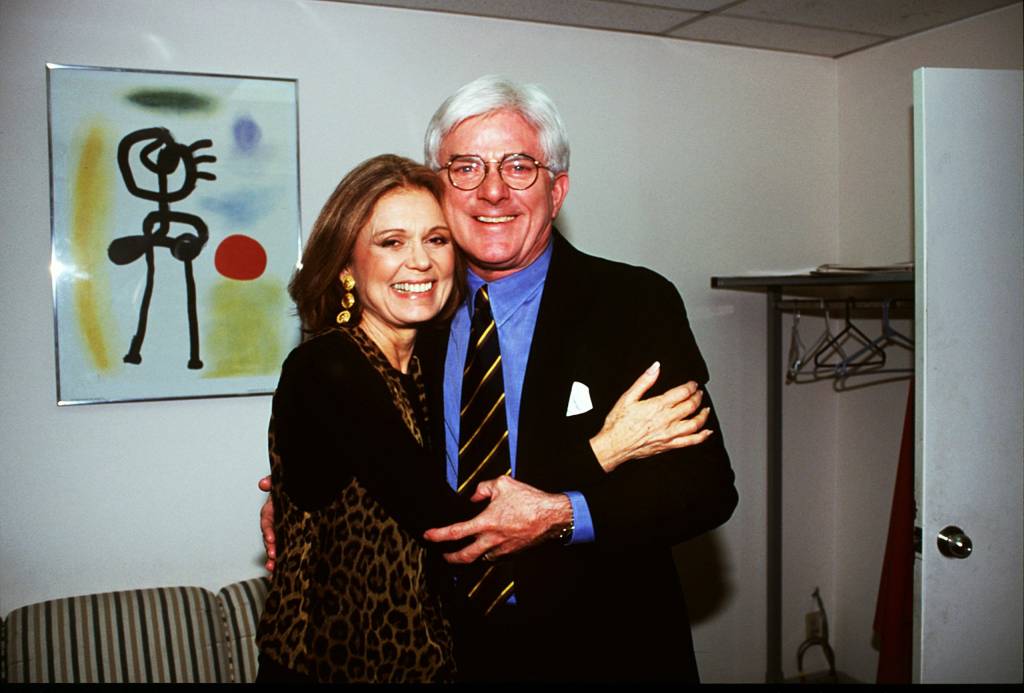
with Gloria Steinhem Photo: usatoday.com

In an interview with the Television Academy, Donahue talked about some of his favorite interviews.  He said he enjoyed Gloria Steinhem and the discussion they had about women’s liberation. He said this was an issue he was able to watch from the beginning through its transitions.  (As an aside, I was able to interview Steinhem and later meet her at a university event in Eau Claire, and I understood his description of her charisma and insights.) The eye-opening perspectives he received from Steinhem about the oppression of women pushed him to explore views on homophobia and racism as well. He realized he could make a difference in these matters if others could understand these problems and the people who were bringing life-changing messages. He said he didn’t want the white guys doing all the talking anymore and he gave non-white guys the floor.

Another person he admired was Ralph Nader because he stuck to his guns and continued to fight for what was right when the cameras were off and he was alone.

Photo: wikimediacommons.com

One of the most interesting shows he did was in December of 1985. He was asked to participate in the first people-to-people satellite meeting between the US and the Soviet Union with Vladimir Pozner who had appeared on Nightline with Ted Koppel who recommended him to Donahue. They taped in Seattle and Leningrad. When he asked the Russians where they wanted to visit in the United States, he got the typical responses: Disneyland, Las Vegas, New York City, and then someone said Oxford, Mississippi. Donahue asked why and the person said that it was because one of the world’s best authors, William Faulkner, was from there.  From that point on, the conversations got more interesting and culturally significant.

Photo: nostalgiacentral.com

Donahue realized in the 90s that he could not compete with Oprah and hosted his final episode in September of 1996. His career produced about 7000 shows. Oprah always respected his show and often said, “If there hadn’t been a Phil, there wouldn’t have been a me.”

Photo: walmart.com

He was awarded with his first Emmy in 1977. By 1988 he was the owner of nine Emmys.

Don Grady, best known for playing Rob on My Three Sons, composed the theme music for the show. In 1979, he published an autobiography, Donahue: My Own Story

Although Phil had five children with his first wife, Margaret Cooney, he has been married to Marlo Thomas, daughter of Danny and star of That Girl, since 1980.

Photo: nydailynews.com

I remember watching this show and Donahue was typically right in the middle of the audience running up and down the stairs to get input from his visitors. I think it was literally that bounding enthusiasm that set him apart from the other television hosts during this time. He was more concerned about improving life than improving ratings.