This is Your Life, Warts and All

đź“·themoviedatabase.com

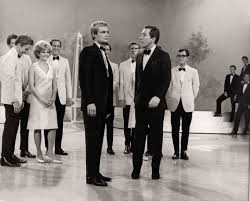
Continuing with our blog series about stars and shows from the fifties, I immediately thought about the show that is somewhat documentary, somewhat variety, somewhat talk show—This is Your Life.

The show aired on NBC from 1952-1961. It was created and hosted by Ralph Edwards. Guests were lured to the show for various reasons only to learn that they were the star of the show with appearances by their former colleagues, friends, and family. Edwards tried a reboot in 1971 that only lasted for a year, and Joseph Campanella tried again in 1983 but it was not successful.

Edwards had been asked by the US Army to do something special for paraplegic soldiers at a rehab hospital in California. He decided to talk about a young soldier’s life to help him realize the value of his past and have hope for his future, something like It’s a Wonderful Life with Jimmy Stewart. In the forties, it became a radio show, alternating episodes about celebrities and ordinary people.

đź“·bigredbook.com Laurel and Hardy

Some of the most-loved episodes were about Johnny Cash, Dick Clark, Nat King Cole, Bobby Darrin, Don DeFoe, Shirley Jones, Buster Keaton, Laurel and Hardy, Harold Lloyd, Roy Rogers, Mack Sennett, Dinah Shore, Danny Thomas, Dick Van Dyke, and Betty White.

Some of his shows had complex elements and thought-provoking memories. In one episode, Rev. Kiyoshi Tanimoto was the guest. He survived the atomic bombing of Hiroshima. In the midst of bringing on family and friends, Edwards brought out Robert A. Lewis. Lewis was the copilot of the Enola Gay, the plan that dropped the bomb on Hiroshima. On another episode, Dr. Kate Newcomb from a small Wisconsin town talked about her million pennies drive. She was raising funds for a small community hospital. Viewers were so inspired, they donated more than $112,000 in pennies.

đź“·wikipedia.com

Some television fans loved the shows and the sentimental scenes; others made fun of the situations thinking it all too much. Edwards was criticized at times for bringing up subjects that were painful for the guests to endure on the air.

It caught on overseas as well and versions were produced in Australia, Chile, Denmark, France, Israel, the Netherlands, New Zealand, Norway, Peru, Spain, Sweden, and the United Kingdom.

The concept even made it into animation. In 1955 Warner Bros. animator Friz Freleng created “This is a Life?” which honored Bugs Bunny with Elmer Fudd as narrator. Daffy Duck, Yosemite Sam, and Granny all made appearances. In 1960, Walt Disney had “This is Your Life Donald Duck,” a tribute to Donald by Jiminy Cricket.

đź“·imdb.com

I have to admit that I have never seen the show; but I have seen tons of parodies about the series. The concept sounds good on paper but in the actual filming I think it got away from the producers and became a show that often forced people to live a bad experience all over again instead of just honoring where they currently were in their life journey.

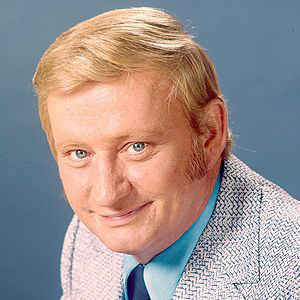
Dave Madden: A Magical Career

We are right in the middle of “The Men of November” series where we learn about some of our favorite actors from the classic age of television. Today we focus on a comedian who is best known for his role of a family band manager—Dave Madden.

Photo: discogs.com

Madden was an American born in Ontario, Canada in 1931. He spent his early childhood in Port Huron, Michigan and then was sent to live with his aunt and uncle in Terre Haute. His father had died and his mother had a job where she had to travel. When he was 13, he had a very bad bike accident which left him immobilized. He had a head-on collision with a car going about 45 mph. He broke his leg and fractured his skull. They pumped him with penicillin which saved his life. He was in the hospital for about three months because they had to keep breaking his leg. During the months he spent recuperating, he learned about magic from a book his aunt brought him called 101 Tricks You Can Do, and he later developed a comedy act that featured magic.

Appropriately enough, he served as the joke editor for his high school paper, writing his own material. He attended Indiana State Teachers College for a semester and then dropped out to enlist in the Air Force. He was assigned to Special Forces and sent to Libya where he entertained the troops. He even performed a magic show for the King of Libya.

When his time in the Air Force was over, he attended the University of Miami, majoring in communications and graduating in 1959.

Madden took his comedy act on the road. His manager booked him in Palm Springs during the Palm Springs Golf Classic, and the Rat Pack came in one night. After the show, Frank Sinatra went backstage and asked if Madden would be his opening act in Lake Tahoe in July.

Tralfaz: The Unhappy Man With the Confetti
Photo: trafaz.com

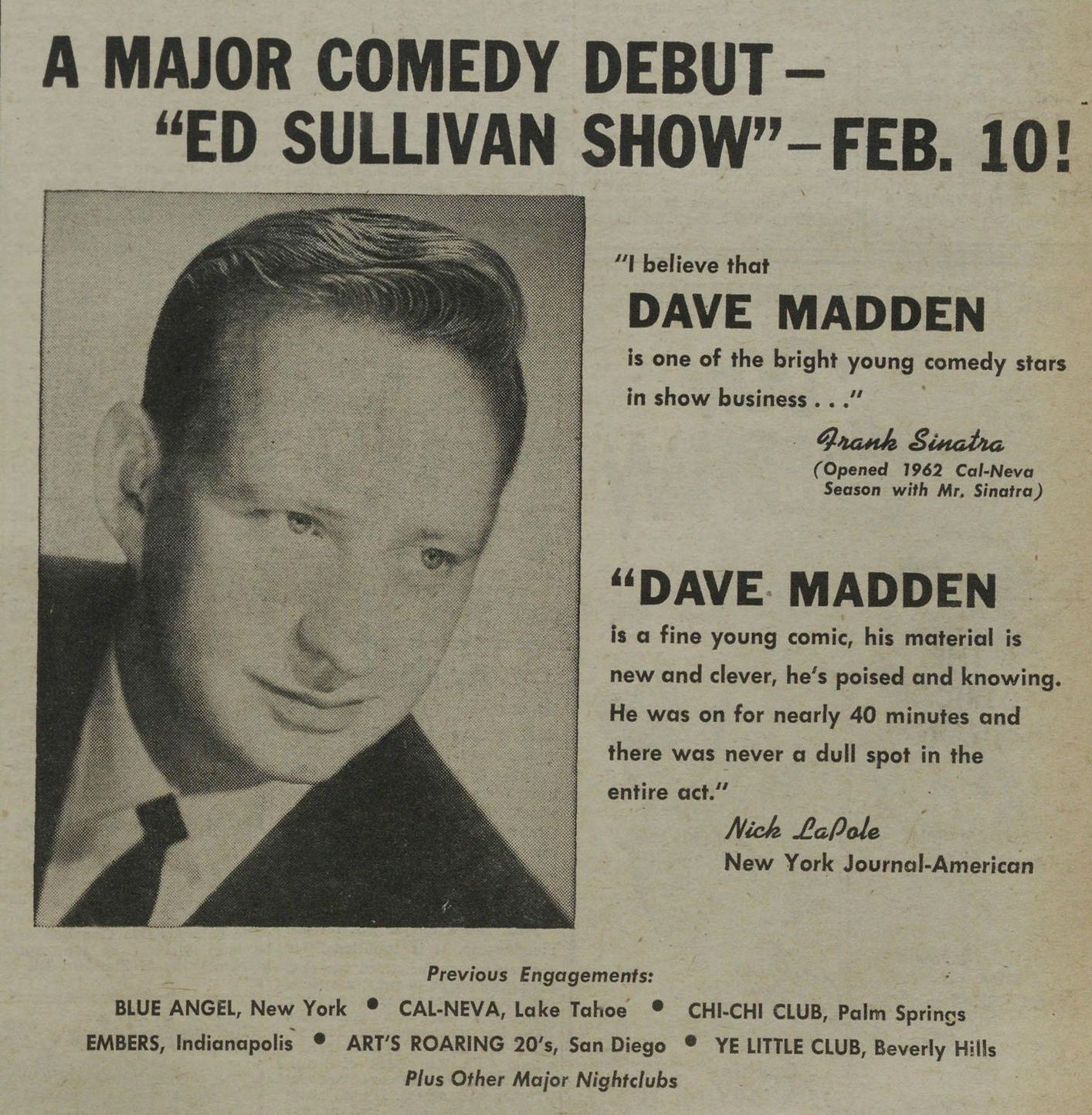
He and Sinatra hung out and one night in his bungalow he said Madden should be on The Ed Sullivan Show and picked up the phone and called Ed in New York. That call resulted in Sullivan booking him for three episodes.

His manager had a club in Beverly Hills, The Ye Little Club, and he called Madden who was in town because his regular singer was sick. Madden helped him out, and a Screen Gems writer, Jerry Davis, was in the audience with Nat King Cole’s manager. Nat was Madden’s favorite singer and his manager asked if he would do an eight-week tour with him. Unfortunately, Cole died soon after and Madden never even got to meet him.

Photo: ebay.com

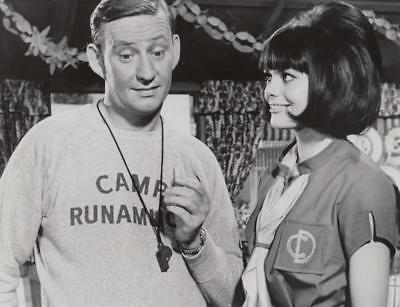
Jerry Davis called Madden and asked him if he was interested in filming a pilot which led to an offer for a regular role on Camp Runamuck which debuted in 1965. The show lasted a season with 26 episodes. Madden had never acted before, and he said it was a great experience. The show was primarily about the camp counselors. Madden met Dave Ketchum on the show and they became friends. Later, the role of Reuben Kincaid was narrowed down to Dave Ketchum and Madden.

Photo: dailymail.com

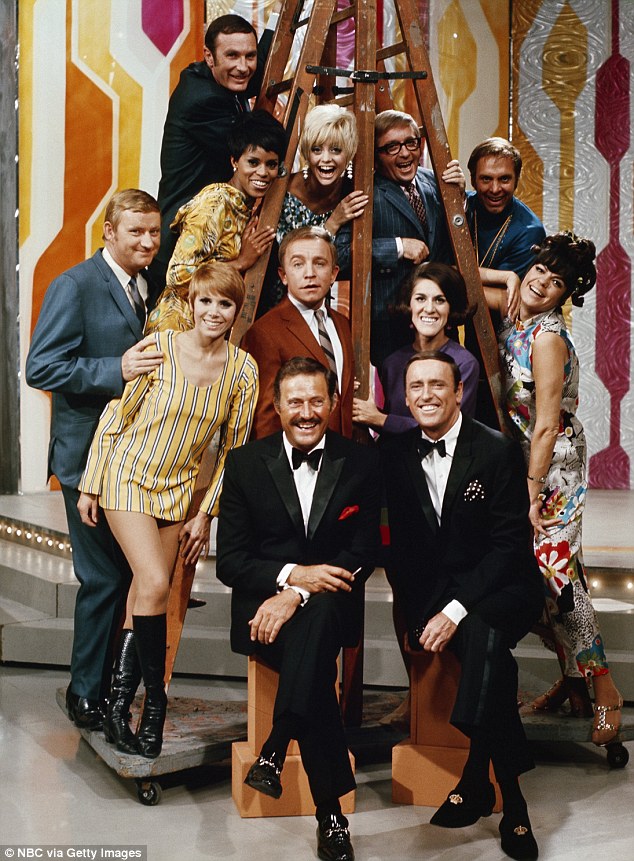
A year later, Madden was offered a spot on Laugh-In. Rowan and Martin had seen his act in Reno and invited him on the show. Madden said that filming the show was not much fun. He said apart from the opening and closing jokes and cocktail party, most of the segments were individual ones. He described a day where he might go in at 10 am, and there would be 2 cameramen, a director and a light man. He would film a dozen skits which would be shown over the course of the season. None of the rest of the cast would be there.  So, it was long and boring work.

Photo: washingtonpost.com

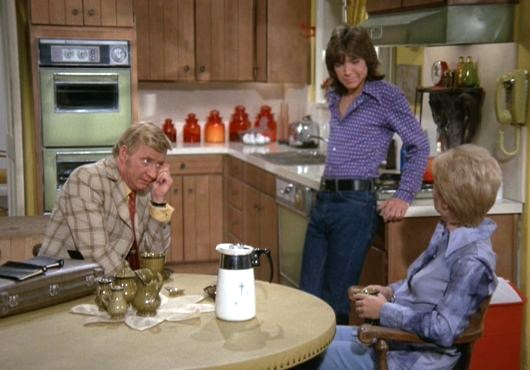
After two years with the wacky cast, he accepted the role that would make him a household name. As Reuben Kincaid, he managed the Partridge family on a new series based on the life of The Cowsills. The show aired Friday nights following The Brady Bunch and was on the air from 1970 till 1974.

Some of the scenes I loved the most on the show was when Reuben would lay on the couch to watch tv with the family or hold Shirley’s yarn while she knitted—just everyday family activities. Unfortunately, he and Shirley were not as close as they could have been because Madden and Shirley’s husband Marty Ingels did not hit it off.

Photo: jafosnews.com

Filming The Partridge Family was not always fun either. He said it could be very boring.  The cast might have three to four pages of scripts that take place in the dining room.  The whole family would sit around the table and they would have to change the lighting every time someone else spoke. He said you could arrive at 7 am and leave at 3 pm and never leave the dining room.

Photo:

While one of the running gags on the show was that Reuben and Danny had a battle of wits ongoing, in their personal lives, Reuben took Bonaduce into his home when his house was not a safe place. He said Danny’s mother was worried about Danny being home on the weekends when his father was home, so she asked Madden if Danny could stay with him at his bachelor pad on weekends. Madden said he didn’t drink and had small groups of people over, so it was not a problem to have Danny staying there.

Photo: starcasm.com

Madden said that he learned that The Partridge Family was cancelled because someone in his apartment building read it in the newspaper—a crummy way to learn you no longer had a job.

During this time period, Madden was on two episodes of Love American Style which was also part of the Friday night schedule and two episodes of Bewitched. When Madden recalled his time on Bewitched, he said he was with the same secondary actor for both episodes, Herb Ellis. He said that Elizabeth Montgomery was very gracious.

After the end of The Partridge Family, Madden appeared on an episode of Happy Days. In 1976, he would have a part in Eat My Dust!, a movie developed by Ron Howard who played Richie Cunningham on Happy Days. It was one of only two big screen features Madden was in. The other movie Madden had a role in was the family favorite, Charlotte’s Web in 1973. Madden was the voice of the ram.

In the late seventies, Madden could be seen on a variety of shows including Starsky and Hutch, Barney Miller, The Love Boat, and Fantasy Island.

In 1975, Madden took a break from his acting schedule to marry Nena Arnold. They had two children and divorced ten years later.

Playing Carrie Sharples on CBS-TV's... - Martha Raye Scrapbook ...
Photo: facebook.com

In the late seventies, he would be offered another recurring role. He began eating at Mel’s Diner on Alice from 1978-1985, as Earl Hicks. He was also Alice’s son’s basketball coach. The Hicks character was meant to be a guest shot, but the producers liked his interaction so much that he ended up doing 35 episodes. He really enjoyed working on the show because it was done before a live audience. He said it was like doing a one-act play every week. The cast rehearsed for a few days and then shot the show at one time.

In the late eighties, Madden also joined the cast of Focus on the Family’s Adventures in Odyssey. In 1990 he created his own character, curmudgeonly window washer Bernard Walton, which he would voice until 2008.

From 1970 or so on, Madden did a lot of voice-over work. When he had more time for it, it was very profitable. He said he made more money between 1985-1990 doing that then all four television series combined; he was making more than $250,000 a year just in voice work.

He stayed busy throughout the 1990s, showing up on The New Leave it to Beaver, Life with Lucy, Ben Stiller, Married . . . with Children, and Boy Meets World. His last credited role was on Sabrina the Teen-age Witch in 1998, where he appeared with other Laugh-In cast members.

He had another memorable event in 1998 when he married his former college girlfriend Sandy Martin.

🎼THE PARTRIDGE FAMILY - gallery - Season Two - 5/22/72, Susan Dey ...
Photo: pinterest.com

If you watched The Partridge Family, you might remember the episode where Danny and Reuben have a bet to see if Danny can lose weight and if Reuben can quit smoking. Madden was a long-time smoker in real life and that episode inspired him to quit, although he had been thinking about quitting for a while.

Madden had always been interested in cameras, buying his first one in the service.  He began to experiment with photography on the set of The Partridge Family. He said it was illegal to bring a camera to the set, so he began taking photos of the crew when they were filming away from the regular set. He then made gifts for the crew and then began filming the director. By that time, people were so used to him having a camera around, no one called him out on photographing the cast. He would bring his camera to work with him, taking photos of the cast and crew. It turned into a life-long hobby.

The Partridge Family 4x05 Reuben Kincaid Lives - ShareTV
Margaret Hamilton
Photo: sharetv.com

One of the benefits of working in the industry was meeting so many beloved actors like Lucille Ball. On The Partridge Family, Madden enjoyed working with Ray Bolger who played Shirley’s dad and Margaret Hamilton who played Reuben’s mother. He said he would chat with Ray between takes and hear stories from Hamilton about The Wizard of Oz. He said Hamilton was a real pro and they were both very nice people.

Tumblr
With Gale Gordon on Life with Lucy
Photo: tumblr.com

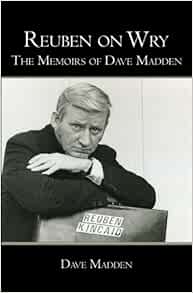
During retirement in 2007, he wrote his memoirs, Reuben on Wry: The Memoirs of Dave Madden.

Reuben on Wry: The Memoirs of Dave Madden: Madden, Dave ...

In January of 2014, he passed away in hospice care, suffering from complications of myelodysplastic syndrome, a disorder that results from poorly formed or dysfunctional blood cells.

For someone who began his first magic performance because of a serious injury and was hired for a sitcom without ever having acted, Dave Madden had a very fun and successful career. I must admit, I have many great memories of him as Reuben Kincaid. He seemed to be a very nice and easy-going individual who worked hard and enjoyed his life. You can’t ask for more than that. Thanks for the memories Dave Madden.

Who Writes The Songs?: Good Question–Lots of People Including Frank De Vol, Jay Livingston, and Ray Evans.

At this time of year, we tend to watch a lot of football bowl games. Most of the attention centers on the coaches, the quarterbacks, and a handful of other star players like running backs, wide receivers, and occasionally kickers. While these positions influence the games, there is an entire team behind them which determines whether they get a win or a loss. This year I will be trying to look at some of the behind-the-scenes players in the television industry.

Today we look at three composers who often influenced shows, even though many viewers never heard of the song writers.
devol1

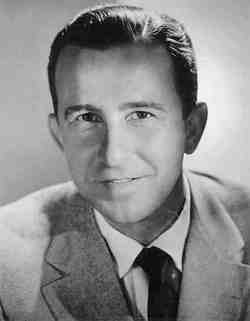
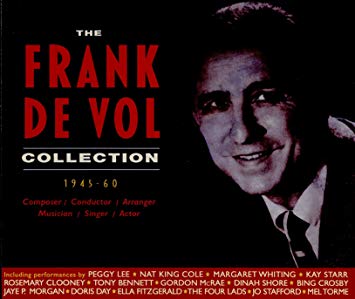
Frank Denny De Vol was born in West Virginia in 1911. His family moved to Canton, Ohio where he grew up. His mother owned a sewing shop, and his father was in charge of the pit orchestra at a local movie theater. He graduated from McKinley High School in 1929 and started at Miami of Ohio University but quit after six weeks. His parents were hoping he would pursue his law degree, but he was set on a career in music.

This wasn’t surprising because he had become a member of the musicians’ union at age 14. He worked for his father at the theater and played the saxophone and violin.

Once he left college, he joined Emerson Gill’s orchestra and traveled around Ohio. Later he became a musician with Horace Heidt’s band, and Horace let him try his hand at arranging. He would then travel with Alvino Rey’s band which led to a long-life friendship with the King Family.

During his career as a traveling musician he married his wife, Grayce McGinty in 1935. The couple’s 54-year-long marriage would produce two daughters.

During the 1940s, he would write arrangements for many of the country’s top performers including Tony Bennett, Nat King Cole, Vic Damone, Doris Day, Ella Fitzgerald, Dinah Shore, and Sarah Vaughn. His version of “Nature Boy” for Nat King Cole went to number 1 in 1948.

In 1943 he moved to California and started his own band. He appeared on the radio on KHJ and accompanied many stars including Jack Carson.
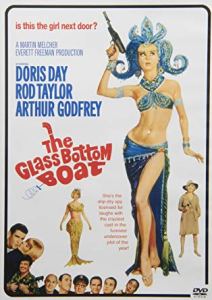
 

In the 1950s, he moved into movie composing and worked on more than 50 film scores including What Ever Happened to Baby Jane, The Glass Bottom Boat, The Dirty Dozen, and several Herbie movies. He received Academy Award nominations for his work on Pillow Talk (1959), Hush . . . Hush Sweet Charlotte (1964), Cat Ballou (1965), and Guess Who’s Coming to Dinner (1967).


During the 1950s, his orchestra also was frequently seen at the Hollywood Palladium as “Music of the Century.”
devol3


It seems natural that De Vol would ease into television work as well. He composed the jingle for Screen Gems’ “Dancing Sticks,” which appeared on all television series produced by Columbia Pictures.


devol26

Photo: pinterest.com

Frank became the musical director on Edgar Bergen’s game show Do You Trust Your Wife? His orchestra was featured on a variety of musical shows including The Lux Show Starring Rosemary Clooney.


devol21

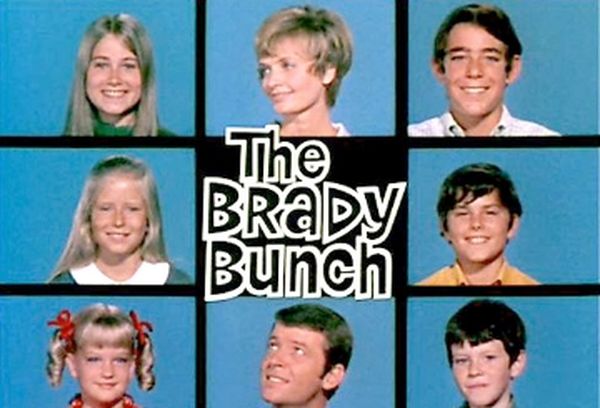
Today De Vol might be best known for his work as a composer for television series. He wrote the music for My Three Sons, Family Affair, The Brady Bunch, and The Smith Family. My Three Sons theme song was a hit single in 1961 by Lawrence Welk, more musically complex than many sitcom themes of the time. He would continue his work for My Three Sons for all 380 episodes.
 

devol23

Sherwood Schwartz, the creator of The Brady Bunch, first turned to George Wyle to create the Brady theme. Wyle and Schwartz had composed the theme for Gilligan’s Island. With Wyle already committed to The Andy Williams Show, he approached De Vol. De Vol would provide music for 117 episodes of the original show, as well as music for The Brady Girls Get Married, The Brady Brides, The Bradys, and A Very Brady Sequel.

Frank was credited as composer for 37 movies and television series and listed as part of the music department for 87 total.
 

devol25

Photo: sitcomsonline.com

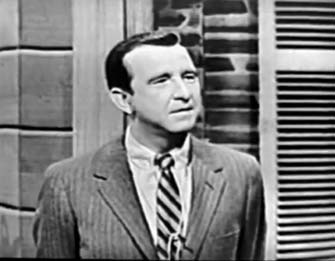
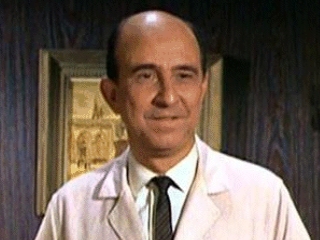
Not only was he musical composer for these shows, but you can see him acting in many of the shows he worked on as well. His first acting appearances were on Betty White’s Show, Life with Elizabeth where he played a variety of roles.


devol28

Photo: aveleyman.com

He then appeared on several television series including State Trooper, My Favorite Martian, The Farmer’s Daughter, Gidget, Please Don’t Eat the Daisies, Bonanza, Petticoat Junction, Get Smart, That Girl, and I Dream of Jeannie (37 different shows in all).

While composing on My Three Sons, he would actually portray a bandleader on the show and a father on The Brady Bunch.


devol2imagenesmy.coom

Photo: imagenesmy.com

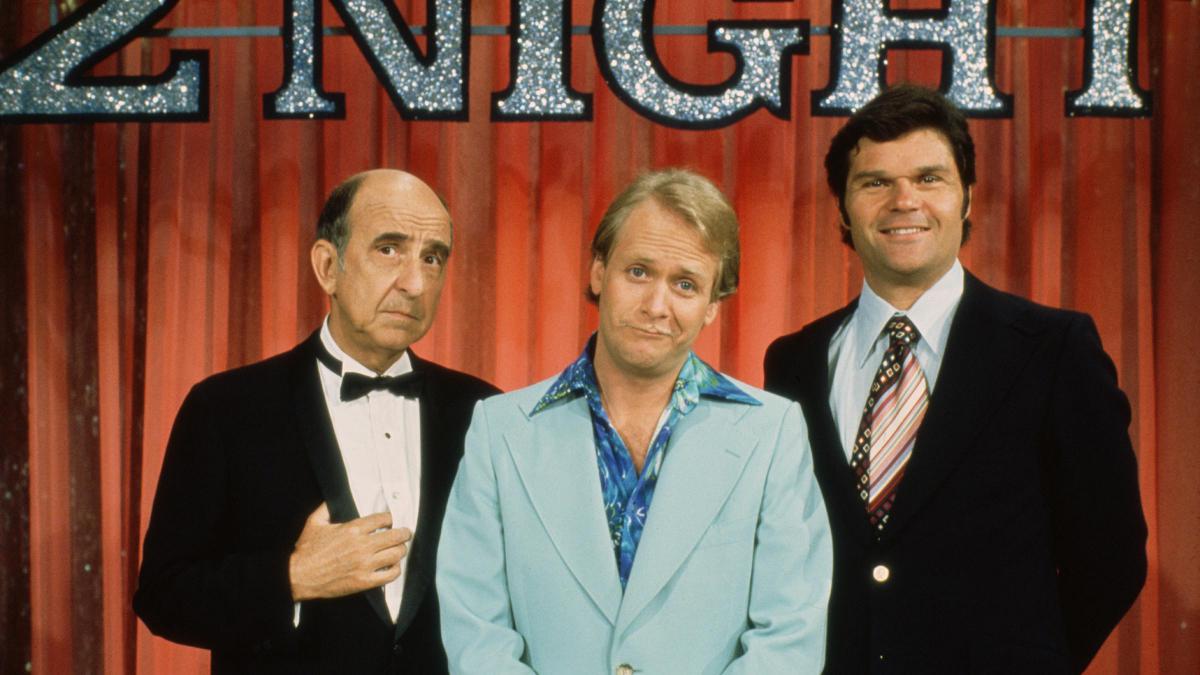
Many people will remember him as the dour-faced band leader Happy Kyne on Fernwood Tonight and America 2-Night, shows starring Martin Mull in the late 1970s.


One of my favorite roles of his was the head of the boys’ camp on the original Parent Trap.

devol27

Photo: tcm.com

His last acting role would be on Charles in Charge, the Scott Baio comedy from 1990.

When he was in his 80s, Frank was still active with the Big Band Academy of America. About this time, he married Helen O’Connell who had been a big band singer and actress. (His first wife passed away in 1989.)

Helen passed away in 1993, and Frank died from congestive heart failure in 1999.


devol24

Photo: pinterest.com

Like so many of these stars of the classic television era, he was a multi-talented guy. He could sing, he could play instruments, he could compose, he could arrange, and he could act. Sadly, when he does his job right, the music is so attuned to the shows that we almost don’t realize it’s there but try listening to a show with no background noise. Thank you Frank De Vol for not becoming an attorney.


We also take a look at a song-writing team of the golden age, Jay Livingston and Ray Evans.

living4


Livingston was born in McDonald, Pennsylvania in 1915. After studying piano with Harry Archer in Pittsburgh, he attended the University of Pennsylvania, majoring in journalism but also studying composition and orchestration.

Ray Evans was born in Salamanca, New York the same year. He also ended up at the University of Pennsylvania, receiving a degree in Economics.

Livingston organized a dance band at the University that played on campus as well as at local nightclubs and even cruise ships during their summer breaks.  One of those band mates was Ray Evans. Evans and Livingston became a partnership and they wrote some of the most iconic songs from film and television.


evans1

Photo: filmmusicsociety.org

After their graduation in 1937, the duo moved to New York City to work in Tin Pan Alley. They wrote for Broadway productions, including special material for Ole Olsen and Chic Johnson.
 

evans8

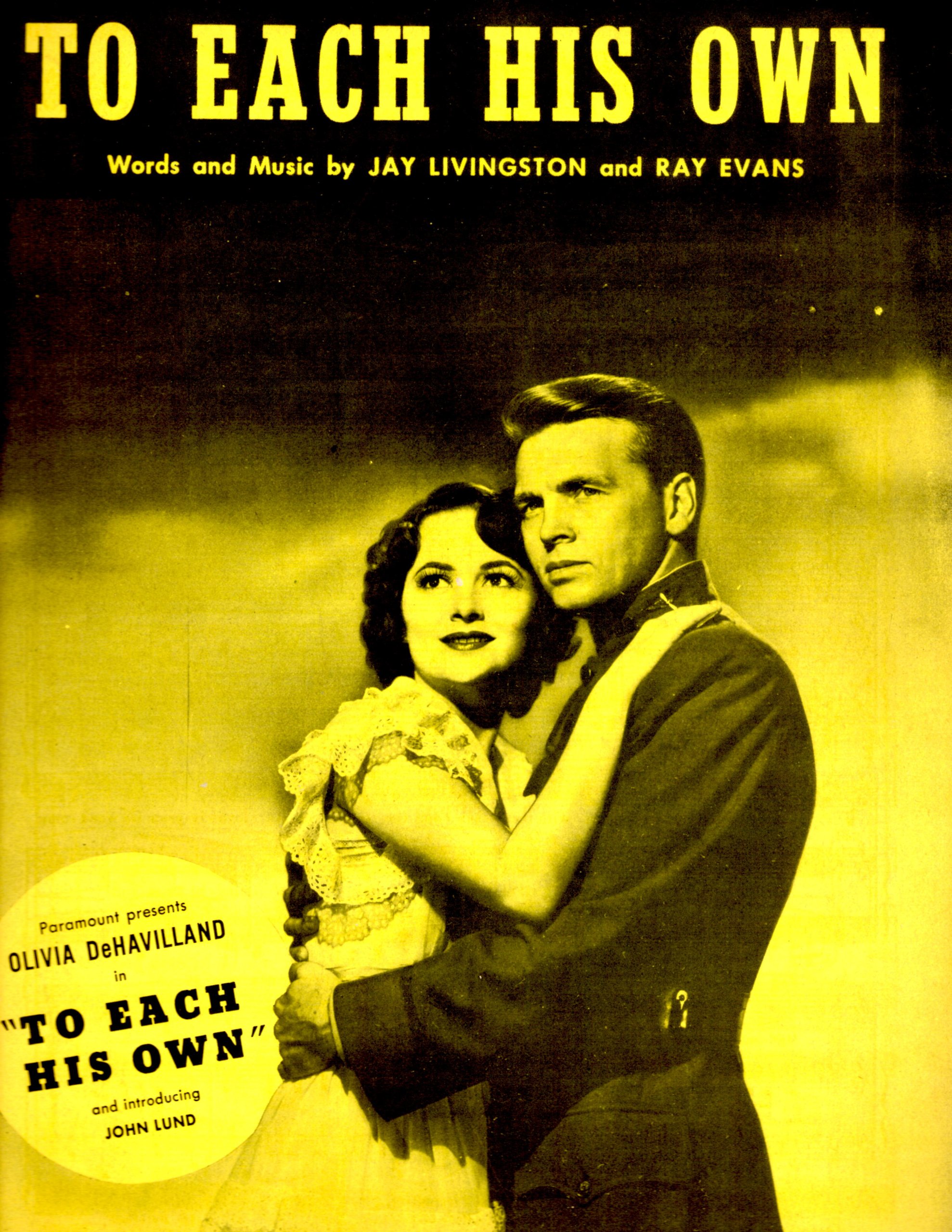
Livingston joined the Army when World War II began while Evans went to work for an aircraft company. When Jay came back home in 1945, he and Evans decided to try their luck in Hollywood. They received a contract from Paramount Pictures, and the team would stay with the company for a decade. Their first film was To Each His Own, starring Olivia DeHaviland, and they were nominated for an Academy Award.

During this time at Paramount, Livingston married Lynne Gordon. It must have been a happy marriage because they were married until 1991 when she passed away.

The exact same year, Evans married Wyn Ritchie. They were married until her death in 2003.

In 1947 the team began writing for Bob Hope for his personal appearances. Throughout the 1940s and 1950s, they would write many tunes that became jukebox favorites and popular songs. In Warren Craig’s book The Greatest Songwriters of Hollywood, he called them “the last of the great songwriters in Hollywood.”
 

evans2

Photo: pinterest.com

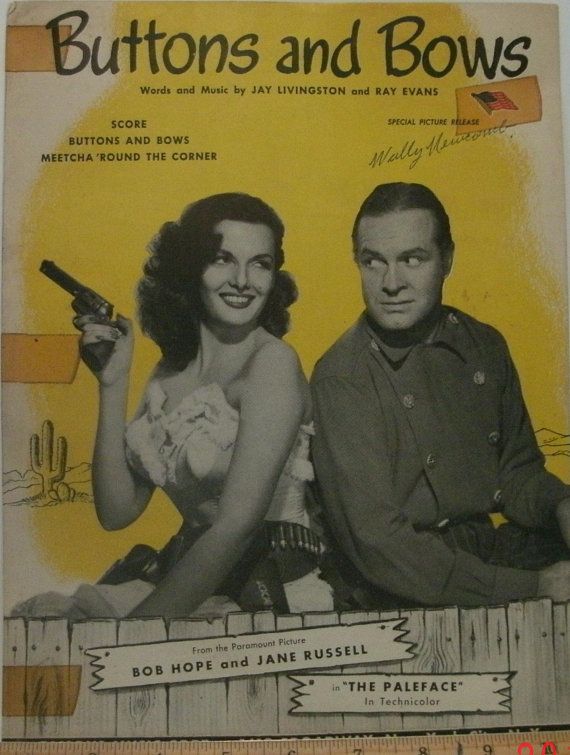
The year 1948 brought them their first Oscar win for “Buttons and Bows,” from Bob Hope’s western comedy, The Paleface. The jukebox version was recorded by Dinah Shore.


evans7

In 1950, they scored their second Academy Award for “Mona Lisa,” written for the movie Captain Carey, USA but made famous by Nat King Cole.


evans10

Photo: moviemovieblogblog.wordpress.com

Evans and Livingston would appear in Sunset Boulevard this same year at the New Year’s Eve party scene.
 

evans3

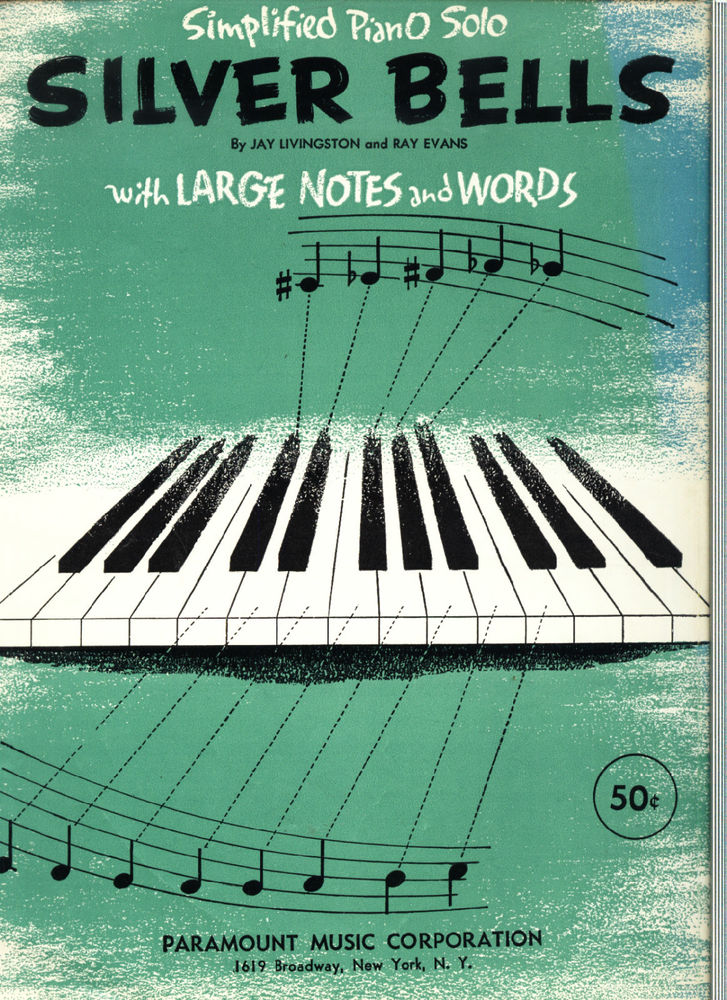
We can all smile and thing of Livingston and Evans each Christmas when we hear “Silver Bells.” The song, originally titled “Tinkle Bells” was written for The Lemon Drop Kid in 1951, also starring Bob Hope. Thankfully, they decided “tinkle” had other connotations and “Silver Bells” it became. (Some sources credits Jay’s wife Lynne with the name change.)

When their Paramount contract ended in 1955, they became free lancers and wrote both individual songs and complete scores for a variety of movies. They would receive ten additional Oscar nominations during their career.


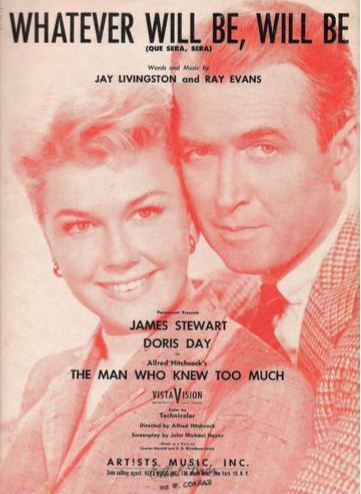
Doris Day had a huge hit in 1956 with “Que Sera, Sera” from The Man Who Knew Too Much with Jimmy Stewart and that hit would win them a third Oscar. The song would also become Doris’s theme song for her television show in 1968.
evans5


In 1957 they began writing the music for the Tammy movies that would be a staple of that era, beginning with Tammy and the Bachelor.

Jay and Ray would return to Broadway in 1958. They were nominated for a Tony for Oh, Captain! They also wrote songs for Let It Ride in 1961, a musical comedy adaptation of Three Men On a Horse, and Sugar Babies in 1979.
 

evans6

Photo: tidal.com

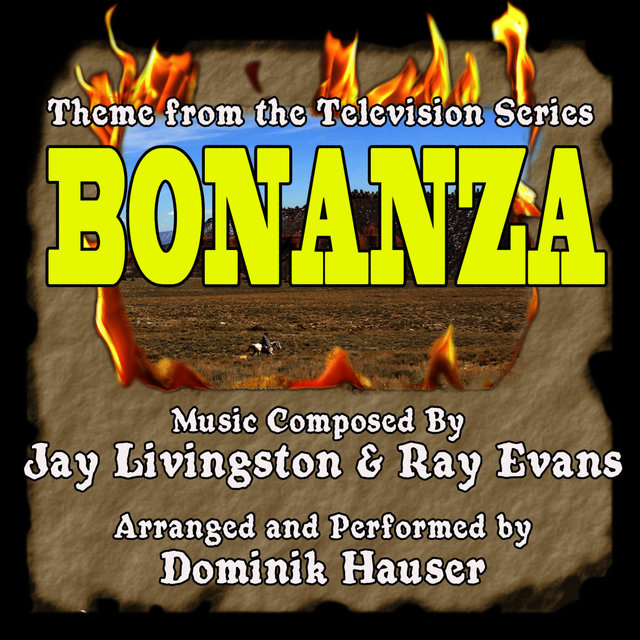
Though most of their work was in the film industry, the team is probably best known for their television compositions. In 1959, they were asked by Desi Arnaz to write a song for a Western show being developed. The show, thought likely to last a year, didn’t have money for a weekly salary, but he allowed them to keep the rights to the song. Luckily for them, that show, Bonanza, made them millions, and would be on television until 1973.

In 1960 they composed the theme song for The Bugs Bunny Show, “This is it.”


evans4

Photo: deezer.com

In 1961, Mister Ed debuted. Livingston and Evans not only wrote the well-known song, but Livingston is the one singing the line “I am Mister Ed.”

After Lynne’s passing, Jay would marry Shirley Mitchell in 1992.

Livingston and Evans were presented with a star on the Hollywood Boulevard Walk of Fame in 1995.

In 2001, at the age of 86, Jay Livingston died from pnuemonia. Ray Evans lived until 2007 when he passed away from heart failure.


evans9

Photo: rayevans.com

It’s fun to see a friendship and partnership span six decades and be so successful. Although they were born in the same year in the same area of the country and married the same year and their marriages would last decades until the death of a spouse, the two men were very different. In an interview with the Los Angeles Times in 1985, Evans said “I’m nuts about sports, play baseball and tennis every weekend. Jay couldn’t care less. He’s restrained and quiet. I’m more outward going. Jay is a marvelous musician. I have a tin ear. But our tastes are similar, and we both like good music and song.” The duo had 26 songs that sold more than a million records and their total record sales has exceeded 400 million dollars.

Michael Feinstein released an album in 2002 devoted to the team. He said, “they had a strong work ethic and they wrote a lot of plays that have wonderful and sophisticated songs that are quite different from movie songs.”

Like Frank De Vol, most viewers today have probably never heard of Jay Livingston and Ray Evans, although they recognize much of their work. It’s good to look behind the scenes of and dig deeper into the television industry to learn more about all the pioneers who made the era so great.
Â