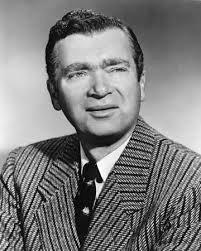
As we wind up our blog series, “Time for Some Texas Tea,” we are also reading the last blog of the year. We have been learning about the careers of several actors who appeared on The Beverly Hillbillies and today we have saved Buddy Ebsen who had the most successful career of the cast.
Ebsen was born Christian Ludolf Ebsen Jr. in 1908 in Illinois. He was the only son of four children born to his parents who had immigrated from Germany. His father was a choreographer and owned a dance studio. He was also a physical fitness advocate and operated a gym for the local school district. His mother was a painter.

When Buddy was ten, his family moved to Florida for this mother’s health, eventually ending up in Orlando where he took dance at his father’s studio. Ebsen was a member of the swim team all four years and became a Florida State Champion. He graduated in 1926. Originally, he chose a career in medicine and attended the University of Florida at Gainesville. He transferred to Rollins College in Winter Park for a year to be closer to home and save money. They had no science courses, so his mom suggested he take an acting class. When the Florida land boom crashed, Ebsen could no longer afford his tuition and he had to drop out.
He moved to New York City and worked at a soda fountain to get by. Ebsen began his career in the entertainment industry as a dancer. He and his sister were known as The Baby Astaires and they performed in supper clubs and on vaudeville. They were booked at the Palace Theater in New York City after Walter Winchell saw them perform in Atlantic City and gave them a rave review.
In 1933 Buddy married Ruth Cambridge; their marriage ended in divorce in 1945 after having two daughters.
His first film was Broadway Melody of 1936. In that same year, he danced with Shirley Temple in Captain January. In 1938 he appeared with Judy Garland as his dance partner. Walt Disney brought Ebsen in to be filmed dancing in front of a grid so the animators could use it to draw the Silly Symphonie with Mickey Mouse.

MGM offered Buddy an exclusive contract but he turned it down, and Louis Mayer told him he would never work in Hollywood again. In 1939 the same MGM cast him as the Scarecrow in The Wizard of Oz. Ebsen and Ray Bolger swapped roles and Buddy became the Tin Man. He recorded the songs, went through all the rehearsals, and then began filming the movie. He began experiencing body aches, cramps, and shortness of breath which eventually landed him in the hospital. Doctors diagnosed him with an allergy to the aluminum dust in the makeup, and he had to give up the role and was replaced by Jack Haley.
Ebsen took up sailing after he recovered and learned it so well that he taught it to naval officer candidates. He was turned down every time he tried to enlist in the Navy. The US Coast Guard did accept his application, and he was made a lieutenant, junior grade. He served on the USS Pocatello which was a weather ship, recording weather 1500 miles west of Seattle. He was honorably discharged in 1946.

Ebsen received permission from the Pocatello’s commanding officer to bring aboard costumes, props, and musical instruments. He wrote, cast, and directed vaudeville shows, concerts, and plays while on the sea. Rehearsals were held in the cramped steering room.
In 1945, Ebsen married fellow lieutenant Nancy Wolcott. They had four daughters and a son. Their marriage lasted 39 years but also ended in divorce.
In 1949, he made his television debut on The Chevrolet Tele-Theater. During the fifties, he continued to make films and to appear on television series.

During the decade of the sixties, he was very busy in both mediums. He made four big-screen films including Breakfast at Tiffany’s. He appeared primarily on television, with appearances on a variety of shows including Maverick, The Twilight Zone, The Andy Griffith Show, Gunsmoke, Bonanza, and Rawhide.
From 1962-71, Buddy became Jed Clampett, the head of the family who moves them to Beverly Hills after they earn millions from oil on their Tennessee land. The critics did not like The Beverly Hillbillies one bit. However, the viewers made the number one show several times. I have to side with the critics. Although the show still had high ratings in 1971, it was canceled by the network because they wanted to move their shows in a more “urban” direction.

Nancy Kulp seemed to be close to most of the cast especially Irene Ryan as Granny and Raymond Bailey, and Ebsen seemed to be close to most of the cast, especially Donna Douglas and Max Baer. However, Kulp and Ebsen were definitely not close. He was very much a conservative and she was decidedly liberal. Donna Douglas related that “they had a different view, so they had some heated discussions about that. They would go on for weeks.” In 1994, Kulp ran for US House of Representatives in her native Pennsylvania. Ebsen not only supported her opponent, he offered to make commercials talking about how liberal she was. He had no connection with Pennsylvania at the time. She claims he was just being spiteful, and he claims she did not know the issues.
After the cancellation of The Beverly Hillbillies, Ebsen appeared in Hawaii Five-0 and then in quite a run of made-for-television movies. In 1973, Buddy was offered his second starring role in a show as Barnaby Jones, a detective who comes out of retirement to investigate the death of his son. Lee Meriwether played his widowed daughter-in-law Betty. Barnaby Jones stayed out of retirement until 1980 when the show was canceled. The show was still receiving decent ratings, but Buddy decided he was ready for retirement.
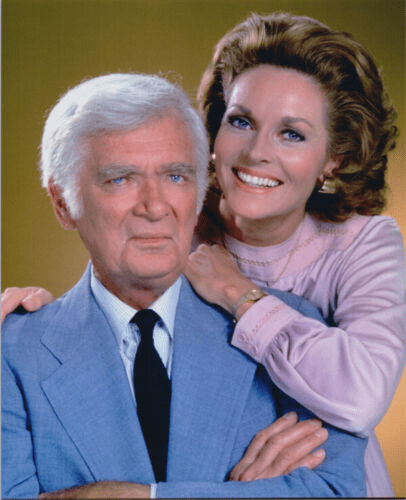
When asked about Ebsen, Meriwether said, “He really worked at being at the top of his game. You had to keep up with him. I adored him. I think he had feelings for me too.” She later said that “he loved the idea of being a detective. We had CSI-type equipment in the office on the set and he liked doing his own tests.”
Despite a rumored relationship with Meriwether, in 1985, Ebsen married his third wife, Dorothy Knott, and they remained together until his death.
Except for a few credits here and there, Ebsen did not have a lot of acting credits after the mid-eighties. He did accept a recurring role on Matt Houston during season three of that show when he played Matt’s uncle for 22 episodes.
His last movie was a cameo in the big-screen film, The Beverly Hillbillies, and he played Barnaby Jones. His last acting role as a person was Burke’s Law in 1994. His last television appearance was a voice only for King of the Hill in 1999.
In addition to sailing, Ebsen had a lot of other interests. He was an avid coin collector. He also wrote several novels and books. He also released three albums, The Beverly Hillbillies with Irene Ryan in 1993, Buddy’s Originals in 2001, and Buddy Ebsen Says Howdy in 2003.
If that was not enough, he played the guitar, golfed, rode horses, painted, gardened, fished, and traveled.
Ebsen passed away in 2003. His Coast Guard papers are stored at the US Coast Guard Historian’s Office in Washington DC.

Many of the rest of his records were given to the University of Wyoming American Heritage Center by his wife after he passed away. The gift included papers from all stages of his career, artwork created by him, his sailing trophies, and athletic medals among other items. The AHC has a large Hollywood and entertainment collection.
In October of 2022, a new exhibit was unveiled, “The Entertaining Life of Buddy Ebsen.” He certainly did have an entertaining life. While Jed Clampett made him famous, his career was much more interesting than that one role.
Thanks for getting to know Buddy Ebsen better and for taking this journey in 2023 to learn more about classic television and all the people who were important in that evolution.



 thewritelife61