We are in the midst of a month of blogs that feature sitcoms we don’t hear much about anymore. Today’s series is Occasional Wife.
In September 1966, the show debuted on Tuesday nights on NBC.
📷wikipedia.com
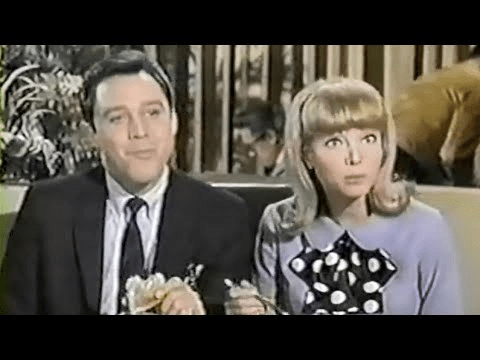
The show was about Peter, a junior New York business executive (Michael Callahan). When he realized married men are more likely to be promoted at his company, Brahms Baby Food, he asks hat check girl Greta (Patricia Harty) to pose as his wife for company functions. When he offers to pay for her rent and art lessons, she agrees, thinking it will be an occasional performance, but every time someone from the office drops by, Peter runs upstairs to bring her down to his apartment until they leave. One of the funniest parts of the show was the tenant played by Bryan O’Byrne who watches Peter and Greta running up and down the fire escape.
If you wondered if the name Patricia Harty sounds familiar, yes it does. She was Blondie and we talked about her in the first blog of this series.
📷imdb.com
The opening is reminiscent of Dragnet with its introduction “There are eight million stories in the Naked City. Some are violent, some sad, but one of them is just plain cuckoo. This is a modern fable about two young people who make a bargain only to find out they were going to get a lot more than they bargained for. We call our fable Occasional Wife and it stars Michael Callan and Patricia Harty.”
The series was created by Lawrence J. Cohen and Fred Freeman. Vin Scully, legendary sportscaster, provided the narration for the show. It started off ranked 18th but by the end of the season, it had dropped to 64th and was cancelled.
The show was up against The Red Skelton Hour and The Rounders. If you have been reading my blog any amount of time, you probably have heard me complaining about Red Skelton. I honestly could not stand watching the show and did not find it at all funny, but I also have read way too many accounts of what a jerk he was to his writers, cast members, and anyone else who he worked with. However, at this time, his show was in the top ten. The Rounders on the other hand, probably didn’t take many viewers away from this sitcom. The premise of the show, according to imdb.com, was that Howdy Lewis and Ben Jones are in debt to Jim Ed Love, second richest man in the state. They find some happiness with girlfriends Ada and Sally at the Longhorn Cafe.
📷popculturereferences.com
It sounds like Peter and Greta were flat characters and the comedy only relied on the situation of the fake marriage. Viewers would probably have liked to see some chemistry between the two and allow them to struggle with getting closer instead of both being happily single. There must have been some chemistry there because the actors married after the show ended. Just like their sitcom, their marriage failed to last two years.
This sitcom was one of the first series to eliminate the use of a laugh track. Now canned laughter is an industry standard, but they decided to can the canned laughter and not invite a live audience. I wonder if this might have affected viewers whether they knew it or not.
📷youtube.com
Bob Claver discussed his time producing this show in a Television Academy interview. Claver thought the show was funny and peppy, but he said they couldn’t make it a hit, even with Harry Ackerman as executive producer.
As with the other two series we discussed this month, Blondie and My Sister Eileen, you might be better off to run up or down your own fire escape and skip watching the show to get in a few extra steps.
As we look at a few little-remembered shows from the past, today we are learning about My Sister Eileen. The series was adapted from short stories by Ruth McKenney published in The New Yorker. The stories became a book in 1938, a play in 1940 and two movies in 1942 and 1955.
📷wikipedia.com
In the 1955 Hollywood movie, two small-town sisters — an aspiring writer, Ruth (Betty Garrett), and a would-be actress, Eileen (Janet Leigh) — move to New York City. They find lodging in a shabby apartment and struggle to locate promising gigs. Ruth eventually meets magazine editor Bob Baker (Jack Lemmon), who tells her to write about her life experiences rather than fiction. As it turns out, Eileen’s life, with her various romantic encounters, is far more interesting, so Ruth steals the stories for herself.
This show joined the television schedule in 1960 and featured Elaine Stritch and Shirley Bonne (Ruth and Eileen Sherwood), who move to New York City. Like the movie, one is a writer and one is an actress. Living in a Greenwich brownstone, they become friends with a reporter Chick Adams (Jack Weston) and Ruth’s coworker Bertha (Rose Marie). Rounding out the cast is Eileen’s agent Marty Scott (Stubby Kaye), their landlord Mr. Appopoplous (Leon Belasco), Ruth’s boss D.X. Beaumont (Raymond Bailey), and their Aunt Harriet (Agnes Moorehead). The sisters are stereotyped with Ruth being the smart, plain one and Eileen being the beautiful and naïve one.
The pilot was seen on the Alcoa-Goodyear Theater with Anne Helm portraying Eileen.
Earl Hagen who composed “The Fishing Hole” for The Andy Griffith Show composed this theme as well.
📷imdb.com Rose Marie on the show
Rose Marie talked about being on this sitcom for the Television Academy. She said she was friends with the producer Dick Wesson. She said her character Bertha was a wise-cracking one similar to Sally on The Dick Van Dyke Show. Rose Marie didn’t like working with Elaine Stritch. She felt she was not very professional on this show; she said she came to work late and goofed off a lot.
In 1960 it appeared on the schedule on CBS opposite Hawaiian Eye and Perry Como’s Kraft Music Hall. Hawaiian Eye was on the air four years, and this was it’s second season. With Connie Stevens, Robert Conrad and Poncie Ponce, it was about two private investigators in Hawaii, a Korean war vet and a former police detective.
I don’t think the writing helped the show stay on the air too long. During the first season some of the plots included: Ruth’s boss ignores her pleas for a pay increase until he encounters her working as a waitress in a German restaurant — and in a skimpy costume and the Sherwood sisters decide to break their lease with a wild party to which they invite a one-man band, a junior Tarzan, and a fireman with his siren.
📷moviesanywhere.com 1955 film version
I’m guessing part of the problem was that it had appeared in so many versions already. Many people read the book. Lots of people saw one, if not two, of the movies. And the play was being featured around the country. I can see that having a television series which has to expand the hour-and-a-half play and film might not have enough material to draw out the same old plot and keep it interesting for more than a few episodes.
This one is another one that you’re probably better off watching the 1955 silver screen adaptation and skipping the television series.
This month’s blog series is “Time for Some Texas Tea.” We are learning about some of the stars of The Beverly Hillbillies. Today we are banking on getting to know Milburn Drysdale, also known as Raymond Bailey.
Bailey was born Raymond Thomas Bailey in 1934 in San Francisco, California. When he was only a teenager he made the trek to Hollywood to try his hand at acting. He had a tougher time breaking into the business and worked a lot of odd jobs including day laborer in a silent movie theater where he was fired after sneaking into a mob scene which I found pretty funny and creative. He also worked as a stockbroker and a banker which would come in handy later in his career.
Photo: thenationalwwiimuseum.com
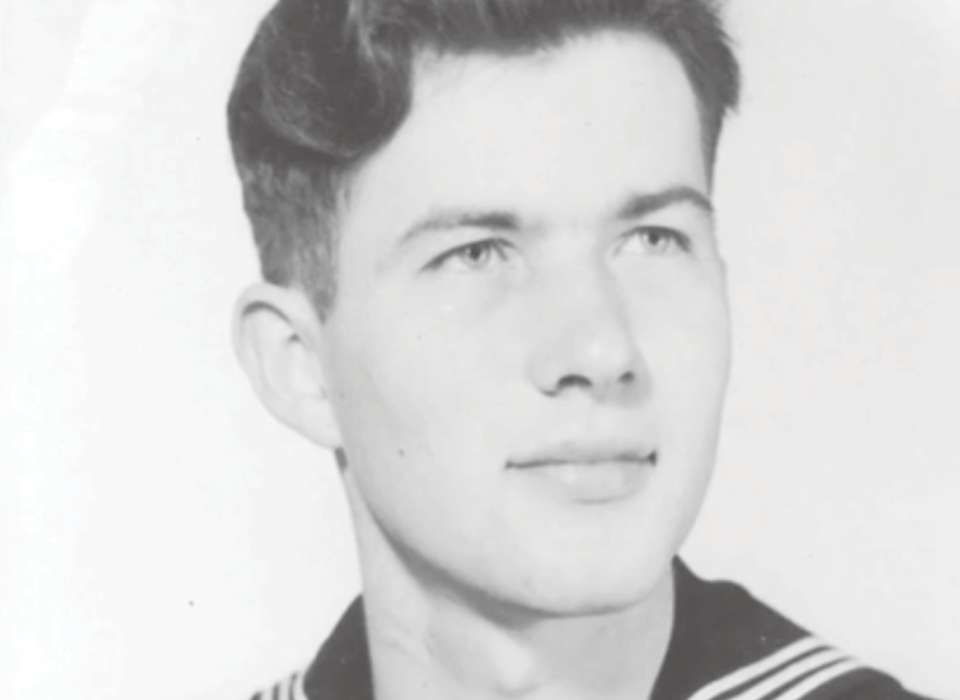
When things did not seem to be working out, he moved to New York City. He had no better luck on the east coast than on the west coast, so he joined the crew as a merchant seaman and toured the world, including China, Japan, the Philippines, the Mediterranean, and Hawaii. While in Hawaii, he also worked on a pineapple plantation, acted in the community theater, and sang for a local radio station.
He decided to give Hollywood a second chance in 1938, and he actually began getting some small movie parts. His first credited role was in SOS Tidal Wave. He was Mr. West in The Green Hornet in 1940. He appeared in 30 movies before Pearl Harbor was struck. When the US entered WWII, he joined the US Merchant Marine. After his time was up, he returned to Hollywood.
In 1951, Bailey married Gaby George and they would remain married until his death. I could not learn much about Gaby, but she was born in another country, and they were married in Manhattan. I’m not sure if she came here earlier in her life or met Bailey while he was traveling the world. She would have been 37 when they married, and I believe she received naturalization papers when she was 55.
The Alfred Hitchcock Show “Breakdown” Photo: completehitchcock.com
Raymond continued receiving big-screen roles, and in 1952 he had his first television appearance in Tales of Tomorrow as Congressman Burns. He appeared in forty-six additional series during the decade of the fifties, including The Donna Reed Show, Jack Benny, Burns and Allen, Gunsmoke, and Private Secretary. His movie career continued with roles in 26 films including Sabrina, Picnic, King Creole, and Vertigo. In the mid-fifties, he also explored Broadway with roles in four plays.
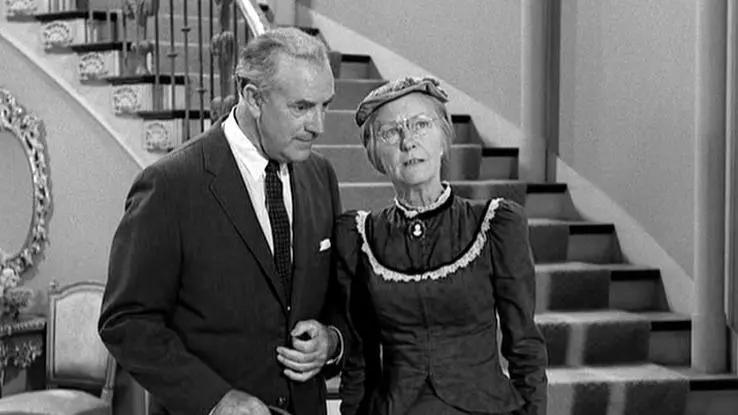
While Bailey didn’t abandon his film career, the sixties found him on the small screen the majority of the time. In the early sixties, he could be seen on a variety of shows including Lassie, The Ann Sothern Show, BachelorFather, Perry Mason, Bonanza, My Three Sons, and Mister Ed. In 1961, he was offered his first regular role as Mr. Beaumont on My Sister Eileen. He appeared in 25 of the 27 episodes of the show.
Photo: ask.com
In 1962 he was offered the role he would become a household name for: Milton Drysdale on The Beverly Hillbillies. His time as a banker helped him manage millions of dollars in the Clampett accounts. Much to his wife’s chagrin, Drysdale talks the Clampetts into buying the mansion right next to his so he can keep a better eye on them and their money. He was their mentor as they adjusted from country life to city life as much as they could adjust.
Unfortunately, Bailey developed Alzheimer’s, and the symptoms began just as the show was ending. The Beverly Hillbillies was canceled during the “Rural Purge” when all country-related shows were ended by the network in 1971. After the series was canceled, Ray only had two acting credits; they were both in Disney movies that came out in the mid-seventies: Herbie Rides Again and The Strongest Man in the World.
With Nancy Kulp Photo: imdb.com
Baily then became a bit of a recluse until his death in 1980 from a heart attack. It sounds like the only non-family member he kept in touch with was Nancy Kulp who played his secretary Jane on The Beverly Hillbillies.
It was fun to learn more about the career of Raymond Bailey. He certainly defined the word “perseverance.” I’m glad he was able to do what he had a passion for. It would have been interesting to see how he would have done in another comedy series. His Alzheimer’s diagnosis probably ended his career twenty years earlier than it would have. It sounds like he found love and a fulfilling career and that is certainly a success no matter what your profession is.
As we proceed
with our Behind the Scenes series this month, today we are thinking about set
designers. Before the interior designs are done, the production team needs to
find the perfect home for our television friends.
Did you ever daydream about places you might want to live in, even if you never would actually consider leaving your home? Perhaps it’s a small rose-covered cottage in the English countryside, maybe a ski chalet in the Swiss alps, or a house on the Maine coast with green shutters and a widow’s walk. I’ve thought about all of these places, but now I have another one to consider. It’s an historic neighborhood where some of my favorite television friends lived. Today we learn a bit about the Columbia Ranch.
Photo: columbiaranch.net
Now called
Warner Brothers Ranch, the former Columbia Ranch was in Burbank, CA. In
addition to dozens of television shows, it was the setting for many movies as
well such as Mr. Deeds Goes to Town,High Noon, and Lost Horizon. The neighborhood interiors were typically shot at other
studio locations.
In 1934, Harry Cohn, head of Columbia Pictures, purchased 40 acres in Burbank. In 1948, Columbia got into the television business under Screen Gems.
Photo: pinterest.com
During the
1950s, Captain Midnight, Father Knows Best, The Donna Reed Show, and Dennis
the Menace were filmed here. By the 1960s, the ranch was used continuously
for television and movies. The set was about six blocks but looked much larger
on camera shots. Shows during the 1960s included My Sister Eileen, Hazel, Our Man Higgins, The Farmer’s Daughter, Bewitched,
Gidget, I Dream of Jeannie, The
Monkees, and The Flying Nun.
In 1970, a
fire destroyed a quarter of the neighborhood, including many buildings on
Blondie Street. After rebuilding, taping continued on the set. During the next
three decades, shows included The
Partridge Family, Bridget Loves
Bernie, Apples Way, The Scarecrow and Mrs. King, and Life Goes On.
In 1971, Columbia and Warner Brothers combined their companies and merged into The Burbank Studios. The Ranch then was relegated to a back backlot.
Photo: columbiaranch.net
When Columbia Pictures moved its production facilities to Culver City in 1990, Warner Brothers gained ownership of the Ranch.
Photo: pinterest
Photo: pinterest
It’s continued to be a busy spot for filming. The fountain in the park was the one shown in the opening credits in Friends.
Nearby is also a swimming pool used on a variety of shows, including The Partridge Family.
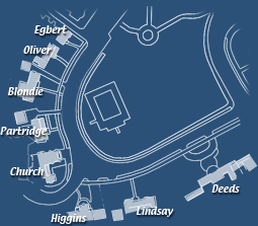
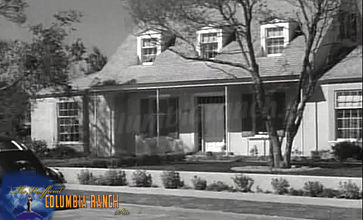
The most famous street in the Ranch was Blondie Street. Blondie Street was named for Blondie Bumstead because the Blondie movies of the 1940s were filmed here. Walking down Blondie Street reveals homes that we were all familiar with growing up in the sixties and seventies.
Photo: columbiaranch.net
It’s a curved
residential street with twelve different houses, surrounding a large, central
park. There is also a brick church and paved sidewalks. Three of the buildings—the
Lindsay House, the Little Egbert House, and the Oliver House—were original to
the 1935 set production.
The Blondie House
Photo: columbiaranch.net
This set, constructed in 1941, was the home for Major Nelson on I Dream of Jeannie, Mr. Wilson on Dennis the Menace, and the Andersons on Father Knows Best, in addition to the Blondie movies. Later it housed the operations office for the Warner Ranch. Of course, Jeannie’s house was not here, it was a Jim Beam decanter that was sold during Christmas of 1964.
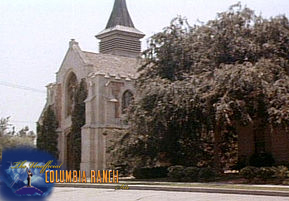
The Corner Church
Photo: columbiaranch.net
When thePartridge Family drives off for a show in their bus, you can often spot the
church which is just down the road from their home, across from The Stephens’
home on Bewitched. It was moved here
in 1953. When any of the series needed a church, this was the one. It can be
seen on an episode of Hazel when the
family attends church.
The Deeds Home
Photo: columbiaranch.net
Originally built for Frank Capra’s movie, Mr. Deeds Goes to Town in 1936, the house is only seen briefly in the movie. The Three Stooges filmed there in the thirties and forties. In the sixties it was seen in Batman. Both Gidget and The Partridge Family used the house as the high school and Bewitched used it as a civic building. In 1989, the original house was demolished. In its place, The Chester House and the Griswold House were built. The Griswold House was built for National Lampoon’s Christmas Vacation.
The Lindsay House
Photo: columbiaranch.net
Constructed in 1936, this house was best
known as the Baxter home on Hazel. It
also served as the Lawrence home on Gidget.
The Higgins House
Photo: columbiaranch.net
This structure was constructed for the show Our Man Higgins in 1962. It was later the home of Darrin and Samantha Stephens on Bewitched from 1964-1972. On I Dream of Jeannie, it was the home of Alfred and Amanda Bellows.
Photo: pinterest.com
For Bewitched, the interior and backyard scenes were filmed on a sound stage. The stairs ended in a hallway, but the doors only led to small closets, not the master bedroom. A modular first floor served as a setting for all the rooms. The den doubled as the nursery. A fake wall was put up to hide the view to the kitchen. When the den was needed, brown paneling was put over the nursery walls and the window was covered with a wall near the fireplace.
Photo: darkershadows.com
If you look closely, you’ll notice the avocado and gold flowered sofa in the Stephens’ living room was the same one used by Alfred and Amanda Bellows in their living room. But the shows shared well. On one episode of Bewitched, Louise and Larry Tate are seen at their kitchen table, but the kitchen looks identical to Major Nelsons’s. Roger Healey’s bedroom eerily resembled Darrin and Samantha’s.
Photo: youtube.com
Photo: pinterest.com
I guess I was too busy crying to notice that this house was also Brian Piccolo’s home in Brian’s Song.
The Partridge Family House
Photo: pinterest.com
The house across the street from the
Stephens’ house was home to Abner and Gladys Kravitz. During the filming of Dennis the Menace, it was Mrs. Elkins’
house. It was also the home of The Partridge
Family. In 1989 it became the Thatcher home on Life Goes On.
The home was built in 1953, modeled after a Sears, Roebuck & Co. plan. The modest two-story home was a perfect fit for the Partridges with its white, picket fence. The interiors were filmed at the Ranch as well. Located next door to the Blondie House, there were shrubs between the homes that were featured several times on the Partridge Family. In an episode where Keith shoots a movie, Shirley is clipping the hedges and begins dancing for the film, not realizing her neighbor is watching her. We see the hedges again when Keith moves into the room above the garage next door and gets free rent in return for yard work.
Photo: flickr.com
Photo: flickr.com
Because they were filming the show when the infamous fire broke out, some of the structure had to be rebuilt for the remainder of the series. From season 1 to 2, Danny and Keith’s bedrooms switch back and forth a couple times, and I wonder if this is the reason.
The Oliver House
Photo: columbiaranch.net
Constructed in 1935 for a movie, the Oliver house was moved to Blondie Street for the home of the Stone family in The Donna Reed Show. It was also the Mitchell home where Dennis resided with his parents.
The Little Egbert House
Photo: columbiaranch.net
Technically, Little Egbert is not on Blondie Street but on its own, Little Egbert Street, basically an alley. Fortunately, the 1970 fire did not damage any of the original structure. The house was also used in Minding the Mint and as The Shaggy Dog, the hangout for Gidget and her friends.
Photo: retrospace.org
For sentimental reasons, I would choose the Partridge Family home to live in. However, I would have to remodel the kitchen. I could live with the red breakfast table set. The avocado and gold flowered wall paper may have been very chic in its day, but even I am not that sentimental!
Rose Marie had one of the longest-running careers in the entertainment industry – more than 90 years in the business. During her career, she was in vaudeville, on the radio, in the movies, performed in live concerts around the country, did some Broadway, and became most famous for her television performances.
Born in 1923 as Rose Marie Mazetta, she won a contest at 3 and began performing as Baby Rose Marie. On her official site, she mentions she was born the same day the Broadway show Rose Marie opened. In 1927 at the age of 4 she was featured in a Vitaphone short that opened with Al Jolson’s Jazz Singer.
By age 5, she had her own national radio show. She worked in vaudeville with Edgar Bergen and Milton Berle. She made several records, and the first one released was with Fletcher Henderson’s orchestra. By 1933 at age 10, she was starring in her first film, International House. During these years, she performed at the White House three times—for Presidents Coolidge, Hoover, and Franklin Roosevelt.
It was during her vaudeville stint that the doorman informed her and her father that a gentleman wanted to see them in the back alley. The “gentleman” was Al Capone who called her father Happy Hank and told them that “the guys” wanted to meet Rose Marie. She was taken to Capone’s house the next day where she performed for about 24 guys. Al gave her a ring with three diamonds which she still had when she passed away. He said they would always take care of her. He was true to his word. Even after he was incarcerated, Rose Marie was met and protected by the mob for her entire career. Decades after the most notorious gangsters were gone, men showed up at her shows checking on her just to make sure she was doing okay, getting work, and not in need of anything. Later she learned that her father, who was an actor by trade, was Capone’s arsonist, the one who burned down buildings of men who disappointed the gangster. There is an article about her meeting with Capone on The Mob Museum’s website. (The Mob Museum is located in Las Vegas.)
As a teenager, Rose Marie transitioned to clubs, touring the United States. In order to make her sets longer, she began to add comedy to her singing acts.
In 1946 she met Bobby Guy who as with the Kay Kyser Orchestra. They were engaged within a week, and he remained the love of her life until he passed away in 1964. They had one child, Georgianna. Guy would become the lead trumpeter on The Tonight Show.
It was also in 1946 that Rose Marie opened the Flamingo with Jimmy Durante. Jimmy Durante mentored her earlier in her career and she loved him. He was always mentioned as one of her favorite people. At that time, the only other hotels in Vegas were the Last Frontier and El Rancho. Bugsy Siegel owned the Flamingo, and Rose Marie received work in clubs from her mob connections. She also had a 40-year friendship with Frank Sinatra that was also probably tied to some of their mob connections.
In 1951, Rose Marie tried her hand at Broadway, appearing in Top Banana with Phil Silvers. She knew Silvers from appearing on his radio show with Alice Faye. She played their daughter and Sheldon Leonard (who would hire her for The Dick Van Dyke Show) played their son.
In 1954, Top Banana was made into a film. Once again Phil Silvers was in it. Rose Marie recorded her musical numbers. The producer tried to manipulate her to have sex with him. She said no in front of several people, and in retaliation he cut all her numbers from the film. In 2017 before her death, she shared the incident on Twitter to help support the women who have been exposing the sexual assault in Hollywood. She appeared in ten movies after that, most of them in the 1980s and 1990s, but she quickly became disillusioned with the film industry.
Tired of the Hollywood politics, Rose Marie embraced the new television culture. She appeared in Gunsmoke in 1957 and would continue to receive roles in the new medium through 2011. During her career, she appeared on 48 different shows.
In the 1950s, she had a recurring role in The Bob Cummings Show as Martha Randolph and she appeared in The Many Loves of Dobie Gillis. The first sitcom she had a permanent role in was My Sister Eileen; she played the sisters’ friend Bertha. The show ran for 24 shows during 1960 and 1961.
In 1961, Sheldon Leonard cast Rose Marie in the role of Sally Rogers on The Dick Van Dyke Show. She recommended Morey Amsterdam for the role of Buddy Sorrel whom she had known since age 9. The show was originally to star the office cast with the home life coming in second; however, as things changed, Mary Tyler Moore became the costar with the home life dominating the scripts and Sally and Buddy were featured less. The show produced 158 episodes and is undoubtedly one of the best written sitcoms ever produced. She and Morey received the same salary despite her being a woman. That sounds only fair today, but at the time it was not the normal practice. She loved working on The Dick Van Dyke Show. When asked about her time on the show, Rose Marie said, “We loved each other, we helped each other . . . We were really very close.”
No Merchandising. Editorial Use Only. No Book Cover Usage. Mandatory Credit: Photo by CBS-TV/Kobal/REX/Shutterstock (5880763g) Rose Marie, Dick Van Dyke, Morey Amsterdam The Dick Van Dyke Show – 1961-1966 CBS-TV USA
After The Dick Van Dyke Show ended, Rose Marie took roles on several shows including The Monkees and My Three Sons. In 1969, she received a role as Myrna Gibbons on The Doris Day Show, playing Doris’s friend and coworker.
She showed up in many series during the 1980s and 1990s including The Love Boat, Mr. Belvedere, Suddenly Susan, Wings, and was a cast member in Hardball, about a struggling baseball team.
In the 1990s, Rose Marie would take on the role of Frank Fontana’s mother on Murphy Brown. Later she would appear in S.W.AT. as Hilda providing doughnuts and coffee, as well as comic relief, on the show.
In the late 1990s and early 2000s, Rose Marie transitioned to voice overs for such shows as Hey Arnold and Garfield.
Rose Marie also liked game shows and was a regular on Hollywood Squares through all the different versions.
From 1977-1981, she performed across the country with Helen O’Connell, Rosemary Clooney, and Margaret Whiting. They called the show 4 Girls 4. Rosemary’s nephew, George drove their bus for them. At some point they made enough money to afford airfare, and George Clooney went on to create a little career for himself.
Rose Marie received the 2184th star on the Hollywood Walk of Fame in 2000. Her baby shoes, along with 40 other items, have become artifacts in the Smithsonian’s American History Museum.
Actress/singer Rose Marie is gleeful as director Carl Reiner, right, and Honorary Mayor of Hollywood, Johnny Grant, present her with the 2,184th star on the famed Hollywood Walk of Fame Wednesday, Oct. 3, 2001, in the Hollywood section of Los Angeles. Rose Marie is best known for her role as Sally Rogers on the “Dick Van Dyke show.” (AP Photo/Damian Dovarganes)
Her hobbies included cooking Italian meals, knitting, and reading; she especially loved Stephen King novels.
When she first appeared as Baby Rose Marie, someone handed her a bouquet of roses, but she needed to take her bow, so she handed them off and said, “Hold the Roses.” That became the title of her autobiography that was published in 2002.
She was the subject of a documentary Wait For Your Laugh in 2017. Dick Van Dyke said that was her catchphrase, and whenever they were anywhere something funny happened, even a waiter dropping a tray full of food, she always repeated the phrase.
She accomplished so much in her career you wonder how she could have had any regrets, but she was denied two accomplishments. She received three Emmy nominations for her role as Sally Rogers but never won an Emmy. She also wanted to direct and never had an opportunity to do so.
Sadly, Rose Marie passed away in December. Happily, she left an amazing legacy of performances in a variety of mediums for us to remember her by. While she was so much more than a television star, Sally Rogers will always be one of my favorite characters. Thank you Rose Marie for so many fond memories.
Happy Monday. It’s National Encourage a Young Writer Day. I love to encourage writers of all ages. If you’re a writer, you know the two golden rules of writing. (1) Write what you know and (2) Be original. With those two qualifiers, one would think there would be a myriad of great shows out there about writers. Not so. It took a lot of exploring on my part to come up with 12 shows about writers in the past 70 years!
If writers are writing what they know, it seems writers know much more about incompetent parents, complex medical surgeries, and dating bachelors than they do about writing and writers.
Don’t get me started on being original. Unfortunately, any viewer knows that when one genre show succeeds, the next year will feature ten more just like it; hence, the number of medical and police dramas currently on the schedule. This doesn’t hold true anywhere else in life. No grocer says avocados are so popular, let’s replace the oranges and apples with them. No radio station decides to play the top five songs to the exclusion of the other songs. That being said, I’ll jump off my soapbox before ranting about how the shows on today’s schedule are either amazingly written or not worth the time it takes to turn on the television. So, let’s look at shows about writers.
Apartment 3-C. In 1949 John and Barbara Gay played themselves. Living in New York City, he was a writer. The 15-minute show went off the air after one season. They moved to California where they raised their family and spent 66 years together. As far as I can tell, neither of them acted again, but John went on to be a prolific scriptwriter.
Young and Gay/The Girls. Debuting in 1950 as Young and Gay, this series was based on an autobiographical novel written by Cornelia Otis Skinner and Emily Kimbrough. CBS bought the rights. After the first two episodes, the name was changed to The Girls. The premise of the show was that two Bryn Mawr graduates come to Greenwich Village after spending time in Europe, trying to develop careers as an actress and a writer. After a few more episodes, their acting career ended when the show was cancelled.
Dear Phoebe. In 1954, ex-college professor Bill Hastings, played by Peter Lawford, decided he wanted to try his hand at journalism. The option he receives is becoming Phoebe Goodman, providing advice to the lovelorn. Ironically, his girlfriend, Mickey (Marcia Henderson), is the paper’s sports writer. After one season, they both received advice to seek new work when the show was cancelled.
My Sister Eileen. It would take half a decade before another show about a writer was produced. In 1960, My Sister Eileen aired. The concept will sound vaguely familiar. It’s based on a book and two movies about two sisters from Ohio who move to Greenwich Village wanting to be an actress and a writer. The sisters were played by Elaine Stritch and Shirley Boone. The only memorable thing about the show was the pairing of Rose Marie and Richard Deacon who went on to try their hand at another show a year later called The Dick Van Dyke Show.
The Dick Van Dyke Show. Hands down, this was the best comedy to debut about a writer. It was also the longest running show, going off the air five years because the cast wanted to quit while the show was still successful. Rob Petrie (Dick Van Dyke) is the head writer of the Alan Brady Show, creating scripts with Sally (Rose Marie) and Buddy (Morey Amsterdam). Mel (Richard Deacon) is the long-suffering producer. This is one of the first shows to concentrate on work life. We get to see what goes on behind the scenes of a comedy/variety show. While Rob, Sally, and Buddy have lives outside the office, they are somewhat married to their work. Sally is always hunting for Mr. Right. Buddy deals with more comedy at home because of his not-so-bright wife Pickles, although it’s obvious he is in love with Sally. Rob and Laura (Mary Tyler Moore) are both confident and intelligent adults and insecure parents, raising their son Richie (Larry Mathews) in New Rochelle. The show won an Emmy its first year and never left the top 20, producing 157 of the best-written sitcom episodes ever created.
Window on Main Street. Mention the name Robert Young, and most viewers fondly recall Father Knows Best or Marcus Welby. In this 1961 show, Robert Young plays Cameron Garrett Brooks, an author. After his son and wife pass away, he returns to his small home town of Millsburg to write about the town’s citizens. It must have been a very small town with few people to write about, because the series was cancelled after one year.
The New Loretta Young Show. Loretta Young starred in several shows using her name so it gets a bit confusing, but in this 1962 version, she plays Christine Massey, a children’s author and widow with 7 children. Living in Connecticut, she decides to get a job with Manhattan Magazine. However, after meeting the editor she falls in love and marries him. Perhaps the network had a policy banning inter-company marriages, because the show was cancelled after six months.
Glynis. In 1963 Glynis Granville (played by Glynis Johns) moved to town. She is an amateur sleuth who solves crimes to have something to write about. Her husband Keith (Keith Andes) is an attorney. She consults with a former policeman Chick Rogers (George Mathews). The show only lasted three months. Jess Oppenheimer, the producer of I Love Lucy, apparently forgot this was a different show, airing episodes that were very Lucy-esque.
Please Don’t Eat the Daisies. In 1968, Please Don’t Eat the Daisies came to the small screen. Based on Jean Kerr’s book, it was also a movie starring Doris Day about the Nash family. James (Mark Miller) is a college professor and his wife Joan (Patricia Crowley) is a free-lance writer. The show featured their four sons, two of whom were twins, their large dog, and their housekeeper Martha (Ellen Corby). Faring better than most of our shows, this one lasted two years.
The Ghost and Mrs. Muir. This show about a writer, a widow Carolyn Muir (Hope Lange) who moves into an old house in Schooner Bay in New England, appeared in 1968. The house turns out to be haunted by Captain Daniel Gregg (Edward Mulhaney), a captain who built the house in the 1800s. This show was also based on a movie. Captain Gregg is annoyed with the interruption and noise of the new family, but ultimately falls in love with Carolyn. Charles Nelson Reilly plays the Captain’s nephew Claymore Gregg. Dabbs Greer is Noorie Coolidge, the owner of a local lobster restaurant, and Reta Shaw is their housekeeper Martha. The show was on NBC for one year then moved to ABC for one year. Apparently, CBS declined its turn, so the show was cancelled.
THE DEBBIE REYNOLDS SHOW, Debbie Reynolds, Tom Bosley, 1969-70
The Debbie Reynolds Show. In 1969, another show produced by Jess Oppenheimer eerily reminiscent of I Love Lucy was on the fall schedule. Jim Thompson (Don Chastain) is a sports writer. His wife Debbie (Debbie Reynolds) is a stay-at-home wife who wants to be a feature writer. Jim discourages her, wanting her to stay home. Instead of Ethel and Fred, we have her sister Charlotte (Patricia Smith) and her brother-in-law Bob (Tom Bosley). After one season, the network decided they did not care if Debbie worked or stayed home and sent the crew packing.
Suddenly Susan. Jump almost thirty years to 1996 and we have another show about a writer, Suddenly Susan, starring Brooke Shields. Susan leaves her husband-to-be at the altar and is forced to ask her ex brother-in-law (Judd Nelson) to hire her back at his magazine. Most of the show is set in the workplace. Luis Rivera (Nestor Carbonell), Vicki Groener (Kathy Griffith), and Nana (Barbara Barrie) round out the cast and appear on all the episodes. (The photo above also includes Andrea Bendewald [the blonde] and David Strickland [laying down] who were in about half the episodes.) The show continued until 2000.
I should mention that because I focused on comedies I did not include Murder She Wrote or Castle, both having long runs of 12 and 8 years respectively. I did not include Everybody Loves Raymond because that show concentrated on his family life, and rarely revealed his writing profession.
I wish I had more encouraging words for writers who wanted to get involved in television. About the only thing I can tell you, is if you want to develop a successful show around a writer, make it a drama for job security.














 thewritelife61