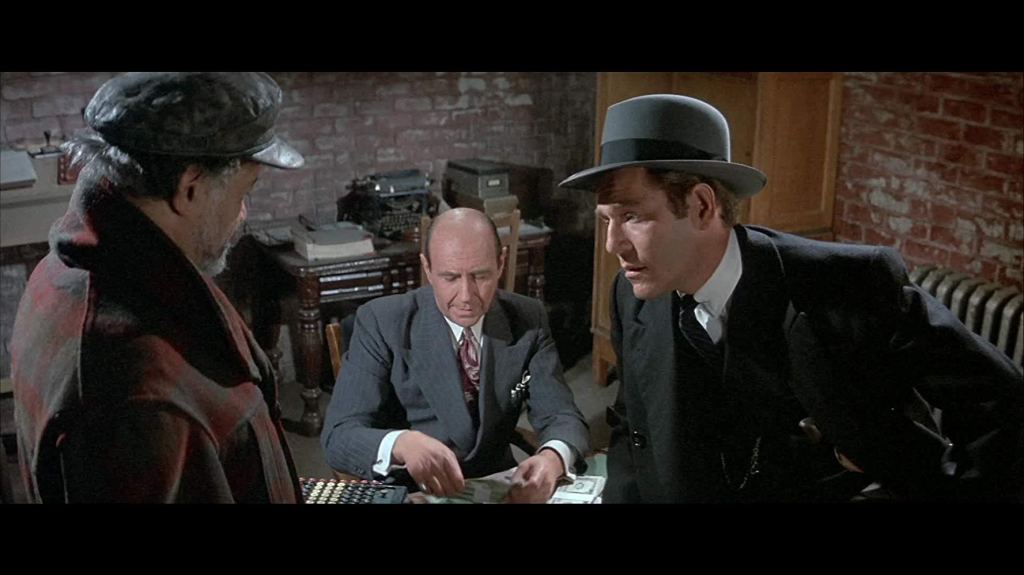
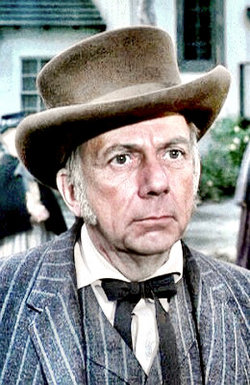
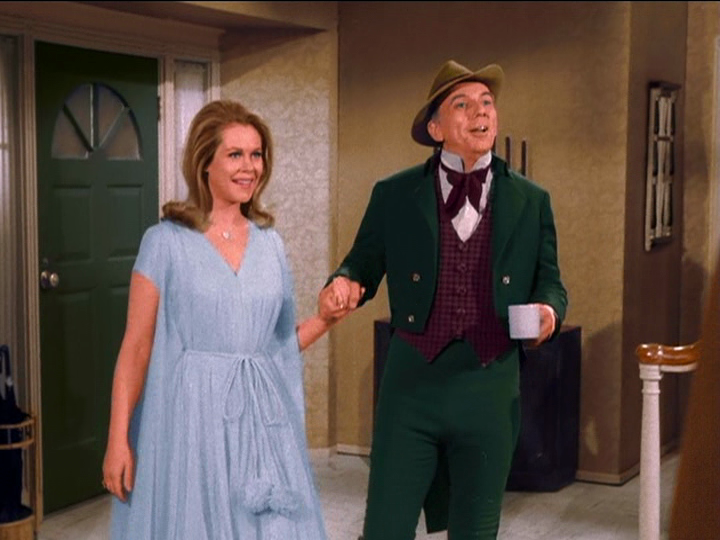
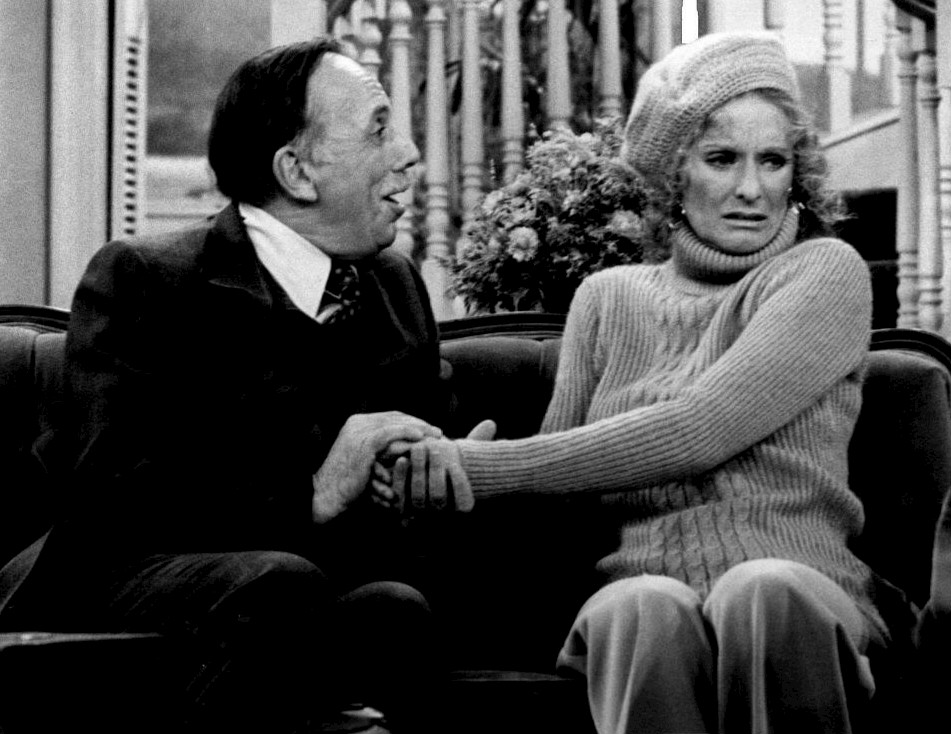
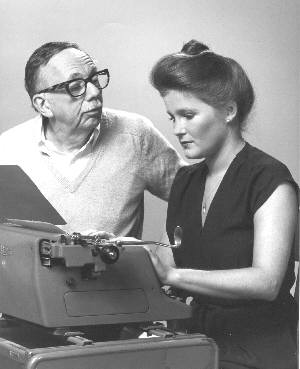
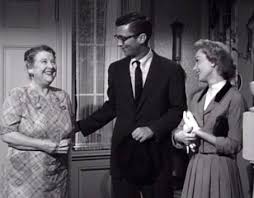
Don Adams: Always Smart

This month our blog series is titled “All About The Bill Dana Show.” The first week in March we learned about the show and now we have been spending time with some of the cast. We end our series with Don Adams.

Adams was born Donald James Yarmy in Manhattan in 1923. Don was a blend of cultures, Hungarian Jewish on his dad’s side and Irish-American on his mom’s. Don was raised Catholic while his brother Dick was raised Jewish. I could not find out what their sister decided to do. She later became a writer under the name Gloria Burton and wrote a script for Get Smart. His brother was also an actor. Dick has about 50 acting credits and appeared in many of the most popular sitcoms during the sixties and seventies, including three appearances on Get Smart.

Adams dropped out of high school and went to work as a theater usher. In 1941 he joined the US Marine Corp. At one point he was injured during a Japanese assault on Tulagi. He was the only survivor from his platoon. While recovering, he came down with blackwater fever, a side effect from malaria and was evacuated to New Zealand. He was not expected to recover, but when he did, he was sent back to the US as a Marine drill instructor.

After his discharge, he moved to Florida to work as a comedian. He refused to do material he considered “blue” and was fired.

In 1947 he married Adelaide Efantis, and her stage name was Adelaide Adams. Don decided to take the name Adams as well for his stage name. He worked as a commercial artist and cashier to support their family.

In 1954, Don was the winner of Arthur Godfrey’s Talent Scouts with a comedy act written by Bill Dana. He began making appearances on The Steve Allen Show, where Dana was a writer. In 1961 he became a regular on the Perry Como Show.

About this time, Don and Adelaide divorced, and Adams married Dorothy Bracken, another actress. They split up in 1977 when he married Judy Luciano, also an actress but that marriage also ended in divorce. (I could only find one credit for his last two wives; Bracken was on Get Smart, while Luciano appeared on The Love Boat.)

While discussing his marriages, Don said “I’m no longer independently wealthy. I guess it’s the result of too many wives, too many kids and too much alimony. I’ve been paying alimony since I was 14 and child support since 15. That’s a joke, but not by much. . . I like getting married, but I don’t like being married.”

In 1963 Adams was offered the role of Byron Glick, hotel detective on The Bill Dana Show. As we’ve discussed this month, the show was on the air for a season and a half. While working on the show, Don was also the voice of cartoon Tennessee Tuxedo which he continued doing until 1973.

During those years he also made an appearance on The Danny Thomas Show and on Pat Paulsen’s Comedy Hour.

In 1965 he was offered the role of Maxwell Smart in a new spy satire, Get Smart.

The sixties saw westerns being overtaken by spy shows such as The Man From U.N.C.L.E., I Spy, The Pink Panther, and The Avengers. Mel Brooks and Buck Henry decided to try their hand at writing a campy sitcom and Get Smart was born.

The role of Smart was created for Tom Poston, but ABC turned it down, and NBC said yes. They had Adams under contract, so he got the part. Rounding out the cast was Edward Platt as the Chief and Barbara Feldon as Agent 99.

Smart and 99 had great chemistry and married in a later season. Feldon and Adams remained life-long friends.

One of the most memorable parts of the show was all the catch phrases Adams created on the show including “Sorry about that Chief,” “Would you believe,” and “Missed it by that much.”

In addition to acting, Adams worked as a producer and director on the show. He was nominated for an Emmy from 1966-1969. He won three of those, losing to William Windom for the little-remembered one-season show, My World and Welcome to It. Lloyd Haynes from Room 222 and Bill Cosby for The Bill Cosby Show were also nominated that year.

The show moved to CBS for the final season, but the ratings never recovered, and the show was canceled after that year.

Like so many of our successful actors with unusual characters, Adams suffered from typecasting after the show ended. He did become part of two additional sitcom casts during his career.

In 1971 he was on The Partners. According to imdb.com, the plot is that “Lennie Crooke and George Robinson are inept detectives teamed up to solve crimes. Captain Andrews is their exasperated boss, Sgt. Higgenbottom is a smarmy co-worker, and Freddy confesses to most of the neighborhood crimes.” Adams played Crooke, but the show only produced 20 episodes.

In 1985, Adams tried a sitcom again on Check it Out. This one was about a grocery store and its employees. Adams played Howard Bannister. The show lasted three seasons, ending in 1988. The show was not very popular in the US but was a hit in Canada.

In between those two shows, Adams appeared in a handful of series including Fantasy Island, The Fall Guy, The Love Boat, Empty Nest, and Nick Freno: Licensed Teacher. He made most of his salary appearing in nightclubs. He also had his Smart character resurrected in several big screen films and television series.

Because of the typecasting, he returned to animation and found a lot of success, especially with Inspector Gadget which he voiced from 1983-1999.

He also tried his hand at a game show. Called Don Adams’ Screen Test, it had an interesting concept. The show was filmed in two 15-minute parts; Adams would randomly select an audience member to recreate a scene from a Hollywood movie such as From Here to Eternity with Adams as director. It ended after 26 episodes.

In his spare time, it sounds like he visited the racetracks, betting on horses. He also spent a night a week at the Playboy Mansion playing cards with Caan and Rickles. He loved history and studied Abraham Lincoln and Adolf Hitler in depth. He also wrote poetry and painted.

Don passed away in 2005 from a lung infection and lymphoma. The eulogists at his funeral included James Caan, Bill Dana, Barbara Feldon, and Don Rickles.

It’s hard to know what to make of Adams’ career. Obviously, he was hard working, an excellent Marine, and a man of many interests. He was fired for not performing blue material but then put horse racing and gambling above the needs of his family, according to several of his friends. He created the amazing role of Maxwell Smart, one of the best characters in television history, but that feat kept him from achieving other great roles in the following decades due to typecasting. It sounds like Check It Out was very popular in Canada, so maybe if he had been given a few chances to create characters different from Smart in a couple other sitcoms, it would have helped.

I feel bad for those actors who are so successful in the characters they help create that they are barred from future jobs, but then again, those characters are some of the best actors in television: George Reeves as Superman, Ray Walston as My Favorite Martian, Henry Winkler from Happy Days, Frank Cady from Green Acres, and Jack Klugman from The Odd Couple. I guess you trade being warmly remembered for fewer quality roles.

Apart from Get Smart, I knew little about Adams before writing this blog, so it was fun to get to know him a bit.
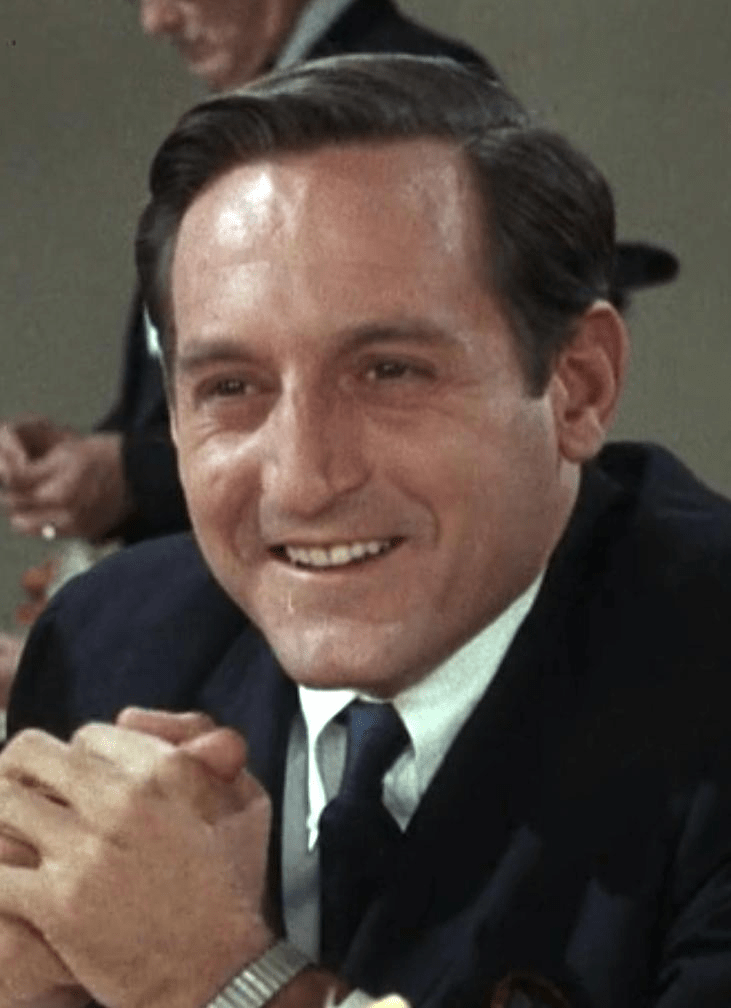
Noam Pitlik: What a Character

📷imdb.com

This month we are right in the middle of one of my favorite blog series, What a Character. This week we are delving into the career of Noam Pitlik; in addition to his acting, he won an Emmy for his work as a director. Which show? Let’s find out.

Pitlik was born in Philadelphia in 1932. After graduating from high school, he enrolled at Gratz College and later was a theater major at Temple University in 1954. Pitlik had a two-year stunt in the Army and earned a master’s degree in theater at New York University.

He began his acting career on WCAU in a western. In 1951, he was hired for the set design and construction crew for the Philadelphia Experimental Theater. He carried a bit of his hometown with him when he was part of the Summer Theater Guild in Indiana, Pennsylvania in the “Philadelphia Story.” He was hired for his Broadway debut in an off-Broadway production of The Threepenny Opera.”

📷imdb.com

In 1961 he moved to Los Angeles and received his first television roles, appearing on Cain’s Hundred and Dr. Kildare. Cain’s Hundred was not a show I remembered hearing much about. It was about a former underworld lawyer who works with the federal government to bring the top 100 criminals to justice. The show lasted one season. Pitlik had a variety of offers for shows throughout the sixties. Most of them were dramas and westerns, but we also see him on My Favorite Martian, The Munsters, Gidget, The Flying Nun, The Monkees, The Andy Griffith Show, The Doris Day Show, Get Smart, That Girl, and I Dream of Jeannie.

During the sixties, he married for the first time. His marriage with Jesse Blostein in 1967 would only last three years.

Pitlik also appeared in fourteen films and eight made-for-tv movies. The most memorable films are The Graduate, Fitzwilly, and The Fortune Cookie.

📷famousfix.com

The seventies were his most prolific decade of acting. He appeared in 26 different series, often in 2-5 different episodes. You’ll see Pitlik in reruns in a variety of genres including Hogan’s Heroes, Room 222, Bewitched, Love American Style, All in the Family, The FBI, Cannon, Mannix, The Partridge Family, The Bob Newhart Show, The Odd Couple, and Barney Miller. His last acting appearance was in Becker in 1998.

The seventies were also when he tried the role of husband again, marrying Linda Hirsch in 1974; this marriage also lasted three years.

He began directing in the seventies and obtained 39 directing credits throughout the next two decades.

📷imdb.com

In an interview with Temple University for the Alumni Review in 1979, Pitlik said that the switch in his career was not “a case of my needing to change functions for economic reasons.  I used to figure out what I made a day as an actor, and it was obscene. I changed for emotional reasons. I had become very frustrated by the kinds of things I was doing in acting, and I was looking for a change in my life that would be more challenging. I enjoyed acting, but I never seemed to get enough to do.” His first episode as director was on The New Dick Van Dyke Show. He directed 12 episodes for The Practice and 11 for Taxi.

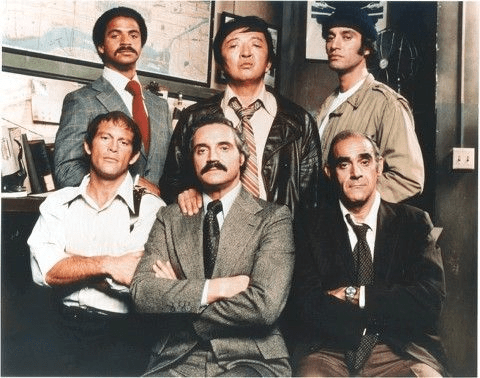
However, Barney Miller was where he perfected his skill as director for 102 of its 171 episodes. In 1979, he won an Emmy as Director for the show. He beat out Paul Bogart for All in the Family, Alan Alda and Charles Dubin for M*A*S*H, and Jay Sandrich for Soap. He also received a Peabody Award and a Directors Guild of America Award for his work on Barney Miller. He lost the Emmy in 1981 to James Burrows for Taxi. His co-nominees included Jerry Paris for Happy Days, Linda Day for Archie Bunker’s Place, Burt Metcalfe and Alan Alda for M*A*S*H, and Rod Daniel for WKRP in Cincinnati.

📷tumblr.com Cast of Barney Miller

In the Temple interview, Pitlik said that his “main responsibility is to create an atmosphere in which each of the people involved in the production can conform to their best work. Although a director oversees all aspects of the production, there are many people involved, and he’s dependent on all of them. There’s no more collaborative business than the television business. Each person contributes to the success or failure of a show whether he or she is a writer, actor, cameraman, or whatever.”

In 1995 he began directing episodes of The Home Court and did so for 14 of the 20 episodes. I must admit I do not remember this show at all. The synopsis was Sydney Solomon was a family court judge who had to deal with the toughest prosecuting attorneys and repeat offenders. However, her biggest challenges came when dealing with her kids, four boys aged 11-19.

📷pinterest.com

Pitlik had better luck with his third marriage to Susan Whittaker which lasted from 1986 until his death in 1999. Whittaker was a television producer. Noam passed away from lung cancer at age 66.

Like Jerry Paris, Pitlik had a very successful acting career before finding his passion behind the camera. If you are responsible for directing a series, Barney Miller is a great accomplishment. It was fun to learn more about his career both in front of and behind the camera.

Linda Evans’ Destiny was Working with John Forsythe

This month we are looking at some of our favorite “Supportive Women.” Today we are taking a closer look at the career of Linda Evans.

Photo: vintageeveryday.com

Born Linda Evenstad in 1942 in Hartford, Connecticut, she was the middle child of three sisters. Both her parents were professional dancers. When she was six months old, the family moved to North Hollywood. Linda graduated from Hollywood High School with Stefanie Powers, who we will be talking about next week. Like Morgan Fairchild, who we will be discussing in two weeks, Linda took drama classes to help her deal with shyness.

Linda was engaged to Patrick Curtis, but they never married. He later became a press agent and married Raquel Welch.

Linda’s first two roles were on two of my favorite sitcoms. In 1960, she guest starred on Bachelor Father where Bentley Greg (John Forsythe) raised his niece Kelly (Noreen Corcoran) with the help of his houseboy Peter (Sammee Tong). Her second appearance was on The Adventures of Ozzie and Harriet. During the sixties, she would appear on a variety of shows including Dr. Kildare, Wagon Train, and My Favorite Martian.

Photo: pinterest.com

Her first made-for-tv movie was 1962’s Buttons with Beaus, and her first big screen feature came a year later in Twilight of Honor; her second movie was Beach Blanket Bingo in 1965 where she played Sugar Kane.

It was in 1965 that Evans began dating film director John Derek. They would marry in 1968 and separate in 1973 when Linda learned he was dating the actress who became known as Bo Derek.

1965 was also the year she was offered her first role as a regular cast member of a series. She became Audra Barkley from 1965-1969 on The Big Valley. The western was very popular. Similar to Bonanza, in this show, Victoria Barkley managed to raise her family and keep the villains at bay.

She and Barbara Stanwyck, who played her mother Victoria on the show, became very close. Stanwyck continued to refer to her as Audra after the show ended. Linda says Barbara was a great mentor and friend to her.

In 1967 when Derek was filming Evel Knievel’s famous motorcycle jump over the fountains at Caesar’s Place in Las Vegas, he asked Linda to take over one of the cameras, and she shot the famous footage of Knievel’s devastating crash.

During the 1970s she kept busy with television appearances on dramas including McCloud, Banacek, Harry O, McMillan and Wife, and The Rockford Files.

With “mom” Barbara Stanwyck Photo: imdb.com

In 1975, she married Stan Herman, a real estate tycoon. They were married four years before splitting up. She never married again.

From 1976-1977 she again accepted a role as a regular on the show Hunter. The series only lasted fourteen episodes before being canceled. Not to be confused with the show from the 1980s, in this one, US government special agents James Hunter (Tony Franciscus) and Marty Shaw (Evans) take on missions around the world. He posed as a bookstore owner, and her cover was a model. I admit I have never seen this show, but it sounds like a seventies version of I Spy.

During the 1980s, her career was split between two primary shows: The Love Boat and Dynasty. Dynasty was on the air from 1981-1989. When Dallas became extremely popular, ABC commissioned Aaron Spelling to come up with a primetime soap opera of its own. Evans was back on the air working with John Forsythe again as Blake Carrington, her wealthy husband. The basic premise of the show was that it was an upper-class version of the Hatfields and the McCoys with the Carringtons and the Colbys feuding in the oil business in Denver, Colorado.

Dynasty with Forsythe and Collins Photo: imdb.com

Evans and Forsythe remained close friends for the rest of his life. She said he was “so magical. This show was so serious and he was funny personally. We’d be fighting and people would be strangling each other and he made me laugh all day long, I’ll be forever grateful to him for that.” The person Linda was often strangling was Joan Collins who played Alexis Carrington Colby, Blake’s first wife.

By 1984 the show had reached number one in the rankings. Linda was nominated for an Emmy for Outstanding Lead Actress in a Drama Series in 1983. She was beat out by Tyne Daly from Cagney and Lacey.

After the show was canceled, Evans stepped out of the limelight for the most part. She did film five made-for-tv movies during the 1990s and guest starred on Germany’s version of The Love Boat, Das Traumschiff, in 2020. In 2021, she was in a big-screen feature, Swan Song.

In 2011 Evans published a book, Recipes for Life: My Memories, a combination of candid memoir and inspirational cookbook. Despite her perfect figure, one of her weaknesses is pizza. On premierspeakers.com on April 10, 2018, she was quoted as saying “I love pizza so much, that if you wake me up in the middle of the night and ask me if I’d like to eat a slice, I’ll say YES. Kenny Rogers used to have it delivered to me while I was filming The Gambler.

Photo: dailyexpress.com

Linda seemed to enjoy her career. She is remembered for several well-known characters in Audra Barkley and Crystal Carrington. While she has given up acting for the most part, I would not be surprised to see her back on the big screen for another part or two if it’s the right offer.

How My Living Doll Became Cat Woman

This month we are learning more about some of our favorite robots in this blog series called “I Robot.” Today we go back to the mid-sixties for My Living Doll.

Photo: pinterest.com

This was both a science fiction and comedy show that debuted in September of 1964. Jack Chertok produced it for Television Productions with CBS. The show was filmed at Desilu studios. Chertok had been the creative force behind My Favorite Martian. James Aubrey, president of CBS, approached Chertok about doing another show. He did not even require a pilot to be made. Chertok’s writers from My Favorite Martian, Bill Kelsay and Al Martin, created the show from an idea proposed by Leo Guild. Kelsay wrote many of the episodes for Date with the Angels starring Betty White and several My Three Sons plots. Martin wrote for many earlier shows and screenplays including Roy Rogers.

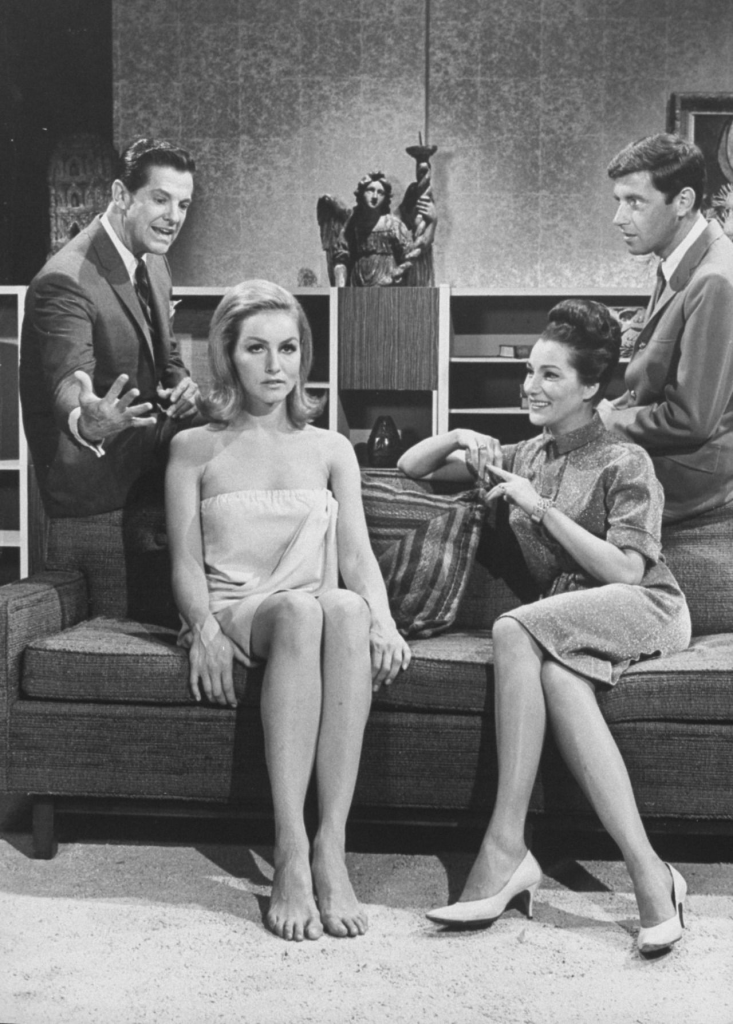
The plot they created was that Dr. Bob McDonald (Bob Cummings), a psychiatrist for the Air Force, was given Rhoda Miller (Julie Newmar), a lifelike robot to protect. He was trying to keep her out of the hands of the military. Rhoda’s formal name was AF709. Dr. Carl Miller (Henry Beckman) built her for the US Air Force but she eventually lands in McDonald’s care when Miller is transferred to Pakistan. His job is to help educate her to be the perfect woman while keeping her true identity a secret. Beauty marks on her back were the control buttons. Her main power switch was on her right elbow. Her eyes could be covered to prompt a system relaxation. Rhoda’s memory bank contained 50 million pieces of information. Bob told his coworkers Rhoda was Dr. Miller’s niece, and she took on the role of his secretary at the office, typing 240 words a minute. On other episodes, she learned to calculate where dice would fall and how to make trick shots playing pool.

In one episode, Rhoda is asked to play Chopin’s “Fantasie Impromptu” on the piano. Newmar actually played the piece herself. She had studied under concert pianist Dr. MacIntyre, and she said that scene is the only one she’s done with her playing the piano which had been her career choice before acting.

Meeting the Robot Photo: pinterest.com

Like I Dream of Jeanne, many of the episodes deal with Bob trying to keep Rhoda out of trouble while she is learning what society and the current culture is like. Rhoda learns human emotions throughout the first season; perhaps this would have led to a romantic relationship between the robot and the doctor.

Rounding out the cast was Peter Robinson (Jack Mullaney), Bob’s neighbor and coworker who thinks Rhoda is someone he wants to date. Irene Adams (Doris Dowling) plays Bob’s sister who moves in to act as housekeeper and chaperone so the neighbors are not suspicious of a single woman living there. On Love That Bob, Rosemary DeCamp played Bob’s sister who moves in to take care of the household for him. Mrs. Moffat was added later on as Peter’s housekeeper.

The show never really found its viewer base. The New York Times reviewer Jack Gould noted that it “very probably had the makings of a popular novelty hit . . . with Miss Newmar giving a light and amusing performance as the automated dish, the premise could work out . . . Bob Cummings, an old hand at chaperoning pretty girls, again is cast in his familiar assignment.”

Newmar didn’t feel that Cummings was the right actor for the role. She said that “They originally wanted Efrem Zimbalist Jr. It was not a flip part—it needed a straight actor who could play opposite this bizarre creature so the comedy would come off. That quality was lost when they hired Bob. The show could have been wonderful. I think it would have run for many seasons had they hired Efrem because he had the right qualities.”

Photo: yiddio.com

The ratings were not good; however, another issue was the fact that it was on Sunday nights against Bonanza, one of the most popular shows ever. In December, CBS moved the show to Wednesday nights but the ratings did not improve. In January, Cummings asked to be written off the show. CBS agreed but never got a replacement for him. He was said to have been transferred to Pakistan, and Robinson took over caring for Rhoda with his housekeeper living in his house again to keep the neighbors from talking.

Apparently, Cummings and Newmar never hit it off. She complained that he had tried to teach her to act and that he seemed unhappy that she was getting more press attention. Later Newmar stated that the real trouble on the set was Cumming’s addiction to methamphetamines. She said he had erratic behavior and became increasingly more depressed and insecure.

In her new home Photo: imdb.com

After Cummings left the show, another five episodes were aired, and then the show was canceled. The show ended up ranking 79th out of 96 shows. Two decades later, producer Howard Leeds would go on to create the show we will discuss next week, Small Wonder.

I was not able to confirm it, but I read several sources that said this show coined the term, That does not compute” which is what Rhoda said when she was asked something she did not understand.

During the summer of 1965, CBS aired repeats of the show. After that, the show was never seen on television again in the United States. Rumors were rampant about whether the 26 episodes had been damaged in a fire, hidden by Chertok, or destroyed. Two episodes seemed to have survived, but there were also reports that six or ten existed in all. CBS was able to obtain about half the episodes somewhere and released a DVD with them on it. We will have to see if the additional episodes ever show up or not.

Transitioning to Cat Woman Photo:designyoutrust.com

This was another of those shows that seemed to suffer from an identity complex. Cummings was known as a ladies’ man to viewers from his seasons on Love That Bob. If the show was not going for romance, then it seems that Newmar was correct in her assessment of Cummings being the wrong person for the role. With Bewitched debuting the same year and I Dream of Jeanne coming right on the heels of My Living Doll, it seems like one of the shows might not obtain enough viewers. Cummings’ addiction problems certainly did not help the show. Newmar should probably be happy the show ended when it did, allowing her to step into the role of Cat Woman on Batman. Like My Living Doll, Cat Woman had all the qualities Batman admired and wanted in a romantic partner, but unlike Rhoda who was not human, Cat Woman was all too human and too much of a villain to allow Batman to act on his passion for her.

Although the show debuted almost sixty years ago, many of the issues of working with a robot are still with us today as scientists work on giving robots a sense of humor and some empathy. We are seeing more of them in the workplace, and it will be interesting to see if any new shows take up the subject in the near future.

Gavin MacLeod: Murray Slaughter Takes Up Sailing

Photo: metv.com

As we wind up our up close and personal blog series, we are focusing on Gavin MacLeod. I have mentioned Gavin MacLeod’s name a lot in my blogs, but I have never devoted an entire to blog to him, so today is the day. Gavin had an impressive career; he starred in three sitcoms but those three garnered him almost 500 episodes. In addition, he took on more than a hundred guest roles on both the small and big screen.

MacLeod was born Allan George See in 1931 in New York. His mother worked for Reader’s Digest, and his father was an electrician. In 1952, MacLeod graduated from Ithaca College with a bachelor’s degree in fine arts, studying acting.

On Perry Mason Photo: imdb.com

He served in the US Air Force where he wrote, produced, and directed plays. After his service, he moved to New York City. While tackling acting auditions, he worked at Radio City Music Hall. While working as an usher there, he met Joan Rootvik, a Rockette. They married in 1955 and had four children. About this time, he took on the name Gavin MacLeod. MacLeod was a tribute to his acting coach at Ithaca, Beatrice MacLeod.

His movie career began with three movies in 1958. He would make 20 more before 2005, including Operation Petticoat and The Gene Krupa Story.

His television appearances began in 1957 on The Walter Winchell File. He would make another lucky 13 performances during the fifties including The Thin Man and Whirlybirds.

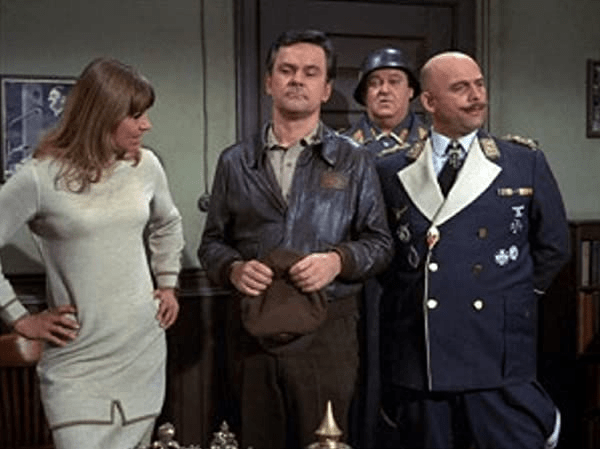
On Hogan’s Heroes Photo: pinterest.com

The sixties kept him busy. He took on comedy in The Dick Van Dyke Show, The Munsters, Gomer Pyle USMC, The Andy Griffith Show, My Favorite Martian, The Flying Nun, and several different characters on Hogan’s Heroes. Westerns called him for Rawhide, The Iron Horse, Death Valley Days, and The Big Valley. He landed dramas including The Man from UNCLE, Perry Mason, Ironside, Hawaii Five-0, and Ben Casey.

From 1962-1964 he starred as Happy in McHale’s Navy. The show continued until 1966, but Gavin left the show halfway through. He was dealing with alcoholism, and he received an offer to make the movie The Sand Pebbles with Steve McQueen. However, he remained close friends with Ernest Borgnine, the star of the show, until his death in 2012. (He quit drinking in 1974.)

Murray and Mary Photo: showbizcheatsheet.com

During the 1970s, he appeared on Love American Style, Charlie’s Angels, and Wonder Woman, but the character we loved best during that decade was Murray Slaughter on The Mary Tyler Moore Show. From 1970-1977, Murray sat next to Mary, helping her through the ups and downs of life. Gavin was originally auditioning for the role of Lou Grant, but ended up reading for Murray. He and Ted Baxter were enemies on the show, but he and Ted Knight were dear friends in real life. They had lived near each other before being cast in the show.

During the run of the show, Gavin and his first wife divorced, and he married his second wife Patti Steele. That marriage also ended in divorce in 1982. Patti became part of a Bible Study group after their divorce and became a Christian. Gavin reached out to her, also became a Christian, and they remarried in 1985.

Photo: travelweekly.com

Upon the ending of Mary’s show, he was immediately hired as Captain Stubing on The Love Boat. This time he was in charge of his coworkers. One of his best friends was Bernie Kopell who played Dr. Adam Bricker on the show. Gavin was on the seas for a decade. His best friend Telly Savalas (the lollipop-loving Kojak star) popped up on The Love Boat; the two were very close until Telly’s death in 1994.

When the show ended in 1987, he got a well-deserved break, but he still managed to find time to tour with Michael Learned in “Love Letters.”

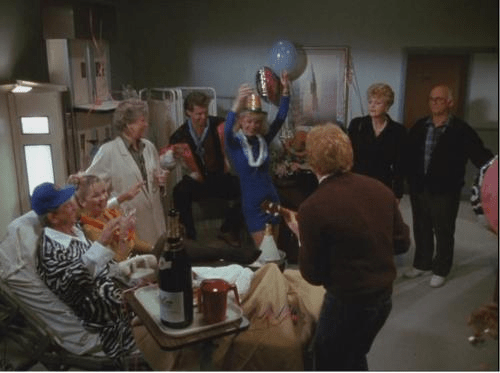
Celebrating on Murder She Wrote Photo: imdb.com

He landed a variety of television show appearances in the 1990s and 2000s, including Murder She Wrote, King of Queens, JAG, and That 70s Show. His final appearance was in 2014 on The Comeback Kids; then he decided to retire. He also did several musicals after The Love Boat including “Gypsy,” “Annie Get Your Gun,” and “Gigi.”

MacLeod and his wife hosted a show on marriage on Trinity Broadcasting Network for 17 years. He also served as the honorary mayor of Pacific Palisades from 2006-2011 when Sugar Ray Leonard took over.

The Love Boat was a big part of his life. Instead of being bitter about being typecast, he embraced the role. He celebrated his 80th birthday in 2011 aboard the Golden Princess with his family, celebrating with a 3D replica cake of The Pacific Princess, his boat on the show.

Photo: princesscruises.com

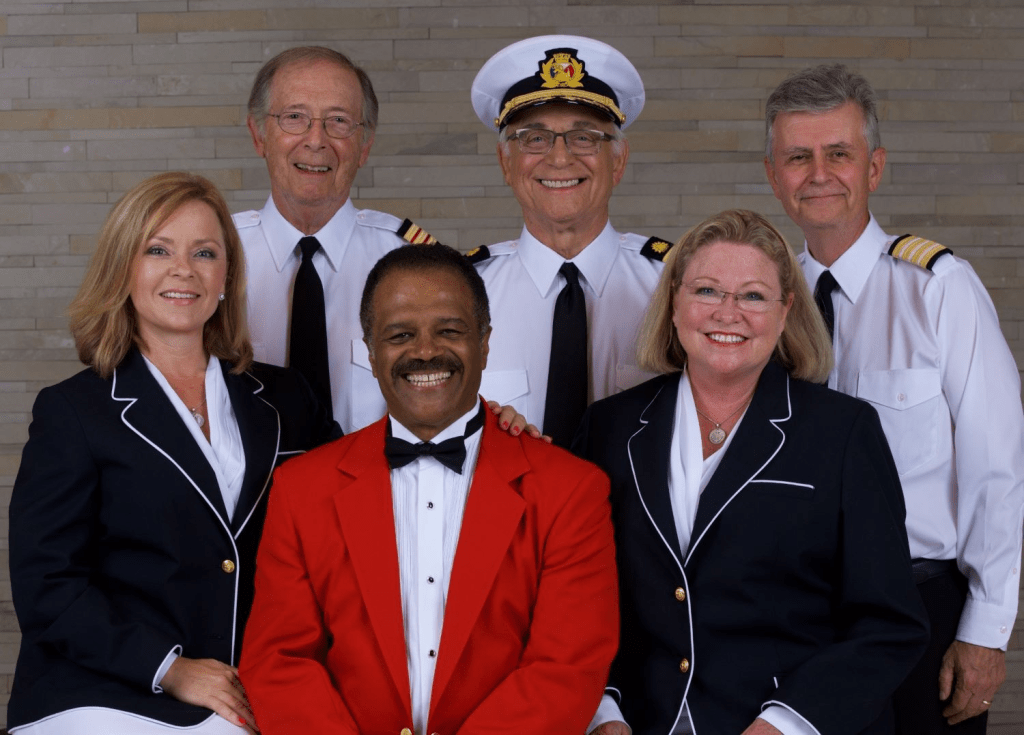
In 2013, MacLeod joined his former coworkers on The Talk for a cast reunion. Several members of the cast including Gavin took part in The Rose Bowl Parade in 2015.

The cast apparently was very close. Ted Lange who played bartender Isaac Washington mentioned the crew in an interview in 2017 with “The Wiseguyz Show,” saying “Oh yeah, sure, Gavin was wonderful. Gavin lives down here in Palm Springs and we’re still tight, all of us, Gavin and Bernie and Jill; we still see each other. Fred [who played Gopher] lives in a different state, we’re still close, we’re still good friends.”

In his spare time, Gavin enjoyed traveling, playing tennis, dancing, golfing, sailing, reading the Bible, and watching movies. Gavin passed away in May of 2021 at his home.

Photo: twitter.com

During the past decade, he released a memoir, This is Your Captain Speaking: My Fantastic Voyage Through Hollywood, Faith & Life. He explained his goal for writing this book: “My life has taken one incredible turn after another,” writes MacLeod. “I’ve gotten to do what I wanted to do. I’ve been a captain! I’ve been given this incredible gift of life and now I want to use it to give back. That’s why I’m sharing my story here, the fun parts and even some not-so-fun parts, in the hopes that maybe someone will take a nice walk down memory lane with me – and maybe I’ll even give someone a little bit of hope.”

Good memories and a little bit of hope is all we can ask for; thanks, Gavin, for giving that to us.

Herbie Faye: What a Character – Just an Average Guy Whose Performance Was Anything But

September is What a Character month, and today we end our series with a look at the career of Herbie Faye. Faye was born in 1899 in New York City. He began working with Mildred Harris in vaudeville in 1928. Phil Silvers was one of the supporting cast members, and their friendship would prove fruitful for his future television career.

Photo: imdb.com

In the forties and fifties, Faye tried his luck on Broadway, appearing in a variety of shows including “Wine, Women, and Song” in 1942 and “Top Banana” in 1951.

He also began a career on the big screen in the fifties. His first film was the movie version of Top Banana in 1954. He would appear in 17 movies; in fact, his last acting credit was the movie Melvin and Howard in 1980. In between, he appeared in a variety of genres including Requiem for a Heavyweight starring Anthony Quinn, The Thrill of It All with Doris Day, and The Ghost and Mr. Chicken with Don Knotts.

In 1950, at the age of 51, Faye made his first television appearance. He appeared in two episodes of Cavalcade of Stars. You would have also seen him in Our Miss Brooks, The Goldbergs, and Hennessey in the fifties.

Photo: papermoonloveslucy.com

When Phil Silvers got his own show in 1955, he hired Faye to play Corporal Sam Fender which he did for 139 episodes between 1955 and 1959. This was a hilarious show and hasn’t lost its charm with time. In addition to the primary characters, there was a group of about a dozen secondary characters who appeared along with Faye. Eventually, the costs became too high, and the show was canceled.

Phil Silvers Show Photo: alchetron.com

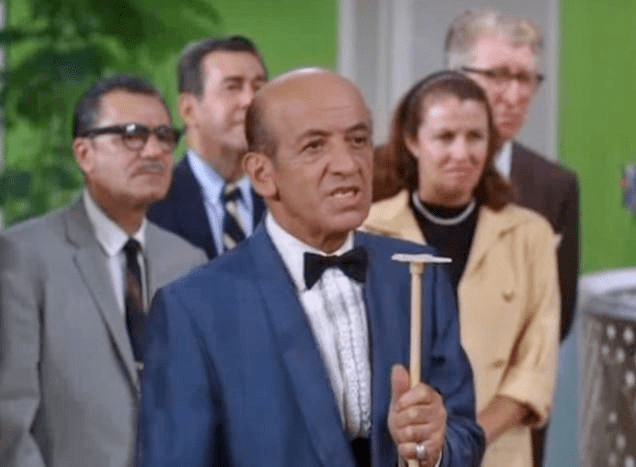
Faye was extremely busy in the sixties. He must have been good at his job because he was cast in more than one show on several of the series he worked for. He was four different characters on The Danny Thomas Show, six on The Dick Van Dyke Show, five on The Joey Bishop Show, two on My Favorite Martian, two on Bewitched, three on The Andy Griffith Show, four on The Gomer Pyle Show, two on I Dream of Jeanne, two on That Girl, four on Petticoat Junction, two on Mayberry RFD, two on Jack Benny as well as 27 other shows all in the sixties. On top of all those appearances, he was part of the cast for two additional television shows: The New Phil Silvers Show from 1963 to 1964 as Waluska and as Irv on Accidental Family in 1967.

In November of 2018, KJ Ricardo spotlighted Faye in her You Tube channel show about The Dick Van Dyke Show. Herbie was Willie, the deli owner who delivered lunch to the comic writers on the show. He appeared in six of the shows. In his first appearance, Rob is trying to leave the office because he thinks Mary is in labor but every time he tries to leave, the Danish cart is in the way. On the third and fourth episode, he starts critiquing the ideas the writers have and making

Willie Photo: televisonsnewfrontier.blogspot.com

comments on what works and what doesn’t. They are pretty funny.

He continued his busy career throughout the seventies when he made one-time appearances in eleven different shows including The Mary Tyler Moore Show, The Bob Newhart Show, Love American Style, Happy Days, and Barney Miller. He made multiple appearances on several other shows including Mod Squad (3), Here’s Lucy (4), The New Dick Van Dyke Show (4), The Odd Couple (6). He also had a recurring role on Doc where he played Ben Goldman from 1975-76.

Faye passed away in Las Vegas in 1980.

Herbie Faye was a very funny guy.  He was just an average guy, but he had a way of focusing the viewers’ attention just on him for the brief time he appeared; he made the episodes he was in even better. I guess that is the ultimate definition of a great character actor.

The Lone Ranger Rides Again . . . And Again . . . And Again

Like most of the westerns we are studying this month, The Lone Ranger first aired as a radio series. In 1933, the masked hero and his best friend Tonto, traveled throughout the Old West, capturing outlaws and putting them behind bars.

Fran Striker began reworking some old scripts about westerns in 1932. Those stories became The Lone Ranger. George Trendle brought Striker in to work on the radio scripts in 1933 when the show debuted. Striker continued to pen books about the hero with his first being The Lone Ranger in 1936 and his last The Lone Ranger on Red Butte Trail in 1961, 25 in all.

The Lone Ranger Rides by Fran Striker

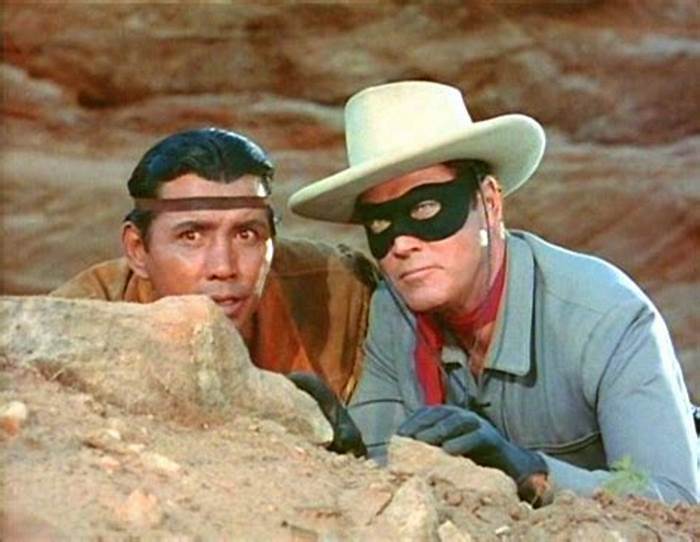
The television show began in 1949 and ran for eight years. Clayton Moore portrayed the ranger and Jay Silverheels portrayed Tonto. Silverheels was a full-blooded Mohawk Indian from the Six Nations Indian Reservation in Ontario, Canada. In season three, Moore was temporarily replaced by John Hart, but he returned for the final two years. The other recurring character we see during the series is the ranger’s nephew Dan Reid played by Chuck Courtney. This was ABC’s first big television hit.

Photo: pinterest.com

The show began and ended the same way. As the show opened, the Lone Ranger’s horse would rear up on his back and the ranger shouted “Hi-Yo Silver.” At the end of the show, someone would as “Who was that masked man?” Another repeated phrase from the series was “Kemo sabe.” Tonto called the Ranger this which translates to “faithful friend.”

The backstory of the ranger is that a patrol of six Texas Rangers was massacred and only the Lone Ranger survived. He now wears a mask to protect his real identity and he and Tonto, who nursed him back to health, travel around bringing justice to the territories. The ranger owns a silver mine which is why he named his horse Silver and why he carries silver bullets.

Photo: pinterest.com

MGM film veteran producer Jack Chertok was brought in to produce the show. He would later produce Ann Sothern’s show Private Secretary and My Favorite Martian.

This show was produced and filmed differently than most shows in the classic age. Seventy-eight episodes were broadcast for consecutive weeks. Then they were all shown for a second time. After 156 weeks, they decided to film another 52 shows but there was a controversy and Moore left the show and was replaced by John Hart. Again the 52 filmed shows were consecutively shown and then rerun. For the next season, the original creator George Trendle sold the rights to Jack Wrather in 1954. Wrather hired Moore again and produced another 52 shows which were shown and then rerun. For the final year, only 39 episodes were produced with Sherman Harris taking over as producer. The final season was the only one shot in color. Because there were only new episodes in five of the eight years, only 221 shows were produced.

At this point, film stars were still avoiding television, seeing it as a temporary competition with films. Therefore, most of the guest stars we see on the show were actors who went on to have successful television careers. Some of those include Michael Ansara, James Arness, Frances Bavier, Hugh Beaumont, Dwayne Hickman, Stacy Keach Jr., Marjorie Lord, Martin Milner, Denver Pyle, and Marion Ross.

The Lone Ranger" Texas Draw (TV Episode 1954) - IMDb
Photo: imdb Marion Ross guest starred

This was one of the first series to be nominated for an Emmy; unfortunately, it lost to the first version of The Life of Riley starring Jackie Gleason. The nomination came in 1950 at the second Emmy ceremony. The early years had very limited categories for awards.

General Mills was the original sponsor for the show. They also sponsored the radio show from 1941-1961.

The Lone Ranger, first created and broadcast in Detroit, turns 86 this week  | Michigan Radio
Photo: michiganradio.com

The theme music was the classical piece, the William Tell overture. Rossini composed the piece in 1829.

Like Adam West and Batman, Clayton Moore really embodied the character of the Lone Ranger. After the show ended, he would make up to 200 appearances a year as the crime fighter. In 1979, Jack Wrather, who owned the rights to the character, sued him, but Moore won a countersuit allowing him to continue appearing as the masked hero.

The Lone Ranger was never permanently retired. Two animated series were released in 1966 and 1980. Also, both Silverheels and Moore starred in two big-screen features: The Lone Ranger (1956) and The Lone Ranger and the Lost City of Gold (1958).

In addition, Moore slipped into his costume again for a film in 1958 to promote the Lone Ranger Peace Patrol to convince kids to buy US Savings Bonds. A 2013 movie reboot came out with Armie Hammer in the starring role.

The Lone Ranger has had an iconic place in history for 87 years now. Almost every generation recognizes the hero, and his black mask is at the Smithsonian Museum. It’s pretty incredible for a show that really had five years’ worth of episodes made and has been off the air for 64 of those years. Although this era did not often portray African Americans or Native Americans very well, this show was about friendship, and I read very little about negative portrayals of anyone on the television series. You can easily find the episodes on DVD, Youtube, or a variety of network channels.

Photo: amazon.com

When my son who is now 29 was about 9, he was enthralled by westerns and watched The Lone Ranger and Daniel Boone.  Internet and email were newer forms of technology, but he was able to reach out to Fess Parker and Clayton Moore.  Both were very kind.  Moore sent him his autographed book with a written note. He still enjoyed discussing his time as the crime fighter. A classic man from a classic show.

Milton Frome: What a Character!

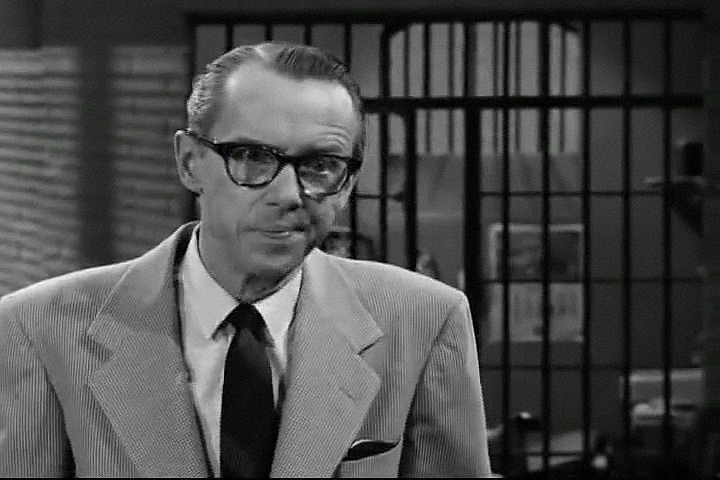
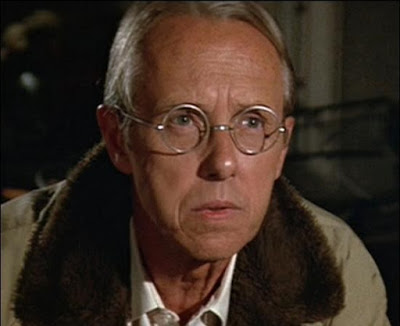
As we continue looking at some of our well-known character actors, today we consider the career of Milton Frome. Frome was born in Philadelphia in 1909. He began acting in his mid-20s.

Photo: watchviooz.com

His first major movie role was in Ride ‘em Cowgirl in 1939. Frome would go on to appear in 55 movies (including The Nutty Professor, Bye Bye Birdie, and With Six You Get Eggroll), as well as five made-for-TV movies. He also had a thriving television career beginning with Chevrolet Tele-Theatre in 1950.

Photo: amazon.com

Appearing in 34 different shows during the fifties, he performed in a variety of genres including dramas, comedies and westerns.

Photo: jimnolt.com
The Adventures of Superman

During that decade you would have seen him on I Love Lucy, Lassie, The Adventures of Superman, Playhouse Theater, The Thin Man, and The Gale Storm Show. He also worked with many comic legends on television, including Milton Berle, Red Skelton, and Dean Martin and Jerry Lewis.

Photo: tumblr.com
I Love Lucy

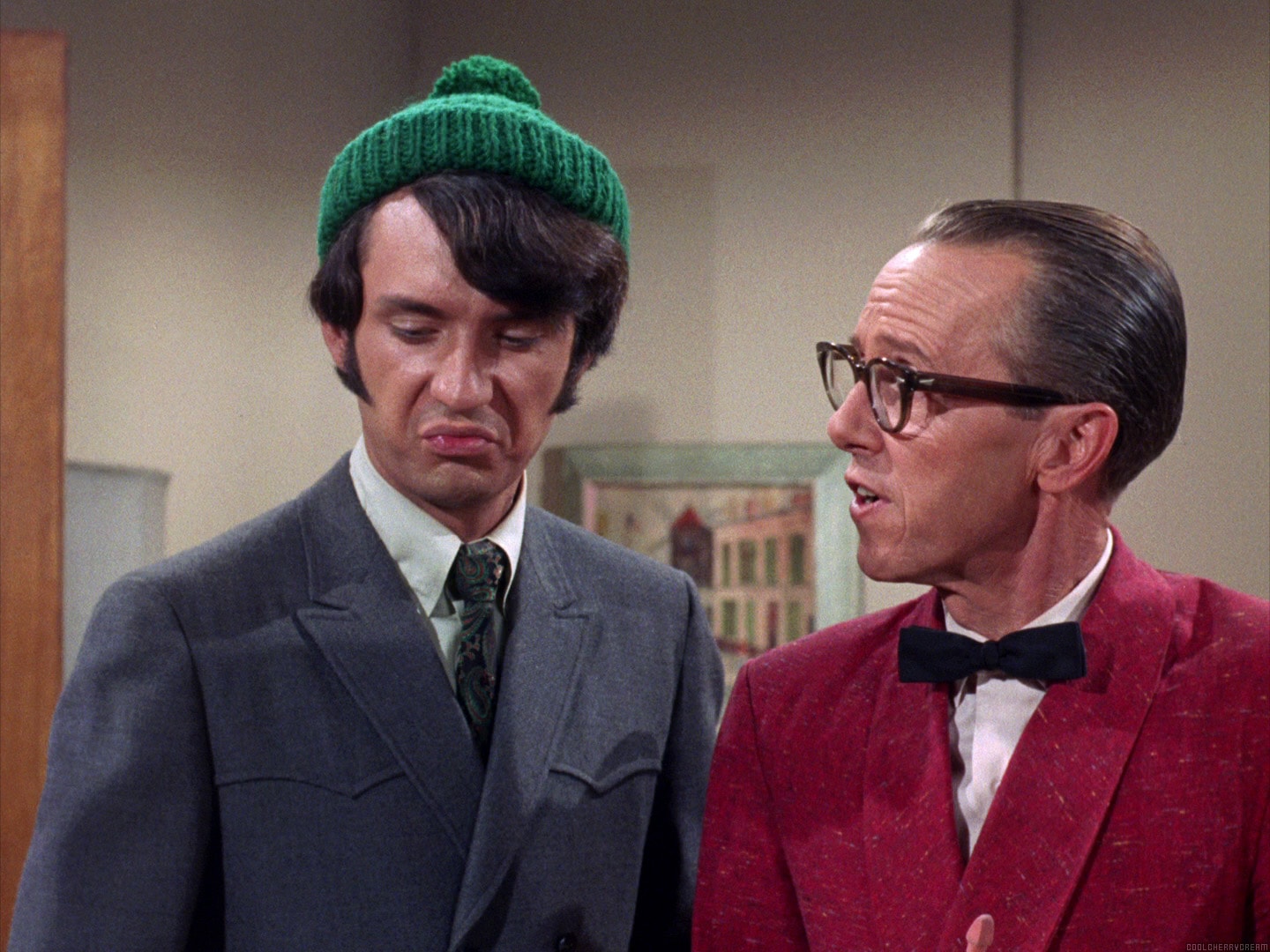
His career escalated in the sixties when he would accept roles in 48 programs. He showed up in dramas, including The Twilight Zone, 77 Sunset Strip, and Dr. Kildare. He also found his way into many westerns such as Bat Masterson, Death Valley Days, Gunslinger, Big Valley, Rawhide, and Wagon Train. However, he seemed to excel at comedies and during the 1950s you could have spied him in many sitcoms. He accepted parts in Bachelor Father, Pete and Gladys, The Jim Backus Show, The Dick Van Dyke Show, Mister Ed, The Joey Bishop Show, I Dream of Jeannie, My Favorite Martian, The Donna Reed Show, Gomer Pyle USMC, Bewitched, The Monkees, The Patty Duke Show, Petticoat Junction, and The Andy Griffith Show.

Photo: coolcherrycream.com
The Monkees

Frome was never offered a permanent role in a series, but he did have a recurring role in The Beverly Hillbillies, appearing eight times as Lawrence Chapman, who managed Jed Clampets Mammoth Studios.

Photo: imdb.com
St. Valentine’s Day Massacre

His television career slowed down a bit in the 1970s and became nonexistent by 1983, but he did make appearances in shows like Ironside, Columbo, Here’s Lucy, The Streets of San Francisco, Sanford and Son, and Trapper John MD. He also appeared in two Love American Style episodes in 1971 and 1973. In the 1973 episode, “Love and the Anniversary,” he played “The Man” and his son Michael played a bellhop.

Photo: sitcomsonline.coom
The Jerry Lewis Show

At some point, Frome married Marjorie Ann Widman, but I could not verify when they married. I also could not verify if Michael was their son, or his son from another relationship.*

Photo: batman.wikia.com
Batman

Frome passed away in 1989 from congestive heart failure.

While it is now easy to analyze and detail an actors professional career, it was very tough to find any information about Fromes personal life or his working relationships with other actors. It makes me sad that these hard-working actors who provided so much to our classic television-watching experiences are just not well known. Hopefully blogs like mine keep them in television viewers memories, and some day maybe I will have time to write a book about these unsung heroes of our pop culture history. Thanks for all you contributed to the golden age of television Milton Frome!

*In June of 2021, I heard from Jane Wallace Casey who provided some additional information for us: “I am Milton Frome’s niece. His first wife was Barbara Wallace with whom he had his son Michael.”

Just a Couple of Characters, Part 3: Henry Jones and Olan Soule

My series, “Just a Couple of Characters” continues with Part 3 today. This month, we learn more about actors we recognize but may not know much about. This week Henry Jones and Olan Soule are on the hot seat.

Henry Jones

Photo: en.wikipedia.org

Born in New Jersey in 1912 and raised in Pennsylvania, his grandfather was a first-generation Prussian immigrant who became a Representative. Henry went to St. Joseph’s College, a Jesuit school. He landed his first Broadway show in 1938, playing Reynaldo and a grave digger in “ Hamlet. ” Like many of the actors in the late 30s and early 40s, Henry joined the Army for World War II. He was a private. During his service, he was cast as a singing soldier, Mr.  Brown, in Irving Berlin’s “This is the Army.”

When he came back to the US, he married Yvonne Sarah Bernhardt Buerger in 1942. Sadly she passed away at age 22. This information was supplied by a blog reader, and I appreciate receiving the updated information because several sources refer to his divorce which is not the case. Yvonne’s father was a renowned surgeon. One of his patients had been Sarah Bernhardt which is where Yvonne go her middle name from.

Jones continued his stage roles and began a movie career. He had bit parts in 35 films, including The Bad Seed, Will Success Spoil Rock Hunter?, Vertigo, and Butch Cassidy and the Sundance Kid. He won a Supporting Actor Tony in 1958 for his performance of Louis Howe in “Sunrise at Campobello.”

Photo: fanpix.famousfix.com

In 1948 he married Judith Johnson. They had two children (one is actress Jocelyn Jones) but divorced in 1961.

Bridging the gap of television and film, he starred in seventeen tv movies as well.

Although his movie career kept him somewhat busy, it was nothing compared to his television work. Jones was credited with 205 acting appearances, meaning he had roles in 153 different television series. Jones was able to tackle a wide range of roles, being believable as a judge, a janitor, a murderer, or a minister. Jones had no illusions about becoming a romantic lead. He once said that “casting directors didn’t know what to do with me. I was never tall enough or good looking enough to play juvenile leads.”

Photo: findagrave.com

His first television appearance was in drama series, Hands of Mystery, in 1949. His work in the 1950s was primarily in theater shows about dramas. He also appeared in the George Burns and Gracie Allen Show and Father Knows Best.

Photo: michaelstvtray.com

He continued his drama roles into the 1960s. He also appeared in 3 episodes of The Real McCoys and westerns including Wagon Train, The Big Valley, and Daniel Boone. He showed up on mysteries such as the Man from U.N.C.L.E. and The Name of the Game. He also found work on unique shows including Lost in Space, Route 66, and the Alfred Hitchcock Show. Hitchcock liked his work and used him five times. He also appeared in several comedies, Bewitched and That Girl. He starred in Channing in 1963-64.  Jones played Fred Baker, a dean who mentors Professor Joe Howe who teaches English at Channing College while he writes his memoir about the Korean War.

During the 1970s, he continued to work on a variety of genre shows. We see him on westerns, The Virginian, Gunsmoke, and Bonanza. We see him in thrillers like The Mod Squad; McMillan and Wife; Owen Marshall, Counselor at Law; and The Six Million Dollar Man, on which he had a recurring role as Dr. Jeffrey, a scientist who built robots. However, comedies continued to be his mainstay, and he appeared in many of them including Nanny and the Professor, the Mary Tyler Moore Show, The Paul Lynde Show, The Doris Day Show, the Partridge Family, and Barney Miller.

commons.wikimedia.org

In addition to all his guest spots, he was cast in three shows during this decade. In The Girl with Something Extra, he played Owen Metcalf in 1973. The role he was best remembered for was Judge Johnathan Dexter on Phyllis. He was Phyllis’s father-in-law from 1975-1977. As Josh Alden, he appeared on Mrs. Columbo for thirteen episodes.

Photo: totallykate.com

Recurring roles comprised most of his television appearances in the 1980s. He continued to accept guest roles on such shows as Quincy ME, Cagney and Lacey, Magnum PI, Murder She Wrote, The Love Boat, and Mr. Belvedere. He would make regular appearances on Gun Shy, Code Name: Foxfire, Falcon Crest, and I Married Dora.

Jones continued to appear in shows in the 1990s, including Coach and Empty Nest. In 1999, he passed away after suffering from complications from an injury from a fall.

Olan Soule

Photo: pinterest.com

Olan Soule’s timeline was similar to Jones. He was born in Illinois in 1909, growing up in Iowa, and he passed away in 1994. While Jones’ grandfather arrived in America, Soule’s ancestors included three Mayflower passengers. He began his acting career on the radio.

In 1929 he married Norma Miller. They would be married until her death in 1992 and they had two children.

For eleven years, he was part of the cast of the soap, “Bachelor’s Children.” His roles changed when he transitioned to television. On radio, he could play any role, but his 135-pound frame prohibited him from getting many roles he played on radio. He told the Los Angeles Times during an interview that “People can’t get over my skinny build when they meet me in person after hearing me play heroes and lovers on radio.”

Photo: tralfaz.blogspot.com

However, he certainly was not lacking in roles. Soule is credited with more than 7000 radio episodes and commercials, 60 films, and 200 television series.

The 1950s found him appearing in many sitcoms, including George Burns and Gracie Allen, I Married Joan, I Love Lucy, December Bride, the Ann Sothern Show, and Dennis the Menace.

Photo: complete-hitchcock.com

He would appear regularly in Dragnet from 1952-59 and in Captain Midnight from 1954-56.

Photo: riflemanconnors.com

He got even busier in the 1960s, working nonstop. The only show he had a recurring role on was The Andy Griffith Show where he played choir director and hotel clerk John Masters. Other comedies he appeared on included The Jack Benny Show, Pete and Gladys, Bachelor Father, Make Room for Daddy, Mister Ed, My Favorite Martian, The Addams Family, The Monkees, Petticoat Junction, and That Girl. He also took on roles in suspense shows including One Step Beyond, the Alfred Hitchcock Show, and the Twilight Zone. He also specialized in westerns, including Maverick, Stage Coach West, Have Gun Will Travel, The Rifleman, Bonanza, Gunsmoke, and The Big Valley.

Photo: pinterest.com

He started the 1970s continuing to show up on series such as Family Affair, My Three Sons, McMillan and Wife, Cannon, Police Woman, and a recurring role on the comedy Arnie.

Photo: monkees.coolcherrycream.com

In the mid-1970s he began appearing on Battlestar Galactica and Project UFO. Most of his career in the decade was spent providing voiceovers for animated shows, primarily Batman.

The Towering Inferno Director: John Guillermin US Premiere: 10 December 1974 Copyright 1974 Twentieth Century Fox Film Corporation and Warner Bros. Inc.

In 1994, Soule died from lung cancer at age 84.

Both Soule and Jones were prolific actors who had long and successful careers. Neither one of them were the leading men type of actors, but they could tackle a wide range of roles. Soule once said, “Because of my build and glasses, I’ve mostly played lab technicians, newscasters, and railroad clerks.” Not a bad life for someone who loves acting. If you watch Antenna or Me Tv, chances are you will see these two characters pop up quite often.

Just a Couple of Characters, Part 2: Hope Summers and Madge Blake

Today we continue our series, Just A Couple of Characters, about character actors we recognize but might not know much about. Hope Summers and Madge Blake are two actresses you will recognize if you watched sitcoms in the 1960s or 1970s.

Hope Summers

Photo: en.wikipedia.org

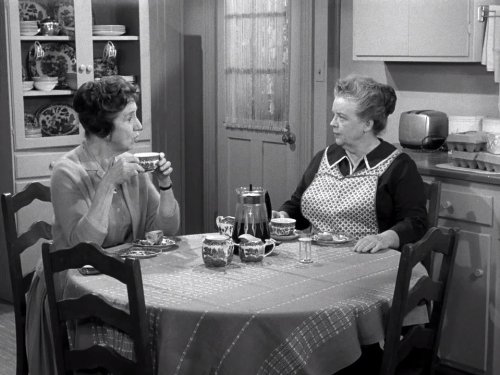
Born Sarah Hope Summers in 1902 in Mattoon, Illinois, Hope Summers often played the friendly, but nosy, neighbor. She’s best recognized as Clara from The Andy Griffith Show.

Summers became interested in theater early in her life. She attended Northwestern, majoring in speech. After graduation she stayed at the University and taught speech and diction. She then moved to Peoria and headed the Speech Department at Bradley University. She joined a few community theaters, putting on one-woman shows. She also acted in a few dramatic radio shows.

She married Claude Witherell in 1927, and they were married until his death in 1967. The couple had two children.

In 1950, she transitioned to television. She appeared in an early comedy series, Hawkins Falls: A Television Novel. Like Edward Andrews, she was often cast in roles older than her actual age. She became a popular actress quickly. She continued to appear in a variety of shows throughout the 1950s including Bachelor Father, Private Secretary, Wagon Train, Dennis the Menace, and the Loretta Young Show.

Photo: cscottrollins.blogspot.com
On The Rifleman

From 1958-1960, she would appear in The Rifleman as Hattie Denton.

In 1961, she received the role she would become most famous for, Clara, Bee’s best friend on The Andy Griffith Show. When Andy Griffith left the show in 1968, Hope continued with Mayberry RFD in her role of Clara for five episodes. Clara was a lonely spinster who lived next door to Andy and his family. She and Bee had fun sharing bits of gossip and talking about current events. Clara had a good heart and though she and Bee could get upset with each other, they truly cared about each other.

Photo: sitcomsonline.com

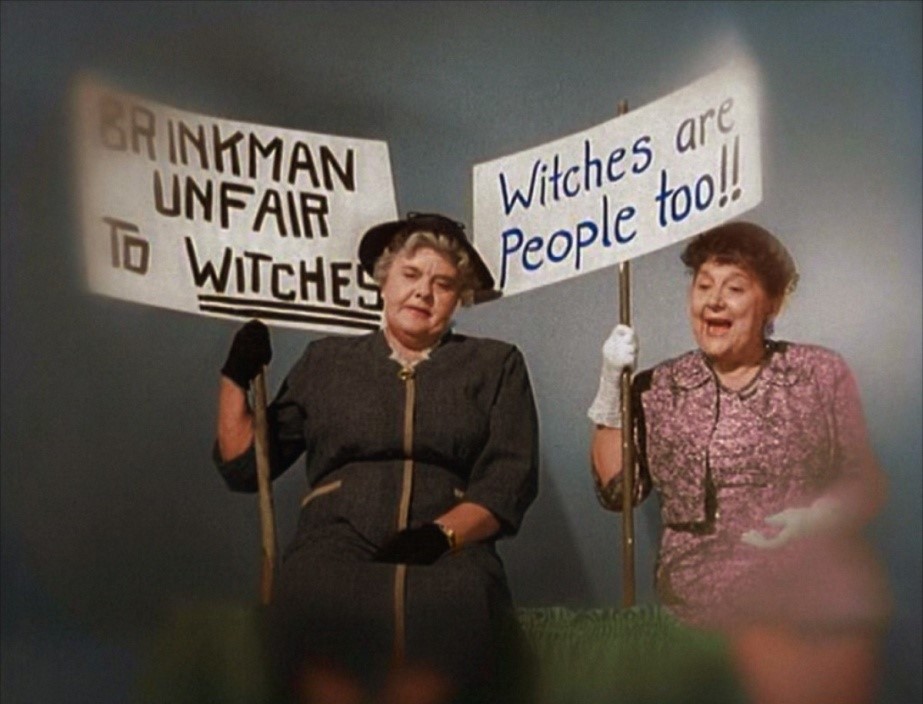
While playing the role of Clara, she continued to guest in series throughout the 1960s. She appeared on many of the hit shows of that time such as Dr. Kildare, Gunsmoke, Make Room for Daddy, Hazel, My Three Sons, The Dick Van Dyke Show, Petticoat Junction, The Phyllis Diller Show, Marcus Welby, That Girl, and Bewitched.

Photo: mash.fandom.com

During the 1970s, Summers kept her career going strong, appearing in Hawaii Five-0, M*A*S*H, Little House on the Prairie, and Welcome Back Kotter.

Photo: peorian.com
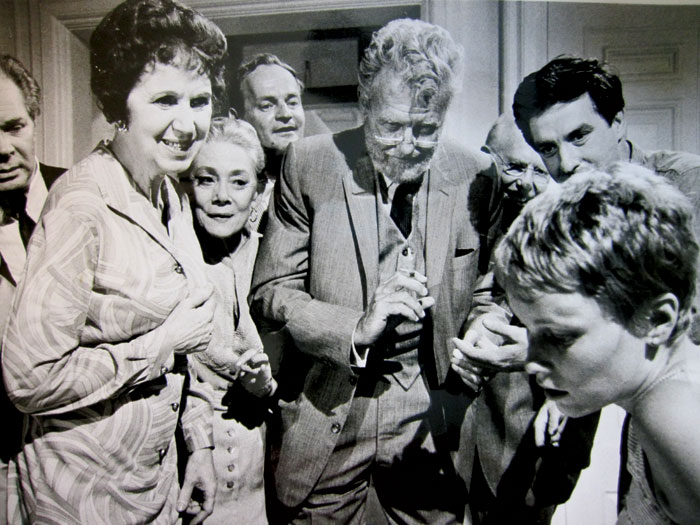
Playing a nice witch in Rosemary’s Baby

Although, Summers began her acting career during the second half of her life, she was also featured in several well-known movies. In 1960, she was in Inherit the Wind, The Shakiest Gun in the West, and Rosemary’s Baby in 1968, among others.

Photo: famousfix.com

Summers also was famous as the voice of Mrs. Butterworth in commercials.

In 1978 she was diagnosed with congestive heart failure and quit acting. She passed away from the disease in 1979.

Madge Blake

Photo: listal.com

While Hope Summers was part of the cast of The Andy Griffith Show, Madge Blake was busy portraying Aunt Harriet on Batman.

Born Madge Cummings in 1899 in Kansas, she, like Hope Summers, became interested in acting at a young age. Her father was a Methodist minister and he refused to allow her to give it a try. Oddly enough, Madge’s maternal uncle was Milburn Stone, Doc on Gunsmoke.

Photo: imdb.com

Although they later divorced, Madge married James Blake and they had one child. She had a fascinating career. Both she and James worked for the government during the war. They had top secret clearance for their project working on the construction of the detonator for the atomic bomb in Utah. They also performed tests on equipment used in the Manhattan Project.

Photo: actorz.ru

Also, like Summers, Blake turned to acting at a later age. When she was 50, she enrolled at the Pasadena Playhouse to study acting. She only had twenty years in the business, yet she managed to achieve an impressive 124 acting credits.

Photo: icollectors.com
Singin’ in the Rain

Blake would appear in 47 films in smaller, but impressive, roles. Some of her movies included An American in Paris, Singin’ in the Rain, Brigadoon, The Tender Trap, Bells Are Ringing, Ain’t Misbehaving, and The Solid Gold Cadillac.

Photo: pinterest.com
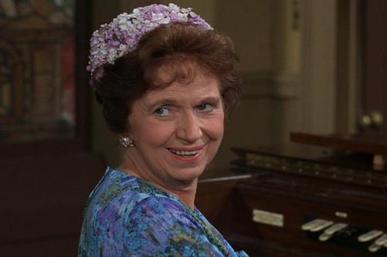
Margaret Mondello

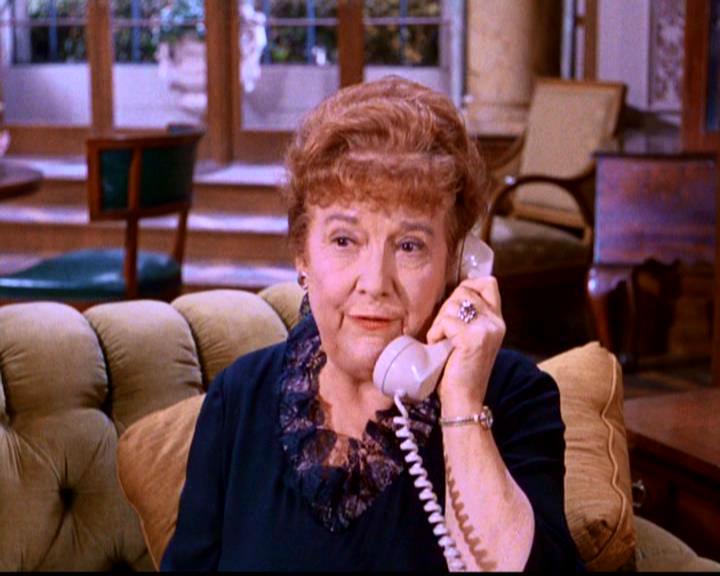
Beginning her television career in 1954, she racked up an impressive amount of guest star roles and several recurring roles. She played Tillie, the president of the Jack Benny fan club on The Jack Benny Show. She played Larry Mondello’s mother on Leave It to Beaver. An interesting aside is that she was asked to play Aunt Bee on The Andy Griffith Show where she would have worked with Hope Summers. Because she was locked into the role of Mrs. Mondello, she declined. She took the role of Mrs. Barnes, Joey’s mother, on The Joey Bishop Show. On the Real McCoys, she played Flora MacMichael, Grandpa McCoy’s love interest; Nurse Phipps on Dr. Kildare; and the role she became best known for, Aunt Harriet on Batman.  

Photo: channel.superhero.com

The network was worried about Batman and Robin living alone together on Batman, so the role of Aunt Harriet was added. The story line was that she raised Bruce Wayne in the family mansion. Their interaction with Aunt Harriet was also a reason for the dynamic duo to appear in their non-hero roles more often.

It would seem that coming into acting later in life and then appearing in so many movies and recurring television appearances would have kept her quite busy. But in addition to these appearances, she was cast in many of the most popular shows during her twenty years on television. During that time, you can find her on dramas like Public Defender, Lassie, The Restless Gun, and the Man from U.N.C.L.E.

Photo: tumblr.com
On I Love Lucy

Of course, she was meant to play comedy and she appeared on an incredible number of sitcoms. Just to name a few, there of them: George Burns and Gracie Allen Show, I Love Lucy, Private Secretary, Father Knows Best, Bachelor Father, The Adventures of Ozzie and Harriet, The Donna Reed Show, Make Room for Daddy, Bewitched, The Addams Family, My Favorite Martian, The Dick Van Dyke Show, Gomer Pyle, and The Doris Day Show. Pretty amazing.

Photo: vitabrevis.americanancestors.org
On Bewitched

I read over and over that one of her best performances was in the pilot for Dennis the Menace where she plays Dennis’s babysitter. I have not been able to watch that show, but I will definitely check that out.

Photo: allstarpics.famousfix.com
On Dennis the Menace

In 1969, Blake passed away from a heart attack after she broke her leg. She was only 70, or we might have had a much longer list of television series for her.

Hope Summers and Madge Blake had a lot in common. They both became interested in acting at an early age, they both had major careers before acting, they both began acting in the second half of their life, they both played neighborly types–Summers, nosier, and Blake, more ditzy. They also both had respectable film careers paralleling their television ones. Their television roles may have been smaller, but they were memorable, they are definitely two characters worth watching.