This month we are learning about sitcoms with one name, and today is Angie. Angie had a short run from February 1979 until September of 1980, producing 36 episodes. It was one of the few Garry Marshall shows not to be a long-running hit. He created it with Dale McRaven. We all know Marshall’s amazing career with Happy Days, Laverne and Shirley, The Odd Couple, not to mention all of his great movies. McRaven also had a prolific career as a producer and writer. He’s listed as producer for The Partridge Family, The Betty White Show, Mork and Mindy, and Perfect Strangers. His writing credits includes all of these shows, as well as The Dick Van Dyke Show, That Girl, Get Smart, The Odd Couple, and Room 222 among others.
📷ihearthollywood.com
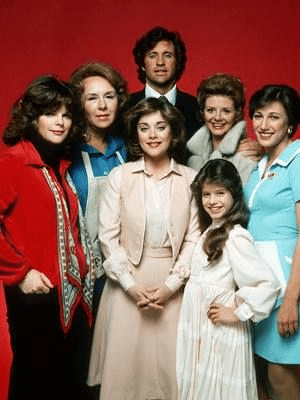
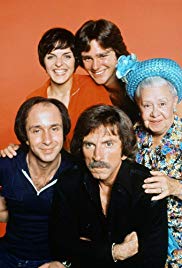
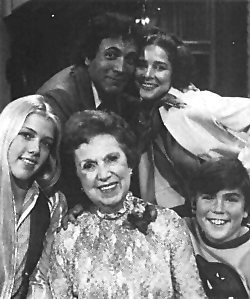
The cast was quite talented: Donna Pescow played Angie, Robert Hays was her boyfriend-later-husband, the amazing Doris Roberts was her mother Theresa before Raymond came along, and Debralee Scott played her sister Marie.
Bradley Benson is a young pediatrician who comes from a wealthy family comprised of his stuffy father Randall (John Randolph), his overbearing sister Joyce (Sharon Spelman), and her daughter Hillary (Tammy Lauren). The show is set in Philadelphia.
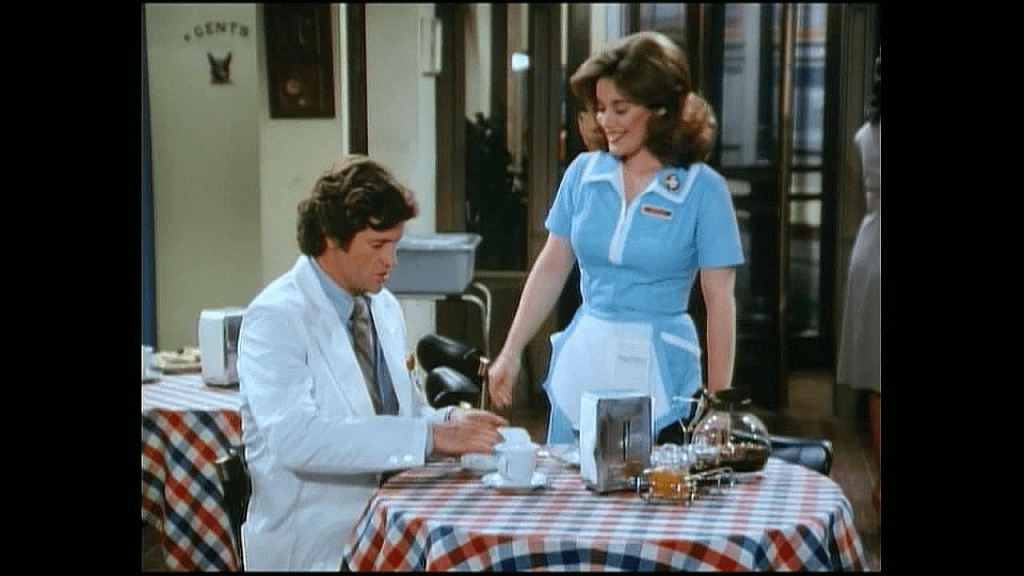
Angie is a coffee-shop waitress who falls in love with Brad. Many scenes are set in the diner with Angie’s friend and co-waitress Didi (Diane Robin). When their families argue about wedding plans, Brad and Angie elope. Later Angie’s mother plans a small family wedding for the two families to get to know each other, and Brad buys the coffee shop for Angie.
At the beginning of the second season, Angie sells the coffee shop to buy a salon with her mother.
📷imdb.com
The theme song was “Different Worlds,” written by Norman Gimbel and Charles Fox. Gimbel is still hard at work and has amassed 494 credits so far while Fox has 131 credits for many impressive television series and big-screen films. Maureen McGovern sang it; she’s best known for her top-forty hit “The Morning After.”
The show was sandwiched between Happy Days and Three’s Company on Tuesday nights, which ensured great ratings. This one was fifth its first week. The show just could not find its fan base. By the end of the season, the Nielsen ratings had fallen drastically, and the show had moved to Monday nights following Monday Night Football. Angie wasn’t the only show to struggle in this time slot. Once it was moved, three other shows—One in a Million, Goodtime Girls, and Laverne and Shirley—all tried this scheduling spot. I’m not sure if the shows were just not very good in 1979, if people were too busy to watch television, or the network heads were inexperienced, but when you look at the schedule from 1979 most prime times had a different show in the slot every season of the year. When it’s not only one show on a network moving, but many shows on a network moving and then all networks having a bunch of shows moving, how are viewers supposed to figure out where anything was? Out of the 54 new shows debuting in 1979, by the next season every network basically had one hit show out of the bunch: ABC-Hart to Hart, CBS-Trapper John MD, and NBC-The Facts of Life. While these are all decent shows, none of them were classics in my opinion. In 1980 another 30 shows were brand new.
📷rewatchclassictv.com
The show was put on hiatus. It did return in April on Saturday nights, but it was officially canceled in May.
When you look at this show on paper, it had all the right elements. First of all, we have Garry Marshall and Dale McRaven, very successful creators and writers. The cast was amazing. Even the theme song was composed and sung by extremely talented people. Then you have the fact that there were not a lot of great shows debuting this year; a decent show should have crushed it. So, what happened here?
I think I’m putting the blame for this one on the network. I watched the pilot and while pilots are meant to pull you back for the next one, most pilots aren’t the best of the series. Some of the pilots for shows I love are almost dreadful. This pilot was not dreadful. The characters were likable, the writing was funny, and the theme was not overdone over the years. It was similar to The Mothers-In-Law from a decade earlier but more of a Dharma and Greg (which came two decades later) where they fall in love despite their economic differences.
📷youtube.com
This series was better than a lot of shows that are currently on the air. I did watch another later episode where the couple elopes. Once again, the writing was good and the characters were a bit eccentric, but the writers knew how far to go to keep them likable and charming rather than odd. If ABC had kept it in a time slot for more than a month or two and given it a bit of time, it might have been a big hit.
If you want to check it out, let me know what you think. For a late seventies/early eighties show, it’s aged very well.
We are winding up our blog series “What a Character” with Sandra Gould. I have to be honest, I had an unfair bias against Sandra Gould. I didn’t know a lot about her career, I just knew that she replaced Alice Pearce as Gladys Kravitz, and it was a bad replacement. It wasn’t Sandra’s fault—I blame the show’s producers.
📷pinterest.com
Some actors truly are irreplaceable. Eartha Kitt, while a great Cat Woman, just wasn’t Julie Newmar. Imagine trying to replace Henry Winkler as the Fonz halfway into the show. Can you picture tuning into MASH and finding Hawkeye was now played by someone other than Alan Alda? Pearce was perfect in that role and, despite her being nosy and annoying, she was likable and that is hard to do. Gould’s Gladys was loud and brash, and I felt like I heard fingernails on a chalkboard whenever she was in a scene.
As long as I’m oversharing, I never cared for Dick Sargent either. While he was able to replace Dick York in some ways, York was just Darrin. Okay, I’m done and ready to talk about the good aspects of Sandra Gould and her long career.
Gould was born in Brooklyn in 1916. She entered the entertainment business early becoming a kid dancer in the Cat Skills by age 13.
📷threads.com
Gould found a lot of success on radio, appearing on “My Friend Irma” and “Duffy’s Tavern.” Her first radio job came along when she was only 9 on “The Danny Thomas Show.” Gould was with Jack Benny for almost fifteen years.
In 1938 she married Larry Berns, a broadcasting executive. They were married until his death in 1965. Berns joined CBS in 1942 writing and producing radio and TV series including Our Miss Brooks. He later worked on McHale’s Navy and Broadside.
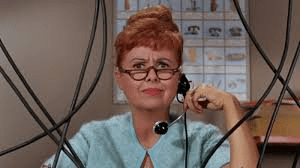
Sandra’s first role was in the big screen T-Men in 1947. Most of her roles were inept or gabby women, typically a telephone operator, nurse, receptionist, landlady, or saleswoman. Gould once mentioned that she played an operator more than any other actress. I did notice 10-15% of her roles mentioned switchboard operators.
📷facebook.com
While she continued to appear in movies, most of her acting credits came on television. She appeared in Oboler Comedy Theater in 1949. In the early days of television, many of the series were drama or comedy reenactments of movies or plays. Sometimes, new stories were written for these episodes. Gould continued with these roles into the mid-fifties.
From 1952-55 she appeared as Mildred on I Married Joan. This series starred Joan Davis and Jim Backus. He was a judge, and she was another “Lucy Ricardo” always getting into mischief or causing hardships for her husband.
📷tumblr.com
Gould was kept very busy with offers during the end of the fifties and throughout the sixties. She could be seen doing comedy on Our Miss Brooks, I Love Lucy, The Jack Benny Program, My Three Sons, The Brady Bunch, and I Dream of Jeannie among others. She also tried western life on Wagon Train. Her drama performances included Hawaiian Eye and I Spy. She even dipped her toe into animation on The Flintstones.
At the end of the sixties, she was given the Glady Kravitz role. Pearce and Gould split the character’s appearances: Pearce had 27 episodes with Gould having 29.
Gould had stepped away from acting for a time. She published two books for girls: Always Say Maybe and Sexpots and Pans. They both seem quite dated today in their advice to girls to get the right type of husband. At the time she accepted the role of Gladys she said she had gone through a very rough year. Her husband died. Then her writing partner Peter Barry died. Then Alice Pearce, who was a good friend of hers. She had no desire to take over the role, but George Tobias who played Abner and was also a friend, called her to come in for an audition.
📷imdb.com
I could not find any information about she and Barry collaborating. One article specifically mentioned that they wrote scripts for Honey West, Tammy, and The John Forsythe Show, but I don’t see either of their names as writers for these shows. Barry is listed as a writer for 23 shows in the late fifties and early sixties, and he was a radio scriptwriter. Perhaps they had written some scripts that were never filmed.
I guess I am in the minority on the Bewitched issue because most sites I visited described her role similarly, usually something like Hollywood Spotlight’s description: “her over-the-top performance and shrill voice were popular with viewers, and she succeeded ultimately in making the character her own.” She also reprised her role as Gladys in the sitcom Tabitha in 1977 which was about Darrin and Samantha’s daughter as an adult.
Some time during her stint on Bewitched, she got married again to Hollingsworth Morse, and they were together until his death in 1988. Hollingsworth was a director and assistant director on almost 90 programs and movies including McHale’s Navy, Dukes of Hazzard, and Mork and Mindy.
The seventies and eighties found her primarily in drama roles, although she could be spotted in a handful of sitcoms. You can catch her on Columbo, Marcus Welby MD, Ironside, Crazy Like a Fox, and MacGyver. During the nineties, she took on roles that were described as “old lady” on Friends and on her last appearance which was Boy Meets World in 1999.
📷bewitched wiki.com
Not long after filming this episode, Gould passed away from a stroke following heart surgery.
Gould had a long and successful career and certainly made the nosy, gabby character her own. I’m glad the job on Bewitched helped her get through a very sad and difficult time in her life. However, I still am claiming she was not right for Gladys who should have been written off the show and just replaced with a new neighbor. But I respect Gould and the characters she made her own on the big and little screens.
This month our blog is all about Sibling Rivalry. It’s a bit unusual because it features two sitcoms and two dramas. I thought it might be fun to start and end with the sitcoms, and today we are learning all about My Sister Sam.
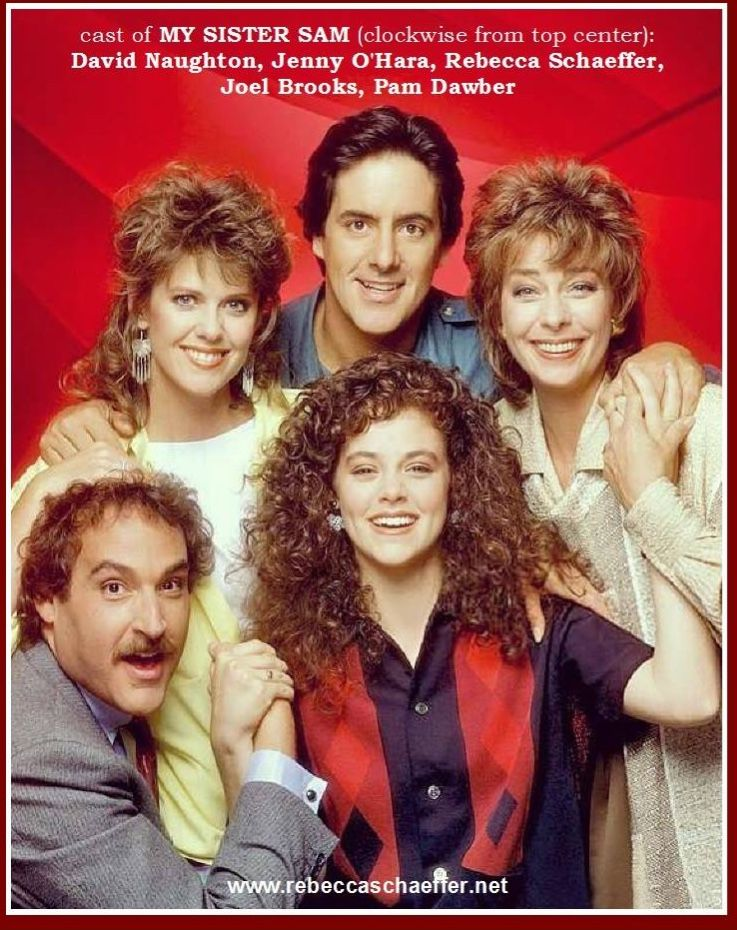
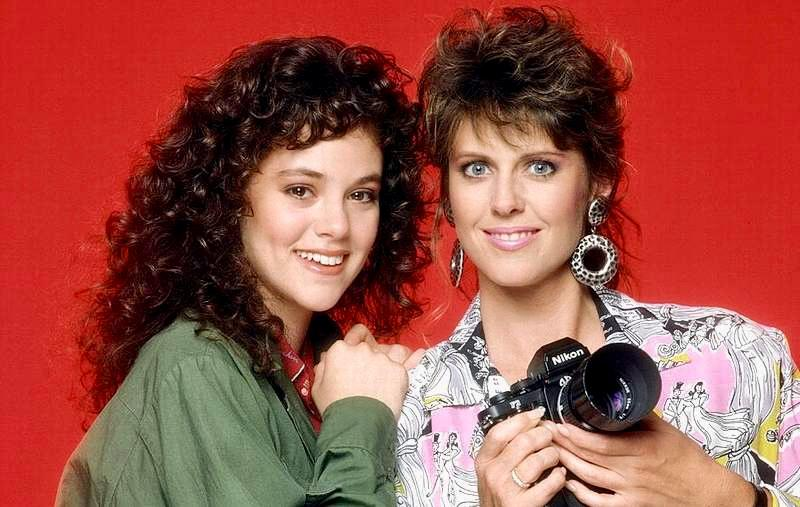
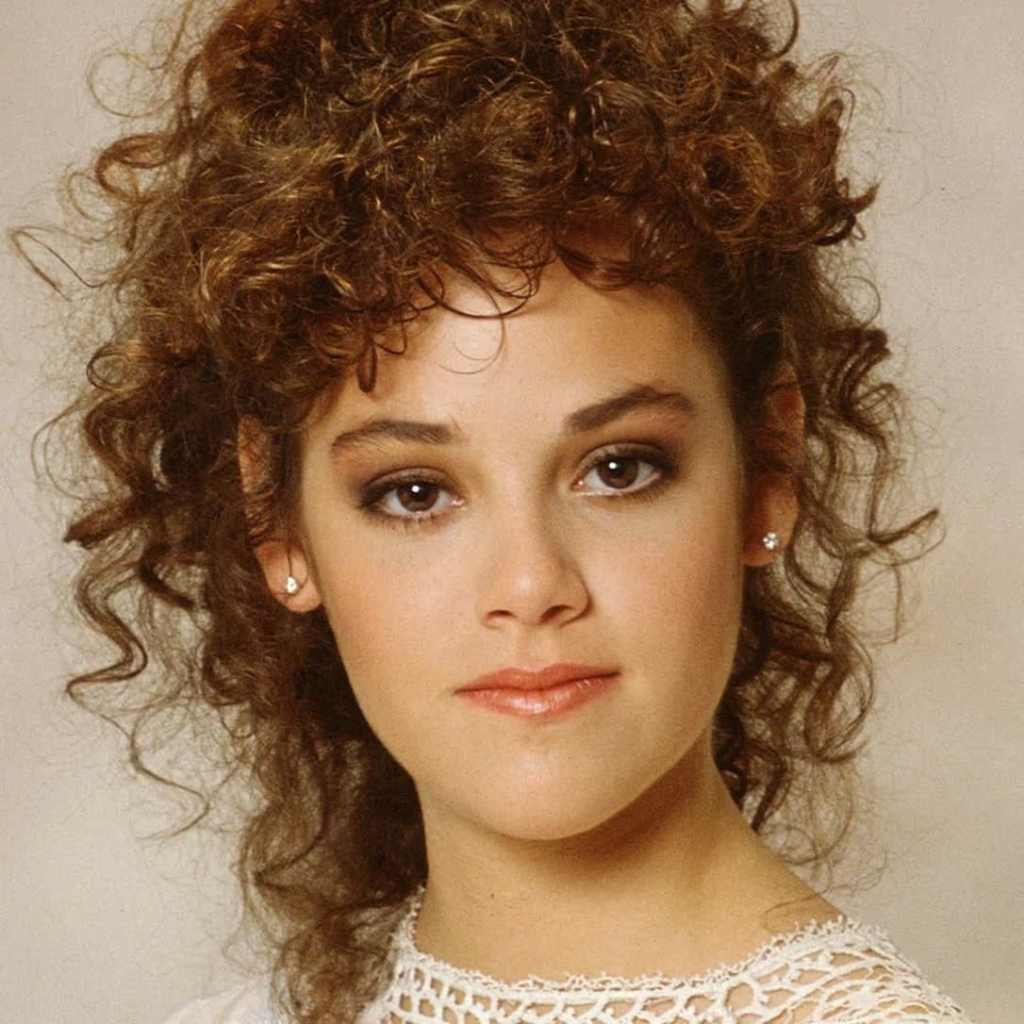
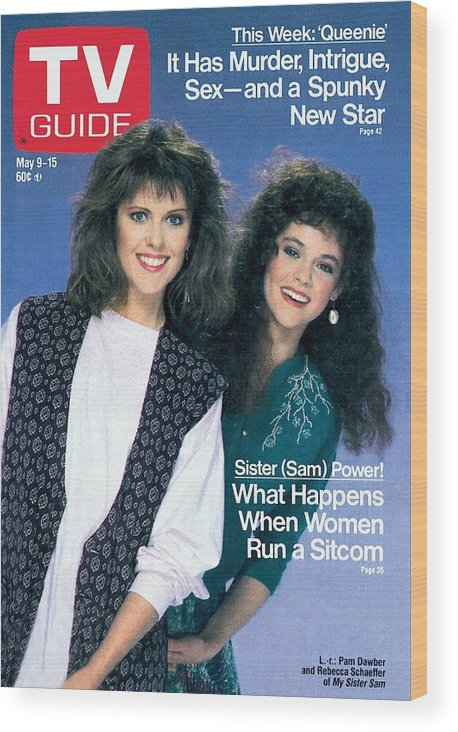
From 1986 to 1988, My Sister Sam aired on CBS. Samantha Russell (Pam Dawber) is a freelance photographer who lives in San Franciso. Her life is turned upside down when her 16-year-old sister Patti (Rebecca Schaeffer) shows up on her doorstep to live with her. They are 13 years apart in age, and Patti had been living with their aunt and uncle in Oregon since the death of their parents. In real life, Schaeffer grew up in Oregon.
The cast is rounded out by coworkers Jordan Lucas, Sam’s agent (Joel Brooks); her assistant Dixie (Jenny O’Hara); and neighbor/photojournalist Jack (David Naughton), who is a ladies’ man.
The sisters have great chemistry, but they have very different personalities. Sam is a bit uptight and alphabetizes her juices in the refrigerator. Patti is a Valley girl, very laid back and a wanna-be rock star who plays the guitar.
In a Chicago Tribune interview in 1987, Dawber gave her philosophy of the show: “I see Sam as a woman who’s successful, who has a beautiful apartment but who doesn’t have the answers. Plus, she has to cope with a teenager who’d put her sister on a pedestal—she moved in because she thought Sam’s life was perfect—but finds out that she’s pretty neurotic. I mean, here is a woman, for openers, who’s compulsively neat, who needs to have control in her life.”
📷imdb.com
Their personal relationship mirrored their television one. Dawber said she considered Schaeffer a sister. She mentored her and even invited her to move into her home in LA where Dawber lived with Mark Harmon, her then-boyfriend, now husband. Dawber said that “We just kind of fell into this sisterly thing, . . . Cause I’d had a sister. My sister passed away when she was 22 and I was 25. And so having another young girl in the house was something I was very comfortable with. It was good for us.”
Pam Dawber’s production company, Pony Productions, developed the show created by Stephen Fischer. The screenplay was written by Fischer and Diane English. Dawber wanted to base her character a bit on Mindy from Mork and Mindy. She said that she was “not a comedian. I’m a reactor to all the zany people who revolve around me.” English and Mimi Weber took on the producer role, with the show filmed at The Burbank Studio. English would go on to write for Murphy Brown.
The theme song, which I admit I don’t remember, was called “Room Enough for Two,” and it was written by Steve Dorff and John Bettis. Kim Carnes, who had a hit with “Betty Davis Eyes,” sang the song. Dorff later was the composer for Murphy Brown and Murder She Wrote. Bettis worked on The Godfather, Part III and Star Trek V.
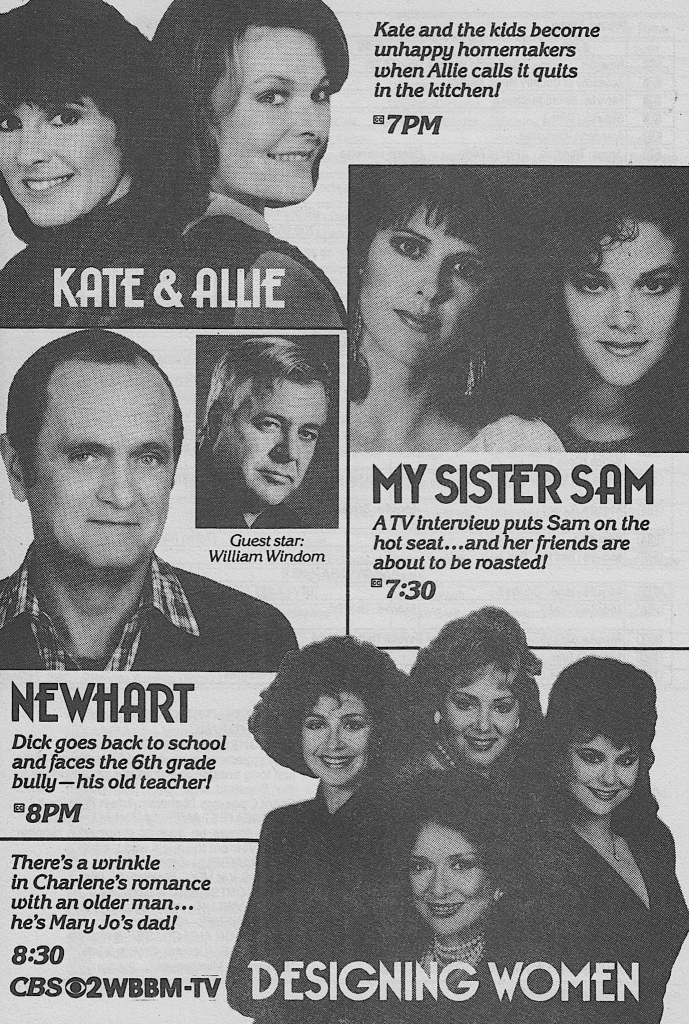
The show had a great time slot between Kate and Allie and Newhart on Monday nights. It ranked 21 overall. Of course, the networks rarely leave well enough alone, so they moved the show to Saturday nights opposite The Facts of Life. The end of the second season found the show down 50 points at 71overall. The network was toying with canceling the show, but after receiving a lot of fan letters, they brought it back in March of 1988. It moved to Tuesday nights and the ratings increased. However, the ratings did not stay that high, probably because the competition was Who’s the Boss and Matlock. In April, CBS canceled it outright, leaving 12 unaired episodes.
Sadly, a year after the show was canceled, Schaeffer was murdered in her home by an obsessed fan. After living with Pam, Schaeffer got her own place. She was living in West Hollywood when she was killed. Dawber said she told Schaeffer not to put her real name on her mailbox. Dawber had a scare with a stalker earlier in her career, and she learned not to put her real address on her driver’s license or anything that a fan could track you down with. Schaeffer didn’t listen and her name was on her mailbox.
The man who killed her, Robert Bardo, said he saw her in a promo in 1986 and began watching the show. He sent her fan letters. At one point, he flew from Arizona to LA to the studio to look for her. He took gifts to the studio several times, but studio security always stopped him. Bardo returned to Arizona. After the show was canceled, Schaeffer took on several movie roles which were very different from her role as Patti. One love scene enraged Bardo. Bardo was stopped from buying a gun due to mental health issues. He convinced his brother to buy him one for target practice. Then he boarded a bus to LA. He hired a private detective to find Schaeffer’s address; the detective located it through the Department of Motor Vehicles.
One morning Schaeffer was waiting for delivery of a script of The Godfather III for an audition with Francis Ford Coppola. Bardo rang her bell, and she answered thinking it was the delivery person. He introduced himself and told her she had sent him a card and photo after receiving fan mail. She explained she was busy that day, so he went to a local diner. He returned to her house, and she said he was wasting his time expecting any relationship with her. Then he shot her point blank. He got away and returned to Tucson but was apprehended a day later after running in and out of traffic, shouting that he was the one who killed Rebecca Schaeffer.
📷plex.com
Dawber was filled with grief and anger. She reunited with the cast of My Sister Sam for a Public Service Announcement for gun control, and she testified before Congress for stricter gun laws. After Schaeffer’s death, California passed an anti-stalking law in 1990. Now all fifty states have one on the books. Bardo was sent to California where he was found guilty of first-degree murder. He was sentenced to life in prison without the possibility of parole.
My Sister Sam was a ground-breaking show having women in so many of the critical roles. During the Chicago Tribune interview, Dawber said that “the significant thing is that My Sister Sam is a show about women that is run by women. . . . Not only are three of our five regular cast members women, but we have a female executive producer, two writer-producers, and a director. It really wasn’t intentional. It just happened that way.”
It would have been interesting to see how the show fared if it had kept its original time slot and the plots that would have been written as Patti became an adult. Did she begin to resemble her sister more or did she keep her carefree personality? And would her sister adopt some of her less serious traits? Almost every review I read about the show said it was genuinely funny, adorable, relatable, etc. With all the moving around the schedule and “is it on the air or not” decisions, only 44 episodes were created, so there aren’t enough for syndication or DVDs.
And of course, it’s devastating what happened to Rebecca Schaeffer. She was a rising star, and you have to wonder what type of career she would have had if she had lived more than 22 years. Dawber had to experience the death of another sister much too young to die. I’m glad a lot of laws came out of the experience, but it was such a brutal murder. Now, 35 years later, our country is still dealing with devastating murders because not enough laws have been created.
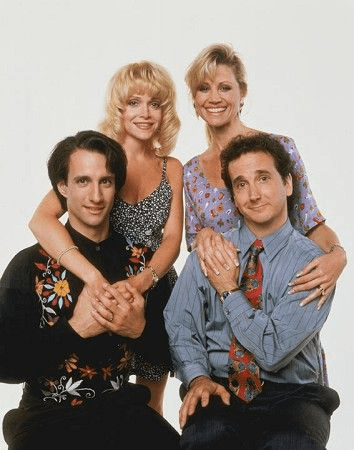
We are talking about our favorite duos from the eighties and nineties in our blog August series. Although most of these shows feature husband and wife teams, today we are turning the dial back to a show about two cousins: Perfect Strangers. I am always envious of my husband because they have a group of first cousins who are very close and grew up together. While I have scads of second cousins, once removed and such, I have no first cousins and always missed those relationships. Perfect Strangers is about two cousins who develop that type of relationship.
Perfect Strangers is another one of those shows that was quite popular when it was on the air, and it was for eight years, but it doesn’t get much recognition any longer.
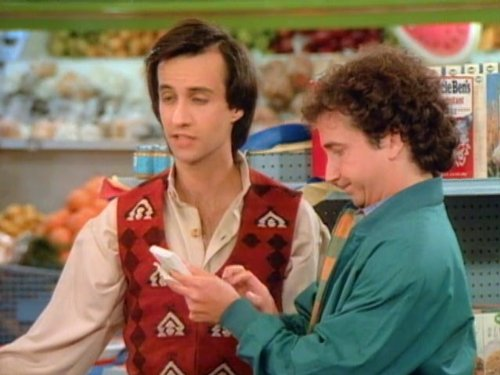
The series was created by Dale McRaven for ABC; McRaven was also the creative force behind Mork and Mindy. Bronson Pinchot had appeared in Beverly Hills Cop as Serge, a gay art gallery employee who had a foreign accent. ABC signed on to the project based on Pinchot starring. However, in the meantime, Pinchot had signed on to Geena Davis’s sitcom, Sara. Sara was quickly canceled and Bronson became available, so a pilot was made with Louie Anderson in the role of the American cousin. It was obvious that this was not the best pairing, and eventually the role was offered to Mark Linn-Baker after an appearance he made on Moonlighting. He and Pinchot had great chemistry and the show was placed between Who’s the Boss and Moonlighting, very popular shows, on Tuesday nights.
Photo: imdb.com
The short first season of six episodes debuted in March of 1986. The show was about Larry Appleton (Linn-Baker), a Wisconsin boy, who moved to Chicago and was enjoying life on his own after growing up in a large family. His utopia is shattered when his cousin Balki Bartokomous (Pinchot), arrives from Mypos, a Mediterranean island, intending to move in with him. Balki’s name was originally Vev, but Pinchot suggested Balki based on his sister’s nickname for her dog. Larry Appleton got his name because Lawrence University is in Appleton, Wisconsin, where I graduated from high school. Neither actor went to Lawrence, but both of them are Yale alumni. Both Linn-Baker and Pinchot got not only their BA degree from Yale but also both received their Masters of Fine Arts in drama.
Larry tells Balki he needs to live somewhere else. Balki had been a shepherd, and most of his impressions of what America was like were taken from pop culture, television shows, and commercials. Larry, a photographer, relents and invites Balki to live there, thinking of himself as more worldly and able to teach Balki the truth about American life. Ironically, it is often Larry who is more inept and gets the pair into some interesting situations.
Photo: pinterest.com
Season two found the show on Wednesday nights. The cousins begin dating flight attendants–Jennifer (Melanie Wilson) dates Larry and Mary Anne (Rebeca Arthur) dates Balki. They meet the girls at the gym and realize that they live in the same building.
In season three, Balki is able to stop sleeping on the living room sofa and gets his own room when the pair moves into a much larger apartment. Somehow Jennifer and Mary Anne still live in their building but no one ever talks about moving. Larry is hired as a reporter for the Chicago Chronicle, and Balki is hired for the mail room. For some reason, halfway through the season the show was moved from its successful spot on Wednesdays to Fridays.
During season five, Harriette (Jo Marie Payton-France), the elevator operator, was given a new show, Family Matters which was also on Friday nights. That show, which for better or worse, introduced America to Steve Urkel, was on the air for nine years. Larry and Jennifer are still going strong while Balki and Mary Anne are lukewarm. Larry proposes to Jennifer during season six.
Season seven finds Jennifer and Larry in a large Victorian house. Of course, they realize they need renters to afford the expensive Chicago mortgage and who moves in but Balki and Mary Anne. Balki becomes an animator with his own comic strip at the newspaper. Eventually, Mary Anne moves out but in the finale, they reconcile, marry, and travel to Mypos for their honeymoon. The show retained its viewers but then it was moved to Saturday nights in February of 1992 before returning to Fridays. The TGIF campaign for ABC’s Friday night shows was very successful, and the network was trying to do something similar for Saturday nights.
Season eight, ironically also a six-episode season, picks up several months after the wedding, and we realize that both Jennifer and Mary Anne are noticeably pregnant. In the finale of the series, babies Robespierre and Tucker join the show.
Photo: pinterest.com
The first six seasons found the show consistently in the top forty. Given its placement between two popular shows in its debut year, five of the first six episodes landed in the top ten. After the show was moved to Saturdays, it experienced a drastic decline in viewers. When the show was moved back to Fridays, it found its audience again. The show’s final season was supposed to be thirteen episodes but it was shortened to six. It was in the top twenty for the final season, and 15 million households watched the finale.
The theme song for the show, “Nothing’s Gonna Stop Me Now,” was written by Jess Frederick and Bennett Salvay. They composed the themes for FullHouse, Step-by-Step, and Family Matters as well.
We have talked about a lot of shows who have some famous fans and this show was no exception. Bronson Pinchot said Nelson Mandela was a fan of the show. Pinchot was invited to a banquet in South Africa where President Mandela was in attendance. One of the President’s assistants gave Bronson a note that read, “I’m dying to meet you, but if I go to your table, I have to go to everyone’s table. But I wanted you to know that I know my cousin is here.” Later that evening Bronson met Winnie Mandela.
Photo: pinterest.com
The Emmys also recognized the show. In 1987 Bronson Pinchot was nominated for a Lead Actor in a Comedy Series. He did not win, but had some tough competition with Ted Danson for Cheers, Harry Anderson for Night Court, Bob Newhart for Newhart, and, winner, Michael J. Fox for Family Ties. Two years later, Doris Roberts was nominated for Outstanding Guest Actress in a Comedy and lost to Colleen Dewhurst for Murphy Brown. Other nominees included Diahann Carroll for A Different World, Eileen Brennan for Newhart, and Maxine Stewart for The Wonder Years.
I’m sure that Perfect Strangers is in syndication somewhere, but I cannot remember the last time I saw it listed on television. There is a DVD set out for the entire series. I do remember watching this show most weeks and enjoying it, although it was not in my Top Ten. Yes, it had some too-typical and obvious plotlines like the girls living in the same building and both Balki and Mary Anne moving into the Appletons’ new house. However, the writing was pretty good and the characters were fully developed. The twist of naïve Balki often being wiser than native Larry is also a fun influence. It’s definitely a show that deserves more recognition than it has received in the past three decades. I’d love to know if you take some time to watch the DVDs, find it on the air somewhere, or just have fond memories of watching it in the past.
This week we are finishing up our “Supportive Women” blog series. If you watched a lot of television in the sixties and seventies, you will remember today’s blog star very well: Morgan Fairchild.
Photo: dallasfandom.com
Morgan Fairchild was born Patsy Ann McClenny in 1950 in Dallas, Texas. In grade school, she was too shy to read her book report in class, so her mother, an English teacher, signed her up for drama lessons. At age ten, she began performing in dinner theater and stock productions in Dallas which led to several local commercials.
In 1967 she married Jack Calmes; they would divorce in 1973.
In 1967, a young Morgan was hired as a double for Faye Dunaway in Bonnie and Clyde. At age 20 she was cast in her first movie where we could see her face, A Bullet for a Pretty Boy. She would receive roles for another 35 big-screen features during her career.
However, most of her work was on the small screen. Her first role was Jennifer Pace on Search for Tomorrow. She stayed with that show for four years but she would come back to soap operas on and off throughout her acting time and could be seen on The Bold and The Beautiful, Days of Our Lives, General Hospital, and most recently as Sydney Chase in The City in 1996. Most of her roles were the stereotype of an elegant and wealthy woman who will do whatever it takes to get what she wants.
In between work on soap operas, Morgan showed up on many of the most popular shows as a guest star or regular cast member. In 1976 she was on Kojak. After her time on Search for Tomorrow, during the 1970s she appeared on other dramas including Police Woman, Barnaby Jones, and Dallas and on sitcoms like The Bob Newhart Show, Happy Days, and Morkand Mindy.
Flamingo Road Photo: nbcwikifandom.com
During the 1980s she did make a few guest appearances on The Love Boat, Simon and Simon, Magnum PI, and Hotel. Morgan received an Emmy nomination for her appearance on Murphy Brown in 1989. However, it was during this decade that Fairchild was a regular cast member on three different shows: Flamingo Road, Paper Dolls, and Falcon Crest (attorney Jordan Roberts), all night-time soap operas.
Flamingo Road was based on a novel written in 1949. It features the small town of Truro, Florida. The wealthy citizens live on Flamingo Road in their mansions, while the lower classes do what they have to do to make that street their address. Morgan played a woman with one of the longest names on television: Constance Weldon Semple Carlyle. After two years, the show was done.
Photo: IthinkthereforeIreview.com
Paper Dolls was about the modeling world. Fairchild played Racine, an agent, and the show is about the jobs that her models take on including a perfume company that uses her models exclusively. The series only lasted for thirteen episodes.
Morgan played Jordan Roberts, an attorney, on Falcon Crest. This long-running drama from 1981-90 featured the Gioberti family who operates the Falcon Crest Winery in California.
In the nineties, she appeared on a variety of shows including Roseanne, Empty Nest, Murder She Wrote, Diagnosis Murder, Cybill, and Home Improvement.
Her career continued during the 2000s where you could see her on Dharmaand Greg and Hot in Cleveland, as well as five appearances on Friends as Chandler Bing’s mother Nora. She also had another series, Fashion House, in 2006 as Sophia Blakely. The concept of the show was another fashion-themed one where a ruthless executive played by Bo Derek defends her company against a hostile takeover.
Friends Photo:netflixlife.com
With so many movie channels, we forget today that for a few decades we could not watch movies on television. The networks came up with a solution: made-for-tv movies, and Morgan was a queen of the genre with thirty movies and six miniseries.
Morgan has continued to stay busy. She has two finished productions listed on imdb that have not been released yet.
Fairchild has used her platform as a celebrity to advocate for AIDS research, the pro-choice movement, and many environmental issues. She collects movie memorabilia, especially Marilyn Monroe items, and antique clothing. She seems to have had a long-lasting career. It would have been fun to see her star in a sitcom instead of just playing ruthless women who just care about fame and money.
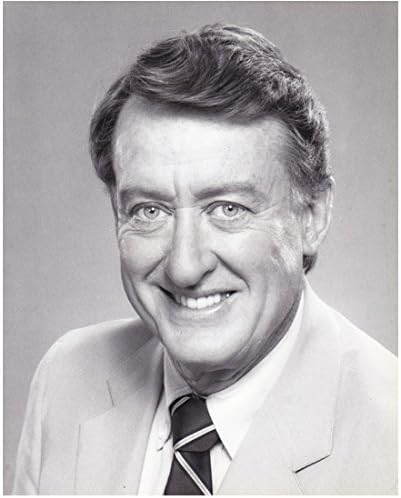
When I decided to do research for a blog series about some of my favorite sitcom actors, I knew Tom Poston had to be on the list. Poston seems to be someone who’s always a bit under the radar, and I’m not sure he ever received the accolades he deserved.
Photo: wikifandom.com
Poston was born in 1921 in Columbus, Ohio. His father was a liquor salesman and dairy chemist, an interesting combination. Poston started at Bethany College in West Virginia but joined the Air Force in 1941. He went to flight school and served as a pilot in the European Theater for WWII and was part of the Normandy invasion.
After returning home, he decided to move to New York City to study acting and graduated from the American Academy of Dramatic Arts.
Photo: pinterest.com
He was cast in his first television show, Tom Corbett, Space Cadet, in 1950. In 1955 Poston married actress Jean Sullivan. They would divorce in 1968, having one daughter.
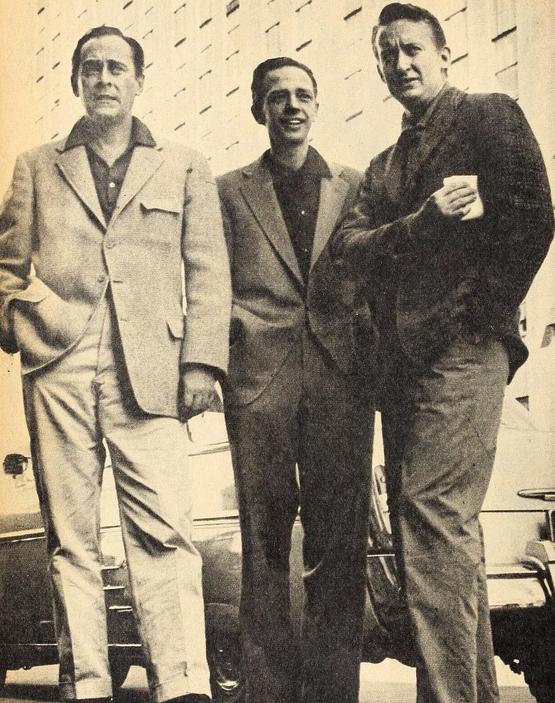
He continued receiving dramatic roles throughout the early fifties. In 1956 he joined the Steve Allen Show, along with his cast mates Don Knotts and Louie Nye. In 1959 he won the Best Supporting Actor Emmy for his work on the show. In 1960 The Steve Allen Show moved to Los Angeles and Poston decided to remain in New York, but Tom and Don Knotts stayed life-long friends. He appeared on Broadway often and began making the game show circuit and continued accepting drama roles on the small screen.
With Steve Allen cohorts Don Knotts and Louis Nye–Photo: tumbral.com
When Mel Brooks was putting together the pilot for Get Smart, ABC was planning on airing the show and they wanted Tom for the star. However, when ABC declined the show and when NBC picked it up, Don Adams got the lead; Poston did appear on the show as a KAOS bad guy.
Poston married for the second time in 1968 to Kay Hudson with whom he had two children. They divorced in 1975 but remarried in 1980 and remained husband and wife until her death from ALS in 1998.
The Peeper–Photo: pinterest.com
In 1975, he began recurring roles on two different sitcoms: On the Rocks and The Bob Newhart Show. On the Rocks was a show about the friendly rivalry between prisoners and their guards. On the Bob Newhart Show, Poston played “The Peeper,” Bob’s college buddy and big .prankster.
In 1977, Tom took on the role of Damon Jerome, photographer on We’ve Got Each Other. Beverly Archer played his assistant while her husband Stuart Hibbard (Oliver Clark) did the cooking and house cleaning. The show was cancelled after 13 episodes.
Photo: thetodayshow.com
He appeared on a variety of shows during the late seventies and from 1979-1981, he portrayed grouchy neighbor Franklin Delano Bickley on Mork and Mindy. Poston said the role he played on the show was written for him. He said Robin was hysterically funny all the time. He said Pam Dawber was a comic genius because she was able to keep the focus on both Mork and Mindy, because anyone else would have been lost in Robin’s antics.
Photo: dailyamerican.com
He moved from Colorado on that show to Vermont the next year when he became George Utley, handyman on Newhart. For eight seasons he worked at the Stratford Inn, becoming friends with Dick and Joanna. He was nominated for an Emmy in 1984, 1986, and 1987. (Pat Harrington won in 1984 for One Day at a Time and John Laroquette won for Night Court in 1986 and 1987.)
In an interview with the Television Academy, Poston discussed the last episode of Newhart. He said the cast members were kept in the dark about the ending. He said he was in the stands with the audience when that last scene with Suzanne Pleshette and Bob as Bob Hartley waking up from his “dream” was filmed. He said Bob’s wife Ginny had the idea, and Tom thought it was fabulous.
From 1990-1991, you could find him in Good Grief, playing Ringo Prowley, in a show set in a mortuary; when that show was cancelled, he was back with Bob Newhart on Bob as Jerry Fleisher.
That Seventies Show–Photo: tvmaze.com
During the 1990s, he would accept five recurring roles: Mr. Looney on Family Matters, Phineas Swenson on Murphy Brown, Dr. Art Hibke on Coach, Floyd Norton on Grace Under Fire, and Burt Sigardson on That Seventies Show. In between, he also managed to find time to guest star on more than thirty other shows including Home Improvement, Cosby, ER, The Drew Carey Show, and Will and Grace. He also accepted roles on the big screen in twelve movies during his career, the last two being The Princess Diaries 2: Royal Engagement and Christmas with the Kranks, both in 2004, as well as 15 Broadway productions.
Working together in 1959–Photo: pinterest.com
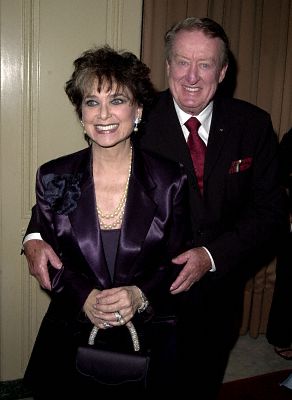
Tom tried married life once again in 2001 when he married actress Suzanne Pleshette. They were married until his death in 2007 from respiratory failure.
As husband and wife 2001–Photo: imdb.com
I was just amazed by Tom Poston’s career: a ton of television appearances–he probably had more recurring roles than almost any other actor during that time; a well-respected big screen career, a variety of Broadway roles and many gameshow stints. He was nominated for five Emmys, winning one. He always made the rest of the cast look better. I truly enjoyed getting to know a bit more about Tom Poston, one of our greatest sitcom stars.
Continuing the theme “Living in the Past: Timeless Comedies,” we find ourselves transported to Milwaukee, WI in the 1950s getting to know the Cunninghams. Beginning September of 1984, Happy Days entertained fans for more than a decade, producing 255 episodes. When the show began, it was set in 1955, and when it went off the air eleven seasons later, it was 1965.
Photo: aceshowbiz.com
Garry Marshall developed the pilot which first aired on Love American Style in 1972 as “Love and the Television Set.” The network wasn’t interested in turning the pilot into a show when it first came up. However, once George Lucas released American Graffiti in 1973, also starring Ron Howard, ABC took another look at the period show. The first two seasons, the show focused more on Richie Cunningham as he interacted with his friends and family. Jerry Paris (Jerry Helper on The Dick Van Dyke Show) directed 237 of the episodes. Happy Days was described as relentlessly ordinary. The plots revolved around the same types of problems most teens experienced in the fifties: dating, wanting to be popular, peer pressure, and similar experiences.
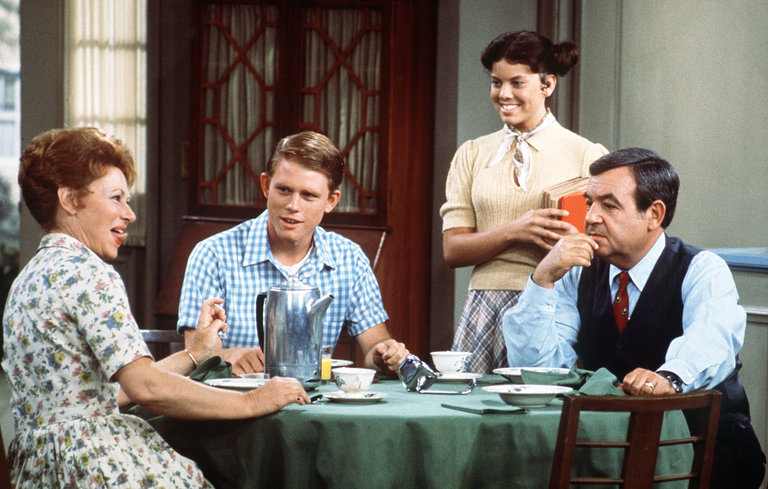
Richie’s family includes his father Howard (Tom Bosley) who owns a hardware store, and his mother Marion (Marion Ross). Howard is a family man and is also loyal to his lodge. Marion is content to stay at home, except for a brief stint when she gets a job as a waitress at Arnold’s. The cast also includes his younger sister Joanie (Erin Moran) and an older brother Chuck.
Photo: parade.com
Chuck would not be around long. At the end of the series, Tom Bosley says “he had the joy of raising two wonderful kids and watching them and their friends grow up into wonderful adults.” Poor Chuck. His existence wasn’t even acknowledged in the finale. When a character just disappears without an explanation, it is often referred to as the “Chuck Cunningham Syndrome.”
Photo: sharetv.com
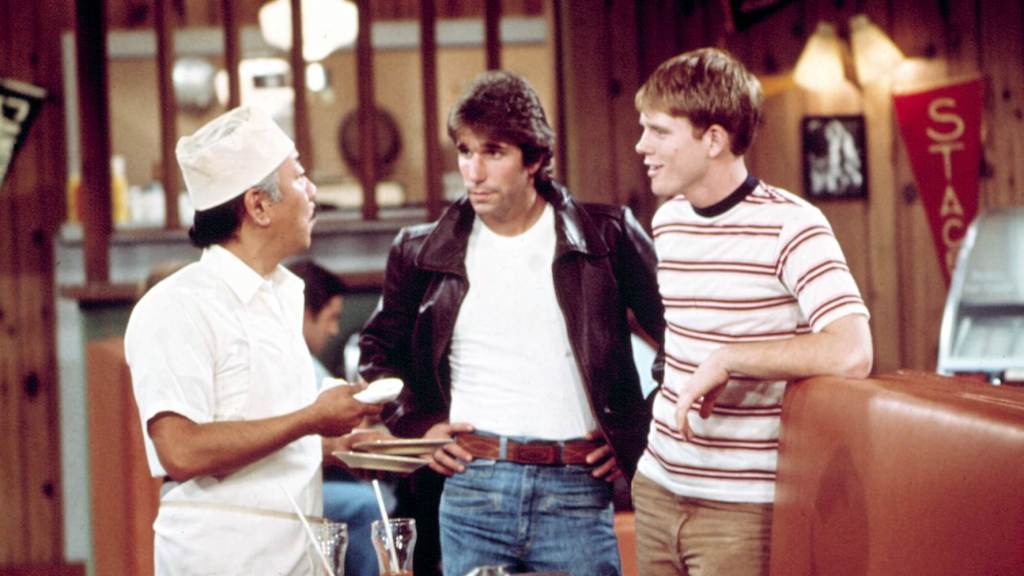
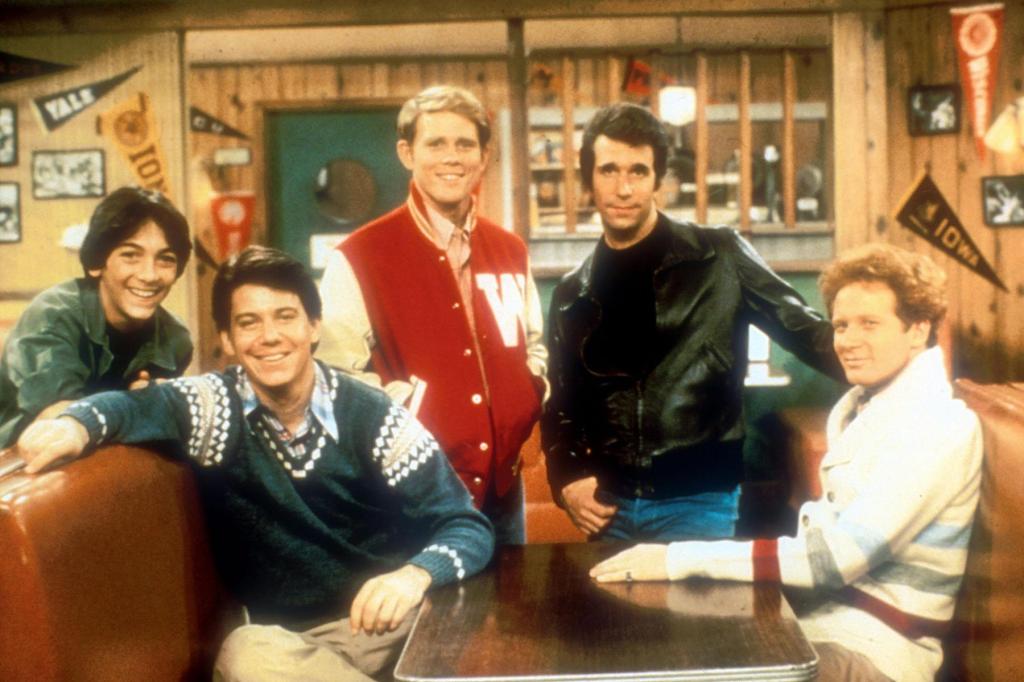
Richie’s friends include Potsie Weber (Anson Williams) and Ralph Malph (Donny Most). Potsie, whose real name is Warren, was a singer. When Richie went into the Army so did Ralph. A famous catchphrase from the show was Ralph’s uttering “I still got it!” after he told a joke. Richie’s girlfriend is Lori Beth Allen (Lynda Goodfriend). She and Richie marry later in the series. The friends hung out at Arnold’s and got to know Arnold (Pat Morita) well. They listen to a lot of music at the restaurant; Richie’s favorite song was “Blueberry Hill” by Fats Domino. One fun fact about the drive-in was that the restrooms were labeled “Guys and Dolls.” Eventually, Arnold sells the restaurant to Al (Al Molinaro).
Photo: nbcnews.com
The pilot included Ross, Howard, and Williams in their later roles. Harold Gould played the part of Howard and Susan Neher was Joanie. When the show got the go-ahead, Gould was involved in a play abroad and declined, so the role was given to Bosley.
Photo: businessinsider.com
Robby Benson and Donny Most were both under consideration for the role of Richie. They had appeared in a commercial for Reese’s Peanut Butter Cups together. When Howard was given the role, the role of Ralph was created for Most.
There are several references during the show made about Ron Howard’s past acting roles. One of these occurred when the family is leaving a theater where they watched The Music Man in 1962. Marion comments that she thought the little boy in the movie looked just like Richie when he was little. Howard did in fact play the role of Winthrop Paroo in The Music Man in 1962 when he was eight years old.
Photo: neatorama.com
There were two primary sets for the show: The Cunningham residence and Arnold’s Drive-In. The real exterior of the house was in Los Angeles. However, Arnold’s found its inspiration in The Milky Way Drive-In located on Port Washington Road in Glendale, WI, more recently Kopp’s Frozen Custard.
Photo: hollywood.com
The ratings began to decline during the second season, so Garry Marshall made Fonzie (Henry Winkler) more involved in the show. Fonzie moved into the apartment above the Cunninghams’ garage. Eventually he and Richie become best friends, and Fonzie is a basically a member of the family. Marion is the only person who is allowed to call him Arthur. Fonzie was also fond of Joanie and nicknamed her “Shortcake.” His best-known catchphrase was “Heyyyy!” By 1976 the show was number one.
Photo: sidereel.com
In season four, Arnold sells his restaurant to Al (Al Molinaro). That same year, Fonzie’s cousin Chachi (Scott Baio) comes to town. He would eventually fall in love with Joanie. After season nine, Ron Howard left the show, and Howard’s nephew Roger (Ted McGinley) joins the cast as the new phy-ed teacher at the high school.
In season ten, Joanie and Chachi also leave the show; Moran and Baio starred in the spinoff Joanie Loves Chachi, but when the new show failed, both characters returned to Happy Days. Richie’s leaving was explained by him joining the Army. In season 11 he returns briefly to learn his parents have obtained an interview for him with the Milwaukee Journal. Not wanting to hurt their feelings, he eventually admits his wish is to go to California and try his hand at screenwriting.
Photo: happydays.wikia.com
Some of the best-known guest stars include sports star Hank Aaron, singer Frankie Avalon, western star Lorne Greene, Brady kids Maureen McCormick and Christopher Knight, legends Tom Hanks and Danny Thomas, and blonde beauties Morgan Fairchild, Charlene Tilton, and Cheryl Ladd.
The show’s theme song was a new version of an old standard, “Rock Around the Clock” by Bill Haley & His Comets. The theme was so popular it reached #39 in 1974; in real life, in 1955, the song had been a number one hit. Beginning in season three, a newer song, “Happy Days” was featured at the beginning of the show.
Photo: fanarttv.com
Amazingly, the show would be the source for a variety of spinoffs including Laverne & Shirley, Mork and Mindy, Joanie Loves Chachi, Blansky’s Beauties, and Out of the Blue.
Once so many of the main characters began leaving the show, the writing was on the wall. “Jumping the shark” is an expression that was coined when The Fonz actually jumped a shark. It’s a symbol for when a show grasps at straws to increase the ratings. Rarely is that type of exaggeration successful and it was not for Happy Days.
The show was so popular it never left its Tuesday night line-up. It aired at 8 pm EST for the first ten seasons and switched to 8:30 for its final season. However, the show had lost its magic, and the cancellation was inevitable. In fact, the show probably should have ended a season earlier. In addition to actors wanting to move on to new projects, the sixties were a very different time period than the fifties. The warm and fuzzy family themes that carried the show through the fifties and early sixties could not continue as the series had to survive the hippy era and the Vietnam War.
Photo: theweeklings.com
Although the show was a team effort, there is no denying that Winkler’s portrayal of the Fonz was the most popular character of the decade and one of the most iconic in television history. After the show was cancelled, his leather jacket was acquired by the Smithsonian Institution for the National Museum of American History. A bronze statue of the Fonz was erected in Milwaukee in 2008 along the Milwaukee Riverwalk.
This character warrants a closer look. One of the people who auditioned for the role of Fonzie was Micky Dolenz from The Monkees. He was a lot taller than the other cast members, so he was bypassed while they looked for a shorter actor which ended in Winkler’s hiring. Fonzie’s real name is Arthur Herbert Fonzarelli. His grandmother raised him and his nickname was Skippy. His hero is The Lone Ranger, and he carries a picture of him in his wallet.
Photo: realtor.com
Winkler said he based some of Fonzie’s movements and speech after Sylvester Stallone whom he had worked with in The Lords of Flatbush. The Fonz loved motorcycles, but Winkler decidedly did not, so most scenes were shot with the bike attached to a platform which was pulled by a truck, so Winkler never had to ride it. The cycle was the same model Steve McQueen rode in The Great Escape in 1963.
Photo: commonsensemedia.com
This show had a slew of catchphrases, and one of them came from The Fonz whenever he was trying to get someone to answer a question correctly. When they said the right answer, his response was “correctamundo.”
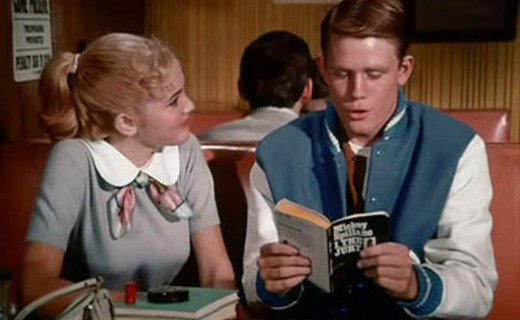
Fonzie was adored by many kids, especially kids who needed some extra help or attention. Marshall was asked if the show could do something to help kids realize how important reading was. On one of the episodes, The Fonz went to the library and checked out a book, saying “Everybody is allowed to read.” That week, library card registrations increased by 500%. During one day of filming, a call came to Paramount Studios. It was from a teenage boy who was contemplating suicide. He wanted to talk to Fonzie. Winkler picked up the call and gave the boy hope, convincing him not to take his life.
The only negative thing about Fonzie was the result he had on Winkler’s future acting career. It took a long time before he could shake that image and be considered for other types of acting roles.
Photo: happydays.wikia.com
In 2019, the cast reunited to celebrate the life of Garry Marshall who passed away in 2016. In an article by Gina Vivinetto in Today on November 14, 2019, Donny Most discussed the cast. “We were so good at what we did because we respected each other and loved each other.” He went on to say “we made it look easy and it wasn’t.”
In another article during that same event written by Zach Seemayer November 17, 2019], Williams and Howard both talked about the mentoring they received from Marshall. Williams said, “He really cared about us. More than as actors. He really inspired us to learn because he said [we might] wanna wear many hats.” Howard also learned from his mentor, saying “Garry was a natural teacher and he loved collecting theories and axioms about life but also making a show. They were all hilarious but they all rang true and they were great lessons.”
Both Howard and Winkler told writer Stephanie Nolasco of Fox News how they felt about each other and their time on Happy Days. Winkler had a hard time dealing with his sudden fame, and Howard was able to provide some grounding for him. Winkler described this time, “It’s unnatural—the human condition does not prepare you for stardom. That’s just the way it is. So, you have to hold on to yourself and then you’ve got friends like Ron who doesn’t take it all seriously. I learned from him; he was my teacher. And Garry Marshall never took bad behavior from anybody. He was a father figure. He was very funny and very idiosyncratic, and then he was very strict.”
UNITED STATES – JULY 10: HAPPY DAYS – Gallery – Season Two – 7/10/75 Fonzie (Henry Winkler) Richie (Ron Howard) Potsie (Anson WIlliams) and Ralph (Donny Most) (Photo by ABC Photo Archives/ABC via Getty Images)
Winkler also discussed his friendship with Howard. “I think people gravitate to the Fonzie/Richie relationship because Ron and I are ten years apart. He was 19 and I was 27. We had a connection that you cannot describe in real life, and it was similar off-camera. He gave me my first mitt; I’d never played baseball before. He’s my brother.”
Howard echoed the sentiments. “We were fast friends from the beginning. It continues all these years later. It was exciting for me to work with Henry because he was really a trained actor who attended Yale Drama School; just a trained New York actor. And, I’d grown up sort of through the Hollywood television system, so for me to work with this guy who was so thoughtful, so creative, and yet so hilarious, was really an opportunity for me to learn and grow and we just clicked, you know.”
UNITED STATES – AUGUST 11: HAPPY DAYS – “Get a Job” 2/25/75 Ron Howard, Henry Winkler (Photo by ABC Photo Archives/ABC via Getty Images)
The entire cast spent a lot of time together and participated in softball events. Marshall put the league together with casts from other television shows partly to help keep actors out of trouble and away from drugs. Winkler described the cast being “very much like a family. I love them, I talk to them, I email them, and I see them.”
Photo: thenewyorktimes.com
For eleven years Happy Days provided all of us with lovely memories of the Cunningham family and their friends. It is one of the best sitcoms of the 1970s and has held up beautifully in syndication. Life in the fifties was a fun and heart-warming time (at least on television), but all good things must come to an end, and Happy Days was no exception. The good news is we can get immersed back into the Cunninghams’ lives whenever we want to. Eleven seasons provides for a lot of binge watching. Better make some extra popcorn.
During our blog journey this month, we have gone back in time to Sherwood Forest and then sped forward to the 1860 Wild West. Today, as we continue with “Living in the Past: Timeless Comedies,” we time travel 80 years ahead and land in Washington DC in 1942. When we arrive, we find ourselves in the midst of The Goodtime Girls, a show that debuted in 1980 and was created by Lenora Thuna in association with Garry Marshall’s Henderson Productions and Paramount Television.
Photo: episodate.com
The women, all familiar stereotypes, live together in a small attic apartment. There is dumb-blonde Loretta (Georgia Engel), girl-next-door Betty (Lorna Patterson), level-headed Edith (Annie Potts), and arrogant Camille (Francine Tacker). They must learn to depend on each other and navigate life working in jobs to help aid the war effort.
Rounding out the cast were their landlords, Mr. and Mrs. Coolidge (Marcia Lewis and Merwin Goldsmith), their buddy Frankie (Adrian Zmed) who’s a cab driver, and was rejected from military duty because of his flat feet, and his pal Benny (Peter Scolari). Frankie and Benny lived on another floor of the home.
Photo: sitcomsonline.com
Edith, Betty, and Loretta were living in the apartment and already feeling confined and crowded. Camille, a reporter, covering the plight of people dealing with a housing shortage in the capital, is then added by the landlords when she loses her apartment. Camille’s personality didn’t help her earn a warm welcome by the other women. Edith works for the Office of Price Admissions, Betty was at the US Secretary of War’s office, and Loretta worked for General Culpepper (Richard Stahl) at the Pentagon. I was not sure what the Office of Price Admissions was. After a little research, I learned that it began in 1941 and was set up to establish price controls on nonagricultural commodities and rationing essential consumer goods during WWII. One of the first products to receive their ruling on rationing was automobile tires. The Office was disbanded in May of 1947.
Photo: sitcomsonline.com
The shortage of consumer goods and men didn’t help the situation the women found themselves in either. Loretta was the only married tenant, but Edith is the one who tended to “mother” the other girls, doling out advice and wisdom. Frankie and Benny often joined the girls’ adventures.
This was one of the few Garry Marshall series that didn’t become a hit. Several guest stars appeared during the season including Happy Days’ Scott Baio as Edith’s brother and Laverne and Shirley’s Michael McKean as a bitter soldier confined to a wheelchair.
The mostly forgotten theme song, “When Everyone Cared” was written by Charles Fox and Norman Gimbel.
Photo: nostalgiacentral.com
The show never connected with viewers. It began life on ABC on Tuesday nights following Happy Days which should have ensured its success. It tested very well with audiences. Rather than a fall debut, the show began January 22, 1980. After the February sweeps (older viewers will fondly recall the exciting sweeps month followed by “nothing new in March”), the show went off the air. Its competition was the WhiteShadow and a show I don’t remember at all, California Fever. (The description on imdb was “Vince and Ross are suburban LA teenagers enjoying disco, surfing, cars, and the rest of the Southern California lifestyle. Musical Vince runs an underground radio station and mechanical Ross is into custom cars.” It only lasted ten episodes, so I guess I’m not the only one who doesn’t remember it.)
Goodtime Girls returned in April for three weeks on Saturday night and then was pulled again. Although the show was cancelled in May, five of the remaining episodes were aired in August on Friday nights. For some reason, episode 3, “Night and Day” was never shown.
Photo: imdb.com
I’m not sure why the show never caught on. It had a great cast but most viewers didn’t appreciate the comic aspects of the show. Laverne and Shirley and Mork and Mindy could get away with more slapstick routines than many shows airing in the eighties. At this time, M*A*S*H was still going strong, and if you were doing war humor, it would be a hard show to compete with. Maybe this show just seemed too banal and predictable. It was always discussed as being character driven; perhaps the characters were too typecast to be interesting.
As a noteworthy item of information, I don’t think Betty and Camille got along much better after the show ended. Robert Ginty who was married to Francine Tacker for three years later wed Lorna Patterson only fifty days after his divorce became final. However, their marriage only lasted six years.
Unfortunately, the audience was not having as good a time as the cast. I have never seen the show in reruns, and there is no mention of a DVD ever having been released. Learning about so many shows that didn’t make it helps us appreciate those series that became mega-hits. If nothing else, the demise of this show made it possible for Scolari to accept a role on Bosom Buddies.
One thing I have learned doing blogs the past four years is how many shows don’t make it. Although every year has its share of flops, some years are just notorious for having weak programming. The late 1970s was a period of just truly awful shows. Bob Newhart who starred in The Bob Newhart Show decided to quit in 1978. When asked about ending the show, he said, “I could see what was coming in situation comedy, and I didn’t want to be a part of it. If we’d gone another year, they’d have had the guy and two girls living in the apartment above us, a Martian living on the same floor next door to three girl detectives. The floor below us would have been occupied by a fraternity and a sorority.” As bad as that sounds, the shows that the networks put on the air during this time were even worse. Let’s take a look at some of the programming that didn’t make it through a season in the late 1970s.
A Year at the Top
Photo: imdb.com Note the young Paul Shaffer
Believe it or not, in 1976 Norman Lear teamed up with Don Kirshner of Rock Concert fame for a sitcom about the music business. This show was supposed to begin in January of that year but was delayed until summer with an entirely different cast. Two young pop stars Greg and Paul (Greg Evigan and Paul Shaffer—yes the Paul Shaffer from David Letterman) move to LA for their big break. They meet a potential agent named Hanover (Gabriel Dell) who agrees to sign them if . . . and if you think the concept is weird so far, get this: Hanover is the devil’s son, and they need to sign over their souls to become famous. The pair never actually sign the contract. It might have taken a year to get on the air but it only lasted five weeks.
Quark
Photo: newyorktimes.com
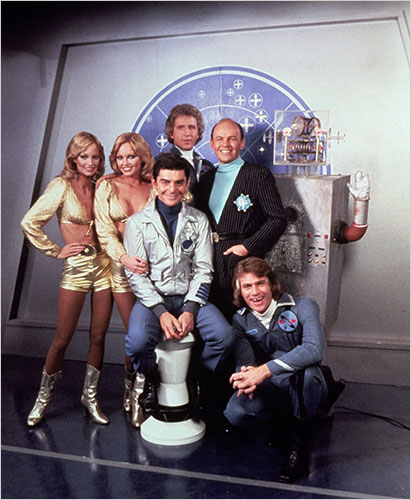
This show’s concept was also a bit of a reach. It took place on Perma 1, a space station in 2222. Adam Quark (Richard Benjamin) had a mission to clean up all the trash in outer space. Quark took orders from a giant disembodied head called, what else, The Head, along with Perma 1’s architect Otto Palindrome (Conrad Janis). If you think this sounds crazy, wait till you learn about Quark’s crew: a part fish/part fowl first officer, a humanoid vegetable named Ficus, clones Betty 1 and Betty 2, and Andy the Robot, a walking junk pile. I was surprised not that it was cancelled after two months, but that it lasted two months. I was also surprised to learn that Buck Henry was the creative force behind this series.
Sanford Arms
Photo: humormillmag.com
A year later in 1977 we have another interesting set-up. When Redd Foxx and Demond Wilson, the two stars, the only stars, left the show Sanford and Son, Norman Lear was left with a show title only. Aunt Esther (LaWanda Page) had been one of the cast members on Sanford and Son and suddenly she was at the hub of this new show. Phil Wheeler (Theodore Wilson) a widower with teenagers buys the house, the junkyard and Esther’s rooming house and tries to start a residential hotel. A month or so later, before he could even make his first payment, the show was done.
Another Day
Photo: wikipedia.com
David Groh (who had played Rhoda’s husband) is Don Gardner, a struggling businessman who can’t make ends meet. His wife Ginny (Joan Hackett) has to get a job, and they both had to deal with their introverted son Mark (Al Eisenmann) and their extroverted daughter Kelly (Lisa Lindgren), as well as Don’s mom Olive (Hope Summers who had played Clara on The Andy Griffith Show) who is critical of all of them. Don struggled through a few episodes and was finished.
Apple Pie
Photo: wikipedia.com
A lonely hairdresser played by Rue McClanahan named Ginger-Nell Hollyhock placed ads in the newspaper for a family. The family that she “found” included a daughter (Caitlin O’Heaney) who tap-danced, a son (Derrel Maury) who wanted to fly like a bird, an elderly grandfather (Jack Gilford), and con-artist Fast Eddie (Dabney Coleman). The show was set in Kansas City in 1933. It took place during the Depression and depression is what anyone watching felt, although the pain was fleeting. After one episode the network decided no one wanted this family.
Hanging In
This one was so bad they didn’t want any evidence so there are no photos.
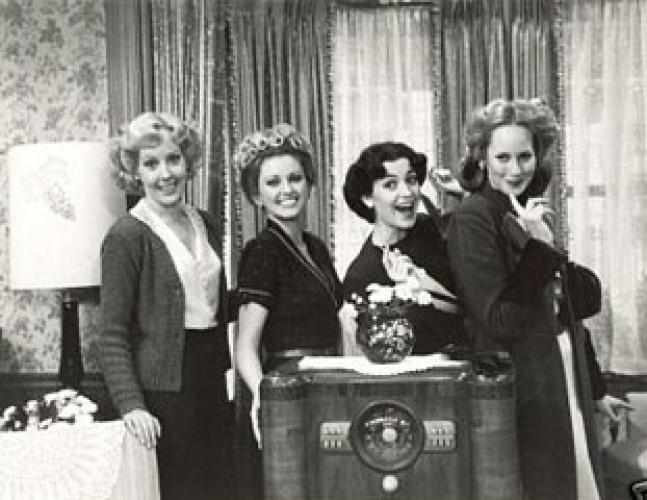
Another flop came along with a star who had been another star’s spouse. Bill Macy who played Maude’s long-suffering husband starred in this show as Louis Harper, a former football hero who did not have the right credentials to be a university president. He has a desire to help the underprivileged, but the rest of the faculty is more concerned about raising money. Other cast members included high-pressure dean Maggie Gallager (Barbara Rhoades), PR man Sam Dickey (Dennis Burkley), and housekeeper Pinky Nolan (Nedra Volz). No finals for this series; it was cancelled after a few weeks.
Hizzoner
Photo: imdb.com
David Huddleston plays Mayor Cooper who runs a small Midwestern town. The cast included the mayor’s secretary Ginny (Diana Muldaur), the mayor’s daughter (Kathy Cronkite, yes Walter’s daughter) and several other quirky characters. While the mayor is quite conservative, his children are left-wing liberals. Apparently, the mayor broke out into song at least once an episode. I guess, he was singing the blues because the show was cancelled after 7 episodes.
In the Beginning
Photo: collectors.com
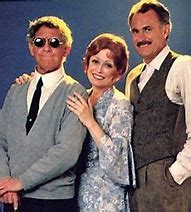
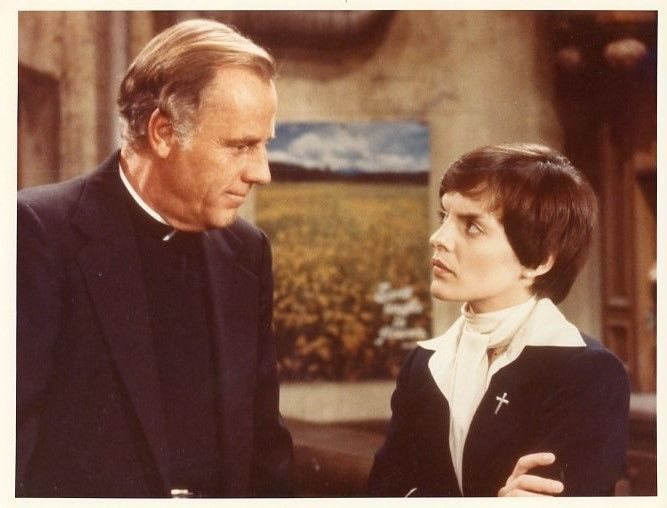
The year 1978 just keeps getting worse for television series. Father Daniel Cleary, played by McLean Stevenson, works in a community center in the heart of Baltimore. Sister Agnes (Priscilla Lopez) works with him. She loves her neighborhood; Father Cleary does not. She is fairly liberal and he is not. It ended almost before it began after seven episodes.
Miss Winslow & Son
Photo: sitcomsonline.com
In this one, an unmarried woman (Darleen Carr) who is an art designer, decides rather than marry a man whom she doesn’t love, she will become a single mother after getting pregnant. Her next-door neighbor Mr. Neistadter (Roscoe Lee Browne) hates kids. Her wealthy and snobby parents are divided about her situation; her father (Elliot Reed) is much more sympathetic than her mother (Sarah Marshall). Before the baby had its first check-up, the show was off the air.
13 Queen’s Boulevard
Photo: sitcomsonline.com
This show was about “a hilarious group of tenants in a garden complex in Queens, New York.” In the first episode, one of the tenants, Felicia Winters (Eileen Brennan) decides to host a class reunion and invites her best friend and spouse, her ex-husband, the class “sexpot,” Fat Hughie, and the class photographer. I don’t know what could possibly go wrong; however, not much went right since it was gone within two months.
Turnabout
Photo: bionicdisco.com
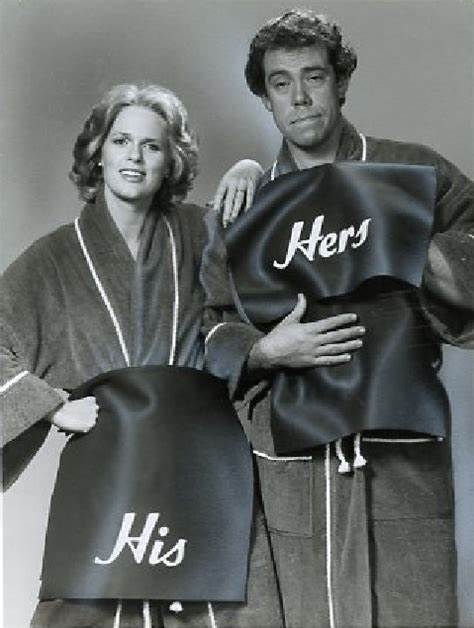
I get Freaky Friday, but in this series the husband and wife switch places. A magic statue allows them to inhabit each other’s bodies. Sam Alston (John Schuck) is a sportswriter and his wife Penny (Sharon Gless) is a cosmetics executive. The couple tries to live both their own life and their spouse’s life whenever they switch back and forth. They also must focus on keeping the switch a secret. We never know who is who, and all the audience knew is they didn’t like either one of them, and the show was cancelled after a few weeks.
Waverly Wonders
Photo: sitcomsonline.com
NBC decided Joe Namath would be a good person to build a sitcom around. However, he’s not a football player in this show; he’s a former pro basketball player, Joe Casey, who now teaches history at Waverly High in Wisconsin. Linda Harris (Gwynne Gilford) is the principal and Mr. Benton, who they call “Old Prune Face” (Ben Piazza) was the former coach. The only problem is Joe Casey is a bad history teacher and a bad coach. That apparently makes for a bad show because it was cancelled after three episodes aired, although nine were made.
Struck by Lightning
Photo: metershow.com
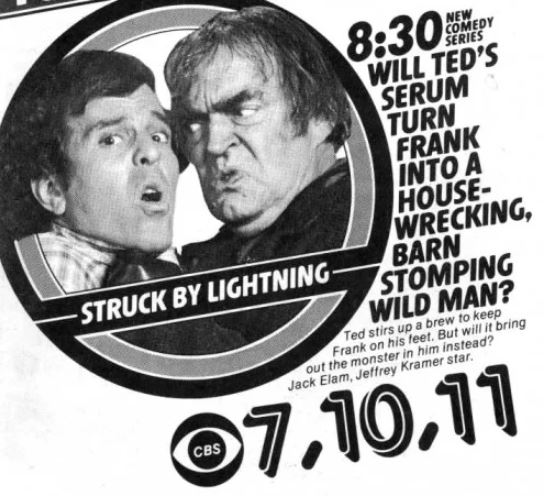
If you think the concept of some of these shows was weird, wait to you hear about this one. Frank (Jack Elam) is the caretaker of an old inn in Massachusetts. A science teacher, Ted Stein (Jeffrey Kramer) inherits the inn and decides to sell it. Then he realizes that Frank was really a 231-year-old Frankenstein monster. Ted just happens to be the great-great-grandson of the original Dr. Frankenstein. So, they decide to run the inn together. Rounding out the cast was Glenn (Bill Erwin) who had been living there forever, Nora (Millie Slavin) who managed the inn before Ted came, Nora’s son Brian (Jeff Cotler), and real estate agent Walt (Richard Stahl). Apparently, the only thing “great” about the show was Ted’s relationship to Frankenstein because the network canceled it after five episodes.
So, you might be wondering with all these awful shows, what made it on the air more than a couple of months during the late 1970s. In 1977 the only shows that made it to the next season were Three’s Company and Soap. In 1978 Mork and Mindy and Taxi were the “classics” followed by Diff’rent Strokes and WKRP in Cincinnati. Without Robin Williams, Mork and Mindy would probably have been another concept that would have lasted a couple of weeks. In 1979, out of 21 shows that debuted that fall, Facts of Life was the only one that returned for a second season. With the exception of Taxi and WKRP, I would not rate any of these shows true classics, although you could make a good case for Soap. Anyway, the bar was set pretty low for success during the late 1970s.
At least television viewers could go to the movies for a bit of entertainment. This was the era of Animal House, Annie Hall, Close Encounters of the Third Kind, Grease, Kramer vs Kramer, Rocky, Saturday Night Fever, and Smokey and the Bandit. Things stayed pretty glum on the small screen until 1982 when Cheers, Newhart, and FamilyTies saved us.
My blog theme for this month is “What a Character!” I am looking at the careers of four successful and hard-working actors. With 372 acting credits, perhaps there was no more prolific character actor than the beloved Charles Lane. He perfected the grumpy sourpuss always ready and gleeful to make life more complicated for others. His bio on imdb.com captures his type perfectly as the “scrawny, scowling, beady-eyed, beak-nosed killjoy who usually could be found peering disdainfully over a pair of specs, brought out many a comic moment simply by dampening the spirit of his nemesis.”
Photo: pinterest.com
However, despite that, we always knew there was more to him, and that his real persona was being covered up by his crotchety outward characteristics. His character Herman Bedloe on Petticoat Junction portrayed this dual-personality perfectly. Bedloe was always trying to shut down the train, but we knew he actually liked the Bradley family, and occasionally you would get a glimpse of the lonely and soft-hearted side of him.
He was born Charles Gerstle Levison in San Francisco in 1905. His family survived the 1906 earthquake. His father was an insurance executive, and Charles would follow in his footsteps for his first career.
Photo: newsfromme.com The Music Man
A friend, actor Irving Pichel, convinced Lane to try his hand at acting, and Lane joined the Pasadena Playhouse in the late 1920s. His first movie was City Girl in 1930, and his last was Acting on Impulse in 1993. During those six decades he had a successful career in both television and Hollywood. In 1933, Lane became one of the founding members of the Screen Actors Guild (SAG). In that year alone he made 23 films. There was an anecdote told about Lane that it was not uncommon for him to go to a movie, see himself on screen, and be surprised because he completely forgot he had been in the film. Starting out at $35 a day, by 1947 he was earning $750 a week.
His longest-running role was husband. In 1931 he married Ruth Covell; the couple had two children and were married until her death in 2002.
Photo: pinterest.com It’s a Wonderful Life
Perhaps most people recognize Lane from his role of rent collector for Henry Potter in It’s a Wonderful Life. Capra signed Lane to roles in ten of his movies. Lane was a corrupt attorney in Mr. Deeds Goes to Town (1936), an IRS agent in You Can’t Take It with You (1938), a newsman in Mr. Smith Goes to Washington (1939), a reporter in Arsenic and Old Lace (1944), and Blink Moran in State of the Union (1948). Among his most-cherished possessions was a letter from Capra where he wrote “Well, Charlie, you’ve been my No. 1 crutch.” Other popular films he was in include The Ghost and Mr. Chicken; It’s a Mad, Mad, Mad, Mad World; and The Music Man.
Photo: blogspot.com You Can’t Take It with You
During World War II, Lane joined the Coast Guard. When he returned to civilian life, his television career took off. His first role was on Burns and Allen in 1951. During the 1950s, he appeared in more than 30 shows including Topper, The Thin Man, Perry Mason, and The Ann Sothern Show. He was often seen on Lucille Ball shows. He and Lucy had become friends when they both worked for RKO, and he had a great respect for Desi Arnaz’s acting ability.
Photo: imdb2freeforums.net I Love Lucy
During this decade he was cast on the show Dear Phoebe in 1954. Peter Lawford starred in the show as a former college professor who writes an advice column under the name Miss Phoebe Goodheart. Meanwhile, his romantic interest is Mickey Riley portrayed by Marcia Henderson, the paper’s sports writer. Lane took on the role of Mr. Fosdick, their boss.
Photo: blogspot.com The Andy Griffith Show
The 1960s found him on almost every popular show of that decade. Tuning in to your favorite series, you would spy Lane on Bachelor Father, Pete and Gladys, Mister Ed, The Andy Griffith Show, The Joey Bishop Show, Get Smart, The Bing Crosby Show, The Man from UNCLE, The Donna Reed Show, Green Acres, Bewitched, and The Wild, Wild West, among many others.
Photo: sitcomsonline.com Gomer Pyle USMC
Lane had recurring roles on five shows during the 1960s. On Dennis the Menace, he was the pharmacist Mr. Finch. He also could be seen on his friend’s series, The Lucy Show as Mr. Barnsdahl, a local banker. The Phyllis Diller Show had a cast that should have made it a hit and from 1966-67, Lane played Maxwell. Although many characters appeared on both The Beverly Hillbillies and Petticoat Junction, Lane had two different roles on the two series. He appeared in 24 episodes of Petticoat Junction between 1963-1968 as Homer Bedloe, a railroad executive who is always trying to find a reason to shut down the Cannonball. On the Beverly Hillbillies, he portrayed Foster Phinney.
Photo: filmstarfacts.com Petticoat Junction
Lane continued with both his movie and television appearances throughout the 1970s, taking roles on The Doris Day Show, The Odd Couple, Family, Rhoda, Chicoand the Man, and he continued his television appearances into the 1980s and 1990s with shows that included Mork and Mindy, St. Elsewhere, LALaw, and Dark Shadows.
Photo: pinterest.com Bewitched
The decade of the seventies would find him cast in two additional series, Karen and Soap. Karen debuted in 1975, starring Karen Valentine as Karen Angelo. Karen works for an advocate group for the common American citizen, Open America, founded by Dale Busch, who was played by Lane. On Soap, Charles took on the role of Judge Petrillo who presided over Jessica Tate’s murder trial; however, because of Jessica’s husband, the judge lost $40,000 in a bad investment.
Photo: sitcomsonline.com Soap
Charles Lane was honored in 2005 when he turned 100. SAG proclaimed January 30 “Charles Lane Day,” and TV Land honored him in March for his long career. After receiving his award, he let it be known “in case anyone’s interested, I’m still available!”
Photo: allmovie.com TV Lands Award March 2005
Despite his being typecast in cranky roles, friends and family described him as funny, kind, and warm-hearted. Lane’s one vice was smoking. In 1990 he was rushed to the hospital when he was having problems breathing. When the doctor asked if he smoked, Lane informed him he had kicked the habit . . . 45 minutes earlier. He never smoked again and he lived another 12 years, dying peacefully in 2007.
Photo: blogspot.com Homer Bedloe
Although it’s tough on actors to be typecast so early in their career, it’s a double-edged sword, because it also provides a lot of opportunities for roles. Lane was an enigma; while he always convinced us that he was just as mean as could be, we also knew if someone would give him a chance, he could be reformed like Scrooge; he just needed the opportunity. It always makes me smile to come across Charles Lane in a move or television episode. It’s like seeing an old friend, or perhaps the neighbor who yelled at you to get off his yard. However, if you looked closely, you would see him watching and wanting to be part of the action. As you watch your favorite older classic shows, keep an eye open for him.




























 thewritelife61